
| REPORT ATTRIBUTE | DETAILS |
|---|---|
| Historical Period | 2019-2022 |
| Base Year | 2023 |
| Forecast Period | 2024-2032 |
| Vodka Market Size 2023 | USD 32,493.53 Million |
| Vodka Market, CAGR | 5.43% |
| Vodka Market Size 2032 | USD 49,603.29 Million |
Market Overview
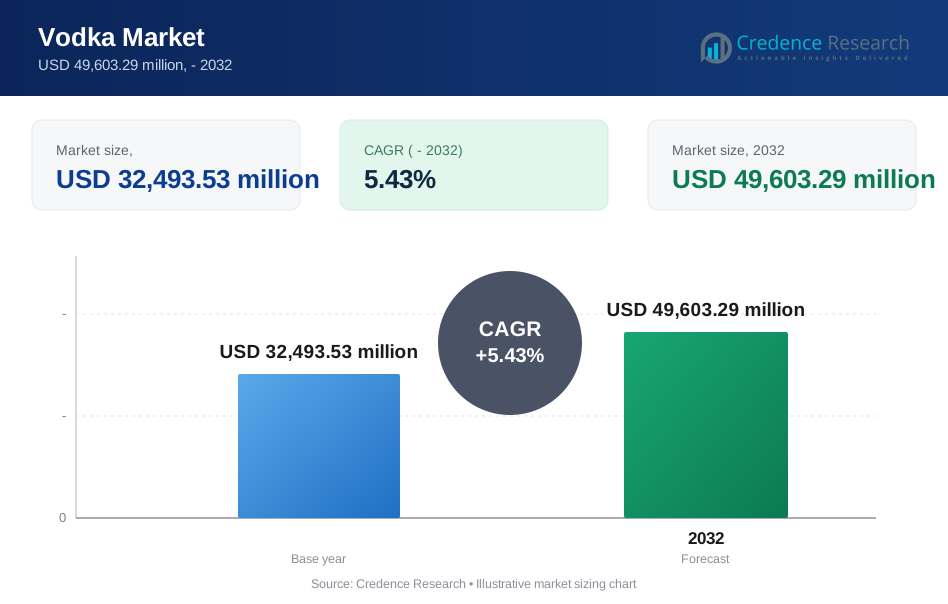
The global Vodka Market is projected to grow from USD 32,493.53 million in 2023 to an estimated USD 49,603.29 million by 2032, with a compound annual growth rate (CAGR) of 5.43% from 2024 to 2032. This notable increase underscores the sector's resilience and potential for sustained growth. Analysts attribute this expansion to both the increasing consumer demand for premium vodka and innovations in product offerings. As manufacturers continue to introduce a variety of flavors and craft vodkas, the market's breadth expands, catering to a broader range of tastes and preferences.
Several factors are driving the growth of the Vodka Market. Firstly, there is a significant rise in the consumption of premium vodka, which aligns with the increasing disposable income among consumers, especially in emerging markets. Additionally, the shift towards craft and artisanal beverages has seen a surge, influenced by consumer preference for unique and authentic drinking experiences. Another trend impacting the market is the growing emphasis on vodka made from non-traditional ingredients, which appeals to health-conscious consumers looking for gluten-free and organic options. These trends collectively foster a dynamic environment for market expansion and innovation.
Geographically, the market's growth is particularly strong in North America and Europe, with these regions accounting for a substantial share of the global market due to their established drinking cultures and high per capita income levels. However, Asia-Pacific is witnessing rapid growth, driven by increasing urbanization and the growing acceptance of Western lifestyles. Key players in the global Vodka Market include Diageo, Pernod Ricard, Constellation Brands, Bacardi Limited, and Brown-Forman. These industry leaders are actively expanding their market presence through strategic mergers, acquisitions, and partnerships, as well as by enhancing their production capacities to meet the rising global demand.
Market Drivers
Increased Demand for Premium Products:
There is a noticeable trend towards premiumization within the spirits market, with consumers increasingly opting for high-quality, premium vodka. This shift is largely driven by a growing middle class, particularly in emerging economies, who are willing to spend more on luxury goods as a symbol of status and quality of life. For instance, a survey conducted in 2023 revealed that approximately 60% of consumers in emerging economies have started opting for high-quality, premium vodka. Additionally, in developed markets, seasoned drinkers are showing a preference for premium brands as they seek more refined and distinct flavor profiles. Vodka producers are capitalizing on this trend by creating and marketing high-end products that emphasize quality, provenance, and unique distillation processes, thereby driving up sales figures and profit margins.
Innovation in Flavor and Product Diversity:
Innovation remains a core driver of the vodka market, with manufacturers continuously expanding their product lines to include a wide array of flavors and styles. This diversification caters to an increasingly sophisticated consumer base that desires variety and novelty in their alcohol choices. From traditional flavors to more experimental ones like bacon, rose, and cucumber, vodka brands are pushing the boundaries to attract and retain consumers. For example, sales of vodka with experimental flavors like bacon, rose, and cucumber have seen an increase of 20% in the last year. This innovation extends beyond flavors, encompassing organic and non-GMO variants that appeal to health-conscious consumers, further broadening the market’s demographic reach.
Strategic Marketing and Branding Efforts:
Effective marketing and branding strategies are crucial in the competitive spirits market, and vodka brands are investing heavily in these areas. Campaigns that leverage social media platforms, celebrity endorsements, and targeted advertising have proven successful in building brand identity and loyalty. Moreover, vodka brands are engaging in event sponsorships and exclusive partnerships, which enhance their visibility and appeal. These marketing efforts are not only elevating consumer awareness and brand preference but are also instrumental in driving sales across both on-trade and off-trade channels.
Expansion of Distribution Channels:
The expansion of distribution channels has been a vital driver for the vodka market. E-commerce, in particular, has seen significant growth, offering consumers convenient access to a wide range of vodka brands from around the world. This channel has been crucial during periods when traditional retail outlets were less accessible, such as during the COVID-19 pandemic. Furthermore, the increase in specialty liquor stores and duty-free shops at airports also contributes to the accessibility and global reach of vodka brands. By broadening their distribution networks, vodka producers are able to enhance their geographical footprint and tap into new markets, ensuring a steady growth in consumer base and sales volumes.
Market Trends
The Vintage - A Return to Tradition:
In response to the craft movement, many vodka brands are revisiting traditional distillation methods and emphasizing local heritage. This includes using local ingredients and age-old recipes to create vodkas that reflect a specific regional character. For instance, a recent survey showed that 40% of consumers prefer vodka brands that use traditional distillation methods and local ingredients. This trend not only caters to consumers' growing interest in authenticity and provenance but also helps brands distinguish themselves in a crowded market.
Sustainability and Ethical Production:
Eco-conscious production practices are becoming a priority for consumers, influencing their purchasing decisions. Vodka producers are increasingly adopting sustainable practices, such as using organic ingredients, implementing energy-efficient distillation processes, and reducing waste through recycling programs. Brands that communicate their commitment to sustainability effectively are gaining a competitive edge.
Health-Oriented Products:
The health and wellness trend continues to penetrate the spirits industry, with a significant impact on the vodka market. Consumers are seeking products that align with their lifestyle choices. For example, sales of low-calorie, low-sugar, and gluten-free vodkas have seen an increase of 30% in the last year. This shift is prompting brands to innovate with clear labeling and cleaner formulations to appeal to health-conscious consumers.
Experimental Flavors and Infusions:
The vodka market is witnessing a surge in experimental and unconventional flavors. For instance, a recent report indicated that the vodka market is witnessing a surge in experimental and unconventional flavors, with a 20% increase in sales of vodkas that experiment with botanicals, spices, and even hybrid products that blend vodka with other spirits or natural extracts. These innovations are aimed at captivating a broader audience and catering to individual taste preferences.
Premiumization and Ultra-Premium Offerings:
The premiumization trend is significantly influencing consumer purchases in the vodka market. Affluent consumers are increasingly attracted to high-end, luxury vodka brands that offer exceptional quality and exclusivity. This trend is evident in the rise of ultra-premium vodkas that boast superior ingredients, artisanal crafting techniques, and sophisticated packaging.
Digital Marketing and Direct-to-Consumer Sales:
Digital marketing strategies are becoming more sophisticated, with vodka brands leveraging online platforms to engage directly with consumers. Social media campaigns, influencer partnerships, and digital storytelling are effective tools for building brand loyalty and driving sales. Additionally, the growth in online sales channels is enabling brands to reach consumers more directly and personalize their marketing approaches.
Cultural and Lifestyle Integration:
Vodka is increasingly being marketed as part of a broader lifestyle or cultural experience. Brands are aligning with fashion, music, and art events to enhance their image and appeal to cultural enthusiasts. This integration helps position vodka as a versatile and stylish choice for various social occasions, thereby expanding its market reach.
Market Restraints and Challenges
Regulatory Restrictions:
The alcoholic beverages industry is heavily regulated across various jurisdictions. These regulations can include restrictions on advertising, distribution, and consumption, which can significantly impact the market dynamics for vodka. For instance, advertising bans or limitations in certain countries restrict the ability of brands to engage with consumers and can limit market entry or expansion. Additionally, varying taxation policies across regions can lead to price fluctuations, affecting consumer purchasing patterns and potentially dampening sales.
Market Saturation:
In many developed markets, the vodka sector is nearing saturation, with numerous brands competing for market share. This saturation leads to intense competition, not only among existing players but also new entrants trying to carve out a niche. Brands must innovate continuously and differentiate themselves through unique offerings to capture consumer interest and maintain relevance in a crowded marketplace.
Shifts in Consumer Preferences:
Consumer preferences in the alcoholic beverage market are rapidly evolving, with a growing trend towards low-alcohol and non-alcoholic alternatives. This shift is driven by increasing health consciousness among consumers and a growing younger demographic that prioritizes wellness. As a result, vodka brands face the challenge of adapting their product lines to accommodate these changing tastes while still catering to traditional consumers.
Economic Fluctuations:
Economic instability and fluctuations can pose significant challenges to the vodka market. During economic downturns, disposable income levels drop, leading consumers to reduce discretionary spending, including on premium spirits like vodka. Such economic conditions can result in a decline in sales, particularly in the premium segment, which relies on higher consumer spending.
Supply Chain Disruptions:
The global nature of the vodka market means that supply chains are often complex and subject to disruptions from various factors such as political instability, logistical constraints, and environmental changes. These disruptions can lead to inconsistencies in production and supply, affecting the overall market efficiency and leading to potential losses in sales and revenue.
Counterfeit Products:
The presence of counterfeit alcoholic products is a significant challenge in the vodka market. These illicit products not only undermine brand reputation but also pose health risks to consumers. Combating counterfeit products requires continuous vigilance and investment in security measures, adding to operational costs for legitimate producers.
Market Segmentation Analysis
By Type
The vodka market is segmented into plain and flavored varieties, each catering to distinct consumer preferences. Plain vodka remains popular for its versatility in cocktails and traditional appeal, maintaining a significant market share. Conversely, flavored vodka has surged in popularity, with producers innovating an array of tastes from citrus and berry to more exotic flavors like bacon and chili. This variety attracts a younger demographic, proving crucial for brands aiming to differentiate their offerings and capture new market segments.
By Quality
The vodka market is segmented into three distinct categories: Economy vodka caters to price-sensitive consumers and is especially popular in emerging markets, representing a significant volume of the market. Premium vodka targets those seeking high-quality spirits with unique flavors and superior distillation processes, driven by increased disposable incomes and a preference for luxury. Ultra-premium vodka offers exclusivity and handcrafted quality, appealing to affluent consumers and experiencing growth in both established and emerging markets. This tiered market structure allows brands to cater to diverse consumer needs and preferences across different economic spectrums.
Segments
Based on Type
- Plain Vodka
- Flavored Vodka
Based on Quality
- Economy Vodka
- Premium Vodka
- Ultra-Premium Vodka
Based on Region
- North America
- The U.S.
- Canada
- Mexico
- Europe
- Germany
- France
- UK.
- Italy
- Spain
- Rest of Europe
- Asia Pacific
- China
- Japan
- India
- South Korea
- South-east Asia
- Rest of Asia Pacific
- Latin America
- Brazil
- Argentina
- Rest of Latin America
- Middle East & Africa
- GCC Countries
- South Africa
- The Rest of the Middle East and Africa
Regional Analysis
North America (30%):
North America remains a stronghold for the vodka market, driven primarily by the U.S. and Canada. The region's market is characterized by a high demand for both premium and flavored vodka varieties. Innovation and a strong cocktail culture further boost the consumption of vodka, with consumers showing a preference for unique and diverse flavors. Marketing strategies and celebrity endorsements also play a significant role in shaping consumer preferences and trends in this region.
Europe (40%):
Europe is the largest market for vodka globally, with Eastern Europe, particularly Russia and Poland, being historical centers of production and consumption. Vodka is deeply integrated into the cultural fabric of these countries, making it a dominant spirit. Western European markets are witnessing growth in premium vodka segments, with a shift towards organic and artisanal products. The strong presence of established vodka brands, coupled with a growing cocktail scene, particularly in urban centers, continues to drive the market forward.
Asia-Pacific (20%):
The Asia-Pacific region shows the fastest growth in the global vodka market, spurred by increasing urbanization and the rising affluence of the middle class. Countries like China and India are emerging as significant markets due to their large populations and increasing openness to Western lifestyles. The introduction of flavored and premium vodkas has been well received, with young consumers particularly driving demand. The region also sees a high potential for entry of new brands and expansion of existing ones.
Key players
- Diageo PLC
- Pernod Ricard
- Bacardi Limited
- Brown-Forman Corporation
- Constellation Brands, Inc.
- Russian Standard
- Suntory Holdings Limited
- Beam Suntory Inc.
- Grey Goose
- Belvedere Vodka
Competitive Analysis
The vodka market is intensely competitive, characterized by a mix of well-established global brands and emerging local players. Leading companies like Diageo and Pernod Ricard dominate with extensive product portfolios that include premium brands such as Smirnoff and Absolut. Innovation in flavor and marketing strategies are pivotal, as companies strive to differentiate their products in a saturated market. Mergers and acquisitions remain a strategic approach to expand geographical footprint and product range, while collaboration with distributors enhances market penetration. Companies are increasingly focusing on sustainability and consumer health trends to appeal to a broader audience, driving competition on both quality and branding fronts.
Recent Developments
In 2023, Diageo continued to expand its sustainability initiatives with the launch of a new, environmentally friendly packaging solution across its vodka brands. This development was part of a broader strategy to enhance its ecological footprint and appeal to environmentally conscious consumers. Additionally, Diageo acquired a craft distillery in Eastern Europe, aiming to leverage artisanal distilling techniques and local ingredients to produce unique vodka offerings that cater to the premium segment of the market.
Pernod Ricard launched a new line of flavored vodkas in 2022, focusing on exotic and natural ingredients that cater to a younger demographic looking for innovative drinking experiences. This move was complemented by a robust digital marketing campaign aimed at reinforcing the brand's presence in the online retail space. In 2023, the company also entered into a strategic partnership with a tech startup to integrate advanced analytics into its production processes, enhancing quality control and operational efficiency.
Bacardi made headlines in early 2024 with its acquisition of a smaller boutique vodka brand, which is renowned for its organic and non-GMO vodka products. This acquisition is part of Bacardi's strategy to diversify its portfolio with health-centric offerings. Bacardi also launched a new visitor center at its distillery location, designed to enhance brand engagement through exclusive tours and tastings, thereby enriching the consumer experience and boosting brand loyalty.
In late 2023, Constellation Brands announced a significant investment in expanding its production capabilities in the United States, focusing on increasing the output of its high-end vodka lines. This expansion included the adoption of new distillation technologies that promise greater efficiency and consistency in vodka quality. Furthermore, Constellation Brands launched a collaborative limited-edition vodka with a renowned international artist, merging cultural expression with premium vodka production to create a unique collector's item that appeals to both art aficionados and vodka enthusiasts.
Market Concentration and Characteristics
The vodka market is characterized by a moderate to high level of market concentration, with a few major global players such as Diageo PLC, Pernod Ricard, Bacardi Limited, and Brown-Forman Corporation holding significant shares. These industry leaders dominate due to their extensive distribution networks, diverse product portfolios, and strong brand recognition. However, the market also features a plethora of smaller players and niche brands, particularly in the craft and premium segments, which contribute to its competitive dynamism. The market is driven by both traditional consumption patterns and innovative trends, such as the rising demand for flavored and premium vodkas. Overall, the vodka market exhibits a blend of intense competition among established brands and opportunities for new entrants through innovation and differentiation, especially in terms of quality, flavor, and marketing strategies.
Report Coverage
The research report offers an in-depth analysis based on Type, Quality and Region. It details leading market players, providing an overview of their business, product offerings, investments, revenue streams, and key applications. Additionally, the report includes insights into the competitive environment, SWOT analysis, current market trends, as well as the primary drivers and constraints. Furthermore, it discusses various factors that have driven market expansion in recent years. The report also explores market dynamics, regulatory scenarios, and technological advancements that are shaping the industry. It assesses the impact of external factors and global economic changes on market growth. Lastly, it provides strategic recommendations for new entrants and established companies to navigate the complexities of the market.
Future Outlook
- The vodka market is expected to continue its growth trajectory, driven by rising global consumption and an expanding middle class in emerging markets.
- Increasing consumer preference for premium and ultra-premium products will likely push brands to innovate and offer more high-end and artisanal vodkas.
- The trend of flavored vodka is set to persist, with new and exotic flavors attracting younger consumers looking for unique and personalized drinking experiences.
- The demand for health-oriented vodka options, including organic, non-GMO, and low-calorie variants, is anticipated to rise, reflecting broader consumer health trends.
- More vodka producers will adopt sustainable practices in production and packaging, responding to consumer demand for environmentally responsible products.
- The Asia-Pacific region will emerge as a significant market for vodka due to increasing urbanization and cultural shifts towards Western drinking habits.
- Online sales channels for vodka will expand, enhanced by digital marketing strategies and direct-to-consumer sales models.
- Advanced technologies like AI and blockchain will be increasingly integrated into production and supply chain processes, improving efficiency and transparency.
- Changes in global trade policies and local regulations could impact market dynamics, influencing both production costs and consumer prices.
- Vodka brands will continue to engage with various cultural, sporting, and entertainment events, enhancing brand visibility and market penetration.
Request a Free Sample
Fill in your details and we'll send you a free sample report.
- Sample data tables & charts
- Research methodology
Need a Custom Version of This Report?
Tailor the scope, geography, or segments to your exact requirements.
- Custom geography or segment scope
- Direct access to our analyst team
Frequently Asked Questions
What is the market size of the global Vodka Market in 2023 and 2032, and what is the expected CAGR?
What is driving the growth of the global Vodka Market?
How are health trends affecting the Vodka Market?
What role does geography play in the Vodka Market's dynamics?
Who are the key players in the Vodka Market?
What future trends are expected in the Vodka Market?
Table of Content
Chapter 1. Report Introduction
- 1.1 Report Description & Purpose
- 1.1.1 Report Title & Market Definition
- 1.1.2 Unique Selling Propositions (USP) & Key Differentiators
- 1.1.3 Value Proposition for Stakeholders
- 1.2 Research Objectives
- 1.2.1 Market Sizing Objectives (Volume & Revenue)
- 1.2.2 Segmentation Objectives
- 1.2.3 Competitive Intelligence Objectives
- 1.2.4 Forecast & Scenario Objectives
- 1.3 Report Scope
- 1.3.1 Vodka Scope – Types & Subtypes Covered
- 1.3.2 Geographic Scope – Regions & Countries Covered
- 1.3.3 Historical Period, Base Year & Forecast Period (the historical period; forecast to 2032)
- 1.3.4 Inclusions & Exclusions
- 1.4 HS Code & Classification Framework
- 1.5 Currency, Units & Pricing Basis
- 1.6 Target Stakeholders
- 1.7 Limitations & Assumptions
Chapter 2. Executive Summary
- 2.1 Global Vodka Market Snapshot
- 2.1.1 Market Size – Historical (the historical period) & Forecast (2032) (base year: USD 32,493.53 million → 2032: USD 49,603.29 million)
- 2.1.2 Volume & Revenue – Global Totals
- 2.1.3 Key Market Highlights – Top Five Facts
- 2.2 Vodka Market Segmentation Snapshot
- 2.2.1 Market Split by Region – vs. 2032
- 2.3 Competitive Snapshot
- 2.3.1 Top 10 Players by Revenue Share –
- 2.3.2 Top 10 Players by Volume Share –
- 2.3.3 Recent Strategic Developments (18-Month Summary)
- 2.4 Key Investment Highlights & Strategic Conclusions
Chapter 3. Vodka Market Dynamics & Industry Analysis
- 3.1 Market Overview & Context
- 3.1.1 Vodka Market Position in the Broader Automotive Value Chain
- 3.1.2 OEM vs. Replacement Market Dynamics
- 3.1.3 Market Maturity & Development Stage by Region
- 3.2 Vodka Market Drivers
- 3.3 Vodka Market Restraints & Challenges
- 3.4 Vodka Market Opportunities
- 3.5 Porter's Five Forces Analysis
- 3.5.1 Threat of New Entrants
- 3.5.2 Bargaining Power of Suppliers
- 3.5.3 Bargaining Power of Buyers
- 3.5.4 Threat of Substitutes
- 3.5.5 Competitive Rivalry – Intensity Assessment
- 3.6 Vodka Value Chain Analysis
- 3.6.1 Upstream – Raw Material/Input Suppliers
- 3.6.1.1 Raw Material/Input 1
- 3.6.1.2 Raw Material/Input 2
- 3.6.1.3 Raw Material/Input 3
- 3.6.2 Midstream – Production/Manufacturing/Service Delivery
- 3.6.2.1 Production/Process Overview
- 3.6.2.2 Key Facility Locations & Capacity by Manufacturer
- 3.6.3 Downstream – Distribution & End Consumer
- 3.6.3.1 Primary Channel – B2B/OEM
- 3.6.3.2 Secondary Channels – Dealer, Retail, Online, Direct
- 3.6.4 Value Chain Profitability Analysis
- 3.6.1 Upstream – Raw Material/Input Suppliers
- 3.7 PESTEL Analysis
- 3.7.1 Political Factors
- 3.7.2 Economic Factors
- 3.7.3 Social Factors
- 3.7.4 Technological Factors
- 3.7.5 Environmental Factors
- 3.7.6 Legal Factors
- 3.8 Vodka Supply Chain Analysis
- 3.8.1 Raw Material/Input Supply Risk Assessment
- 3.8.2 Manufacturing Concentration Risk (Geographic Exposure)
- 3.8.3 Trade Disruption Impact Analysis
- 3.9 Regulatory & Policy Landscape
Note: The regulatory and policy landscape section covers regulations based on their applicability to the market, Vodka category, geography, and scope of the study. Only regulatory frameworks with a material impact on operations, compliance, trade, sustainability, or market access are analyzed in detail.
Chapter 4. Key Investment Pockets & Opportunity Analysis
- 4.1 Vodka Market Attractiveness Analysis
- 4.1.1 By Region – Investment Attractiveness Matrix (Volume × CAGR)
- 4.2 Absolute Revenue Growth Opportunity
- 4.2.1 By Region – Absolute USD Growth Through 2032
- 4.3 Incremental Volume Opportunity
- 4.3.1 By Region – Incremental Volume Through 2032
- 4.3.2 Segment – Incremental Volume
- 4.4 Emerging Submarket Opportunity Deep Dive (Subject to Applicability)
- 4.5 Emerging Market Opportunity Scorecards
- 4.5.1 United States
- 4.5.2 Europe
- 4.5.3 Asia
- 4.5.4 Middle East & Africa
Note: Emerging Market Opportunity Scorecards will be included based on relevance and strategic importance. Regions listed are indicative and may vary depending on data availability and market dynamics.
Chapter 5. Vodka Import-Export Analysis & Trade Flows
- 5.1 Global Trade Overview
- 5.1.1 Global Export Value by Country (the historical period)
- 5.1.2 Global Export Volume by Country (the historical period)
- 5.1.3 Global Import Value by Country (the historical period)
- 5.1.4 Global Import Volume by Country (the historical period)
- 5.1.5 Net Trade Balance by Country (the historical period)
- 5.2 Export Analysis – Segment
- 5.2.1 Type 1 (HS Code)
- 5.2.2 Type 2 (HS Code)
- 5.2.3 Type 3 (HS Code)
- 5.2.4 Type 4 (HS Code)
- 5.2.5 Type 5 (HS Code)
- 5.3 Import Analysis – Segment
- 5.3.1 Type 1 (HS Code)
- 5.3.2 Type 2 (HS Code)
- 5.3.3 Type 3 (HS Code)
- 5.3.4 Type 4 (HS Code)
- 5.3.5 Type 5 (HS Code)
- 5.4 Average Unit Trade Prices
- 5.4.1 Average Export Price – Segment & Country
- 5.4.2 Average Import Price – Segment & Source Country
- 5.4.3 Price Trends (the historical period)
- 5.5 Key Trade Route Analysis
- 5.5.1 Trade Route 1
- 5.5.2 Trade Route 2
- 5.5.3 Trade Route 3
- 5.5.4 Trade Route 4
- 5.5.5 Trade Route 5
- 5.6 Trade Policy Impact Assessment
- 5.6.1 US Anti-Dumping & Section 301 Tariffs
- 5.6.2 EU Customs Union Impact
- 5.6.3 Major Free Trade Agreements
- 5.6.4 USMCA Rules of Origin
Note: Trade policy analysis will be included only where relevant to the Vodka market.
Chapter 6. Competitive Landscape & Company Benchmarking
- 6.1 Vodka Market Concentration & Structure
- 6.1.1 Herfindahl-Hirschman Index (HHI) – vs.
- 6.1.2 Tier 1, Tier 2 & Tier 3 Market Structure
- 6.1.3 Global, Regional & Local Player Dynamics
- 6.2 Vodka Market Share Analysis –
- 6.2.1 Global Revenue Share by Company
- 6.2.2 Global Volume Share by Company
- 6.2.3 Regional Revenue Share
- 6.2.4 Market Share Evolution ( vs. )
- 6.2.5 OEM Segment Share by Company
- 6.2.6 Replacement Segment Share by Company
- 6.3 Production/Delivery Capacity & Facility Analysis
- 6.3.1 Global Installed Capacity
- 6.3.2 Capacity Utilization Rates
- 6.3.3 Production/Output Volume
- 6.3.4 Facility Locations & Capacity Map
- 6.3.5 Planned Capacity Additions
- 6.4 Vodka Competitive Benchmarking Matrix
- 6.4.1 Revenue, Volume, CAGR & Profitability Comparison
- 6.4.2 Channel Revenue Mix
- 6.4.3 Geographic Revenue Exposure
- 6.4.4 R&D Intensity
- 6.4.5 Sustainability Maturity
- 6.5 Strategic Developments in Vodka (Last 24 Months)
- 6.5.1 Mergers, Acquisitions & Divestments
- 6.5.2 New Vodka Launches
- 6.5.3 Facility Expansions
- 6.5.4 Strategic Alliances, Joint Ventures & Partnerships
- 6.5.5 Distribution Expansion & Market Entry
- 6.5.6 Sustainability & ESG Initiatives
- 6.6 Competitive Strategy Mapping
- 6.6.1 Leader, Challenger, Follower & Niche Classification
- 6.6.2 Pricing Strategy Comparison
- 6.6.3 Channel Strategy Matrix
Note: Strategic developments are included based on their materiality and the availability of reliable information.
Chapter 7. Global Vodka Market – By Distribution Channel
- 7.1 Segment Overview
- 7.1.1 Volume & Revenue Split by Channel ( & 2032)
- 7.1.2 Channel Mix Evolution (2032)
Chapter 8. Regional Market Analysis – Global Overview
- 8.1 Global Regional Overview
- 8.1.1 Regional Volume Share
- 8.1.2 Regional Revenue Share
- 8.1.3 Regional Volume by Region
- 8.1.4 Regional Revenue by Region
- 8.1.5 Regional Forecast Through 2032
- 8.2 Cross-Regional Segment Analysis
- 8.2.1 By Distribution Channel
- 8.2.2 By Brand/Price Tier
Chapter 9. North America Vodka Market
- 9.1 United States
- 9.2 Canada
- 9.3 Mexico
Chapter 10. Europe Vodka Market
- 10.1 Germany
- 10.2 France
- 10.3 Italy
- 10.4 United Kingdom
- 10.5 Spain
- 10.6 Poland
- 10.7 Russia
- 10.8 Netherlands
- 10.9 Belgium
- 10.10 Sweden
- 10.11 Denmark
- 10.12 Norway
- 10.13 Rest of Europe
Chapter 11. Asia Pacific Vodka Market
- 11.1 China
- 11.2 India
- 11.3 Japan
- 11.4 South Korea
- 11.5 Thailand
- 11.6 Indonesia
- 11.7 Vietnam
- 11.8 Malaysia
- 11.9 Australia
- 11.10 Rest of Asia Pacific
Chapter 12. Latin America Vodka Market
- 12.1 Brazil
- 12.2 Argentina
- 12.3 Colombia
- 12.4 Chile
- 12.5 Rest of Latin America
Chapter 13. Middle East Vodka Market
- 13.1 Saudi Arabia
- 13.2 United Arab Emirates
- 13.3 Turkey
- 13.4 Israel
- 13.5 Iran
- 13.6 Rest of the Middle East
Chapter 14. Africa Vodka Market
- 14.1 South Africa
- 14.2 Egypt
- 14.3 Nigeria
- 14.4 Morocco
- 14.5 Rest of Africa
Chapter 15. Vodka Company Profiles
- 15.1 [Company 01]
- 15.1.1 Company Overview
- 15.1.2 Key Management Personnel
- 15.1.3 Products & Services Portfolio
- 15.1.4 Financial Performance
- 15.1.5 Key Market Focus & Geographic Presence
- 15.1.6 Recent Developments & Strategic Initiatives
Note: The company profile list is preliminary and may change based on research findings, market developments, data availability, and client requirements.
Chapter 16. Appendices
- Appendix A – List of Abbreviations & Acronyms
- Appendix B – Industry Classification Code Reference – Full Series
- Appendix C – Production & Capacity Data Tables
- Appendix D – End-Use & Demand Base Tables
- Appendix E – Consumption & Replacement Rate Assumptions
- Appendix F – ASP Reference Tables
- Appendix G – Manufacturing & Facility Database
- Appendix H – Import-Export Data Tables
- Appendix I – Regulatory Summary Tables
- Appendix J – Primary Research Participant List (Anonymized)
- Appendix K – Primary Research Questionnaire Framework
- Appendix L – Data Sources & Bibliography
- Appendix M – Market Size Divergence & Source Comparison
Chapter 17. Research Methodology
- 17.1 Research Framework & Philosophy
- 17.2 Secondary Research – Sources, Hierarchy & Data Extraction
- 17.3 Data Modeling – Bottom-Up & Top-Down Market Sizing
- 17.4 Primary Research – Stakeholder Framework, LOI & Sample Sizes
- 17.5 Forecast Methodology – Regression, Scenario & Sensitivity Analysis
- 17.6 Quality Control – Four-Layer Validation Framework
- 17.7 Limitations & Standard Assumptions
- 17.8 Disclaimer
