
| REPORT ATTRIBUTE | DETAILS |
|---|---|
| Historical Period | 2019-2022 |
| Base Year | 2023 |
| Forecast Period | 2024-2032 |
| Wood Preservative Chemicals and Coatings Active Ingredients Market Size 2024 | USD 240.1 Million |
| Wood Preservative Chemicals and Coatings Active Ingredients Market, CAGR | 5.1% |
| Wood Preservative Chemicals and Coatings Active Ingredients Market Size 2032 | USD 357.44 Million |
Market Overview:
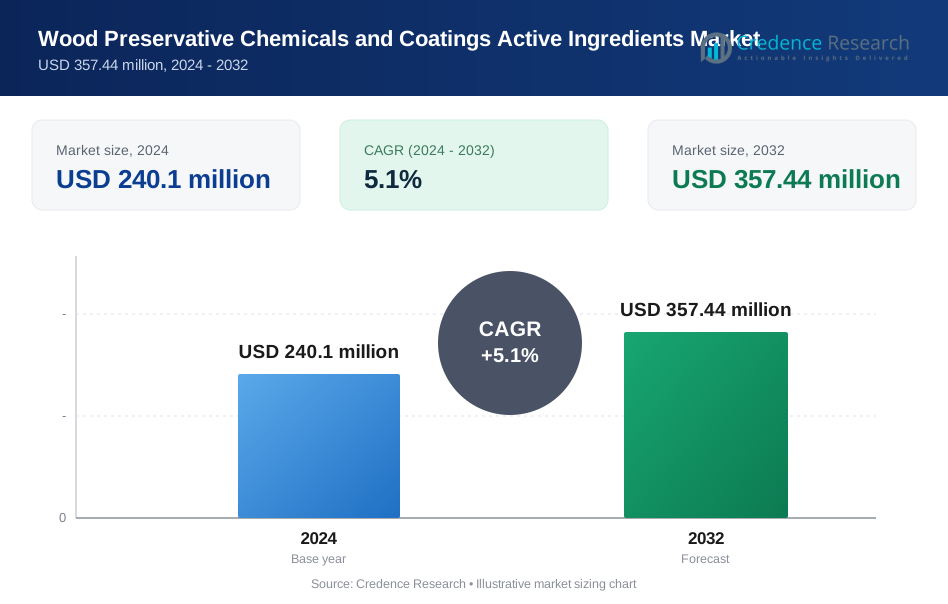
The Wood Preservative Chemicals and Coatings Active Ingredients Market is projected to grow from USD 240.1 million in 2024 to an estimated USD 357.44 million by 2032, with a compound annual growth rate (CAGR) of 5.1% from 2024 to 2032.
The primary driver of the market is the growing construction and infrastructure development across the globe. Wood, as a sustainable and aesthetically pleasing material, is increasingly used in residential and commercial projects. However, its susceptibility to moisture, pests, and fungal attacks highlights the importance of preservative chemicals and active coatings. Technological advancements have led to the development of eco-friendly, non-toxic preservatives that comply with stringent environmental regulations, further boosting their adoption. The furniture and packaging industries also contribute significantly to the demand, with a focus on extending the lifespan of wood products. Rising consumer awareness regarding the protection and maintenance of wooden assets, coupled with innovation in application techniques, supports the market's expansion.
North America leads the market, driven by robust construction activities, a high preference for wood-based architecture, and the presence of established manufacturers. The United States dominates this region due to its well-developed infrastructure sector and focus on sustainable materials. Europe follows closely, supported by growing eco-consciousness and strict regulations promoting environmentally friendly preservatives. Key contributors include Germany, the UK, and France. Asia-Pacific is the fastest-growing region, fueled by rapid urbanization, infrastructure projects, and increased demand for furniture and housing in countries like China, India, and Japan. Latin America and the Middle East & Africa are emerging markets, driven by expanding construction activities and the growing popularity of wood in modern architecture. These regional dynamics underscore the market's global potential across various industries.
Market Insights:
- The market is projected to grow from USD 240.1 million in 2024 to USD 357.44 million by 2032, at a CAGR of 5.1%, driven by rising demand for durable wood solutions.
- Eco-friendly preservative chemicals are gaining traction, meeting stringent environmental regulations and addressing growing consumer preference for sustainable products.
- The global construction boom, particularly in residential and commercial projects, is driving significant demand for advanced wood preservation solutions.
- Technological advancements, including non-toxic preservatives and innovative coatings, are reshaping the market, enhancing product performance and safety.
- North America leads the market with a 35% share, driven by robust infrastructure and stringent environmental standards, while Asia-Pacific, with 25%, is the fastest-growing region.
- High costs of sustainable solutions and limited awareness in emerging markets remain key challenges, but increasing urbanization offers growth opportunities.
- Modular construction and rising furniture demand globally continue to expand the market scope for wood preservative chemicals and coatings.
Market Drivers:
Growing Demand for Durable and Sustainable Wood Products
The increasing use of wood in construction, furniture, and outdoor applications is a major driver of the wood preservative chemicals and coatings active ingredients market. Wood is prized for its aesthetic appeal and environmental sustainability; however, its vulnerability to decay, pests, and weathering necessitates effective preservation solutions. Consumers and industries alike prioritize the longevity and durability of wooden structures and products, leading to a growing reliance on advanced preservatives and coatings. These treatments enhance the material’s resistance to biological and environmental degradation, meeting the rising demand for high-performance wood products.
Advancements in Eco-Friendly Preservative Solutions
The market is witnessing significant growth due to technological advancements that enable the development of eco-friendly and non-toxic wood preservatives. Traditional preservatives often relied on chemicals that posed environmental and health risks, prompting stricter regulatory scrutiny. In response, manufacturers are innovating with greener alternatives that comply with stringent environmental standards while maintaining efficacy. For example, recent advancements include the use of bio-based preservatives such as essential oils, vegetable oils, and biopolymers, which have shown promising results in enhancing wood durability while being environmentally friendly. These sustainable solutions have gained widespread acceptance among environmentally conscious consumers and industries, driving adoption across diverse applications.
Expanding Construction and Infrastructure Sectors
The global construction and infrastructure boom is another critical driver of the market. Rapid urbanization, coupled with increasing investments in residential and commercial projects, has fueled demand for wood as a primary material. Wood is increasingly being used in sustainable building practices, from structural elements to decorative applications, creating a need for reliable preservatives and coatings. As infrastructure projects expand in developing economies and urban centers, the demand for enhanced wood protection solutions continues to grow, supporting the market’s upward trajectory.
Rising Awareness and Technological Innovations
Consumer awareness regarding the importance of wood protection and maintenance is contributing to market growth. Homeowners and businesses alike are investing in preservative chemicals and coatings to safeguard wooden assets against rot, decay, and pest infestations. At the same time, innovations in application techniques and product formulations are making these solutions more accessible and efficient. Advanced coating technologies that offer long-lasting protection and ease of application are gaining traction, further bolstering market demand.
Market Trends:
Increased Adoption of Eco-Friendly Formulations
A significant trend in the wood preservative chemicals and coatings active ingredients market is the shift toward eco-friendly and non-toxic solutions. Regulatory authorities across the globe have imposed stringent restrictions on the use of hazardous chemicals, compelling manufacturers to innovate sustainable and biodegradable formulations. For example, the European Union's Biocidal Products Regulation (BPR) has led to the development of preservatives based on natural compounds like essential oils and vegetable oils. These eco-friendly alternatives are gaining traction in markets with high environmental awareness, such as North America and Europe, while emerging regions are also adopting greener solutions to comply with global trade standards. This trend aligns with the rising consumer preference for environmentally conscious products, further driving innovation in the sector.
Growth in Pressure-Treated Wood Applications
Pressure-treated wood is becoming increasingly popular in construction and outdoor applications due to its enhanced durability and resistance to decay and pests. The demand for active ingredients that complement pressure treatment processes, such as copper-based preservatives and micronized solutions, is rising. Advances in pressure treatment techniques have enabled better penetration and efficacy of preservative chemicals, ensuring prolonged protection. For instance, modern pressure treatment methods can increase the lifespan of wood by up to 20 years. This trend is particularly pronounced in regions experiencing high growth in infrastructure projects and outdoor landscaping, such as Asia-Pacific and Latin America.
Technological Innovations in Coatings
Technological advancements in wood coatings are transforming the market by offering superior protection and aesthetic appeal. Hybrid coatings, UV-cured finishes, and nanotechnology-based solutions are among the innovations gaining traction. These coatings provide enhanced performance by improving resistance to UV radiation, moisture, and abrasion, while maintaining the natural look of wood. Additionally, self-healing and smart coatings that adapt to environmental changes are emerging, appealing to industries seeking premium solutions for high-end applications. This focus on advanced coatings is reshaping product development and positioning manufacturers to cater to evolving consumer demands.
Rise of Modular and Prefabricated Construction
The growing adoption of modular and prefabricated construction methods is influencing the market positively. These construction techniques, which often rely heavily on wood for structural components, require preservative chemicals and coatings to ensure long-term durability and reliability. The trend is particularly prominent in regions with rapid urbanization and housing shortages, such as Asia-Pacific and parts of Africa. As prefabrication gains momentum, manufacturers of wood preservative chemicals and coatings are witnessing increased demand for products tailored to the unique requirements of this sector.
Market Challenges Analysis:
Stringent Environmental Regulations
Stringent environmental regulations pose a significant restraint to the growth of the wood preservative chemicals and coatings active ingredients market. Traditional preservatives often contain hazardous chemicals, such as chromated copper arsenate (CCA), which have faced regulatory bans in several regions due to their toxic nature. Compliance with these regulations requires manufacturers to invest in research and development for eco-friendly alternatives, increasing production costs and potentially slowing market adoption. Additionally, variations in regulatory frameworks across regions add complexity to product standardization and global distribution.
High Costs of Eco-Friendly Solutions
The transition to sustainable and non-toxic preservative chemicals and coatings is essential but comes at a higher cost. The production and formulation of eco-friendly products involve advanced technologies and materials, making them more expensive than conventional solutions. For example, eco-friendly wood preservatives like those based on borates or copper azole can cost up to 30% more than traditional treatments. This cost disparity can deter price-sensitive industries, particularly in developing regions, from adopting modern preservative solutions. The challenge lies in balancing affordability with the performance and sustainability of these products to ensure wider adoption
Limited Awareness in Emerging Markets
A lack of awareness about the benefits of wood preservatives and coatings in emerging markets hinders market expansion. Many consumers and small-scale industries in these regions rely on untreated or minimally treated wood due to limited knowledge of the long-term advantages of preservation. Additionally, the absence of robust distribution networks and promotional efforts by manufacturers in these areas further restricts market penetration. Bridging this awareness gap is crucial for unlocking growth potential in underserved markets.
Impact of Raw Material Price Volatility
The market faces challenges due to the volatility in raw material prices, which directly impacts the cost structure of preservative chemicals and coatings. Fluctuations in the availability of key components, such as copper and biocides, disrupt production and supply chains. Manufacturers must manage these uncertainties while maintaining competitive pricing, which is particularly challenging in a highly cost-sensitive market.
Market Opportunities:
The Wood Preservative Chemicals and Coatings Active Ingredients Market presents substantial growth opportunities driven by the rising demand for sustainable and durable wood products in construction, furniture, and outdoor applications. The global trend toward eco-consciousness has prompted significant advancements in non-toxic and biodegradable preservative solutions, opening doors for manufacturers to innovate and capture market share. As environmental regulations tighten, the demand for sustainable coatings that comply with these standards is increasing, particularly in developed regions like North America and Europe. Manufacturers investing in green technologies and environmentally friendly formulations can leverage this growing preference for sustainable products to enhance their market position and address emerging consumer needs.
Expanding infrastructure projects and rapid urbanization in emerging economies, especially in Asia-Pacific, Latin America, and Africa, present untapped opportunities for market growth. These regions are witnessing increased use of wood in modular construction, interior design, and furniture manufacturing, creating a strong demand for preservative chemicals and coatings. Additionally, the rise of prefabricated construction methods and outdoor landscaping projects further amplifies the need for advanced wood protection solutions. Companies that focus on developing cost-effective and efficient preservatives tailored to regional market needs can capitalize on these opportunities. By targeting underserved markets and addressing specific challenges, such as affordability and distribution, businesses can establish a strong foothold and drive sustained growth in the global market.
Market Segmentation Analysis:
The Wood Preservative Chemicals and Coatings Active Ingredients Market is segmented by active ingredient type and use class, reflecting its versatility in addressing diverse applications and environmental conditions.
By Active Ingredient Type, the market is categorized into Inorganic and Organic ingredients. Inorganic preservatives, including copper-based compounds, are widely used due to their effectiveness in protecting wood against fungal decay and insect infestations. Organic preservatives, particularly azoles such as Propiconazole and Tebuconazole, have gained prominence for their eco-friendliness and ability to comply with stringent environmental regulations. Organic solutions also offer enhanced protection and are increasingly favored for applications requiring non-toxic treatments. Other organic options, including advanced formulations like Cyproconazole, cater to specific industry needs, providing additional versatility.
By Use Class, the market serves diverse application requirements. UC 1/2 Indoor treatments are used for interior wood products, providing protection against low-moisture exposure. UC 3 Outdoor preservatives are designed for exterior applications without ground contact, such as decking and fencing. UC 4 Outdoor with ground contact preservatives are essential for structural components exposed to soil, offering durability against decay and pests. UC 5 Marine solutions address the harsh conditions of saltwater environments, ensuring the longevity of docks and piers.
Segmentation:
By Active Ingredient Type:
- Inorganic
- Organic
- Azoles
- Propiconazole
- Tebuconazole
- Others (Cyproconazole, etc.)
- Others
- Azoles
By Use Class:
- UC 1/2 Indoor
- UC 3 Outdoor
- UC 4 Outdoor with ground contact
- UC 5 Marine
By Region:
- North America
- U.S.
- Canada
- Mexico
- Europe
- Germany
- France
- U.K.
- Italy
- Spain
- Rest of Europe
- Asia Pacific
- China
- Japan
- India
- South Korea
- South-east Asia
- Rest of Asia Pacific
- Latin America
- Brazil
- Argentina
- Rest of Latin America
- Middle East & Africa
- GCC Countries
- South Africa
- Rest of the Middle East and Africa
Regional Analysis:
The Wood Preservative Chemicals and Coatings Active Ingredients Market showcases diverse growth dynamics across regions, influenced by varying levels of industrialization, construction activity, and environmental regulations.
North America holds the largest market share, accounting for approximately 35% of the global market in 2024. The dominance of this region is driven by robust construction activity, high demand for wood in residential and commercial buildings, and the presence of established manufacturers. The United States leads the market in North America, supported by advanced infrastructure projects, stringent environmental standards, and growing consumer awareness regarding wood preservation. Canada contributes to the region's growth with its emphasis on sustainable forestry and wood products.
Europe follows closely, with about 30% of the global market share. The region’s strong focus on sustainability and eco-friendly construction practices drives the demand for non-toxic wood preservatives and coatings. Countries like Germany, the UK, and France are key contributors, benefiting from stringent regulations that promote the use of safe and effective wood treatment solutions. Europe also sees increasing adoption of advanced coating technologies that enhance the durability and aesthetic appeal of wood products, particularly in furniture and outdoor applications.
Asia-Pacific is the fastest-growing region, capturing approximately 25% of the market share. Rapid urbanization, expanding construction sectors, and increasing demand for furniture and modular housing in countries such as China, India, and Japan drive growth in this region. The rise of infrastructure development projects and government initiatives promoting affordable housing further boost the adoption of wood preservative chemicals and coatings. Additionally, the region benefits from growing awareness of wood protection in response to changing climatic conditions and pest threats.
Latin America and the Middle East & Africa collectively account for the remaining 10% of the market share. In Latin America, countries like Brazil and Mexico are experiencing growth due to expanding construction activities and the rising use of wood in modern architecture. The Middle East & Africa region is gradually adopting wood preservatives, supported by infrastructure development, tourism-related projects, and increasing awareness of the benefits of durable wood products.
Key Player Analysis:
- Akzo Nobel N.V.
- BASF Wolman GmbH
- Chemsol Inc.
- Janssen Preservation & Material Protection
- Koopers Holdings Inc.
- Kurt Obermeier GmbH & Co. KG
- LANXESS AG
- Lonza Group AG
- Osaka Gas CHEMICALS Co., Ltd
- PPG Industries, Inc.
- RUTGERS Organics GmbH
- Sarpap & Cecil Industries
- Troy Corporation
- Wacker Chemie AG
Competitive Analysis:
The Wood Preservative Chemicals and Coatings Active Ingredients Market is highly competitive, driven by a mix of global leaders and regional players focusing on innovation and sustainability. Key players such as BASF SE, Lonza Group, and AkzoNobel N.V. dominate the market due to their extensive product portfolios, global presence, and continuous investment in research and development. These companies focus on introducing eco-friendly and non-toxic preservative solutions to comply with stringent environmental regulations and address growing consumer demand for sustainable products. Regional players contribute significantly by offering cost-effective and customized solutions tailored to specific market needs, particularly in emerging economies. Collaborations, mergers, and acquisitions are common strategies among market participants to expand their reach and strengthen their competitive edge. The growing emphasis on energy-efficient production methods and advanced coating technologies further intensifies competition, making innovation and compliance with global standards critical factors for success in this dynamic market.
Recent Developments:
- In February 2024, Kansai Helios made a strategic move by acquiring Weilburger Coatings GmbH of Germany and Weilburger Asia Limited of Hong Kong, strengthening its position in the global wood coatings market.
- In January 2024, Sherwin-Williams introduced SHER-WOOD EA Hydroplus, a breakthrough waterborne wood coating system designed to perform optimally across different climate conditions, addressing the industry's need for versatile and environmentally conscious coating solutions.
- In January 2024, LANXESS formed a significant partnership with Versalis (Eni) and Novamont, establishing a joint venture focused on developing sustainable wood preservatives. The collaboration will utilize the Matrìca plant to manufacture preservatives from vegetable oils, marking a shift toward renewable raw materials in the industry.
- In April 2024, Koppers Holdings Inc. strengthened its market position through the $100 million acquisition of Brown Wood Preserving Company. This strategic purchase is projected to generate additional EBITDA of $15-25 million by 2025, expanding Koppers' presence in the wood preservation sector.
Market Concentration & Characteristics:
The Wood Preservative Chemicals and Coatings Active Ingredients Market exhibits a moderately fragmented structure, with a blend of global leaders and regional players competing for market share. Key multinational corporations such as BASF SE, Lonza Group, and AkzoNobel N.V. dominate the landscape, leveraging their extensive distribution networks and advanced research capabilities to maintain their market positions. These players focus on sustainability and innovation, introducing eco-friendly preservatives and advanced coating technologies to meet regulatory requirements and evolving consumer preferences Regional manufacturers play a critical role by offering cost-effective solutions tailored to local needs, particularly in emerging markets. The market is characterized by significant investment in R&D, driven by the need for high-performance, environmentally compliant products. Increasing demand for durable and aesthetically appealing wood products, coupled with the adoption of sustainable practices, underscores the market’s dynamic nature. Collaboration across the value chain further enhances competitiveness and innovation within the industry.
Report Coverage:
The research report offers an in-depth analysis based on By Active Ingredient Type, By Use Class and By Region. It details leading market players, providing an overview of their business, product offerings, investments, revenue streams, and key applications. Additionally, the report includes insights into the competitive environment, SWOT analysis, current market trends, as well as the primary drivers and constraints. Furthermore, it discusses various factors that have driven market expansion in recent years. The report also explores market dynamics, regulatory scenarios, and technological advancements that are shaping the industry. It assesses the impact of external factors and global economic changes on market growth. Lastly, it provides strategic recommendations for new entrants and established companies to navigate the complexities of the market.
Future Outlook:
- The market is poised for steady growth, driven by rising demand for durable and sustainable wood products across industries.
- Advancements in eco-friendly preservatives and coatings will address regulatory compliance and environmental concerns.
- Increasing infrastructure and construction projects globally will boost the adoption of wood preservation solutions.
- Rapid urbanization in emerging markets like Asia-Pacific and Latin America will create new growth opportunities.
- Technological innovations, such as nanotechnology-based coatings, will enhance product performance and longevity.
- Rising awareness about wood maintenance will expand consumer adoption of preservative chemicals and coatings.
- The prefabricated and modular construction industry will increase demand for pre-treated and coated wood components.
- Adoption of energy-efficient production methods will drive sustainability-focused advancements in the market.
- Regional players will gain prominence by offering cost-effective, localized solutions tailored to emerging economies.
- Collaboration and partnerships across the value chain will foster innovation and strengthen global market presence.
Request a Free Sample
Fill in your details and we'll send you a free sample report.
- Sample data tables & charts
- Research methodology
Need a Custom Version of This Report?
Tailor the scope, geography, or segments to your exact requirements.
- Custom geography or segment scope
- Direct access to our analyst team
Frequently Asked Questions
What is the projected growth of the market?
What drives the demand for wood preservative chemicals and coatings?
Which region leads the market?
What are the major challenges in this market?
Table of Content
Chapter 1. Report Introduction
- 1.1 Report Description & Purpose
- 1.1.1 Report Title & Market Definition
- 1.1.2 Unique Selling Propositions (USP) & Key Differentiators
- 1.1.3 Value Proposition for Stakeholders
- 1.2 Research Objectives
- 1.2.1 Market Sizing Objectives (Volume & Revenue) (Volume Where Applicable)
- 1.2.2 Segmentation Objectives
- 1.2.3 Competitive Intelligence Objectives
- 1.2.4 Forecast & Scenario Objectives
- 1.3 Report Scope
- 1.3.1 Wood Preservative Chemicals and Coatings Active Ingredients Scope – Segments & Subsegments Covered
- 1.3.2 Geographic Scope – Regions & Countries Covered
- 1.3.3 Historical Period, Base Year & Forecast Period (2024; forecast to 2032)
- 1.3.4 Inclusions & Exclusions
- 1.4 Industry Classification & Applicable Codes
- 1.5 Currency, Measurement Units & Valuation Basis
- 1.6 Target Stakeholders
- 1.7 Limitations & Assumptions
Chapter 2. Executive Summary
- 2.1 Global Wood Preservative Chemicals and Coatings Active Ingredients Market Snapshot
- 2.1.1 Market Size – Historical (2024) & Forecast (2024-2032) (2024: USD 240.1 million → 2032: USD 357.44 million)
- 2.1.2 Volume & Revenue – Global Totals (Volume Where Applicable)
- 2.1.3 Key Market Highlights – Top Five Facts
- 2.2 Wood Preservative Chemicals and Coatings Active Ingredients Market Segmentation Snapshot
- 2.2.1 Market Split by Region – 2024 vs. 2032
- 2.3 Competitive Snapshot
- 2.3.1 Top 10 Players by Revenue Share – 2024
- 2.3.2 Top 10 Players by Volume Share – 2024 (Volume Where Applicable)
- 2.3.3 Recent Strategic Developments (18-Month Summary)
- 2.4 Key Investment Highlights & Strategic Conclusions
Chapter 3. Wood Preservative Chemicals and Coatings Active Ingredients Market Dynamics & Industry Analysis
- 3.1 Market Overview & Context
- 3.1.1 Wood Preservative Chemicals and Coatings Active Ingredients Market Position in the Broader Industry Value Chain
- 3.1.2 Demand Structure & Purchasing Dynamics
- 3.1.3 Market Maturity & Development Stage by Region
- 3.2 Wood Preservative Chemicals and Coatings Active Ingredients Market Drivers
- 3.3 Wood Preservative Chemicals and Coatings Active Ingredients Market Restraints & Challenges
- 3.4 Wood Preservative Chemicals and Coatings Active Ingredients Market Opportunities
- 3.5 Porter's Five Forces Analysis
- 3.5.1 Threat of New Entrants
- 3.5.2 Bargaining Power of Suppliers
- 3.5.3 Bargaining Power of Buyers
- 3.5.4 Threat of Substitutes
- 3.5.5 Competitive Rivalry – Intensity Assessment
- 3.6 Wood Preservative Chemicals and Coatings Active Ingredients Value Chain Analysis
- 3.6.1 Upstream – Key Inputs, Resources & Suppliers
- 3.6.1.1 Key Input/Resource 1
- 3.6.1.2 Key Input/Resource 2
- 3.6.1.3 Key Input/Resource 3
- 3.6.2 Midstream – Core Operations & Value Creation
- 3.6.2.1 Operating Model & Process Overview
- 3.6.2.2 Key Operating Locations & Capabilities by Company
- 3.6.3 Downstream – Market Channels & End Users
- 3.6.3.1 Direct Sales & Customer Engagement Channels
- 3.6.3.2 Indirect Sales, Intermediaries & Partner Channels
- 3.6.4 Value Chain Profitability Analysis
- 3.6.1 Upstream – Key Inputs, Resources & Suppliers
- 3.7 PESTEL Analysis
- 3.7.1 Political Factors
- 3.7.2 Economic Factors
- 3.7.3 Social Factors
- 3.7.4 Technological Factors
- 3.7.5 Environmental Factors
- 3.7.6 Legal Factors
- 3.8 Wood Preservative Chemicals and Coatings Active Ingredients Supply Chain Analysis
- 3.8.1 Critical Input & Resource Availability Risk Assessment
- 3.8.2 Supplier & Operational Concentration Risk (Geographic Exposure)
- 3.8.3 Supply & Service Disruption Impact Analysis
- 3.9 Regulatory & Policy Landscape
Note: The regulatory and policy landscape section covers regulations based on their applicability to the market, Wood Preservative Chemicals and Coatings Active Ingredients category, geography, and scope of the study. Only regulatory frameworks with a material impact on operations, compliance, trade, sustainability, or market access are analyzed in detail.
Chapter 4. Key Investment Pockets & Opportunity Analysis
- 4.1 Wood Preservative Chemicals and Coatings Active Ingredients Market Attractiveness Analysis
- 4.1.1 By Region – Investment Attractiveness Matrix (Market Size × CAGR)
- 4.2 Absolute Revenue Growth Opportunity
- 4.2.1 By Region – Absolute Revenue Growth Through 2032
- 4.3 Incremental Demand Opportunity
- 4.3.1 By Region – Incremental Demand Through 2032
- 4.3.2 Segment – Incremental Demand
- 4.4 Emerging Submarket Opportunity Deep Dive (Subject to Applicability)
- 4.5 Priority Market Opportunity Scorecards
- 4.5.1 United States
- 4.5.2 Europe
- 4.5.3 Asia
- 4.5.4 Middle East & Africa
Note: Priority market opportunity scorecards reflect the geographic scope and strategic relevance of the study. Listed markets are indicative and may be adapted to the industry.
Chapter 5. Wood Preservative Chemicals and Coatings Active Ingredients Cross-Border Trade & Market Access Analysis
- 5.1 International Trade & Cross-Border Activity Overview
- 5.1.1 Global Export Value by Country (2024)
- 5.1.2 Global Export Volume by Country (2024) (Volume Where Applicable)
- 5.1.3 Global Import Value by Country (2024)
- 5.1.4 Global Import Volume by Country (2024) (Volume Where Applicable)
- 5.1.5 Net Trade Balance by Country (2024)
- 5.2 Export Analysis – Segment
- 5.2.1 Category 1 (Applicable Classification Code)
- 5.2.2 Category 2 (Applicable Classification Code)
- 5.2.3 Category 3 (Applicable Classification Code)
- 5.2.4 Category 4 (Applicable Classification Code)
- 5.2.5 Category 5 (Applicable Classification Code)
- 5.3 Import Analysis – Segment
- 5.3.1 Category 1 (Applicable Classification Code)
- 5.3.2 Category 2 (Applicable Classification Code)
- 5.3.3 Category 3 (Applicable Classification Code)
- 5.3.4 Category 4 (Applicable Classification Code)
- 5.3.5 Category 5 (Applicable Classification Code)
- 5.4 Cross-Border Pricing & Transaction Benchmarks
- 5.4.1 Export Pricing – Segment & Country
- 5.4.2 Import Pricing – Segment & Source Country
- 5.4.3 Price Trends (2024)
- 5.5 Key Cross-Border Trade & Delivery Routes
- 5.5.1 Cross-Border Trade/Delivery Route 1
- 5.5.2 Cross-Border Trade/Delivery Route 2
- 5.5.3 Cross-Border Trade/Delivery Route 3
- 5.5.4 Cross-Border Trade/Delivery Route 4
- 5.5.5 Cross-Border Trade/Delivery Route 5
- 5.6 Trade Policy & Market Access Impact Assessment
- 5.6.1 Tariff & Non-Tariff Barriers
- 5.6.2 Regional Trade & Economic Integration Frameworks
- 5.6.3 Bilateral & Multilateral Trade Agreements
- 5.6.4 Cross-Border Operating, Licensing & Localization Requirements
Note: This chapter applies where cross-border trade or delivery is relevant to Wood Preservative Chemicals and Coatings Active Ingredients. Goods, services, and digital offerings are assessed using applicable classifications and transaction measures. Import-export volumes, trade balances, and route analyses are included only where meaningful to the market.
Chapter 6. Competitive Landscape & Company Benchmarking
- 6.1 Wood Preservative Chemicals and Coatings Active Ingredients Market Concentration & Structure
- 6.1.1 Herfindahl-Hirschman Index (HHI) – vs. 2024
- 6.1.2 Leading, Mid-Sized & Emerging Player Structure
- 6.1.3 Global, Regional & Local Player Dynamics
- 6.2 Wood Preservative Chemicals and Coatings Active Ingredients Market Share Analysis – 2024
- 6.2.1 Global Revenue Share by Company
- 6.2.2 Global Volume Share by Company (Volume Where Applicable)
- 6.2.3 Regional Revenue Share
- 6.2.4 Market Share Evolution ( vs. 2024)
- 6.2.5 Company Market Share by Key Segment
- 6.2.6 Company Market Share by Customer Group
- 6.3 Operating Scale, Capacity & Infrastructure Analysis
- 6.3.1 Global Operating Scale & Supply Capacity
- 6.3.2 Resource Utilization & Operating Efficiency
- 6.3.3 Output, Service Delivery & Activity Metrics
- 6.3.4 Operating Footprint & Infrastructure Map
- 6.3.5 Planned Operational & Capacity Expansion
- 6.4 Wood Preservative Chemicals and Coatings Active Ingredients Competitive Benchmarking Matrix
- 6.4.1 Revenue, Growth, Profitability & Operating Metric Comparison
- 6.4.2 Channel Revenue Mix
- 6.4.3 Geographic Revenue Exposure
- 6.4.4 R&D Intensity
- 6.4.5 Sustainability Maturity
- 6.5 Strategic Developments in Wood Preservative Chemicals and Coatings Active Ingredients (Last 24 Months)
- 6.5.1 Mergers, Acquisitions & Divestments
- 6.5.2 New Products, Services & Solutions in Wood Preservative Chemicals and Coatings Active Ingredients
- 6.5.3 Operational & Infrastructure Expansions
- 6.5.4 Strategic Alliances, Joint Ventures & Partnerships
- 6.5.5 Distribution Expansion & Market Entry
- 6.5.6 Sustainability & ESG Initiatives
- 6.6 Competitive Strategy Mapping
- 6.6.1 Leader, Challenger, Follower & Niche Classification
- 6.6.2 Pricing Strategy Comparison
- 6.6.3 Channel Strategy Matrix
Note: Strategic developments are included based on their materiality and the availability of reliable information.
Chapter 7. Global Wood Preservative Chemicals and Coatings Active Ingredients Market – By Sales & Delivery Channel
- 7.1 Segment Overview
- 7.1.1 Volume & Revenue Split by Channel (2024 & 2032) (Volume Where Applicable)
- 7.1.2 Channel Mix Evolution (2024-2032)
Chapter 8. Regional Market Analysis – Global Overview
- 8.1 Global Regional Overview
- 8.1.1 Regional Volume Share (Volume Where Applicable)
- 8.1.2 Regional Revenue Share
- 8.1.3 Regional Volume by Region (Volume Where Applicable)
- 8.1.4 Regional Revenue by Region
- 8.1.5 Regional Forecast Through 2032
- 8.2 Cross-Regional Segment Analysis
- 8.2.1 By Sales & Delivery Channel
- 8.2.2 By Competitive Positioning & Price Tier
Chapter 9. North America Wood Preservative Chemicals and Coatings Active Ingredients Market
- 9.1 United States
- 9.2 Canada
- 9.3 Mexico
Chapter 10. Europe Wood Preservative Chemicals and Coatings Active Ingredients Market
- 10.1 Germany
- 10.2 France
- 10.3 Italy
- 10.4 United Kingdom
- 10.5 Spain
- 10.6 Poland
- 10.7 Russia
- 10.8 Netherlands
- 10.9 Belgium
- 10.10 Sweden
- 10.11 Denmark
- 10.12 Norway
- 10.13 Rest of Europe
Chapter 11. Asia Pacific Wood Preservative Chemicals and Coatings Active Ingredients Market
- 11.1 China
- 11.2 India
- 11.3 Japan
- 11.4 South Korea
- 11.5 Thailand
- 11.6 Indonesia
- 11.7 Vietnam
- 11.8 Malaysia
- 11.9 Australia
- 11.10 Rest of Asia Pacific
Chapter 12. Latin America Wood Preservative Chemicals and Coatings Active Ingredients Market
- 12.1 Brazil
- 12.2 Argentina
- 12.3 Colombia
- 12.4 Chile
- 12.5 Rest of Latin America
Chapter 13. Middle East Wood Preservative Chemicals and Coatings Active Ingredients Market
- 13.1 Saudi Arabia
- 13.2 United Arab Emirates
- 13.3 Turkey
- 13.4 Israel
- 13.5 Iran
- 13.6 Rest of the Middle East
Chapter 14. Africa Wood Preservative Chemicals and Coatings Active Ingredients Market
- 14.1 South Africa
- 14.2 Egypt
- 14.3 Nigeria
- 14.4 Morocco
- 14.5 Rest of Africa
Chapter 15. Wood Preservative Chemicals and Coatings Active Ingredients Company Profiles
- 15.1 [Company 01]
- 15.1.1 Company Overview
- 15.1.2 Key Management Personnel
- 15.1.3 Products & Services Portfolio
- 15.1.4 Financial Performance
- 15.1.5 Key Market Focus & Geographic Presence
- 15.1.6 Recent Developments & Strategic Initiatives
Note: The company profile list is preliminary and may change based on research findings, market developments, data availability, and client requirements.
Chapter 16. Appendices
- Appendix A – List of Abbreviations & Acronyms
- Appendix B – Industry Classification Code Reference – Full Series
- Appendix C – Supply, Output & Operating Capacity Data Tables
- Appendix D – End-Use & Demand Base Tables
- Appendix E – Demand, Adoption & Usage Assumptions
- Appendix F – Pricing & Revenue Metric Reference Tables
- Appendix G – Company Operations & Infrastructure Database
- Appendix H – Cross-Border Trade & Activity Data Tables (Where Applicable)
- Appendix I – Regulatory Summary Tables
- Appendix J – Primary Research Participant List (Anonymized)
- Appendix K – Primary Research Questionnaire Framework
- Appendix L – Data Sources & Bibliography
- Appendix M – Market Size Divergence & Source Comparison
Chapter 17. Research Methodology
- 17.1 Research Framework & Philosophy
- 17.2 Secondary Research – Sources, Hierarchy & Data Extraction
- 17.3 Data Modeling – Bottom-Up & Top-Down Market Sizing
- 17.4 Primary Research – Stakeholder Framework, LOI & Sample Sizes
- 17.5 Forecast Methodology – Regression, Scenario & Sensitivity Analysis
- 17.6 Quality Control – Four-Layer Validation Framework
- 17.7 Limitations & Standard Assumptions
- 17.8 Disclaimer
