
| REPORT ATTRIBUTE | DETAILS |
|---|---|
| Historical Period | 2020-2023 |
| Base Year | 2024 |
| Forecast Period | 2025-2032 |
| Vendor Neutral Archives (VNA) and Picture Archiving and Communication Systems (PACS) Market Size 2024 | USD 4,411.05 million |
| Vendor Neutral Archives (VNA) and Picture Archiving and Communication Systems (PACS) Market, CGR | 7.80% |
| Vendor Neutral Archives (VNA) and Picture Archiving and Communication Systems (PACS) Market Size 2032 | USD 8,046.15 million |
Market Overview
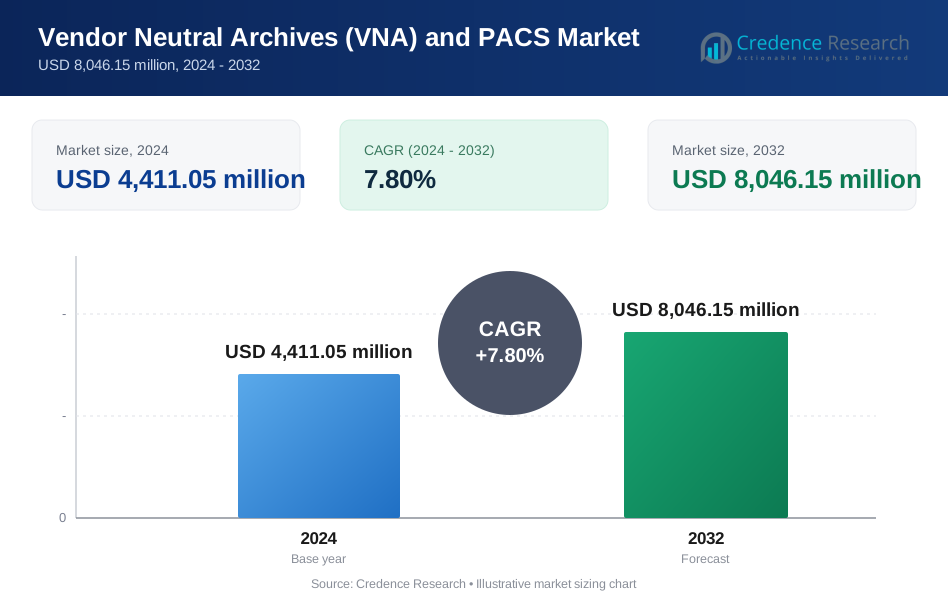
Global Vendor Neutral Archives (VNA) and Picture Archiving and Communication Systems (PACS) market size was valued at USD 4,411.05 million in 2024 and is anticipated to reach USD 8,046.15 million by 2032, at a CAGR of 7.80% during the forecast period (2024-2032).
The growth of the global Vendor Neutral Archives (VNA) and Picture Archiving and Communication Systems (PACS) market is driven by the rising demand for efficient data storage, retrieval, and sharing across healthcare facilities. Increasing adoption of advanced diagnostic imaging technologies, along with the shift toward value-based care, fuels the need for integrated and scalable imaging solutions. Healthcare providers are prioritizing interoperability and seamless data access, which VNAs and PACS effectively support by enabling centralized image management. Furthermore, the surge in chronic disease prevalence, aging population, and rising healthcare digitization initiatives are contributing to greater imaging volumes and the need for robust archiving systems. Cloud-based deployment models, artificial intelligence integration, and mobile access to imaging data are emerging as key trends, enhancing workflow efficiency and clinical decision-making. These innovations, coupled with regulatory support for health information exchange, continue to shape the market's evolution and long-term growth potential.
The geographical analysis of the Global Vendor Neutral Archives (VNA) and Picture Archiving and Communication Systems (PACS) market highlights the key growth drivers across different regions. North America leads the market, driven by advanced healthcare infrastructure and high adoption rates of digital imaging solutions. Europe follows with steady growth, fueled by regulatory frameworks and a growing focus on interoperability. The Asia-Pacific region is experiencing rapid expansion due to increasing healthcare investments and digital health adoption, particularly in emerging economies. The Rest of the World (RoW), including Latin America, the Middle East, and Africa, shows promise with improving healthcare standards and digitization efforts. Major players in the market include GE Healthcare, Siemens Healthineers, Philips Healthcare, Fujifilm Holdings Corporation, Agfa-Gevaert Group, IBM Watson Health, Sectra AB, Carestream Health, INFINITT Healthcare, and Merge Healthcare (an IBM Company). These companies are innovating in cloud-based solutions, AI integration, and enhancing system interoperability to cater to global healthcare demands.
Market Insights
- The Global VNA and PACS market was valued at USD 4,411.05 million in 2024 and is expected to reach USD 8,046.15 million by 2032, growing at a CAGR of 7.80% from 2024 to 2032.
- Increasing demand for interoperability and cloud-based storage solutions are key drivers of market growth.
- The integration of AI, machine learning, and automation into imaging solutions is a significant trend shaping the market.
- Competitive landscape is marked by the presence of major players like GE Healthcare, Siemens Healthineers, and Philips Healthcare, all investing heavily in innovation.
- High initial implementation costs and data security concerns pose significant restraints for market growth.
- North America holds the largest market share, followed by Europe, with strong demand in healthcare digitization.
- The Asia-Pacific region is expected to witness the fastest growth due to rising healthcare investments and digital health adoption.
Report Scope
This report segments the Global Vendor Neutral Archives (VNA) and Picture Archiving and Communication Systems (PACS) Market as follows:
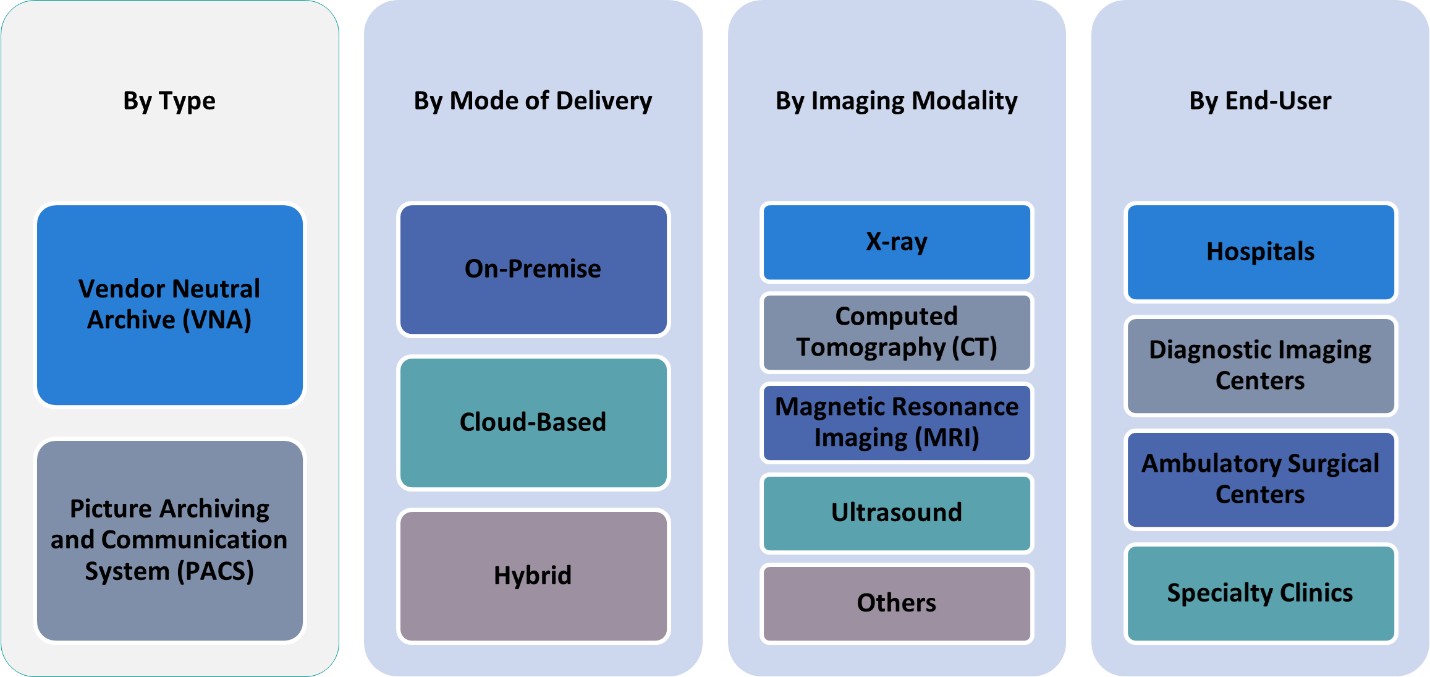
Market Drivers
Rising Demand for Centralized Image Management and Interoperability
One of the primary drivers of the VNA and PACS market is the increasing need for centralized image management systems that support interoperability across diverse healthcare platforms. As healthcare organizations transition toward integrated delivery networks, there is a growing emphasis on systems that allow seamless access, storage, and exchange of medical imaging data across multiple departments and facilities. For instance, the U.S. Department of Health and Human Services (HHS) has emphasized the importance of interoperability in healthcare IT systems, encouraging the adoption of vendor-neutral solutions to improve data accessibility. VNAs provide a vendor-agnostic approach, enabling institutions to avoid proprietary limitations and achieve true data integration across various PACS solutions. This capability not only enhances clinical workflow efficiency but also reduces redundant imaging and associated costs. The demand for vendor-neutral solutions is particularly strong in multi-site hospital networks and regional health information exchanges (HIEs), where data standardization and cross-platform accessibility are critical.
Increased Adoption of Diagnostic Imaging and Digital Healthcare Infrastructure
The growing utilization of advanced diagnostic imaging technologies, such as MRI, CT, PET, and ultrasound, is significantly contributing to the expansion of the VNA and PACS market. As the global burden of chronic diseases like cancer, cardiovascular conditions, and neurological disorders continues to rise, there is an increased reliance on imaging tools for early detection and ongoing monitoring. Additionally, the global healthcare sector is undergoing a digital transformation, with many countries investing in electronic health records (EHRs), cloud-based healthcare IT infrastructure, and telemedicine platforms. VNAs and PACS serve as foundational components of this digital ecosystem, enabling efficient integration of imaging data into patient records and improving coordination of care.
Growing Focus on Cost Efficiency and Workflow Optimization
Healthcare providers are under mounting pressure to reduce operational costs while maintaining high-quality patient care. VNAs and PACS help achieve this goal by streamlining imaging workflows, reducing administrative burden, and minimizing the need for physical film storage or redundant image acquisitions. For instance, the Healthcare Information and Management Systems Society (HIMSS) has highlighted the cost-saving benefits of VNAs in reducing administrative overhead and improving clinical decision-making. By consolidating image storage and simplifying data access across departments, these systems enable faster clinical decision-making and reduce delays in treatment planning. Furthermore, VNAs offer long-term cost advantages by decoupling storage from proprietary PACS viewers, making it easier and more economical to upgrade or switch systems without disrupting access to archived data. As value-based care models gain momentum globally, there is heightened demand for technologies that enhance efficiency, support population health initiatives, and improve clinical outcomes—key capabilities delivered by advanced VNA and PACS solutions.
Technological Advancements and Regulatory Support
The VNA and PACS market is benefiting from rapid technological advancements, including the integration of artificial intelligence (AI), machine learning, and cloud computing. AI-powered tools are increasingly being used to assist in image analysis, automate routine tasks, and prioritize urgent cases, leading to improved diagnostic accuracy and productivity. Cloud-based PACS and VNA systems also offer scalable, secure, and cost-effective solutions that facilitate remote access and disaster recovery. Moreover, regulatory initiatives and standards such as DICOM, HL7, and the European GDPR, as well as government-led health information exchange mandates, are encouraging the adoption of interoperable, compliant imaging solutions. These favorable regulatory environments and ongoing innovation continue to drive investments in VNA and PACS technologies, positioning them as integral components of modern, patient-centric healthcare systems.
Market Trends
Cloud-Based Deployment Gaining Momentum
One of the most significant trends shaping the VNA and PACS market is the rapid shift toward cloud-based deployment models. Healthcare organizations are increasingly adopting cloud-based solutions to reduce infrastructure costs, enhance data scalability, and enable remote access to medical imaging. Cloud platforms support flexible storage expansion, disaster recovery, and streamlined updates, making them a preferred choice for facilities with growing imaging needs. Moreover, cloud deployment facilitates collaboration across geographically dispersed healthcare settings by allowing authorized personnel to securely access and share imaging data in real-time. As concerns about data security and compliance are addressed through advanced encryption and regulatory-compliant cloud environments, this trend is expected to continue accelerating.
Adoption of Mobile and Remote Viewing Technologies
The shift toward mobile health and remote care delivery is influencing the development of PACS and VNA platforms that support mobile viewing and reporting capabilities. Clinicians increasingly require on-the-go access to imaging data to facilitate timely diagnoses and consultations, especially in emergency care and telemedicine settings. For instance, Philips Healthcare has developed mobile PACS solutions that enable secure remote access to imaging data from smartphones and tablets. Modern PACS systems are now equipped with responsive, browser-based viewers that allow secure access from smartphones, tablets, and laptops without compromising image quality. This mobility enhances collaboration among care teams and supports more agile healthcare delivery, aligning with the broader trend of patient-centered, technology-enabled care.
Integration of Artificial Intelligence and Automation Tools
The integration of artificial intelligence (AI) and automation in VNA and PACS solutions is revolutionizing diagnostic imaging workflows. AI-driven tools assist radiologists by enhancing image interpretation, identifying anomalies, and prioritizing critical cases based on urgency. For instance, IBM Watson Health has developed AI-powered imaging solutions that improve diagnostic precision and automate routine radiology tasks. Automated tagging, image categorization, and intelligent search functions are also improving efficiency and reducing human error. These capabilities not only speed up the diagnostic process but also enhance clinical accuracy and consistency. As AI algorithms become more sophisticated and are validated across various modalities, their adoption within PACS and VNA platforms is expected to expand, enabling more personalized and predictive healthcare delivery.
Focus on Interoperability and Cross-Platform Access
Another key trend influencing the VNA and PACS market is the growing emphasis on interoperability and seamless cross-platform data access. Healthcare systems are increasingly looking for solutions that integrate smoothly with electronic health records (EHRs), laboratory information systems (LIS), and other clinical IT infrastructure. Vendor Neutral Archives play a central role in this trend by standardizing imaging formats and ensuring compatibility across different PACS vendors. This trend is particularly relevant in multi-facility networks and regional health systems, where access to a patient’s complete imaging history can improve decision-making and patient outcomes. Regulatory initiatives promoting data exchange and patient access to records are further propelling demand for interoperable imaging solutions.
Market Challenges Analysis
High Implementation Costs and Infrastructure Limitations
Despite their long-term benefits, the initial implementation costs associated with VNA and PACS solutions remain a significant barrier, particularly for small and medium-sized healthcare providers. The expenses related to system installation, data migration, hardware upgrades, and staff training can be substantial. In many developing regions, limited IT infrastructure and insufficient technical expertise further hinder the widespread adoption of these advanced imaging systems. For instance, the Ministry of Statistics and Program Implementation (MoSPI) in India has identified data gaps in healthcare infrastructure, emphasizing the need for improved IT systems to support digital transformation. Additionally, transitioning from legacy systems to modern, interoperable platforms requires meticulous planning to avoid data loss, operational disruptions, or compatibility issues. For many healthcare facilities with constrained budgets, these financial and logistical hurdles delay digital transformation initiatives, even when such systems promise improved efficiency and care coordination.
Data Security, Privacy, and Compliance Complexities
As VNA and PACS systems become increasingly interconnected and cloud-based, concerns surrounding data security, privacy, and regulatory compliance are intensifying. These systems handle vast volumes of sensitive patient imaging data, making them prime targets for cyberattacks and data breaches. Ensuring compliance with international standards such as HIPAA (Health Insurance Portability and Accountability Act) in the U.S., GDPR (General Data Protection Regulation) in Europe, and other regional data protection laws is both complex and resource-intensive. The integration of third-party AI tools and cloud services also introduces additional security risks and compliance challenges. Healthcare providers must invest in robust cybersecurity frameworks, including encryption, access control, and continuous monitoring, to safeguard patient information. The growing threat landscape and evolving regulatory expectations place additional pressure on healthcare organizations to strike a balance between technological innovation and secure, compliant data management practices.
Market Opportunities
The Global Vendor Neutral Archives (VNA) and Picture Archiving and Communication Systems (PACS) market presents significant growth opportunities as healthcare systems worldwide increasingly prioritize digital transformation and data interoperability. Emerging economies, particularly in Asia-Pacific and Latin America, are rapidly investing in healthcare IT infrastructure, creating a fertile ground for the adoption of advanced imaging solutions. As governments and private healthcare providers work to improve diagnostic capabilities and expand access to care, the demand for scalable and cost-effective archiving and communication systems is expected to rise. Additionally, the growing trend of consolidations and partnerships among healthcare institutions is creating a need for centralized imaging platforms that can operate efficiently across multiple sites and departments. VNAs, with their ability to support data sharing across disparate systems, are especially well-positioned to capitalize on this demand.
Another key opportunity lies in the continued advancement and integration of emerging technologies such as artificial intelligence, machine learning, and cloud computing within VNA and PACS platforms. These technologies offer enhanced automation, predictive analytics, and remote accessibility, aligning well with the evolving needs of healthcare providers focused on improving clinical outcomes and operational efficiency. The expansion of telemedicine and mobile health solutions further amplifies this opportunity, as clinicians increasingly require flexible access to high-quality imaging data from any location. Moreover, regulatory trends favoring data standardization and patient access to health information are driving institutions to adopt interoperable systems that facilitate seamless information exchange. Vendors that offer secure, compliant, and future-ready solutions stand to gain a competitive advantage in this dynamic market landscape. As healthcare delivery models continue to shift toward value-based and patient-centric care, the role of intelligent, integrated imaging systems will become even more central to enabling timely, informed medical decisions.
Market Segmentation Analysis:
By Type:
The global Vendor Neutral Archives (VNA) and Picture Archiving and Communication Systems (PACS) market can be broadly segmented based on the type of system. The VNA segment is gaining significant traction due to its ability to support a wide range of imaging modalities while ensuring interoperability across various platforms. VNAs allow healthcare organizations to store, retrieve, and share medical images across different PACS vendors, thus reducing vendor lock-in and offering flexibility in system upgrades. This capability is especially valuable in multi-site hospital networks and regional health information exchanges. On the other hand, PACS solutions are primarily designed for storing, accessing, and managing medical images within a specific organization. PACS allows for efficient imaging workflows but may lack the cross-platform flexibility that VNAs offer. While VNAs cater to a more integrated and vendor-neutral approach, PACS remains the dominant choice in environments where a single vendor solution is preferred for simplicity and cost-effectiveness. The market demand for VNAs is expected to grow steadily as healthcare institutions prioritize interoperability and long-term scalability.
By Mode of Delivery:
In terms of delivery mode, the On-Premise segment remains significant in the VNA and PACS market, particularly among large healthcare facilities with the necessary infrastructure to manage and maintain these systems in-house. On-premise solutions offer full control over data storage and security but require substantial upfront investment and ongoing maintenance costs. In contrast, the Cloud-Based segment is rapidly expanding due to its flexibility, scalability, and lower total cost of ownership. Cloud-based VNA and PACS solutions allow healthcare providers to store vast amounts of imaging data off-site, reducing the need for physical storage infrastructure. Cloud solutions also enable remote access to imaging data, facilitating collaboration among healthcare professionals across different locations. Lastly, the Hybrid segment, which combines both on-premise and cloud-based solutions, is gaining popularity as it offers the best of both worlds. Hybrid systems provide flexibility, ensuring that sensitive data can be stored on-premise while leveraging the cloud for scalability and remote access. As healthcare institutions continue to embrace digital transformation, the adoption of hybrid and cloud-based delivery models is expected to increase, driven by their ability to improve efficiency and reduce costs.
Segments:
Based on Type:
- Vendor Neutral Archive (VNA)
- Picture Archiving and Communication System (PACS)
Based on Mode of Delivery:
- On-Premise
- Cloud-Based
- Hybrid
Based on End- User:
- Hospitals
- Diagnostic Imaging Centers
- Ambulatory Surgical Centers
- Specialty Clinics
Based on Imaging Modality:
- X-ray
- Computed Tomography (CT)
- Magnetic Resonance Imaging (MRI)
- Ultrasound
- Others
Based on the Geography:
- North America
- U.S.
- Canada
- Mexico
- Europe
- UK
- France
- Germany
- Italy
- Spain
- Russia
- Belgium
- Netherlands
- Austria
- Sweden
- Poland
- Denmark
- Switzerland
- Rest of Europe
- Asia Pacific
- China
- Japan
- South Korea
- India
- Australia
- Thailand
- Indonesia
- Vietnam
- Malaysia
- Philippines
- Taiwan
- Rest of Asia Pacific
- Latin America
- Brazil
- Argentina
- Peru
- Chile
- Colombia
- Rest of Latin America
- Middle East
- UAE
- KSA
- Israel
- Turkey
- Iran
- Rest of Middle East
- Africa
- Egypt
- Nigeria
- Algeria
- Morocco
- Rest of Africa
Regional Analysis
North America
North America holds the largest market share in the global Vendor Neutral Archives (VNA) and Picture Archiving and Communication Systems (PACS) market, accounting for approximately 40% of the total market revenue. This dominant share is driven by the region’s advanced healthcare infrastructure, high adoption rate of digital imaging technologies, and the presence of key market players. The United States, in particular, has been a major contributor to this growth due to its well-established healthcare system, increasing demand for interoperable systems, and large-scale investments in healthcare IT. Furthermore, government initiatives such as the Health Information Technology for Economic and Clinical Health (HITECH) Act have played a significant role in accelerating the adoption of PACS and VNA solutions. As healthcare providers continue to digitize their operations and adopt value-based care models, North America is expected to maintain its leadership in the market.
Europe
Europe holds the second-largest share of the global VNA and PACS market, with approximately 30% of the total market revenue. The region is experiencing steady growth in demand for advanced imaging solutions, particularly in countries such as Germany, the UK, and France, where healthcare systems are increasingly focusing on digitization, data sharing, and interoperability. The European market is heavily influenced by regulatory frameworks like the General Data Protection Regulation (GDPR), which ensure secure and compliant data management. Furthermore, the integration of artificial intelligence (AI) and machine learning technologies into PACS and VNA systems is fostering increased adoption in the region. The growing need for centralized medical imaging and the shift towards cloud-based storage solutions are also expected to drive market growth in Europe over the forecast period.
Asia-Pacific
The Asia-Pacific region is witnessing significant growth in the VNA and PACS market, holding a 20% share of the global market. This rapid expansion is fueled by increased healthcare investments, growing adoption of digital health solutions, and rising healthcare needs in countries like China, Japan, and India. The region's aging population, increasing prevalence of chronic diseases, and rising demand for advanced diagnostic tools are contributing to the market’s expansion. Moreover, the growing trend of hospital network consolidations and the increasing focus on improving healthcare infrastructure in emerging markets are driving the adoption of VNA and PACS solutions. As cloud-based solutions gain popularity in the region due to their cost-effectiveness and scalability, the Asia-Pacific market is expected to grow at a robust pace in the coming years.
Rest of the World
The Rest of the World (RoW) region, which includes Latin America, the Middle East, and Africa, accounts for about 10% of the global VNA and PACS market. Although this region holds a smaller market share, it is experiencing significant growth, particularly in emerging markets. In Latin America, countries like Brazil and Mexico are investing in healthcare IT infrastructure, driven by the need for better healthcare services and digitization. In the Middle East and Africa, improving healthcare standards and initiatives to enhance medical imaging capabilities are contributing to the adoption of VNA and PACS solutions. The demand for cloud-based solutions and mobile accessibility is expected to further boost market growth in these regions. As healthcare systems continue to evolve, the RoW segment is poised for strong growth in the coming years.
Key Player Analysis
- GE Healthcare
- Siemens Healthineers
- Philips Healthcare
- Fujifilm Holdings Corporation
- Agfa-Gevaert Group
- IBM Watson Health
- Sectra AB
- Carestream Health
- INFINITT Healthcare
- Merge Healthcare (an IBM Company)
Competitive Analysis
The Global Vendor Neutral Archives (VNA) and Picture Archiving and Communication Systems (PACS) market is highly competitive, with several leading players dominating the landscape. GE Healthcare, Siemens Healthineers, Philips Healthcare, Fujifilm Holdings Corporation, Agfa-Gevaert Group, IBM Watson Health, Sectra AB, Carestream Health, INFINITT Healthcare, and Merge Healthcare (an IBM Company) are the key players driving innovation and market expansion. These companies focus on enhancing their product offerings through the integration of cutting-edge technologies such as artificial intelligence (AI), cloud computing, and machine learning, aimed at improving the efficiency and accuracy of medical imaging systems. Companies are continuously innovating to enhance imaging capabilities, streamline workflows, and provide scalable solutions for healthcare providers worldwide. Competitive strategies include strategic partnerships, acquisitions, and heavy investment in research and development to stay ahead in terms of technology and product features. Many players are expanding their product portfolios to include cloud-based VNA and PACS solutions, allowing healthcare institutions to reduce costs and improve accessibility. Additionally, advancements in artificial intelligence (AI) and machine learning are being integrated into imaging systems to automate processes and enhance diagnostic accuracy. As healthcare organizations increasingly focus on improving efficiency, reducing operational costs, and enhancing patient care, the competition is intensifying, with companies striving to offer flexible, secure, and cost-effective solutions. Key factors driving competition in the market include data security, system interoperability, user-friendliness, and ongoing technological advancements.
Recent Developments
- In March 2024, at the European Congress of Radiology in Vienna, Philips unveiled new hardware innovations, focusing on integrating artificial intelligence into their imaging solutions to enhance diagnostic accuracy and workflow efficiency.
- In February 2024, FUJIFILM Healthcare Americas Corporation announced that it’s Synapse VNA and Synapse Radiology PACS solutions (in Asia/Oceania) were ranked #1 in the 2024 Best in KLAS Awards: Software and Services. The recognition, based on insights from KLAS Research, highlights companies excelling in improving patient care through their software and services.
- In January 2024, RamSoft (Canada) launched imaging EMR solution, named OmegaAI. The solution is a cloud-native, serverless imaging EMR software platform that consolidates VNA, Enterprise Imaging, PACS, RIS, simplified image exchange/sharing, routing & storage, a zero-footprint (ZFP) viewer, unified worklist, radiology reporting, document management, peer, patient portal, and a real-time business intelligence and analytics solution.
- In November 2023, InsiteOne (US) announced to acquire BRIT Systems cloud native RIS/PACS/VNA solution to advance imaging workflows. This acquisition will continue to focus on developing cost-effective solutions that improve operational productivity while enhancing patient care.
- In July 2023, Fujifilm Sonosite joined the newly formed Medical Imaging Division under the Advanced Medical Technology Association (AdvaMed), collaborating with industry leaders to advance medical imaging technologies.
Market Concentration & Characteristics
The market for Global Vendor Neutral Archives (VNA) and Picture Archiving and Communication Systems (PACS) exhibits moderate concentration, with a few large players dominating the space, alongside several smaller and emerging companies. Major companies such as GE Healthcare, Siemens Healthineers, and Philips Healthcare lead the market, benefiting from strong brand recognition, extensive product portfolios, and significant financial resources to invest in innovation. However, the market also includes niche players that specialize in specific features such as AI-driven imaging solutions, cloud-based storage, and data analytics. These players differentiate themselves by offering specialized and flexible solutions tailored to specific healthcare provider needs. The competitive landscape is characterized by ongoing technological advancements, with a growing emphasis on cloud computing, interoperability, and AI integration. The market is also marked by strategic partnerships, acquisitions, and alliances to expand product offerings and enhance technological capabilities, ultimately driving market growth and product diversification.
Report Coverage
The research report offers an in-depth analysis based on Type, Mode of Delivery, End-User, Imaging Modality and Geography. It details leading market players, providing an overview of their business, product offerings, investments, revenue streams, and key applications. Additionally, the report includes insights into the competitive environment, SWOT analysis, current market trends, as well as the primary drivers and constraints. Furthermore, it discusses various factors that have driven market expansion in recent years. The report also explores market dynamics, regulatory scenarios, and technological advancements that are shaping the industry. It assesses the impact of external factors and global economic changes on market growth. Lastly, it provides strategic recommendations for new entrants and established companies to navigate the complexities of the market.
Future Outlook
- The adoption of Vendor Neutral Archives (VNA) and Picture Archiving and Communication Systems (PACS) is expected to rise as healthcare organizations increasingly prioritize interoperability and data accessibility.
- Advances in cloud computing will drive the migration of PACS and VNA solutions to cloud-based platforms, offering enhanced scalability and cost-efficiency.
- Integration with Artificial Intelligence (AI) will improve image analysis and clinical decision-making, increasing the demand for PACS and VNA systems.
- There will be a significant focus on improving data security and compliance with evolving healthcare regulations, ensuring patient privacy in VNA and PACS environments.
- Increased demand for remote access to medical images and data will promote the use of cloud-based PACS solutions for telemedicine and decentralized healthcare settings.
- The growing need for comprehensive and centralized data repositories will propel the integration of VNA and PACS with Electronic Health Records (EHR) and other healthcare IT systems.
- Future developments will aim to improve user interfaces, making PACS and VNA systems more intuitive and user-friendly for healthcare professionals.
- As the volume of medical imaging data grows, there will be continued innovation in data storage, retrieval, and management, ensuring fast and reliable access to critical information.
- Cross-platform compatibility and seamless integration with diverse imaging modalities will become a key feature in next-generation PACS and VNA solutions.
- Strategic partnerships between technology providers, healthcare institutions, and AI firms will drive the next phase of evolution in VNA and PACS, enhancing overall healthcare delivery and operational efficiency.
Request a Free Sample
Fill in your details and we'll send you a free sample report.
- Sample data tables & charts
- Research methodology
Need a Custom Version of This Report?
Tailor the scope, geography, or segments to your exact requirements.
- Custom geography or segment scope
- Direct access to our analyst team
Frequently Asked Questions
What is the current size of the Global Vendor Neutral Archives (VNA) and Picture Archiving and Communication Systems (PACS) market?
What factors are driving the growth of the Global Vendor Neutral Archives (VNA) and Picture Archiving and Communication Systems (PACS) market?
What are the key segments within the Global Vendor Neutral Archives (VNA) and Picture Archiving and Communication Systems (PACS) market?
What are some challenges faced by the Global Vendor Neutral Archives (VNA) and Picture Archiving and Communication Systems (PACS) market?
Table of Content
Chapter 1. Report Introduction
- 1.1 Report Description & Purpose
- 1.1.1 Report Title & Market Definition
- 1.1.2 Unique Selling Propositions (USP) & Key Differentiators
- 1.1.3 Value Proposition for Stakeholders
- 1.2 Research Objectives
- 1.2.1 Market Sizing Objectives (Volume & Revenue)
- 1.2.2 Segmentation Objectives
- 1.2.3 Competitive Intelligence Objectives
- 1.2.4 Forecast & Scenario Objectives
- 1.3 Report Scope
- 1.3.1 Vendor Neutral Archives (VNA) and PACS Scope – Types & Subtypes Covered
- 1.3.2 Geographic Scope – Regions & Countries Covered
- 1.3.3 Historical Period, Base Year & Forecast Period (2024; forecast to 2032)
- 1.3.4 Inclusions & Exclusions
- 1.4 HS Code & Classification Framework
- 1.5 Currency, Units & Pricing Basis
- 1.6 Target Stakeholders
- 1.7 Limitations & Assumptions
Chapter 2. Executive Summary
- 2.1 Global Vendor Neutral Archives (VNA) and PACS Market Snapshot
- 2.1.1 Market Size – Historical (2024) & Forecast (2024-2032) (2024: USD 4,411.05 million → 2032: USD 8,046.15 million)
- 2.1.2 Volume & Revenue – Global Totals
- 2.1.3 Key Market Highlights – Top Five Facts
- 2.2 Vendor Neutral Archives (VNA) and PACS Market Segmentation Snapshot
- 2.2.1 Market Split by Region – 2024 vs. 2032
- 2.3 Competitive Snapshot
- 2.3.1 Top 10 Players by Revenue Share – 2024
- 2.3.2 Top 10 Players by Volume Share – 2024
- 2.3.3 Recent Strategic Developments (18-Month Summary)
- 2.4 Key Investment Highlights & Strategic Conclusions
Chapter 3. Vendor Neutral Archives (VNA) and PACS Market Dynamics & Industry Analysis
- 3.1 Market Overview & Context
- 3.1.1 Vendor Neutral Archives (VNA) and PACS Market Position in the Broader Automotive Value Chain
- 3.1.2 OEM vs. Replacement Market Dynamics
- 3.1.3 Market Maturity & Development Stage by Region
- 3.2 Vendor Neutral Archives (VNA) and PACS Market Drivers
- 3.3 Vendor Neutral Archives (VNA) and PACS Market Restraints & Challenges
- 3.4 Vendor Neutral Archives (VNA) and PACS Market Opportunities
- 3.5 Porter's Five Forces Analysis
- 3.5.1 Threat of New Entrants
- 3.5.2 Bargaining Power of Suppliers
- 3.5.3 Bargaining Power of Buyers
- 3.5.4 Threat of Substitutes
- 3.5.5 Competitive Rivalry – Intensity Assessment
- 3.6 Vendor Neutral Archives (VNA) and PACS Value Chain Analysis
- 3.6.1 Upstream – Raw Material/Input Suppliers
- 3.6.1.1 Raw Material/Input 1
- 3.6.1.2 Raw Material/Input 2
- 3.6.1.3 Raw Material/Input 3
- 3.6.2 Midstream – Production/Manufacturing/Service Delivery
- 3.6.2.1 Production/Process Overview
- 3.6.2.2 Key Facility Locations & Capacity by Manufacturer
- 3.6.3 Downstream – Distribution & End Consumer
- 3.6.3.1 Primary Channel – B2B/OEM
- 3.6.3.2 Secondary Channels – Dealer, Retail, Online, Direct
- 3.6.4 Value Chain Profitability Analysis
- 3.6.1 Upstream – Raw Material/Input Suppliers
- 3.7 PESTEL Analysis
- 3.7.1 Political Factors
- 3.7.2 Economic Factors
- 3.7.3 Social Factors
- 3.7.4 Technological Factors
- 3.7.5 Environmental Factors
- 3.7.6 Legal Factors
- 3.8 Vendor Neutral Archives (VNA) and PACS Supply Chain Analysis
- 3.8.1 Raw Material/Input Supply Risk Assessment
- 3.8.2 Manufacturing Concentration Risk (Geographic Exposure)
- 3.8.3 Trade Disruption Impact Analysis
- 3.9 Regulatory & Policy Landscape
Note: The regulatory and policy landscape section covers regulations based on their applicability to the market, Vendor Neutral Archives (VNA) and PACS category, geography, and scope of the study. Only regulatory frameworks with a material impact on operations, compliance, trade, sustainability, or market access are analyzed in detail.
Chapter 4. Key Investment Pockets & Opportunity Analysis
- 4.1 Vendor Neutral Archives (VNA) and PACS Market Attractiveness Analysis
- 4.1.1 By Region – Investment Attractiveness Matrix (Volume × CAGR)
- 4.2 Absolute Revenue Growth Opportunity
- 4.2.1 By Region – Absolute USD Growth Through 2032
- 4.3 Incremental Volume Opportunity
- 4.3.1 By Region – Incremental Volume Through 2032
- 4.3.2 Segment – Incremental Volume
- 4.4 Emerging Submarket Opportunity Deep Dive (Subject to Applicability)
- 4.5 Emerging Market Opportunity Scorecards
- 4.5.1 United States
- 4.5.2 Europe
- 4.5.3 Asia
- 4.5.4 Middle East & Africa
Note: Emerging Market Opportunity Scorecards will be included based on relevance and strategic importance. Regions listed are indicative and may vary depending on data availability and market dynamics.
Chapter 5. Vendor Neutral Archives (VNA) and PACS Import-Export Analysis & Trade Flows
- 5.1 Global Trade Overview
- 5.1.1 Global Export Value by Country (2024)
- 5.1.2 Global Export Volume by Country (2024)
- 5.1.3 Global Import Value by Country (2024)
- 5.1.4 Global Import Volume by Country (2024)
- 5.1.5 Net Trade Balance by Country (2024)
- 5.2 Export Analysis – Segment
- 5.2.1 Type 1 (HS Code)
- 5.2.2 Type 2 (HS Code)
- 5.2.3 Type 3 (HS Code)
- 5.2.4 Type 4 (HS Code)
- 5.2.5 Type 5 (HS Code)
- 5.3 Import Analysis – Segment
- 5.3.1 Type 1 (HS Code)
- 5.3.2 Type 2 (HS Code)
- 5.3.3 Type 3 (HS Code)
- 5.3.4 Type 4 (HS Code)
- 5.3.5 Type 5 (HS Code)
- 5.4 Average Unit Trade Prices
- 5.4.1 Average Export Price – Segment & Country
- 5.4.2 Average Import Price – Segment & Source Country
- 5.4.3 Price Trends (2024)
- 5.5 Key Trade Route Analysis
- 5.5.1 Trade Route 1
- 5.5.2 Trade Route 2
- 5.5.3 Trade Route 3
- 5.5.4 Trade Route 4
- 5.5.5 Trade Route 5
- 5.6 Trade Policy Impact Assessment
- 5.6.1 US Anti-Dumping & Section 301 Tariffs
- 5.6.2 EU Customs Union Impact
- 5.6.3 Major Free Trade Agreements
- 5.6.4 USMCA Rules of Origin
Note: Trade policy analysis will be included only where relevant to the Vendor Neutral Archives (VNA) and PACS market.
Chapter 6. Competitive Landscape & Company Benchmarking
- 6.1 Vendor Neutral Archives (VNA) and PACS Market Concentration & Structure
- 6.1.1 Herfindahl-Hirschman Index (HHI) – vs. 2024
- 6.1.2 Tier 1, Tier 2 & Tier 3 Market Structure
- 6.1.3 Global, Regional & Local Player Dynamics
- 6.2 Vendor Neutral Archives (VNA) and PACS Market Share Analysis – 2024
- 6.2.1 Global Revenue Share by Company
- 6.2.2 Global Volume Share by Company
- 6.2.3 Regional Revenue Share
- 6.2.4 Market Share Evolution ( vs. 2024)
- 6.2.5 OEM Segment Share by Company
- 6.2.6 Replacement Segment Share by Company
- 6.3 Production/Delivery Capacity & Facility Analysis
- 6.3.1 Global Installed Capacity
- 6.3.2 Capacity Utilization Rates
- 6.3.3 Production/Output Volume
- 6.3.4 Facility Locations & Capacity Map
- 6.3.5 Planned Capacity Additions
- 6.4 Vendor Neutral Archives (VNA) and PACS Competitive Benchmarking Matrix
- 6.4.1 Revenue, Volume, CAGR & Profitability Comparison
- 6.4.2 Channel Revenue Mix
- 6.4.3 Geographic Revenue Exposure
- 6.4.4 R&D Intensity
- 6.4.5 Sustainability Maturity
- 6.5 Strategic Developments in Vendor Neutral Archives (VNA) and PACS (Last 24 Months)
- 6.5.1 Mergers, Acquisitions & Divestments
- 6.5.2 New Vendor Neutral Archives (VNA) and PACS Launches
- 6.5.3 Facility Expansions
- 6.5.4 Strategic Alliances, Joint Ventures & Partnerships
- 6.5.5 Distribution Expansion & Market Entry
- 6.5.6 Sustainability & ESG Initiatives
- 6.6 Competitive Strategy Mapping
- 6.6.1 Leader, Challenger, Follower & Niche Classification
- 6.6.2 Pricing Strategy Comparison
- 6.6.3 Channel Strategy Matrix
Note: Strategic developments are included based on their materiality and the availability of reliable information.
Chapter 7. Global Vendor Neutral Archives (VNA) and PACS Market – By Distribution Channel
- 7.1 Segment Overview
- 7.1.1 Volume & Revenue Split by Channel (2024 & 2032)
- 7.1.2 Channel Mix Evolution (2024-2032)
Chapter 8. Regional Market Analysis – Global Overview
- 8.1 Global Regional Overview
- 8.1.1 Regional Volume Share
- 8.1.2 Regional Revenue Share
- 8.1.3 Regional Volume by Region
- 8.1.4 Regional Revenue by Region
- 8.1.5 Regional Forecast Through 2032
- 8.2 Cross-Regional Segment Analysis
- 8.2.1 By Distribution Channel
- 8.2.2 By Brand/Price Tier
Chapter 9. North America Vendor Neutral Archives (VNA) and PACS Market
- 9.1 United States
- 9.2 Canada
- 9.3 Mexico
Chapter 10. Europe Vendor Neutral Archives (VNA) and PACS Market
- 10.1 Germany
- 10.2 France
- 10.3 Italy
- 10.4 United Kingdom
- 10.5 Spain
- 10.6 Poland
- 10.7 Russia
- 10.8 Netherlands
- 10.9 Belgium
- 10.10 Sweden
- 10.11 Denmark
- 10.12 Norway
- 10.13 Rest of Europe
Chapter 11. Asia Pacific Vendor Neutral Archives (VNA) and PACS Market
- 11.1 China
- 11.2 India
- 11.3 Japan
- 11.4 South Korea
- 11.5 Thailand
- 11.6 Indonesia
- 11.7 Vietnam
- 11.8 Malaysia
- 11.9 Australia
- 11.10 Rest of Asia Pacific
Chapter 12. Latin America Vendor Neutral Archives (VNA) and PACS Market
- 12.1 Brazil
- 12.2 Argentina
- 12.3 Colombia
- 12.4 Chile
- 12.5 Rest of Latin America
Chapter 13. Middle East Vendor Neutral Archives (VNA) and PACS Market
- 13.1 Saudi Arabia
- 13.2 United Arab Emirates
- 13.3 Turkey
- 13.4 Israel
- 13.5 Iran
- 13.6 Rest of the Middle East
Chapter 14. Africa Vendor Neutral Archives (VNA) and PACS Market
- 14.1 South Africa
- 14.2 Egypt
- 14.3 Nigeria
- 14.4 Morocco
- 14.5 Rest of Africa
Chapter 15. Vendor Neutral Archives (VNA) and PACS Company Profiles
- 15.1 [Company 01]
- 15.1.1 Company Overview
- 15.1.2 Key Management Personnel
- 15.1.3 Products & Services Portfolio
- 15.1.4 Financial Performance
- 15.1.5 Key Market Focus & Geographic Presence
- 15.1.6 Recent Developments & Strategic Initiatives
Note: The company profile list is preliminary and may change based on research findings, market developments, data availability, and client requirements.
Chapter 16. Appendices
- Appendix A – List of Abbreviations & Acronyms
- Appendix B – Industry Classification Code Reference – Full Series
- Appendix C – Production & Capacity Data Tables
- Appendix D – End-Use & Demand Base Tables
- Appendix E – Consumption & Replacement Rate Assumptions
- Appendix F – ASP Reference Tables
- Appendix G – Manufacturing & Facility Database
- Appendix H – Import-Export Data Tables
- Appendix I – Regulatory Summary Tables
- Appendix J – Primary Research Participant List (Anonymized)
- Appendix K – Primary Research Questionnaire Framework
- Appendix L – Data Sources & Bibliography
- Appendix M – Market Size Divergence & Source Comparison
Chapter 17. Research Methodology
- 17.1 Research Framework & Philosophy
- 17.2 Secondary Research – Sources, Hierarchy & Data Extraction
- 17.3 Data Modeling – Bottom-Up & Top-Down Market Sizing
- 17.4 Primary Research – Stakeholder Framework, LOI & Sample Sizes
- 17.5 Forecast Methodology – Regression, Scenario & Sensitivity Analysis
- 17.6 Quality Control – Four-Layer Validation Framework
- 17.7 Limitations & Standard Assumptions
- 17.8 Disclaimer
