
| REPORT ATTRIBUTE | DETAILS |
|---|---|
| Historical Period | 2020-2023 |
| Base Year | 2024 |
| Forecast Period | 2025-2032 |
| Africa Disposable Medical Supplies Market Size 2023 | USD 4,471.25 Million |
| Africa Disposable Medical Supplies Market, CAGR | 1.70% |
| Africa Disposable Medical Supplies Market Size 2032 | USD 5,230.98 Million |
Market Overview
Africa Disposable Medical Supplies Market size was valued at USD 4,471.25 million in 2023 and is anticipated to reach USD 5,230.98 million by 2032, at a CAGR of 1.70% during the forecast period (2023-2032).
The Africa Disposable Medical Supplies market is driven by the increasing demand for infection control, enhanced healthcare infrastructure, and rising healthcare expenditure across the region. As the prevalence of chronic diseases and medical procedures grows, the need for cost-effective and hygienic medical solutions becomes more critical. The rising focus on improving sanitation standards in hospitals, clinics, and healthcare facilities further fuels market growth. Additionally, the expansion of healthcare access in rural areas and the growing adoption of disposable products in both public and private healthcare sectors contribute to the market’s expansion. Emerging trends, such as the development of biodegradable and eco-friendly disposable medical products, are gaining traction in response to environmental concerns. This shift toward sustainability is expected to drive innovation in product offerings, aligning with global efforts to reduce medical waste and improve sustainability in healthcare practices.
The Africa Disposable Medical Supplies market is expanding rapidly across various regions, driven by increased healthcare investments and infrastructure improvements. Key players in this market include global and regional companies such as Smith+Nephew, Medtronic, Procter & Gamble, Molnlycke Health Care, and Ontex, which are contributing significantly to market growth by offering a wide range of medical supplies. These companies are strategically positioning themselves to address the growing demand for disposable medical products in both urban and rural areas. As healthcare access improves in countries like Egypt, Nigeria, and South Africa, these key players are well-positioned to cater to the diverse needs of healthcare facilities, addressing infection control, hygiene, and cost-effective medical care. The expansion of healthcare infrastructure, coupled with innovations in product offerings, is expected to strengthen their presence across the continent.
Market Insights
- The Africa Disposable Medical Supplies market was valued at USD 4,471.25 million in 2023 and is projected to reach USD 5,230.98 million by 2032, growing at a CAGR of 1.70%.
- The global Disposable Medical Supplies market was valued at USD 2,45,000 million in 2023 and is expected to reach USD 3,93,306.92 million by 2032, growing at a CAGR of 5.40% during the forecast period.
- Growing demand for infection control and hygiene in healthcare settings is driving market growth, with increasing healthcare awareness and infection prevention measures.
- Rising healthcare infrastructure investments and urbanization across Africa are expanding the need for disposable medical supplies.
- Trends include the shift towards biodegradable and eco-friendly products, responding to global sustainability concerns in healthcare.
- Competitive players like Smith+Nephew, Medtronic, and Procter & Gamble dominate the market, continuously innovating and expanding their product portfolios.
- High product costs and distribution challenges, particularly in rural areas, are key market restraints.
- Regional growth is strongest in Egypt, Nigeria, and South Africa, where healthcare spending and infrastructure improvements are driving demand.
Report Scope
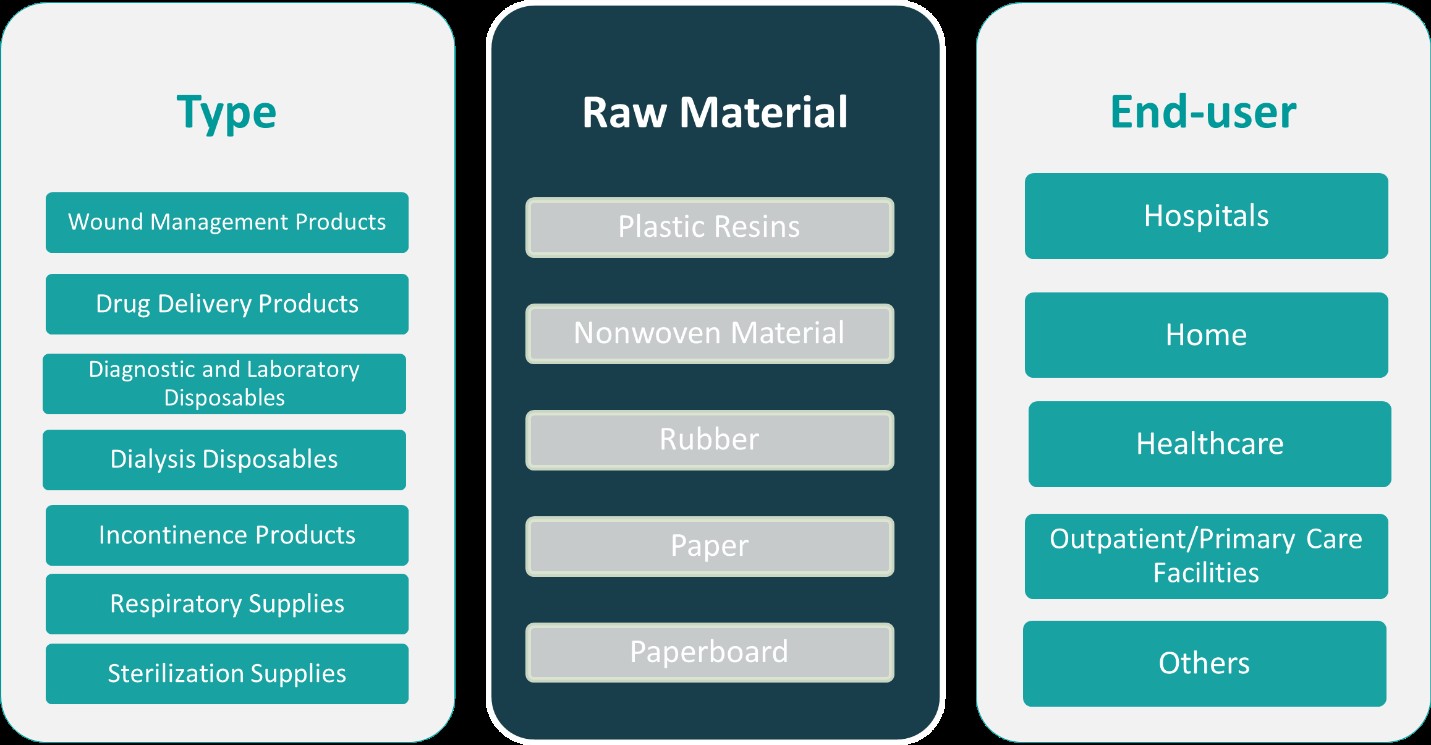
This report segments the Africa Disposable Medical Supplies Market as follows:
Market Drivers
Growing Demand for Infection Control and Hygiene
One of the primary drivers of the Africa Disposable Medical Supplies market is the increasing demand for infection control and hygiene practices in healthcare settings. For instance, a report by the World Health Organization (WHO) emphasized the critical role of disposable gloves and masks in reducing healthcare-associated infections (HAIs) in hospitals and clinics. With the rising awareness of the importance of sanitation in hospitals, clinics, and healthcare centers, disposable medical supplies such as gloves, masks, gowns, and syringes have become essential for preventing the spread of infections. In light of global health events, including the COVID-19 pandemic, the demand for these products has further accelerated, emphasizing their role in safeguarding both healthcare workers and patients.
Expansion of Healthcare Infrastructure
The expansion of healthcare infrastructure across Africa is another significant driver of market growth. Governments, private investors, and international organizations are investing heavily in improving healthcare facilities, especially in rural and underserved areas. This expansion is accompanied by an increase in the number of hospitals, clinics, and diagnostic centers, all of which require a steady supply of disposable medical products. Additionally, as the healthcare sector becomes more modernized, there is a growing reliance on disposable supplies to ensure operational efficiency, prevent contamination, and manage large patient volumes. This trend is particularly evident in countries that are focusing on universal healthcare coverage and are investing in new medical technologies and infrastructure.
Rising Healthcare Expenditure and Urbanization
Rising healthcare expenditure across Africa is also contributing to the growth of the disposable medical supplies market. For instance, surveys conducted by the WHO African Region Health Expenditure Atlas highlighted increased government spending on healthcare in urban areas, particularly in rapidly growing cities like Nairobi and Johannesburg. As disposable income levels rise in various African nations, governments and individuals are investing more in healthcare, leading to greater demand for disposable medical products. With urbanization, particularly in rapidly growing cities, there is an increased need for advanced healthcare services and the necessary medical supplies to support them. Urban populations tend to have higher access to healthcare services, and as a result, the consumption of disposable medical supplies is more concentrated in these regions. Additionally, as healthcare systems improve, there is a greater focus on providing high-quality care, further boosting the adoption of disposable products in hospitals and clinics.
Increasing Adoption of Sustainable and Eco-Friendly Products
The shift towards sustainability is becoming a significant driver in the African disposable medical supplies market. With growing environmental awareness globally, there is a rising demand for eco-friendly and biodegradable medical products, which are increasingly being introduced to the African market. This trend is fueled by concerns about the environmental impact of medical waste, as disposable items like syringes, gloves, and masks are typically used in large volumes and disposed of after a single use. Manufacturers are responding by developing more environmentally friendly alternatives, such as biodegradable plastics and recyclable materials. The increasing availability of these sustainable options is appealing to both healthcare providers and consumers who are looking for ways to reduce their environmental footprint, while still ensuring safety and hygiene in medical practices. This trend aligns with the global push for more sustainable healthcare solutions and is expected to shape the future of the disposable medical supplies market in Africa.
Market Trends
Expansion of Disposable Medical Supplies in Rural Areas
As part of broader healthcare development initiatives, disposable medical supplies are becoming more accessible in rural and remote areas of Africa. For instance, government health programs in Ethiopia and Uganda have improved transportation networks, ensuring that essential medical products reach underserved areas. Historically, healthcare infrastructure in rural regions has been underdeveloped, and access to essential medical products was limited. However, with improvements in transportation networks, government health programs, and support from international organizations, disposable medical supplies are now reaching underserved areas. This trend is helping to bridge the healthcare gap by ensuring that even the most remote populations have access to basic healthcare supplies, which is particularly critical for preventing the spread of infectious diseases in rural communities.
Rising Adoption of Biodegradable and Eco-Friendly Products
A key trend in the Africa Disposable Medical Supplies market is the increasing shift toward biodegradable and eco-friendly medical products. For instance, environmental campaigns in South Africa have promoted the adoption of biodegradable plastics and plant-based materials in medical supplies. Manufacturers are developing products made from biodegradable plastics, plant-based materials, and other eco-friendly substances to reduce medical waste. This trend is driven by the need to address environmental sustainability without compromising the safety and efficacy of medical supplies. Eco-friendly products are gaining popularity in African markets, particularly among environmentally-conscious healthcare institutions and consumers who are prioritizing green practices in their operations.
Growth of Online Sales Channels for Medical Supplies
Another prominent trend in the market is the increasing adoption of online sales channels for disposable medical supplies. E-commerce platforms and digital marketplaces have made it easier for healthcare facilities, pharmacies, and individual buyers to access a wide range of medical products. The convenience, competitive pricing, and home delivery options offered by online platforms are driving this shift. In many African regions, especially urban areas, healthcare providers are increasingly turning to online sources for their medical supplies due to the convenience and availability of a broader selection of products. This digital transformation is also enabling more efficient supply chain management, ensuring faster delivery and better inventory control for healthcare institutions.
Technological Advancements in Product Innovation
Technological advancements are also shaping the Africa Disposable Medical Supplies market, with manufacturers focusing on innovation to meet the growing demand for high-quality, specialized products. Developments in material science and manufacturing techniques have led to the creation of more advanced and user-friendly disposable medical supplies. For example, innovations in syringe designs, wound care products, and diagnostic kits are improving the overall functionality and efficiency of medical supplies. Additionally, there is a trend toward customizing disposable products for specific medical needs, such as devices tailored for use in specific surgical procedures or wound care solutions with enhanced healing properties. These technological advancements are driving market growth by offering healthcare providers access to more efficient and specialized medical supplies.
Market Challenges Analysis
High Cost of Disposable Medical Supplies
One of the primary challenges facing the Africa Disposable Medical Supplies market is the high cost of these products, which can strain healthcare budgets, particularly in low-income regions. For instance, a report by the World Health Organization (WHO) highlighted that currency fluctuations and import duties significantly increase the cost of medical supplies in developing countries. Disposable medical supplies, including gloves, syringes, masks, and surgical instruments, often come with significant production, import, and distribution costs. These costs are exacerbated by currency fluctuations, import duties, and the logistical complexities of transporting medical supplies to remote and rural areas. As a result, many healthcare facilities, especially in developing countries, struggle to afford a consistent supply of essential disposable products. This cost barrier limits the ability of healthcare systems to maintain high standards of hygiene and infection control, hindering the effective delivery of healthcare services.
Inadequate Distribution and Supply Chain Issues
The Africa Disposable Medical Supplies market also faces significant challenges related to distribution and supply chain inefficiencies. The continent's diverse geography, coupled with inadequate infrastructure in certain regions, makes it difficult to ensure timely and consistent delivery of disposable medical products. In many areas, the lack of reliable transportation networks, inadequate storage facilities, and poor road conditions exacerbate these challenges. Furthermore, supply chain disruptions caused by political instability, natural disasters, or economic fluctuations can lead to shortages of essential medical supplies, compromising the quality of healthcare services. These logistical hurdles not only impact the availability of products but also drive up costs, limiting the reach and accessibility of disposable medical supplies in underserved areas.
Market Opportunities
The Africa Disposable Medical Supplies market presents significant opportunities for growth, particularly with the increasing healthcare investments across the continent. Governments, non-governmental organizations, and private investors are allocating more resources to improve healthcare infrastructure, particularly in underserved and rural regions. This expansion creates a growing demand for essential medical supplies, including disposable gloves, syringes, masks, and gowns, which are crucial for infection control and the provision of quality care. Additionally, as Africa experiences urbanization and rising healthcare access, the need for disposable medical products will continue to grow, offering opportunities for both local and international suppliers to meet these demands.
Moreover, there is a rising focus on sustainability within the healthcare sector, which opens up opportunities for innovation in biodegradable and eco-friendly disposable medical supplies. With environmental concerns becoming more prominent, manufacturers can capitalize on the demand for greener alternatives, such as disposable products made from plant-based materials or recyclable plastics. The development of these eco-friendly products not only aligns with global sustainability trends but also addresses the increasing regulatory pressure to reduce medical waste. This presents a unique opportunity for companies to introduce new, innovative solutions that balance environmental responsibility with the essential hygiene and safety needs of healthcare providers, positioning them to lead in an evolving market.
Market Segmentation Analysis:
By Type:
The Africa Disposable Medical Supplies market is categorized into several key product segments, each playing a vital role in the healthcare system. Wound management products, including dressings, bandages, and surgical drapes, dominate the market due to their essential role in infection control and patient care. These products are increasingly used in hospitals, clinics, and home healthcare settings, driven by the growing prevalence of chronic wounds and surgical procedures. Drug delivery products, such as syringes, intravenous sets, and inhalers, also hold a significant share, with rising demand driven by the need for controlled and safe medication administration. Diagnostic and laboratory disposables, including test kits, blood collection tubes, and gloves, are crucial for infection prevention and accurate diagnostics. The increasing focus on early disease detection is contributing to their growth. Dialysis disposables, such as filters and tubing, are in high demand due to the rise in kidney disease cases, while incontinence products are driven by the aging population and the growing awareness of incontinence management solutions.
By Raw Material:
The raw material used in manufacturing disposable medical supplies significantly influences product performance, cost, and sustainability. Plastic resins are the dominant material due to their versatility, affordability, and ability to be molded into various medical product shapes, including syringes, catheters, and gloves. Nonwoven materials are also widely used, especially in wound management products like dressings and surgical gowns, as they offer excellent absorbency and barrier properties. Rubber is commonly used in products such as gloves, seals, and tubing, providing flexibility, durability, and elasticity, critical for medical procedures. Paper and paperboard materials are employed primarily in products like sterile wraps and medical packaging, providing lightweight, biodegradable solutions. The choice of raw material is closely tied to the growing demand for sustainable and cost-effective medical supplies. Manufacturers are increasingly focusing on eco-friendly alternatives, such as biodegradable plastics and recyclable materials, to cater to both performance requirements and environmental concerns.
Segments:
Based on Type:
- Wound Management Products
- Drug Delivery Products
- Diagnostic and Laboratory Disposables
- Dialysis Disposables
- Incontinence Products
Based on Raw Material:
- Plastic Resins
- Nonwoven Material
- Rubber
- Paper
- Paperboard
Based on End- User:
- Hospitals
- Home
- Healthcare
- Outpatient/Primary Care Facilities
- Others
Based on the Geography:
- Egypt
- Nigeria
- Algeria
- Morocco
- Rest of Africa
Regional Analysis
Egypt
Egypt held the largest market share in the region, accounting for approximately 25% of the total market. This can be attributed to its well-established healthcare infrastructure, government investments in healthcare improvements, and a growing demand for medical supplies in both urban and rural areas. Egypt's strong healthcare system and strategic location as a gateway between Africa and the Middle East also facilitate the availability and distribution of disposable medical products.
Nigeria
Nigeria, the most populous country in Africa, holds a significant market share of around 20%. The demand for disposable medical supplies in Nigeria is primarily driven by the growing urbanization, an increasing burden of infectious diseases, and a rapidly expanding healthcare sector. As the government and private sector continue to invest in healthcare infrastructure, the demand for products such as diagnostic disposables, wound care items, and drug delivery products is expected to rise substantially. The country’s large population and ongoing healthcare reforms make it a crucial market for disposable medical supplies.
Algeria
Algeria, with its robust healthcare system and government-backed healthcare programs, is expected to contribute around 15% to the market share. The country’s strategic focus on modernizing its healthcare facilities and improving healthcare access, especially in rural areas, is driving the demand for disposable medical supplies. With rising awareness of infection control and a growing focus on chronic disease management, Algeria’s healthcare sector is poised for steady growth, leading to increased consumption of disposable medical products in the coming years.
Morocco
Morocco, holding approximately 12% of the Africa Disposable Medical Supplies market share, is another significant player in the region. The country’s healthcare reforms, including a focus on expanding medical access to remote regions, have boosted the demand for disposable products. Furthermore, Morocco’s growing medical tourism sector and international partnerships in healthcare development contribute to the expanding market for disposable medical supplies. Although smaller in comparison to Egypt and Nigeria, Morocco’s strategic location and investment in healthcare infrastructure support its market potential.
Rest of Africa
In the "Rest of Africa" category, which includes countries such as Kenya, South Africa, and Tanzania, the market share is divided among various emerging economies, collectively accounting for about 28%. This diverse group of countries reflects varying levels of market maturity and infrastructure development, with substantial growth prospects driven by improving healthcare systems, urbanization, and increasing awareness of hygiene and infection control. As healthcare spending continues to rise across sub-Saharan Africa, the demand for disposable medical supplies in these countries is expected to see a steady increase, contributing to the overall market expansion.
Key Player Analysis
- Smith+Nephew
- Shanghai Neo-Medical Co., Ltd
- Procter & Gamble
- Principle Business Enterprises, Inc
- Ontex
- Medtronic
- Nu-Life Medical & Surgical Supplies Inc
- Narang Medical Limited
- Molnlycke Health Care
- Mellon Medical B.V.
- MedGyn Products, Inc
- MED-CON Inc.
Competitive Analysis
The Africa Disposable Medical Supplies market is highly competitive, with several leading players driving growth and innovation. Key players in the market include Smith+Nephew, Medtronic, Procter & Gamble, Molnlycke Health Care, Ontex, Nu-Life Medical & Surgical Supplies Inc, Narang Medical Limited, and Principle Business Enterprises, Inc. These companies are focused on expanding their product portfolios to cater to the growing demand for disposable medical supplies across the continent. To maintain a competitive edge, many players are leveraging strategic partnerships, mergers, and acquisitions to strengthen their market presence. Additionally, innovation is a key factor, with players investing in the development of biodegradable and eco-friendly products to align with the global trend towards sustainability.
In response to the unique challenges faced by the African market, companies are also increasingly localizing their manufacturing and distribution operations. This helps to reduce supply chain costs and improve product availability in both urban and rural areas. Furthermore, companies are focusing on cost-effective solutions to cater to the price-sensitive nature of many African markets, where affordability remains a major consideration. Competitive players are also enhancing their offerings with advanced features and improved product performance to differentiate themselves in a growing market that continues to see increasing demand for disposable medical products.
Recent Developments
- In March 2025, At the AAOS Annual Meeting, Smith+Nephew introduced the TESSA Spatial Surgery System, a 510(k)-pending technology combining augmented reality and advanced imaging for arthroscopic surgeries.
- In March 2025, Ontex inaugurated a new R&D center in Segovia, Spain, focusing on sustainable feminine care innovations and eco-friendly production processes.
- In May 2024, PBE invested in expanding production capacity for plus-size incontinence products, launching new 3XL disposable pull-on underwear with breathable materials to enhance comfort and skin health.
- In 2024, Medtronic initiated the limited release of its Evolut FX+ Transcatheter Aortic Valve Replacement device for minimally invasive heart surgeries.
- In May 2023, P&G acquired an established antiseptic brand to strengthen its hygiene portfolio, reflecting a strategic expansion into the personal hygiene market.
Market Concentration & Characteristics
The Africa Disposable Medical Supplies market exhibits moderate concentration, with several key players dominating the industry, while a number of smaller regional manufacturers also contribute to market dynamics. The market is characterized by a competitive landscape where large multinational companies have a strong presence, alongside local suppliers catering to specific regional needs. These players focus on innovation, product diversification, and strategic partnerships to strengthen their market share. The demand for disposable medical products is primarily driven by the increasing healthcare investments, rising awareness of infection control, and the expansion of healthcare infrastructure across Africa. Additionally, there is a growing emphasis on sustainability, with manufacturers increasingly incorporating eco-friendly materials into their products to meet global standards. Despite these positive trends, the market faces challenges such as high production costs and logistical barriers, particularly in remote regions, which affect product availability and pricing. The market's characteristics reflect both opportunities and obstacles, making it an evolving and competitive space.
Report Coverage
The research report offers an in-depth analysis based on Type, Raw Material, End-User and Geography. It details leading market players, providing an overview of their business, product offerings, investments, revenue streams, and key applications. Additionally, the report includes insights into the competitive environment, SWOT analysis, current market trends, as well as the primary drivers and constraints. Furthermore, it discusses various factors that have driven market expansion in recent years. The report also explores market dynamics, regulatory scenarios, and technological advancements that are shaping the industry. It assesses the impact of external factors and global economic changes on market growth. Lastly, it provides strategic recommendations for new entrants and established companies to navigate the complexities of the market.
Future Outlook
- Increased healthcare spending across African countries will continue to drive the demand for disposable medical supplies.
- Expansion in rural healthcare access is expected to boost demand for affordable and essential disposable products.
- Technological advancements in product design and functionality will lead to the development of more efficient disposable items.
- The rising number of surgeries and medical procedures in Africa will further propel the growth of disposable surgical products.
- Partnerships between international suppliers and local distributors will improve the availability of disposable medical supplies.
- Regulatory changes will encourage manufacturers to focus on quality and compliance with international standards.
- The demand for incontinence products is expected to rise due to the aging population and increased healthcare awareness.
- Africa’s growing medical tourism sector will increase the need for disposable products in hospitals and clinics.
- The focus on improving hygiene standards in healthcare facilities will continue to drive market growth for infection control products.
- As more countries adopt universal health coverage, the demand for disposable medical supplies is likely to see a substantial increase.

Request a Free Sample
Fill in your details and we'll send you a free sample report.
- Sample data tables & charts
- Research methodology
Market Dynamics
Growing Demand for Infection Control and Hygiene
Heightened awareness of infection prevention, especially following global health events like COVID-19, has led to increased use of disposable gloves, masks, gowns, and syringes in African healthcare settings to reduce healthcare-associated infections.
Expansion of Healthcare Infrastructure
Significant investments by governments and private entities in building and upgrading hospitals, clinics, and diagnostic centers across Africa are driving the need for a steady supply of disposable medical products to support modernized healthcare delivery.
Rising Healthcare Expenditure and Urbanization
As African countries increase healthcare spending and urban populations grow, there is greater access to advanced healthcare services, resulting in higher consumption of disposable medical supplies in both public and private sectors.
Increasing Adoption of Sustainable and Eco-Friendly Products
Environmental concerns and regulatory pressures are encouraging manufacturers to develop biodegradable and recyclable disposable medical supplies, aligning with global sustainability trends and appealing to healthcare providers seeking to reduce medical waste.
Expansion of Access in Rural Areas
Improved transportation networks and targeted government health programs are making disposable medical supplies more accessible in rural and underserved regions, helping to bridge healthcare gaps and control infectious diseases in remote communities.
Need a Custom Version of This Report?
Tailor the scope, geography, or segments to your exact requirements.
- Custom geography or segment scope
- Direct access to our analyst team
Frequently Asked Questions
What is the current size of the Africa Disposable Medical Supplies?
What factors are driving the growth of the Africa Disposable Medical Supplies?
What are the key segments within the Africa Disposable Medical Supplies?
What are some challenges faced by the Africa Disposable Medical Supplies?
Who are the major players in the Africa Disposable Medical Supplies?
Table of Content
Chapter 1 Market Segmentation
- 1.1 Segmentation Framework
- 1.1.1 Product and Service Classification
- 1.1.2 Application and End-Use Classification
- 1.1.3 Technology and Solution Classification
- 1.1.4 Customer and Distribution Channel Classification
- 1.1.5 Geographic Segmentation
- 1.1.6 Market Segment Definitions and Boundaries
- 1.2 By Type
- 1.2.1 Wound Management Products
- 1.2.2 Drug Delivery Products
- 1.2.3 Diagnostic and Laboratory Disposables
- 1.2.4 Dialysis Disposables
- 1.2.5 Incontinence Products
- 1.3 By End-User
- 1.3.1 Hospitals
- 1.3.2 Home Healthcare
- 1.3.3 Outpatient/Primary Care Facilities
- 1.3.4 Others
- 1.4 By Raw Material
- 1.4.1 Plastic Resins
- 1.4.2 Nonwoven Material
- 1.4.3 Rubber
- 1.4.4 Paper
- 1.4.5 Paperboard
Chapter 2 Introduction
- 2.1 Report Objectives and Scope
- 2.2 Product Definition and Industry Terminology
- 2.3 Market Inclusions and Exclusions
- 2.4 Research Process
- 2.4.1 Primary Research and Expert Interviews
- 2.4.2 Secondary Research and Source Review
- 2.4.3 Top-Down and Bottom-Up Estimation
- 2.4.4 Data Triangulation and Verification
- 2.5 Market Size Measurement Basis
- 2.5.1 2023: USD 4,471.25 million → 2032: USD 5,230.98 million
- 2.6 Historical and Forecast Reference Periods
- 2.6.1 Base Year: 2023
- 2.6.2 Forecast Period: 2023-2032
- 2.7 Research Assumptions and Limitations
Chapter 3 Executive Summary
- 3.1 Market Snapshot and Key Findings
- 3.2 Base-Year Market Size, 2023
- 3.3 Forecast Market Size, 2032
- 3.4 Revenue and Volume Growth Outlook
- 3.5 Key Demand and Supply Indicators
- 3.6 Leading Market Segments
- 3.7 Fastest-Growing Market Opportunities
- 3.8 Regional Performance Highlights
- 3.9 Technology and Industry Transformation
- 3.10 Competitive Landscape Summary
- 3.11 Analyst View and Strategic Implications
Chapter 4 Africa Disposable Medical Supplies Market Trends and Developments
- 4.1 Historical Industry Development
- 4.2 Recent Market Trends and Developments
- 4.3 Demand and Customer Behavior Trends
- 4.4 Technology and Product Innovation
- 4.5 Artificial Intelligence, Automation and Digitalization
- 4.6 Local Manufacturing and Supply Chain Realignment
- 4.7 Industry Partnerships, Mergers and Acquisitions
- 4.8 Sustainability and Circular Economy Developments
- 4.9 Government and Private Sector Investment Trends
- 4.10 Emerging Business Models and Commercialization
- 4.11 Industry Developments and Announcements
Chapter 5 Africa Disposable Medical Supplies Market Production, Supply and Demand Analysis
- 5.1 Demand Trend and Consumption Analysis
- 5.2 Demand Forecast, 2023-2032
- 5.3 Production and Output Trend
- 5.4 Production and Output Forecast, 2023-2032
- 5.5 Installed Capacity and Capacity Utilization
- 5.6 Company-Wise Production Plants and Statistics
- 5.6.1 Installed Production Capacity
- 5.6.2 Actual Production
- 5.6.3 Planned Capacity and Expansion Targets
- 5.7 Supply Chain Structure and Procurement Trends
- 5.8 Supply-Demand Gap and Bottlenecks
- 5.9 Import Dependence and Sourcing Structure
- 5.10 Contract Manufacturing and Outsourcing
- 5.11 Regional Supply and Demand Concentration
Chapter 6 Africa Disposable Medical Supplies Market Pricing Analysis
- 6.1 Pricing Structure and Measurement
- 6.2 Historical Pricing Trends
- 6.3 Pricing Outlook, 2023-2032
- 6.4 Average Selling Price and Unit Economics
- 6.5 Pricing by Product and Market Segment
- 6.6 Geographic Pricing Differences
- 6.7 Key Input, Energy, Labor and Logistics Costs
- 6.8 Contract Pricing and Purchasing Models
- 6.9 Pricing Sensitivity and Competitive Positioning
- 6.10 Price, Margin and Profitability Implications
Chapter 7 Africa Disposable Medical Supplies Market Dynamics
- 7.1 Market Growth Drivers
- 7.1.1 Demand-Side Drivers
- 7.1.2 Technology and Innovation Drivers
- 7.1.3 Infrastructure and Investment Drivers
- 7.1.4 Regulatory and Policy Drivers
- 7.2 Market Restraints
- 7.2.1 Cost and Affordability Constraints
- 7.2.2 Technology and Adoption Barriers
- 7.2.3 Supply Chain and Operational Constraints
- 7.3 Market Challenges
- 7.3.1 Competitive Pressure and Margin Erosion
- 7.3.2 Skills, Infrastructure and Implementation Gaps
- 7.4 Emerging Market Opportunities
- 7.5 Market Dynamics Impact and Time-Horizon Assessment
Chapter 8 Africa Disposable Medical Supplies Value Chain Analysis
- 8.1 Industry Value Chain Overview
- 8.2 Upstream Suppliers and Critical Inputs
- 8.3 Technology and Component Providers
- 8.4 Manufacturing or Service Delivery
- 8.5 Distribution, Channel Partners and Integrators
- 8.6 Downstream Applications and End Users
- 8.7 Value Addition and Profit Pools
- 8.8 Vertical Integration and Outsourcing
- 8.9 Supplier Concentration and Risk
- 8.10 Supply Chain Localization and Resilience
Chapter 9 Africa Disposable Medical Supplies Market Regulations and Policies
- 9.1 Relevant Laws, Standards and Compliance Frameworks
- 9.2 Product, Service, Safety and Quality Requirements
- 9.3 Government Policies, Incentives and Subsidies
- 9.4 Imports, Exports and Trade Barriers
- 9.5 Public Procurement and Local Content Requirements
- 9.6 Environmental and Sustainability Compliance
- 9.7 Upcoming Policy Changes and Market Implications
Chapter 10 Africa Disposable Medical Supplies Market Hotspots and Opportunities
- 10.1 Market Opportunity Mapping and Growth Hotspots
- 10.2 High-Growth Applications and Customer Groups
- 10.3 Underserved Markets and White-Space Opportunities
- 10.4 Emerging Technology and Product Opportunities
- 10.5 New Capacity and Investment Hotspots
- 10.6 Market Entry and Expansion Opportunities
- 10.7 Distribution and Partnership Opportunities
- 10.8 Near-Term and Long-Term Commercial Potential
- 10.9 Opportunity Attractiveness and Execution Risks
Chapter 11 Africa Disposable Medical Supplies Market Outlook, 2023-2032
- 11.1 Market Size and Analysis
- 11.1.1 Revenue (Market Measurement: 2023: USD 4,471.25 million → 2032: USD 5,230.98 million)
- 11.1.2 Market Volume and Quantity Sold
- 11.1.3 Historical Market Size
- 11.1.4 Base-Year Market Size, 2023
- 11.2 Market Forecast, 2023-2032
- 11.2.1 Revenue Forecast to 2032
- 11.2.2 Volume Forecast to 2032
- 11.2.3 CAGR and Year-on-Year Growth
- 11.2.4 Incremental Revenue Opportunity
- 11.3 Forecast Assumptions and Scenario Analysis
- 11.3.1 Base-Case Forecast
- 11.3.2 Optimistic and Conservative Scenarios
- 11.3.3 Technology, Pricing and Policy Sensitivities
- 11.4 Market Attractiveness and Growth Outlook
Chapter 12 Africa Disposable Medical Supplies Market Segmentation and Outlook
- 12.1 Segmentation Summary and Market Shares, 2023
- 12.2 Largest and Fastest-Growing Segments
- 12.3 By Type - Market Size and Forecast, 2023-2032
- 12.3.1 Segment Definition and Scope
- 12.3.2 Historical Market Size
- 12.3.3 Revenue Forecast, 2023-2032
- 12.3.4 Volume Forecast, 2023-2032
- 12.3.5 Base-Year Market Share, 2023
- 12.3.6 Segment CAGR and Growth Drivers
- 12.3.7 Subsegment Market Size and Forecast
- 12.3.7.1 Wound Management Products
- 12.3.7.2 Drug Delivery Products
- 12.3.7.3 Diagnostic and Laboratory Disposables
- 12.3.7.4 Dialysis Disposables
- 12.3.7.5 Incontinence Products
- 12.3.8 Subsegment Pricing and Adoption Trends
- 12.3.9 Leading Suppliers and Competition
- 12.3.10 Regional Demand and Opportunities
- 12.4 By End-User - Market Size and Forecast, 2023-2032
- 12.4.1 Segment Definition and Scope
- 12.4.2 Historical Market Size
- 12.4.3 Revenue Forecast, 2023-2032
- 12.4.4 Volume Forecast, 2023-2032
- 12.4.5 Base-Year Market Share, 2023
- 12.4.6 Segment CAGR and Growth Drivers
- 12.4.7 Subsegment Market Size and Forecast
- 12.4.7.1 Hospitals
- 12.4.7.2 Home Healthcare
- 12.4.7.3 Outpatient/Primary Care Facilities
- 12.4.7.4 Others
- 12.4.8 Subsegment Pricing and Adoption Trends
- 12.4.9 Leading Suppliers and Competition
- 12.4.10 Regional Demand and Opportunities
- 12.5 By Raw Material - Market Size and Forecast, 2023-2032
- 12.5.1 Segment Definition and Scope
- 12.5.2 Historical Market Size
- 12.5.3 Revenue Forecast, 2023-2032
- 12.5.4 Volume Forecast, 2023-2032
- 12.5.5 Base-Year Market Share, 2023
- 12.5.6 Segment CAGR and Growth Drivers
- 12.5.7 Subsegment Market Size and Forecast
- 12.5.7.1 Plastic Resins
- 12.5.7.2 Nonwoven Material
- 12.5.7.3 Rubber
- 12.5.7.4 Paper
- 12.5.7.5 Paperboard
- 12.5.8 Subsegment Pricing and Adoption Trends
- 12.5.9 Leading Suppliers and Competition
- 12.5.10 Regional Demand and Opportunities
- 12.6 Segment Growth Comparison
- 12.7 Segment Attractiveness and Priority Matrix
Chapter 13 Africa Disposable Medical Supplies End-Use and Application Market Outlook
- 13.1 End-Use Industry and Customer Demand Structure
- 13.2 Leading Applications and Customer Groups
- 13.3 End-Use Market Size, Share and Forecast
- 13.4 Major End-Use Industry Deep Dives
- 13.4.1 Customer Requirements and Use Cases
- 13.4.2 Demand and Replacement Cycles
- 13.4.3 Technical and Regulatory Considerations
- 13.4.4 Purchasing and Procurement Models
- 13.4.5 Leading Vendors and Distribution Channels
- 13.4.6 Forecast and Commercial Opportunities
- 13.5 Emerging Applications and Cross-Segment Demand
- 13.6 End-Use Industry Investment Priorities
Chapter 14 Africa Disposable Medical Supplies Geographic Market Outlook, 2023-2032
- 14.1 Regional Market Size and Country-Level Shares, 2023
- 14.2 Country Market Size Comparison, 2023
- 14.3 Country Market Forecasts, 2023-2032
- 14.4 Subregional Industrial and Demand Clusters
- 14.5 Intra-Regional Pricing and Cost Differences
- 14.6 Cross-Border Trade and Supply Networks
- 14.7 Regional Supply and Demand Balances
- 14.8 Country Opportunity Comparison and Prioritization
Note: Every listed country is covered on the structure shown under the first country.
Chapter 15 Africa Disposable Medical Supplies Technology, Innovation and Sustainability Outlook
- 15.1 Technology Landscape and Maturity
- 15.2 Product, Process and Service Innovation
- 15.3 AI, Automation and Digital Tools in the Industry
- 15.4 Technology Adoption and Performance Benchmarking
- 15.5 Innovation Pipeline and R&D Investment
- 15.6 Patent and Intellectual Property Trends
- 15.7 Energy Efficiency and Resource Management
- 15.8 Sustainability, Recycling and Circularity
- 15.9 Technology Roadmap, 2023-2032
- 15.10 Risks of Obsolescence and Technology Substitution
Chapter 16 Africa Disposable Medical Supplies Market Key Strategic Imperatives
- 16.1 Growth and Market Entry Priorities
- 16.2 High-Return Products and Segments
- 16.3 Pricing, Profitability and Cost Optimization
- 16.4 Technology Investment and Product Differentiation
- 16.5 Supply Chain Localization and Resilience
- 16.6 Distribution and Customer Acquisition
- 16.7 Partnership, Acquisition and Capacity Strategy
- 16.8 Regional Expansion Priorities
- 16.9 Short-, Medium- and Long-Term Actions
Chapter 17 Competition Outlook
- 17.1 Industry Competition Characteristics
- 17.2 Market Structure and Concentration
- 17.3 Market Share and Competitive Positioning, 2023
- 17.4 Company-Wise Revenue and Product Benchmarking
- 17.5 Production and Service Capacity Benchmarking
- 17.6 Technology, Pricing and Differentiation
- 17.7 Regional Footprint and Distribution Strength
- 17.8 Mergers, Acquisitions and Strategic Alliances
- 17.9 New Entrants and Competitive Threats
- 17.10 Porter's Five Forces and Industry Attractiveness
- 17.11 Competitive Outlook, 2023-2032
Chapter 18 Company Profiles
- 18.1 Company Coverage and Selection Criteria
- 18.2 Smith+Nephew
- 18.2.1 Business Description
- 18.2.2 Company Ownership and Geographic Presence
- 18.2.3 Product and Service Portfolio
- 18.2.4 Manufacturing and Operating Footprint
- 18.2.5 Production Capacity and Expansion Plans
- 18.2.6 Financial Performance and Investment
- 18.2.7 Market Share and Competitive Position
- 18.2.8 Technology and Innovation Capabilities
- 18.2.9 Strategic Alliances or Partnerships
- 18.2.10 Recent Developments
- 18.2.11 Growth Strategy and Outlook
- 18.3 Medtronic
- 18.4 Procter & Gamble
- 18.5 Molnlycke Health Care
- 18.6 Ontex
- 18.7 Shanghai Neo-Medical Co., Ltd
- 18.8 Principle Business Enterprises, Inc
- 18.9 Narang Medical Limited
- 18.10 Nu-Life Medical & Surgical Supplies Inc
- 18.11 MedGyn Products, Inc
- 18.12 Other Relevant Market Participants
Note: Every listed company is profiled on the structure shown under the first company. The company list is preliminary and may change based on research findings, market developments, data availability and client requirements.
Chapter 19 Disclaimer
- 19.1 Research and Forecast Disclaimer
- 19.2 Data Source and Estimation Limitations
Note: The depth of individual sections depends on data availability for this market. Volume, capacity, trade and other unit-based metrics are included where applicable.

