Market Overview:
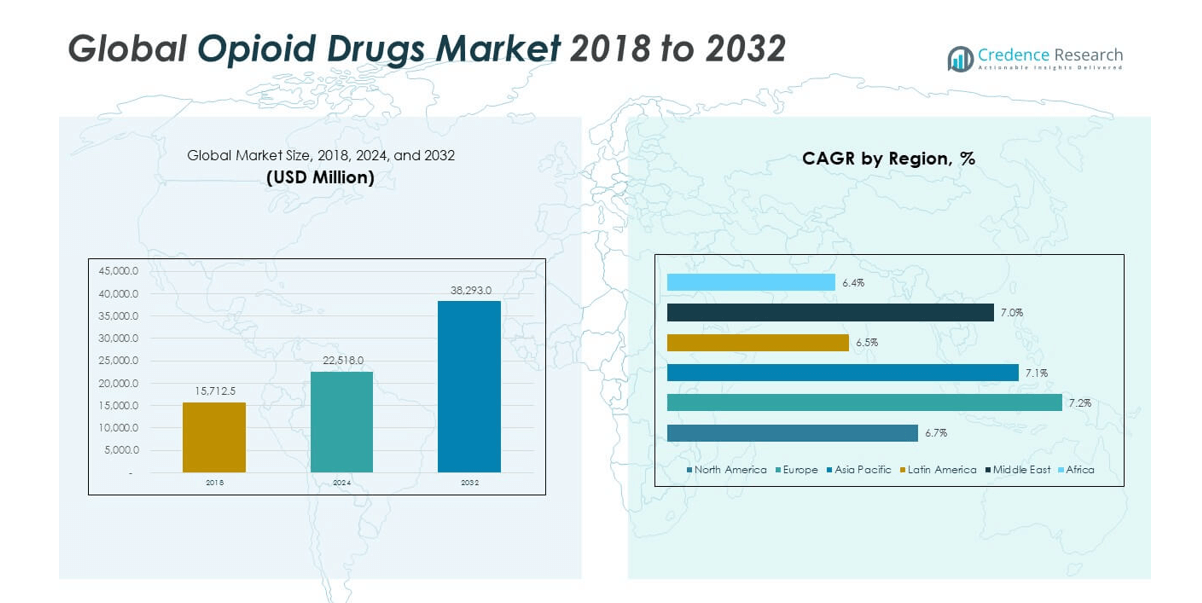
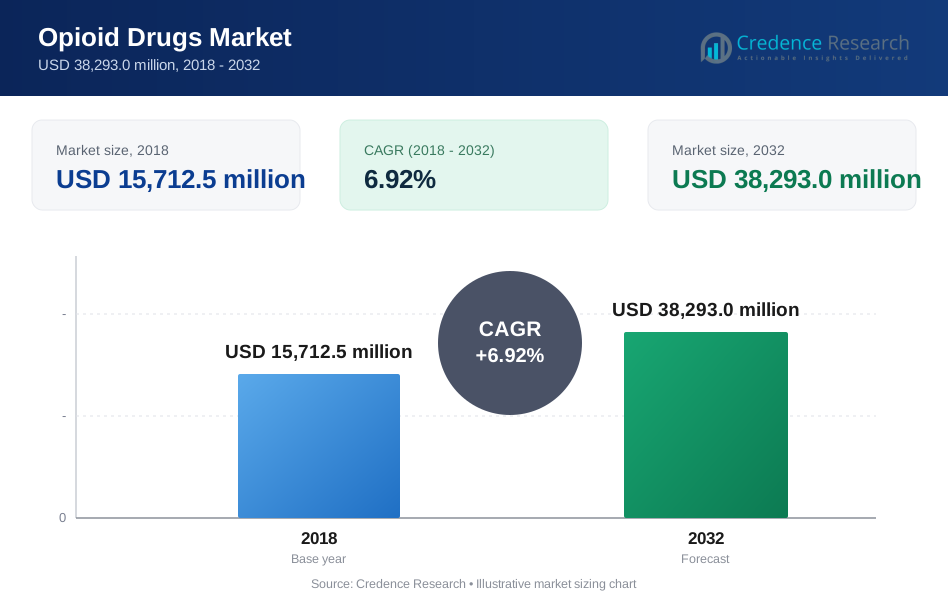
The Global Opioid Drugs Market size was valued at USD 15,712.5 million in 2018 to USD 22,518.0 million in 2024 and is anticipated to reach USD 38,293.0 million by 2032, at a CAGR of 6.92% during the forecast period.
| REPORT ATTRIBUTE | DETAILS |
|---|---|
| Historical Period | 2020-2023 |
| Base Year | 2024 |
| Forecast Period | 2025-2032 |
| Opioid Drugs Market Size 2024 | USD 22,518.0 million |
| Opioid Drugs Market, CAGR | 6.92% |
| Opioid Drugs Market Size 2032 | USD 38,293.0 million |
The Global Opioid Drugs Market is driven by the rising incidence of chronic pain, post-surgical recovery needs, and increasing palliative care demand. Expanding awareness of effective pain management solutions among healthcare providers strengthens market growth. Technological advancements in drug formulation aimed at reducing addiction risk and improving patient compliance further support adoption across therapeutic settings, especially in oncology, orthopedics, and trauma care.
North America leads the market due to high prescription volumes, advanced healthcare systems, and established pharmaceutical networks. Europe follows, supported by strong healthcare infrastructure and the increasing prevalence of chronic illnesses. The Asia-Pacific region is emerging rapidly, driven by rising healthcare access, a growing elderly population, and government efforts to expand pain management therapies in developing nations.
Market Insights:
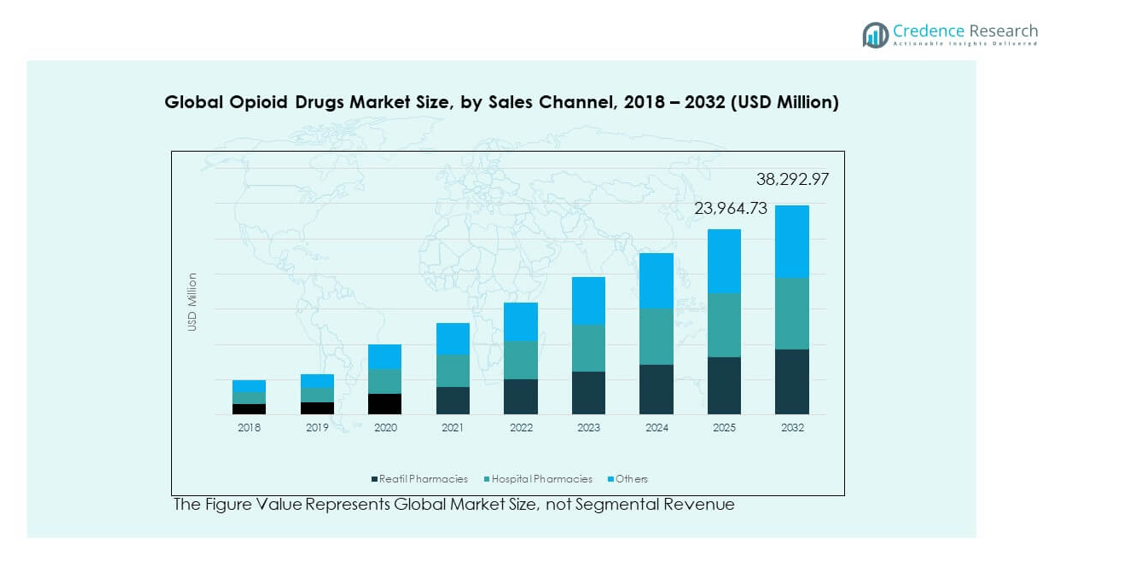
- The Global Opioid Drugs Market size was valued at USD 15,712.5 million in 2018, reached USD 23,964.73 million in 2024, and is projected to attain USD 38,292.97 million by 2032, growing at a CAGR of 6.92% during the forecast period.
- North America (32%), Europe (26%), and Asia Pacific (27%) accounted for the largest market shares in 2024 due to high prescription rates, advanced healthcare infrastructure, and strong adoption of pain management therapies across clinical applications.
- Asia Pacific is the fastest-growing region with a 31% share, driven by expanding healthcare access, increasing cancer prevalence, and government support for palliative care and pain treatment initiatives.
- Retail pharmacies captured about 46% of the market share, supported by high outpatient prescription volumes and wider drug accessibility for chronic pain patients.
- Hospital pharmacies held nearly 42% share, driven by strong demand for controlled opioid distribution in surgical and inpatient care, while the “others” segment accounted for the remaining 12%, reflecting specialty and online distribution growth.
Market Drivers:
Rising Prevalence of Chronic and Postoperative Pain Disorders
The Global Opioid Drugs Market is driven by increasing incidences of chronic pain disorders and postoperative pain management needs. Conditions such as cancer, arthritis, neuropathy, and lower back pain continue to fuel prescription rates. The growing aging population further contributes to long-term pain management demand. Opioid-based therapies offer fast and effective relief, promoting wider clinical adoption. Hospitals and pain clinics increasingly rely on these drugs to maintain patient comfort and recovery outcomes. Expanding surgical volumes globally strengthen their demand in acute care settings. The continuous rise in lifestyle-related disorders enhances the dependence on effective analgesic solutions. This trend keeps the need for advanced opioid formulations strong across medical institutions.
- For example, a 2020 study analyzing hip and knee arthroplasty encounters found that patients who received lower post-operative morphine milligram equivalents (MME) per day had a shorter median LOS. Furthermore, implementing proper medication reconciliation, particularly when led by pharmacists, has been shown to reduce medication errors, which can improve patient safety and potentially contribute to better outcomes.
Growing Demand for Effective Palliative and Cancer Pain Management
Strong demand for palliative care and oncology-related pain treatment supports the market’s expansion. Opioid drugs are considered essential for end-of-life and cancer care due to their efficacy in managing severe pain. Rising global cancer cases push healthcare providers to adopt these drugs for symptom relief. Clinical guidelines from global health authorities emphasize opioid use for terminal illness management. Increasing awareness about patient-centered care encourages regulated use among medical professionals. Many hospitals now include opioids in their multidisciplinary pain management programs. Pharmaceutical firms continue to invest in safer formulations with lower addiction potential. These developments enhance therapeutic reliability and ensure wider accessibility.
- For instance, Mundipharma’s oxycodone/naloxone combination therapy has been confirmed through clinical studies to provide non-inferior pain control in cancer patients with a similar incidence of adverse drug reactions compared to traditional oxycodone controlled release in a large Korean trial sponsored by Mundipharma Korea Ltd.
Technological Advances in Drug Delivery and Formulation Innovation
Innovation in drug delivery systems enhances safety and dosage precision in opioid therapy. Extended-release, abuse-deterrent, and transdermal formulations are gaining strong traction. These technologies help minimize misuse while ensuring consistent pain relief. Pharmaceutical companies are adopting advanced polymer and encapsulation technologies for sustained release. Digital platforms and e-prescriptions support safe distribution and patient tracking. Such progress improves therapeutic control and optimizes patient adherence. The focus on precision dosing reduces side effects, promoting confidence among prescribers. These improvements create a favorable outlook for the Global Opioid Drugs Market across medical disciplines.
Rising Healthcare Expenditure and Expanding Access to Pain Therapies
Increasing healthcare spending and insurance coverage in both developed and emerging countries support the wider use of opioids. Many governments are including essential pain medicines in public health programs. Expanding hospital infrastructure and specialized pain centers strengthen drug accessibility. Economic development in Asia-Pacific and Latin America boosts demand for advanced pain relief drugs. Growing focus on quality of life improvement among patients reinforces therapeutic adoption. Improved availability of generic opioids increases treatment affordability. Educational campaigns promoting responsible opioid use enhance prescribing confidence. Together, these factors sustain market growth and encourage regional expansion.
Market Trends:
Shift Toward Abuse-Deterrent and Safer Formulations
Manufacturers are developing next-generation opioid formulations designed to deter misuse and overdose. These abuse-deterrent products use physical and chemical barriers that prevent tampering and inhalation. The approach aligns with global efforts to reduce opioid dependency. Demand for such products is strong in the United States and Europe due to regulatory encouragement. Pharmaceutical innovations combine effective pain control with controlled-release mechanisms. Research is focusing on minimizing euphoria while maintaining analgesic efficacy. This evolution helps restore clinical trust and balance safety with patient comfort. It reflects a long-term shift in the Global Opioid Drugs Market toward responsible innovation.
- For instance, after Purdue Pharma’s launch of its hardened OxyContin abuse-deterrent formulation, national surveys indicated a steep decline in tampering and abuse for injected or inhaled routes in the first 12-18 months, supporting FDA labeling recognition for the deterrent effect.
Increasing Integration of Non-Opioid Alternatives with Opioid Therapy
Healthcare systems are exploring combination approaches that merge opioids with non-opioid pain management strategies. Multimodal therapy is gaining favor to reduce dosage requirements and mitigate addiction risk. Hospitals and pain centers now combine behavioral therapy, physical therapy, and regional anesthesia. This integration helps optimize outcomes in chronic pain treatment. Pharmaceutical collaborations are emerging to develop fixed-dose combination products. Physicians prefer these strategies to reduce dependency rates without compromising pain relief. The growing focus on personalized treatment enhances patient monitoring and safety. These shifts reflect a transformation in therapeutic philosophy toward balanced pain management.
- For instance, randomized pilot trials found that office-based buprenorphine maintenance combined with web-delivered cognitive-behavioral therapy achieved a urine toxicology screening rate negative for opioids of 91%, versus 64% with standard buprenorphine alone, indicating significant improvement in patient safety and reduced drug use.
Digital Health Tools Supporting Prescriber Monitoring and Patient Safety
Digitalization plays a growing role in opioid therapy management. Governments and health institutions are implementing electronic prescription monitoring programs to prevent misuse. Healthcare providers use digital records to track patient behavior and ensure safe dispensing. Remote patient monitoring systems enable real-time evaluation of pain management effectiveness. Artificial intelligence assists in identifying prescription anomalies and reducing overuse. Telemedicine platforms also streamline consultations and controlled prescriptions. Integration of data analytics improves regulatory compliance and patient care. The Global Opioid Drugs Market benefits from digital oversight systems that build accountability and transparency.
Rising Emphasis on Patient Education and Responsible Usage Programs
Public health authorities and pharmaceutical firms are promoting awareness about responsible opioid consumption. Educational campaigns inform patients about proper dosage, disposal, and potential side effects. Medical associations collaborate with governments to create safer prescription frameworks. Healthcare professionals are trained to identify early signs of dependency. This awareness reduces the stigma around legitimate opioid use for pain relief. Many regions are launching patient support programs that include counseling and monitoring. Community-level outreach is improving treatment adherence and public perception. These initiatives strengthen patient trust and stabilize long-term market sustainability.
Market Challenges Analysis:
Growing Concerns About Addiction, Misuse, and Regulatory Restrictions
The Global Opioid Drugs Market faces significant pressure from the risk of misuse and addiction. Rising opioid-related fatalities have led to strict regulations in many countries. Government agencies have tightened approval procedures and imposed prescription limits. These restrictions affect sales growth and prescribing patterns across hospitals and pharmacies. Healthcare professionals are cautious about long-term opioid therapy due to dependency risks. Pharmaceutical companies face increasing compliance costs to meet safety requirements. Public scrutiny of opioid use impacts the reputation of drug manufacturers. This environment challenges market expansion and encourages a shift toward alternative pain therapies.
Supply Chain Disruptions and Dependence on Controlled Substances
The production and distribution of opioids rely heavily on controlled raw materials subject to strict monitoring. Supply disruptions due to geopolitical tensions, regulatory checks, or transportation delays affect drug availability. Manufacturers face difficulties maintaining consistent inventory under strict compliance conditions. Limited access to high-quality active ingredients in developing countries slows growth. Governments impose complex documentation and approval systems for imports and exports. These factors reduce production efficiency and discourage smaller manufacturers. The industry must adopt resilient sourcing models to maintain stable supply. This challenge continues to shape operational strategies across the pharmaceutical landscape.
Market Opportunities:
Expansion in Emerging Healthcare Markets and Untapped Regions
The Global Opioid Drugs Market offers strong potential in emerging economies with growing healthcare access. Rising hospital infrastructure and improved insurance coverage enable greater treatment penetration. Countries in Asia-Pacific, Latin America, and the Middle East are expanding pain management programs. Healthcare reforms are creating favorable environments for pharmaceutical investments. Increased disease awareness encourages physicians to adopt modern pain relief drugs. Collaborations with local manufacturers improve drug availability in underserved areas. Expanding retail pharmacy networks also boost accessibility for outpatients. These dynamics create new growth avenues for global players.
R&D Investments in Safer and Non-Addictive Opioid Alternatives
Research is intensifying to develop opioids with minimal risk of dependency and abuse. Pharmaceutical companies are testing receptor-specific molecules that deliver pain relief without triggering addiction pathways. Partnerships between biotech firms and academic institutions accelerate innovation. These efforts aim to restore clinical confidence and regulatory support for opioid use. Emerging technologies like nanocarrier systems enhance precision in drug delivery. Companies investing in these solutions can capture long-term market advantages. The trend positions innovation as the key growth driver for the next decade. Such research diversification strengthens sustainability in the evolving therapeutic landscape.
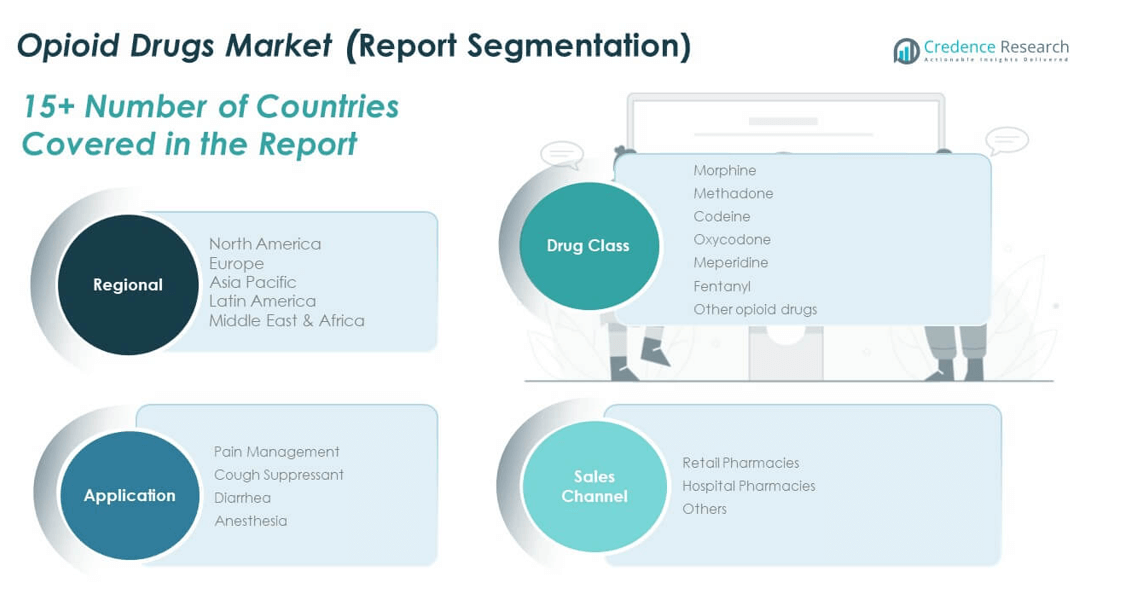
Market Segmentation Analysis:
By Drug Class
The Global Opioid Drugs Market is segmented by drug class into morphine, methadone, codeine, oxycodone, meperidine, fentanyl, and other opioid drugs. Morphine dominates due to its effectiveness in managing severe and chronic pain. Fentanyl is rapidly expanding because of its potency and controlled-release forms used in surgical and palliative care. Oxycodone and methadone maintain significant market shares owing to their wide prescription in moderate to severe pain therapy. Demand for codeine remains stable in mild pain and cough formulations, while meperidine use declines due to side-effect concerns. Emerging formulations within this category focus on abuse deterrence and safer dosing profiles.
- For instance, injectable morphine commanded 45.52% of global hospital market share in 2024 due to rapid onset, while extended-release morphine formulations with abuse-deterrent layers showed the fastest uptake at 9.35% CAGR, demonstrating the technology’s traction in hospital pain management.
By Application
The market is classified by application into pain management, cough suppressant, diarrhea, and anesthesia. Pain management leads the segment with high adoption in cancer, orthopedic, and postoperative treatment. Opioids remain essential in palliative care for terminal illness pain relief. The anesthesia segment shows steady growth in surgical applications requiring rapid analgesia. The cough suppressant and diarrhea segments sustain demand in combination therapies where opioid derivatives provide secondary therapeutic effects.
- For instance, the Coordination Group for Mutual Recognition and Decentralised Procedures – Human (CMDh), following a review by the European Medicines Agency (EMA), adopted measures on April 22, 2015, which prohibited the use of codeine-containing medicines for cough and cold in children under 12 years of age. The measures also included warnings for adolescents and others with breathing problems, as well as breastfeeding women.
By Sales Channel
By distribution, the market is divided into retail pharmacies, hospital pharmacies, and others. Hospital pharmacies dominate due to higher inpatient and postoperative usage. Retail pharmacies serve long-term pain patients requiring chronic medication support. Online and specialty outlets in the “others” category are expanding with regulatory approvals for controlled distribution.
Segmentation:
By Drug Class:
- Morphine
- Methadone
- Codeine
- Oxycodone
- Meperidine
- Fentanyl
- Other Opioid Drugs
By Application:
- Pain Management
- Cough Suppressant
- Diarrhea
- Anesthesia
By Sales Channel:
- Retail Pharmacies
- Hospital Pharmacies
- Others
By Region:
- North America
- U.S.
- Canada
- Europe
- Germany
- France
- Italy
- U.K.
- Russia
- Rest of Europe
- Asia-Pacific
- India
- China
- Japan
- Rest of Asia-Pacific
- Latin America
- Brazil
- Mexico
- Rest of Latin America
- Middle East and Africa
- GCC Countries
- South Africa
- Rest of Middle East and Africa
Regional Analysis:
North America
The North America Global Opioid Drugs Market size was valued at USD 5,188.28 million in 2018 to USD 7,345.68 million in 2024 and is anticipated to reach USD 12,288.22 million by 2032, at a CAGR of 6.7% during the forecast period. North America holds the largest market share of 32% in the Global Opioid Drugs Market. The region’s dominance is supported by high prescription rates, advanced healthcare infrastructure, and strong availability of pain management drugs. The U.S. remains the key contributor due to its established pharmaceutical industry and large patient base requiring chronic pain therapy. Strong regulatory frameworks drive innovation in abuse-deterrent formulations to reduce misuse. Canada and Mexico are expanding their palliative care programs, increasing opioid accessibility in controlled environments. Ongoing efforts to balance pain relief with public health safety shape the region’s future growth. Increasing government monitoring and education programs support safer prescription practices.
Europe
The Europe Global Opioid Drugs Market size was valued at USD 3,893.57 million in 2018 to USD 5,676.45 million in 2024 and is anticipated to reach USD 9,871.93 million by 2032, at a CAGR of 7.2% during the forecast period. Europe accounts for a 26% market share and continues to experience steady growth. High prevalence of chronic pain disorders, an aging population, and expanding use in cancer care drive the regional demand. The UK, Germany, and France dominate due to their advanced healthcare systems and established regulatory oversight. Strong adoption of pain management protocols across hospitals supports consistent prescription volumes. Pharmaceutical companies focus on research partnerships to develop safer, extended-release opioids. Eastern European countries are catching up through healthcare modernization and improved drug availability. Rising awareness about palliative and end-of-life care expands market penetration. It benefits from policy initiatives promoting responsible and evidence-based opioid use.
Asia Pacific
The Asia Pacific Global Opioid Drugs Market size was valued at USD 4,135.54 million in 2018 to USD 5,974.98 million in 2024 and is anticipated to reach USD 10,270.18 million by 2032, at a CAGR of 7.1% during the forecast period. Asia Pacific holds a 27% share, making it the fastest-growing regional market. Increasing healthcare investments and expanding hospital networks are improving patient access to opioid therapies. Rising incidence of chronic diseases such as cancer and arthritis fuels demand for effective pain management. China, Japan, and India lead the regional landscape with strong local production and evolving regulatory policies. Governments are promoting palliative care programs and physician education to ensure safe prescribing. Adoption of controlled-release and non-addictive formulations is rising across hospitals and clinics. Rapid urbanization and improved insurance systems support market penetration. Growing collaborations between global and local pharmaceutical firms further enhance regional growth.
Latin America
The Latin America Global Opioid Drugs Market size was valued at USD 1,150.16 million in 2018 to USD 1,606.82 million in 2024 and is anticipated to reach USD 2,638.39 million by 2032, at a CAGR of 6.5% during the forecast period. Latin America contributes to 7% of the global market share. Growth is supported by improving healthcare infrastructure and increasing access to advanced pain management therapies. Brazil remains the largest market due to its expanding pharmaceutical manufacturing and cancer treatment facilities. Argentina and Chile are witnessing higher adoption rates in hospital-based pain management. Regional governments are implementing regulatory reforms to balance accessibility with safety. Growing awareness of opioid therapy among healthcare professionals supports market development. Economic stability in certain countries strengthens pharmaceutical import and distribution systems. Strategic alliances with international drug manufacturers are improving availability across the region.
Middle East
The Middle East Global Opioid Drugs Market size was valued at USD 908.18 million in 2018 to USD 1,305.40 million in 2024 and is anticipated to reach USD 2,228.65 million by 2032, at a CAGR of 7.0% during the forecast period. The region accounts for 5% of the global share, showing gradual adoption of opioid-based treatments. Demand growth is driven by increasing surgical procedures, palliative care expansion, and improved healthcare accessibility. GCC countries lead the regional landscape with well-structured hospital networks and government-led awareness initiatives. Israel and Turkey are developing local manufacturing capabilities for pain management drugs. Healthcare modernization programs enhance the supply chain efficiency for controlled substances. Strict regulations ensure medical use remains safe and supervised. Rising cancer incidence rates and higher healthcare spending sustain long-term demand. Regional collaboration in medical training strengthens responsible opioid utilization practices.
Africa
The Africa Global Opioid Drugs Market size was valued at USD 436.81 million in 2018 to USD 608.63 million in 2024 and is anticipated to reach USD 995.62 million by 2032, at a CAGR of 6.4% during the forecast period. Africa represents around 3% of the total market share and is in the early stage of adoption. The region’s growth is supported by increasing awareness of pain management in public healthcare systems. South Africa leads the market due to better access to hospitals and pharmaceutical imports. Egypt follows with growing investments in oncology and palliative care infrastructure. Many African nations are introducing reforms to improve access to essential pain medicines. Limited resources and lack of trained professionals remain challenges. Global organizations are supporting initiatives to expand opioid availability for legitimate medical use. With ongoing healthcare improvements, Africa’s role in the Global Opioid Drugs Market is expected to expand steadily.
Key Player Analysis:
- Purdue Pharma L.P.
- Johnson & Johnson Services, Inc.
- Hikma Pharmaceuticals PLC
- Pfizer Inc.
- AbbVie Inc.
- Sanofi
- Sun Pharmaceutical Industries Ltd
- Grünenthal
- Merck & Co., Inc.
- Insys Therapeutics
Competitive Analysis:
The Global Opioid Drugs Market is moderately consolidated, with major players such as Purdue Pharma, Pfizer, AbbVie, Johnson & Johnson, and Hikma Pharmaceuticals leading through diverse portfolios and global presence. It is driven by continuous R&D investment aimed at developing safer, abuse-deterrent, and extended-release formulations. Companies focus on mergers, licensing deals, and regional expansion to strengthen distribution networks and regulatory compliance. Innovation in non-addictive pain management drugs enhances market competitiveness. Strategic partnerships between pharmaceutical firms and healthcare organizations help broaden patient access and optimize product availability.
Recent Developments:
- In October 2025, Purdue Pharma L.P. announced that its Chapter 11 Plan of Reorganization received overwhelming creditor support, marking a significant step toward the company's reorganization amid ongoing opioid litigation.
- In July 2025, Hikma Pharmaceuticals launched Morphine Sulfate Injection, USP, in prefilled syringe formats (2mg/mL and 4mg/mL), developed for pain management where opioid medication is required, with approval for the U.S. market.
Report Coverage:
The research report offers an in-depth analysis based on drug class, application, sales channel, and region. It details leading market players, providing an overview of their business, product offerings, investments, revenue streams, and key applications. Additionally, the report includes insights into the competitive environment, SWOT analysis, current market trends, as well as the primary drivers and constraints. Furthermore, it discusses various factors that have driven market expansion in recent years. The report also explores market dynamics, regulatory scenarios, and technological advancements that are shaping the industry. It assesses the impact of external factors and global economic changes on market growth. Lastly, it provides strategic recommendations for new entrants and established companies to navigate the complexities of the market.
Future Outlook:
- Demand for safer, abuse-deterrent opioid formulations will grow across developed markets.
- Increased investment in R&D will drive innovation in non-addictive pain relief options.
- Regulatory reforms will focus on responsible prescription and patient safety.
- Growth in palliative care services will boost opioid adoption in chronic pain treatment.
- Expanding healthcare infrastructure in emerging economies will open new market opportunities.
- Digital health tools and AI-driven monitoring will improve prescription control.
- Generic drug manufacturers will strengthen their presence through cost-effective solutions.
- Collaboration between pharmaceutical companies and governments will enhance distribution security.
- Evolving patient awareness programs will promote responsible opioid consumption.
- Innovation in delivery systems, including patches and injectables, will improve treatment outcomes.
Request a Free Sample
Fill in your details and we'll send you a free sample report.
- Sample data tables & charts
- Research methodology
Market Dynamics
Rising Prevalence of Chronic and Postoperative Pain Disorders
Increasing incidences of chronic pain conditions such as cancer, arthritis, and neuropathy, as well as the need for effective postoperative pain management, are fueling opioid prescriptions and market growth. The aging global population and higher surgical volumes further drive demand for opioid-based therapies in both acute and long-term care settings.
Growing Demand for Effective Palliative and Cancer Pain Management
Opioid drugs are essential for managing severe pain in palliative and oncology care, with rising global cancer cases and expanding end-of-life care programs boosting adoption. Clinical guidelines and increased awareness among healthcare providers support the regulated use of opioids for symptom relief in terminal illnesses.
Technological Advances in Drug Delivery and Formulation Innovation
The development of extended-release, abuse-deterrent, and transdermal opioid formulations is enhancing safety, reducing misuse, and improving patient compliance. Pharmaceutical innovation in delivery systems and digital prescription monitoring is increasing prescriber confidence and expanding therapeutic use.
Rising Healthcare Expenditure and Expanding Access to Pain Therapies
Growing healthcare spending, broader insurance coverage, and government inclusion of pain medicines in public health programs are making opioid drugs more accessible, especially in emerging markets. Improved hospital infrastructure and the availability of generics are increasing affordability and market penetration.
Shift Toward Abuse-Deterrent and Safer Formulations
Regulatory encouragement and public health concerns are driving manufacturers to develop next-generation opioid products with abuse-deterrent properties, which help reduce misuse and restore clinical trust in opioid therapy, particularly in North America and Europe.
Need a Custom Version of This Report?
Tailor the scope, geography, or segments to your exact requirements.
- Custom geography or segment scope
- Direct access to our analyst team
Frequently Asked Questions
What is the current market size for the Global Opioid Drugs Market, and what is its projected size in 2032?
At what Compound Annual Growth Rate is the Global Opioid Drugs Market projected to grow between 2025 and 2032?
Which Global Opioid Drugs Market segment held the largest share in 2024?
What are the primary factors fueling the growth of the Global Opioid Drugs Market?
Who are the leading companies in the Global Opioid Drugs Market?
Who are the major players in this market?
Table of Content
Chapter 1 Market Segmentation
- 1.1 Segmentation Framework
- 1.1.1 Product and Service Classification
- 1.1.2 Application and End-Use Classification
- 1.1.3 Technology and Solution Classification
- 1.1.4 Customer and Distribution Channel Classification
- 1.1.5 Geographic Segmentation
- 1.1.6 Market Segment Definitions and Boundaries
- 1.2 By Drug Class
- 1.2.1 Morphine
- 1.2.2 Methadone
- 1.2.3 Codeine
- 1.2.4 Oxycodone
- 1.2.5 Meperidine
- 1.2.6 Fentanyl
- 1.2.7 Other Opioid Drugs
- 1.3 By Application
- 1.3.1 Pain Management
- 1.3.2 Cough Suppressant
- 1.3.3 Diarrhea
- 1.3.4 Anesthesia
- 1.4 By Sales Channel
- 1.4.1 Retail Pharmacies
- 1.4.2 Hospital Pharmacies
- 1.4.3 Others
Chapter 2 Introduction
- 2.1 Report Objectives and Scope
- 2.2 Product Definition and Industry Terminology
- 2.3 Market Inclusions and Exclusions
- 2.4 Research Process
- 2.4.1 Primary Research and Expert Interviews
- 2.4.2 Secondary Research and Source Review
- 2.4.3 Top-Down and Bottom-Up Estimation
- 2.4.4 Data Triangulation and Verification
- 2.5 Market Size Measurement Basis
- 2.5.1 2018: USD 15,712.5 million → 2032: USD 38,293.0 million
- 2.6 Historical and Forecast Reference Periods
- 2.6.1 Base Year: 2018
- 2.6.2 Forecast Period: 2018-2032
- 2.7 Research Assumptions and Limitations
Chapter 3 Executive Summary
- 3.1 Market Snapshot and Key Findings
- 3.2 Base-Year Market Size, 2018
- 3.3 Forecast Market Size, 2032
- 3.4 Revenue and Volume Growth Outlook
- 3.5 Key Demand and Supply Indicators
- 3.6 Leading Market Segments
- 3.7 Fastest-Growing Market Opportunities
- 3.8 Regional Performance Highlights
- 3.9 Technology and Industry Transformation
- 3.10 Competitive Landscape Summary
- 3.11 Analyst View and Strategic Implications
Chapter 4 Global Opioid Drugs Market Trends and Developments
- 4.1 Historical Industry Development
- 4.2 Recent Market Trends and Developments
- 4.3 Demand and Customer Behavior Trends
- 4.4 Technology and Product Innovation
- 4.5 Artificial Intelligence, Automation and Digitalization
- 4.6 Local Manufacturing and Supply Chain Realignment
- 4.7 Industry Partnerships, Mergers and Acquisitions
- 4.8 Sustainability and Circular Economy Developments
- 4.9 Government and Private Sector Investment Trends
- 4.10 Emerging Business Models and Commercialization
- 4.11 Industry Developments and Announcements
Chapter 5 Global Opioid Drugs Market Production, Supply and Demand Analysis
- 5.1 Demand Trend and Consumption Analysis
- 5.2 Demand Forecast, 2018-2032
- 5.3 Production and Output Trend
- 5.4 Production and Output Forecast, 2018-2032
- 5.5 Installed Capacity and Capacity Utilization
- 5.6 Company-Wise Production Plants and Statistics
- 5.6.1 Installed Production Capacity
- 5.6.2 Actual Production
- 5.6.3 Planned Capacity and Expansion Targets
- 5.7 Supply Chain Structure and Procurement Trends
- 5.8 Supply-Demand Gap and Bottlenecks
- 5.9 Import Dependence and Sourcing Structure
- 5.10 Contract Manufacturing and Outsourcing
- 5.11 Regional Supply and Demand Concentration
Chapter 6 Global Opioid Drugs Market Pricing Analysis
- 6.1 Pricing Structure and Measurement
- 6.2 Historical Pricing Trends
- 6.3 Pricing Outlook, 2018-2032
- 6.4 Average Selling Price and Unit Economics
- 6.5 Pricing by Product and Market Segment
- 6.6 Geographic Pricing Differences
- 6.7 Key Input, Energy, Labor and Logistics Costs
- 6.8 Contract Pricing and Purchasing Models
- 6.9 Pricing Sensitivity and Competitive Positioning
- 6.10 Price, Margin and Profitability Implications
Chapter 7 Global Opioid Drugs Market Dynamics
- 7.1 Market Growth Drivers
- 7.1.1 Demand-Side Drivers
- 7.1.2 Technology and Innovation Drivers
- 7.1.3 Infrastructure and Investment Drivers
- 7.1.4 Regulatory and Policy Drivers
- 7.2 Market Restraints
- 7.2.1 Cost and Affordability Constraints
- 7.2.2 Technology and Adoption Barriers
- 7.2.3 Supply Chain and Operational Constraints
- 7.3 Market Challenges
- 7.3.1 Competitive Pressure and Margin Erosion
- 7.3.2 Skills, Infrastructure and Implementation Gaps
- 7.4 Emerging Market Opportunities
- 7.5 Market Dynamics Impact and Time-Horizon Assessment
Chapter 8 Global Opioid Drugs Value Chain Analysis
- 8.1 Industry Value Chain Overview
- 8.2 Upstream Suppliers and Critical Inputs
- 8.3 Technology and Component Providers
- 8.4 Manufacturing or Service Delivery
- 8.5 Distribution, Channel Partners and Integrators
- 8.6 Downstream Applications and End Users
- 8.7 Value Addition and Profit Pools
- 8.8 Vertical Integration and Outsourcing
- 8.9 Supplier Concentration and Risk
- 8.10 Supply Chain Localization and Resilience
Chapter 9 Global Opioid Drugs Market Regulations and Policies
- 9.1 Relevant Laws, Standards and Compliance Frameworks
- 9.2 Product, Service, Safety and Quality Requirements
- 9.3 Government Policies, Incentives and Subsidies
- 9.4 Imports, Exports and Trade Barriers
- 9.5 Public Procurement and Local Content Requirements
- 9.6 Environmental and Sustainability Compliance
- 9.7 Upcoming Policy Changes and Market Implications
Chapter 10 Global Opioid Drugs Market Hotspots and Opportunities
- 10.1 Market Opportunity Mapping and Growth Hotspots
- 10.2 High-Growth Applications and Customer Groups
- 10.3 Underserved Markets and White-Space Opportunities
- 10.4 Emerging Technology and Product Opportunities
- 10.5 New Capacity and Investment Hotspots
- 10.6 Market Entry and Expansion Opportunities
- 10.7 Distribution and Partnership Opportunities
- 10.8 Near-Term and Long-Term Commercial Potential
- 10.9 Opportunity Attractiveness and Execution Risks
Chapter 11 Global Opioid Drugs Market Outlook, 2018-2032
- 11.1 Market Size and Analysis
- 11.1.1 Revenue (Market Measurement: 2018: USD 15,712.5 million → 2032: USD 38,293.0 million)
- 11.1.2 Market Volume and Quantity Sold
- 11.1.3 Historical Market Size
- 11.1.4 Base-Year Market Size, 2018
- 11.2 Market Forecast, 2018-2032
- 11.2.1 Revenue Forecast to 2032
- 11.2.2 Volume Forecast to 2032
- 11.2.3 CAGR and Year-on-Year Growth
- 11.2.4 Incremental Revenue Opportunity
- 11.3 Forecast Assumptions and Scenario Analysis
- 11.3.1 Base-Case Forecast
- 11.3.2 Optimistic and Conservative Scenarios
- 11.3.3 Technology, Pricing and Policy Sensitivities
- 11.4 Market Attractiveness and Growth Outlook
Chapter 12 Global Opioid Drugs Market Segmentation and Outlook
- 12.1 Segmentation Summary and Market Shares, 2018
- 12.2 Largest and Fastest-Growing Segments
- 12.3 By Drug Class - Market Size and Forecast, 2018-2032
- 12.3.1 Segment Definition and Scope
- 12.3.2 Historical Market Size
- 12.3.3 Revenue Forecast, 2018-2032
- 12.3.4 Volume Forecast, 2018-2032
- 12.3.5 Base-Year Market Share, 2018
- 12.3.6 Segment CAGR and Growth Drivers
- 12.3.7 Subsegment Market Size and Forecast
- 12.3.7.1 Morphine
- 12.3.7.2 Methadone
- 12.3.7.3 Codeine
- 12.3.7.4 Oxycodone
- 12.3.7.5 Meperidine
- 12.3.7.6 Fentanyl
- 12.3.7.7 Other Opioid Drugs
- 12.3.8 Subsegment Pricing and Adoption Trends
- 12.3.9 Leading Suppliers and Competition
- 12.3.10 Regional Demand and Opportunities
- 12.4 By Application - Market Size and Forecast, 2018-2032
- 12.4.1 Segment Definition and Scope
- 12.4.2 Historical Market Size
- 12.4.3 Revenue Forecast, 2018-2032
- 12.4.4 Volume Forecast, 2018-2032
- 12.4.5 Base-Year Market Share, 2018
- 12.4.6 Segment CAGR and Growth Drivers
- 12.4.7 Subsegment Market Size and Forecast
- 12.4.7.1 Pain Management
- 12.4.7.2 Cough Suppressant
- 12.4.7.3 Diarrhea
- 12.4.7.4 Anesthesia
- 12.4.8 Subsegment Pricing and Adoption Trends
- 12.4.9 Leading Suppliers and Competition
- 12.4.10 Regional Demand and Opportunities
- 12.5 By Sales Channel - Market Size and Forecast, 2018-2032
- 12.5.1 Segment Definition and Scope
- 12.5.2 Historical Market Size
- 12.5.3 Revenue Forecast, 2018-2032
- 12.5.4 Volume Forecast, 2018-2032
- 12.5.5 Base-Year Market Share, 2018
- 12.5.6 Segment CAGR and Growth Drivers
- 12.5.7 Subsegment Market Size and Forecast
- 12.5.7.1 Retail Pharmacies
- 12.5.7.2 Hospital Pharmacies
- 12.5.7.3 Others
- 12.5.8 Subsegment Pricing and Adoption Trends
- 12.5.9 Leading Suppliers and Competition
- 12.5.10 Regional Demand and Opportunities
- 12.6 Segment Growth Comparison
- 12.7 Segment Attractiveness and Priority Matrix
Chapter 13 Global Opioid Drugs End-Use and Application Market Outlook
- 13.1 End-Use Industry and Customer Demand Structure
- 13.2 Leading Applications and Customer Groups
- 13.3 End-Use Market Size, Share and Forecast
- 13.4 Major End-Use Industry Deep Dives
- 13.4.1 Customer Requirements and Use Cases
- 13.4.2 Demand and Replacement Cycles
- 13.4.3 Technical and Regulatory Considerations
- 13.4.4 Purchasing and Procurement Models
- 13.4.5 Leading Vendors and Distribution Channels
- 13.4.6 Forecast and Commercial Opportunities
- 13.5 Emerging Applications and Cross-Segment Demand
- 13.6 End-Use Industry Investment Priorities
Chapter 14 Global Opioid Drugs Geographic Market Outlook, 2018-2032
- 14.1 Regional Market Size and Share, 2018
- 14.2 Regional Market Forecast, 2018-2032
- 14.3 Regional Pricing, Production and Demand Differences
- 14.4 North America
- 14.4.1 United States
- 14.4.2 Canada
- 14.4.3 Mexico
- 14.5 Europe
- 14.5.1 Germany
- 14.5.2 France
- 14.5.3 Italy
- 14.5.4 United Kingdom
- 14.5.5 Spain
- 14.5.6 Poland
- 14.5.7 Russia
- 14.5.8 Netherlands
- 14.5.9 Belgium
- 14.5.10 Sweden
- 14.5.11 Denmark
- 14.5.12 Norway
- 14.5.13 Rest of Europe
- 14.6 Asia Pacific
- 14.6.1 China
- 14.6.2 India
- 14.6.3 Japan
- 14.6.4 South Korea
- 14.6.5 Thailand
- 14.6.6 Indonesia
- 14.6.7 Vietnam
- 14.6.8 Malaysia
- 14.6.9 Australia
- 14.6.10 Rest of Asia Pacific
- 14.7 Latin America
- 14.7.1 Brazil
- 14.7.2 Argentina
- 14.7.3 Colombia
- 14.7.4 Chile
- 14.7.5 Rest of Latin America
- 14.8 Middle East
- 14.8.1 Saudi Arabia
- 14.8.2 United Arab Emirates
- 14.8.3 Turkey
- 14.8.4 Israel
- 14.8.5 Iran
- 14.8.6 Rest of the Middle East
- 14.9 Africa
- 14.9.1 South Africa
- 14.9.2 Egypt
- 14.9.3 Nigeria
- 14.9.4 Morocco
- 14.9.5 Rest of Africa
- 14.10 Regional Investment, Policy and Supply Chain Differences
- 14.11 Regional Competitive Landscape
- 14.12 Geographic Growth Hotspots
Chapter 15 Global Opioid Drugs Technology, Innovation and Sustainability Outlook
- 15.1 Technology Landscape and Maturity
- 15.2 Product, Process and Service Innovation
- 15.3 AI, Automation and Digital Tools in the Industry
- 15.4 Technology Adoption and Performance Benchmarking
- 15.5 Innovation Pipeline and R&D Investment
- 15.6 Patent and Intellectual Property Trends
- 15.7 Energy Efficiency and Resource Management
- 15.8 Sustainability, Recycling and Circularity
- 15.9 Technology Roadmap, 2018-2032
- 15.10 Risks of Obsolescence and Technology Substitution
Chapter 16 Global Opioid Drugs Market Key Strategic Imperatives
- 16.1 Growth and Market Entry Priorities
- 16.2 High-Return Products and Segments
- 16.3 Pricing, Profitability and Cost Optimization
- 16.4 Technology Investment and Product Differentiation
- 16.5 Supply Chain Localization and Resilience
- 16.6 Distribution and Customer Acquisition
- 16.7 Partnership, Acquisition and Capacity Strategy
- 16.8 Regional Expansion Priorities
- 16.9 Short-, Medium- and Long-Term Actions
Chapter 17 Competition Outlook
- 17.1 Industry Competition Characteristics
- 17.2 Market Structure and Concentration
- 17.3 Market Share and Competitive Positioning, 2018
- 17.4 Company-Wise Revenue and Product Benchmarking
- 17.5 Production and Service Capacity Benchmarking
- 17.6 Technology, Pricing and Differentiation
- 17.7 Regional Footprint and Distribution Strength
- 17.8 Mergers, Acquisitions and Strategic Alliances
- 17.9 New Entrants and Competitive Threats
- 17.10 Porter's Five Forces and Industry Attractiveness
- 17.11 Competitive Outlook, 2018-2032
Chapter 18 Company Profiles
- 18.1 Company Coverage and Selection Criteria
- 18.2 Purdue Pharma L.P.
- 18.2.1 Business Description
- 18.2.2 Company Ownership and Geographic Presence
- 18.2.3 Product and Service Portfolio
- 18.2.4 Manufacturing and Operating Footprint
- 18.2.5 Production Capacity and Expansion Plans
- 18.2.6 Financial Performance and Investment
- 18.2.7 Market Share and Competitive Position
- 18.2.8 Technology and Innovation Capabilities
- 18.2.9 Strategic Alliances or Partnerships
- 18.2.10 Recent Developments
- 18.2.11 Growth Strategy and Outlook
- 18.3 Johnson & Johnson Services, Inc.
- 18.4 Hikma Pharmaceuticals PLC
- 18.5 Pfizer Inc.
- 18.6 AbbVie Inc.
- 18.7 Sanofi
- 18.8 Sun Pharmaceutical Industries Ltd
- 18.9 Grünenthal
- 18.10 Merck & Co., Inc.
- 18.11 Insys Therapeutics
- 18.12 Other Relevant Market Participants
Note: Every listed company is profiled on the structure shown under the first company. The company list is preliminary and may change based on research findings, market developments, data availability and client requirements.
Chapter 19 Disclaimer
- 19.1 Research and Forecast Disclaimer
- 19.2 Data Source and Estimation Limitations
Note: The depth of individual sections depends on data availability for this market. Volume, capacity, trade and other unit-based metrics are included where applicable.