
Almond Market Overview:
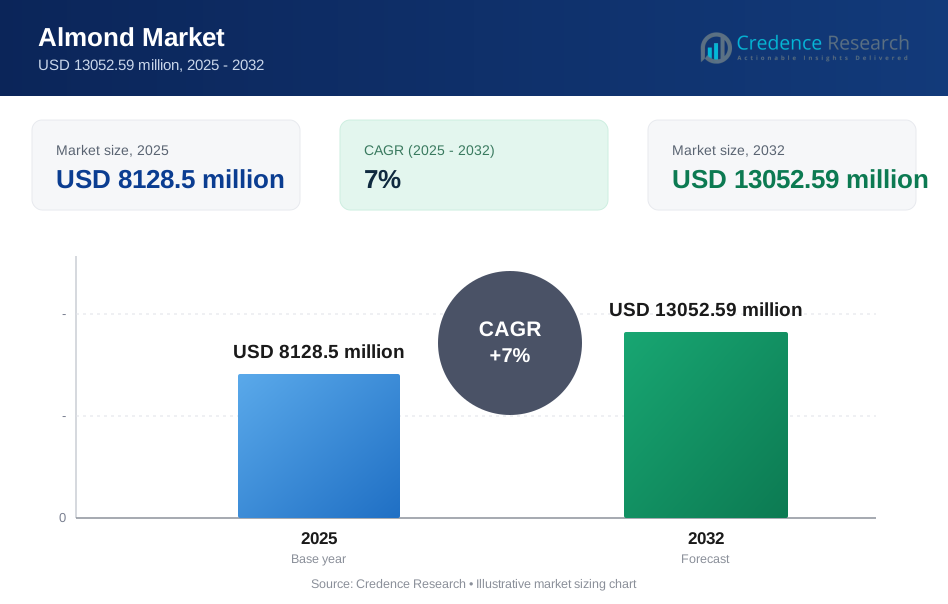
The Almond Market is projected to grow from USD 8,128.5 million in 2025 to an estimated USD 13,052.59 million by 2032, with a compound annual growth rate (CAGR) of 7.0% from 2025 to 2032.
| REPORT ATTRIBUTE | DETAILS |
|---|---|
| Historical Period | 2020-2023 |
| Base Year | 2024 |
| Forecast Period | 2025-2032 |
| Almond Market Size 2025 | USD 8,128.5 million |
| Almond Market, CAGR | 7.0% |
| Almond Market Size 2032 | USD 13,052.59 million |
Rising health consciousness supports strong momentum in the Almond Market, with consumers preferring almonds for protein, healthy fats, and natural micronutrients. Food manufacturers adopt almonds in bars, cereals, beverages, and functional foods to meet wellness expectations. Product developers use almond flour, paste, and milk in gluten-free and plant-based ranges. Retailers promote almonds as a clean-label option across snack and culinary categories. Growing demand for lactose-free and vegan alternatives expands almond-based beverages. Innovation in flavoring, roasting, and texturing widens product acceptance. Broader distribution networks enhance visibility across global retail channels.
North America leads the Almond Market due to large-scale production, advanced processing, and strong consumption across snacks and dairy-alternative categories. Europe follows with high interest in clean-label foods, premium nuts, and plant-based products driven by mature retail systems. Asia-Pacific emerges as the fastest-growing region because rising incomes, health-focused diets, and gifting traditions increase almond demand. The Middle East benefits from established preferences for nuts in confectionery and seasonal assortments. Latin America expands steadily through bakery, foodservice, and emerging wellness trends. Strong global trade flows support regional integration and supply stability.

Almond Market Insights:
- The Almond Market is projected to grow from USD 8,128.5 million in 2025 to an estimated USD 13,052.59 million by 2032, with a compound annual growth rate (CAGR) of 7.0% from 2025 to 2032, supported by steady global demand and strong product diversification.
- Rising focus on health, protein-rich foods, and plant-based diets drives higher use of almonds across snacks, beverages, and functional nutrition.
- Supply pressures linked to climate variability, water constraints, and orchard management challenges influence production stability and sourcing decisions.
- North America leads due to large-scale production and strong adoption in snacks and dairy alternatives, while Europe maintains demand through clean-label and premium food categories.
- Asia-Pacific accelerates growth as rising incomes, health awareness, and expanding retail channels increase almond consumption across diverse applications.
Almond Market Drivers
Growing Demand for Nutrient-Rich Plant-Based Ingredients
Rising interest in healthier food choices drives strong uptake in the Almond Market. Consumers choose almonds for protein, fiber, and micronutrients that support daily nutrition. Brands use almonds in snacks, bars, and breakfast foods. Product developers introduce clean-label items that meet wellness goals. It supports wider adoption in vegan and lactose-free categories. Food processors expand use due to stable flavor and long shelf life. Retailers feature almonds in premium assortments tied to health claims. Global visibility increases due to strong marketing by producers.
- For instance, the Almond Board of California confirms through USDA-supported nutrient profiling that a 28-gram serving of almonds provides 6 grams of protein, 4 grams of fiber, and 7.3 milligrams of vitamin E, metrics that major brands use directly in product labels and health-positioning claims.
Rapid Expansion of Almond-Based Dairy Alternatives Across Global Markets
Rising demand for lactose-free beverages strengthens momentum in the Almond Market. Producers scale almond milk lines to meet high café and household use. It benefits from steady switch to low-fat and low-sugar drinks. Beverage manufacturers improve texture and fortification to enhance acceptance. Retail growth widens reach of private-label almond milk. Foodservice players promote almond milk for cold and hot drinks. Distribution networks align SKUs with regional taste preferences. Health-driven buyers support recurring sales cycles.
Rising Use of Almond Ingredients in Functional and Fortified Food Segments
Growing interest in immunity, digestion, and energy needs amplifies demand in the Almond Market. Functional snacks rely on almond flour, butter, and protein blends. It gains strong traction in sports nutrition and lifestyle diets. Brands highlight clean processing and natural origin to build trust. Developers add almonds to granola, cereals, and ready-to-eat meals. Innovation teams test new textures for broad consumer groups. Retail chains reward products with nutrient claims. E-commerce channels support faster trial among young buyers.
- For instance, KIND Snacks publicly confirms that several of its almond-based bars contain over 60% nuts by weight, a formulation benchmark disclosed in product specifications and used to validate nutrient density in functional snacking.
Growing Preference for Premium Snacking and Natural Flavor Profiles
Higher spending on premium snacks increases consumption in the Almond Market. Consumers value roasted, flavored, and lightly processed nuts. It supports demand for new taste formats. Brands release chili, cocoa, and herb-coated variants. Packaging upgrades improve freshness and shelf appeal. Category managers highlight almonds in health-focused aisles. Specialty stores promote single-origin nuts for gifting and personal use. Food brands invest in flavor testing to meet regional taste shifts.
Almond Market Trends
Expansion of Value-Added Almond Formulations Across Food and Beverage Lines
Growth in value-added formats shapes new directions for the Almond Market. Food makers explore puffed, coated, and fermented almond options. It accelerates entry into gourmet and premium niches. Meal-replacement brands test almond-based pastes for nutrition blends. Frozen dessert companies add almond textures to meet dairy-free demand. Ready-meal firms integrate almonds into bowls and mixes. Private-label players introduce extended flavor lines. Consumer panels show rising willingness to try new almond formats.
- For instance, Blue Diamond Growers confirms that its Almond Breeze Barista Blend underwent over 80 formulation trials to achieve the micro-foaming stability required for café applications, a detail documented in the company’s product development communications.
Wider Adoption of Sustainable Farming and Traceable Almond Supply Systems
Producers shift toward traceable sourcing models that influence the Almond Market. Buyers expect transparency on farming methods and water use. It encourages growers to invest in sensor-based irrigation and low-input models. Retailers support audits to verify sustainability claims. Traceable SKUs gain placement in health stores. Certifications guide buyers who value ethical sourcing. Technology partners test blockchain to monitor supply routes. Sustainability goals shape long-term procurement policies.
Stronger Alignment of Almond-Based Products With Holistic Wellness and Lifestyle Trends
Health-conscious consumers drive new lifestyle positioning within the Almond Market. Brands connect almonds with weight control, energy balance, and heart wellness. It supports marketing strategies linked to clean eating. Diet programs highlight almonds for satiety and flexible meal pairing. Fitness communities adopt almond snacks for portable nutrition. Digital platforms feature almond recipes for young households. Wellness brands integrate almonds into detox and metabolic programs. Strong digital education increases daily usage.
Growth of Innovative Packaging and Shelf-Stable Almond Solutions Across Regions
Packaging innovations redefine visibility in the Almond Market. Producers test vacuum-sealed formats for longer freshness. It supports wider distribution in humid and warm regions. Convenience packs target busy professionals and students. Smart-lid jars improve portion control. Flexible pouches reduce transport weight. Branding teams adopt matte textures and minimal labels. Retail demand rises for resealable multi-serving bags. Innovation supports better storage and transport stability.
- For instance, Select Harvests confirms in its operational reports that its Carina West processing facility uses advanced optical sorting and automated packing systems capable of inspecting up to 30,000 almonds per minute, ensuring consistent quality for retail and export packaging formats.
Almond Market Challenges Analysis
High Water Dependency, Climatic Volatility, and Tightening Environmental Regulations
Water scarcity intensifies pressure across the Almond Market. Growers face unpredictable rainfall that disrupts yield stability. It raises costs tied to irrigation upgrades. Environmental rules limit water extraction during peak seasons. Smaller farms struggle with compliance-related burdens. Climate variability increases pest and disease exposure. Regional conflicts over water allocation affect planting plans. Buyers monitor environmental risks that influence sourcing decisions.
Intense Price Volatility, Global Supply Imbalances, and Rising Production Costs
Global supply swings challenge planning across the Almond Market. Producers manage fluctuating input costs for labor and energy. It complicates forecasting for exporters and processors. Currency shifts affect trade competitiveness in key routes. Harvest disruptions alter stock levels for major buyers. Manufacturers reduce exposure through diversified supplier pools. Retailers pass some price pressure to consumers. Volatility limits long-term contract stability.
Almond Market Opportunities
Expansion Into High-Growth Regions, New Consumption Channels, and Premium Health Segments
Emerging regions create new demand windows for the Almond Market. Rising incomes in Asia support premium nut intake. It enables brands to widen product placement in modern retail. E-commerce platforms introduce almond kits and mixed boxes. Health-focused consumers seek fortified almond snacks. Innovation teams expand flavor assortments for local taste needs. Food processors explore almonds for regional desserts. Market entry strategies target urban growth clusters.
Scaling of Almond Derivatives, Specialty Varieties, and Sustainable Product Portfolios
Producers unlock new opportunities by extending derivative lines in the Almond Market. Almond protein, paste, and flour gain uses in bakery, sports nutrition, and beverages. It supports R&D for low-allergen and high-fiber variants. Specialty varieties gain interest in gourmet channels. Sustainable packaging enhances brand visibility. Energy-efficient farming tools improve environmental appeal. Food brands explore hybrid blends with seeds and grains. Long-term potential rises through investment in quality and supply resilience.
Almond Market Segmentation Analysis:
By Type / Variety
The Almond Market features distinct varieties that meet different quality, taste, and processing needs. Nonpareil almonds hold strong demand due to their smooth texture and suitability for snacks and confectionery. Butte and Peerless almonds support industrial use where uniformity and stable performance matter. Sweet almonds gain steady interest for food, cosmetic, and nutraceutical applications. Green almonds attract niche buyers who prefer fresh, seasonal products. Other in-shell and shelled types strengthen value chains in export-driven regions. It achieves wider reach through flexible variety selection that aligns with both premium and volume-driven markets.
- For instance, the Almond Board of California publicly reports that Nonpareil is the dominant export variety shipped from California each year, consistently ranking as the highest-volume kernel type in its annual Position Reports
By Product Form
Product form expansion shapes the competitive direction of the Almond Market. Whole almonds remain the core offering due to strong use in snacking and gifting. Pieces and slivers support bakery and foodservice operations that need consistent cut sizes. Almond flour gains traction in gluten-free and clean-label recipes. Almond paste strengthens dessert and confectionery lines that depend on smooth textures. Milk, oil, and extract formats support dairy-free and wellness categories. Snack variants drive growth through flavored, coated, and roasted profiles that appeal to diverse buyers. It secures strong placement across retail and industrial channels due to broad form adaptability.
- For instance, Blue Diamond Growers confirms through multiple press releases that its Almond Breeze line is manufactured in Australia under a long-term licensing and contract-packing arrangement with Noumi Limited (formerly Freedom Foods), a fact substantiated in Noumi’s ASX filings and legal settlement disclosures.
By Application
Application diversity increases the commercial strength of the Almond Market. Snacking retains the largest share due to rising health-focused consumption. Bakery and confectionery players rely on almonds for texture and flavor enhancement. Dairy and milk substitutes expand due to consumer preference for plant-based choices. Ready-to-eat cereals integrate almonds for crunch and nutrition. Nut butter producers use almonds for smooth spreads and protein-rich formulations. Cosmetics and pharmaceutical companies adopt almond derivatives for skin, hair, and therapeutic uses. It aligns well with sectors that require natural, nutrient-dense, and multi-functional ingredients.
By Distribution Channel
Distribution structures influence accessibility and growth patterns in the Almond Market. Offline channels dominate through supermarkets, hypermarkets, and specialty stores that offer wide assortments. Retail chains highlight almonds in healthy, premium, and imported sections to drive impulse buying. Convenience stores support smaller pack sizes for daily use. Foodservice buyers secure bulk volumes for bakery, confectionery, and hospitality operations. Online channels expand fast due to strong interest in premium nuts, flavored variants, and direct-to-consumer brands. E-commerce platforms support subscription models and regional delivery networks. It benefits from digital visibility that enables cross-category promotion and stronger consumer engagement.
Almond Market Segmentation:
By Type / Variety
- Butte Almonds
- Nonpareil Almonds
- Sweet Almonds
- Peerless Almonds
- Green Almonds
- Others (in-shell, shelled)
By Product Form
- Whole almonds
- Pieces and slivers
- Almond flour
- Almond paste
- Almond milk, oil, and extracts
- Almond snacks (roasted, flavored, coated, raw)
By Application
- Snacking
- Bakery and confectionery
- Dairy and milk substitutes
- Ready-to-eat cereals
- Nut butters
- Cosmetics
- Pharmaceuticals
By Distribution Channel
- Offline
- Online
By Regional Segments
- North America
- U.S.
- Canada
- Mexico
- Europe
- Germany
- France
- U.K.
- Italy
- Spain
- Rest of Europe
- Asia Pacific
- China
- Japan
- India
- South Korea
- South-east Asia
- Rest of Asia Pacific
- Latin America
- Brazil
- Argentina
- Rest of Latin America
- Middle East & Africa
- GCC Countries
- South Africa
- Rest of the Middle East and Africa
Regional Analysis:
North America holds the largest share of the Almond Market with close to 45%, driven mainly by strong production and processing capacity in the United States. California maintains a dominant role through advanced cultivation systems and large export networks. Retailers support steady domestic demand with premium snack lines and dairy-free alternatives. Value-added formats gain traction through innovation by leading brands. It benefits from mature supply chains that support industrial, retail, and foodservice channels. Strong distribution frameworks reinforce continued leadership across the region.
Europe accounts for nearly 30% of the global share and drives steady growth through high demand for clean-label, organic, and specialty almond products. Spain and Italy remain key producers, while major markets such as Germany, France, and the UK support high consumption in bakery, confectionery, and plant-based categories. Food manufacturers integrate almonds into established product portfolios that target health-conscious buyers. Importers strengthen sourcing strategies to align with quality and seasonality requirements. It gains support from evolving regulations that favor natural and nutrient-rich ingredients. The region sustains consistent adoption through diverse retail structures.
Asia-Pacific holds close to 20% of the global market and delivers the fastest expansion due to rising incomes and a growing preference for premium nuts. China and India lead consumption trends linked to gifting, snacking, and dairy-alternative use. Regional processors expand almond-based beverages and ready-to-eat foods to meet urban demand. E-commerce platforms improve visibility for flavored and specialty products. It gains momentum through lifestyle shifts that promote healthier eating patterns. Remaining regions, including the Middle East & Africa and Latin America, share the balance and show steady growth in retail and foodservice channels.
Key Player Analysis:
- Wonderful Company (POM Wonderful)
- Blue Diamond Growers
- Treehouse California Almonds
- Prima Wawona
- Stewart & Lynda Resnick
- Archer Daniels Midland (ADM)
- Olam International
- Cargill
- BATA FOOD
- Spycher Brothers
Competitive Analysis:
Competitive intensity in the Almond Market continues to increase as global suppliers expand processing capabilities and diversify product portfolios. Leading companies strengthen their presence through vertically integrated operations that manage cultivation, processing, branding, and distribution. It supports pricing stability and consistent supply for major retail and industrial clients. Cooperatives and grower-owned groups enhance traceability and quality standards to meet premium-grade requirements. Global traders widen import and export routes to balance regional supply gaps and seasonal constraints. Private-label brands compete through value pricing and rapid product innovation in snacks, dairy substitutes, and blended formulations. Established players invest in sustainability programs that address water efficiency, environmental performance, and ethical sourcing. New entrants explore niche spaces such as flavored nuts, almond proteins, and organic varieties to capture differentiated demand.
Recent Developments:
- In January 2026, Blue Diamond Growers revealed the spring 2026 launch of Nut Thins Dill Pickle crackers, gluten-free and Non-GMO verified snacks using California almonds, available on Amazon and at Kroger.
- In March 2025, Blue Diamond Growers partnered with Oppy to launch fresh almond and almond-fruit blends in retail produce departments, including flavors like Oven Roasted Honey, Lightly Salted, Sea Salt & Black Pepper, Whole Natural almonds, Toasted Almonds & Cherries, and Sea Salt Almonds & Blueberries in resealable bags.
- In October 2024, Treehouse California Almonds partnered with Sitos Group to launch a $9 million slow pyrolysis biochar manufacturing facility in Delano, California, transforming almond shells into biochar for regenerative agriculture, with full operations expected by end of 2025.
- In September 2024, Blue Diamond Growers partnered with Divert, Inc. to convert almond processing byproducts into renewable energy at a new facility in Turlock, California, supporting California's net-zero goals and enhancing sustainability efforts.
Report Coverage:
The research report offers an in-depth analysis based on Type / Variety, Product Form, Application, Distribution Channel and Region. It details leading market players, providing an overview of their business, product offerings, investments, revenue streams, and key applications. Additionally, the report includes insights into the competitive environment, SWOT analysis, current market trends, as well as the primary drivers and constraints. Furthermore, it discusses various factors that have driven market expansion in recent years. The report also explores market dynamics, regulatory scenarios, and technological advancements that are shaping the industry. It assesses the impact of external factors and global economic changes on market growth. Lastly, it provides strategic recommendations for new entrants and established companies to navigate the complexities of the market.
Future Outlook:
- Growing demand for clean-label food will create stronger momentum for new almond-based product categories within the Almond Market.
- Expanding use of almonds in dairy alternatives will strengthen long-term adoption across cafés, foodservice chains, and retail networks.
- Rising interest in functional nutrition will drive wider uptake of almond flour, protein blends, and fortified snack lines.
- Premiumization trends will push brands to invest in flavored, coated, and single-origin almonds to capture high-margin consumer groups.
- Sustainability and water-efficient farming practices will reshape sourcing strategies and influence supplier selection.
- Digital retail channels will accelerate category visibility through subscription models, curated bundles, and regional custom packs.
- Demand from Asia-Pacific will grow due to rising incomes and strong preference for nuts in gifting and snacking.
- Innovation in packaging will support longer shelf life and better product stability across diverse climate conditions.
- Food manufacturers will expand almond integration in cereals, desserts, and ready-to-eat meals to meet nutrition-driven demand.
- Growth in cosmetic and nutraceutical uses will open new revenue streams for derivative products such as oils, extracts, and pastes.
Request a Free Sample
Fill in your details and we'll send you a free sample report.
- Sample data tables & charts
- Research methodology
Need a Custom Version of This Report?
Tailor the scope, geography, or segments to your exact requirements.
- Custom geography or segment scope
- Direct access to our analyst team
Frequently Asked Questions
What is the current market size for the Almond Market, and what is its projected size in 2032?
At what Compound Annual Growth Rate is the Almond Market projected to grow between 2025 and 2032?
Which Almond Market segment held the largest share in 2025?
What are the primary factors fueling the growth of the Almond Market?
Who are the leading companies in the Almond Market?
Which region commanded the largest share of the Almond Market in 2025?
Table of Content
Chapter 1. Report Introduction
- 1.1 Report Description & Purpose
- 1.1.1 Report Title & Market Definition
- 1.1.2 Unique Selling Propositions (USP) & Key Differentiators
- 1.1.3 Value Proposition for Stakeholders
- 1.2 Research Objectives
- 1.2.1 Market Sizing Objectives (Volume & Revenue)
- 1.2.2 Segmentation Objectives
- 1.2.3 Competitive Intelligence Objectives
- 1.2.4 Forecast & Scenario Objectives
- 1.3 Report Scope
- 1.3.1 Almond Scope – Types & Subtypes Covered
- 1.3.2 Geographic Scope – Regions & Countries Covered
- 1.3.3 Historical Period, Base Year & Forecast Period (2025; forecast to 2032)
- 1.3.4 Inclusions & Exclusions
- 1.4 HS Code & Classification Framework
- 1.5 Currency, Units & Pricing Basis
- 1.6 Target Stakeholders
- 1.7 Limitations & Assumptions
Chapter 2. Executive Summary
- 2.1 Global Almond Market Snapshot
- 2.1.1 Market Size – Historical (2025) & Forecast (2025-2032) (2025: USD 8128.5 million → 2032: USD 13052.59 million)
- 2.1.2 Volume & Revenue – Global Totals
- 2.1.3 Key Market Highlights – Top Five Facts
- 2.2 Almond Market Segmentation Snapshot
- 2.2.1 Market Split by Region – 2025 vs. 2032
- 2.3 Competitive Snapshot
- 2.3.1 Top 10 Players by Revenue Share – 2025
- 2.3.2 Top 10 Players by Volume Share – 2025
- 2.3.3 Recent Strategic Developments (18-Month Summary)
- 2.4 Key Investment Highlights & Strategic Conclusions
Chapter 3. Almond Market Dynamics & Industry Analysis
- 3.1 Market Overview & Context
- 3.1.1 Almond Market Position in the Broader Automotive Value Chain
- 3.1.2 OEM vs. Replacement Market Dynamics
- 3.1.3 Market Maturity & Development Stage by Region
- 3.2 Almond Market Drivers
- 3.3 Almond Market Restraints & Challenges
- 3.4 Almond Market Opportunities
- 3.5 Porter's Five Forces Analysis
- 3.5.1 Threat of New Entrants
- 3.5.2 Bargaining Power of Suppliers
- 3.5.3 Bargaining Power of Buyers
- 3.5.4 Threat of Substitutes
- 3.5.5 Competitive Rivalry – Intensity Assessment
- 3.6 Almond Value Chain Analysis
- 3.6.1 Upstream – Raw Material/Input Suppliers
- 3.6.1.1 Raw Material/Input 1
- 3.6.1.2 Raw Material/Input 2
- 3.6.1.3 Raw Material/Input 3
- 3.6.2 Midstream – Production/Manufacturing/Service Delivery
- 3.6.2.1 Production/Process Overview
- 3.6.2.2 Key Facility Locations & Capacity by Manufacturer
- 3.6.3 Downstream – Distribution & End Consumer
- 3.6.3.1 Primary Channel – B2B/OEM
- 3.6.3.2 Secondary Channels – Dealer, Retail, Online, Direct
- 3.6.4 Value Chain Profitability Analysis
- 3.6.1 Upstream – Raw Material/Input Suppliers
- 3.7 PESTEL Analysis
- 3.7.1 Political Factors
- 3.7.2 Economic Factors
- 3.7.3 Social Factors
- 3.7.4 Technological Factors
- 3.7.5 Environmental Factors
- 3.7.6 Legal Factors
- 3.8 Almond Supply Chain Analysis
- 3.8.1 Raw Material/Input Supply Risk Assessment
- 3.8.2 Manufacturing Concentration Risk (Geographic Exposure)
- 3.8.3 Trade Disruption Impact Analysis
- 3.9 Regulatory & Policy Landscape
Note: The regulatory and policy landscape section covers regulations based on their applicability to the market, Almond category, geography, and scope of the study. Only regulatory frameworks with a material impact on operations, compliance, trade, sustainability, or market access are analyzed in detail.
Chapter 4. Key Investment Pockets & Opportunity Analysis
- 4.1 Almond Market Attractiveness Analysis
- 4.1.1 By Region – Investment Attractiveness Matrix (Volume × CAGR)
- 4.2 Absolute Revenue Growth Opportunity
- 4.2.1 By Region – Absolute USD Growth Through 2032
- 4.3 Incremental Volume Opportunity
- 4.3.1 By Region – Incremental Volume Through 2032
- 4.3.2 Segment – Incremental Volume
- 4.4 Emerging Submarket Opportunity Deep Dive (Subject to Applicability)
- 4.5 Emerging Market Opportunity Scorecards
- 4.5.1 United States
- 4.5.2 Europe
- 4.5.3 Asia
- 4.5.4 Middle East & Africa
Note: Emerging Market Opportunity Scorecards will be included based on relevance and strategic importance. Regions listed are indicative and may vary depending on data availability and market dynamics.
Chapter 5. Almond Import-Export Analysis & Trade Flows
- 5.1 Global Trade Overview
- 5.1.1 Global Export Value by Country (2025)
- 5.1.2 Global Export Volume by Country (2025)
- 5.1.3 Global Import Value by Country (2025)
- 5.1.4 Global Import Volume by Country (2025)
- 5.1.5 Net Trade Balance by Country (2025)
- 5.2 Export Analysis – Segment
- 5.2.1 Type 1 (HS Code)
- 5.2.2 Type 2 (HS Code)
- 5.2.3 Type 3 (HS Code)
- 5.2.4 Type 4 (HS Code)
- 5.2.5 Type 5 (HS Code)
- 5.3 Import Analysis – Segment
- 5.3.1 Type 1 (HS Code)
- 5.3.2 Type 2 (HS Code)
- 5.3.3 Type 3 (HS Code)
- 5.3.4 Type 4 (HS Code)
- 5.3.5 Type 5 (HS Code)
- 5.4 Average Unit Trade Prices
- 5.4.1 Average Export Price – Segment & Country
- 5.4.2 Average Import Price – Segment & Source Country
- 5.4.3 Price Trends (2025)
- 5.5 Key Trade Route Analysis
- 5.5.1 Trade Route 1
- 5.5.2 Trade Route 2
- 5.5.3 Trade Route 3
- 5.5.4 Trade Route 4
- 5.5.5 Trade Route 5
- 5.6 Trade Policy Impact Assessment
- 5.6.1 US Anti-Dumping & Section 301 Tariffs
- 5.6.2 EU Customs Union Impact
- 5.6.3 Major Free Trade Agreements
- 5.6.4 USMCA Rules of Origin
Note: Trade policy analysis will be included only where relevant to the Almond market.
Chapter 6. Competitive Landscape & Company Benchmarking
- 6.1 Almond Market Concentration & Structure
- 6.1.1 Herfindahl-Hirschman Index (HHI) – vs. 2025
- 6.1.2 Tier 1, Tier 2 & Tier 3 Market Structure
- 6.1.3 Global, Regional & Local Player Dynamics
- 6.2 Almond Market Share Analysis – 2025
- 6.2.1 Global Revenue Share by Company
- 6.2.2 Global Volume Share by Company
- 6.2.3 Regional Revenue Share
- 6.2.4 Market Share Evolution ( vs. 2025)
- 6.2.5 OEM Segment Share by Company
- 6.2.6 Replacement Segment Share by Company
- 6.3 Production/Delivery Capacity & Facility Analysis
- 6.3.1 Global Installed Capacity
- 6.3.2 Capacity Utilization Rates
- 6.3.3 Production/Output Volume
- 6.3.4 Facility Locations & Capacity Map
- 6.3.5 Planned Capacity Additions
- 6.4 Almond Competitive Benchmarking Matrix
- 6.4.1 Revenue, Volume, CAGR & Profitability Comparison
- 6.4.2 Channel Revenue Mix
- 6.4.3 Geographic Revenue Exposure
- 6.4.4 R&D Intensity
- 6.4.5 Sustainability Maturity
- 6.5 Strategic Developments in Almond (Last 24 Months)
- 6.5.1 Mergers, Acquisitions & Divestments
- 6.5.2 New Almond Launches
- 6.5.3 Facility Expansions
- 6.5.4 Strategic Alliances, Joint Ventures & Partnerships
- 6.5.5 Distribution Expansion & Market Entry
- 6.5.6 Sustainability & ESG Initiatives
- 6.6 Competitive Strategy Mapping
- 6.6.1 Leader, Challenger, Follower & Niche Classification
- 6.6.2 Pricing Strategy Comparison
- 6.6.3 Channel Strategy Matrix
Note: Strategic developments are included based on their materiality and the availability of reliable information.
Chapter 7. Global Almond Market – By Distribution Channel
- 7.1 Segment Overview
- 7.1.1 Volume & Revenue Split by Channel (2025 & 2032)
- 7.1.2 Channel Mix Evolution (2025-2032)
Chapter 8. Regional Market Analysis – Global Overview
- 8.1 Global Regional Overview
- 8.1.1 Regional Volume Share
- 8.1.2 Regional Revenue Share
- 8.1.3 Regional Volume by Region
- 8.1.4 Regional Revenue by Region
- 8.1.5 Regional Forecast Through 2032
- 8.2 Cross-Regional Segment Analysis
- 8.2.1 By Distribution Channel
- 8.2.2 By Brand/Price Tier
Chapter 9. North America Almond Market
- 9.1 United States
- 9.2 Canada
- 9.3 Mexico
Chapter 10. Europe Almond Market
- 10.1 Germany
- 10.2 France
- 10.3 Italy
- 10.4 United Kingdom
- 10.5 Spain
- 10.6 Poland
- 10.7 Russia
- 10.8 Netherlands
- 10.9 Belgium
- 10.10 Sweden
- 10.11 Denmark
- 10.12 Norway
- 10.13 Rest of Europe
Chapter 11. Asia Pacific Almond Market
- 11.1 China
- 11.2 India
- 11.3 Japan
- 11.4 South Korea
- 11.5 Thailand
- 11.6 Indonesia
- 11.7 Vietnam
- 11.8 Malaysia
- 11.9 Australia
- 11.10 Rest of Asia Pacific
Chapter 12. Latin America Almond Market
- 12.1 Brazil
- 12.2 Argentina
- 12.3 Colombia
- 12.4 Chile
- 12.5 Rest of Latin America
Chapter 13. Middle East Almond Market
- 13.1 Saudi Arabia
- 13.2 United Arab Emirates
- 13.3 Turkey
- 13.4 Israel
- 13.5 Iran
- 13.6 Rest of the Middle East
Chapter 14. Africa Almond Market
- 14.1 South Africa
- 14.2 Egypt
- 14.3 Nigeria
- 14.4 Morocco
- 14.5 Rest of Africa
Chapter 15. Almond Company Profiles
- 15.1 [Company 01]
- 15.1.1 Company Overview
- 15.1.2 Key Management Personnel
- 15.1.3 Products & Services Portfolio
- 15.1.4 Financial Performance
- 15.1.5 Key Market Focus & Geographic Presence
- 15.1.6 Recent Developments & Strategic Initiatives
Note: The company profile list is preliminary and may change based on research findings, market developments, data availability, and client requirements.
Chapter 16. Appendices
- Appendix A – List of Abbreviations & Acronyms
- Appendix B – Industry Classification Code Reference – Full Series
- Appendix C – Production & Capacity Data Tables
- Appendix D – End-Use & Demand Base Tables
- Appendix E – Consumption & Replacement Rate Assumptions
- Appendix F – ASP Reference Tables
- Appendix G – Manufacturing & Facility Database
- Appendix H – Import-Export Data Tables
- Appendix I – Regulatory Summary Tables
- Appendix J – Primary Research Participant List (Anonymized)
- Appendix K – Primary Research Questionnaire Framework
- Appendix L – Data Sources & Bibliography
- Appendix M – Market Size Divergence & Source Comparison
Chapter 17. Research Methodology
- 17.1 Research Framework & Philosophy
- 17.2 Secondary Research – Sources, Hierarchy & Data Extraction
- 17.3 Data Modeling – Bottom-Up & Top-Down Market Sizing
- 17.4 Primary Research – Stakeholder Framework, LOI & Sample Sizes
- 17.5 Forecast Methodology – Regression, Scenario & Sensitivity Analysis
- 17.6 Quality Control – Four-Layer Validation Framework
- 17.7 Limitations & Standard Assumptions
- 17.8 Disclaimer
