
| REPORT ATTRIBUTE | DETAILS |
|---|---|
| Historical Period | 2020-2023 |
| Base Year | 2024 |
| Forecast Period | 2025-2032 |
| Asia Pacific Electrodeposited Copper Foils Market Size 2024 | USD 3834.28 million |
| Asia Pacific Electrodeposited Copper Foils Market, CAGR | 12.91% |
| Asia Pacific Electrodeposited Copper Foils Market Size 2032 | USD 10,126.78 million |
Market Overview:
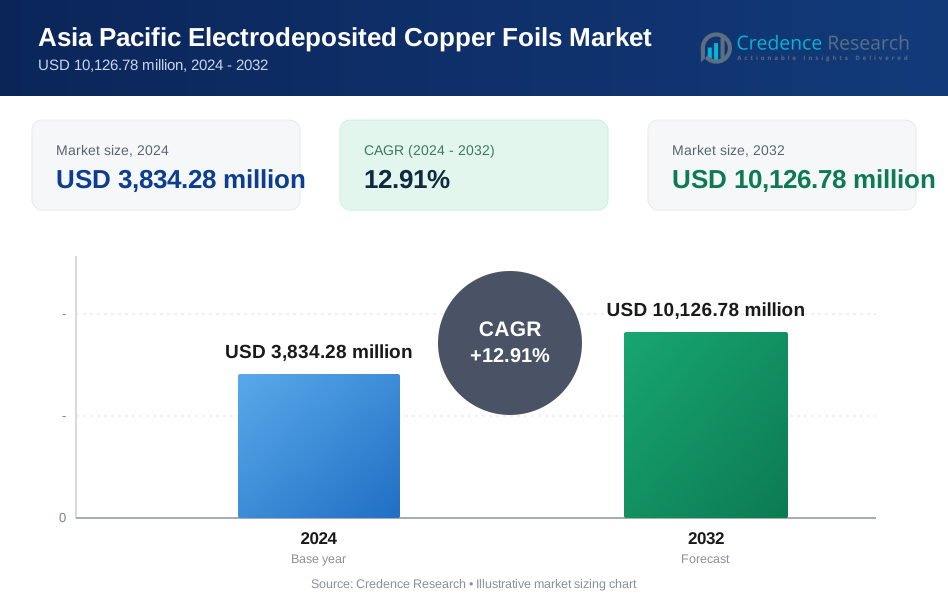
The Asia Pacific Electrodeposited Copper Foils Market is projected to grow from USD 3834.28 million in 2024 to an estimated USD 10,126.78 million by 2032, with a compound annual growth rate (CAGR) of 12.91% from 2024 to 2032.
The growth of the Asia Pacific electrodeposited copper foils market is driven by several key factors. The region's position as a leading hub for electronics manufacturing, particularly in countries like China, Japan, South Korea, and Taiwan, has significantly boosted the demand for high-quality printed circuit boards (PCBs), which heavily rely on electrodeposited copper foils. The increasing production and consumption of consumer electronics such as smartphones, laptops, and wearable devices further contribute to this demand. Moreover, the rapid adoption of electric vehicles (EVs) across the region has accelerated the need for copper foils used in lithium-ion batteries. Technological advancements, including the miniaturization of electronic devices and the rise of flexible electronics, have also driven the demand for thinner and more adaptable copper foils. Additionally, the expansion of renewable energy initiatives is further supporting market growth, as copper foils are essential components in energy storage and transmission applications.
Regionally, Asia Pacific dominates the global electrodeposited copper foils market, with China, Japan, and South Korea leading due to their strong electronics and EV manufacturing sectors. China, in particular, has established itself as a global leader in electric vehicle production, contributing significantly to the demand for copper foils used in battery manufacturing. Supportive government policies promoting renewable energy and electric mobility are further propelling market growth across the region. With continued advancements and increasing demand from various industries, Asia Pacific is expected to maintain its prominent position in the global electrodeposited copper foils market.
Market Insights:
- The Asia Pacific electrodeposited copper foils market is projected to grow from USD 3,834.28 million in 2024 to an estimated USD 10,126.78 million by 2032, registering a compound annual growth rate (CAGR) of 12.91% during the forecast period, driven by the expansion of the electronics and electric vehicle industries.
- Countries like China, Japan, South Korea, and Taiwan are major contributors to market growth due to their robust electronics manufacturing sectors, particularly in producing printed circuit boards (PCBs).
- The rising adoption of electric vehicles in the region is accelerating the demand for electrodeposited copper foils used in lithium-ion battery production.
- Technological advancements, such as the miniaturization of electronic devices and the development of flexible electronics, are increasing the demand for thinner and more adaptable copper foils.
- The expansion of renewable energy projects is further contributing to market growth, as copper foils are critical components in energy storage and transmission systems.
- Fluctuating raw material prices, particularly copper, present a challenge for manufacturers by impacting production costs and pricing strategies.
- Regulatory compliance and competition from alternative materials like aluminum are driving manufacturers to innovate, adopt sustainable practices, and enhance product differentiation.
Market Drivers:
Robust Electronics Manufacturing Sector
The Asia Pacific region is renowned for its robust electronics manufacturing sector, with countries like China, Japan, South Korea, and Taiwan leading the way. These nations are home to numerous electronics and semiconductor manufacturing facilities, which drive the demand for electrodeposited copper foils used in electronic components. For example, the region's strong manufacturing capabilities are evident in the production of consumer electronics such as smartphones and tablets. The diversification of applications across industries such as automotive, healthcare, and aerospace also contributes to the sustained growth of the electrodeposited copper foils market in the region.
Surge in Electric Vehicle Adoption
The automotive industry in Asia Pacific is experiencing substantial growth, with many countries becoming key players in automobile manufacturing. The rapid adoption of electric vehicles (EVs) is significantly propelling the demand for copper foils in lithium-ion batteries. For instance, China manufactured a significant number of electric vehicles in 2023, exceeding 8 million units, solidifying its position as a global leader in EV production. As governments and consumers worldwide push for cleaner energy and reduced carbon emissions, the demand for electric vehicles continues to rise. Copper foils serve as a critical material in the production of lithium-ion batteries, which power these vehicles. This ongoing trend is expected to continue driving market growth as the EV industry expands and advances.
Technological Advancements and Miniaturization
The continuous trend toward the miniaturization of electronic devices and the development of flexible electronics has led to an increased demand for thinner and more flexible electrodeposited copper foils. These foils are crucial for manufacturing compact and flexible printed circuit boards (PCBs), which are essential components in modern electronics. Innovations in manufacturing processes, such as the development of advanced methods to optimize copper foil thickness and flexibility, are consistently enhancing the quality and application scope of electrodeposited copper foils. These technological advancements enable manufacturers to meet evolving industry requirements and maintain competitiveness in the market.
Expansion of Renewable Energy Projects
The expansion of renewable energy projects in the Asia Pacific region has further propelled the demand for electrodeposited copper foils. These foils play an essential role in various energy storage and transmission applications, which are integral to renewable energy systems. Government policies supporting the growth of renewable energy and electric mobility are encouraging the adoption of advanced energy solutions, further driving the demand for copper foils. As the region continues to focus on sustainable development, the role of electrodeposited copper foils in facilitating efficient energy storage and transmission is expected to strengthen, contributing to the long-term growth of the market.
Market Trends:
Advancements in Ultra-Thin Copper Foils
The Asia Pacific electrodeposited copper foils market is experiencing a notable trend towards the development and adoption of ultra-thin copper foils. This shift is primarily driven by the growing demand for miniaturized and flexible electronic devices, including smartphones, tablets, and wearable technology. Ultra-thin foils are essential for producing high-density interconnect boards and flexible printed circuit boards, which are critical in compact and advanced electronics. Manufacturers are focusing on advanced production techniques to achieve the desired thinness while ensuring the foils maintain high electrical conductivity and mechanical strength. This trend aligns with the ongoing pursuit of lighter, thinner, and more efficient electronic devices.
Integration of Copper Foils in Renewable Energy Systems
The integration of copper foils in renewable energy systems is emerging as a significant trend in the Asia Pacific market. As countries in the region prioritize sustainable energy solutions, copper foils are playing a crucial role in energy storage and transmission applications. For example, China produced over 8 million electric vehicles in 2023, which significantly increases the demand for copper foils used in their batteries. These foils are essential components in various systems, including solar panels and energy storage batteries, supporting the efficient flow and management of energy. The ongoing expansion of renewable energy projects, coupled with government initiatives promoting sustainability, is driving the increasing utilization of electrodeposited copper foils in the energy sector.
Technological Innovations in Manufacturing Processes
Technological advancements in manufacturing processes are shaping the evolution of the electrodeposited copper foils market. Innovations such as refined electroplating techniques and improved surface treatment methods are enhancing the quality and performance of copper foils. These advancements enable the production of thinner and more uniform copper layers, which are critical for modern electronic applications. For instance, advancements in 5G technology require copper foils that can handle high-frequency applications, prompting research into new alloy compositions and fabrication techniques. Manufacturers are increasingly adopting these advanced processes to meet the stringent requirements of the electronics industry, improve production efficiency, and enhance product reliability. This focus on technological innovation is positioning the Asia Pacific market for sustained growth and competitiveness.
Focus on Sustainable and Recyclable Materials
There is a growing emphasis on sustainability in the electrodeposited copper foils market, with manufacturers exploring environmentally friendly production methods and recyclable materials. The increasing concern over environmental impact has led to the adoption of processes that minimize waste and energy consumption. Additionally, efforts are being made to develop copper foils that are easier to recycle, thereby supporting circular economy initiatives. This trend reflects the broader shift towards sustainable manufacturing practices, which is gaining momentum across industries in the Asia Pacific region. The focus on eco-friendly solutions is expected to drive long-term growth in the market while addressing environmental considerations.
Market Challenges Analysis:
Volatility in Raw Material Prices
The electrodeposited copper foils market in the Asia Pacific region faces significant challenges due to the volatility in copper prices. Copper, being the primary raw material for these foils, experiences price fluctuations influenced by global supply and demand dynamics, geopolitical events, and economic conditions. Such unpredictability can lead to increased production costs and squeezed profit margins for manufacturers, making it challenging to maintain stable pricing strategies and financial planning.
Environmental and Regulatory Compliance
Manufacturers in the Asia Pacific region must navigate a complex landscape of environmental regulations and standards aimed at promoting sustainability and reducing industrial pollution. For instance, in 2022, Japan’s Ministry of the Environment announced that the country's manufacturing sector would need to reduce CO2 emissions by 46% by 2030 to meet the country's carbon neutrality goal. Compliance with these stringent regulations often necessitates significant investments in cleaner technologies and sustainable practices. While these measures are essential for environmental protection, they can increase operational costs and pose challenges for companies striving to balance profitability with regulatory adherence.
Competition from Alternative Materials
The availability of alternative materials, such as aluminum foils, presents a challenge to the electrodeposited copper foils market. Aluminum is often considered a cost-effective substitute due to its lower price point and adequate conductivity for certain applications. The preference for aluminum over copper in specific contexts can lead to a reduced market share for copper foils, compelling manufacturers to innovate and highlight the superior properties of copper, such as higher electrical conductivity and durability, to maintain their competitive edge.
Technological and Quality Demands
The rapid advancement of technology in the electronics industry imposes continuous pressure on copper foil manufacturers to meet evolving quality standards. The trend towards miniaturization and the development of flexible electronics require ultra-thin, high-quality copper foils with exceptional performance characteristics. Meeting these stringent specifications necessitates ongoing research and development, advanced manufacturing processes, and substantial capital investment. For some manufacturers, especially smaller enterprises, keeping pace with these technological demands can be a significant challenge, potentially hindering their competitiveness in the market.
Market Opportunities:
The Asia Pacific electrodeposited copper foils market presents significant growth opportunities, particularly with the rapid expansion of the electric vehicle (EV) and renewable energy sectors. As countries in the region intensify their focus on sustainable transportation and clean energy solutions, the demand for high-performance lithium-ion batteries is increasing. Electrodeposited copper foils are critical components in these batteries, enhancing their efficiency and durability. With supportive government policies and incentives encouraging the adoption of EVs and renewable energy systems, manufacturers have the opportunity to expand their production capacities and develop innovative copper foil solutions tailored to meet the evolving demands of these industries. The integration of copper foils into advanced battery technologies and energy storage solutions can further enhance their market relevance, opening avenues for long-term growth.
Technological advancements and the growing adoption of miniaturized and flexible electronic devices are also creating substantial opportunities for the electrodeposited copper foils market in Asia Pacific. The increasing demand for thinner, lighter, and more flexible copper foils for use in flexible printed circuit boards, wearable devices, and advanced electronics presents significant potential for market expansion. Manufacturers who invest in research and development to produce ultra-thin, high-strength copper foils that meet the stringent specifications of modern electronics will be well-positioned to capture emerging market segments. Additionally, the rise of smart technologies and the Internet of Things (IoT) is expected to drive further demand, creating new avenues for innovation and product differentiation in the region.
Market Segmentation Analysis:
The Asia Pacific electrodeposited copper foils market is segmented based on material type, process, and end-use industry, reflecting the diverse applications and technological advancements shaping the market landscape.
By Material Type Segment, the market is categorized into ferrous, non-ferrous, and others. Non-ferrous materials, particularly copper, dominate the market due to their superior conductivity, flexibility, and corrosion resistance, which are essential for applications in electronics and electric vehicles. Ferrous materials, while used in specific industrial applications, hold a relatively smaller share. The 'others' segment includes composite materials catering to niche applications, offering additional customization and performance benefits.
By Process Segment, the market includes press-and-sinter, metal injection molding, and additive manufacturing. Press-and-sinter is a traditional process widely used for mass production due to its cost-effectiveness and scalability. Metal injection molding offers precision and is favored for producing complex components in high-performance applications. Additive manufacturing, though still emerging, is gaining traction for its ability to create intricate and customized designs, supporting innovation in industries like aerospace and healthcare.
By End-Use Industry Segment, the market is driven by automotive, aerospace, healthcare, electrical & electronics, and industrial sectors. The electrical and electronics segment holds a substantial share due to the extensive use of copper foils in printed circuit boards and batteries. The automotive sector is experiencing growth, driven by the increasing adoption of electric vehicles. Aerospace and healthcare industries demand high-performance and lightweight materials, enhancing the use of advanced copper foils. The industrial segment supports broader applications, including energy storage and heavy machinery, contributing to the overall market demand.
Segmentation:
By Material Type Segment
- Ferrous
- Non-Ferrous
- Others
By Process Segment
- Press-and-Sinter
- Metal Injection Molding
- Additive Manufacturing
By End-Use Industry Segment
- Automotive
- Aerospace
- Healthcare
- Electrical & Electronics
- Industrial
Regional Analysis:
The Asia Pacific region commands a dominant position in the global electrodeposited copper foils market, driven by its robust electronics manufacturing sector and the rapid adoption of electric vehicles (EVs). The region accounts for approximately 46% of the global market share.
China
China leads the Asia Pacific electrodeposited copper foils market, underpinned by its expansive electronics industry and aggressive promotion of EVs. The nation's dominance is attributed to its substantial production capacities and supportive government policies that encourage technological advancements and infrastructure development.
Japan
Japan holds a significant position in the market, underpinned by its advanced technological landscape and strong emphasis on research and development. The country's focus on innovation and high-quality manufacturing processes contributes to its substantial share in the electrodeposited copper foils market.
South Korea
South Korea emerges as a key contributor, driven by its thriving electronics and automotive industries. The country's commitment to technological innovation and substantial investments in research and development bolster its position in the electrodeposited copper foils market.
Taiwan
Taiwan plays a crucial role in the Asia Pacific electrodeposited copper foils market, supported by its well-established electronics manufacturing sector. The country's focus on high-quality production and technological advancements enhances its competitiveness in the market.
India
India is witnessing a burgeoning demand for electrodeposited copper foils, propelled by its expanding electronics manufacturing base and government initiatives promoting domestic production. The country's emphasis on self-reliance and infrastructure development presents significant growth opportunities for the market.
Southeast Asia
Southeast Asian nations, including Vietnam, Thailand, and Malaysia, are emerging as notable players in the electrodeposited copper foils market. These countries benefit from increasing foreign direct investments and the relocation of manufacturing bases, contributing to the region's market expansion.
Key Player Analysis:
- GKN Powder Metallurgy
- Sumitomo Electric Industries, Ltd.
- Mitsubishi Materials Corporation
- JFE Steel Corporation
- Sandvik AB
- Höganäs AB
- Advanced Technology & Materials Co., Ltd.
- MolyWorks Materials Corporation
- Shanghai CNPC Powder Material Co., Ltd.
Competitive Analysis:
The Asia Pacific electrodeposited copper foils market is characterized by intense competition, driven by the presence of established global players and emerging regional manufacturers. Key companies focus on expanding production capacities, enhancing product quality, and investing in research and development to meet the evolving demands of industries such as electronics, automotive, and energy storage. Competitive strategies include technological innovation, strategic partnerships, and mergers and acquisitions to strengthen market positions and diversify product portfolios. Moreover, companies are emphasizing sustainable production processes and cost-effective solutions to gain a competitive edge. Emerging players, particularly in Southeast Asia and India, are leveraging government incentives and local manufacturing advantages to penetrate the market. The competitive landscape remains dynamic, with manufacturers striving to differentiate through superior product performance, advanced technology, and robust distribution networks, ensuring sustained growth and market presence across the region.
Recent Developments:
- In July 2022, Denkai America, the sole North American manufacturer of high-quality electrodeposited (ED) copper foil used in printed electronics, announced plans to establish a new manufacturing facility and North American headquarters in Richmond County, Georgia. The company committed an initial investment of $150 million to develop an ED copper foil production facility, focusing on electric vehicle (EV) battery foil. This investment is part of a broader strategy to invest a total of $430 million and create 250 new jobs over the next five years.
- In January 2024, Volta Energy Solutions (VES), known for developing the world's first electrodeposited copper foil for batteries, initiated the construction of a new battery copper foil plant in Quebec, Canada. This move aims to address the growing demand for battery materials in the North American electric vehicle (EV) supply chain. The plant is scheduled to commence operations in 2025, with an annual production capacity of 25,000 tons.
Market Concentration & Characteristics:
The Asia Pacific electrodeposited copper foils market exhibits a moderately concentrated structure, dominated by a mix of global industry leaders and regional manufacturers. Major players primarily control a significant share of the market, leveraging their advanced production capabilities, technological expertise, and extensive distribution networks. These companies focus on product innovation, quality enhancements, and strategic partnerships to maintain their competitive advantage. The market is characterized by high demand from the electronics and automotive sectors, where the need for high-quality and ultra-thin copper foils is rising. Rapid technological advancements and the expansion of electric vehicle and renewable energy industries also shape market dynamics. Additionally, the market displays characteristics such as high capital investment requirements, stringent quality standards, and the need for continuous innovation. Emerging regional players are gradually entering the market by focusing on cost-effective solutions and leveraging local manufacturing advantages to capture niche segments.
Report Coverage:
The research report offers an in-depth analysis based on material type, process, and end-use industry. It details leading market players, providing an overview of their business, product offerings, investments, revenue streams, and key applications. Additionally, the report includes insights into the competitive environment, SWOT analysis, current market trends, as well as the primary drivers and constraints. Furthermore, it discusses various factors that have driven market expansion in recent years. The report also explores market dynamics, regulatory scenarios, and technological advancements that are shaping the industry. It assesses the impact of external factors and global economic changes on market growth. Lastly, it provides strategic recommendations for new entrants and established companies to navigate the complexities of the market.
Future Outlook:
- The Asia Pacific electrodeposited copper foils market is expected to witness steady growth, driven by increasing demand from the electronics and electric vehicle sectors.
- Advancements in manufacturing technologies will enhance the production of ultra-thin and high-performance copper foils, meeting evolving industry standards.
- The expanding renewable energy sector will contribute to rising demand for copper foils used in energy storage and transmission applications.
- Strategic partnerships and collaborations among key industry players will foster innovation and strengthen market positions.
- Government policies promoting sustainable energy solutions and electric mobility will further drive market growth across the region.
- Increased investment in research and development will lead to the introduction of advanced copper foil variants with improved conductivity and flexibility.
- Emerging economies in Southeast Asia are expected to attract significant investments, enhancing regional production capacities.
- Market players will focus on developing cost-effective and eco-friendly production processes to align with global sustainability trends.
- Growing competition from alternative materials may challenge market dynamics, prompting innovation and differentiation.
- The market is likely to experience consolidation, with larger players acquiring smaller firms to expand their market presence and technological capabilities.
Request a Free Sample
Fill in your details and we'll send you a free sample report.
- Sample data tables & charts
- Research methodology
Need a Custom Version of This Report?
Tailor the scope, geography, or segments to your exact requirements.
- Custom geography or segment scope
- Direct access to our analyst team
Frequently Asked Questions
What is the current size of the Asia Pacific Electrodeposited Copper Foils Market?
What factors are driving the growth of the Asia Pacific Electrodeposited Copper Foils Market?
What are some challenges faced by the Asia Pacific Electrodeposited Copper Foils Market?
Who are the major players in the Asia Pacific Electrodeposited Copper Foils Market?
Table of Content
Chapter 1. Report Introduction
- 1.1 Report Description & Purpose
- 1.1.1 Report Title & Market Definition
- 1.1.2 Unique Selling Propositions (USP) & Key Differentiators
- 1.1.3 Value Proposition for Stakeholders
- 1.2 Research Objectives
- 1.2.1 Market Sizing Objectives (Volume & Revenue)
- 1.2.2 Segmentation Objectives
- 1.2.3 Competitive Intelligence Objectives
- 1.2.4 Forecast & Scenario Objectives
- 1.3 Report Scope
- 1.3.1 Asia Pacific Electrodeposited Copper Foils Scope – Types & Subtypes Covered
- 1.3.2 Geographic Scope – Regions & Countries Covered
- 1.3.3 Historical Period, Base Year & Forecast Period (2024; forecast to 2032)
- 1.3.4 Inclusions & Exclusions
- 1.4 HS Code & Classification Framework
- 1.5 Currency, Units & Pricing Basis
- 1.6 Target Stakeholders
- 1.7 Limitations & Assumptions
Chapter 2. Executive Summary
- 2.1 Global Asia Pacific Electrodeposited Copper Foils Market Snapshot
- 2.1.1 Market Size – Historical (2024) & Forecast (2024-2032) (2024: USD 3,834.28 million → 2032: USD 10,126.78 million)
- 2.1.2 Volume & Revenue – Global Totals
- 2.1.3 Key Market Highlights – Top Five Facts
- 2.2 Asia Pacific Electrodeposited Copper Foils Market Segmentation Snapshot
- 2.2.1 Market Split by Region – 2024 vs. 2032
- 2.3 Competitive Snapshot
- 2.3.1 Top 10 Players by Revenue Share – 2024
- 2.3.2 Top 10 Players by Volume Share – 2024
- 2.3.3 Recent Strategic Developments (18-Month Summary)
- 2.4 Key Investment Highlights & Strategic Conclusions
Chapter 3. Asia Pacific Electrodeposited Copper Foils Market Dynamics & Industry Analysis
- 3.1 Market Overview & Context
- 3.1.1 Asia Pacific Electrodeposited Copper Foils Market Position in the Broader Automotive Value Chain
- 3.1.2 OEM vs. Replacement Market Dynamics
- 3.1.3 Market Maturity & Development Stage by Region
- 3.2 Asia Pacific Electrodeposited Copper Foils Market Drivers
- 3.3 Asia Pacific Electrodeposited Copper Foils Market Restraints & Challenges
- 3.4 Asia Pacific Electrodeposited Copper Foils Market Opportunities
- 3.5 Porter's Five Forces Analysis
- 3.5.1 Threat of New Entrants
- 3.5.2 Bargaining Power of Suppliers
- 3.5.3 Bargaining Power of Buyers
- 3.5.4 Threat of Substitutes
- 3.5.5 Competitive Rivalry – Intensity Assessment
- 3.6 Asia Pacific Electrodeposited Copper Foils Value Chain Analysis
- 3.6.1 Upstream – Raw Material/Input Suppliers
- 3.6.1.1 Raw Material/Input 1
- 3.6.1.2 Raw Material/Input 2
- 3.6.1.3 Raw Material/Input 3
- 3.6.2 Midstream – Production/Manufacturing/Service Delivery
- 3.6.2.1 Production/Process Overview
- 3.6.2.2 Key Facility Locations & Capacity by Manufacturer
- 3.6.3 Downstream – Distribution & End Consumer
- 3.6.3.1 Primary Channel – B2B/OEM
- 3.6.3.2 Secondary Channels – Dealer, Retail, Online, Direct
- 3.6.4 Value Chain Profitability Analysis
- 3.6.1 Upstream – Raw Material/Input Suppliers
- 3.7 PESTEL Analysis
- 3.7.1 Political Factors
- 3.7.2 Economic Factors
- 3.7.3 Social Factors
- 3.7.4 Technological Factors
- 3.7.5 Environmental Factors
- 3.7.6 Legal Factors
- 3.8 Asia Pacific Electrodeposited Copper Foils Supply Chain Analysis
- 3.8.1 Raw Material/Input Supply Risk Assessment
- 3.8.2 Manufacturing Concentration Risk (Geographic Exposure)
- 3.8.3 Trade Disruption Impact Analysis
- 3.9 Regulatory & Policy Landscape
Note: The regulatory and policy landscape section covers regulations based on their applicability to the market, Asia Pacific Electrodeposited Copper Foils category, geography, and scope of the study. Only regulatory frameworks with a material impact on operations, compliance, trade, sustainability, or market access are analyzed in detail.
Chapter 4. Key Investment Pockets & Opportunity Analysis
- 4.1 Asia Pacific Electrodeposited Copper Foils Market Attractiveness Analysis
- 4.1.1 By Region – Investment Attractiveness Matrix (Volume × CAGR)
- 4.2 Absolute Revenue Growth Opportunity
- 4.2.1 By Region – Absolute USD Growth Through 2032
- 4.3 Incremental Volume Opportunity
- 4.3.1 By Region – Incremental Volume Through 2032
- 4.3.2 Segment – Incremental Volume
- 4.4 Emerging Submarket Opportunity Deep Dive (Subject to Applicability)
- 4.5 Emerging Market Opportunity Scorecards
- 4.5.1 United States
- 4.5.2 Europe
- 4.5.3 Asia
- 4.5.4 Middle East & Africa
Note: Emerging Market Opportunity Scorecards will be included based on relevance and strategic importance. Regions listed are indicative and may vary depending on data availability and market dynamics.
Chapter 5. Asia Pacific Electrodeposited Copper Foils Import-Export Analysis & Trade Flows
- 5.1 Global Trade Overview
- 5.1.1 Global Export Value by Country (2024)
- 5.1.2 Global Export Volume by Country (2024)
- 5.1.3 Global Import Value by Country (2024)
- 5.1.4 Global Import Volume by Country (2024)
- 5.1.5 Net Trade Balance by Country (2024)
- 5.2 Export Analysis – Segment
- 5.2.1 Type 1 (HS Code)
- 5.2.2 Type 2 (HS Code)
- 5.2.3 Type 3 (HS Code)
- 5.2.4 Type 4 (HS Code)
- 5.2.5 Type 5 (HS Code)
- 5.3 Import Analysis – Segment
- 5.3.1 Type 1 (HS Code)
- 5.3.2 Type 2 (HS Code)
- 5.3.3 Type 3 (HS Code)
- 5.3.4 Type 4 (HS Code)
- 5.3.5 Type 5 (HS Code)
- 5.4 Average Unit Trade Prices
- 5.4.1 Average Export Price – Segment & Country
- 5.4.2 Average Import Price – Segment & Source Country
- 5.4.3 Price Trends (2024)
- 5.5 Key Trade Route Analysis
- 5.5.1 Trade Route 1
- 5.5.2 Trade Route 2
- 5.5.3 Trade Route 3
- 5.5.4 Trade Route 4
- 5.5.5 Trade Route 5
- 5.6 Trade Policy Impact Assessment
- 5.6.1 US Anti-Dumping & Section 301 Tariffs
- 5.6.2 EU Customs Union Impact
- 5.6.3 Major Free Trade Agreements
- 5.6.4 USMCA Rules of Origin
Note: Trade policy analysis will be included only where relevant to the Asia Pacific Electrodeposited Copper Foils market.
Chapter 6. Competitive Landscape & Company Benchmarking
- 6.1 Asia Pacific Electrodeposited Copper Foils Market Concentration & Structure
- 6.1.1 Herfindahl-Hirschman Index (HHI) – vs. 2024
- 6.1.2 Tier 1, Tier 2 & Tier 3 Market Structure
- 6.1.3 Global, Regional & Local Player Dynamics
- 6.2 Asia Pacific Electrodeposited Copper Foils Market Share Analysis – 2024
- 6.2.1 Global Revenue Share by Company
- 6.2.2 Global Volume Share by Company
- 6.2.3 Regional Revenue Share
- 6.2.4 Market Share Evolution ( vs. 2024)
- 6.2.5 OEM Segment Share by Company
- 6.2.6 Replacement Segment Share by Company
- 6.3 Production/Delivery Capacity & Facility Analysis
- 6.3.1 Global Installed Capacity
- 6.3.2 Capacity Utilization Rates
- 6.3.3 Production/Output Volume
- 6.3.4 Facility Locations & Capacity Map
- 6.3.5 Planned Capacity Additions
- 6.4 Asia Pacific Electrodeposited Copper Foils Competitive Benchmarking Matrix
- 6.4.1 Revenue, Volume, CAGR & Profitability Comparison
- 6.4.2 Channel Revenue Mix
- 6.4.3 Geographic Revenue Exposure
- 6.4.4 R&D Intensity
- 6.4.5 Sustainability Maturity
- 6.5 Strategic Developments in Asia Pacific Electrodeposited Copper Foils (Last 24 Months)
- 6.5.1 Mergers, Acquisitions & Divestments
- 6.5.2 New Asia Pacific Electrodeposited Copper Foils Launches
- 6.5.3 Facility Expansions
- 6.5.4 Strategic Alliances, Joint Ventures & Partnerships
- 6.5.5 Distribution Expansion & Market Entry
- 6.5.6 Sustainability & ESG Initiatives
- 6.6 Competitive Strategy Mapping
- 6.6.1 Leader, Challenger, Follower & Niche Classification
- 6.6.2 Pricing Strategy Comparison
- 6.6.3 Channel Strategy Matrix
Note: Strategic developments are included based on their materiality and the availability of reliable information.
Chapter 7. Global Asia Pacific Electrodeposited Copper Foils Market – By Distribution Channel
- 7.1 Segment Overview
- 7.1.1 Volume & Revenue Split by Channel (2024 & 2032)
- 7.1.2 Channel Mix Evolution (2024-2032)
Chapter 8. Regional Market Analysis – Global Overview
- 8.1 Global Regional Overview
- 8.1.1 Regional Volume Share
- 8.1.2 Regional Revenue Share
- 8.1.3 Regional Volume by Region
- 8.1.4 Regional Revenue by Region
- 8.1.5 Regional Forecast Through 2032
- 8.2 Cross-Regional Segment Analysis
- 8.2.1 By Distribution Channel
- 8.2.2 By Brand/Price Tier
Chapter 9. North America Asia Pacific Electrodeposited Copper Foils Market
- 9.1 United States
- 9.2 Canada
- 9.3 Mexico
Chapter 10. Europe Asia Pacific Electrodeposited Copper Foils Market
- 10.1 Germany
- 10.2 France
- 10.3 Italy
- 10.4 United Kingdom
- 10.5 Spain
- 10.6 Poland
- 10.7 Russia
- 10.8 Netherlands
- 10.9 Belgium
- 10.10 Sweden
- 10.11 Denmark
- 10.12 Norway
- 10.13 Rest of Europe
Chapter 11. Asia Pacific Asia Pacific Electrodeposited Copper Foils Market
- 11.1 China
- 11.2 India
- 11.3 Japan
- 11.4 South Korea
- 11.5 Thailand
- 11.6 Indonesia
- 11.7 Vietnam
- 11.8 Malaysia
- 11.9 Australia
- 11.10 Rest of Asia Pacific
Chapter 12. Latin America Asia Pacific Electrodeposited Copper Foils Market
- 12.1 Brazil
- 12.2 Argentina
- 12.3 Colombia
- 12.4 Chile
- 12.5 Rest of Latin America
Chapter 13. Middle East Asia Pacific Electrodeposited Copper Foils Market
- 13.1 Saudi Arabia
- 13.2 United Arab Emirates
- 13.3 Turkey
- 13.4 Israel
- 13.5 Iran
- 13.6 Rest of the Middle East
Chapter 14. Africa Asia Pacific Electrodeposited Copper Foils Market
- 14.1 South Africa
- 14.2 Egypt
- 14.3 Nigeria
- 14.4 Morocco
- 14.5 Rest of Africa
Chapter 15. Asia Pacific Electrodeposited Copper Foils Company Profiles
- 15.1 [Company 01]
- 15.1.1 Company Overview
- 15.1.2 Key Management Personnel
- 15.1.3 Products & Services Portfolio
- 15.1.4 Financial Performance
- 15.1.5 Key Market Focus & Geographic Presence
- 15.1.6 Recent Developments & Strategic Initiatives
Note: The company profile list is preliminary and may change based on research findings, market developments, data availability, and client requirements.
Chapter 16. Appendices
- Appendix A – List of Abbreviations & Acronyms
- Appendix B – Industry Classification Code Reference – Full Series
- Appendix C – Production & Capacity Data Tables
- Appendix D – End-Use & Demand Base Tables
- Appendix E – Consumption & Replacement Rate Assumptions
- Appendix F – ASP Reference Tables
- Appendix G – Manufacturing & Facility Database
- Appendix H – Import-Export Data Tables
- Appendix I – Regulatory Summary Tables
- Appendix J – Primary Research Participant List (Anonymized)
- Appendix K – Primary Research Questionnaire Framework
- Appendix L – Data Sources & Bibliography
- Appendix M – Market Size Divergence & Source Comparison
Chapter 17. Research Methodology
- 17.1 Research Framework & Philosophy
- 17.2 Secondary Research – Sources, Hierarchy & Data Extraction
- 17.3 Data Modeling – Bottom-Up & Top-Down Market Sizing
- 17.4 Primary Research – Stakeholder Framework, LOI & Sample Sizes
- 17.5 Forecast Methodology – Regression, Scenario & Sensitivity Analysis
- 17.6 Quality Control – Four-Layer Validation Framework
- 17.7 Limitations & Standard Assumptions
- 17.8 Disclaimer
