
| REPORT ATTRIBUTE | DETAILS |
|---|---|
| Historical Period | 2019-2022 |
| Base Year | 2023 |
| Forecast Period | 2024-2032 |
| Bouillon Cube Market Size 2024 | USD 7,155.3 Million |
| Bouillon Cube Market, CAGR | 3.70% |
| Bouillon Cube Market Size 2032 | USD 9,568.81 Million |
Market Overview
The Bouillon Cube Market is projected to expand from USD 7,155.3 million in 2024 to USD 9,568.81 million by 2032, reflecting a steady growth rate of 3.70%.
The Bouillon Cube Market is driven by increasing consumer preference for convenient and flavorful cooking solutions. Busy lifestyles and the growing popularity of homemade meals have heightened demand for bouillon cubes, which offer quick and easy seasoning options. Trends such as the rise of health-conscious eating have led to the development of low-sodium and organic bouillon cubes, catering to diverse dietary needs. Additionally, innovations in packaging and the introduction of new flavors are enhancing consumer choice and driving market growth. These factors collectively contribute to the expanding market for bouillon cubes.
The bouillon cube market exhibits strong geographical diversity, with key players spread across major regions. Nestlé S.A. and The Unilever Group, based in Europe, leverage their extensive distribution networks to cater to a global audience. Goya Foods Inc. and Hormel Foods Corporation, prominent in North America, address regional preferences with localized product offerings. International Dehydrated Foods Inc. and Proliver Bvba focus on innovation and quality to meet varied consumer demands. Southern Mills Inc. and Henningsen Foods Inc. contribute to market growth through their specialized production techniques. Collectively, these companies drive the market’s expansion through diverse product lines and strategic geographic presence.
Market Drivers
Rising Demand for Convenience
In today’s fast-paced world, convenience in cooking has become a top priority for many households. Bouillon cubes address this need by providing an efficient solution for adding rich, robust flavor to a variety of dishes, including soups, stews, sauces, and gravies. In fact, a survey found that 62% of consumers prefer using bouillon cubes for their convenience and flavor enhancement. Their ease of use eliminates the need for extensive preparation or measuring multiple spices, making them an ideal choice for busy individuals who seek both time savings and flavorful results in their cooking. This growing demand for kitchen convenience is driving the popularity of bouillon cubes, which simplify meal preparation without compromising taste.
Growing Popularity of Ethnic Cuisines
The global culinary landscape is increasingly embracing diverse ethnic cuisines, sparking a surge in interest among home cooks. For instance, the sales of ethnic-flavored bouillon cubes, like Latin American and Asian varieties, have seen an increase of 7% in the past year. Bouillon cubes, available in an array of flavors such as beef, chicken, vegetable, and even regional specialties, cater to this trend by enabling easy exploration of different culinary traditions. They allow home cooks to recreate authentic flavors and dishes from various cultures without the hassle of sourcing numerous individual ingredients. This adaptability to global tastes contributes significantly to the expanding market for bouillon cubes.
Affordability and Value for Money
Bouillon cubes are valued for their affordability and ability to enhance the flavor of dishes economically. For instance, a single bouillon cube, which can flavor up to half a liter of water, costs on average only $0.10. Their cost-effectiveness makes them a popular choice among budget-conscious consumers and in regions where access to fresh ingredients may be limited. By providing a concentrated flavor boost at a low price point, bouillon cubes offer excellent value for money. This financial accessibility contributes to their widespread use and ongoing demand, particularly in economically diverse markets.
Versatility and Multiple Applications
The versatility of bouillon cubes is a key factor driving their popularity. They can be utilized in various ways, from serving as a base for broths and stocks to seasoning a range of dishes or even being crumbled directly onto food for an added flavor punch. This multi-functional nature makes bouillon cubes a valuable staple in any pantry, as they adapt to numerous culinary applications. Their broad usage potential ensures that they continue to be a favored ingredient in kitchens worldwide.
Market Trends
Fusion Flavors and Innovation
The bouillon cube market is experiencing a notable shift towards fusion flavors and innovative ingredients, reflecting a growing appetite for diverse and exotic tastes. For instance, as consumer inclination towards trying out new cuisines increases, manufacturers are experimenting with flavors such as Thai lemongrass, Moroccan harissa, and Mexican chipotle chili, which have seen a rise in popularity. This trend caters to adventurous palates and aligns with the broader culinary interest in ethnic cuisines. By embracing such innovative flavors, bouillon cube producers are not only expanding their product lines but also appealing to consumers seeking novel and authentic taste experiences. This diversification supports the market’s growth by meeting the evolving preferences of a global audience and enhancing the culinary versatility of bouillon cubes.
Health and Wellness Focus
In response to the rising consumer demand for healthier food options, the bouillon cube market is adapting with a strong focus on health and wellness. For instance, there is an enhanced adoption of organic ingredients in bouillon production, and manufacturers are producing bouillons with cruelty-free ingredients to cater to the vegan and vegetarian population, which is on the rise. These health-conscious alternatives are designed to address dietary concerns and appeal to a more health-aware consumer base. The introduction of these healthier options reflects a broader industry trend towards better-for-you products and demonstrates a commitment to meeting the nutritional needs of consumers. By providing choices that cater to various dietary restrictions and preferences, bouillon cube brands are enhancing their appeal and aligning with the growing emphasis on wellness and healthy eating. This trend not only supports the market’s expansion but also reinforces the role of bouillon cubes as a versatile and inclusive ingredient in modern kitchens.
Market Challenges Analysis
Perception of Unhealthy Ingredients and Rising Raw Material Costs
Bouillon cubes often face challenges related to their perception as unhealthy, primarily due to their high sodium content and inclusion of MSG (monosodium glutamate), which some consumers view as detrimental to their health. This perception necessitates a shift towards offering low-sodium and MSG-free options, which can mitigate health concerns and appeal to health-conscious consumers. Emphasizing the use of natural ingredients and educating consumers on the proper use of bouillon cubes to enhance flavor without excessive seasoning is crucial. Additionally, the bouillon cube market is impacted by rising raw material costs, including those for dehydrated vegetables, meat extracts, and spices. Fluctuations in these prices can drive up production costs and potentially lead to higher consumer prices. Addressing these challenges involves optimizing production processes and exploring alternative sourcing strategies to stabilize costs and maintain affordability.
Competition from Fresh Ingredients and Limited Brand Differentiation
The increased availability of fresh and frozen ingredients poses a significant challenge for the bouillon cube market. Consumers may perceive bouillon cubes as less desirable compared to homemade broths, which are often viewed as higher in quality. Highlighting the convenience, long shelf life, and affordability of bouillon cubes, particularly in areas with limited access to fresh ingredients, is essential to maintain market relevance. Moreover, the market struggles with limited brand differentiation, as many brands offer similar flavors and functionalities. To overcome this, companies must focus on developing unique flavor profiles, incorporating regional or ethnic cuisine inspirations, and emphasizing brand identity through creative marketing strategies. These efforts can help distinguish products in a competitive market and attract a diverse consumer base. Engaging younger generations through targeted social media campaigns and influencer marketing will also be crucial in expanding market reach and ensuring long-term growth.
Market Segmentation Analysis:
By Product Type:
The bouillon cube market is diverse, encompassing several product types to cater to various culinary preferences. Vegetable bouillon cubes are popular among vegetarians and those seeking plant-based options, offering a rich, savory flavor without animal ingredients. Fish bouillon cubes cater to seafood lovers, enhancing dishes with a distinct seafood essence. Meat bouillon cubes, which include flavors like beef and poultry, provide a robust and hearty base for soups, stews, and sauces. Poultry bouillon, specifically chicken, is widely used for its versatile flavor profile that complements many dishes. Beef bouillon cubes deliver a strong, rich flavor that is favored in more substantial recipes. Others, including lamb, ham, and pork bouillon, offer niche flavors for specialized culinary needs. The varied product types ensure that consumers can select bouillon cubes that best fit their dietary preferences and recipe requirements, driving market growth across different consumer segments.
By Form:
Bouillon cubes are available in multiple forms, each catering to different cooking needs and preferences. Cubes are the traditional and most recognized form, offering convenience and ease of use in flavoring dishes. Liquid bouillon provides a ready-to-use solution for those who prefer a more versatile and easily adjustable flavor base. Powdered bouillon is valued for its quick dissolving properties and ease of incorporation into various recipes. Granules offer a similar advantage to powders but with slightly different texture and dissolution characteristics. Others, including paste and gel forms, offer unique textural properties and concentrated flavors for specialized culinary applications. This variety in form ensures that consumers can choose the bouillon product that best suits their cooking style and preference, supporting the market’s growth by meeting diverse consumer needs.
Segments:
Based on Product Type:
- Vegetable
- Fish
- Meat
- Poultry
- Beef
- Others (Lamb, Ham, and Pork)
Based on Form:
- Cubes
- Liquid
- Powder
- Granules
- Others (Paste and Gel)
Based on Distribution Channel:
- Supermarket/Hypermarket
- Independent Grocery Stores
- Online Retail
- Other Retail Formats
Based on the Geography:
- North America
- U.S
- Canada
- Mexico
- Europe
- Germany
- France
- UK
- Italy
- Spain
- Rest of Europe
- Asia Pacific
- China
- Japan
- India
- South Korea
- South-east Asia
- Rest of Asia Pacific
- Latin America
- Brazil
- Argentina
- Rest of Latin America
- Middle East & Africa
- GCC Countries
- South Africa
- The Rest of the Middle East and Africa
Regional Analysis
Asia-Pacific
The Asia-Pacific region dominates the global bouillon cube market, commanding a substantial 40% market share. This leadership is driven by the region's large population, diverse culinary traditions, and increasing urbanization, which has led to a growing demand for convenient cooking solutions. Countries such as China, India, and Indonesia are major contributors to the market's growth, with their vast consumer bases and evolving food habits. The region's market is characterized by a wide range of flavors catering to local tastes, from traditional meat-based cubes to vegetarian and seafood variants. Manufacturers in Asia-Pacific have been quick to adapt to changing consumer preferences, introducing low-sodium and clean-label products to address health concerns. The rise of e-commerce and modern retail formats has significantly boosted the availability and visibility of bouillon cube products across the region. Additionally, the increasing influence of Western cuisine in urban areas has expanded the use of bouillon cubes beyond traditional applications, further driving market growth.
Europe
Europe holds the second-largest share in the global bouillon cube market at approximately 30%, with a well-established consumer base and a long history of bouillon cube usage. Countries such as Germany, France, and the United Kingdom are key markets, where bouillon cubes are deeply ingrained in culinary practices. The European market is characterized by a strong focus on premium and organic offerings, reflecting the region's emphasis on quality and sustainability. Manufacturers in Europe have been at the forefront of innovation, developing new formats such as liquid concentrates and gel cubes to cater to evolving consumer preferences. The region has also seen a trend towards more exotic and gourmet flavors, appealing to adventurous consumers and home cooks. Despite being a mature market, Europe continues to see steady growth driven by product innovations and the convenience factor associated with bouillon cubes.
Key Player Analysis
- Nestle S.A.
- Goya Foods Inc
- International Dehydrated Foods Inc.
- The Unilever Group
- Proliver Bvba
- Southern Mills Inc.
- Henningsen Foods Inc.
- McCormick & Company
- The Kraft Heinz Company
- Hormel Foods Corporation
Competitive Analysis
In the bouillon cube market, leading players such as Nestlé S.A. and The Unilever Group dominate with their extensive product portfolios and global reach. Nestlé excels in offering a diverse range of bouillon products under well-established brands, leveraging its vast distribution network to maintain a strong market presence. Unilever similarly benefits from its broad brand portfolio and global operations, catering to various regional tastes with innovative bouillon solutions. Goya Foods Inc. stands out with its focus on ethnic flavors, appealing to a niche market segment in North America. International Dehydrated Foods Inc. and Proliver Bvba emphasize product innovation and high-quality ingredients, positioning themselves as key players in premium segments. Southern Mills Inc. and Henningsen Foods Inc. focus on specialized production techniques and cost efficiency, contributing to their competitive edge. Overall, these companies leverage product diversity, innovation, and extensive distribution networks to maintain leadership in the market.
Recent Developments
- In 2023, Companies like Hormel Foods and Kraft Heinz Company expanded their offerings with new ethnic-inspired flavors like Thai green curry or Korean kimchi, catering to the growing demand for global cuisine influences
Market Concentration & Characteristics
The bouillon cube market exhibits moderate to high concentration, with a few major players commanding significant market shares alongside numerous smaller and specialized firms. Dominant companies like Nestlé S.A. and The Unilever Group lead the market through extensive product portfolios and robust distribution networks. The market is characterized by a diverse range of product types, including vegetable, meat, and poultry bouillon cubes, offered in various forms such as cubes, granules, and powders. This variety caters to different consumer preferences and culinary needs. Key characteristics of the market include a strong emphasis on convenience, affordability, and flavor innovation. The competitive landscape is shaped by ongoing product development, with companies focusing on unique flavor profiles, healthier options, and sustainable packaging solutions. The market also sees significant activity from regional players and new entrants, contributing to a dynamic and evolving industry environment.
Report Coverage
The research report offers an in-depth analysis based on Product Type, Form, Distribution Channel and Geography. It details leading market players, providing an overview of their business, product offerings, investments, revenue streams, and key applications. Additionally, the report includes insights into the competitive environment, SWOT analysis, current market trends, as well as the primary drivers and constraints. Furthermore, it discusses various factors that have driven market expansion in recent years. The report also explores market dynamics, regulatory scenarios, and technological advancements that are shaping the industry. It assesses the impact of external factors and global economic changes on market growth. Lastly, it provides strategic recommendations for new entrants and established companies to navigate the complexities of the market.
Future Outlook
- The bouillon cube market is expected to grow as consumer demand for convenient and flavorful cooking solutions increases.
- Innovations in flavor profiles will expand, including more exotic and ethnic options to cater to diverse culinary preferences.
- The trend toward healthier options will continue, with increased offerings of reduced-sodium and organic bouillon cubes.
- Sustainable packaging solutions will become more prevalent, driven by growing environmental concerns.
- Digital marketing and online sales channels will play a crucial role in reaching and engaging with modern consumers.
- The market will see increased premiumization, with higher-quality ingredients and more sophisticated product offerings.
- Bouillon cubes will increasingly be used in gourmet cooking, expanding their appeal beyond traditional uses.
- The rise in home cooking and meal preparation will sustain demand for convenient, long-shelf-life products.
- Regional and local brands will continue to emerge, offering unique flavors and catering to niche markets.
- Companies will invest in research and development to enhance product formulations and address consumer preferences for clean-label ingredients.
Request a Free Sample
Fill in your details and we'll send you a free sample report.
- Sample data tables & charts
- Research methodology
Need a Custom Version of This Report?
Tailor the scope, geography, or segments to your exact requirements.
- Custom geography or segment scope
- Direct access to our analyst team
Frequently Asked Questions
What is the current size of the Bouillon Cube Market?
What factors are driving the growth of the Bouillon Cube Market?
What are the key segments within the Bouillon Cube Market?
What are some challenges faced by the Bouillon Cube Market?
Who are the major players in the Bouillon Cube Market?
Which segment is leading the market share?
Table of Content
Chapter 1. Report Introduction
- 1.1 Report Description & Purpose
- 1.1.1 Report Title & Market Definition
- 1.1.2 Unique Selling Propositions (USP) & Key Differentiators
- 1.1.3 Value Proposition for Stakeholders
- 1.2 Research Objectives
- 1.2.1 Market Sizing Objectives (Volume & Revenue) (Volume Where Applicable)
- 1.2.2 Segmentation Objectives
- 1.2.3 Competitive Intelligence Objectives
- 1.2.4 Forecast & Scenario Objectives
- 1.3 Report Scope
- 1.3.1 Bouillon Cube Scope – Segments & Subsegments Covered
- 1.3.2 Geographic Scope – Regions & Countries Covered
- 1.3.3 Historical Period, Base Year & Forecast Period (2024; forecast to 2032)
- 1.3.4 Inclusions & Exclusions
- 1.4 Industry Classification & Applicable Codes
- 1.5 Currency, Measurement Units & Valuation Basis
- 1.6 Target Stakeholders
- 1.7 Limitations & Assumptions
Chapter 2. Executive Summary
- 2.1 Global Bouillon Cube Market Snapshot
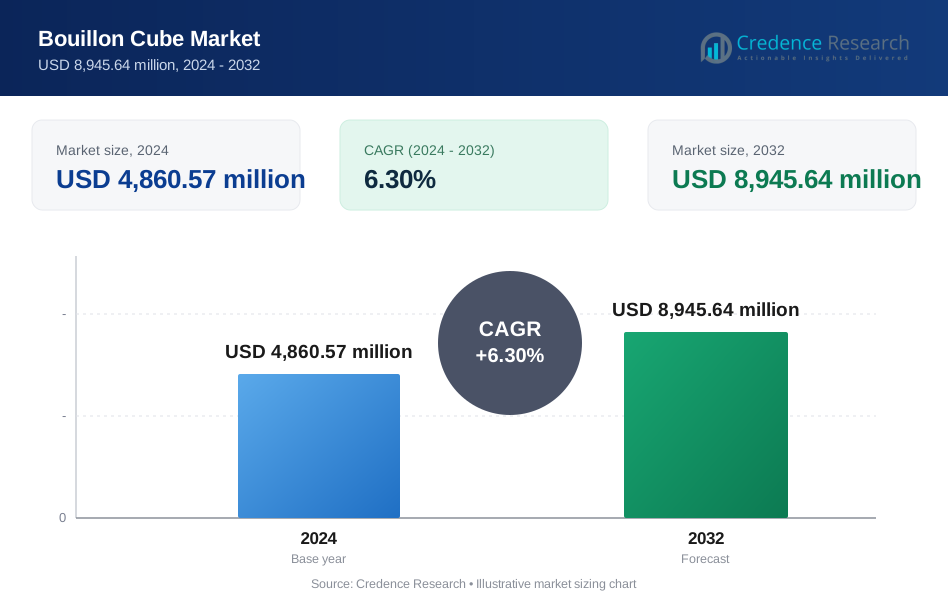
- 2.1.1 Market Size – Historical (2024) & Forecast (2024-2032) (2024: USD 4,860.57 million → 2032: USD 8,945.64 million)
- 2.1.2 Volume & Revenue – Global Totals (Volume Where Applicable)
- 2.1.3 Key Market Highlights – Top Five Facts
- 2.2 Bouillon Cube Market Segmentation Snapshot
- 2.2.1 Market Split by Region – 2024 vs. 2032
- 2.3 Competitive Snapshot
- 2.3.1 Top 10 Players by Revenue Share – 2024
- 2.3.2 Top 10 Players by Volume Share – 2024 (Volume Where Applicable)
- 2.3.3 Recent Strategic Developments (18-Month Summary)
- 2.4 Key Investment Highlights & Strategic Conclusions
Chapter 3. Bouillon Cube Market Dynamics & Industry Analysis
- 3.1 Market Overview & Context
- 3.1.1 Bouillon Cube Market Position in the Broader Industry Value Chain
- 3.1.2 Demand Structure & Purchasing Dynamics
- 3.1.3 Market Maturity & Development Stage by Region
- 3.2 Bouillon Cube Market Drivers
- 3.3 Bouillon Cube Market Restraints & Challenges
- 3.4 Bouillon Cube Market Opportunities
- 3.5 Porter's Five Forces Analysis
- 3.5.1 Threat of New Entrants
- 3.5.2 Bargaining Power of Suppliers
- 3.5.3 Bargaining Power of Buyers
- 3.5.4 Threat of Substitutes
- 3.5.5 Competitive Rivalry – Intensity Assessment
- 3.6 Bouillon Cube Value Chain Analysis
- 3.6.1 Upstream – Key Inputs, Resources & Suppliers
- 3.6.1.1 Key Input/Resource 1
- 3.6.1.2 Key Input/Resource 2
- 3.6.1.3 Key Input/Resource 3
- 3.6.2 Midstream – Core Operations & Value Creation
- 3.6.2.1 Operating Model & Process Overview
- 3.6.2.2 Key Operating Locations & Capabilities by Company
- 3.6.3 Downstream – Market Channels & End Users
- 3.6.3.1 Direct Sales & Customer Engagement Channels
- 3.6.3.2 Indirect Sales, Intermediaries & Partner Channels
- 3.6.4 Value Chain Profitability Analysis
- 3.6.1 Upstream – Key Inputs, Resources & Suppliers
- 3.7 PESTEL Analysis
- 3.7.1 Political Factors
- 3.7.2 Economic Factors
- 3.7.3 Social Factors
- 3.7.4 Technological Factors
- 3.7.5 Environmental Factors
- 3.7.6 Legal Factors
- 3.8 Bouillon Cube Supply Chain Analysis
- 3.8.1 Critical Input & Resource Availability Risk Assessment
- 3.8.2 Supplier & Operational Concentration Risk (Geographic Exposure)
- 3.8.3 Supply & Service Disruption Impact Analysis
- 3.9 Regulatory & Policy Landscape
Note: The regulatory and policy landscape section covers regulations based on their applicability to the market, Bouillon Cube category, geography, and scope of the study. Only regulatory frameworks with a material impact on operations, compliance, trade, sustainability, or market access are analyzed in detail.
Chapter 4. Key Investment Pockets & Opportunity Analysis
- 4.1 Bouillon Cube Market Attractiveness Analysis
- 4.1.1 By Region – Investment Attractiveness Matrix (Market Size × CAGR)
- 4.2 Absolute Revenue Growth Opportunity
- 4.2.1 By Region – Absolute Revenue Growth Through 2032
- 4.3 Incremental Demand Opportunity
- 4.3.1 By Region – Incremental Demand Through 2032
- 4.3.2 Segment – Incremental Demand
- 4.4 Emerging Submarket Opportunity Deep Dive (Subject to Applicability)
- 4.5 Priority Market Opportunity Scorecards
- 4.5.1 United States
- 4.5.2 Europe
- 4.5.3 Asia
- 4.5.4 Middle East & Africa
Note: Priority market opportunity scorecards reflect the geographic scope and strategic relevance of the study. Listed markets are indicative and may be adapted to the industry.
Chapter 5. Bouillon Cube Cross-Border Trade & Market Access Analysis
- 5.1 International Trade & Cross-Border Activity Overview
- 5.1.1 Global Export Value by Country (2024)
- 5.1.2 Global Export Volume by Country (2024) (Volume Where Applicable)
- 5.1.3 Global Import Value by Country (2024)
- 5.1.4 Global Import Volume by Country (2024) (Volume Where Applicable)
- 5.1.5 Net Trade Balance by Country (2024)
- 5.2 Export Analysis – Segment
- 5.2.1 Category 1 (Applicable Classification Code)
- 5.2.2 Category 2 (Applicable Classification Code)
- 5.2.3 Category 3 (Applicable Classification Code)
- 5.2.4 Category 4 (Applicable Classification Code)
- 5.2.5 Category 5 (Applicable Classification Code)
- 5.3 Import Analysis – Segment
- 5.3.1 Category 1 (Applicable Classification Code)
- 5.3.2 Category 2 (Applicable Classification Code)
- 5.3.3 Category 3 (Applicable Classification Code)
- 5.3.4 Category 4 (Applicable Classification Code)
- 5.3.5 Category 5 (Applicable Classification Code)
- 5.4 Cross-Border Pricing & Transaction Benchmarks
- 5.4.1 Export Pricing – Segment & Country
- 5.4.2 Import Pricing – Segment & Source Country
- 5.4.3 Price Trends (2024)
- 5.5 Key Cross-Border Trade & Delivery Routes
- 5.5.1 Cross-Border Trade/Delivery Route 1
- 5.5.2 Cross-Border Trade/Delivery Route 2
- 5.5.3 Cross-Border Trade/Delivery Route 3
- 5.5.4 Cross-Border Trade/Delivery Route 4
- 5.5.5 Cross-Border Trade/Delivery Route 5
- 5.6 Trade Policy & Market Access Impact Assessment
- 5.6.1 Tariff & Non-Tariff Barriers
- 5.6.2 Regional Trade & Economic Integration Frameworks
- 5.6.3 Bilateral & Multilateral Trade Agreements
- 5.6.4 Cross-Border Operating, Licensing & Localization Requirements
Note: This chapter applies where cross-border trade or delivery is relevant to Bouillon Cube. Goods, services, and digital offerings are assessed using applicable classifications and transaction measures. Import-export volumes, trade balances, and route analyses are included only where meaningful to the market.
Chapter 6. Competitive Landscape & Company Benchmarking
- 6.1 Bouillon Cube Market Concentration & Structure
- 6.1.1 Herfindahl-Hirschman Index (HHI) – vs. 2024
- 6.1.2 Leading, Mid-Sized & Emerging Player Structure
- 6.1.3 Global, Regional & Local Player Dynamics
- 6.2 Bouillon Cube Market Share Analysis – 2024
- 6.2.1 Global Revenue Share by Company
- 6.2.2 Global Volume Share by Company (Volume Where Applicable)
- 6.2.3 Regional Revenue Share
- 6.2.4 Market Share Evolution ( vs. 2024)
- 6.2.5 Company Market Share by Key Segment
- 6.2.6 Company Market Share by Customer Group
- 6.3 Operating Scale, Capacity & Infrastructure Analysis
- 6.3.1 Global Operating Scale & Supply Capacity
- 6.3.2 Resource Utilization & Operating Efficiency
- 6.3.3 Output, Service Delivery & Activity Metrics
- 6.3.4 Operating Footprint & Infrastructure Map
- 6.3.5 Planned Operational & Capacity Expansion
- 6.4 Bouillon Cube Competitive Benchmarking Matrix
- 6.4.1 Revenue, Growth, Profitability & Operating Metric Comparison
- 6.4.2 Channel Revenue Mix
- 6.4.3 Geographic Revenue Exposure
- 6.4.4 R&D Intensity
- 6.4.5 Sustainability Maturity
- 6.5 Strategic Developments in Bouillon Cube (Last 24 Months)
- 6.5.1 Mergers, Acquisitions & Divestments
- 6.5.2 New Products, Services & Solutions in Bouillon Cube
- 6.5.3 Operational & Infrastructure Expansions
- 6.5.4 Strategic Alliances, Joint Ventures & Partnerships
- 6.5.5 Distribution Expansion & Market Entry
- 6.5.6 Sustainability & ESG Initiatives
- 6.6 Competitive Strategy Mapping
- 6.6.1 Leader, Challenger, Follower & Niche Classification
- 6.6.2 Pricing Strategy Comparison
- 6.6.3 Channel Strategy Matrix
Note: Strategic developments are included based on their materiality and the availability of reliable information.
Chapter 7. Global Bouillon Cube Market – By Sales & Delivery Channel
- 7.1 Segment Overview
- 7.1.1 Volume & Revenue Split by Channel (2024 & 2032) (Volume Where Applicable)
- 7.1.2 Channel Mix Evolution (2024-2032)
Chapter 8. Regional Market Analysis – Global Overview
- 8.1 Global Regional Overview
- 8.1.1 Regional Volume Share (Volume Where Applicable)
- 8.1.2 Regional Revenue Share
- 8.1.3 Regional Volume by Region (Volume Where Applicable)
- 8.1.4 Regional Revenue by Region
- 8.1.5 Regional Forecast Through 2032
- 8.2 Cross-Regional Segment Analysis
- 8.2.1 By Sales & Delivery Channel
- 8.2.2 By Competitive Positioning & Price Tier
Chapter 9. North America Bouillon Cube Market
- 9.1 United States
- 9.2 Canada
- 9.3 Mexico
Chapter 10. Europe Bouillon Cube Market
- 10.1 Germany
- 10.2 France
- 10.3 Italy
- 10.4 United Kingdom
- 10.5 Spain
- 10.6 Poland
- 10.7 Russia
- 10.8 Netherlands
- 10.9 Belgium
- 10.10 Sweden
- 10.11 Denmark
- 10.12 Norway
- 10.13 Rest of Europe
Chapter 11. Asia Pacific Bouillon Cube Market
- 11.1 China
- 11.2 India
- 11.3 Japan
- 11.4 South Korea
- 11.5 Thailand
- 11.6 Indonesia
- 11.7 Vietnam
- 11.8 Malaysia
- 11.9 Australia
- 11.10 Rest of Asia Pacific
Chapter 12. Latin America Bouillon Cube Market
- 12.1 Brazil
- 12.2 Argentina
- 12.3 Colombia
- 12.4 Chile
- 12.5 Rest of Latin America
Chapter 13. Middle East Bouillon Cube Market
- 13.1 Saudi Arabia
- 13.2 United Arab Emirates
- 13.3 Turkey
- 13.4 Israel
- 13.5 Iran
- 13.6 Rest of the Middle East
Chapter 14. Africa Bouillon Cube Market
- 14.1 South Africa
- 14.2 Egypt
- 14.3 Nigeria
- 14.4 Morocco
- 14.5 Rest of Africa
Chapter 15. Bouillon Cube Company Profiles
- 15.1 [Company 01]
- 15.1.1 Company Overview
- 15.1.2 Key Management Personnel
- 15.1.3 Products & Services Portfolio
- 15.1.4 Financial Performance
- 15.1.5 Key Market Focus & Geographic Presence
- 15.1.6 Recent Developments & Strategic Initiatives
Note: The company profile list is preliminary and may change based on research findings, market developments, data availability, and client requirements.
Chapter 16. Appendices
- Appendix A – List of Abbreviations & Acronyms
- Appendix B – Industry Classification Code Reference – Full Series
- Appendix C – Supply, Output & Operating Capacity Data Tables
- Appendix D – End-Use & Demand Base Tables
- Appendix E – Demand, Adoption & Usage Assumptions
- Appendix F – Pricing & Revenue Metric Reference Tables
- Appendix G – Company Operations & Infrastructure Database
- Appendix H – Cross-Border Trade & Activity Data Tables (Where Applicable)
- Appendix I – Regulatory Summary Tables
- Appendix J – Primary Research Participant List (Anonymized)
- Appendix K – Primary Research Questionnaire Framework
- Appendix L – Data Sources & Bibliography
- Appendix M – Market Size Divergence & Source Comparison
Chapter 17. Research Methodology
- 17.1 Research Framework & Philosophy
- 17.2 Secondary Research – Sources, Hierarchy & Data Extraction
- 17.3 Data Modeling – Bottom-Up & Top-Down Market Sizing
- 17.4 Primary Research – Stakeholder Framework, LOI & Sample Sizes
- 17.5 Forecast Methodology – Regression, Scenario & Sensitivity Analysis
- 17.6 Quality Control – Four-Layer Validation Framework
- 17.7 Limitations & Standard Assumptions
- 17.8 Disclaimer
