
| REPORT ATTRIBUTE | DETAILS |
|---|---|
| Historical Period | 2019-2022 |
| Base Year | 2023 |
| Forecast Period | 2024-2032 |
| Content Distribution Software Market Size 2024 | USD 17,323.4 Million |
| Content Distribution Software Market, CAGR | 7% |
| Content Distribution Software Market Size 2032 | USD 29,764.82 Million |
Market Overview
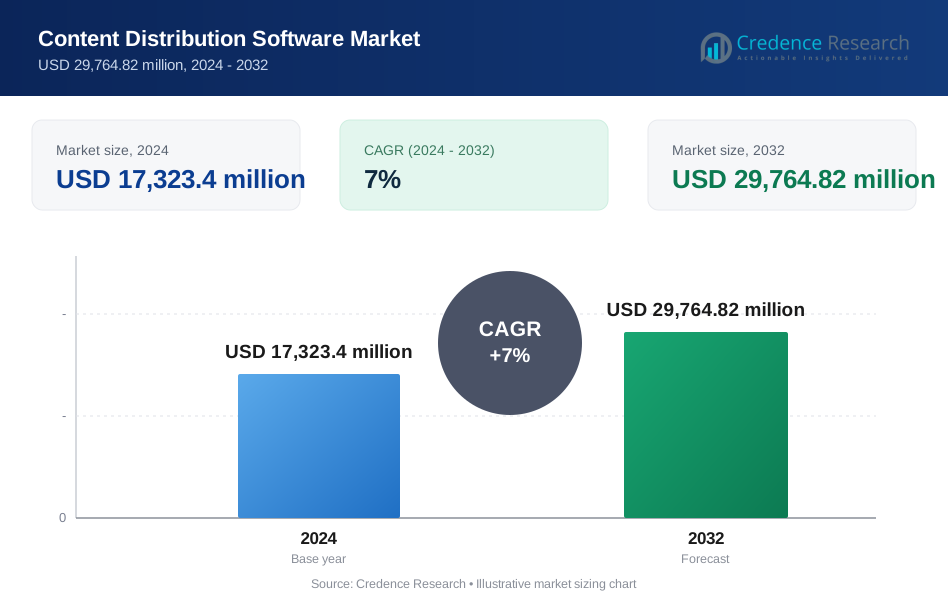
The Content Distribution Software Market is projected to grow from USD 17,323.4 million in 2024 to USD 29,764.82 million by 2032, registering a compound annual growth rate (CAGR) of 7% during the forecast period.
The Content Distribution Software market is driven by the growing demand for efficient and scalable solutions to manage and disseminate digital content across multiple platforms. The surge in content consumption, fueled by the proliferation of smart devices and increased internet penetration, has heightened the need for robust software solutions. Businesses are increasingly adopting these platforms to streamline content delivery, enhance audience engagement, and optimize monetization strategies. The integration of advanced technologies, such as artificial intelligence (AI) and machine learning (ML) is further transforming the market by enabling personalized content recommendations, automated workflows, and predictive analytics. Additionally, the rising focus on omnichannel distribution to deliver seamless experiences across various channels is a significant trend shaping the industry. Furthermore, growing investments in cloud-based solutions and the increasing adoption of video streaming platforms are creating lucrative opportunities for market expansion, especially in the media, entertainment, and e-commerce sectors.
The Content Distribution Software market exhibits significant regional diversity, with North America leading due to its robust IT infrastructure, early adoption of advanced technologies, and presence of key players like Outbrain Amplify, InPowered, and RebelMouse. Asia-Pacific is emerging as the fastest-growing region, driven by rapid digital transformation, increasing internet penetration, and a booming e-commerce sector in countries like China, India, and Japan. Europe also holds a substantial market share, supported by stringent data regulations and growing adoption of cloud-based solutions. Key players such as ContentStudio, PaperFlite, and CoSchedule Marketing Calendar are driving innovation across regions, leveraging advancements in artificial intelligence and omnichannel strategies to enhance user engagement. These companies, along with others like Revcontent and FlippingBook, play a pivotal role in shaping the competitive landscape globally.
Market Drivers
Increasing Demand for Digital Content Management
The rapid growth in digital content consumption, driven by expanding internet penetration and the proliferation of smart devices, is a primary driver of the Content Distribution Software market. Businesses across industries, including media, entertainment, and e-commerce, are increasingly leveraging content distribution platforms to manage, organize, and deliver digital assets effectively. For instance, the Government of India's Digital India initiative aims to transform the country into a digitally empowered society, emphasizing the importance of digital content management across various sectors (Ministry of Electronics and Information Technology - Digital India). These platforms enable organizations to cater to the growing expectations of consumers for instant and seamless access to content across multiple channels, thus driving market growth.
Rising Adoption of Cloud-Based Solutions
Cloud-based content distribution solutions are gaining traction due to their scalability, cost-efficiency, and ability to support remote collaboration. Businesses are migrating to cloud platforms to streamline operations and achieve global content reach without the need for extensive infrastructure investments. For instance, the Government of India's GI Cloud (MeghRaj) initiative is a prime example, aimed at accelerating the delivery of e-services and optimizing ICT spending (Ministry of Electronics and Information Technology - GI Cloud (MeghRaj)). The ability of cloud-based solutions to offer real-time updates, data security, and integration with advanced analytics tools is further accelerating their adoption, contributing significantly to market expansion.
Integration of Advanced Technologies
The integration of artificial intelligence (AI) and machine learning (ML) into content distribution platforms is revolutionizing the market. These technologies enable personalized content recommendations, predictive analytics, and automated content categorization, enhancing user engagement and operational efficiency. For instance, AI and ML are crucial in shaping social media algorithms and personalized content recommendations, allowing platforms to tailor content to individual user preferences (Ministry of Electronics and Information Technology - IndiaAI 2023: Expert Group Report). Moreover, AI-powered tools help businesses analyze consumer preferences and optimize their content strategies, ensuring that the right content reaches the target audience at the right time, thus boosting demand for these solutions.
Growing Importance of Omnichannel Distribution
As businesses focus on creating seamless customer experiences, the importance of omnichannel content distribution has surged. Content Distribution Software platforms enable organizations to deliver consistent and engaging content across various touchpoints, including websites, social media, email, and mobile applications. For instance, the Government of India emphasizes the need for an omnichannel strategy to enhance citizen engagement and service delivery across multiple platforms (Deloitte - Future of Retail Emerging Landscape of Omni-Channel Commerce in India). The growing emphasis on omnichannel strategies is driving the adoption of content distribution solutions globally.
Market Trends
Shift Towards AI-Driven Content Distribution
The integration of artificial intelligence (AI) into content distribution platforms is a defining trend in the market. AI enables advanced capabilities such as personalized content recommendations, automated tagging, and predictive analytics. These features enhance the efficiency of content delivery while ensuring that users receive highly relevant and engaging material. For instance, the Government of India's National Strategy for Artificial Intelligence highlights the transformative potential of AI in various sectors, including content distribution (NITI Aayog). Businesses are increasingly leveraging AI to analyze user behavior, optimize content strategies, and improve customer engagement. This trend is reshaping how organizations approach digital content distribution.
Increasing Adoption of Cloud-Based Platforms
Cloud-based content distribution solutions are becoming the preferred choice for businesses due to their scalability, cost-efficiency, and ability to support remote and hybrid work models. These platforms allow for seamless collaboration, real-time updates, and global reach, without the need for extensive infrastructure. For instance, the Government of India's GI Cloud (MeghRaj) initiative aims to accelerate the delivery of e-services and optimize ICT spending (Ministry of Electronics and Information Technology). Additionally, their integration with advanced analytics and security features makes them a vital tool for businesses looking to enhance operational efficiency and data-driven decision-making.
Growth of Omnichannel Content Strategies
The growing emphasis on delivering consistent and unified customer experiences across multiple channels is driving the adoption of omnichannel content distribution strategies. Businesses are focusing on using content distribution software to ensure that their messaging remains coherent and impactful across websites, mobile apps, social media platforms, and other touchpoints. For instance, the Government of India's Digital India initiative emphasizes the importance of an omnichannel approach to enhance citizen engagement and service delivery (Ministry of Electronics and Information Technology). This trend is especially pronounced in the retail, entertainment, and e-commerce sectors, where customer engagement and retention are critical to success.
Rising Demand for Video Content Distribution
The surge in video content consumption, fueled by the popularity of streaming platforms and social media, has significantly influenced the market. Content Distribution Software platforms are evolving to support high-quality video delivery, adaptive streaming, and content monetization features. For instance, a report by Media Partners Asia highlights the rapid growth of the online video industry in India, driven by increasing consumer demand for on-demand video content (Media Partners Asia). Businesses are investing in these solutions to cater to consumer preferences for video-based content, ensuring seamless delivery and enhanced user experiences, further driving market growth.
Market Challenges Analysis
Data Security and Privacy Concerns
One of the critical challenges in the Content Distribution Software market is ensuring data security and privacy. With the increasing reliance on cloud-based platforms and AI-driven solutions, the risk of cyber threats, data breaches, and unauthorized access has grown significantly. Businesses handling sensitive consumer data must comply with stringent regulations such as GDPR and CCPA, which impose penalties for non-compliance. Additionally, the rise in sophisticated cyberattacks has necessitated robust security measures, which can be costly and resource-intensive. These challenges compel organizations to balance the need for advanced content distribution capabilities with the imperative to safeguard data, often creating bottlenecks in adoption.
High Implementation Costs and Integration Complexity
The high initial costs associated with implementing Content Distribution Software pose a significant barrier, particularly for small and medium-sized enterprises (SMEs). The expense of licensing, deploying, and maintaining these platforms can strain budgets, especially when integrating with existing infrastructure. Moreover, the complexity of integrating advanced technologies such as AI and machine learning into legacy systems requires skilled expertise and additional resources, which many organizations may lack. These hurdles are further compounded by the need to train employees to utilize the software effectively, adding to operational costs and implementation time. As a result, businesses with limited financial or technical capabilities may find it challenging to fully leverage the benefits of modern content distribution solutions.
Market Segmentation Analysis:
By Deployment
The Content Distribution Software market is segmented into cloud-based and on-premise deployment models. Cloud-based solutions dominate the market due to their scalability, cost-effectiveness, and accessibility. Businesses across various industries prefer cloud-based platforms for their ability to enable remote collaboration, real-time updates, and seamless integration with other digital tools. These solutions also reduce the need for extensive IT infrastructure, making them particularly attractive for small and medium-sized enterprises (SMEs). On the other hand, on-premise solutions continue to hold relevance for organizations prioritizing data security and control. Industries such as finance and healthcare, where compliance with stringent data protection regulations is critical, often lean towards on-premise models to maintain direct oversight over their content management systems.
By Application
Content Distribution Software finds application across diverse sectors, including media and entertainment, retail, education, and healthcare. In the media and entertainment sector, these platforms facilitate the efficient delivery of digital assets such as videos, music, and graphics to a global audience. Retail and e-commerce companies leverage these solutions to create personalized content experiences for customers, enhancing engagement and driving sales. The education sector benefits from these tools to distribute e-learning materials seamlessly, while healthcare organizations utilize them to streamline patient communication and manage critical information. This versatility underscores the growing demand for content distribution solutions tailored to the unique needs of different industries.
Segmentations:
Based on Deployment:
- Cloud-Based
- On-Premises
Based on Application:
- Large Enterprises
- SMEs
Based on the Geography:
- North America
- U.S.
- Canada
- Mexico
- Europe
- Germany
- France
- U.K.
- Italy
- Spain
- Rest of Europe
- Asia Pacific
- China
- Japan
- India
- South Korea
- South-east Asia
- Rest of Asia Pacific
- Latin America
- Brazil
- Argentina
- Rest of Latin America
- Middle East & Africa
- GCC Countries
- South Africa
- Rest of the Middle East and Africa
Regional Analysis
North America
North America holds the largest market share in the Content Distribution Software market, accounting for 40% of the global revenue in 2024. The region’s dominance is driven by the widespread and early adoption of advanced technologies, including cloud computing, artificial intelligence (AI), and machine learning (ML). For instance, The United States is a central player in this growth, home to major technology firms and content providers that leverage cutting-edge platforms to optimize content delivery and enhance user engagement. High digital literacy rates, robust IT infrastructure, and a well-established e-commerce ecosystem further bolster the region's position. The increasing demand for personalized content experiences, coupled with significant investments in research and development, continues to propel the market forward. Moreover, the growing awareness of data security and compliance with stringent regulations such as the California Consumer Privacy Act (CCPA) and the General Data Protection Regulation (GDPR) has spurred the adoption of secure and efficient content distribution solutions. These factors have made North America a hub for innovation, contributing significantly to the global market’s development and growth.
Asia-Pacific
Asia-Pacific is emerging as the fastest-growing market for Content Distribution Software, with a projected compound annual growth rate (CAGR) 10% during the forecast period. The region’s rapid digital transformation is fueled by increasing internet penetration, widespread smartphone adoption, and a booming demand for video streaming and digital media consumption. Leading countries like China, India, and Japan are driving this growth, with businesses across sectors adopting advanced content distribution platforms to cater to a tech-savvy and digitally expanding consumer base. The e-commerce sector, a key economic driver in the region, is leveraging these tools to deliver consistent and engaging customer experiences across omnichannel platforms. For instance, Additionally, government-backed initiatives such as India’s Digital India program, China’s smart city projects, and Japan’s advancements in IoT technology are creating fertile ground for further adoption of content distribution solutions. Global cloud service providers and local startups are investing heavily in IT infrastructure and tailored solutions to meet the region's unique demands. Currently accounting for 25% of the global market share, Asia-Pacific is poised for exponential growth, positioning itself as a significant force in shaping the future of the Content Distribution Software market globally. As businesses in the region prioritize technological innovation and digital transformation, the market is expected to witness sustained growth and expansion in the coming years.
Key Player Analysis
- Outbrain Amplify
- FlippingBook
- Brax
- RebelMouse
- ContentStudio
- PaperFlite
- Revcontent
- CoSchedule Marketing Calendar
- InPowered
- GetSocial
Competitive Analysis
The Content Distribution Software market is characterized by intense competition, with leading players such as Outbrain Amplify, RebelMouse, InPowered, Revcontent, ContentStudio, and CoSchedule Marketing Calendar driving innovation and market growth. These companies focus on leveraging advanced technologies like artificial intelligence and machine learning to enhance personalization, automation, and analytics capabilities. For instance, Outbrain Amplify uses AI to deliver personalized content recommendations, significantly improving user engagement (Outbrain). Their competitive strategies include expanding their product portfolios, entering strategic partnerships, and enhancing user-centric features to gain a competitive edge. Additionally, players are heavily investing in cloud-based solutions and omnichannel content distribution to cater to the evolving demands of businesses across industries. With the growing emphasis on video content and seamless integration, these companies are positioned to capitalize on emerging opportunities while addressing challenges such as data security and implementation costs, making the market dynamic and highly competitive.
Recent Developments
- In January 2023, Yandex LLC, a Russia-based internet services company, launched Yandex Zen, a machine learning (ML)-powered content recommendation platform for publishers to create and distribute content. The Yandex Zen platform will now allow publishers (media corporations, content creators, and even ordinary people) to post their material directly on the platform using a flip-through approach.
- In February 2024, Curata launched an AI-driven content curation platform designed to help businesses streamline their content marketing strategies using advanced algorithms
- In January 2024, MadCap Software Inc. acquired Xyleme Inc., expanding its intelligent content management solutions portfolio with enhanced dashboarding, APIs, and integration capabilities.
- In March 2024, BetterCloud acquired G2 Track from G2, creating a comprehensive SaaS management platform that serves nearly 2,500 companies and supports over 2 million users across 85,000 vendors.
Market Concentration & Characteristics
The Content Distribution Software market exhibits a moderately fragmented structure, characterized by a mix of established global players and emerging regional competitors. While leading companies dominate the market with comprehensive solutions and extensive customer bases, smaller players are gaining traction through innovation and niche offerings. The market is marked by rapid technological advancements, including artificial intelligence (AI) integration, cloud-based solutions, and omnichannel capabilities, which enhance scalability and personalization. Businesses across industries, such as media, retail, and healthcare, are adopting these platforms to optimize content delivery and audience engagement. Despite its dynamic nature, the market faces challenges like high implementation costs and data security concerns, which impact smaller enterprises more significantly. Overall, the Content Distribution Software market is defined by its competitive intensity, innovation-driven growth, and increasing demand for solutions that cater to the evolving digital landscape.
Report Coverage
The research report offers an in-depth analysis based on Deployment, Application and Geography. It details leading market players, providing an overview of their business, product offerings, investments, revenue streams, and key applications. Additionally, the report includes insights into the competitive environment, SWOT analysis, current market trends, as well as the primary drivers and constraints. Furthermore, it discusses various factors that have driven market expansion in recent years. The report also explores market dynamics, regulatory scenarios, and technological advancements that are shaping the industry. It assesses the impact of external factors and global economic changes on market growth. Lastly, it provides strategic recommendations for new entrants and established companies to navigate the complexities of the market.
Future Outlook
- The Content Distribution Software market is expected to witness significant growth, driven by advancements in artificial intelligence and machine learning technologies.
- Cloud-based solutions will continue to dominate due to their scalability, cost-efficiency, and seamless integration capabilities.
- The growing demand for personalized content experiences will drive the adoption of AI-powered analytics and automation tools.
- Omnichannel content distribution strategies will gain prominence as businesses aim to provide consistent user experiences across platforms.
- Video content will remain a major growth area, fueled by the popularity of streaming platforms and social media engagement.
- Emerging markets in Asia-Pacific and Latin America will play a crucial role in the market's expansion, driven by digital transformation initiatives.
- Data security and privacy will remain critical concerns, encouraging investments in secure and compliant distribution solutions.
- The integration of content management systems with advanced analytics tools will enhance operational efficiency and decision-making.
- Partnerships and acquisitions among key players will accelerate innovation and broaden market reach.
- The market will see increased adoption across industries such as retail, media, healthcare, and education, as businesses prioritize digital engagement.
Request a Free Sample
Fill in your details and we'll send you a free sample report.
- Sample data tables & charts
- Research methodology
Need a Custom Version of This Report?
Tailor the scope, geography, or segments to your exact requirements.
- Custom geography or segment scope
- Direct access to our analyst team
Frequently Asked Questions
What is the current size of the Content Distribution Software market?
What factors are driving the growth of the Content Distribution Software market?
What are the key segments within the Content Distribution Software market?
What are some challenges faced by the Content Distribution Software market?
Who are the major players in the Content Distribution Software market?
Table of Content
Chapter 1. Report Introduction
- 1.1 Report Description & Purpose
- 1.1.1 Report Title & Market Definition
- 1.1.2 Unique Selling Propositions (USP) & Key Differentiators
- 1.1.3 Value Proposition for Stakeholders
- 1.2 Research Objectives
- 1.2.1 Market Sizing Objectives (Volume & Revenue)
- 1.2.2 Segmentation Objectives
- 1.2.3 Competitive Intelligence Objectives
- 1.2.4 Forecast & Scenario Objectives
- 1.3 Report Scope
- 1.3.1 Content Distribution Software Scope – Types & Subtypes Covered
- 1.3.2 Geographic Scope – Regions & Countries Covered
- 1.3.3 Historical Period, Base Year & Forecast Period (2024; forecast to 2032)
- 1.3.4 Inclusions & Exclusions
- 1.4 HS Code & Classification Framework
- 1.5 Currency, Units & Pricing Basis
- 1.6 Target Stakeholders
- 1.7 Limitations & Assumptions
Chapter 2. Executive Summary
- 2.1 Global Content Distribution Software Market Snapshot
- 2.1.1 Market Size – Historical (2024) & Forecast (2024-2032) (2024: USD 17,323.4 million → 2032: USD 29,764.82 million)
- 2.1.2 Volume & Revenue – Global Totals
- 2.1.3 Key Market Highlights – Top Five Facts
- 2.2 Content Distribution Software Market Segmentation Snapshot
- 2.2.1 Market Split by Region – 2024 vs. 2032
- 2.3 Competitive Snapshot
- 2.3.1 Top 10 Players by Revenue Share – 2024
- 2.3.2 Top 10 Players by Volume Share – 2024
- 2.3.3 Recent Strategic Developments (18-Month Summary)
- 2.4 Key Investment Highlights & Strategic Conclusions
Chapter 3. Content Distribution Software Market Dynamics & Industry Analysis
- 3.1 Market Overview & Context
- 3.1.1 Content Distribution Software Market Position in the Broader Automotive Value Chain
- 3.1.2 OEM vs. Replacement Market Dynamics
- 3.1.3 Market Maturity & Development Stage by Region
- 3.2 Content Distribution Software Market Drivers
- 3.3 Content Distribution Software Market Restraints & Challenges
- 3.4 Content Distribution Software Market Opportunities
- 3.5 Porter's Five Forces Analysis
- 3.5.1 Threat of New Entrants
- 3.5.2 Bargaining Power of Suppliers
- 3.5.3 Bargaining Power of Buyers
- 3.5.4 Threat of Substitutes
- 3.5.5 Competitive Rivalry – Intensity Assessment
- 3.6 Content Distribution Software Value Chain Analysis
- 3.6.1 Upstream – Raw Material/Input Suppliers
- 3.6.1.1 Raw Material/Input 1
- 3.6.1.2 Raw Material/Input 2
- 3.6.1.3 Raw Material/Input 3
- 3.6.2 Midstream – Production/Manufacturing/Service Delivery
- 3.6.2.1 Production/Process Overview
- 3.6.2.2 Key Facility Locations & Capacity by Manufacturer
- 3.6.3 Downstream – Distribution & End Consumer
- 3.6.3.1 Primary Channel – B2B/OEM
- 3.6.3.2 Secondary Channels – Dealer, Retail, Online, Direct
- 3.6.4 Value Chain Profitability Analysis
- 3.6.1 Upstream – Raw Material/Input Suppliers
- 3.7 PESTEL Analysis
- 3.7.1 Political Factors
- 3.7.2 Economic Factors
- 3.7.3 Social Factors
- 3.7.4 Technological Factors
- 3.7.5 Environmental Factors
- 3.7.6 Legal Factors
- 3.8 Content Distribution Software Supply Chain Analysis
- 3.8.1 Raw Material/Input Supply Risk Assessment
- 3.8.2 Manufacturing Concentration Risk (Geographic Exposure)
- 3.8.3 Trade Disruption Impact Analysis
- 3.9 Regulatory & Policy Landscape
Note: The regulatory and policy landscape section covers regulations based on their applicability to the market, Content Distribution Software category, geography, and scope of the study. Only regulatory frameworks with a material impact on operations, compliance, trade, sustainability, or market access are analyzed in detail.
Chapter 4. Key Investment Pockets & Opportunity Analysis
- 4.1 Content Distribution Software Market Attractiveness Analysis
- 4.1.1 By Region – Investment Attractiveness Matrix (Volume × CAGR)
- 4.2 Absolute Revenue Growth Opportunity
- 4.2.1 By Region – Absolute USD Growth Through 2032
- 4.3 Incremental Volume Opportunity
- 4.3.1 By Region – Incremental Volume Through 2032
- 4.3.2 Segment – Incremental Volume
- 4.4 Emerging Submarket Opportunity Deep Dive (Subject to Applicability)
- 4.5 Emerging Market Opportunity Scorecards
- 4.5.1 United States
- 4.5.2 Europe
- 4.5.3 Asia
- 4.5.4 Middle East & Africa
Note: Emerging Market Opportunity Scorecards will be included based on relevance and strategic importance. Regions listed are indicative and may vary depending on data availability and market dynamics.
Chapter 5. Content Distribution Software Import-Export Analysis & Trade Flows
- 5.1 Global Trade Overview
- 5.1.1 Global Export Value by Country (2024)
- 5.1.2 Global Export Volume by Country (2024)
- 5.1.3 Global Import Value by Country (2024)
- 5.1.4 Global Import Volume by Country (2024)
- 5.1.5 Net Trade Balance by Country (2024)
- 5.2 Export Analysis – Segment
- 5.2.1 Type 1 (HS Code)
- 5.2.2 Type 2 (HS Code)
- 5.2.3 Type 3 (HS Code)
- 5.2.4 Type 4 (HS Code)
- 5.2.5 Type 5 (HS Code)
- 5.3 Import Analysis – Segment
- 5.3.1 Type 1 (HS Code)
- 5.3.2 Type 2 (HS Code)
- 5.3.3 Type 3 (HS Code)
- 5.3.4 Type 4 (HS Code)
- 5.3.5 Type 5 (HS Code)
- 5.4 Average Unit Trade Prices
- 5.4.1 Average Export Price – Segment & Country
- 5.4.2 Average Import Price – Segment & Source Country
- 5.4.3 Price Trends (2024)
- 5.5 Key Trade Route Analysis
- 5.5.1 Trade Route 1
- 5.5.2 Trade Route 2
- 5.5.3 Trade Route 3
- 5.5.4 Trade Route 4
- 5.5.5 Trade Route 5
- 5.6 Trade Policy Impact Assessment
- 5.6.1 US Anti-Dumping & Section 301 Tariffs
- 5.6.2 EU Customs Union Impact
- 5.6.3 Major Free Trade Agreements
- 5.6.4 USMCA Rules of Origin
Note: Trade policy analysis will be included only where relevant to the Content Distribution Software market.
Chapter 6. Competitive Landscape & Company Benchmarking
- 6.1 Content Distribution Software Market Concentration & Structure
- 6.1.1 Herfindahl-Hirschman Index (HHI) – vs. 2024
- 6.1.2 Tier 1, Tier 2 & Tier 3 Market Structure
- 6.1.3 Global, Regional & Local Player Dynamics
- 6.2 Content Distribution Software Market Share Analysis – 2024
- 6.2.1 Global Revenue Share by Company
- 6.2.2 Global Volume Share by Company
- 6.2.3 Regional Revenue Share
- 6.2.4 Market Share Evolution ( vs. 2024)
- 6.2.5 OEM Segment Share by Company
- 6.2.6 Replacement Segment Share by Company
- 6.3 Production/Delivery Capacity & Facility Analysis
- 6.3.1 Global Installed Capacity
- 6.3.2 Capacity Utilization Rates
- 6.3.3 Production/Output Volume
- 6.3.4 Facility Locations & Capacity Map
- 6.3.5 Planned Capacity Additions
- 6.4 Content Distribution Software Competitive Benchmarking Matrix
- 6.4.1 Revenue, Volume, CAGR & Profitability Comparison
- 6.4.2 Channel Revenue Mix
- 6.4.3 Geographic Revenue Exposure
- 6.4.4 R&D Intensity
- 6.4.5 Sustainability Maturity
- 6.5 Strategic Developments in Content Distribution Software (Last 24 Months)
- 6.5.1 Mergers, Acquisitions & Divestments
- 6.5.2 New Content Distribution Software Launches
- 6.5.3 Facility Expansions
- 6.5.4 Strategic Alliances, Joint Ventures & Partnerships
- 6.5.5 Distribution Expansion & Market Entry
- 6.5.6 Sustainability & ESG Initiatives
- 6.6 Competitive Strategy Mapping
- 6.6.1 Leader, Challenger, Follower & Niche Classification
- 6.6.2 Pricing Strategy Comparison
- 6.6.3 Channel Strategy Matrix
Note: Strategic developments are included based on their materiality and the availability of reliable information.
Chapter 7. Global Content Distribution Software Market – By Distribution Channel
- 7.1 Segment Overview
- 7.1.1 Volume & Revenue Split by Channel (2024 & 2032)
- 7.1.2 Channel Mix Evolution (2024-2032)
Chapter 8. Regional Market Analysis – Global Overview
- 8.1 Global Regional Overview
- 8.1.1 Regional Volume Share
- 8.1.2 Regional Revenue Share
- 8.1.3 Regional Volume by Region
- 8.1.4 Regional Revenue by Region
- 8.1.5 Regional Forecast Through 2032
- 8.2 Cross-Regional Segment Analysis
- 8.2.1 By Distribution Channel
- 8.2.2 By Brand/Price Tier
Chapter 9. North America Content Distribution Software Market
- 9.1 United States
- 9.2 Canada
- 9.3 Mexico
Chapter 10. Europe Content Distribution Software Market
- 10.1 Germany
- 10.2 France
- 10.3 Italy
- 10.4 United Kingdom
- 10.5 Spain
- 10.6 Poland
- 10.7 Russia
- 10.8 Netherlands
- 10.9 Belgium
- 10.10 Sweden
- 10.11 Denmark
- 10.12 Norway
- 10.13 Rest of Europe
Chapter 11. Asia Pacific Content Distribution Software Market
- 11.1 China
- 11.2 India
- 11.3 Japan
- 11.4 South Korea
- 11.5 Thailand
- 11.6 Indonesia
- 11.7 Vietnam
- 11.8 Malaysia
- 11.9 Australia
- 11.10 Rest of Asia Pacific
Chapter 12. Latin America Content Distribution Software Market
- 12.1 Brazil
- 12.2 Argentina
- 12.3 Colombia
- 12.4 Chile
- 12.5 Rest of Latin America
Chapter 13. Middle East Content Distribution Software Market
- 13.1 Saudi Arabia
- 13.2 United Arab Emirates
- 13.3 Turkey
- 13.4 Israel
- 13.5 Iran
- 13.6 Rest of the Middle East
Chapter 14. Africa Content Distribution Software Market
- 14.1 South Africa
- 14.2 Egypt
- 14.3 Nigeria
- 14.4 Morocco
- 14.5 Rest of Africa
Chapter 15. Content Distribution Software Company Profiles
- 15.1 [Company 01]
- 15.1.1 Company Overview
- 15.1.2 Key Management Personnel
- 15.1.3 Products & Services Portfolio
- 15.1.4 Financial Performance
- 15.1.5 Key Market Focus & Geographic Presence
- 15.1.6 Recent Developments & Strategic Initiatives
Note: The company profile list is preliminary and may change based on research findings, market developments, data availability, and client requirements.
Chapter 16. Appendices
- Appendix A – List of Abbreviations & Acronyms
- Appendix B – Industry Classification Code Reference – Full Series
- Appendix C – Production & Capacity Data Tables
- Appendix D – End-Use & Demand Base Tables
- Appendix E – Consumption & Replacement Rate Assumptions
- Appendix F – ASP Reference Tables
- Appendix G – Manufacturing & Facility Database
- Appendix H – Import-Export Data Tables
- Appendix I – Regulatory Summary Tables
- Appendix J – Primary Research Participant List (Anonymized)
- Appendix K – Primary Research Questionnaire Framework
- Appendix L – Data Sources & Bibliography
- Appendix M – Market Size Divergence & Source Comparison
Chapter 17. Research Methodology
- 17.1 Research Framework & Philosophy
- 17.2 Secondary Research – Sources, Hierarchy & Data Extraction
- 17.3 Data Modeling – Bottom-Up & Top-Down Market Sizing
- 17.4 Primary Research – Stakeholder Framework, LOI & Sample Sizes
- 17.5 Forecast Methodology – Regression, Scenario & Sensitivity Analysis
- 17.6 Quality Control – Four-Layer Validation Framework
- 17.7 Limitations & Standard Assumptions
- 17.8 Disclaimer
