
| REPORT ATTRIBUTE | DETAILS |
|---|---|
| Historical Period | 2019-2022 |
| Base Year | 2023 |
| Forecast Period | 2024-2032 |
| Frozen Fruits And Vegetables Market Size 2024 | USD 4335 million |
| Frozen Fruits And Vegetables Market, CAGR | 7.1% |
| Frozen Fruits And Vegetables Market Size 2032 | USD 7504.2 million |
Market Overview:
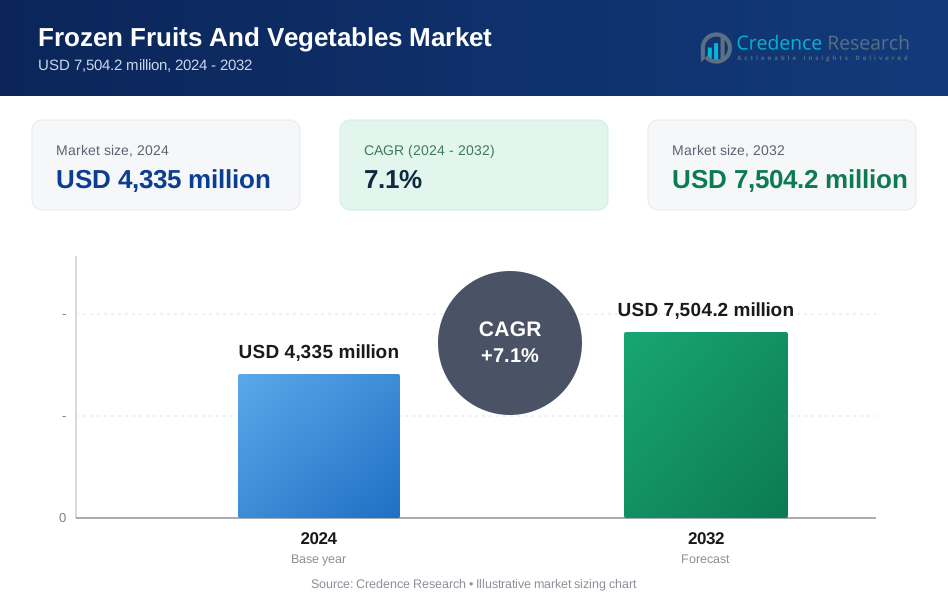
The Frozen Fruits and Vegetables Market is projected to grow from USD 4335 million in 2024 to an estimated USD 7504.2 million by 2032, with a compound annual growth rate (CAGR) of 7.1% from 2024 to 2032.
The market's growth is significantly driven by evolving consumer lifestyles and the preference for convenient, ready-to-use food options. Frozen fruits and vegetables are increasingly recognized for retaining essential nutrients such as vitamins and minerals, making them a practical and healthy alternative to fresh produce. Advancements in freezing technologies, such as flash freezing, ensure high-quality preservation and longer shelf life, increasing consumer trust in these products. Furthermore, the growing adoption of plant-based diets and the demand for out-of-season produce have expanded the appeal of frozen fruits and vegetables. Rising urbanization, coupled with the rapid expansion of modern retail and e-commerce platforms, has further streamlined product accessibility, making frozen options a staple in households and foodservice establishments globally.
Regional Analysis highlights North America as the leading market, supported by a well-established cold chain infrastructure, widespread consumer acceptance of frozen products, and a high demand for convenient food options. Europe closely follows, driven by the growing preference for sustainable and plant-based food solutions, particularly in countries like Germany, the UK, and France. The Asia-Pacific region is set to experience the fastest growth, fueled by rising disposable incomes, rapid urbanization, and the expansion of retail and online distribution networks in countries like China, India, and Japan. Additionally, emerging markets in Latin America, the Middle East, and Africa hold significant potential due to increasing consumer awareness, improving refrigeration capabilities, and growing adoption of Western food consumption patterns. These regions are expected to play a pivotal role in driving the global market’s expansion, supported by ongoing investments in cold storage infrastructure and marketing initiatives.
Market Insights:
- The frozen fruits and vegetables market is projected to grow from USD 4,335 million in 2024 to USD 7,504.2 million by 2032, with a CAGR of 7.1%, driven by the increasing preference for convenient food options.
- Advanced freezing technologies, such as flash freezing, are ensuring better nutrient preservation, extended shelf life, and higher consumer trust in frozen produce.
- The global shift toward plant-based and vegan diets has expanded demand, as frozen fruits and vegetables cater to year-round availability and versatile meal options.
- The rapid expansion of retail and e-commerce platforms has enhanced product accessibility, streamlining the supply chain for consumers and foodservice establishments alike.
- North America leads the market, accounting for 35% of the share, supported by advanced cold chain infrastructure and high consumer acceptance of frozen food products.
- Asia-Pacific is the fastest-growing region, driven by urbanization, rising disposable incomes, and increasing adoption of Western food consumption patterns.
- Emerging markets in Latin America, the Middle East, and Africa are gaining momentum due to improving cold storage infrastructure and growing consumer awareness of the benefits of frozen foods.
Market Drivers:
Shifting Consumer Lifestyles and Demand for Convenience
The increasing pace of urbanization and changing consumer lifestyles have significantly boosted the demand for convenient food options, making frozen fruits and vegetables a popular choice. With busy schedules and limited time for meal preparation, consumers are turning to frozen produce for its ease of use and extended shelf life. These products allow for quick meal solutions without compromising on nutrition or quality. For instance, Nestlé recognizes the increasing demand for convenience and offers a wide range of frozen fruits and vegetables under their brand. Their strong product portfolio provides quick meal solutions catering to consumers' busy schedules. The rising trend of dual-income households has further fueled this demand, as more consumers seek efficient and time-saving food options.
Nutritional Value and Quality Preservation
Frozen fruits and vegetables are often harvested and frozen at their peak ripeness, ensuring optimal retention of vitamins, minerals, and flavor. Advanced freezing technologies, such as flash freezing and cryogenic freezing, have enhanced the ability to preserve nutrients and freshness for extended periods. For instance, research from the University of Georgia indicates that frozen spinach can retain higher levels of vitamin A and C compared to fresh spinach that has been stored for several days. This has addressed consumer concerns about the quality of frozen products and positioned them as a reliable alternative to fresh produce. As health-conscious consumers increasingly prioritize nutrient-rich diets, the market for frozen fruits and vegetables continues to grow, supported by their nutritional equivalence to fresh options.
Rising Adoption of Plant-Based and Vegan Diets
The global shift towards plant-based and vegan diets has emerged as a key driver for the frozen fruits and vegetables market. Consumers are incorporating more plant-based ingredients into their diets for health, ethical, and environmental reasons, boosting demand for versatile and easily accessible produce. Frozen fruits and vegetables cater to this growing segment by offering convenience and year-round availability of various produce types. Additionally, the rising trend of smoothies, plant-based recipes, and meal kits has expanded the applications of frozen fruits and vegetables, further driving market growth. For instance, Amy's Kitchen focuses on organic and plant-based frozen meals, including a wide range of frozen vegetables. Their commitment to health and sustainability aligns with the values of consumers adopting plant-based diets.
Expanding Retail and E-commerce Channels
The rapid growth of modern retail and e-commerce channels has significantly improved the accessibility and availability of frozen fruits and vegetables. Supermarkets, hypermarkets, and online grocery platforms are increasingly stocking a wide variety of frozen produce, making it easier for consumers to purchase these products. The expansion of e-commerce, in particular, has enabled consumers to access frozen goods without geographical limitations, further driving market penetration. Promotional strategies, such as discounts and product bundling, are also enhancing consumer engagement and boosting sales. For instance, Walmart has significantly increased its offerings of frozen fruits and vegetables across its supermarkets and hypermarkets. They provide a wide range of products, making it convenient for consumers to purchase frozen produce during their regular grocery shopping. These developments have streamlined the supply chain, ensuring that frozen fruits and vegetables reach a broader consumer base.
Market Trends:
Focus on Sustainability and Reducing Food Waste
Sustainability and reducing food waste have become central trends in the frozen fruits and vegetables market. Freezing significantly extends the shelf life of produce, offering an effective solution to minimize spoilage. This resonates with environmentally conscious consumers who prioritize reducing food waste. For instance, Jooever highlighted that frozen fruits significantly extend shelf life, reducing spoilage and waste. In 2023, they reported that their frozen fruit products have a shelf life that is longer than fresh produce, which helps minimize food waste at both retail and consumer levels. Additionally, manufacturers are embracing sustainable practices, such as sourcing responsibly and utilizing eco-friendly packaging materials, to align with consumer values and enhance brand loyalty.
Advancements in Freezing Technologies
Technological innovations are transforming the frozen fruits and vegetables market, enhancing product quality and consumer satisfaction. Advanced freezing methods like cryogenic freezing and individual quick freezing (IQF) preserve texture, flavor, and nutritional content, making frozen produce closely resemble fresh alternatives. For instance, Bird’s Eye has adopted Individual Quick Freezing (IQF) technology, which allows for rapid freezing of produce at temperatures below -30°C. This method preserves up to 95% of the vitamins and minerals in fruits and vegetables, ensuring they maintain their nutritional value. These technologies ensure higher acceptance among consumers while innovative packaging solutions, such as vacuum-sealed and portion-controlled packs, improve convenience and reduce waste, further driving demand.
Demand for Organic and Non-GMO Products
The rising popularity of organic and non-GMO frozen produce is reshaping market dynamics. Health-conscious consumers increasingly seek clean-label products that align with their dietary preferences and ethical considerations. Manufacturers are responding by expanding their portfolios to include organic and non-GMO options. For instance, Dole Food Company have expanded their organic offerings significantly; in 2023, they introduced a new line of organic frozen fruits that saw sales increase within the first six months of launch. This trend is particularly strong in developed regions like North America and Europe, where consumers are willing to pay a premium for sustainably and ethically produced goods, boosting overall market growth.
Emergence of Private-Label Products
Private-label frozen fruits and vegetables are gaining traction as retailers launch their own brands to meet growing consumer demand. These offerings are often competitively priced and focus on quality, innovation, and sustainability, appealing to budget-conscious shoppers. For instance, Retailers like Aldi have successfully launched their own brands of frozen produce, which have seen a 25% increase in sales year-over-year. The rise of e-commerce platforms has further amplified this trend, enabling retailers to promote and distribute private-label products effectively. This development diversifies the competitive landscape and creates new opportunities for market expansion.
Market Challenges Analysis:
High Initial Investment in Cold Chain Infrastructure
One of the primary challenges in the frozen fruits and vegetables market is the high cost of establishing and maintaining cold chain infrastructure. Proper storage and transportation of frozen produce require advanced refrigeration systems and temperature-controlled logistics, which involve significant capital investment. For emerging economies and smaller market players, these costs pose a barrier to entry, limiting the expansion of the market. Inadequate infrastructure in certain regions also leads to inefficiencies, increasing the risk of spoilage and reducing profitability.
Fluctuations in Raw Material Supply and Prices
The availability and cost of raw materials, such as fruits and vegetables, are subject to seasonal fluctuations and climatic conditions. Adverse weather events, such as droughts or floods, can disrupt agricultural production, leading to inconsistencies in supply and price volatility. These fluctuations directly impact the production and pricing of frozen products, creating challenges for manufacturers in maintaining stable operations and profit margins.
Consumer Perceptions of Frozen Products
Despite advancements in freezing technologies, some consumers continue to perceive frozen fruits and vegetables as inferior to fresh alternatives. Concerns regarding loss of flavor, texture, and nutritional value persist among certain demographics, hindering market growth. Overcoming these misconceptions requires continuous efforts in educating consumers about the benefits of frozen produce and the innovations that preserve its quality and nutritional content.
Environmental Concerns and Energy Consumption
The environmental impact of freezing processes and the high energy consumption associated with refrigeration are significant challenges for the market. As consumers and regulators increasingly focus on sustainability, companies face pressure to adopt eco-friendly practices. Developing energy-efficient freezing technologies and sustainable packaging solutions is essential to addressing these concerns, but these innovations often come with additional costs, posing challenges for widespread adoption.
Market Opportunities:
The Frozen Fruits and Vegetables Market offers significant growth opportunities driven by changing consumer preferences and advancements in food technology. The rising adoption of plant-based and health-focused diets has created a robust demand for nutrient-rich, convenient, and versatile food options. Frozen produce meets these needs by offering year-round availability of seasonal fruits and vegetables while retaining their nutritional value through advanced freezing technologies. This presents an opportunity for manufacturers to introduce innovative, high-quality frozen products tailored to health-conscious and sustainability-driven consumers. Additionally, the growing trend of meal kits and ready-to-eat food solutions further amplifies demand, providing market players with avenues for diversification and value addition.
Emerging economies, particularly in regions like Asia-Pacific, Latin America, and Africa, represent untapped markets with substantial growth potential. Rapid urbanization, rising disposable incomes, and the expansion of retail and e-commerce networks are enhancing accessibility to frozen fruits and vegetables. As cold chain infrastructure continues to improve in these regions, manufacturers can capitalize on the growing demand for convenient and affordable food options. Moreover, the increasing awareness of reducing food waste and embracing sustainable practices aligns with the benefits of frozen produce, creating additional opportunities for market expansion. Strategic partnerships, localization of production, and investments in eco-friendly packaging can further help companies tap into these high-growth markets, ensuring sustained growth and market penetration globally.
Market Segmentation Analysis:
The Frozen Fruits and Vegetables Market is segmented by category, product type, distribution channel, form, and region, offering diverse growth opportunities across the global landscape.
By Category, the market is divided into organic and conventional products. The organic segment is witnessing rapid growth as health-conscious consumers increasingly seek clean-label, pesticide-free options. Conventional frozen produce, however, continues to dominate due to its affordability and wide availability.
By Product Type, the market includes frozen vegetables and frozen fruits, with frozen vegetables leading the segment due to their versatility in various cuisines and meal preparations. Frozen fruits are gaining traction, particularly in the beverage and dessert industries, driven by the rising popularity of smoothies and fruit-based snacks.
By Distribution Channel, the market is segmented into online and offline channels. Offline channels, such as supermarkets and hypermarkets, hold the largest share due to their accessibility and consumer preference for in-store purchases. Online channels are growing rapidly, fueled by e-commerce expansion and the convenience of home delivery services.
By Form, the market is categorized into whole, sliced, and cubed options. The sliced and cubed segments are gaining popularity due to their convenience and application in ready-to-cook and pre-packaged meal solutions.
Segmentation:
By Category
- Organic
- Conventional
By Product Type:
- Frozen Vegetables
- Frozen Fruits
By Distribution Channel:
- Online
- Offline
By Form
- Whole
- Sliced
- Cubed
By Region:
- North America
- U.S.
- Canada
- Mexico
- Europe
- Germany
- France
- U.K.
- Italy
- Spain
- Rest of Europe
- Asia Pacific
- China
- Japan
- India
- South Korea
- South-east Asia
- Rest of Asia Pacific
- Latin America
- Brazil
- Argentina
- Rest of Latin America
- Middle East & Africa
- GCC Countries
- South Africa
- Rest of the Middle East and Africa
Regional Analysis:
North America
North America dominates the frozen fruits and vegetables market, accounting for approximately 35% of the global market share in 2024. This leadership is attributed to the region’s advanced cold chain infrastructure, high consumer demand for convenient food options, and increasing awareness of the nutritional benefits of frozen produce. The United States, as the largest contributor in the region, drives growth with its robust retail and e-commerce networks and strong adoption of plant-based diets. Additionally, the prevalence of meal kits and ready-to-eat food solutions further supports the market.
Europe
Europe holds the second-largest market share, representing around 28% of the global market. Countries like Germany, the UK, and France are key players, driven by growing consumer preference for sustainable and plant-based food products. The region’s well-established retail infrastructure and advancements in freezing technologies have contributed to the widespread acceptance of frozen fruits and vegetables. Stringent food quality standards and increasing demand for organic frozen produce have further accelerated market growth. Seasonal demand, particularly in colder months, also boosts the consumption of frozen fruits and vegetables across Europe.
Asia-Pacific
The Asia-Pacific region is poised to witness the fastest growth, with a current market share of approximately 22%. Rapid urbanization, rising disposable incomes, and expanding retail networks in countries like China, India, and Japan are driving this growth. The increasing adoption of Western food consumption patterns and greater awareness of the convenience and nutritional value of frozen products are also contributing factors. Improvements in cold storage facilities and supply chain logistics are expected to further enhance the region’s market share in the coming years.
Latin America, Middle East, and Africa (LAMEA)
The combined market share of Latin America, the Middle East, and Africa accounts for approximately 15%. While currently smaller in scale, these regions present significant growth potential due to improving refrigeration infrastructure, rising urbanization, and growing consumer awareness of frozen food benefits. Countries like Brazil, South Africa, and Saudi Arabia are emerging as key markets, supported by government initiatives to enhance food security and reduce food waste.
Key Player Analysis:
- AGRANA Beteiligungs-AG (Dirafrost)
- ALDI Inc.
- Ardo NV
- Birds Eye Foods, Inc.
- Bonduelle Group
- Capricorn Food Products India Ltd.
- Chiquita group
- Conagra Brands, Inc.
- Dole Food Company
- General Mills, Inc.
- Greenyard NV
- H.J. Heinz Company
- Inventure Foods, Inc.
- Kendall Frozen Fruits, Inc.
- McCain Foods Limited
- Meel Corporation
- Milne Fruit Products Inc.
- Mitsui Foods Inc.
- Nature’s Touch Frozen Foods Inc.
- Nestlé S.A.
- Ravifruit (Kerry Group)
- SAS SICA SICODIS
- Shimla Hills Offerings Pvt. Ltd.
- Small Planet Foods, Inc.
- SunOpta Grains and Foods, Inc.
- Welch Foods, Inc.
Competitive Analysis:
The Frozen Fruits and Vegetables Market is highly competitive, with a mix of global players and regional manufacturers striving to capture market share. Leading companies such as Nestlé S.A., Conagra Brands, Inc., General Mills, Inc., Dole Food Company, and Greenyard NV dominate the market due to their extensive product portfolios, advanced freezing technologies, and strong distribution networks. These companies leverage innovations in packaging, product diversification, and sustainability initiatives to maintain their competitive edge. Regional players are also gaining traction by offering cost-effective and locally sourced products tailored to regional tastes and preferences. The rise of private-label brands, especially through supermarket chains and e-commerce platforms, has intensified competition by providing consumers with high-quality yet affordable alternatives. To remain competitive, market players are investing in eco-friendly practices, organic product lines, and collaborations with retail partners, ensuring growth in a dynamic and evolving market landscape. For instance, Greenyard NV has introduced a range of organic frozen vegetables, which are gaining popularity among health-conscious consumers.
Recent Developments:
- In April 2024, Dole Food Company made a significant market expansion by launching a comprehensive mango program featuring multiple varieties including Ataulfos, Tommy Atkins, Kents, Keitts, and Hadens. The program sources these premium fruits from strategic locations across Mexico, Guatemala, and Costa Rica, strengthening their position in the fresh fruit market.
- In September 2024, Birds Eye implemented its most extensive packaging overhaul in more than ten years. The redesign initiative aims to create a more cohesive brand presence across their frozen food portfolio, making it significantly easier for consumers to locate and identify their products in retail environments.
- In May 2024, McCain Foods demonstrated its commitment to European operations by announcing a substantial €350 million investment in its French potato production facilities. This strategic investment, spread across three manufacturing sites, is scheduled for completion by 2028 and aims to modernize operations and increase production capacity.
- In April 2024, Mitsui Foods underwent a significant organizational transformation by merging with four business operating companies to establish Mitsui & Co. Retail Group (MRG). This consolidation aims to streamline their food distribution strategy and enhance operational efficiency.
Market Concentration & Characteristics:
The Frozen Fruits and Vegetables Market is moderately fragmented, with a combination of global giants and regional players contributing to its growth. Prominent companies like Nestlé S.A., Conagra Brands, Inc., and Dole Food Company hold significant market shares due to their advanced freezing technologies, strong brand recognition, and robust global distribution networks. These players focus on innovation, sustainability, and expanding product portfolios to meet evolving consumer demands. Regional players, particularly in emerging markets, are gaining prominence by offering locally sourced and cost-effective products. The market is characterized by the rising popularity of private-label brands, driven by competitive pricing and increasing consumer trust. Technological advancements, such as individual quick freezing (IQF), have enhanced product quality and accessibility, further fueling market growth. Additionally, the demand for organic and non-GMO frozen produce is shaping the competitive landscape, encouraging players to adopt sustainable practices and clean-label solutions.
Report Coverage:
The research report offers an in-depth analysis based on By Category, By Product Type, By Distribution Channel and By Form. It details leading market players, providing an overview of their business, product offerings, investments, revenue streams, and key applications. Additionally, the report includes insights into the competitive environment, SWOT analysis, current market trends, as well as the primary drivers and constraints. Furthermore, it discusses various factors that have driven market expansion in recent years. The report also explores market dynamics, regulatory scenarios, and technological advancements that are shaping the industry. It assesses the impact of external factors and global economic changes on market growth. Lastly, it provides strategic recommendations for new entrants and established companies to navigate the complexities of the market.
Future Outlook:
- Increasing adoption of advanced freezing technologies, such as cryogenic freezing and IQF, will enhance product quality and shelf life.
- Rising demand for organic and non-GMO frozen produce will drive market growth in health-conscious consumer segments.
- Expansion of e-commerce platforms will boost accessibility and sales of frozen fruits and vegetables across urban and rural areas.
- The growing popularity of plant-based diets will increase the demand for versatile and nutrient-rich frozen produce.
- Emerging markets in Asia-Pacific, Latin America, and Africa will witness significant growth due to improving cold chain infrastructure.
- Sustainability initiatives, including eco-friendly packaging and reduced food waste, will shape consumer preferences and industry practices.
- The rise of private-label frozen products will intensify competition and provide affordable options for budget-conscious consumers.
- Investments in research and development will lead to innovative product offerings tailored to regional tastes.
- Consumer education on the nutritional value of frozen produce will drive broader acceptance and demand.
- Strategic collaborations between manufacturers and retailers will optimize supply chains and enhance market penetration.
Request a Free Sample
Fill in your details and we'll send you a free sample report.
- Sample data tables & charts
- Research methodology
Need a Custom Version of This Report?
Tailor the scope, geography, or segments to your exact requirements.
- Custom geography or segment scope
- Direct access to our analyst team
Frequently Asked Questions
What is the projected size of the Frozen Fruits and Vegetables Market by 2032?
What factors are driving the market's growth?
Which region holds the largest market share?
What are the main challenges facing the market?
Table of Content
Chapter 1. Report Introduction
- 1.1 Report Description & Purpose
- 1.1.1 Report Title & Market Definition
- 1.1.2 Unique Selling Propositions (USP) & Key Differentiators
- 1.1.3 Value Proposition for Stakeholders
- 1.2 Research Objectives
- 1.2.1 Market Sizing Objectives (Volume & Revenue)
- 1.2.2 Segmentation Objectives
- 1.2.3 Competitive Intelligence Objectives
- 1.2.4 Forecast & Scenario Objectives
- 1.3 Report Scope
- 1.3.1 Frozen Fruits And Vegetables Scope – Types & Subtypes Covered
- 1.3.2 Geographic Scope – Regions & Countries Covered
- 1.3.3 Historical Period, Base Year & Forecast Period (2024; forecast to 2032)
- 1.3.4 Inclusions & Exclusions
- 1.4 HS Code & Classification Framework
- 1.5 Currency, Units & Pricing Basis
- 1.6 Target Stakeholders
- 1.7 Limitations & Assumptions
Chapter 2. Executive Summary
- 2.1 Global Frozen Fruits And Vegetables Market Snapshot
- 2.1.1 Market Size – Historical (2024) & Forecast (2024-2032) (2024: USD 4,335 million → 2032: USD 7,504.2 million)
- 2.1.2 Volume & Revenue – Global Totals
- 2.1.3 Key Market Highlights – Top Five Facts
- 2.2 Frozen Fruits And Vegetables Market Segmentation Snapshot
- 2.2.1 Market Split by Region – 2024 vs. 2032
- 2.3 Competitive Snapshot
- 2.3.1 Top 10 Players by Revenue Share – 2024
- 2.3.2 Top 10 Players by Volume Share – 2024
- 2.3.3 Recent Strategic Developments (18-Month Summary)
- 2.4 Key Investment Highlights & Strategic Conclusions
Chapter 3. Frozen Fruits And Vegetables Market Dynamics & Industry Analysis
- 3.1 Market Overview & Context
- 3.1.1 Frozen Fruits And Vegetables Market Position in the Broader Automotive Value Chain
- 3.1.2 OEM vs. Replacement Market Dynamics
- 3.1.3 Market Maturity & Development Stage by Region
- 3.2 Frozen Fruits And Vegetables Market Drivers
- 3.3 Frozen Fruits And Vegetables Market Restraints & Challenges
- 3.4 Frozen Fruits And Vegetables Market Opportunities
- 3.5 Porter's Five Forces Analysis
- 3.5.1 Threat of New Entrants
- 3.5.2 Bargaining Power of Suppliers
- 3.5.3 Bargaining Power of Buyers
- 3.5.4 Threat of Substitutes
- 3.5.5 Competitive Rivalry – Intensity Assessment
- 3.6 Frozen Fruits And Vegetables Value Chain Analysis
- 3.6.1 Upstream – Raw Material/Input Suppliers
- 3.6.1.1 Raw Material/Input 1
- 3.6.1.2 Raw Material/Input 2
- 3.6.1.3 Raw Material/Input 3
- 3.6.2 Midstream – Production/Manufacturing/Service Delivery
- 3.6.2.1 Production/Process Overview
- 3.6.2.2 Key Facility Locations & Capacity by Manufacturer
- 3.6.3 Downstream – Distribution & End Consumer
- 3.6.3.1 Primary Channel – B2B/OEM
- 3.6.3.2 Secondary Channels – Dealer, Retail, Online, Direct
- 3.6.4 Value Chain Profitability Analysis
- 3.6.1 Upstream – Raw Material/Input Suppliers
- 3.7 PESTEL Analysis
- 3.7.1 Political Factors
- 3.7.2 Economic Factors
- 3.7.3 Social Factors
- 3.7.4 Technological Factors
- 3.7.5 Environmental Factors
- 3.7.6 Legal Factors
- 3.8 Frozen Fruits And Vegetables Supply Chain Analysis
- 3.8.1 Raw Material/Input Supply Risk Assessment
- 3.8.2 Manufacturing Concentration Risk (Geographic Exposure)
- 3.8.3 Trade Disruption Impact Analysis
- 3.9 Regulatory & Policy Landscape
Note: The regulatory and policy landscape section covers regulations based on their applicability to the market, Frozen Fruits And Vegetables category, geography, and scope of the study. Only regulatory frameworks with a material impact on operations, compliance, trade, sustainability, or market access are analyzed in detail.
Chapter 4. Key Investment Pockets & Opportunity Analysis
- 4.1 Frozen Fruits And Vegetables Market Attractiveness Analysis
- 4.1.1 By Region – Investment Attractiveness Matrix (Volume × CAGR)
- 4.2 Absolute Revenue Growth Opportunity
- 4.2.1 By Region – Absolute USD Growth Through 2032
- 4.3 Incremental Volume Opportunity
- 4.3.1 By Region – Incremental Volume Through 2032
- 4.3.2 Segment – Incremental Volume
- 4.4 Emerging Submarket Opportunity Deep Dive (Subject to Applicability)
- 4.5 Emerging Market Opportunity Scorecards
- 4.5.1 United States
- 4.5.2 Europe
- 4.5.3 Asia
- 4.5.4 Middle East & Africa
Note: Emerging Market Opportunity Scorecards will be included based on relevance and strategic importance. Regions listed are indicative and may vary depending on data availability and market dynamics.
Chapter 5. Frozen Fruits And Vegetables Import-Export Analysis & Trade Flows
- 5.1 Global Trade Overview
- 5.1.1 Global Export Value by Country (2024)
- 5.1.2 Global Export Volume by Country (2024)
- 5.1.3 Global Import Value by Country (2024)
- 5.1.4 Global Import Volume by Country (2024)
- 5.1.5 Net Trade Balance by Country (2024)
- 5.2 Export Analysis – Segment
- 5.2.1 Type 1 (HS Code)
- 5.2.2 Type 2 (HS Code)
- 5.2.3 Type 3 (HS Code)
- 5.2.4 Type 4 (HS Code)
- 5.2.5 Type 5 (HS Code)
- 5.3 Import Analysis – Segment
- 5.3.1 Type 1 (HS Code)
- 5.3.2 Type 2 (HS Code)
- 5.3.3 Type 3 (HS Code)
- 5.3.4 Type 4 (HS Code)
- 5.3.5 Type 5 (HS Code)
- 5.4 Average Unit Trade Prices
- 5.4.1 Average Export Price – Segment & Country
- 5.4.2 Average Import Price – Segment & Source Country
- 5.4.3 Price Trends (2024)
- 5.5 Key Trade Route Analysis
- 5.5.1 Trade Route 1
- 5.5.2 Trade Route 2
- 5.5.3 Trade Route 3
- 5.5.4 Trade Route 4
- 5.5.5 Trade Route 5
- 5.6 Trade Policy Impact Assessment
- 5.6.1 US Anti-Dumping & Section 301 Tariffs
- 5.6.2 EU Customs Union Impact
- 5.6.3 Major Free Trade Agreements
- 5.6.4 USMCA Rules of Origin
Note: Trade policy analysis will be included only where relevant to the Frozen Fruits And Vegetables market.
Chapter 6. Competitive Landscape & Company Benchmarking
- 6.1 Frozen Fruits And Vegetables Market Concentration & Structure
- 6.1.1 Herfindahl-Hirschman Index (HHI) – vs. 2024
- 6.1.2 Tier 1, Tier 2 & Tier 3 Market Structure
- 6.1.3 Global, Regional & Local Player Dynamics
- 6.2 Frozen Fruits And Vegetables Market Share Analysis – 2024
- 6.2.1 Global Revenue Share by Company
- 6.2.2 Global Volume Share by Company
- 6.2.3 Regional Revenue Share
- 6.2.4 Market Share Evolution ( vs. 2024)
- 6.2.5 OEM Segment Share by Company
- 6.2.6 Replacement Segment Share by Company
- 6.3 Production/Delivery Capacity & Facility Analysis
- 6.3.1 Global Installed Capacity
- 6.3.2 Capacity Utilization Rates
- 6.3.3 Production/Output Volume
- 6.3.4 Facility Locations & Capacity Map
- 6.3.5 Planned Capacity Additions
- 6.4 Frozen Fruits And Vegetables Competitive Benchmarking Matrix
- 6.4.1 Revenue, Volume, CAGR & Profitability Comparison
- 6.4.2 Channel Revenue Mix
- 6.4.3 Geographic Revenue Exposure
- 6.4.4 R&D Intensity
- 6.4.5 Sustainability Maturity
- 6.5 Strategic Developments in Frozen Fruits And Vegetables (Last 24 Months)
- 6.5.1 Mergers, Acquisitions & Divestments
- 6.5.2 New Frozen Fruits And Vegetables Launches
- 6.5.3 Facility Expansions
- 6.5.4 Strategic Alliances, Joint Ventures & Partnerships
- 6.5.5 Distribution Expansion & Market Entry
- 6.5.6 Sustainability & ESG Initiatives
- 6.6 Competitive Strategy Mapping
- 6.6.1 Leader, Challenger, Follower & Niche Classification
- 6.6.2 Pricing Strategy Comparison
- 6.6.3 Channel Strategy Matrix
Note: Strategic developments are included based on their materiality and the availability of reliable information.
Chapter 7. Global Frozen Fruits And Vegetables Market – By Distribution Channel
- 7.1 Segment Overview
- 7.1.1 Volume & Revenue Split by Channel (2024 & 2032)
- 7.1.2 Channel Mix Evolution (2024-2032)
Chapter 8. Regional Market Analysis – Global Overview
- 8.1 Global Regional Overview
- 8.1.1 Regional Volume Share
- 8.1.2 Regional Revenue Share
- 8.1.3 Regional Volume by Region
- 8.1.4 Regional Revenue by Region
- 8.1.5 Regional Forecast Through 2032
- 8.2 Cross-Regional Segment Analysis
- 8.2.1 By Distribution Channel
- 8.2.2 By Brand/Price Tier
Chapter 9. North America Frozen Fruits And Vegetables Market
- 9.1 United States
- 9.2 Canada
- 9.3 Mexico
Chapter 10. Europe Frozen Fruits And Vegetables Market
- 10.1 Germany
- 10.2 France
- 10.3 Italy
- 10.4 United Kingdom
- 10.5 Spain
- 10.6 Poland
- 10.7 Russia
- 10.8 Netherlands
- 10.9 Belgium
- 10.10 Sweden
- 10.11 Denmark
- 10.12 Norway
- 10.13 Rest of Europe
Chapter 11. Asia Pacific Frozen Fruits And Vegetables Market
- 11.1 China
- 11.2 India
- 11.3 Japan
- 11.4 South Korea
- 11.5 Thailand
- 11.6 Indonesia
- 11.7 Vietnam
- 11.8 Malaysia
- 11.9 Australia
- 11.10 Rest of Asia Pacific
Chapter 12. Latin America Frozen Fruits And Vegetables Market
- 12.1 Brazil
- 12.2 Argentina
- 12.3 Colombia
- 12.4 Chile
- 12.5 Rest of Latin America
Chapter 13. Middle East Frozen Fruits And Vegetables Market
- 13.1 Saudi Arabia
- 13.2 United Arab Emirates
- 13.3 Turkey
- 13.4 Israel
- 13.5 Iran
- 13.6 Rest of the Middle East
Chapter 14. Africa Frozen Fruits And Vegetables Market
- 14.1 South Africa
- 14.2 Egypt
- 14.3 Nigeria
- 14.4 Morocco
- 14.5 Rest of Africa
Chapter 15. Frozen Fruits And Vegetables Company Profiles
- 15.1 [Company 01]
- 15.1.1 Company Overview
- 15.1.2 Key Management Personnel
- 15.1.3 Products & Services Portfolio
- 15.1.4 Financial Performance
- 15.1.5 Key Market Focus & Geographic Presence
- 15.1.6 Recent Developments & Strategic Initiatives
Note: The company profile list is preliminary and may change based on research findings, market developments, data availability, and client requirements.
Chapter 16. Appendices
- Appendix A – List of Abbreviations & Acronyms
- Appendix B – Industry Classification Code Reference – Full Series
- Appendix C – Production & Capacity Data Tables
- Appendix D – End-Use & Demand Base Tables
- Appendix E – Consumption & Replacement Rate Assumptions
- Appendix F – ASP Reference Tables
- Appendix G – Manufacturing & Facility Database
- Appendix H – Import-Export Data Tables
- Appendix I – Regulatory Summary Tables
- Appendix J – Primary Research Participant List (Anonymized)
- Appendix K – Primary Research Questionnaire Framework
- Appendix L – Data Sources & Bibliography
- Appendix M – Market Size Divergence & Source Comparison
Chapter 17. Research Methodology
- 17.1 Research Framework & Philosophy
- 17.2 Secondary Research – Sources, Hierarchy & Data Extraction
- 17.3 Data Modeling – Bottom-Up & Top-Down Market Sizing
- 17.4 Primary Research – Stakeholder Framework, LOI & Sample Sizes
- 17.5 Forecast Methodology – Regression, Scenario & Sensitivity Analysis
- 17.6 Quality Control – Four-Layer Validation Framework
- 17.7 Limitations & Standard Assumptions
- 17.8 Disclaimer
