
Market Overview:
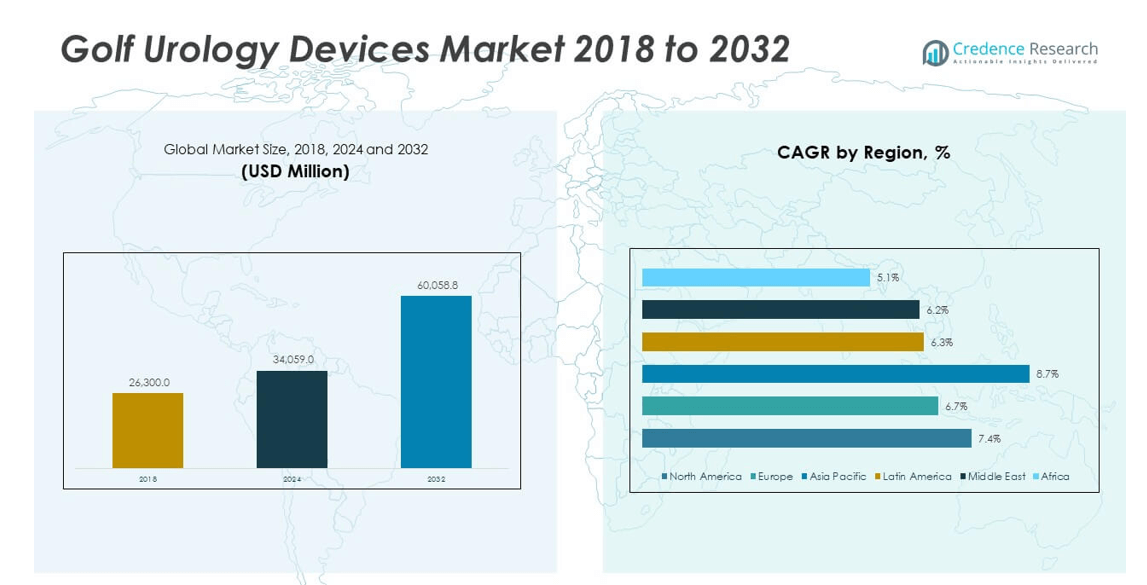
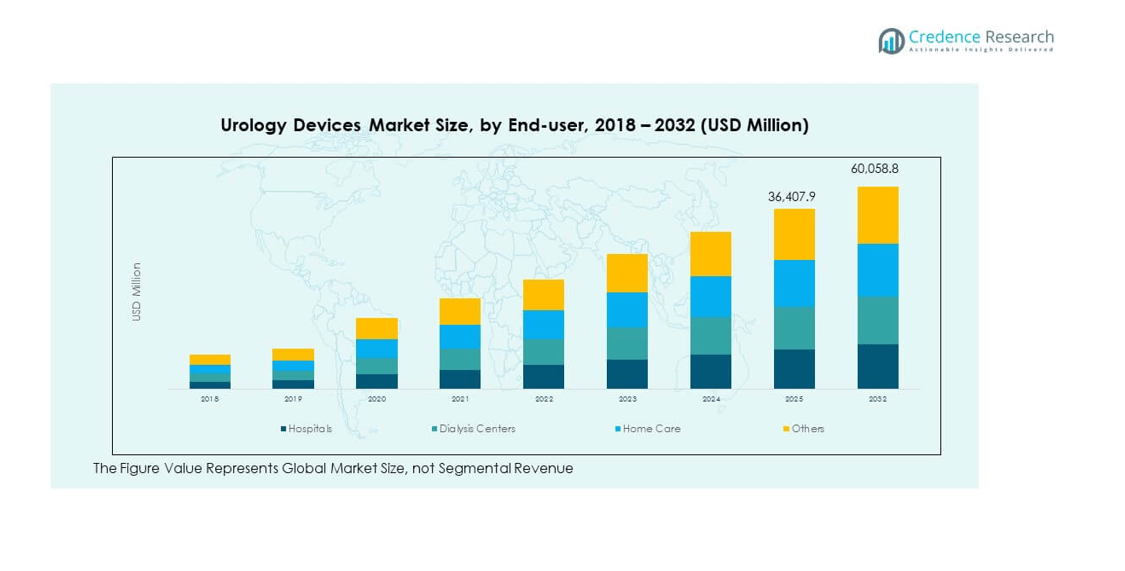
The Urology Devices Market size was valued at USD 26,300.0 million in 2018 to USD 34,059.0 million in 2024 and is anticipated to reach USD 60,058.8 million by 2032, at a CAGR of 7.4% during the forecast period.
| REPORT ATTRIBUTE | DETAILS |
|---|---|
| Historical Period | 2020-2023 |
| Base Year | 2024 |
| Forecast Period | 2025-2032 |
| Urology Devices Market Size 2024 | USD 34,059.0 million |
| Urology Devices Market, CAGR | 7.4% |
| Urology Devices Market Size 2032 | USD 60,058.8 million |
The market is driven by the growing prevalence of urological disorders such as kidney stones, urinary incontinence, and prostate conditions, coupled with an aging global population that requires advanced medical interventions. Rising awareness of minimally invasive procedures, coupled with technological innovations like robotic-assisted surgeries and improved diagnostic tools, is fueling demand. Moreover, increasing healthcare expenditure and strong demand for patient-centric solutions are accelerating adoption.
Regionally, North America leads the market due to advanced healthcare infrastructure, strong adoption of innovative devices, and a higher patient base requiring treatment for urological conditions. Europe follows closely, driven by favorable reimbursement policies and strong clinical research activities. Asia-Pacific is emerging as a high-growth region, supported by expanding healthcare access, rising investments in hospital infrastructure, and a growing awareness of advanced urology treatments among its large patient population.
Market Insights:
- The Urology Devices Market size was valued at USD 34,059.0 million in 2024 and is anticipated to reach USD 60,058.8 million by 2032, growing at a CAGR of 7.4%.
- Rising prevalence of kidney diseases, urologic cancers, and BPH is driving consistent demand for advanced devices.
- Increasing adoption of minimally invasive and robotic-assisted procedures strengthens the market’s growth trajectory.
- High treatment costs and inconsistent reimbursement structures act as restraints in several regions.
- North America holds the largest share due to advanced infrastructure and strong adoption of innovative devices.
- Europe maintains steady growth supported by favorable policies and an aging population with high demand for urology care.
- Asia Pacific emerges as a high-growth region, fueled by expanding healthcare access and rising investments in modern medical facilities.
Market Drivers
Rising incidence of urological disorders and demand for advanced therapeutic devices
The Urology Devices Market is expanding due to the increasing prevalence of kidney stones, urinary incontinence, benign prostatic hyperplasia, and prostate cancer. It benefits from an aging global population that requires advanced treatment solutions for urological care. Strong demand for less invasive surgical options drives innovation across diagnostic and therapeutic device categories. Hospitals and specialty clinics are adopting robotic-assisted systems to improve accuracy and recovery outcomes. Patient awareness of early diagnosis continues to grow, strengthening demand for advanced tools. Healthcare organizations invest in modernizing infrastructure, which supports device adoption. Favorable clinical outcomes from advanced devices further boost their penetration across developed and emerging regions.
- For example, Boston Scientific’s LithoVue Empower Retrieval Deployment Device has been shown in Johns Hopkins bench and observational studies to enable single-surgeon kidney stone removal with reduced muscular workload and faster task completion, offering efficiency comparable to two-surgeon approaches.
Growing healthcare expenditure and technological adoption in surgical devices
Global healthcare spending has been increasing steadily, creating a foundation for higher investment in modern medical technologies. The Urology Devices Market benefits from this shift as healthcare providers allocate greater budgets toward precision instruments. It gains from the accelerated adoption of digital platforms integrated into surgical systems for better visualization and control. Innovations in minimally invasive procedures continue to enhance efficiency and reduce complications. Providers seek cost-effective yet advanced solutions to improve patient satisfaction levels. The demand for single-use devices has risen due to the focus on infection control in hospital environments. Industry collaborations between manufacturers and research organizations have introduced new technologies that strengthen product pipelines.
Expanding role of minimally invasive procedures in improving clinical outcomes
Minimally invasive procedures are reshaping the treatment landscape by reducing hospital stay, lowering complications, and improving recovery times. The Urology Devices Market is responding with products that align with this transition, including endoscopes, lasers, and lithotripsy devices. It benefits from patient preference for faster recovery without compromising treatment effectiveness. Medical professionals rely on advanced imaging technologies that support accurate diagnosis and efficient surgical planning. Robotic platforms are becoming central in delivering precision for procedures such as prostatectomies. Health systems are adopting these solutions to enhance operational efficiency and outcomes. Growing awareness of long-term quality-of-life improvements reinforces the adoption of innovative devices in both developed and developing regions.
- For instance, Cleveland Clinic’s Glickman Urological Institute surpassed 1,000 single-port (SP) robotic urological surgeries in 2024 using FDA-cleared SP platforms, underlining the growing clinical adoption and impact of minimally invasive innovation within routine urological care.
Strong emphasis on patient-centric solutions and supportive regulatory frameworks
Patient care strategies are shifting toward personalized solutions, and device manufacturers align product design with these requirements. The Urology Devices Market reflects this trend through devices that cater to comfort, safety, and improved usability. It benefits from supportive regulatory frameworks that encourage the introduction of new products with advanced features. Governments and agencies encourage innovation while maintaining strict safety standards. The growing importance of outpatient care fuels demand for portable and compact devices. Patients prefer treatments that combine precision with reduced procedural risks, encouraging providers to adopt advanced technologies. Ongoing clinical trials and positive results strengthen trust in newly launched urology devices.
Market Trends
Digital integration and smart technologies transforming urology device innovation
Digital health integration is shaping how providers deliver urological care with smart monitoring and AI-enabled diagnostic support. The Urology Devices Market is advancing with solutions that combine real-time data analysis and advanced imaging. It benefits from a shift toward smart endoscopy platforms offering improved visibility and precision. Healthcare facilities use these tools to improve treatment outcomes while minimizing procedural errors. Wearable devices that monitor urinary health are gaining traction among patients and caregivers. The integration of telemedicine platforms with diagnostic devices expands access to care. Data-driven solutions play a critical role in optimizing treatment decisions and enhancing efficiency.
Focus on sustainability and eco-friendly medical device design
Sustainability has become a major trend in global healthcare, influencing design and manufacturing practices for urology devices. The Urology Devices Market is adapting by investing in recyclable materials and low-waste production methods. It benefits from the rising demand for single-use yet environmentally responsible devices. Manufacturers aim to reduce carbon footprints while maintaining safety and performance standards. Hospitals are seeking suppliers that align with their sustainability commitments. Regulatory bodies encourage eco-friendly innovations through favorable policies. Growing awareness among consumers about sustainable healthcare solutions further strengthens this movement.
Rising adoption of outpatient care and home-based urology solutions
Healthcare delivery models are shifting toward outpatient and home-based care for cost efficiency and patient convenience. The Urology Devices Market is developing compact and portable devices that enable effective treatments outside hospital settings. It benefits from the rising need for devices tailored to chronic conditions requiring continuous monitoring. Patients prefer home-use solutions for urinary incontinence and related disorders. Insurers support this transition by offering coverage for select devices used in non-hospital settings. Providers implement telehealth services to complement device usage at home. Industry players are investing in simplified product designs that empower patients to manage conditions effectively.
- For example, Baxter International’s Sharesource remote management platform has supported millions of peritoneal dialysis treatments globally across more than 70 countries, enabling clinicians to remotely monitor therapy data and manage nearly half of all patients using Baxter’s automated peritoneal dialysis systems.
Growing role of personalized medicine and advanced biomaterials in device development
Personalized medicine is reshaping how medical devices are designed to meet specific patient requirements. The Urology Devices Market is evolving with devices built from biocompatible and advanced biomaterials. It benefits from an increased focus on patient comfort, durability, and reduced complication rates. Research institutions and companies collaborate to create innovative implants and stents. Providers seek solutions that adapt to individual anatomies and reduce repeat interventions. Advancements in biomaterials enhance treatment success rates and long-term patient outcomes. The integration of 3D printing is supporting customized device production, reducing design limitations, and improving accessibility.
- For instance, Teleflex’s UroLift® System has treated over 500,000 men worldwide in select markets as of 2025, highlighting its role in minimally invasive management of benign prostatic hyperplasia (BPH).
Market Challenges Analysis
High treatment costs and reimbursement complexities restricting adoption
The cost of advanced urology devices creates challenges for providers and patients across many healthcare systems. The Urology Devices Market faces difficulties in ensuring widespread adoption due to inconsistent reimbursement policies. It is constrained by financial barriers in developing economies where healthcare expenditure remains limited. High acquisition costs for robotic systems and minimally invasive platforms hinder broader penetration. Hospitals face budgetary pressures that limit investment in advanced technologies. Reimbursement structures vary significantly between countries, creating uncertainty for manufacturers and providers. Complex approval processes also delay the launch of new products.
Regulatory compliance and supply chain disruptions affecting industry stability
Regulatory frameworks are essential for maintaining patient safety, but complex compliance processes increase development costs and timelines. The Urology Devices Market encounters delays when adapting to diverse regulatory standards across global regions. It is vulnerable to supply chain disruptions caused by raw material shortages or geopolitical tensions. Manufacturers face higher costs due to stringent quality checks and clinical testing requirements. Global health crises have highlighted weaknesses in supply chains, leading to product shortages. Small and mid-sized companies struggle with compliance costs, reducing their competitiveness. Limited availability of skilled professionals also impacts device adoption and integration into healthcare systems.
Market Opportunities
Expanding demand in emerging economies with growing healthcare infrastructure
Emerging markets represent significant opportunities with investments in healthcare modernization and expanding access to advanced treatments. The Urology Devices Market is positioned to benefit from rising awareness of urological health in regions such as Asia-Pacific, Latin America, and parts of Africa. It gains from the construction of hospitals equipped with modern facilities in these economies. Governments are investing in universal healthcare programs that increase access to advanced devices. Rising disposable income supports patient affordability for premium treatments. International manufacturers are expanding partnerships with local distributors to reach underserved areas. Local production initiatives further support cost-effective access to advanced urology technologies.
Increasing role of innovation and collaborative partnerships in shaping future growth
Collaboration between manufacturers, research institutions, and technology companies presents strong opportunities for innovation. The Urology Devices Market is leveraging joint ventures and partnerships to accelerate product launches and expand clinical adoption. It benefits from investments in artificial intelligence, robotics, and biomaterials research that drive breakthroughs. Providers adopt these innovations to deliver more efficient and precise treatments. Venture capital investments in startups strengthen the pipeline of novel solutions. Strategic alliances expand distribution networks, improving global accessibility. Continued focus on R&D partnerships enables sustainable growth while meeting evolving patient and healthcare needs.
Market Segmentation Analysis:
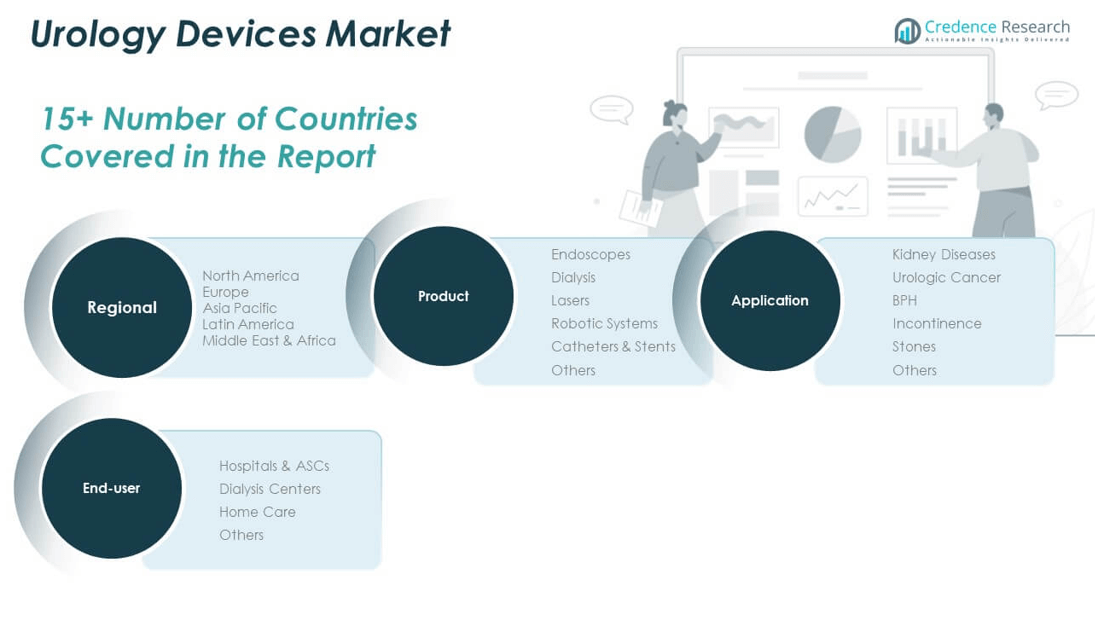
By Product, the Urology Devices Market demonstrates strong diversification across product categories. Endoscopes hold a vital role due to their use in diagnostic and surgical procedures, while dialysis devices remain essential for managing chronic kidney conditions. Lasers are gaining traction for precise and less invasive stone management. Robotic systems continue to expand with growing adoption in advanced surgical procedures, offering accuracy and reduced recovery time. Catheters and stents represent a significant share due to their frequent use in patient care, while other devices provide complementary solutions that support overall treatment efficiency.
- For example, Olympus Medical offers a comprehensive portfolio of reusable and single-use ureteroscopes that support a wide range of diagnostic and therapeutic urological procedures, reflecting its strong presence in the global urology devices market.
By Application-wise, the market covers a broad spectrum of conditions. Kidney diseases account for substantial demand due to high global prevalence, while urologic cancer drives adoption of advanced surgical and diagnostic devices. Benign Prostatic Hyperplasia requires devices that improve patient comfort and treatment outcomes. Incontinence treatments are expanding with aging populations and rising awareness. Stones remain a key area for laser and endoscope usage, while other applications highlight the versatility of modern devices.
By End User, The Urology Devices Market also reflects end-user demand patterns. Hospitals and Ambulatory Surgical Centers dominate with their capacity for complex treatments, while dialysis centers maintain steady use of specialized equipment. Home care is emerging with portable solutions supporting chronic disease management. Others contribute through specialized clinics and outpatient facilities. This segmentation highlights the market’s ability to adapt to diverse clinical needs and patient care models.
- For example, Baxter reported that its Sharesource remote patient management platform supports more than 63,000 peritoneal dialysis patients globally, enabling millions of home-based treatments across over 80 countries.
Segmentation:
By Product
- Endoscopes
- Dialysis
- Lasers
- Robotic Systems
- Catheters & Stents
- Others
By Application
- Kidney Diseases
- Urologic Cancer
- Benign Prostatic Hyperplasia (BPH)
- Incontinence
- Stones
- Others
By End User
- Hospitals & Ambulatory Surgical Centers (ASCs)
- Dialysis Centers
- Home Care
- Others
By Region
- North America
- U.S.
- Canada
- Mexico
- Europe
- UK
- France
- Germany
- Italy
- Spain
- Russia
- Belgium
- Netherlands
- Austria
- Sweden
- Poland
- Denmark
- Switzerland
- Rest of Europe
- Asia Pacific
- China
- Japan
- South Korea
- India
- Australia
- Thailand
- Indonesia
- Vietnam
- Malaysia
- Philippines
- Taiwan
- Rest of Asia Pacific
- Latin America
- Brazil
- Argentina
- Peru
- Chile
- Colombia
- Rest of Latin America
- Middle East
- UAE
- KSA
- Israel
- Turkey
- Iran
- Rest of Middle East
- Africa
- Egypt
- Nigeria
- Algeria
- Morocco
- Rest of Africa
Regional Analysis:
North America
The North America Urology Devices Market size was valued at USD 10,046.6 million in 2018 to USD 12,860.5 million in 2024 and is anticipated to reach USD 22,643.8 million by 2032, at a CAGR of 7.4% during the forecast period. It represents 37.8% of the global market in 2024. The region leads due to advanced healthcare infrastructure, high adoption of robotic-assisted surgeries, and strong reimbursement frameworks. Demand is supported by rising incidences of urologic cancers, kidney diseases, and BPH. Hospitals and specialized clinics drive strong device usage with continuous upgrades to minimally invasive technologies. The presence of leading manufacturers and steady regulatory approvals fosters innovation and product adoption. Patients benefit from high awareness of advanced treatment options. Ongoing investments in healthcare digitization and surgical precision tools ensure that the region maintains its dominance.
Europe
The Europe Urology Devices Market size was valued at USD 6,943.2 million in 2018 to USD 8,643.3 million in 2024 and is anticipated to reach USD 14,399.3 million by 2032, at a CAGR of 6.7% during the forecast period. It accounts for 25.4% of the global market in 2024. The region benefits from strong clinical research activity, advanced medical facilities, and favorable reimbursement policies. Rising cases of incontinence and prostate cancer fuel device demand. Hospitals across Germany, France, and the UK serve as key hubs for adoption of robotic and laser systems. The aging population across Europe further drives long-term demand for catheters and stents. Manufacturers invest in eco-friendly technologies to align with EU healthcare sustainability goals. Academic and clinical collaborations play an important role in accelerating product launches. Strong focus on minimally invasive care continues to strengthen Europe’s position.
Asia Pacific
The Asia Pacific Urology Devices Market size was valued at USD 6,206.8 million in 2018 to USD 8,407.3 million in 2024 and is anticipated to reach USD 16,361.9 million by 2032, at a CAGR of 8.7% during the forecast period. It contributes 24.7% of the global market in 2024. Rapid growth is driven by expanding healthcare access, rising healthcare expenditure, and a growing patient pool for kidney and urinary disorders. Countries such as China, India, and Japan are investing in modernizing hospital infrastructure. Strong government support for healthcare technology adoption enhances accessibility to advanced treatments. International manufacturers form partnerships with local distributors to expand market penetration. Patients increasingly prefer minimally invasive and home-care solutions, driving growth in portable devices. Rising awareness of early diagnosis supports higher adoption of diagnostic tools. Continuous economic growth and urbanization reinforce the region’s long-term potential.
Latin America
The Latin America Urology Devices Market size was valued at USD 1,525.4 million in 2018 to USD 1,954.6 million in 2024 and is anticipated to reach USD 3,175.9 million by 2032, at a CAGR of 6.3% during the forecast period. It holds a 5.7% share of the global market in 2024. The region’s growth is supported by increasing investments in healthcare modernization, particularly in Brazil and Mexico. Rising incidences of kidney disorders and urinary stones stimulate demand for dialysis and laser devices. Hospitals adopt advanced equipment, though budget limitations restrict full-scale penetration of robotic systems. Private healthcare providers play a strong role in introducing new technologies. Patients are gaining awareness of early intervention, improving adoption rates of diagnostic devices. Economic disparities across the region remain a barrier but present opportunities for cost-effective solutions. International companies are strengthening their presence through regional partnerships.
Middle East
The Middle East Urology Devices Market size was valued at USD 1,144.1 million in 2018 to USD 1,399.6 million in 2024 and is anticipated to reach USD 2,258.5 million by 2032, at a CAGR of 6.2% during the forecast period. It accounts for 4.1% of the global market in 2024. Strong demand is driven by investments in healthcare infrastructure, particularly in GCC countries. Advanced hospitals in the UAE and Saudi Arabia are adopting robotic systems and minimally invasive surgical devices. The prevalence of urological conditions linked to lifestyle and chronic diseases supports device usage. Government programs to improve healthcare standards further aid market expansion. Patients are showing preference for advanced treatment options, supported by medical tourism growth in the region. International manufacturers collaborate with local distributors to increase availability. Continued investments in hospital capacity expansion fuel steady demand.
Africa
The Africa Urology Devices Market size was valued at USD 433.9 million in 2018 to USD 793.7 million in 2024 and is anticipated to reach USD 1,219.4 million by 2032, at a CAGR of 5.1% during the forecast period. It represents 1.5% of the global market in 2024. The region remains in an early adoption phase, with growth centered in South Africa and Egypt. Limited healthcare budgets and infrastructure challenges restrict penetration of advanced robotic systems. Demand is driven by a rising prevalence of kidney diseases and untreated urinary conditions. Basic devices such as catheters, stents, and dialysis equipment dominate usage. International aid programs and government investments are improving accessibility to essential urology treatments. Private healthcare providers are gradually introducing advanced technologies in urban centers. Expanding medical training initiatives support higher adoption of innovative devices in the long term.
Key Player Analysis:
- Fresenius Medical Care AG & Co. KGaA (Germany)
- Baxter International, Inc. (US)
- Boston Scientific Corporation (US)
- Becton, Dickinson and Company (BD) (US)
- Braun Melsungen AG (Germany)
- Cardinal Health (US)
- Olympus Corporation (Japan)
- Intuitive Surgical (US)
- Coloplast A/S (Denmark)
- Stryker Corporation (US)
- Teleflex Incorporated (US)
- ConvaTec Group PLC (UK)
- Medtronic plc (Ireland)
- Karl Storz SE & Co. KG (Germany)
- Richard Wolf GmbH (Germany)
Competitive Analysis:
The Urology Devices Market is highly competitive with global players dominating through innovation, scale, and strong distribution networks. Leading companies such as Boston Scientific, Olympus Corporation, Fresenius Medical Care, Baxter International, and Intuitive Surgical focus on expanding product portfolios across minimally invasive solutions, robotic-assisted systems, and dialysis technologies. It benefits from continuous R&D investments that introduce advanced devices addressing complex urological conditions. Regional players compete by offering cost-effective products tailored to local markets. Strategic moves such as mergers, acquisitions, and collaborations strengthen market presence and broaden geographic reach. Companies also emphasize digital integration and patient-centric designs to capture emerging demand. Strong brand reputation, regulatory compliance, and clinical validation remain critical factors influencing competitiveness.
Recent Developments:
- In May 2025, Teleflex presented significant clinical studies and educational initiatives at the annual American Urological Association meeting, including advanced research supporting its UroLift™ BPH system and Barrigel™ rectal spacer for prostate cancer radiation therapy.
- In February 2025, Teleflex Incorporated announced a strategic plan to separate its urology, acute care, and OEM business segments into a new independent publicly traded company, named NewCo. This separation, expected to complete in 2026, intends to streamline operations and accelerate growth for both divisions.
- In Nov 2024, Boston Scientific expanded its urology portfolio through the completed acquisition of Axonics, Inc., gaining advanced devices for urinary and bowel dysfunction. This expansion enabled the integration of sacral neuromodulation technology into Boston Scientific’s offerings, enhancing therapeutic options for patients with incontinence and related disorders.
Market Concentration & Characteristics:
The Urology Devices Market demonstrates moderate-to-high concentration with a few multinational corporations accounting for a significant share. It is characterized by continuous technological innovation, regulatory scrutiny, and a strong emphasis on minimally invasive procedures. Market leaders dominate high-value segments such as robotic systems and dialysis devices, while regional players contribute to low-cost solutions. It reflects a balance between premium product adoption in developed economies and growing demand for accessible devices in emerging regions. Competitive intensity remains high as companies pursue global expansion and innovation-driven differentiation. It continues to evolve with rising collaborations between manufacturers and healthcare providers to enhance clinical outcomes and patient access.
Report Coverage:
The research report offers an in-depth analysis based on Product, Application and End User. It details leading market players, providing an overview of their business, product offerings, investments, revenue streams, and key applications. Additionally, the report includes insights into the competitive environment, SWOT analysis, current market trends, as well as the primary drivers and constraints. Furthermore, it discusses various factors that have driven market expansion in recent years. The report also explores market dynamics, regulatory scenarios, and technological advancements that are shaping the industry. It assesses the impact of external factors and global economic changes on market growth. Lastly, it provides strategic recommendations for new entrants and established companies to navigate the complexities of the market.
Future Outlook:
- The Urology Devices Market will see expanding adoption of robotic-assisted systems, driven by precision and improved surgical outcomes.
- It will benefit from stronger demand for minimally invasive procedures, aligning with patient preference for faster recovery.
- Advancements in smart endoscopy and digital imaging will enhance diagnostic accuracy and efficiency.
- Sustainability will influence device design, with greater emphasis on eco-friendly materials and processes.
- Portable and home-based solutions will gain traction, particularly for chronic conditions requiring continuous care.
- Personalized medicine and biomaterial innovations will drive the development of patient-specific implants and stents.
- Hospitals and ambulatory surgical centers will continue to dominate usage, supported by advanced infrastructure investments.
- Emerging economies will provide significant growth opportunities through expanding healthcare access and infrastructure.
- Collaborations between manufacturers and healthcare providers will accelerate innovation and clinical adoption.
- Regulatory alignment and supportive frameworks will shape market stability while ensuring product safety and effectiveness

Request a Free Sample
Fill in your details and we'll send you a free sample report.
- Sample data tables & charts
- Research methodology
Market Dynamics
Rising Prevalence of Urological Disorders
Increasing cases of kidney stones, urinary incontinence, benign prostatic hyperplasia, and prostate cancer are driving demand for advanced urology devices, especially as the global population ages and requires more frequent interventions.
Adoption of Minimally Invasive and Robotic-Assisted Procedures
Healthcare providers are increasingly adopting minimally invasive and robotic-assisted surgical systems, which offer greater precision, reduced recovery times, and improved patient outcomes, fueling market growth for innovative device categories.
Technological Advancements and Digital Integration
Continuous innovation in smart endoscopy, digital imaging, and AI-enabled diagnostic tools is enhancing the accuracy and efficiency of urological procedures, encouraging hospitals and clinics to upgrade to the latest device platforms.
Expanding Healthcare Infrastructure in Emerging Markets
Rapid investments in hospital modernization, healthcare access, and government support for advanced medical technologies in Asia Pacific, Latin America, and parts of Africa are opening new growth avenues for urology device manufacturers.
Shift Toward Patient-Centric and Home-Based Solutions
Growing patient preference for outpatient and home-based care, especially for chronic urological conditions, is driving demand for portable, user-friendly devices and remote monitoring platforms, supported by favorable insurance coverage and telehealth integration.
Need a Custom Version of This Report?
Tailor the scope, geography, or segments to your exact requirements.
- Custom geography or segment scope
- Direct access to our analyst team
Frequently Asked Questions
What is the current market size for Urology Devices Market, and what is its projected size in 2032?
Which Urology Devices Market segment held the largest share in 2024?
What are the primary factors fueling the growth of the Urology Devices Market?
Who are the leading companies in the Urology Devices Market?
Table of Content
Chapter 1 Market Segmentation
- 1.1 Segmentation Framework
- 1.1.1 Product and Service Classification
- 1.1.2 Application and End-Use Classification
- 1.1.3 Technology and Solution Classification
- 1.1.4 Customer and Distribution Channel Classification
- 1.1.5 Geographic Segmentation
- 1.1.6 Market Segment Definitions and Boundaries
- 1.2 By Product
- 1.2.1 Endoscopes
- 1.2.2 Dialysis
- 1.2.3 Lasers
- 1.2.4 Robotic Systems
- 1.2.5 Catheters & Stents
- 1.2.6 Others
- 1.3 By End User
- 1.3.1 Hospitals & Ambulatory Surgical Centers (ASCs)
- 1.3.2 Dialysis Centers
- 1.3.3 Home Care
- 1.3.4 Others
- 1.4 By Application
- 1.4.1 Kidney Diseases
- 1.4.2 Urologic Cancer
- 1.4.3 Benign Prostatic Hyperplasia (BPH)
- 1.4.4 Incontinence
- 1.4.5 Stones
- 1.4.6 Others
Chapter 2 Introduction
- 2.1 Report Objectives and Scope
- 2.2 Product Definition and Industry Terminology
- 2.3 Market Inclusions and Exclusions
- 2.4 Research Process
- 2.4.1 Primary Research and Expert Interviews
- 2.4.2 Secondary Research and Source Review
- 2.4.3 Top-Down and Bottom-Up Estimation
- 2.4.4 Data Triangulation and Verification
- 2.5 Market Size Measurement Basis
- 2.5.1 2024: USD 34,059.0 million → 2032: USD 60,058.8 million
- 2.6 Historical and Forecast Reference Periods
- 2.6.1 Base Year: 2024
- 2.6.2 Forecast Period: 2024-2032
- 2.7 Research Assumptions and Limitations
Chapter 3 Executive Summary
- 3.1 Market Snapshot and Key Findings
- 3.2 Base-Year Market Size, 2024
- 3.3 Forecast Market Size, 2032
- 3.4 Revenue and Volume Growth Outlook
- 3.5 Key Demand and Supply Indicators
- 3.6 Leading Market Segments
- 3.7 Fastest-Growing Market Opportunities
- 3.8 Regional Performance Highlights
- 3.9 Technology and Industry Transformation
- 3.10 Competitive Landscape Summary
- 3.11 Analyst View and Strategic Implications
Chapter 4 Global Urology Devices Market Trends and Developments
- 4.1 Historical Industry Development
- 4.2 Recent Market Trends and Developments
- 4.3 Demand and Customer Behavior Trends
- 4.4 Technology and Product Innovation
- 4.5 Artificial Intelligence, Automation and Digitalization
- 4.6 Local Manufacturing and Supply Chain Realignment
- 4.7 Industry Partnerships, Mergers and Acquisitions
- 4.8 Sustainability and Circular Economy Developments
- 4.9 Government and Private Sector Investment Trends
- 4.10 Emerging Business Models and Commercialization
- 4.11 Industry Developments and Announcements
Chapter 5 Global Urology Devices Market Production, Supply and Demand Analysis
- 5.1 Demand Trend and Consumption Analysis
- 5.2 Demand Forecast, 2024-2032
- 5.3 Production and Output Trend
- 5.4 Production and Output Forecast, 2024-2032
- 5.5 Installed Capacity and Capacity Utilization
- 5.6 Company-Wise Production Plants and Statistics
- 5.6.1 Installed Production Capacity
- 5.6.2 Actual Production
- 5.6.3 Planned Capacity and Expansion Targets
- 5.7 Supply Chain Structure and Procurement Trends
- 5.8 Supply-Demand Gap and Bottlenecks
- 5.9 Import Dependence and Sourcing Structure
- 5.10 Contract Manufacturing and Outsourcing
- 5.11 Regional Supply and Demand Concentration
Chapter 6 Global Urology Devices Market Pricing Analysis
- 6.1 Pricing Structure and Measurement
- 6.2 Historical Pricing Trends
- 6.3 Pricing Outlook, 2024-2032
- 6.4 Average Selling Price and Unit Economics
- 6.5 Pricing by Product and Market Segment
- 6.6 Geographic Pricing Differences
- 6.7 Key Input, Energy, Labor and Logistics Costs
- 6.8 Contract Pricing and Purchasing Models
- 6.9 Pricing Sensitivity and Competitive Positioning
- 6.10 Price, Margin and Profitability Implications
Chapter 7 Global Urology Devices Market Dynamics
- 7.1 Market Growth Drivers
- 7.1.1 Demand-Side Drivers
- 7.1.2 Technology and Innovation Drivers
- 7.1.3 Infrastructure and Investment Drivers
- 7.1.4 Regulatory and Policy Drivers
- 7.2 Market Restraints
- 7.2.1 Cost and Affordability Constraints
- 7.2.2 Technology and Adoption Barriers
- 7.2.3 Supply Chain and Operational Constraints
- 7.3 Market Challenges
- 7.3.1 Competitive Pressure and Margin Erosion
- 7.3.2 Skills, Infrastructure and Implementation Gaps
- 7.4 Emerging Market Opportunities
- 7.5 Market Dynamics Impact and Time-Horizon Assessment
Chapter 8 Global Urology Devices Value Chain Analysis
- 8.1 Industry Value Chain Overview
- 8.2 Upstream Suppliers and Critical Inputs
- 8.3 Technology and Component Providers
- 8.4 Manufacturing or Service Delivery
- 8.5 Distribution, Channel Partners and Integrators
- 8.6 Downstream Applications and End Users
- 8.7 Value Addition and Profit Pools
- 8.8 Vertical Integration and Outsourcing
- 8.9 Supplier Concentration and Risk
- 8.10 Supply Chain Localization and Resilience
Chapter 9 Global Urology Devices Market Regulations and Policies
- 9.1 Relevant Laws, Standards and Compliance Frameworks
- 9.2 Product, Service, Safety and Quality Requirements
- 9.3 Government Policies, Incentives and Subsidies
- 9.4 Imports, Exports and Trade Barriers
- 9.5 Public Procurement and Local Content Requirements
- 9.6 Environmental and Sustainability Compliance
- 9.7 Upcoming Policy Changes and Market Implications
Chapter 10 Global Urology Devices Market Hotspots and Opportunities
- 10.1 Market Opportunity Mapping and Growth Hotspots
- 10.2 High-Growth Applications and Customer Groups
- 10.3 Underserved Markets and White-Space Opportunities
- 10.4 Emerging Technology and Product Opportunities
- 10.5 New Capacity and Investment Hotspots
- 10.6 Market Entry and Expansion Opportunities
- 10.7 Distribution and Partnership Opportunities
- 10.8 Near-Term and Long-Term Commercial Potential
- 10.9 Opportunity Attractiveness and Execution Risks
Chapter 11 Global Urology Devices Market Outlook, 2024-2032
- 11.1 Market Size and Analysis
- 11.1.1 Revenue (Market Measurement: 2024: USD 34,059.0 million → 2032: USD 60,058.8 million)
- 11.1.2 Market Volume and Quantity Sold
- 11.1.3 Historical Market Size
- 11.1.4 Base-Year Market Size, 2024
- 11.2 Market Forecast, 2024-2032
- 11.2.1 Revenue Forecast to 2032
- 11.2.2 Volume Forecast to 2032
- 11.2.3 CAGR and Year-on-Year Growth
- 11.2.4 Incremental Revenue Opportunity
- 11.3 Forecast Assumptions and Scenario Analysis
- 11.3.1 Base-Case Forecast
- 11.3.2 Optimistic and Conservative Scenarios
- 11.3.3 Technology, Pricing and Policy Sensitivities
- 11.4 Market Attractiveness and Growth Outlook
Chapter 12 Global Urology Devices Market Segmentation and Outlook
- 12.1 Segmentation Summary and Market Shares, 2024
- 12.2 Largest and Fastest-Growing Segments
- 12.3 By Product - Market Size and Forecast, 2024-2032
- 12.3.1 Segment Definition and Scope
- 12.3.2 Historical Market Size
- 12.3.3 Revenue Forecast, 2024-2032
- 12.3.4 Volume Forecast, 2024-2032
- 12.3.5 Base-Year Market Share, 2024
- 12.3.6 Segment CAGR and Growth Drivers
- 12.3.7 Subsegment Market Size and Forecast
- 12.3.7.1 Endoscopes
- 12.3.7.2 Dialysis
- 12.3.7.3 Lasers
- 12.3.7.4 Robotic Systems
- 12.3.7.5 Catheters & Stents
- 12.3.7.6 Others
- 12.3.8 Subsegment Pricing and Adoption Trends
- 12.3.9 Leading Suppliers and Competition
- 12.3.10 Regional Demand and Opportunities
- 12.4 By End User - Market Size and Forecast, 2024-2032
- 12.4.1 Segment Definition and Scope
- 12.4.2 Historical Market Size
- 12.4.3 Revenue Forecast, 2024-2032
- 12.4.4 Volume Forecast, 2024-2032
- 12.4.5 Base-Year Market Share, 2024
- 12.4.6 Segment CAGR and Growth Drivers
- 12.4.7 Subsegment Market Size and Forecast
- 12.4.7.1 Hospitals & Ambulatory Surgical Centers (ASCs)
- 12.4.7.2 Dialysis Centers
- 12.4.7.3 Home Care
- 12.4.7.4 Others
- 12.4.8 Subsegment Pricing and Adoption Trends
- 12.4.9 Leading Suppliers and Competition
- 12.4.10 Regional Demand and Opportunities
- 12.5 By Application - Market Size and Forecast, 2024-2032
- 12.5.1 Segment Definition and Scope
- 12.5.2 Historical Market Size
- 12.5.3 Revenue Forecast, 2024-2032
- 12.5.4 Volume Forecast, 2024-2032
- 12.5.5 Base-Year Market Share, 2024
- 12.5.6 Segment CAGR and Growth Drivers
- 12.5.7 Subsegment Market Size and Forecast
- 12.5.7.1 Kidney Diseases
- 12.5.7.2 Urologic Cancer
- 12.5.7.3 Benign Prostatic Hyperplasia (BPH)
- 12.5.7.4 Incontinence
- 12.5.7.5 Stones
- 12.5.7.6 Others
- 12.5.8 Subsegment Pricing and Adoption Trends
- 12.5.9 Leading Suppliers and Competition
- 12.5.10 Regional Demand and Opportunities
- 12.6 Segment Growth Comparison
- 12.7 Segment Attractiveness and Priority Matrix
Chapter 13 Global Urology Devices End-Use and Application Market Outlook
- 13.1 End-Use Industry and Customer Demand Structure
- 13.2 Leading Applications and Customer Groups
- 13.3 End-Use Market Size, Share and Forecast
- 13.4 Major End-Use Industry Deep Dives
- 13.4.1 Customer Requirements and Use Cases
- 13.4.2 Demand and Replacement Cycles
- 13.4.3 Technical and Regulatory Considerations
- 13.4.4 Purchasing and Procurement Models
- 13.4.5 Leading Vendors and Distribution Channels
- 13.4.6 Forecast and Commercial Opportunities
- 13.5 Emerging Applications and Cross-Segment Demand
- 13.6 End-Use Industry Investment Priorities
Chapter 14 Global Urology Devices Geographic Market Outlook, 2024-2032
- 14.1 Regional Market Size and Share, 2024
- 14.2 Regional Market Forecast, 2024-2032
- 14.3 Regional Pricing, Production and Demand Differences
- 14.4 North America
- 14.4.1 United States
- 14.4.2 Canada
- 14.4.3 Mexico
- 14.5 Europe
- 14.5.1 Germany
- 14.5.2 France
- 14.5.3 Italy
- 14.5.4 United Kingdom
- 14.5.5 Spain
- 14.5.6 Poland
- 14.5.7 Russia
- 14.5.8 Netherlands
- 14.5.9 Belgium
- 14.5.10 Sweden
- 14.5.11 Denmark
- 14.5.12 Norway
- 14.5.13 Rest of Europe
- 14.6 Asia Pacific
- 14.6.1 China
- 14.6.2 India
- 14.6.3 Japan
- 14.6.4 South Korea
- 14.6.5 Thailand
- 14.6.6 Indonesia
- 14.6.7 Vietnam
- 14.6.8 Malaysia
- 14.6.9 Australia
- 14.6.10 Rest of Asia Pacific
- 14.7 Latin America
- 14.7.1 Brazil
- 14.7.2 Argentina
- 14.7.3 Colombia
- 14.7.4 Chile
- 14.7.5 Rest of Latin America
- 14.8 Middle East
- 14.8.1 Saudi Arabia
- 14.8.2 United Arab Emirates
- 14.8.3 Turkey
- 14.8.4 Israel
- 14.8.5 Iran
- 14.8.6 Rest of the Middle East
- 14.9 Africa
- 14.9.1 South Africa
- 14.9.2 Egypt
- 14.9.3 Nigeria
- 14.9.4 Morocco
- 14.9.5 Rest of Africa
- 14.10 Regional Investment, Policy and Supply Chain Differences
- 14.11 Regional Competitive Landscape
- 14.12 Geographic Growth Hotspots
Chapter 15 Global Urology Devices Technology, Innovation and Sustainability Outlook
- 15.1 Technology Landscape and Maturity
- 15.2 Product, Process and Service Innovation
- 15.3 AI, Automation and Digital Tools in the Industry
- 15.4 Technology Adoption and Performance Benchmarking
- 15.5 Innovation Pipeline and R&D Investment
- 15.6 Patent and Intellectual Property Trends
- 15.7 Energy Efficiency and Resource Management
- 15.8 Sustainability, Recycling and Circularity
- 15.9 Technology Roadmap, 2024-2032
- 15.10 Risks of Obsolescence and Technology Substitution
Chapter 16 Global Urology Devices Market Key Strategic Imperatives
- 16.1 Growth and Market Entry Priorities
- 16.2 High-Return Products and Segments
- 16.3 Pricing, Profitability and Cost Optimization
- 16.4 Technology Investment and Product Differentiation
- 16.5 Supply Chain Localization and Resilience
- 16.6 Distribution and Customer Acquisition
- 16.7 Partnership, Acquisition and Capacity Strategy
- 16.8 Regional Expansion Priorities
- 16.9 Short-, Medium- and Long-Term Actions
Chapter 17 Competition Outlook
- 17.1 Industry Competition Characteristics
- 17.2 Market Structure and Concentration
- 17.3 Market Share and Competitive Positioning, 2024
- 17.4 Company-Wise Revenue and Product Benchmarking
- 17.5 Production and Service Capacity Benchmarking
- 17.6 Technology, Pricing and Differentiation
- 17.7 Regional Footprint and Distribution Strength
- 17.8 Mergers, Acquisitions and Strategic Alliances
- 17.9 New Entrants and Competitive Threats
- 17.10 Porter's Five Forces and Industry Attractiveness
- 17.11 Competitive Outlook, 2024-2032
Chapter 18 Company Profiles
- 18.1 Company Coverage and Selection Criteria
- 18.2 Boston Scientific Corporation
- 18.2.1 Business Description
- 18.2.2 Company Ownership and Geographic Presence
- 18.2.3 Product and Service Portfolio
- 18.2.4 Manufacturing and Operating Footprint
- 18.2.5 Production Capacity and Expansion Plans
- 18.2.6 Financial Performance and Investment
- 18.2.7 Market Share and Competitive Position
- 18.2.8 Technology and Innovation Capabilities
- 18.2.9 Strategic Alliances or Partnerships
- 18.2.10 Recent Developments
- 18.2.11 Growth Strategy and Outlook
- 18.3 Olympus Corporation
- 18.4 Fresenius Medical Care AG & Co. KGaA
- 18.5 Baxter International, Inc.
- 18.6 Intuitive Surgical
- 18.7 Becton, Dickinson and Company (BD)
- 18.8 Teleflex Incorporated
- 18.9 Coloplast A/S
- 18.10 Stryker Corporation
- 18.11 Braun Melsungen AG
- 18.12 Other Relevant Market Participants
Note: Every listed company is profiled on the structure shown under the first company. The company list is preliminary and may change based on research findings, market developments, data availability and client requirements.
Chapter 19 Disclaimer
- 19.1 Research and Forecast Disclaimer
- 19.2 Data Source and Estimation Limitations
Note: The depth of individual sections depends on data availability for this market. Volume, capacity, trade and other unit-based metrics are included where applicable.

