| REPORT ATTRIBUTE | DETAILS |
|---|---|
| Historical Period | 2020-2023 |
| Base Year | 2024 |
| Forecast Period | 2025-2032 |
| Human Insulin Market Size 2023 | USD 21,000.00 Million |
| Human Insulin Market, CAGR | 4.50% |
| Human Insulin Market Size 2032 | USD 31,208.00 Million |
Market Overview
Global Human Insulin Market size was valued at USD 21,000.00 million in 2023 and is anticipated to reach USD 31,208.00 million by 2032, at a CAGR of 4.50% during the forecast period (2023-2032).
The growth of the global human insulin market is driven by the rising prevalence of diabetes worldwide, increasing awareness about diabetes management, and advancements in insulin delivery technologies. A growing geriatric population, coupled with sedentary lifestyles and unhealthy dietary habits, has led to a surge in diabetes cases, thereby increasing the demand for insulin. Governments and healthcare organizations are also implementing supportive initiatives to improve access to insulin therapies, particularly in developing regions. Moreover, ongoing innovations such as smart insulin pens and continuous glucose monitoring systems are enhancing treatment adherence and outcomes, contributing to market expansion. The trend toward biosimilar insulin products is gaining momentum, offering cost-effective alternatives and fostering competitive pricing. Additionally, strategic collaborations and investments by key market players in research and development are accelerating the introduction of next-generation insulin formulations, further strengthening market growth. These factors collectively position the human insulin market for steady expansion over the forecast period.
The global human insulin market is influenced by a variety of geographical factors, with significant growth observed in North America, Europe, and the Asia-Pacific region. North America, driven by a high prevalence of diabetes and advanced healthcare infrastructure, remains a key market for insulin products. Europe follows closely, benefiting from well-established healthcare systems and increasing demand for biosimilar insulin. The Asia-Pacific region is witnessing rapid expansion due to the rising diabetic population, improving healthcare access, and growing affordability of insulin. Key players in the global human insulin market include Novo Nordisk A/S, Eli Lilly and Company, and Sanofi, which are leaders in insulin production and innovation. Other notable players such as Pfizer, Biocon, and MannKind Corporation contribute to market competition by offering diverse insulin formulations and advanced delivery systems. These companies are focusing on expanding their product portfolios and enhancing patient accessibility worldwide.
Market Insights
- The global human insulin market was valued at USD 21,000 million in 2023 and is projected to reach USD 31,208 million by 2032, growing at a CAGR of 4.50% from 2023 to 2032.
- The rising prevalence of diabetes worldwide is a major driver, with increasing demand for insulin therapies across all types of diabetes.
- Technological advancements in insulin delivery systems, such as smart pens and insulin pumps, are shaping market trends.
- The growing adoption of biosimilar insulin products is providing cost-effective alternatives, driving market competition.
- Key players include Novo Nordisk, Eli Lilly, Sanofi, and other major pharmaceutical companies, focusing on innovation and strategic partnerships.
- Market restraints include high production costs, regulatory complexities, and limited market penetration in certain developing regions.
- North America holds the largest market share, followed by Europe and Asia-Pacific, with emerging markets in Asia fueling future growth.
Report Scope
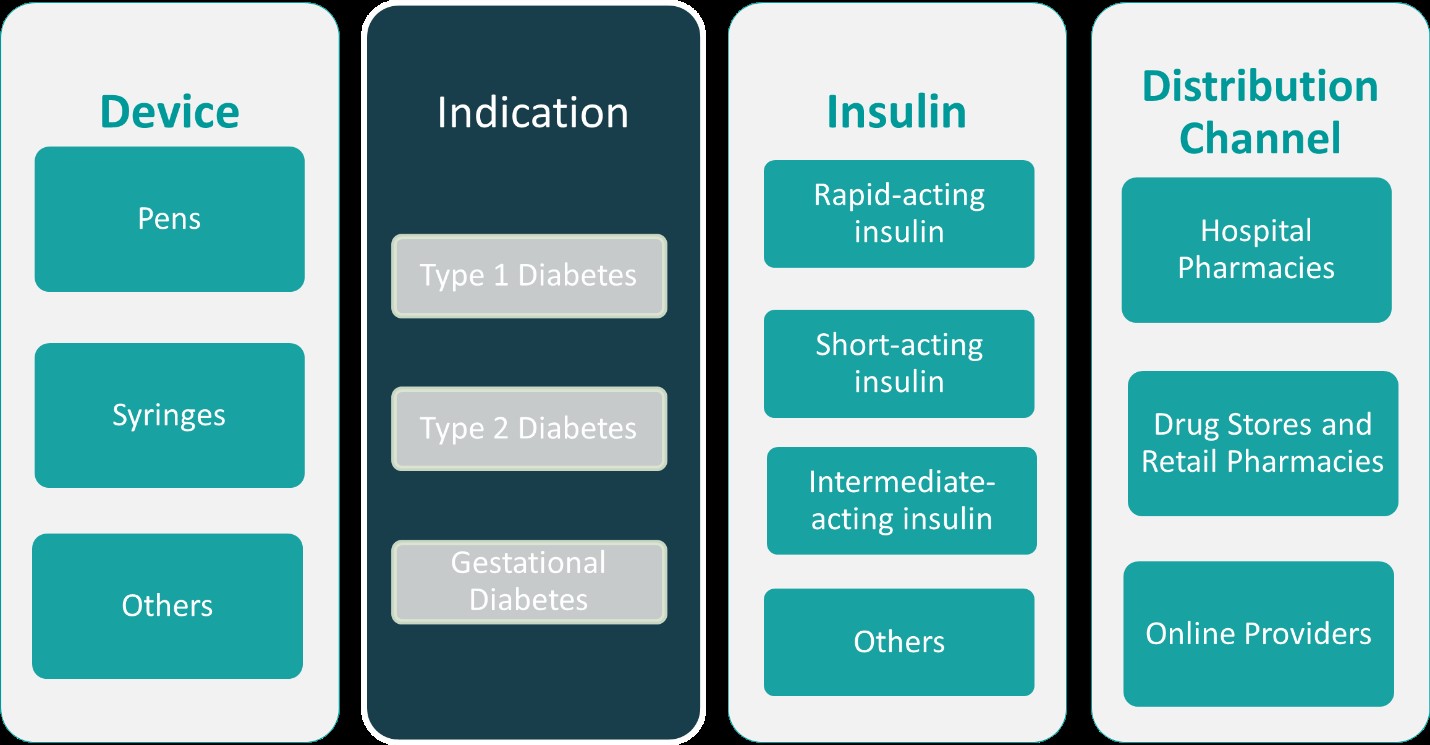
This report segments the Global Human Insulin Market as follows:
Market Drivers
Rising Prevalence of Diabetes Worldwide
One of the primary drivers fueling the global human insulin market is the rising prevalence of diabetes across the globe. For instance, the International Diabetes Federation estimates that the number of people living with diabetes will continue to rise significantly, with projections indicating a substantial increase in cases by 2045. Both Type 1 and Type 2 diabetes require insulin therapy for effective management, with Type 1 patients dependent on lifelong insulin administration. The increasing incidence of diabetes, particularly in emerging economies, is largely attributed to urbanization, lifestyle changes, poor dietary habits, and a growing aging population. This surge in diabetic cases continues to generate a consistent and growing demand for human insulin therapies.
Technological Advancements in Insulin Delivery
Technological innovation plays a vital role in propelling the growth of the human insulin market. For instance, advancements such as smart insulin pens, insulin pumps, and continuous glucose monitoring (CGM) systems are significantly improving the precision and convenience of insulin administration. These innovations not only enhance patient compliance but also reduce the risk of complications associated with poor glucose control. Furthermore, digital health solutions integrated with insulin delivery devices are allowing for personalized treatment and real-time monitoring, thereby elevating the standard of diabetes care. The adoption of these technologies is steadily rising in both developed and developing regions, further driving market growth.
Government Support and Health Initiatives
Governments and healthcare organizations across various countries are implementing robust initiatives to enhance diabetes care and expand access to insulin. Public awareness campaigns, funding for diabetes management programs, and subsidized insulin pricing are making treatment more accessible, especially in low- and middle-income countries. In addition, collaborations between public health bodies and private pharmaceutical firms are ensuring steady production and equitable distribution of insulin products. These efforts are aligned with global health goals to reduce the burden of non-communicable diseases, including diabetes, thereby reinforcing the demand for human insulin.
Growth of Biosimilars and Strategic Industry Collaborations
The emergence and growing acceptance of biosimilar insulin products are reshaping the competitive landscape of the human insulin market. Biosimilars offer more affordable alternatives to branded insulin, encouraging wider adoption, especially in cost-sensitive markets. This shift is driven by regulatory approvals and increasing trust among healthcare providers and patients. At the same time, major pharmaceutical companies are actively engaging in strategic partnerships, mergers, and acquisitions to expand their product portfolios and geographic reach. These collaborations are also accelerating research and development activities focused on creating next-generation insulin therapies, enhancing efficacy, and reducing side effects. As these industry dynamics evolve, they are collectively contributing to a robust and expanding human insulin market globally.
Market Trends
Increasing Adoption of Biosimilar Insulin
A significant trend shaping the global human insulin market is the growing adoption of biosimilar insulin products. For instance, Biocon Biologics recently received U.S. FDA approval for its biosimilar insulin, expanding accessibility for patients seeking cost-effective alternatives. As patents for originator insulin products expire, biosimilars are entering the market with competitive pricing and comparable efficacy. This shift is particularly impactful in emerging economies where affordability is a critical factor in healthcare access. As biosimilars gain wider acceptance among healthcare providers and patients, they are expected to drive market competition and improve accessibility to insulin therapies globally.
Strategic Collaborations and Global Market Expansion
Collaborations and strategic partnerships are becoming more prevalent as key players aim to expand their reach and strengthen their market positions. For instance, Vertex Pharmaceuticals secured an exclusive license for TreeFrog Therapeutics' C-Stem technology to enhance the production of cell therapies for type 1 diabetes. Multinational pharmaceutical companies are entering alliances with biotech firms, research institutions, and digital health startups to develop innovative insulin products and delivery methods. Moreover, companies are increasing their focus on penetrating untapped markets in Asia, Africa, and Latin America, where the diabetic population is rising rapidly. These global expansion strategies, combined with a focus on innovation and affordability, are contributing to the dynamic evolution of the human insulin market landscape.
Integration of Digital Health Technologies
Digital health technologies are rapidly transforming diabetes management and influencing insulin market trends. Tools such as continuous glucose monitors (CGMs), mobile health applications, and connected insulin delivery devices are being integrated to create a more personalized and efficient care experience. These technologies enable patients to track their blood glucose levels in real-time, optimize insulin dosing, and receive remote guidance from healthcare providers. The integration of artificial intelligence (AI) and machine learning into digital platforms is further enhancing decision-making and adherence. As a result, the demand for tech-enabled insulin solutions is growing, particularly among younger and tech-savvy patient populations.
Shift Toward Patient-Centric and Personalized Therapy
The human insulin market is witnessing a shift toward more patient-centric and personalized approaches to treatment. Pharmaceutical companies are focusing on developing insulin formulations that offer flexible dosing schedules, faster onset of action, and longer duration to better match individual patient lifestyles. Ultra-rapid-acting and ultra-long-acting insulins are gaining popularity due to their convenience and improved glycemic control. Additionally, personalized insulin therapy based on genetic profiling and real-time health data is emerging as a promising trend, aiming to enhance treatment outcomes and reduce complications. This evolution reflects the broader movement toward precision medicine in chronic disease management.
Market Challenges Analysis
High Production Costs and Pricing Pressures
One of the key challenges facing the global human insulin market is the high cost associated with insulin production and pricing pressures from healthcare systems. For instance, a study published in BMJ Global Health highlights that the manufacturing process for insulin analogues involves complex biotechnological procedures, contributing to elevated production costs. The complex manufacturing process of insulin, which requires stringent quality controls and specialized infrastructure, contributes to its elevated production costs. In many countries, particularly in low- and middle-income regions, these costs translate into limited access and affordability for patients. Furthermore, growing scrutiny from governments and regulatory bodies around insulin pricing has led to increased pressure on pharmaceutical companies to reduce prices while maintaining quality and supply reliability. This tension between affordability and profitability poses a significant barrier to market expansion and equitable access to insulin therapies.
Regulatory Complexities and Limited Market Penetration in Developing Regions
Regulatory complexities and disparities across different regions also hinder the growth of the human insulin market. While developed nations benefit from streamlined approval processes and well-established regulatory frameworks, many developing countries face delays and inconsistencies in drug approvals, limiting timely access to newer insulin formulations. Additionally, inadequate healthcare infrastructure, lack of awareness, and low rates of diabetes diagnosis and management contribute to underutilization of insulin therapy in these markets. Logistics and cold-chain requirements for insulin storage further complicate distribution in remote and resource-constrained areas. Overcoming these regulatory and infrastructural barriers is critical for expanding the reach of insulin products and improving health outcomes for diabetic populations globally.
Market Opportunities
The global human insulin market presents significant growth opportunities, primarily driven by increasing demand in emerging economies. As the prevalence of diabetes rises in countries across Asia-Pacific, Latin America, and Africa, the need for accessible and affordable insulin therapies is becoming more urgent. These regions offer vast untapped potential due to their large populations, improving healthcare infrastructure, and rising awareness of chronic disease management. Governments in these areas are also implementing supportive policies and public health initiatives aimed at expanding access to essential medicines, including insulin. Pharmaceutical companies that strategically invest in localized manufacturing, cost-effective distribution networks, and tailored product offerings are well-positioned to gain a competitive edge and increase their market share in these high-growth regions.
Moreover, the market is poised to benefit from ongoing advancements in biotechnology and digital health solutions. Innovations in insulin formulation such as ultra-long-acting and rapid-acting analogs are enhancing patient adherence and glycemic control, while smart insulin delivery systems and connected healthcare platforms are transforming diabetes management. These developments provide opportunities for companies to differentiate their offerings and meet the growing demand for personalized, data-driven healthcare solutions. Additionally, the increasing acceptance of biosimilar insulin products offers a viable pathway to expand access and reduce treatment costs, particularly in price-sensitive markets. As regulatory frameworks continue to evolve and support biosimilar integration, manufacturers can capitalize on this trend to broaden their reach and address the global diabetes burden more effectively.
Market Segmentation Analysis:
By Device:
The global human insulin market is categorized by device type, including pens, syringes, and others. Among these, insulin pens are gaining significant market share due to their ease of use, portability, and precision in dosage delivery. Pens are increasingly popular among diabetic patients, especially for those requiring daily insulin injections, because of their user-friendly design and convenience. The demand for insulin pens is expected to grow in both developed and emerging markets as they offer greater accuracy compared to traditional syringes, reducing the likelihood of dosing errors. On the other hand, syringes remain an important device segment, particularly in regions where affordability is a priority, and insulin pens may be perceived as too expensive. While syringes are still widely used, the growing preference for pens is expected to gradually shift market dynamics. Other devices, such as insulin pumps and continuous glucose monitors (CGMs), are also contributing to market growth, especially in regions with advanced healthcare systems. These alternatives are being adopted for their ability to provide real-time insulin delivery and enhance patient compliance.
By Indication:
The global human insulin market is also segmented based on indications, including Type 1 diabetes, Type 2 diabetes, and gestational diabetes. Type 1 diabetes holds a significant share of the market due to its prevalence and the necessity for lifelong insulin therapy. Patients with Type 1 diabetes rely on insulin for glucose regulation, making this segment the largest contributor to the overall market. As the incidence of Type 1 diabetes continues to rise globally, the demand for human insulin in this segment is expected to increase. In contrast, the market for Type 2 diabetes is experiencing substantial growth driven by the global rise in obesity rates, sedentary lifestyles, and aging populations. While Type 2 diabetes is often managed with oral medications initially, insulin therapy is required for more advanced stages, driving market demand. Gestational diabetes, although less common than the other two types, also represents a growing market segment, especially in regions where healthcare awareness and access are improving. Insulin therapy for gestational diabetes ensures proper glucose control during pregnancy, preventing complications for both mother and child, further expanding the market for human insulin in this area.
Segments:
Based on Device:
- Pens
- Syringes
- Others
Based on Indication:
- Type 1 Diabetes
- Type 2 Diabetes
- Gestational Diabetes
Based on Insulin:
- Rapid-acting insulin
- Short-acting insulin
- Intermediate-acting insulin
- Others
Based on Distribution Channel:
- Hospital Pharmacies
- Drug Stores and Retail Pharmacies
- Online Providers
Based on the Geography:
- North America
- U.S.
- Canada
- Mexico
- Europe
- UK
- France
- Germany
- Italy
- Spain
- Russia
- Belgium
- Netherlands
- Austria
- Sweden
- Poland
- Denmark
- Switzerland
- Rest of Europe
- Asia Pacific
- China
- Japan
- South Korea
- India
- Australia
- Thailand
- Indonesia
- Vietnam
- Malaysia
- Philippines
- Taiwan
- Rest of Asia Pacific
- Latin America
- Brazil
- Argentina
- Peru
- Chile
- Colombia
- Rest of Latin America
- Middle East
- UAE
- KSA
- Israel
- Turkey
- Iran
- Rest of Middle East
- Africa
- Egypt
- Nigeria
- Algeria
- Morocco
- Rest of Africa
Regional Analysis
North America
North America holds the largest share of the global human insulin market, accounting for approximately 40% of the total market revenue. This dominance is primarily attributed to the high prevalence of diabetes, advanced healthcare systems, and the availability of a wide range of insulin products. The United States, in particular, leads the market due to its high diabetic population and significant investments in diabetes care. Moreover, the presence of major pharmaceutical companies and advanced insulin delivery devices, such as insulin pens and pumps, contributes to market growth. Additionally, the growing trend of health-consciousness and increasing adoption of digital health solutions, like continuous glucose monitoring systems, is fueling the demand for insulin in this region.
Europe
Europe holds the second-largest share in the global human insulin market, with a market share of around 25%. The demand for human insulin in this region is driven by the high incidence of Type 2 diabetes and an aging population. Countries like Germany, France, and the UK have well-established healthcare systems that provide easy access to insulin therapies, contributing to higher adoption rates. The region is also seeing a rise in the use of biosimilar insulin products, which has made insulin more affordable, further boosting market growth. Furthermore, technological innovations in insulin delivery devices, such as smart insulin pens, are gaining traction in Europe, driving growth within this segment.
Asia-Pacific
The Asia-Pacific region is experiencing rapid growth in the human insulin market, holding around 20% of the global market share. This is largely due to the rising prevalence of diabetes in countries such as China and India, where lifestyle changes, urbanization, and an increasing elderly population are contributing to a higher incidence of diabetes. With improving healthcare infrastructure and greater government initiatives focused on diabetes care, the demand for insulin is expected to rise steadily. Furthermore, the growing affordability of insulin products, including biosimilars, is making diabetes management more accessible to a larger population in the region. The Asia-Pacific market is expected to continue growing, with increased adoption of insulin pens and pumps.
Rest of the World
The rest of the world, encompassing regions such as Latin America, the Middle East, and Africa, accounts for approximately 15% of the global human insulin market. In these regions, there is a growing need for insulin due to the rising number of diabetes cases, particularly Type 2 diabetes. However, the market is challenged by limited access to healthcare and insulin products in certain areas, which can hinder growth. Despite these challenges, market opportunities are emerging as governments and international health organizations work to improve diabetes care. The rising number of healthcare initiatives aimed at improving access to essential medicines, including insulin, is expected to drive market growth in the coming years. Furthermore, the affordability and availability of biosimilar insulin are expected to positively impact the market in these regions.
Key Player Analysis
- Novo Nordisk A/S
- MannKind Corporation
- Pfizer
- Wockhardt
- Biocon
- Lupin
- Tonghua Dongbao Pharmaceutical Co
- Eli Lilly and Company
Competitive Analysis
The global human insulin market is highly competitive, with several key players dominating the landscape. Leading companies such as Novo Nordisk A/S, Eli Lilly and Company, Sanofi, Pfizer, Biocon, MannKind Corporation, Wockhardt, Lupin, and Tonghua Dongbao Pharmaceutical Co. are at the forefront, contributing significantly to market growth. Companies are focusing on improving the efficiency and convenience of insulin administration, with advancements such as smart insulin pens, insulin pumps, and continuous glucose monitoring systems. These innovations are not only enhancing patient compliance but also providing more precise and personalized insulin management solutions. The competition in the market is also driven by the growing demand for biosimilar insulin products. As patents for original insulin products expire, many companies are entering the biosimilar market with cost-effective alternatives, thus increasing accessibility to insulin therapies, especially in price-sensitive regions. This is fostering a more competitive environment as both established and emerging companies focus on capturing market share in developing markets. Additionally, companies are increasingly forming strategic partnerships, collaborations, and mergers to enhance their market presence and extend their product portfolios. With an emphasis on expanding geographical reach, particularly in Asia-Pacific and Latin America, firms are focusing on improving distribution networks and ensuring better access to insulin therapies. The overall competitive landscape is dynamic, with innovation, affordability, and market penetration being key factors driving growth.
Recent Developments
- In April 2025, Novo Nordisk announced the discontinuation of Human Mixtard, India’s largest-selling human insulin brand, as part of a global strategy to prioritize newer, patented diabetes and weight loss therapies such as Ozempic and Wegovy. While vial forms of Mixtard, Actrapid, and Insulatard will remain available, pen devices (Penfills and FlexPens) are being phased out, which is expected to disrupt patient access and preference in India.
- In April 2025, Pfizer discontinued the development of danuglipron, its once-daily oral GLP-1 receptor agonist for obesity and type 2 diabetes, following a case of drug-induced liver injury and after reviewing clinical and regulatory feedback. This decision halts further clinical development for both obesity and diabetes indications.
- In March 2025, Biocon Biologics entered a strategic collaboration with Civica, Inc. to expand access to Insulin Aspart in the United States. Biocon will supply the drug substance, which Civica will formulate and commercialize after completing development and clinical trials.
- In December 2024, Lupin acquired the Huminsulin® portfolio in India from Eli Lilly and Company. The range includes Insulin Human (Huminsulin R, NPH, 50/50, and 30/70) and is indicated for type 1 and type 2 diabetes. Lupin had previously marketed these products under a distribution agreement, and the acquisition is aimed at strengthening its diabetes portfolio.
- In November 2024, MannKind’s Afrezza® (insulin human) Inhalation Powder received approval from India’s CDSCO. MannKind expects to ship product to its partner Cipla by the end of 2025.
- In October 2024, Wockhardt filed for approval of its fast-acting insulin analog, Aspart injection (ASPARAPID™), with the Drugs Controller General of India (DCGI). The product, developed indigenously, will be offered in cartridges, vials, and prefilled disposable pens. This expands Wockhardt’s diabetes biosimilars portfolio and addresses a market with limited competition.
Market Concentration & Characteristics
The global human insulin market is characterized by a moderate level of market concentration, with a few dominant players holding significant market shares, while several smaller companies and biosimilar manufacturers also contribute to the market's diversity. The market is largely driven by major multinational pharmaceutical companies, which invest heavily in research and development to introduce innovative insulin products and delivery systems. However, the increasing presence of biosimilar insulin products is fostering greater competition, particularly in price-sensitive regions, by offering more affordable alternatives to patented insulin. The market is also influenced by the growing trend toward personalized and technology-driven diabetes care, with smart insulin pens and continuous glucose monitoring systems becoming more prevalent. Additionally, regional differences in healthcare infrastructure and access to insulin therapies contribute to market fragmentation, as companies tailor their products and strategies to meet local demands and regulatory requirements. Overall, the market is competitive, dynamic, and increasingly diverse.
Report Coverage
The research report offers an in-depth analysis based on Device, Indication, Insulin, Distribution Channel and Geography. It details leading market players, providing an overview of their business, product offerings, investments, revenue streams, and key applications. Additionally, the report includes insights into the competitive environment, SWOT analysis, current market trends, as well as the primary drivers and constraints. Furthermore, it discusses various factors that have driven market expansion in recent years. The report also explores market dynamics, regulatory scenarios, and technological advancements that are shaping the industry. It assesses the impact of external factors and global economic changes on market growth. Lastly, it provides strategic recommendations for new entrants and established companies to navigate the complexities of the market.
Future Outlook
- The global human insulin market is expected to continue its steady growth due to the increasing prevalence of diabetes worldwide.
- Biosimilar insulin products are anticipated to gain more market share, offering affordable alternatives and improving accessibility for patients.
- Technological advancements in insulin delivery systems, such as insulin pens and pumps, will drive market innovation and patient adoption.
- The growing trend toward personalized diabetes care will lead to more tailored insulin therapies based on individual needs.
- The rising demand for digital health solutions, including continuous glucose monitoring systems, will enhance insulin management and treatment outcomes.
- Emerging markets in Asia-Pacific, Africa, and Latin America will contribute significantly to the market’s expansion due to improving healthcare access.
- Strategic partnerships and collaborations between pharmaceutical companies and technology firms will lead to more advanced insulin delivery systems.
- Companies will continue to focus on reducing the cost of insulin, making therapies more accessible in both developed and developing regions.
- The increasing focus on preventative healthcare and early diabetes detection will drive demand for insulin in the long term.
- Regulatory advancements in biosimilar insulin approval and adoption will facilitate market growth and competition.

Request a Free Sample
Fill in your details and we'll send you a free sample report.
- Sample data tables & charts
- Research methodology
Market Dynamics
Rising Prevalence of Diabetes Worldwide
The increasing global incidence of both Type 1 and Type 2 diabetes, driven by aging populations, sedentary lifestyles, and unhealthy diets, is fueling demand for human insulin therapies across all regions.
Technological Advancements in Insulin Delivery
Innovations such as smart insulin pens, insulin pumps, and continuous glucose monitoring systems are improving the precision, convenience, and adherence of insulin therapy, making treatment more accessible and effective.
Government Support and Health Initiatives
Public health campaigns, subsidized pricing, and collaborative programs between governments and pharmaceutical companies are expanding access to insulin, especially in developing regions where affordability and availability have been barriers.
Growth of Biosimilar Insulin Products
The introduction and increasing acceptance of biosimilar insulins are providing cost-effective alternatives to branded products, enhancing competition and improving patient access, particularly in price-sensitive and emerging markets.
Strategic Collaborations and Industry Partnerships
Major pharmaceutical companies are engaging in partnerships, mergers, and acquisitions to expand their product portfolios, accelerate R&D, and penetrate new geographic markets, driving innovation and market expansion.
Need a Custom Version of This Report?
Tailor the scope, geography, or segments to your exact requirements.
- Custom geography or segment scope
- Direct access to our analyst team
Frequently Asked Questions
What is the current size of the Global Human Insulin?
What factors are driving the growth of the Global Human Insulin?
What are the key segments within the Global Human Insulin?
What are some challenges faced by the Global Human Insulin?
Who are the major players in the Global Human Insulin?
Table of Content
Chapter 1 Market Segmentation
- 1.1 Segmentation Framework
- 1.1.1 Product and Service Classification
- 1.1.2 Application and End-Use Classification
- 1.1.3 Technology and Solution Classification
- 1.1.4 Customer and Distribution Channel Classification
- 1.1.5 Geographic Segmentation
- 1.1.6 Market Segment Definitions and Boundaries
- 1.2 By Device
- 1.2.1 Pens
- 1.2.2 Syringes
- 1.2.3 Others
- 1.3 By Indication
- 1.3.1 Type 1 Diabetes
- 1.3.2 Type 2 Diabetes
- 1.3.3 Gestational Diabetes
- 1.4 By Insulin Type
- 1.4.1 Rapid-acting insulin
- 1.4.2 Short-acting insulin
- 1.4.3 Intermediate-acting insulin
- 1.4.4 Others
Chapter 2 Introduction
- 2.1 Report Objectives and Scope
- 2.2 Product Definition and Industry Terminology
- 2.3 Market Inclusions and Exclusions
- 2.4 Research Process
- 2.4.1 Primary Research and Expert Interviews
- 2.4.2 Secondary Research and Source Review
- 2.4.3 Top-Down and Bottom-Up Estimation
- 2.4.4 Data Triangulation and Verification
- 2.5 Market Size Measurement Basis
- 2.5.1 2023: USD 21,000 million → 2032: USD 31,208 million
- 2.6 Historical and Forecast Reference Periods
- 2.6.1 Base Year: 2023
- 2.6.2 Forecast Period: 2023-2032
- 2.7 Research Assumptions and Limitations
Chapter 3 Executive Summary
- 3.1 Market Snapshot and Key Findings
- 3.2 Base-Year Market Size, 2023
- 3.3 Forecast Market Size, 2032
- 3.4 Revenue and Volume Growth Outlook
- 3.5 Key Demand and Supply Indicators
- 3.6 Leading Market Segments
- 3.7 Fastest-Growing Market Opportunities
- 3.8 Regional Performance Highlights
- 3.9 Technology and Industry Transformation
- 3.10 Competitive Landscape Summary
- 3.11 Analyst View and Strategic Implications
Chapter 4 Global Human Insulin Market Trends and Developments
- 4.1 Historical Industry Development
- 4.2 Recent Market Trends and Developments
- 4.3 Demand and Customer Behavior Trends
- 4.4 Technology and Product Innovation
- 4.5 Artificial Intelligence, Automation and Digitalization
- 4.6 Local Manufacturing and Supply Chain Realignment
- 4.7 Industry Partnerships, Mergers and Acquisitions
- 4.8 Sustainability and Circular Economy Developments
- 4.9 Government and Private Sector Investment Trends
- 4.10 Emerging Business Models and Commercialization
- 4.11 Industry Developments and Announcements
Chapter 5 Global Human Insulin Market Production, Supply and Demand Analysis
- 5.1 Demand Trend and Consumption Analysis
- 5.2 Demand Forecast, 2023-2032
- 5.3 Production and Output Trend
- 5.4 Production and Output Forecast, 2023-2032
- 5.5 Installed Capacity and Capacity Utilization
- 5.6 Company-Wise Production Plants and Statistics
- 5.6.1 Installed Production Capacity
- 5.6.2 Actual Production
- 5.6.3 Planned Capacity and Expansion Targets
- 5.7 Supply Chain Structure and Procurement Trends
- 5.8 Supply-Demand Gap and Bottlenecks
- 5.9 Import Dependence and Sourcing Structure
- 5.10 Contract Manufacturing and Outsourcing
- 5.11 Regional Supply and Demand Concentration
Chapter 6 Global Human Insulin Market Pricing Analysis
- 6.1 Pricing Structure and Measurement
- 6.2 Historical Pricing Trends
- 6.3 Pricing Outlook, 2023-2032
- 6.4 Average Selling Price and Unit Economics
- 6.5 Pricing by Product and Market Segment
- 6.6 Geographic Pricing Differences
- 6.7 Key Input, Energy, Labor and Logistics Costs
- 6.8 Contract Pricing and Purchasing Models
- 6.9 Pricing Sensitivity and Competitive Positioning
- 6.10 Price, Margin and Profitability Implications
Chapter 7 Global Human Insulin Market Dynamics
- 7.1 Market Growth Drivers
- 7.1.1 Demand-Side Drivers
- 7.1.2 Technology and Innovation Drivers
- 7.1.3 Infrastructure and Investment Drivers
- 7.1.4 Regulatory and Policy Drivers
- 7.2 Market Restraints
- 7.2.1 Cost and Affordability Constraints
- 7.2.2 Technology and Adoption Barriers
- 7.2.3 Supply Chain and Operational Constraints
- 7.3 Market Challenges
- 7.3.1 Competitive Pressure and Margin Erosion
- 7.3.2 Skills, Infrastructure and Implementation Gaps
- 7.4 Emerging Market Opportunities
- 7.5 Market Dynamics Impact and Time-Horizon Assessment
Chapter 8 Global Human Insulin Value Chain Analysis
- 8.1 Industry Value Chain Overview
- 8.2 Upstream Suppliers and Critical Inputs
- 8.3 Technology and Component Providers
- 8.4 Manufacturing or Service Delivery
- 8.5 Distribution, Channel Partners and Integrators
- 8.6 Downstream Applications and End Users
- 8.7 Value Addition and Profit Pools
- 8.8 Vertical Integration and Outsourcing
- 8.9 Supplier Concentration and Risk
- 8.10 Supply Chain Localization and Resilience
Chapter 9 Global Human Insulin Market Regulations and Policies
- 9.1 Relevant Laws, Standards and Compliance Frameworks
- 9.2 Product, Service, Safety and Quality Requirements
- 9.3 Government Policies, Incentives and Subsidies
- 9.4 Imports, Exports and Trade Barriers
- 9.5 Public Procurement and Local Content Requirements
- 9.6 Environmental and Sustainability Compliance
- 9.7 Upcoming Policy Changes and Market Implications
Chapter 10 Global Human Insulin Market Hotspots and Opportunities
- 10.1 Market Opportunity Mapping and Growth Hotspots
- 10.2 High-Growth Applications and Customer Groups
- 10.3 Underserved Markets and White-Space Opportunities
- 10.4 Emerging Technology and Product Opportunities
- 10.5 New Capacity and Investment Hotspots
- 10.6 Market Entry and Expansion Opportunities
- 10.7 Distribution and Partnership Opportunities
- 10.8 Near-Term and Long-Term Commercial Potential
- 10.9 Opportunity Attractiveness and Execution Risks
Chapter 11 Global Human Insulin Market Outlook, 2023-2032
- 11.1 Market Size and Analysis
- 11.1.1 Revenue (Market Measurement: 2023: USD 21,000 million → 2032: USD 31,208 million)
- 11.1.2 Market Volume and Quantity Sold
- 11.1.3 Historical Market Size
- 11.1.4 Base-Year Market Size, 2023
- 11.2 Market Forecast, 2023-2032
- 11.2.1 Revenue Forecast to 2032
- 11.2.2 Volume Forecast to 2032
- 11.2.3 CAGR and Year-on-Year Growth
- 11.2.4 Incremental Revenue Opportunity
- 11.3 Forecast Assumptions and Scenario Analysis
- 11.3.1 Base-Case Forecast
- 11.3.2 Optimistic and Conservative Scenarios
- 11.3.3 Technology, Pricing and Policy Sensitivities
- 11.4 Market Attractiveness and Growth Outlook
Chapter 12 Global Human Insulin Market Segmentation and Outlook
- 12.1 Segmentation Summary and Market Shares, 2023
- 12.2 Largest and Fastest-Growing Segments
- 12.3 By Device - Market Size and Forecast, 2023-2032
- 12.3.1 Segment Definition and Scope
- 12.3.2 Historical Market Size
- 12.3.3 Revenue Forecast, 2023-2032
- 12.3.4 Volume Forecast, 2023-2032
- 12.3.5 Base-Year Market Share, 2023
- 12.3.6 Segment CAGR and Growth Drivers
- 12.3.7 Subsegment Market Size and Forecast
- 12.3.7.1 Pens
- 12.3.7.2 Syringes
- 12.3.7.3 Others
- 12.3.8 Subsegment Pricing and Adoption Trends
- 12.3.9 Leading Suppliers and Competition
- 12.3.10 Regional Demand and Opportunities
- 12.4 By Indication - Market Size and Forecast, 2023-2032
- 12.4.1 Segment Definition and Scope
- 12.4.2 Historical Market Size
- 12.4.3 Revenue Forecast, 2023-2032
- 12.4.4 Volume Forecast, 2023-2032
- 12.4.5 Base-Year Market Share, 2023
- 12.4.6 Segment CAGR and Growth Drivers
- 12.4.7 Subsegment Market Size and Forecast
- 12.4.7.1 Type 1 Diabetes
- 12.4.7.2 Type 2 Diabetes
- 12.4.7.3 Gestational Diabetes
- 12.4.8 Subsegment Pricing and Adoption Trends
- 12.4.9 Leading Suppliers and Competition
- 12.4.10 Regional Demand and Opportunities
- 12.5 By Insulin Type - Market Size and Forecast, 2023-2032
- 12.5.1 Segment Definition and Scope
- 12.5.2 Historical Market Size
- 12.5.3 Revenue Forecast, 2023-2032
- 12.5.4 Volume Forecast, 2023-2032
- 12.5.5 Base-Year Market Share, 2023
- 12.5.6 Segment CAGR and Growth Drivers
- 12.5.7 Subsegment Market Size and Forecast
- 12.5.7.1 Rapid-acting insulin
- 12.5.7.2 Short-acting insulin
- 12.5.7.3 Intermediate-acting insulin
- 12.5.7.4 Others
- 12.5.8 Subsegment Pricing and Adoption Trends
- 12.5.9 Leading Suppliers and Competition
- 12.5.10 Regional Demand and Opportunities
- 12.6 Segment Growth Comparison
- 12.7 Segment Attractiveness and Priority Matrix
Chapter 13 Global Human Insulin Geographic Market Outlook, 2023-2032
- 13.1 Regional Market Size and Share, 2023
- 13.2 Regional Market Forecast, 2023-2032
- 13.3 Regional Pricing, Production and Demand Differences
- 13.4 North America
- 13.4.1 United States
- 13.4.2 Canada
- 13.4.3 Mexico
- 13.5 Europe
- 13.5.1 Germany
- 13.5.2 France
- 13.5.3 Italy
- 13.5.4 United Kingdom
- 13.5.5 Spain
- 13.5.6 Poland
- 13.5.7 Russia
- 13.5.8 Netherlands
- 13.5.9 Belgium
- 13.5.10 Sweden
- 13.5.11 Denmark
- 13.5.12 Norway
- 13.5.13 Rest of Europe
- 13.6 Asia Pacific
- 13.6.1 China
- 13.6.2 India
- 13.6.3 Japan
- 13.6.4 South Korea
- 13.6.5 Thailand
- 13.6.6 Indonesia
- 13.6.7 Vietnam
- 13.6.8 Malaysia
- 13.6.9 Australia
- 13.6.10 Rest of Asia Pacific
- 13.7 Latin America
- 13.7.1 Brazil
- 13.7.2 Argentina
- 13.7.3 Colombia
- 13.7.4 Chile
- 13.7.5 Rest of Latin America
- 13.8 Middle East
- 13.8.1 Saudi Arabia
- 13.8.2 United Arab Emirates
- 13.8.3 Turkey
- 13.8.4 Israel
- 13.8.5 Iran
- 13.8.6 Rest of the Middle East
- 13.9 Africa
- 13.9.1 South Africa
- 13.9.2 Egypt
- 13.9.3 Nigeria
- 13.9.4 Morocco
- 13.9.5 Rest of Africa
- 13.10 Regional Investment, Policy and Supply Chain Differences
- 13.11 Regional Competitive Landscape
- 13.12 Geographic Growth Hotspots
Chapter 14 Global Human Insulin Technology, Innovation and Sustainability Outlook
- 14.1 Technology Landscape and Maturity
- 14.2 Product, Process and Service Innovation
- 14.3 AI, Automation and Digital Tools in the Industry
- 14.4 Technology Adoption and Performance Benchmarking
- 14.5 Innovation Pipeline and R&D Investment
- 14.6 Patent and Intellectual Property Trends
- 14.7 Energy Efficiency and Resource Management
- 14.8 Sustainability, Recycling and Circularity
- 14.9 Technology Roadmap, 2023-2032
- 14.10 Risks of Obsolescence and Technology Substitution
Chapter 15 Global Human Insulin Market Key Strategic Imperatives
- 15.1 Growth and Market Entry Priorities
- 15.2 High-Return Products and Segments
- 15.3 Pricing, Profitability and Cost Optimization
- 15.4 Technology Investment and Product Differentiation
- 15.5 Supply Chain Localization and Resilience
- 15.6 Distribution and Customer Acquisition
- 15.7 Partnership, Acquisition and Capacity Strategy
- 15.8 Regional Expansion Priorities
- 15.9 Short-, Medium- and Long-Term Actions
Chapter 16 Competition Outlook
- 16.1 Industry Competition Characteristics
- 16.2 Market Structure and Concentration
- 16.3 Market Share and Competitive Positioning, 2023
- 16.4 Company-Wise Revenue and Product Benchmarking
- 16.5 Production and Service Capacity Benchmarking
- 16.6 Technology, Pricing and Differentiation
- 16.7 Regional Footprint and Distribution Strength
- 16.8 Mergers, Acquisitions and Strategic Alliances
- 16.9 New Entrants and Competitive Threats
- 16.10 Porter's Five Forces and Industry Attractiveness
- 16.11 Competitive Outlook, 2023-2032
Chapter 17 Company Profiles
- 17.1 Company Coverage and Selection Criteria
- 17.2 Novo Nordisk A/S
- 17.2.1 Business Description
- 17.2.2 Company Ownership and Geographic Presence
- 17.2.3 Product and Service Portfolio
- 17.2.4 Manufacturing and Operating Footprint
- 17.2.5 Production Capacity and Expansion Plans
- 17.2.6 Financial Performance and Investment
- 17.2.7 Market Share and Competitive Position
- 17.2.8 Technology and Innovation Capabilities
- 17.2.9 Strategic Alliances or Partnerships
- 17.2.10 Recent Developments
- 17.2.11 Growth Strategy and Outlook
- 17.3 Eli Lilly and Company
- 17.4 Sanofi
- 17.5 Pfizer
- 17.6 Biocon
- 17.7 MannKind Corporation
- 17.8 Wockhardt
- 17.9 Lupin
- 17.10 Tonghua Dongbao Pharmaceutical Co
- 17.11 Other Relevant Market Participants
Note: Every listed company is profiled on the structure shown under the first company. The company list is preliminary and may change based on research findings, market developments, data availability and client requirements.
Chapter 18 Disclaimer
- 18.1 Research and Forecast Disclaimer
- 18.2 Data Source and Estimation Limitations
Note: The depth of individual sections depends on data availability for this market. Volume, capacity, trade and other unit-based metrics are included where applicable.