
| REPORT ATTRIBUTE | DETAILS |
|---|---|
| Historical Period | 2019-2022 |
| Base Year | 2023 |
| Forecast Period | 2024-2032 |
| India Ready-To-Eat (RTE) Food Market Size 2023 | USD 847.69 Million |
| India Ready-To-Eat (RTE) Food Market, CAGR | 15.90% |
| India Ready-To-Eat (RTE) Food Market Size 2032 | USD 3,198.81 Million |
Market Overview
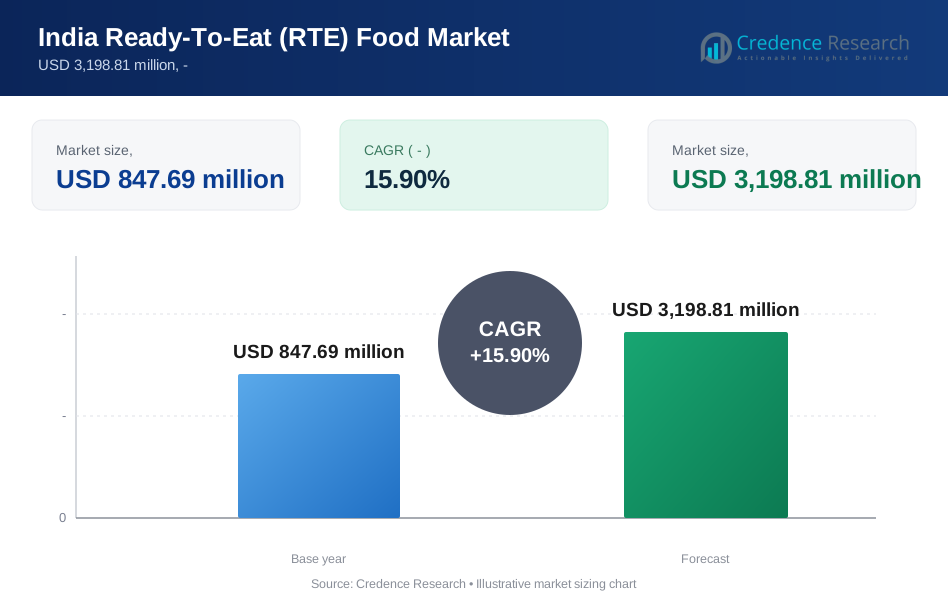
The India Ready-To-Eat (RTE) food market is projected to grow from USD 847.69 million in 2023 to USD 3,198.81 million by 2032, at a compound annual growth rate (CAGR) of 15.90%.
The India Ready-To-Eat (RTE) food market is primarily driven by the increasing urbanization, a growing middle class, and shifting consumer preferences towards convenience foods. Busy lifestyles and rising disposable incomes are compelling consumers to opt for RTE products that require minimal preparation time. Additionally, the expansion of organized retail and improvements in food packaging technology are enhancing product availability and shelf life, further fueling market growth. A notable trend is the diversification of product offerings, with manufacturers introducing regional and international flavors to cater to a broader palette, tapping into the culturally diverse consumer base of India.
The India Ready-To-Eat (RTE) food market showcases significant geographical diversity, with key regions including urban centers such as Delhi, Mumbai, Bangalore, and Kolkata. These metropolitan areas drive the majority of the demand due to their fast-paced lifestyles and higher income levels. Key players dominating this market include ITC Limited, MTR Foods Pvt. Ltd., and Haldiram Snacks Pvt. Ltd., among others. These companies are instrumental in shaping market dynamics by continually innovating product offerings and expanding distribution networks to tap into the growing consumer preference for convenience foods across various Indian cities.
Market Drivers
Changing Consumer Lifestyles and Increasing Urbanization
As consumer lifestyles continue to evolve, there is a growing demand for Ready-to-Eat (RTE) foods in India, driven by busy work schedules and the rise of single-person households. For instance, according to a report by the World Economic Forum, India is the ‘most dynamic market’ for urban consumers. The increasing number of people joining the workforce, particularly in urban areas, leaves less time for cooking, prompting a shift towards convenient meal solutions. Single-person households are also on the rise, leading to a demand for portion-controlled, easy-to-prepare meals. Additionally, the growing number of travelers and commuters creates a need for portable and easily consumable food options. Rapid urbanization is a significant driver as well, with more people moving to cities where access to fresh, home-cooked food can be limited. The rise of working women in urban areas further drives the demand for convenient and time-saving meal solutions.
Rising Disposable Incomes and Changing Dietary Preferences
India’s economic growth has led to increased disposable incomes, enabling consumers to spend more on convenience foods. This economic shift is accompanied by a growing willingness among consumers to pay a premium for quality and convenience, especially for products that save them time and effort. Alongside these economic changes, Indian consumers are increasingly experimenting with new flavors and cuisines, driven by a desire for variety and novel food experiences. There is also a growing awareness of health and nutrition, leading to a demand for RTE products that are perceived as healthy and nutritious. These changing dietary preferences are reshaping the RTE food market, encouraging manufacturers to innovate and offer a wider range of products that cater to diverse tastes and health considerations.
Advances in Technology and Government Initiatives
Technological advancements play a critical role in the growth of the RTE food market in India. Improved packaging technologies have significantly extended the shelf life of RTE products, ensuring their safety and quality. For instance, the Digital India program launched in 2015 has been a transformative force, altering the pace of India’s growth story while transforming the country into a digitally empowered society and a knowledge-based economy. Innovations in packaging have made it possible to maintain freshness and flavor, which are critical factors for consumer satisfaction. Furthermore, the development of cold chain logistics has facilitated the distribution of RTE products across the country, enabling manufacturers to reach a broader consumer base. Government initiatives also support the growth of the RTE food segment. By promoting the food processing industry through various policies and programs, the Indian government is fostering an environment that encourages investment and innovation in the RTE sector, ensuring its sustained growth.
Health and Convenience as Key Drivers
Health consciousness among Indian consumers is rising, leading to an increased demand for RTE products that offer both convenience and nutritional benefits. Consumers are seeking out products that align with their health goals, such as low-calorie, high-protein, and organic options. This shift in consumer preference is driving manufacturers to focus on developing healthier RTE options that cater to the growing market of health-conscious individuals. Moreover, the desire for convenience remains a powerful driver, as consumers continue to prioritize products that offer quick and easy meal solutions without compromising on taste or quality. The combination of health and convenience is shaping the future of the RTE food market in India, creating opportunities for innovation and growth.
Market Trends
Evolving Consumer Preferences: Health, Wellness, and Regional Tastes
Consumers are increasingly prioritizing health and wellness, demanding ready-to-eat (RTE) food options that are not only convenient but also nutritious. For instance, consumers prefer RTE foods that are easy to prepare and have a long shelf life, and are willing to pay a premium price for RTE foods that they perceive as healthier and of better quality. This shift has spurred the introduction of fortified products, organic choices, and options catering to specific dietary needs such as low-sugar alternatives. As health awareness rises, RTE manufacturers are responding by balancing convenience with health benefits, ensuring their products contain minimal preservatives while maintaining high nutritional value. Simultaneously, there is a significant demand for RTE meals that reflect regional and ethnic flavors. Consumers are showing a strong preference for local cuisine, which is being met by local manufacturers who offer traditional dishes in convenient, ready-to-eat formats. These trends reflect a consumer base that values both health and cultural authenticity, driving RTE producers to diversify their offerings to cater to these evolving preferences.
Snackification, Premiumization, and Direct-to-Consumer Sales
The trend of snackification, characterized by consumers opting for multiple smaller meals or snacks throughout the day, is transforming the RTE landscape. For instance, urbanization and consumer lifestyles with new time pressures are driving consumers to seek more pre-prepared food solutions. Snacks, which are portable and ready-to-eat, are a primary beneficiary of these new eating habits. Manufacturers are innovating with healthy snack options, bite-sized meals, and single-serve packages that cater to on-the-go consumption without compromising on health. Additionally, as consumer incomes increase, there is a growing willingness to pay a premium for RTE meals that are perceived as gourmet or include exotic ingredients, aligning with a desire for indulgence and quality. This trend of premiumization is meeting the demands of consumers looking for an upscale dining experience in the comfort of their own homes. Alongside these trends, the rise of direct-to-consumer (D2C) sales through online platforms and subscription services is reshaping how consumers access RTE products. These services offer customization and cater to specific dietary preferences, providing a personalized approach to ready-to-eat meals. This direct engagement not only enhances customer experience but also allows brands to build loyalty and adapt quickly to consumer feedback.
Market Challenges Analysis
Addressing Consumer Perceptions and Infrastructure Challenges
One of the primary challenges facing the India Ready-To-Eat (RTE) food market is the widespread consumer perception that RTE foods are less nutritious and fresh compared to home-cooked meals. For instance, surveys indicate that more than 80 percent of the 50 million spindles and 842,000 rotors deployed by textile mills are found to be outdated or inefficient, highlighting the need for modernization across food processing industries as well. This perception is often reinforced by concerns over the high levels of preservatives, sodium, sugar, and fat commonly associated with processed foods. To counter these views, RTE manufacturers must focus on enhancing product quality by incorporating healthier ingredients and reducing undesirable additives. Transparency in labeling and education about the nutritional content of RTE products can also help change consumer attitudes. Additionally, the limited cold chain infrastructure in India poses a significant challenge, particularly for preserving the quality of temperature-sensitive RTE products. This issue is more pronounced in remote areas, affecting product availability and limiting market expansion. Improving cold chain facilities and logistics networks is crucial to maintaining product integrity from manufacture to market, ensuring that consumers receive fresh and safe products regardless of their location.
Economic and Regulatory Barriers Impacting Growth
RTE meals often come at a higher price point compared to traditional home-cooked meals or street food, which can deter budget-conscious consumers, especially in lower-income segments. Addressing this challenge requires RTE manufacturers to strategize on pricing without compromising quality, potentially through cost-effective production techniques and scaled distribution solutions. Moreover, navigating the complex landscape of food safety regulations and obtaining the necessary licenses remains daunting for many RTE manufacturers, particularly smaller enterprises. This regulatory complexity can impede market entry and stifle innovation within the sector. Another significant hurdle is the frequent power outages that disrupt essential refrigeration and storage processes, impacting the safety and quality of RTE products. Ensuring a reliable power supply is essential for the sustained growth of the RTE market. Additionally, RTE manufacturers must contend with stiff competition from the unorganized sector, which includes street vendors and small eateries offering freshly prepared meals at lower prices. Developing competitive strategies that emphasize the unique value propositions of RTE products, such as convenience and consistency in quality, is key to gaining a competitive edge in this vibrant market.
Market Segmentation Analysis:
By Category:
The India Ready-To-Eat (RTE) food market is segmented by various categories, including Instant Breakfast/Cereals, Instant Soups and Snacks, Baked Goods, Meat/Poultry, and Others. Instant Breakfast/Cereals lead as a convenient option for the fast-paced lifestyle of urban consumers, offering a quick and nutritious start to the day. The segment of Instant Soups and Snacks is growing due to the increasing demand for light and easy-to-prepare meal options. Baked Goods also hold a significant share, driven by consumer preferences for bread and pastries that are ready to consume. The Meat/Poultry segment is expanding, fueled by higher protein consumption and the availability of diverse cuisines. The 'Others' category captures niche markets that cater to regional tastes and dietary requirements, highlighting the diversity within the RTE food sector in India.
By Packaging:
In terms of packaging, the Indian RTE food market includes Canned, Frozen or Chilled, Retort, and Others. Canned foods are popular due to their long shelf life and ease of storage, making them ideal for emergency preparedness. The Frozen or Chilled segment is experiencing rapid growth, attributed to consumer perceptions of maintaining freshness and flavor. Retort packaging is becoming increasingly favored for its ability to extend the shelf life of food without the need for refrigeration, aligning with the urban lifestyle that values convenience and sustainability. The 'Others' category includes innovative packaging solutions that focus on eco-friendliness and improved functionality, which are gaining traction among environmentally conscious consumers. Each packaging type is designed to meet the specific needs and preferences of different consumer segments, reflecting the dynamic nature of the RTE food market in India.
Segments:
Based on Category
- Instant Breakfast/Cereals
- Instant Soups and Snacks
- Baked Goods
- Meat/Poultry
- Others
Based on Packaging
- Canned
- Frozen or Chilled
- Retort
- Others
Based on End-user
- Residential
- Food Service
- Institutional
Based on Distribution Channel
- Online
- Offline
- Supermarkets/Hypermarkets
- Departmental Stores
- Others
Based on the Geography:
- Northern
- Western
- Southern
- Eastern
Regional Analysis
The Northern and Western parts of India dominate the market, collectively accounting for approximately 60% of the total share. The Northern region, comprising states like Delhi, Punjab, and Uttar Pradesh, has been a major contributor to the RTE food market due to its sizeable population, rising disposable incomes, and the influence of Western culture. The Western region, including Maharashtra and Gujarat, has also seen a surge in demand for RTE food products, fueled by the presence of metropolitan cities and a thriving working-class population.
The Southern region holds a substantial 25% market share, with states like Karnataka, Tamil Nadu, and Andhra Pradesh leading the way. The region's diverse culinary traditions and the growing acceptance of RTE food among urban consumers have played a pivotal role in driving market growth. The Eastern region, while trailing behind the others, accounts for around 15% of the market share. States like West Bengal and Odisha have witnessed a gradual increase in the consumption of RTE food products, particularly among the younger generation and working professionals. It is worth noting that the RTE food market in India is expected to witness further growth in the coming years, driven by changing consumer preferences, the expansion of organized retail, and the entry of new players in the market.
Key Player Analysis
- ITC Limited
- MTR Foods Pvt. Ltd.
- Haldiram Snacks Pvt. Ltd.
- Godrej Tyson Foods Ltd.
- Kohinoor Foods Ltd.
- Nestlé India
- Gits Food Products Pvt. Ltd.
- McCain Foods India
- Mother Dairy Fruit & Vegetable Pvt. Ltd.
- ADF Foods Ltd.
Competitive Analysis
The competitive landscape of the India Ready-to-Eat (RTE) food market is dominated by leading players such as ITC Limited, MTR Foods Pvt. Ltd., Haldiram Snacks Pvt. Ltd., Godrej Tyson Foods Ltd., Kohinoor Foods Ltd., Nestlé India, Mother Dairy Fruit & Vegetable Pvt. Ltd., and ADF Foods Ltd. These companies leverage their strong brand recognition, extensive distribution networks, and diverse product portfolios to maintain their market positions. They focus on offering a wide range of RTE products, from traditional Indian meals to international cuisines, catering to the diverse tastes of Indian consumers. Innovation in product offerings and packaging, alongside aggressive marketing strategies, are key tactics employed by these players to attract consumers. Additionally, these companies are investing in expanding their presence across urban and rural markets, tapping into the growing demand for convenient and healthy meal options, ensuring their continued leadership in the competitive RTE food market.
Recent Developments
- In April 2024, McCain Foods strengthened its partnership with Strong Roots, the Dublin-based frozen food producer.
- In September 2022, McCain Foods acquired Netherlands-based Scelta Products. This acquisition will strengthen the position of the company in prepared frozen appetizers and will add innovation and capacity to frozen appetizers.
- In August 2024, Godrej Agrovet Ltd. signed a definitive agreement with Tyson India Holdings, an affiliate of Tyson Foods, Inc. to buy its 49 percent stake in Godrej Tyson Foods (GTFL), a subsidiary of GAVL.
- In January 2023, ITC acquired Yoga Bar, an internet-first brand offering protein-based snacks products, for a price of $8.6M.
Market Concentration & Characteristics
The India Ready-To-Eat (RTE) food market exhibits a moderate to high market concentration, characterized by the presence of several dominant players who hold substantial market shares. Leading companies such as ITC Limited, MTR Foods Pvt. Ltd., and Haldiram Snacks Pvt. Ltd., drive market dynamics through extensive product innovation and aggressive marketing strategies. These major players benefit from robust distribution networks and brand loyalty, which are crucial in a market where consumer preferences lean heavily towards trusted brands. Furthermore, the market is witnessing an influx of new entrants attracted by the sector's growth potential, adding to the competitive intensity. However, the high entry barriers in terms of compliance with food safety regulations and the need for strong supply chain capabilities mean that smaller players often find it challenging to scale. Overall, the market's characteristics are shaped by consumer demand for variety, quality, and convenience, pushing companies to continually evolve to meet these needs.
Report Coverage
The research report offers an in-depth analysis based on Category, Packaging, End-user, Distribution Channel and Geography. It details leading market players, providing an overview of their business, product offerings, investments, revenue streams, and key applications. Additionally, the report includes insights into the competitive environment, SWOT analysis, current market trends, as well as the primary drivers and constraints. Furthermore, it discusses various factors that have driven market expansion in recent years. The report also explores market dynamics, regulatory scenarios, and technological advancements that are shaping the industry. It assesses the impact of external factors and global economic changes on market growth. Lastly, it provides strategic recommendations for new entrants and established companies to navigate the complexities of the market.
Future Outlook
- Continued growth in urbanization and busy lifestyles will further drive the demand for RTE foods in India.
- Increased consumer awareness regarding health and nutrition will push companies to innovate healthier product options.
- Expansion of retail channels and e-commerce will make RTE foods more accessible across various regions.
- Companies will likely invest in advanced packaging solutions to extend shelf life and maintain food safety.
- The market will see a rise in regional and traditional cuisine offerings in RTE formats to cater to local tastes.
- Collaborations and partnerships between local and international firms will enhance product variety and quality.
- Technological advancements in food processing and logistics will improve the efficiency of production and distribution.
- Greater focus on sustainable practices may lead to the adoption of eco-friendly packaging and sourcing.
- Marketing strategies will increasingly target millennials and Gen Z, who are major consumers of convenience foods.
- Regulatory frameworks will tighten, ensuring higher standards of food safety and quality control in the industry.
Request a Free Sample
Fill in your details and we'll send you a free sample report.
- Sample data tables & charts
- Research methodology
Need a Custom Version of This Report?
Tailor the scope, geography, or segments to your exact requirements.
- Custom geography or segment scope
- Direct access to our analyst team
Frequently Asked Questions
What is the current size of the India Ready-To-Eat (RTE) Food Market?
What factors are driving the growth of the India Ready-To-Eat (RTE) Food Market?
What are the key segments within the India Ready-To-Eat (RTE) Food Market?
What are some challenges faced by the India Ready-To-Eat (RTE) Food Market?
Who are the major players in the India Ready-To-Eat (RTE) Food Market?
Table of Content
Chapter 1. Report Introduction
- 1.1 Report Description & Purpose
- 1.1.1 Report Title & Market Definition
- 1.1.2 Unique Selling Propositions (USP) & Key Differentiators
- 1.1.3 Value Proposition for Stakeholders
- 1.2 Research Objectives
- 1.2.1 Market Sizing Objectives (Volume & Revenue)
- 1.2.2 Segmentation Objectives
- 1.2.3 Competitive Intelligence Objectives
- 1.2.4 Forecast & Scenario Objectives
- 1.3 Report Scope
- 1.3.1 India Ready-To-Eat (RTE) Food Scope – Types & Subtypes Covered
- 1.3.2 Geographic Scope – Regions & Countries Covered
- 1.3.3 Historical Period, Base Year & Forecast Period (the historical period; forecast to the forecast period)
- 1.3.4 Inclusions & Exclusions
- 1.4 HS Code & Classification Framework
- 1.5 Currency, Units & Pricing Basis
- 1.6 Target Stakeholders
- 1.7 Limitations & Assumptions
Chapter 2. Executive Summary
- 2.1 Global India Ready-To-Eat (RTE) Food Market Snapshot
- 2.1.1 Market Size – Historical (the historical period) & Forecast (the forecast period) (base year: USD 847.69 million → forecast year: USD 3,198.81 million)
- 2.1.2 Volume & Revenue – Global Totals
- 2.1.3 Key Market Highlights – Top Five Facts
- 2.2 India Ready-To-Eat (RTE) Food Market Segmentation Snapshot
- 2.2.1 Market Split by Region – vs.
- 2.3 Competitive Snapshot
- 2.3.1 Top 10 Players by Revenue Share –
- 2.3.2 Top 10 Players by Volume Share –
- 2.3.3 Recent Strategic Developments (18-Month Summary)
- 2.4 Key Investment Highlights & Strategic Conclusions
Chapter 3. India Ready-To-Eat (RTE) Food Market Dynamics & Industry Analysis
- 3.1 Market Overview & Context
- 3.1.1 India Ready-To-Eat (RTE) Food Market Position in the Broader Automotive Value Chain
- 3.1.2 OEM vs. Replacement Market Dynamics
- 3.1.3 Market Maturity & Development Stage by Region
- 3.2 India Ready-To-Eat (RTE) Food Market Drivers
- 3.3 India Ready-To-Eat (RTE) Food Market Restraints & Challenges
- 3.4 India Ready-To-Eat (RTE) Food Market Opportunities
- 3.5 Porter's Five Forces Analysis
- 3.5.1 Threat of New Entrants
- 3.5.2 Bargaining Power of Suppliers
- 3.5.3 Bargaining Power of Buyers
- 3.5.4 Threat of Substitutes
- 3.5.5 Competitive Rivalry – Intensity Assessment
- 3.6 India Ready-To-Eat (RTE) Food Value Chain Analysis
- 3.6.1 Upstream – Raw Material/Input Suppliers
- 3.6.1.1 Raw Material/Input 1
- 3.6.1.2 Raw Material/Input 2
- 3.6.1.3 Raw Material/Input 3
- 3.6.2 Midstream – Production/Manufacturing/Service Delivery
- 3.6.2.1 Production/Process Overview
- 3.6.2.2 Key Facility Locations & Capacity by Manufacturer
- 3.6.3 Downstream – Distribution & End Consumer
- 3.6.3.1 Primary Channel – B2B/OEM
- 3.6.3.2 Secondary Channels – Dealer, Retail, Online, Direct
- 3.6.4 Value Chain Profitability Analysis
- 3.6.1 Upstream – Raw Material/Input Suppliers
- 3.7 PESTEL Analysis
- 3.7.1 Political Factors
- 3.7.2 Economic Factors
- 3.7.3 Social Factors
- 3.7.4 Technological Factors
- 3.7.5 Environmental Factors
- 3.7.6 Legal Factors
- 3.8 India Ready-To-Eat (RTE) Food Supply Chain Analysis
- 3.8.1 Raw Material/Input Supply Risk Assessment
- 3.8.2 Manufacturing Concentration Risk (Geographic Exposure)
- 3.8.3 Trade Disruption Impact Analysis
- 3.9 Regulatory & Policy Landscape
Note: The regulatory and policy landscape section covers regulations based on their applicability to the market, India Ready-To-Eat (RTE) Food category, geography, and scope of the study. Only regulatory frameworks with a material impact on operations, compliance, trade, sustainability, or market access are analyzed in detail.
Chapter 4. Key Investment Pockets & Opportunity Analysis
- 4.1 India Ready-To-Eat (RTE) Food Market Attractiveness Analysis
- 4.1.1 By Region – Investment Attractiveness Matrix (Volume × CAGR)
- 4.2 Absolute Revenue Growth Opportunity
- 4.2.1 By Region – Absolute USD Growth Through the forecast period
- 4.3 Incremental Volume Opportunity
- 4.3.1 By Region – Incremental Volume Through the forecast period
- 4.3.2 Segment – Incremental Volume
- 4.4 Emerging Submarket Opportunity Deep Dive (Subject to Applicability)
- 4.5 Emerging Market Opportunity Scorecards
- 4.5.1 United States
- 4.5.2 Europe
- 4.5.3 Asia
- 4.5.4 Middle East & Africa
Note: Emerging Market Opportunity Scorecards will be included based on relevance and strategic importance. Regions listed are indicative and may vary depending on data availability and market dynamics.
Chapter 5. India Ready-To-Eat (RTE) Food Import-Export Analysis & Trade Flows
- 5.1 Global Trade Overview
- 5.1.1 Global Export Value by Country (the historical period)
- 5.1.2 Global Export Volume by Country (the historical period)
- 5.1.3 Global Import Value by Country (the historical period)
- 5.1.4 Global Import Volume by Country (the historical period)
- 5.1.5 Net Trade Balance by Country (the historical period)
- 5.2 Export Analysis – Segment
- 5.2.1 Type 1 (HS Code)
- 5.2.2 Type 2 (HS Code)
- 5.2.3 Type 3 (HS Code)
- 5.2.4 Type 4 (HS Code)
- 5.2.5 Type 5 (HS Code)
- 5.3 Import Analysis – Segment
- 5.3.1 Type 1 (HS Code)
- 5.3.2 Type 2 (HS Code)
- 5.3.3 Type 3 (HS Code)
- 5.3.4 Type 4 (HS Code)
- 5.3.5 Type 5 (HS Code)
- 5.4 Average Unit Trade Prices
- 5.4.1 Average Export Price – Segment & Country
- 5.4.2 Average Import Price – Segment & Source Country
- 5.4.3 Price Trends (the historical period)
- 5.5 Key Trade Route Analysis
- 5.5.1 Trade Route 1
- 5.5.2 Trade Route 2
- 5.5.3 Trade Route 3
- 5.5.4 Trade Route 4
- 5.5.5 Trade Route 5
- 5.6 Trade Policy Impact Assessment
- 5.6.1 US Anti-Dumping & Section 301 Tariffs
- 5.6.2 EU Customs Union Impact
- 5.6.3 Major Free Trade Agreements
- 5.6.4 USMCA Rules of Origin
Note: Trade policy analysis will be included only where relevant to the India Ready-To-Eat (RTE) Food market.
Chapter 6. Competitive Landscape & Company Benchmarking
- 6.1 India Ready-To-Eat (RTE) Food Market Concentration & Structure
- 6.1.1 Herfindahl-Hirschman Index (HHI) – vs.
- 6.1.2 Tier 1, Tier 2 & Tier 3 Market Structure
- 6.1.3 Global, Regional & Local Player Dynamics
- 6.2 India Ready-To-Eat (RTE) Food Market Share Analysis –
- 6.2.1 Global Revenue Share by Company
- 6.2.2 Global Volume Share by Company
- 6.2.3 Regional Revenue Share
- 6.2.4 Market Share Evolution ( vs. )
- 6.2.5 OEM Segment Share by Company
- 6.2.6 Replacement Segment Share by Company
- 6.3 Production/Delivery Capacity & Facility Analysis
- 6.3.1 Global Installed Capacity
- 6.3.2 Capacity Utilization Rates
- 6.3.3 Production/Output Volume
- 6.3.4 Facility Locations & Capacity Map
- 6.3.5 Planned Capacity Additions
- 6.4 India Ready-To-Eat (RTE) Food Competitive Benchmarking Matrix
- 6.4.1 Revenue, Volume, CAGR & Profitability Comparison
- 6.4.2 Channel Revenue Mix
- 6.4.3 Geographic Revenue Exposure
- 6.4.4 R&D Intensity
- 6.4.5 Sustainability Maturity
- 6.5 Strategic Developments in India Ready-To-Eat (RTE) Food (Last 24 Months)
- 6.5.1 Mergers, Acquisitions & Divestments
- 6.5.2 New India Ready-To-Eat (RTE) Food Launches
- 6.5.3 Facility Expansions
- 6.5.4 Strategic Alliances, Joint Ventures & Partnerships
- 6.5.5 Distribution Expansion & Market Entry
- 6.5.6 Sustainability & ESG Initiatives
- 6.6 Competitive Strategy Mapping
- 6.6.1 Leader, Challenger, Follower & Niche Classification
- 6.6.2 Pricing Strategy Comparison
- 6.6.3 Channel Strategy Matrix
Note: Strategic developments are included based on their materiality and the availability of reliable information.
Chapter 7. Global India Ready-To-Eat (RTE) Food Market – By Distribution Channel
- 7.1 Segment Overview
- 7.1.1 Volume & Revenue Split by Channel ( & )
- 7.1.2 Channel Mix Evolution (the forecast period)
Chapter 8. Regional Market Analysis – Global Overview
- 8.1 Global Regional Overview
- 8.1.1 Regional Volume Share
- 8.1.2 Regional Revenue Share
- 8.1.3 Regional Volume by Region
- 8.1.4 Regional Revenue by Region
- 8.1.5 Regional Forecast Through the forecast period
- 8.2 Cross-Regional Segment Analysis
- 8.2.1 By Distribution Channel
- 8.2.2 By Brand/Price Tier
Chapter 9. North America India Ready-To-Eat (RTE) Food Market
- 9.1 United States
- 9.2 Canada
- 9.3 Mexico
Chapter 10. Europe India Ready-To-Eat (RTE) Food Market
- 10.1 Germany
- 10.2 France
- 10.3 Italy
- 10.4 United Kingdom
- 10.5 Spain
- 10.6 Poland
- 10.7 Russia
- 10.8 Netherlands
- 10.9 Belgium
- 10.10 Sweden
- 10.11 Denmark
- 10.12 Norway
- 10.13 Rest of Europe
Chapter 11. Asia Pacific India Ready-To-Eat (RTE) Food Market
- 11.1 China
- 11.2 India
- 11.3 Japan
- 11.4 South Korea
- 11.5 Thailand
- 11.6 Indonesia
- 11.7 Vietnam
- 11.8 Malaysia
- 11.9 Australia
- 11.10 Rest of Asia Pacific
Chapter 12. Latin America India Ready-To-Eat (RTE) Food Market
- 12.1 Brazil
- 12.2 Argentina
- 12.3 Colombia
- 12.4 Chile
- 12.5 Rest of Latin America
Chapter 13. Middle East India Ready-To-Eat (RTE) Food Market
- 13.1 Saudi Arabia
- 13.2 United Arab Emirates
- 13.3 Turkey
- 13.4 Israel
- 13.5 Iran
- 13.6 Rest of the Middle East
Chapter 14. Africa India Ready-To-Eat (RTE) Food Market
- 14.1 South Africa
- 14.2 Egypt
- 14.3 Nigeria
- 14.4 Morocco
- 14.5 Rest of Africa
Chapter 15. India Ready-To-Eat (RTE) Food Company Profiles
- 15.1 [Company 01]
- 15.1.1 Company Overview
- 15.1.2 Key Management Personnel
- 15.1.3 Products & Services Portfolio
- 15.1.4 Financial Performance
- 15.1.5 Key Market Focus & Geographic Presence
- 15.1.6 Recent Developments & Strategic Initiatives
Note: The company profile list is preliminary and may change based on research findings, market developments, data availability, and client requirements.
Chapter 16. Appendices
- Appendix A – List of Abbreviations & Acronyms
- Appendix B – Industry Classification Code Reference – Full Series
- Appendix C – Production & Capacity Data Tables
- Appendix D – End-Use & Demand Base Tables
- Appendix E – Consumption & Replacement Rate Assumptions
- Appendix F – ASP Reference Tables
- Appendix G – Manufacturing & Facility Database
- Appendix H – Import-Export Data Tables
- Appendix I – Regulatory Summary Tables
- Appendix J – Primary Research Participant List (Anonymized)
- Appendix K – Primary Research Questionnaire Framework
- Appendix L – Data Sources & Bibliography
- Appendix M – Market Size Divergence & Source Comparison
Chapter 17. Research Methodology
- 17.1 Research Framework & Philosophy
- 17.2 Secondary Research – Sources, Hierarchy & Data Extraction
- 17.3 Data Modeling – Bottom-Up & Top-Down Market Sizing
- 17.4 Primary Research – Stakeholder Framework, LOI & Sample Sizes
- 17.5 Forecast Methodology – Regression, Scenario & Sensitivity Analysis
- 17.6 Quality Control – Four-Layer Validation Framework
- 17.7 Limitations & Standard Assumptions
- 17.8 Disclaimer
