Home » Consumer Goods » Luxury Lingerie Market

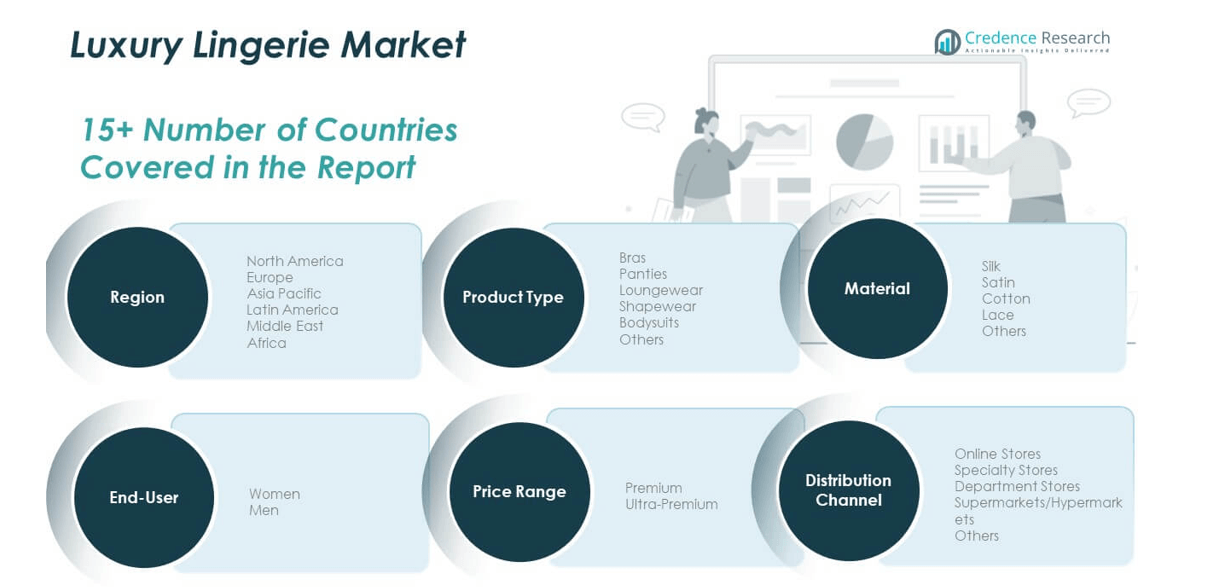
Luxury Lingerie Market By Product Type (Bras, Panties, Loungewear, Shapewear, Bodysuits, Others); By Material (Silk, Satin, Cotton, Lace, Others); By End-User (Women, Men); By Price Range (Premium, Ultra-Premium); By Distribution Channel (Online Stores, Specialty Stores, Department Stores, Supermarkets/Hypermarkets, Others) – Growth, Share, Opportunities & Competitive Analysis, 2024 – 2032

Report ID: 12372 | Report Format : Excel, PDF

Market Overview:

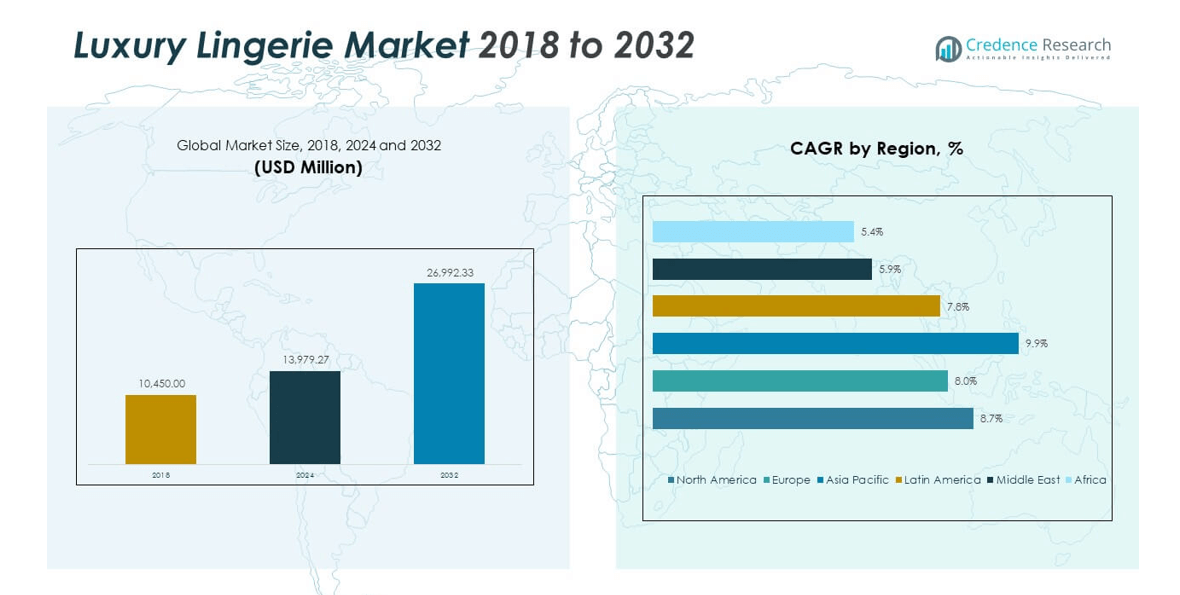
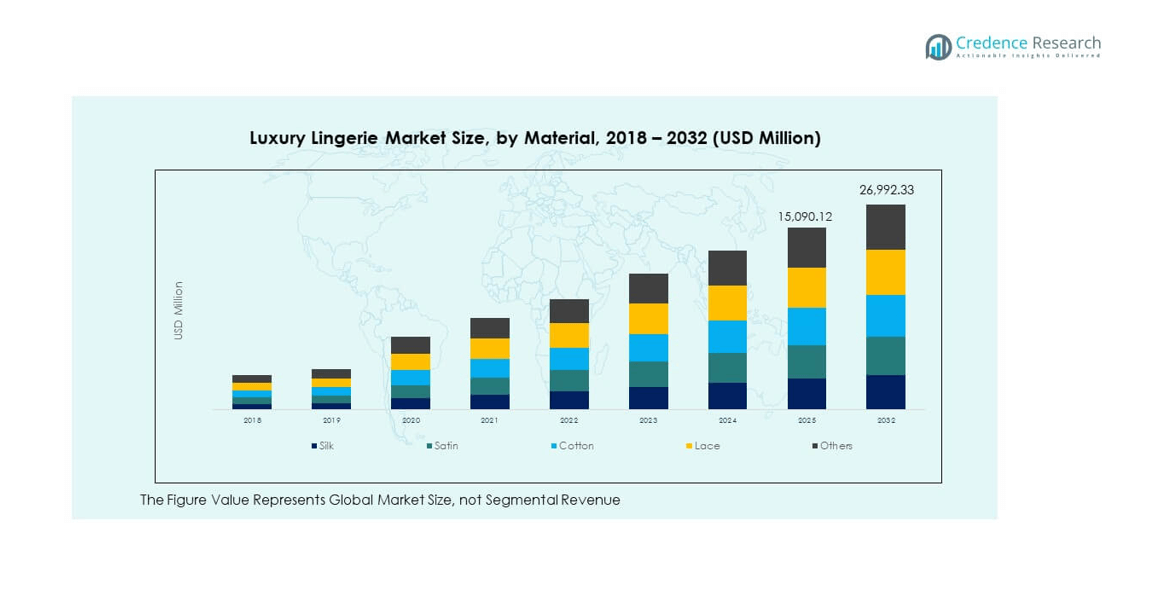
The Global Luxury Lingerie Market size was valued at USD 10,450.00 million in 2018 to USD 13,979.27 million in 2024 and is anticipated to reach USD 26,992.33 million by 2032, at a CAGR of 8.66% during the forecast period.

REPORT ATTRIBUTE DETAILS
Historical Period 2020-2023
Base Year 2024
Forecast Period 2025-2032
Luxury Lingerie Market Size 2024 USD 13,979.27 million
Luxury Lingerie Market, CAGR 8.66%
Luxury Lingerie Market Size 2032 USD 26,992.33 million


Growth is driven by rising consumer spending on premium fashion products, expanding online retail platforms, and increasing demand for comfort-driven yet stylish lingerie. The growing influence of fashion trends through social media and celebrity endorsements has strengthened brand visibility. Companies are also focusing on innovation with sustainable fabrics, intricate designs, and inclusive sizing, appealing to a wider consumer base globally.

North America and Europe dominate the market due to established luxury brands, strong purchasing power, and advanced retail infrastructure. The Asia-Pacific region is emerging rapidly, led by urbanization, changing lifestyle preferences, and expanding e-commerce reach. Countries like China, Japan, and India are witnessing growing acceptance of luxury lingerie as a symbol of style and comfort.

Luxury Lingerie Market size

Market Insights:

  • The Global Luxury Lingerie Market was valued at USD 10,450.00 million in 2018, estimated at USD 13,979.27 million in 2024, and projected to reach USD 26,992.33 million by 2032, expanding at a CAGR of 8.66% during the forecast period.
  • North America (33.6%), Asia Pacific (30.6%), and Europe (26%) hold the top three regional shares due to strong brand presence, fashion-driven consumers, and expanding digital retail networks.
  • Asia Pacific, the fastest-growing region, accounts for 30.6% of the market, driven by urbanization, rising disposable incomes, and Western lifestyle influence across China, Japan, and India.
  • By material, silk and satin dominate the market with a combined share of nearly 45%, attributed to their luxury texture and high consumer preference for premium comfort.
  • Cotton and lace collectively hold about 35% of the segment, supported by their versatile use in everyday and designer lingerie collections.

Access crucial information at unmatched prices!

Request your sample report today & start making informed decisions powered by Credence Research Inc.!

Download Sample

Market Drivers:

Rising Demand for Premium and Fashion-Forward Lingerie

Growing consumer focus on fashion, comfort, and individuality is fueling premium lingerie purchases. The Global Luxury Lingerie Market benefits from evolving fashion preferences and the rise of body positivity movements. Consumers seek lingerie that combines luxury aesthetics with functional comfort. Leading brands invest in innovative designs and high-quality materials to meet these expectations. The influence of fashion icons and luxury endorsements strengthens consumer appeal. E-commerce platforms have widened global accessibility and expanded brand reach. Social media has amplified visibility, creating strong aspirational demand across age groups.

  • For instance, Victoria’s Secret launched “The Icon by Victoria’s Secret” collection in August 2023 featuring bras, panties, and lingerie available in sizes 32A to 44DDD and XS to XXL, specifically designed with lifting and shaping technology to enhance natural body shapes. Their campaign starred icons such as Gisele Bündchen and Naomi Campbell to reinforce inclusivity and appeal.

Expansion of E-Commerce and Direct-to-Consumer Channels

The rise of online retail platforms has transformed the lingerie purchasing experience. Brands now use digital storefronts to showcase collections, fit guides, and styling options. The Global Luxury Lingerie Market benefits from increased online engagement and personalized shopping tools. Virtual try-on technologies and AI-based size recommendations enhance consumer confidence. Direct-to-consumer models help companies retain better control over margins and customer loyalty. Online marketing campaigns target niche audiences, improving conversion rates. Exclusive collections and limited-edition launches online drive impulse buying. This digital transition enables brands to reach customers in untapped markets.

  • For instance, Savage X Fenty’s “Fit Xperience” platform integrates 3D body shape scanning and AI-based recommendations, enabling four times higher conversion rates and doubling loyalty program sign-ups compared to traditional e-commerce, validated by their AR-powered fitting rooms launched in 2023.

Growing Awareness of Sustainability and Ethical Fashion

Sustainability is becoming a core factor influencing lingerie purchasing decisions. The Global Luxury Lingerie Market witnesses a shift toward eco-friendly fabrics and ethical sourcing. Consumers favor brands promoting transparency, fair labor, and minimal environmental impact. Companies now use organic cotton, recycled lace, and biodegradable materials in production. Marketing campaigns highlight sustainability credentials to attract eco-conscious buyers. Ethical fashion initiatives are now integrated into brand identities. Partnerships with sustainable suppliers ensure long-term environmental responsibility. This movement boosts brand reputation and customer trust globally.

Rising Disposable Income and Urban Lifestyle Shifts

Rapid urbanization and higher income levels increase consumer spending on luxury fashion. The Global Luxury Lingerie Market benefits from growing participation of working women in global economies. Modern lifestyles encourage self-expression through premium fashion choices. Consumers view luxury lingerie as a symbol of confidence and sophistication. Social media trends and influencer marketing continue to reshape purchasing behavior. Global tourism also supports the purchase of designer lingerie from premium outlets. Increasing exposure to Western brands in developing countries raises brand awareness. These factors collectively enhance luxury lingerie adoption worldwide.

Market Trends:

Integration of Smart Fabrics and Comfort-Driven Design Innovation

The focus on innovation has led to the use of smart textiles in lingerie. The Global Luxury Lingerie Market is adopting advanced materials for enhanced comfort and durability. Temperature-regulating fabrics and seamless stitching improve user experience. Brands integrate adaptive fits and moisture-wicking materials for everyday luxury. Technology-driven design supports both comfort and functionality. Premium brands experiment with hybrid designs balancing performance and aesthetics. Consumer preference for technical yet stylish lingerie drives innovation. Comfort-led innovation continues to redefine product standards in the luxury segment.

  • For instance, Chantelle’s “SoftStretch” line, launched globally with 360-degree ultra-stretch microfiber fabric, adapts seamlessly to various body types and eliminates visible panty lines, earning top reviews and industry accolades for its comfort and fit technology.

Rising Popularity of Inclusive Sizing and Body Positivity Campaigns

Body diversity is reshaping brand strategies across the industry. The Global Luxury Lingerie Market is witnessing brands expanding size ranges to embrace inclusivity. Campaigns featuring diverse body types promote self-acceptance and body confidence. This inclusivity enhances consumer trust and broadens market reach. Brands emphasize authentic representation in advertising to appeal to real-world consumers. Demand for customized fits and tailored designs is increasing rapidly. Social movements and influencer advocacy reinforce inclusive messaging. This trend strengthens brand identity and customer loyalty across demographics.

  • For instance, Victoria’s Secret’s “The Icon” collection from 2023 prominently featured models of multiple generations, backgrounds, and body types, with products in every campaign available from 32A to 44DDD and XS to XXL—supporting body positivity and broad consumer appeal.

Emergence of Luxury Athleisure and Hybrid Intimate Wear

Consumers now favor versatile lingerie that blends functionality with style. The Global Luxury Lingerie Market is evolving with hybrid categories such as lingerie-inspired activewear. Luxury athleisure collections offer comfort for both indoor and outdoor wear. These designs appeal to consumers seeking everyday sophistication. Brands combine athletic features like stretch fabrics with luxury detailing. Collaborations between lingerie and sportswear designers enhance creative innovation. This trend reflects a shift toward multifunctional fashion pieces. Hybrid lingerie is redefining wardrobe essentials in premium fashion.

Digital Personalization and AI-Driven Shopping Experiences

Artificial intelligence and machine learning are transforming lingerie retail. The Global Luxury Lingerie Market uses data analytics to offer personalized recommendations. AI-powered fit guides reduce return rates and enhance satisfaction. Brands employ virtual fitting rooms and chat-based style assistants. Digital engagement improves purchase confidence and customer retention. Social commerce integration boosts real-time brand-consumer interaction. Predictive analytics enable customized marketing based on buying behavior. These tools enhance the shopping experience, making it seamless and personalized.

Luxury Lingerie Market share

Market Challenges Analysis:

High Production Costs and Pricing Barriers in Premium Segments

The Global Luxury Lingerie Market faces significant challenges due to high material and production costs. Luxury fabrics, intricate craftsmanship, and quality assurance increase manufacturing expenses. These costs elevate retail prices, limiting affordability for wider audiences. Maintaining exclusivity while expanding market access remains complex. Counterfeit products in online marketplaces also threaten brand credibility. Supply chain disruptions can impact timely production and delivery. Currency fluctuations affect raw material imports for global brands. Managing price competitiveness while preserving quality is a persistent challenge.

Cultural Sensitivity, Fit Issues, and Counterfeit Threats

Cultural perceptions of lingerie in conservative regions limit adoption. The Global Luxury Lingerie Market faces barriers in countries with modest fashion norms. Differences in body types lead to fit inconsistencies across regions. Brands struggle to develop universal sizing standards without compromising comfort. Counterfeit luxury lingerie affects brand integrity and revenue streams. Unregulated e-commerce platforms increase the risk of imitation products. Managing quality assurance across global channels becomes increasingly complex. These obstacles slow brand ex pansion and weaken consumer trust in new markets.

Market Opportunities:

Rising Penetration in Emerging Economies and Untapped Markets

The Global Luxury Lingerie Market is witnessing strong growth potential in emerging economies. Urbanization, westernization, and growing middle-class incomes are driving demand. Expanding retail infrastructure and online accessibility create favorable market conditions. Local influencers and cultural shifts increase brand acceptance in Asia and Latin America. Investments in marketing and experiential retail enhance brand visibility. Collaborations with regional designers attract local consumers. Expansion into tier-two cities and online-exclusive collections boosts accessibility. These strategies open new opportunities for sustainable long-term growth.

Product Innovation and Customization for Personalized Experience

Innovation in product design and customer engagement offers promising opportunities. The Global Luxury Lingerie Market benefits from the rising trend of personalized shopping. Custom-fit designs, material selection, and virtual fitting technologies enhance satisfaction. Smart fabrics and adaptive support systems redefine luxury comfort. Collaborations with technology firms drive design innovation. Limited-edition collections and customization services build exclusivity. Sustainable production practices also attract environmentally conscious consumers. These advancements position brands to meet future consumer expectations effectively.

Market Segmentation Analysis:

By Product Type

The Global Luxury Lingerie Market is segmented into bras, panties, loungewear, shapewear, bodysuits, and others. Bras hold the largest share due to their everyday use and wide variety across premium collections. Panties follow, driven by demand for comfort and fashionable designs. Loungewear is gaining traction for its blend of relaxation and luxury appeal. Shapewear and bodysuits attract customers seeking both style and functionality. The “others” category, including accessories, caters to niche buyers emphasizing exclusivity.

  • For instance, La Perla’s bodysuits and loungewear, such as its “Maison Contouring” collection released in January 2025, combine padded cups and adjustable straps to support personalized fit and comfort, crafted in Italy and incorporating up to 80% premium polyamide for enhanced luxury feel.

By Material

Key materials include silk, satin, cotton, lace, and others. Silk and satin dominate premium segments for their luxurious texture and aesthetic value. Cotton remains popular for breathable comfort in warm climates. Lace continues to define elegance and femininity, often featured in designer collections. Other materials, such as eco-friendly fabrics, are emerging with the shift toward sustainability.

By End-User and Price Range

Women represent the dominant consumer group, supported by increasing awareness of premium fashion and self-expression. The men’s segment is growing due to evolving fashion preferences and rising disposable income. By price range, premium products account for the majority share, while ultra-premium collections serve high-income and brand-conscious buyers.

By Distribution Channel

Major distribution channels include online stores, specialty stores, department stores, supermarkets/hypermarkets, and others. Online platforms lead due to convenience and global accessibility. Specialty stores remain crucial for personalized fittings and brand experience, while department stores strengthen visibility for luxury brands through curated displays.

Luxury Lingerie Market segmentation

Segmentation:

  • By Product Type:
    • Bras
    • Panties
    • Loungewear
    • Shapewear
    • Bodysuits
    • Others
  • By Material:
    • Silk
    • Satin
    • Cotton
    • Lace
    • Others
  • By End-User:
    • Women
    • Men
  • By Price Range:
    • Premium
    • Ultra-Premium
  • By Distribution Channel:
    • Online Stores
    • Specialty Stores
    • Department Stores
    • Supermarkets/Hypermarkets
    • Others
  • By Region:
    • North America
      • U.S.
      • Canada
    • Europe
      • Germany
      • France
      • Italy
      • U.K.
      • Russia
      • Rest of Europe
    • Asia-Pacific
      • India
      • China
      • Japan
      • Rest of Asia-Pacific
    • Latin America
      • Brazil
      • Mexico
      • Rest of Latin America
    • Middle East and Africa
      • GCC Countries
      • South Africa
      • Rest of Middle East and Africa

Regional Analysis:

North America

The North America Global Luxury Lingerie Market size was valued at USD 3,565.54 million in 2018 to USD 4,708.14 million in 2024 and is anticipated to reach USD 9,077.57 million by 2032, at a CAGR of 8.7% during the forecast period. North America holds around 33.6% of the global market share, supported by a strong presence of premium brands and high consumer spending on intimate apparel. The region benefits from well-established retail infrastructure, digital adoption, and strong marketing campaigns by major players such as Victoria’s Secret and Calvin Klein. It experiences high product innovation and demand for sustainable fabrics. Consumers prefer premium designs with comfort, fit precision, and aesthetic value. The U.S. leads the market with extensive e-commerce integration and brand loyalty. Canada and Mexico contribute through increasing luxury adoption and modern retail expansion.

Europe

The Europe Global Luxury Lingerie Market size was valued at USD 2,967.80 million in 2018 to USD 3,827.14 million in 2024 and is anticipated to reach USD 7,011.33 million by 2032, at a CAGR of 8.0% during the forecast period. Europe accounts for 26% of the global market, driven by its fashion heritage and established lingerie brands. The region emphasizes craftsmanship, design innovation, and high aesthetic standards. Countries like France, Italy, and the UK serve as key production and export hubs. Demand is rising for sustainable and ethically produced lingerie. Online luxury sales and collaborations with high-fashion designers continue to grow. European consumers value exclusivity, comfort, and brand prestige. The market also benefits from strong distribution networks and luxury department stores across the region.

Asia Pacific

The Asia Pacific Global Luxury Lingerie Market size was valued at USD 2,805.83 million in 2018 to USD 3,905.05 million in 2024 and is anticipated to reach USD 8,254.27 million by 2032, at a CAGR of 9.9% during the forecast period. The region holds approximately 30.6% of the global share and is the fastest-growing regional market. Growth is supported by urbanization, rising disposable incomes, and Western fashion influence. Consumers in China, Japan, and India are increasingly accepting premium lingerie as part of modern lifestyles. Local and international brands are expanding online presence to capture digital consumers. Young demographics and social media exposure are shaping purchasing behavior. Technological integration in retail enhances personalization and customer engagement. Asia Pacific continues to attract major players investing in design localization and regional marketing.

Latin America

The Latin America Global Luxury Lingerie Market size was valued at USD 731.50 million in 2018 to USD 970.02 million in 2024 and is anticipated to reach USD 1,750.99 million by 2032, at a CAGR of 7.8% during the forecast period. Latin America represents 6.5% of the global market share, led by Brazil and Argentina. The region shows rising awareness about fashion-forward lingerie and brand authenticity. Growing middle-class income and online shopping adoption drive sales. Local brands are emerging with creative and affordable luxury options. Market expansion is supported by retail modernization and improved supply chains. E-commerce platforms are enhancing accessibility to international brands. Marketing focused on body positivity and lifestyle appeal is gaining traction among urban consumers.

Middle East

The Middle East Global Luxury Lingerie Market size was valued at USD 221.54 million in 2018 to USD 262.72 million in 2024 and is anticipated to reach USD 413.13 million by 2032, at a CAGR of 5.9% during the forecast period. The region holds around 2% of the global share, with gradual growth driven by urban lifestyle shifts and female workforce participation. The UAE and Saudi Arabia lead demand for premium lingerie through luxury retail outlets and online channels. Consumers prefer modest yet elegant designs aligned with cultural preferences. High-income consumers favor European luxury brands for exclusivity and craftsmanship. The market is also benefiting from growing fashion consciousness among younger women. Retail expansion in malls and digital platforms strengthens brand reach. Sustainability and premium comfort fabrics are gradually shaping consumer choices.

Africa

The Africa Global Luxury Lingerie Market size was valued at USD 157.80 million in 2018 to USD 306.20 million in 2024 and is anticipated to reach USD 485.03 million by 2032, at a CAGR of 5.4% during the forecast period. Africa accounts for 1.7% of the global market share and is in its early development phase. The market is expanding through increasing awareness of international brands and improving purchasing power. South Africa leads in regional demand due to urbanization and exposure to global fashion trends. E-commerce growth is enabling access to premium products across urban centers. Consumers show rising interest in comfort-oriented and stylish lingerie. Cultural acceptance of luxury fashion is progressing slowly but steadily. Strategic partnerships with local distributors help global brands strengthen market presence. The potential for long-term growth remains strong with rising digital and retail modernization.

Shape Your Report to Specific Countries or Regions & Enjoy 30% Off!

Key Player Analysis:

  • Victoria’s Secret
  • LaSenza
  • Maniform
  • Fruit of the Loom
  • Agent Provocateur
  • Honey Birdette
  • Fleur du Mal
  • Coco de Mer
  • Cosabella
  • Jockey
  • MarieMur
  • Adore Me
  • Enamor
  • Calvin Klein
  • Lounge Lingerie

Competitive Analysis:

The Global Luxury Lingerie Market is highly competitive, featuring established brands and emerging designers. It is driven by innovation, product quality, and strong brand identity. Companies compete through design differentiation, sustainable material adoption, and advanced retail strategies. Leading players such as Victoria’s Secret, Agent Provocateur, and Calvin Klein invest in digital engagement and product diversification. Regional brands are strengthening their presence through e-commerce and influencer marketing. The market also witnesses partnerships and mergers to expand distribution and customer reach. Competitive intensity remains high due to shifting fashion trends and rising consumer expectations.

Recent Developments:

  • In February 2025, Victoria’s Secret announced its first-ever designer collaboration, “Atelier Victoria’s Secret x Altuzarra,” marking its expansion into ready-to-wear fashion and reinforcing its luxury positioning.
  • In October 2025, Agent Provocateur launched its new Fall/Winter 2025 lingerie and ready-to-wear campaign starring model Julia Fox. The collection, designed with strong references to New York’s ’90s era, includes silhouettes such as the Billi dress, Mercy Bustier, and the Nelle range, embodying confidence and empowerment for women.
  • In September 2025, Coco de Mer unveiled its “Icons” campaign in collaboration with Dame Denise Lewis, with the luxury lingerie collection launching in January 2026. This partnership aims to celebrate empowerment and self-expression, while the brand continues its collaborations with designers and lifestyle personalities.
  • In August 2025, Fleur du Mal opened its third retail location in Williamsburg, Brooklyn, New York, expanding its presence in the US and aiming at luxury shoppers seeking provocative and elegant lingerie. The move aligns with the brand’s strategy to push boundaries in design and physical retail concepts.

Report Coverage:

The research report offers an in-depth analysis based on product type, material, end-user, price range, and distribution channel. It details leading market players, providing an overview of their business, product offerings, investments, revenue streams, and key applications. Additionally, the report includes insights into the competitive environment, SWOT analysis, current market trends, as well as the primary drivers and constraints. Furthermore, it discusses various factors that have driven market expansion in recent years. The report also explores market dynamics, regulatory scenarios, and technological advancements that are shaping the industry. It assesses the impact of external factors and global economic changes on market growth. Lastly, it provides strategic recommendations for new entrants and established companies to navigate the complexities of the market.

Future Outlook:

  • Increasing demand for sustainable and ethically sourced luxury lingerie.
  • Expansion of online and direct-to-consumer channels across regions.
  • Growing focus on body positivity and inclusive product ranges.
  • Rising adoption of advanced fabrics offering comfort and durability.
  • Integration of AI for virtual fittings and personalized recommendations.
  • Collaboration between fashion designers and luxury brands for innovation.
  • Rising participation of male consumers in the luxury lingerie segment.
  • Enhanced focus on marketing through social media and influencer engagement.
  • Emerging opportunities in Asia Pacific due to rising disposable incomes.
  • Strong emphasis on premium craftsmanship and localized design preferences.

CHAPTER NO. 1 :      GENESIS OF THE MARKET           

1.1 Market Prelude – Introduction & Scope

1.2 The Big Picture – Objectives & Vision

1.3 Strategic Edge – Unique Value Proposition

1.4 Stakeholder Compass – Key Beneficiaries

CHAPTER NO. 2 :      EXECUTIVE LENS

2.1 Pulse of the Industry – Market Snapshot

2.2 Growth Arc – Revenue Projections (USD Million)

2.3. Premium Insights – Based on Primary Interviews

CHAPTER NO. 3 :      LUXURY LINGERIE MARKET FORCES & INDUSTRY PULSE

3.1 Foundations of Change – Market Overview
3.2 Catalysts of Expansion – Key Market Drivers
3.2.1 Momentum Boosters – Growth Triggers
3.2.2 Innovation Fuel – Disruptive Technologies
3.3 Headwinds & Crosswinds – Market Restraints
3.3.1 Regulatory Tides – Compliance Challenges
3.3.2 Economic Frictions – Inflationary Pressures
3.4 Untapped Horizons – Growth Potential & Opportunities
3.5 Strategic Navigation – Industry Frameworks
3.5.1 Market Equilibrium – Porter’s Five Forces
3.5.2 Ecosystem Dynamics – Value Chain Analysis
3.5.3 Macro Forces – PESTEL Breakdown

3.6 Price Trend Analysis

3.6.1 Regional Price Trend
3.6.2 Price Trend by product

CHAPTER NO. 4 :      KEY INVESTMENT EPICENTER    

4.1 Regional Goldmines – High-Growth Geographies

4.2 Product Frontiers – Lucrative Product Categories

4.3 Material  Sweet Spots – Emerging Demand Segments

CHAPTER NO. 5: REVENUE TRAJECTORY & WEALTH MAPPING

5.1 Momentum Metrics – Forecast & Growth Curves

5.2 Regional Revenue Footprint – Market Share Insights

5.3 Segmental Wealth Flow – Product Type & Material  Revenue

CHAPTER NO. 6 :      TRADE & COMMERCE ANALYSIS

6.1.      Import Analysis by Region

6.1.1.    Global Luxury Lingerie Market Import Revenue By Region

6.2.      Export Analysis by Region

6.2.1.    Global Luxury Lingerie Market Export Revenue By Region

CHAPTER NO. 7 :      COMPETITION ANALYSIS 

7.1.      Company Market Share Analysis

7.1.1.    Global Luxury Lingerie Market: Company Market Share

7.2.      Global Luxury Lingerie Market Company Revenue Market Share

7.3.      Strategic Developments

7.3.1.    Acquisitions & Mergers

7.3.2.    New Product Launch

7.3.3.    Regional Expansion

7.4.      Competitive Dashboard

7.5.    Company Assessment Metrics, 2024

CHAPTER NO. 8 :      LUXURY LINGERIE MARKET – BY PRODUCT TYPE SEGMENT ANALYSI

8.1.      Luxury Lingerie Market Overview by Product Type Segment

8.1.1.    Luxury Lingerie Market Revenue Share By Product Type

8.2.      Bras

8.3.      Panties

8.4.      Loungewear

8.5.      Shapewear

8.6.      Bodysuits

8.7.      Others

CHAPTER NO. 9 :      LUXURY LINGERIE MARKET – BY MATERIAL SEGMENT ANALYSIS

9.1.      Luxury Lingerie Market Overview by Material Segment

9.1.1.    Luxury Lingerie Market Revenue Share By Material

9.2.      Silk

9.3.      Satin

9.4.      Cotton

9.5.      Lace

9.6.      Others

CHAPTER NO. 10 :    LUXURY LINGERIE MARKET – BY END-USER SEGMENT ANALYSIS     

10.1.     Luxury Lingerie Market Overview by End-user Segment

10.1.1.  Luxury Lingerie Market Revenue Share By End-user

10.2.     Women

10.3.     Men

CHAPTER NO. 11 :    LUXURY LINGERIE MARKET – BY PRICE RANGE SEGMENT ANALYSIS          

11.1.     Luxury Lingerie Market Overview by Price Range Segment

11.1.1.  Luxury Lingerie Market Revenue Share By Price Range

11.2.     Premium

11.3.     Ultra-Premium

CHAPTER NO. 12 :    LUXURY LINGERIE MARKET – BY DISTRIBUTION CHANNEL SEGMENT ANALYSIS

12.1.     Luxury Lingerie Market Overview by Distribution Channel Segment

12.1.1.  Luxury Lingerie Market Revenue Share By Distribution Channel

12.2.     Online Stores

12.3.     Specialty Stores

12.4.     Department Stores

12.5.     Supermarkets/Hypermarkets

12.6.     Others

CHAPTER NO. 13 :    LUXURY LINGERIE MARKET – REGIONAL ANALYSIS

13.1.     Luxury Lingerie Market Overview by Region Segment

13.1.1.  Global Luxury Lingerie Market Revenue Share By Region

13.1.2.  Regions

13.1.3.  Global Luxury Lingerie Market Revenue By Region

13.1.4.  Product Type

13.1.5.  Global Luxury Lingerie Market Revenue By Product Type

13.1.6.  Material

13.1.7.  Global Luxury Lingerie Market Revenue By Material

13.1.8.  End-user

13.1.9.  Global Luxury Lingerie Market Revenue By End-user

13.1.10. Price Range

13.1.12. Global Luxury Lingerie Market Revenue By Price Range

13.1.13. Distribution Channel

13.1.14. Global Luxury Lingerie Market Revenue By Distribution Channel

CHAPTER NO. 14 :    NORTH AMERICA LUXURY LINGERIE MARKET – COUNTRY ANALYSIS

14.1.     North America Luxury Lingerie Market Overview by Country Segment

14.1.1.  North America Luxury Lingerie Market Revenue Share By Region

14.2.     North America

14.2.1.  North America Luxury Lingerie Market Revenue By Country

14.2.2.  Product Type

14.2.3.  North America Luxury Lingerie Market Revenue By Product Type

14.2.4.  Material

14.2.5.  North America Luxury Lingerie Market Revenue By Material

14.2.6.  End-user

14.2.7.  North America Luxury Lingerie Market Revenue By End-user

14.2.8.  Price Range

14.2.9.  North America Luxury Lingerie Market Revenue By Price Range

14.2.10. Distribution Channel

14.2.11. North America Luxury Lingerie Market Revenue By Distribution Channel

14.3.     U.S.

14.4.     Canada

14.5.     Mexico

CHAPTER NO. 15 :    EUROPE LUXURY LINGERIE MARKET – COUNTRY ANALYSIS     

15.1.     Europe Luxury Lingerie Market Overview by Country Segment

15.1.1.  Europe Luxury Lingerie Market Revenue Share By Region

15.2.     Europe

15.2.1.  Europe Luxury Lingerie Market Revenue By Country

15.2.2.  Product Type

15.2.3.  Europe Luxury Lingerie Market Revenue By Product Type

15.2.4.  Material

15.2.5.  Europe Luxury Lingerie Market Revenue By Material

15.2.6.  End-user

15.2.7.  Europe Luxury Lingerie Market Revenue By End-user

15.2.8.  Price Range

15.2.9.  Europe Luxury Lingerie Market Revenue By Price Range

15.2.10. Distribution Channel

15.2.11. Europe Luxury Lingerie Market Revenue By Distribution Channel

15.3.     UK

15.4.     France

15.5.     Germany

15.6.     Italy

15.7.     Spain

15.8.     Russia

15.9.   Rest of Europe

CHAPTER NO. 16 :    ASIA PACIFIC LUXURY LINGERIE MARKET – COUNTRY ANALYSIS     

16.1.     Asia Pacific Luxury Lingerie Market Overview by Country Segment

16.1.1.  Asia Pacific Luxury Lingerie Market Revenue Share By Region

16.2.     Asia Pacific

16.2.1.  Asia Pacific Luxury Lingerie Market Revenue By Country

16.2.2.  Product Type

16.2.3.  Asia Pacific Luxury Lingerie Market Revenue By Product Type

16.2.4.  Material

16.2.5.  Asia Pacific Luxury Lingerie Market Revenue By Material

16.2.6.  End-user

16.2.7.  Asia Pacific Luxury Lingerie Market Revenue By End-user

16.2.8.  Price Range

16.2.9.  Asia Pacific Luxury Lingerie Market Revenue By Price Range

16.2.10. Distribution Channel

16.2.11. Asia Pacific Luxury Lingerie Market Revenue By Distribution Channel

16.3.     China

16.4.     Japan

16.5.     South Korea

16.6.     India

16.7.     Australia

16.8.     Southeast Asia

16.9.     Rest of Asia Pacific

CHAPTER NO. 17 :    LATIN AMERICA LUXURY LINGERIE MARKET – COUNTRY ANALYSIS

17.1.     Latin America Luxury Lingerie Market Overview by Country Segment

17.1.1.  Latin America Luxury Lingerie Market Revenue Share By Region

17.2.     Latin America

17.2.1.  Latin America Luxury Lingerie Market Revenue By Country

17.2.2.  Product Type

17.2.3.  Latin America Luxury Lingerie Market Revenue By Product Type

17.2.4.  Material

17.2.5.  Latin America Luxury Lingerie Market Revenue By Material

17.2.6.  End-user

17.2.7.  Latin America Luxury Lingerie Market Revenue By End-user

17.2.8.  Price Range

17.2.9.  Latin America Luxury Lingerie Market Revenue By Price Range

17.2.10. Distribution Channel

17.2.11. Latin America Luxury Lingerie Market Revenue By Distribution Channel

17.3.     Brazil

17.4.     Argentina

17.5.     Rest of Latin America

CHAPTER NO. 18 :    MIDDLE EAST LUXURY LINGERIE MARKET – COUNTRY ANALYSIS

18.1.     Middle East Luxury Lingerie Market Overview by Country Segment

18.1.1.  Middle East Luxury Lingerie Market Revenue Share By Region

18.2.     Middle East

18.2.1.  Middle East Luxury Lingerie Market Revenue By Country

18.2.2.  Product Type

18.2.3.  Middle East Luxury Lingerie Market Revenue By Product Type

18.2.4.  Material

18.2.5.  Middle East Luxury Lingerie Market Revenue By Material

18.2.6.  End-user

18.2.7.  Middle East Luxury Lingerie Market Revenue By End-user

18.2.8.  Price Range

18.2.9.  Middle East Luxury Lingerie Market Revenue By Price Range

18.2.10. Distribution Channel

18.2.11. Middle East Luxury Lingerie Market Revenue By Distribution Channel

18.3.     GCC Countries

18.4.     Israel

18.5.     Turkey

18.6.     Rest of Middle East

CHAPTER NO. 19 :    AFRICA LUXURY LINGERIE MARKET – COUNTRY ANALYSIS     

19.1.     Africa Luxury Lingerie Market Overview by Country Segment

19.1.1.  Africa Luxury Lingerie Market Revenue Share By Region

19.2.     Africa

19.2.1.  Africa Luxury Lingerie Market Revenue By Country

19.2.2.  Product Type

19.2.3.  Africa Luxury Lingerie Market Revenue By Product Type

19.2.4.  Material

19.2.5.  Africa Luxury Lingerie Market Revenue By Material

19.2.6.  End-user

19.2.7.  Africa Luxury Lingerie Market Revenue By End-user

19.2.8.  Price Range

19.2.9.  Africa Luxury Lingerie Market Revenue By Price Range

19.2.10. Distribution Channel

19.2.11. Africa Luxury Lingerie Market Revenue By Distribution Channel

19.3.     South Africa

19.4.     Egypt

19.5.     Rest of Africa

CHAPTER NO. 20 :    COMPANY PROFILES         

20.1.     Victoria’s Secret

20.1.1.  Company Overview

20.1.2.  Product Portfolio

20.1.3.  Financial Overview

20.1.4.  Recent Developments

20.1.5.  Growth Strategy

20.1.6.  SWOT Analysis

20.2.     LaSenza

20.3.     Maniform

20.4.     Fruit of the Loom

20.5.     Agent Provocateur

20.6.     Honey Birdette

20.7.     Fleur du Mal

20.8.     Coco de Mer

20.9.     Cosabella

20.10.   Jockey

20.11.   MarieMur

20.12    Adore Me

20.13.   Enamor

20.14.   Calvin Klein

20.15.   Lounge Lingerie

Request Free Sample

We prioritize the confidentiality and security of your data. Our promise: your information remains private.

Ready to Transform Data into Decisions?

Request Your Sample Report and Start Your Journey of Informed Choices


Providing the strategic compass for industry titans.

cr-clients-logos

Frequently Asked Questions:

What is the current market size for the Global Luxury Lingerie Market, and what is its projected size in 2032?

The Global Luxury Lingerie Market was valued at USD 13,979.27 million in 2024 and is projected to reach USD 26,992.33 million by 2032. The market demonstrates steady growth driven by rising demand for premium intimate apparel and expanding digital retail channels.

At what Compound Annual Growth Rate is the Global Luxury Lingerie Market projected to grow between 2025 and 2032?

The market is anticipated to expand at a CAGR of 8.66% during the forecast period. This growth is supported by strong consumer preference for high-quality fabrics, comfort-focused designs, and luxury brand influence.

What is the major growth hindering factors for global Luxury Lingerie market?

Keeping up pace with ever changing trends and counterfeit products has been remained major point of concern for the industry participants

Which is major segment in Luxury Lingerie market by material?

Cotton & silk segments dominated the consumption of Luxury Lingerie

Who are the leading companies in the Global Luxury Lingerie Market?

Major companies include Victoria’s Secret, Agent Provocateur, Calvin Klein, Honey Birdette, Fleur du Mal, and LaSenza. These brands maintain dominance through design innovation, brand reputation, and extensive retail networks.

Which region commanded the largest share of the Global Luxury Lingerie Market in 2024?

North America held the largest market share in 2024, supported by established brands, advanced retail infrastructure, and high consumer spending on luxury fashion and lifestyle products.

About Author

Rajdeep Kumar Deb

Rajdeep Kumar Deb

Lead Analyst – Consumer & Finance

Rajdeep brings a decade of consumer goods and financial services insight to strategic market analysis.

View Profile


Related Reports

Inflatable Tents Market

The Global Inflatable Tents Market size was valued at USD 930.00 million in 2018 to USD 1,207.75 million in 2024 and is anticipated to reach USD 2,175.92 million by 2032, at a CAGR of 7.72% during the forecast period.

U.S. Cleaning Products Market

The U.S. Cleaning Products Market size was valued at USD 1,800.00 million in 2018 to USD 1,969.49 million in 2024 and is anticipated to reach USD 2,817.75 million by 2032, at a CAGR of 4.67% during the forecast period. 

Indonesia Women Apparel Market

The Indonesia Women Apparel Market size was valued at USD 5,800.00 million in 2018 to USD 6,203.39 million in 2024 and is anticipated to reach USD 7,709.90 million by 2032, at a CAGR of 2.79% during the forecast period.

Multifunctional Furniture Market

The Multifunctional Furniture Market size was valued at USD 6,200.00 million in 2018 to USD 7,451.02 million in 2024 and is anticipated to reach USD 11,803.88 million by 2032, at a CAGR of 6.05% during the forecast period.

Europe Smart Electric Toothbrush Market

The Europe Smart Electric Toothbrush Market size was valued at USD 272.89 million in 2018 to USD 594.06 million in 2024 and is anticipated to reach USD 1,289.62 million by 2032, at a CAGR of 9.48% during the forecast period.

Europe Home Appliance Market

The Europe Home Appliance Market size was valued at USD 74.42 billion in 2018 to USD 98.47 billion in 2024 and is anticipated to reach USD 140.64 billion by 2032, at a CAGR of 4.24% during the forecast period.

Pet Skin and Coat Health Supplement Market

The Pet skin and coat health supplement market was valued at USD 443.4 million in 2024 and is projected to reach USD 985.6 million by 2032. The market is expected to grow at a CAGR of 10.5% from 2024 to 2032.

Pay-Per-Click (PPC) Advertising Market

The Pay-per-click (PPC) Advertising Market is projected to grow from USD 137,593 million in 2024 to USD 319,380.3 million by 2032. The market is expected to register a compound annual growth rate of 11.1% from 2024 to 2032.

Normal And Specialty Fats Market

The Normal and specialty fats market is projected to grow from USD 42,138 million in 2024 to USD 68,697.5 million by 2032, registering a CAGR of 6.3% from 2024 to 2032.

Non-Woven Abrasive Market

The Non-woven abrasives market is projected to grow from USD 1,623 million in 2024 to USD 2,140.2 million by 2032. The market is expected to register a CAGR of 3.52% from 2024 to 2032.

Hospitality POS Terminals Market

The Hospitality POS Terminals Market was valued at USD 3,910 million in 2024. The market is projected to reach USD 8,319.61 million by 2032. This growth reflects a compound annual growth rate of 9.9% during 2024 to 2032.

Sports Tourism Market

The Global Sports Tourism Market size was valued at USD 363.5 billion in 2018 to USD 544.3 billion in 2024 and is anticipated to reach USD 926 billion by 2032, at a CAGR of 6.89% during the forecast period.

Licence Option

The report comes as a view-only PDF document, optimized for individual clients. This version is recommended for personal digital use and does not allow printing. Use restricted to one purchaser only.
$4999

To meet the needs of modern corporate teams, our report comes in two formats: a printable PDF and a data-rich Excel sheet. This package is optimized for internal analysis. Unlimited users allowed within one corporate location (e.g., regional office).
$6999

The report will be delivered in printable PDF format along with the report’s data Excel sheet. This license offers 100 Free Analyst hours where the client can utilize Credence Research Inc. research team. Permitted for unlimited global use by all users within the purchasing corporation, such as all employees of a single company.
$12999

Report delivery within 24 to 48 hours

Europe

North America

Email

Smallform of Sample request
User Review

Thank you for the data! The numbers are exactly what we asked for and what we need to build our business case.

Materials Scientist
(privacy requested)

User Review

The report was an excellent overview of the Industrial Burners market. This report does a great job of breaking everything down into manageable chunks.

Imre Hof
Management Assistant, Bekaert

cr-clients-logos

Request Sample