
| REPORT ATTRIBUTE | DETAILS |
|---|---|
| Historical Period | 2020-2023 |
| Base Year | 2024 |
| Forecast Period | 2025-2032 |
| Luxury Sleepwear Market Size 2024 | USD 13,679.01 Million |
| Luxury Sleepwear Market, CAGR | 6.25% |
| Luxury Sleepwear Market Size 2032 | USD 22,217.03 Million |
Market Overview
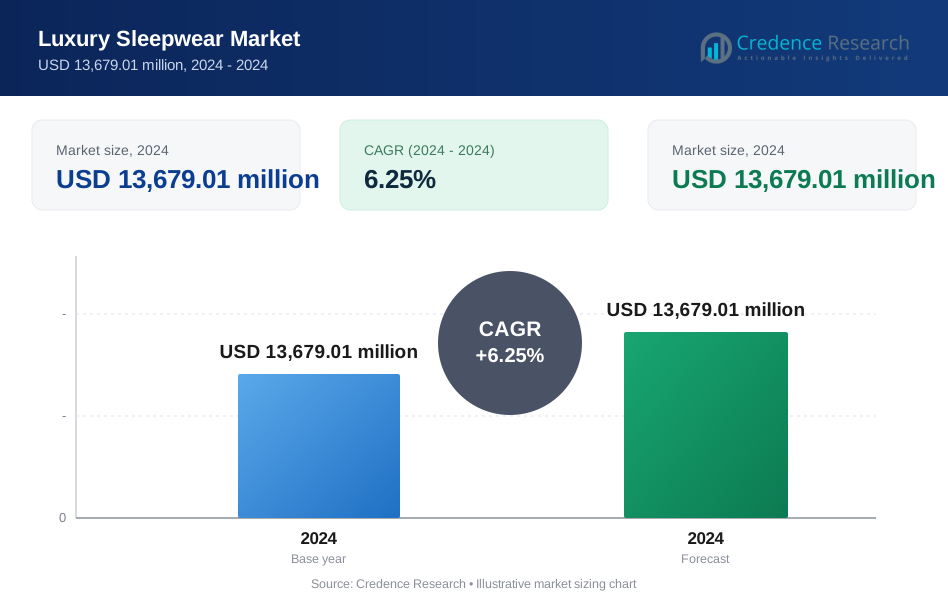
The global Luxury Sleepwear Market is projected to grow from USD 13,679.01 million in 2024 to an estimated USD 22,217.03 million by 2032, reflecting a compound annual growth rate (CAGR) of 6.25% from 2025 to 2032. This growth aligns with the broader luxury goods sector, which is experiencing robust expansion due to increasing consumer demand for high-quality, exclusive products.
Key drivers of this market include rising disposable incomes, particularly in emerging economies, and a growing inclination towards premium and personalized sleepwear options. Consumers are increasingly seeking products that offer both comfort and luxury, leading to innovations in design and material quality. Additionally, the integration of sustainable and ethical production practices is becoming a significant trend, as environmentally conscious consumers favor brands that align with their values.
Geographically, North America and Europe currently hold substantial market shares, owing to established luxury markets and high consumer spending power. However, the Asia Pacific region is emerging as a significant growth area, driven by a burgeoning middle class and increasing brand awareness. Key players in the luxury sleepwear market include renowned brands such as LVMH, Kering, and Richemont, which are expanding their portfolios to include high-end sleepwear lines to cater to the evolving preferences of affluent consumers.
Market Insights
- The global luxury sleepwear market is projected to grow from USD 13,679.01 million in 2024 to USD 22,217.03 million by 2032, with a CAGR of 6.25% from 2025 to 2032.
- Consumers are increasingly investing in high-quality sleepwear that offers both comfort and luxury, driving market growth.
- Sustainability and ethical production practices are gaining traction, with more consumers preferring eco-friendly materials and transparent manufacturing processes.
- Key drivers include rising disposable incomes, particularly in emerging economies, and a growing inclination toward personalized luxury sleepwear options.
- High production costs associated with premium fabrics and sustainability initiatives pose challenges for maintaining competitive pricing in the luxury sleepwear market.
- North America and Europe currently dominate the market, but the Asia Pacific region is experiencing significant growth due to rising affluence and increased brand awareness.
- Major players like LVMH, Kering, and Richemont are expanding their portfolios to include luxury sleepwear, intensifying competition in the market.
Market Drivers
Increasing Demand for Sustainability and Ethical Production
Sustainability and ethical production practices have become key considerations for consumers when making purchasing decisions. As awareness of environmental issues and social responsibility grows, consumers are increasingly opting for luxury sleepwear brands that prioritize sustainable sourcing and ethical manufacturing processes.Luxury sleepwear brands are responding to this demand by using eco-friendly fabrics such as organic cotton, bamboo, and recycled polyester, as well as employing ethical labor practices in their production. Many consumers are now willing to pay a premium for products that are made with minimal environmental impact and produced under fair labor conditions. This trend aligns with broader shifts in the luxury goods market, where sustainability has become a key differentiator for premium brands.The rise of sustainability is also prompting luxury sleepwear brands to adopt circular business models, such as offering repair services or recycling worn-out garments. These practices not only meet consumer demand for more responsible production methods but also appeal to consumers' growing desire to contribute positively to the environment through their purchasing choices.In response to the demand for sustainability, luxury sleepwear brands are integrating transparency into their operations, providing consumers with clear information about the sourcing of materials, the environmental impact of production processes, and the ethical practices employed in their manufacturing. This level of transparency builds consumer trust and encourages loyalty to brands that align with their values.
Expansion of Online Retail Channels
The expansion of e-commerce has revolutionized the retail landscape, significantly impacting the luxury sleepwear market. Online shopping offers consumers greater convenience, a wider variety of options, and the ability to compare products easily. Luxury sleepwear brands have recognized the potential of digital platforms to reach a global audience and are increasingly focusing on enhancing their online presence.E-commerce platforms, including brand websites and online luxury retailers, have made luxury sleepwear more accessible to a broader range of consumers. The growth of online shopping is particularly relevant in the context of luxury sleepwear, as consumers are drawn to the convenience of browsing and purchasing products from the comfort of their homes. Additionally, the online space allows for personalized shopping experiences, with recommendations based on browsing history and consumer preferences.Moreover, online retail channels provide brands with an opportunity to engage directly with their target audience, creating a stronger connection through digital marketing and social media campaigns. Influencers and celebrities also play a significant role in promoting luxury sleepwear brands on digital platforms, further boosting their appeal. The rise of social media platforms such as Instagram, where luxury brands can showcase their products through visually compelling content, has contributed to the growing visibility and desirability of luxury sleepwear.
Evolving Consumer Preferences for Premium Products
One of the primary drivers of the global luxury sleepwear market is the evolving consumer preference for high-quality, luxurious, and exclusive products. As consumers become more discerning about the quality of products they purchase, there is a growing demand for sleepwear that offers superior comfort, innovative design, and premium materials. For instance, a report by McKinsey highlights that luxury brands are increasingly incorporating sustainable and ethically sourced materials, such as organic silk and bamboo fabrics, to cater to environmentally conscious consumers. Additionally, surveys conducted by the International Sleep Products Association reveal that consumers prioritize sleepwear that combines functionality with an elevated experience, such as temperature-regulating fabrics and ergonomic designs. Luxury sleepwear brands have responded by incorporating fine materials such as silk, satin, cashmere, and high-thread-count cotton into their collections. These materials are perceived as symbols of exclusivity and comfort, aligning with consumers' desire for products that provide a sense of luxury in everyday life. Moreover, as consumer attitudes shift toward investing in quality over quantity, there is a greater focus on durable and timeless designs. For instance, brands like Lunya and Olivia von Halle have gained popularity for their emphasis on craftsmanship and longevity, reflecting broader trends in the luxury goods sector where consumers seek exclusivity and indulgence in their lifestyle choices.
Rising Disposable Income in Emerging Economies
As disposable income rises in emerging economies, the demand for luxury products, including sleepwear, has also increased. The growing middle class in countries such as China, India, and Brazil has contributed significantly to the global demand for luxury goods. For instance, a study by Euromonitor International highlights that the middle-class population in these regions is increasingly spending on premium lifestyle products, including high-end sleepwear, as a reflection of their aspirations for a luxurious lifestyle. With a larger proportion of consumers in these regions able to afford high-end luxury items, the market for luxury sleepwear is experiencing expansion. Additionally, reports from the World Bank indicate that rising income levels have led to increased consumer awareness of international luxury brands, further driving demand for premium sleepwear. Consumers in emerging markets are becoming more aware of global trends and are keen to adopt high-quality sleepwear that aligns with their lifestyle aspirations. For instance, luxury brands like La Perla and Eberjey have reported growing sales in emerging markets, driven by consumers seeking comfort and exclusivity in their daily lives. The desire for premium sleepwear has been further fueled by a rise in international travel and exposure to global fashion trends, which has led to an increased preference for luxury items across various product categories.
Market Trends
Technological Innovations in Fabric and Comfort
Advancements in textile technology are significantly impacting the luxury sleepwear market. As consumers continue to prioritize comfort, sleepwear brands are investing in innovative fabrics that enhance the overall sleep experience. These fabrics not only provide superior comfort but also offer unique properties such as temperature regulation, moisture-wicking, and odor control.Luxury sleepwear brands are incorporating fabrics such as temperature-regulating fibers, which help maintain an optimal body temperature during sleep. For example, some brands are using high-tech fabrics that adjust to the body’s temperature, ensuring that the wearer remains cool during the night or warm during colder months. This level of technological innovation is becoming increasingly important as consumers look for sleepwear that supports a restful night’s sleep.Another innovation in the luxury sleepwear market is the integration of moisture-wicking fabrics that draw moisture away from the skin, keeping the wearer dry and comfortable. These fabrics are especially popular in sleepwear for people with sensitive skin or those who suffer from night sweats. Additionally, antimicrobial treatments are being applied to sleepwear fabrics to reduce the growth of bacteria and fungi, further enhancing the comfort and hygiene of luxury sleepwear.The use of high-tech materials that offer enhanced comfort and functionality is quickly becoming a key selling point for luxury sleepwear brands. As a result, these innovations are driving consumer interest in sleepwear that not only looks luxurious but also contributes to a better night’s sleep.
Influence of Social Media and Celebrity Endorsements
The role of social media in shaping consumer preferences continues to grow, especially in the luxury goods market. Social media platforms such as Instagram, TikTok, and Pinterest are playing a pivotal role in driving trends in the luxury sleepwear market. The visually driven nature of these platforms allows luxury sleepwear brands to showcase their products in a highly engaging and aspirational way.Influencers, celebrities, and fashion bloggers are increasingly using their platforms to promote luxury sleepwear brands, further fueling the desire for high-end sleepwear products. Endorsements from high-profile individuals not only raise the profile of these brands but also create a sense of exclusivity and prestige. Consumers often view celebrities as style icons, and when they see them endorsing or wearing luxury sleepwear, it reinforces the desirability of these products.Luxury brands are capitalizing on this trend by collaborating with influencers and celebrities to promote their collections. These collaborations often include limited-edition sleepwear lines or exclusive pieces that are promoted on social media, generating buzz and creating a sense of urgency among consumers. Furthermore, social media allows consumers to directly engage with brands, share their experiences, and participate in brand-related discussions, fostering a sense of community around luxury sleepwear.
Sustainability and Eco-friendly Fabrics
One of the most significant trends in the luxury sleepwear market is the growing demand for sustainability and eco-friendly materials. Consumers, especially in the luxury segment, are becoming increasingly conscious of the environmental impact of their purchasing decisions. As awareness of climate change and environmental degradation grows, consumers are actively seeking products made from organic, recycled, and sustainable materials. For instance, luxury sleepwear brands such as those highlighted in industry surveys are incorporating fabrics like organic cotton, bamboo, and Tencel into their collections, which are responsibly sourced and have a lower environmental footprint. Additionally, reports from sustainability-focused organizations reveal that several brands are producing sleepwear collections featuring biodegradable or recyclable materials, ensuring minimal contribution to landfill waste. This trend also includes a focus on ethical production processes. For example, companies are adopting fair labor practices and providing transparency about their sourcing and manufacturing processes, as noted in government-backed sustainability initiatives. This transparency fosters trust among consumers and enhances the brand’s appeal, particularly among eco-conscious buyers who are willing to pay a premium for products that align with their values.
Customization and Personalized Sleepwear
Another key trend in the global luxury sleepwear market is the growing demand for customization and personalized sleepwear. Consumers are increasingly looking for unique and tailored products that reflect their personal style and preferences. For instance, surveys conducted by market research firms indicate that luxury sleepwear brands are offering bespoke options, such as monogramming and embroidery services, allowing customers to add their initials or custom designs to their sleepwear. Furthermore, some brands provide options to select fabrics, colors, and styles, enabling consumers to create one-of-a-kind pieces that align with their aesthetic preferences. Reports from industry leaders highlight that personalized sleepwear is particularly popular among affluent consumers seeking exclusivity and individuality in their purchases. Whether it’s a monogrammed silk robe or a custom-made pajama set, luxury sleepwear brands are catering to consumers who want to invest in products that feel uniquely theirs. This trend also reflects a broader shift in the luxury market, where consumers are increasingly looking for products that go beyond mass production and offer an element of personalization and exclusivity.
Market Challenges
High Production Costs and Pricing Pressure
The global luxury sleepwear market faces significant challenges due to high production costs, which directly influence pricing strategies. Luxury sleepwear is crafted from premium materials such as silk, cashmere, and high-thread-count cotton, all of which contribute to elevated manufacturing expenses. Additionally, the growing consumer demand for sustainable fabrics and ethical production methods further increases costs. Brands that prioritize organic or eco-friendly materials and implement fair trade and ethical labor practices must absorb these additional expenses, often resulting in higher product prices.For instance, surveys conducted by industry leaders and government authorities reveal that brands investing in sustainable production methods often face higher operational costs due to the sourcing of eco-friendly materials and adherence to ethical labor standards. These practices, while appealing to environmentally conscious consumers, require significant financial commitment. Furthermore, companies are exploring innovative techniques, such as advanced fabric technologies and streamlined production processes, to offset these costs without compromising quality. These efforts highlight the delicate balance between maintaining exclusivity and addressing price sensitivity in key markets, particularly in emerging economies where purchasing power may be limited. By continuously innovating and emphasizing both tangible and perceived value, luxury sleepwear brands aim to navigate these challenges while preserving their market positioning and profitability.
Intense Competition and Brand Differentiation
Another significant challenge in the global luxury sleepwear market is the intense competition among established brands and emerging players. The luxury sleepwear sector is crowded, with numerous well-known luxury fashion houses, such as LVMH and Kering, competing alongside niche and boutique brands that are focused specifically on sleepwear. These companies are vying for the attention of affluent consumers who are increasingly selective about their purchases, making brand differentiation a critical aspect of success.With a growing number of luxury sleepwear options available, it becomes more difficult for brands to stand out in a saturated market. Consumers have access to a wide range of choices, and they often base their purchasing decisions on factors such as quality, sustainability, exclusivity, and customer experience. As a result, luxury sleepwear brands must invest heavily in marketing, innovation, and customer engagement to maintain relevance. Whether through unique design features, superior comfort, or personalized offerings, brands must find ways to distinguish themselves from their competitors in order to build long-term loyalty and gain market share.
Market Opportunities
Growing Demand for Sustainable and Ethical Luxury Products
One of the most significant market opportunities in the global luxury sleepwear market lies in the growing demand for sustainable and ethically produced products. Consumers are becoming more conscious of the environmental and social impact of their purchases, prompting a shift towards brands that prioritize eco-friendly materials and ethical manufacturing practices. Luxury sleepwear brands have an opportunity to meet this demand by incorporating organic fabrics, recyclable materials, and implementing sustainable production methods. By aligning with the values of socially responsible consumers, brands can not only attract a loyal customer base but also tap into a growing segment of eco-conscious shoppers who are willing to pay a premium for environmentally friendly and ethically sourced products. This shift towards sustainability can further enhance brand reputation, creating a strong competitive advantage in an increasingly values-driven marketplace.
Expansion into Emerging Markets
Another promising opportunity for the global luxury sleepwear market lies in the expansion into emerging economies, particularly in Asia Pacific and Latin America. As disposable incomes rise in these regions, a larger segment of the population is gaining access to luxury products, including high-end sleepwear. The growing middle class in countries like China, India, Brazil, and others in Southeast Asia is becoming more inclined towards premium lifestyle choices, including luxury fashion. Luxury sleepwear brands have the opportunity to cater to this expanding consumer base by offering localized collections and leveraging digital marketing strategies to reach these consumers. The increasing penetration of e-commerce platforms in these regions further facilitates this market expansion, providing brands with greater access to untapped markets. By capitalizing on this growth, luxury sleepwear brands can establish a strong foothold in emerging markets and drive sustained revenue growth.
Market Segmentation Analysis
By Type
The luxury sleepwear market is primarily segmented by product type, which includes Top Wear, Bottom Wear, Night Dresses and Gowns, Sleepwear Sets, and Others. Among these, night dresses and gowns are the most popular product types, particularly for women, as they symbolize both elegance and comfort. Sleepwear sets, consisting of coordinated tops and bottoms, are also experiencing strong demand due to their versatility and premium appeal. Top and bottom wear are commonly found in both men’s and women’s collections, offering comfort and luxury in simpler yet stylish designs. The "Others" category includes luxury robes, loungewear, and other related items, which are gaining traction for their multifunctionality and comfort. As consumer preferences evolve, brands are offering more personalized and diverse product lines to cater to these varied demands.
By Application
In terms of application, the luxury sleepwear market is divided into three primary categories: Men, Women, and Kids. The women's segment holds the largest market share due to the higher demand for luxury sleepwear such as gowns, night dresses, and luxury sleep sets. Women’s luxury sleepwear is associated with elegance and comfort, often reflecting the latest fashion trends. The men’s segment is also growing, driven by an increasing preference for high-quality, comfortable sleepwear, such as silk pajamas and high-end loungewear. The kids’ segment, although smaller, is gradually expanding as more parents look for premium sleepwear for their children, with an emphasis on softness, quality, and durability.
Segments
Based on Type
- Top Wear
- Bottom Wear
- Night Dresses and Gowns
- Sleepwear Set
- Others
Based on Application
- Men
- Women
- Kids
Based on End User
- Online
- Supermarkets/Hypermarkets
- Brand Stores
- Specialty Stores
- Others
Based on Region
- North America
- U.S.
- Canada
- Mexico
- Europe
- Germany
- France
- U.K.
- Italy
- Spain
- Rest of Europe
- Asia Pacific
- China
- Japan
- India
- South Korea
- South-east Asia
- Rest of Asia Pacific
- Latin America
- Brazil
- Argentina
- Rest of Latin America
- Middle East & Africa
- GCC Countries
- South Africa
- Rest of the Middle East and Africa
Regional Analysis
North America (40%)
North America holds the largest market share of the global luxury sleepwear market, accounting for approximately 40% of the total market. The region’s dominance is primarily driven by the high disposable income of consumers and the established luxury market. The United States, in particular, is a key driver of market growth, with affluent consumers increasingly prioritizing luxury products that offer superior comfort and style. Additionally, the popularity of premium brands, combined with strong e-commerce growth, has contributed to the expanding demand for luxury sleepwear in North America. Consumer trends such as personalization and customization, coupled with growing interest in sustainable products, have further fueled the market in this region.
Europe (35%)
Europe follows closely behind North America, accounting for approximately 35% of the global luxury sleepwear market. The region has a long history of luxury fashion, and countries such as France, Italy, and the United Kingdom are known for their high-end fashion houses, which often include luxury sleepwear lines. European consumers tend to prioritize quality, craftsmanship, and exclusive designs, making them ideal consumers for premium sleepwear brands. The European market is also witnessing an increasing demand for sustainable and ethically produced luxury products, which has influenced the growth of luxury sleepwear brands that focus on eco-friendly materials and ethical manufacturing processes. The strong retail presence of both traditional brick-and-mortar stores and online platforms further enhances market accessibility.
Key players
- Jockey International, Inc.
- Hanesbrands Inc.
- Hanky Panky Ltd.
- Triumph International Holding GmBH
- MAS Holdings Ltd.
- The Chantelle Group
Competitive Analysis
The global luxury sleepwear market is highly competitive, with several established players dominating the space. Key players such as Jockey International, Inc., Hanesbrands Inc., and Hanky Panky Ltd. leverage their strong brand recognition and extensive product portfolios to maintain leadership positions. These companies have diversified their offerings to include both classic luxury sleepwear items and newer, sustainable collections to meet the growing demand for eco-conscious products. The competitive landscape is further intensified by regional players such as Triumph International and MAS Holdings Ltd., who focus on innovation and high-quality materials to cater to the premium segment. Additionally, the expansion of e-commerce platforms has opened new avenues for growth, enabling brands to reach a wider customer base across geographies. Strategic partnerships, product diversification, and investment in sustainability initiatives are critical factors for success in this evolving market, where differentiation based on quality, design, and customer experience is paramount.
Recent Developments
- In October 2024, Jockey relaunched its 'Bras as Versatile as I Am' campaign, expanding its women's innerwear offerings with collections tailored for work, lounge, travel, and everyday wear, including strapless and plus-size options.
- In October 2023, Triumph International introduced an exclusive festive lingerie collection for the Indian market, featuring innovative designs like the Blossom Spotlight series and Flex Smart line, incorporating advanced technologies such as AIT tech lamination.
- In August 2024, MAS Amity, a subsidiary of MAS Holdings, entered a strategic partnership with Tata Group's Trent Limited to develop and innovate in the intimate wear sector in India, combining MAS Amity's expertise with Trent's retail presence.
- In November 2023, the Chantelle Group sold its Passionata brand to Delta Galil Industries, as part of its strategy to strengthen and unify its brands under the Chantelle name.
Market Concentration and Characteristics
The global luxury sleepwear market is moderately concentrated, with a mix of dominant global players and smaller niche brands. Major companies like Jockey International, Hanesbrands, Hanky Panky, and Triumph International hold significant market shares, leveraging their extensive product portfolios, strong brand recognition, and established distribution channels to maintain leadership. These key players focus on product diversification, quality, and innovation to meet the demands of affluent consumers. However, the market also features a growing number of boutique and emerging brands that cater to specific consumer preferences, such as sustainability, personalization, and high-end fabric use. This blend of large, established players and smaller, innovative brands fosters a competitive environment where quality, exclusivity, and customer experience are crucial for maintaining market presence. The market is characterized by increasing consumer demand for premium, eco-friendly products and a growing trend toward online shopping and direct-to-consumer sales channels.
Report Coverage
The research report offers an in-depth analysis based on Type, Application, End User and Region. It details leading market players, providing an overview of their business, product offerings, investments, revenue streams, and key applications. Additionally, the report includes insights into the competitive environment, SWOT analysis, current market trends, as well as the primary drivers and constraints. Furthermore, it discusses various factors that have driven market expansion in recent years. The report also explores market dynamics, regulatory scenarios, and technological advancements that are shaping the industry. It assesses the impact of external factors and global economic changes on market growth. Lastly, it provides strategic recommendations for new entrants and established companies to navigate the complexities of the market.
Future Outlook
- The demand for luxury sleepwear is expected to grow as consumers prioritize comfort, quality, and exclusivity in their sleepwear choices, driving market expansion. As disposable income rises, especially in emerging markets, consumers are more inclined to invest in high-end products.
- Sustainability will remain a key driver, with an increasing number of consumers opting for eco-friendly and ethically produced luxury sleepwear. Brands focusing on organic fabrics and responsible sourcing will have a competitive edge.
- Technological innovations in fabrics, such as temperature-regulating and moisture-wicking materials, will enhance consumer comfort, propelling growth. Consumers will seek sleepwear that offers both luxury and functional benefits for better sleep quality.
- The rise of e-commerce and digital platforms will make luxury sleepwear more accessible globally. Brands will increasingly shift to online models, enhancing convenience and targeting a broader audience.
- Customization in design, fabrics, and monogramming will drive consumer interest, as luxury sleepwear buyers seek exclusivity. Personalized options will continue to resonate with affluent customers seeking unique, bespoke products.
- Luxury sleepwear markets in Asia Pacific, Latin America, and the Middle East are set to expand significantly due to rising affluence and a growing demand for premium lifestyle products. Brands will focus on these regions for long-term growth.
- Celebrity collaborations and influencer marketing will play an increasingly significant role in promoting luxury sleepwear. Social media-driven endorsements will help create aspirational demand for brands.
- Consumers will continue to prioritize health and wellness, making sleepwear an integral part of self-care routines. Products that promote comfort and better sleep will see heightened demand, particularly in the luxury segment.
- Brands will continue diversifying their offerings beyond traditional sleepwear, incorporating loungewear, robes, and multifunctional pieces that cater to both comfort and style. This diversification will attract a broader range of consumers.
- While major players dominate, the rise of niche and boutique luxury sleepwear brands will intensify competition. These brands will differentiate through unique designs, sustainability, and direct consumer engagement strategies.
Request a Free Sample
Fill in your details and we'll send you a free sample report.
- Sample data tables & charts
- Research methodology
Need a Custom Version of This Report?
Tailor the scope, geography, or segments to your exact requirements.
- Custom geography or segment scope
- Direct access to our analyst team
Frequently Asked Questions
What is the projected market size for the global luxury sleepwear market in 2023 and 2032?
What are the key drivers of the global luxury sleepwear market?
Which regions are leading the global luxury sleepwear market?
How is sustainability affecting the luxury sleepwear market?
Who are the key players in the luxury sleepwear market?
Table of Content
Chapter 1. Report Introduction
- 1.1 Report Description & Purpose
- 1.1.1 Report Title & Market Definition
- 1.1.2 Unique Selling Propositions (USP) & Key Differentiators
- 1.1.3 Value Proposition for Stakeholders
- 1.2 Research Objectives
- 1.2.1 Market Sizing Objectives (Volume & Revenue) (Volume Where Applicable)
- 1.2.2 Segmentation Objectives
- 1.2.3 Competitive Intelligence Objectives
- 1.2.4 Forecast & Scenario Objectives
- 1.3 Report Scope
- 1.3.1 Luxury Sleepwear Scope – Segments & Subsegments Covered
- 1.3.2 Geographic Scope – Regions & Countries Covered
- 1.3.3 Historical Period, Base Year & Forecast Period (2024; forecast to 2024)
- 1.3.4 Inclusions & Exclusions
- 1.4 Industry Classification & Applicable Codes
- 1.5 Currency, Measurement Units & Valuation Basis
- 1.6 Target Stakeholders
- 1.7 Limitations & Assumptions
Chapter 2. Executive Summary
- 2.1 Global Luxury Sleepwear Market Snapshot
- 2.1.1 Market Size – Historical (2024) & Forecast (2024-2024) (2024: USD 13,679.01 million → 2024: USD 13,679.01 million)
- 2.1.2 Volume & Revenue – Global Totals (Volume Where Applicable)
- 2.1.3 Key Market Highlights – Top Five Facts
- 2.2 Luxury Sleepwear Market Segmentation Snapshot
- 2.2.1 Market Split by Region – 2024 vs. 2024
- 2.3 Competitive Snapshot
- 2.3.1 Top 10 Players by Revenue Share – 2024
- 2.3.2 Top 10 Players by Volume Share – 2024 (Volume Where Applicable)
- 2.3.3 Recent Strategic Developments (18-Month Summary)
- 2.4 Key Investment Highlights & Strategic Conclusions
Chapter 3. Luxury Sleepwear Market Dynamics & Industry Analysis
- 3.1 Market Overview & Context
- 3.1.1 Luxury Sleepwear Market Position in the Broader Industry Value Chain
- 3.1.2 Demand Structure & Purchasing Dynamics
- 3.1.3 Market Maturity & Development Stage by Region
- 3.2 Luxury Sleepwear Market Drivers
- 3.3 Luxury Sleepwear Market Restraints & Challenges
- 3.4 Luxury Sleepwear Market Opportunities
- 3.5 Porter's Five Forces Analysis
- 3.5.1 Threat of New Entrants
- 3.5.2 Bargaining Power of Suppliers
- 3.5.3 Bargaining Power of Buyers
- 3.5.4 Threat of Substitutes
- 3.5.5 Competitive Rivalry – Intensity Assessment
- 3.6 Luxury Sleepwear Value Chain Analysis
- 3.6.1 Upstream – Key Inputs, Resources & Suppliers
- 3.6.1.1 Key Input/Resource 1
- 3.6.1.2 Key Input/Resource 2
- 3.6.1.3 Key Input/Resource 3
- 3.6.2 Midstream – Core Operations & Value Creation
- 3.6.2.1 Operating Model & Process Overview
- 3.6.2.2 Key Operating Locations & Capabilities by Company
- 3.6.3 Downstream – Market Channels & End Users
- 3.6.3.1 Direct Sales & Customer Engagement Channels
- 3.6.3.2 Indirect Sales, Intermediaries & Partner Channels
- 3.6.4 Value Chain Profitability Analysis
- 3.6.1 Upstream – Key Inputs, Resources & Suppliers
- 3.7 PESTEL Analysis
- 3.7.1 Political Factors
- 3.7.2 Economic Factors
- 3.7.3 Social Factors
- 3.7.4 Technological Factors
- 3.7.5 Environmental Factors
- 3.7.6 Legal Factors
- 3.8 Luxury Sleepwear Supply Chain Analysis
- 3.8.1 Critical Input & Resource Availability Risk Assessment
- 3.8.2 Supplier & Operational Concentration Risk (Geographic Exposure)
- 3.8.3 Supply & Service Disruption Impact Analysis
- 3.9 Regulatory & Policy Landscape
Note: The regulatory and policy landscape section covers regulations based on their applicability to the market, Luxury Sleepwear category, geography, and scope of the study. Only regulatory frameworks with a material impact on operations, compliance, trade, sustainability, or market access are analyzed in detail.
Chapter 4. Key Investment Pockets & Opportunity Analysis
- 4.1 Luxury Sleepwear Market Attractiveness Analysis
- 4.1.1 By Region – Investment Attractiveness Matrix (Market Size × CAGR)
- 4.2 Absolute Revenue Growth Opportunity
- 4.2.1 By Region – Absolute Revenue Growth Through 2024
- 4.3 Incremental Demand Opportunity
- 4.3.1 By Region – Incremental Demand Through 2024
- 4.3.2 Segment – Incremental Demand
- 4.4 Emerging Submarket Opportunity Deep Dive (Subject to Applicability)
- 4.5 Priority Market Opportunity Scorecards
- 4.5.1 United States
- 4.5.2 Europe
- 4.5.3 Asia
- 4.5.4 Middle East & Africa
Note: Priority market opportunity scorecards reflect the geographic scope and strategic relevance of the study. Listed markets are indicative and may be adapted to the industry.
Chapter 5. Luxury Sleepwear Cross-Border Trade & Market Access Analysis
- 5.1 International Trade & Cross-Border Activity Overview
- 5.1.1 Global Export Value by Country (2024)
- 5.1.2 Global Export Volume by Country (2024) (Volume Where Applicable)
- 5.1.3 Global Import Value by Country (2024)
- 5.1.4 Global Import Volume by Country (2024) (Volume Where Applicable)
- 5.1.5 Net Trade Balance by Country (2024)
- 5.2 Export Analysis – Segment
- 5.2.1 Category 1 (Applicable Classification Code)
- 5.2.2 Category 2 (Applicable Classification Code)
- 5.2.3 Category 3 (Applicable Classification Code)
- 5.2.4 Category 4 (Applicable Classification Code)
- 5.2.5 Category 5 (Applicable Classification Code)
- 5.3 Import Analysis – Segment
- 5.3.1 Category 1 (Applicable Classification Code)
- 5.3.2 Category 2 (Applicable Classification Code)
- 5.3.3 Category 3 (Applicable Classification Code)
- 5.3.4 Category 4 (Applicable Classification Code)
- 5.3.5 Category 5 (Applicable Classification Code)
- 5.4 Cross-Border Pricing & Transaction Benchmarks
- 5.4.1 Export Pricing – Segment & Country
- 5.4.2 Import Pricing – Segment & Source Country
- 5.4.3 Price Trends (2024)
- 5.5 Key Cross-Border Trade & Delivery Routes
- 5.5.1 Cross-Border Trade/Delivery Route 1
- 5.5.2 Cross-Border Trade/Delivery Route 2
- 5.5.3 Cross-Border Trade/Delivery Route 3
- 5.5.4 Cross-Border Trade/Delivery Route 4
- 5.5.5 Cross-Border Trade/Delivery Route 5
- 5.6 Trade Policy & Market Access Impact Assessment
- 5.6.1 Tariff & Non-Tariff Barriers
- 5.6.2 Regional Trade & Economic Integration Frameworks
- 5.6.3 Bilateral & Multilateral Trade Agreements
- 5.6.4 Cross-Border Operating, Licensing & Localization Requirements
Note: This chapter applies where cross-border trade or delivery is relevant to Luxury Sleepwear. Goods, services, and digital offerings are assessed using applicable classifications and transaction measures. Import-export volumes, trade balances, and route analyses are included only where meaningful to the market.
Chapter 6. Competitive Landscape & Company Benchmarking
- 6.1 Luxury Sleepwear Market Concentration & Structure
- 6.1.1 Herfindahl-Hirschman Index (HHI) – the historical period vs. 2024
- 6.1.2 Leading, Mid-Sized & Emerging Player Structure
- 6.1.3 Global, Regional & Local Player Dynamics
- 6.2 Luxury Sleepwear Market Share Analysis – 2024
- 6.2.1 Global Revenue Share by Company
- 6.2.2 Global Volume Share by Company (Volume Where Applicable)
- 6.2.3 Regional Revenue Share
- 6.2.4 Market Share Evolution (the historical period vs. 2024)
- 6.2.5 Company Market Share by Key Segment
- 6.2.6 Company Market Share by Customer Group
- 6.3 Operating Scale, Capacity & Infrastructure Analysis
- 6.3.1 Global Operating Scale & Supply Capacity
- 6.3.2 Resource Utilization & Operating Efficiency
- 6.3.3 Output, Service Delivery & Activity Metrics
- 6.3.4 Operating Footprint & Infrastructure Map
- 6.3.5 Planned Operational & Capacity Expansion
- 6.4 Luxury Sleepwear Competitive Benchmarking Matrix
- 6.4.1 Revenue, Growth, Profitability & Operating Metric Comparison
- 6.4.2 Channel Revenue Mix
- 6.4.3 Geographic Revenue Exposure
- 6.4.4 R&D Intensity
- 6.4.5 Sustainability Maturity
- 6.5 Strategic Developments in Luxury Sleepwear (Last 24 Months)
- 6.5.1 Mergers, Acquisitions & Divestments
- 6.5.2 New Products, Services & Solutions in Luxury Sleepwear
- 6.5.3 Operational & Infrastructure Expansions
- 6.5.4 Strategic Alliances, Joint Ventures & Partnerships
- 6.5.5 Distribution Expansion & Market Entry
- 6.5.6 Sustainability & ESG Initiatives
- 6.6 Competitive Strategy Mapping
- 6.6.1 Leader, Challenger, Follower & Niche Classification
- 6.6.2 Pricing Strategy Comparison
- 6.6.3 Channel Strategy Matrix
Note: Strategic developments are included based on their materiality and the availability of reliable information.
Chapter 7. Global Luxury Sleepwear Market – By Sales & Delivery Channel
- 7.1 Segment Overview
- 7.1.1 Volume & Revenue Split by Channel (2024 & 2024) (Volume Where Applicable)
- 7.1.2 Channel Mix Evolution (2024-2024)
Chapter 8. Regional Market Analysis – Global Overview
- 8.1 Global Regional Overview
- 8.1.1 Regional Volume Share (Volume Where Applicable)
- 8.1.2 Regional Revenue Share
- 8.1.3 Regional Volume by Region (Volume Where Applicable)
- 8.1.4 Regional Revenue by Region
- 8.1.5 Regional Forecast Through 2024
- 8.2 Cross-Regional Segment Analysis
- 8.2.1 By Sales & Delivery Channel
- 8.2.2 By Competitive Positioning & Price Tier
Chapter 9. North America Luxury Sleepwear Market
- 9.1 United States
- 9.2 Canada
- 9.3 Mexico
Chapter 10. Europe Luxury Sleepwear Market
- 10.1 Germany
- 10.2 France
- 10.3 Italy
- 10.4 United Kingdom
- 10.5 Spain
- 10.6 Poland
- 10.7 Russia
- 10.8 Netherlands
- 10.9 Belgium
- 10.10 Sweden
- 10.11 Denmark
- 10.12 Norway
- 10.13 Rest of Europe
Chapter 11. Asia Pacific Luxury Sleepwear Market
- 11.1 China
- 11.2 India
- 11.3 Japan
- 11.4 South Korea
- 11.5 Thailand
- 11.6 Indonesia
- 11.7 Vietnam
- 11.8 Malaysia
- 11.9 Australia
- 11.10 Rest of Asia Pacific
Chapter 12. Latin America Luxury Sleepwear Market
- 12.1 Brazil
- 12.2 Argentina
- 12.3 Colombia
- 12.4 Chile
- 12.5 Rest of Latin America
Chapter 13. Middle East Luxury Sleepwear Market
- 13.1 Saudi Arabia
- 13.2 United Arab Emirates
- 13.3 Turkey
- 13.4 Israel
- 13.5 Iran
- 13.6 Rest of the Middle East
Chapter 14. Africa Luxury Sleepwear Market
- 14.1 South Africa
- 14.2 Egypt
- 14.3 Nigeria
- 14.4 Morocco
- 14.5 Rest of Africa
Chapter 15. Luxury Sleepwear Company Profiles
- 15.1 [Company 01]
- 15.1.1 Company Overview
- 15.1.2 Key Management Personnel
- 15.1.3 Products & Services Portfolio
- 15.1.4 Financial Performance
- 15.1.5 Key Market Focus & Geographic Presence
- 15.1.6 Recent Developments & Strategic Initiatives
Note: The company profile list is preliminary and may change based on research findings, market developments, data availability, and client requirements.
Chapter 16. Appendices
- Appendix A – List of Abbreviations & Acronyms
- Appendix B – Industry Classification Code Reference – Full Series
- Appendix C – Supply, Output & Operating Capacity Data Tables
- Appendix D – End-Use & Demand Base Tables
- Appendix E – Demand, Adoption & Usage Assumptions
- Appendix F – Pricing & Revenue Metric Reference Tables
- Appendix G – Company Operations & Infrastructure Database
- Appendix H – Cross-Border Trade & Activity Data Tables (Where Applicable)
- Appendix I – Regulatory Summary Tables
- Appendix J – Primary Research Participant List (Anonymized)
- Appendix K – Primary Research Questionnaire Framework
- Appendix L – Data Sources & Bibliography
- Appendix M – Market Size Divergence & Source Comparison
Chapter 17. Research Methodology
- 17.1 Research Framework & Philosophy
- 17.2 Secondary Research – Sources, Hierarchy & Data Extraction
- 17.3 Data Modeling – Bottom-Up & Top-Down Market Sizing
- 17.4 Primary Research – Stakeholder Framework, LOI & Sample Sizes
- 17.5 Forecast Methodology – Regression, Scenario & Sensitivity Analysis
- 17.6 Quality Control – Four-Layer Validation Framework
- 17.7 Limitations & Standard Assumptions
- 17.8 Disclaimer
