| REPORT ATTRIBUTE | DETAILS |
|---|---|
| Historical Period | 2020-2023 |
| Base Year | 2024 |
| Forecast Period | 2025-2032 |
| Sacral Nerve Stimulation Market Size 2024 | USD 876.9 Million |
| Sacral Nerve Stimulation Market, CAGR | 5.86 % |
| Sacral Nerve Stimulation Market Size 2032 | USD 1,381.1 Million |
Market Overview
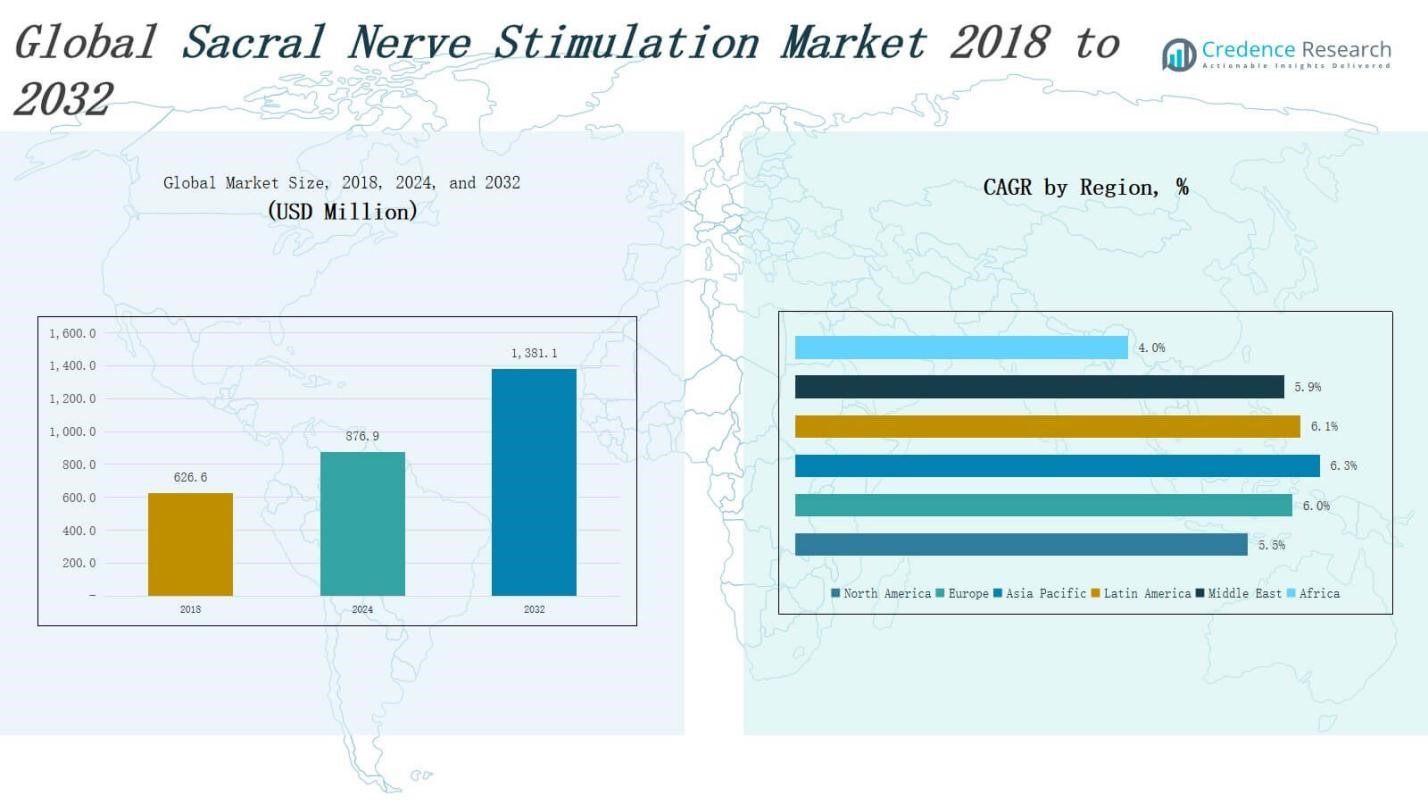
The Sacral Nerve Stimulation Market size was valued at USD 626.6million in 2018 to USD 876.9 million in 2024 and is anticipated to reach USD 1,381.1 million by 2032, at a CAGR of 5.86 % during the forecast period.
The Sacral Nerve Stimulation (SNS) market is driven by the rising prevalence of chronic pelvic pain, fecal incontinence, and overactive bladder, particularly among the aging population. Increasing awareness of neuromodulation therapies and the limitations of conventional pharmacological treatments have accelerated the adoption of SNS devices. Favorable reimbursement policies, expanding clinical indications, and growing healthcare expenditure further support market expansion. Advancements in device miniaturization, MRI compatibility, and battery longevity are enhancing patient comfort and procedural efficiency, attracting both patients and physicians. Key trends shaping the market include the shift toward minimally invasive and outpatient procedures, the integration of remote monitoring capabilities, and a growing emphasis on personalized neuromodulation therapies. Strategic collaborations between medical device companies and research institutions are fostering innovation, while expanding regulatory approvals in emerging markets are creating new growth avenues. Collectively, these drivers and trends are positioning sacral nerve stimulation as a preferred solution in managing complex pelvic and bladder dysfunctions.
The Sacral Nerve Stimulation Market spans key regions including North America, Europe, Asia Pacific, Latin America, the Middle East, and Africa. North America leads the market due to strong clinical infrastructure and reimbursement systems, followed by Europe with established neuromodulation practices and research support. Asia Pacific shows the fastest growth, driven by rising healthcare investment and improving access to advanced therapies. Latin America and the Middle East are emerging markets supported by growing awareness and surgical capacity. Africa holds the smallest share due to limited access but presents long-term potential through international health initiatives. Key players shaping the global landscape include Medtronic, Abbott, Boston Scientific Corporation, Axonics SNM System, Stimwave Technologies Inc., Nuvectra, Cogentix Medical, Biomedical Life Systems, Inc., Nervo Corp., and Congentix Medical. These companies compete through innovation, regulatory expansion, and partnerships across healthcare systems to strengthen their global footprint.
Market Insights
- The Sacral Nerve Stimulation Market size was valued at USD 626.6 million in 2018, reached USD 876.9 million in 2024, and is projected to reach USD 1,381.1 million by 2032, growing at a CAGR of 5.85% during the forecast period.
- Rising cases of pelvic floor disorders, overactive bladder, and fecal incontinence among aging populations are fueling SNS adoption as a long-term, non-pharmacological therapy.
- Patients and physicians increasingly prefer minimally invasive and reversible procedures like SNS for their safety profile, outpatient applicability, and reduced recovery time.
- Technological advancements such as rechargeable systems, MRI compatibility, and remote programming are driving product innovation and improving treatment outcomes.
- High device and procedural costs, limited reimbursement, and specialist availability in low-income regions continue to challenge wider global adoption.
- North America holds the largest share (32%) of the Sacral Nerve Stimulation Market, followed by Europe (27%) and Asia Pacific (23%), with Latin America, Middle East, and Africa contributing smaller but growing shares.
- Leading companies include Medtronic, Abbott, Boston Scientific Corporation, Axonics SNM System, Stimwave Technologies Inc., Nuvectra, Cogentix Medical, and others competing through innovation, clinical expansion, and strategic partnerships.
Market Drivers
Rising Prevalence of Pelvic Floor Disorders and Incontinence
The Sacral Nerve Stimulation Market is driven by the growing incidence of pelvic floor disorders, including urinary and fecal incontinence. Aging populations and lifestyle-related risk factors contribute significantly to this rise. Many patients do not respond well to conventional therapies, increasing demand for advanced alternatives like sacral nerve modulation. Healthcare providers now prioritize long-term solutions that address functional causes. This shift strengthens the market position of neuromodulation devices. It supports broader adoption across healthcare systems. Refractory cases increasingly qualify for SNS intervention.
- For instance, Medtronic’s InterStim system has demonstrated clinically significant improvement in patients with overactive bladder; up to 82% of participants in evaluation studies reported sustained symptom relief at 12 months.
Increasing Preference for Minimally Invasive and Reversible Procedures
The Sacral Nerve Stimulation Market benefits from the growing preference for minimally invasive therapies with reversible outcomes. SNS implantation procedures offer outpatient recovery with minimal disruption to daily activities. Patients and physicians both favor therapies with fewer systemic side effects than drug regimens. This demand for safer, more targeted solutions positions SNS as a frontline treatment option. It also encourages device innovation and physician training programs. Expanded clinical use reflects this market shift.
- For instance, Axonics’ rechargeable SNS device has been shown in clinical trials to offer effective symptom control with a non-permanent implant, appealing to patients seeking reversible solutions.
Improved Device Technology and MRI Compatibility
Technological advancements continue to enhance the effectiveness and usability of devices in the Sacral Nerve Stimulation Market. New models now include rechargeable systems, extended battery life, and MRI-safe components. These upgrades increase patient eligibility and satisfaction while reducing replacement frequency. Device manufacturers invest heavily in research to meet evolving clinical standards. It improves outcomes and strengthens stakeholder confidence in therapy. Enhanced features expand therapeutic reach across various incontinence subtypes and severity levels.
Supportive Reimbursement Policies and Regulatory Approvals
The Sacral Nerve Stimulation Market is supported by favorable reimbursement structures in developed healthcare systems. Insurers increasingly recognize SNS as a cost-effective alternative to prolonged drug therapy. Expanded coverage accelerates access and boosts procedural volume in hospitals and clinics. Regulatory bodies in North America and Europe have approved multiple device generations, signaling safety and efficacy. It builds trust among practitioners and patients. Global market entry continues to grow through broader clinical indications.
Market Trends
Shift Toward Rechargeable and Patient-Controlled Devices
A key trend in the Sacral Nerve Stimulation Market is the shift toward rechargeable, patient-controlled systems. These devices offer longer lifespan, fewer replacement surgeries, and greater convenience. Patients can adjust stimulation levels based on real-time symptom relief, which improves treatment adherence. Manufacturers are designing user-friendly interfaces and mobile app integrations to support this autonomy. It empowers patients while reducing clinical dependency. The trend reflects growing demand for personalized and sustainable neuromodulation therapies across diverse patient populations.
- For instance, Medtronic’s InterStim™ Micro, launched in 2020, is a rechargeable SNS system allowing patients to adjust their stimulation levels via a wireless handheld controller, and is documented to reduce the need for replacement surgeries for up to 15 years of use.
Integration of Remote Monitoring and Digital Health Platforms
The Sacral Nerve Stimulation Market is witnessing a steady integration of remote monitoring technologies into device platforms. Physicians can now track stimulation parameters, patient compliance, and treatment outcomes without in-person visits. Digital health platforms support secure data transmission, timely interventions, and improved continuity of care. This capability increases therapy effectiveness and reduces long-term healthcare costs. It also aligns with broader trends in virtual care and connected health ecosystems. Market leaders are prioritizing connectivity features to enhance clinical value.
- For instance, in 2023, Axonics launched its fourth-generation rechargeable sacral neuromodulation system, featuring digital health integration and wireless remote monitoring, enabling physicians to review device settings and patient compliance without in-person visits.
Expansion into Emerging Markets Through Clinical Outreach
Companies in the Sacral Nerve Stimulation Market are expanding into emerging economies through targeted awareness campaigns and clinical partnerships. Educational programs for urologists, gastroenterologists, and gynecologists help increase procedural adoption. Improved training access and growing healthcare infrastructure allow quicker integration of SNS into treatment pathways. It opens new patient pools previously underserved by advanced neuromodulation therapies. Local manufacturing and regulatory approvals further support this expansion strategy. Growth in Asia-Pacific and Latin America is gaining momentum.
Broadening of Indications Beyond Traditional Use Cases
Another trend reshaping the Sacral Nerve Stimulation Market is the broadening of clinical indications. While originally developed for urinary incontinence, SNS is now being explored for chronic pelvic pain, sexual dysfunction, and bowel control disorders. Clinical studies demonstrate positive results across these new applications, prompting interest from both physicians and device makers. It reflects the evolving understanding of sacral nerve pathways and their role in multiple disorders. Innovation in lead placement and stimulation algorithms supports this diversification.
Market Challenges Analysis
High Procedural Costs and Limited Access in Low-Income Regions
The Sacral Nerve Stimulation Market faces significant challenges due to high procedural and device costs, which limit access in low- and middle-income regions. Many healthcare systems in these markets lack reimbursement frameworks or specialized surgical expertise required for SNS implantation. Patients often face long wait times or travel burdens to reach qualified centers. It restricts overall adoption and slows market penetration outside developed economies. High initial investment continues to deter hospitals from expanding neuromodulation offerings. Affordability remains a key barrier to equitable access.
Risk of Complications and Patient Non-Responsiveness
Another challenge in the Sacral Nerve Stimulation Market is the risk of device-related complications and variability in patient response. While SNS is generally safe, complications such as lead migration, infection, or device failure can occur and require revision surgeries. Some patients experience limited or no symptom relief, leading to therapy discontinuation. It raises concerns among physicians and patients when evaluating treatment options. Lack of clear predictive markers for therapy success complicates candidate selection. These factors hinder consistent clinical outcomes and broader acceptance.
Market Opportunities
Rising Demand for Non-Pharmacological Therapies in Chronic Conditions
The Sacral Nerve Stimulation Market holds strong opportunity due to growing patient preference for non-pharmacological solutions to manage chronic pelvic and bladder disorders. Many individuals experience limited relief or adverse effects from conventional medications, driving interest in neuromodulation. Hospitals and specialty clinics are increasingly offering SNS as a long-term solution. It aligns with broader healthcare trends favoring minimally invasive, device-based therapies. Expanding patient awareness and education campaigns further boost demand. This creates room for new entrants and wider technology adoption.
Technological Innovation in Miniaturized and Adaptive Systems
Technological innovation presents a key growth opportunity in the Sacral Nerve Stimulation Market. Advancements in miniaturized implantable systems, wireless connectivity, and adaptive stimulation algorithms enhance therapy precision and user comfort. Companies developing smart, real-time responsive systems can capture unmet clinical needs. It opens new use cases and improves outcomes across broader patient segments. Integration with digital platforms also supports home-based care models. These innovations can significantly expand the market’s therapeutic scope and appeal.
Market Segmentation Analysis:
By Product
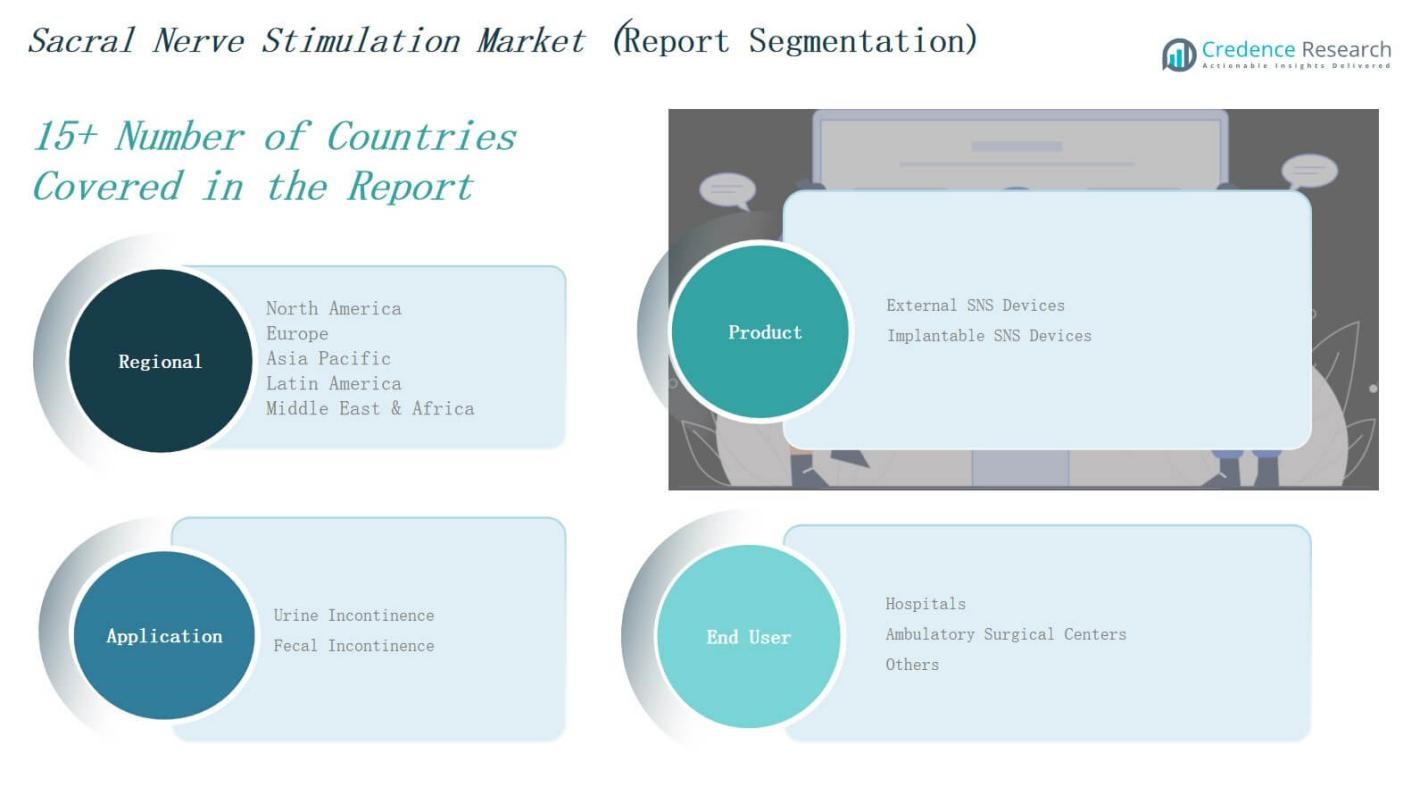
The Sacral Nerve Stimulation Market is segmented into External SNS Devices and Implantable SNS Devices. Implantable devices account for the larger market share due to their long-term efficacy and increasing use in chronic incontinence management. These devices provide continuous stimulation and reduce the need for repeated procedures. External devices, while less invasive, are typically used for trial stimulation or short-term therapy. It shows potential for growth in outpatient settings where non-invasive interventions are preferred.
- For instance, the InterStim™ system reported that after three years, 59% of patients with urinary urge incontinence experienced a greater than 50% reduction in daily leakage, and 46% became completely dry.
By Application
The Sacral Nerve Stimulation Market includes applications in Urine Incontinence and Fecal Incontinence. Urine incontinence holds the dominant share due to higher global prevalence, particularly among the elderly and female population. Physicians frequently recommend SNS for patients unresponsive to behavioral or pharmacological treatments. Fecal incontinence represents a growing segment with expanding clinical validation. It gains momentum as awareness and diagnosis rates improve across healthcare systems, driving demand for advanced neuromodulation.
- For instance, Boston Scientific’s Spectra WaveWriter Spinal Cord Stimulator System is designed to personalize pain relief, allowing clinicians and patients to use both paresthesia-based and sub-perception therapies simultaneously-an approach unique among neuromodulation systems on the market.
By End User
The Sacral Nerve Stimulation Market is categorized into Hospitals, Ambulatory Surgical Centers, and Others. Hospitals lead the segment due to access to specialized surgical teams and advanced neuromodulation infrastructure. Ambulatory Surgical Centers are witnessing faster growth driven by cost efficiency, reduced inpatient stays, and procedural advancements. It supports outpatient adoption for trial and full implant procedures. The "Others" segment includes specialty clinics and research institutes, playing a niche role in device trials and early-stage interventions.
Segments:
Based on Product
- External SNS Devices
- Implantable SNS Devices
Based on Application
- Urine Incontinence
- Fecal Incontinence
Based on End User
- Hospitals
- Ambulatory Surgical Centers
- Other
Based on Region
- North America (U.S., Canada, Mexico)
- Europe (UK, Germany, France, Italy, Spain, Russia, Rest of Europe)
- Asia Pacific (China, Japan, India, South Korea, Australia, Southeast Asia, Rest of APAC)
- Latin America (Brazil, Argentina, Rest of LATAM)
- Middle East (GCC, Israel, Turkey, Rest of Middle East)
- Africa (South Africa, Egypt, Rest of Africa)
Regional Analysis
North America
The North America Sacral Nerve Stimulation Market size was valued at USD 201.22 million in 2018 to USD 275.35 million in 2024 and is anticipated to reach USD 420.56 million by 2032, at a CAGR of 5.5% during the forecast period. North America holds the largest market share, accounting for over 32% of the global market. High healthcare expenditure, early adoption of neuromodulation technologies, and favorable reimbursement frameworks drive regional dominance. The United States leads due to strong clinical infrastructure and increasing incidence of urinary and fecal incontinence. Canada and Mexico contribute through rising awareness and growing access to advanced urological care. The region continues to attract investments in device trials and technology innovation.
Europe
The Europe Sacral Nerve Stimulation Market size was valued at USD 164.93 million in 2018 to USD 232.54 million in 2024 and is anticipated to reach USD 369.87 million by 2032, at a CAGR of 6.0% during the forecast period. Europe holds around 27% of the global market share. Demand is supported by aging demographics, expanding surgical capabilities, and strong clinical adoption across Western European nations. Germany, the UK, and France lead in procedural volume and research activity. Public healthcare systems support device access through regulated pathways. It shows steady growth through expanded indications and cross-border clinical collaborations.
Asia Pacific
The Asia Pacific Sacral Nerve Stimulation Market size was valued at USD 142.06 million in 2018 to USD 204.22 million in 2024 and is anticipated to reach USD 332.99 million by 2032, at a CAGR of 6.3% during the forecast period. Asia Pacific holds approximately 23% of the global market share. Rising healthcare investment, improving diagnosis rates, and growing awareness of non-pharmacological treatments fuel demand. China, Japan, South Korea, and India are key markets witnessing procedural expansion. Medical tourism and urban hospital development enhance access to advanced neuromodulation solutions. It represents a high-growth region with favorable demographics.
Latin America
The Latin America Sacral Nerve Stimulation Market size was valued at USD 66.86 million in 2018 to USD 94.81 million in 2024 and is anticipated to reach USD 151.92 million by 2032, at a CAGR of 6.1% during the forecast period. Latin America holds close to 7% of the global market. Brazil leads due to its advanced surgical capabilities and growing private healthcare sector. Argentina and Chile show growing uptake, supported by rising awareness and clinical partnerships. Limited reimbursement remains a constraint, though private sector investments are improving access. It continues to emerge as a viable market for second-tier manufacturers and pilot trials.
Middle East
The Middle East Sacral Nerve Stimulation Market size was valued at USD 33.84 million in 2018 to USD 47.43 million in 2024 and is anticipated to reach USD 74.86 million by 2032, at a CAGR of 5.9% during the forecast period. The region holds about 4% of global market share. Growth is supported by rising investments in specialty care and expanding hospital networks across the GCC countries. Saudi Arabia and the UAE lead in device adoption due to modernization of surgical infrastructure. Awareness campaigns and imported technologies play key roles. It offers moderate growth potential driven by high-value procurement and public-private partnerships.
Africa The Africa Sacral Nerve Stimulation Market size was valued at USD 17.73 million in 2018 to USD 22.60 million in 2024 and is anticipated to reach USD 30.94 million by 2032, at a CAGR of 4.0% during the forecast period. Africa contributes less than 3% to the global market. Limited access to neuromodulation therapies and infrastructure constraints hamper widespread adoption. South Africa leads in procedural volume, followed by Egypt. International aid programs and mobile surgical units provide access in underserved regions. It remains an underpenetrated market with long-term potential through strategic capacity building.
Key Player Analysis
- Nuvectra
- Abbott
- Medtronic
- Stimwave Technologies Inc.
- Cogentix Medical
- Boston Scientific Corporation
- Nervo Corp.
- Axonics SNM System
- Biomedical Life Systems, Inc.
- Congentix Medical
- Other Key Players
Competitive Analysis
The Sacral Nerve Stimulation Market features a competitive landscape led by major players including Medtronic, Abbott, Boston Scientific Corporation, and Axonics SNM System. These companies invest heavily in R&D to enhance device longevity, MRI compatibility, and patient-controlled functionalities. Emerging firms such as Stimwave Technologies Inc. and Nuvectra introduce innovative wireless systems that increase market competition. The market sees strategic collaborations, clinical trials, and geographic expansions to strengthen positioning. It remains innovation-driven, with companies racing to secure regulatory approvals and expand clinical indications. Competitive pricing and reimbursement negotiations are key differentiators. Companies also focus on expanding training programs for surgeons and building partnerships with hospitals and ambulatory surgical centers to drive adoption. It continues to evolve with digital health integration and personalized therapy features, giving technologically advanced firms a distinct edge.
Recent Developments
- In June 2025, Neuspera Medical received FDA approval for its integrated sacral neuromodulation (iSNM) system designed to treat urinary urge incontinence, marking a major innovation in battery-free neuromodulation technology.
- In November 2024, Boston Scientific finalized the acquisition of Axonics, Inc. for $3.3 billion, significantly expanding its neuromodulation product portfolio and strengthening its position in the sacral nerve stimulation space.
- In December 2024, Medtronic launched its InterStim X sacral neuromodulation system in India, aiming to improve access to advanced bladder and bowel control solutions in emerging healthcare markets.
Market Concentration & Characteristics
The Sacral Nerve Stimulation Market is moderately concentrated, with a few dominant players holding significant market share. Medtronic, Abbott, Boston Scientific Corporation, and Axonics SNM System lead the competitive landscape, supported by strong R&D capabilities and extensive global distribution networks. It is characterized by high entry barriers due to regulatory complexity, clinical validation requirements, and the need for physician training. The market emphasizes long-term clinical efficacy, safety, and device reliability, which drives continuous innovation in miniaturization, battery life, and MRI compatibility. Pricing pressures and reimbursement frameworks heavily influence purchasing decisions across healthcare systems. The presence of emerging companies offering wireless and patient-controlled systems is gradually reshaping the innovation landscape. Partnerships with hospitals and surgical centers, along with strategic regional expansions, define market penetration strategies. It continues to evolve with a strong focus on outpatient procedures, digital integration, and personalized therapy, reflecting the growing demand for patient-centric and minimally invasive solutions.
Report Coverage
The research report offers an in-depth analysis based on Product, Application, End-User and Region. It details leading market players, providing an overview of their business, product offerings, investments, revenue streams, and key applications. Additionally, the report includes insights into the competitive environment, SWOT analysis, current market trends, as well as the primary drivers and constraints. Furthermore, it discusses various factors that have driven market expansion in recent years. The report also explores market dynamics, regulatory scenarios, and technological advancements that are shaping the industry. It assesses the impact of external factors and global economic changes on market growth. Lastly, it provides strategic recommendations for new entrants and established companies to navigate the complexities of the market.
Future Outlook
- Demand for sacral nerve stimulation will rise due to growing cases of urinary and fecal incontinence in aging populations.
- Technological advancements will continue to improve device features such as battery life, size, and MRI compatibility.
- Outpatient and minimally invasive procedures will gain more traction among both patients and healthcare providers.
- Remote monitoring and patient-controlled features will drive adoption of next-generation SNS devices.
- Emerging markets will offer new growth opportunities as awareness and access to neuromodulation therapies improve.
- Strategic partnerships between device manufacturers and hospitals will expand procedural access and training.
- Regulatory approvals for expanded clinical indications will support wider therapeutic use of SNS.
- Competition from wireless and adaptive stimulation systems will push innovation across the market.
- Reimbursement expansion in developing countries will influence future procedural volume and device adoption.
- Research into personalized neuromodulation will shape the development of more targeted and responsive SNS therapies.

Request a Free Sample
Fill in your details and we'll send you a free sample report.
- Sample data tables & charts
- Research methodology
Market Dynamics
Rising Prevalence of Pelvic Floor Disorders and Incontinence
The increasing incidence of urinary and fecal incontinence, particularly among aging populations, is driving demand for sacral nerve stimulation as a long-term, non-pharmacological therapy. Many patients do not respond adequately to conventional treatments, making SNS an attractive alternative.
Preference for Minimally Invasive and Reversible Procedures
Patients and physicians are increasingly opting for minimally invasive, reversible procedures like SNS due to their favorable safety profile, outpatient applicability, and reduced recovery times compared to traditional surgical interventions.
Technological Advancements in Device Design
Innovations such as rechargeable systems, MRI compatibility, remote programming, and miniaturized implants are enhancing patient comfort, expanding eligibility, and improving clinical outcomes, thereby accelerating market adoption.
Favorable Reimbursement Policies and Regulatory Approvals
Supportive reimbursement structures in developed markets and expanding regulatory approvals for new devices and indications are making SNS therapies more accessible, increasing procedural volumes and market penetration.
Expansion into Emerging Markets
Growing awareness, improved healthcare infrastructure, and targeted clinical outreach in Asia Pacific, Latin America, and the Middle East are opening new growth avenues for SNS, supported by local manufacturing and regulatory progress.
Need a Custom Version of This Report?
Tailor the scope, geography, or segments to your exact requirements.
- Custom geography or segment scope
- Direct access to our analyst team
Frequently Asked Questions
What is the current size of the Sacral Nerve Stimulation Market?
What factors are driving the growth of the Sacral Nerve Stimulation Market?
What are the key segments within the Sacral Nerve Stimulation Market?
What are some challenges faced by the Sacral Nerve Stimulation Market?
Who are the major players in the Sacral Nerve Stimulation Market?
Table of Content
Chapter 1 Market Segmentation
- 1.1 Segmentation Framework
- 1.1.1 Product and Service Classification
- 1.1.2 Application and End-Use Classification
- 1.1.3 Technology and Solution Classification
- 1.1.4 Customer and Distribution Channel Classification
- 1.1.5 Geographic Segmentation
- 1.1.6 Market Segment Definitions and Boundaries
- 1.2 By Product
- 1.2.1 External SNS Devices
- 1.2.2 Implantable SNS Devices
- 1.3 By End User
- 1.3.1 Hospitals
- 1.3.2 Ambulatory Surgical Centers
- 1.3.3 Other
- 1.4 By Application
- 1.4.1 Urine Incontinence
- 1.4.2 Fecal Incontinence
Chapter 2 Introduction
- 2.1 Report Objectives and Scope
- 2.2 Product Definition and Industry Terminology
- 2.3 Market Inclusions and Exclusions
- 2.4 Research Process
- 2.4.1 Primary Research and Expert Interviews
- 2.4.2 Secondary Research and Source Review
- 2.4.3 Top-Down and Bottom-Up Estimation
- 2.4.4 Data Triangulation and Verification
- 2.5 Market Size Measurement Basis
- 2.5.1 2024: USD 876.9 million → 2032: USD 1,381.1 million
- 2.6 Historical and Forecast Reference Periods
- 2.6.1 Base Year: 2024
- 2.6.2 Forecast Period: 2024-2032
- 2.7 Research Assumptions and Limitations
Chapter 3 Executive Summary
- 3.1 Market Snapshot and Key Findings
- 3.2 Base-Year Market Size, 2024
- 3.3 Forecast Market Size, 2032
- 3.4 Revenue and Volume Growth Outlook
- 3.5 Key Demand and Supply Indicators
- 3.6 Leading Market Segments
- 3.7 Fastest-Growing Market Opportunities
- 3.8 Regional Performance Highlights
- 3.9 Technology and Industry Transformation
- 3.10 Competitive Landscape Summary
- 3.11 Analyst View and Strategic Implications
Chapter 4 Global Sacral Nerve Stimulation Market Trends and Developments
- 4.1 Historical Industry Development
- 4.2 Recent Market Trends and Developments
- 4.3 Demand and Customer Behavior Trends
- 4.4 Technology and Product Innovation
- 4.5 Artificial Intelligence, Automation and Digitalization
- 4.6 Local Manufacturing and Supply Chain Realignment
- 4.7 Industry Partnerships, Mergers and Acquisitions
- 4.8 Sustainability and Circular Economy Developments
- 4.9 Government and Private Sector Investment Trends
- 4.10 Emerging Business Models and Commercialization
- 4.11 Industry Developments and Announcements
Chapter 5 Global Sacral Nerve Stimulation Market Production, Supply and Demand Analysis
- 5.1 Demand Trend and Consumption Analysis
- 5.2 Demand Forecast, 2024-2032
- 5.3 Production and Output Trend
- 5.4 Production and Output Forecast, 2024-2032
- 5.5 Installed Capacity and Capacity Utilization
- 5.6 Company-Wise Production Plants and Statistics
- 5.6.1 Installed Production Capacity
- 5.6.2 Actual Production
- 5.6.3 Planned Capacity and Expansion Targets
- 5.7 Supply Chain Structure and Procurement Trends
- 5.8 Supply-Demand Gap and Bottlenecks
- 5.9 Import Dependence and Sourcing Structure
- 5.10 Contract Manufacturing and Outsourcing
- 5.11 Regional Supply and Demand Concentration
Chapter 6 Global Sacral Nerve Stimulation Market Pricing Analysis
- 6.1 Pricing Structure and Measurement
- 6.2 Historical Pricing Trends
- 6.3 Pricing Outlook, 2024-2032
- 6.4 Average Selling Price and Unit Economics
- 6.5 Pricing by Product and Market Segment
- 6.6 Geographic Pricing Differences
- 6.7 Key Input, Energy, Labor and Logistics Costs
- 6.8 Contract Pricing and Purchasing Models
- 6.9 Pricing Sensitivity and Competitive Positioning
- 6.10 Price, Margin and Profitability Implications
Chapter 7 Global Sacral Nerve Stimulation Market Dynamics
- 7.1 Market Growth Drivers
- 7.1.1 Demand-Side Drivers
- 7.1.2 Technology and Innovation Drivers
- 7.1.3 Infrastructure and Investment Drivers
- 7.1.4 Regulatory and Policy Drivers
- 7.2 Market Restraints
- 7.2.1 Cost and Affordability Constraints
- 7.2.2 Technology and Adoption Barriers
- 7.2.3 Supply Chain and Operational Constraints
- 7.3 Market Challenges
- 7.3.1 Competitive Pressure and Margin Erosion
- 7.3.2 Skills, Infrastructure and Implementation Gaps
- 7.4 Emerging Market Opportunities
- 7.5 Market Dynamics Impact and Time-Horizon Assessment
Chapter 8 Global Sacral Nerve Stimulation Value Chain Analysis
- 8.1 Industry Value Chain Overview
- 8.2 Upstream Suppliers and Critical Inputs
- 8.3 Technology and Component Providers
- 8.4 Manufacturing or Service Delivery
- 8.5 Distribution, Channel Partners and Integrators
- 8.6 Downstream Applications and End Users
- 8.7 Value Addition and Profit Pools
- 8.8 Vertical Integration and Outsourcing
- 8.9 Supplier Concentration and Risk
- 8.10 Supply Chain Localization and Resilience
Chapter 9 Global Sacral Nerve Stimulation Market Regulations and Policies
- 9.1 Relevant Laws, Standards and Compliance Frameworks
- 9.2 Product, Service, Safety and Quality Requirements
- 9.3 Government Policies, Incentives and Subsidies
- 9.4 Imports, Exports and Trade Barriers
- 9.5 Public Procurement and Local Content Requirements
- 9.6 Environmental and Sustainability Compliance
- 9.7 Upcoming Policy Changes and Market Implications
Chapter 10 Global Sacral Nerve Stimulation Market Hotspots and Opportunities
- 10.1 Market Opportunity Mapping and Growth Hotspots
- 10.2 High-Growth Applications and Customer Groups
- 10.3 Underserved Markets and White-Space Opportunities
- 10.4 Emerging Technology and Product Opportunities
- 10.5 New Capacity and Investment Hotspots
- 10.6 Market Entry and Expansion Opportunities
- 10.7 Distribution and Partnership Opportunities
- 10.8 Near-Term and Long-Term Commercial Potential
- 10.9 Opportunity Attractiveness and Execution Risks
Chapter 11 Global Sacral Nerve Stimulation Market Outlook, 2024-2032
- 11.1 Market Size and Analysis
- 11.1.1 Revenue (Market Measurement: 2024: USD 876.9 million → 2032: USD 1,381.1 million)
- 11.1.2 Market Volume and Quantity Sold
- 11.1.3 Historical Market Size
- 11.1.4 Base-Year Market Size, 2024
- 11.2 Market Forecast, 2024-2032
- 11.2.1 Revenue Forecast to 2032
- 11.2.2 Volume Forecast to 2032
- 11.2.3 CAGR and Year-on-Year Growth
- 11.2.4 Incremental Revenue Opportunity
- 11.3 Forecast Assumptions and Scenario Analysis
- 11.3.1 Base-Case Forecast
- 11.3.2 Optimistic and Conservative Scenarios
- 11.3.3 Technology, Pricing and Policy Sensitivities
- 11.4 Market Attractiveness and Growth Outlook
Chapter 12 Global Sacral Nerve Stimulation Market Segmentation and Outlook
- 12.1 Segmentation Summary and Market Shares, 2024
- 12.2 Largest and Fastest-Growing Segments
- 12.3 By Product - Market Size and Forecast, 2024-2032
- 12.3.1 Segment Definition and Scope
- 12.3.2 Historical Market Size
- 12.3.3 Revenue Forecast, 2024-2032
- 12.3.4 Volume Forecast, 2024-2032
- 12.3.5 Base-Year Market Share, 2024
- 12.3.6 Segment CAGR and Growth Drivers
- 12.3.7 Subsegment Market Size and Forecast
- 12.3.7.1 External SNS Devices
- 12.3.7.2 Implantable SNS Devices
- 12.3.8 Subsegment Pricing and Adoption Trends
- 12.3.9 Leading Suppliers and Competition
- 12.3.10 Regional Demand and Opportunities
- 12.4 By End User - Market Size and Forecast, 2024-2032
- 12.4.1 Segment Definition and Scope
- 12.4.2 Historical Market Size
- 12.4.3 Revenue Forecast, 2024-2032
- 12.4.4 Volume Forecast, 2024-2032
- 12.4.5 Base-Year Market Share, 2024
- 12.4.6 Segment CAGR and Growth Drivers
- 12.4.7 Subsegment Market Size and Forecast
- 12.4.7.1 Hospitals
- 12.4.7.2 Ambulatory Surgical Centers
- 12.4.7.3 Other
- 12.4.8 Subsegment Pricing and Adoption Trends
- 12.4.9 Leading Suppliers and Competition
- 12.4.10 Regional Demand and Opportunities
- 12.5 By Application - Market Size and Forecast, 2024-2032
- 12.5.1 Segment Definition and Scope
- 12.5.2 Historical Market Size
- 12.5.3 Revenue Forecast, 2024-2032
- 12.5.4 Volume Forecast, 2024-2032
- 12.5.5 Base-Year Market Share, 2024
- 12.5.6 Segment CAGR and Growth Drivers
- 12.5.7 Subsegment Market Size and Forecast
- 12.5.7.1 Urine Incontinence
- 12.5.7.2 Fecal Incontinence
- 12.5.8 Subsegment Pricing and Adoption Trends
- 12.5.9 Leading Suppliers and Competition
- 12.5.10 Regional Demand and Opportunities
- 12.6 Segment Growth Comparison
- 12.7 Segment Attractiveness and Priority Matrix
Chapter 13 Global Sacral Nerve Stimulation End-Use and Application Market Outlook
- 13.1 End-Use Industry and Customer Demand Structure
- 13.2 Leading Applications and Customer Groups
- 13.3 End-Use Market Size, Share and Forecast
- 13.4 Major End-Use Industry Deep Dives
- 13.4.1 Customer Requirements and Use Cases
- 13.4.2 Demand and Replacement Cycles
- 13.4.3 Technical and Regulatory Considerations
- 13.4.4 Purchasing and Procurement Models
- 13.4.5 Leading Vendors and Distribution Channels
- 13.4.6 Forecast and Commercial Opportunities
- 13.5 Emerging Applications and Cross-Segment Demand
- 13.6 End-Use Industry Investment Priorities
Chapter 14 Global Sacral Nerve Stimulation Geographic Market Outlook, 2024-2032
- 14.1 Regional Market Size and Share, 2024
- 14.2 Regional Market Forecast, 2024-2032
- 14.3 Regional Pricing, Production and Demand Differences
- 14.4 North America
- 14.4.1 United States
- 14.4.2 Canada
- 14.4.3 Mexico
- 14.5 Europe
- 14.5.1 Germany
- 14.5.2 France
- 14.5.3 Italy
- 14.5.4 United Kingdom
- 14.5.5 Spain
- 14.5.6 Poland
- 14.5.7 Russia
- 14.5.8 Netherlands
- 14.5.9 Belgium
- 14.5.10 Sweden
- 14.5.11 Denmark
- 14.5.12 Norway
- 14.5.13 Rest of Europe
- 14.6 Asia Pacific
- 14.6.1 China
- 14.6.2 India
- 14.6.3 Japan
- 14.6.4 South Korea
- 14.6.5 Thailand
- 14.6.6 Indonesia
- 14.6.7 Vietnam
- 14.6.8 Malaysia
- 14.6.9 Australia
- 14.6.10 Rest of Asia Pacific
- 14.7 Latin America
- 14.7.1 Brazil
- 14.7.2 Argentina
- 14.7.3 Colombia
- 14.7.4 Chile
- 14.7.5 Rest of Latin America
- 14.8 Middle East
- 14.8.1 Saudi Arabia
- 14.8.2 United Arab Emirates
- 14.8.3 Turkey
- 14.8.4 Israel
- 14.8.5 Iran
- 14.8.6 Rest of the Middle East
- 14.9 Africa
- 14.9.1 South Africa
- 14.9.2 Egypt
- 14.9.3 Nigeria
- 14.9.4 Morocco
- 14.9.5 Rest of Africa
- 14.10 Regional Investment, Policy and Supply Chain Differences
- 14.11 Regional Competitive Landscape
- 14.12 Geographic Growth Hotspots
Chapter 15 Global Sacral Nerve Stimulation Technology, Innovation and Sustainability Outlook
- 15.1 Technology Landscape and Maturity
- 15.2 Product, Process and Service Innovation
- 15.3 AI, Automation and Digital Tools in the Industry
- 15.4 Technology Adoption and Performance Benchmarking
- 15.5 Innovation Pipeline and R&D Investment
- 15.6 Patent and Intellectual Property Trends
- 15.7 Energy Efficiency and Resource Management
- 15.8 Sustainability, Recycling and Circularity
- 15.9 Technology Roadmap, 2024-2032
- 15.10 Risks of Obsolescence and Technology Substitution
Chapter 16 Global Sacral Nerve Stimulation Market Key Strategic Imperatives
- 16.1 Growth and Market Entry Priorities
- 16.2 High-Return Products and Segments
- 16.3 Pricing, Profitability and Cost Optimization
- 16.4 Technology Investment and Product Differentiation
- 16.5 Supply Chain Localization and Resilience
- 16.6 Distribution and Customer Acquisition
- 16.7 Partnership, Acquisition and Capacity Strategy
- 16.8 Regional Expansion Priorities
- 16.9 Short-, Medium- and Long-Term Actions
Chapter 17 Competition Outlook
- 17.1 Industry Competition Characteristics
- 17.2 Market Structure and Concentration
- 17.3 Market Share and Competitive Positioning, 2024
- 17.4 Company-Wise Revenue and Product Benchmarking
- 17.5 Production and Service Capacity Benchmarking
- 17.6 Technology, Pricing and Differentiation
- 17.7 Regional Footprint and Distribution Strength
- 17.8 Mergers, Acquisitions and Strategic Alliances
- 17.9 New Entrants and Competitive Threats
- 17.10 Porter's Five Forces and Industry Attractiveness
- 17.11 Competitive Outlook, 2024-2032
Chapter 18 Company Profiles
- 18.1 Company Coverage and Selection Criteria
- 18.2 Medtronic
- 18.2.1 Business Description
- 18.2.2 Company Ownership and Geographic Presence
- 18.2.3 Product and Service Portfolio
- 18.2.4 Manufacturing and Operating Footprint
- 18.2.5 Production Capacity and Expansion Plans
- 18.2.6 Financial Performance and Investment
- 18.2.7 Market Share and Competitive Position
- 18.2.8 Technology and Innovation Capabilities
- 18.2.9 Strategic Alliances or Partnerships
- 18.2.10 Recent Developments
- 18.2.11 Growth Strategy and Outlook
- 18.3 Abbott
- 18.4 Boston Scientific Corporation
- 18.5 Axonics SNM System
- 18.6 Stimwave Technologies Inc.
- 18.7 Nuvectra
- 18.8 Cogentix Medical
- 18.9 Biomedical Life Systems, Inc.
- 18.10 Nervo Corp.
- 18.11 Congentix Medical
- 18.12 Other Relevant Market Participants
Note: Every listed company is profiled on the structure shown under the first company. The company list is preliminary and may change based on research findings, market developments, data availability and client requirements.
Chapter 19 Disclaimer
- 19.1 Research and Forecast Disclaimer
- 19.2 Data Source and Estimation Limitations
Note: The depth of individual sections depends on data availability for this market. Volume, capacity, trade and other unit-based metrics are included where applicable.