
| REPORT ATTRIBUTE | DETAILS |
|---|---|
| Historical Period | 2019-2022 |
| Base Year | 2023 |
| Forecast Period | 2024-2032 |
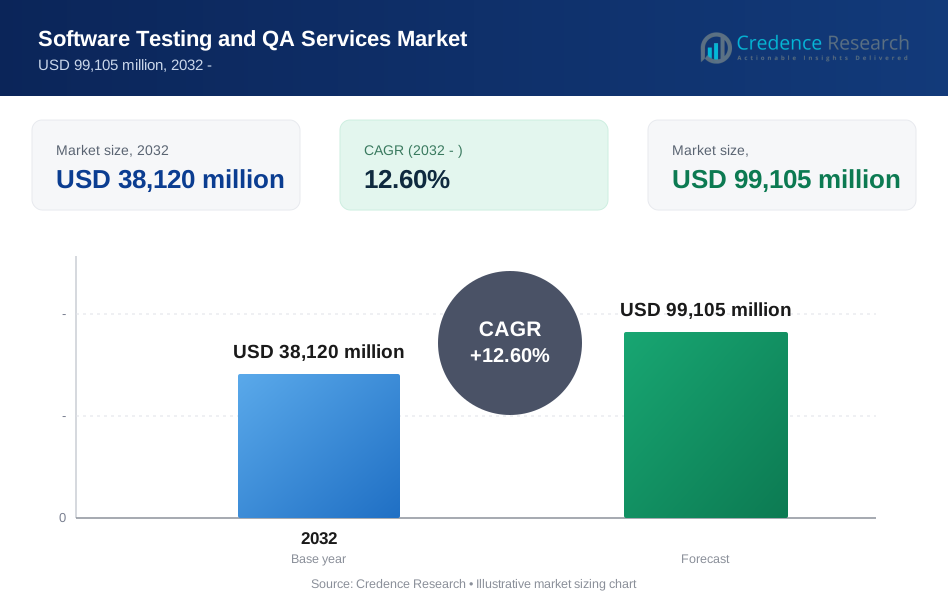
| Software Testing and QA Services Market Size 2024 | USD 38,120 million |
| Software Testing and QA Services Market, CAGR | 12.6% |
| Software Testing and QA Services Market Size 2032 | USD 99,105 million |
Market Overview:
The Software Testing and QA Services Market is witnessing substantial growth, reflecting the increasing emphasis on ensuring software quality and performance across various industries. As of 2024, the global Software Testing and QA Services Market is valued at USD 38,120 million and is projected to expand at a compound annual growth rate (CAGR) of 12.6% over the forecast period, reaching approximately USD 99,105 million by 2032. This robust growth trajectory highlights the rising importance of high-quality software and the need for rigorous testing and quality assurance processes.
Several factors are driving the market's expansion. The rapid proliferation of software applications across diverse sectors, including finance, healthcare, and retail, necessitates comprehensive testing to ensure functionality, security, and performance. The increasing complexity of software systems, coupled with heightened consumer expectations for seamless user experiences, further fuels demand for sophisticated testing services. Additionally, the advent of new technologies such as artificial intelligence (AI) and machine learning (ML) is enhancing testing processes by introducing automation and predictive capabilities.
Regionally, North America holds a dominant position in the Software Testing and QA Services Market, owing to the presence of major technology firms, a well-established IT infrastructure, and a high level of investment in quality assurance practices. Europe follows closely, driven by stringent regulatory requirements and a strong focus on digital transformation across various industries. The Asia-Pacific region is anticipated to experience significant growth during the forecast period, propelled by rapid industrialization, increasing IT investments, and the growing adoption of advanced testing technologies. Emerging markets in this region, such as China and India, are expected to provide substantial opportunities for growth due to their expanding IT sectors and rising emphasis on software quality.
Market Drivers:
Growing Complexity of Software Applications:
The rapid evolution of technology has led to increasingly complex software applications that require rigorous testing and quality assurance. As software systems integrate advanced features such as artificial intelligence (AI), machine learning (ML), and big data analytics, their complexity escalates, necessitating comprehensive testing to ensure functionality, security, and performance. This complexity drives demand for sophisticated testing services to detect and resolve potential issues early in the development cycle. For Instance, according to the International Monetary Fund (IMF) report, the tech sector's expansion and innovation significantly contribute to the demand for advanced testing solutions. As applications become more intricate, organizations are compelled to invest in robust testing services to mitigate risks and deliver high-quality software products.
Increased Regulatory and Compliance Requirements:
The regulatory landscape across various industries is becoming increasingly stringent, necessitating adherence to compliance standards and regulations. For instance, in the financial sector, regulations like the General Data Protection Regulation (GDPR) and the Sarbanes-Oxley Act require organizations to ensure their software meets rigorous security and data protection standards. Similarly, the healthcare industry faces stringent regulations like the Health Insurance Portability and Accountability Act (HIPAA). Compliance with these regulations demands thorough testing and quality assurance to avoid legal repercussions and ensure that software solutions meet required standards. According to a World Bank report, the growing emphasis on regulatory compliance drives the demand for testing services to help organizations adhere to industry-specific standards and avoid costly fines.
Rising Consumer Expectations and Market Competition:
As consumer expectations for seamless and high-performing software applications increase, companies are under pressure to deliver exceptional user experiences. The competitive market landscape compels businesses to ensure that their software products are free from bugs and performance issues. High-quality software is crucial for maintaining customer satisfaction and achieving competitive advantage. For Instance, Research conducted by the World Economic Forum highlights that companies investing in quality assurance and testing are better positioned to meet consumer expectations and outperform competitors. The need for software that provides a flawless user experience drives organizations to invest in comprehensive testing services to enhance their product offerings and retain customer loyalty.
Advancements in Testing Technologies:
The development of new testing technologies is transforming the landscape of software quality assurance. Automation tools, AI-driven testing solutions, and advanced analytics are revolutionizing the testing process, making it more efficient and effective. For instance, automation reduces the time and cost associated with manual testing, while AI enhances the ability to predict and identify potential issues. For Instance, according to a report by the International Telecommunication Union (ITU), advancements in testing technologies are driving the growth of the Software Testing and QA Services Market by improving the accuracy and efficiency of testing processes. The adoption of these advanced technologies enables organizations to handle complex testing scenarios and ensure high-quality software delivery. The Software Testing and QA Services Market is driven by several key factors, including the growing complexity of software applications, increased regulatory and compliance requirements, rising consumer expectations and market competition, and advancements in testing technologies. As technology continues to evolve and industries face more stringent standards, the demand for sophisticated testing solutions is expected to grow, driving the expansion of the market and offering significant opportunities for growth and innovation.
Market Trends:
Increased Adoption of Automation in Testing:
The shift towards automation in software testing is accelerating, driven by its capacity to improve efficiency and accuracy throughout the software development lifecycle. Automation tools are increasingly utilized to manage repetitive testing tasks, reduce time-to-market, and enhance test coverage. A recent report by Gartner underscores that automation has become a crucial element in contemporary software testing strategies, owing to its effectiveness in handling extensive test volumes and complex scenarios with minimal manual oversight. For Instance, Leading technology firms such as Microsoft and IBM are investing heavily in automation technologies to support agile and DevOps practices. Automation frameworks are now integral to continuous integration/continuous deployment (CI/CD) pipelines, enabling organizations to speed up development cycles while maintaining high-quality standards. Research from Forrester highlights that automation not only accelerates testing processes but also minimizes human error, making it essential for organizations striving to remain competitive in a fast-paced technological landscape.
Growth of AI and Machine Learning in Testing Processes:
The integration of artificial intelligence (AI) and machine learning (ML) into software testing is emerging as a significant trend, revolutionizing traditional testing methodologies. AI and ML technologies are increasingly being used to automate test case generation, predict potential defects, and analyze test results with greater precision. A study by McKinsey & Company reveals that AI-driven testing solutions are markedly enhancing the efficiency of quality assurance processes by enabling more advanced and adaptive testing techniques. For Instance, Prominent companies, including Google and Amazon Web Services (AWS), are leading the way in applying AI and ML to their testing processes. These technologies facilitate predictive analysis and intelligent defect detection, allowing organizations to address issues before they affect end users. Research from the International Data Corporation (IDC) indicates that the application of AI and ML in testing is expected to rise as organizations seek to leverage these technologies for improved software quality and reduced time-to-market. This trend aligns with broader movements toward integrating cutting-edge technologies to meet rising consumer expectations and regulatory demands. The software testing and QA services market is undergoing significant transformations with the increased adoption of automation and the integration of AI and ML technologies. These trends are reshaping testing processes, enhancing efficiency, and improving software quality. Insights from leading research firms such as Gartner, Forrester, and McKinsey, alongside data from authoritative sources like IDC, underscore the importance of these trends in the evolving landscape of software testing and quality assurance.
Market Challenge Analysis:
Complexity of Emerging Technologies:
One of the major challenges in the Software Testing and QA Services Market is the complexity associated with emerging technologies. As software applications increasingly incorporate advanced features such as artificial intelligence (AI), machine learning (ML), and blockchain, the testing process becomes more intricate and demanding. These technologies often involve non-traditional software components and data patterns that require specialized testing methods and tools. According to a report by the International Data Corporation (IDC), the rapid pace of technological advancement outstrips the development of testing methodologies and tools, creating a gap that can hinder effective quality assurance. This complexity necessitates continuous updates and enhancements to testing practices, which can be resource-intensive and challenging for organizations to manage.
Regulatory Compliance and Security Concerns:
Another significant challenge facing the software testing industry is the increasing emphasis on regulatory compliance and security. With stringent regulations such as the General Data Protection Regulation (GDPR) and various industry-specific standards, organizations must ensure that their software adheres to complex compliance requirements. Additionally, the growing prevalence of cybersecurity threats necessitates rigorous security testing to protect sensitive data and systems from potential breaches. The World Bank highlights that meeting these regulatory and security requirements often requires substantial investment in specialized testing tools and expertise. Balancing the need for thorough compliance and security testing with the demand for rapid software releases can strain resources and impact the efficiency of the testing process. This challenge underscores the need for innovative solutions and adaptive testing strategies to navigate the evolving landscape of software compliance and security.
Market Segmentation Analysis:
By Type:
The Software Testing and QA Services Market is segmented based on the type of testing services offered. This includes functional testing, which ensures that the software performs its intended functions correctly, and non-functional testing, which assesses aspects such as performance, security, and usability. Functional testing encompasses various methods such as unit testing, integration testing, and system testing. Non-functional testing involves performance testing, stress testing, and security testing. The increasing demand for comprehensive quality assurance has led to a diverse range of testing services being employed to address specific needs. For instance, functional testing is crucial for verifying software features, while non-functional testing ensures that the software meets performance and security standards under different conditions.
By Technology:
In terms of technology, the Software Testing and QA Services Market is segmented based on the tools and methodologies used. Key technological segments include automated testing tools, manual testing services, and specialized testing technologies such as AI-driven testing and blockchain testing. Automated testing tools are gaining traction due to their ability to execute repetitive tests efficiently and consistently. AI-driven testing technologies are emerging as a significant trend, leveraging machine learning algorithms to enhance testing accuracy and predictive capabilities. Blockchain testing, on the other hand, is becoming increasingly important due to the growing adoption of blockchain technologies across various industries. Each technology segment addresses different aspects of the testing process, contributing to a comprehensive approach to quality assurance.
By End-User:
The end-user segmentation of the Software Testing and QA Services Market includes various industry sectors such as information technology, healthcare, finance, retail, and telecommunications. Each sector has unique testing requirements based on its specific operational needs and regulatory standards. For example, the healthcare sector requires rigorous compliance testing to meet regulations like HIPAA, while the financial sector focuses on security and performance testing due to the sensitive nature of financial transactions. The IT sector, being a major adopter of software testing services, utilizes a broad range of testing types to ensure software reliability and functionality. Retail and telecommunications also contribute significantly to the market, driven by the need for robust software solutions to manage large volumes of transactions and communications. Each end-user segment drives demand for specialized testing services tailored to their operational contexts and industry-specific challenges.
Segmentation:
Based on Type:
- Functional Testing
- Non-Functional Testing
- Automated Testing
- Manual Testing
- AI-Driven Testing
- Blockchain Testing
Based on Technology:
- Automated Testing Tools
- Manual Testing Services
- AI and Machine Learning Testing Technologies
- Blockchain Testing Technologies
- Cloud-Based Testing Solutions
- Performance Testing Tools
Based on End-User:
- Information Technology
- Healthcare
- Finance
- Retail
- Telecommunications
- Manufacturing
- Government
Based on Region:
- North America: United States, Canada
- Europe: Germany, United Kingdom, France, Italy, Spain
- Asia-Pacific: China, India, Japan, South Korea, Australia
- Latin America: Brazil, Mexico, Argentina
- Middle East and Africa: United Arab Emirates, Saudi Arabia, South Africa, Egypt
Regional Analysis:
North America
North America remains a leading region in the software testing and QA services market, primarily driven by the presence of numerous technology giants and a high demand for advanced and secure software solutions. The United States, in particular, dominates this region with a market share of approximately 45%. This dominance is attributed to the extensive adoption of new technologies, including AI, cloud computing, and IoT, which necessitate robust testing and QA practices. Companies such as IBM, Cognizant, and UL play significant roles in this market by offering comprehensive testing solutions that address diverse needs across various industries.
Canada also contributes to the region’s market share, though on a smaller scale compared to the US. The growing emphasis on software innovation and digital transformation initiatives in Canadian enterprises enhances the demand for specialized testing services. Overall, the North American market benefits from a combination of advanced technological infrastructure, significant R&D investments, and a high concentration of key players, thereby maintaining its leading position in the global market.
Europe
In Europe, the software testing and QA services market is characterized by its diverse landscape and regional variations. The market is heavily influenced by the strong regulatory environment and stringent data protection laws, particularly the GDPR, which drive the need for high-quality software testing and compliance services. The market share for Europe stands at approximately 30%, with major contributions from Western European countries like Germany, France, and the UK.
Germany, with its well-established industrial base, significantly impacts the market through companies like TUV SUD and DEKRA, which provide rigorous testing services tailored to various industry sectors. France also plays a critical role with key players such as Atos and Bureau Veritas, reflecting the country’s focus on innovation and quality assurance. The UK, despite recent economic uncertainties, remains a significant player due to its advanced technology sector and high demand for testing services.
Eastern Europe is emerging as a growing market segment, driven by increasing IT investments and a skilled workforce in countries such as Poland and Romania. This region’s competitive pricing and growing IT capabilities are attracting more outsourcing opportunities, thereby contributing to the overall market growth in Europe.
Asia-Pacific
The Asia-Pacific (APAC) region represents a rapidly expanding segment of the software testing and QA services market, with a market share of approximately 25%. This growth is fueled by the region’s robust economic development, technological advancements, and a burgeoning IT sector. Countries like India, China, Japan, and South Korea are at the forefront of this expansion.
India, in particular, stands out due to its large pool of IT talent and cost-effective testing solutions, with companies such as Infosys, Cigniti, and Maveric Systems driving market growth. The country’s significant contribution to the global IT outsourcing market underscores its pivotal role in the software testing sector. China’s market presence is also notable, with HQTS offering specialized testing services that cater to the needs of both domestic and international clients.
Japan and South Korea contribute to the market through their advanced technological infrastructure and emphasis on quality and security in software applications. As these countries continue to invest in digital transformation and technology innovation, the demand for comprehensive software testing and QA services is expected to rise.
Overall, the Asia-Pacific region's market growth is supported by its dynamic economic environment, technological advancements, and increasing adoption of digital technologies across various sectors. This region's diverse market landscape offers significant opportunities for both established players and emerging startups in the software testing and QA services market.
Key Player Analysis:
- Bureau Veritas (France)
- BSI (UK)
- Intertek (France)
- DNV GL (Norway)
- SGS (Switzerland)
- TUV SUD (Germany)
- Eurofins Scientific (Luxembourg)
- DEKRA (Germany)
- Applus+ (Spain)
- HQTS (China)
- UL (US)
- Accenture (Ireland)
- Cognizant (US)
- Infosys (India)
- IBM (US)
- Atos (France)
- Cigniti (India)
- Expleo (France)
- Katalon (US)
- Maveric Systems (India)
- Aspire Systems (India)
Competitive Analysis:
The competitive landscape of the software testing and QA services market is marked by the presence of several key global players and a multitude of specialized firms catering to diverse needs. Major players such as IBM, Accenture, and Infosys dominate the market due to their comprehensive service portfolios, technological expertise, and extensive geographic reach. These giants leverage their substantial resources to offer end-to-end solutions, integrating advanced technologies like AI, machine learning, and automation to enhance testing efficiency and accuracy. In contrast, regional leaders like TUV SUD, Bureau Veritas, and DEKRA excel in specific markets by focusing on niche sectors and regulatory compliance, reflecting their deep industry knowledge and localized expertise. The rise of specialized firms and start-ups, such as Katalon and Maveric Systems, introduces increased competition by providing innovative, cost-effective solutions tailored to specific testing needs or emerging technologies. This dynamic environment fosters continuous innovation and adaptation, as firms strive to differentiate themselves through advanced testing methodologies, robust service offerings, and strategic partnerships. Additionally, the increasing demand for agile and DevOps practices has led to a surge in firms offering integrated testing solutions that support rapid development cycles and continuous integration. As technology evolves and new challenges emerge, the competitive landscape will continue to shift, with established players and new entrants vying for market share by delivering cutting-edge solutions and exceptional value to clients across various industries.
Recent Developments:
- In November 2023, Aspire Systems, a globally renowned technology services company, partnered with BNF Bank to implement Temenos digital banking solutions as part of a major transformation initiative.
- In April 2023, Expleo announced the merger of its Indian entities-Expleo India Infosystems Private Limited, Expleo Technologies India Private Limited, Expleo Engineering India Private Limited, and Silver Software Development Centre Private Limited-with Expleo Solutions Limited. The National Company Law Tribunal of India has approved this merger scheme, initially sanctioned by the shareholders.
- In September 2022, Cigniti Technologies strengthened its partnership with a leading American retailer by enhancing the digital experience for its customers and accelerating the retailer's digital ambitions. The Fortune 500 retailer and Cigniti celebrated the first anniversary of their collaboration, which has shown significant potential for growth through digitalization, aiming to accelerate the retailer’s business outcomes.
- In August 2022, Cigniti Technologies, a global leader in AI and IP-led Digital Assurance and Digital Engineering services, introduced a new brand identity. This rebranding reflects its renewed vision to support clients in accelerating their digital transformation journeys and achieving market leadership.
Market Concentration & Characteristics:
The software testing and QA services market exhibits a moderate to high concentration, dominated by several key global players alongside numerous specialized firms. Market concentration is evident as leading companies like IBM, Accenture, and Infosys capture a significant share through their extensive service portfolios and global reach. These giants leverage their substantial resources and technological expertise to offer integrated, end-to-end testing solutions, which encompass advanced technologies such as artificial intelligence, automation, and cloud computing. Concurrently, the market is characterized by a vibrant presence of specialized and niche players, such as Cigniti Technologies and Katalon, which focus on specific sectors or innovative testing solutions. These firms often differentiate themselves through specialized expertise, cost-effective services, and tailored solutions that address emerging technological needs and industry challenges. Regional players also contribute to market dynamics by addressing local regulatory requirements and offering targeted services. The market’s characteristics are marked by a strong emphasis on agility and adaptability, driven by the growing demand for rapid development cycles and continuous integration in software projects. Companies are increasingly focusing on digital transformation and enhanced user experiences, leading to continuous innovation and competitive differentiation. As technology evolves, the market sees a shift towards integrating testing processes with broader digital strategies, reflecting the need for comprehensive and adaptive testing solutions that align with the fast-paced developments in the tech landscape.
Report Coverage:
This report provides a comprehensive analysis of the software testing and QA services market, encompassing a detailed examination of market dynamics, key players, and regional trends. It covers an in-depth assessment of market drivers, including technological advancements, regulatory requirements, and evolving client demands. The report evaluates the competitive landscape, highlighting major global and regional players, their market share, and strategic initiatives, such as mergers, partnerships, and technological innovations. It explores key market segments, including automation, performance testing, and security testing, and examines how these segments contribute to overall market growth. The report also provides a regional breakdown, analyzing market performance and opportunities in North America, Europe, and Asia-Pacific, offering insights into regional drivers and emerging trends. Additionally, it delves into the characteristics of the market, such as concentration levels, competitive strategies, and the impact of digital transformation on testing practices. By integrating quantitative data with qualitative insights, the report delivers a holistic view of the market's current state and future prospects, providing valuable information for stakeholders to make informed decisions and strategic plans. This coverage is essential for understanding the market's trajectory, identifying growth opportunities, and navigating the evolving landscape of software testing and QA services.
Future Outlook:
- The software testing and QA services market is expected to experience steady growth driven by increasing digital transformation initiatives across various industries.
- The adoption of advanced technologies such as artificial intelligence and machine learning will enhance testing capabilities and efficiency.
- The demand for automation and continuous testing solutions will rise as organizations aim for faster and more reliable software development cycles.
- The integration of testing services with DevOps practices will become more prevalent, promoting seamless development and deployment processes.
- Regional markets in Asia-Pacific will continue to expand rapidly, fueled by growing IT investments and emerging technology hubs.
- The emphasis on cybersecurity will increase, leading to higher demand for security testing services to address rising cyber threats.
- The shift towards cloud-based testing solutions will offer scalability and flexibility, further driving market growth.
- Companies will focus on personalized and user-centric testing approaches to enhance customer experiences and satisfaction.
- Consolidation and strategic partnerships among key players and specialized firms will shape the competitive landscape.
- The evolving regulatory environment and compliance requirements will drive demand for testing services that ensure adherence to global standards.
Request a Free Sample
Fill in your details and we'll send you a free sample report.
- Sample data tables & charts
- Research methodology
Need a Custom Version of This Report?
Tailor the scope, geography, or segments to your exact requirements.
- Custom geography or segment scope
- Direct access to our analyst team
Frequently Asked Questions
What are the key drivers of growth in the software testing and QA services market?
How does automation impact the software testing process?
What role do regional markets play in the global software testing industry?
How are cybersecurity concerns influencing software testing services?
Table of Content
Chapter 1. Report Introduction
- 1.1 Report Description & Purpose
- 1.1.1 Report Title & Market Definition
- 1.1.2 Unique Selling Propositions (USP) & Key Differentiators
- 1.1.3 Value Proposition for Stakeholders
- 1.2 Research Objectives
- 1.2.1 Market Sizing Objectives (Volume & Revenue) (Volume Where Applicable)
- 1.2.2 Segmentation Objectives
- 1.2.3 Competitive Intelligence Objectives
- 1.2.4 Forecast & Scenario Objectives
- 1.3 Report Scope
- 1.3.1 Software Testing and QA Services Scope – Segments & Subsegments Covered
- 1.3.2 Geographic Scope – Regions & Countries Covered
- 1.3.3 Historical Period, Base Year & Forecast Period (2032; forecast to the forecast period)
- 1.3.4 Inclusions & Exclusions
- 1.4 Industry Classification & Applicable Codes
- 1.5 Currency, Measurement Units & Valuation Basis
- 1.6 Target Stakeholders
- 1.7 Limitations & Assumptions
Chapter 2. Executive Summary
- 2.1 Global Software Testing and QA Services Market Snapshot
- 2.1.1 Market Size – Historical (2032) & Forecast (the forecast period) (2032: USD 38,120 million → forecast year: USD 99,105 million)
- 2.1.2 Volume & Revenue – Global Totals (Volume Where Applicable)
- 2.1.3 Key Market Highlights – Top Five Facts
- 2.2 Software Testing and QA Services Market Segmentation Snapshot
- 2.2.1 Market Split by Region – 2032 vs.
- 2.3 Competitive Snapshot
- 2.3.1 Top 10 Players by Revenue Share – 2032
- 2.3.2 Top 10 Players by Volume Share – 2032 (Volume Where Applicable)
- 2.3.3 Recent Strategic Developments (18-Month Summary)
- 2.4 Key Investment Highlights & Strategic Conclusions
Chapter 3. Software Testing and QA Services Market Dynamics & Industry Analysis
- 3.1 Market Overview & Context
- 3.1.1 Software Testing and QA Services Market Position in the Broader Industry Value Chain
- 3.1.2 Demand Structure & Purchasing Dynamics
- 3.1.3 Market Maturity & Development Stage by Region
- 3.2 Software Testing and QA Services Market Drivers
- 3.3 Software Testing and QA Services Market Restraints & Challenges
- 3.4 Software Testing and QA Services Market Opportunities
- 3.5 Porter's Five Forces Analysis
- 3.5.1 Threat of New Entrants
- 3.5.2 Bargaining Power of Suppliers
- 3.5.3 Bargaining Power of Buyers
- 3.5.4 Threat of Substitutes
- 3.5.5 Competitive Rivalry – Intensity Assessment
- 3.6 Software Testing and QA Services Value Chain Analysis
- 3.6.1 Upstream – Key Inputs, Resources & Suppliers
- 3.6.1.1 Key Input/Resource 1
- 3.6.1.2 Key Input/Resource 2
- 3.6.1.3 Key Input/Resource 3
- 3.6.2 Midstream – Core Operations & Value Creation
- 3.6.2.1 Operating Model & Process Overview
- 3.6.2.2 Key Operating Locations & Capabilities by Company
- 3.6.3 Downstream – Market Channels & End Users
- 3.6.3.1 Direct Sales & Customer Engagement Channels
- 3.6.3.2 Indirect Sales, Intermediaries & Partner Channels
- 3.6.4 Value Chain Profitability Analysis
- 3.6.1 Upstream – Key Inputs, Resources & Suppliers
- 3.7 PESTEL Analysis
- 3.7.1 Political Factors
- 3.7.2 Economic Factors
- 3.7.3 Social Factors
- 3.7.4 Technological Factors
- 3.7.5 Environmental Factors
- 3.7.6 Legal Factors
- 3.8 Software Testing and QA Services Supply Chain Analysis
- 3.8.1 Critical Input & Resource Availability Risk Assessment
- 3.8.2 Supplier & Operational Concentration Risk (Geographic Exposure)
- 3.8.3 Supply & Service Disruption Impact Analysis
- 3.9 Regulatory & Policy Landscape
Note: The regulatory and policy landscape section covers regulations based on their applicability to the market, Software Testing and QA Services category, geography, and scope of the study. Only regulatory frameworks with a material impact on operations, compliance, trade, sustainability, or market access are analyzed in detail.
Chapter 4. Key Investment Pockets & Opportunity Analysis
- 4.1 Software Testing and QA Services Market Attractiveness Analysis
- 4.1.1 By Region – Investment Attractiveness Matrix (Market Size × CAGR)
- 4.2 Absolute Revenue Growth Opportunity
- 4.2.1 By Region – Absolute Revenue Growth Through the forecast period
- 4.3 Incremental Demand Opportunity
- 4.3.1 By Region – Incremental Demand Through the forecast period
- 4.3.2 Segment – Incremental Demand
- 4.4 Emerging Submarket Opportunity Deep Dive (Subject to Applicability)
- 4.5 Priority Market Opportunity Scorecards
- 4.5.1 United States
- 4.5.2 Europe
- 4.5.3 Asia
- 4.5.4 Middle East & Africa
Note: Priority market opportunity scorecards reflect the geographic scope and strategic relevance of the study. Listed markets are indicative and may be adapted to the industry.
Chapter 5. Software Testing and QA Services Cross-Border Trade & Market Access Analysis
- 5.1 International Trade & Cross-Border Activity Overview
- 5.1.1 Global Export Value by Country (2032)
- 5.1.2 Global Export Volume by Country (2032) (Volume Where Applicable)
- 5.1.3 Global Import Value by Country (2032)
- 5.1.4 Global Import Volume by Country (2032) (Volume Where Applicable)
- 5.1.5 Net Trade Balance by Country (2032)
- 5.2 Export Analysis – Segment
- 5.2.1 Category 1 (Applicable Classification Code)
- 5.2.2 Category 2 (Applicable Classification Code)
- 5.2.3 Category 3 (Applicable Classification Code)
- 5.2.4 Category 4 (Applicable Classification Code)
- 5.2.5 Category 5 (Applicable Classification Code)
- 5.3 Import Analysis – Segment
- 5.3.1 Category 1 (Applicable Classification Code)
- 5.3.2 Category 2 (Applicable Classification Code)
- 5.3.3 Category 3 (Applicable Classification Code)
- 5.3.4 Category 4 (Applicable Classification Code)
- 5.3.5 Category 5 (Applicable Classification Code)
- 5.4 Cross-Border Pricing & Transaction Benchmarks
- 5.4.1 Export Pricing – Segment & Country
- 5.4.2 Import Pricing – Segment & Source Country
- 5.4.3 Price Trends (2032)
- 5.5 Key Cross-Border Trade & Delivery Routes
- 5.5.1 Cross-Border Trade/Delivery Route 1
- 5.5.2 Cross-Border Trade/Delivery Route 2
- 5.5.3 Cross-Border Trade/Delivery Route 3
- 5.5.4 Cross-Border Trade/Delivery Route 4
- 5.5.5 Cross-Border Trade/Delivery Route 5
- 5.6 Trade Policy & Market Access Impact Assessment
- 5.6.1 Tariff & Non-Tariff Barriers
- 5.6.2 Regional Trade & Economic Integration Frameworks
- 5.6.3 Bilateral & Multilateral Trade Agreements
- 5.6.4 Cross-Border Operating, Licensing & Localization Requirements
Note: This chapter applies where cross-border trade or delivery is relevant to Software Testing and QA Services. Goods, services, and digital offerings are assessed using applicable classifications and transaction measures. Import-export volumes, trade balances, and route analyses are included only where meaningful to the market.
Chapter 6. Competitive Landscape & Company Benchmarking
- 6.1 Software Testing and QA Services Market Concentration & Structure
- 6.1.1 Herfindahl-Hirschman Index (HHI) – vs. 2032
- 6.1.2 Leading, Mid-Sized & Emerging Player Structure
- 6.1.3 Global, Regional & Local Player Dynamics
- 6.2 Software Testing and QA Services Market Share Analysis – 2032
- 6.2.1 Global Revenue Share by Company
- 6.2.2 Global Volume Share by Company (Volume Where Applicable)
- 6.2.3 Regional Revenue Share
- 6.2.4 Market Share Evolution ( vs. 2032)
- 6.2.5 Company Market Share by Key Segment
- 6.2.6 Company Market Share by Customer Group
- 6.3 Operating Scale, Capacity & Infrastructure Analysis
- 6.3.1 Global Operating Scale & Supply Capacity
- 6.3.2 Resource Utilization & Operating Efficiency
- 6.3.3 Output, Service Delivery & Activity Metrics
- 6.3.4 Operating Footprint & Infrastructure Map
- 6.3.5 Planned Operational & Capacity Expansion
- 6.4 Software Testing and QA Services Competitive Benchmarking Matrix
- 6.4.1 Revenue, Growth, Profitability & Operating Metric Comparison
- 6.4.2 Channel Revenue Mix
- 6.4.3 Geographic Revenue Exposure
- 6.4.4 R&D Intensity
- 6.4.5 Sustainability Maturity
- 6.5 Strategic Developments in Software Testing and QA Services (Last 24 Months)
- 6.5.1 Mergers, Acquisitions & Divestments
- 6.5.2 New Products, Services & Solutions in Software Testing and QA Services
- 6.5.3 Operational & Infrastructure Expansions
- 6.5.4 Strategic Alliances, Joint Ventures & Partnerships
- 6.5.5 Distribution Expansion & Market Entry
- 6.5.6 Sustainability & ESG Initiatives
- 6.6 Competitive Strategy Mapping
- 6.6.1 Leader, Challenger, Follower & Niche Classification
- 6.6.2 Pricing Strategy Comparison
- 6.6.3 Channel Strategy Matrix
Note: Strategic developments are included based on their materiality and the availability of reliable information.
Chapter 7. Global Software Testing and QA Services Market – By Sales & Delivery Channel
- 7.1 Segment Overview
- 7.1.1 Volume & Revenue Split by Channel (2032 & ) (Volume Where Applicable)
- 7.1.2 Channel Mix Evolution (the forecast period)
Chapter 8. Regional Market Analysis – Global Overview
- 8.1 Global Regional Overview
- 8.1.1 Regional Volume Share (Volume Where Applicable)
- 8.1.2 Regional Revenue Share
- 8.1.3 Regional Volume by Region (Volume Where Applicable)
- 8.1.4 Regional Revenue by Region
- 8.1.5 Regional Forecast Through the forecast period
- 8.2 Cross-Regional Segment Analysis
- 8.2.1 By Sales & Delivery Channel
- 8.2.2 By Competitive Positioning & Price Tier
Chapter 9. North America Software Testing and QA Services Market
- 9.1 United States
- 9.2 Canada
- 9.3 Mexico
Chapter 10. Europe Software Testing and QA Services Market
- 10.1 Germany
- 10.2 France
- 10.3 Italy
- 10.4 United Kingdom
- 10.5 Spain
- 10.6 Poland
- 10.7 Russia
- 10.8 Netherlands
- 10.9 Belgium
- 10.10 Sweden
- 10.11 Denmark
- 10.12 Norway
- 10.13 Rest of Europe
Chapter 11. Asia Pacific Software Testing and QA Services Market
- 11.1 China
- 11.2 India
- 11.3 Japan
- 11.4 South Korea
- 11.5 Thailand
- 11.6 Indonesia
- 11.7 Vietnam
- 11.8 Malaysia
- 11.9 Australia
- 11.10 Rest of Asia Pacific
Chapter 12. Latin America Software Testing and QA Services Market
- 12.1 Brazil
- 12.2 Argentina
- 12.3 Colombia
- 12.4 Chile
- 12.5 Rest of Latin America
Chapter 13. Middle East Software Testing and QA Services Market
- 13.1 Saudi Arabia
- 13.2 United Arab Emirates
- 13.3 Turkey
- 13.4 Israel
- 13.5 Iran
- 13.6 Rest of the Middle East
Chapter 14. Africa Software Testing and QA Services Market
- 14.1 South Africa
- 14.2 Egypt
- 14.3 Nigeria
- 14.4 Morocco
- 14.5 Rest of Africa
Chapter 15. Software Testing and QA Services Company Profiles
- 15.1 [Company 01]
- 15.1.1 Company Overview
- 15.1.2 Key Management Personnel
- 15.1.3 Products & Services Portfolio
- 15.1.4 Financial Performance
- 15.1.5 Key Market Focus & Geographic Presence
- 15.1.6 Recent Developments & Strategic Initiatives
Note: The company profile list is preliminary and may change based on research findings, market developments, data availability, and client requirements.
Chapter 16. Appendices
- Appendix A – List of Abbreviations & Acronyms
- Appendix B – Industry Classification Code Reference – Full Series
- Appendix C – Supply, Output & Operating Capacity Data Tables
- Appendix D – End-Use & Demand Base Tables
- Appendix E – Demand, Adoption & Usage Assumptions
- Appendix F – Pricing & Revenue Metric Reference Tables
- Appendix G – Company Operations & Infrastructure Database
- Appendix H – Cross-Border Trade & Activity Data Tables (Where Applicable)
- Appendix I – Regulatory Summary Tables
- Appendix J – Primary Research Participant List (Anonymized)
- Appendix K – Primary Research Questionnaire Framework
- Appendix L – Data Sources & Bibliography
- Appendix M – Market Size Divergence & Source Comparison
Chapter 17. Research Methodology
- 17.1 Research Framework & Philosophy
- 17.2 Secondary Research – Sources, Hierarchy & Data Extraction
- 17.3 Data Modeling – Bottom-Up & Top-Down Market Sizing
- 17.4 Primary Research – Stakeholder Framework, LOI & Sample Sizes
- 17.5 Forecast Methodology – Regression, Scenario & Sensitivity Analysis
- 17.6 Quality Control – Four-Layer Validation Framework
- 17.7 Limitations & Standard Assumptions
- 17.8 Disclaimer
