
Market Overview:
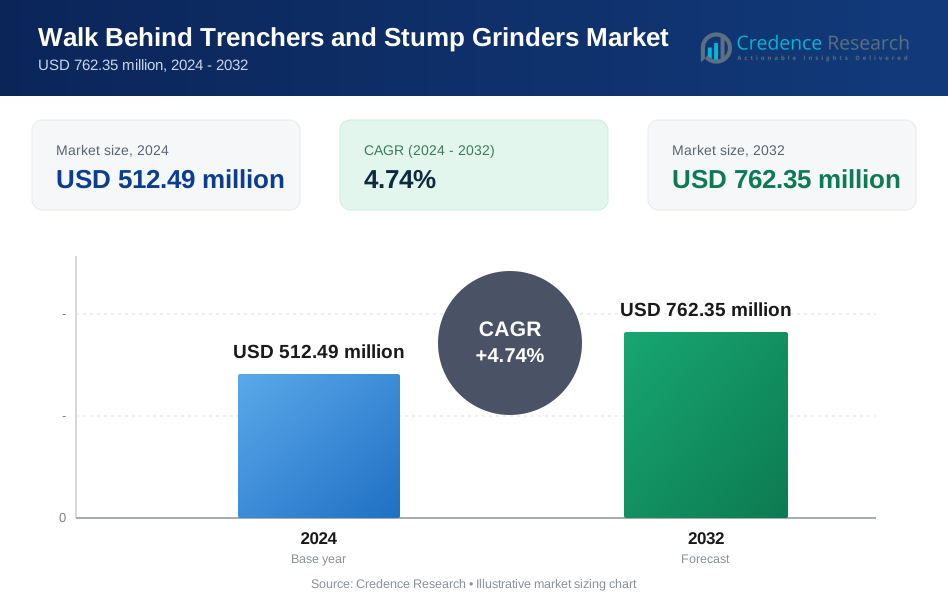
The Global Walk Behind Trenchers and Stump Grinders Market size was valued at USD 375.36 million in 2018, reached USD 512.49 million in 2024, and is anticipated to reach USD 762.35 million by 2032, at a CAGR of 4.74% during the forecast period.
| REPORT ATTRIBUTE | DETAILS |
|---|---|
| Historical Period | 2020-2023 |
| Base Year | 2024 |
| Forecast Period | 2025-2032 |
| Walk Behind Trenchers and Stump Grinders Market Size 2024 | USD 512.49 Million |
| Walk Behind Trenchers and Stump Grinders Market, CAGR | 4.74% |
| Walk Behind Trenchers and Stump Grinders Market Size 2032 | USD 762.35 Million |
Growing demand for efficient land-clearing tools drives strong interest in walk-behind trenchers and stump grinders. Landscape firms adopt these machines to manage tight-space excavation in residential and commercial areas. Utility installers rely on precise trenching for cable, irrigation, and drainage lines. Rental companies expand their fleets to match rising requests from seasonal operators. Manufacturers integrate safety upgrades, faster cutting systems, and reduced vibration features to improve user comfort. Urban development projects and home renovation trends sustain long-term equipment adoption.
North America leads the market due to extensive landscaping activity, high rental penetration, and strong contractor networks. Europe follows with steady demand from infrastructure upgrades and municipal maintenance. Asia Pacific emerges as the fastest-growing region driven by rapid construction growth, expanding green spaces, and wider machinery adoption among small contractors. China, India, and Southeast Asia show strong potential as urban expansion increases the need for compact digging and clearing tools. Latin America and the Middle East gradually adopt the machines due to ongoing residential development and facility upgrades.
Market Insights:
- The Global Walk Behind Trenchers and Stump Grinders Market was valued at USD 375.36 million in 2018, reached USD 512.49 million in 2024, and is projected to hit USD 762.35 million by 2032, growing at a CAGR of 4.74% during the forecast period.
- North America (39.3%), Europe (30.7%), and Asia Pacific (21.3%) hold the top three regional shares, driven by strong landscaping activity, expanding municipal maintenance operations, and large-scale urban development programs. These regions dominate due to advanced contractor networks, rental penetration, and steady infrastructure upgrades.
- Asia Pacific, holding 21.3%, stands out as the fastest-growing region due to rapid urbanization, telecom fiber expansion, and rising adoption of compact machinery across emerging economies.
- From the product distribution shown in the chart, Walk Behind Trenchers account for roughly ~50% of the segment share, reflecting their broad utility across residential, commercial, and utility trenching tasks.
- Walk Behind Stump Grinders hold about ~35%, while Tow-Behind Stump Grinders contribute nearly ~15%, supported by expanding demand in land clearing, property development, and maintenance projects.
Market Drivers:
Rising Demand for Compact Earthmoving and Clearing Equipment
The Global Walk Behind Trenchers and Stump Grinders Market gains steady momentum due to rising demand for compact tools that support fast soil cutting and stump removal. Contractors choose walk-behind units for projects where large machines cannot maneuver. Residential development expands use across irrigation setups, drainage work, and cable placement. Homeowners rely on rental centers to access these machines for property improvement tasks. Utility workers deploy compact trenchers for shallow line installations with higher accuracy. The market benefits from ease of transport and low power needs across varied job sites. Landscapers use compact grinders for clearing old roots during garden redesigns. Rental businesses expand fleets to meet peak construction seasons.
- For instance, Toro's TRX-250 trencher delivers 498 ft-lbs of torque with hydraulic track drive, enabling efficient cutting in confined areas.
Growing Adoption Across Infrastructure Improvements and Utility Upgrades
Infrastructure programs create new demand waves for trenching and stump removal tools across mixed urban and rural settings. The market gains strength from growing utility repair work tied to broadband expansion. Water and drainage networks use compact trenchers for quick soil access in narrow corridors. It supports faster deployment cycles in telecom projects where precision trenching holds priority. Contractors target walk-behind units to reduce surface disruption near public facilities. Municipal teams rely on grinders to clear damaged trees near construction pathways. Rental operators respond to this demand with wider availability across regional outlets. Rising maintenance schedules strengthen long-term equipment requirements.
- For instance, Vermeer’s RTX200 trencher features a 20.5-hp engine and cutting depths up to 36 inches, supporting utility replacement projects with tighter construction footprints.
Increasing Shift Toward Lightweight, User-Friendly Power Equipment
A strong shift toward compact machine formats drives interest among small contractors and maintenance teams. Users prefer walk-behind models for simple controls, reduced fatigue, and stable handling. Landscaping workers value low vibration and quiet operation during residential projects. The Global Walk Behind Trenchers and Stump Grinders Market gains support from ergonomic upgrades offered by major brands. Manufacturers focus on improving operator safety with shielded components and advanced braking systems. Urban projects favor compact machines that cause less surface damage during soil work. Property managers use these tools to maintain long pathways and green zones. Widening rental access strengthens overall demand.
Rising Mechanization Across Landscaping, Agriculture, and Municipal Services
Mechanization expands across small farms, city maintenance units, and private landscape service providers. Walk-behind trenchers support farm irrigation lines and low-depth soil preparation. Grinders help clear old stumps that obstruct field access routes. It enables faster repair work when storms damage outdoor infrastructure. Municipal teams take up compact units to maintain parks, roadside green belts, and public gardens. Contractors rely on mechanical trenching to reduce manual labor pressure. New housing layouts raise the need for precise digging in compact zones. The broader shift to mechanized outdoor work keeps demand stable across service sectors.
Market Trends:
Integration of Advanced Engine Systems and Cleaner Power Technologies
The Global Walk Behind Trenchers and Stump Grinders Market shows a clear shift toward efficient engines and reduced-emission power units. Manufacturers widen portfolios with fuel-efficient models that reduce operator costs. Electric variants gain early traction among urban contractors focused on low noise jobs. Improved torque systems support cutting through compact soils and thick roots. Users favor smoother engine performance for longer operating cycles. Many firms upgrade carburetion systems to support cleaner combustion. Compact machines offer improved traction for varied terrains. The market sees consistent upgrades in durability and energy management.
- For instance, Husqvarna’s SG13 stump grinder uses a Honda GX390 engine that meets EPA Phase III and CARB emission standards while delivering 11.7 hp net output for sustained grinding performance.
Expansion of Rental-Driven Usage Across Small and Mid-Scale Projects
Rental centers influence strong adoption trends across residential and commercial users. Many small contractors avoid ownership and rely on rental access for flexible workloads. Rental firms maintain mixed fleets that suit different trench depths and stump sizes. The Global Walk Behind Trenchers and Stump Grinders Market benefits from steady weekend and seasonal demand. Homeowners prefer renting machinery for quick landscaping tasks. Rental services promote easy pickup and low training needs for new users. Wider rental availability helps expand brand visibility. Seasonal outdoor projects create recurring demand spikes.
- For instance, United Rentals reports high turnover for compact trenchers like the Ditch Witch C16X, which operates at 16 hp and achieves chain speeds up to 150 ft/min, supporting fast rental-driven workflows.
Growing Preference for Precision Work and Minimal Site Disruption
Precision-driven trenching gains attention among telecom, irrigation, and lighting installers. Contractors seek machines that produce uniform trenches with clean edges. Compact designs help workers avoid large area disturbance on landscaped grounds. It supports installation tasks near driveways, pavements, and garden beds. The Global Walk Behind Trenchers and Stump Grinders Market benefits from better cutter designs that maintain stability in narrow paths. Operators value consistent cutting depth for faster cable placement. Upgraded blade materials help machines tackle mixed soil types. Cleaner operation patterns shape long-term adoption.
Shift Toward Compact, Transport-Friendly Construction Tools
Demand grows for walk-behind equipment that fits in small vehicles or trailers. Lightweight frames help crews move machines across multiple job sites in one day. The Global Walk Behind Trenchers and Stump Grinders Market gains traction from portability features added by major brands. Foldable handles, balanced wheel layouts, and improved towing points support easier mobility. Users adopt transport-friendly equipment to speed job transitions. Landscapers shift to compact tools for routine maintenance rounds. Municipal teams adopt lighter units for fast deployment during emergency clearing. Portability becomes a core preference across modern work patterns.
Market Challenges Analysis:
High Equipment Wear Rates and Rising Maintenance Needs
The Global Walk Behind Trenchers and Stump Grinders Market faces challenges linked to cutter wear, soil abrasiveness, and repeated ground impact. Blades degrade quickly in rocky terrains, raising frequent replacement needs. Operators struggle with higher downtime when machinery encounters hard roots or compact clay. It creates cost pressure for contractors with tight project schedules. Rental firms face maintenance backlogs during heavy usage periods. Mechanical strain increases when users operate machines in wet or uneven soil. Servicing demands rise with advanced engine and hydraulic components. Long-term ownership costs create hesitation among small operators.
Operational Safety Risks and Limited User Skills in Field Applications
Walk-behind trenchers and stump grinders require trained users to avoid on-site injuries. Improper handling raises risks of kickback, unstable cutting paths, and surface chipping. The Global Walk Behind Trenchers and Stump Grinders Market faces adoption hurdles due to varied operator skill levels. Users may lack familiarity with blade engagement speeds and safe trench alignment. Contractors must train staff to manage soil variation and tool vibration. Noise and debris exposure create further safety concerns. Municipal teams face limits when deploying inexperienced workers. Skill gaps slow broader market penetration.
Market Opportunities:
Rising Scope in Landscaping, Irrigation, and Property Enhancement Projects
Landscaping expansion creates strong growth potential across residential and commercial areas. Contractors adopt compact machines to complete soil work faster in confined spaces. The Global Walk Behind Trenchers and Stump Grinders Market gains new opportunities from rising garden upgrades and outdoor renovation programs. Irrigation installers use trenchers for drip line expansion across new layouts. Property managers deploy grinders to clear old trees and improve open space utilization. Rental companies can target homeowners with short-term project needs. Eco-friendly property designs expand demand for precise, low-impact soil work. Suburban development supports wider machine use.
Emerging Demand Across Telecom, Smart Infrastructure, and Municipal Upgrades
Smart infrastructure systems depend on buried cables, controlled wiring paths, and compact trench networks. Contractors rely on walk-behind units to avoid structural disturbance near populated zones. The Global Walk Behind Trenchers and Stump Grinders Market sees strong potential from telecom fiber rollouts. Municipal green belt upgrades widen use of grinders for root clearing. Electric lighting networks require shallow trenching across extended pathways. Compact machines help teams finish repairs without heavy machinery. Urban renewal initiatives create sustained opportunities for soil access tools.
Market Segmentation Analysis:
By Product Type
The Global Walk Behind Trenchers and Stump Grinders Market shows strong demand for walk-behind trenchers due to their precision in tight spaces and suitability for utility installation. Walk-behind stump grinders maintain solid traction across landscaping and property maintenance tasks. Tow-behind stump grinders gain use across larger clearing projects that require extended reach and stable towing support. Self-propelled stump grinders attract users seeking higher power delivery and improved mobility over uneven ground. The “others” category includes multi-purpose compact units that support mixed digging and clearing needs across small contractors and rental operators.
- For instance, the Rayco’s RG25HD self-propelled grinder uses a 23-hp (17.2 kW) Kohler Command engine and cuts 24 inches (60.9 cm) above and 22 inches (55.8 cm) below grade, supporting high-demand field operations.
By Power Source
Gasoline-powered units remain the leading choice due to broad availability, stable torque, and proven field performance across diverse soil conditions. Diesel-powered machines gain use across heavy-duty applications requiring extended operational hours and stronger cutting action. Electric-powered models see rising interest across urban projects where low noise and reduced emissions hold priority. Hydraulic and pneumatic variants secure adoption in specialized industrial setups that demand controlled force and higher safety around sensitive zones. Each power type supports different user priorities linked to cost, performance, and environmental compliance.
By Application
Residential applications create consistent demand for compact trenching and stump removal solutions used in garden upgrades, irrigation lines, and outdoor renovation projects. Commercial users adopt specialized units for facility maintenance, cable placement, and landscaping redesign. Industrial sites rely on higher-capacity models to handle deeper cuts, root clearing, and equipment pathway preparation. Municipal and government departments deploy machines for park maintenance, roadside vegetation control, and public infrastructure repairs. The “others” segment includes agricultural, rental, and event utility applications that require short-duration, high-precision tasks.
By Distribution Channel
Direct sales support large buyers that require fleet-scale procurement and customized equipment packages. Distributors and dealers expand reach across regional markets and provide essential service support. Online retail grows steadily through easy ordering, broader model visibility, and competitive pricing for small contractors and homeowners.
Segmentation:
By Product Type
- Walk Behind Trenchers
- Walk Behind Stump Grinders
- Tow-Behind Stump Grinders
- Self-Propelled Stump Grinders
- Others
By Power Source
- Gasoline-powered
- Diesel-powered
- Electric-powered
- Hydraulic/Pneumatic
By Application
- Residential
- Commercial
- Industrial
- Municipal/Government
- Others
By Distribution Channel
- Direct Sales
- Distributors/Dealers
- Online Retail
By Region
- North America
- U.S.
- Canada
- Mexico
- Europe
- Germany
- France
- U.K.
- Italy
- Spain
- Rest of Europe
- Asia Pacific
- China
- Japan
- India
- South Korea
- South-east Asia
- Rest of Asia Pacific
- Latin America
- Brazil
- Argentina
- Rest of Latin America
- Middle East & Africa
- GCC Countries
- South Africa
- Rest of the Middle East and Africa
Regional Analysis:
North America
The North America Walk Behind Trenchers and Stump Grinders Market size was valued at USD 149.26 million in 2018, reached USD 201.47 million in 2024, and is anticipated to reach USD 300.60 million by 2032, at a CAGR of 4.8% during the forecast period. North America holds 39.3% of the global market share in 2024. The Global Walk Behind Trenchers and Stump Grinders Market gains solid traction in the region due to strong landscaping demand and high contractor density. Rental activity increases due to seasonal construction and quick project cycles. Utility companies use compact trenchers for broadband expansion and shallow cable placement. Landscapers rely on stump grinders for clearing tasks across suburban areas. Municipal departments deploy machines for park maintenance and roadside vegetation work. Manufacturers support adoption with extensive dealer coverage. Rising home renovation trends keep equipment usage consistent across multiple states.
Europe
The Europe Walk Behind Trenchers and Stump Grinders Market size was valued at USD 119.19 million in 2018, reached USD 157.49 million in 2024, and is anticipated to reach USD 222.08 million by 2032, at a CAGR of 4.0% during the forecast period. Europe accounts for 30.7% of the global market share. The Global Walk Behind Trenchers and Stump Grinders Market benefits from municipal maintenance programs and steady landscaping activity across the region. Contractors use trenchers for telecom network upgrades and waterline renewal. Demand rises across countries prioritizing urban greenery and sustainable city planning. Users favor noise-controlled equipment for projects in dense urban environments. Rental companies grow fleets to serve small contractors and public institutions. Infrastructure modernization increases stump removal work in older city zones. Safety-focused design standards guide product selection among users.
Asia Pacific
The Asia Pacific Walk Behind Trenchers and Stump Grinders Market size was valued at USD 73.77 million in 2018, reached USD 108.99 million in 2024, and is anticipated to reach USD 183.20 million by 2032, at a CAGR of 6.3% during the forecast period. Asia Pacific holds 21.3% of the global market share. The Global Walk Behind Trenchers and Stump Grinders Market expands quickly in the region due to rapid urbanization and infrastructure upgrades. Contractors adopt compact trenchers for telecom fiber rollouts across emerging cities. Landscaping grows across commercial parks, residential complexes, and institutional areas. Users value compact stump grinders for small-site clearing and maintenance. Rental demand rises across China, India, and Southeast Asia. Municipal projects across high-growth cities generate recurring trenching needs. Industrial clusters use trenchers for underground utility work and equipment layout preparation.
Latin America
The Latin America Walk Behind Trenchers and Stump Grinders Market size was valued at USD 17.77 million in 2018, reached USD 23.96 million in 2024, and is anticipated to reach USD 31.56 million by 2032, at a CAGR of 3.1% during the forecast period. Latin America represents 4.7% of the global market share. The Global Walk Behind Trenchers and Stump Grinders Market grows steadily due to wider use among contractors and property developers. Telecom and water infrastructure upgrades support consistent trenching needs. Residential projects drive adoption of compact clearing tools. Users value walk-behind units for affordability and ease of operation. Municipalities deploy stump grinders for routine tree maintenance. Rental expansion across Brazil and Mexico improves accessibility. Commercial properties adopt trenchers for lighting and ground improvement tasks.
Middle East
The Middle East Walk Behind Trenchers and Stump Grinders Market size was valued at USD 9.47 million in 2018, reached USD 11.70 million in 2024, and is anticipated to reach USD 14.35 million by 2032, at a CAGR of 2.2% during the forecast period. The region holds 2.3% of the global market share. The Global Walk Behind Trenchers and Stump Grinders Market sees selective adoption in the Middle East driven by landscaping and controlled irrigation projects. Contractors use compact trenchers in green developments and planned communities. Public parks and commercial estates rely on stump grinders for maintenance. Rental availability supports short-term utility digging needs. Hot weather conditions guide equipment preference toward durable, heat-resistant models. Municipal projects generate periodic requirements for stump clearing and trench repair. Dealer networks focus on compact, easy-maintenance models for diverse user groups.
Africa
The Africa Walk Behind Trenchers and Stump Grinders Market size was valued at USD 5.90 million in 2018, reached USD 8.88 million in 2024, and is anticipated to reach USD 10.56 million by 2032, at a CAGR of 1.8% during the forecast period. Africa holds 1.7% of the global market share. The Global Walk Behind Trenchers and Stump Grinders Market grows gradually in Africa due to expanding infrastructure and municipal development. Urban growth drives trenching for utilities and small construction projects. Landscaping activity increases in commercial centers and new housing developments. Users choose durable equipment suited for varied soil conditions. Governments invest in green-space projects that require stump clearing. Rental access supports contractors with limited upfront budgets. Telecom upgrades across cities create recurring trenching tasks. Product awareness improves steadily with training programs and growing dealer presence.
Key Player Analysis:
- Vermeer Corporation
- Predator Stump Grinders
- Bandit Industries
- FSI Stump Cutters
- P. Carlton
- Rayco
- Toro
Competitive Analysis:
The Global Walk Behind Trenchers and Stump Grinders Market remains moderately competitive, with strong participation from established equipment manufacturers and specialized landscaping tool providers. Leading companies focus on product durability, operator comfort, and compact design improvements to maintain brand advantage. It gains strength from firms that invest in advanced cutting systems and safety upgrades. Rental channel expansion increases competition across price-sensitive buyers. Companies differentiate through dealer networks, aftermarket services, and flexible financing. Product innovation helps maintain visibility in regions with growing landscaping and utility projects. Digital support tools, such as maintenance guides, improve customer retention. Strategic positioning across high-growth regions sustains long-term rivalry among major brands.
Recent Developments:
- The Toro Company (which owns Vermeer) divested the Trencor equipment brand and the auger boring product category under its American Augers brand in August 2025. Following the sale, Toro continued to produce American Augers' horizontal directional drills, pumps, and fluid cleaning systems at its West Salem, Ohio facility. The Trencor divestiture included assets related to large-track trenchers and mining equipment. This move represented Toro's strategic effort to focus on core underground construction segments, positioning the company for growth in pipeline, water, and energy transmission markets while improving operational efficiency.
- In August 2025, Bandit Industries announced the production of its 100,000th machine, a historic milestone representing decades of innovation and the trust of tree care professionals. The company celebrated this achievement with a special giveaway of the commemorative unit at the TCI Expo held November 6–8, 2025, in St. Louis, Missouri. Marketing Manager Jason Morey emphasized the significance, crediting both the company's employees and the dedication of its dealer network for reaching this achievement.
- Bandit Industries announced a significant partnership with Franklin Rock & Recycle, appointing the company as an authorized industrial dealer in Indiana, Illinois, and Kentucky. Franklin Rock & Recycle now represents Bandit's complete line of industrial equipment, including whole tree chippers, horizontal grinders, and slowspeed shredders, providing customers across the tri-state region with increased access to Bandit's high-performance equipment along with comprehensive parts, sales, and service support. The company also announced Lano Equipment as a new dealer partner, with Bandit CEO Craig Davis noting their strong addition to the dealer network based on their long-standing reputation for excellence in sales, service, and support.
Report Coverage:
The research report offers an in-depth analysis based on By Product Type, By Power Source, By Application, and By Distribution Channel. It details leading market players, providing an overview of their business, product offerings, investments, revenue streams, and key applications. Additionally, the report includes insights into the competitive environment, SWOT analysis, current market trends, as well as the primary drivers and constraints. Furthermore, it discusses various factors that have driven market expansion in recent years. The report also explores market dynamics, regulatory scenarios, and technological advancements that are shaping the industry. It assesses the impact of external factors and global economic changes on market growth. Lastly, it provides strategic recommendations for new entrants and established companies to navigate the complexities of the market.
Future Outlook:
- Demand grows for compact trenching units used in tight installation zones.
- Landscaping projects expand equipment adoption across residential upgrades.
- Rental penetration increases access for small contractors and homeowners.
- Product innovation improves operator comfort, safety, and efficiency.
- Electric-powered models gain traction in noise-sensitive urban areas.
- Municipal maintenance programs widen use of stump grinders in public spaces.
- Infrastructure upgrades drive long-term trenching activity across utilities.
- Manufacturers strengthen global dealer networks to expand service reach.
- Smart features and digital support tools enhance equipment reliability.
- Emerging markets create new growth avenues for low-maintenance models.
Request a Free Sample
Fill in your details and we'll send you a free sample report.
- Sample data tables & charts
- Research methodology
Need a Custom Version of This Report?
Tailor the scope, geography, or segments to your exact requirements.
- Custom geography or segment scope
- Direct access to our analyst team
Frequently Asked Questions
What is the current market size for Global Walk Behind Trenchers and Stump Grinders Market, and what is its projected size in 2032?
At what Compound Annual Growth Rate is the Global Walk Behind Trenchers and Stump Grinders Market projected to grow between 2025 and 2032?
Which Global Walk Behind Trenchers and Stump Grinders Market segment held the largest share in 2024?
What are the primary factors fueling the growth of the Global Walk Behind Trenchers and Stump Grinders Market?
Who are the leading companies in the Global Walk Behind Trenchers and Stump Grinders Market?
Which region commanded the largest share of the Global Walk Behind Trenchers and Stump Grinders Market in 2024?
Table of Content
Chapter 1. Report Introduction
- 1.1 Report Description & Purpose
- 1.1.1 Report Title & Market Definition
- 1.1.2 Unique Selling Propositions (USP) & Key Differentiators
- 1.1.3 Value Proposition for Stakeholders
- 1.2 Research Objectives
- 1.2.1 Market Sizing Objectives (Volume & Revenue)
- 1.2.2 Segmentation Objectives
- 1.2.3 Competitive Intelligence Objectives
- 1.2.4 Forecast & Scenario Objectives
- 1.3 Report Scope
- 1.3.1 Walk Behind Trenchers and Stump Grinders Scope – Types & Subtypes Covered
- 1.3.2 Geographic Scope – Regions & Countries Covered
- 1.3.3 Historical Period, Base Year & Forecast Period (2024; forecast to 2032)
- 1.3.4 Inclusions & Exclusions
- 1.4 HS Code & Classification Framework
- 1.5 Currency, Units & Pricing Basis
- 1.6 Target Stakeholders
- 1.7 Limitations & Assumptions
Chapter 2. Executive Summary
- 2.1 Global Walk Behind Trenchers and Stump Grinders Market Snapshot
- 2.1.1 Market Size – Historical (2024) & Forecast (2024-2032) (2024: USD 512.49 million → 2032: USD 762.35 million)
- 2.1.2 Volume & Revenue – Global Totals
- 2.1.3 Key Market Highlights – Top Five Facts
- 2.2 Walk Behind Trenchers and Stump Grinders Market Segmentation Snapshot
- 2.2.1 Market Split by Region – 2024 vs. 2032
- 2.3 Competitive Snapshot
- 2.3.1 Top 10 Players by Revenue Share – 2024
- 2.3.2 Top 10 Players by Volume Share – 2024
- 2.3.3 Recent Strategic Developments (18-Month Summary)
- 2.4 Key Investment Highlights & Strategic Conclusions
Chapter 3. Walk Behind Trenchers and Stump Grinders Market Dynamics & Industry Analysis
- 3.1 Market Overview & Context
- 3.1.1 Walk Behind Trenchers and Stump Grinders Market Position in the Broader Automotive Value Chain
- 3.1.2 OEM vs. Replacement Market Dynamics
- 3.1.3 Market Maturity & Development Stage by Region
- 3.2 Walk Behind Trenchers and Stump Grinders Market Drivers
- 3.3 Walk Behind Trenchers and Stump Grinders Market Restraints & Challenges
- 3.4 Walk Behind Trenchers and Stump Grinders Market Opportunities
- 3.5 Porter's Five Forces Analysis
- 3.5.1 Threat of New Entrants
- 3.5.2 Bargaining Power of Suppliers
- 3.5.3 Bargaining Power of Buyers
- 3.5.4 Threat of Substitutes
- 3.5.5 Competitive Rivalry – Intensity Assessment
- 3.6 Walk Behind Trenchers and Stump Grinders Value Chain Analysis
- 3.6.1 Upstream – Raw Material/Input Suppliers
- 3.6.1.1 Raw Material/Input 1
- 3.6.1.2 Raw Material/Input 2
- 3.6.1.3 Raw Material/Input 3
- 3.6.2 Midstream – Production/Manufacturing/Service Delivery
- 3.6.2.1 Production/Process Overview
- 3.6.2.2 Key Facility Locations & Capacity by Manufacturer
- 3.6.3 Downstream – Distribution & End Consumer
- 3.6.3.1 Primary Channel – B2B/OEM
- 3.6.3.2 Secondary Channels – Dealer, Retail, Online, Direct
- 3.6.4 Value Chain Profitability Analysis
- 3.6.1 Upstream – Raw Material/Input Suppliers
- 3.7 PESTEL Analysis
- 3.7.1 Political Factors
- 3.7.2 Economic Factors
- 3.7.3 Social Factors
- 3.7.4 Technological Factors
- 3.7.5 Environmental Factors
- 3.7.6 Legal Factors
- 3.8 Walk Behind Trenchers and Stump Grinders Supply Chain Analysis
- 3.8.1 Raw Material/Input Supply Risk Assessment
- 3.8.2 Manufacturing Concentration Risk (Geographic Exposure)
- 3.8.3 Trade Disruption Impact Analysis
- 3.9 Regulatory & Policy Landscape
Note: The regulatory and policy landscape section covers regulations based on their applicability to the market, Walk Behind Trenchers and Stump Grinders category, geography, and scope of the study. Only regulatory frameworks with a material impact on operations, compliance, trade, sustainability, or market access are analyzed in detail.
Chapter 4. Key Investment Pockets & Opportunity Analysis
- 4.1 Walk Behind Trenchers and Stump Grinders Market Attractiveness Analysis
- 4.1.1 By Region – Investment Attractiveness Matrix (Volume × CAGR)
- 4.2 Absolute Revenue Growth Opportunity
- 4.2.1 By Region – Absolute USD Growth Through 2032
- 4.3 Incremental Volume Opportunity
- 4.3.1 By Region – Incremental Volume Through 2032
- 4.3.2 Segment – Incremental Volume
- 4.4 Emerging Submarket Opportunity Deep Dive (Subject to Applicability)
- 4.5 Emerging Market Opportunity Scorecards
- 4.5.1 United States
- 4.5.2 Europe
- 4.5.3 Asia
- 4.5.4 Middle East & Africa
Note: Emerging Market Opportunity Scorecards will be included based on relevance and strategic importance. Regions listed are indicative and may vary depending on data availability and market dynamics.
Chapter 5. Walk Behind Trenchers and Stump Grinders Import-Export Analysis & Trade Flows
- 5.1 Global Trade Overview
- 5.1.1 Global Export Value by Country (2024)
- 5.1.2 Global Export Volume by Country (2024)
- 5.1.3 Global Import Value by Country (2024)
- 5.1.4 Global Import Volume by Country (2024)
- 5.1.5 Net Trade Balance by Country (2024)
- 5.2 Export Analysis – Segment
- 5.2.1 Type 1 (HS Code)
- 5.2.2 Type 2 (HS Code)
- 5.2.3 Type 3 (HS Code)
- 5.2.4 Type 4 (HS Code)
- 5.2.5 Type 5 (HS Code)
- 5.3 Import Analysis – Segment
- 5.3.1 Type 1 (HS Code)
- 5.3.2 Type 2 (HS Code)
- 5.3.3 Type 3 (HS Code)
- 5.3.4 Type 4 (HS Code)
- 5.3.5 Type 5 (HS Code)
- 5.4 Average Unit Trade Prices
- 5.4.1 Average Export Price – Segment & Country
- 5.4.2 Average Import Price – Segment & Source Country
- 5.4.3 Price Trends (2024)
- 5.5 Key Trade Route Analysis
- 5.5.1 Trade Route 1
- 5.5.2 Trade Route 2
- 5.5.3 Trade Route 3
- 5.5.4 Trade Route 4
- 5.5.5 Trade Route 5
- 5.6 Trade Policy Impact Assessment
- 5.6.1 US Anti-Dumping & Section 301 Tariffs
- 5.6.2 EU Customs Union Impact
- 5.6.3 Major Free Trade Agreements
- 5.6.4 USMCA Rules of Origin
Note: Trade policy analysis will be included only where relevant to the Walk Behind Trenchers and Stump Grinders market.
Chapter 6. Competitive Landscape & Company Benchmarking
- 6.1 Walk Behind Trenchers and Stump Grinders Market Concentration & Structure
- 6.1.1 Herfindahl-Hirschman Index (HHI) – vs. 2024
- 6.1.2 Tier 1, Tier 2 & Tier 3 Market Structure
- 6.1.3 Global, Regional & Local Player Dynamics
- 6.2 Walk Behind Trenchers and Stump Grinders Market Share Analysis – 2024
- 6.2.1 Global Revenue Share by Company
- 6.2.2 Global Volume Share by Company
- 6.2.3 Regional Revenue Share
- 6.2.4 Market Share Evolution ( vs. 2024)
- 6.2.5 OEM Segment Share by Company
- 6.2.6 Replacement Segment Share by Company
- 6.3 Production/Delivery Capacity & Facility Analysis
- 6.3.1 Global Installed Capacity
- 6.3.2 Capacity Utilization Rates
- 6.3.3 Production/Output Volume
- 6.3.4 Facility Locations & Capacity Map
- 6.3.5 Planned Capacity Additions
- 6.4 Walk Behind Trenchers and Stump Grinders Competitive Benchmarking Matrix
- 6.4.1 Revenue, Volume, CAGR & Profitability Comparison
- 6.4.2 Channel Revenue Mix
- 6.4.3 Geographic Revenue Exposure
- 6.4.4 R&D Intensity
- 6.4.5 Sustainability Maturity
- 6.5 Strategic Developments in Walk Behind Trenchers and Stump Grinders (Last 24 Months)
- 6.5.1 Mergers, Acquisitions & Divestments
- 6.5.2 New Walk Behind Trenchers and Stump Grinders Launches
- 6.5.3 Facility Expansions
- 6.5.4 Strategic Alliances, Joint Ventures & Partnerships
- 6.5.5 Distribution Expansion & Market Entry
- 6.5.6 Sustainability & ESG Initiatives
- 6.6 Competitive Strategy Mapping
- 6.6.1 Leader, Challenger, Follower & Niche Classification
- 6.6.2 Pricing Strategy Comparison
- 6.6.3 Channel Strategy Matrix
Note: Strategic developments are included based on their materiality and the availability of reliable information.
Chapter 7. Global Walk Behind Trenchers and Stump Grinders Market – By Distribution Channel
- 7.1 Segment Overview
- 7.1.1 Volume & Revenue Split by Channel (2024 & 2032)
- 7.1.2 Channel Mix Evolution (2024-2032)
Chapter 8. Regional Market Analysis – Global Overview
- 8.1 Global Regional Overview
- 8.1.1 Regional Volume Share
- 8.1.2 Regional Revenue Share
- 8.1.3 Regional Volume by Region
- 8.1.4 Regional Revenue by Region
- 8.1.5 Regional Forecast Through 2032
- 8.2 Cross-Regional Segment Analysis
- 8.2.1 By Distribution Channel
- 8.2.2 By Brand/Price Tier
Chapter 9. North America Walk Behind Trenchers and Stump Grinders Market
- 9.1 United States
- 9.2 Canada
- 9.3 Mexico
Chapter 10. Europe Walk Behind Trenchers and Stump Grinders Market
- 10.1 Germany
- 10.2 France
- 10.3 Italy
- 10.4 United Kingdom
- 10.5 Spain
- 10.6 Poland
- 10.7 Russia
- 10.8 Netherlands
- 10.9 Belgium
- 10.10 Sweden
- 10.11 Denmark
- 10.12 Norway
- 10.13 Rest of Europe
Chapter 11. Asia Pacific Walk Behind Trenchers and Stump Grinders Market
- 11.1 China
- 11.2 India
- 11.3 Japan
- 11.4 South Korea
- 11.5 Thailand
- 11.6 Indonesia
- 11.7 Vietnam
- 11.8 Malaysia
- 11.9 Australia
- 11.10 Rest of Asia Pacific
Chapter 12. Latin America Walk Behind Trenchers and Stump Grinders Market
- 12.1 Brazil
- 12.2 Argentina
- 12.3 Colombia
- 12.4 Chile
- 12.5 Rest of Latin America
Chapter 13. Middle East Walk Behind Trenchers and Stump Grinders Market
- 13.1 Saudi Arabia
- 13.2 United Arab Emirates
- 13.3 Turkey
- 13.4 Israel
- 13.5 Iran
- 13.6 Rest of the Middle East
Chapter 14. Africa Walk Behind Trenchers and Stump Grinders Market
- 14.1 South Africa
- 14.2 Egypt
- 14.3 Nigeria
- 14.4 Morocco
- 14.5 Rest of Africa
Chapter 15. Walk Behind Trenchers and Stump Grinders Company Profiles
- 15.1 [Company 01]
- 15.1.1 Company Overview
- 15.1.2 Key Management Personnel
- 15.1.3 Products & Services Portfolio
- 15.1.4 Financial Performance
- 15.1.5 Key Market Focus & Geographic Presence
- 15.1.6 Recent Developments & Strategic Initiatives
Note: The company profile list is preliminary and may change based on research findings, market developments, data availability, and client requirements.
Chapter 16. Appendices
- Appendix A – List of Abbreviations & Acronyms
- Appendix B – Industry Classification Code Reference – Full Series
- Appendix C – Production & Capacity Data Tables
- Appendix D – End-Use & Demand Base Tables
- Appendix E – Consumption & Replacement Rate Assumptions
- Appendix F – ASP Reference Tables
- Appendix G – Manufacturing & Facility Database
- Appendix H – Import-Export Data Tables
- Appendix I – Regulatory Summary Tables
- Appendix J – Primary Research Participant List (Anonymized)
- Appendix K – Primary Research Questionnaire Framework
- Appendix L – Data Sources & Bibliography
- Appendix M – Market Size Divergence & Source Comparison
Chapter 17. Research Methodology
- 17.1 Research Framework & Philosophy
- 17.2 Secondary Research – Sources, Hierarchy & Data Extraction
- 17.3 Data Modeling – Bottom-Up & Top-Down Market Sizing
- 17.4 Primary Research – Stakeholder Framework, LOI & Sample Sizes
- 17.5 Forecast Methodology – Regression, Scenario & Sensitivity Analysis
- 17.6 Quality Control – Four-Layer Validation Framework
- 17.7 Limitations & Standard Assumptions
- 17.8 Disclaimer
