
Market Overview
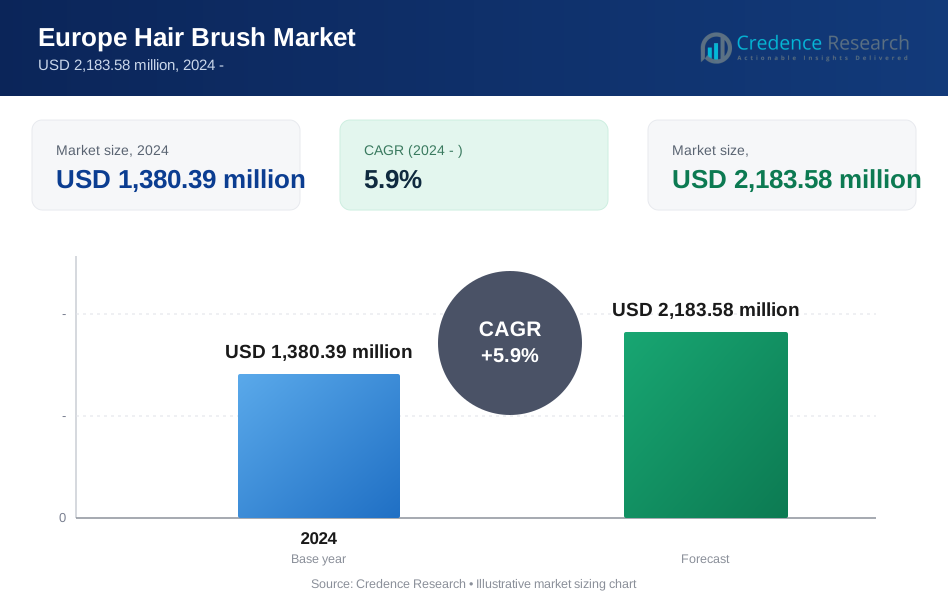
The Europe hair brush market was valued at USD 1,380.39 million in 2024 and is anticipated to reach USD 2,183.58 million by 2032, expanding at a CAGR of 5.8% during the forecast period.
| REPORT ATTRIBUTE | DETAILS |
|---|---|
| Historical Period | 2020-2023 |
| Base Year | 2024 |
| Forecast Period | 2025-2032 |
| Europe Hair Brush Market Size 2024 | USD 1,380.39 million |
| Europe Hair Brush Market, CAGR | 5.8% |
| Europe Hair Brush Market Size 2032 | USD 2,183.58 million |
The Europe hair brush market is shaped by a strong mix of premium heritage brands and high-performance innovators, with key players including Dyson Limited, Mason Pearson Bros. Limited, Denman Inc., G.B. Kent & Sons Plc, Conair LLC, L'Oréal S.A., Spectrum Brands Holdings, Revlon Inc., Spornette International, and The Bristle Brush Company London. These companies compete through advanced bristle engineering, ergonomic designs, heat-resistant materials, and strong salon partnerships. Western Europe leads the regional market with a commanding 44% share, driven by high grooming expenditure, strong adoption of premium tools, and extensive retail and e-commerce networks that strengthen brand visibility and consumer reach across the region.

Market Insights
- The Europe hair brush market was valued at USD 1,380.39 million in 2024 and is projected to reach USD 2,183.58 million by 2032, expanding at a CAGR of 5.9% over the forecast period.
- Rising focus on hair health, scalp care, and at-home styling boosts adoption of detangling, heat-protective, and texture-specific brushes, with the personal application segment holding the largest share due to frequent daily grooming needs.
- Sustainability and product innovation shape market trends, with strong demand for eco-friendly, synthetic, and hybrid materials; meanwhile, premium styling tools gain traction across salons and e-commerce channels.
- Competition intensifies as leading brands like Dyson, Mason Pearson, Denman, L’Oréal, and Conair expand through ergonomic designs, advanced bristle technologies, and omnichannel distribution, while private labels exert price pressure.
- Regionally, Western Europe leads with around 44% share, followed by Southern and Northern Europe; by material, synthetic brushes dominate due to durability and heat resistance, reinforcing their leading position in professional and home grooming.
Market Segmentation Analysis:
By Application:
The personal application segment dominates the Europe hair brush market, accounting for the largest share due to widespread daily grooming routines, higher household purchase frequency, and strong penetration of mass-market brands. Personal-use brushes are driven by rising interest in at-home styling, heat-protective brushing, and scalp-care tools designed to reduce breakage. Professional application follows, supported by salon demand for detangling, blow-drying, and finishing brushes engineered for durability and high-heat compatibility. Growth in premium salon chains and influencer-led styling trends further elevates the need for specialized professional brushes across major European cities.
- For instance, Denman’s well-known D3 Original Styler features 7 rows of nylon-pin bristles engineered for controlled tension during detangling, making it one of the most widely adopted personal-use brushes globally.
By End-user:
Women represent the dominant end-user segment with the highest market share, driven by frequent styling needs, rising adoption of specialty brushes for curls, volume, straightening, and detangling, and strong engagement with beauty and hair-care routines. Men constitute the second-largest segment, benefiting from increased emphasis on beard grooming, short-hair texturizing brushes, and minimalist styling tools. The children’s segment grows steadily, supported by rising interest in soft-bristle and detangling products designed to minimize scalp discomfort. The expanding availability of sensitive-scalp brushes and gender-neutral product lines further strengthens uptake across all user groups.
- For instance, Mason Pearson’s BN1 “Popular Mixture” brush features 8 rings of boar-and-nylon bristles, a hand-polished cellulose acetate handle, and a pneumatic rubber cushion engineered to enhance scalp stimulation making it one of the most sought-after premium options among women with medium to long hair.
By Material:
Synthetic brushes hold the dominant share in the Europe market, supported by their wider affordability, durability, heat resistance, and compatibility with blow-drying and daily high-frequency use. Synthetic bristles also enable targeted functionalities such as anti-static performance, flexible detangling, and smooth glide, making them preferred among both personal and professional users. Organic materials including bamboo handles and natural bristles register growing traction as sustainability awareness rises across Europe. Eco-friendly product lines and biodegradable components appeal to consumers seeking low-impact grooming solutions, particularly in markets with strong environmental preferences such as Germany, the Netherlands, and the Nordics.
Key Growth Drivers
Rising Consumer Focus on Hair Health and Daily Grooming Routines
Growing consumer interest in scalp health, breakage prevention, and hair vitality significantly drives demand for advanced hair brushes across Europe. Users increasingly seek tools that support detangling without damage, reduce frizz, and enhance shine while complementing broader hair-care routines. The expansion of hair science education through beauty influencers and salon professionals has elevated awareness around brush selection for specific textures, lengths, and concerns. As consumers adopt multi-step grooming regimens incorporating heat styling, conditioning treatments, and protective brushing the need for specialty tools intensifies. Products incorporating ergonomic designs, flexible bristle geometries, and scalp-stimulating tips appeal to both younger and older demographics. Higher focus on at-home styling, especially post-pandemic, reinforces recurring purchase cycles. The shift toward hair wellness as part of overall personal care continues to increase demand for value-added, high-performing brushes across major European markets.
- For instance, Tangle Teezer’s Original Detangling Brush integrates patented two-tiered teeth technology, engineered to glide through wet or dry hair with reduced pulling, making it one of the most widely adopted scalp-friendly tools across Europe.
Expansion of Premium and Professional Styling Tools
The growing premiumization of beauty accessories across Europe strongly supports the uptake of salon-grade and technologically enhanced hair brushes. Consumers increasingly gravitate toward tools engineered for heat resistance, anti-static performance, and specialized styling outcomes suited for straight, curly, coily, and fine hair types. Rising engagement with professional salon services further stimulates demand for high-quality blow-dry brushes, paddle brushes, round brushes, and detanglers designed to withstand intensive daily use. The proliferation of hairdressing academies and the expansion of organized salon chains across urban centers contribute to stable procurement of advanced brush lines. Additionally, the influence of professional endorsements and social media tutorials drives consumer aspiration for professional-level styling capabilities at home. Brands that combine functional innovation with aesthetic appeal such as lightweight bodies, improved bristle technologies, and hybrid materials continue to capture growing market traction in the premium segment.
- For instance, Denman’s Head Huggers professional thermal brush series uses ceramic-coated barrels available in four precise diameters 25 mm, 33 mm, 43 mm, and 53 mm engineered to deliver uniform heat distribution and enhanced root lift during blow-drying. Rising engagement with salon services further fuels demand for durable blow-dry, paddle, round, and detangling brushes built for intensive daily use.
Increasing Visibility Through E-commerce and Omnichannel Distribution
Robust digital commerce infrastructure across Europe significantly accelerates hair brush accessibility, discovery, and purchase frequency. E-commerce platforms and brand-owned webstores offer a broad assortment of products, making it easier for consumers to compare textures, features, and uses while reading verified reviews. Online channels also support frequent product launches, limited-edition releases, and customizable brush recommendations based on hair type. Meanwhile, omnichannel strategies combining in-store availability with online purchasing flexibility strengthen brand visibility and consumer trust. Retailers integrate AI-driven product selectors, virtual try-ons for brush types, and targeted advertising campaigns to enhance conversion. Subscription boxes, bundled grooming kits, and influencer-curated collections further elevate cross-selling opportunities. The seamless interplay between e-commerce growth and consumer preference for convenient, informed shopping experiences continues to expand the overall adoption of hair brushes across the European market.
Key Trends & Opportunities
Strong Demand for Eco-Friendly and Sustainable Brush Materials
Sustainability-driven purchasing behavior presents a major opportunity in the European hair brush market. Eco-conscious consumers increasingly prefer brushes made from bamboo, recycled plastics, biodegradable resins, and natural bristles that minimize environmental impact. Brands are responding with collections featuring compostable handles, low-impact packaging, and cruelty-free sourcing, strengthening appeal in environmentally progressive regions such as Germany, the Nordics, and the Netherlands. The circular-beauty movement encourages material transparency and carbon-conscious production, prompting companies to certify brushes through eco-label programs. As sustainability becomes a key differentiator in the beauty accessories category, manufacturers that invest in durable, recyclable, and responsibly sourced brush designs stand to secure long-term brand loyalty and premium positioning. The growing influence of ethical beauty influencers further amplifies demand for green grooming tools.
- For instance, Acca Kappa’s Natura sustainable brush line uses FSC-certified beechwood from reforested, sustainable forests. The brushes feature a natural rubber pneumatic cushion and biodegradable, plant-based pins made of hornbeam or beechwood that are naturally anti-static.
Innovation in Heat-Protective, Anti-Frizz, and Texture-Specific Brushes
Europe’s diverse hair textures and growing interest in advanced styling techniques create strong opportunities for innovation in heat-work brushes, anti-static tools, and texture-focused designs. Brands increasingly develop brushes engineered with ionic bristles, heat-resistant polymers, vented frames for fast drying, and flexible structures that reduce breakage. Curly and textured hair consumers drive rising demand for wide-tooth detanglers, curl-enhancing brushes, and scalp-friendly massagers. At the same time, the trend toward smooth blowouts and polished finishes pushes adoption of ceramic-coated round brushes that support efficient heat distribution. Hybrid tools that combine multiple functions detangling, smoothing, volumizing, and massaging gain traction among consumers seeking versatile, space-saving grooming solutions. Continuous product innovation strengthens brand competitiveness in both the premium and mass-market segments.
- For instance, Olivia Garden’s Ceramic + Ion Thermal Brush series incorporates a vented ceramic barrel available in five diameters 16 mm, 25 mm, 33 mm, 45 mm, and 55 mm paired with ion-charged bristles designed to reduce static and enhance smoothness during high-heat styling.
Growth of Gender-Neutral and Inclusive Grooming Products
The shift toward gender-neutral beauty and personal care presents a notable opportunity for European hair brush manufacturers. Consumers increasingly favor unisex grooming designs that focus on functionality, comfort, and material quality rather than traditional gendered aesthetics. This trend supports the rise of minimalist brush lines with neutral color palettes, ergonomic shapes, and universal bristle types suited for all hair lengths and textures. Inclusive marketing campaigns emphasize diverse hair realities across age, gender identity, and ethnic backgrounds, broadening product appeal. Additionally, the preference for simple, easy-to-use grooming accessories fosters adoption among men, teenagers, and first-time users previously underserved by hyper-gendered designs. The movement toward inclusivity not only expands brand audiences but reinforces long-term loyalty in evolving European beauty markets.
Key Challenges
Intense Market Fragmentation and Price Competition
The Europe hair brush market faces considerable pressure due to high fragmentation with numerous global, regional, and private-label competitors. Mass-market brands, salon-centric manufacturers, and low-cost imports compete aggressively on pricing, making differentiation challenging. Many consumers perceive brushes as low-involvement purchases, pressuring brands to offer promotional pricing, bundles, or frequent discounts. This environment reduces margins, particularly for traditional mid-tier players. High availability of similar-looking products further complicates brand positioning, making innovation and brand storytelling essential for premium differentiation. Companies must invest in quality, material innovation, and targeted marketing to compete effectively within this saturated landscape.
Shifting Raw Material Costs and Sustainability Compliance Requirements
Manufacturers face rising challenges linked to fluctuating raw material costs, especially for high-grade polymers, natural bristles, and bio-based materials used in eco-friendly product lines. European sustainability regulations including restrictions on non-recyclable plastics and requirements for environmental labeling add operational complexity and increase production costs. Brands must balance sustainability commitments with affordability, particularly as consumers remain sensitive to price changes in everyday grooming tools. Implementing greener manufacturing processes, securing compliant materials, and adapting packaging standards require ongoing investment. These cost and compliance pressures may limit smaller manufacturers’ ability to scale sustainably in competitive European markets.
Regional Analysis
Western Europe
Western Europe accounts for the largest share of the region’s hair brush market, contributing approximately 42–45% of total demand. Strong consumer spending on personal grooming, a mature beauty retail landscape, and widespread adoption of premium styling tools support sustained growth. Germany, France, and the UK remain the highest-revenue markets, driven by strong salon activity and high penetration of specialty brushes for different hair textures. The region benefits from strong brand presence, robust e-commerce channels, and rapid uptake of sustainable and professional-grade brush designs, reinforcing its continued leadership within Europe.
Southern Europe
Southern Europe holds an estimated 22–25% share of the Europe hair brush market, supported by strong beauty culture, rising grooming expenditure, and high adoption of detangling and styling brushes suited for diverse hair types. Italy and Spain lead demand, driven by flourishing salon ecosystems, tourist-driven beauty retail, and expanding premium product offerings. Consumers in this region show increasing interest in ceramic-coated round brushes and heat-protective designs for blowouts. Seasonal beauty trends, fashion-led hair styling, and strong brick-and-mortar retail networks further support consistent market expansion across Southern European countries.
Northern Europe
Northern Europe represents 18–20% of the market, driven by high demand for functional, durable, and sustainable hair brush designs. Countries such as Sweden, Denmark, Finland, and Norway prioritize eco-friendly materials, ergonomic shapes, and gentle bristles suitable for daily grooming. Minimalist, premium-quality brushes resonate strongly with consumers who value performance and longevity. The region also shows growing adoption of scalp-care brushes and anti-static tools tailored to colder climates that contribute to dryness and frizz. Strong online purchasing behavior and preference for ethically produced grooming tools reinforce Northern Europe’s steady market momentum.
Eastern Europe
Eastern Europe captures approximately 12–14% of the region’s hair brush market, supported by expanding middle-income consumer groups and increasing access to both mass-market and mid-premium grooming products. Poland, the Czech Republic, and Hungary lead demand as modern retail formats and e-commerce penetration accelerate product availability. Consumers show strong interest in affordable, durable brushes suited for daily use, complemented by rising adoption of professional styling tools in growing salon sectors. Although price sensitivity remains higher than in Western Europe, the market benefits from increasing grooming awareness and ongoing improvements in beauty retail infrastructure.
Central Europe
Central Europe accounts for roughly 8–10% of the market, driven primarily by stable grooming habits and increased availability of international hair-care brands. Austria and Switzerland contribute strongly, supported by high per-capita spending on personal care and preference for premium-quality brushes with advanced materials. Demand is reinforced by professional salon networks and strong consumer inclination toward ergonomically engineered, high-performance grooming tools. Sustainability plays a rising role, with noticeable uptake of bamboo-based brushes and low-impact packaging. Central Europe’s balanced mix of premium retail and specialty beauty chains ensures steady, although moderate, market growth.
Market Segmentations:
By Application
- Personal
- Professional
By End-user
- Women
- Men
- Children
By Material
- Synthetic
- Organic
Competitive Landscape
The competitive landscape of the Europe hair brush market is characterized by a mix of established global brands, regional manufacturers, and emerging sustainability-driven entrants. Leading companies focus on product differentiation through advanced bristle technologies, ergonomic designs, heat-resistant materials, and texture-specific styling solutions. Premium players emphasize professional endorsements, salon partnerships, and strong omnichannel visibility to strengthen brand equity. Meanwhile, eco-friendly brands gain momentum by introducing bamboo handles, biodegradable components, and recycled packaging to meet Europe’s sustainability expectations. Private-label offerings from major retail chains intensify price competition, particularly in the mass-market segment. E-commerce-driven brands leverage influencer collaborations and targeted digital marketing to capture younger consumers. Collectively, competitive success depends on innovation, manufacturing quality, sustainability alignment, and the ability to adapt product portfolios to Europe’s diverse hair textures and grooming behaviors.
Key Player Analysis
- Dyson Limited
- Mason Pearson Bros. Limited
- Spornette International, Inc.
- Spectrum Brands Holdings, Inc.
- L'Oréal S.A.
- Denman Inc.
- Revlon, Inc. (MacAndrews & Forbes)
- B. Kent & Sons Plc
- Conair LLC (American Securities LLC)
- The Bristle Brush Company London
Recent Developments
- In February 2025, Boots the UK beauty retailer expanded its premium haircare range by partnering with ghd to introduce 34 products, including the new ghd Chronos Max hair straightener and styling brushes, available online and in selected stores.
- In December 2024, BIC the company announced the acquisition of Tangle Teezer, a premium UK-based detangling haircare firm headquartered in London, for approximately €200 million, strengthening its position in the €4.5 billion fragmented hairbrush market across Europe and North America.
Report Coverage
The research report offers an in-depth analysis based on Application, End-User, Material and Geography. It details leading market players, providing an overview of their business, product offerings, investments, revenue streams, and key applications. Additionally, the report includes insights into the competitive environment, SWOT analysis, current market trends, as well as the primary drivers and constraints. Furthermore, it discusses various factors that have driven market expansion in recent years. The report also explores market dynamics, regulatory scenarios, and technological advancements that are shaping the industry. It assesses the impact of external factors and global economic changes on market growth. Lastly, it provides strategic recommendations for new entrants and established companies to navigate the complexities of the market.
Future Outlook
- Demand for advanced detangling and scalp-care brushes will increase as consumers prioritize hair wellness and daily grooming efficiency.
- Premium and salon-grade brushes will gain traction as European users seek professional-quality styling results at home.
- Eco-friendly and recyclable materials will become a core differentiator as sustainability expectations continue to rise across major markets.
- Texture-specific brushes designed for curly, coily, and fine hair will expand as brands focus on inclusivity and performance.
- Digital commerce and influencer-driven marketing will accelerate product discovery and strengthen brand visibility.
- Heat-resistant and anti-static technologies will see higher adoption as blow-drying and styling routines become more frequent.
- Omnichannel retail strategies will deepen consumer engagement through personalized recommendations and curated grooming kits.
- Growth of gender-neutral grooming products will support wider market penetration across demographics.
- Professional salon partnerships will reinforce trust in premium and innovative brush designs.
- Adoption of ergonomic, lightweight, and multifunctional brushes will strengthen as consumers prioritize comfort and versatility.
Request a Free Sample
Fill in your details and we'll send you a free sample report.
- Sample data tables & charts
- Research methodology
Need a Custom Version of This Report?
Tailor the scope, geography, or segments to your exact requirements.
- Custom geography or segment scope
- Direct access to our analyst team
Frequently Asked Questions
What is the current market size for the Europe hair brush market, and what is its projected size in 2032?
At what Compound Annual Growth Rate is the Europe hair brush market projected to grow between 2024 and 2032?
Which is the leading Region of the market for Hair Brush?
What are the key drivers for the growth of the Europe Hair Brush Market?
Which is the major segment in the Europe Hair Brush Market by application?
Who are the leading companies in the Europe hair brush market?
Table of Content
Chapter 1. Report Introduction
- 1.1 Report Description & Purpose
- 1.1.1 Report Title & Market Definition
- 1.1.2 Unique Selling Propositions (USP) & Key Differentiators
- 1.1.3 Value Proposition for Stakeholders
- 1.2 Research Objectives
- 1.2.1 Market Sizing Objectives (Volume & Revenue)
- 1.2.2 Segmentation Objectives
- 1.2.3 Competitive Intelligence Objectives
- 1.2.4 Forecast & Scenario Objectives
- 1.3 Report Scope
- 1.3.1 Europe Hair Brush Scope – Types & Subtypes Covered
- 1.3.2 Geographic Scope – Regions & Countries Covered
- 1.3.3 Historical Period, Base Year & Forecast Period (2024; forecast to the forecast period)
- 1.3.4 Inclusions & Exclusions
- 1.4 HS Code & Classification Framework
- 1.5 Currency, Units & Pricing Basis
- 1.6 Target Stakeholders
- 1.7 Limitations & Assumptions
Chapter 2. Executive Summary
- 2.1 Global Europe Hair Brush Market Snapshot
- 2.1.1 Market Size – Historical (2024) & Forecast (the forecast period) (2024: USD 1,380.39 million → forecast year: USD 2,183.58 million)
- 2.1.2 Volume & Revenue – Global Totals
- 2.1.3 Key Market Highlights – Top Five Facts
- 2.2 Europe Hair Brush Market Segmentation Snapshot
- 2.2.1 Market Split by Region – 2024 vs.
- 2.3 Competitive Snapshot
- 2.3.1 Top 10 Players by Revenue Share – 2024
- 2.3.2 Top 10 Players by Volume Share – 2024
- 2.3.3 Recent Strategic Developments (18-Month Summary)
- 2.4 Key Investment Highlights & Strategic Conclusions
Chapter 3. Europe Hair Brush Market Dynamics & Industry Analysis
- 3.1 Market Overview & Context
- 3.1.1 Europe Hair Brush Market Position in the Broader Automotive Value Chain
- 3.1.2 OEM vs. Replacement Market Dynamics
- 3.1.3 Market Maturity & Development Stage by Region
- 3.2 Europe Hair Brush Market Drivers
- 3.3 Europe Hair Brush Market Restraints & Challenges
- 3.4 Europe Hair Brush Market Opportunities
- 3.5 Porter's Five Forces Analysis
- 3.5.1 Threat of New Entrants
- 3.5.2 Bargaining Power of Suppliers
- 3.5.3 Bargaining Power of Buyers
- 3.5.4 Threat of Substitutes
- 3.5.5 Competitive Rivalry – Intensity Assessment
- 3.6 Europe Hair Brush Value Chain Analysis
- 3.6.1 Upstream – Raw Material/Input Suppliers
- 3.6.1.1 Raw Material/Input 1
- 3.6.1.2 Raw Material/Input 2
- 3.6.1.3 Raw Material/Input 3
- 3.6.2 Midstream – Production/Manufacturing/Service Delivery
- 3.6.2.1 Production/Process Overview
- 3.6.2.2 Key Facility Locations & Capacity by Manufacturer
- 3.6.3 Downstream – Distribution & End Consumer
- 3.6.3.1 Primary Channel – B2B/OEM
- 3.6.3.2 Secondary Channels – Dealer, Retail, Online, Direct
- 3.6.4 Value Chain Profitability Analysis
- 3.6.1 Upstream – Raw Material/Input Suppliers
- 3.7 PESTEL Analysis
- 3.7.1 Political Factors
- 3.7.2 Economic Factors
- 3.7.3 Social Factors
- 3.7.4 Technological Factors
- 3.7.5 Environmental Factors
- 3.7.6 Legal Factors
- 3.8 Europe Hair Brush Supply Chain Analysis
- 3.8.1 Raw Material/Input Supply Risk Assessment
- 3.8.2 Manufacturing Concentration Risk (Geographic Exposure)
- 3.8.3 Trade Disruption Impact Analysis
- 3.9 Regulatory & Policy Landscape
Note: The regulatory and policy landscape section covers regulations based on their applicability to the market, Europe Hair Brush category, geography, and scope of the study. Only regulatory frameworks with a material impact on operations, compliance, trade, sustainability, or market access are analyzed in detail.
Chapter 4. Key Investment Pockets & Opportunity Analysis
- 4.1 Europe Hair Brush Market Attractiveness Analysis
- 4.1.1 By Region – Investment Attractiveness Matrix (Volume × CAGR)
- 4.2 Absolute Revenue Growth Opportunity
- 4.2.1 By Region – Absolute USD Growth Through the forecast period
- 4.3 Incremental Volume Opportunity
- 4.3.1 By Region – Incremental Volume Through the forecast period
- 4.3.2 Segment – Incremental Volume
- 4.4 Emerging Submarket Opportunity Deep Dive (Subject to Applicability)
- 4.5 Emerging Market Opportunity Scorecards
- 4.5.1 United States
- 4.5.2 Europe
- 4.5.3 Asia
- 4.5.4 Middle East & Africa
Note: Emerging Market Opportunity Scorecards will be included based on relevance and strategic importance. Regions listed are indicative and may vary depending on data availability and market dynamics.
Chapter 5. Europe Hair Brush Import-Export Analysis & Trade Flows
- 5.1 Global Trade Overview
- 5.1.1 Global Export Value by Country (2024)
- 5.1.2 Global Export Volume by Country (2024)
- 5.1.3 Global Import Value by Country (2024)
- 5.1.4 Global Import Volume by Country (2024)
- 5.1.5 Net Trade Balance by Country (2024)
- 5.2 Export Analysis – Segment
- 5.2.1 Type 1 (HS Code)
- 5.2.2 Type 2 (HS Code)
- 5.2.3 Type 3 (HS Code)
- 5.2.4 Type 4 (HS Code)
- 5.2.5 Type 5 (HS Code)
- 5.3 Import Analysis – Segment
- 5.3.1 Type 1 (HS Code)
- 5.3.2 Type 2 (HS Code)
- 5.3.3 Type 3 (HS Code)
- 5.3.4 Type 4 (HS Code)
- 5.3.5 Type 5 (HS Code)
- 5.4 Average Unit Trade Prices
- 5.4.1 Average Export Price – Segment & Country
- 5.4.2 Average Import Price – Segment & Source Country
- 5.4.3 Price Trends (2024)
- 5.5 Key Trade Route Analysis
- 5.5.1 Trade Route 1
- 5.5.2 Trade Route 2
- 5.5.3 Trade Route 3
- 5.5.4 Trade Route 4
- 5.5.5 Trade Route 5
- 5.6 Trade Policy Impact Assessment
- 5.6.1 US Anti-Dumping & Section 301 Tariffs
- 5.6.2 EU Customs Union Impact
- 5.6.3 Major Free Trade Agreements
- 5.6.4 USMCA Rules of Origin
Note: Trade policy analysis will be included only where relevant to the Europe Hair Brush market.
Chapter 6. Competitive Landscape & Company Benchmarking
- 6.1 Europe Hair Brush Market Concentration & Structure
- 6.1.1 Herfindahl-Hirschman Index (HHI) – vs. 2024
- 6.1.2 Tier 1, Tier 2 & Tier 3 Market Structure
- 6.1.3 Global, Regional & Local Player Dynamics
- 6.2 Europe Hair Brush Market Share Analysis – 2024
- 6.2.1 Global Revenue Share by Company
- 6.2.2 Global Volume Share by Company
- 6.2.3 Regional Revenue Share
- 6.2.4 Market Share Evolution ( vs. 2024)
- 6.2.5 OEM Segment Share by Company
- 6.2.6 Replacement Segment Share by Company
- 6.3 Production/Delivery Capacity & Facility Analysis
- 6.3.1 Global Installed Capacity
- 6.3.2 Capacity Utilization Rates
- 6.3.3 Production/Output Volume
- 6.3.4 Facility Locations & Capacity Map
- 6.3.5 Planned Capacity Additions
- 6.4 Europe Hair Brush Competitive Benchmarking Matrix
- 6.4.1 Revenue, Volume, CAGR & Profitability Comparison
- 6.4.2 Channel Revenue Mix
- 6.4.3 Geographic Revenue Exposure
- 6.4.4 R&D Intensity
- 6.4.5 Sustainability Maturity
- 6.5 Strategic Developments in Europe Hair Brush (Last 24 Months)
- 6.5.1 Mergers, Acquisitions & Divestments
- 6.5.2 New Europe Hair Brush Launches
- 6.5.3 Facility Expansions
- 6.5.4 Strategic Alliances, Joint Ventures & Partnerships
- 6.5.5 Distribution Expansion & Market Entry
- 6.5.6 Sustainability & ESG Initiatives
- 6.6 Competitive Strategy Mapping
- 6.6.1 Leader, Challenger, Follower & Niche Classification
- 6.6.2 Pricing Strategy Comparison
- 6.6.3 Channel Strategy Matrix
Note: Strategic developments are included based on their materiality and the availability of reliable information.
Chapter 7. Global Europe Hair Brush Market – By Distribution Channel
- 7.1 Segment Overview
- 7.1.1 Volume & Revenue Split by Channel (2024 & )
- 7.1.2 Channel Mix Evolution (the forecast period)
Chapter 8. Regional Market Analysis – Global Overview
- 8.1 Global Regional Overview
- 8.1.1 Regional Volume Share
- 8.1.2 Regional Revenue Share
- 8.1.3 Regional Volume by Region
- 8.1.4 Regional Revenue by Region
- 8.1.5 Regional Forecast Through the forecast period
- 8.2 Cross-Regional Segment Analysis
- 8.2.1 By Distribution Channel
- 8.2.2 By Brand/Price Tier
Chapter 9. North America Europe Hair Brush Market
- 9.1 United States
- 9.2 Canada
- 9.3 Mexico
Chapter 10. Europe Europe Hair Brush Market
- 10.1 Germany
- 10.2 France
- 10.3 Italy
- 10.4 United Kingdom
- 10.5 Spain
- 10.6 Poland
- 10.7 Russia
- 10.8 Netherlands
- 10.9 Belgium
- 10.10 Sweden
- 10.11 Denmark
- 10.12 Norway
- 10.13 Rest of Europe
Chapter 11. Asia Pacific Europe Hair Brush Market
- 11.1 China
- 11.2 India
- 11.3 Japan
- 11.4 South Korea
- 11.5 Thailand
- 11.6 Indonesia
- 11.7 Vietnam
- 11.8 Malaysia
- 11.9 Australia
- 11.10 Rest of Asia Pacific
Chapter 12. Latin America Europe Hair Brush Market
- 12.1 Brazil
- 12.2 Argentina
- 12.3 Colombia
- 12.4 Chile
- 12.5 Rest of Latin America
Chapter 13. Middle East Europe Hair Brush Market
- 13.1 Saudi Arabia
- 13.2 United Arab Emirates
- 13.3 Turkey
- 13.4 Israel
- 13.5 Iran
- 13.6 Rest of the Middle East
Chapter 14. Africa Europe Hair Brush Market
- 14.1 South Africa
- 14.2 Egypt
- 14.3 Nigeria
- 14.4 Morocco
- 14.5 Rest of Africa
Chapter 15. Europe Hair Brush Company Profiles
- 15.1 [Company 01]
- 15.1.1 Company Overview
- 15.1.2 Key Management Personnel
- 15.1.3 Products & Services Portfolio
- 15.1.4 Financial Performance
- 15.1.5 Key Market Focus & Geographic Presence
- 15.1.6 Recent Developments & Strategic Initiatives
Note: The company profile list is preliminary and may change based on research findings, market developments, data availability, and client requirements.
Chapter 16. Appendices
- Appendix A – List of Abbreviations & Acronyms
- Appendix B – Industry Classification Code Reference – Full Series
- Appendix C – Production & Capacity Data Tables
- Appendix D – End-Use & Demand Base Tables
- Appendix E – Consumption & Replacement Rate Assumptions
- Appendix F – ASP Reference Tables
- Appendix G – Manufacturing & Facility Database
- Appendix H – Import-Export Data Tables
- Appendix I – Regulatory Summary Tables
- Appendix J – Primary Research Participant List (Anonymized)
- Appendix K – Primary Research Questionnaire Framework
- Appendix L – Data Sources & Bibliography
- Appendix M – Market Size Divergence & Source Comparison
Chapter 17. Research Methodology
- 17.1 Research Framework & Philosophy
- 17.2 Secondary Research – Sources, Hierarchy & Data Extraction
- 17.3 Data Modeling – Bottom-Up & Top-Down Market Sizing
- 17.4 Primary Research – Stakeholder Framework, LOI & Sample Sizes
- 17.5 Forecast Methodology – Regression, Scenario & Sensitivity Analysis
- 17.6 Quality Control – Four-Layer Validation Framework
- 17.7 Limitations & Standard Assumptions
- 17.8 Disclaimer
