
| REPORT ATTRIBUTE | DETAILS |
|---|---|
| Historical Period | 2019-2022 |
| Base Year | 2023 |
| Forecast Period | 2024-2032 |
| Bottled Water Market Size 2023 | USD 284,649.36 Million |
| Bottled Water Market, CAGR | 6.44% |
| Bottled Water Market Size 2032 | USD 509,760.28 Million |
Market Overview
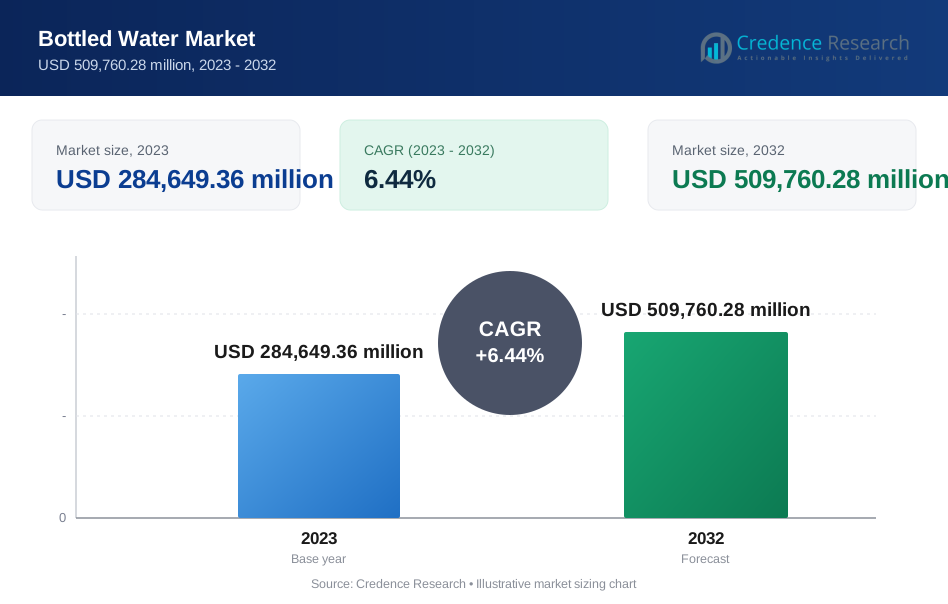
The global Bottled Water Market is projected to grow from USD 284,649.36 million in 2023 to USD 509,760.28 million by 2032, registering a CAGR of 6.44% during the forecast period.
The global bottled water market is driven by increasing consumer awareness regarding the benefits of safe and hygienic drinking water, particularly in urban areas where water quality concerns persist. Rising health consciousness has boosted demand for functional and mineral-enriched bottled water, while the convenience of portable packaging further fuels market growth. Additionally, the surge in on-the-go lifestyles and robust growth in tourism and hospitality sectors significantly contribute to expanding bottled water consumption. Market trends highlight a shift toward eco-friendly and sustainable packaging solutions, driven by heightened environmental concerns and regulatory pressures. Leading manufacturers are adopting innovative strategies, including biodegradable bottles and recycled plastics, to meet consumer preferences and reduce environmental footprints. The increasing penetration of premium and flavored bottled water options, coupled with growing online retail channels, further underscores the market's dynamic evolution. These drivers and trends collectively create lucrative opportunities in the global bottled water industry.
The global bottled water market is characterized by significant regional variations, with North America, Europe, and Asia-Pacific leading the demand. North America, particularly the United States, has a strong market presence due to consumer preferences for healthy hydration options. Europe also shows high consumption, with a growing trend toward premium and functional waters. In Asia-Pacific, rapid urbanization, an expanding middle class, and concerns over water quality drive the market’s growth. Key players in the global bottled water market include major multinational companies such as Nestlé, PepsiCo, The Coca-Cola Company, DANONE, and Primo Water Corporation. Other notable companies include FIJI Water Company, Gerolsteiner Brunnen, VOSS WATER, Nongfu Spring, and Keurig Dr Pepper Inc. These companies have established strong market positions through diverse product offerings, including premium, functional, and flavored waters, and continue to innovate in packaging, sustainability, and regional market penetration to meet growing consumer demand.
Market Insights
- The global bottled water market was valued at USD 2,84,649.36 million in 2023 and is projected to reach USD 5,09,760.28 million by 2032, growing at a CAGR of 6.44%.
- Health-conscious consumers are driving the demand for bottled water, particularly functional, alkaline, and mineral water.
- Rising urbanization and busy lifestyles are contributing to increased bottled water consumption, especially in on-the-go scenarios.
- Environmental concerns regarding plastic pollution and water scarcity challenge the market, encouraging a shift toward sustainable packaging.
- North America holds a significant market share, driven by consumer preference for premium and health-oriented bottled water.
- The Asia-Pacific region is seeing rapid market growth, fueled by an expanding middle class, rising disposable incomes, and concerns over tap water quality.
- Key players like Nestlé, PepsiCo, and The Coca-Cola Company dominate the market, while new entrants focus on sustainability and product innovation.
Market Drivers
Health and Wellness Concerns
Health and wellness trends significantly drive the bottled water market as consumers increasingly prioritize safe and hygienic drinking options. Bottled water is often perceived as a purer and healthier alternative to tap water, especially in regions where water quality is questionable. For instance, bottled water must meet stricter limits for lead content compared to tap water, making it a preferred choice in areas with known water quality issues. This perception, combined with growing awareness about the importance of hydration for overall well-being, has led to a surge in demand. Additionally, the market benefits from the rising popularity of functional waters enriched with vitamins, minerals, or electrolytes, which cater to consumers with specific health and fitness goals.
Changing Lifestyles
Rapid urbanization and busy modern lifestyles have transformed bottled water into a convenient solution for hydration. In urban areas, where access to clean tap water can be inconsistent, the availability of bottled water ensures reliable consumption. For instance, urban residents often face challenges with tap water quality and availability, making bottled water a practical alternative. Furthermore, on-the-go lifestyles demand easy-to-carry options, making bottled water a preferred choice for many. Fitness enthusiasts and athletes further contribute to this demand as they seek dependable hydration during workouts, underscoring the relevance of bottled water in active lifestyles.
Marketing and Government Influence
Marketing strategies and government regulations play pivotal roles in shaping the bottled water market. Strong branding and targeted marketing campaigns foster brand loyalty, influencing consumer preferences and driving repeat purchases. For instance, companies use social media to highlight the health benefits and unique features of their products, connecting directly with consumers. Premiumization trends have also gained traction, with high-end brands offering unique experiences that appeal to affluent consumers. Meanwhile, governments worldwide are enforcing stricter water quality standards, which, while increasing regulatory compliance costs, also enhance consumer trust in bottled water products, indirectly supporting market growth.
Environmental Concerns
Environmental concerns, particularly about plastic pollution, have become a focal point in the bottled water industry. While single-use plastics remain a challenge, companies are increasingly adopting sustainable packaging solutions, including recyclable and biodegradable materials, to address these issues. Additionally, in regions facing water scarcity, bottled water serves as a reliable source of clean hydration, making it indispensable for many communities. This dual role of sustainability and necessity is reshaping consumer perceptions and market dynamics.
Market Trends
Health and Lifestyle Trends Driving Growth
The bottled water market is significantly shaped by evolving health and lifestyle preferences. Consumers increasingly perceive bottled water as a purer and healthier alternative to tap water, particularly in regions with water quality concerns. For instance, a study by the Environmental Working Group found that up to 45 million Americans are drinking water that does not meet federal safety standards. This perception aligns with growing awareness of the importance of hydration for maintaining overall health, driving higher consumption. Functional waters, enriched with vitamins, minerals, or electrolytes, are also gaining popularity as they cater to specific health needs, such as energy boosts or enhanced athletic performance. Additionally, urbanization and fast-paced lifestyles have bolstered demand for convenient hydration solutions. Bottled water fits seamlessly into the on-the-go lifestyles of urban dwellers and has become a staple for fitness enthusiasts and athletes seeking reliable hydration during workouts and other activities. Together, these trends highlight the alignment of bottled water with modern health and lifestyle priorities.
Sustainability, Marketing, and Emerging Market Opportunities
Environmental concerns and strategic marketing initiatives are reshaping the bottled water landscape. The industry is responding to plastic pollution challenges by adopting sustainable packaging solutions, such as recyclable and biodegradable materials, to meet growing consumer demands for environmentally responsible products. In regions with water scarcity, bottled water continues to serve as a critical source of safe hydration, further solidifying its importance. Marketing and branding efforts have also fueled growth, with premiumization trends introducing high-end bottled water products that appeal to affluent consumers. Strong branding and targeted campaigns cultivate brand loyalty, driving repeat purchases. Meanwhile, emerging markets present lucrative opportunities as the expanding middle class and rising disposable incomes boost demand for both regular and premium bottled water. E-commerce platforms are amplifying this growth by providing convenient access to a diverse range of bottled water products, making it easier for consumers to explore and purchase offerings. These dynamics collectively position the bottled water market for sustained expansion globally.
Market Challenges Analysis
Environmental and Regulatory Challenges
The bottled water industry faces significant challenges linked to environmental sustainability and regulatory compliance. One of the most pressing concerns is the heavy reliance on single-use plastic bottles, which contributes to widespread plastic pollution and environmental degradation. Efforts to address this issue through sustainable packaging solutions remain critical but require substantial investment and innovation. Additionally, in regions grappling with water scarcity, the production of bottled water can strain local water resources, intensifying concerns over sustainable water usage. For instance, in India, the production of bottled water has raised concerns about the depletion of local water resources. On the regulatory front, governments worldwide are imposing stricter standards for water quality, labeling, and packaging to ensure consumer safety and environmental protection. While these measures enhance product credibility, they also increase compliance costs for manufacturers. Trade restrictions, including tariffs and barriers, further complicate international market access, making it challenging for businesses to expand their global footprint. These environmental and regulatory hurdles necessitate strategic industry responses to align with evolving consumer expectations and governmental mandates.
Consumer Trust and Market Dynamics
Building and maintaining consumer trust remains a critical challenge in the competitive bottled water market. Despite its reputation as a healthier alternative, some consumers harbor skepticism about the long-term health implications of consuming bottled water, particularly concerning potential microplastics or chemical leaching. Price sensitivity also affects demand, as bottled water is often considered a premium product in many regions, limiting its accessibility to cost-conscious consumers. The intensely competitive market landscape adds to these challenges, with numerous brands striving for differentiation in a crowded space. Companies must invest in building unique brand identities and offering value-added features to stand out. Furthermore, growing consumer demand for sustainability and ethical practices has amplified the need for transparent communication about water sourcing and environmental impacts. Businesses must demonstrate a commitment to eco-friendly practices and responsible resource management to foster trust and loyalty among increasingly conscientious consumers. These dynamics underscore the complexities of navigating the bottled water industry.
Market Opportunities
Expansion in Emerging Markets
Emerging markets present substantial growth opportunities for the global bottled water industry. The rapid urbanization and expansion of the middle class in countries across Asia, Africa, and Latin America are driving increased demand for bottled water. Rising disposable incomes and growing health awareness enable consumers in these regions to opt for safer and more convenient hydration solutions. Additionally, the lack of access to clean and reliable tap water in certain areas further strengthens the demand for bottled water as a primary source of safe hydration. The expansion of retail infrastructure, coupled with the increasing penetration of e-commerce platforms, is facilitating easier access to bottled water products in these developing markets. Companies that establish a robust distribution network and offer affordable yet high-quality products can capitalize on this growing demand.
Innovations in Sustainability and Premium Offerings
Sustainability-focused innovations offer a promising avenue for market expansion. As environmental concerns intensify, there is a growing demand for eco-friendly packaging solutions such as biodegradable bottles and reusable containers. Companies that adopt sustainable practices and demonstrate transparency in their environmental impact can attract environmentally conscious consumers and differentiate themselves in the market. Simultaneously, the rising trend of premiumization presents opportunities to target affluent consumer segments. High-end bottled water products with unique branding, innovative packaging, and functional benefits, such as mineral enrichment or pH balance, are gaining traction. Leveraging these trends through targeted marketing campaigns and premium offerings can enable brands to tap into lucrative niches and strengthen their market position globally.
Market Segmentation Analysis:
By Water Source:
The global bottled water market is segmented by water source into various categories, each catering to specific consumer preferences and health benefits. Natural mineral water holds a significant share, valued for its purity and mineral content, offering health-conscious consumers a natural alternative. Purified water is another key segment, favored for its filtration process that ensures clean and safe hydration. Spring water, sourced directly from natural springs, appeals to consumers seeking fresh and natural hydration without any additives. Artesian water, known for its unique underground water source, has gained popularity due to its perceived purity and quality. Sparkling water is witnessing growing demand, especially in regions where it is viewed as a healthier alternative to carbonated soft drinks. Alkaline water is also trending, with consumers seeking water that helps balance the body’s pH levels, positioning it as a functional hydration option. These diverse water sources reflect a wide range of consumer preferences and market opportunities.
By Packaging Water Source:
Packaging plays a crucial role in the bottled water market, with several options tailored to different consumer needs and environmental considerations. PET (Polyethylene Terephthalate) bottles dominate the market due to their convenience, light weight, and cost-effectiveness, making them the preferred choice for single-serve bottled water. Glass bottles, though more expensive, are gaining traction among premium consumers who value sustainability and the purity of taste. Cartons and pouches are becoming increasingly popular, particularly in regions with a focus on eco-friendly packaging solutions, as they are recyclable and reduce plastic waste. Cans are another emerging packaging option, offering a sustainable alternative to plastic while catering to consumers seeking a unique, functional design. These packaging types cater to different market segments, from environmentally conscious consumers to those seeking convenience, taste, or premium experiences, allowing brands to target a wide range of demographics and preferences.
Segments:
Based on Water Source:
- Natural Mineral Water
- Purified Water
- Spring Water
- Artesian Water
- Sparkling Water
- Alkaline Water
Based on Packaging Water Source:
- PET (Polyethylene Terephthalate) Bottles
- Glass Bottles
- Cartons and Pouches
- Cans
Based on End-user:
- Households
- Foodservice and Hospitality
- Offices and Corporate
- Healthcare Facilities
- Outdoor and On-the-Go
- Institutional Buyers
Based on Product Varieties:
- Still Water
- Carbonated Water
- Flavored Water
- Functional Water
- Vitamin-Enhanced Water
- Premium Water
Based on Pack Sizes:
- Individual-Serve Bottles
- Multi-Serve Bottles
- Bulk Packaging
Based on Distribution Channel:
- Supermarkets and Hypermarkets
- Convenience Stores
- Online Retail
- Vending Machines
- Wholesalers and Distributors
Based on the Geography:
- North America
- U.S.
- Canada
- Mexico
- Europe
- UK
- France
- Germany
- Italy
- Spain
- Russia
- Belgium
- Netherlands
- Austria
- Sweden
- Poland
- Denmark
- Switzerland
- Rest of Europe
- Asia Pacific
- China
- Japan
- South Korea
- India
- Australia
- Thailand
- Indonesia
- Vietnam
- Malaysia
- Philippines
- Taiwan
- Rest of Asia Pacific
- Latin America
- Brazil
- Argentina
- Peru
- Chile
- Colombia
- Rest of Latin America
- Middle East
- UAE
- KSA
- Israel
- Turkey
- Iran
- Rest of Middle East
- Africa
- Egypt
- Nigeria
- Algeria
- Morocco
- Rest of Africa
Regional Analysis
North America
North America holds a significant share of the global bottled water market, accounting for approximately 30% of the total market value. The United States, in particular, dominates the region, with bottled water being the most consumed packaged beverage. A key factor contributing to this strong market position is the growing consumer preference for bottled water as a healthier and more convenient alternative to sugary beverages. Increased awareness of hydration and health benefits further supports this trend, with consumers increasingly opting for purified, mineral, and functional waters. The market in North America is also driven by the high demand for premium bottled water, with consumers willing to pay a premium for specialized waters such as alkaline and sparkling varieties. Additionally, the availability of bottled water across various retail channels, including supermarkets, convenience stores, and online platforms, has bolstered its accessibility and growth. However, environmental concerns regarding plastic packaging have prompted manufacturers to adopt sustainable practices, such as using recyclable PET bottles and exploring alternative materials. Despite challenges like growing environmental awareness, North America's market dominance is expected to remain strong, propelled by health-conscious trends and continued consumer loyalty to bottled water brands.
Asia-Pacific
The Asia-Pacific region is witnessing one of the fastest-growing markets for bottled water, with an estimated market share of around 25%. This growth is primarily driven by the expanding middle class, increased disposable income, and rapid urbanization across countries such as China, India, and Southeast Asia. In these emerging markets, bottled water is increasingly seen as a safe and convenient hydration solution, especially in areas with concerns about tap water quality. Additionally, the rise in health-consciousness among consumers in Asia-Pacific is propelling demand for various types of bottled water, including functional, alkaline, and flavored options. The region's growing e-commerce sector has also made bottled water more accessible, facilitating greater distribution and consumer reach. Moreover, with water scarcity becoming a critical issue in certain countries, bottled water serves as a reliable source of hydration. Despite challenges such as price sensitivity and environmental concerns, the Asia-Pacific market is projected to maintain strong growth, with increased focus on packaging innovation, sustainability, and tailored products for local consumer preferences. As the region continues to urbanize and consumers become more health-conscious, Asia-Pacific is expected to see sustained market expansion in the coming years.
Key Player Analysis
- Nestlé
- PepsiCo
- The Coca-Cola Company
- DANONE
- Primo Water Corporation
- FIJI Water Company LLC
- Gerolsteiner Brunnen GmbH & Co. KG
- VOSS WATER
- Nongfu Spring
- National Beverage Corp.
- Keurig Dr Pepper Inc.
Competitive Analysis
The global bottled water market is highly competitive, with several prominent players vying for market share through diverse product offerings and strategic initiatives. Leading companies such as Nestlé, PepsiCo, The Coca-Cola Company, DANONE, Primo Water Corporation, FIJI Water Company LLC, Gerolsteiner Brunnen GmbH & Co. KG, VOSS WATER, Nongfu Spring, National Beverage Corp., and Keurig Dr Pepper Inc. dominate the market. Leading players maintain a competitive edge by offering a wide range of bottled water products, including premium, functional, flavored, and alkaline water varieties, catering to different consumer preferences. Sustainability has become a key differentiator, with many brands adopting eco-friendly packaging solutions such as recyclable PET bottles and exploring biodegradable materials in response to growing environmental concerns. Additionally, health-conscious consumers are increasingly drawn to functional waters enriched with vitamins, minerals, and electrolytes, which has prompted many brands to diversify their product portfolios. To capture a larger share of the market, companies are also expanding their reach through various retail outlets, including supermarkets, convenience stores, online platforms, and vending machines. The ongoing trend toward healthier lifestyles and increasing consumer awareness of hydration’s importance further intensifies competition, encouraging continuous product development and strategic market positioning. As urbanization and busy lifestyles continue to rise globally, the competition for providing convenient, on-the-go hydration solutions is becoming fiercer.
Recent Developments
- In July 2024, Source, a company based in Scottsdale, Arizona, unveiled a groundbreaking method to tackle the water crisis by generating canned water using air and sunlight. This initiative is part of the increasing trend toward sustainable technologies that aim to resolve environmental challenges while ensuring access to vital resources. The product will be branded as Sky Wtr and is designed to offer an off-grid solution for producing drinking water. Source intends to launch this water for public sale across the U.S. in major retail outlets around August or September 2024. The canned drinking water will be packaged in recyclable aluminum cans and bottles.
- In February 2024, Gatorade announced the launch of its first unflavored water product, Gatorade Water in the U.S., marking a significant expansion into the bottled water category. This move is part of Gatorade’s strategy to diversify its offerings beyond traditional sports drinks and tap into the growing market for functional beverages. Gatorade Water is available nationwide across various retail platforms as well as on Amazon, and Gatorade.com.
- In April 2023, Nestlé partnered with Acreto, a company focused on sustainable packaging, to launch a new line of bottled water made from 100% plant-based materials.
- In February 2023, PepsiCo partnered with biotech company LanzaTech to develop a new process for producing bottled water from captured carbon emissions.
- In January 2023, Icelandic Glacial signed an exclusive deal as the official in-flight water partner with Icelandair, Iceland’s national airline
Market Concentration & Characteristics
The global bottled water market exhibits moderate to high concentration, with a few key players dominating the market while also leaving room for regional and niche brands to thrive. Large multinational corporations control a significant share of the market, benefiting from established brand recognition, extensive distribution networks, and economies of scale. However, the market is also characterized by a large number of regional and local players offering a variety of bottled water products, including premium, functional, flavored, and alkaline options. This diversity allows smaller brands to cater to specific consumer preferences, including health-conscious and eco-conscious segments. The market’s characteristics also reflect increasing consumer demand for sustainable packaging and eco-friendly practices, driving companies to adopt recyclable and biodegradable materials. Additionally, there is a notable shift towards functional bottled water, enriched with minerals, vitamins, or electrolytes, appealing to health-focused consumers. The competitive landscape is further shaped by factors such as marketing strategies, product innovation, and the rise of e-commerce, which provides wider access to bottled water products. As consumers become more discerning about product quality and sourcing, brands are increasingly focusing on transparency and ethical practices to maintain trust. Despite intense competition, the market remains dynamic, with new players continually entering the space and established brands refining their offerings.
Report Coverage
The research report offers an in-depth analysis based on Water Source, Packaging Water Source, End-User, Product Varieties, Pack Sizes, Distribution Channel and Geography. It details leading market players, providing an overview of their business, product offerings, investments, revenue streams, and key applications. Additionally, the report includes insights into the competitive environment, SWOT analysis, current market trends, as well as the primary drivers and constraints. Furthermore, it discusses various factors that have driven market expansion in recent years. The report also explores market dynamics, regulatory scenarios, and technological advancements that are shaping the industry. It assesses the impact of external factors and global economic changes on market growth. Lastly, it provides strategic recommendations for new entrants and established companies to navigate the complexities of the market.
Future Outlook
- The global bottled water market is expected to continue growing, driven by increasing health awareness and rising demand for hydration solutions.
- Functional and enhanced waters, such as those with added vitamins and electrolytes, are likely to see significant growth.
- The shift toward sustainable packaging will gain momentum, with more companies adopting recyclable and biodegradable materials.
- Consumer demand for premium bottled water, including niche varieties like alkaline and mineral waters, is expected to rise.
- The Asia-Pacific region will remain a key growth driver due to urbanization, increasing disposable income, and growing health-consciousness.
- E-commerce will play an increasingly vital role in the distribution of bottled water, expanding access to consumers globally.
- Companies will focus on innovation, introducing new flavors, packaging, and functional ingredients to attract health-conscious consumers.
- Increasing concerns over plastic pollution will prompt the industry to explore alternatives, such as plant-based or reusable packaging options.
- Governments may impose stricter regulations regarding water sourcing, packaging standards, and environmental impact.
- Competitive pressure will encourage consolidation in the industry, with mergers and acquisitions becoming more common among market players.
Request a Free Sample
Fill in your details and we'll send you a free sample report.
- Sample data tables & charts
- Research methodology
Need a Custom Version of This Report?
Tailor the scope, geography, or segments to your exact requirements.
- Custom geography or segment scope
- Direct access to our analyst team
Frequently Asked Questions
What is the current size of the Global Bottled Water Market?
What factors are driving the growth of the Global Bottled Water Market?
What are the key segments within the Global Bottled Water Market?
What are some challenges faced by the Global Bottled Water Market?
Who are the major players in the Global Bottled Water Market?
Table of Content
Chapter 1. Report Introduction
- 1.1 Report Description & Purpose
- 1.1.1 Report Title & Market Definition
- 1.1.2 Unique Selling Propositions (USP) & Key Differentiators
- 1.1.3 Value Proposition for Stakeholders
- 1.2 Research Objectives
- 1.2.1 Market Sizing Objectives (Volume & Revenue)
- 1.2.2 Segmentation Objectives
- 1.2.3 Competitive Intelligence Objectives
- 1.2.4 Forecast & Scenario Objectives
- 1.3 Report Scope
- 1.3.1 Bottled Water Scope – Types & Subtypes Covered
- 1.3.2 Geographic Scope – Regions & Countries Covered
- 1.3.3 Historical Period, Base Year & Forecast Period (2023; forecast to 2032)
- 1.3.4 Inclusions & Exclusions
- 1.4 HS Code & Classification Framework
- 1.5 Currency, Units & Pricing Basis
- 1.6 Target Stakeholders
- 1.7 Limitations & Assumptions
Chapter 2. Executive Summary
- 2.1 Global Bottled Water Market Snapshot
- 2.1.1 Market Size – Historical (2023) & Forecast (2023-2032) (2023: USD 284,649.36 million → 2032: USD 509,760.28 million)
- 2.1.2 Volume & Revenue – Global Totals
- 2.1.3 Key Market Highlights – Top Five Facts
- 2.2 Bottled Water Market Segmentation Snapshot
- 2.2.1 Market Split by Region – 2023 vs. 2032
- 2.3 Competitive Snapshot
- 2.3.1 Top 10 Players by Revenue Share – 2023
- 2.3.2 Top 10 Players by Volume Share – 2023
- 2.3.3 Recent Strategic Developments (18-Month Summary)
- 2.4 Key Investment Highlights & Strategic Conclusions
Chapter 3. Bottled Water Market Dynamics & Industry Analysis
- 3.1 Market Overview & Context
- 3.1.1 Bottled Water Market Position in the Broader Automotive Value Chain
- 3.1.2 OEM vs. Replacement Market Dynamics
- 3.1.3 Market Maturity & Development Stage by Region
- 3.2 Bottled Water Market Drivers
- 3.3 Bottled Water Market Restraints & Challenges
- 3.4 Bottled Water Market Opportunities
- 3.5 Porter's Five Forces Analysis
- 3.5.1 Threat of New Entrants
- 3.5.2 Bargaining Power of Suppliers
- 3.5.3 Bargaining Power of Buyers
- 3.5.4 Threat of Substitutes
- 3.5.5 Competitive Rivalry – Intensity Assessment
- 3.6 Bottled Water Value Chain Analysis
- 3.6.1 Upstream – Raw Material/Input Suppliers
- 3.6.1.1 Raw Material/Input 1
- 3.6.1.2 Raw Material/Input 2
- 3.6.1.3 Raw Material/Input 3
- 3.6.2 Midstream – Production/Manufacturing/Service Delivery
- 3.6.2.1 Production/Process Overview
- 3.6.2.2 Key Facility Locations & Capacity by Manufacturer
- 3.6.3 Downstream – Distribution & End Consumer
- 3.6.3.1 Primary Channel – B2B/OEM
- 3.6.3.2 Secondary Channels – Dealer, Retail, Online, Direct
- 3.6.4 Value Chain Profitability Analysis
- 3.6.1 Upstream – Raw Material/Input Suppliers
- 3.7 PESTEL Analysis
- 3.7.1 Political Factors
- 3.7.2 Economic Factors
- 3.7.3 Social Factors
- 3.7.4 Technological Factors
- 3.7.5 Environmental Factors
- 3.7.6 Legal Factors
- 3.8 Bottled Water Supply Chain Analysis
- 3.8.1 Raw Material/Input Supply Risk Assessment
- 3.8.2 Manufacturing Concentration Risk (Geographic Exposure)
- 3.8.3 Trade Disruption Impact Analysis
- 3.9 Regulatory & Policy Landscape
Note: The regulatory and policy landscape section covers regulations based on their applicability to the market, Bottled Water category, geography, and scope of the study. Only regulatory frameworks with a material impact on operations, compliance, trade, sustainability, or market access are analyzed in detail.
Chapter 4. Key Investment Pockets & Opportunity Analysis
- 4.1 Bottled Water Market Attractiveness Analysis
- 4.1.1 By Region – Investment Attractiveness Matrix (Volume × CAGR)
- 4.2 Absolute Revenue Growth Opportunity
- 4.2.1 By Region – Absolute USD Growth Through 2032
- 4.3 Incremental Volume Opportunity
- 4.3.1 By Region – Incremental Volume Through 2032
- 4.3.2 Segment – Incremental Volume
- 4.4 Emerging Submarket Opportunity Deep Dive (Subject to Applicability)
- 4.5 Emerging Market Opportunity Scorecards
- 4.5.1 United States
- 4.5.2 Europe
- 4.5.3 Asia
- 4.5.4 Middle East & Africa
Note: Emerging Market Opportunity Scorecards will be included based on relevance and strategic importance. Regions listed are indicative and may vary depending on data availability and market dynamics.
Chapter 5. Bottled Water Import-Export Analysis & Trade Flows
- 5.1 Global Trade Overview
- 5.1.1 Global Export Value by Country (2023)
- 5.1.2 Global Export Volume by Country (2023)
- 5.1.3 Global Import Value by Country (2023)
- 5.1.4 Global Import Volume by Country (2023)
- 5.1.5 Net Trade Balance by Country (2023)
- 5.2 Export Analysis – Segment
- 5.2.1 Type 1 (HS Code)
- 5.2.2 Type 2 (HS Code)
- 5.2.3 Type 3 (HS Code)
- 5.2.4 Type 4 (HS Code)
- 5.2.5 Type 5 (HS Code)
- 5.3 Import Analysis – Segment
- 5.3.1 Type 1 (HS Code)
- 5.3.2 Type 2 (HS Code)
- 5.3.3 Type 3 (HS Code)
- 5.3.4 Type 4 (HS Code)
- 5.3.5 Type 5 (HS Code)
- 5.4 Average Unit Trade Prices
- 5.4.1 Average Export Price – Segment & Country
- 5.4.2 Average Import Price – Segment & Source Country
- 5.4.3 Price Trends (2023)
- 5.5 Key Trade Route Analysis
- 5.5.1 Trade Route 1
- 5.5.2 Trade Route 2
- 5.5.3 Trade Route 3
- 5.5.4 Trade Route 4
- 5.5.5 Trade Route 5
- 5.6 Trade Policy Impact Assessment
- 5.6.1 US Anti-Dumping & Section 301 Tariffs
- 5.6.2 EU Customs Union Impact
- 5.6.3 Major Free Trade Agreements
- 5.6.4 USMCA Rules of Origin
Note: Trade policy analysis will be included only where relevant to the Bottled Water market.
Chapter 6. Competitive Landscape & Company Benchmarking
- 6.1 Bottled Water Market Concentration & Structure
- 6.1.1 Herfindahl-Hirschman Index (HHI) – vs. 2023
- 6.1.2 Tier 1, Tier 2 & Tier 3 Market Structure
- 6.1.3 Global, Regional & Local Player Dynamics
- 6.2 Bottled Water Market Share Analysis – 2023
- 6.2.1 Global Revenue Share by Company
- 6.2.2 Global Volume Share by Company
- 6.2.3 Regional Revenue Share
- 6.2.4 Market Share Evolution ( vs. 2023)
- 6.2.5 OEM Segment Share by Company
- 6.2.6 Replacement Segment Share by Company
- 6.3 Production/Delivery Capacity & Facility Analysis
- 6.3.1 Global Installed Capacity
- 6.3.2 Capacity Utilization Rates
- 6.3.3 Production/Output Volume
- 6.3.4 Facility Locations & Capacity Map
- 6.3.5 Planned Capacity Additions
- 6.4 Bottled Water Competitive Benchmarking Matrix
- 6.4.1 Revenue, Volume, CAGR & Profitability Comparison
- 6.4.2 Channel Revenue Mix
- 6.4.3 Geographic Revenue Exposure
- 6.4.4 R&D Intensity
- 6.4.5 Sustainability Maturity
- 6.5 Strategic Developments in Bottled Water (Last 24 Months)
- 6.5.1 Mergers, Acquisitions & Divestments
- 6.5.2 New Bottled Water Launches
- 6.5.3 Facility Expansions
- 6.5.4 Strategic Alliances, Joint Ventures & Partnerships
- 6.5.5 Distribution Expansion & Market Entry
- 6.5.6 Sustainability & ESG Initiatives
- 6.6 Competitive Strategy Mapping
- 6.6.1 Leader, Challenger, Follower & Niche Classification
- 6.6.2 Pricing Strategy Comparison
- 6.6.3 Channel Strategy Matrix
Note: Strategic developments are included based on their materiality and the availability of reliable information.
Chapter 7. Global Bottled Water Market – By Distribution Channel
- 7.1 Segment Overview
- 7.1.1 Volume & Revenue Split by Channel (2023 & 2032)
- 7.1.2 Channel Mix Evolution (2023-2032)
Chapter 8. Regional Market Analysis – Global Overview
- 8.1 Global Regional Overview
- 8.1.1 Regional Volume Share
- 8.1.2 Regional Revenue Share
- 8.1.3 Regional Volume by Region
- 8.1.4 Regional Revenue by Region
- 8.1.5 Regional Forecast Through 2032
- 8.2 Cross-Regional Segment Analysis
- 8.2.1 By Distribution Channel
- 8.2.2 By Brand/Price Tier
Chapter 9. North America Bottled Water Market
- 9.1 United States
- 9.2 Canada
- 9.3 Mexico
Chapter 10. Europe Bottled Water Market
- 10.1 Germany
- 10.2 France
- 10.3 Italy
- 10.4 United Kingdom
- 10.5 Spain
- 10.6 Poland
- 10.7 Russia
- 10.8 Netherlands
- 10.9 Belgium
- 10.10 Sweden
- 10.11 Denmark
- 10.12 Norway
- 10.13 Rest of Europe
Chapter 11. Asia Pacific Bottled Water Market
- 11.1 China
- 11.2 India
- 11.3 Japan
- 11.4 South Korea
- 11.5 Thailand
- 11.6 Indonesia
- 11.7 Vietnam
- 11.8 Malaysia
- 11.9 Australia
- 11.10 Rest of Asia Pacific
Chapter 12. Latin America Bottled Water Market
- 12.1 Brazil
- 12.2 Argentina
- 12.3 Colombia
- 12.4 Chile
- 12.5 Rest of Latin America
Chapter 13. Middle East Bottled Water Market
- 13.1 Saudi Arabia
- 13.2 United Arab Emirates
- 13.3 Turkey
- 13.4 Israel
- 13.5 Iran
- 13.6 Rest of the Middle East
Chapter 14. Africa Bottled Water Market
- 14.1 South Africa
- 14.2 Egypt
- 14.3 Nigeria
- 14.4 Morocco
- 14.5 Rest of Africa
Chapter 15. Bottled Water Company Profiles
- 15.1 [Company 01]
- 15.1.1 Company Overview
- 15.1.2 Key Management Personnel
- 15.1.3 Products & Services Portfolio
- 15.1.4 Financial Performance
- 15.1.5 Key Market Focus & Geographic Presence
- 15.1.6 Recent Developments & Strategic Initiatives
Note: The company profile list is preliminary and may change based on research findings, market developments, data availability, and client requirements.
Chapter 16. Appendices
- Appendix A – List of Abbreviations & Acronyms
- Appendix B – Industry Classification Code Reference – Full Series
- Appendix C – Production & Capacity Data Tables
- Appendix D – End-Use & Demand Base Tables
- Appendix E – Consumption & Replacement Rate Assumptions
- Appendix F – ASP Reference Tables
- Appendix G – Manufacturing & Facility Database
- Appendix H – Import-Export Data Tables
- Appendix I – Regulatory Summary Tables
- Appendix J – Primary Research Participant List (Anonymized)
- Appendix K – Primary Research Questionnaire Framework
- Appendix L – Data Sources & Bibliography
- Appendix M – Market Size Divergence & Source Comparison
Chapter 17. Research Methodology
- 17.1 Research Framework & Philosophy
- 17.2 Secondary Research – Sources, Hierarchy & Data Extraction
- 17.3 Data Modeling – Bottom-Up & Top-Down Market Sizing
- 17.4 Primary Research – Stakeholder Framework, LOI & Sample Sizes
- 17.5 Forecast Methodology – Regression, Scenario & Sensitivity Analysis
- 17.6 Quality Control – Four-Layer Validation Framework
- 17.7 Limitations & Standard Assumptions
- 17.8 Disclaimer
