
| REPORT ATTRIBUTE | DETAILS |
|---|---|
| Historical Period | 2019-2022 |
| Base Year | 2023 |
| Forecast Period | 2024-2032 |
| Hair Brush Market Size 2023 | USD 3,891.23 Million |
| Hair Brush Market, CAGR | 7.00% |
| Hair Brush Market Size 2032 | USD 7,153.87 Million |
Market Overview
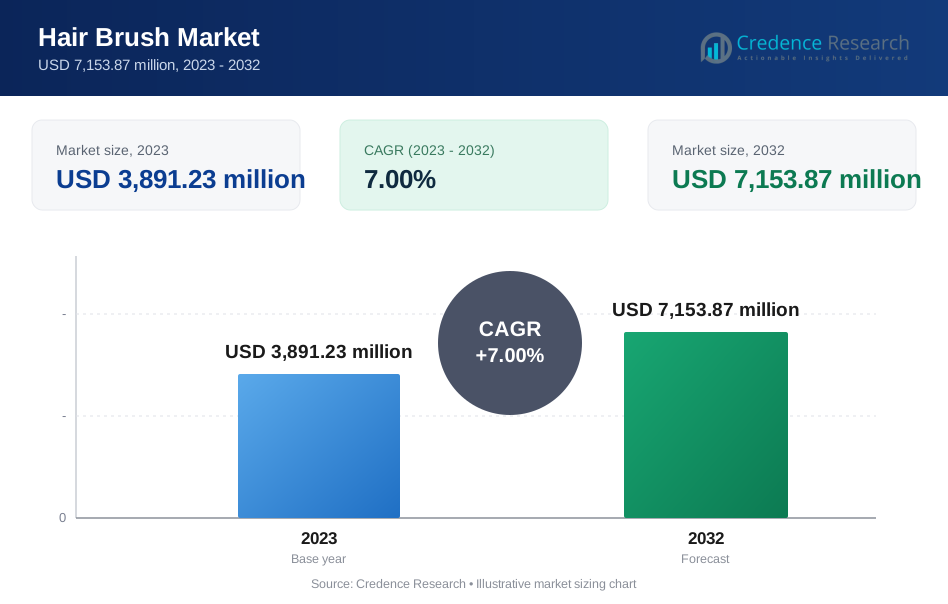
The Hair Brush Market is projected to grow from USD 3,891.23 million in 2023 to USD 7,153.87 million by 2032, reflecting a compound annual growth rate (CAGR) of 7.00%.
The Global Hair Brush Market is driven by increasing consumer focus on personal grooming and the rising demand for high-quality, innovative hair care products. Trends such as the growing popularity of eco-friendly and sustainable brushes, along with the increasing adoption of specialized brushes for different hair types and styling needs, are further fueling market growth. Additionally, the influence of social media and beauty influencers in promoting various hair care tools is contributing to the expansion of the market. These factors, combined with the expanding consumer base in emerging markets, are expected to propel the market forward in the coming years.
The Global Hair Brush Market exhibits significant geographical variation, with North America and Europe leading due to high consumer awareness, advanced hair care industries, and strong presence of key players. The Asia-Pacific region is rapidly emerging, driven by increasing disposable incomes and growing emphasis on personal grooming. Key players in the market include Conair Group Ltd., Dyson Limited, Denman, L'Oreal Paris, and Revlon Inc., who dominate through innovation, extensive product portfolios, and strong distribution networks. These companies are focused on expanding their market presence globally, leveraging technological advancements and catering to diverse consumer needs across different regions.
Market Drivers
Increasing Emphasis on Personal Care
The Global Hair Brush Market is witnessing significant growth due to the increasing emphasis on personal care, driven by rising disposable incomes. For instance, America spent $3.7 trillion on personal healthcare in 2022. As consumers have more financial flexibility, they are investing in a broader range of personal care products, including high-quality hair brushes that cater to their specific needs. This trend is further reinforced by the growing awareness of hair health, with consumers becoming more conscious of the importance of using appropriate hair brushes to maintain and enhance hair quality. The desire for healthier, well-groomed hair is pushing consumers to seek out brushes that offer benefits such as reduced breakage and improved scalp care, contributing to the overall expansion of the market.
Changing Beauty and Fashion Trends
The ever-evolving beauty and fashion industry is another key driver of the Global Hair Brush Market. Diverse hairstyles, from sleek and straight to voluminous curls, require different types of hair brushes, leading to a growing demand for a variety of products. For instance, in 2023, the hair trends were a little extra with more high-maintenance haircuts, dyes that require religious touch-ups, and glossy finishes. Social media platforms play a significant role in this trend, as influencers and beauty enthusiasts showcase various hair styling techniques, driving consumer interest in specific types of brushes. The constant introduction of new hairstyles and the influence of fashion trends create a dynamic market environment where consumers continuously seek the latest and most effective tools to achieve their desired looks.
Technological Advancements
Technological advancements are playing a crucial role in shaping the future of the hair brush market. Innovative brush designs that incorporate features like heat protection, ionic technology, and smart functionalities are gaining popularity among consumers who seek both convenience and enhanced performance. These advancements are not only improving the efficiency of hair styling but also catering to the growing demand for multifunctional and technologically advanced grooming tools. Additionally, material innovations, such as the use of carbon fiber and bamboo, are driving the market for premium hair brushes, offering consumers more durable and eco-friendly options that align with their preferences for high-quality products.
Expansion of E-commerce and Sustainable Products
The expansion of e-commerce has significantly increased the accessibility of a wide range of hair brushes, providing consumers with more options than ever before. Online platforms offer a convenient and hassle-free shopping experience, allowing consumers to easily compare products and read reviews before making a purchase. This has made it easier for consumers to find specialized brushes that meet their specific needs, further driving market growth. Moreover, there is a rising demand for sustainable products, with consumers increasingly opting for hair brushes made from eco-friendly materials like bamboo and recycled plastic. Ethical considerations and the desire for products with minimal environmental impact are pushing manufacturers to innovate and offer sustainable alternatives, contributing to the overall growth of the Global Hair Brush Market.
Market Trends
Premiumization, Customization, and Emphasis on Hair Health
The Global Hair Brush Market is experiencing a strong trend toward premiumization, where consumers are increasingly willing to invest in high-quality products that offer superior performance and durability. For instance, 65% of consumers surveyed reported a preference for premium hair brushes made with materials like boar bristle or natural wood. This trend is driven by a focus on materials such as boar bristle, carbon fiber, and natural wood, which are valued for their longevity and gentle impact on hair and scalp health. Alongside material quality, brands are innovating by incorporating advanced features such as ionic technology, heat protection, and ergonomic designs that enhance the user experience and differentiate their products in a competitive market. As consumers become more discerning, the demand for these premium brushes is on the rise, reflecting a broader trend toward luxury in everyday grooming tools. Concurrently, there is a growing demand for customization and personalization in hair care. Consumers are increasingly seeking brushes tailored to their specific hair types and styling needs, with options ranging from fine to coarse hair and from straight to curly styles. Brands are responding by offering customizable brushes that allow users to select specific features, such as bristle type, handle material, and even personalized engraving. This focus on tailored solutions reflects a broader shift toward consumer-centric products that cater to individual preferences, enhancing both the effectiveness and satisfaction of hair care routines.
Sustainable Practices, Technological Integration, and Digital Influence
Sustainability is becoming a core focus in the Global Hair Brush Market, with consumers showing a strong preference for products made from eco-friendly and ethically sourced materials. The use of bamboo, recycled plastics, and other sustainable materials is not only meeting consumer demand for environmentally responsible products but also aligning with broader trends in the beauty industry toward reducing environmental impact. Brands are increasingly highlighting their commitment to ethical sourcing and sustainable production processes, appealing to the growing segment of eco-conscious consumers. In parallel, the integration of technology into hair brushes is gaining momentum, with the introduction of smart brushes that offer features such as heat sensing, vibration, and even personalized styling recommendations based on real-time data. Some brushes are now being developed with IoT capabilities, allowing users to connect them to smartphones for data-driven insights into their hair care routines. This technological innovation is expanding the functionality of hair brushes, making them not just grooming tools but also part of a broader digital ecosystem that enhances personal care.
Market Challenges Analysis
Intense Competition and Product Differentiation Challenges
The Global Hair Brush Market faces significant challenges due to intense competition, with numerous players ranging from well-established brands to emerging startups vying for market share. For instance, the number of non-employer and salon establishments increased by 36% in the U.S., over the last decade, while their sales jumped 63%. This saturation makes it increasingly difficult for companies to stand out, leading to aggressive price competition that can erode profit margins. Brands must continually innovate and differentiate their products to maintain a competitive edge, but this is complicated by the fact that many hair brushes share similar features and designs. The challenge of product differentiation is further exacerbated by consumer perception, where customers often view hair brushes as largely interchangeable, making it difficult for brands to convince them of the unique value or superior quality of their offerings. Overcoming this perception requires strategic marketing, product innovation, and a focus on brand loyalty, which can be resource-intensive and challenging in a crowded market.
Raw Material Costs, Counterfeit Products, and Regulatory Compliance
Another significant challenge in the Global Hair Brush Market is the fluctuating cost of raw materials such as wood, boar bristle, and plastic. These fluctuations can significantly impact production costs and, consequently, profitability. Companies must navigate these price variances while maintaining product quality and competitive pricing, which can strain financial resources, especially for smaller or emerging brands. Additionally, the market is plagued by the issue of counterfeit products, which not only lead to revenue loss for legitimate businesses but also risk damaging the reputation of established brands. Counterfeit brushes, often of inferior quality, can tarnish consumer trust and reduce the perceived value of authentic products. Furthermore, regulatory compliance presents another layer of complexity, with companies needing to adhere to stringent safety, quality, and environmental regulations. These regulations can pose barriers to market entry for new players and increase operational costs for existing ones. Adapting to these regulations while ensuring compliance across different markets can be burdensome, requiring significant investment in legal expertise, quality assurance, and product testing. Combined with the rapid evolution of consumer preferences and the changing retail landscape, these challenges necessitate a proactive and adaptive approach for companies looking to succeed in the highly competitive and dynamic Global Hair Brush Market.
Market Segmentation Analysis:
By Product:
The Global Hair Brush Market is segmented by product type into Round Brush, Vent Brush, Paddle Brush, Detangling Brush, and Others. Round Brushes are widely used for styling and adding volume, making them a popular choice among consumers seeking salon-like results at home. Vent Brushes, known for their quick-drying capabilities, are preferred for everyday use, especially among those with busy lifestyles. Paddle Brushes are favored for their ability to smooth and straighten hair, catering to consumers looking for sleek and polished styles. Detangling Brushes, designed to gently remove knots without causing damage, are particularly popular among those with curly or textured hair. The "Others" category includes specialized brushes that cater to niche markets, providing solutions for unique hair care needs. Each product type addresses specific consumer preferences, contributing to the overall diversity and growth of the hair brush market.
By Application:
The Global Hair Brush Market is divided into Personal and Professional segments. The Personal segment dominates the market, driven by the growing demand for high-quality hair brushes that consumers can use at home for daily grooming and styling. As individuals become more invested in their personal care routines, the need for effective and versatile hair brushes has increased. The Professional segment, which includes salons and spas, also represents a significant portion of the market. Professional hair stylists require a variety of brushes to achieve different looks and cater to diverse hair types, leading to steady demand in this segment. The expansion of the beauty and wellness industry further supports the growth of the Professional segment, as salons and spas continually seek out advanced tools to enhance their service offerings. The combination of these applications underscores the broad appeal and essential role of hair brushes in both personal and professional hair care routines.
Segments:
Based on Product:
- Round Brush
- Vent Brush
- Paddle Brush
- Detangling Brush
- Others
Based on Application:
- Personal
- Professional
Based on End-user:
- Men
- Women
- Children
Based on the Geography:
- North America
- US
- Canada
- Mexico
- Europe
- Germany
- France
- UK
- Italy
- Spain
- Rest of Europe
- Asia Pacific
- China
- Japan
- India
- South Korea
- South-east Asia
- Rest of Asia Pacific
- Latin America
- Brazil
- Argentina
- Rest of Latin America
- Middle East & Africa
- GCC Countries
- South Africa
- Rest of Middle East and Africa
Regional Analysis
North America
North America stands at the forefront of the global hair brush market, commanding a substantial 35% share. This dominance is primarily attributed to the region's strong emphasis on personal grooming and consumers' willingness to invest in premium hair care products. The North American market is characterized by a sophisticated consumer base that is well-informed about hair care technologies and actively seeks out innovative solutions. This has led to a high demand for technologically advanced brushes, particularly those incorporating ionic and ceramic features. These advanced brushes are prized for their ability to reduce frizz, enhance shine, and minimize hair damage during styling. Additionally, the region has seen a significant uptick in demand for smart hairbrushes that can analyze hair health and provide personalized care recommendations. Alongside the tech-driven trend, North American consumers are increasingly prioritizing eco-friendly and sustainable options in their hair care routines. This shift in consumer preference has prompted manufacturers to innovate with biodegradable materials such as bamboo and recycled plastics, as well as develop recyclable designs that minimize environmental impact. The combination of technological advancement and sustainability focus has created a dynamic and competitive market landscape in North America.
Europe
Europe closely trails North America with a 30% market share in the global hair brush sector. The European market's strength lies in its emphasis on professional hair care and high-quality styling tools. This focus is deeply rooted in the region's rich history of hairdressing and salon culture, where professional-grade tools are highly valued. According to a European Commission consumer survey, 72% of European consumers consider the quality and durability of hair care tools as the most important factor in their purchasing decisions. The European consumer base demonstrates a strong preference for luxury hair brush brands, often viewing these products as long-term investments in their personal care routines. This has led to the proliferation of premium brush manufacturers across the continent, particularly in countries like Italy, France, and Germany, known for their craftsmanship in beauty tools. European consumers place a high value on quality and durability in their hair care accessories, often opting for brushes made with natural bristles, hand-crafted wooden handles, or innovative synthetic materials designed for longevity. The region has also seen a growing trend towards customization, with many brands offering bespoke brush services tailored to individual hair types and styling needs.
Key Player Analysis
- Conair Group Ltd.
- Bristle Hair Brush
- Denman
- Meson Pearson
- B. Kent & Sons
- L'Oreal Paris
- Spornette
- Crave Naturals
- Dyson Limited
- Revlon Inc.
- Spectrum Brands, Inc.
Competitive Analysis
The Global Hair Brush Market is highly competitive, with key players such as Conair Group Ltd., Dyson Limited, Denman, L'Oreal Paris, and Revlon Inc. leading the industry. Conair Group Ltd. is recognized for its broad product portfolio, catering to a wide range of consumer needs with both mass-market and premium options. Dyson Limited stands out with its innovative approach, integrating advanced technology into hair brushes, which appeals to tech-savvy consumers seeking high-performance tools. Denman is well-known for its professional-grade brushes, favored by stylists and salons globally, while L'Oreal Paris leverages its strong brand reputation and extensive distribution network to maintain a robust market presence. Revlon Inc. competes by offering stylish, affordable brushes that attract a broad consumer base. These companies continue to invest in product innovation, strategic partnerships, and marketing to strengthen their positions in the market, addressing diverse consumer preferences and maintaining competitiveness in a dynamic industry.
Recent Developments
- In April 2024, Conair Group Ltd. showcased new products at the NPE2024 event. The company introduced a dozen new products and showcased more than 55 pieces of equipment.
- In May 2024, L’Oreal Paris unveiled innovations that deliver ‘Beauty for Each, Powered by Beauty Tech’ at Viva Technology in Paris. Also, in 2023, L’Oreal Paris achieved record global revenues and grew its R&D investment by 40%.
- In February 2024, the next stage of Denman Prospect was approved, securing 1000 new homes to support the growing city.
- In May 2023, Revlon Inc. successfully completed the financial restructuring process and emerged from Chapter 11.
Market Concentration & Characteristics
The Global Hair Brush Market is characterized by moderate market concentration, with a few dominant players holding significant market shares. Companies like Conair Group Ltd., Dyson Limited, and L'Oreal Paris lead the market, leveraging their extensive product portfolios, strong brand recognition, and global distribution networks. These key players focus on innovation, introducing advanced technologies and premium materials to differentiate their offerings in a competitive landscape. However, the market also features numerous smaller and regional players who cater to niche segments, contributing to the diversity of products available. The market is defined by rapid product innovation, driven by evolving consumer preferences for specialized brushes, eco-friendly materials, and technologically advanced features. Despite the dominance of major brands, the presence of a wide range of competitors ensures a dynamic and competitive environment, where continuous adaptation and differentiation are crucial for maintaining market position.
Report Coverage
The research report offers an in-depth analysis based on Product, Application, Distribution Channel and Geography. It details leading market players, providing an overview of their business, product offerings, investments, revenue streams, and key applications. Additionally, the report includes insights into the competitive environment, SWOT analysis, current market trends, as well as the primary drivers and constraints. Furthermore, it discusses various factors that have driven market expansion in recent years. The report also explores market dynamics, regulatory scenarios, and technological advancements that are shaping the industry. It assesses the impact of external factors and global economic changes on market growth. Lastly, it provides strategic recommendations for new entrants and established companies to navigate the complexities of the market.
Future Outlook
- The Global Hair Brush Market is expected to continue growing, driven by increasing consumer focus on personal grooming and self-care.
- Technological advancements in hair brush design, including smart features and innovative materials, will likely become more prominent.
- Demand for eco-friendly and sustainable hair brushes will rise as consumers become more environmentally conscious.
- The market will see greater customization and personalization options, catering to specific hair types and styling needs.
- Growth in the professional segment, particularly in salons and spas, will drive demand for specialized and high-quality brushes.
- E-commerce channels will play an increasingly important role in market expansion, offering consumers wider product access.
- The Asia-Pacific region will experience significant growth due to rising disposable incomes and growing beauty consciousness.
- Premiumization of hair brushes will continue as consumers seek high-quality, durable products with advanced features.
- Companies will invest more in marketing and influencer partnerships to drive brand visibility and consumer engagement.
- Competition will intensify as new entrants introduce innovative products, challenging established players to maintain their market positions.
Request a Free Sample
Fill in your details and we'll send you a free sample report.
- Sample data tables & charts
- Research methodology
Need a Custom Version of This Report?
Tailor the scope, geography, or segments to your exact requirements.
- Custom geography or segment scope
- Direct access to our analyst team
Frequently Asked Questions
What is the current size of the Global Hair Brush Market?
What factors are driving the growth of the Global Hair Brush Market?
What are the key segments within the Global Hair Brush Market?
What are some challenges faced by the Global Hair Brush Market?
Who are the major players in the Global Hair Brush Market?
Table of Content
Chapter 1. Report Introduction
- 1.1 Report Description & Purpose
- 1.1.1 Report Title & Market Definition
- 1.1.2 Unique Selling Propositions (USP) & Key Differentiators
- 1.1.3 Value Proposition for Stakeholders
- 1.2 Research Objectives
- 1.2.1 Market Sizing Objectives (Volume & Revenue)
- 1.2.2 Segmentation Objectives
- 1.2.3 Competitive Intelligence Objectives
- 1.2.4 Forecast & Scenario Objectives
- 1.3 Report Scope
- 1.3.1 Hair Brush Scope – Types & Subtypes Covered
- 1.3.2 Geographic Scope – Regions & Countries Covered
- 1.3.3 Historical Period, Base Year & Forecast Period (2023; forecast to 2032)
- 1.3.4 Inclusions & Exclusions
- 1.4 HS Code & Classification Framework
- 1.5 Currency, Units & Pricing Basis
- 1.6 Target Stakeholders
- 1.7 Limitations & Assumptions
Chapter 2. Executive Summary
- 2.1 Global Hair Brush Market Snapshot
- 2.1.1 Market Size – Historical (2023) & Forecast (2023-2032) (2023: USD 3,891.23 million → 2032: USD 7,153.87 million)
- 2.1.2 Volume & Revenue – Global Totals
- 2.1.3 Key Market Highlights – Top Five Facts
- 2.2 Hair Brush Market Segmentation Snapshot
- 2.2.1 Market Split by Region – 2023 vs. 2032
- 2.3 Competitive Snapshot
- 2.3.1 Top 10 Players by Revenue Share – 2023
- 2.3.2 Top 10 Players by Volume Share – 2023
- 2.3.3 Recent Strategic Developments (18-Month Summary)
- 2.4 Key Investment Highlights & Strategic Conclusions
Chapter 3. Hair Brush Market Dynamics & Industry Analysis
- 3.1 Market Overview & Context
- 3.1.1 Hair Brush Market Position in the Broader Automotive Value Chain
- 3.1.2 OEM vs. Replacement Market Dynamics
- 3.1.3 Market Maturity & Development Stage by Region
- 3.2 Hair Brush Market Drivers
- 3.3 Hair Brush Market Restraints & Challenges
- 3.4 Hair Brush Market Opportunities
- 3.5 Porter's Five Forces Analysis
- 3.5.1 Threat of New Entrants
- 3.5.2 Bargaining Power of Suppliers
- 3.5.3 Bargaining Power of Buyers
- 3.5.4 Threat of Substitutes
- 3.5.5 Competitive Rivalry – Intensity Assessment
- 3.6 Hair Brush Value Chain Analysis
- 3.6.1 Upstream – Raw Material/Input Suppliers
- 3.6.1.1 Raw Material/Input 1
- 3.6.1.2 Raw Material/Input 2
- 3.6.1.3 Raw Material/Input 3
- 3.6.2 Midstream – Production/Manufacturing/Service Delivery
- 3.6.2.1 Production/Process Overview
- 3.6.2.2 Key Facility Locations & Capacity by Manufacturer
- 3.6.3 Downstream – Distribution & End Consumer
- 3.6.3.1 Primary Channel – B2B/OEM
- 3.6.3.2 Secondary Channels – Dealer, Retail, Online, Direct
- 3.6.4 Value Chain Profitability Analysis
- 3.6.1 Upstream – Raw Material/Input Suppliers
- 3.7 PESTEL Analysis
- 3.7.1 Political Factors
- 3.7.2 Economic Factors
- 3.7.3 Social Factors
- 3.7.4 Technological Factors
- 3.7.5 Environmental Factors
- 3.7.6 Legal Factors
- 3.8 Hair Brush Supply Chain Analysis
- 3.8.1 Raw Material/Input Supply Risk Assessment
- 3.8.2 Manufacturing Concentration Risk (Geographic Exposure)
- 3.8.3 Trade Disruption Impact Analysis
- 3.9 Regulatory & Policy Landscape
Note: The regulatory and policy landscape section covers regulations based on their applicability to the market, Hair Brush category, geography, and scope of the study. Only regulatory frameworks with a material impact on operations, compliance, trade, sustainability, or market access are analyzed in detail.
Chapter 4. Key Investment Pockets & Opportunity Analysis
- 4.1 Hair Brush Market Attractiveness Analysis
- 4.1.1 By Region – Investment Attractiveness Matrix (Volume × CAGR)
- 4.2 Absolute Revenue Growth Opportunity
- 4.2.1 By Region – Absolute USD Growth Through 2032
- 4.3 Incremental Volume Opportunity
- 4.3.1 By Region – Incremental Volume Through 2032
- 4.3.2 Segment – Incremental Volume
- 4.4 Emerging Submarket Opportunity Deep Dive (Subject to Applicability)
- 4.5 Emerging Market Opportunity Scorecards
- 4.5.1 United States
- 4.5.2 Europe
- 4.5.3 Asia
- 4.5.4 Middle East & Africa
Note: Emerging Market Opportunity Scorecards will be included based on relevance and strategic importance. Regions listed are indicative and may vary depending on data availability and market dynamics.
Chapter 5. Hair Brush Import-Export Analysis & Trade Flows
- 5.1 Global Trade Overview
- 5.1.1 Global Export Value by Country (2023)
- 5.1.2 Global Export Volume by Country (2023)
- 5.1.3 Global Import Value by Country (2023)
- 5.1.4 Global Import Volume by Country (2023)
- 5.1.5 Net Trade Balance by Country (2023)
- 5.2 Export Analysis – Segment
- 5.2.1 Type 1 (HS Code)
- 5.2.2 Type 2 (HS Code)
- 5.2.3 Type 3 (HS Code)
- 5.2.4 Type 4 (HS Code)
- 5.2.5 Type 5 (HS Code)
- 5.3 Import Analysis – Segment
- 5.3.1 Type 1 (HS Code)
- 5.3.2 Type 2 (HS Code)
- 5.3.3 Type 3 (HS Code)
- 5.3.4 Type 4 (HS Code)
- 5.3.5 Type 5 (HS Code)
- 5.4 Average Unit Trade Prices
- 5.4.1 Average Export Price – Segment & Country
- 5.4.2 Average Import Price – Segment & Source Country
- 5.4.3 Price Trends (2023)
- 5.5 Key Trade Route Analysis
- 5.5.1 Trade Route 1
- 5.5.2 Trade Route 2
- 5.5.3 Trade Route 3
- 5.5.4 Trade Route 4
- 5.5.5 Trade Route 5
- 5.6 Trade Policy Impact Assessment
- 5.6.1 US Anti-Dumping & Section 301 Tariffs
- 5.6.2 EU Customs Union Impact
- 5.6.3 Major Free Trade Agreements
- 5.6.4 USMCA Rules of Origin
Note: Trade policy analysis will be included only where relevant to the Hair Brush market.
Chapter 6. Competitive Landscape & Company Benchmarking
- 6.1 Hair Brush Market Concentration & Structure
- 6.1.1 Herfindahl-Hirschman Index (HHI) – vs. 2023
- 6.1.2 Tier 1, Tier 2 & Tier 3 Market Structure
- 6.1.3 Global, Regional & Local Player Dynamics
- 6.2 Hair Brush Market Share Analysis – 2023
- 6.2.1 Global Revenue Share by Company
- 6.2.2 Global Volume Share by Company
- 6.2.3 Regional Revenue Share
- 6.2.4 Market Share Evolution ( vs. 2023)
- 6.2.5 OEM Segment Share by Company
- 6.2.6 Replacement Segment Share by Company
- 6.3 Production/Delivery Capacity & Facility Analysis
- 6.3.1 Global Installed Capacity
- 6.3.2 Capacity Utilization Rates
- 6.3.3 Production/Output Volume
- 6.3.4 Facility Locations & Capacity Map
- 6.3.5 Planned Capacity Additions
- 6.4 Hair Brush Competitive Benchmarking Matrix
- 6.4.1 Revenue, Volume, CAGR & Profitability Comparison
- 6.4.2 Channel Revenue Mix
- 6.4.3 Geographic Revenue Exposure
- 6.4.4 R&D Intensity
- 6.4.5 Sustainability Maturity
- 6.5 Strategic Developments in Hair Brush (Last 24 Months)
- 6.5.1 Mergers, Acquisitions & Divestments
- 6.5.2 New Hair Brush Launches
- 6.5.3 Facility Expansions
- 6.5.4 Strategic Alliances, Joint Ventures & Partnerships
- 6.5.5 Distribution Expansion & Market Entry
- 6.5.6 Sustainability & ESG Initiatives
- 6.6 Competitive Strategy Mapping
- 6.6.1 Leader, Challenger, Follower & Niche Classification
- 6.6.2 Pricing Strategy Comparison
- 6.6.3 Channel Strategy Matrix
Note: Strategic developments are included based on their materiality and the availability of reliable information.
Chapter 7. Global Hair Brush Market – By Distribution Channel
- 7.1 Segment Overview
- 7.1.1 Volume & Revenue Split by Channel (2023 & 2032)
- 7.1.2 Channel Mix Evolution (2023-2032)
Chapter 8. Regional Market Analysis – Global Overview
- 8.1 Global Regional Overview
- 8.1.1 Regional Volume Share
- 8.1.2 Regional Revenue Share
- 8.1.3 Regional Volume by Region
- 8.1.4 Regional Revenue by Region
- 8.1.5 Regional Forecast Through 2032
- 8.2 Cross-Regional Segment Analysis
- 8.2.1 By Distribution Channel
- 8.2.2 By Brand/Price Tier
Chapter 9. North America Hair Brush Market
- 9.1 United States
- 9.2 Canada
- 9.3 Mexico
Chapter 10. Europe Hair Brush Market
- 10.1 Germany
- 10.2 France
- 10.3 Italy
- 10.4 United Kingdom
- 10.5 Spain
- 10.6 Poland
- 10.7 Russia
- 10.8 Netherlands
- 10.9 Belgium
- 10.10 Sweden
- 10.11 Denmark
- 10.12 Norway
- 10.13 Rest of Europe
Chapter 11. Asia Pacific Hair Brush Market
- 11.1 China
- 11.2 India
- 11.3 Japan
- 11.4 South Korea
- 11.5 Thailand
- 11.6 Indonesia
- 11.7 Vietnam
- 11.8 Malaysia
- 11.9 Australia
- 11.10 Rest of Asia Pacific
Chapter 12. Latin America Hair Brush Market
- 12.1 Brazil
- 12.2 Argentina
- 12.3 Colombia
- 12.4 Chile
- 12.5 Rest of Latin America
Chapter 13. Middle East Hair Brush Market
- 13.1 Saudi Arabia
- 13.2 United Arab Emirates
- 13.3 Turkey
- 13.4 Israel
- 13.5 Iran
- 13.6 Rest of the Middle East
Chapter 14. Africa Hair Brush Market
- 14.1 South Africa
- 14.2 Egypt
- 14.3 Nigeria
- 14.4 Morocco
- 14.5 Rest of Africa
Chapter 15. Hair Brush Company Profiles
- 15.1 [Company 01]
- 15.1.1 Company Overview
- 15.1.2 Key Management Personnel
- 15.1.3 Products & Services Portfolio
- 15.1.4 Financial Performance
- 15.1.5 Key Market Focus & Geographic Presence
- 15.1.6 Recent Developments & Strategic Initiatives
Note: The company profile list is preliminary and may change based on research findings, market developments, data availability, and client requirements.
Chapter 16. Appendices
- Appendix A – List of Abbreviations & Acronyms
- Appendix B – Industry Classification Code Reference – Full Series
- Appendix C – Production & Capacity Data Tables
- Appendix D – End-Use & Demand Base Tables
- Appendix E – Consumption & Replacement Rate Assumptions
- Appendix F – ASP Reference Tables
- Appendix G – Manufacturing & Facility Database
- Appendix H – Import-Export Data Tables
- Appendix I – Regulatory Summary Tables
- Appendix J – Primary Research Participant List (Anonymized)
- Appendix K – Primary Research Questionnaire Framework
- Appendix L – Data Sources & Bibliography
- Appendix M – Market Size Divergence & Source Comparison
Chapter 17. Research Methodology
- 17.1 Research Framework & Philosophy
- 17.2 Secondary Research – Sources, Hierarchy & Data Extraction
- 17.3 Data Modeling – Bottom-Up & Top-Down Market Sizing
- 17.4 Primary Research – Stakeholder Framework, LOI & Sample Sizes
- 17.5 Forecast Methodology – Regression, Scenario & Sensitivity Analysis
- 17.6 Quality Control – Four-Layer Validation Framework
- 17.7 Limitations & Standard Assumptions
- 17.8 Disclaimer
