| REPORT ATTRIBUTE | DETAILS |
|---|---|
| Historical Period | 2019-2022 |
| Base Year | 2023 |
| Forecast Period | 2024-2032 |
| Therapeutic Monoclonal Antibodies Market Size 2023 | USD 2451.2 Million |
| Therapeutic Monoclonal Antibodies Market, CAGR | 3.50% |
| Therapeutic Monoclonal Antibodies Market Size 2032 | USD 3340.7 Million |
Market Insights
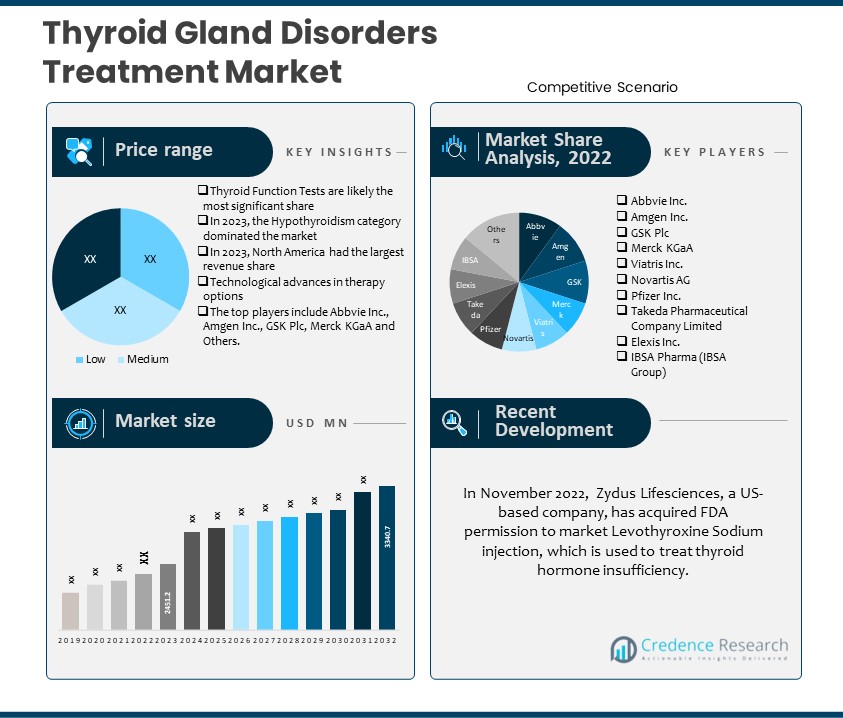
- The global demand for Therapeutic Monoclonal Antibodies was valued at USD 2451.2 Million in 2023 and is expected to reach USD 3340.7 Million in 2032, growing at a CAGR of 3.50% between 2024 and 2032.
- In 2023, the Hypothyroidism category dominated the global Thyroid Gland Disorder Treatment market, with Hyperthyroidism predicted to grow at the quickest CAGR.
- In 2023, pharmaceuticals will dominate the global market for thyroid gland disorders, with surgical treatments serving as an alternative treatment.
- Thyroid Function Tests are likely the most significant share, while the fastest-growing field could be Molecular Testing.
- Hospitals provide a majority of thyroid gland disease treatments, and diagnostic labs are rapidly expanding.
- In 2023, North America had the biggest revenue share at 46%, and the Asia Pacific region is forecast to have the quickest growth rate of 12.1% throughout the projected period.
- The rising prevalence of thyroid disorders promotes market expansion.
- Limited access to healthcare services impedes market expansion.
Executive Summary
Market Definition
Thyroid diseases can cause raised or decreased amounts of metabolic hormones, resulting in hypothyroidism and hyperthyroidism. Iodine shortage and autoimmune illness can both induce thyroid disorders. Iodine deficiency is a key risk factor for developing thyroid disorders. Technological advancements in thyroid problem therapy are also expected to drive market expansion during the forecast period. Radioactive iodine (I-131) is used to treat hyperthyroidism. It is an effective way of treatment. It is now more commonly used as a first-line treatment instead of surgery, which reduces thyroxin levels and gland size.
Market Overview
The global Thyroid Gland Disorders Treatment Market has witnessed steady growth in recent years and is expected to grow at a CAGR of 3.50% between 2024 and 2032. The market was valued at USD 2451.2 million in 2023 and is expected to reach USD 3340.7 million in 2032.
Thyroid cancer is a big issue that is increasing the need for treatment. To meet demand, many medications are in the pipeline, but only a few have gotten approval. In May 2018, the FDA approved a combination of two targeted medications, dabrafenib and trametinib, to treat patients with anaplastic thyroid cancer. The combination of Tafinlar (dabrafenib) and Mekinist (trametinib) is the first FDA-approved treatment for this kind of thyroid cancer. Furthermore, the FDA authorized Lenvatinib in 2015 for the treatment of locally recurrent or metastatic differentiated thyroid carcinoma that is progressing and resistant to radioactive iodine. In the same year, Japan got approval for the manufacturing and marketing of Lenvima, an anticancer medication used to treat thyroid cancer.
The thyroid disease therapy market size is also predicted to expand significantly throughout the forecast period, owing to the rising prevalence of thyroid cancer. For instance, the National Cancer Institute of the United States reported in 2016 that there were an estimated 822,242 persons living with thyroid cancer in the United States. Furthermore, the American Cancer Society expects that thyroid cancer in the United States will result in approximately 52,070 new cases (14,260 in men and 37,810 in women) and approximately 2,170 deaths (1,020 in men and 1,150 in women) in 2019.
The high cost of thyroid disorder therapy may limit its expansion over the forecast period. For example, according to the National Center for Biotechnology Information's 2015 report, the total national cost of well-differentiated thyroid cancer (WDTC) care in 2013 was $1.6 billion.
Segmentation By Type of Thyroid Disorder
- In 2023, the Hypothyroidism segment dominated the worldwide Thyroid Gland Disorder Treatment market. Hypothyroidism is among the most common thyroid illnesses worldwide. It happens when the thyroid gland fails to generate adequate thyroid hormones, resulting in a variety of symptoms such as fatigue, weight gain, and depression.
- Hyperthyroidism is expected to develop at the fastest CAGR of 11.6% throughout the projected timeframe. This part focuses on treatments for excessive thyroid function.
Segmentation By Treatment Modality
- In terms of value, the Medications category will lead the global market for thyroid gland disorders in 2023. The medication section discusses the use of synthetic thyroid hormones like levothyroxine for hypothyroidism and antithyroid pharmaceuticals like methimazole and propylthiouracil for hyperthyroidism.
- Surgical interventions are another treatment option for thyroid gland disorders. The thyroid gland can be surgically removed, either partially or fully. When other therapies have failed or there is thyroid cancer present, this medication is commonly used.
Segmentation by Diagnostic Tests
- Thyroid Function Tests, which involve evaluating levels of hormones such as TSH, T3, and T4, are likely the most significant share ownership sector. This region is critical for detecting and monitoring thyroid problems.
- However, the fastest-growing area could be Molecular Testing, such as genetic testing for thyroid cancer. Molecular testing provides individualized and targeted therapy choices, which is driving its rapid market expansion as precision medicine becomes more important in controlling thyroid problems.
Segmentation By End-User
- Hospitals account for the majority of the thyroid gland disease treatment market. These outlets are popular for one basic reason. This is because it is capable of managing a wide range of thyroid problems. Hospitals and clinics can provide long-term and short-term treatments, as well as diagnostics and consultations.
- Although hospitals and clinics dominate the industry, diagnostic labs are experiencing rapid development. The understanding and awareness of thyroid disorders has grown, emphasizing the significance of a precise and timely diagnosis.
Segmentation by Region
- In 2023, North America had the greatest revenue share at 46%.
- The Asia Pacific area is expected to have the fastest growth rate of 12.1% over the projection period.
- The rest of the world, including Latin America, the Middle East, and Africa, supplies the remaining demand for Therapeutic Monoclonal Antibodies.
North America emerged as the dominating player in the worldwide Thyroid Gland Disorder Treatment market in 2023, accounting for the highest market share in terms of value. North America, notably the United States and Canada, has a sophisticated healthcare infrastructure, including well-established diagnostic and treatment facilities for thyroid diseases. Both healthcare professionals and the general public widely understand thyroid problems. The region has a large number of patients with thyroid problems, such as hypothyroidism and thyroid cancer. North America is a hotbed of pharmaceutical innovation, with numerous major corporations researching and marketing thyroid problem medicines.
Moreover, The Asia-Pacific market is expected to be the fastest-growing, providing lucrative potential prospects for Thyroid Gland Disorder Treatment manufacturers over the forecast period. Countries in the Asia-Pacific area, such as China and India, are increasing their healthcare expenditures, resulting in better access to healthcare services and pharmaceuticals. Thyroid diseases are becoming more widely known throughout Asia-Pacific, prompting an increase in the number of people seeking treatment.
Also, Changing urban lives and nutritional choices have contributed to a rise in thyroid problems. Pharmaceutical companies are aggressively targeting the Asia-Pacific market, providing new medications to meet the rising need for thyroid problem therapies.
Key Highlights of the Report
Type of Thyroid Disorder, Treatment Modality, Diagnostic Tests, End-User, and region segment of the global Thyroid Gland Disorders Treatment Market. In 2023, Fully Human Monoclonal Antibodies held the largest market share, with oncology dominating. Furthermore, Intravenous (IV) Administration is the most prevalent segment, followed by Human Epidermal Growth Factor Receptor 2 (HER2) Inhibitors. Furthermore, Humanized Monoclonal Antibodies have the quickest CAGR. and North America, leading the market growth.
The incidence of thyroid problems, advances in diagnostic technology, and greater awareness and screening programs are the primary driving forces behind the industry. Furthermore, key market restraints include restricted treatment options, pharmacological side effects, and expensive treatment prices. Furthermore, increased healthcare expenditure, strategic alliances and collaborations, and the expanding need for generic drugs are the major potential in the business.
North America emerged as the dominant participant in the global Thyroid Gland Disorder Treatment market in 2023, with the largest market share in terms of value. North America, particularly the United States and Canada, has a sophisticated healthcare infrastructure that includes established testing and treatment facilities for thyroid problems. Furthermore, the Asia-Pacific market is predicted to be the fastest-growing, presenting significant opportunities for Thyroid Gland Disorder Treatment manufacturers over the research period.
What Are The Main Drivers Of The Global Thyroid Gland Disorders Treatment Market?
The increasing frequency of thyroid problems is driving the Thyroid Gland problems Treatment Market, creating a greater demand for appropriate treatment alternatives. Technological breakthroughs in the field are transforming treatment methods, resulting in more accurate and tailored medicines for patients. Furthermore, rising awareness campaigns and activities concentrating on early diagnosis are moving the market forward by encouraging rapid intervention and management of thyroid disorders.
What Are The Major Challenges Faced By The Global Thyroid Gland Disorders Treatment Market?
On the other hand, the market confronts constraints such as the potential negative effects of certain medications, which may discourage some patients from seeking specific remedies. Furthermore, high treatment costs might be a barrier to access for people seeking care for thyroid problems. In some locations, limited healthcare facilities and resources make it difficult to provide effective care to all persons in need.
What Are The Growth Opportunities In The Global Thyroid Gland Disorders Treatment Market?
Despite these obstacles, the Thyroid Gland Disorders Treatment Market offers exciting prospects for growth and development. Ongoing research and development activities in the field are paving the way for innovative medicines that have the potential to transform the therapeutic landscape for thyroid disorders. The rise of personalized medical techniques tailored to specific patients' demands creates a tremendous possibility for more effective and targeted treatment strategies.
Market Drivers
Several factors drive the global Thyroid Gland Disorders Treatment Market. The following are the key drivers of the global Thyroid Gland Disorders Treatment Market:
Increased Prevalence of Thyroid Disorders
The increasing prevalence of thyroid problems is a primary driver of market expansion. These disorders, including hypothyroidism, hyperthyroidism, and thyroid cancer, are growing more widespread around the world. Several variables contribute to this pattern. Modern lives are associated with an increased incidence of thyroid diseases due to stress, sedentary behavior, and poor nutritional choices.
Environmental variables, including radiation and pollutants, have been linked to thyroid malfunction. The older population is especially vulnerable to thyroid diseases, and the number of instances is predicted to increase as the world's population ages. Increased awareness and routine screening initiatives have resulted in more people being diagnosed with thyroid diseases, driving up demand for treatment choices.
Market Restraints
The global Thyroid Gland Disorders Treatment Market faces some challenges that may hinder its growth. These include the following:
Limited Access to Healthcare Services
The Global Thyroid Gland Disorder Treatment Market faces significant challenges due to limited healthcare access, particularly in underprivileged regions and rising nations. Many people in these areas lack access to high-quality healthcare and the diagnostic tools needed for early detection and treatment of thyroid diseases. Due of restricted access to healthcare, thyroid diseases are diagnosed and treated later. As a result, patients may have worsening health conditions, higher healthcare bills, and a lower overall quality of life. The lack of access further impedes market expansion by limiting the number of patients seeking thyroid disease therapies. Addressing this issue necessitates expenditures in healthcare infrastructure, professional training, and the implementation of outreach initiatives to reach remote and underprivileged people. Telemedicine and mobile health units can also play an important role in bringing healthcare to remote communities.
Opportunities
The global Thyroid Gland Disorders Treatment Market offers significant growth opportunities. These include the following:
Personalized Medicine and Targeted Therapy
One of the most important developments in the Global Thyroid Gland Disorder Treatment Market is the shift to personalized medicine and focused therapy. Healthcare practitioners are increasingly using a patient-centric approach, adapting therapies to the unique characteristics of each patient. This includes genetic profiling and molecular analysis to detect specific mutations or indicators linked to thyroid diseases.
Personalized medicine enables more accurate and effective treatment strategies, lowering the likelihood of adverse effects while enhancing patient outcomes. Targeted medicines, such as tyrosine kinase inhibitors for advanced thyroid cancer, are gaining popularity because of their potential to block specific biochemical pathways implicated in disease progression. This tendency benefits market growth because it promotes innovation in the creation of precise medications and diagnostics. Pharmaceutical companies are investing in R&D to develop medications that directly address the underlying causes of thyroid problems. As a result, the industry is experiencing an increase in innovative and sophisticated treatment choices.
Competitive Landscape
Key Players
The global Thyroid Gland Disorders Treatment Market is highly competitive, with several key players. Some of the major players in the market and their market share are as follows:
- Abbvie Inc.
- Amgen Inc.
- GSK Plc
- Merck KGaA
- Viatris Inc.
- Novartis AG
- Pfizer Inc.
- Takeda Pharmaceutical Company Limited
- Elexis Inc.
- IBSA Pharma (IBSA Group)
These organizations prioritize product innovation, Diagnostic Tests expansion, and mergers and acquisitions to stay competitive.
The global Thyroid Gland Disorders Treatment Market's key players continually seek to stay ahead by offering new products and developments.
In May 2023, Prolevi Bio announced the development of a technology aimed at assisting 10 to 20% of patients with underactive thyroid glands who do not react to current treatments.
May 2022, The United States Food and Drug Administration (FDA) has approved Mounjaro (tirzepatide) injection, Eli Lilly and Company's new once-weekly GIP (glucose-dependent insulinotropic polypeptide) and GLP-1 (glucagon-like peptide-1) receptor agonist indicated as an adjunct to diet and exercise to improve glycemic control in adults with type 2 diabetes.
In September, 2023, AbbVie and Allergan Aesthetics report positive topline results from the second phase 3 study of OnabotulinumtoxinA (BOTOX® Cosmetic) for treating Platysma Prominence.
In September 2023, Amgen reported positive results from a Phase 3 study of AMG 785 in patients with early-stage non-small cell lung cancer (NSCLC) after surgery.
Summary of Key Findings
- Personalized medicine and targeted therapies
- The market is segmented by Type of Thyroid Disorder, Treatment Modality, Diagnostic Tests, End-User, and region.
- Hyperthyroidism is predicted to grow at the quickest CAGR.
- In 2023, medications will dominate the global market for thyroid gland disorders
- North America is leading in market growth; the market is highly competitive, with key players including Abbvie Inc., Amgen Inc., GSK Plc, Merck KGaA and Others.
Future Outlook
- Increased prevalence of thyroid diseases
- Technological advances in therapy options.
- Raising awareness and promoting early detection initiatives
- Rising healthcare spending and infrastructure development.
How CXOs Can Benefit from the Credence Research Thyroid Gland Disorders Treatment Market Report
The Credence Research Thyroid Gland Disorders Treatment Market Report provides CXOs with a comprehensive overview of the market, including:
- Market size and growth forecast: The report provides detailed estimates of the global Thyroid Gland Disorders Treatment Market size, segmented By Type of Thyroid Disorder, Treatment Modality, Diagnostic Tests, End-User and region. It also includes forecasts for the market through 2032 based on key trends and drivers.
- Market segmentation: The report segments the Thyroid Gland Disorders Treatment Market By Type of Thyroid Disorder, Treatment Modality, Diagnostic Tests, End-User and region. This segmentation provides CXOs with a granular understanding of the market and the opportunities in each segment.
- Competitive Landscape: The report profiles the key players in the Thyroid Gland Disorders Treatment Market and provides insights into their strategies, product offerings, and financial performance. This information can help CXOs to identify and assess their competition.
- Key trends and drivers: The report identifies and analyzes the key trends and drivers that are shaping the Thyroid Gland Disorders Treatment Market. This information can help CXOs to make informed decisions about their investments and strategies.
CXOs can use the insights from the Credence Research Thyroid Gland Disorders Treatment Market Report to:
- Identify growth opportunities: The report can help CXOs to identify new growth opportunities in the Thyroid Gland Disorders Treatment Market. For example, by analyzing the data and trends in the report, they can make informed decisions on where to invest and expand their business.
- Make informed investment decisions: The report can help CXOs make informed investment decisions about Therapeutic Monoclonal Antibodies. For example, it may provide useful insights into market trends, customer preferences, the competitive landscape, and growth prospects in the mobile accessories business..
- Develop competitive strategies: The report can help CXOs develop competitive strategies for their Therapeutic Monoclonal Antibodies businesses. For example, by analyzing market trends, client preferences, and the competitive environment mentioned in the report, CXOs can fine-tune their strategies, differentiate their offers, and effectively position their firms in the marketplace.
- Track market developments: The report can help CXOs monitor market developments and stay ahead of the curve. For example, it provides insights into the latest trends and innovations in the Thyroid Gland Disorders Treatment Market.
Overall, the Credence Research Thyroid Gland Disorders Treatment Market Report is a valuable resource for CXOs who are looking to gain a deeper understanding of the market and identify .opportunities for growth.
Segmentation
- By Type of Thyroid Disorder:
- Hypothyroidism
- Hyperthyroidism
- Thyroid Nodules
- Thyroiditis (e.g., Hashimoto's thyroiditis, postpartum thyroiditis)
- Thyroid Cancer (e.g., papillary carcinoma, follicular carcinoma, medullary carcinoma, anaplastic carcinoma)
- By Treatment Modality:
- Medications:
- Thyroid Hormone Replacement Therapy (e.g., levothyroxine for hypothyroidism)
- Antithyroid Drugs (e.g., methimazole, propylthiouracil for hyperthyroidism)
- Radioactive Iodine Therapy
- Chemotherapy and Targeted Therapy (for thyroid cancer)
- Surgical Interventions:
- Thyroidectomy (partial or total removal of the thyroid gland)
- Radiofrequency Ablation (RFA) for Thyroid Nodules
- Radiotherapy (external beam radiation therapy for thyroid cancer)
- Others
- By Diagnostic Tests:
- Thyroid Function Tests (e.g., TSH, T3, T4 levels)
- Thyroid Ultrasound
- Fine Needle Aspiration Biopsy (FNAB)
- Thyroid Scan (e.g., radioactive iodine scan)
- Molecular Testing (e.g., genetic testing for thyroid cancer)
- Others
- By End-User:
- Hospitals
- Specialty Clinics
- Diagnostic Laboratories
- Ambulatory Surgical Centers
- Cancer Treatment Centers
- Others
- By Region
- North America
- The U.S.
- Canada
- Mexico
- Europe
- Germany
- France
- The U.K.
- Italy
- Spain
- Rest of Europe
- Asia Pacific
- China
- Japan
- India
- South Korea
- South-east Asia
- Rest of Asia Pacific
- Latin America
- Brazil
- Argentina
- Rest of Latin America
- Middle East & Africa
- GCC Countries
- South Africa
- Rest of the Middle East and Africa
- North America

Request a Free Sample
Fill in your details and we'll send you a free sample report.
- Sample data tables & charts
- Research methodology
Market Dynamics
Increased Prevalence of Thyroid Disorders
The rising incidence of thyroid-related diseases such as hypothyroidism, hyperthyroidism, and thyroid cancer is expanding the patient pool, directly increasing the demand for therapeutic monoclonal antibodies and other treatment options.
Technological Advancements in Therapy and Diagnostics
Innovations in targeted therapies, molecular diagnostics, and personalized medicine are enabling more effective and tailored treatments for thyroid disorders, driving adoption of advanced pharmaceuticals including monoclonal antibodies.
Rising Awareness and Early Detection Initiatives
Public health campaigns and improved screening programs are leading to earlier diagnosis of thyroid disorders, which increases the number of patients eligible for timely and advanced treatments.
Expansion of Healthcare Infrastructure in Emerging Markets
Growing investments in healthcare systems, particularly in Asia Pacific, are improving access to diagnostics and therapies for thyroid disorders, fueling market growth in these regions.
Need a Custom Version of This Report?
Tailor the scope, geography, or segments to your exact requirements.
- Custom geography or segment scope
- Direct access to our analyst team
Frequently Asked Questions
What is the current size of the global Thyroid Gland Disorders Treatment Market?
What is the expected growth rate of the Thyroid Gland Disorders Treatment Market between 2024 and 2032?
Which segment is leading the market share in terms of Treatment Modality?
Which End-User segment governs the demand for Therapeutic Monoclonal Antibodies in the world?
Who are the major players in the global Thyroid Gland Disorders Treatment Market?
Table of Content
Chapter 1 Market Segmentation
- 1.1 Segmentation Framework
- 1.1.1 Product and Service Classification
- 1.1.2 Application and End-Use Classification
- 1.1.3 Technology and Solution Classification
- 1.1.4 Customer and Distribution Channel Classification
- 1.1.5 Geographic Segmentation
- 1.1.6 Market Segment Definitions and Boundaries
- 1.2 By End-User
- 1.2.1 Hospitals
- 1.2.2 Specialty Clinics
- 1.2.3 Diagnostic Laboratories
- 1.2.4 Ambulatory Surgical Centers
- 1.2.5 Cancer Treatment Centers
- 1.3 By Diagnostic Tests
- 1.3.1 Thyroid Function Tests
- 1.3.2 Thyroid Ultrasound
- 1.3.3 Fine Needle Aspiration Biopsy (FNAB)
- 1.3.4 Thyroid Scan
- 1.3.5 Molecular Testing
- 1.4 By Treatment Modality
- 1.4.1 Medications
- 1.4.2 Radioactive Iodine Therapy
- 1.4.3 Surgical Interventions
- 1.4.4 Chemotherapy and Targeted Therapy
- 1.4.5 Radiotherapy
- 1.5 By Type of Thyroid Disorder
- 1.5.1 Hypothyroidism
- 1.5.2 Hyperthyroidism
- 1.5.3 Thyroid Nodules
- 1.5.4 Thyroiditis
- 1.5.5 Thyroid Cancer
Chapter 2 Introduction
- 2.1 Report Objectives and Scope
- 2.2 Product Definition and Industry Terminology
- 2.3 Market Inclusions and Exclusions
- 2.4 Research Process
- 2.4.1 Primary Research and Expert Interviews
- 2.4.2 Secondary Research and Source Review
- 2.4.3 Top-Down and Bottom-Up Estimation
- 2.4.4 Data Triangulation and Verification
- 2.5 Market Size Measurement Basis
- 2.5.1 2023: USD 2451.2 Million → 2032: USD 3,340.7 Million
- 2.6 Historical and Forecast Reference Periods
- 2.6.1 Base Year: 2023
- 2.6.2 Forecast Period: 2023-2032
- 2.7 Research Assumptions and Limitations
Chapter 3 Executive Summary
- 3.1 Market Snapshot and Key Findings
- 3.2 Base-Year Market Size, 2023
- 3.3 Forecast Market Size, 2032
- 3.4 Revenue and Volume Growth Outlook
- 3.5 Key Demand and Supply Indicators
- 3.6 Leading Market Segments
- 3.7 Fastest-Growing Market Opportunities
- 3.8 Regional Performance Highlights
- 3.9 Technology and Industry Transformation
- 3.10 Competitive Landscape Summary
- 3.11 Analyst View and Strategic Implications
Chapter 4 Global Therapeutic Monoclonal Antibodies Market Trends and Developments
- 4.1 Historical Industry Development
- 4.2 Recent Market Trends and Developments
- 4.3 Demand and Customer Behavior Trends
- 4.4 Technology and Product Innovation
- 4.5 Artificial Intelligence, Automation and Digitalization
- 4.6 Local Manufacturing and Supply Chain Realignment
- 4.7 Industry Partnerships, Mergers and Acquisitions
- 4.8 Sustainability and Circular Economy Developments
- 4.9 Government and Private Sector Investment Trends
- 4.10 Emerging Business Models and Commercialization
- 4.11 Industry Developments and Announcements
Chapter 5 Global Therapeutic Monoclonal Antibodies Market Production, Supply and Demand Analysis
- 5.1 Demand Trend and Consumption Analysis
- 5.2 Demand Forecast, 2023-2032
- 5.3 Production and Output Trend
- 5.4 Production and Output Forecast, 2023-2032
- 5.5 Installed Capacity and Capacity Utilization
- 5.6 Company-Wise Production Plants and Statistics
- 5.6.1 Installed Production Capacity
- 5.6.2 Actual Production
- 5.6.3 Planned Capacity and Expansion Targets
- 5.7 Supply Chain Structure and Procurement Trends
- 5.8 Supply-Demand Gap and Bottlenecks
- 5.9 Import Dependence and Sourcing Structure
- 5.10 Contract Manufacturing and Outsourcing
- 5.11 Regional Supply and Demand Concentration
Chapter 6 Global Therapeutic Monoclonal Antibodies Market Pricing Analysis
- 6.1 Pricing Structure and Measurement
- 6.2 Historical Pricing Trends
- 6.3 Pricing Outlook, 2023-2032
- 6.4 Average Selling Price and Unit Economics
- 6.5 Pricing by Product and Market Segment
- 6.6 Geographic Pricing Differences
- 6.7 Key Input, Energy, Labor and Logistics Costs
- 6.8 Contract Pricing and Purchasing Models
- 6.9 Pricing Sensitivity and Competitive Positioning
- 6.10 Price, Margin and Profitability Implications
Chapter 7 Global Therapeutic Monoclonal Antibodies Market Dynamics
- 7.1 Market Growth Drivers
- 7.1.1 Demand-Side Drivers
- 7.1.2 Technology and Innovation Drivers
- 7.1.3 Infrastructure and Investment Drivers
- 7.1.4 Regulatory and Policy Drivers
- 7.2 Market Restraints
- 7.2.1 Cost and Affordability Constraints
- 7.2.2 Technology and Adoption Barriers
- 7.2.3 Supply Chain and Operational Constraints
- 7.3 Market Challenges
- 7.3.1 Competitive Pressure and Margin Erosion
- 7.3.2 Skills, Infrastructure and Implementation Gaps
- 7.4 Emerging Market Opportunities
- 7.5 Market Dynamics Impact and Time-Horizon Assessment
Chapter 8 Global Therapeutic Monoclonal Antibodies Value Chain Analysis
- 8.1 Industry Value Chain Overview
- 8.2 Upstream Suppliers and Critical Inputs
- 8.3 Technology and Component Providers
- 8.4 Manufacturing or Service Delivery
- 8.5 Distribution, Channel Partners and Integrators
- 8.6 Downstream Applications and End Users
- 8.7 Value Addition and Profit Pools
- 8.8 Vertical Integration and Outsourcing
- 8.9 Supplier Concentration and Risk
- 8.10 Supply Chain Localization and Resilience
Chapter 9 Global Therapeutic Monoclonal Antibodies Market Regulations and Policies
- 9.1 Relevant Laws, Standards and Compliance Frameworks
- 9.2 Product, Service, Safety and Quality Requirements
- 9.3 Government Policies, Incentives and Subsidies
- 9.4 Imports, Exports and Trade Barriers
- 9.5 Public Procurement and Local Content Requirements
- 9.6 Environmental and Sustainability Compliance
- 9.7 Upcoming Policy Changes and Market Implications
Chapter 10 Global Therapeutic Monoclonal Antibodies Market Hotspots and Opportunities
- 10.1 Market Opportunity Mapping and Growth Hotspots
- 10.2 High-Growth Applications and Customer Groups
- 10.3 Underserved Markets and White-Space Opportunities
- 10.4 Emerging Technology and Product Opportunities
- 10.5 New Capacity and Investment Hotspots
- 10.6 Market Entry and Expansion Opportunities
- 10.7 Distribution and Partnership Opportunities
- 10.8 Near-Term and Long-Term Commercial Potential
- 10.9 Opportunity Attractiveness and Execution Risks
Chapter 11 Global Therapeutic Monoclonal Antibodies Market Outlook, 2023-2032
- 11.1 Market Size and Analysis
- 11.1.1 Revenue (Market Measurement: 2023: USD 2451.2 Million → 2032: USD 3,340.7 Million)
- 11.1.2 Market Volume and Quantity Sold
- 11.1.3 Historical Market Size
- 11.1.4 Base-Year Market Size, 2023
- 11.2 Market Forecast, 2023-2032
- 11.2.1 Revenue Forecast to 2032
- 11.2.2 Volume Forecast to 2032
- 11.2.3 CAGR and Year-on-Year Growth
- 11.2.4 Incremental Revenue Opportunity
- 11.3 Forecast Assumptions and Scenario Analysis
- 11.3.1 Base-Case Forecast
- 11.3.2 Optimistic and Conservative Scenarios
- 11.3.3 Technology, Pricing and Policy Sensitivities
- 11.4 Market Attractiveness and Growth Outlook
Chapter 12 Global Therapeutic Monoclonal Antibodies Market Segmentation and Outlook
- 12.1 Segmentation Summary and Market Shares, 2023
- 12.2 Largest and Fastest-Growing Segments
- 12.3 By End-User - Market Size and Forecast, 2023-2032
- 12.3.1 Segment Definition and Scope
- 12.3.2 Historical Market Size
- 12.3.3 Revenue Forecast, 2023-2032
- 12.3.4 Volume Forecast, 2023-2032
- 12.3.5 Base-Year Market Share, 2023
- 12.3.6 Segment CAGR and Growth Drivers
- 12.3.7 Subsegment Market Size and Forecast
- 12.3.7.1 Hospitals
- 12.3.7.2 Specialty Clinics
- 12.3.7.3 Diagnostic Laboratories
- 12.3.7.4 Ambulatory Surgical Centers
- 12.3.7.5 Cancer Treatment Centers
- 12.3.8 Subsegment Pricing and Adoption Trends
- 12.3.9 Leading Suppliers and Competition
- 12.3.10 Regional Demand and Opportunities
- 12.4 By Diagnostic Tests - Market Size and Forecast, 2023-2032
- 12.4.1 Segment Definition and Scope
- 12.4.2 Historical Market Size
- 12.4.3 Revenue Forecast, 2023-2032
- 12.4.4 Volume Forecast, 2023-2032
- 12.4.5 Base-Year Market Share, 2023
- 12.4.6 Segment CAGR and Growth Drivers
- 12.4.7 Subsegment Market Size and Forecast
- 12.4.7.1 Thyroid Function Tests
- 12.4.7.2 Thyroid Ultrasound
- 12.4.7.3 Fine Needle Aspiration Biopsy (FNAB)
- 12.4.7.4 Thyroid Scan
- 12.4.7.5 Molecular Testing
- 12.4.8 Subsegment Pricing and Adoption Trends
- 12.4.9 Leading Suppliers and Competition
- 12.4.10 Regional Demand and Opportunities
- 12.5 By Treatment Modality - Market Size and Forecast, 2023-2032
- 12.5.1 Segment Definition and Scope
- 12.5.2 Historical Market Size
- 12.5.3 Revenue Forecast, 2023-2032
- 12.5.4 Volume Forecast, 2023-2032
- 12.5.5 Base-Year Market Share, 2023
- 12.5.6 Segment CAGR and Growth Drivers
- 12.5.7 Subsegment Market Size and Forecast
- 12.5.7.1 Medications
- 12.5.7.2 Radioactive Iodine Therapy
- 12.5.7.3 Surgical Interventions
- 12.5.7.4 Chemotherapy and Targeted Therapy
- 12.5.7.5 Radiotherapy
- 12.5.8 Subsegment Pricing and Adoption Trends
- 12.5.9 Leading Suppliers and Competition
- 12.5.10 Regional Demand and Opportunities
- 12.6 By Type of Thyroid Disorder - Market Size and Forecast, 2023-2032
- 12.6.1 Segment Definition and Scope
- 12.6.2 Historical Market Size
- 12.6.3 Revenue Forecast, 2023-2032
- 12.6.4 Volume Forecast, 2023-2032
- 12.6.5 Base-Year Market Share, 2023
- 12.6.6 Segment CAGR and Growth Drivers
- 12.6.7 Subsegment Market Size and Forecast
- 12.6.7.1 Hypothyroidism
- 12.6.7.2 Hyperthyroidism
- 12.6.7.3 Thyroid Nodules
- 12.6.7.4 Thyroiditis
- 12.6.7.5 Thyroid Cancer
- 12.6.8 Subsegment Pricing and Adoption Trends
- 12.6.9 Leading Suppliers and Competition
- 12.6.10 Regional Demand and Opportunities
- 12.7 Segment Growth Comparison
- 12.8 Segment Attractiveness and Priority Matrix
Chapter 13 Global Therapeutic Monoclonal Antibodies End-Use and Application Market Outlook
- 13.1 End-Use Industry and Customer Demand Structure
- 13.2 Leading Applications and Customer Groups
- 13.3 End-Use Market Size, Share and Forecast
- 13.4 Major End-Use Industry Deep Dives
- 13.4.1 Customer Requirements and Use Cases
- 13.4.2 Demand and Replacement Cycles
- 13.4.3 Technical and Regulatory Considerations
- 13.4.4 Purchasing and Procurement Models
- 13.4.5 Leading Vendors and Distribution Channels
- 13.4.6 Forecast and Commercial Opportunities
- 13.5 Emerging Applications and Cross-Segment Demand
- 13.6 End-Use Industry Investment Priorities
Chapter 14 Global Therapeutic Monoclonal Antibodies Geographic Market Outlook, 2023-2032
- 14.1 Regional Market Size and Share, 2023
- 14.2 Regional Market Forecast, 2023-2032
- 14.3 Regional Pricing, Production and Demand Differences
- 14.4 North America
- 14.4.1 United States
- 14.4.2 Canada
- 14.4.3 Mexico
- 14.5 Europe
- 14.5.1 Germany
- 14.5.2 France
- 14.5.3 Italy
- 14.5.4 United Kingdom
- 14.5.5 Spain
- 14.5.6 Poland
- 14.5.7 Russia
- 14.5.8 Netherlands
- 14.5.9 Belgium
- 14.5.10 Sweden
- 14.5.11 Denmark
- 14.5.12 Norway
- 14.5.13 Rest of Europe
- 14.6 Asia Pacific
- 14.6.1 China
- 14.6.2 India
- 14.6.3 Japan
- 14.6.4 South Korea
- 14.6.5 Thailand
- 14.6.6 Indonesia
- 14.6.7 Vietnam
- 14.6.8 Malaysia
- 14.6.9 Australia
- 14.6.10 Rest of Asia Pacific
- 14.7 Latin America
- 14.7.1 Brazil
- 14.7.2 Argentina
- 14.7.3 Colombia
- 14.7.4 Chile
- 14.7.5 Rest of Latin America
- 14.8 Middle East
- 14.8.1 Saudi Arabia
- 14.8.2 United Arab Emirates
- 14.8.3 Turkey
- 14.8.4 Israel
- 14.8.5 Iran
- 14.8.6 Rest of the Middle East
- 14.9 Africa
- 14.9.1 South Africa
- 14.9.2 Egypt
- 14.9.3 Nigeria
- 14.9.4 Morocco
- 14.9.5 Rest of Africa
- 14.10 Regional Investment, Policy and Supply Chain Differences
- 14.11 Regional Competitive Landscape
- 14.12 Geographic Growth Hotspots
Chapter 15 Global Therapeutic Monoclonal Antibodies Technology, Innovation and Sustainability Outlook
- 15.1 Technology Landscape and Maturity
- 15.2 Product, Process and Service Innovation
- 15.3 AI, Automation and Digital Tools in the Industry
- 15.4 Technology Adoption and Performance Benchmarking
- 15.5 Innovation Pipeline and R&D Investment
- 15.6 Patent and Intellectual Property Trends
- 15.7 Energy Efficiency and Resource Management
- 15.8 Sustainability, Recycling and Circularity
- 15.9 Technology Roadmap, 2023-2032
- 15.10 Risks of Obsolescence and Technology Substitution
Chapter 16 Global Therapeutic Monoclonal Antibodies Market Key Strategic Imperatives
- 16.1 Growth and Market Entry Priorities
- 16.2 High-Return Products and Segments
- 16.3 Pricing, Profitability and Cost Optimization
- 16.4 Technology Investment and Product Differentiation
- 16.5 Supply Chain Localization and Resilience
- 16.6 Distribution and Customer Acquisition
- 16.7 Partnership, Acquisition and Capacity Strategy
- 16.8 Regional Expansion Priorities
- 16.9 Short-, Medium- and Long-Term Actions
Chapter 17 Competition Outlook
- 17.1 Industry Competition Characteristics
- 17.2 Market Structure and Concentration
- 17.3 Market Share and Competitive Positioning, 2023
- 17.4 Company-Wise Revenue and Product Benchmarking
- 17.5 Production and Service Capacity Benchmarking
- 17.6 Technology, Pricing and Differentiation
- 17.7 Regional Footprint and Distribution Strength
- 17.8 Mergers, Acquisitions and Strategic Alliances
- 17.9 New Entrants and Competitive Threats
- 17.10 Porter's Five Forces and Industry Attractiveness
- 17.11 Competitive Outlook, 2023-2032
Chapter 18 Company Profiles
- 18.1 Company Coverage and Selection Criteria
- 18.2 Abbvie Inc.
- 18.2.1 Business Description
- 18.2.2 Company Ownership and Geographic Presence
- 18.2.3 Product and Service Portfolio
- 18.2.4 Manufacturing and Operating Footprint
- 18.2.5 Production Capacity and Expansion Plans
- 18.2.6 Financial Performance and Investment
- 18.2.7 Market Share and Competitive Position
- 18.2.8 Technology and Innovation Capabilities
- 18.2.9 Strategic Alliances or Partnerships
- 18.2.10 Recent Developments
- 18.2.11 Growth Strategy and Outlook
- 18.3 Amgen Inc.
- 18.4 GSK Plc
- 18.5 Merck KGaA
- 18.6 Viatris Inc.
- 18.7 Novartis AG
- 18.8 Pfizer Inc.
- 18.9 Takeda Pharmaceutical Company Limited
- 18.10 IBSA Pharma
- 18.11 Elexis Inc.
- 18.12 Other Relevant Market Participants
Note: Every listed company is profiled on the structure shown under the first company. The company list is preliminary and may change based on research findings, market developments, data availability and client requirements.
Chapter 19 Disclaimer
- 19.1 Research and Forecast Disclaimer
- 19.2 Data Source and Estimation Limitations
Note: The depth of individual sections depends on data availability for this market. Volume, capacity, trade and other unit-based metrics are included where applicable.