Market Overview:
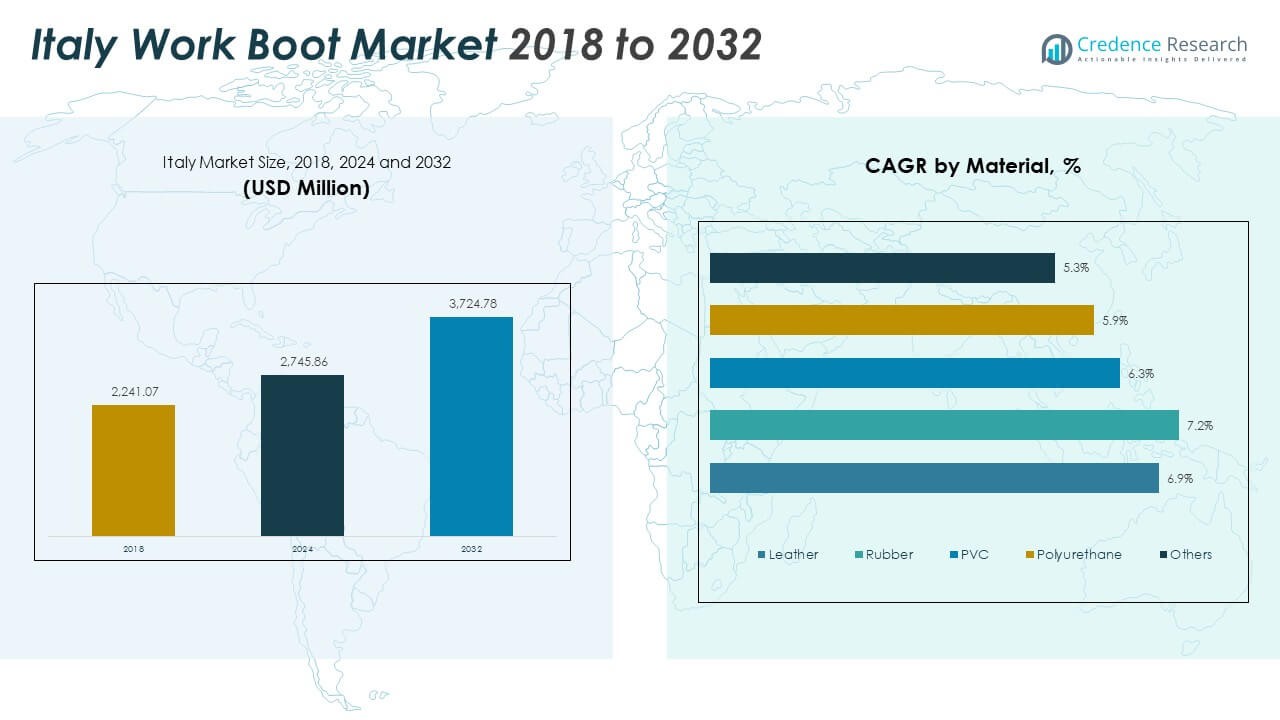
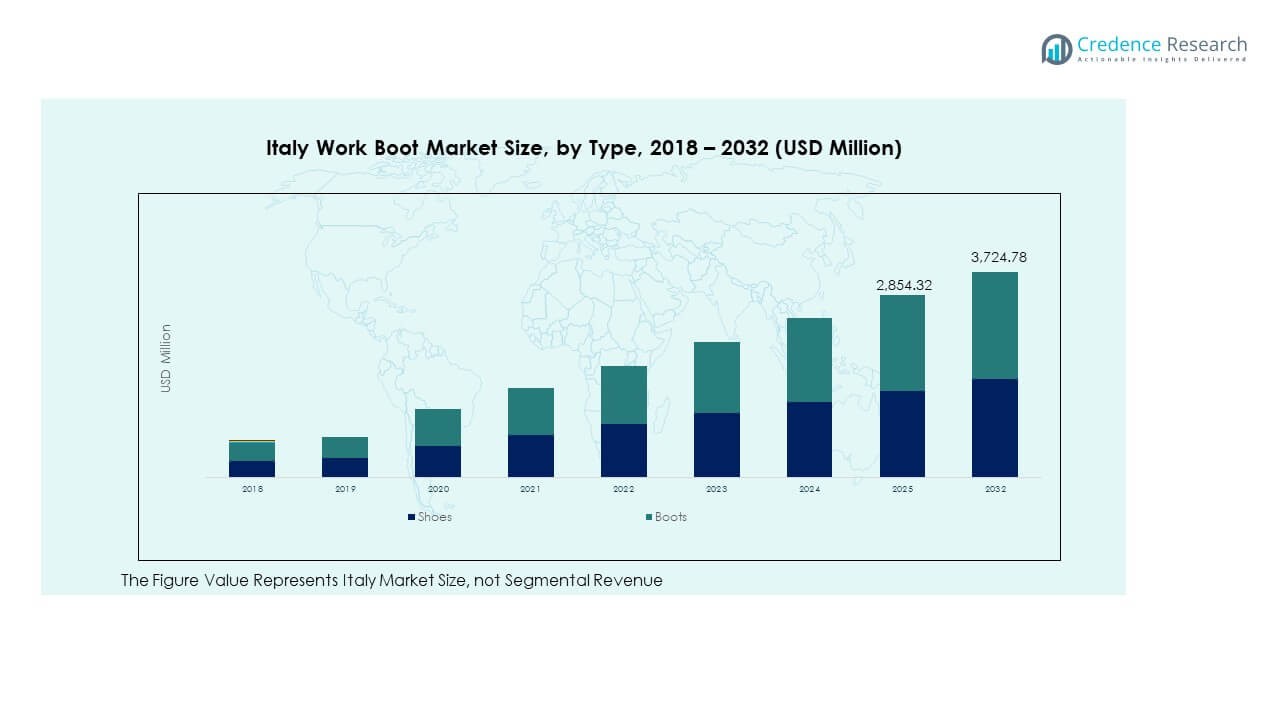
The Italy Work Boot Market size was valued at USD 2,241.07 million in 2018 to USD 2,745.86 million in 2024 and is anticipated to reach USD 3,724.78 million by 2032, at a CAGR of 3.88% during the forecast period.
| REPORT ATTRIBUTE |
DETAILS |
| Historical Period |
2020-2023 |
| Base Year |
2024 |
| Forecast Period |
2025-2032 |
| Italy Work Boot Market Size 2024 |
USD 2,745.86 Million |
| Italy Work Boot Market, CAGR |
3.88% |
| Italy Work Boot Market Size 2032 |
USD 3,724.78 Million |
The market growth is driven by rising demand for durable and protective footwear across industrial and construction sectors. Increased focus on workplace safety regulations and growing awareness about foot protection in hazardous environments have strengthened market expansion. Advancements in boot materials, such as lightweight composites and water-resistant leather, enhance comfort and safety. Growing investments in manufacturing and infrastructure sectors further stimulate demand, supported by replacement cycles and the preference for stylish, ergonomically designed safety boots among younger workers.
Regionally, Northern Italy leads the market due to its strong industrial base and concentration of construction and manufacturing activities. Central regions are witnessing steady growth, driven by expanding logistics and warehousing sectors. Southern Italy and island regions are emerging markets, supported by rising urbanization and government-backed infrastructure development projects. Increasing safety compliance across regional industries continues to support long-term market adoption and growth potential.
Access crucial information at unmatched prices!
Request your sample report today & start making informed decisions powered by Credence Research Inc.!
Download Sample
Market Insights:
- The Italy Work Boot Market was valued at USD 2,241.07 million in 2018, rising to USD 2,745.86 million in 2024, and is projected to reach USD 3,724.78 million by 2032, growing at a CAGR of 3.88%.
- Northern Italy leads with a 42% share, supported by a strong industrial base and construction activity. Central Italy follows with 31%, driven by logistics and infrastructure projects, while Southern Italy holds 27%, aided by public investment and industrial expansion.
- Southern Italy is the fastest-growing region due to increasing construction projects, port development, and improving safety compliance in emerging industrial zones.
- Boots dominate the market with about 65% share, favored in heavy-duty sectors for enhanced protection and durability.
- Shoes hold around 35% share, preferred for lightweight applications in logistics, warehousing, and manufacturing facilities requiring mobility and comfort.
Market Drivers:
Rising Industrialization and Expansion of Construction Activities
The Italy Work Boot Market benefits from steady industrialization and expansion of infrastructure projects across the country. Increasing investments in logistics hubs, transportation, and commercial construction create strong demand for protective footwear. Industrial workers require reliable safety boots that comply with European safety standards such as EN ISO 20345. Manufacturers are developing durable, slip-resistant, and lightweight designs suited to diverse work conditions. Growth in public and private infrastructure spending supports the use of advanced materials like thermoplastic polyurethane and composite toes. The market continues to evolve with innovative safety features that enhance comfort and performance.
- For instance, FTG Safety Shoes launched its Dynamic Line featuring ultra-light ECO-Leather and polyurethane soles, achieving a documented 15% reduction in total boot weight, while maintaining certification—directly supporting Italian logistics personnel working extended shifts.
Government Safety Regulations and Workplace Protection Mandates
The government enforces strict safety regulations that drive higher adoption of certified protective boots across industries. The Italy Work Boot Market sees strong influence from occupational health standards requiring foot protection in hazardous workplaces. Regulatory bodies encourage use of category S1 to S5 rated boots, ensuring resistance to impact, compression, and punctures. Employers increasingly invest in compliant footwear to reduce injury rates and insurance costs. Safety audits and compliance checks motivate both small and large enterprises to upgrade footwear quality. Continuous awareness campaigns by safety organizations boost understanding of ergonomic and anti-fatigue footwear benefits. The trend strengthens domestic and imported boot demand from certified manufacturers.
- For instance, Black Hammer’s 2025 product line update introduced EN ISO 20345:2022-compliant features that pass both 3.0 mm and 4.5 mm puncture-resistance nail tests and upgraded waterproof properties, helping employers meet audit standards and minimize foot injuries on manufacturing floors.
Shift Toward Lightweight, Ergonomic, and Sustainable Materials
End users increasingly prefer work boots that combine safety with comfort and reduced weight. Manufacturers focus on using advanced materials such as microfiber leather, EVA soles, and recycled composites. The Italy Work Boot Market experiences rising demand for sustainable and vegan-friendly designs. These materials provide durability while aligning with environmental goals. Ergonomic designs reduce strain during long work hours and enhance worker productivity. Technological improvements in midsole cushioning, moisture control, and anti-static properties attract modern consumers. Brand differentiation now depends on innovation in both material sustainability and performance comfort.
Growing Influence of E-Commerce and Brand Customization
Online platforms significantly boost accessibility and brand visibility in the Italian market. Consumers prefer digital channels for comparing product features, reviews, and certifications before purchase. The Italy Work Boot Market is expanding through e-commerce integration by major safety footwear brands. Customization options, including logo printing, sizing adjustments, and specialized insoles, enhance appeal among corporate buyers. Brands use online configurators to offer tailored solutions for industrial clients. Direct-to-consumer sales improve margins and expand reach to smaller enterprises. The increasing reliance on digital channels supports steady market penetration among both professional and casual users.
Market Trends:
Adoption of Smart Work Boots with Integrated Sensors and IoT Features
Smart safety footwear is gaining attention among industrial sectors seeking to improve workplace monitoring. The Italy Work Boot Market is witnessing early adoption of boots equipped with motion sensors and real-time tracking systems. These innovations help detect falls, fatigue, and hazardous movements during heavy labor. IoT-enabled designs allow supervisors to track worker safety remotely. Integration of temperature and pressure sensors enhances injury prevention. Companies investing in predictive safety technologies view connected footwear as an important evolution in protective equipment. This trend aligns with broader European digital transformation initiatives across manufacturing and logistics industries.
- For instance, Monitor by Quin debuted smart boots in 2025 equipped with Quin Within sensors that detect falls and automatically send SOS alerts and live worker location data to supervisors through the dedicated ResQ app—demonstrated during pilot programs within European construction sites.
Rising Popularity of Fashion-Oriented Safety Footwear Among Young Workforce
Younger workers demand protective footwear that also aligns with modern fashion preferences. Manufacturers are introducing stylish work boots with color variations, athletic designs, and lifestyle appeal. The Italy Work Boot Market benefits from this crossover trend between fashion and functionality. Retailers now display safety boots in lifestyle sections to attract broader audiences. The blurring line between industrial and casual footwear strengthens brand awareness. Lightweight designs with breathable fabrics and flexible soles further drive acceptance among new users. This fashion-forward shift reshapes marketing strategies and product aesthetics in the Italian market.
Increased Focus on Energy Absorption and Anti-Fatigue Footwear Technology
Workforce comfort remains a primary factor influencing product choice. The Italy Work Boot Market sees significant investment in technologies that minimize leg strain and improve shock absorption. New sole designs distribute weight evenly and reduce fatigue during prolonged standing or walking. Anti-slip and anti-puncture features now integrate seamlessly with energy-return midsoles. Workers in logistics and construction industries prefer these enhanced comfort solutions. Brands promoting scientifically validated ergonomic benefits gain customer loyalty. Research-backed performance claims strengthen brand positioning in both industrial and retail segments.
Growing Adoption of Environmentally Certified Manufacturing Processes
Sustainability commitments among Italian and European manufacturers continue to influence production methods. The Italy Work Boot Market is moving toward eco-friendly manufacturing with reduced carbon footprints. Companies adopt water-based adhesives, recyclable packaging, and low-emission tanning processes. Compliance with EU sustainability directives promotes market credibility. Local brands integrate renewable energy sources in production facilities. Eco-label certifications enhance export competitiveness within the European Union. The alignment between safety compliance and environmental responsibility reshapes brand reputation and long-term industry positioning.
Market Challenges Analysis:
High Production Costs and Competitive Pressure from Imported Products
The Italy Work Boot Market faces increasing cost challenges due to raw material inflation and energy expenses. Local manufacturers encounter high labor costs, limiting their ability to compete with low-priced imports. Asian producers often undercut prices while offering comparable safety features. Small domestic brands struggle to maintain profitability without compromising on quality or standards. Rising logistics costs and fluctuating currency values further impact export margins. Compliance with stringent EU safety norms increases testing and certification costs. These financial constraints hinder scalability and limit price flexibility in competitive bidding environments.
Limited Consumer Awareness and Counterfeit Product Penetration
Awareness regarding certified protective footwear remains limited among small-scale industries and individual users. The Italy Work Boot Market also contends with the presence of counterfeit and uncertified products. Low-cost imitations compromise safety standards and reduce trust in established brands. Retail networks in rural or semi-urban regions often lack access to certified distributors. Consumer education campaigns are insufficient to highlight long-term safety benefits of premium work boots. Counterfeit goods not only impact brand image but also distort pricing across supply chains. Strengthening market surveillance and consumer awareness programs is essential for sustainable growth.
Market Opportunities:
Expansion of Industrial Infrastructure and Safety Awareness Campaigns
The Italy Work Boot Market offers strong potential through growing investments in industrial zones and logistics centers. Expansion of manufacturing clusters and transport infrastructure boosts demand for certified protective footwear. Government-driven workplace safety initiatives increase product adoption among small and medium enterprises. Public tenders and procurement programs favor suppliers offering EU-standard compliant boots. Companies leveraging awareness campaigns can expand their market share in high-risk occupational sectors. This expanding regulatory environment creates a stable platform for long-term growth.
Innovation in Materials and Integration of Smart Protection Technologies
Continuous innovation in materials and digital integration provides a promising growth path for manufacturers. The Italy Work Boot Market benefits from the introduction of nanofiber insoles, heat-resistant soles, and embedded alert sensors. Integration of smart technologies enhances safety performance and remote monitoring. The development of biodegradable and recyclable materials supports sustainability targets. Manufacturers investing in research-driven comfort and protective features strengthen their competitiveness. Collaborations between safety technology firms and footwear brands are likely to shape the next wave of premium product launches.
Market Segmentation Analysis:
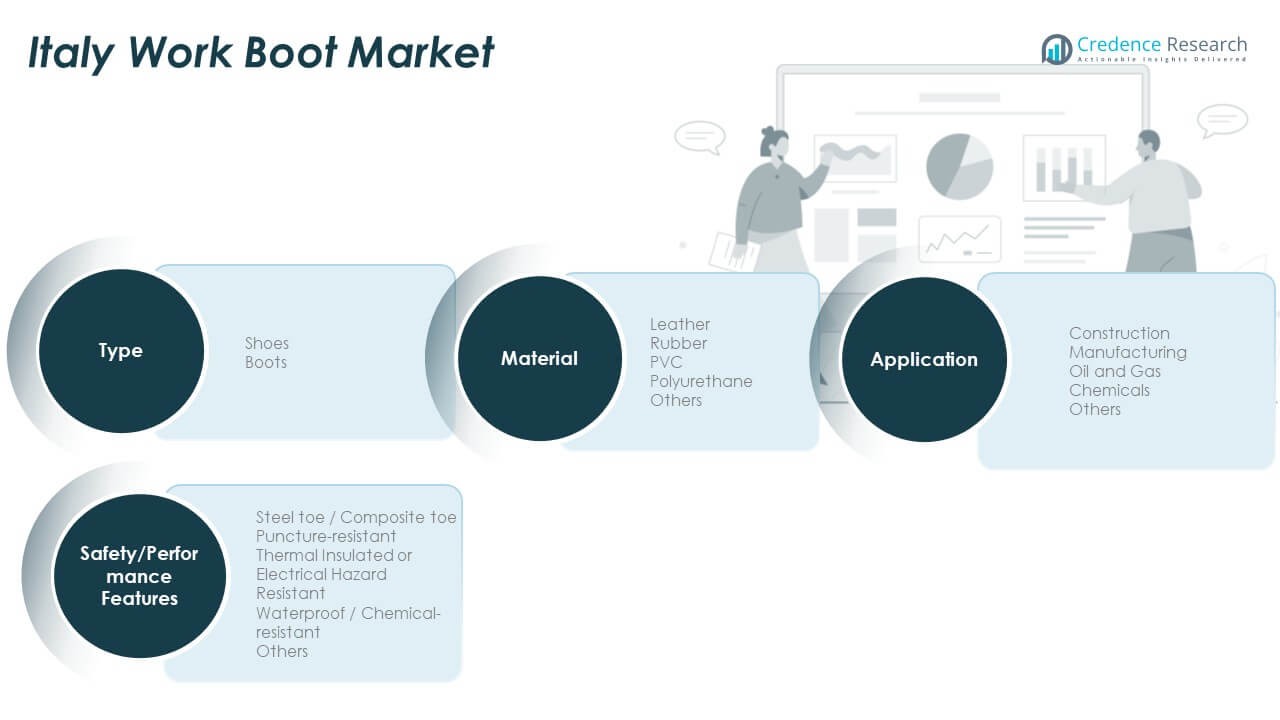
By Type
The Italy Work Boot Market is segmented into shoes and boots. Boots dominate due to their superior protection, durability, and suitability for heavy industrial use. Shoes find preference in lighter environments like logistics, warehousing, and manufacturing facilities. Demand for both segments grows with expanding workplace safety standards and increased preference for ergonomically designed footwear. Manufacturers focus on lightweight construction and stylish designs to enhance comfort and market reach.
- For instance, FTG Safety Shoes’ Comfort Line integrates Soft Walk cushioning technology, which is designed to reduce impact and provide comfort, making it a preferred solution for warehouse and logistics staff seeking wearable safety and improved comfort.
By Application
Construction remains the leading application segment, supported by extensive infrastructure projects and renovation activities. Manufacturing and oil and gas sectors create consistent demand for high-performance safety footwear. Chemical and allied industries prefer chemical-resistant and anti-slip variants. The “others” category includes logistics, mining, and public utility sectors showing gradual adoption driven by strict compliance policies.
- For instance, Cofra S.r.l. manufactures safety boots, such as the Baranof S3, with soles that offer exceptional resistance to hydrocarbons. These are designed to provide a proven advantage to workers in oil and energy infrastructure projects.
By Material
Leather dominates due to its durability, breathability, and resistance to wear. Rubber offers superior waterproofing and grip for wet or hazardous environments. PVC and polyurethane gain traction for their lightweight properties and lower production costs. These synthetic options appeal to cost-sensitive buyers and environmentally conscious consumers.
By Safety/Performance Features
Steel toe and composite toe boots lead due to their superior impact protection. Puncture-resistant soles and thermal insulation support applications in harsh industrial settings. Electrical hazard-resistant and waterproof or chemical-resistant boots address specialized safety needs. Demand for multifunctional, certified footwear continues to strengthen across all end-use industries.
Segmentation:
By Type
By Application
- Construction
- Manufacturing
- Oil and Gas
- Chemicals
- Others
By Material
- Leather
- Rubber
- PVC
- Polyurethane
- Others
By Safety/Performance Features
- Steel Toe / Composite Toe
- Puncture-Resistant
- Thermal Insulated or Electrical Hazard Resistant
- Waterproof / Chemical-Resistant
- Others
Regional Analysis:
Northern Italy – Industrial and Economic Powerhouse (Share: 42%)
Northern Italy leads the market with 42% share, driven by its strong industrial base and concentration of manufacturing hubs in regions such as Lombardy, Veneto, and Emilia-Romagna. The area hosts major construction, automotive, and machinery industries that demand certified protective footwear. Industrial safety standards are high, ensuring consistent demand for durable and ergonomic boots. Local and international brands maintain strong distribution networks supported by advanced logistics infrastructure. It remains a key region for innovation and product testing, given its technological and industrial leadership within the country.
Central Italy – Expanding Infrastructure and Service Sectors (Share: 31%)
Central Italy accounts for around 31% of the market share, led by growing infrastructure projects, logistics expansion, and public works. Regions such as Tuscany and Lazio contribute through industrial and government-led construction initiatives. The Italy Work Boot Market benefits from demand among service providers, manufacturing units, and facility management industries concentrated in urban centers like Rome and Florence. Safety awareness programs are improving compliance with occupational health regulations. Manufacturers focus on mid-priced, multi-feature work boots to serve both industrial and service-oriented users.
Southern Italy and Islands – Emerging Markets with Growing Investments (Share: 27%)
Southern Italy and the islands collectively hold 27% of the market, supported by rising investments in construction and energy projects. Government initiatives promoting regional industrialization and employment growth stimulate consumption of safety footwear. Demand is increasing in ports, oil terminals, and agricultural operations. Distribution networks are expanding to improve access in developing provinces. It demonstrates high growth potential due to infrastructure development and ongoing safety regulation enforcement. Strengthening supply chains and regional partnerships will be critical for long-term market expansion.
Shape Your Report to Specific Countries or Regions & Enjoy 30% Off!
Key Player Analysis:
- Diadora Utility
- Grisport
- Base Protection
- U-Power
- Elten (Italian Distribution)
- Cofra
- Musta
- Blundstone
Competitive Analysis:
The Italy Work Boot Market is moderately consolidated, with several established brands and regional players competing on safety innovation, material quality, and comfort design. It is led by companies such as Diadora Utility, Grisport, U-Power, Base Protection, and Cofra, which maintain strong brand recognition and distribution networks. Manufacturers focus on EU-certified safety compliance and ergonomic designs to retain industrial clients. Local producers emphasize craftsmanship and premium materials, while global brands introduce cost-effective and sustainable variants. Innovation in lightweight construction, advanced soles, and anti-fatigue technology remains central to competition. The market demonstrates steady evolution toward smart and eco-friendly work boots, aligning with Italy’s manufacturing modernization and occupational safety standards.
Recent Developments:
- On April 30, 2025, Base Protection unveiled an updated line of anti-fatigue work shoes. This new product lineup emphasizes comfort through advanced cushioning systems that boost worker concentration and safety during prolonged shifts, reinforcing the company’s “Feel the Comfort” vision.
- In April 2025, U-Power launched an upgraded Red Up Plus line of safety footwear in Italy. The new range incorporates energy return technology, using an anti-fatigue heel insert designed to minimize strain and maximize comfort for high-mobility workers such as those in logistics and automotive industries.
Report Coverage:
The research report offers an in-depth analysis based on segments, including type, application, material, and safety or performance features. It details leading market players, providing an overview of their business, product offerings, investments, revenue streams, and key applications. Additionally, the report includes insights into the competitive environment, SWOT analysis, current market trends, as well as the primary drivers and constraints. Furthermore, it discusses various factors that have driven market expansion in recent years. The report also explores market dynamics, regulatory scenarios, and technological advancements that are shaping the industry. It assesses the impact of external factors and global economic changes on market growth. Lastly, it provides strategic recommendations for new entrants and established companies to navigate the complexities of the market.
Future Outlook:
- Demand for ergonomic and lightweight safety footwear will continue to rise across industrial sectors.
- Sustainability will guide product innovation through eco-material adoption and recyclable soles.
- Smart safety boots with sensors and IoT tracking will gain commercial traction.
- E-commerce expansion will boost accessibility for SMEs and individual buyers.
- Investments in digital design and comfort-enhancing technologies will increase competitiveness.
- Local manufacturers will strengthen export capabilities to nearby European markets.
- Growing construction activity and infrastructure spending will drive large-scale procurement.
- Government-led safety initiatives will expand the market for certified protective footwear.
- Brand partnerships with industrial associations will improve visibility and compliance adoption.
- Continuous R&D investment will define leadership and long-term profitability in the market.



