Home » Consumer Goods » Fleece Knitting Yarn Market

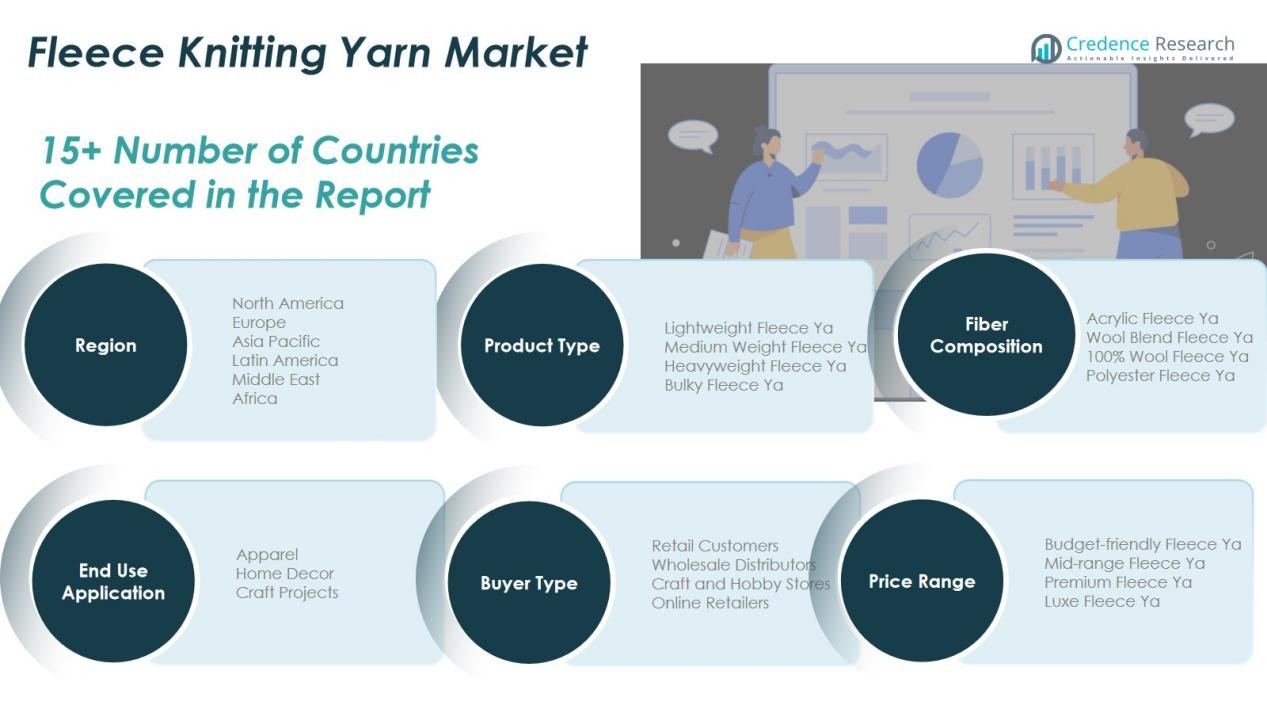
Fleece Knitting Yarn Market By Product Type (Lightweight Fleece Yarn, Medium Weight Fleece Yarn, Heavyweight Fleece Yarn, Bulky Fleece Yarn); By Application (Apparel, Home Décor, Craft Projects); By Fiber Composition (Acrylic Fleece Yarn, Wool Blend Fleece Yarn, 100% Wool Fleece Yarn, Polyester Fleece Yarn); By Buyer Type (Retail Customers, Wholesale Distributors, Craft and Hobby Stores, Online Retailers); By Price Range (Budget-Friendly Fleece Yarn, Mid-Range Fleece Yarn, Premium Fleece Yarn, Luxe Fleece Yarn) – Growth, Share, Opportunities & Competitive Analysis, 2024 – 2032

Report ID: 4677 | Report Format : Excel, PDF

Market Overview:

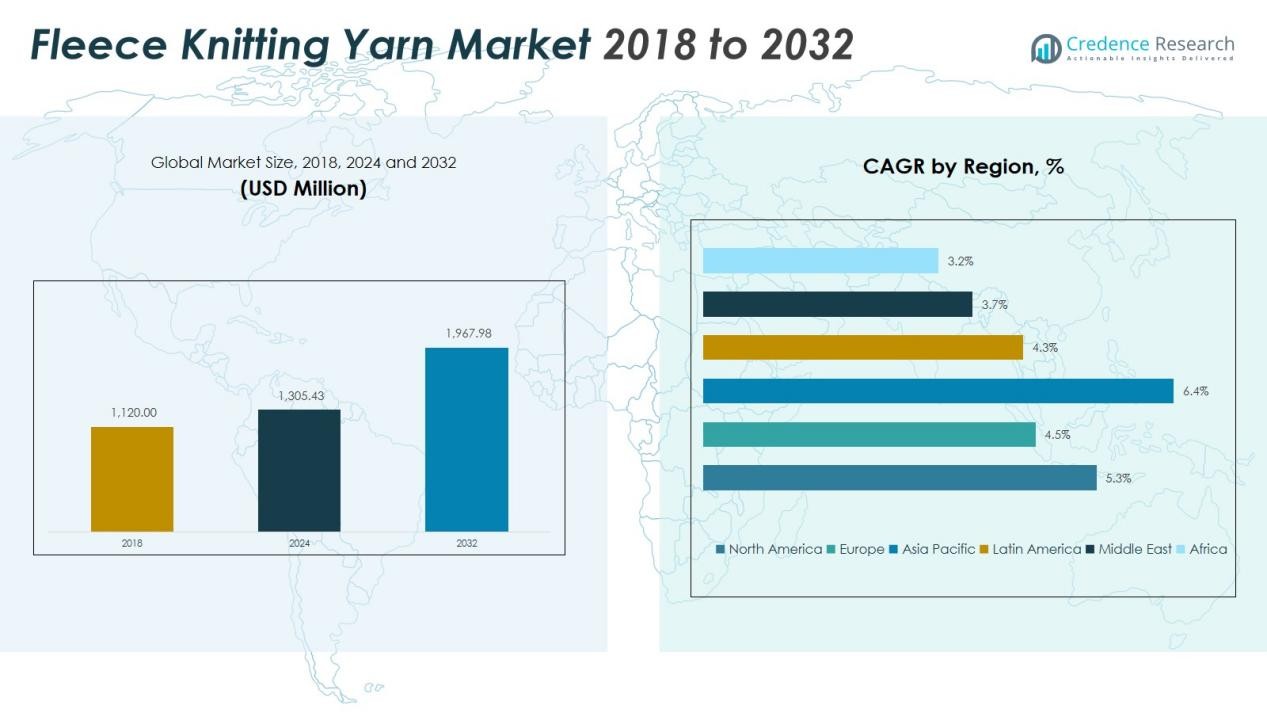
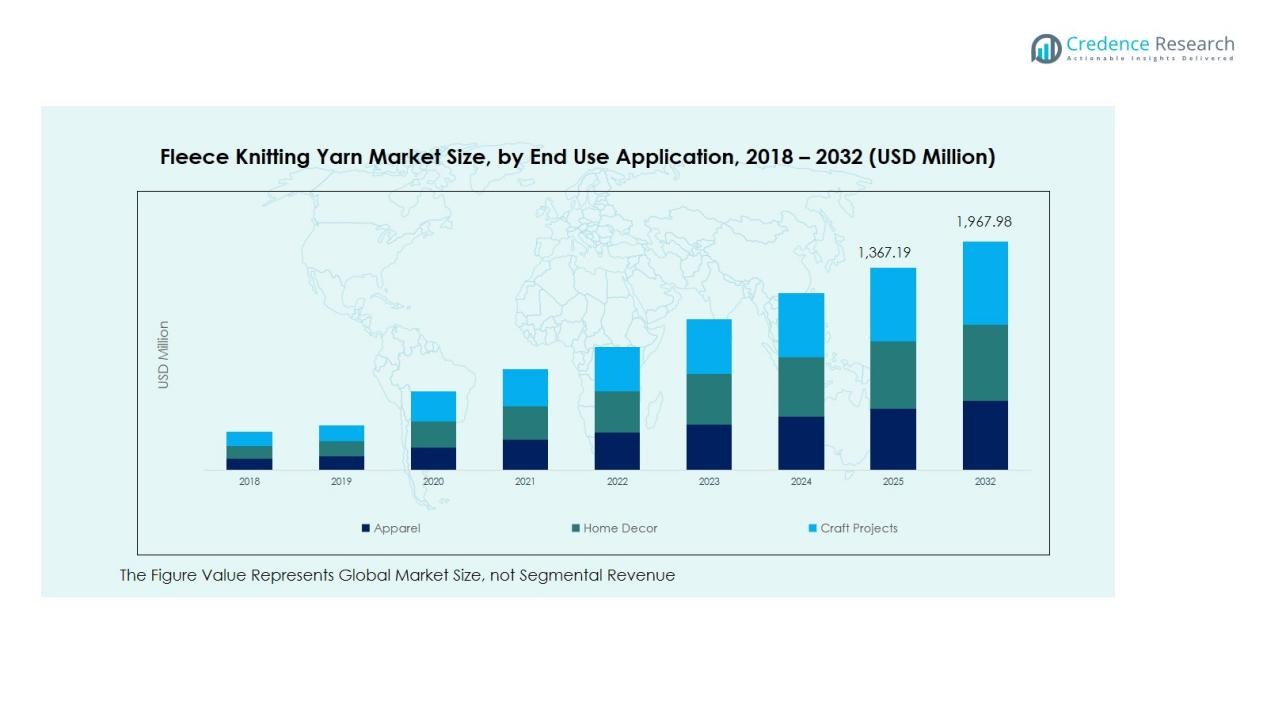
The Global Fleece Knitting Yarn Market size was valued at USD  1,120.00 million in 2018 to USD   1,305.43 million in 2024 and is anticipated to reach USD  1,967.98 million by 2032, at a CAGR of 5.34% during the forecast period.

REPORT ATTRIBUTE DETAILS
Historical Period 2020-2023
Base Year 2024
Forecast Period 2025-2032
Fleece Knitting Yarn Market Size 2024 USD 1,305.43 Million
Fleece Knitting Yarn Market, CAGR 5.34%
Fleece Knitting Yarn Market Size 2032 USD 1,967.98 Million


Major growth drivers include increasing popularity of DIY knitting and crafting, expanding availability of fleece yarn blends and synthetic-natural fibre combinations, and growing interest in sustainable textile materials. As fashion shifts toward comfortable, casual and athleisure wear, demand for fleece-based knitted fabrics has gained traction across both apparel and home décor segments.

Regionally, North America currently leads the market with strong consumer spending on home crafting and high disposable income levels. Europe follows with a robust heritage in premium textiles and sustainable sourcing. Meanwhile, Asia-Pacific is emerging rapidly, supported by growing middle classes, increased online retail penetration and rising craft hobby participation in countries such as China and India.

Market Insights:

  • The Global Fleece Knitting Yarn Market was valued at USD 1,120.00 million in 2018, reached USD 1,305.43 million in 2024, and is expected to reach USD 1,967.98 million by 2032, growing at a CAGR of 5.34% during the forecast period.
  • North America holds 29% of the market share, driven by strong consumer spending on premium apparel and DIY knitting culture, while Europe follows with 26% due to its established textile heritage and focus on sustainable fiber innovation.
  • Asia Pacific leads globally with 33% market share, supported by large-scale manufacturing, digital retail growth, and rising craft hobby participation in China and India.
  • Asia Pacific is also the fastest-growing region, expanding at a CAGR of 6.4%, fueled by expanding middle-class income levels and rapid urbanization across emerging economies.
  • By segment, lightweight fleece yarn accounts for 38% of total revenue, while the apparel segment dominates with 42% share, supported by rising athleisure and casual wear trends worldwide.

Access crucial information at unmatched prices!

Request your sample report today & start making informed decisions powered by Credence Research Inc.!

Download Sample

Market Drivers:

Rising Demand for Comfortable and Functional Apparel

The Global Fleece Knitting Yarn Market benefits from the increasing popularity of comfortable and functional clothing. Consumers prefer soft, lightweight, and thermally efficient fabrics for casual, sportswear, and outdoor apparel. It supports the trend toward athleisure and everyday performance wear, where fleece fabrics offer warmth without excess weight. Brands emphasize breathable, stretchable, and easy-care yarns to meet this growing comfort demand. The shift toward year-round fleece usage continues to strengthen product adoption across global fashion segments.

  • For Instance, Erdos Group reported a total operating revenue of approximately $4.2 billion (30.55 billion CNY).

Expanding Interest in DIY Crafting and Home Knitting Activities

Growing engagement in home-based crafts and do-it-yourself (DIY) projects drives strong demand for fleece yarns. Social media communities and online tutorials encourage beginners to explore creative knitting applications. It enables consumers to design personalized blankets, scarves, and decorative items. Major retailers offer fleece yarn kits and subscription boxes, expanding market reach. This trend aligns with rising interest in handmade, customized, and sustainable textile goods.

  • For instance, the online knitting platform Ravelry maintains a database of 11 million registered users who actively share patterns and tutorials within the community, with the platform recording an average of 1.1 million website visits monthly.

Technological Advancements in Yarn Blending and Manufacturing

Continuous innovation in yarn manufacturing enhances softness, strength, and color retention. Modern spinning technologies enable efficient blending of polyester, acrylic, and wool fibers to improve texture and durability. It helps manufacturers produce high-quality yarns suited for both industrial and domestic applications. Companies invest in eco-friendly dyes and low-impact production processes to appeal to environmentally conscious buyers. Such advancements support product diversification and quality consistency.

Rising Focus on Sustainable and Ethical Textile Production

Sustainability plays a crucial role in shaping the fleece knitting yarn landscape. Consumers prefer yarns made from recycled, organic, or responsibly sourced materials. It encourages brands to adopt circular textile strategies and transparent sourcing practices. Manufacturers integrate biodegradable fibers and reduce chemical waste during production. Growing environmental awareness positions sustainability as a long-term competitive advantage for industry participants.

Fleece Knitting Yarn Market Size

Market Trends:

Growing Popularity of Blended and Specialty Yarn Formulations

The Global Fleece Knitting Yarn Market is witnessing an increasing shift toward innovative fiber blends that improve performance and aesthetics. Manufacturers develop advanced polyester, acrylic, and wool combinations to enhance softness, stretch, and durability. It allows brands to cater to both luxury and mass-market consumers seeking high-comfort materials. Specialty fleece yarns with anti-pilling, moisture-wicking, and quick-dry properties are gaining traction in activewear and outdoor clothing. Custom color options and textural finishes appeal to crafters and small apparel makers. Product diversification through hybrid fiber compositions strengthens competitiveness across both industrial and consumer knitting sectors.

  • For instance, Salud Style specializes in 85% acrylic and 15% polyester blended yarn formulations that achieve yarn strength ratings of ≥15 cn/Tex with elongation at break capabilities of 15-20%, delivering superior durability while maintaining the softness properties required for premium knitwear applications.

Accelerating Adoption of Eco-Friendly and Digitally Driven Production Practices

Sustainability continues to define the evolving direction of the fleece yarn industry. Companies integrate recycled fibers and eco-certified dyes to reduce environmental impact. It supports the global push toward responsible textile sourcing and low-carbon manufacturing. Automation and digital color-matching tools improve efficiency and precision in yarn production. Smart inventory management and e-commerce distribution platforms expand accessibility across emerging markets. The growing collaboration between textile innovators and technology firms fosters continuous improvement in quality, traceability, and waste reduction. These trends position sustainable innovation as a core growth pillar for the industry’s future.

  • For instance, Polartec by Milliken & Company has transitioned more than 1.5 billion plastic bottles into recycled fleece yarns as of July 2023, significantly reducing landfill waste while ensuring high product standards.

Fleece Knitting Yarn Market Share

Market Challenges Analysis:

Fluctuating Raw Material Prices and Supply Chain Constraints

The Global Fleece Knitting Yarn Market faces consistent pressure from volatile raw material costs. Prices of polyester, acrylic, and wool often fluctuate due to energy costs and supply shortages. It affects production budgets and limits profit margins for both large and small manufacturers. Global logistics disruptions and uneven fiber availability create delivery delays and inventory issues. Dependence on synthetic materials increases exposure to oil price variations. Manufacturers must adopt flexible sourcing strategies and inventory planning to maintain stability in operations.

Environmental Concerns and Regulatory Compliance Barriers

Environmental regulations and waste management standards continue to challenge fleece yarn producers. The use of synthetic fibers contributes to microplastic pollution and recycling difficulties. It compels companies to invest in greener technologies and sustainable certifications. Compliance with international environmental laws increases operational costs and requires ongoing audits. Consumer expectations for eco-conscious products add further pressure on traditional manufacturing models. The push toward full transparency and ethical sourcing demands significant financial and process adaptation.

Market Opportunities:

Expansion of Sustainable and Bio-Based Yarn Alternatives

The Global Fleece Knitting Yarn Market presents significant potential in eco-friendly and bio-based materials. Growing consumer preference for sustainable textiles creates opportunities for innovation in biodegradable yarns. It encourages manufacturers to explore plant-based fibers, recycled polyester, and organic wool. Brands adopting closed-loop production models can strengthen their environmental positioning. Investment in green chemistry and low-emission dyeing processes enhances brand value among eco-conscious buyers. The shift toward circular textile systems opens new avenues for long-term growth and differentiation.

Rising Demand from Emerging E-Commerce and Customization Platforms

Digital retail platforms are transforming how consumers access fleece knitting yarns. E-commerce expansion allows direct-to-consumer brands to reach global craft communities. It supports small-scale designers and home-based creators seeking diverse yarn options and customization tools. Online marketplaces provide visibility for niche and artisanal yarn producers. Integration of AI-driven product recommendations and virtual color selection improves customer experience. The growing digital ecosystem positions online retail as a major channel for future market expansion.

Market Segmentation Analysis:

By Product Type

The Global Fleece Knitting Yarn Market is segmented into lightweight, medium weight, heavyweight, and bulky fleece yarns. Lightweight yarn dominates due to its wide use in everyday apparel and accessories. It offers comfort, flexibility, and easy handling, making it ideal for beginners and casual knitters. Medium and heavyweight yarns find strong demand in outerwear and blankets due to better warmth retention. Bulky yarns appeal to niche users seeking textured, high-volume designs for home décor projects.

  • For instance, Bernat Forever Fleece Finer, a lightweight fleece yarn variant, delivers 352 meters of knitting length per 280g ball at a gauge specification of #5 bulky, providing extended usability for accessory projects including beanies, cowls, and lightweight sweater construction with optimal drapability for everyday garments.

By Application

Apparel remains the leading application segment, driven by the global rise in casual and athleisure fashion. It contributes a major share due to the versatility and softness of fleece materials. Home décor applications, including blankets and cushion covers, continue to gain traction among DIY consumers. It supports market growth through expanding craft projects and personalized knitting trends. Craft enthusiasts value fleece yarn for its affordability and broad creative potential across small-scale products.

  • For instance, The Company Store’s Company Plush™ decorative pillow cover collection features ultra-plush microfleece construction with a density of 530 GSM (grams per square meter), providing premium texture for home interiors, while coordinating with matching blankets and throws that demonstrate the versatility of fleece materials in creating complete bedroom and living space solutions.

By Fiber Composition

Fiber composition includes acrylic, wool blend, 100% wool, and polyester fleece yarns. Acrylic yarn leads the segment due to low cost, easy dyeing, and durability. Wool blends cater to premium buyers seeking warmth and breathability. It balances performance with comfort for mid-range fashion products. Polyester yarn remains preferred in sportswear and outdoor apparel for its resilience and quick-dry characteristics.

Fleece Knitting Yarn Market Segmentation

Segmentations:

By Product Type

  • Lightweight Fleece Yarn
  • Medium Weight Fleece Yarn
  • Heavyweight Fleece Yarn
  • Bulky Fleece Yarn

By Application

  • Apparel
  • Home Décor
  • Craft Projects

By Fiber Composition

  • Acrylic Fleece Yarn
  • Wool Blend Fleece Yarn
  • 100% Wool Fleece Yarn
  • Polyester Fleece Yarn

By Buyer Type

  • Retail Customers
  • Wholesale Distributors
  • Craft and Hobby Stores
  • Online Retailers

By Price Range

  • Budget-Friendly Fleece Yarn
  • Mid-Range Fleece Yarn
  • Premium Fleece Yarn
  • Luxe Fleece Yarn

By Region

  • North America
    • U.S.
    • Canada
    • Mexico
  • Europe
    • Germany
    • France
    • U.K.
    • Italy
    • Spain
    • Rest of Europe
  • Asia Pacific
    • China
    • Japan
    • India
    • South Korea
    • South-east Asia
    • Rest of Asia Pacific
  • Latin America
    • Brazil
    • Argentina
    • Rest of Latin America
  • Middle East & Africa
    • GCC Countries
    • South Africa
    • Rest of the Middle East and Africa

Regional Analysis:

North America

The North America Fleece Knitting Yarn Market size was valued at USD 383.04 million in 2018, reached USD 440.71 million in 2024, and is anticipated to reach USD 663.41 million by 2032, at a CAGR of 5.3% during the forecast period. The Global Fleece Knitting Yarn Market in this region benefits from high consumer interest in premium apparel and DIY crafts. The United States leads regional demand due to strong home knitting trends and growing adoption of sustainable yarn products. It gains traction through online retail expansion and widespread social media influence promoting handcrafting. Canada contributes steadily with rising awareness of eco-friendly textiles. Local manufacturers emphasize recycled and organic materials to attract sustainability-focused consumers. North America holds 29% of the global market share.

Europe

The Europe Fleece Knitting Yarn Market size was valued at USD 265.22 million in 2018, reached USD 295.77 million in 2024, and is projected to reach USD 418.30 million by 2032, growing at a CAGR of 4.5%. The Global Fleece Knitting Yarn Market in Europe is shaped by strong textile traditions and innovation in fiber technologies. Germany, Italy, and the UK remain key markets for premium yarn production. It experiences rising demand for wool blends and organic materials supported by regional sustainability policies. European consumers prefer high-quality yarns for fashion and home décor. The presence of established luxury brands strengthens product visibility. Europe accounts for 26% of the total market share.

Asia Pacific

The Asia Pacific Fleece Knitting Yarn Market size was valued at USD 341.04 million in 2018, reached USD 411.66 million in 2024, and is expected to reach USD 672.66 million by 2032, registering a CAGR of 6.4%. The Global Fleece Knitting Yarn Market in this region benefits from industrial expansion and growing consumer bases in China, India, and Japan. It experiences strong demand from apparel manufacturers and the e-commerce sector. Rapid urbanization and lifestyle shifts drive growth in crafting and home décor projects. Local production facilities support cost efficiency and large-scale exports. Expanding digital retail platforms enhance market penetration. Asia Pacific leads globally with a 33% market share.

Latin America

The Latin America Fleece Knitting Yarn Market size was valued at USD 68.54 million in 2018, reached USD 79.10 million in 2024, and is projected to reach USD 110.34 million by 2032, expanding at a CAGR of 4.3%. The Global Fleece Knitting Yarn Market in this region gains momentum through increasing adoption of leisure knitting activities. Brazil and Argentina dominate with a strong base of fashion and home textile industries. It benefits from improving retail distribution and expanding online sales channels. Crafting communities contribute to steady product uptake among young consumers. Local yarn producers explore sustainable fiber sourcing to align with global market trends. Latin America captures 7% of global revenue.

Middle East

The Middle East Fleece Knitting Yarn Market size was valued at USD 34.72 million in 2018, reached USD 37.33 million in 2024, and is anticipated to reach USD 49.41 million by 2032, at a CAGR of 3.7%. The Global Fleece Knitting Yarn Market in this region develops steadily through luxury fashion demand and tourism-driven retail. The UAE and Turkey represent key markets due to their advanced textile infrastructure. It witnesses gradual growth in customized garment and boutique production. Local manufacturers focus on high-end and blended fleece yarns catering to premium buyers. The adoption of eco-friendly fabrics is emerging slowly but steadily. The Middle East holds 3% of the overall market.

Africa

The Africa Fleece Knitting Yarn Market size was valued at USD 27.44 million in 2018, reached USD 40.87 million in 2024, and is projected to reach USD 53.86 million by 2032, growing at a CAGR of 3.2%. The Global Fleece Knitting Yarn Market in this region is supported by growing textile manufacturing and artisan crafts. South Africa remains the main contributor with an expanding handmade and DIY market. It benefits from rising consumer interest in affordable and durable yarns. Government support for local textile production strengthens regional capacity. Import dependence limits growth but encourages domestic investments in synthetic yarns. Africa accounts for 2% of global market revenue.

Key Player Analysis:

  • Hengyuanxiang
  • MEZ Crafts
  • Karbel Group
  • Erdos Group
  • Artyas
  • Brown Sheep Company
  • Snow Lotus Group
  • Shibui Knits
  • Blacker Yarns
  • Malabrigo

Competitive Analysis:

The Global Fleece Knitting Yarn Market features a mix of established manufacturers and emerging craft-oriented brands. Key players include Hengyuanxiang, MEZ Crafts, Karbel Group, Erdos Group, Artyas, Brown Sheep Company, and Snow Lotus Group. It demonstrates moderate market concentration with regional and international firms competing through product innovation, fiber quality, and sustainability practices. Leading companies invest in eco-friendly yarn production and advanced spinning technologies to enhance softness and durability. Strategic partnerships with textile retailers and e-commerce distributors strengthen brand reach. It focuses on premiumization and customization to meet changing consumer preferences for high-performance and ethical yarns. Continuous innovation in material blending and color processing supports long-term competitiveness across major markets.

Shape Your Report to Specific Countries or Regions & Enjoy 30% Off!

Recent Developments:

  • In April 2025, Erdos Group signs a strategic cooperation framework agreement with Dormeuil, a renowned French fabric brand, to collaborate across design, manufacturing, supply chain, brand building, and expansion into high-end markets.
  • In September 2025, Erdos Technologies, a division of Ramsey Theory Group, announces enhanced software capabilities focusing on inventory optimization and intelligent decision-support tools, including Erdos Logistics for end-to-end visibility across stores, franchises, distributors, and manufacturers

Report Coverage:

The research report offers an in-depth analysis based on Product Type, Application, Fiber Composition, Buyer Type, Price Range and Region. It details leading market players, providing an overview of their business, product offerings, investments, revenue streams, and key applications. Additionally, the report includes insights into the competitive environment, SWOT analysis, current market trends, as well as the primary drivers and constraints. Furthermore, it discusses various factors that have driven market expansion in recent years. The report also explores market dynamics, regulatory scenarios, and technological advancements that are shaping the industry. It assesses the impact of external factors and global economic changes on market growth. Lastly, it provides strategic recommendations for new entrants and established companies to navigate the complexities of the market.

Future Outlook:

  • The Global Fleece Knitting Yarn Market will witness strong growth driven by expanding demand for sustainable and soft-textured fibers.
  • Rising consumer interest in DIY knitting and home-based craft activities will create steady product demand.
  • Manufacturers will focus on introducing eco-friendly yarn blends made from recycled or bio-based materials.
  • E-commerce platforms will strengthen global product accessibility and promote independent craft brands.
  • Technological advancements in spinning and dyeing will improve yarn quality, texture, and color stability.
  • Fashion trends favoring athleisure and casual comfort wear will sustain high fleece yarn consumption.
  • Collaborations between textile producers and apparel brands will boost innovation in design and fabric performance.
  • Regional manufacturers in Asia Pacific will benefit from cost advantages and export opportunities.
  • Automation and smart inventory systems will enhance production efficiency and reduce waste.
  • Sustainability certifications and traceability standards will become key differentiators in global competition.

CHAPTER NO. 1 : GENESIS OF THE MARKET

1.1 Market Prelude – Introduction & Scope

1.2 The Big Picture – Objectives & Vision

1.3 Strategic Edge – Unique Value Proposition

1.4 Stakeholder Compass – Key Beneficiaries

CHAPTER NO. 2 : EXECUTIVE LENS

2.1 Pulse of the Industry – Market Snapshot

2.2 Growth Arc – Revenue Projections (USD Million)

2.3. Premium Insights – Based on Primary Interviews

CHAPTER NO. 3 : FLEECE KNITTING YARN MARKET FORCES & INDUSTRY PULSE

3.1 Foundations of Change – Market Overview

3.2 Catalysts of Expansion – Key Market Drivers

3.2.1 Momentum Boosters – Growth Triggers

3.2.2 Innovation Fuel – Disruptive Technologies

3.3 Headwinds & Crosswinds – Market Restraints

3.3.1 Regulatory Tides – Compliance Challenges

3.3.2 Economic Frictions – Inflationary Pressures

3.4 Untapped Horizons – Growth Potential & Opportunities

3.5 Strategic Navigation – Industry Frameworks

3.5.1 Market Equilibrium – Porter’s Five Forces

3.5.2 Ecosystem Dynamics – Value Chain Analysis

3.5.3 Macro Forces – PESTEL Breakdown

3.6 Price Trend Analysis

3.6.1 Regional Price Trend

3.6.2 Price Trend by product

CHAPTER NO. 4 : KEY INVESTMENT EPICENTER

4.1 Regional Goldmines – High-Growth Geographies

4.2 Product Frontiers – Lucrative Product Categories

4.3 Application Sweet Spots – Emerging Demand Segments

CHAPTER NO. 5: REVENUE TRAJECTORY & WEALTH MAPPING

5.1 Momentum Metrics – Forecast & Growth Curves

5.2 Regional Revenue Footprint – Market Share Insights

5.3 Segmental Wealth Flow – Product Type & Application Revenue

CHAPTER NO. 6 : TRADE & COMMERCE ANALYSIS

6.1. Import Analysis by Region

6.1.1. Global Fleece Knitting Yarn Market Import Revenue By Region

6.2. Export Analysis by Region

6.2.1. Global Fleece Knitting Yarn Market Export Revenue By Region

CHAPTER NO. 7 : COMPETITION ANALYSIS

7.1. Company Market Share Analysis

7.1.1. Global Fleece Knitting Yarn Market: Company Market Share

7.2. Global Fleece Knitting Yarn Market Company Revenue Market Share

7.3. Strategic Developments

7.3.1. Acquisitions & Mergers

7.3.2. New Product Launch

7.3.3. Regional Expansion

7.4. Competitive Dashboard

7.5. Company Assessment Metrics, 2024

CHAPTER NO. 8 : FLEECE KNITTING YARN MARKET – BY PRODUCT TYPE SEGMENT ANALYSIS

8.1. Fleece Knitting Yarn Market Overview by Product Type Segment

8.1.1. Fleece Knitting Yarn Market Revenue Share By Product Type

8.2. Lightweight Fleece Ya

8.3. Medium Weight Fleece Ya

8.4. Heavyweight Fleece Ya

8.5. Bulky Fleece Ya

CHAPTER NO. 9 : FLEECE KNITTING YARN MARKET – BY APPLICATION SEGMENT ANALYSIS

9.1. Fleece Knitting Yarn Market Overview by Application Segment

9.1.1. Fleece Knitting Yarn Market Revenue Share By Application

9.2. Apparel

9.3. Home Decor

9.4. Craft Projects

CHAPTER NO. 10 : FLEECE KNITTING YARN MARKET – BY FIBER COMPOSITION SEGMENT ANALYSIS

10.1. Fleece Knitting Yarn Market Overview by Fiber Composition Segment

10.1.1. Fleece Knitting Yarn Market Revenue Share By Fiber Composition

10.2. Acrylic Fleece Ya

10.3. Wool Blend Fleece Ya

10.4. 100% Wool Fleece Ya

10.5. Polyester Fleece Ya

CHAPTER NO. 11 : FLEECE KNITTING YARN MARKET – BY BUYER TYPE SEGMENT ANALYSIS

11.1. Fleece Knitting Yarn Market Overview by Buyer Type

11.1.1. Fleece Knitting Yarn Market Revenue Share By Buyer Type

11.2. Retail Customers

11.3. Wholesale Distributors

11.4. Craft and Hobby Stores

11.5. Online Retailers

CHAPTER NO. 12 : FLEECE KNITTING YARN MARKET – BY PRICE RANGE SEGMENT ANALYSIS

12.1. Fleece Knitting Yarn Market Overview by Price Range Segment

12.1.1. Fleece Knitting Yarn Market Revenue Share By Price Range

12.2. Budget-friendly Fleece Ya

12.3. Mid-range Fleece Ya

12.4. Premium Fleece Ya

12.5. Luxe Fleece Ya

CHAPTER NO. 13 : FLEECE KNITTING YARN MARKET – REGIONAL ANALYSIS

13.1. Fleece Knitting Yarn Market Overview by Region Segment

13.1.1. Global Fleece Knitting Yarn Market Revenue Share By Region

13.1.2. Regions

13.1.3. Global Fleece Knitting Yarn Market Revenue By Region

13.1.4. Product Type

13.1.5. Global Fleece Knitting Yarn Market Revenue By Product Type

13.1.6. Application

13.1.7. Global Fleece Knitting Yarn Market Revenue By Application

13.1.8. Fiber Composition

13.1.9. Global Fleece Knitting Yarn Market Revenue By Fiber Composition

13.1.10. Buyer Type

13.1.12. Global Fleece Knitting Yarn Market Revenue By Buyer Type

13.1.13. Price Range

13.1.14. Global Fleece Knitting Yarn Market Revenue By Price Range

CHAPTER NO. 14 : NORTH AMERICA FLEECE KNITTING YARN MARKET – COUNTRY ANALYSIS

14.1. North America Fleece Knitting Yarn Market Overview by Country Segment

14.1.1. North America Fleece Knitting Yarn Market Revenue Share By Region

14.2. North America

14.2.1. North America Fleece Knitting Yarn Market Revenue By Country

14.2.2. Product Type

14.2.3. North America Fleece Knitting Yarn Market Revenue By Product Type

14.2.4. Application

14.2.5. North America Fleece Knitting Yarn Market Revenue By Application

14.2.6. Fiber Composition

14.2.7. North America Fleece Knitting Yarn Market Revenue By Fiber Composition

14.2.8. Buyer Type

14.2.9. North America Fleece Knitting Yarn Market Revenue By Buyer Type

14.2.10. Price Range

14.2.11. North America Fleece Knitting Yarn Market Revenue By Price Range

14.3. U.S.

14.4. Canada

14.5. Mexico

CHAPTER NO. 15 : EUROPE FLEECE KNITTING YARN MARKET – COUNTRY ANALYSIS

15.1. Europe Fleece Knitting Yarn Market Overview by Country Segment

15.1.1. Europe Fleece Knitting Yarn Market Revenue Share By Region

15.2. Europe

15.2.1. Europe Fleece Knitting Yarn Market Revenue By Country

15.2.2. Product Type

15.2.3. Europe Fleece Knitting Yarn Market Revenue By Product Type

15.2.4. Application

15.2.5. Europe Fleece Knitting Yarn Market Revenue By Application

15.2.6. Fiber Composition

15.2.7. Europe Fleece Knitting Yarn Market Revenue By Fiber Composition

15.2.8. Buyer Type

15.2.9. Europe Fleece Knitting Yarn Market Revenue By Buyer Type

15.2.10. Price Range

15.2.11. Europe Fleece Knitting Yarn Market Revenue By Price Range

15.3. UK

15.4. France

15.5. Germany

15.6. Italy

15.7. Spain

15.8. Russia

15.9. Rest of Europe

CHAPTER NO. 16 : ASIA PACIFIC FLEECE KNITTING YARN MARKET – COUNTRY ANALYSIS

16.1. Asia Pacific Fleece Knitting Yarn Market Overview by Country Segment

16.1.1. Asia Pacific Fleece Knitting Yarn Market Revenue Share By Region

16.2. Asia Pacific

16.2.1. Asia Pacific Fleece Knitting Yarn Market Revenue By Country

16.2.2. Product Type

16.2.3. Asia Pacific Fleece Knitting Yarn Market Revenue By Product Type

16.2.4. Application

16.2.5. Asia Pacific Fleece Knitting Yarn Market Revenue By Application

16.2.6. Fiber Composition

16.2.7. Asia Pacific Fleece Knitting Yarn Market Revenue By Fiber Composition

16.2.8. Buyer Type

16.2.9. Asia Pacific Fleece Knitting Yarn Market Revenue By Buyer Type

16.2.10. Price Range

16.2.11. Asia Pacific Fleece Knitting Yarn Market Revenue By Price Range

16.3. China

16.4. Japan

16.5. South Korea

16.6. India

16.7. Australia

16.8. Southeast Asia

16.9. Rest of Asia Pacific

CHAPTER NO. 17 : LATIN AMERICA FLEECE KNITTING YARN MARKET – COUNTRY ANALYSIS

17.1. Latin America Fleece Knitting Yarn Market Overview by Country Segment

17.1.1. Latin America Fleece Knitting Yarn Market Revenue Share By Region

17.2. Latin America

17.2.1. Latin America Fleece Knitting Yarn Market Revenue By Country

17.2.2. Product Type

17.2.3. Latin America Fleece Knitting Yarn Market Revenue By Product Type

17.2.4. Application

17.2.5. Latin America Fleece Knitting Yarn Market Revenue By Application

17.2.6. Fiber Composition

17.2.7. Latin America Fleece Knitting Yarn Market Revenue By Fiber Composition

17.2.8. Buyer Type

17.2.9. Latin America Fleece Knitting Yarn Market Revenue By Buyer Type

17.2.10. Price Range

17.2.11. Latin America Fleece Knitting Yarn Market Revenue By Price Range

17.3. Brazil

17.4. Argentina

17.5. Rest of Latin America

CHAPTER NO. 18 : MIDDLE EAST FLEECE KNITTING YARN MARKET – COUNTRY ANALYSIS

18.1. Middle East Fleece Knitting Yarn Market Overview by Country Segment

18.1.1. Middle East Fleece Knitting Yarn Market Revenue Share By Region

18.2. Middle East

18.2.1. Middle East Fleece Knitting Yarn Market Revenue By Country

18.2.2. Product Type

18.2.3. Middle East Fleece Knitting Yarn Market Revenue By Product Type

18.2.4. Application

18.2.5. Middle East Fleece Knitting Yarn Market Revenue By Application

18.2.6. Fiber Composition

18.2.7. Middle East Fleece Knitting Yarn Market Revenue By Fiber Composition

18.2.8. Buyer Type

18.2.9. Middle East Fleece Knitting Yarn Market Revenue By Buyer Type

18.2.10. Price Range

18.2.11. Middle East Fleece Knitting Yarn Market Revenue By Price Range

18.3. GCC Countries

18.4. Israel

18.5. Turkey

18.6. Rest of Middle East

CHAPTER NO. 19 : AFRICA FLEECE KNITTING YARN MARKET – COUNTRY ANALYSIS

19.1. Africa Fleece Knitting Yarn Market Overview by Country Segment

19.1.1. Africa Fleece Knitting Yarn Market Revenue Share By Region

19.2. Africa

19.2.1. Africa Fleece Knitting Yarn Market Revenue By Country

19.2.2. Product Type

19.2.3. Africa Fleece Knitting Yarn Market Revenue By Product Type

19.2.4. Application

19.2.5. Africa Fleece Knitting Yarn Market Revenue By Application

19.2.6. Fiber Composition

19.2.7. Africa Fleece Knitting Yarn Market Revenue By Fiber Composition

19.2.8. Buyer Type

19.2.9. Africa Fleece Knitting Yarn Market Revenue By Buyer Type

19.2.10. Price Range

19.2.11. Africa Fleece Knitting Yarn Market Revenue By Price Range

19.3. South Africa

19.4. Egypt

19.5. Rest of Africa

CHAPTER NO. 20 : COMPANY PROFILES

20.1. Hengyuanxiang

20.1.1. Company Overview

20.1.2. Product Portfolio

20.1.3. Financial Overview

20.1.4. Recent Developments

20.1.5. Growth Strategy

20.1.6. SWOT Analysis

20.2. MEZ Crafts

20.3. Karbel Group

20.4. Erdos Group

20.5. Artyas

20.6. Brown Sheep Company

20.7. Snow Lotus Group

20.8. Shibui Knits

20.9. Blacker Yas

20.10. Malabrigo

Request Free Sample

We prioritize the confidentiality and security of your data. Our promise: your information remains private.

Ready to Transform Data into Decisions?

Request Your Sample Report and Start Your Journey of Informed Choices


Providing the strategic compass for industry titans.

cr-clients-logos

Frequently Asked Questions

What is the current market size for the Global Fleece Knitting Yarn Market, and what is its projected size in 2032?

The Global Fleece Knitting Yarn Market was valued at USD 1,120.00 million in 2018, reached USD 1,305.43 million in 2024, and is anticipated to reach USD 1,967.98 million by 2032, reflecting robust growth across all regions.

At what Compound Annual Growth Rate is the Global Fleece Knitting Yarn Market projected to grow between 2024 and 2032?

The Global Fleece Knitting Yarn Market is projected to expand at a CAGR of 5.34% during the forecast period from 2024 to 2032, driven by rising demand for sustainable and blended yarn materials.

Which product segment held the largest share in the Global Fleece Knitting Yarn Market in 2024?

The lightweight fleece yarn segment held the largest share in 2024, supported by its extensive use in casual apparel, accessories, and home décor applications.

What are the primary factors fueling the growth of the Global Fleece Knitting Yarn Market?

Key factors include the rising popularity of DIY knitting, growing demand for soft and functional clothing, and increased use of eco-friendly fiber blends by textile manufacturers.

Who are the leading companies in the Global Fleece Knitting Yarn Market?

Prominent players include Hengyuanxiang, MEZ Crafts, Karbel Group, Erdos Group, Artyas, Brown Sheep Company, Snow Lotus Group, Shibui Knits, Blacker Yarns, and Malabrigo.

Which region commanded the largest share of the Global Fleece Knitting Yarn Market in 2024?

Asia Pacific commanded the largest regional share in 2024, supported by a strong manufacturing base, growing middle-class population, and high e-commerce activity in countries like China and India.

About Author

Rajdeep Kumar Deb

Rajdeep Kumar Deb

Lead Analyst – Consumer & Finance

Rajdeep brings a decade of consumer goods and financial services insight to strategic market analysis.

View Profile

Related Reports

Trail Running Shoes Market

Trail Running Shoes Market size was valued USD 8.32 Billion in 2024 and is anticipated to reach USD 13.87 Billion by 2032, at a CAGR of 6.6% during the forecast period.

North America Outside Preventive Care Market

North America onsite preventive care market reached USD 9 Billion in 2024. The market is projected to touch USD 14.86 Billion by 2032, driven by steady adoption of workplace wellness programs. The sector is expected to grow at a 6.6% CAGR during the forecast period.

Dairy culture market

The global dairy culture market was valued at USD 1.13 billion in 2024 and is projected to reach USD 2.02 billion by 2032, expanding at a CAGR of 7.5% during the forecast period.

Wooden Cutlery Market

The Wooden Cutlery Market size was valued at USD 199.07 million in 2024 and is anticipated to reach USD 283.1 million by 2032, at a CAGR of 4.5% during the forecast period (2024-2032).

Polymer Bearings Market

The Polymer Bearing Market size was valued at USD 13446.64 million in 2024 and is anticipated to reach USD 19122.48 million by 2032, at a CAGR of 4.5% during the forecast period (2024-2032).

T-Shirts Market

The Global T-Shirt Market size was valued at USD 1,64,200.00 million in 2018 to USD 1,83,891.48 million in 2024 and is anticipated to reach USD 2,65,781.83 million by 2032, at a CAGR of 4.81% during the forecast period.

Europe Baby Car Seat Market

Europe Baby Car Seat Market size was valued at USD 412.15 Million in 2024 and is anticipated to reach USD 717.74 Million by 2032, at a CAGR of 7.18% during the forecast period.

Hair Extension Market

Hair Extension market was valued at USD 7.58 billion in 2024 and is anticipated to reach USD 10.58 billion by 2032, growing at a CAGR of 4.26 % during the forecast period.

Residential Furniture Rental Market

The Residential Furniture Rental market reached USD 31.63 billion in 2024 and is projected to rise to USD 79.22 billion by 2032, registering a CAGR of 12.16% during the forecast period.

North America Gift Card Market

The North America Gift Card market reached USD 514.37 billion in 2024 and is projected to grow to USD 1,467.28 billion by 2032, reflecting a strong CAGR of 14% during the forecast period.

Gifts Retailing Market

Gifts Retailing Market size was valued USD 747600 million in 2024 and is anticipated to reach USD 1676248.98 million by 2032, at a CAGR of 10.62% during the forecast period.

Cosmetic Skin Care Products Market

The Cosmetic Skin Care Products market size reached USD 156.4 billion in 2024 and is projected to grow to USD 227.57 billion by 2032, reflecting a CAGR of 4.8% during the forecast period.

Licence Option

The report comes as a view-only PDF document, optimized for individual clients. This version is recommended for personal digital use and does not allow printing. Use restricted to one purchaser only.
$4999

To meet the needs of modern corporate teams, our report comes in two formats: a printable PDF and a data-rich Excel sheet. This package is optimized for internal analysis. Unlimited users allowed within one corporate location (e.g., regional office).
$6999

The report will be delivered in printable PDF format along with the report’s data Excel sheet. This license offers 100 Free Analyst hours where the client can utilize Credence Research Inc. research team. Permitted for unlimited global use by all users within the purchasing corporation, such as all employees of a single company.
$12999

Report delivery within 24 to 48 hours

Credence Staff 3

WILLIAM, North America

Support Staff at Credence Research

KEITH PHILLIPS, Europe

Lee - CR Sales Staff

LEE VALLANCE, Asia Pacific

Kieran Jameson

KIERAN JAMESON, Australia

Smallform of Sample request
User Review

Thank you for the data! The numbers are exactly what we asked for and what we need to build our business case.

Materials Scientist
(privacy requested)

User Review

The report was an excellent overview of the Industrial Burners market. This report does a great job of breaking everything down into manageable chunks.

Imre Hof
Management Assistant, Bekaert

cr-clients-logos

Request Sample