Home » Healthcare » Mild Cognitive Impairment Market

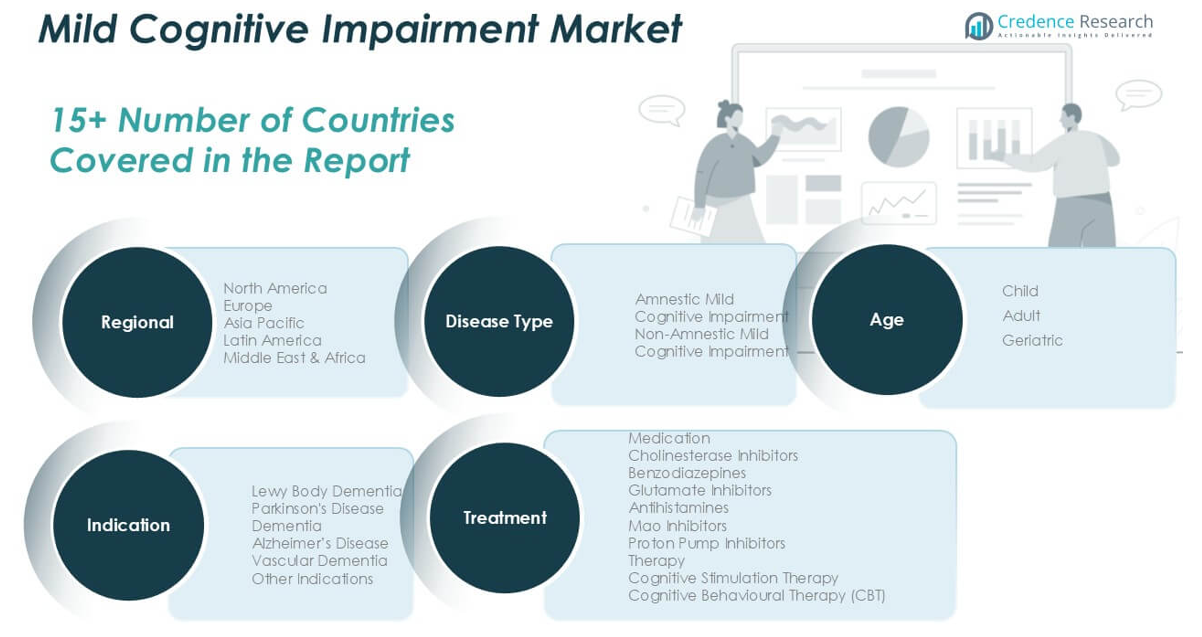
Mild Cognitive Impairment Market By Type (Amnestic Mild Cognitive Impairment, Non-Amnestic Mild Cognitive Impairment); By Age (Child, Adult, Geriatric); By Indication (Lewy Body Dementia, Parkinson’s Disease Dementia, Alzheimer’s Disease, Vascular Dementia, Others); By Treatment (Medication [Cholinesterase Inhibitors, Benzodiazepines, Glutamate Inhibitors, Antihistamines, MAO Inhibitors, Proton Pump Inhibitors], Therapy [Cognitive Stimulation Therapy, Cognitive Behavioural Therapy (CBT)]) – Growth, Share, Opportunities & Competitive Analysis, 2024 – 2032

Report ID: 84282 | Report Format : Excel, PDF

Market Overview

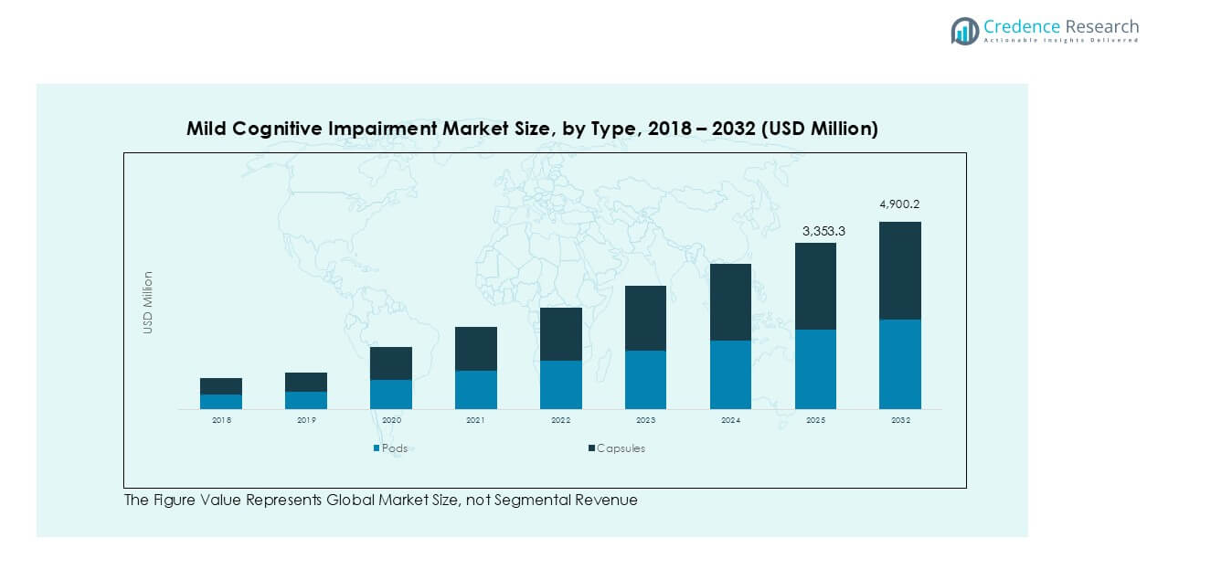
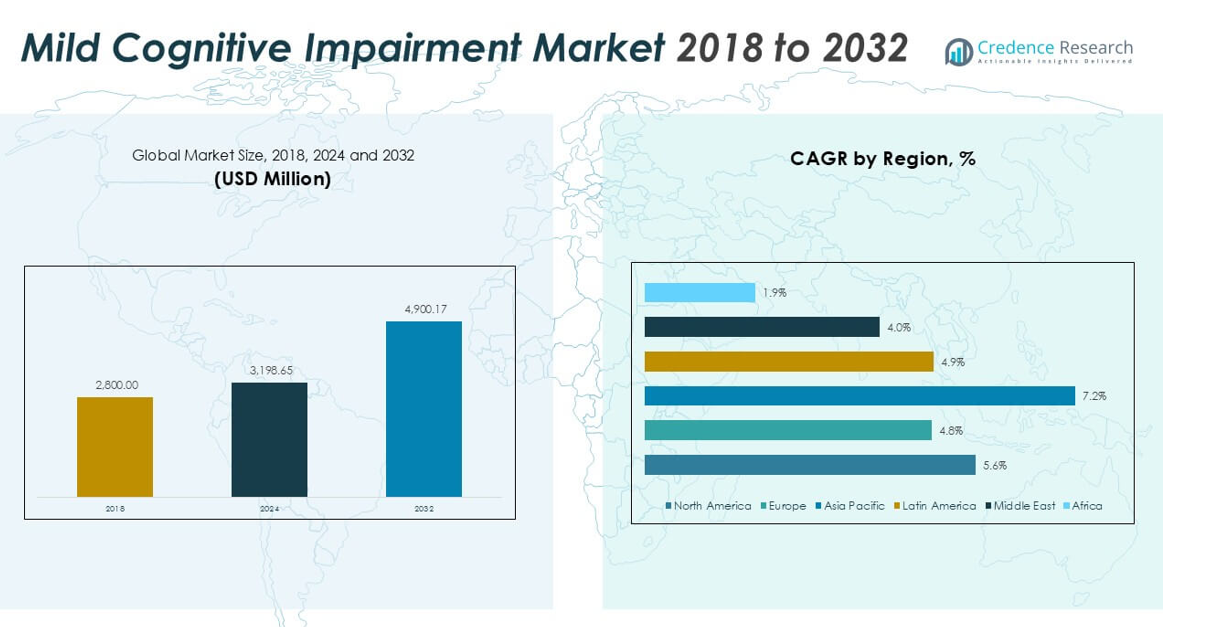
The Mild Cognitive Impairment market size was valued at USD 2,800.00 million in 2018 and increased to USD 3,198.65 million in 2024. It is anticipated to reach USD 4,900.17 million by 2032, growing at a CAGR of 5.57% during the forecast period.

REPORT ATTRIBUTE DETAILS
Historical Period 2020-2023
Base Year 2024
Forecast Period 2025-2032
Mild Cognitive Impairment Market Size 2024 USD 3,198.65 million
Mild Cognitive Impairment Market, CAGR 5.57%
Mild Cognitive Impairment Market Size 2032 USD 4,900.17 billion


The mild cognitive impairment market is led by prominent players including Pfizer Inc., Hoffman La Roche Ltd., Johnson & Johnson Services Inc., Merck & Co Inc., Takeda Pharmaceutical Company Limited, Teva Pharmaceutical Industries Ltd., Sun Pharmaceuticals Ltd., Hikma Pharmaceuticals PLC, Reddy’s Laboratories Ltd., and Nestlé Health Science. These companies focus on expanding therapeutic pipelines, advancing diagnostics, and investing in clinical trials for early intervention strategies. Regionally, North America held the dominant position with a 42.1% market share in 2024, driven by advanced healthcare infrastructure, strong R&D funding, and high prevalence of Alzheimer’s-linked MCI. Europe followed with 25.1% share, supported by government dementia strategies, while Asia Pacific emerged as the fastest-growing region with 19.5% share, reflecting rapid aging demographics and rising healthcare investments. This balance of established leadership in developed regions and high growth potential in emerging markets defines the competitive and geographic dynamics of the industry.

Mild Cognitive Impairment Market size

Market Insights

  • The mild cognitive impairment market was valued at USD 3,198.65 million in 2024 and is projected to reach USD 4,900.17 million by 2032, growing at a CAGR of 5.57%.
  • Rising prevalence of Alzheimer’s disease and other dementias is driving early diagnosis and treatment adoption, with geriatric patients contributing the largest share of demand.
  • Digital health integration, remote cognitive monitoring, and non-pharmacological therapies such as CBT and stimulation therapy are emerging as strong trends enhancing patient management.
  • Key players including Pfizer, Hoffman La Roche, Merck & Co, Takeda, Teva, and Johnson & Johnson lead through R&D investment, new drug development, and strategic collaborations to expand treatment pipelines.
  • Regionally, North America dominated with 42.1% share in 2024, followed by Europe at 25.1%, while Asia Pacific held 19.5% and is expected to grow fastest at 7.2% CAGR. By segment, amnestic MCI and Alzheimer’s-related indications led the market due to high disease association.

Access crucial information at unmatched prices!

Request your sample report today & start making informed decisions powered by Credence Research Inc.!

Download Sample

Market Segmentation Analysis:

By Disease Type

The disease type segment of the mild cognitive impairment market is divided into amnestic MCI and non-amnestic MCI. Amnestic MCI dominated the segment in 2024 with over 60% market share due to its strong association with Alzheimer’s disease progression. Rising awareness of memory-related disorders and the growing availability of diagnostic tools are fueling demand in this sub-segment. Non-amnestic MCI, although less common, is gaining attention as it links to conditions like frontotemporal and vascular dementia, supported by advancements in neuroimaging and patient screening programs.

  • For instance, in December 2021, after months of minimal sales and controversy, Biogen reduced the price of its Alzheimer’s therapy Aduhelm (aducanumab) and projected that approximately 50,000 patients might start treatment in 2022. However, the actual number of patients who initiated the therapy was far lower. By early 2024, Biogen completely terminated the commercial development of Aduhelm.

By Age

The age segment includes child, adult, and geriatric populations. The geriatric sub-segment accounted for the largest share of nearly 70% in 2024, driven by the global rise in aging populations and higher vulnerability to cognitive decline. Increased life expectancy, coupled with higher prevalence of dementia-related conditions in older individuals, supports this dominance. Adults are also emerging as a significant group due to stress, lifestyle changes, and chronic illness risks, while children remain a minor segment with limited diagnosed cases.

  • For instance, in 2023, Eisai and Biogen’s Leqembi (lecanemab) received traditional FDA approval for early Alzheimer’s disease linked to geriatric MCI cases. While its approval was a significant milestone, the initial uptake was slower than anticipated. Early in 2024, it was reported that about 2,000 U.S. patients were on the treatment, with manufacturer data indicating that this number grew throughout the year

By Indication

The indication segment covers Lewy body dementia, Parkinson’s disease dementia, Alzheimer’s disease, vascular dementia, and others. Alzheimer’s disease held the leading share of more than 55% in 2024, as MCI is considered a precursor in many Alzheimer’s cases. Growing investment in early-stage Alzheimer’s research and targeted drug development further supports this segment’s strength. Vascular dementia and Parkinson’s disease dementia contribute steadily, driven by rising cardiovascular and neurological disorders. Lewy body dementia and other indications represent smaller shares but benefit from improved clinical awareness and expanded therapeutic trials.

Key Growth Drivers

Rising Prevalence of Neurodegenerative Disorders

The growing incidence of Alzheimer’s disease, Parkinson’s disease, and related dementias is a major driver for the mild cognitive impairment market. MCI often serves as an early indicator of these conditions, prompting increased diagnosis and monitoring. According to epidemiological studies, aging populations are more vulnerable to memory decline and progressive neurological disorders. With life expectancy rising globally, the number of elderly patients continues to expand, fueling the demand for early-stage interventions. This demographic shift drives investments in diagnostic tools, therapeutics, and patient management programs, strengthening market growth across developed and developing regions.

  • For instance, Biogen and Eisai reported that their Alzheimer’s drug Leqembi (lecanemab) had reached more than 2,000 patients in the U.S. by 2023, many of whom were diagnosed at the MCI stage linked to Alzheimer’s.

Advancements in Diagnostic and Imaging Technologies

Improved access to advanced diagnostic techniques such as MRI, PET scans, and biomarker-based testing is accelerating the identification of mild cognitive impairment cases. Healthcare systems are increasingly focusing on early-stage detection to delay disease progression and improve patient outcomes. The availability of digital cognitive assessments and AI-based platforms enhances screening accuracy, enabling better monitoring of disease progression. These technological innovations encourage proactive medical care and facilitate targeted treatment decisions. Rising adoption of precision medicine and integration of telehealth tools further support market growth by ensuring accessibility and efficiency in diagnosis and treatment.

  • For instance, Cogstate partnered with Eisai in 2021 to develop digital cognitive assessment tools for global Alzheimer’s and MCI clinical trials, with over 1,000 sites adopting its platform.

Increasing Investments in Research and Clinical Trials

Pharmaceutical and biotechnology companies are intensifying efforts to develop therapies for MCI associated with Alzheimer’s and other dementias. Clinical trials focusing on cholinesterase inhibitors, glutamate inhibitors, and cognitive therapies are expanding rapidly. Governments and private organizations are also investing in research programs to understand disease mechanisms and identify novel treatment pathways. These initiatives aim to slow or reverse cognitive decline and reduce healthcare costs associated with dementia care. The growing pipeline of drugs and therapies, coupled with supportive regulatory frameworks and funding initiatives, provides strong growth potential for the MCI market over the forecast period.

Key Trends & Opportunities

Integration of Digital Health and Remote Monitoring

Digital health solutions, including mobile apps, wearables, and telehealth platforms, are emerging as valuable tools for tracking cognitive health. Patients can engage in self-assessment and therapy sessions remotely, improving adherence and reducing hospital visits. Clinicians benefit from continuous data collection, enabling personalized interventions and early alerts for disease progression. This trend creates opportunities for technology companies to collaborate with healthcare providers and expand innovative offerings, especially in regions with limited healthcare infrastructure. The rising acceptance of remote care after the COVID-19 pandemic accelerates the adoption of these solutions globally.

  • For instance, in 2022, Linus Health commercially launched its digital cognitive assessment platform, which has since been adopted by various U.S. healthcare providers. Studies at institutions like UMass Memorial Medical Center show the platform can feasibly be integrated into primary care settings for detecting cognitive impairment.

Focus on Non-Pharmacological Therapies

Therapies such as cognitive stimulation therapy, cognitive behavioral therapy (CBT), and lifestyle-based interventions are gaining popularity as complementary or alternative approaches to drug treatments. These methods show positive effects in delaying disease progression and improving quality of life. Growing awareness of non-drug therapies and patient preference for holistic care present opportunities for specialized service providers. The trend also aligns with the healthcare industry’s increasing focus on cost-effective solutions and preventive care, strengthening the role of therapeutic programs in the MCI market.

Mild Cognitive Impairment Market share

Key Challenges

Limited Approved Treatment Options

Despite growing prevalence, there are few approved drug therapies specifically for mild cognitive impairment. Most treatments focus on symptomatic relief rather than disease modification. This lack of targeted therapies limits clinical adoption and frustrates patients and caregivers seeking effective solutions. Drug development also faces high failure rates, with many clinical trials unable to demonstrate meaningful improvements. As a result, the market remains heavily dependent on off-label drug use and non-pharmacological therapies, slowing overall growth.

High Diagnosis and Treatment Costs

The cost of advanced diagnostic tools, such as neuroimaging and biomarker tests, remains a barrier for patients in low- and middle-income countries. Access to specialized healthcare services is often limited, leading to underdiagnosis and delayed intervention. Even in developed regions, the expenses associated with long-term monitoring and therapy create financial burdens for patients and healthcare systems. This challenge highlights the need for cost-effective diagnostic approaches and wider insurance coverage to ensure equitable access to early detection and treatment.

Regional Analysis

North America

North America dominated the mild cognitive impairment market with a 42.1% share in 2024, valued at USD 1,348.53 million, up from USD 1,192.80 million in 2018. The region is projected to reach USD 2,063.47 million by 2032, growing at a CAGR of 5.6%. High awareness of cognitive health, advanced healthcare infrastructure, and strong research investments support its leadership. The U.S. drives demand due to a large aging population and high Alzheimer’s prevalence. Widespread adoption of advanced diagnostics and therapy programs strengthens North America’s position as the largest regional market.

Europe

Europe accounted for 25.1% of the mild cognitive impairment market in 2024, valued at USD 802.77 million, up from USD 731.36 million in 2018. The market is anticipated to reach USD 1,161.11 million by 2032, at a CAGR of 4.8%. Rising geriatric populations in Germany, France, and the U.K. contribute significantly to demand. Government-backed dementia strategies and expanding research projects drive regional adoption of therapies and diagnostics. Europe’s growing emphasis on early detection and patient-centered care ensures steady market expansion, though challenges remain in addressing treatment affordability and access across member states.

Asia Pacific

Asia Pacific held 19.5% of the mild cognitive impairment market in 2024, reaching USD 623.24 million from USD 515.20 million in 2018. The market is expected to grow rapidly to USD 1,084.41 million by 2032, at a CAGR of 7.2%, the highest globally. Rapid population aging in China, Japan, and India drives this growth, supported by rising healthcare investments and improved access to diagnostics. Growing awareness of dementia and supportive government initiatives are boosting demand. Asia Pacific’s large patient pool and expanding clinical trials create strong opportunities, positioning the region as the fastest-growing market.

Latin America

Latin America captured 8.4% of the mild cognitive impairment market in 2024, valued at USD 268.97 million, up from USD 237.16 million in 2018. It is projected to reach USD 389.91 million by 2032, at a CAGR of 4.9%. Brazil and Mexico lead growth due to increasing elderly populations and improved healthcare coverage. Rising prevalence of neurodegenerative disorders and expansion of diagnostic services are key drivers. However, limited specialized facilities and economic disparities across countries hinder full adoption. Ongoing investment in healthcare infrastructure is expected to gradually strengthen the regional market.

Middle East

The Middle East accounted for 3.0% of the mild cognitive impairment market in 2024, valued at USD 94.98 million compared to USD 89.88 million in 2018. The market is forecasted to grow to USD 128.41 million by 2032, registering a CAGR of 4.0%. Rising awareness of cognitive decline and increasing adoption of advanced diagnostics are improving treatment penetration in the region. Countries like Saudi Arabia and the UAE are investing in healthcare modernization, which supports early detection initiatives. Despite growth, limited specialist availability and cultural stigma toward mental health conditions remain challenges.

Africa

Africa represented 1.9% of the mild cognitive impairment market in 2024, valued at USD 60.15 million, rising from USD 33.60 million in 2018. The region is projected to reach USD 72.86 million by 2032, growing at a CAGR of 1.9%, the slowest among all regions. Low healthcare infrastructure, limited awareness of dementia, and affordability barriers constrain market growth. South Africa leads regional adoption due to comparatively better healthcare systems. International collaborations and NGO-led initiatives are gradually improving access to cognitive health services, but Africa remains the smallest contributor to the global MCI market.
Mild Cognitive Impairment Market segmentation

Market Segmentations:

By Disease Type

  • Amnestic Mild Cognitive Impairment
  • Non-Amnestic Mild Cognitive Impairment

By Age

  • Child
  • Adult
  • Geriatric

By Indication

  • Lewy Body Dementia
  • Parkinson’s Disease Dementia
  • Alzheimer’s Disease
  • Vascular Dementia
  • Others

By Treatment

  • Medication
    • Cholinesterase Inhibitors
    • Benzodiazepines
    • Glutamate Inhibitors
    • Antihistamines
    • MAO Inhibitors
    • Proton Pump Inhibitors
  • Therapy
    • Cognitive Stimulation Therapy
    • Cognitive Behavioural Therapy (CBT)

By Geography

  • North America
    • U.S.
    • Canada
    • Mexico
  • Europe
    • UK
    • France
    • Germany
    • Italy
    • Spain
    • Russia
    • Belgium
    • Netherlands
    • Austria
    • Sweden
    • Poland
    • Denmark
    • Switzerland
    • Rest of Europe
  • Asia Pacific
    • China
    • Japan
    • South Korea
    • India
    • Australia
    • Thailand
    • Indonesia
    • Vietnam
    • Malaysia
    • Philippines
    • Taiwan
    • Rest of Asia Pacific
  • Latin America
    • Brazil
    • Argentina
    • Peru
    • Chile
    • Colombia
    • Rest of Latin America
  • Middle East
    • UAE
    • KSA
    • Israel
    • Turkey
    • Iran
    • Rest of Middle East
  • Africa
    • Egypt
    • Nigeria
    • Algeria
    • Morocco
    • Rest of Africa

Competitive Landscape

The competitive landscape of the mild cognitive impairment market is shaped by pharmaceutical giants, biotech innovators, and healthcare solution providers focusing on early-stage cognitive disorder management. Key players such as Pfizer Inc., Hoffman La Roche Ltd., Johnson & Johnson Services Inc., and Merck & Co. dominate through strong product pipelines, extensive R&D programs, and strategic partnerships aimed at developing effective therapies for Alzheimer’s-linked MCI. Companies like Teva Pharmaceutical Industries Ltd., Takeda Pharmaceutical Company Limited, and Sun Pharmaceuticals strengthen their presence with generics and supportive treatments, while Nestlé Health Science explores nutrition-based interventions. The market also witnesses collaboration between technology firms and healthcare providers to advance digital diagnostics and cognitive therapies. Intense competition drives innovation in biomarker research, drug development, and non-pharmacological treatments. With rising prevalence of neurodegenerative disorders, firms are focusing on acquisitions, licensing agreements, and global expansion to secure market share, making the landscape dynamic and innovation-driven.

Shape Your Report to Specific Countries or Regions & Enjoy 30% Off!

Key Player Analysis

  • Pfizer Inc.
  • Hoffman La Roche Ltd.
  • Nestlé Health Science
  • Reddy’s Laboratories Ltd.
  • Hikma Pharmaceuticals PLC
  • Sun Pharmaceuticals Ltd.
  • Johnson & Johnson Services, Inc.
  • Teva Pharmaceutical Industries Ltd.
  • Takeda Pharmaceutical Company Limited
  • Merck & Co Inc.

Recent Developments

  • In October 2024, AgeneBio announced that its Phase 2B trial of AGB101 demonstrated a 40% reduction in clinical decline and significant slowing of entorhinal cortex atrophy in non-carriers of the ApoE-4 allele with mild cognitive impairment due to Alzheimer’s disease, compared to placebo. Results of the HOPE4MCI trial to date provide strong support for further testing of AGB101 in patients with MCI due to AD who are non-carriers of ApoE-4. AgeneBio is currently completing an extension of this study in the United States
  • In July 2024, the US FDA approved KISUNLA (donanemab-azbt, 350 mg/20 mL), an Alzheimer’s therapy developed by Eli Lilly for adults with early symptomatic Alzheimer’s disease, including MCI and mild dementia with confirmed amyloid pathology.
  • In January 2023, Eisai Co., Ltd. (Japan) announced that the FDA granted accelerated approval to LEQEMBI (lecanemab-irmb), a treatment for early AD.

Report Coverage

The research report offers an in-depth analysis based on Disease Type, Age, Indication, Treatment and Geography. It details leading market players, providing an overview of their business, product offerings, investments, revenue streams, and key applications. Additionally, the report includes insights into the competitive environment, SWOT analysis, current market trends, as well as the primary drivers and constraints. Furthermore, it discusses various factors that have driven market expansion in recent years. The report also explores market dynamics, regulatory scenarios, and technological advancements that are shaping the industry. It assesses the impact of external factors and global economic changes on market growth. Lastly, it provides strategic recommendations for new entrants and established companies to navigate the complexities of the market.

Future Outlook

  1. The market will expand steadily as global aging populations continue to rise.
  2. Demand for early detection tools will grow with rising awareness of cognitive health.
  3. Amnestic MCI will remain the dominant disease type due to strong Alzheimer’s association.
  4. Geriatric patients will continue to represent the largest consumer base worldwide.
  5. Alzheimer’s-related indications will drive the majority of treatment demand in the forecast period.
  6. Digital health solutions and remote monitoring will play a stronger role in patient care.
  7. Non-pharmacological therapies such as CBT and cognitive stimulation will gain wider acceptance.
  8. Pharmaceutical pipelines will expand with increased investment in clinical trials and biomarker research.
  9. North America will maintain leadership, while Asia Pacific will post the fastest growth.
  10. Strategic partnerships and collaborations will remain essential to expand treatment access and innovation.

HAPTER NO. 1 : INTRODUCTION 26

1.1. Report Description 26

Purpose of the Report 26

USP & Key Offerings 26

1.2. Key Benefits for Stakeholders 27

1.3. Target Audience 27

CHAPTER NO. 2 : EXECUTIVE SUMMARY 28

CHAPTER NO. 3 : MILD COGNITIVE IMPAIRMENT MARKET FORCES & INDUSTRY PULSE 30

3.1. Foundations of Change – Market Overview 30

3.2. Catalysts of Expansion – Key Market Drivers 32

3.2.1. Momentum Boosters – Growth Triggers 33

3.2.2. Innovation Fuel – Disruptive Technologies 33

3.3. Headwinds & Crosswinds – Market Restraints 34

3.3.1. Regulatory Tides – Compliance Challenges 35

3.3.2. Economic Frictions – Inflationary Pressures 35

3.4. Untapped Horizons – Growth Potential & Opportunities and Strategic Navigation – Industry Frameworks 36

3.5. Market Equilibrium – Porter’s Five Forces 37

3.6. Ecosystem Dynamics – Value Chain Analysis 39

3.7. Macro Forces – PESTEL Breakdown 41

CHAPTER NO. 4 : COMPETITION ANALYSIS 43

4.1. Company Market Share Analysis 43

4.1.1. Global Mild Cognitive Impairment Market Company Revenue Market Share 43

4.2. Strategic Developments 45

4.2.1. Acquisitions & Mergers 45

4.2.2. New Drug Launch 46

4.2.3. Agreements & Collaborations 47

4.3. Competitive Dashboard 48

4.4. Company Assessment Metrics, 2024 49

CHAPTER NO. 5 : GLOBAL MARKET ANALYSIS, INSIGHTS & FORECAST, BY DISEASE TYPE 50

CHAPTER NO. 6 : GLOBAL MARKET ANALYSIS, INSIGHTS & FORECAST, BY AGE 54

CHAPTER NO. 7 : GLOBAL MARKET ANALYSIS, INSIGHTS & FORECAST, BY INDICATION 58

CHAPTER NO. 8 : GLOBAL MARKET ANALYSIS, INSIGHTS & FORECAST, BY TREATMENT 62

CHAPTER NO. 9 : GLOBAL MARKET ANALYSIS, INSIGHTS & FORECAST, BY REGION 68

CHAPTER NO. 10 : NORTH AMERICA MARKET ANALYSIS, INSIGHTS & FORECAST, BY COUNTRY 73

10.1. North America Market Analysis, Insights & Forecast, by Disease Type 75

10.2. North America Market Analysis, Insights & Forecast, by Age 76

10.3. North America Market Analysis, Insights & Forecast, by Indication 77

10.4. North America Market Analysis, Insights & Forecast, by Treatment 78

CHAPTER NO. 11 : EUROPE MARKET ANALYSIS, INSIGHTS & FORECAST, BY COUNTRY 79

11.1. Europe Market Analysis, Insights & Forecast, by Disease Type 82

11.2. Europe Market Analysis, Insights & Forecast, by Age 83

11.3. Europe Market Analysis, Insights & Forecast, by Indication 84

11.4. Europe Market Analysis, Insights & Forecast, by Treatment 85

CHAPTER NO. 12 : ASIA PACIFIC MARKET ANALYSIS, INSIGHTS & FORECAST, BY COUNTRY 86

12.1. Asia Pacific Market Analysis, Insights & Forecast, by Disease Type 89

12.2. Asia Pacific Market Analysis, Insights & Forecast, by Age 90

12.3. Asia Pacific Market Analysis, Insights & Forecast, by Indication 91

12.4. Asia Pacific Market Analysis, Insights & Forecast, by Treatment 92

CHAPTER NO. 13 : LATIN AMERICA MARKET ANALYSIS, INSIGHTS & FORECAST, BY COUNTRY 93

13.1. Latin America Market Analysis, Insights & Forecast, by Disease Type 96

13.2. Latin America Market Analysis, Insights & Forecast, by Age 97

13.3. Latin America Market Analysis, Insights & Forecast, by Indication 98

13.4. Latin America Market Analysis, Insights & Forecast, by Treatment 99

CHAPTER NO. 14 : MIDDLE EAST MARKET ANALYSIS, INSIGHTS & FORECAST, BY COUNTRY 100

14.1. Middle East Market Analysis, Insights & Forecast, by Disease Type 103

14.2. Middle East Market Analysis, Insights & Forecast, by Age 104

14.3. Middle East Market Analysis, Insights & Forecast, by Indication 105

14.4. Middle East Market Analysis, Insights & Forecast, by Treatment 106

CHAPTER NO. 15 : AFRICA MARKET ANALYSIS, INSIGHTS & FORECAST, BY COUNTRY 107

15.1. Africa Market Analysis, Insights & Forecast, by Disease Type 110

15.2. Africa Market Analysis, Insights & Forecast, by Age 111

15.3. Africa Market Analysis, Insights & Forecast, by Indication 112

15.4. Africa Market Analysis, Insights & Forecast, by Treatment 113

CHAPTER NO. 16 : COMPANY PROFILE 114

16.1. Pfizer Inc. 114

16.2. Hoffman La Roche Ltd. 117

16.3. Nestlé Health Science 117

16.4. Reddy’s Laboratories Ltd. 117

16.5. Hikma Pharmaceuticals PLC 117

16.6. Sun Pharmaceuticals Ltd. 117

16.7. Johnson & Johnson Services, Inc. 117

16.8. Teva Pharmaceutical Industries Ltd. 117

16.9. Takeda Pharmaceutical Company Limited 117

16.10. Merck & Co Inc. 117

16.11. Company 12 117

16.12. Company 13 117

16.13. Company 14 117


List of Figures

FIG NO. 1. Mild Cognitive Impairment Market Revenue Share, By Disease Type, 2024 & 2032 50

FIG NO. 2. Market Attractiveness Analysis, By Disease Type 51

FIG NO. 3. Incremental Revenue Growth Opportunity by Disease Type, 2024 – 2032 52

FIG NO. 4. Mild Cognitive Impairment Market Revenue Share, By Age, 2024 & 2032 54

FIG NO. 5. Incremental Revenue Growth Opportunity by Age, 2024 – 2032 55

FIG NO. 6. Incremental Revenue Growth Opportunity by Age, 2024 – 2032 56

FIG NO. 7. Mild Cognitive Impairment Market Revenue Share, By Indication, 2024 & 2032 58

FIG NO. 8. Market Attractiveness Analysis, By Indication 59

FIG NO. 9. Incremental Revenue Growth Opportunity by Indication, 2024 – 2032 60

FIG NO. 10. Mild Cognitive Impairment Market Revenue Share, By Treatment, 2024 & 2032 62

FIG NO. 11. Market Attractiveness Analysis, By Treatment 63

FIG NO. 12. Incremental Revenue Growth Opportunity by Treatment, 2024 – 2032 64

FIG NO. 13. Mild Cognitive Impairment Market Revenue Share, By Region, 2024 & 2032 68

FIG NO. 14. Market Attractiveness Analysis, By Region 69

FIG NO. 15. Incremental Revenue Growth Opportunity by Region, 2024 – 2032 70

FIG NO. 16. Mild Cognitive Impairment Market Revenue Share, By Country, 2024 & 2032 73

FIG NO. 17. Mild Cognitive Impairment Market Revenue Share, By Country, 2024 & 2032 79

FIG NO. 18. Mild Cognitive Impairment Market Revenue Share, By Country, 2024 & 2032 86

FIG NO. 19. Mild Cognitive Impairment Market Revenue Share, By Country, 2024 & 2032 93

FIG NO. 20. Mild Cognitive Impairment Market Revenue Share, By Country, 2024 & 2032 100

FIG NO. 21. Mild Cognitive Impairment Market Revenue Share, By Country, 2024 & 2032 107


List of Tables

TABLE NO. 1. : Global Mild Cognitive Impairment Market Revenue, By Disease Type, 2018 – 2024 (USD Million) 53

TABLE NO. 2. : Global Mild Cognitive Impairment Market Revenue, By Disease Type, 2025 – 2032 (USD Million) 53

TABLE NO. 3. : Global Mild Cognitive Impairment Market Revenue, By Age, 2018 – 2024 (USD Million) 57

TABLE NO. 4. : Global Mild Cognitive Impairment Market Revenue, By Age, 2025 – 2032 (USD Million) 57

TABLE NO. 5. : Global Mild Cognitive Impairment Market Revenue, By Indication, 2018 – 2024 (USD Million) 61

TABLE NO. 6. : Global Mild Cognitive Impairment Market Revenue, By Indication, 2025 – 2032 (USD Million) 61

TABLE NO. 7. : Global Mild Cognitive Impairment Market Revenue, By Treatment, 2018 – 2024 (USD Million) 65

TABLE NO. 8. : Global Mild Cognitive Impairment Market Revenue, By Treatment, 2025 – 2032 (USD Million) 65

TABLE NO. 9. : Global Mild Cognitive Impairment Market Revenue, By Medication, 2018 – 2024 (USD Million) 66

TABLE NO. 10. : Global Mild Cognitive Impairment Market Revenue, By Medication, 2025 – 2032 (USD Million) 66

TABLE NO. 11. : Global Mild Cognitive Impairment Market Revenue, By Therapy, 2018 – 2024 (USD Million) 67

TABLE NO. 12. : Global Mild Cognitive Impairment Market Revenue, By Therapy, 2025 – 2032 (USD Million) 67

TABLE NO. 13. : Global Mild Cognitive Impairment Market Revenue, By Region, 2018 – 2024 (USD Million) 71

TABLE NO. 14. : Global Mild Cognitive Impairment Market Revenue, By Region, 2025– 2032 (USD Million) 72

TABLE NO. 15. : North America Mild Cognitive Impairment Market Revenue, By Country, 2018 – 2024 (USD Million) 74

TABLE NO. 16. : North America Mild Cognitive Impairment Market Revenue, By Country, 2025– 2032 (USD Million) 74

TABLE NO. 17. : North America Mild Cognitive Impairment Market Revenue, By Disease Type, 2018 – 2024 (USD Million) 75

TABLE NO. 18. : North America Mild Cognitive Impairment Market Revenue, By Disease Type, 2025 – 2032 (USD Million) 75

TABLE NO. 19. : North America Mild Cognitive Impairment Market Revenue, By Age, 2018 – 2024 (USD Million) 76

TABLE NO. 20. : North America Mild Cognitive Impairment Market Revenue, By Age, 2025 – 2032 (USD Million) 76

TABLE NO. 21. : North America Mild Cognitive Impairment Market Revenue, By Indication, 2018 – 2024 (USD Million) 77

TABLE NO. 22. : North America Mild Cognitive Impairment Market Revenue, By Indication, 2025 – 2032 (USD Million) 77

TABLE NO. 23. : North America Mild Cognitive Impairment Market Revenue, By Treatment, 2018 – 2024 (USD Million) 78

TABLE NO. 24. : North America Mild Cognitive Impairment Market Revenue, By Indication, 2025 – 2032 (USD Million) 78

TABLE NO. 25. : Europe Mild Cognitive Impairment Market Revenue, By Country, 2018 – 2024 (USD Million) 80

TABLE NO. 26. : Europe Mild Cognitive Impairment Market Revenue, By Country, 2025– 2032 (USD Million) 81

TABLE NO. 27. : Europe Mild Cognitive Impairment Market Revenue, By Disease Type, 2018 – 2024 (USD Million) 82

TABLE NO. 28. : Europe Mild Cognitive Impairment Market Revenue, By Disease Type, 2025 – 2032 (USD Million) 82

TABLE NO. 29. : Europe Mild Cognitive Impairment Market Revenue, By Age, 2018 – 2024 (USD Million) 83

TABLE NO. 30. : Europe Mild Cognitive Impairment Market Revenue, By Age, 2025 – 2032 (USD Million) 83

TABLE NO. 31. : Europe Mild Cognitive Impairment Market Revenue, By Indication, 2018 – 2024 (USD Million) 84

TABLE NO. 32. : Europe Mild Cognitive Impairment Market Revenue, By Indication, 2025 – 2032 (USD Million) 84

TABLE NO. 33. : Europe Mild Cognitive Impairment Market Revenue, By Treatment, 2018 – 2024 (USD Million) 85

TABLE NO. 34. : Europe Mild Cognitive Impairment Market Revenue, By Indication, 2025 – 2032 (USD Million) 85

TABLE NO. 35. : Asia Pacific Mild Cognitive Impairment Market Revenue, By Country, 2018 – 2024 (USD Million) 87

TABLE NO. 36. : Asia Pacific Mild Cognitive Impairment Market Revenue, By Country, 2025– 2032 (USD Million) 88

TABLE NO. 37. : Asia Pacific Mild Cognitive Impairment Market Revenue, By Disease Type, 2018 – 2024 (USD Million) 89

TABLE NO. 38. : Asia Pacific Mild Cognitive Impairment Market Revenue, By Disease Type, 2025 – 2032 (USD Million) 89

TABLE NO. 39. : Asia Pacific Mild Cognitive Impairment Market Revenue, By Age, 2018 – 2024 (USD Million) 90

TABLE NO. 40. : Asia Pacific Mild Cognitive Impairment Market Revenue, By Age, 2025 – 2032 (USD Million) 90

TABLE NO. 41. : Asia Pacific Mild Cognitive Impairment Market Revenue, By Indication, 2018 – 2024 (USD Million) 91

TABLE NO. 42. : Asia Pacific Mild Cognitive Impairment Market Revenue, By Indication, 2025 – 2032 (USD Million) 91

TABLE NO. 43. : Asia Pacific Mild Cognitive Impairment Market Revenue, By Treatment, 2018 – 2024 (USD Million) 92

TABLE NO. 44. : Asia Pacific Mild Cognitive Impairment Market Revenue, By Indication, 2025 – 2032 (USD Million) 92

TABLE NO. 45. : Latin America Mild Cognitive Impairment Market Revenue, By Country, 2018 – 2024 (USD Million) 94

TABLE NO. 46. : Latin America Mild Cognitive Impairment Market Revenue, By Country, 2025– 2032 (USD Million) 95

TABLE NO. 47. : Latin America Mild Cognitive Impairment Market Revenue, By Disease Type, 2018 – 2024 (USD Million) 96

TABLE NO. 48. : Latin America Mild Cognitive Impairment Market Revenue, By Disease Type, 2025 – 2032 (USD Million) 96

TABLE NO. 49. : Latin America Mild Cognitive Impairment Market Revenue, By Age, 2018 – 2024 (USD Million) 97

TABLE NO. 50. : Latin America Mild Cognitive Impairment Market Revenue, By Age, 2025 – 2032 (USD Million) 97

TABLE NO. 51. : Latin America Mild Cognitive Impairment Market Revenue, By Indication, 2018 – 2024 (USD Million) 98

TABLE NO. 52. : Latin America Mild Cognitive Impairment Market Revenue, By Indication, 2025 – 2032 (USD Million) 98

TABLE NO. 53. : Latin America Mild Cognitive Impairment Market Revenue, By Treatment, 2018 – 2024 (USD Million) 99

TABLE NO. 54. : Latin America Mild Cognitive Impairment Market Revenue, By Indication, 2025 – 2032 (USD Million) 99

TABLE NO. 55. : Middle East Mild Cognitive Impairment Market Revenue, By Country, 2018 – 2024 (USD Million) 101

TABLE NO. 56. : Middle East Mild Cognitive Impairment Market Revenue, By Country, 2025– 2032 (USD Million) 102

TABLE NO. 57. : Middle East Mild Cognitive Impairment Market Revenue, By Disease Type, 2018 – 2024 (USD Million) 103

TABLE NO. 58. : Middle East Mild Cognitive Impairment Market Revenue, By Disease Type, 2025 – 2032 (USD Million) 103

TABLE NO. 59. : Middle East Mild Cognitive Impairment Market Revenue, By Age, 2018 – 2024 (USD Million) 104

TABLE NO. 60. : Middle East Mild Cognitive Impairment Market Revenue, By Age, 2025 – 2032 (USD Million) 104

TABLE NO. 61. : Middle East Mild Cognitive Impairment Market Revenue, By Indication, 2018 – 2024 (USD Million) 105

TABLE NO. 62. : Middle East Mild Cognitive Impairment Market Revenue, By Indication, 2025 – 2032 (USD Million) 105

TABLE NO. 63. : Middle East Mild Cognitive Impairment Market Revenue, By Treatment, 2018 – 2024 (USD Million) 106

TABLE NO. 64. : Middle East Mild Cognitive Impairment Market Revenue, By Indication, 2025 – 2032 (USD Million) 106

TABLE NO. 65. : Africa Mild Cognitive Impairment Market Revenue, By Country, 2018 – 2024 (USD Million) 108

TABLE NO. 66. : Africa Mild Cognitive Impairment Market Revenue, By Country, 2025– 2032 (USD Million) 109

TABLE NO. 67. : Africa Mild Cognitive Impairment Market Revenue, By Disease Type, 2018 – 2024 (USD Million) 110

TABLE NO. 68. : Africa Mild Cognitive Impairment Market Revenue, By Disease Type, 2025 – 2032 (USD Million) 110

TABLE NO. 69. : Africa Mild Cognitive Impairment Market Revenue, By Age, 2018 – 2024 (USD Million) 111

TABLE NO. 70. : Africa Mild Cognitive Impairment Market Revenue, By Age, 2025 – 2032 (USD Million) 111

TABLE NO. 71. : Africa Mild Cognitive Impairment Market Revenue, By Indication, 2018 – 2024 (USD Million) 112

TABLE NO. 72. : Africa Mild Cognitive Impairment Market Revenue, By Indication, 2025 – 2032 (USD Million) 112

TABLE NO. 73. : Africa Mild Cognitive Impairment Market Revenue, By Treatment, 2018 – 2024 (USD Million) 113

TABLE NO. 74. : Africa Mild Cognitive Impairment Market Revenue, By Indication, 2025 – 2032 (USD Million) 113



Request Free Sample

We prioritize the confidentiality and security of your data. Our promise: your information remains private.

Ready to Transform Data into Decisions?

Request Your Sample Report and Start Your Journey of Informed Choices


Providing the strategic compass for industry titans.

cr-clients-logos

Frequently Asked Questions

What is the current size of the Mild Cognitive Impairment Market?

The market size reached USD 3,198.65 million in 2024 and is projected at USD 4,900.17 million by 2032.

At what Compound Annual Growth Rate is the Mild Cognitive Impairment market projected to grow between 2025 and 2032?

The market is expected to expand at a CAGR of 5.57% during the forecast period.

What factors are driving the growth of the Mild Cognitive Impairment Market?

The growth of the MCI market is driven by the increasing global prevalence of age-related cognitive disorders, advancements in early diagnostic tools, rising research and development investments, and the adoption of personalized medicine and non-invasive treatments.

What are some challenges faced by the Mild Cognitive Impairment Market?

The MCI market faces challenges such as limited treatment options, efficacy concerns regarding available therapies, difficulties in early diagnosis, and patient identification, as well as high costs associated with developing effective treatments.

Who are the major players in the Mild Cognitive Impairment Market?

Major players in the MCI market include Teva Pharmaceutical Industries Ltd., Johnson & Johnson Services, Inc., Pfizer Inc., Merck & Co Inc., and Sun Pharmaceuticals Ltd., among others. These companies are actively expanding their presence globally and contributing to market growth.

About Author

Shweta Bisht

Shweta Bisht

Healthcare & Biotech Analyst

Shweta is a healthcare and biotech researcher with strong analytical skills in chemical and agri domains.

View Profile

Related Reports

POC Molecular Diagnostics Market

The point-of-care (PoC) molecular diagnostics market was valued at USD 8 billion in 2024 and is anticipated to reach USD 13.44 billion by 2032, registering a CAGR of 6.32% during the forecast period.

Pigmentation Disorders Treatment Market

Pigmentation Disorder Treatment Market size was valued USD 7484.51 million in 2024 and is anticipated to reach USD 11573.76 million by 2032, at a CAGR of 5.6% during the forecast period.

Oncology Clinical Trials Market

Oncology Clinical Trials Market size was valued USD 17143 million in 2024 and is anticipated to reach USD 32226.69 million by 2032, at a CAGR of 8.21% during the forecast period.

Neutralizing Antibody Market

Neutralizing Antibody Market size was valued USD 232470 million in 2024 and is anticipated to reach USD 446482.98 million by 2032, at a CAGR of 8.5% during the forecast period.

Insect Cell Culture Market

Insect Cell Culture Market size was valued at USD 8.63 Billion in 2024 and is anticipated to reach USD 15.62 Billion by 2032, at a CAGR of 7.7% during the forecast period.

Wireless Patient Safety Market

The Wireless Patient Safety Market size was valued at USD 59,300 million in 2024 and is anticipated to reach USD 191083.28 million by 2032, at a CAGR of 15.75% during the forecast period.

Virtual Clinical Trials Market

The Virtual Clinical Trials Market size was valued at USD 10,720 million in 2024 and is anticipated to reach USD 15658.22 million by 2032, at a CAGR of 4.85 % during the forecast period.

Vietnam Medical and Diagnostic Laboratory Service Market

The Vietnam Medical and Diagnostic Laboratory Service Market size was valued at USD 1,000 million in 2024 and is anticipated to reach USD 1632.75 million by 2032, at a CAGR of 6.32 % during the forecast period.

Vietnam ECG Equipment Market

The Vietnam ECG Equipment Market size was valued at USD 18.75 million in 2024 and is anticipated to reach USD 30.14 million by 2032, at a CAGR of 6.11 % during the forecast period.

Veterinary CRO and CDMO Market

The Veterinary CRO and CDMO Market size was valued at USD 7,170 million in 2024 and is anticipated to reach USD 13498.96 million by 2032, at a CAGR of 8.55 % during the forecast period.

US Medical and Diagnostic Laboratory Service Market

The US Medical and Diagnostic Laboratory Service Market size was valued at USD 75,250 million in 2024 and is anticipated to reach USD 145059.15 million by 2032, at a CAGR of 8.55 % during the forecast period.

Sperm Separation Devices Market

The Sperm Separation Devices Market size was valued at USD 297.6 million in 2024 and is anticipated to reach USD 563.2 million by 2032, at a CAGR of 8.3% during the forecast period (2024-2032).

Licence Option

The report comes as a view-only PDF document, optimized for individual clients. This version is recommended for personal digital use and does not allow printing. Use restricted to one purchaser only.
$4999

To meet the needs of modern corporate teams, our report comes in two formats: a printable PDF and a data-rich Excel sheet. This package is optimized for internal analysis. Unlimited users allowed within one corporate location (e.g., regional office).
$6999

The report will be delivered in printable PDF format along with the report’s data Excel sheet. This license offers 100 Free Analyst hours where the client can utilize Credence Research Inc. research team. Permitted for unlimited global use by all users within the purchasing corporation, such as all employees of a single company.
$12999

Report delivery within 24 to 48 hours

Credence Staff 3

WILLIAM, North America

Support Staff at Credence Research

KEITH PHILLIPS, Europe

Lee - CR Sales Staff

LEE VALLANCE, Asia Pacific

Kieran Jameson

KIERAN JAMESON, Australia

Smallform of Sample request
User Review

Thank you for the data! The numbers are exactly what we asked for and what we need to build our business case.

Materials Scientist
(privacy requested)

User Review

The report was an excellent overview of the Industrial Burners market. This report does a great job of breaking everything down into manageable chunks.

Imre Hof
Management Assistant, Bekaert

cr-clients-logos

Request Sample