| REPORT ATTRIBUTE |
DETAILS |
| Historical Period |
2020-2023 |
| Base Year |
2024 |
| Forecast Period |
2025-2032 |
| Indonesia Writing Instruments Market Size 2023 |
USD 134.41 Million |
| Indonesia Writing Instruments Market, CAGR |
10.58% |
| Indonesia Writing Instruments Market Size 2032 |
USD 332.88 Million |
Market Overview
Indonesia Writing Instruments Market size was valued at USD 134.41 million in 2023 and is anticipated to reach USD 332.88 million by 2032, at a CAGR of 10.58% during the forecast period (2023-2032).
The Indonesia Writing Instruments market is driven by several key factors, including the growing demand from educational institutions, offices, and consumers seeking high-quality, durable writing products. Increasing literacy rates, coupled with rising student enrollment, contribute to the steady demand for pens, pencils, markers, and other writing tools. Additionally, the market is witnessing a shift toward eco-friendly and innovative writing instruments as consumers become more environmentally conscious. The growing popularity of creative and artistic activities, including drawing and calligraphy, further boosts market growth. Technological advancements in design, such as ergonomic features and multi-functional pens, are also influencing consumer preferences. Moreover, the rise of digital learning tools and e-commerce platforms has expanded the accessibility and distribution of writing instruments, providing new growth opportunities for manufacturers. These factors collectively foster a robust market environment, enabling significant growth during the forecast period.
The Indonesia Writing Instruments market is characterized by strong demand across various regions, with key players catering to the diverse needs of consumers in urban and rural areas. Major cities like Jakarta, Surabaya, and Medan drive much of the market due to their large populations and high concentration of educational and corporate sectors. Key international and domestic brands such as Lamy, Montblanc, Faber-Castell, and Cello Pens have a significant presence in the country, offering a range of writing instruments, from basic pens and pencils to high-end luxury products. Local manufacturers also play a vital role in providing affordable and quality products to meet the needs of the growing middle class. The presence of both global and regional players, along with the increasing focus on innovation, customization, and eco-friendly products, shapes the competitive landscape of the writing instruments market in Indonesia.
Access crucial information at unmatched prices!
Request your sample report today & start making informed decisions powered by Credence Research Inc.!
Download Sample
Market Insights
- The Indonesia Writing Instruments market was valued at USD 134.41 million in 2023 and is projected to reach USD 332.88 million by 2032, growing at a CAGR of 10.58% from 2023 to 2032.
- The Global Writing Instruments market was valued at USD 22,000.00 million in 2023 and is expected to reach USD 57,196.01 million by 2032, growing at a CAGR of 11.20% during the forecast period.
- The growing educational sector and rising literacy rates are major drivers of market demand, particularly for affordable writing tools.
- Increasing corporate demand and a shift toward premium and personalized writing instruments are fueling market growth.
- Eco-friendly and sustainable writing products are gaining popularity as environmental awareness increases among consumers.
- The market is seeing a rise in digital and hybrid writing tools, blending traditional writing with modern technology.
- Key players like Lamy, Montblanc, and Cello Pens are driving innovation, focusing on both luxury and affordable products.
- Regional growth is led by Java, with steady demand from Sumatra, Kalimantan, and Sulawesi, though at varying levels of market penetration.
Report Scope
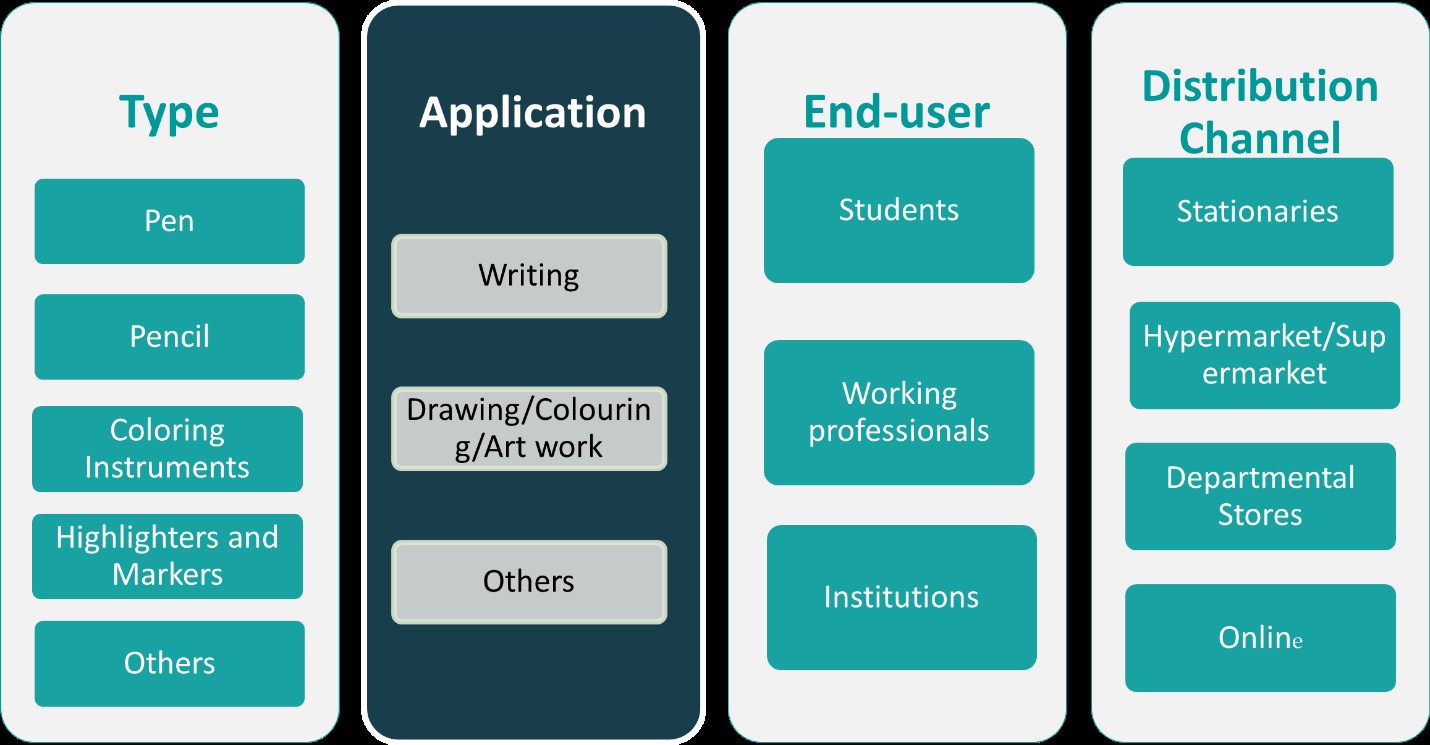
This report segments the Indonesia Writing Instruments Market as follows:
Market Drivers
Growing Educational Sector
One of the primary drivers of the Indonesia Writing Instruments market is the expanding educational sector. For instance, government initiatives such as the “Indonesia Pintar” program have significantly increased school enrollment rates, particularly in rural areas. As the country experiences increasing literacy rates and a growing student population, the demand for writing instruments continues to rise. With more children enrolling in primary and secondary schools, as well as higher education institutions, there is a consistent need for affordable and reliable writing tools. This demand is not limited to traditional pens and pencils but also extends to markers, highlighters, and specialized stationery used for learning purposes. Educational initiatives supported by the government and private sectors further fuel the growth of this market, as students require a variety of writing instruments to facilitate their learning experiences.
Office and Corporate Demand
Another significant driver of the writing instruments market in Indonesia is the increasing demand from the office and corporate sectors. For instance, a survey by the Indonesian Chamber of Commerce revealed that businesses frequently purchase branded pens and markers for promotional purposes. As businesses expand and office environments become more dynamic, there is a growing need for writing tools across different industries. From simple ballpoint pens for daily note-taking to more sophisticated products like rollerball pens and premium writing instruments for executives, businesses rely on a wide range of writing products. The rise of flexible work environments and hybrid work models also fuels demand for portable and high-quality writing instruments that employees can use both at home and in the office. Additionally, promotional products such as branded pens and markers contribute to the market’s growth by creating a steady demand from companies seeking to advertise their brand.
Trend Toward Eco-Friendly Products
A growing trend in the Indonesian writing instruments market is the shift towards eco-friendly products. As environmental awareness continues to rise among consumers, there is an increasing preference for writing tools made from sustainable, recyclable, and biodegradable materials. Manufacturers are responding to this demand by introducing writing instruments that use recycled plastic, bamboo, and other eco-conscious materials. These products appeal not only to environmentally-conscious consumers but also to businesses and educational institutions aiming to reduce their carbon footprint. The shift toward eco-friendly writing instruments is also aligned with global sustainability efforts, positioning manufacturers in Indonesia to tap into a broader market of conscious consumers. This trend is expected to be a significant factor driving the growth of the market in the coming years.
Rising Popularity of Creative and Artistic Activities
The growing popularity of creative and artistic activities in Indonesia is another important driver of the writing instruments market. As the country experiences a cultural shift with more individuals exploring hobbies such as drawing, painting, calligraphy, and journaling, the demand for specialized writing instruments is on the rise. Products like gel pens, colored pencils, sketching markers, and high-quality brushes are increasingly sought after by artists, hobbyists, and professionals. This trend is supported by the increasing availability of artistic supplies in retail and online stores, which makes it easier for consumers to access the tools they need. Social media platforms, such as Instagram and YouTube, also play a role in popularizing creative activities, further boosting demand for high-end, specialized writing instruments. As these creative pursuits gain traction, manufacturers are diversifying their product offerings to cater to the growing artistic community in Indonesia.
Market Trends
Digital Integration and Hybrid Writing Tools
The Indonesian writing instruments market is witnessing a shift towards hybrid products that blend traditional writing with digital functionality. For instance, a study by the Indonesian Ministry of Education highlighted the growing adoption of smart pens and stylus-equipped tools in schools and universities to support digital learning initiatives. These innovations allow users to digitize handwritten notes in real-time, appealing to students, professionals, and creatives who navigate both physical and digital environments. As digital learning and note-taking become more prevalent, the demand for such multifunctional writing instruments is expected to rise.
Sustainability and Eco-Conscious Product Development
Environmental concerns are influencing consumer choices in the Indonesian writing instruments market. For instance, initiatives by the Indonesian Green Building Council have encouraged manufacturers to adopt recycled materials and biodegradable plastics in their products. There is a growing preference for eco-friendly products made from recycled materials, biodegradable plastics, and refillable ink pens. Manufacturers are responding by developing writing instruments that minimize environmental impact, appealing to environmentally conscious consumers. This shift aligns with broader global sustainability trends and is particularly resonant among younger generations who are more attuned to environmental issues. The demand for sustainable writing tools is prompting brands to innovate and offer products that contribute to reducing plastic waste and promoting environmental responsibility.
Personalization and Customization Trends
Personalized writing instruments are becoming increasingly sought after in Indonesia. Consumers, particularly younger demographics, are drawn to products that reflect their individual style and identity. Brands are responding by offering customizable options, such as engraved pens, unique color schemes, and bespoke designs. This trend extends beyond luxury items to include mass-market products, allowing consumers to express personal preferences through their writing tools. Personalized instruments are also gaining traction in corporate gifting and promotional campaigns, further driving this trend.
E-Commerce Expansion and Online Retail Growth
The growth of e-commerce is significantly impacting the distribution of writing instruments in Indonesia. Online platforms provide consumers with access to a wide range of products, from budget-friendly options to premium brands, all at their fingertips. The convenience of online shopping, coupled with competitive pricing and home delivery services, is reshaping consumer purchasing behavior. This trend is particularly evident among younger, tech-savvy consumers who prioritize convenience and variety. As a result, traditional retail channels are adapting to integrate online sales strategies to remain competitive in the evolving market landscape.
Market Challenges Analysis
Intense Price Competition and Low-Quality Imitations
One of the key challenges facing the Indonesia Writing Instruments market is the intense price competition, particularly from low-quality imitations and counterfeit products. The influx of inexpensive, low-quality alternatives from unbranded sources poses a significant threat to established brands, which often rely on quality and reliability to differentiate themselves. Consumers may opt for cheaper options, leading to price wars and reduced profit margins for manufacturers. Additionally, the presence of counterfeit products not only undermines brand integrity but also raises concerns about product safety and durability. To mitigate this challenge, established brands must emphasize their value proposition through innovation, quality assurance, and effective marketing strategies.
Fluctuating Raw Material Costs and Supply Chain Disruptions
The writing instruments industry in Indonesia is also grappling with the challenge of fluctuating raw material costs and potential supply chain disruptions. For instance, a study by the Indonesian Chamber of Commerce and Industry emphasized the impact of global market fluctuations on the prices of plastics, inks, and metals used in manufacturing. The prices of essential materials, such as plastics, inks, and metals, are subject to global market fluctuations, which can impact production costs. Furthermore, supply chain disruptions caused by factors like trade restrictions, natural disasters, and logistical inefficiencies can lead to delays in manufacturing and distribution. These challenges can affect the ability of companies to maintain consistent product availability and meet consumer demand, especially during peak purchasing seasons. Manufacturers need to adopt flexible supply chain strategies and explore alternative materials to safeguard against these uncertainties.
Market Opportunities
The Indonesia Writing Instruments market presents several growth opportunities driven by shifting consumer preferences and expanding market segments. One significant opportunity lies in the increasing demand for premium and personalized writing instruments. As disposable incomes rise and the middle-class population expands, Indonesian consumers are becoming more willing to invest in high-quality and customized writing tools. This trend is particularly evident among young professionals, students, and corporate clients who seek products that reflect their personal style or serve as unique promotional items. Manufacturers can capitalize on this by offering bespoke designs, luxury writing instruments, and collaborations with artists or brands to cater to the growing desire for distinctive, personalized products.
Another opportunity arises from the heightened focus on sustainability. As environmental awareness increases, Indonesian consumers are showing a clear preference for eco-friendly writing instruments. Brands that invest in developing products made from recycled materials, biodegradable plastics, and refillable ink systems stand to gain a competitive edge. Additionally, the rise of digital and hybrid tools presents an avenue for innovation, with smart pens and stylus-equipped products gaining traction among students and professionals who blend digital and traditional note-taking. Manufacturers that incorporate digital capabilities, such as handwriting recognition or cloud synchronization, can tap into the growing demand for multifunctional and tech-integrated writing tools. These opportunities, coupled with the growth of online retail channels, present a promising future for companies that are quick to adapt to changing consumer needs and environmental priorities.
Market Segmentation Analysis:
By Type:
The Indonesia Writing Instruments market can be segmented by type into pens, pencils, coloring instruments, highlighters and markers, and other writing tools. Pens dominate the market due to their widespread use in education, business, and daily activities. Ballpoint, gel, and rollerball pens are among the most popular varieties, offering consumers a range of options based on writing comfort and style preferences. Pencils remain essential in the educational sector, particularly in primary and secondary schools, where they are primarily used for writing, drawing, and exam purposes. Coloring instruments, including crayons, colored pencils, and markers, are witnessing rising demand as artistic and creative activities gain popularity among all age groups, from children to adults. Highlighters and markers are essential tools for office use, study, and art projects, contributing significantly to market growth. Other types, such as mechanical pencils, fountain pens, and correction tools, cater to niche market segments, providing specialized products for professionals, artists, and collectors.
By Application:
The Indonesia Writing Instruments market can also be analyzed based on application, which includes writing, drawing/coloring/artwork, and others. The writing segment holds the largest share, driven by the extensive use of writing instruments in education, corporate offices, and personal use. This segment includes pens, pencils, and other tools essential for note-taking, professional documentation, and communication. The drawing, coloring, and artwork segment is gaining traction as the popularity of creative activities, such as calligraphy, sketching, and coloring, increases. This demand is particularly noticeable among young adults, students, and hobbyists who seek high-quality tools for artistic expression. As social media platforms promote DIY crafts and art, more people are investing in specialized instruments like markers, colored pencils, and sketch pens. The “others” segment includes products used for specific purposes, such as highlighters, correction pens, and stationery items for niche markets, contributing to steady growth in the overall writing instruments sector.
Segments:
Based on Type:
- Pen
- Pencil
- Coloring Instruments
- Highlighters and Markers
- Others
Based on Application:
- Writing
- Drawing/Colouring/Art Work
- Others
Based on End- User:
- Students
- Working Professionals
- Institutions
Based on Distribution Channel:
- Stationaries
- Hypermarket/Supermarket
- Departmental Stores
- Online
Based on the Geography:
- Java
- Sumatra
- Kalimantan
- Sulawesi
Regional Analysis
Java
Java, the most populous and economically developed island in Indonesia, dominates the market, accounting for a significant share of nearly 58% in 2023. The high concentration of educational institutions, businesses, and consumer purchasing power in cities like Jakarta and Surabaya makes Java a key driver for the demand for writing instruments. In this region, demand is driven by both the education sector, with a growing student population, and the corporate sector, with an increasing number of businesses and professionals seeking high-quality and functional writing tools.
Sumatra
Sumatra, the second-largest island in Indonesia, represents approximately 23% of the market share for writing instruments. The region benefits from its diverse economy, including agriculture, trade, and education. Sumatra has seen steady growth in the demand for writing instruments, particularly in cities like Medan and Padang. Educational and governmental institutions are key consumers in this region, driving the demand for pens, pencils, and stationery. Moreover, the region’s increasing urbanization and growing middle class are also contributing to rising consumer demand for higher-quality writing instruments, especially among young professionals and students.
Kalimantan
Kalimantan, which holds a market share of approximately 12%, has a smaller yet steadily growing demand for writing instruments. The market in Kalimantan is influenced by the region’s focus on resource industries such as mining and agriculture, with a growing need for basic office supplies and writing tools. Additionally, the development of infrastructure and expansion of educational services in urban areas like Banjarmasin have contributed to the rise in demand for writing instruments. However, the demand in Kalimantan is still largely concentrated in major cities, with rural areas showing more modest growth in writing instrument consumption.
Sulawesi
Sulawesi accounts for about 7% of the Indonesia Writing Instruments market. While it represents a smaller portion compared to the other regions, Sulawesi’s market is expanding, particularly in cities such as Makassar and Manado. The demand in Sulawesi is driven by the region’s growing education sector and the increasing interest in artistic and creative activities, which has boosted sales of coloring instruments, markers, and sketching tools. Additionally, Sulawesi’s developing tourism and service sectors are creating opportunities for writing instrument manufacturers to tap into a more diverse consumer base, particularly among students and small businesses.
Key Player Analysis
- Lamy
- Montblanc
- Waterman
- Faber-Castell
- Montegrappa
- Pelikan
- Kaweco
- Diplomat
- Aurora
- Sheaffer
- Cello Pens
Competitive Analysis
The competitive landscape of the Indonesia Writing Instruments market is shaped by a mix of established global brands and local manufacturers. Leading international players, including Lamy, Montblanc, Waterman, Faber-Castell, Montegrappa, Pelikan, Kaweco, Diplomat, Aurora, Sheaffer, and Cello Pens, dominate the high-end and mid-range segments, offering a variety of products catering to different consumer preferences. These brands are known for their innovation, quality, and strong brand equity, particularly in the luxury pen market. These players leverage strong brand recognition, product innovation, and extensive distribution networks to maintain their market positions. Local brands, on the other hand, dominate the mass-market segment by offering affordable and functional writing instruments, primarily targeting students, office workers, and budget-conscious consumers. They are known for producing reliable, cost-effective products that meet the daily needs of a large population. The competition is intensifying as consumer preferences shift toward eco-friendly, sustainable, and customizable products. Many manufacturers are investing in eco-conscious product lines, using recyclable materials and sustainable production methods. Moreover, the rise of hybrid and digital writing instruments is creating new opportunities for competition, as tech-integrated pens and stylus devices become increasingly popular. E-commerce platforms are also playing a crucial role in intensifying competition, enabling brands to reach a broader audience and improve accessibility. Manufacturers are focusing on enhancing their online presence, improving product offerings, and optimizing their distribution strategies to stay competitive.
Recent Developments
- In February 2023, Zebra Pen Corp., a prominent player in the industry, announced its partnership with Liqui-Mark. This collaboration aims to enhance distribution aspects in the market, bringing about a new era of possibilities.
- In July 2023, Montblanc launched its exclusive “Meisterstück 146 LeGrand” fountain pen, featuring a handcrafted design with intricate detailing, addressing the rising demand for personalized, high-end writing tools in luxury segments.
- In April 2022, Zebra Pen Corp. announced the launch of its official website. This step was taken by the company to enhance user experience, increase e-commerce functionality, and improve brand communication, among other objectives.
Market Concentration & Characteristics
The Indonesia Writing Instruments market is moderately concentrated, with a mix of global brands and local players vying for market share. International brands dominate the premium and mid-range segments, offering a variety of high-quality writing tools that appeal to professionals, collectors, and high-income consumers. These brands leverage strong brand equity, innovation, and superior product design to maintain their competitive edge. Local manufacturers, on the other hand, cater to the mass-market segment, focusing on affordable and functional writing instruments for students, office workers, and budget-conscious consumers. The market is characterized by a diverse range of products, including pens, pencils, markers, highlighters, and artistic tools. Consumer preferences are shifting towards eco-friendly, customizable, and technologically advanced products, prompting companies to innovate and align with these trends. While the competition remains fierce, brands are focusing on improving product quality, distribution networks, and online presence to capture a larger share of the growing market.
Shape Your Report to Specific Countries or Regions & Enjoy 30% Off!
Report Coverage
The research report offers an in-depth analysis based on Type, Application, End-User, Distribution Channel and Geography. It details leading market players, providing an overview of their business, product offerings, investments, revenue streams, and key applications. Additionally, the report includes insights into the competitive environment, SWOT analysis, current market trends, as well as the primary drivers and constraints. Furthermore, it discusses various factors that have driven market expansion in recent years. The report also explores market dynamics, regulatory scenarios, and technological advancements that are shaping the industry. It assesses the impact of external factors and global economic changes on market growth. Lastly, it provides strategic recommendations for new entrants and established companies to navigate the complexities of the market.
Future Outlook
- Indonesia’s writing instrument market is expected to experience steady growth, driven by increasing urbanization and educational advancements.
- The rising middle class in Indonesia will fuel the demand for premium and branded writing products.
- E-commerce platforms will play a crucial role in expanding market access to remote areas, increasing online sales of writing instruments.
- Consumer preference is shifting towards eco-friendly writing tools, with biodegradable materials gaining popularity.
- Innovations in design and functionality will continue to enhance user experience, particularly with smart pens and digital integration.
- The growing emphasis on education and skill development will sustain demand for writing tools in schools and universities.
- Local manufacturers will focus on cost-effective production to compete with global brands, ensuring affordability for a wide range of consumers.
- The influence of global trends in office supplies and stationary will push the local market to adopt international styles and features.
- The increased focus on sustainability will encourage companies to invest in environmentally friendly manufacturing processes and packaging.
- Strong competition from regional players in Southeast Asia will drive continuous improvement and innovation in Indonesia’s writing instrument sector.



