
| REPORT ATTRIBUTE | DETAILS |
|---|---|
| Historical Period | 2020-2023 |
| Base Year | 2024 |
| Forecast Period | 2025-2032 |
| Asia Pacific Hotel Gift Cards Market Size 2023 | USD 17,670.86 million |
| Asia Pacific Hotel Gift Cards Market, CAGR | 14.2% |
| Asia Pacific Hotel Gift Cards Market Size 2032 | USD 58,387.70 million |
Market Overview
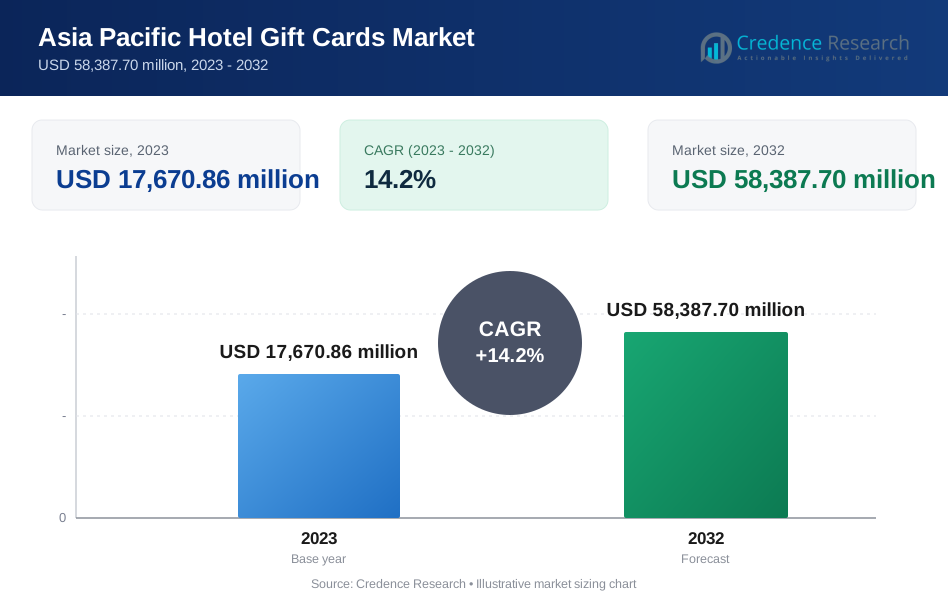
Asia Pacific Hotel Gift Cards market size was valued at USD 17,670.86 million in 2023 and is anticipated to reach USD 58,387.70 million by 2032, at a CAGR of 14.2% during the forecast period (2023-2032).
The Asia Pacific Hotel Gift Cards market is driven by the growing preference for convenient, flexible gifting options and the increasing trend of personalized travel experiences. As disposable incomes rise and consumer spending on travel and leisure activities increases, hotel gift cards have become a popular choice for consumers seeking hassle-free gift solutions. The shift toward digital payments and e-commerce platforms further supports this growth, as consumers opt for online purchases. Additionally, hotel chains are expanding their gift card offerings, allowing for customization and seamless integration with loyalty programs, which boosts customer engagement. The region’s expanding tourism industry, combined with advancements in digital technologies, contributes to the market's expansion. Moreover, the increasing adoption of hotel gift cards in corporate incentive programs and promotional campaigns strengthens market demand, positioning the market for sustained growth over the forecast period.
The Asia Pacific Hotel Gift Cards market is driven by key players across diverse regions, with major players such as Hyatt, Marriott International, and Taj Hotels leading the market in terms of brand recognition and gift card offerings. These hotel chains offer both physical and digital gift cards, targeting a broad range of consumers from domestic travelers to international tourists. Additionally, platforms like Airbnb and Expedia Group have emerged as significant players, expanding the hotel gift card offerings beyond traditional hotel brands. In Southeast Asia, regional players like ITC Hotels and Woohoo.in are capitalizing on the growing demand for customizable gift card experiences. Furthermore, luxury brands such as The Peninsula Hong Kong, Mandarin Oriental, and The Ritz-Carlton are contributing to the market by offering premium gift card options. As digital payment adoption increases, companies are enhancing their gift card portfolios, integrating them with loyalty programs and promotions to drive customer engagement across the region.
Market Insights
- The Asia Pacific Hotel Gift Cards market was valued at USD 17,670.86 million in 2023 and is projected to reach USD 58,387.70 million by 2032, growing at a CAGR of 14.2% during the forecast period.
- Rising disposable incomes and growing middle-class populations across the region are driving the demand for flexible travel gift options.
- The increasing shift towards digital and contactless payments is fueling the growth of digital hotel gift cards.
- Personalization and customization of gift cards are becoming key trends, allowing consumers to tailor their gift experiences.
- Companies like Hyatt, Marriott International, and Airbnb are dominating the market, offering extensive gift card options across various price ranges.
- Market restraints include security concerns related to fraud and limited awareness in some regions.
- Regional growth is driven by strong tourism in China, Japan, and Southeast Asia, with expanding adoption in countries like India and Australia.
Market Drivers
Expansion of Hotel Chains and Loyalty Programs
Hotel chains across Asia Pacific are increasingly focusing on expanding their gift card offerings as part of their broader customer engagement strategies. Many hotel brands are now offering customizable gift cards that can be tailored to individual preferences, allowing for more personalized gifting experiences. For example, customer loyalty programs integrated with gift cards have shown to enhance customer retention and satisfaction, as consumers can earn rewards points with each purchase and redemption. This synergy between gift cards and loyalty programs enhances customer retention and satisfaction, contributing to the growing demand for hotel gift cards. Hotels are also leveraging gift cards as part of their promotional campaigns, incentivizing customers to make purchases and driving further market adoption.
Growing Demand for Flexible Gifting Options
The increasing preference for convenient and flexible gifting options is one of the primary drivers behind the growth of the Asia Pacific Hotel Gift Cards market. Consumers are increasingly seeking alternatives to traditional gifts, and hotel gift cards offer a practical solution that allows recipients to choose from a wide range of accommodations, services, and experiences. This flexibility makes hotel gift cards an attractive option for various occasions, including birthdays, holidays, and corporate incentives. As the demand for personalized gifts rises, hotel gift cards provide the perfect way to cater to diverse consumer preferences, thereby driving market expansion.
Rise in Disposable Income and Consumer Spending
As disposable incomes rise across the Asia Pacific region, more consumers are allocating funds for leisure and travel experiences. This has led to an increase in demand for hotel accommodations and related services, further propelling the adoption of hotel gift cards. With growing financial stability, consumers are more willing to spend on premium travel experiences, making hotel gift cards an ideal solution for accessing luxury and boutique hotels. Moreover, the increasing middle-class population in emerging markets, such as China and India, is contributing to the heightened spending on travel, which ultimately boosts the market for hotel gift cards.
Digital Payment and E-Commerce Integration
The shift toward digital payment solutions and e-commerce platforms has played a crucial role in the growth of the Asia Pacific Hotel Gift Cards market. As consumers increasingly embrace digital payments, the ease of purchasing gift cards online has led to a surge in sales. The convenience of making purchases via mobile apps and websites has attracted tech-savvy consumers who prefer quick and seamless transactions. Hotel gift cards are now available through multiple digital channels, making them more accessible to a broader audience. The ability to buy and redeem these cards online or through mobile devices also appeals to younger, digitally native consumers, further driving market growth.
Market Trends
Digital and Contactless Payment Trends
A prominent trend in the Asia Pacific Hotel Gift Cards market is the shift toward digital and contactless payment methods. With the growing adoption of smartphones and digital wallets, consumers increasingly prefer to buy and redeem hotel gift cards through mobile apps or online platforms. Digital gift cards offer convenience, especially in a region where mobile payments are widely used. For instance, countries like China and Japan have seen significant adoption of mobile payment platforms, which has facilitated the use of digital gift cards. The integration of contactless payment features enhances the customer experience by enabling quick and secure transactions. As the demand for contactless solutions rises, hotel gift cards are adapting to this trend, offering more accessible and efficient ways for consumers to engage with the market.
Personalization and Customization
Personalization is a key trend shaping the Asia Pacific Hotel Gift Cards market. Hotel chains are offering customers the ability to customize their gift cards, tailoring them to specific occasions or preferences. This includes the option to add personalized messages, select specific values, or choose between different design themes. Additionally, many hotel brands are allowing customers to combine gift cards with exclusive services or experiences, such as spa treatments or dining credits, to make the gift more unique. The focus on personalized offerings enhances the perceived value of hotel gift cards and appeals to a wider demographic seeking bespoke gifting solutions.
Integration with Loyalty Programs and Promotions
Another significant trend is the integration of hotel gift cards with loyalty programs and promotional campaigns. Many hotel brands are linking gift cards to their reward systems, allowing customers to earn points or redeem them for exclusive benefits. This trend enhances the attractiveness of hotel gift cards, as consumers can gain additional value by combining gift cards with their loyalty memberships. Furthermore, hotels are increasingly using gift cards as part of promotional campaigns, offering them as incentives for bookings or for customer referrals. These initiatives not only increase sales but also help strengthen customer loyalty, making gift cards a powerful marketing tool.
Corporate Gifting and Incentive Programs
The trend of using hotel gift cards for corporate gifting and incentive programs is also gaining traction in the Asia Pacific region. As businesses seek to motivate employees and recognize achievements, hotel gift cards provide a flexible and appealing reward option. Companies are increasingly using these cards as part of their employee recognition programs, conference gifts, or as part of customer appreciation strategies. Hotel gift cards are also becoming a popular choice for incentive travel programs, offering employees and clients the opportunity to choose their own accommodations and experiences. This trend is driving the growth of the market, as businesses continue to see the value of offering memorable travel-related rewards
Market Challenges Analysis
Fraud and Security Concerns
One of the key challenges facing the Asia Pacific Hotel Gift Cards market is the risk of fraud and security breaches. As the popularity of digital gift cards grows, so does the potential for cybercrime and unauthorized access. Fraudsters may exploit vulnerabilities in digital platforms, leading to unauthorized transactions or the theft of card information. For both consumers and hotel brands, ensuring secure transactions and safeguarding sensitive data are critical to maintaining trust in hotel gift card offerings. Additionally, the rise of counterfeit physical cards poses another challenge, requiring enhanced security measures such as digital verification and anti-fraud technologies to protect both consumers and businesses.
Limited Awareness and Acceptance in Some Markets
In certain Asia Pacific markets, hotel gift cards are still relatively new, and there may be limited awareness or understanding of how they work. In regions with lower familiarity with gift card systems, consumers may be hesitant to adopt this method of payment. For example, in some rural or less-developed areas, the lack of infrastructure for digital payments and cashless transactions hampers the widespread adoption of gift cards. Moreover, some hotels may not fully integrate gift cards into their operations or loyalty programs, limiting their appeal and potential usage. The lack of widespread acceptance and understanding can slow down the market's growth in these areas. To overcome this, hotel brands need to invest in consumer education and develop stronger partnerships with payment processors to ensure smoother adoption across diverse markets.
Market Opportunities
The Asia Pacific Hotel Gift Cards market presents significant opportunities due to the region's growing tourism and hospitality industries. With the increasing number of travelers, both domestic and international, hotels can capitalize on the demand for flexible and convenient gift options. As consumers seek personalized travel experiences, hotel gift cards provide a unique solution that allows recipients to choose accommodations, services, or experiences that best suit their preferences. The growing trend of experiential gifting, where consumers prefer gifts that offer memorable experiences over material goods, further supports the expansion of the hotel gift cards market. Hotels can leverage this trend by offering customized packages, including exclusive services such as spa treatments, dining experiences, or adventure activities, which can be redeemed through gift cards.
Another opportunity lies in the growing acceptance of digital payment systems and the shift toward e-commerce. As mobile wallets and online transactions continue to gain popularity, the demand for digital hotel gift cards is expected to rise. Integrating gift cards with mobile apps and loyalty programs offers an enhanced customer experience, attracting tech-savvy consumers. Additionally, corporate gifting represents a lucrative market for hotel gift cards, as businesses increasingly use them for employee incentives, client appreciation, or event-related gifts. By promoting hotel gift cards through online platforms and targeted marketing campaigns, hotels can capture a broader audience, including international customers who may prefer the ease and convenience of purchasing gift cards digitally. This growing trend of digital engagement provides ample opportunities for hotel brands to expand their reach and boost sales in both domestic and international markets.
Market Segmentation Analysis:
By Product Type:
The Asia Pacific Hotel Gift Cards market is segmented by product type into Universal Accepted Open Loop and Hotel Closed Loop cards. Universal Accepted Open Loop gift cards are designed for use across various hotel brands, offering consumers flexibility in choosing from a wide range of accommodations. These cards are typically used for broader travel purposes and are widely accepted, making them a preferred choice for frequent travelers who want the freedom to redeem them at different locations. On the other hand, Hotel Closed Loop gift cards are specific to a single hotel chain or brand, offering a more personalized experience. These cards often come with added benefits such as loyalty points or discounts when used within the same hotel network. While Hotel Closed Loop cards are more popular among loyal customers, the Universal Accepted Open Loop cards cater to a larger segment of the market, attracting those who prefer variety and flexibility in their travel options.
By Price Range:
The market is also segmented based on price range into Low (0-1000 US$) and Medium (1000-3000 US$) categories. Low-priced hotel gift cards are generally more affordable and accessible to a wide consumer base, making them suitable for casual travelers or as small gifts. These cards are typically used for shorter stays, budget accommodations, or specific services within a hotel, such as dining or spa treatments. Medium-priced gift cards cater to a more affluent demographic, appealing to consumers seeking higher-end experiences, such as luxury hotel stays or exclusive services. With rising disposable incomes in the Asia Pacific region, there is a growing demand for medium-priced hotel gift cards, as more consumers are willing to invest in premium travel experiences. These cards provide consumers with the flexibility to access a broader range of upscale services, further driving the market’s growth.
Segments:
Based on Product Type:
- Universal Accepted Open Loop
- Hotel Closed Loop
Based on Price Range:
- Low (0-1000 US$)
- Medium (1000-3000 US$)
Based on Sales Channel:
- Online
- Offline
Based on End User:
- Business
- Individuals
Based on Application:
- Holiday Packages
- Bar & Spa Services
- Sports Activities
- Travel & Transportation
- Others
Based on the Geography:
- China
- Japan
- South Korea
- India
- Australia
- Thailand
- Indonesia
- Vietnam
- Malaysia
- Philippines
- Taiwan
- Rest of Asia Pacific
Regional Analysis
China
China holds the largest market share, accounting for approximately 30% of the total market in 2023. This growth is attributed to the country’s expanding middle class, increasing travel frequency, and rising disposable incomes. The growing trend of e-commerce and digital payment solutions also supports the surge in digital gift card adoption, particularly among younger, tech-savvy consumers. Japan follows closely with a 25% market share, driven by its strong tourism sector and the increasing preference for personalized travel experiences. Both countries are seeing increased integration of hotel gift cards into loyalty programs, making them an attractive option for frequent travelers.
South Korea and India
South Korea and India present emerging opportunities within the Asia Pacific Hotel Gift Cards market. South Korea holds a 15% market share, driven by a robust tourism industry and growing interest in gift cards as part of corporate incentive programs. The rise of online booking platforms and digital wallets has made purchasing hotel gift cards more accessible for consumers, boosting their popularity. India, with a market share of around 10%, is seeing rapid adoption of hotel gift cards, particularly due to its expanding middle class and an increase in domestic and international travel. The growing adoption of online payment methods and the tourism sector’s development are key drivers of the market's growth in India.
Australia and Southeast Asia
Australia and Southeast Asia are also significant contributors to the Asia Pacific market. Australia holds a market share of 8%, largely driven by high consumer spending on leisure and travel experiences, with hotel gift cards becoming a popular option for both domestic and international travelers. In Southeast Asia, including Thailand, Indonesia, Vietnam, Malaysia, and the Philippines, the market share is approximately 12%. The growth in this region is fueled by the rise in tourism, particularly inbound travel from other parts of Asia and beyond. The increasing popularity of digital gift cards and the ease of purchasing through e-commerce platforms are helping to drive adoption in countries like Thailand and Indonesia.
Rest of Asia Pacific
The Rest of Asia Pacific, which includes Taiwan and other smaller markets, accounts for approximately 10% of the total market share. Despite its smaller share, this region is seeing gradual growth in hotel gift card adoption, particularly as travel and hospitality sectors expand. Increasingly, businesses in these regions are leveraging gift cards as part of loyalty programs and promotional offers to engage consumers. The trend toward digital payments and e-commerce platforms is also helping to drive market expansion in these areas.
Key Player Analysis
- Hyatt
- Airbnb
- Expedia Group
- Taj Hotels
- Marriott International
- Radisson Hotel Group
- Woohoo.in
- ITC Hotels
- The Peninsula Hong Kong
- Mandarin Oriental
- The Ritz-Carlton
- Amazon.com, Inc.
- Gifting Owl
- Paséa Hotel & Spa
- Rydges
- Others
Competitive Analysis
The Asia Pacific Hotel Gift Cards market is highly competitive, with several leading players offering diverse gift card options to cater to the growing demand. Key players such as Hyatt, Airbnb, Expedia Group, Taj Hotels, Marriott International, Radisson Hotel Group, Woohoo.in, ITC Hotels, The Peninsula Hong Kong, Mandarin Oriental, The Ritz-Carlton, Amazon.com, Inc., Gifting Owl, Paséa Hotel & Spa, and Rydges are prominent contributors to the market. For instance, many hotels are integrating loyalty programs with gift cards, which enhances customer engagement and fosters brand loyalty. These companies leverage their established brand recognition and extensive customer bases to offer both physical and digital hotel gift cards, meeting the preferences of a wide range of consumers. Leading players differentiate themselves through a variety of strategies, including the integration of loyalty programs with gift cards, which enhances customer engagement and fosters brand loyalty. Companies are increasingly offering both physical and digital gift card options to meet the preferences of different consumer segments. Digital cards, in particular, are gaining popularity due to their convenience and alignment with the growing trend of contactless payments. The introduction of customizable and personalized gift card options has further fueled competition, as it allows consumers to tailor their gift experiences, making them more attractive for both personal gifting and corporate incentives. Luxury hotels and boutique chains are also capitalizing on the market by offering premium gift cards that provide access to exclusive services, such as spa treatments, gourmet dining, and personalized travel experiences. Meanwhile, regional players are focusing on local market needs by offering competitive pricing, catering to domestic travelers, and providing more affordable options. The diversity of offerings and flexibility in redemption options are key factors that drive the competitive dynamics of this market, with brands continually innovating to maintain their market position and attract a broader consumer base.
Recent Developments
- In November 2024, Four Seasons Silicon Valley highlighted their gift cards as a way to give unforgettable experiences, such as exceptional stays, wellness treatments, and dining.
- In October 2024, Four Seasons Hotels and Resorts promoted their gift cards as a versatile gift option, redeemable at any Four Seasons location.
- In September 2024, the Marriott Bonvoy HDFC Bank Credit Card offered a limited-time INR 1,500 gift voucher for new cardholders on their first spend and enrollment.
- In March 2024, Hyatt implemented hotel category adjustments that impact the number of points required for free night redemptions.
Market Concentration & Characteristics
The Asia Pacific Hotel Gift Cards market is moderately concentrated, with a mix of global hotel chains and regional players competing for market share. While leading international hotel brands dominate the market, regional players are increasingly gaining traction by offering tailored, localized options that cater to specific customer needs. The market is characterized by a high level of product differentiation, with companies offering both physical and digital gift cards to meet the preferences of diverse consumer segments. Digital gift cards are particularly popular due to the increasing adoption of e-commerce and mobile payments, making them more accessible to tech-savvy consumers. Furthermore, personalization is a key characteristic of this market, with many brands offering customizable gift cards that can be redeemed for various services beyond accommodation, such as dining, spa treatments, or leisure activities. The market is evolving with a growing focus on customer convenience, loyalty programs, and seamless redemption experiences across both online and offline platforms.
Report Coverage
The research report offers an in-depth analysis based on Product Type, Price Range, Sales Channel, End User, Application and Geography. It details leading market players, providing an overview of their business, product offerings, investments, revenue streams, and key applications. Additionally, the report includes insights into the competitive environment, SWOT analysis, current market trends, as well as the primary drivers and constraints. Furthermore, it discusses various factors that have driven market expansion in recent years. The report also explores market dynamics, regulatory scenarios, and technological advancements that are shaping the industry. It assesses the impact of external factors and global economic changes on market growth. Lastly, it provides strategic recommendations for new entrants and established companies to navigate the complexities of the market.
Future Outlook
- The Asia Pacific Hotel Gift Cards market is expected to continue its strong growth, driven by rising disposable incomes and increasing travel demand.
- Digital gift cards will dominate the market, with more consumers preferring the convenience and flexibility of online transactions.
- Personalization and customization of gift cards will become key differentiators, offering tailored experiences for consumers.
- Integration with loyalty programs will increase, enhancing customer engagement and brand loyalty for hotel chains.
- Corporate gifting will expand as businesses increasingly use hotel gift cards for employee rewards and client incentives.
- The growth of e-commerce platforms and mobile payment systems will further boost the adoption of digital hotel gift cards.
- Luxury and boutique hotels will continue to offer premium gift card options, catering to high-end consumers seeking exclusive experiences.
- Regional players will gain more market share by offering localized gift card solutions tailored to domestic travelers.
- The rise of experiential gifting, where consumers opt for unique travel and accommodation experiences, will further fuel market demand.
- Partnerships between hotels and online platforms or third-party vendors will expand the reach of hotel gift cards to new customer segments.
Request a Free Sample
Fill in your details and we'll send you a free sample report.
- Sample data tables & charts
- Research methodology
Need a Custom Version of This Report?
Tailor the scope, geography, or segments to your exact requirements.
- Custom geography or segment scope
- Direct access to our analyst team
Frequently Asked Questions
What is the current size of the Asia Pacific Hotel Gift Cards market?
What factors are driving the growth of the Asia Pacific Hotel Gift Cards market?
What are some challenges faced by the Asia Pacific Hotel Gift Cards market?
Who are the major players in the Asia Pacific Hotel Gift Cards market?
Table of Content
Chapter 1. Report Introduction
- 1.1 Report Description & Purpose
- 1.1.1 Report Title & Market Definition
- 1.1.2 Unique Selling Propositions (USP) & Key Differentiators
- 1.1.3 Value Proposition for Stakeholders
- 1.2 Research Objectives
- 1.2.1 Market Sizing Objectives (Volume & Revenue)
- 1.2.2 Segmentation Objectives
- 1.2.3 Competitive Intelligence Objectives
- 1.2.4 Forecast & Scenario Objectives
- 1.3 Report Scope
- 1.3.1 Asia Pacific Hotel Gift Cards Scope – Types & Subtypes Covered
- 1.3.2 Geographic Scope – Regions & Countries Covered
- 1.3.3 Historical Period, Base Year & Forecast Period (2023; forecast to 2032)
- 1.3.4 Inclusions & Exclusions
- 1.4 HS Code & Classification Framework
- 1.5 Currency, Units & Pricing Basis
- 1.6 Target Stakeholders
- 1.7 Limitations & Assumptions
Chapter 2. Executive Summary
- 2.1 Global Asia Pacific Hotel Gift Cards Market Snapshot
- 2.1.1 Market Size – Historical (2023) & Forecast (2023-2032) (2023: USD 17,670.86 million → 2032: USD 58,387.70 million)
- 2.1.2 Volume & Revenue – Global Totals
- 2.1.3 Key Market Highlights – Top Five Facts
- 2.2 Asia Pacific Hotel Gift Cards Market Segmentation Snapshot
- 2.2.1 Market Split by Region – 2023 vs. 2032
- 2.3 Competitive Snapshot
- 2.3.1 Top 10 Players by Revenue Share – 2023
- 2.3.2 Top 10 Players by Volume Share – 2023
- 2.3.3 Recent Strategic Developments (18-Month Summary)
- 2.4 Key Investment Highlights & Strategic Conclusions
Chapter 3. Asia Pacific Hotel Gift Cards Market Dynamics & Industry Analysis
- 3.1 Market Overview & Context
- 3.1.1 Asia Pacific Hotel Gift Cards Market Position in the Broader Automotive Value Chain
- 3.1.2 OEM vs. Replacement Market Dynamics
- 3.1.3 Market Maturity & Development Stage by Region
- 3.2 Asia Pacific Hotel Gift Cards Market Drivers
- 3.3 Asia Pacific Hotel Gift Cards Market Restraints & Challenges
- 3.4 Asia Pacific Hotel Gift Cards Market Opportunities
- 3.5 Porter's Five Forces Analysis
- 3.5.1 Threat of New Entrants
- 3.5.2 Bargaining Power of Suppliers
- 3.5.3 Bargaining Power of Buyers
- 3.5.4 Threat of Substitutes
- 3.5.5 Competitive Rivalry – Intensity Assessment
- 3.6 Asia Pacific Hotel Gift Cards Value Chain Analysis
- 3.6.1 Upstream – Raw Material/Input Suppliers
- 3.6.1.1 Raw Material/Input 1
- 3.6.1.2 Raw Material/Input 2
- 3.6.1.3 Raw Material/Input 3
- 3.6.2 Midstream – Production/Manufacturing/Service Delivery
- 3.6.2.1 Production/Process Overview
- 3.6.2.2 Key Facility Locations & Capacity by Manufacturer
- 3.6.3 Downstream – Distribution & End Consumer
- 3.6.3.1 Primary Channel – B2B/OEM
- 3.6.3.2 Secondary Channels – Dealer, Retail, Online, Direct
- 3.6.4 Value Chain Profitability Analysis
- 3.6.1 Upstream – Raw Material/Input Suppliers
- 3.7 PESTEL Analysis
- 3.7.1 Political Factors
- 3.7.2 Economic Factors
- 3.7.3 Social Factors
- 3.7.4 Technological Factors
- 3.7.5 Environmental Factors
- 3.7.6 Legal Factors
- 3.8 Asia Pacific Hotel Gift Cards Supply Chain Analysis
- 3.8.1 Raw Material/Input Supply Risk Assessment
- 3.8.2 Manufacturing Concentration Risk (Geographic Exposure)
- 3.8.3 Trade Disruption Impact Analysis
- 3.9 Regulatory & Policy Landscape
Note: The regulatory and policy landscape section covers regulations based on their applicability to the market, Asia Pacific Hotel Gift Cards category, geography, and scope of the study. Only regulatory frameworks with a material impact on operations, compliance, trade, sustainability, or market access are analyzed in detail.
Chapter 4. Key Investment Pockets & Opportunity Analysis
- 4.1 Asia Pacific Hotel Gift Cards Market Attractiveness Analysis
- 4.1.1 By Region – Investment Attractiveness Matrix (Volume × CAGR)
- 4.2 Absolute Revenue Growth Opportunity
- 4.2.1 By Region – Absolute USD Growth Through 2032
- 4.3 Incremental Volume Opportunity
- 4.3.1 By Region – Incremental Volume Through 2032
- 4.3.2 Segment – Incremental Volume
- 4.4 Emerging Submarket Opportunity Deep Dive (Subject to Applicability)
- 4.5 Emerging Market Opportunity Scorecards
- 4.5.1 United States
- 4.5.2 Europe
- 4.5.3 Asia
- 4.5.4 Middle East & Africa
Note: Emerging Market Opportunity Scorecards will be included based on relevance and strategic importance. Regions listed are indicative and may vary depending on data availability and market dynamics.
Chapter 5. Asia Pacific Hotel Gift Cards Import-Export Analysis & Trade Flows
- 5.1 Global Trade Overview
- 5.1.1 Global Export Value by Country (2023)
- 5.1.2 Global Export Volume by Country (2023)
- 5.1.3 Global Import Value by Country (2023)
- 5.1.4 Global Import Volume by Country (2023)
- 5.1.5 Net Trade Balance by Country (2023)
- 5.2 Export Analysis – Segment
- 5.2.1 Type 1 (HS Code)
- 5.2.2 Type 2 (HS Code)
- 5.2.3 Type 3 (HS Code)
- 5.2.4 Type 4 (HS Code)
- 5.2.5 Type 5 (HS Code)
- 5.3 Import Analysis – Segment
- 5.3.1 Type 1 (HS Code)
- 5.3.2 Type 2 (HS Code)
- 5.3.3 Type 3 (HS Code)
- 5.3.4 Type 4 (HS Code)
- 5.3.5 Type 5 (HS Code)
- 5.4 Average Unit Trade Prices
- 5.4.1 Average Export Price – Segment & Country
- 5.4.2 Average Import Price – Segment & Source Country
- 5.4.3 Price Trends (2023)
- 5.5 Key Trade Route Analysis
- 5.5.1 Trade Route 1
- 5.5.2 Trade Route 2
- 5.5.3 Trade Route 3
- 5.5.4 Trade Route 4
- 5.5.5 Trade Route 5
- 5.6 Trade Policy Impact Assessment
- 5.6.1 US Anti-Dumping & Section 301 Tariffs
- 5.6.2 EU Customs Union Impact
- 5.6.3 Major Free Trade Agreements
- 5.6.4 USMCA Rules of Origin
Note: Trade policy analysis will be included only where relevant to the Asia Pacific Hotel Gift Cards market.
Chapter 6. Competitive Landscape & Company Benchmarking
- 6.1 Asia Pacific Hotel Gift Cards Market Concentration & Structure
- 6.1.1 Herfindahl-Hirschman Index (HHI) – vs. 2023
- 6.1.2 Tier 1, Tier 2 & Tier 3 Market Structure
- 6.1.3 Global, Regional & Local Player Dynamics
- 6.2 Asia Pacific Hotel Gift Cards Market Share Analysis – 2023
- 6.2.1 Global Revenue Share by Company
- 6.2.2 Global Volume Share by Company
- 6.2.3 Regional Revenue Share
- 6.2.4 Market Share Evolution ( vs. 2023)
- 6.2.5 OEM Segment Share by Company
- 6.2.6 Replacement Segment Share by Company
- 6.3 Production/Delivery Capacity & Facility Analysis
- 6.3.1 Global Installed Capacity
- 6.3.2 Capacity Utilization Rates
- 6.3.3 Production/Output Volume
- 6.3.4 Facility Locations & Capacity Map
- 6.3.5 Planned Capacity Additions
- 6.4 Asia Pacific Hotel Gift Cards Competitive Benchmarking Matrix
- 6.4.1 Revenue, Volume, CAGR & Profitability Comparison
- 6.4.2 Channel Revenue Mix
- 6.4.3 Geographic Revenue Exposure
- 6.4.4 R&D Intensity
- 6.4.5 Sustainability Maturity
- 6.5 Strategic Developments in Asia Pacific Hotel Gift Cards (Last 24 Months)
- 6.5.1 Mergers, Acquisitions & Divestments
- 6.5.2 New Asia Pacific Hotel Gift Cards Launches
- 6.5.3 Facility Expansions
- 6.5.4 Strategic Alliances, Joint Ventures & Partnerships
- 6.5.5 Distribution Expansion & Market Entry
- 6.5.6 Sustainability & ESG Initiatives
- 6.6 Competitive Strategy Mapping
- 6.6.1 Leader, Challenger, Follower & Niche Classification
- 6.6.2 Pricing Strategy Comparison
- 6.6.3 Channel Strategy Matrix
Note: Strategic developments are included based on their materiality and the availability of reliable information.
Chapter 7. Global Asia Pacific Hotel Gift Cards Market – By Distribution Channel
- 7.1 Segment Overview
- 7.1.1 Volume & Revenue Split by Channel (2023 & 2032)
- 7.1.2 Channel Mix Evolution (2023-2032)
Chapter 8. Regional Market Analysis – Global Overview
- 8.1 Global Regional Overview
- 8.1.1 Regional Volume Share
- 8.1.2 Regional Revenue Share
- 8.1.3 Regional Volume by Region
- 8.1.4 Regional Revenue by Region
- 8.1.5 Regional Forecast Through 2032
- 8.2 Cross-Regional Segment Analysis
- 8.2.1 By Distribution Channel
- 8.2.2 By Brand/Price Tier
Chapter 9. North America Asia Pacific Hotel Gift Cards Market
- 9.1 United States
- 9.2 Canada
- 9.3 Mexico
Chapter 10. Europe Asia Pacific Hotel Gift Cards Market
- 10.1 Germany
- 10.2 France
- 10.3 Italy
- 10.4 United Kingdom
- 10.5 Spain
- 10.6 Poland
- 10.7 Russia
- 10.8 Netherlands
- 10.9 Belgium
- 10.10 Sweden
- 10.11 Denmark
- 10.12 Norway
- 10.13 Rest of Europe
Chapter 11. Asia Pacific Asia Pacific Hotel Gift Cards Market
- 11.1 China
- 11.2 India
- 11.3 Japan
- 11.4 South Korea
- 11.5 Thailand
- 11.6 Indonesia
- 11.7 Vietnam
- 11.8 Malaysia
- 11.9 Australia
- 11.10 Rest of Asia Pacific
Chapter 12. Latin America Asia Pacific Hotel Gift Cards Market
- 12.1 Brazil
- 12.2 Argentina
- 12.3 Colombia
- 12.4 Chile
- 12.5 Rest of Latin America
Chapter 13. Middle East Asia Pacific Hotel Gift Cards Market
- 13.1 Saudi Arabia
- 13.2 United Arab Emirates
- 13.3 Turkey
- 13.4 Israel
- 13.5 Iran
- 13.6 Rest of the Middle East
Chapter 14. Africa Asia Pacific Hotel Gift Cards Market
- 14.1 South Africa
- 14.2 Egypt
- 14.3 Nigeria
- 14.4 Morocco
- 14.5 Rest of Africa
Chapter 15. Asia Pacific Hotel Gift Cards Company Profiles
- 15.1 [Company 01]
- 15.1.1 Company Overview
- 15.1.2 Key Management Personnel
- 15.1.3 Products & Services Portfolio
- 15.1.4 Financial Performance
- 15.1.5 Key Market Focus & Geographic Presence
- 15.1.6 Recent Developments & Strategic Initiatives
Note: The company profile list is preliminary and may change based on research findings, market developments, data availability, and client requirements.
Chapter 16. Appendices
- Appendix A – List of Abbreviations & Acronyms
- Appendix B – Industry Classification Code Reference – Full Series
- Appendix C – Production & Capacity Data Tables
- Appendix D – End-Use & Demand Base Tables
- Appendix E – Consumption & Replacement Rate Assumptions
- Appendix F – ASP Reference Tables
- Appendix G – Manufacturing & Facility Database
- Appendix H – Import-Export Data Tables
- Appendix I – Regulatory Summary Tables
- Appendix J – Primary Research Participant List (Anonymized)
- Appendix K – Primary Research Questionnaire Framework
- Appendix L – Data Sources & Bibliography
- Appendix M – Market Size Divergence & Source Comparison
Chapter 17. Research Methodology
- 17.1 Research Framework & Philosophy
- 17.2 Secondary Research – Sources, Hierarchy & Data Extraction
- 17.3 Data Modeling – Bottom-Up & Top-Down Market Sizing
- 17.4 Primary Research – Stakeholder Framework, LOI & Sample Sizes
- 17.5 Forecast Methodology – Regression, Scenario & Sensitivity Analysis
- 17.6 Quality Control – Four-Layer Validation Framework
- 17.7 Limitations & Standard Assumptions
- 17.8 Disclaimer
