
| REPORT ATTRIBUTE | DETAILS |
|---|---|
| Historical Period | 2020-2023 |
| Base Year | 2024 |
| Forecast Period | 2025-2032 |
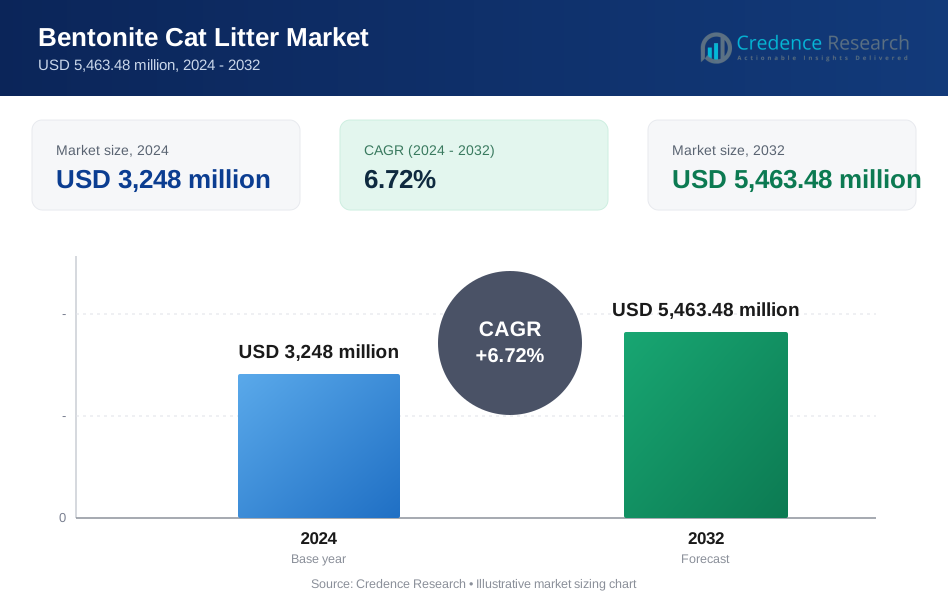
| Bentonite Cat Litter Market Size 2024 | USD 3248 Million |
| Bentonite Cat Litter Market, CAGR | 6.72% |
| Bentonite Cat Litter Market Size 2032 | USD 5463.48 Million |
Market Overview:
The Global Bentonite Cat Litter Market is projected to grow from USD 3248 million in 2024 to an estimated USD 5463.48 million by 2032, with a compound annual growth rate (CAGR) of 6.72% from 2024 to 2032.
Several key factors are driving the growth of the global bentonite cat litter market. One of the primary drivers is the significant rise in pet ownership, especially cats, which are well-suited to urban living environments. This trend has directly contributed to the growing demand for cat litter products. Additionally, urbanization and changing lifestyles have led to an increased preference for pets that require less maintenance, such as cats, especially among individuals living in apartments and smaller spaces. Bentonite cat litter is particularly favored due to its superior clumping ability, high absorbency, and effective odor control, making it a convenient and hygienic option for pet owners. The expansion of e-commerce platforms has further fueled market growth, providing consumers with easy access to a variety of bentonite cat litter products, enhanced by the convenience of home delivery and the availability of product reviews.
Regionally, the demand for bentonite cat litter exhibits notable variation. Europe holds a significant share of the market, with high cat ownership rates and consumer preferences leaning toward premium and eco-friendly products. North America, particularly the United States, is another prominent market, driven by a large pet-owning population and strong emphasis on pet hygiene. The robust retail and e-commerce infrastructure in the region has made bentonite cat litter widely accessible to consumers. The Asia-Pacific region is witnessing rapid growth, supported by increasing disposable incomes, urbanization, and a rising trend of pet adoption. Countries like China and Japan are seeing heightened awareness about pet hygiene, further contributing to market expansion. Meanwhile, regions such as Latin America and the Middle East & Africa are gradually adopting bentonite cat litter products, with growth supported by rising pet ownership and increasing awareness of pet hygiene.
Market Insights:
- The global bentonite cat litter market is projected to grow at a CAGR of 6.72% from 2024 to 2032, driven by increasing pet ownership and urbanization.
- Rising urban populations, particularly in smaller living spaces, have increased the preference for low-maintenance pets like cats, fueling demand for bentonite cat litter.
- Bentonite cat litter's superior clumping, high absorbency, and odor control properties continue to make it the preferred choice for pet owners seeking hygiene and convenience.
- E-commerce expansion, offering wider product selections and home delivery, has significantly boosted the accessibility and sales of bentonite cat litter.
- Growing consumer preferences for eco-friendly and premium cat litter options are encouraging manufacturers to innovate with sustainable and low-dust product variants.
- Environmental concerns over non-biodegradable waste from bentonite mining challenge the market, prompting the search for sustainable alternatives.
- Regional dynamics show Europe leading the market, North America focusing on hygiene and premium products, and Asia-Pacific witnessing rapid growth due to urbanization and rising disposable incomes.
Market Drivers:
Increasing Pet Ownership and Urbanization
The global bentonite cat litter market is experiencing significant growth, primarily due to the rising rates of pet ownership and rapid urbanization. As urban areas expand, more individuals and families are adopting pets, particularly cats, which are well-suited to smaller living spaces. This trend has led to an increased demand for efficient and hygienic cat litter solutions. For instance, according to the 2023-2024 APPA National Pet Owners Survey, approximately 46.5 million US households own cats, making them the second most popular pet type after dogs. This surge in cat ownership directly correlates with the heightened demand for bentonite cat litter products.
Superior Absorption and Odor Control Properties
Bentonite cat litter's unique characteristics, such as high absorbency and effective odor control, have made it a preferred choice among pet owners. For example, bentonite can absorb moisture up to 400% of its weight, reducing the likelihood of bacterial growth and odor formation. These properties not only enhance the convenience for pet owners but also contribute to maintaining a hygienic environment for both pets and their owners. The natural clumping ability of bentonite ensures that waste is effectively encapsulated, reducing unpleasant odors and making it easier to manage litter boxes.
Expansion of Distribution Channels
The proliferation of diverse distribution channels has significantly contributed to the accessibility and availability of bentonite cat litter products. Traditional offline channels, such as supermarkets and pet stores, continue to play a vital role in product distribution. However, the rise of e-commerce platforms has revolutionized the market by offering consumers a wider selection of products, competitive pricing, and the convenience of home delivery. Online sales channels have witnessed rapid growth, especially during the pandemic period, with platforms like Amazon becoming prominent contributors, accounting for over 35% of total bentonite litter sales in 2023. This shift towards online shopping has enabled manufacturers to reach a broader customer base and adapt to changing consumer purchasing behaviors.
Consumer Preferences for Eco-Friendly and Premium Products
A growing awareness of environmental sustainability and pet health has influenced consumer preferences towards eco-friendly and premium bentonite cat litter products. Consumers are increasingly seeking products that are not only effective but also environmentally responsible. This shift in consumer behavior has prompted manufacturers to innovate and offer products that cater to these evolving preferences. For instance, the introduction of low-dust formulations and specialized litters for kittens and senior cats reflects the industry's response to the demand for products that prioritize both pet comfort and environmental considerations. The premium cat litter segment witnessed a 15% annual growth during the historical period, reflecting pet owners’ willingness to invest more in quality products.
Market Trends:
Technological Innovations in Cat Litter Products
The global bentonite cat litter market is witnessing a surge in technological advancements aimed at enhancing user convenience and pet health monitoring. Manufacturers are introducing smart litter products that change color to indicate potential health issues in cats, allowing early detection of urinary tract infections and other ailments. This integration of health-monitoring features addresses the growing concern among pet owners regarding their pets' well-being. For instance, some natural litters absorb urine instantly, forming easy-to-remove clumps and maintaining a clean litter box environment. Additionally, the development of lightweight bentonite products is gaining traction, addressing transportation challenges and improving user convenience. These innovations reflect a trend toward combining traditional litter materials with modern technology to meet evolving consumer demands.
Shift Towards Sustainable and Eco-Friendly Products
Environmental concerns are significantly influencing the bentonite cat litter market, with consumers increasingly seeking eco-friendly alternatives. Manufacturers are responding by investing in the development of biodegradable or partially eco-friendly bentonite products to address environmental concerns. For instance, natural litters are preferred for their minimal dust and eco-friendly nature, making them a solid alternative to traditional clay litters. This shift is pushing manufacturers toward sustainable practices in product design, mining, and packaging, aligning with global sustainability goals and catering to the environmentally conscious consumer base.
Expansion of Online Retail and Subscription Models
The proliferation of e-commerce platforms has transformed the distribution landscape of bentonite cat litter products. Online retail channels offer unmatched convenience, enabling consumers to shop for cat litter at any time and have it delivered to their doorsteps. This is particularly beneficial for bulky and heavy products like cat litter. E-commerce sites offer a 40% wider selection of cat litter products compared to traditional pet stores, allowing consumers to compare products and find the best options for their needs. For instance, the rise of e-commerce in the pet food sector has provided consumers with convenient access to a wide range of products, contributing to market growth. Additionally, the rise of subscription services that deliver products regularly is improving brand loyalty and market predictability. These services cater to consumers' desire for convenience and ensure a steady supply of essential pet care products.
Premiumization and Specialized Product Offerings
There is a growing trend toward premiumization in the bentonite cat litter market, with consumers willing to invest in high-quality products that offer superior performance. Pet owners are opting for specialized products that cater to specific needs, such as low-dust formulations, scented variants, and litters designed for multi-cat households. The premium cat litter segment witnessed a 15% annual growth during the historical period, reflecting pet owners' willingness to spend more on quality products. For instance, for multi-cat households, products like Arm & Hammer Multi-Cat Clumping Litter are designed to deliver stronger odor control and more durable clumping, reducing the need for frequent changes. This trend is driving manufacturers to innovate and diversify their product portfolios to meet the evolving preferences of consumers seeking enhanced hygiene and convenience for their pets.
Market Challenges Analysis:
Environmental Concerns and Sustainability Issues
The extraction and processing of bentonite clay for cat litter production pose significant environmental challenges. Mining activities can lead to habitat disruption, soil erosion, and water contamination, raising ecological concerns. As environmental consciousness rises, consumers are increasingly seeking cat litter products that are environmentally sustainable. Traditional clay-based litters, widely used for their clumping and odor-controlling properties, face scrutiny due to their non-biodegradable nature. The industry is challenged to develop and promote alternatives made from renewable, biodegradable materials to address these environmental concerns.
Price Volatility of Raw Materials
The bentonite cat litter market is susceptible to fluctuations in the cost of raw materials. Variations in bentonite clay prices can directly impact production expenses, leading to increased product prices for consumers. This price volatility poses challenges for manufacturers in maintaining stable profit margins and can affect the overall affordability and competitiveness of bentonite cat litter products.
Competition from Alternative Cat Litter Products
The market faces competition from alternative cat litter products made from materials such as silica gel, recycled paper, and plant-based substrates. These alternatives often appeal to environmentally conscious consumers due to their biodegradable properties. As awareness of sustainable living practices grows, the demand for these eco-friendly cat litter options may increase, challenging the market share of traditional bentonite-based products.
Health and Safety Concerns
Health concerns associated with dust generated from bentonite cat litter present challenges for the market. Dust particles can cause respiratory issues in both cats and their owners, leading some consumers to seek low-dust or dust-free alternatives. Addressing these health and safety concerns is crucial for manufacturers to maintain consumer trust and comply with health regulations.
Market Opportunities:
The global bentonite cat litter market presents significant growth opportunities, driven by rising pet ownership and an increasing focus on pet hygiene. As consumers become more conscious of maintaining clean and healthy environments for their pets, the demand for effective and convenient cat litter solutions continues to expand. This trend opens avenues for manufacturers to innovate and diversify their product offerings, particularly in terms of improving product performance, such as enhanced clumping, odor control, and dust-free formulations. The growing emphasis on pet health and hygiene creates a favorable environment for companies to introduce advanced and premium bentonite cat litter products.
An additional opportunity lies in the development of eco-friendly and sustainable bentonite cat litter products. With increasing consumer awareness about environmental concerns, there is a notable shift toward seeking biodegradable and natural alternatives. Manufacturers that invest in research and development to produce eco-conscious products stand to gain a competitive edge. Furthermore, the expansion of online retail platforms offers a promising avenue for market growth. E-commerce enables manufacturers to reach a wider audience, providing consumers with convenient access to diverse product options. By leveraging digital platforms and adapting to evolving consumer preferences, companies can enhance their market presence and cater to the growing demand for high-quality and sustainable bentonite cat litter solutions.
Market Segmentation Analysis:
The global bentonite cat litter market is segmented by type, application, and distribution channel, each contributing uniquely to overall market dynamics.
By type, the market is categorized into clumping and non-clumping bentonite cat litter. Clumping bentonite cat litter dominates the market due to its superior absorbency and ease of cleaning. It forms tight clumps when exposed to moisture, simplifying waste removal and enhancing hygiene. Non-clumping bentonite cat litter, while less popular, still caters to consumers seeking affordable and lightweight options. However, increasing consumer preference for convenience is expected to drive higher demand for clumping variants in the coming years.
By application, the market is segmented into residential and commercial uses. The residential segment holds the largest share, driven by rising pet ownership and the increasing humanization of pets. Cat owners prioritize hygiene and odor control, making bentonite cat litter a preferred choice for home use. The commercial segment, including pet shelters and veterinary clinics, is also witnessing steady growth, with demand focusing on cost-effective and efficient litter solutions.
By distribution channel, the market is classified into online retail, supermarkets/hypermarkets, specialty stores, and others. Online retail is rapidly expanding due to the convenience of home delivery and easy access to diverse product options. Supermarkets and hypermarkets remain significant, providing consumers with the advantage of immediate purchase. Specialty stores cater to consumers seeking premium and eco-friendly products. The diversification of distribution channels ensures broad consumer access, with online platforms expected to witness significant growth, driven by shifting consumer purchasing behaviors.
Segmentation:
By Type
- Clumping Bentonite Cat Litter
- Non-Clumping Bentonite Cat Litter
By Application
- Residential
- Commercial
By Distribution Channel
- Online Retail
- Supermarkets/Hypermarkets
- Specialty Stores
- Others
Regional Analysis:
Europe
Europe stands as a prominent market for bentonite cat litter, projected to hold a 39.9% share in 2024. The region boasts one of the highest rates of cat ownership globally, with approximately 110 million pet cats, representing 25% of the global cat population. European consumers prioritize quality and hygiene, driving the demand for premium bentonite cat litter products. Additionally, environmental consciousness is strong in Europe, with 72% of consumers willing to pay more for eco-friendly products, prompting manufacturers to adopt sustainable practices in product design, mining, and packaging. The region's advanced retail and e-commerce networks make bentonite cat litter widely accessible, with around 30% of cat litter sales occurring through online platforms in 2023.
North America
North America represents a mature and sophisticated cat litter market, characterized by high pet ownership rates and advanced pet care practices. The region's cat litter market is driven by increasing pet humanization trends, growing awareness of pet hygiene, and rising adoption of premium and innovative cat litter products. The United States dominates the regional landscape, followed by Canada and Mexico, with consumers increasingly favoring environmentally sustainable and odor-control solutions. The market is witnessing a shift toward natural and eco-friendly alternative, while e-commerce channels continue to gain prominence in product distribution.
Asia-Pacific
The Asia-Pacific region is witnessing rapid growth in the bentonite cat litter market, attributed to increasing disposable incomes, urbanization, and a growing trend of pet adoption. Consumers in countries like China and Japan are becoming more aware of pet hygiene, leading to a rise in demand for quality cat litter products. The region's expanding middle class and changing lifestyles have contributed to the growing popularity of cats as pets, further boosting the market. Additionally, the proliferation of e-commerce platforms in Asia-Pacific has made it easier for consumers to access a wide variety of bentonite cat litter products, contributing to market growth.
Latin America and Middle East & Africa
These regions are gradually adopting bentonite cat litter products as pet ownership rises and awareness about pet hygiene spreads. However, market penetration remains lower compared to Europe and North America, indicating potential growth opportunities in the future. Economic development and urbanization in countries within these regions are expected to drive the adoption of bentonite cat litter products, as more consumers seek convenient and hygienic solutions for pet care. Manufacturers focusing on these emerging markets may benefit from tailoring products to meet local preferences and price sensitivities.
Key Player Analysis:
- Nestlé Purina PetCare Company
- Church & Dwight Co., Inc.
- Mars, Incorporated
- The Clorox Company
- Elsey’s Cat Products
- Pettex Limited
- Imerys S.A.
- Oil-Dri Corporation of America
- Sepiolsa
- WePet Care Company
Competitive Analysis:
The global bentonite cat litter market is characterized by intense competition, with several key players striving to enhance their market presence through product innovation and strategic initiatives. Leading companies such as Nestlé Purina PetCare, Church & Dwight Co., Clorox Company, and Oil-Dri Corporation of America dominate the industry, leveraging strong brand recognition and extensive distribution networks. For example, Imerys, a major player in the mineral industry, has seen significant growth in its private-label cat litter segment, These companies focus on developing premium and specialized products, including dust-free and hypoallergenic formulations, to cater to evolving consumer preferences. The market is also witnessing a shift toward sustainable and eco-friendly product, driven by increasing consumer awareness of environmental issues. This trend has led to the introduction of biodegradable and natural cat litter options, prompting traditional bentonite cat litter manufacturers to innovate and adapt. Additionally, the rise of private-label products, as projected by SIVO, adds to the competitive landscape, offering cost-effective alternatives to established brands. To maintain their competitive edge, companies are investing in research and development, expanding their product portfolios, and enhancing their online retail strategies to meet the growing demand for convenient and sustainable pet care solutions.
Recent Developments:
- In July 2022, FibreCycle, a subsidiary of KENT Pet Group, acquired Australia-based Our Bird, a manufacturer of high-quality birdseed and cat litter. This strategic acquisition allows KENT to expand its presence in the Australian companion animal market, enhancing its product portfolio and distribution channels.
- In April 2024, Oil-Dri Corporation of America announced a significant acquisition in the U.S. Bentonite Cat Litter Market. The company entered into a definitive agreement to acquire Ultra Pet Company, Inc. for $46 million in cash. This strategic move allows Oil-Dri to compete in the rapidly growing crystal cat litter segment, as Ultra Pet is a recognized innovator in silica gel-based crystal cat litter. The acquisition is expected to close in Oil-Dri's fourth quarter of fiscal year 2024 and will be immediately accretive to earnings.
- In September 2024, Minerals Technologies Inc. introduced SIVO™ as the new brand name for its growing global pet care business. The company has positioned SIVO™ as the leading global supplier of cat litter to both private label partners and globally recognized brands through strategic acquisitions and innovative product development. SIVO™ now serves over 55 countries worldwide with bentonite mines, process and packaging plants in North America, EMEA, and Asia, as well as state-of-the-art Research & Development centers.
- In July 2022, Ozzy & Dart, a pet goods company, launched a new line of environmentally friendly cat litter in the UK. The manufacturer claimed that their new litter formula was not only eco-friendly but also designed with feline customers' paws in mind. This launch demonstrates the growing trend towards sustainable and pet-friendly products in the UK cat litter market.
- In March 2022, Pettex introduced its new Naturecat tofu cat litter to the UK market. The company announced that this innovative product was developed for fast absorption, super clumping, and low tracking. Pettex also emphasized that the new litter is soft on paws and light to handle, addressing key concerns of cat owners.
Market Concentration & Characteristics:
The global bentonite cat litter market exhibits a moderately concentrated structure, with a few dominant players holding significant market shares, while numerous regional and private-label brands compete for consumer attention. Leading companies such as Nestlé Purina PetCare, Church & Dwight Co., Clorox Company, and Oil-Dri Corporation of America leverage strong brand recognition and extensive distribution networks to maintain their competitive positions. This market is characterized by continuous innovation, with manufacturers focusing on product differentiation through features like enhanced clumping ability, odor control, and eco-friendly formulations. The rise of e-commerce platforms has further intensified competition, enabling smaller brands to reach a broader audience and challenge established players. Additionally, the growing consumer preference for sustainable and natural products is prompting companies to adapt their offerings to align with these evolving demands.
Report Coverage:
The research report offers an in-depth analysis based on type, application, and distribution channel. It details leading market players, providing an overview of their business, product offerings, investments, revenue streams, and key applications. Additionally, the report includes insights into the competitive environment, SWOT analysis, current market trends, as well as the primary drivers and constraints. Furthermore, it discusses various factors that have driven market expansion in recent years. The report also explores market dynamics, regulatory scenarios, and technological advancements that are shaping the industry. It assesses the impact of external factors and global economic changes on market growth. Lastly, it provides strategic recommendations for new entrants and established companies to navigate the complexities of the market.
Future Outlook:
- Rising global pet ownership will continue to drive consistent demand for bentonite cat litter products.
- Urbanization trends will increase the preference for low-maintenance pets like cats, supporting market growth.
- Innovation in clumping, odor control, and dust-free formulations will enhance product offerings.
- Sustainability trends will encourage the development of eco-friendly and biodegradable bentonite cat litter options.
- Expanding e-commerce platforms will improve product accessibility and boost online sales.
- Subscription-based sales models are expected to gain traction, promoting brand loyalty and convenience.
- Growing demand for premium and specialized products will influence product differentiation strategies.
- Emerging markets, particularly in Asia-Pacific and Latin America, will present significant growth opportunities.
- Strategic partnerships and mergers will strengthen market positioning and competitive advantage.
- Continuous investment in research and development will drive innovation and meet evolving consumer preferences.
Request a Free Sample
Fill in your details and we'll send you a free sample report.
- Sample data tables & charts
- Research methodology
Need a Custom Version of This Report?
Tailor the scope, geography, or segments to your exact requirements.
- Custom geography or segment scope
- Direct access to our analyst team
Frequently Asked Questions
What is the current size of the Global Bentonite Cat Litter Market?
What factors are driving the growth of the Global Bentonite Cat Litter Market?
What are the key segments within the Global Bentonite Cat Litter Market?
What are some challenges faced by the Global Bentonite Cat Litter Market?
Who are the major players in the Global Bentonite Cat Litter Market?
Table of Content
Chapter 1. Report Introduction
- 1.1 Report Description & Purpose
- 1.1.1 Report Title & Market Definition
- 1.1.2 Unique Selling Propositions (USP) & Key Differentiators
- 1.1.3 Value Proposition for Stakeholders
- 1.2 Research Objectives
- 1.2.1 Market Sizing Objectives (Volume & Revenue)
- 1.2.2 Segmentation Objectives
- 1.2.3 Competitive Intelligence Objectives
- 1.2.4 Forecast & Scenario Objectives
- 1.3 Report Scope
- 1.3.1 Bentonite Cat Litter Scope – Types & Subtypes Covered
- 1.3.2 Geographic Scope – Regions & Countries Covered
- 1.3.3 Historical Period, Base Year & Forecast Period (2024; forecast to 2032)
- 1.3.4 Inclusions & Exclusions
- 1.4 HS Code & Classification Framework
- 1.5 Currency, Units & Pricing Basis
- 1.6 Target Stakeholders
- 1.7 Limitations & Assumptions
Chapter 2. Executive Summary
- 2.1 Global Bentonite Cat Litter Market Snapshot
- 2.1.1 Market Size – Historical (2024) & Forecast (2024-2032) (2024: USD 3,248 million → 2032: USD 5,463.48 million)
- 2.1.2 Volume & Revenue – Global Totals
- 2.1.3 Key Market Highlights – Top Five Facts
- 2.2 Bentonite Cat Litter Market Segmentation Snapshot
- 2.2.1 Market Split by Region – 2024 vs. 2032
- 2.3 Competitive Snapshot
- 2.3.1 Top 10 Players by Revenue Share – 2024
- 2.3.2 Top 10 Players by Volume Share – 2024
- 2.3.3 Recent Strategic Developments (18-Month Summary)
- 2.4 Key Investment Highlights & Strategic Conclusions
Chapter 3. Bentonite Cat Litter Market Dynamics & Industry Analysis
- 3.1 Market Overview & Context
- 3.1.1 Bentonite Cat Litter Market Position in the Broader Automotive Value Chain
- 3.1.2 OEM vs. Replacement Market Dynamics
- 3.1.3 Market Maturity & Development Stage by Region
- 3.2 Bentonite Cat Litter Market Drivers
- 3.3 Bentonite Cat Litter Market Restraints & Challenges
- 3.4 Bentonite Cat Litter Market Opportunities
- 3.5 Porter's Five Forces Analysis
- 3.5.1 Threat of New Entrants
- 3.5.2 Bargaining Power of Suppliers
- 3.5.3 Bargaining Power of Buyers
- 3.5.4 Threat of Substitutes
- 3.5.5 Competitive Rivalry – Intensity Assessment
- 3.6 Bentonite Cat Litter Value Chain Analysis
- 3.6.1 Upstream – Raw Material/Input Suppliers
- 3.6.1.1 Raw Material/Input 1
- 3.6.1.2 Raw Material/Input 2
- 3.6.1.3 Raw Material/Input 3
- 3.6.2 Midstream – Production/Manufacturing/Service Delivery
- 3.6.2.1 Production/Process Overview
- 3.6.2.2 Key Facility Locations & Capacity by Manufacturer
- 3.6.3 Downstream – Distribution & End Consumer
- 3.6.3.1 Primary Channel – B2B/OEM
- 3.6.3.2 Secondary Channels – Dealer, Retail, Online, Direct
- 3.6.4 Value Chain Profitability Analysis
- 3.6.1 Upstream – Raw Material/Input Suppliers
- 3.7 PESTEL Analysis
- 3.7.1 Political Factors
- 3.7.2 Economic Factors
- 3.7.3 Social Factors
- 3.7.4 Technological Factors
- 3.7.5 Environmental Factors
- 3.7.6 Legal Factors
- 3.8 Bentonite Cat Litter Supply Chain Analysis
- 3.8.1 Raw Material/Input Supply Risk Assessment
- 3.8.2 Manufacturing Concentration Risk (Geographic Exposure)
- 3.8.3 Trade Disruption Impact Analysis
- 3.9 Regulatory & Policy Landscape
Note: The regulatory and policy landscape section covers regulations based on their applicability to the market, Bentonite Cat Litter category, geography, and scope of the study. Only regulatory frameworks with a material impact on operations, compliance, trade, sustainability, or market access are analyzed in detail.
Chapter 4. Key Investment Pockets & Opportunity Analysis
- 4.1 Bentonite Cat Litter Market Attractiveness Analysis
- 4.1.1 By Region – Investment Attractiveness Matrix (Volume × CAGR)
- 4.2 Absolute Revenue Growth Opportunity
- 4.2.1 By Region – Absolute USD Growth Through 2032
- 4.3 Incremental Volume Opportunity
- 4.3.1 By Region – Incremental Volume Through 2032
- 4.3.2 Segment – Incremental Volume
- 4.4 Emerging Submarket Opportunity Deep Dive (Subject to Applicability)
- 4.5 Emerging Market Opportunity Scorecards
- 4.5.1 United States
- 4.5.2 Europe
- 4.5.3 Asia
- 4.5.4 Middle East & Africa
Note: Emerging Market Opportunity Scorecards will be included based on relevance and strategic importance. Regions listed are indicative and may vary depending on data availability and market dynamics.
Chapter 5. Bentonite Cat Litter Import-Export Analysis & Trade Flows
- 5.1 Global Trade Overview
- 5.1.1 Global Export Value by Country (2024)
- 5.1.2 Global Export Volume by Country (2024)
- 5.1.3 Global Import Value by Country (2024)
- 5.1.4 Global Import Volume by Country (2024)
- 5.1.5 Net Trade Balance by Country (2024)
- 5.2 Export Analysis – Segment
- 5.2.1 Type 1 (HS Code)
- 5.2.2 Type 2 (HS Code)
- 5.2.3 Type 3 (HS Code)
- 5.2.4 Type 4 (HS Code)
- 5.2.5 Type 5 (HS Code)
- 5.3 Import Analysis – Segment
- 5.3.1 Type 1 (HS Code)
- 5.3.2 Type 2 (HS Code)
- 5.3.3 Type 3 (HS Code)
- 5.3.4 Type 4 (HS Code)
- 5.3.5 Type 5 (HS Code)
- 5.4 Average Unit Trade Prices
- 5.4.1 Average Export Price – Segment & Country
- 5.4.2 Average Import Price – Segment & Source Country
- 5.4.3 Price Trends (2024)
- 5.5 Key Trade Route Analysis
- 5.5.1 Trade Route 1
- 5.5.2 Trade Route 2
- 5.5.3 Trade Route 3
- 5.5.4 Trade Route 4
- 5.5.5 Trade Route 5
- 5.6 Trade Policy Impact Assessment
- 5.6.1 US Anti-Dumping & Section 301 Tariffs
- 5.6.2 EU Customs Union Impact
- 5.6.3 Major Free Trade Agreements
- 5.6.4 USMCA Rules of Origin
Note: Trade policy analysis will be included only where relevant to the Bentonite Cat Litter market.
Chapter 6. Competitive Landscape & Company Benchmarking
- 6.1 Bentonite Cat Litter Market Concentration & Structure
- 6.1.1 Herfindahl-Hirschman Index (HHI) – vs. 2024
- 6.1.2 Tier 1, Tier 2 & Tier 3 Market Structure
- 6.1.3 Global, Regional & Local Player Dynamics
- 6.2 Bentonite Cat Litter Market Share Analysis – 2024
- 6.2.1 Global Revenue Share by Company
- 6.2.2 Global Volume Share by Company
- 6.2.3 Regional Revenue Share
- 6.2.4 Market Share Evolution ( vs. 2024)
- 6.2.5 OEM Segment Share by Company
- 6.2.6 Replacement Segment Share by Company
- 6.3 Production/Delivery Capacity & Facility Analysis
- 6.3.1 Global Installed Capacity
- 6.3.2 Capacity Utilization Rates
- 6.3.3 Production/Output Volume
- 6.3.4 Facility Locations & Capacity Map
- 6.3.5 Planned Capacity Additions
- 6.4 Bentonite Cat Litter Competitive Benchmarking Matrix
- 6.4.1 Revenue, Volume, CAGR & Profitability Comparison
- 6.4.2 Channel Revenue Mix
- 6.4.3 Geographic Revenue Exposure
- 6.4.4 R&D Intensity
- 6.4.5 Sustainability Maturity
- 6.5 Strategic Developments in Bentonite Cat Litter (Last 24 Months)
- 6.5.1 Mergers, Acquisitions & Divestments
- 6.5.2 New Bentonite Cat Litter Launches
- 6.5.3 Facility Expansions
- 6.5.4 Strategic Alliances, Joint Ventures & Partnerships
- 6.5.5 Distribution Expansion & Market Entry
- 6.5.6 Sustainability & ESG Initiatives
- 6.6 Competitive Strategy Mapping
- 6.6.1 Leader, Challenger, Follower & Niche Classification
- 6.6.2 Pricing Strategy Comparison
- 6.6.3 Channel Strategy Matrix
Note: Strategic developments are included based on their materiality and the availability of reliable information.
Chapter 7. Global Bentonite Cat Litter Market – By Distribution Channel
- 7.1 Segment Overview
- 7.1.1 Volume & Revenue Split by Channel (2024 & 2032)
- 7.1.2 Channel Mix Evolution (2024-2032)
Chapter 8. Regional Market Analysis – Global Overview
- 8.1 Global Regional Overview
- 8.1.1 Regional Volume Share
- 8.1.2 Regional Revenue Share
- 8.1.3 Regional Volume by Region
- 8.1.4 Regional Revenue by Region
- 8.1.5 Regional Forecast Through 2032
- 8.2 Cross-Regional Segment Analysis
- 8.2.1 By Distribution Channel
- 8.2.2 By Brand/Price Tier
Chapter 9. North America Bentonite Cat Litter Market
- 9.1 United States
- 9.2 Canada
- 9.3 Mexico
Chapter 10. Europe Bentonite Cat Litter Market
- 10.1 Germany
- 10.2 France
- 10.3 Italy
- 10.4 United Kingdom
- 10.5 Spain
- 10.6 Poland
- 10.7 Russia
- 10.8 Netherlands
- 10.9 Belgium
- 10.10 Sweden
- 10.11 Denmark
- 10.12 Norway
- 10.13 Rest of Europe
Chapter 11. Asia Pacific Bentonite Cat Litter Market
- 11.1 China
- 11.2 India
- 11.3 Japan
- 11.4 South Korea
- 11.5 Thailand
- 11.6 Indonesia
- 11.7 Vietnam
- 11.8 Malaysia
- 11.9 Australia
- 11.10 Rest of Asia Pacific
Chapter 12. Latin America Bentonite Cat Litter Market
- 12.1 Brazil
- 12.2 Argentina
- 12.3 Colombia
- 12.4 Chile
- 12.5 Rest of Latin America
Chapter 13. Middle East Bentonite Cat Litter Market
- 13.1 Saudi Arabia
- 13.2 United Arab Emirates
- 13.3 Turkey
- 13.4 Israel
- 13.5 Iran
- 13.6 Rest of the Middle East
Chapter 14. Africa Bentonite Cat Litter Market
- 14.1 South Africa
- 14.2 Egypt
- 14.3 Nigeria
- 14.4 Morocco
- 14.5 Rest of Africa
Chapter 15. Bentonite Cat Litter Company Profiles
- 15.1 [Company 01]
- 15.1.1 Company Overview
- 15.1.2 Key Management Personnel
- 15.1.3 Products & Services Portfolio
- 15.1.4 Financial Performance
- 15.1.5 Key Market Focus & Geographic Presence
- 15.1.6 Recent Developments & Strategic Initiatives
Note: The company profile list is preliminary and may change based on research findings, market developments, data availability, and client requirements.
Chapter 16. Appendices
- Appendix A – List of Abbreviations & Acronyms
- Appendix B – Industry Classification Code Reference – Full Series
- Appendix C – Production & Capacity Data Tables
- Appendix D – End-Use & Demand Base Tables
- Appendix E – Consumption & Replacement Rate Assumptions
- Appendix F – ASP Reference Tables
- Appendix G – Manufacturing & Facility Database
- Appendix H – Import-Export Data Tables
- Appendix I – Regulatory Summary Tables
- Appendix J – Primary Research Participant List (Anonymized)
- Appendix K – Primary Research Questionnaire Framework
- Appendix L – Data Sources & Bibliography
- Appendix M – Market Size Divergence & Source Comparison
Chapter 17. Research Methodology
- 17.1 Research Framework & Philosophy
- 17.2 Secondary Research – Sources, Hierarchy & Data Extraction
- 17.3 Data Modeling – Bottom-Up & Top-Down Market Sizing
- 17.4 Primary Research – Stakeholder Framework, LOI & Sample Sizes
- 17.5 Forecast Methodology – Regression, Scenario & Sensitivity Analysis
- 17.6 Quality Control – Four-Layer Validation Framework
- 17.7 Limitations & Standard Assumptions
- 17.8 Disclaimer
