
Market Overview
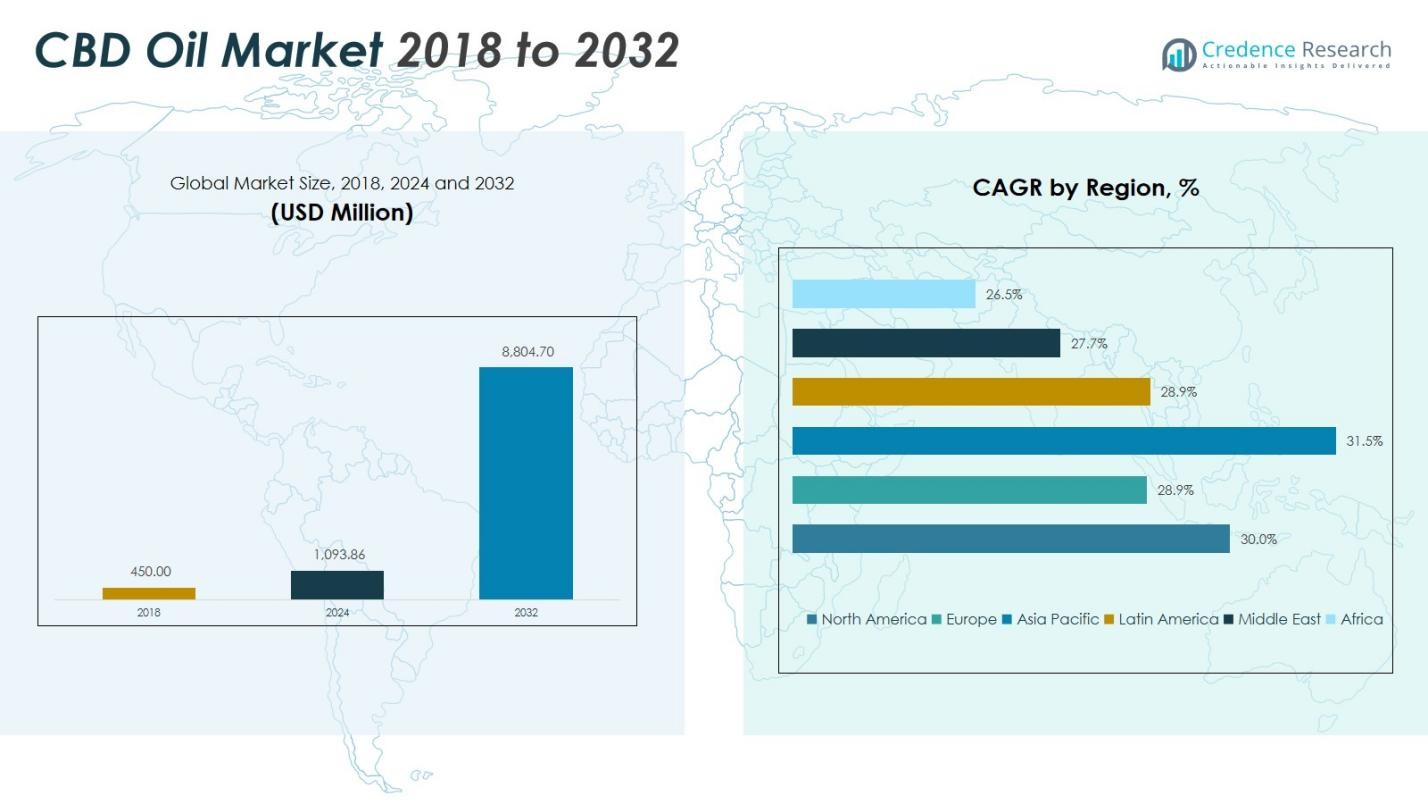
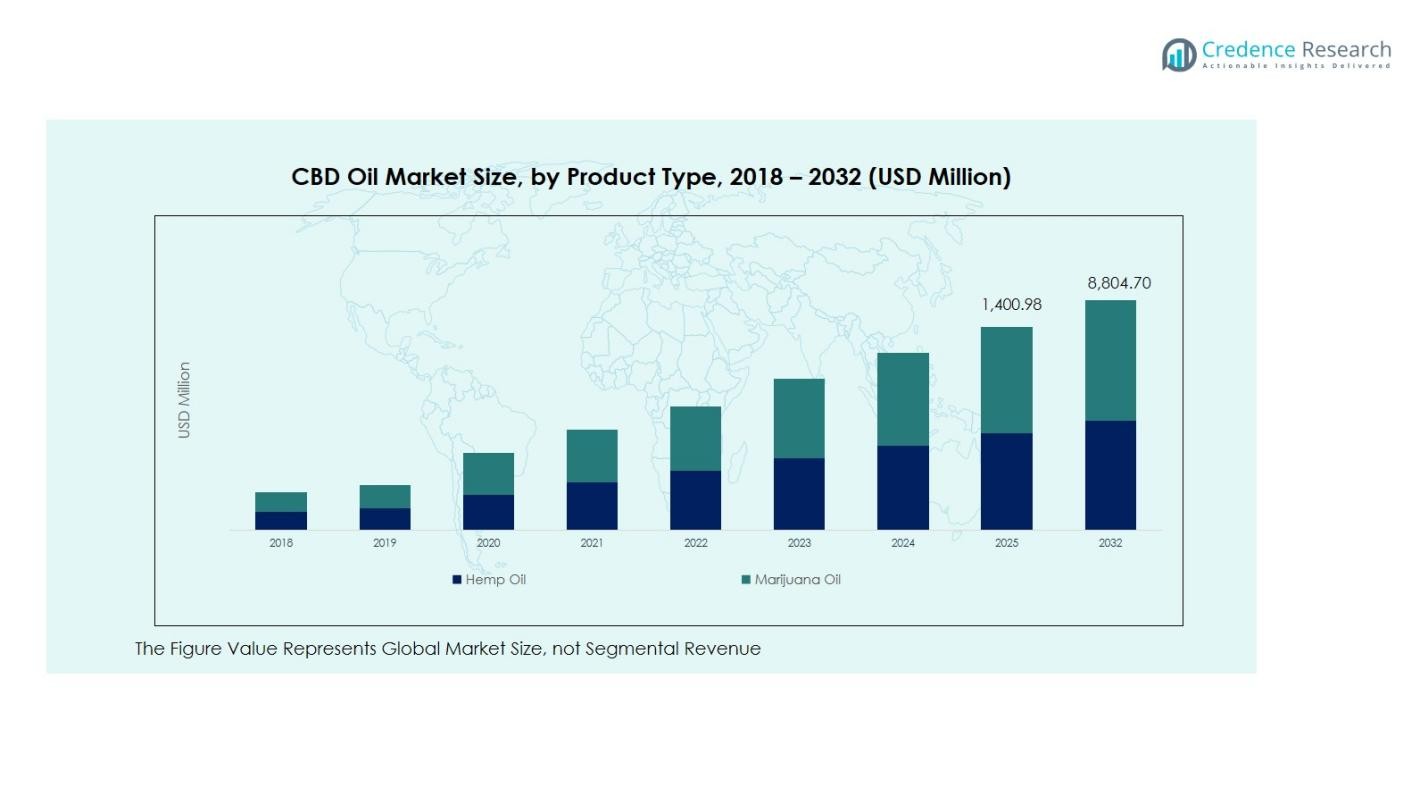
The CBD Oil Market size was valued at USD 450.00 million in 2018, reaching USD 1,093.86 million in 2024, and is anticipated to reach USD 8,804.70 million by 2032, growing at a CAGR of 30.03% during the forecast period.
| REPORT ATTRIBUTE | DETAILS |
|---|---|
| Historical Period | 2020-2023 |
| Base Year | 2024 |
| Forecast Period | 2025-2032 |
| CBD Oil Market Size 2024 | USD 1,093.86 Million |
| CBD Oil Market, CAGR | 30.03% |
| CBD Oil Market Size 2032 | USD 8,804.70 Million |
The CBD Oil Market is characterized by the presence of prominent players such as CV Sciences, Aurora Cannabis Inc., Tilray Brands Inc., Canopy Growth Corporation, Medical Marijuana Inc., CannTrust Holdings Inc., and Kazmira LLC. These companies are actively focusing on strategic mergers, product innovation, and technological advancements in extraction and formulation to strengthen their market positions. They are also expanding their product portfolios across pharmaceuticals, cosmetics, and food segments to capture a wider consumer base. Geographically, North America dominates the CBD Oil Market with a 39.9% share in 2024, driven by favorable legalization policies, advanced distribution networks, and strong consumer acceptance of CBD-based products.
Market Insights
- The CBD Oil Market was valued at USD 1,093.86 million in 2024 and is projected to reach USD 8,804.70 million by 2032, growing at a CAGR of 30.03% during the forecast period.
- Increasing legalization of hemp-derived products and expanding therapeutic applications in pharmaceuticals are driving strong market growth across global regions.
- The market is witnessing rising trends in CBD-infused food, beverages, and skincare products, supported by growing consumer preference for plant-based wellness solutions.
- Key players such as CV Sciences, Aurora Cannabis Inc., and Canopy Growth Corporation are focusing on innovation, partnerships, and advanced extraction technologies to enhance product quality and expand distribution reach.
- North America leads the market with a 39.9% regional share in 2024, while hemp oil dominates the product segment with a 56.8% share, supported by favorable regulatory environments and high consumer awareness.
Market Segmentation Analysis:
By Product Type
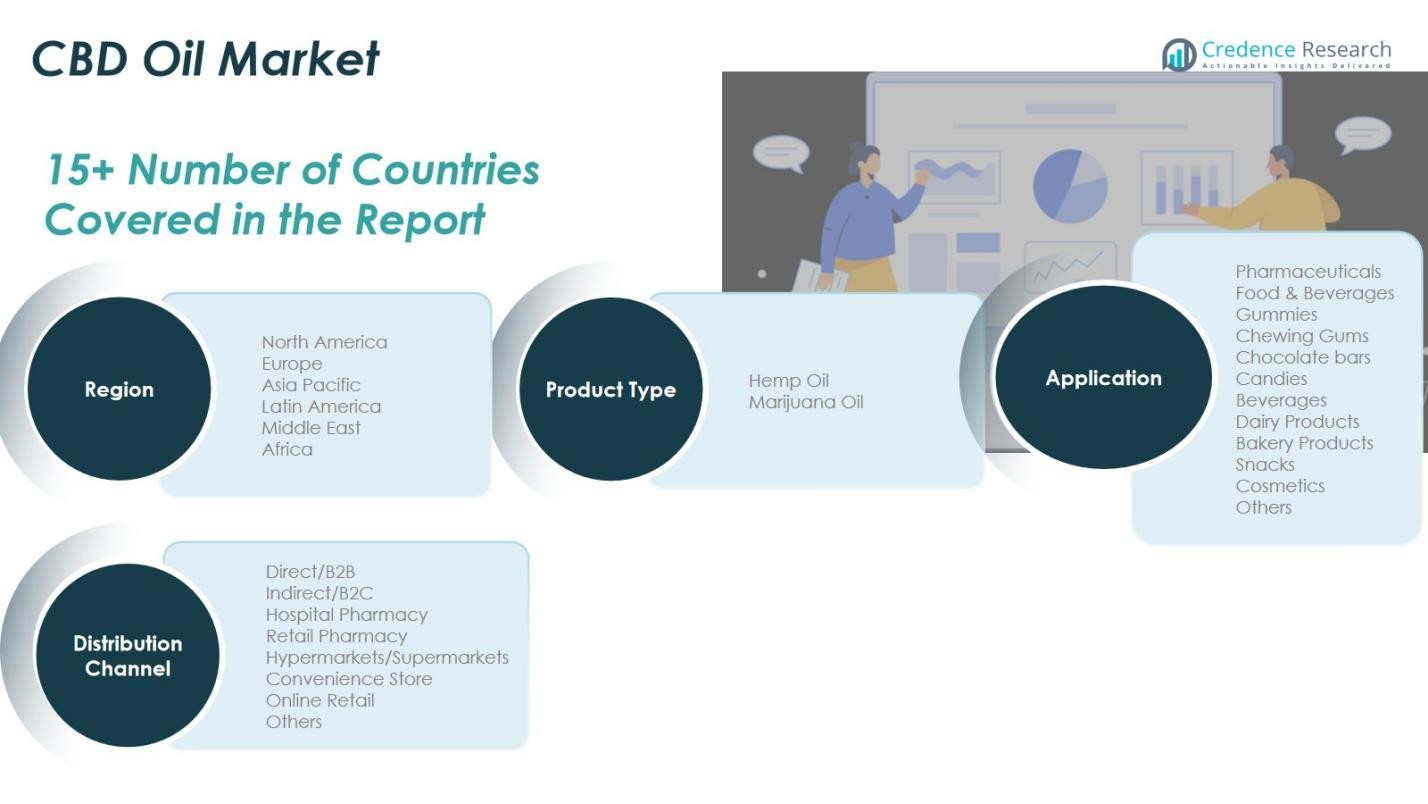
The CBD oil market by product type is segmented into hemp oil and marijuana oil. Hemp oil dominates the category with 56.8% market share in 2024, driven by its minimal THC content and legal accessibility across regions. It is widely used in wellness, skincare, and food industries due to its safety profile and regulatory acceptance. Marijuana oil, holding the remaining 43.2% share, is experiencing rapid growth owing to the medical legalization trend and rising demand for high-potency cannabidiol formulations. Increasing therapeutic adoption and evolving legalization are key growth drivers for both sub-segments.
For instance, Charlotte’s Web Holdings Inc. produces full-spectrum hemp oil containing less than 0.3% THC and over 50 mg of CBD per milliliter, which complies with U.S. federal hemp regulations and is sold in more than 14,000 retail locations nationwide.
By Application
Among applications, pharmaceuticals lead the CBD oil market, contributing 38.2% of total revenue. The dominance is attributed to growing clinical validation of CBD in treating pain, epilepsy, and anxiety. The food and beverages segment follows, expanding through diverse product formats such as gummies, beverages, chocolates, and snacks. Within this category, gummies hold a notable share due to consumer preference for easy and enjoyable CBD intake. The cosmetics segment is also expanding rapidly, supported by demand for anti-inflammatory and natural skincare products. These segments are driven by health awareness, innovation, and regulatory flexibility.
For instance, CV Sciences introduced its PlusCBD Gummies containing 10 mg of CBD per gummy, distributed through over 8,000 natural food stores across North America.
By Distribution Channel
Across distribution channels, direct/B2B sales dominate the CBD oil market with an estimated 52.3% share, owing to strong supply networks, bulk demand from manufacturers, and consistent industrial contracts. The indirect/B2C segment represents 47.7% of total revenue, with online retail emerging as the fastest-growing sub-channel, capturing nearly 20.1% share in 2024. The expansion of e-commerce platforms and growing consumer awareness of CBD products drive this growth. Hospital and retail pharmacies together account for 15.8%, serving as key points for regulated and prescription-based sales. Increasing digital presence, improved distribution logistics, and higher consumer acceptance continue to enhance multi-channel accessibility in the global CBD oil market.
Key Growth Drivers
Rising Medical and Therapeutic Applications
The expanding use of CBD oil in pharmaceuticals and therapeutics is a major market driver. Its proven efficacy in managing epilepsy, chronic pain, anxiety, and sleep disorders has led to increasing physician endorsement and patient adoption. The growing preference for plant-based and alternative medicine further supports demand. With regulatory bodies approving select CBD-based medications, healthcare providers are integrating CBD formulations into treatment regimens, strengthening its medical credibility and accelerating market growth across developed and emerging healthcare markets.
For instance, Jazz Pharmaceuticals has expanded Epidiolex availability to more than 35 international markets through its global access program, demonstrating the increasing medical integration of CBD therapies.
Legalization and Regulatory Advancements
Progressive legalization of hemp and cannabis-derived products across major economies is driving global CBD oil adoption. Favorable laws in North America and parts of Europe have encouraged large-scale cultivation, production, and retail distribution. Governments are also refining regulatory frameworks to ensure product safety and quality, boosting consumer trust. This regulatory clarity has encouraged investments from pharmaceutical, wellness, and food sectors, expanding the market’s commercial scope while fostering innovation in product formulations, delivery systems, and application diversity.
For instance, Epidiolex, an FDA-approved CBD-based drug developed by GW Pharmaceuticals, exemplifies how regulatory advancements have enabled pharmaceutical integration of CBD into treatments for rare epilepsy forms, boosting trust and investment in medical applications.
Growing Consumer Awareness and Wellness Trends
Rising awareness of CBD oil’s health benefits and its natural origin is fueling consumer adoption in both medical and lifestyle categories. The surge in demand for clean-label, plant-based, and non-addictive wellness products has positioned CBD oil as a preferred choice for holistic health. Expanding marketing campaigns, influencer endorsements, and product visibility across retail and online platforms are further strengthening consumer confidence. As wellness becomes a lifestyle priority, CBD oil’s incorporation into daily routines through edibles, skincare, and supplements continues to accelerate.
Key Trends and Opportunities
Expansion of CBD-Infused Consumer Products
A significant trend shaping the market is the rapid expansion of CBD-infused consumer goods across food, beverages, and cosmetics. Manufacturers are innovating with diverse formats such as gummies, energy drinks, and topical creams to attract broader demographics. This diversification has enabled brands to penetrate mainstream retail channels and enhance product accessibility. The trend also opens lucrative opportunities for partnerships between CBD producers and consumer goods companies, allowing them to tap into wellness-oriented and functional product categories across global markets.
For instance, Awshad, a medical cannabis brand, launched CalmaGummies in 2024, a plant-based supplement designed to promote relaxation and focus, targeting health-conscious consumers seeking natural alternatives for stress relief.
Technological Advancements in Extraction and Formulation
Advances in extraction technology, particularly CO₂ and nanoemulsion methods, are improving CBD purity, bioavailability, and consistency. These innovations are allowing manufacturers to develop high-quality formulations tailored for specific medical and wellness applications. Improved efficiency in production processes also reduces operational costs and enhances scalability. The opportunity lies in leveraging these technologies to meet stringent quality standards, expand pharmaceutical-grade offerings, and drive innovation in delivery mechanisms such as soft gels, patches, and water-soluble CBD solutions.
For instance, MediPharm Labs uses supercritical CO₂ extraction capable of achieving CBD purity levels exceeding 99%, ensuring pharmaceutical-grade consistency for clinical formulations and international exports.
Key Challenges
Regulatory Uncertainty and Market Fragmentation
Despite progress in legalization, inconsistent global regulations remain a major challenge for the CBD oil market. Varying THC limits, labeling standards, and licensing requirements across countries create trade barriers and limit international expansion. This regulatory ambiguity also affects consumer confidence and deters potential investors. Market fragmentation has further resulted in uneven product quality and safety compliance, prompting authorities to tighten oversight. Harmonizing regulations across regions is critical to sustaining long-term market stability and ensuring global competitiveness.
Product Mislabeling and Quality Concerns
Quality inconsistency and product mislabeling continue to challenge market credibility. Several CBD products are found to contain inaccurate cannabidiol concentrations or trace levels of contaminants, undermining consumer trust. The absence of standardized testing protocols and inadequate regulatory enforcement exacerbate this issue. Brands are now investing in third-party testing, transparency initiatives, and certifications to address these concerns. Ensuring product authenticity, maintaining compliance with safety standards, and establishing traceable supply chains remain essential to building trust and supporting sustained market growth.
Regional Analysis
North America
North America dominates the global CBD oil market, accounting for the largest market share of 39.9% in 2024. The market size increased from USD 182.61 million in 2018 to USD 439.07 million in 2024 and is projected to reach USD 3,529.82 million by 2032, growing at a robust CAGR of 30.0%. Growth is primarily driven by favorable legalization across the U.S. and Canada, rising therapeutic adoption, and expanding product portfolios across wellness, pharmaceuticals, and food sectors. Strong consumer awareness and established distribution channels further reinforce the region’s leading position in the global CBD oil landscape.
Europe
Europe holds a substantial market share of 26.3% in 2024, reflecting its position as the second-largest regional market. Valued at USD 95.85 million in 2018, the market reached USD 221.81 million in 2024 and is anticipated to grow to USD 1,661.91 million by 2032 at a CAGR of 28.9%. The regional growth is supported by evolving regulatory frameworks, rising preference for natural health solutions, and rapid acceptance of CBD-based cosmetics and pharmaceuticals. Countries such as the UK, Germany, and France lead in market adoption, benefiting from progressive health policies and expanding retail availability of CBD products.
Asia Pacific
Asia Pacific represents one of the fastest-growing regions, with a market share of 23.4% in 2024 and a strong CAGR of 31.5%. The market expanded from USD 120.60 million in 2018 to USD 305.02 million in 2024, and it is expected to reach USD 2,688.08 million by 2032. Growth is fueled by increasing awareness of CBD’s medical benefits, expanding e-commerce distribution, and gradual regulatory relaxation in countries like Japan, India, and Australia. The region’s large population base and rising disposable incomes create vast opportunities for consumer product diversification and local production partnerships.
Latin America
Latin America captures a market share of 5.7% in 2024, with the market valued at USD 30.60 million in 2018, rising to USD 73.72 million in 2024, and projected to reach USD 553.55 million by 2032 at a CAGR of 28.9%. Brazil and Argentina are at the forefront of CBD adoption due to increasing legalization for medicinal use and public acceptance of cannabis-based wellness products. Expanding healthcare investments and growing regional manufacturing capacity are contributing to steady growth, although inconsistent regulatory enforcement continues to pose moderate challenges to cross-border trade.
Middle East
The Middle East accounts for a market share of 2.3% in 2024, with the market size growing from USD 12.60 million in 2018 to USD 28.00 million in 2024, and projected to reach USD 194.63 million by 2032 at a CAGR of 27.7%. The region’s growth is supported by increasing medical research initiatives and gradual acceptance of CBD products for therapeutic purposes, particularly in GCC countries and Israel. Although the market remains in its early development stage, rising awareness, improving healthcare infrastructure, and policy discussions on medical cannabis legalization are expected to drive future expansion.
Africa
Africa represents an emerging regional market with a market share of 2.1% in 2024 and is projected to grow at a CAGR of 26.5%. Valued at USD 7.74 million in 2018, the market reached USD 26.26 million in 2024 and is expected to attain USD 176.70 million by 2032. Growth is primarily driven by South Africa’s early legalization of CBD products and increasing awareness of natural health supplements. However, limited regulatory clarity and distribution infrastructure still restrain rapid adoption. With evolving cannabis cultivation policies and expanding retail access, Africa presents long-term potential for CBD oil producers.
Market Segmentations:
By Product Type:
- Hemp Oil
- Marijuana Oil
By Application:
- Pharmaceuticals
- Food & Beverages
- Gummies
- Chewing Gums
- Chocolate Bars
- Candies
- Beverages
- Dairy Products
- Bakery Products
- Snacks
- Cosmetics
- Others
By Distribution Channel:
- Direct/B2B
- Indirect/B2C
- Hospital Pharmacy
- Retail Pharmacy
- Hypermarkets/Supermarkets
- Convenience Stores
- Online Retail
- Others
By Region
- North America
- U.S.
- Canada
- Mexico
- Europe
- Germany
- France
- U.K.
- Italy
- Spain
- Rest of Europe
- Asia Pacific
- China
- Japan
- India
- South Korea
- South-east Asia
- Rest of Asia Pacific
- Latin America
- Brazil
- Argentina
- Rest of Latin America
- Middle East & Africa
- GCC Countries
- South Africa
- Rest of the Middle East and Africa
Competitive Landscape
The competitive landscape of the CBD oil market features prominent players such as CV Sciences, Medical Marijuana Inc., Aurora Cannabis Inc., Canopy Growth Corporation, CannTrust Holdings Inc., Tilray Brands Inc., and Kazmira LLC. These companies focus on strategic expansions, product innovation, and partnerships to strengthen their global footprint. Market leaders are heavily investing in advanced extraction technologies, clinical research, and product diversification to cater to pharmaceutical, cosmetic, and food applications. Mergers and acquisitions are frequent, aimed at securing supply chain stability and expanding retail presence. Companies are also emphasizing brand differentiation through transparency, third-party certifications, and compliance with evolving regulatory standards. The industry is witnessing rising competition from emerging startups entering niche product categories such as CBD edibles, pet wellness, and beauty care. Overall, the market remains moderately consolidated, with innovation, legal compliance, and global distribution networks serving as key competitive advantages.
Key Player Analysis
- CV Sciences
- Medical Marijuana Inc.
- Aurora Cannabis Inc.
- Canopy Growth Corporation
- CannTrust Holdings Inc.
- Tilray Brands Inc.
- Kazmira LLC
Recent Developments
- On October 6, 2025, the Indian wellness startup Awshad launched a 6,500 mg CBD oil formulation, marking its most potent product to date and aligning its profitability milestone with its fourth anniversary.
- On October 22, 2025, CR Wellness announced a partnership with Cookies to bring premium CBD and cannabis-wellness products to Brazil, introducing tinctures and gummies fully compliant with Brazilian regulation.
- On September 19, 2025, InterCure announced the acquisition of ISHI, granting access to premium U.S. cannabis technology and brands, supporting its expansion into CBD oil and related markets.
- On August 5, 2025, Metrc and BioTrack announced a strategic partnership to advance technology solutions for regulated cannabis (including CBD oil) supply chains and traceability.
Report Coverage
The research report offers an in-depth analysis based on Product Type, Application, Distribution Channel and Region. It details leading market players, providing an overview of their business, product offerings, investments, revenue streams, and key applications. Additionally, the report includes insights into the competitive environment, SWOT analysis, current market trends, as well as the primary drivers and constraints. Furthermore, it discusses various factors that have driven market expansion in recent years. The report also explores market dynamics, regulatory scenarios, and technological advancements that are shaping the industry. It assesses the impact of external factors and global economic changes on market growth. Lastly, it provides strategic recommendations for new entrants and established companies to navigate the complexities of the market.
Future Outlook
- The CBD oil market will witness sustained growth driven by expanding legalization and regulatory acceptance across major economies.
- Pharmaceutical applications of CBD will increase as clinical validation for pain, epilepsy, and anxiety treatments strengthens.
- Consumer demand for plant-based and natural wellness products will continue to boost CBD-infused food, beverages, and supplements.
- Technological innovations in extraction and formulation will improve product quality, bioavailability, and cost efficiency.
- Online retail and e-commerce platforms will become dominant sales channels due to convenience and broader product accessibility.
- Strategic partnerships between CBD producers and healthcare, cosmetic, and food companies will enhance market reach and innovation.
- Growing interest in CBD-based cosmetics and skincare products will expand the market beyond therapeutic applications.
- Investment in research and development will increase, focusing on new delivery formats and dosage precision.
- Emerging markets in Asia Pacific, Latin America, and Africa will offer strong growth potential as regulations evolve.
- Industry players will prioritize transparency, sustainability, and product standardization to build long-term consumer trust.

Request a Free Sample
Fill in your details and we'll send you a free sample report.
- Sample data tables & charts
- Research methodology
Market Dynamics
Rising Medical and Therapeutic Applications
The proven efficacy of CBD oil in managing conditions such as epilepsy, chronic pain, and anxiety is driving its adoption in pharmaceuticals, with increasing physician endorsement and regulatory approvals expanding its use in clinical settings.
Legalization and Regulatory Advancements
Progressive legalization of hemp and cannabis-derived products in major markets like North America and Europe is enabling large-scale production, retail distribution, and investment, while regulatory clarity is boosting consumer trust and industry innovation.
Expansion of CBD-Infused Consumer Products
Manufacturers are rapidly diversifying CBD oil applications into food, beverages, and cosmetics, leveraging consumer interest in plant-based wellness and enabling broader market penetration through mainstream retail and e-commerce channels.
Technological Advancements in Extraction and Formulation
Innovations such as CO₂ and nanoemulsion extraction are improving CBD purity, bioavailability, and consistency, allowing for high-quality, pharmaceutical-grade products and supporting the development of new delivery formats.
Growing Consumer Awareness and Wellness Trends
Increasing awareness of the health benefits and natural origins of CBD oil is fueling demand across both medical and lifestyle segments, with marketing campaigns and influencer endorsements further strengthening consumer confidence and adoption.
Need a Custom Version of This Report?
Tailor the scope, geography, or segments to your exact requirements.
- Custom geography or segment scope
- Direct access to our analyst team
Frequently Asked Questions
What is the current market size for the CBD Oil Market, and what is its projected size in 2032?
At what Compound Annual Growth Rate is the CBD Oil Market projected to grow between 2025 and 2032?
Which CBD Oil Market segment held the largest share in 2024?
What are the primary factors fueling the growth of the CBD Oil Market?
Who are the leading companies in the CBD Oil Market?
Which region commanded the largest share of the CBD Oil Market in 2024?
Table of Content
Chapter 1 Market Segmentation
- 1.1 Segmentation Framework
- 1.1.1 Product and Service Classification
- 1.1.2 Application and End-Use Classification
- 1.1.3 Technology and Solution Classification
- 1.1.4 Customer and Distribution Channel Classification
- 1.1.5 Geographic Segmentation
- 1.1.6 Market Segment Definitions and Boundaries
- 1.2 By Application
- 1.2.1 Pharmaceuticals
- 1.2.2 Food & Beverages
- 1.2.3 Cosmetics
- 1.2.4 Others
- 1.3 By Product Type
- 1.3.1 Hemp Oil
- 1.3.2 Marijuana Oil
Chapter 2 Introduction
- 2.1 Report Objectives and Scope
- 2.2 Product Definition and Industry Terminology
- 2.3 Market Inclusions and Exclusions
- 2.4 Research Process
- 2.4.1 Primary Research and Expert Interviews
- 2.4.2 Secondary Research and Source Review
- 2.4.3 Top-Down and Bottom-Up Estimation
- 2.4.4 Data Triangulation and Verification
- 2.5 Market Size Measurement Basis
- 2.5.1 2024: USD 1,093.86 million → 2032: USD 8,804.70 million
- 2.6 Historical and Forecast Reference Periods
- 2.6.1 Base Year: 2024
- 2.6.2 Forecast Period: 2024-2032
- 2.7 Research Assumptions and Limitations
Chapter 3 Executive Summary
- 3.1 Market Snapshot and Key Findings
- 3.2 Base-Year Market Size, 2024
- 3.3 Forecast Market Size, 2032
- 3.4 Revenue and Volume Growth Outlook
- 3.5 Key Demand and Supply Indicators
- 3.6 Leading Market Segments
- 3.7 Fastest-Growing Market Opportunities
- 3.8 Regional Performance Highlights
- 3.9 Technology and Industry Transformation
- 3.10 Competitive Landscape Summary
- 3.11 Analyst View and Strategic Implications
Chapter 4 Global CBD Oil Market Trends and Developments
- 4.1 Historical Industry Development
- 4.2 Recent Market Trends and Developments
- 4.3 Demand and Customer Behavior Trends
- 4.4 Technology and Product Innovation
- 4.5 Artificial Intelligence, Automation and Digitalization
- 4.6 Local Manufacturing and Supply Chain Realignment
- 4.7 Industry Partnerships, Mergers and Acquisitions
- 4.8 Sustainability and Circular Economy Developments
- 4.9 Government and Private Sector Investment Trends
- 4.10 Emerging Business Models and Commercialization
- 4.11 Industry Developments and Announcements
Chapter 5 Global CBD Oil Market Production, Supply and Demand Analysis
- 5.1 Demand Trend and Consumption Analysis
- 5.2 Demand Forecast, 2024-2032
- 5.3 Production and Output Trend
- 5.4 Production and Output Forecast, 2024-2032
- 5.5 Installed Capacity and Capacity Utilization
- 5.6 Company-Wise Production Plants and Statistics
- 5.6.1 Installed Production Capacity
- 5.6.2 Actual Production
- 5.6.3 Planned Capacity and Expansion Targets
- 5.7 Supply Chain Structure and Procurement Trends
- 5.8 Supply-Demand Gap and Bottlenecks
- 5.9 Import Dependence and Sourcing Structure
- 5.10 Contract Manufacturing and Outsourcing
- 5.11 Regional Supply and Demand Concentration
Chapter 6 Global CBD Oil Market Pricing Analysis
- 6.1 Pricing Structure and Measurement
- 6.2 Historical Pricing Trends
- 6.3 Pricing Outlook, 2024-2032
- 6.4 Average Selling Price and Unit Economics
- 6.5 Pricing by Product and Market Segment
- 6.6 Geographic Pricing Differences
- 6.7 Key Input, Energy, Labor and Logistics Costs
- 6.8 Contract Pricing and Purchasing Models
- 6.9 Pricing Sensitivity and Competitive Positioning
- 6.10 Price, Margin and Profitability Implications
Chapter 7 Global CBD Oil Market Dynamics
- 7.1 Market Growth Drivers
- 7.1.1 Demand-Side Drivers
- 7.1.2 Technology and Innovation Drivers
- 7.1.3 Infrastructure and Investment Drivers
- 7.1.4 Regulatory and Policy Drivers
- 7.2 Market Restraints
- 7.2.1 Cost and Affordability Constraints
- 7.2.2 Technology and Adoption Barriers
- 7.2.3 Supply Chain and Operational Constraints
- 7.3 Market Challenges
- 7.3.1 Competitive Pressure and Margin Erosion
- 7.3.2 Skills, Infrastructure and Implementation Gaps
- 7.4 Emerging Market Opportunities
- 7.5 Market Dynamics Impact and Time-Horizon Assessment
Chapter 8 Global CBD Oil Value Chain Analysis
- 8.1 Industry Value Chain Overview
- 8.2 Upstream Suppliers and Critical Inputs
- 8.3 Technology and Component Providers
- 8.4 Manufacturing or Service Delivery
- 8.5 Distribution, Channel Partners and Integrators
- 8.6 Downstream Applications and End Users
- 8.7 Value Addition and Profit Pools
- 8.8 Vertical Integration and Outsourcing
- 8.9 Supplier Concentration and Risk
- 8.10 Supply Chain Localization and Resilience
Chapter 9 Global CBD Oil Market Regulations and Policies
- 9.1 Relevant Laws, Standards and Compliance Frameworks
- 9.2 Product, Service, Safety and Quality Requirements
- 9.3 Government Policies, Incentives and Subsidies
- 9.4 Imports, Exports and Trade Barriers
- 9.5 Public Procurement and Local Content Requirements
- 9.6 Environmental and Sustainability Compliance
- 9.7 Upcoming Policy Changes and Market Implications
Chapter 10 Global CBD Oil Market Hotspots and Opportunities
- 10.1 Market Opportunity Mapping and Growth Hotspots
- 10.2 High-Growth Applications and Customer Groups
- 10.3 Underserved Markets and White-Space Opportunities
- 10.4 Emerging Technology and Product Opportunities
- 10.5 New Capacity and Investment Hotspots
- 10.6 Market Entry and Expansion Opportunities
- 10.7 Distribution and Partnership Opportunities
- 10.8 Near-Term and Long-Term Commercial Potential
- 10.9 Opportunity Attractiveness and Execution Risks
Chapter 11 Global CBD Oil Market Outlook, 2024-2032
- 11.1 Market Size and Analysis
- 11.1.1 Revenue (Market Measurement: 2024: USD 1,093.86 million → 2032: USD 8,804.70 million)
- 11.1.2 Market Volume and Quantity Sold
- 11.1.3 Historical Market Size
- 11.1.4 Base-Year Market Size, 2024
- 11.2 Market Forecast, 2024-2032
- 11.2.1 Revenue Forecast to 2032
- 11.2.2 Volume Forecast to 2032
- 11.2.3 CAGR and Year-on-Year Growth
- 11.2.4 Incremental Revenue Opportunity
- 11.3 Forecast Assumptions and Scenario Analysis
- 11.3.1 Base-Case Forecast
- 11.3.2 Optimistic and Conservative Scenarios
- 11.3.3 Technology, Pricing and Policy Sensitivities
- 11.4 Market Attractiveness and Growth Outlook
Chapter 12 Global CBD Oil Market Segmentation and Outlook
- 12.1 Segmentation Summary and Market Shares, 2024
- 12.2 Largest and Fastest-Growing Segments
- 12.3 By Application - Market Size and Forecast, 2024-2032
- 12.3.1 Segment Definition and Scope
- 12.3.2 Historical Market Size
- 12.3.3 Revenue Forecast, 2024-2032
- 12.3.4 Volume Forecast, 2024-2032
- 12.3.5 Base-Year Market Share, 2024
- 12.3.6 Segment CAGR and Growth Drivers
- 12.3.7 Subsegment Market Size and Forecast
- 12.3.7.1 Pharmaceuticals
- 12.3.7.2 Food & Beverages
- 12.3.7.3 Cosmetics
- 12.3.7.4 Others
- 12.3.8 Subsegment Pricing and Adoption Trends
- 12.3.9 Leading Suppliers and Competition
- 12.3.10 Regional Demand and Opportunities
- 12.4 By Product Type - Market Size and Forecast, 2024-2032
- 12.4.1 Segment Definition and Scope
- 12.4.2 Historical Market Size
- 12.4.3 Revenue Forecast, 2024-2032
- 12.4.4 Volume Forecast, 2024-2032
- 12.4.5 Base-Year Market Share, 2024
- 12.4.6 Segment CAGR and Growth Drivers
- 12.4.7 Subsegment Market Size and Forecast
- 12.4.7.1 Hemp Oil
- 12.4.7.2 Marijuana Oil
- 12.4.8 Subsegment Pricing and Adoption Trends
- 12.4.9 Leading Suppliers and Competition
- 12.4.10 Regional Demand and Opportunities
- 12.5 Segment Growth Comparison
- 12.6 Segment Attractiveness and Priority Matrix
Chapter 13 Global CBD Oil End-Use and Application Market Outlook
- 13.1 End-Use Industry and Customer Demand Structure
- 13.2 Leading Applications and Customer Groups
- 13.3 End-Use Market Size, Share and Forecast
- 13.4 Major End-Use Industry Deep Dives
- 13.4.1 Customer Requirements and Use Cases
- 13.4.2 Demand and Replacement Cycles
- 13.4.3 Technical and Regulatory Considerations
- 13.4.4 Purchasing and Procurement Models
- 13.4.5 Leading Vendors and Distribution Channels
- 13.4.6 Forecast and Commercial Opportunities
- 13.5 Emerging Applications and Cross-Segment Demand
- 13.6 End-Use Industry Investment Priorities
Chapter 14 Global CBD Oil Geographic Market Outlook, 2024-2032
- 14.1 Regional Market Size and Share, 2024
- 14.2 Regional Market Forecast, 2024-2032
- 14.3 Regional Pricing, Production and Demand Differences
- 14.4 North America
- 14.4.1 United States
- 14.4.2 Canada
- 14.4.3 Mexico
- 14.5 Europe
- 14.5.1 Germany
- 14.5.2 France
- 14.5.3 Italy
- 14.5.4 United Kingdom
- 14.5.5 Spain
- 14.5.6 Poland
- 14.5.7 Russia
- 14.5.8 Netherlands
- 14.5.9 Belgium
- 14.5.10 Sweden
- 14.5.11 Denmark
- 14.5.12 Norway
- 14.5.13 Rest of Europe
- 14.6 Asia Pacific
- 14.6.1 China
- 14.6.2 India
- 14.6.3 Japan
- 14.6.4 South Korea
- 14.6.5 Thailand
- 14.6.6 Indonesia
- 14.6.7 Vietnam
- 14.6.8 Malaysia
- 14.6.9 Australia
- 14.6.10 Rest of Asia Pacific
- 14.7 Latin America
- 14.7.1 Brazil
- 14.7.2 Argentina
- 14.7.3 Colombia
- 14.7.4 Chile
- 14.7.5 Rest of Latin America
- 14.8 Middle East
- 14.8.1 Saudi Arabia
- 14.8.2 United Arab Emirates
- 14.8.3 Turkey
- 14.8.4 Israel
- 14.8.5 Iran
- 14.8.6 Rest of the Middle East
- 14.9 Africa
- 14.9.1 South Africa
- 14.9.2 Egypt
- 14.9.3 Nigeria
- 14.9.4 Morocco
- 14.9.5 Rest of Africa
- 14.10 Regional Investment, Policy and Supply Chain Differences
- 14.11 Regional Competitive Landscape
- 14.12 Geographic Growth Hotspots
Chapter 15 Global CBD Oil Technology, Innovation and Sustainability Outlook
- 15.1 Technology Landscape and Maturity
- 15.2 Product, Process and Service Innovation
- 15.3 AI, Automation and Digital Tools in the Industry
- 15.4 Technology Adoption and Performance Benchmarking
- 15.5 Innovation Pipeline and R&D Investment
- 15.6 Patent and Intellectual Property Trends
- 15.7 Energy Efficiency and Resource Management
- 15.8 Sustainability, Recycling and Circularity
- 15.9 Technology Roadmap, 2024-2032
- 15.10 Risks of Obsolescence and Technology Substitution
Chapter 16 Global CBD Oil Market Key Strategic Imperatives
- 16.1 Growth and Market Entry Priorities
- 16.2 High-Return Products and Segments
- 16.3 Pricing, Profitability and Cost Optimization
- 16.4 Technology Investment and Product Differentiation
- 16.5 Supply Chain Localization and Resilience
- 16.6 Distribution and Customer Acquisition
- 16.7 Partnership, Acquisition and Capacity Strategy
- 16.8 Regional Expansion Priorities
- 16.9 Short-, Medium- and Long-Term Actions
Chapter 17 Competition Outlook
- 17.1 Industry Competition Characteristics
- 17.2 Market Structure and Concentration
- 17.3 Market Share and Competitive Positioning, 2024
- 17.4 Company-Wise Revenue and Product Benchmarking
- 17.5 Production and Service Capacity Benchmarking
- 17.6 Technology, Pricing and Differentiation
- 17.7 Regional Footprint and Distribution Strength
- 17.8 Mergers, Acquisitions and Strategic Alliances
- 17.9 New Entrants and Competitive Threats
- 17.10 Porter's Five Forces and Industry Attractiveness
- 17.11 Competitive Outlook, 2024-2032
Chapter 18 Company Profiles
- 18.1 Company Coverage and Selection Criteria
- 18.2 CV Sciences
- 18.2.1 Business Description
- 18.2.2 Company Ownership and Geographic Presence
- 18.2.3 Product and Service Portfolio
- 18.2.4 Manufacturing and Operating Footprint
- 18.2.5 Production Capacity and Expansion Plans
- 18.2.6 Financial Performance and Investment
- 18.2.7 Market Share and Competitive Position
- 18.2.8 Technology and Innovation Capabilities
- 18.2.9 Strategic Alliances or Partnerships
- 18.2.10 Recent Developments
- 18.2.11 Growth Strategy and Outlook
- 18.3 Aurora Cannabis Inc.
- 18.4 Tilray Brands Inc.
- 18.5 Canopy Growth Corporation
- 18.6 Medical Marijuana Inc.
- 18.7 CannTrust Holdings Inc.
- 18.8 Kazmira LLC
- 18.9 Charlotte’s Web Holdings Inc.
- 18.10 Jazz Pharmaceuticals
- 18.11 MediPharm Labs
- 18.12 Other Relevant Market Participants
Note: Every listed company is profiled on the structure shown under the first company. The company list is preliminary and may change based on research findings, market developments, data availability and client requirements.
Chapter 19 Disclaimer
- 19.1 Research and Forecast Disclaimer
- 19.2 Data Source and Estimation Limitations
Note: The depth of individual sections depends on data availability for this market. Volume, capacity, trade and other unit-based metrics are included where applicable.

