
Executive Summary
Market Definition
Dietary supplements are products containing dietary ingredients, such as vitamins, minerals, herbs, amino acids, enzymes, or other substances, intended to supplement the diet. They come in various forms, including capsules, tablets, softgels, powders, and liquids. They are consumed to add nutritional value to the diet, address specific health concerns, or support overall well-being. Dietary supplements are over-the-counter and can fill nutritional gaps, promote general health, and manage specific health conditions. These market products are not intended to replace balanced meals but enhance nutritional intake when needed.
| REPORT ATTRIBUTE | DETAILS |
|---|---|
| Historical Period | 2019-2022 |
| Base Year | 2023 |
| Forecast Period | 2024-2032 |
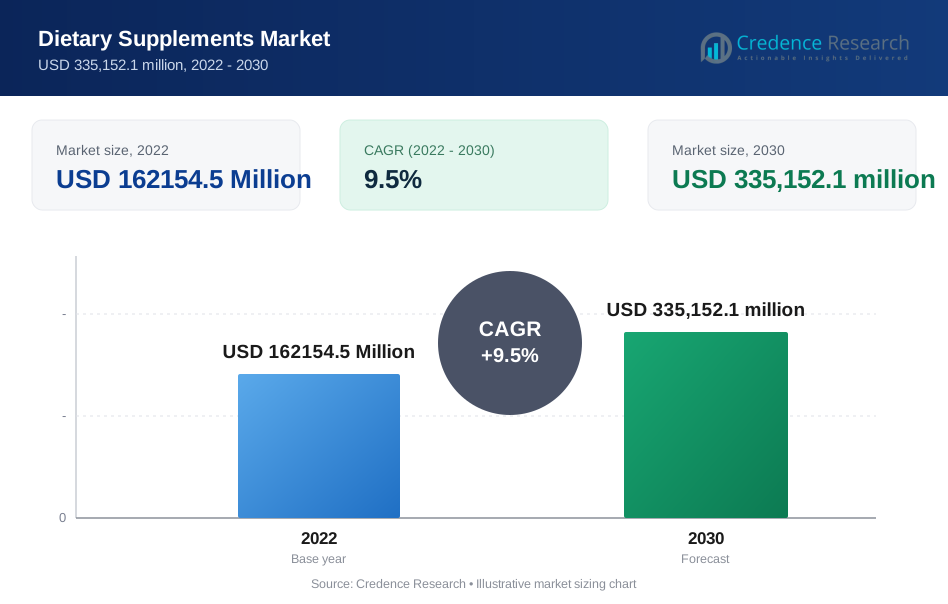
| Dietary Supplement Market Size 2022 | USD 162154.5 million |
| Dietary Supplement Market, CAGR | 9.5% |
| Dietary Supplement Market, Size 2030 | USD 335152.1 million |
Market Overview
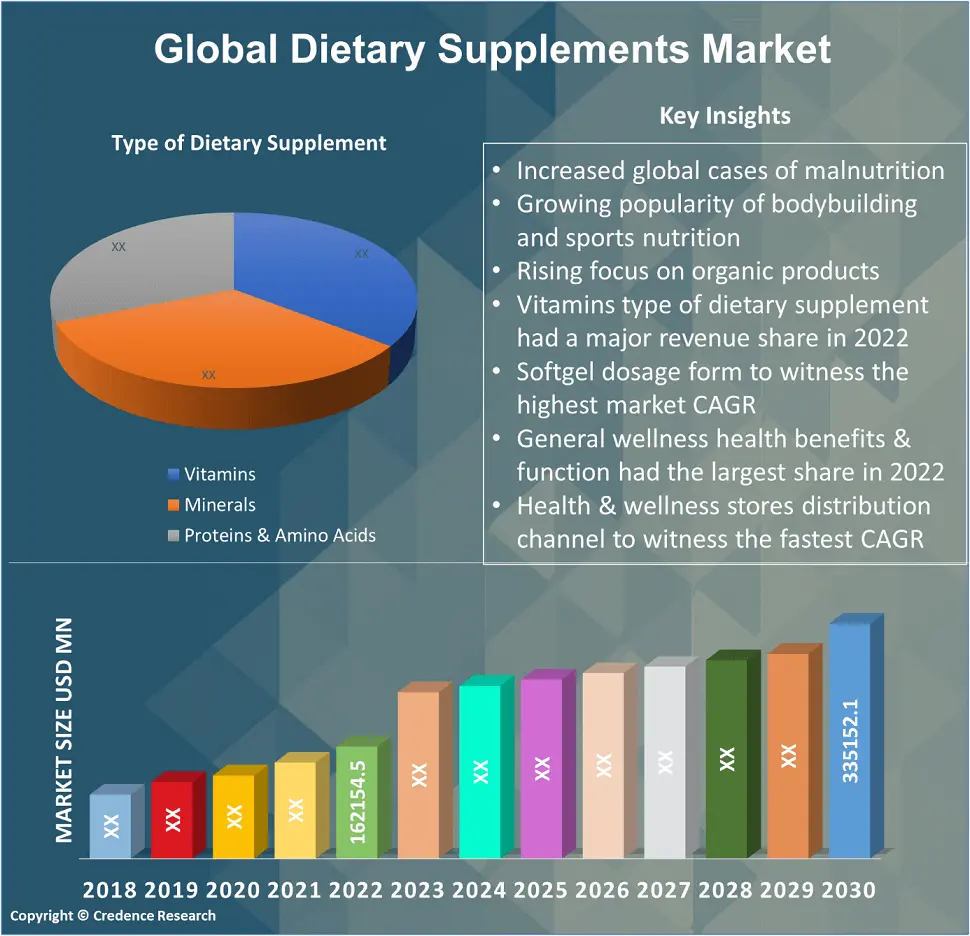
The global dietary supplements market has witnessed rapid growth in recent years and is expected to grow at a CAGR of 9.5% between 2023 and 2030. The market was valued at USD 162154.5 million in 2022 and is expected to reach USD 335152.1 million in 2030.
The dietary supplements market encompasses a wide range of products that provide essential nutrients, vitamins, minerals, herbal extracts, amino acids, and other bioactive compounds that support health and well-being. These supplements aim to address nutritional gaps in diets, promote general health, enhance physical performance, and assist in managing specific health conditions. They are often used to bolster the intake of key nutrients such as vitamin D, calcium, omega-3 fatty acids, and probiotics. Dietary supplements also support various health goals, including weight management, immune system fortification, bone health, cardiovascular health, and cognitive function.
The increasing adoption of preventative healthcare practices, rising healthcare expenses, and the aging global population are the main trends boosting the dietary supplements industry. Consumers are actively looking for dietary supplements to help them manage specific health concerns, boost their immunity, and maintain their general wellness. Furthermore, advances in product formulations, such as novel delivery techniques and personalized nutrition solutions, are broadening the market's scope.
Market Insights
- The global demand for dietary supplements was valued at USD 162154.5 Million in 2022 and is expected to reach USD 335152.1 Million in 2030, growing at a CAGR of 9.5% between 2023 and 2030.
- The vitamins segment is the market leader by type of dietary supplement, accounting for more than 25% of total value in 2022, while the proteins & amino acids segment is anticipated to grow rapidly over the projection period.
- The softgels category will likely expand rapidly in the projected period, while the tablets & capsules segment had the largest market share in 2022.
- The adult end-user dominates the global need for dietary supplements, accounting for more than 30% in 2022, and is anticipated to expand at the highest CAGR.
- The pharmacies & drugstores category dominated the market with 28% of the total revenue share by distribution channel. In contrast, the health & wellness stores categories will expand fastest over the projected time frame.
- The general wellness category led the global market with 22% of the total revenue share by the health benefit & function segment.
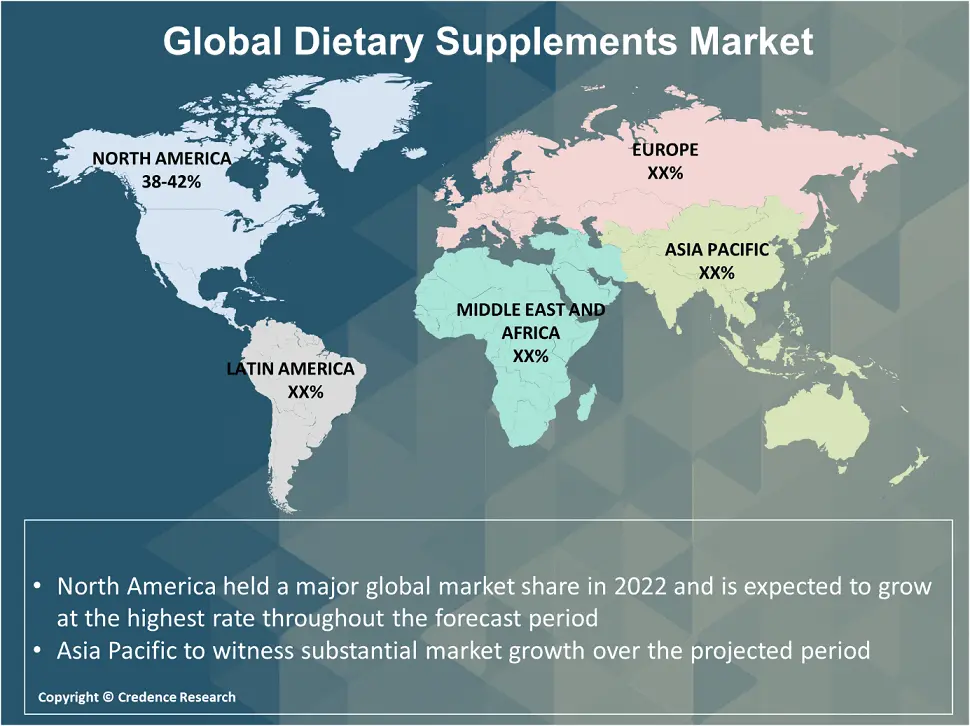
- North America is propelling the growth of the dietary supplements industry, accounting for more than one-third of the market in 2022, while Europe and Asia Pacific account for just under 54% of the market in 2022. Europe held more than 20% of the market in 2022.
- The proliferation of e-commerce platforms has extensively contributed to the accessibility of dietary supplements, allowing consumers to easily compare products, read reviews, and make informed choices online.
- The aging global population is widely seeking dietary supplements to support aging-related health concerns, such as bone health, joint health, and cognitive function.
- The COVID-19 pandemic has increased interest in immune-boosting supplements, such as vitamins C and D, zinc, and echinacea.
Segmentation by Type of Dietary Supplement
- The proteins & amino acids segment is poised to exhibit robust growth over the projected period, driven by increasing fitness and muscle health demand.
- Vitamins are the leading segment by type of dietary supplement, accounting for over 25% of the market share in 2022, as consumers commonly focus on overall health and immunity.
Segmentation by Dosage Form
- Softgels are anticipated to experience significant growth in the forecasted period due to their ease of consumption and suitability for various supplements.
- Tablets & capsules lead the global market share, comprising over 24% in 2022, primarily due to their familiarity and ease of manufacturing.
Segmentation by End User
- Adults represent the largest end-user category, contributing to more than 30% of the global demand for dietary supplements in 2022. The aging population seeks supplements for overall health and age-related concerns.
- Athletes & fitness enthusiasts fulfill the remaining demand for dietary supplements, aiming for performance enhancement and recovery.
Segmentation by Distribution Channel
- Health & wellness stores are projected to experience rapid growth in the forecast period as consumers increasingly turn to specialized retailers for health-related products.
- Pharmacies & drugstores lead the market share with a substantial 28% share in 2022, offering convenience and a trusted supplement source.
Segmentation by Health Benefit and Function
- The weight management & sports nutrition segment is set to exhibit the highest CAGR, reflecting the growing focus on weight control, fitness, and active lifestyles.
- The general wellness category currently leads the global demand for dietary supplements, comprising more than 22% in 2022, as consumers prioritize overall health and well-being.
Segmentation by Region
- North America offers highly profitable opportunities for industry players in the dietary supplements market, holding a substantial share of over one-third in 2022, mainly driven by a health-conscious population.
- Asia Pacific and Europe collectively contributed to just under 54% of the market share in 2022, with Europe accounting for over 20% in the same year, reflecting a growing interest in health and wellness.
- The rest of the world, encompassing regions like Latin America, the Middle East, and Africa, contributes to the remaining demand for dietary supplements, indicating a global interest in supplements.
The increased frequency of health disorders and rising concern about health and fitness among individuals, particularly among the young, are the main factors driving the expansion of the global dietary supplement market. Moreover, emerging traction for sports and recreational activities and increased awareness of the health benefits of consuming dietary supplements are also propelling industry growth.
North America leads the global dietary supplements market primarily due to a combination of factors. These include a robust healthcare infrastructure, a well-established dietary and fitness culture, a high prevalence of lifestyle-related health issues, and strong consumer awareness about the importance of nutritional supplementation. The increased aging population and a growing interest in preventive healthcare further boost the regional market demands for dietary supplements. Regulatory frameworks, such as the Dietary Supplement Health & Education Act (DSHEA) in the United States, provide a conducive environment for market growth by ensuring product safety and labeling standards. Also, the presence of numerous leading market players and a dynamic retail landscape, including e-commerce platforms, make dietary supplements easily accessible to consumers, fueling market expansion in North America.
Asia Pacific is expected to emerge as the fastest-growing global dietary supplements market region over the projected period. This growth can be attributed to several key factors, including the vast and growing population, increasing disposable income, changing dietary patterns, and a rising awareness of the importance of preventive healthcare. Moreover, a shift towards Western dietary habits and a surge in urbanization contribute to the growing demand for dietary supplements in the region. The presence of a thriving nutraceutical industry and the adoption of e-commerce platforms for supplement distribution further facilitate regional market share. The diversification of products to cater to specific regional needs, such as herbal and Ayurvedic supplements, also majorly propels the market's expansion in Asia Pacific.
Key Highlights of the Report
The global dietary supplements market is segmented by type of dietary supplement, dosage form, end user, distribution channel, health benefit and function, and region. Within the type of dietary supplement segment, vitamins & minerals, followed by herbal supplements, hold substantial shares, driven by a growing focus on health and well-being among consumers. Capsules and softgels are the most popular dosage form due to their ease. However, gummies and chewable tablets are gaining attraction, particularly among children and others who dislike traditional forms. Adults constitute the largest end-user group, strongly emphasizing preventive health, while the aging population contributes to the increased demand for supplements targeting age-related issues. Health & wellness stores are emerging as a popular distribution channel, providing consumers with expert advice and a wide range of product choices. The weight management & sports nutrition segment is experiencing robust growth, aligning with the global interest in fitness and healthy living.
The global dietary supplements market is mainly driven by the increasing health consciousness among consumers, promoting the adoption of dietary supplements to address nutritional deficiencies, manage specific health conditions, and support overall well-being. The aging population and rising healthcare costs have motivated individuals to seek proactive health solutions, contributing to the market's growth. Moreover, the expansion of e-commerce platforms and easy access to information regarding dietary supplements have made these products more accessible to a global audience, further fueling market growth. However, the dietary supplements market faces product safety, quality, and regulatory challenges. Stringent regulatory requirements vary across countries, leading to market fragmentation and making it challenging for manufacturers to ensure compliance.
North America continues to lead the global dietary supplements market due to a strong emphasis on preventive health and wellness among its consumers. The mature healthcare infrastructure and proactive approach toward health have driven substantial regional demand for a wide range of dietary supplements. On the other hand, the Asia Pacific region showcases enormous growth potential, with a growing middle-class population increasingly aware of health and wellness. As lifestyles evolve in this region, dietary supplements are gaining traction as individuals seek to address their nutritional needs and overall well-being, making it one of the fastest-growing markets globally.
What Are The Main Drivers Of The Global Dietary Supplements Market?
The main drivers of the global dietary supplements market expansion are the growing awareness and emphasis on health and wellness, a shift toward preventive healthcare, increasing aging populations, and the desire for nutritional support to combat various health issues. Moreover, the rising popularity of herbal and natural dietary supplements, expanding consumer access through e-commerce, and pursuing personalized nutrition solutions further drive the market's growth. These factors collectively contribute to the increasing demand for dietary supplements as people seek to enhance their overall health, address specific nutritional deficiencies, and pursue a proactive approach to well-being.
What Are The Major Challenges Faced By The Global Dietary Supplements Market?
The global dietary supplements market faces several challenges, including product safety and quality control concerns, regulatory complexities, and issues regarding mislabeling and adulteration. Ensuring the safety and efficacy of dietary supplements, particularly those containing herbal and botanical ingredients, is an ongoing challenge. Regulatory variations and evolving guidelines across different countries complicate product approval and marketing. Moreover, the market is susceptible to negative publicity and skepticism due to product contamination and fraudulent claims, leading to questions about the credibility of certain dietary supplements.
What Are The Growth Opportunities In The Global Dietary Supplements Market?
The global dietary supplements market presents major growth opportunities driven by various factors, including the emerging consumer interest in preventive healthcare, the surge in demand for personalized nutrition, and the growing focus on natural and plant-based supplements. The aging population and increasing awareness of the importance of nutrition in maintaining overall health create a substantial market for dietary supplements that target specific health concerns associated with aging. Moreover, the advent of e-commerce and digital health platforms offers new distribution channels for reaching a wider consumer base. Innovation in product formulations, such as developing novel ingredients and delivery systems, further opens avenues for market expansion.
Market Drivers
Several factors fuel the global dietary supplements market share. The following are the key drivers of the global dietary supplements market:
Rising Health and Wellness Awareness
The increased awareness of the importance of health and well-being is one of the key factors supporting the global dietary supplements market's expansion. Consumers are becoming increasingly health-conscious, and many are taking a proactive approach to maintain or improve their well-being. They seek ways to address specific health concerns and enhance their overall health. This trend is particularly evident among the aging population, who are more prone to health issues and look to dietary supplements to support joint health, heart health, cognitive function, and immune system strength, among other concerns.
As a result, dietary supplements have become a convenient and accessible way for individuals to bridge nutritional gaps, boost their health, and proactively manage their well-being. The demand for dietary supplements continues to rise as consumers incorporate them into their daily routines.
Market Restraints
The global dietary supplements market faces challenges that may limit its growth. These include the following:
Regulatory Challenges and Safety Concerns
One of the primary restraints in the dietary supplements market is the complex regulatory landscape and the associated safety concerns. Dietary supplements are subject to varying regulations and standards across different countries, which can create challenges for manufacturers and consumers alike. These regulations govern product labeling, quality control, ingredient safety, and health claims. Compliance with diverse regulatory requirements can be costly and time-consuming, particularly for companies operating in multiple global markets.
The dietary supplements industry is diverse, ranging from vitamins and minerals to herbal products and sports nutrition supplements. Some products may contain ingredients or combinations that pose health risks when taken inappropriately or at excessive doses. This has led to concerns about the safety of certain supplements and the potential for adverse reactions. High-profile incidents, product recalls, and reported adverse effects have prompted regulatory agencies to increase scrutiny and consumers to be cautious when selecting and using supplements. These factors hinder the industry's growth and necessitate more stringent quality control and safety measures.
Opportunities
The global dietary supplements market offers substantial growth opportunities. These include the following:
Increasing E-commerce and Direct-to-Consumer (DTC) Sales
The rise of e-commerce and DTC sales channels has transformed the dietary supplements market, offering considerable growth prospects. The convenience and accessibility of online platforms have made it easier for consumers to research, purchase, and reorder dietary supplements, often at competitive prices. The COVID-19 pandemic further accelerated the shift towards online shopping for health and wellness products.
DTC sales also provide dietary supplement manufacturers with a direct connection to consumers, allowing for personalized marketing, subscription models, and the collection of valuable customer data. These strategies enhance brand loyalty and customer retention, enabling companies to customize their product offerings and marketing messages to individual preferences.
Competitive Landscape
Key Players
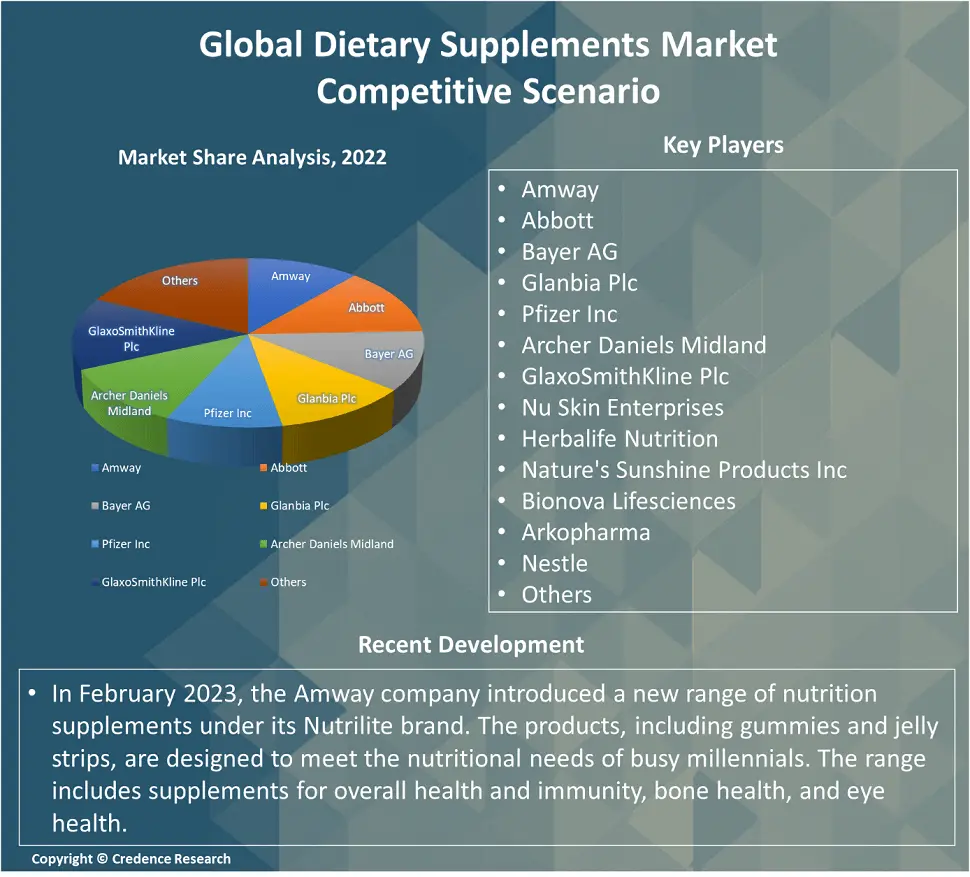
The global dietary supplements market features a competitive landscape of multiple players, including multinational corporations, regional manufacturers, and new entrants. The following are some of the top market players and their market shares:
- Amway
- Abbott
- Bayer AG
- Glanbia Plc
- Pfizer Inc
- Archer Daniels Midland
- GlaxoSmithKline Plc
- Nu Skin Enterprises
- Herbalife Nutrition
- Nature's Sunshine Products Inc
- Bionova Lifesciences
- Arkopharma
- Nestle
- Others
These key players often focus on R&D activities to introduce innovative products catering to specific health needs, thereby gaining a competitive edge. Strategic partnerships and collaborations with healthcare professionals, nutritionists, and fitness experts are common strategies to enhance market presence and credibility.
Increased marketing efforts, including online advertising, social media campaigns, and endorsements by celebrities or healthcare influencers, play a major role in brand visibility and consumer trust. Product differentiation through unique formulations, organic & natural ingredients, and certifications for quality and safety, such as Good Manufacturing Practice (GMP) certifications, are also essential competitive strategies.
In February 2023, Otsuka Pharmaceutical Co. Ltd partnered with the Tokyo Marathon to support about 38,000 runners and 80 event officials with health management support. This will raise public awareness of the importance of fitness and nutrition, which is part of the company's strategic development.
In December 2022, Amway established a Business Innovation Centre in Singapore in collaboration with the Singapore Economic Development Board to fulfill Asia Pacific's evolving wellness demands. This strategic expansion allows Amway to capitalize on the growing regional demand for customized health and wellness solutions, which is expected to increase sales and profitability.
In April 2021, Persona Nutrition launched a new range of daily gummy vitamin packs designed to fulfill the nutritional requirements of the entire family. These complete vitamin packs are meticulously created to meet various health goals.
Summary of Key Findings
- The market for dietary supplements addressing mental health concerns, such as cognitive function, memory enhancement, and stress relief, is expanding due to the rising awareness of mental well-being.
- Market segmented by type of dietary supplement, dosage form, end user, distribution channel, health benefit and function, and region.
- Vitamins and minerals are the most widely consumed dietary supplements, with vitamins D, C, and calcium being popular.
- The sports nutrition segment within dietary supplements is growing, driven by athletes and fitness enthusiasts seeking specialized products for performance enhancement, muscle recovery, and endurance.
- Women's health supplements, such as those for prenatal care, menopause relief, and reproductive health, are experiencing steady growth.
- Stringent regulations and standards imposed by regulatory bodies, such as the FDA in the United States and EFSA in Europe, are shaping the market by ensuring product safety and quality.
Future Outlook
- The market is witnessing the emergence of novel ingredients like probiotics, collagen, and adaptogens, which are gaining popularity for their potential health benefits.
- Emerging economies, especially in Asia Pacific and Latin America, are becoming lucrative markets for dietary supplements due to changing lifestyles and increasing disposable incomes.
- Dietary supplements are increasingly considered part of alternative and complementary medicine practices, promoting interest in herbal and traditional medicines.
- The market for dietary supplements infused with cannabidiol (CBD) derived from hemp is gaining traction, owing to its potential therapeutic benefits and the legalization of hemp-derived CBD in several countries.
Segmentation
- By Type of Dietary Supplement
- Vitamins
- Minerals
- Proteins and Amino Acids
- Herbal and Botanical Supplements
- Probiotics and Prebiotics
- Omega-3 Fatty Acids and Fish Oils
- Fiber Supplements
- Antioxidants
- Other Specialty Supplements
- By Dosage Form
- Tablets and Capsules
- Softgels
- Powders
- Liquids and Syrups
- Gummies and Chews
- Topical Supplements
- By End User
- Adults
- Children
- Seniors
- Athletes and Fitness Enthusiasts
- Pregnant and Lactating Women
- Pets
- By Distribution Channel
- Pharmacies and Drugstores
- Health and Wellness Stores
- Supermarkets and Hypermarkets
- Online Retail
- Direct Sales and Multi-level Marketing (MLM)
- By Health Benefits and Function
- General Wellness
- Weight Management and Sports Nutrition
- Digestive Health
- Heart Health
- Bone and Joint Health
- Immune Support
- Cognitive and Mental Health
- Skin, Hair, and Nail Health
- Specialized Health Needs
- By Region
- North America
- The U.S.
- Canada
- Mexico
- Europe
- Germany
- France
- The U.K.
- Italy
- Spain
- Rest of Europe
- Asia Pacific
- China
- Japan
- India
- South Korea
- South-east Asia
- Rest of Asia Pacific
- Latin America
- Brazil
- Argentina
- Rest of Latin America
- Middle East & Africa
- GCC Countries
- South Africa
- Rest of the Middle East and Africa
- North America
Request a Free Sample
Fill in your details and we'll send you a free sample report.
- Sample data tables & charts
- Research methodology
Need a Custom Version of This Report?
Tailor the scope, geography, or segments to your exact requirements.
- Custom geography or segment scope
- Direct access to our analyst team
Frequently Asked Questions
What is the current size of the global dietary supplements market?
What is the expected growth rate of the dietary supplements market between 2023 and 2030?
Which segment is leading the market share in terms of the type of dietary supplement?
Who are the major players in the global dietary supplements market?
What are the major market drivers of the dietary supplements industry?
Table of Content
Chapter 1. Report Introduction
- 1.1 Report Description & Purpose
- 1.1.1 Report Title & Market Definition
- 1.1.2 Unique Selling Propositions (USP) & Key Differentiators
- 1.1.3 Value Proposition for Stakeholders
- 1.2 Research Objectives
- 1.2.1 Market Sizing Objectives (Volume & Revenue) (Volume Where Applicable)
- 1.2.2 Segmentation Objectives
- 1.2.3 Competitive Intelligence Objectives
- 1.2.4 Forecast & Scenario Objectives
- 1.3 Report Scope
- 1.3.1 Dietary Supplements Scope – Segments & Subsegments Covered
- 1.3.2 Geographic Scope – Regions & Countries Covered
- 1.3.3 Historical Period, Base Year & Forecast Period (2022; forecast to 2030)
- 1.3.4 Inclusions & Exclusions
- 1.4 Industry Classification & Applicable Codes
- 1.5 Currency, Measurement Units & Valuation Basis
- 1.6 Target Stakeholders
- 1.7 Limitations & Assumptions
Chapter 2. Executive Summary
- 2.1 Global Dietary Supplements Market Snapshot
- 2.1.1 Market Size – Historical (2022) & Forecast (2022-2030) (2022: USD 162154.5 Million → 2030: USD 335,152.1 million)
- 2.1.2 Volume & Revenue – Global Totals (Volume Where Applicable)
- 2.1.3 Key Market Highlights – Top Five Facts
- 2.2 Dietary Supplements Market Segmentation Snapshot
- 2.2.1 Market Split by Region – 2022 vs. 2030
- 2.3 Competitive Snapshot
- 2.3.1 Top 10 Players by Revenue Share – 2022
- 2.3.2 Top 10 Players by Volume Share – 2022 (Volume Where Applicable)
- 2.3.3 Recent Strategic Developments (18-Month Summary)
- 2.4 Key Investment Highlights & Strategic Conclusions
Chapter 3. Dietary Supplements Market Dynamics & Industry Analysis
- 3.1 Market Overview & Context
- 3.1.1 Dietary Supplements Market Position in the Broader Industry Value Chain
- 3.1.2 Demand Structure & Purchasing Dynamics
- 3.1.3 Market Maturity & Development Stage by Region
- 3.2 Dietary Supplements Market Drivers
- 3.3 Dietary Supplements Market Restraints & Challenges
- 3.4 Dietary Supplements Market Opportunities
- 3.5 Porter's Five Forces Analysis
- 3.5.1 Threat of New Entrants
- 3.5.2 Bargaining Power of Suppliers
- 3.5.3 Bargaining Power of Buyers
- 3.5.4 Threat of Substitutes
- 3.5.5 Competitive Rivalry – Intensity Assessment
- 3.6 Dietary Supplements Value Chain Analysis
- 3.6.1 Upstream – Key Inputs, Resources & Suppliers
- 3.6.1.1 Key Input/Resource 1
- 3.6.1.2 Key Input/Resource 2
- 3.6.1.3 Key Input/Resource 3
- 3.6.2 Midstream – Core Operations & Value Creation
- 3.6.2.1 Operating Model & Process Overview
- 3.6.2.2 Key Operating Locations & Capabilities by Company
- 3.6.3 Downstream – Market Channels & End Users
- 3.6.3.1 Direct Sales & Customer Engagement Channels
- 3.6.3.2 Indirect Sales, Intermediaries & Partner Channels
- 3.6.4 Value Chain Profitability Analysis
- 3.6.1 Upstream – Key Inputs, Resources & Suppliers
- 3.7 PESTEL Analysis
- 3.7.1 Political Factors
- 3.7.2 Economic Factors
- 3.7.3 Social Factors
- 3.7.4 Technological Factors
- 3.7.5 Environmental Factors
- 3.7.6 Legal Factors
- 3.8 Dietary Supplements Supply Chain Analysis
- 3.8.1 Critical Input & Resource Availability Risk Assessment
- 3.8.2 Supplier & Operational Concentration Risk (Geographic Exposure)
- 3.8.3 Supply & Service Disruption Impact Analysis
- 3.9 Regulatory & Policy Landscape
Note: The regulatory and policy landscape section covers regulations based on their applicability to the market, Dietary Supplements category, geography, and scope of the study. Only regulatory frameworks with a material impact on operations, compliance, trade, sustainability, or market access are analyzed in detail.
Chapter 4. Key Investment Pockets & Opportunity Analysis
- 4.1 Dietary Supplements Market Attractiveness Analysis
- 4.1.1 By Region – Investment Attractiveness Matrix (Market Size × CAGR)
- 4.2 Absolute Revenue Growth Opportunity
- 4.2.1 By Region – Absolute Revenue Growth Through 2030
- 4.3 Incremental Demand Opportunity
- 4.3.1 By Region – Incremental Demand Through 2030
- 4.3.2 Segment – Incremental Demand
- 4.4 Emerging Submarket Opportunity Deep Dive (Subject to Applicability)
- 4.5 Priority Market Opportunity Scorecards
- 4.5.1 United States
- 4.5.2 Europe
- 4.5.3 Asia
- 4.5.4 Middle East & Africa
Note: Priority market opportunity scorecards reflect the geographic scope and strategic relevance of the study. Listed markets are indicative and may be adapted to the industry.
Chapter 5. Dietary Supplements Cross-Border Trade & Market Access Analysis
- 5.1 International Trade & Cross-Border Activity Overview
- 5.1.1 Global Export Value by Country (2022)
- 5.1.2 Global Export Volume by Country (2022) (Volume Where Applicable)
- 5.1.3 Global Import Value by Country (2022)
- 5.1.4 Global Import Volume by Country (2022) (Volume Where Applicable)
- 5.1.5 Net Trade Balance by Country (2022)
- 5.2 Export Analysis – Segment
- 5.2.1 Category 1 (Applicable Classification Code)
- 5.2.2 Category 2 (Applicable Classification Code)
- 5.2.3 Category 3 (Applicable Classification Code)
- 5.2.4 Category 4 (Applicable Classification Code)
- 5.2.5 Category 5 (Applicable Classification Code)
- 5.3 Import Analysis – Segment
- 5.3.1 Category 1 (Applicable Classification Code)
- 5.3.2 Category 2 (Applicable Classification Code)
- 5.3.3 Category 3 (Applicable Classification Code)
- 5.3.4 Category 4 (Applicable Classification Code)
- 5.3.5 Category 5 (Applicable Classification Code)
- 5.4 Cross-Border Pricing & Transaction Benchmarks
- 5.4.1 Export Pricing – Segment & Country
- 5.4.2 Import Pricing – Segment & Source Country
- 5.4.3 Price Trends (2022)
- 5.5 Key Cross-Border Trade & Delivery Routes
- 5.5.1 Cross-Border Trade/Delivery Route 1
- 5.5.2 Cross-Border Trade/Delivery Route 2
- 5.5.3 Cross-Border Trade/Delivery Route 3
- 5.5.4 Cross-Border Trade/Delivery Route 4
- 5.5.5 Cross-Border Trade/Delivery Route 5
- 5.6 Trade Policy & Market Access Impact Assessment
- 5.6.1 Tariff & Non-Tariff Barriers
- 5.6.2 Regional Trade & Economic Integration Frameworks
- 5.6.3 Bilateral & Multilateral Trade Agreements
- 5.6.4 Cross-Border Operating, Licensing & Localization Requirements
Note: This chapter applies where cross-border trade or delivery is relevant to Dietary Supplements. Goods, services, and digital offerings are assessed using applicable classifications and transaction measures. Import-export volumes, trade balances, and route analyses are included only where meaningful to the market.
Chapter 6. Competitive Landscape & Company Benchmarking
- 6.1 Dietary Supplements Market Concentration & Structure
- 6.1.1 Herfindahl-Hirschman Index (HHI) – vs. 2022
- 6.1.2 Leading, Mid-Sized & Emerging Player Structure
- 6.1.3 Global, Regional & Local Player Dynamics
- 6.2 Dietary Supplements Market Share Analysis – 2022
- 6.2.1 Global Revenue Share by Company
- 6.2.2 Global Volume Share by Company (Volume Where Applicable)
- 6.2.3 Regional Revenue Share
- 6.2.4 Market Share Evolution ( vs. 2022)
- 6.2.5 Company Market Share by Key Segment
- 6.2.6 Company Market Share by Customer Group
- 6.3 Operating Scale, Capacity & Infrastructure Analysis
- 6.3.1 Global Operating Scale & Supply Capacity
- 6.3.2 Resource Utilization & Operating Efficiency
- 6.3.3 Output, Service Delivery & Activity Metrics
- 6.3.4 Operating Footprint & Infrastructure Map
- 6.3.5 Planned Operational & Capacity Expansion
- 6.4 Dietary Supplements Competitive Benchmarking Matrix
- 6.4.1 Revenue, Growth, Profitability & Operating Metric Comparison
- 6.4.2 Channel Revenue Mix
- 6.4.3 Geographic Revenue Exposure
- 6.4.4 R&D Intensity
- 6.4.5 Sustainability Maturity
- 6.5 Strategic Developments in Dietary Supplements (Last 24 Months)
- 6.5.1 Mergers, Acquisitions & Divestments
- 6.5.2 New Products, Services & Solutions in Dietary Supplements
- 6.5.3 Operational & Infrastructure Expansions
- 6.5.4 Strategic Alliances, Joint Ventures & Partnerships
- 6.5.5 Distribution Expansion & Market Entry
- 6.5.6 Sustainability & ESG Initiatives
- 6.6 Competitive Strategy Mapping
- 6.6.1 Leader, Challenger, Follower & Niche Classification
- 6.6.2 Pricing Strategy Comparison
- 6.6.3 Channel Strategy Matrix
Note: Strategic developments are included based on their materiality and the availability of reliable information.
Chapter 7. Global Dietary Supplements Market – By Sales & Delivery Channel
- 7.1 Segment Overview
- 7.1.1 Volume & Revenue Split by Channel (2022 & 2030) (Volume Where Applicable)
- 7.1.2 Channel Mix Evolution (2022-2030)
Chapter 8. Regional Market Analysis – Global Overview
- 8.1 Global Regional Overview
- 8.1.1 Regional Volume Share (Volume Where Applicable)
- 8.1.2 Regional Revenue Share
- 8.1.3 Regional Volume by Region (Volume Where Applicable)
- 8.1.4 Regional Revenue by Region
- 8.1.5 Regional Forecast Through 2030
- 8.2 Cross-Regional Segment Analysis
- 8.2.1 By Sales & Delivery Channel
- 8.2.2 By Competitive Positioning & Price Tier
Chapter 9. North America Dietary Supplements Market
- 9.1 United States
- 9.2 Canada
- 9.3 Mexico
Chapter 10. Europe Dietary Supplements Market
- 10.1 Germany
- 10.2 France
- 10.3 Italy
- 10.4 United Kingdom
- 10.5 Spain
- 10.6 Poland
- 10.7 Russia
- 10.8 Netherlands
- 10.9 Belgium
- 10.10 Sweden
- 10.11 Denmark
- 10.12 Norway
- 10.13 Rest of Europe
Chapter 11. Asia Pacific Dietary Supplements Market
- 11.1 China
- 11.2 India
- 11.3 Japan
- 11.4 South Korea
- 11.5 Thailand
- 11.6 Indonesia
- 11.7 Vietnam
- 11.8 Malaysia
- 11.9 Australia
- 11.10 Rest of Asia Pacific
Chapter 12. Latin America Dietary Supplements Market
- 12.1 Brazil
- 12.2 Argentina
- 12.3 Colombia
- 12.4 Chile
- 12.5 Rest of Latin America
Chapter 13. Middle East Dietary Supplements Market
- 13.1 Saudi Arabia
- 13.2 United Arab Emirates
- 13.3 Turkey
- 13.4 Israel
- 13.5 Iran
- 13.6 Rest of the Middle East
Chapter 14. Africa Dietary Supplements Market
- 14.1 South Africa
- 14.2 Egypt
- 14.3 Nigeria
- 14.4 Morocco
- 14.5 Rest of Africa
Chapter 15. Dietary Supplements Company Profiles
- 15.1 [Company 01]
- 15.1.1 Company Overview
- 15.1.2 Key Management Personnel
- 15.1.3 Products & Services Portfolio
- 15.1.4 Financial Performance
- 15.1.5 Key Market Focus & Geographic Presence
- 15.1.6 Recent Developments & Strategic Initiatives
Note: The company profile list is preliminary and may change based on research findings, market developments, data availability, and client requirements.
Chapter 16. Appendices
- Appendix A – List of Abbreviations & Acronyms
- Appendix B – Industry Classification Code Reference – Full Series
- Appendix C – Supply, Output & Operating Capacity Data Tables
- Appendix D – End-Use & Demand Base Tables
- Appendix E – Demand, Adoption & Usage Assumptions
- Appendix F – Pricing & Revenue Metric Reference Tables
- Appendix G – Company Operations & Infrastructure Database
- Appendix H – Cross-Border Trade & Activity Data Tables (Where Applicable)
- Appendix I – Regulatory Summary Tables
- Appendix J – Primary Research Participant List (Anonymized)
- Appendix K – Primary Research Questionnaire Framework
- Appendix L – Data Sources & Bibliography
- Appendix M – Market Size Divergence & Source Comparison
Chapter 17. Research Methodology
- 17.1 Research Framework & Philosophy
- 17.2 Secondary Research – Sources, Hierarchy & Data Extraction
- 17.3 Data Modeling – Bottom-Up & Top-Down Market Sizing
- 17.4 Primary Research – Stakeholder Framework, LOI & Sample Sizes
- 17.5 Forecast Methodology – Regression, Scenario & Sensitivity Analysis
- 17.6 Quality Control – Four-Layer Validation Framework
- 17.7 Limitations & Standard Assumptions
- 17.8 Disclaimer
