
Market Overview
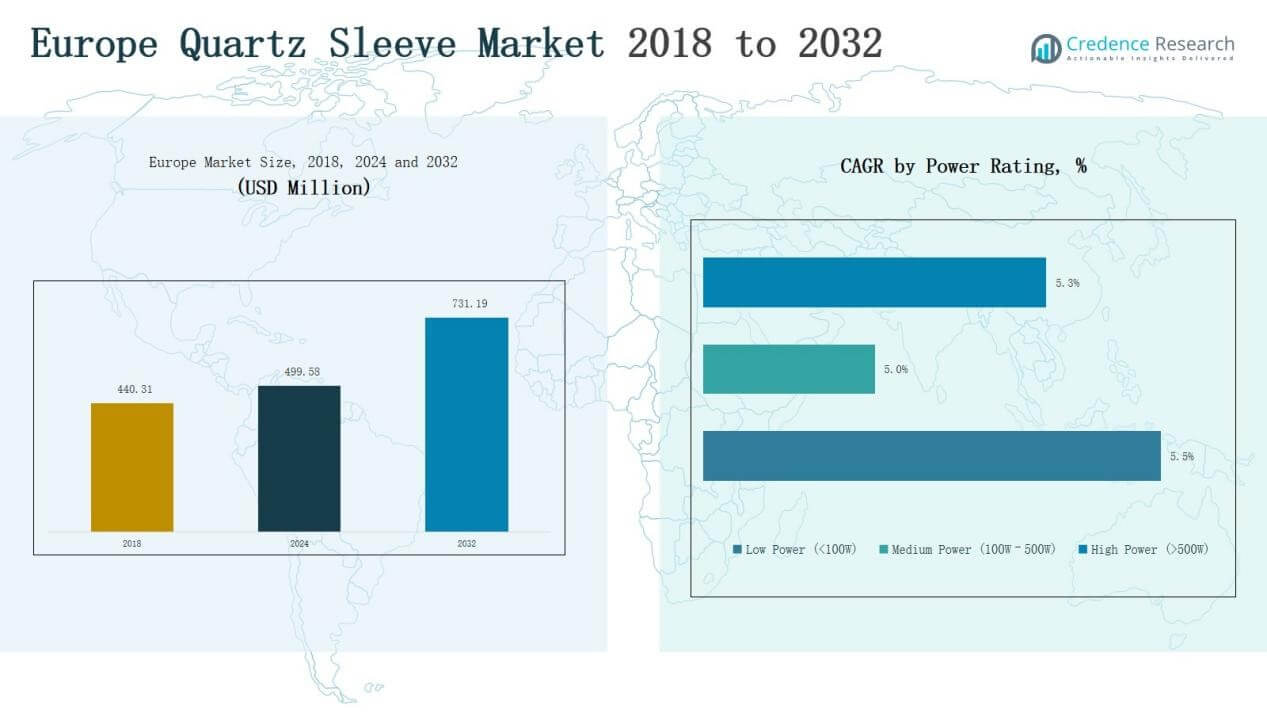
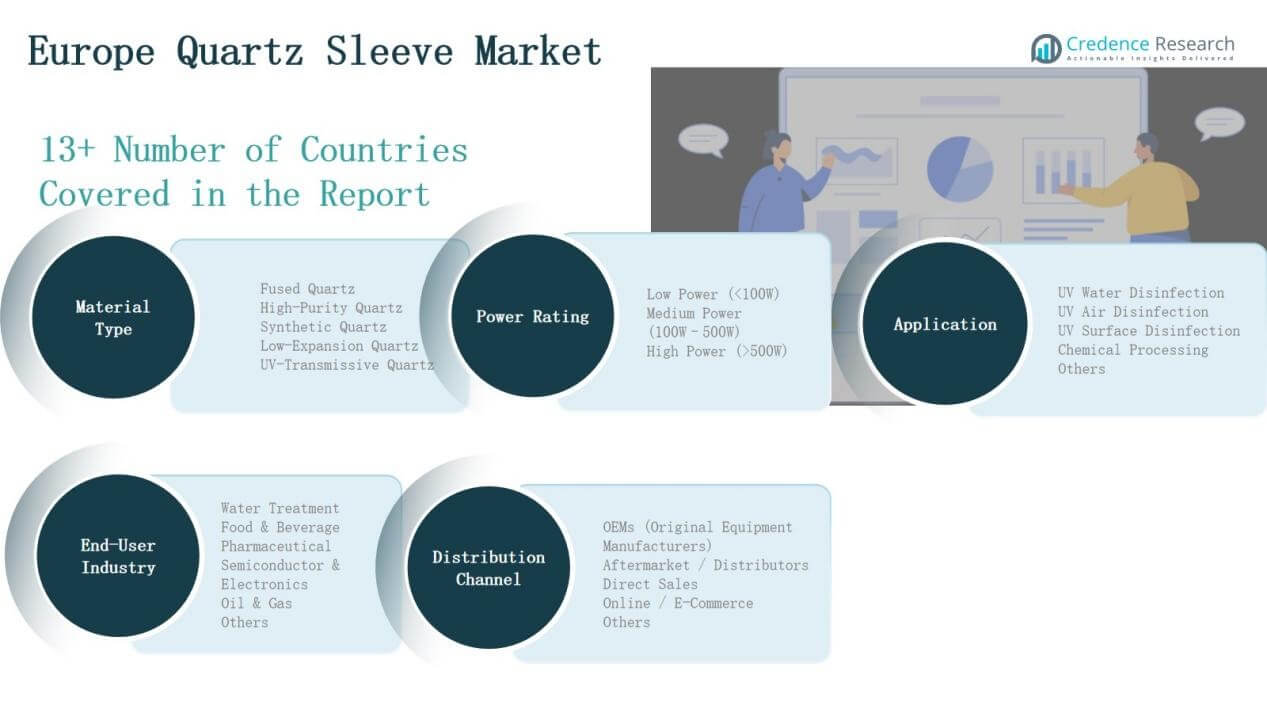
Europe Spherical Quartz Powder Market size was valued at USD 34.65 million in 2018, reached USD 40.13 million in 2024, and is anticipated to reach USD 60.24 million by 2032, at a CAGR of 5.14% during the forecast period.
| REPORT ATTRIBUTE | DETAILS |
|---|---|
| Historical Period | 2020-2023 |
| Base Year | 2024 |
| Forecast Period | 2025-2032 |
| Europe Spherical Quartz Powder Market Size 2024 | USD 40.13 Million |
| Europe Spherical Quartz Powder Market, CAGR | 5.14% |
| Europe Spherical Quartz Powder Market Size 2032 | USD 60.24 Million |
The Europe Spherical Quartz Powder Market is characterized by the presence of established global and regional players focusing on purity, innovation, and supply reliability. Key companies include SINOENERGY GROUP, ALPA Powder Technology, Sinonine, Micron, Denka, Tatsumori, Shin-Etsu Chemical, Tanki New Materials, Tongrun Nano Technology, NOVORAY, Admatechs, FUSO Chemical, Sibelco, Nippon Chemical, and Pacific Quartz. These players compete by expanding high-purity product portfolios, investing in R&D, and strengthening distribution networks to serve semiconductor and electronics industries. Germany leads the regional market with a 28% share in 2024, driven by its robust semiconductor base, strong R&D capabilities, and advanced automotive and aerospace sectors. This leadership position underscores Germany’s central role in shaping Europe’s spherical quartz powder demand.
 Market Insights
- The Europe Spherical Quartz Powder Market grew from USD 34.65 million in 2018 to USD 40.13 million in 2024 and will reach USD 60.24 million by 2032.
- The 99.99% purity type dominates with 42% share in 2024, driven by semiconductor fabrication and rising demand for ultra-high purity grades in advanced electronics and optics.
- By application, semiconductor packaging leads with 48% share in 2024, supported by its role in IC manufacturing, while electronics and optical components provide additional growth opportunities.
- By end-use, the semiconductor and electronics industry holds 55% share in 2024, followed by automotive and aerospace adopting quartz powders in advanced systems and composites.
- Germany leads the regional market with 28% share in 2024, while France (16%), UK (14%), Italy (12%), Spain (10%), Russia (9%), and Rest of Europe (11%) contribute significantly.
Market Segment Insights
By Type
In the Europe Spherical Quartz Powder Market, the 99.99% purity segment holds the dominant share of around 42% in 2024. Demand is driven by its critical use in semiconductor fabrication, where high purity levels ensure minimal contamination and improved device performance. Ultra-high purity grades are also gaining traction, supported by growing adoption in advanced electronics and optical industries. The rising need for reliable raw materials in next-generation chip manufacturing strengthens growth across high-purity segments.
For instance, HPQ Silicon signed an agreement with PyroGenesis Canada Inc. to commercialize high-purity quartz-based materials for electronic and photovoltaic applications.
By Application
The semiconductor packaging segment leads with nearly 48% market share in 2024, reflecting its importance in integrated circuit (IC) manufacturing. Spherical quartz powder offers superior flowability and thermal stability, making it vital for encapsulants and mold compounds. Electronics and optical components also contribute significantly, supported by demand for lightweight, durable, and heat-resistant materials. Expanding 3D printing applications further diversify usage, although semiconductor packaging remains the core driver of market revenues.
For instance, Denka Company introduced high-purity silica-based materials for optical fiber applications, aiming to enhance signal transmission efficiency and durability.
By End-Use Industry
The semiconductor and electronics industry dominates with a share of about 55% in 2024, supported by Europe’s growing chip production and R&D investments. The material’s ability to enhance heat dissipation and maintain purity makes it indispensable in this sector. Automotive and aerospace industries follow, integrating quartz powders in advanced electronic systems and composites. Telecommunications and industrial manufacturing sectors also provide steady demand, though semiconductor and electronics remain the largest and fastest-growing end-use industry.
Key Growth Drivers
Rising Demand from Semiconductor Industry
The semiconductor industry drives the largest demand for spherical quartz powder in Europe. High-purity grades, particularly 99.99%, are critical for encapsulants, wafer-level packaging, and advanced chip production. Expanding investments in European semiconductor manufacturing, supported by EU funding programs, are accelerating adoption. As chip designs become more complex and require better thermal and dielectric properties, demand for quartz powder continues to strengthen. This steady growth positions the semiconductor sector as the primary engine for the market.
For instance, STMicroelectronics announced additional investments of €730 million in its Catania, Italy facility for silicon carbide and next-generation semiconductor production, further increasing the consumption of specialty quartz powders for packaging and fabrication processes.
Expanding Applications in Electronics and Optics
Electronics and optical components create significant growth opportunities for quartz powders in Europe. The material’s ability to provide superior transparency, durability, and thermal stability makes it suitable for lenses, sensors, and specialized coatings. Rising consumer electronics penetration, coupled with the adoption of optical devices in healthcare and communication, has supported steady demand. Furthermore, innovations in high-performance electronics and optoelectronics encourage the use of ultra-high purity quartz. These applications expand the market beyond semiconductor packaging.
For instance, SCHOTT expanded its optical materials portfolio with radiation-resistant quartz-based glasses for cameras and sensors used in space exploration and defense optics, enhancing durability in extreme environments.
Strong Push for Advanced Materials in Automotive and Aerospace
The European automotive and aerospace industries increasingly rely on advanced materials, including spherical quartz powder. Lightweight composites and heat-resistant materials are essential for modern vehicles and aircraft. Quartz powders offer improved insulation and stability, enabling use in electronic systems, sensors, and structural applications. With Europe’s emphasis on electric vehicles, autonomous systems, and aerospace innovation, demand for high-quality powders is expected to rise. This sector acts as a key growth driver, diversifying the market beyond semiconductors.
 Key Trends & Opportunities
Growing Role of 3D Printing Materials
3D printing is emerging as a transformative opportunity for spherical quartz powder in Europe. The powder’s high purity and uniform particle size make it well-suited for additive manufacturing, especially in producing precision components for electronics and medical devices. As industries adopt 3D printing for cost-effective prototyping and production, the demand for advanced raw materials grows. This trend opens new revenue channels and diversifies the application base, strengthening the overall market outlook.
For instance, 3D Systems collaborated with the U.S. Air Force to develop printable high-temperature materials for aerospace components, highlighting the increasing requirement for ultra-pure powders suited for critical 3D printing applications.
Shift Toward Ultra-High Purity Grades
Europe is witnessing a steady shift toward ultra-high purity quartz powders, driven by the rising complexity of semiconductors and optical devices. With contamination-free materials becoming critical for next-generation chips and photonics, suppliers are prioritizing advanced refining and purification processes. This trend reflects a long-term opportunity for manufacturers to supply specialized, high-value powders. By catering to demanding applications in electronics and optics, companies can enhance their competitive positioning in the European market.
For instance, Heraeus and Momentive Quartz have enhanced their high purity quartz production capacities in Europe to support the expanding semiconductor and renewable energy industries, emphasizing improved thermal stability and chemical purity in their products.
Key Challenges
High Production and Processing Costs
Producing spherical quartz powder, especially at ultra-high purity levels, requires advanced technology and stringent processes. These increase overall production costs, which often transfer to end-users. The reliance on specialized equipment and energy-intensive methods further adds to expenses. For smaller manufacturers, competing with established global players becomes difficult. Cost barriers limit broader adoption across price-sensitive industries, challenging overall market growth despite increasing demand from high-value applications.
Limited Raw Material Availability
The availability of high-purity quartz reserves is limited, particularly within Europe. Manufacturers often depend on imports from Asia and other regions, leading to supply risks. Fluctuations in raw material availability affect production stability and pricing structures. This dependency creates challenges for European companies aiming for self-sufficiency in strategic industries such as semiconductors. Ensuring a reliable and sustainable raw material supply remains a critical hurdle for long-term market expansion.
Intense Competition from Asian Producers
European manufacturers face stiff competition from Asian producers, particularly China, which dominates global capacity. Chinese companies often leverage cost efficiency and scale advantages, making it difficult for European suppliers to match pricing. While Europe emphasizes quality and ultra-high purity, competing with low-cost imports pressures margins. This competitive imbalance could restrict the growth of regional players and force them to focus on niche high-value markets rather than volume-based expansion.
Regional Analysis
Germany
Germany leads the Europe Spherical Quartz Powder Market with a 28% share in 2024. Its strong semiconductor and electronics base drives the demand for high-purity quartz powders. The country benefits from advanced R&D capabilities and government programs supporting chip self-sufficiency. Growing investments in automotive electronics and aerospace applications further strengthen consumption. Local companies emphasize ultra-high purity grades to meet the requirements of precision industries. With industrial innovation and a robust supply chain, it remains the dominant regional market.
France
France accounts for 16% of the market share, supported by its expanding aerospace and telecommunications industries. Strong demand for optical components and coatings contributes to steady consumption. French manufacturers prioritize quality and sustainability, focusing on applications in defense and aviation. Semiconductor packaging also supports growth as the nation invests in digital and industrial transformation. It is expected to benefit from ongoing collaborations between public institutions and private companies. This focus ensures consistent growth across diverse applications.
UK
The UK holds 14% of the Europe Spherical Quartz Powder Market, driven by its advanced electronics and industrial manufacturing sectors. Strong adoption of high-performance materials in defense, telecommunications, and automotive industries creates steady demand. Local investments in 3D printing and next-generation electronics boost the use of spherical quartz powders. The UK’s emphasis on R&D fosters innovation in ultra-high purity grades. It is expected to remain a stable consumer market with a focus on technology-driven applications.
Italy
Italy represents 12% of the market share, with demand led by automotive and industrial applications. Growing use of spherical quartz powders in adhesives, sealants, and coatings supports expansion. The nation’s manufacturing base and investments in electric mobility strengthen consumption. Semiconductor and electronics demand remains modest but shows gradual improvement. It benefits from rising adoption of advanced materials in production and processing industries. Italy continues to evolve as a significant secondary market in the region.
Spain
Spain contributes 10% of the market share, driven by industrial and automotive manufacturing. Strong adoption in coatings and electronics fuels demand for quartz powders. It is also expanding its role in renewable energy and advanced materials, supporting new applications. Growing focus on domestic production capabilities adds resilience to the supply chain. Semiconductor packaging demand remains limited but rising slowly. Spain’s balanced industrial base ensures steady contribution to regional growth.
Russia
Russia accounts for 9% of the Europe Spherical Quartz Powder Market, with demand supported by industrial and aerospace sectors. Domestic companies rely on imports for high-purity grades, creating supply challenges. Strong defense-related applications sustain market presence. Semiconductor packaging adoption is limited, but electronic and optical components show rising demand. It faces geopolitical and trade constraints that influence supply stability. Despite these challenges, Russia maintains a role in the regional landscape.
Rest of Europe
The Rest of Europe holds 11% of the market share, covering smaller economies with emerging applications. Demand is led by semiconductor packaging and electronics in countries like the Netherlands and Poland. Adoption in 3D printing and telecommunications further drives interest in quartz powders. Companies focus on imports to meet requirements for high-purity and ultra-high purity grades. It is steadily expanding as new industries adopt advanced materials. This group contributes consistently to regional growth.
 Market Segmentations:
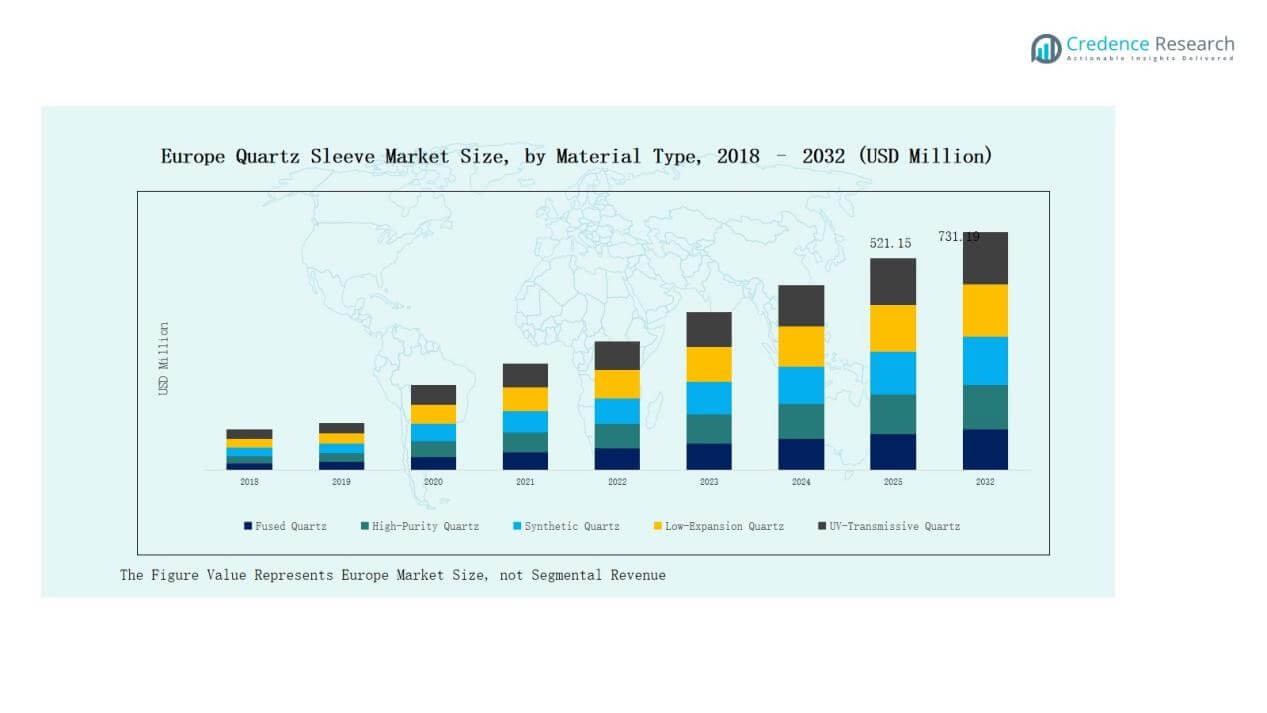
By Type
- 9% Purity
- 95% Purity
- 99% Purity
- Ultra-High Purity
By Application
- Semiconductor Packaging
- Electronics
- Optical Components
- Coatings
- Adhesives & Sealants
- 3D Printing Materials
- Others
By End-Use Industry
- Semiconductor & Electronics
- Automotive
- Aerospace
- Telecommunications
- Industrial Manufacturing
- Others
By Region
- UK
- France
- Germany
- Italy
- Spain
- Russia
- Rest of Europe
Competitive Landscape
The Europe Spherical Quartz Powder Market is highly competitive, with global and regional players focusing on purity, innovation, and supply reliability. Leading companies such as SINOENERGY GROUP, ALPA Powder Technology, Denka, Shin-Etsu Chemical, Admatechs, FUSO Chemical, and Sibelco dominate through strong production capacities and advanced refining processes. Japanese and South Korean firms emphasize ultra-high purity powders tailored for semiconductor packaging and optical applications, while European players highlight sustainable sourcing and localized customer support. Chinese producers continue to strengthen their presence by offering cost advantages, challenging regional suppliers. Strategic partnerships, R&D investments, and expansion into high-purity product lines remain central growth strategies. Recent developments focus on addressing rising demand from semiconductor and electronics industries, which require contamination-free materials. With growing competition, companies increasingly differentiate through quality certifications, advanced distribution networks, and customer-focused innovations, shaping the market toward greater consolidation and technology-driven rivalry.
Key Players
- SINOENERGY GROUP
- ALPA Powder Technology
- Sinonine
- Micron
- Denka
- Tatsumori
- Shin-Etsu Chemical
- Tanki New Materials
- Tongrun Nano Technology
- NOVORAY
- Admatechs
- FUSO Chemical
- Sibelco
- Nippon Chemical
- Pacific Quartz
Recent Developments
- In January 2025, Imerys acquired Chemviron’s European diatomite and perlite business to strengthen its mineral portfolio.
- In February 2024, the European Commission launched a €500 million public-private partnership to accelerate advanced materials development across Europe.
- In January 2025, PQ completed the acquisition of Sibelco’s specialty silicate business in Lödöse, Sweden.
Report Coverage
The research report offers an in-depth analysis based on Type, Application, End User and Region. It details leading market players, providing an overview of their business, product offerings, investments, revenue streams, and key applications. Additionally, the report includes insights into the competitive environment, SWOT analysis, current market trends, as well as the primary drivers and constraints. Furthermore, it discusses various factors that have driven market expansion in recent years. The report also explores market dynamics, regulatory scenarios, and technological advancements that are shaping the industry. It assesses the impact of external factors and global economic changes on market growth. Lastly, it provides strategic recommendations for new entrants and established companies to navigate the complexities of the market.
Future Outlook
- Demand for ultra-high purity grades will rise with advanced semiconductor production.
- Electronics and optical component applications will continue to expand steadily.
- Automotive and aerospace sectors will adopt quartz powders for advanced systems.
- 3D printing materials will emerge as a significant growth opportunity.
- European suppliers will invest in refining technology to compete with Asian producers.
- Sustainability practices will influence procurement and production strategies.
- Strategic partnerships will increase to secure raw material supply.
- Industrial manufacturing applications will diversify product usage across sectors.
- Government initiatives to boost semiconductor capacity will support long-term demand.
- Market competition will intensify, driving innovation in purity and performance.

Request a Free Sample
Fill in your details and we'll send you a free sample report.
- Sample data tables & charts
- Research methodology
Market Dynamics
Rising Demand from Semiconductor Industry
The rapid expansion of semiconductor manufacturing in Europe, supported by EU funding and investments in advanced chip production, is driving significant demand for high-purity spherical quartz powder, which is essential for encapsulants and wafer-level packaging.
Expansion of Electronics and Optical Applications
Growth in advanced electronics, optoelectronics, and optical components such as sensors and lenses is increasing the need for ultra-high purity quartz powders, valued for their transparency, durability, and thermal stability.
Adoption in Automotive and Aerospace Sectors
The shift toward electric vehicles, autonomous systems, and advanced aerospace technologies is boosting the use of spherical quartz powder in lightweight composites and heat-resistant electronic systems, diversifying market demand beyond semiconductors.
Emergence of 3D Printing Materials
The adoption of 3D printing in electronics, medical devices, and aerospace is creating new opportunities for spherical quartz powder, which offers the purity and particle uniformity required for high-performance additive manufacturing.
Shift Toward Ultra-High Purity Grades
Increasing complexity in semiconductor and optical device manufacturing is driving a market shift toward ultra-high purity quartz powders, prompting suppliers to invest in advanced refining and purification technologies to meet stringent industry requirements.
Need a Custom Version of This Report?
Tailor the scope, geography, or segments to your exact requirements.
- Custom geography or segment scope
- Direct access to our analyst team
Frequently Asked Questions
What is the current market size for Europe Spherical Quartz Powder Market, and what is its projected size in 2032?
At what Compound Annual Growth Rate is the Europe Spherical Quartz Powder Market projected to grow between 2025 and 2032?
Which Europe Spherical Quartz Powder Market segment held the largest share in 2024?
What are the primary factors fueling the growth of the Europe Spherical Quartz Powder Market?
Who are the leading companies in the Europe Spherical Quartz Powder Market?
Which region commanded the largest share of the Europe Spherical Quartz Powder Market in 2024?
Table of Content
Chapter 1 Market Segmentation
- 1.1 Segmentation Framework
- 1.1.1 Product and Service Classification
- 1.1.2 Application and End-Use Classification
- 1.1.3 Technology and Solution Classification
- 1.1.4 Customer and Distribution Channel Classification
- 1.1.5 Geographic Segmentation
- 1.1.6 Market Segment Definitions and Boundaries
- 1.2 By Type
- 1.2.1 9% Purity
- 1.2.2 95% Purity
- 1.2.3 99% Purity
- 1.2.4 Ultra-High Purity
- 1.3 By Application
- 1.3.1 Semiconductor Packaging
- 1.3.2 Electronics
- 1.3.3 Optical Components
- 1.3.4 Coatings
- 1.3.5 Adhesives & Sealants
- 1.3.6 3D Printing Materials
- 1.3.7 Others
- 1.4 By End-Use Industry
- 1.4.1 Semiconductor & Electronics
- 1.4.2 Automotive
- 1.4.3 Aerospace
- 1.4.4 Telecommunications
- 1.4.5 Industrial Manufacturing
- 1.4.6 Others
Chapter 2 Introduction
- 2.1 Report Objectives and Scope
- 2.2 Product Definition and Industry Terminology
- 2.3 Market Inclusions and Exclusions
- 2.4 Research Process
- 2.4.1 Primary Research and Expert Interviews
- 2.4.2 Secondary Research and Source Review
- 2.4.3 Top-Down and Bottom-Up Estimation
- 2.4.4 Data Triangulation and Verification
- 2.5 Market Size Measurement Basis
- 2.5.1 2024: USD 40.13 million → 2032: USD 60.24 million
- 2.6 Historical and Forecast Reference Periods
- 2.6.1 Base Year: 2024
- 2.6.2 Forecast Period: 2024-2032
- 2.7 Research Assumptions and Limitations
Chapter 3 Executive Summary
- 3.1 Market Snapshot and Key Findings
- 3.2 Base-Year Market Size, 2024
- 3.3 Forecast Market Size, 2032
- 3.4 Revenue and Volume Growth Outlook
- 3.5 Key Demand and Supply Indicators
- 3.6 Leading Market Segments
- 3.7 Fastest-Growing Market Opportunities
- 3.8 Regional Performance Highlights
- 3.9 Technology and Industry Transformation
- 3.10 Competitive Landscape Summary
- 3.11 Analyst View and Strategic Implications
Chapter 4 Europe Spherical Quartz Powder Market Trends and Developments
- 4.1 Historical Industry Development
- 4.2 Recent Market Trends and Developments
- 4.3 Demand and Customer Behavior Trends
- 4.4 Technology and Product Innovation
- 4.5 Artificial Intelligence, Automation and Digitalization
- 4.6 Local Manufacturing and Supply Chain Realignment
- 4.7 Industry Partnerships, Mergers and Acquisitions
- 4.8 Sustainability and Circular Economy Developments
- 4.9 Government and Private Sector Investment Trends
- 4.10 Emerging Business Models and Commercialization
- 4.11 Industry Developments and Announcements
Chapter 5 Europe Spherical Quartz Powder Market Production, Supply and Demand Analysis
- 5.1 Demand Trend and Consumption Analysis
- 5.2 Demand Forecast, 2024-2032
- 5.3 Production and Output Trend
- 5.4 Production and Output Forecast, 2024-2032
- 5.5 Installed Capacity and Capacity Utilization
- 5.6 Company-Wise Production Plants and Statistics
- 5.6.1 Installed Production Capacity
- 5.6.2 Actual Production
- 5.6.3 Planned Capacity and Expansion Targets
- 5.7 Supply Chain Structure and Procurement Trends
- 5.8 Supply-Demand Gap and Bottlenecks
- 5.9 Import Dependence and Sourcing Structure
- 5.10 Contract Manufacturing and Outsourcing
- 5.11 Regional Supply and Demand Concentration
Chapter 6 Europe Spherical Quartz Powder Market Pricing Analysis
- 6.1 Pricing Structure and Measurement
- 6.2 Historical Pricing Trends
- 6.3 Pricing Outlook, 2024-2032
- 6.4 Average Selling Price and Unit Economics
- 6.5 Pricing by Product and Market Segment
- 6.6 Geographic Pricing Differences
- 6.7 Key Input, Energy, Labor and Logistics Costs
- 6.8 Contract Pricing and Purchasing Models
- 6.9 Pricing Sensitivity and Competitive Positioning
- 6.10 Price, Margin and Profitability Implications
Chapter 7 Europe Spherical Quartz Powder Market Dynamics
- 7.1 Market Growth Drivers
- 7.1.1 Demand-Side Drivers
- 7.1.2 Technology and Innovation Drivers
- 7.1.3 Infrastructure and Investment Drivers
- 7.1.4 Regulatory and Policy Drivers
- 7.2 Market Restraints
- 7.2.1 Cost and Affordability Constraints
- 7.2.2 Technology and Adoption Barriers
- 7.2.3 Supply Chain and Operational Constraints
- 7.3 Market Challenges
- 7.3.1 Competitive Pressure and Margin Erosion
- 7.3.2 Skills, Infrastructure and Implementation Gaps
- 7.4 Emerging Market Opportunities
- 7.5 Market Dynamics Impact and Time-Horizon Assessment
Chapter 8 Europe Spherical Quartz Powder Value Chain Analysis
- 8.1 Industry Value Chain Overview
- 8.2 Upstream Suppliers and Critical Inputs
- 8.3 Technology and Component Providers
- 8.4 Manufacturing or Service Delivery
- 8.5 Distribution, Channel Partners and Integrators
- 8.6 Downstream Applications and End Users
- 8.7 Value Addition and Profit Pools
- 8.8 Vertical Integration and Outsourcing
- 8.9 Supplier Concentration and Risk
- 8.10 Supply Chain Localization and Resilience
Chapter 9 Europe Spherical Quartz Powder Market Regulations and Policies
- 9.1 Relevant Laws, Standards and Compliance Frameworks
- 9.2 Product, Service, Safety and Quality Requirements
- 9.3 Government Policies, Incentives and Subsidies
- 9.4 Imports, Exports and Trade Barriers
- 9.5 Public Procurement and Local Content Requirements
- 9.6 Environmental and Sustainability Compliance
- 9.7 Upcoming Policy Changes and Market Implications
Chapter 10 Europe Spherical Quartz Powder Market Hotspots and Opportunities
- 10.1 Market Opportunity Mapping and Growth Hotspots
- 10.2 High-Growth Applications and Customer Groups
- 10.3 Underserved Markets and White-Space Opportunities
- 10.4 Emerging Technology and Product Opportunities
- 10.5 New Capacity and Investment Hotspots
- 10.6 Market Entry and Expansion Opportunities
- 10.7 Distribution and Partnership Opportunities
- 10.8 Near-Term and Long-Term Commercial Potential
- 10.9 Opportunity Attractiveness and Execution Risks
Chapter 11 Europe Spherical Quartz Powder Market Outlook, 2024-2032
- 11.1 Market Size and Analysis
- 11.1.1 Revenue (Market Measurement: 2024: USD 40.13 million → 2032: USD 60.24 million)
- 11.1.2 Market Volume and Quantity Sold
- 11.1.3 Historical Market Size
- 11.1.4 Base-Year Market Size, 2024
- 11.2 Market Forecast, 2024-2032
- 11.2.1 Revenue Forecast to 2032
- 11.2.2 Volume Forecast to 2032
- 11.2.3 CAGR and Year-on-Year Growth
- 11.2.4 Incremental Revenue Opportunity
- 11.3 Forecast Assumptions and Scenario Analysis
- 11.3.1 Base-Case Forecast
- 11.3.2 Optimistic and Conservative Scenarios
- 11.3.3 Technology, Pricing and Policy Sensitivities
- 11.4 Market Attractiveness and Growth Outlook
Chapter 12 Europe Spherical Quartz Powder Market Segmentation and Outlook
- 12.1 Segmentation Summary and Market Shares, 2024
- 12.2 Largest and Fastest-Growing Segments
- 12.3 By Type - Market Size and Forecast, 2024-2032
- 12.3.1 Segment Definition and Scope
- 12.3.2 Historical Market Size
- 12.3.3 Revenue Forecast, 2024-2032
- 12.3.4 Volume Forecast, 2024-2032
- 12.3.5 Base-Year Market Share, 2024
- 12.3.6 Segment CAGR and Growth Drivers
- 12.3.7 Subsegment Market Size and Forecast
- 12.3.7.1 9% Purity
- 12.3.7.2 95% Purity
- 12.3.7.3 99% Purity
- 12.3.7.4 Ultra-High Purity
- 12.3.8 Subsegment Pricing and Adoption Trends
- 12.3.9 Leading Suppliers and Competition
- 12.3.10 Regional Demand and Opportunities
- 12.4 By Application - Market Size and Forecast, 2024-2032
- 12.4.1 Segment Definition and Scope
- 12.4.2 Historical Market Size
- 12.4.3 Revenue Forecast, 2024-2032
- 12.4.4 Volume Forecast, 2024-2032
- 12.4.5 Base-Year Market Share, 2024
- 12.4.6 Segment CAGR and Growth Drivers
- 12.4.7 Subsegment Market Size and Forecast
- 12.4.7.1 Semiconductor Packaging
- 12.4.7.2 Electronics
- 12.4.7.3 Optical Components
- 12.4.7.4 Coatings
- 12.4.7.5 Adhesives & Sealants
- 12.4.7.6 3D Printing Materials
- 12.4.7.7 Others
- 12.4.8 Subsegment Pricing and Adoption Trends
- 12.4.9 Leading Suppliers and Competition
- 12.4.10 Regional Demand and Opportunities
- 12.5 By End-Use Industry - Market Size and Forecast, 2024-2032
- 12.5.1 Segment Definition and Scope
- 12.5.2 Historical Market Size
- 12.5.3 Revenue Forecast, 2024-2032
- 12.5.4 Volume Forecast, 2024-2032
- 12.5.5 Base-Year Market Share, 2024
- 12.5.6 Segment CAGR and Growth Drivers
- 12.5.7 Subsegment Market Size and Forecast
- 12.5.7.1 Semiconductor & Electronics
- 12.5.7.2 Automotive
- 12.5.7.3 Aerospace
- 12.5.7.4 Telecommunications
- 12.5.7.5 Industrial Manufacturing
- 12.5.7.6 Others
- 12.5.8 Subsegment Pricing and Adoption Trends
- 12.5.9 Leading Suppliers and Competition
- 12.5.10 Regional Demand and Opportunities
- 12.6 Segment Growth Comparison
- 12.7 Segment Attractiveness and Priority Matrix
Chapter 13 Europe Spherical Quartz Powder End-Use and Application Market Outlook
- 13.1 End-Use Industry and Customer Demand Structure
- 13.2 Leading Applications and Customer Groups
- 13.3 End-Use Market Size, Share and Forecast
- 13.4 Major End-Use Industry Deep Dives
- 13.4.1 Customer Requirements and Use Cases
- 13.4.2 Demand and Replacement Cycles
- 13.4.3 Technical and Regulatory Considerations
- 13.4.4 Purchasing and Procurement Models
- 13.4.5 Leading Vendors and Distribution Channels
- 13.4.6 Forecast and Commercial Opportunities
- 13.5 Emerging Applications and Cross-Segment Demand
- 13.6 End-Use Industry Investment Priorities
Chapter 14 Europe Spherical Quartz Powder Geographic Market Outlook, 2024-2032
- 14.1 Regional Market Size and Country-Level Shares, 2024
- 14.2 Country Market Size Comparison, 2024
- 14.3 Country Market Forecasts, 2024-2032
- 14.4 Subregional Industrial and Demand Clusters
- 14.5 Intra-Regional Pricing and Cost Differences
- 14.6 Cross-Border Trade and Supply Networks
- 14.7 Regional Supply and Demand Balances
- 14.8 Country Opportunity Comparison and Prioritization
Note: Every listed country is covered on the structure shown under the first country.
Chapter 15 Europe Spherical Quartz Powder Technology, Innovation and Sustainability Outlook
- 15.1 Technology Landscape and Maturity
- 15.2 Product, Process and Service Innovation
- 15.3 AI, Automation and Digital Tools in the Industry
- 15.4 Technology Adoption and Performance Benchmarking
- 15.5 Innovation Pipeline and R&D Investment
- 15.6 Patent and Intellectual Property Trends
- 15.7 Energy Efficiency and Resource Management
- 15.8 Sustainability, Recycling and Circularity
- 15.9 Technology Roadmap, 2024-2032
- 15.10 Risks of Obsolescence and Technology Substitution
Chapter 16 Europe Spherical Quartz Powder Market Key Strategic Imperatives
- 16.1 Growth and Market Entry Priorities
- 16.2 High-Return Products and Segments
- 16.3 Pricing, Profitability and Cost Optimization
- 16.4 Technology Investment and Product Differentiation
- 16.5 Supply Chain Localization and Resilience
- 16.6 Distribution and Customer Acquisition
- 16.7 Partnership, Acquisition and Capacity Strategy
- 16.8 Regional Expansion Priorities
- 16.9 Short-, Medium- and Long-Term Actions
Chapter 17 Competition Outlook
- 17.1 Industry Competition Characteristics
- 17.2 Market Structure and Concentration
- 17.3 Market Share and Competitive Positioning, 2024
- 17.4 Company-Wise Revenue and Product Benchmarking
- 17.5 Production and Service Capacity Benchmarking
- 17.6 Technology, Pricing and Differentiation
- 17.7 Regional Footprint and Distribution Strength
- 17.8 Mergers, Acquisitions and Strategic Alliances
- 17.9 New Entrants and Competitive Threats
- 17.10 Porter's Five Forces and Industry Attractiveness
- 17.11 Competitive Outlook, 2024-2032
Chapter 18 Company Profiles
- 18.1 Company Coverage and Selection Criteria
- 18.2 SINOENERGY GROUP
- 18.2.1 Business Description
- 18.2.2 Company Ownership and Geographic Presence
- 18.2.3 Product and Service Portfolio
- 18.2.4 Manufacturing and Operating Footprint
- 18.2.5 Production Capacity and Expansion Plans
- 18.2.6 Financial Performance and Investment
- 18.2.7 Market Share and Competitive Position
- 18.2.8 Technology and Innovation Capabilities
- 18.2.9 Strategic Alliances or Partnerships
- 18.2.10 Recent Developments
- 18.2.11 Growth Strategy and Outlook
- 18.3 ALPA Powder Technology
- 18.4 Denka
- 18.5 Shin-Etsu Chemical
- 18.6 Admatechs
- 18.7 FUSO Chemical
- 18.8 Sibelco
- 18.9 Sinonine
- 18.10 Tatsumori
- 18.11 NOVORAY
- 18.12 Other Relevant Market Participants
Note: Every listed company is profiled on the structure shown under the first company. The company list is preliminary and may change based on research findings, market developments, data availability and client requirements.
Chapter 19 Disclaimer
- 19.1 Research and Forecast Disclaimer
- 19.2 Data Source and Estimation Limitations
Note: The depth of individual sections depends on data availability for this market. Volume, capacity, trade and other unit-based metrics are included where applicable.

