
| REPORT ATTRIBUTE | DETAILS |
|---|---|
| Historical Period | 2019-2022 |
| Base Year | 2023 |
| Forecast Period | 2024-2032 |
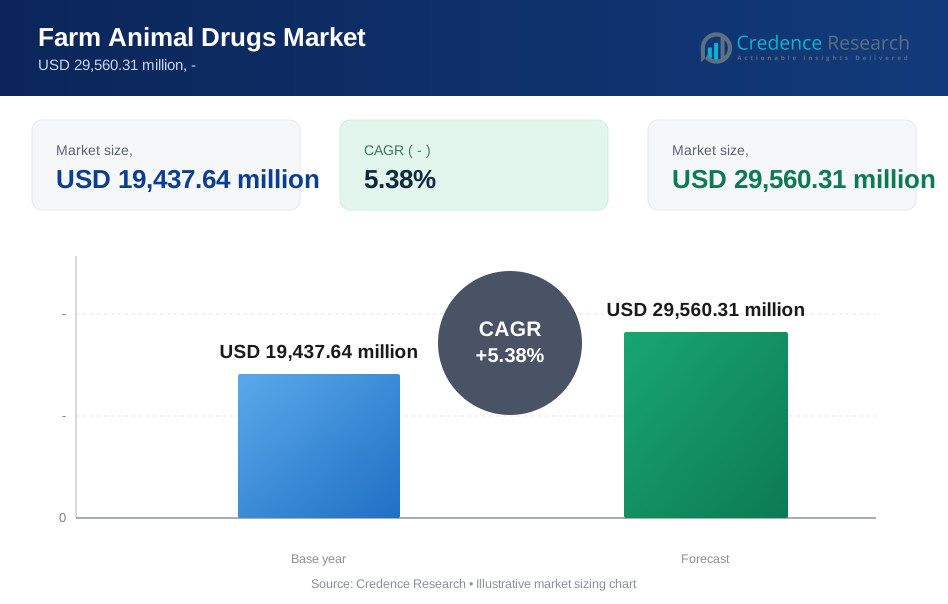
| Farm Animal Drugs Market Size 2024 | USD 19,437.64 Million |
| Farm Animal Drugs Market, CAGR | 5.38% |
| Farm Animal Drugs Market Size 2032 | USD 29,560.31 Million |
Market Overview:
The Farm Animal Drugs market is projected to grow from USD 19,437.64 million in 2024 to USD 29,560.31 million by 2032, reflecting a compound annual growth rate (CAGR) of 5.38%.
This growth trajectory underscores the increasing demand for effective pharmaceuticals and medicinal products to ensure the health and productivity of farm animals. The market’s expansion is driven by the rising global population, which in turn fuels the demand for meat, dairy products, and other animal-derived products. The need for effective disease management and the maintenance of optimal animal health are crucial factors contributing to the market’s growth.
Several key factors are driving the growth of the Farm Animal Drugs market. The increasing prevalence of infectious diseases among farm animals necessitates the use of effective pharmaceuticals to prevent and treat these conditions. Additionally, the growing awareness of animal health and welfare, coupled with the rising demand for high-quality animal-derived products, is propelling the market forward. Advances in veterinary medicine and the development of innovative drug delivery systems are also contributing to market growth. Furthermore, government initiatives and regulations aimed at ensuring food safety and animal health are playing a significant role in driving the market.
Regionally, North America dominates the Farm Animal Drugs market, accounting for the largest share due to its advanced healthcare infrastructure and significant investment in research and development. Europe also holds a substantial market share, driven by similar factors. The Asia-Pacific region is expected to witness the fastest growth during the forecast period, owing to increasing healthcare expenditure, rising awareness of animal health, and improving healthcare infrastructure. Emerging markets in Latin America and the Middle East & Africa also present growth opportunities as these regions invest more in healthcare and medical research. Overall, the Farm Animal Drugs market is poised for significant growth, driven by advancements in veterinary medicine and an increasing focus on animal health and welfare.
Market Drivers:
Increasing Prevalence of Infectious Diseases:
The Farm Animal Drugs market is driven by the increasing prevalence of infectious diseases among farm animals. For instance, the rise in zoonotic diseases such as avian influenza and foot-and-mouth disease has necessitated the use of effective pharmaceuticals to prevent and treat these conditions. This has led to a growing demand for antibiotics, vaccines, and other medicinal products to ensure the health and productivity of livestock. Additionally, the intensification of livestock farming to meet the rising global demand for animal-derived products has further fuelled the need for farm animal drugs.
Government Initiatives and Regulations:
Government initiatives and regulations aimed at ensuring food safety and animal health are also playing a significant role in driving the market. For example, the United States Department of Agriculture (USDA) has implemented various programs to monitor and control the spread of infectious diseases among farm animals. These initiatives not only help in maintaining the health of livestock but also ensure the safety of animal-derived products for human consumption. Furthermore, government funding for research and development in veterinary medicine is supporting the development of innovative drugs and therapies.
Advancements in Veterinary Medicine:
Advancements in veterinary medicine and the development of innovative drug delivery systems are contributing to the growth of the Farm Animal Drugs market. Companies are focusing on developing controlled-release drug delivery systems that reduce stress on animals and make dosing easier for caregivers. For instance, the use of advanced biomaterials to formulate traditional drug molecules has improved drug absorption and treatment outcomes. These technological advancements are enhancing the efficacy of farm animal drugs and ensuring better health management for livestock.
Growing Awareness of Animal Health and Welfare
The growing awareness of animal health and welfare is another key driver of the Farm Animal Drugs market. Consumers are increasingly demanding high-quality animal-derived products, which has led to a greater emphasis on maintaining the health and well-being of farm animals. Companies are responding to this demand by developing and marketing products that address specific health issues in livestock. For example, the launch of injectable solutions like enrofloxacin for cattle and swine has expanded the range of available treatments for farm animals. This focus on animal health and welfare is expected to continue driving the market in the coming years.
Market Trends:
Rising Popularity of Monoclonal Antibodies and Stem Cells:
One of the current trends in the Farm Animal Drugs market is the rising popularity of monoclonal antibodies and stem cells as therapeutic options. For instance, companies are increasingly investing in the development of monoclonal antibodies to target specific pathogens and enhance the immune response in farm animals. Stem cell therapy is also gaining traction as a promising treatment for various animal diseases, offering regenerative capabilities and improved recovery rates. These advanced therapies are expected to revolutionize the treatment landscape for farm animals, providing more effective and targeted solutions.
Adoption of Controlled-Release Technology:
The adoption of controlled-release technology is another significant trend in the Farm Animal Drugs market. This technology helps reduce stress on animals and makes dosing easier for caregivers. For example, controlled-release drug delivery systems enable precise dosage measurement and reduce the need for multiple injections. This system is cost-effective and convenient for veterinarians, enhancing treatment outcomes and improving animal welfare. The use of advanced biomaterials to formulate traditional drug molecules has also improved drug absorption and treatment efficacy.
Government Initiatives and Regulations:
Government initiatives and regulations aimed at ensuring food safety and animal health are playing a crucial role in shaping the Farm Animal Drugs market. For instance, the United States Department of Agriculture (USDA) has implemented various programs to monitor and control the spread of infectious diseases among farm animals. These initiatives help maintain the health of livestock and ensure the safety of animal-derived products for human consumption. Additionally, government funding for research and development in veterinary medicine supports the development of innovative drugs and therapies.
Increasing Consumer Demand for Animal Products:
The increasing consumer demand for animal products is driving the growth of the Farm Animal Drugs market. For example, the United States Department of Agriculture (USDA) reported a rise in beef meat consumption from 12,712 metric tons in 2021 to 12,803 metric tons in 2022. Similarly, pork meat consumption increased from 9,918 metric tons in 2021 to 9,959 metric tons in 2022, while chicken meat consumption saw an increase from 17,164 metric tons in 2021 to 17,674 metric tons in 2022. This surge in meat consumption underscores the need for effective farm animal drugs to ensure the health and productivity of livestock, ultimately meeting the growing demand for animal-derived products.
Market Challenges Analysis:
Stringent Regulatory Approval Processes
The Farm Animal Drugs market faces several key restraints and challenges that impact its growth and development. One of the primary challenges is the stringent regulatory approval processes for new drugs. Obtaining regulatory approval can be time-consuming and costly, requiring extensive clinical trials and safety data. This can delay the market entry of new drugs, affecting innovation and market growth. Additionally, the rise in production costs, including raw materials and manufacturing expenses, further hinders the sector’s progress.
Antibiotic Resistance Concerns
Another significant challenge is the increasing concern over antibiotic resistance. The widespread use of antibiotics in farm animals has led to the development of antibiotic-resistant bacteria, posing a threat to both animal and human health. This has prompted regulatory bodies to implement stricter guidelines on the use of antibiotics in livestock, limiting their usage and encouraging the development of alternative treatments. However, finding effective alternatives remains a challenge for the industry.
Preference for Natural Remedies
The popularity of natural remedies and home treatments among farmers, especially in underdeveloped regions, also poses a challenge to the Farm Animal Drugs market. Many farmers are unaware of the diseases affecting their livestock and rely on traditional methods rather than seeking professional veterinary care. This lack of awareness and access to veterinary services can lead to inadequate treatment and management of animal health issues, further impacting the market.
Distribution and Accessibility Issues
Lastly, the market faces challenges related to the distribution and accessibility of veterinary drugs. In many regions, particularly in developing countries, the distribution infrastructure for veterinary drugs is fragmented and weak. This makes it difficult for farmers to access essential medications and treatments for their livestock. Additionally, the presence of non-professional actors in the veterinary drug supply chain can lead to the misuse and overuse of drugs, exacerbating the issue of antibiotic resistance. Addressing these challenges is crucial for the sustainable growth of the Farm Animal Drugs market.
Market Segmentation Analysis:
By Type
The Farm Animal Drugs market is segmented by type into several categories, including anti-infective, parasiticides, anti-inflammatory, anesthetics, analgesics, hormones and related products, and others. Among these, parasiticides held the largest market share in 2021 and are expected to register the highest CAGR during the forecast period. The demand for anti-infective drugs is also significant due to the rising prevalence of infectious diseases among farm animals.
By Technology
Technological advancements play a crucial role in the Farm Animal Drugs market. Controlled-release technology is gaining popularity as it reduces stress on animals and simplifies dosing for caregivers. This technology enables precise dosage measurement and reduces the need for multiple injections, making it cost-effective and convenient for veterinarians. Additionally, the use of advanced biomaterials to formulate traditional drug molecules has improved drug absorption and treatment outcomes.
By End User
The market is also segmented by end users, which include veterinary hospitals, veterinary clinics, pharmacies and drug stores, and others. Veterinary hospitals and clinics are the primary end users, accounting for a significant share of the market due to the increasing demand for professional veterinary services and the availability of advanced treatment options. Pharmacies and drug stores also play a vital role in the distribution of farm animal drugs, ensuring accessibility for farmers and livestock owners.
Segmentations:
By Product Type
- Anesthetics
- Analgesics
- Anti-Inflammatory
- Anti-Infective
- Parasiticides
- Hormones and Related Product
- Others
By Animal Type
- Livestock Animal and Equine
By Route of Administration
- Topical
- Parenteral
- Oral
- Others
By Distribution Channel
- Veterinary Clinics
- Pharmacies and Drug Stores
- Veterinary Hospitals
- Others
By Region
- North America
- US
- Canada
- Mexico
- Europe
- Germany
- France
- UK
- Italy
- Spain
- Rest of Europe
- Asia Pacific
- China
- Japan
- India
- South Korea
- South-east Asia
- Rest of Asia Pacific
- Latin America
- Brazil
- Argentina
- Rest of Latin America
- Middle East & Africa
- GCC Countries
- South Africa
- Rest of Middle East and Africa
Regional Analysis:
North America
North America holds the largest market share in the Farm Animal Drugs market, driven by advanced healthcare infrastructure and significant investment in research and development. The region’s dominance is further supported by the high prevalence of livestock diseases and the presence of major pharmaceutical companies. The United States, in particular, is a key contributor to the market, with a well-established veterinary healthcare system and stringent regulations ensuring the safety and efficacy of animal drugs. The North American market is expected to continue its growth trajectory, with a compound annual growth rate (CAGR) of 6.8%.
Europe
Europe also holds a substantial share of the Farm Animal Drugs market, driven by similar factors as North America. The region’s strong focus on animal welfare and food safety regulations has led to increased demand for effective pharmaceuticals for farm animals. Countries such as Germany, France, and the United Kingdom are major contributors to the market, with well-developed veterinary healthcare systems and significant investment in research and development. The European market is expected to witness steady growth, supported by advancements in veterinary medicine and increasing awareness of animal health.
Asia-Pacific
The Asia-Pacific region is expected to witness the fastest growth in the Farm Animal Drugs market during the forecast period. This growth is attributed to increasing healthcare expenditure, rising awareness of animal health, and improving healthcare infrastructure in countries such as China, India, and Japan. The region’s large livestock population and the growing demand for animal-derived products are also driving the market. Additionally, government initiatives to improve animal health and food safety are expected to further boost the market in the Asia-Pacific region.
South America
South America presents significant growth opportunities for the Farm Animal Drugs market, driven by increasing investment in healthcare and medical research. Countries such as Brazil and Argentina are major contributors to the market, with a large livestock population and growing demand for animal-derived products. The region’s focus on improving animal health and productivity is expected to drive the demand for farm animal drugs. Additionally, government initiatives to control and prevent livestock diseases are expected to support market growth in Latin America.
Middle East & Africa
The Middle East & Africa region also presents growth opportunities for the Farm Animal Drugs market, driven by increasing investment in healthcare and improving veterinary services. Countries such as South Africa and Saudi Arabia are key contributors to the market, with a growing focus on animal health and food safety. The region’s large livestock population and the rising demand for animal-derived products are expected to drive the market. Additionally, government initiatives to improve veterinary services and control livestock diseases are expected to support market growth in the Middle East & Africa.
Key Player Analysis:
- Zoetis Inc.
- Boehringer Ingelheim GmbH
- Merck & Co. Inc.
- Elanco Animal Health Incorporated
- Ceva Santé Animale
- Virbac Group
- Dechra Pharmaceuticals PLC
- Phibro Animal Health Corporation
- Vetoquinol S.A.
- Kyoritsuseiyaku Corporation
Competitive Analysis:
The Farm Animal Drugs market is highly competitive, with several key players striving to maintain their market positions through innovation and strategic initiatives. Companies such as Zoetis Inc., Boehringer Ingelheim GmbH, and Merck & Co. Inc. are leading the market with their extensive product portfolios and strong research and development capabilities. These companies focus on developing advanced pharmaceuticals and vaccines to address the evolving needs of the livestock industry. Additionally, strategic partnerships, mergers, and acquisitions are common strategies employed by these players to expand their market presence and enhance their product offerings. For instance, Elanco Animal Health Incorporated has been actively involved in acquisitions to strengthen its market position. The competitive landscape is further shaped by regulatory frameworks and government initiatives aimed at ensuring the safety and efficacy of farm animal drugs. Overall, the market is characterized by continuous innovation and strategic collaborations among key players.
Recent Developments:
- Elanco Animal Health Incorporatedexpanded its product portfolio in 2024 by acquiring a leading veterinary pharmaceutical company. This strategic move aims to enhance their market presence and offer a broader range of solutions for farm animal health.
- Zoetis Inc.launched a new injectable solution, enrofloxacin, for cattle and swine in 2023. This product aims to address respiratory diseases in livestock, enhancing treatment efficacy and reducing stress during administration.
- Boehringer Ingelheim GmbHreceived FDA approval in 2022 for their innovative vaccine targeting avian influenza. This vaccine is expected to significantly reduce the incidence of the disease in poultry, ensuring better health and productivity.
- Merck & Co. Inc.introduced a controlled-release drug delivery system in 2021. This technology simplifies dosing for caregivers and reduces stress on animals, improving overall treatment outcomes.
Market Concentration & Characteristics:
The Farm Animal Drugs market is characterized by a moderate level of concentration, with several key players such as Zoetis Inc., Boehringer Ingelheim GmbH, and Merck & Co. Inc. dominating the market. These companies focus on product innovation, strategic partnerships, and mergers and acquisitions to strengthen their market position and expand their product portfolios. The market is driven by the increasing prevalence of infectious diseases among farm animals, rising consumer demand for animal-derived products, and advancements in veterinary medicine. Additionally, government initiatives and regulations aimed at ensuring food safety and animal health are playing a significant role in shaping the market. The adoption of controlled-release technology and the development of innovative drug delivery systems are also contributing to the market’s growth. Overall, the Farm Animal Drugs market is poised for steady growth, supported by continuous innovation and strategic collaborations among key players.
Report Coverage:
The research report offers an in-depth analysis based on Product Type, Route of Administration, Distribution Channel, and Region. It details leading market players, providing an overview of their business, product offerings, investments, revenue streams, and key applications. Additionally, the report includes insights into the competitive environment, SWOT analysis, current market trends, as well as the primary drivers and constraints. Furthermore, it discusses various factors that have driven market expansion in recent years. The report also explores market dynamics, regulatory scenarios, and technological advancements that are shaping the industry. It assesses the impact of external factors and global economic changes on market growth. Lastly, it provides strategic recommendations for new entrants and established companies to navigate the complexities of the market.
Future Outlook:
- Advancements in veterinary medicine are expected to drive market growth, with a focus on developing innovative drug delivery systems and therapies.
- Increasing awareness of antimicrobial resistance will lead to the development of alternative treatments and stricter regulations on antibiotic use.
- Rising demand for animal-derived products such as meat, milk, and eggs will fuel the need for effective pharmaceuticals to ensure livestock health and productivity.
- Government initiatives and funding for research and development in veterinary medicine will support the creation of new and improved farm animal drugs.
- Controlled-release technology is set to offer promising prospects in veterinary care, reducing stress on animals and simplifying dosing for caregivers.
- Growing focus on animal nutrition and overall well-being will drive the demand for nutritional supplements and preventive healthcare measures.
- Increasing prevalence of infectious diseases among farm animals.
- Climate change impacts on livestock health will necessitate the development of drugs to address emerging diseases and conditions.
- Strategic partnerships and mergers among key players will enhance market presence and expand product portfolios, driving competition and innovation.
- Emerging markets in regions such as Asia-Pacific, Latin America, and the Middle East & Africa will present significant growth opportunities due to increasing healthcare expenditure and improving veterinary services.
Request a Free Sample
Fill in your details and we'll send you a free sample report.
- Sample data tables & charts
- Research methodology
Need a Custom Version of This Report?
Tailor the scope, geography, or segments to your exact requirements.
- Custom geography or segment scope
- Direct access to our analyst team
Frequently Asked Questions
Why is the market growing?
What factors contribute to growth?
Which regions dominate the market?
What’s the overall outlook?
Table of Content
Chapter 1. Report Introduction
- 1.1 Report Description & Purpose
- 1.1.1 Report Title & Market Definition
- 1.1.2 Unique Selling Propositions (USP) & Key Differentiators
- 1.1.3 Value Proposition for Stakeholders
- 1.2 Research Objectives
- 1.2.1 Market Sizing Objectives (Volume & Revenue)
- 1.2.2 Segmentation Objectives
- 1.2.3 Competitive Intelligence Objectives
- 1.2.4 Forecast & Scenario Objectives
- 1.3 Report Scope
- 1.3.1 Farm Animal Drugs Scope – Types & Subtypes Covered
- 1.3.2 Geographic Scope – Regions & Countries Covered
- 1.3.3 Historical Period, Base Year & Forecast Period (the historical period; forecast to the forecast period)
- 1.3.4 Inclusions & Exclusions
- 1.4 HS Code & Classification Framework
- 1.5 Currency, Units & Pricing Basis
- 1.6 Target Stakeholders
- 1.7 Limitations & Assumptions
Chapter 2. Executive Summary
- 2.1 Global Farm Animal Drugs Market Snapshot
- 2.1.1 Market Size – Historical (the historical period) & Forecast (the forecast period) (base year: USD 19,437.64 million → forecast year: USD 29,560.31 million)
- 2.1.2 Volume & Revenue – Global Totals
- 2.1.3 Key Market Highlights – Top Five Facts
- 2.2 Farm Animal Drugs Market Segmentation Snapshot
- 2.2.1 Market Split by Region – vs.
- 2.3 Competitive Snapshot
- 2.3.1 Top 10 Players by Revenue Share –
- 2.3.2 Top 10 Players by Volume Share –
- 2.3.3 Recent Strategic Developments (18-Month Summary)
- 2.4 Key Investment Highlights & Strategic Conclusions
Chapter 3. Farm Animal Drugs Market Dynamics & Industry Analysis
- 3.1 Market Overview & Context
- 3.1.1 Farm Animal Drugs Market Position in the Broader Automotive Value Chain
- 3.1.2 OEM vs. Replacement Market Dynamics
- 3.1.3 Market Maturity & Development Stage by Region
- 3.2 Farm Animal Drugs Market Drivers
- 3.3 Farm Animal Drugs Market Restraints & Challenges
- 3.4 Farm Animal Drugs Market Opportunities
- 3.5 Porter's Five Forces Analysis
- 3.5.1 Threat of New Entrants
- 3.5.2 Bargaining Power of Suppliers
- 3.5.3 Bargaining Power of Buyers
- 3.5.4 Threat of Substitutes
- 3.5.5 Competitive Rivalry – Intensity Assessment
- 3.6 Farm Animal Drugs Value Chain Analysis
- 3.6.1 Upstream – Raw Material/Input Suppliers
- 3.6.1.1 Raw Material/Input 1
- 3.6.1.2 Raw Material/Input 2
- 3.6.1.3 Raw Material/Input 3
- 3.6.2 Midstream – Production/Manufacturing/Service Delivery
- 3.6.2.1 Production/Process Overview
- 3.6.2.2 Key Facility Locations & Capacity by Manufacturer
- 3.6.3 Downstream – Distribution & End Consumer
- 3.6.3.1 Primary Channel – B2B/OEM
- 3.6.3.2 Secondary Channels – Dealer, Retail, Online, Direct
- 3.6.4 Value Chain Profitability Analysis
- 3.6.1 Upstream – Raw Material/Input Suppliers
- 3.7 PESTEL Analysis
- 3.7.1 Political Factors
- 3.7.2 Economic Factors
- 3.7.3 Social Factors
- 3.7.4 Technological Factors
- 3.7.5 Environmental Factors
- 3.7.6 Legal Factors
- 3.8 Farm Animal Drugs Supply Chain Analysis
- 3.8.1 Raw Material/Input Supply Risk Assessment
- 3.8.2 Manufacturing Concentration Risk (Geographic Exposure)
- 3.8.3 Trade Disruption Impact Analysis
- 3.9 Regulatory & Policy Landscape
Note: The regulatory and policy landscape section covers regulations based on their applicability to the market, Farm Animal Drugs category, geography, and scope of the study. Only regulatory frameworks with a material impact on operations, compliance, trade, sustainability, or market access are analyzed in detail.
Chapter 4. Key Investment Pockets & Opportunity Analysis
- 4.1 Farm Animal Drugs Market Attractiveness Analysis
- 4.1.1 By Region – Investment Attractiveness Matrix (Volume × CAGR)
- 4.2 Absolute Revenue Growth Opportunity
- 4.2.1 By Region – Absolute USD Growth Through the forecast period
- 4.3 Incremental Volume Opportunity
- 4.3.1 By Region – Incremental Volume Through the forecast period
- 4.3.2 Segment – Incremental Volume
- 4.4 Emerging Submarket Opportunity Deep Dive (Subject to Applicability)
- 4.5 Emerging Market Opportunity Scorecards
- 4.5.1 United States
- 4.5.2 Europe
- 4.5.3 Asia
- 4.5.4 Middle East & Africa
Note: Emerging Market Opportunity Scorecards will be included based on relevance and strategic importance. Regions listed are indicative and may vary depending on data availability and market dynamics.
Chapter 5. Farm Animal Drugs Import-Export Analysis & Trade Flows
- 5.1 Global Trade Overview
- 5.1.1 Global Export Value by Country (the historical period)
- 5.1.2 Global Export Volume by Country (the historical period)
- 5.1.3 Global Import Value by Country (the historical period)
- 5.1.4 Global Import Volume by Country (the historical period)
- 5.1.5 Net Trade Balance by Country (the historical period)
- 5.2 Export Analysis – Segment
- 5.2.1 Type 1 (HS Code)
- 5.2.2 Type 2 (HS Code)
- 5.2.3 Type 3 (HS Code)
- 5.2.4 Type 4 (HS Code)
- 5.2.5 Type 5 (HS Code)
- 5.3 Import Analysis – Segment
- 5.3.1 Type 1 (HS Code)
- 5.3.2 Type 2 (HS Code)
- 5.3.3 Type 3 (HS Code)
- 5.3.4 Type 4 (HS Code)
- 5.3.5 Type 5 (HS Code)
- 5.4 Average Unit Trade Prices
- 5.4.1 Average Export Price – Segment & Country
- 5.4.2 Average Import Price – Segment & Source Country
- 5.4.3 Price Trends (the historical period)
- 5.5 Key Trade Route Analysis
- 5.5.1 Trade Route 1
- 5.5.2 Trade Route 2
- 5.5.3 Trade Route 3
- 5.5.4 Trade Route 4
- 5.5.5 Trade Route 5
- 5.6 Trade Policy Impact Assessment
- 5.6.1 US Anti-Dumping & Section 301 Tariffs
- 5.6.2 EU Customs Union Impact
- 5.6.3 Major Free Trade Agreements
- 5.6.4 USMCA Rules of Origin
Note: Trade policy analysis will be included only where relevant to the Farm Animal Drugs market.
Chapter 6. Competitive Landscape & Company Benchmarking
- 6.1 Farm Animal Drugs Market Concentration & Structure
- 6.1.1 Herfindahl-Hirschman Index (HHI) – vs.
- 6.1.2 Tier 1, Tier 2 & Tier 3 Market Structure
- 6.1.3 Global, Regional & Local Player Dynamics
- 6.2 Farm Animal Drugs Market Share Analysis –
- 6.2.1 Global Revenue Share by Company
- 6.2.2 Global Volume Share by Company
- 6.2.3 Regional Revenue Share
- 6.2.4 Market Share Evolution ( vs. )
- 6.2.5 OEM Segment Share by Company
- 6.2.6 Replacement Segment Share by Company
- 6.3 Production/Delivery Capacity & Facility Analysis
- 6.3.1 Global Installed Capacity
- 6.3.2 Capacity Utilization Rates
- 6.3.3 Production/Output Volume
- 6.3.4 Facility Locations & Capacity Map
- 6.3.5 Planned Capacity Additions
- 6.4 Farm Animal Drugs Competitive Benchmarking Matrix
- 6.4.1 Revenue, Volume, CAGR & Profitability Comparison
- 6.4.2 Channel Revenue Mix
- 6.4.3 Geographic Revenue Exposure
- 6.4.4 R&D Intensity
- 6.4.5 Sustainability Maturity
- 6.5 Strategic Developments in Farm Animal Drugs (Last 24 Months)
- 6.5.1 Mergers, Acquisitions & Divestments
- 6.5.2 New Farm Animal Drugs Launches
- 6.5.3 Facility Expansions
- 6.5.4 Strategic Alliances, Joint Ventures & Partnerships
- 6.5.5 Distribution Expansion & Market Entry
- 6.5.6 Sustainability & ESG Initiatives
- 6.6 Competitive Strategy Mapping
- 6.6.1 Leader, Challenger, Follower & Niche Classification
- 6.6.2 Pricing Strategy Comparison
- 6.6.3 Channel Strategy Matrix
Note: Strategic developments are included based on their materiality and the availability of reliable information.
Chapter 7. Global Farm Animal Drugs Market – By Distribution Channel
- 7.1 Segment Overview
- 7.1.1 Volume & Revenue Split by Channel ( & )
- 7.1.2 Channel Mix Evolution (the forecast period)
Chapter 8. Regional Market Analysis – Global Overview
- 8.1 Global Regional Overview
- 8.1.1 Regional Volume Share
- 8.1.2 Regional Revenue Share
- 8.1.3 Regional Volume by Region
- 8.1.4 Regional Revenue by Region
- 8.1.5 Regional Forecast Through the forecast period
- 8.2 Cross-Regional Segment Analysis
- 8.2.1 By Distribution Channel
- 8.2.2 By Brand/Price Tier
Chapter 9. North America Farm Animal Drugs Market
- 9.1 United States
- 9.2 Canada
- 9.3 Mexico
Chapter 10. Europe Farm Animal Drugs Market
- 10.1 Germany
- 10.2 France
- 10.3 Italy
- 10.4 United Kingdom
- 10.5 Spain
- 10.6 Poland
- 10.7 Russia
- 10.8 Netherlands
- 10.9 Belgium
- 10.10 Sweden
- 10.11 Denmark
- 10.12 Norway
- 10.13 Rest of Europe
Chapter 11. Asia Pacific Farm Animal Drugs Market
- 11.1 China
- 11.2 India
- 11.3 Japan
- 11.4 South Korea
- 11.5 Thailand
- 11.6 Indonesia
- 11.7 Vietnam
- 11.8 Malaysia
- 11.9 Australia
- 11.10 Rest of Asia Pacific
Chapter 12. Latin America Farm Animal Drugs Market
- 12.1 Brazil
- 12.2 Argentina
- 12.3 Colombia
- 12.4 Chile
- 12.5 Rest of Latin America
Chapter 13. Middle East Farm Animal Drugs Market
- 13.1 Saudi Arabia
- 13.2 United Arab Emirates
- 13.3 Turkey
- 13.4 Israel
- 13.5 Iran
- 13.6 Rest of the Middle East
Chapter 14. Africa Farm Animal Drugs Market
- 14.1 South Africa
- 14.2 Egypt
- 14.3 Nigeria
- 14.4 Morocco
- 14.5 Rest of Africa
Chapter 15. Farm Animal Drugs Company Profiles
- 15.1 [Company 01]
- 15.1.1 Company Overview
- 15.1.2 Key Management Personnel
- 15.1.3 Products & Services Portfolio
- 15.1.4 Financial Performance
- 15.1.5 Key Market Focus & Geographic Presence
- 15.1.6 Recent Developments & Strategic Initiatives
Note: The company profile list is preliminary and may change based on research findings, market developments, data availability, and client requirements.
Chapter 16. Appendices
- Appendix A – List of Abbreviations & Acronyms
- Appendix B – Industry Classification Code Reference – Full Series
- Appendix C – Production & Capacity Data Tables
- Appendix D – End-Use & Demand Base Tables
- Appendix E – Consumption & Replacement Rate Assumptions
- Appendix F – ASP Reference Tables
- Appendix G – Manufacturing & Facility Database
- Appendix H – Import-Export Data Tables
- Appendix I – Regulatory Summary Tables
- Appendix J – Primary Research Participant List (Anonymized)
- Appendix K – Primary Research Questionnaire Framework
- Appendix L – Data Sources & Bibliography
- Appendix M – Market Size Divergence & Source Comparison
Chapter 17. Research Methodology
- 17.1 Research Framework & Philosophy
- 17.2 Secondary Research – Sources, Hierarchy & Data Extraction
- 17.3 Data Modeling – Bottom-Up & Top-Down Market Sizing
- 17.4 Primary Research – Stakeholder Framework, LOI & Sample Sizes
- 17.5 Forecast Methodology – Regression, Scenario & Sensitivity Analysis
- 17.6 Quality Control – Four-Layer Validation Framework
- 17.7 Limitations & Standard Assumptions
- 17.8 Disclaimer
