Global and Europe Football Club Merchandising Market Size, Growth and Forecast 2032

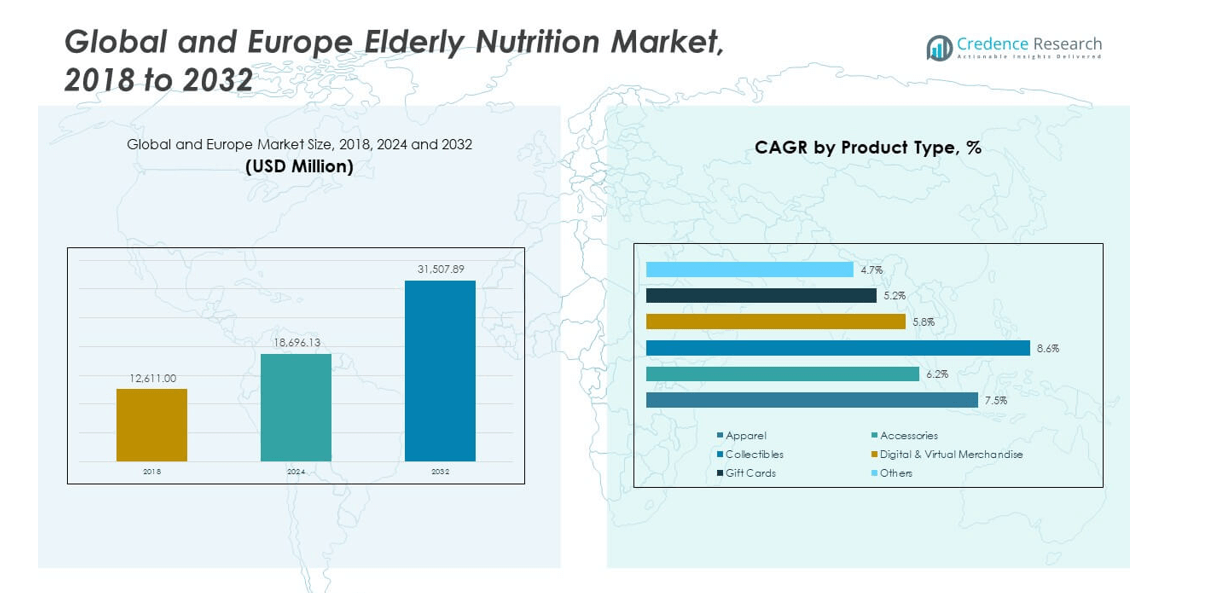
Global and Europe Football Club Merchandising market size was valued at USD 18,696.13 million in 2024 and is projected to reach USD 31,507.89 million by -.

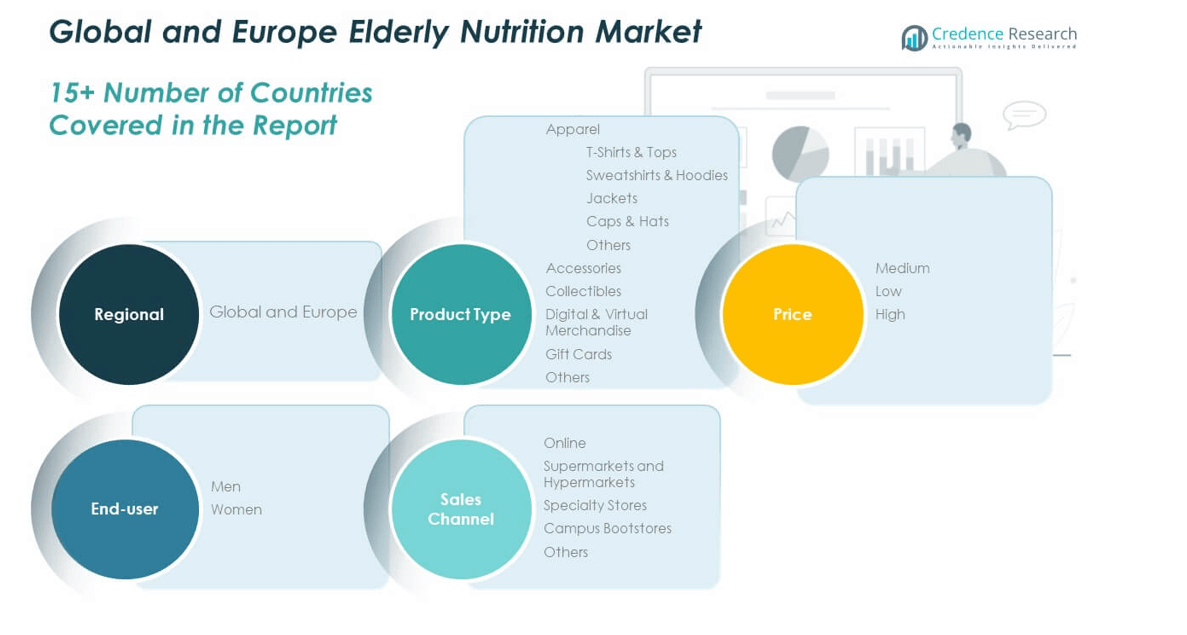
Global and Europe Football Club Merchandising Market By Product Type (Apparel, Accessories, Collectibles, Digital & Virtual Merchandise, Gift Cards, Others); By Price (Low, Medium, High); By End-User (Men, Women); By Sales Channel (Online, Supermarkets and Hypermarkets, Specialty Stores, Campus Bookstores, Others) – Growth, Share, Opportunities & Competitive Analysis, 2024 – 2032

SKU: CR21819Report Pages: 250Category: Consumer GoodsReport Format: PDF, ExcelLast Updated: Dec 19Author: Rajdeep Kumar DebPreferred on

Market Report Metrics

Revenue, 2024 -
USD 18,696.13 million
Forecast Year -
-
CAGR (2024–)
6.28%
Report Coverage
Regional

Market Overview

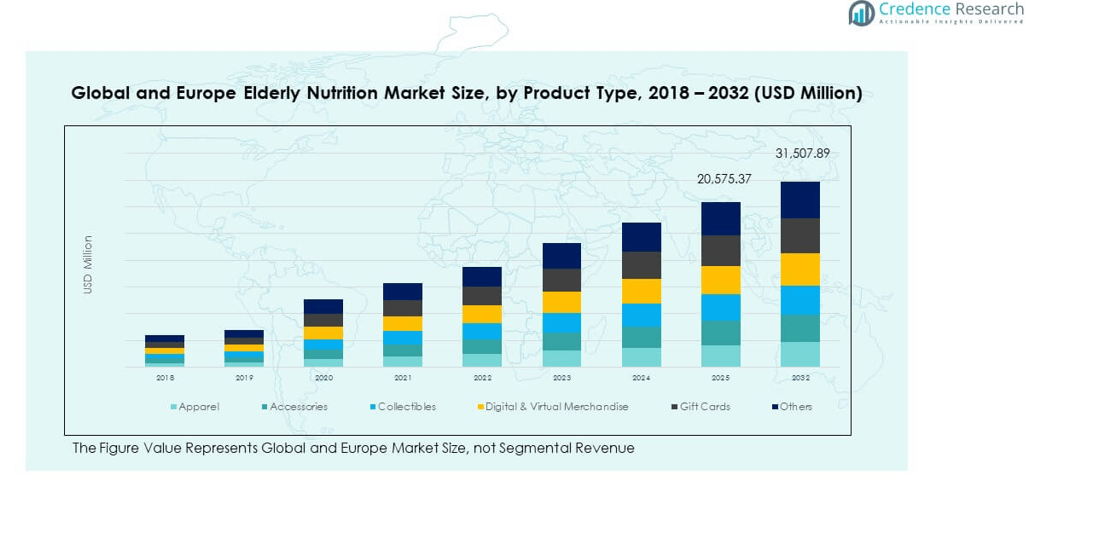
The Global and Europe Football Club Merchandising Market size was valued at USD 12,611.00 million in 2018 to USD 18,696.13 million in 2024 and is anticipated to reach USD 31,507.89 million by 2032, at a CAGR of 6.28% during the forecast period.

REPORT ATTRIBUTE DETAILS
Historical Period 2020-2023
Base Year 2024
Forecast Period 2025-2032
Global and Europe Football Club Merchandising Market Size 2024  USD 18,696.13 million
Global and Europe Football Club Merchandising Market , CAGR 6.28%
Global and Europe Football Club Merchandising Market Size 2032 USD 31,507.89 million
 

The Global and Europe Football Club Merchandising Market grows due to strong fan engagement and brand loyalty. Clubs expand product ranges beyond jerseys into lifestyle apparel and accessories. E-commerce platforms improve global reach and year-round sales. Social media boosts player-driven merchandise demand. Limited edition drops increase urgency among buyers. Sponsorship tie-ups support co-branded collections. Stadium upgrades enhance matchday retail sales. Youth fans drive demand for affordable licensed items. Digital payments simplify cross-border purchases.

Europe leads the Global and Europe Football Club Merchandising Market due to strong league structures. The UK, Spain, Germany, and Italy dominate through global fan bases. Top clubs monetize international tours and online stores. North America emerges with rising soccer viewership and club partnerships. Asia-Pacific shows fast growth from youth fans and digital commerce use. Japan and South Korea show steady licensed sales. Middle East clubs gain traction through regional leagues and events.

Global and Europe Football Club Merchandising Market size

Market Insights:

  • The market was valued at USD 12,611.00 million in 2018, reached USD 18,696.13 million in 2024, and is projected to hit USD 31,507.89 million by 2032, expanding at a CAGR of 6.28% due to rising global fan engagement and digital sales channels.
  • Europe (~48%), Asia Pacific (~23%), and North America (~17%) hold the top regional shares, driven by strong league structures in Europe, rapid digital adoption and youth fans in Asia Pacific, and growing football viewership with high online penetration in North America.
  • Asia Pacific is the fastest-growing region with about 23% share, supported by a large youth population, rising mobile commerce use, increasing international club tours, and strong social media–led fan engagement.
  • By product type, Apparel accounts for roughly 45% of total revenue, supported by official jerseys, training kits, and frequent seasonal refresh cycles across major clubs.
  • Accessories and Collectibles together contribute nearly 30%, reflecting steady demand for scarves, caps, memorabilia, and limited-edition items that appeal to loyal and repeat buyers.

Market Drivers:

Expanding Global Fan Bases And Club Brand Monetization Strategies

The Global and Europe Football Club Merchandising Market benefits from large international fan bases. Clubs convert loyalty into steady merchandise demand across seasons. Strong brand identity supports premium pricing for licensed products. It gains traction through emotional fan attachment to teams. Star players raise demand for jerseys and collectibles. Club success on-field lifts short-term sales momentum. Official licensing protects brand value and revenue control. Retail partnerships improve product reach and shelf visibility.

  • For instance, Manchester United reported over 214 million followers across Instagram, Facebook, and X in 2024, supporting global jersey sales through licensed partners.

Growth Of Digital Commerce And Direct-To-Consumer Sales Models

The Global and Europe Football Club Merchandising Market gains strength from online retail growth. Clubs push direct sales through official websites and apps. It reduces reliance on third-party retailers. Data insights help clubs tailor product launches. Mobile commerce supports impulse purchases during live matches. Digital drops create urgency among fans. Global shipping expands access to overseas supporters. Secure payments improve buyer confidence.

  • For instance, FC Barcelona’s e-commerce platform supports shipping to more than 171 countries and processes millions of annual transactions through its official online store.

Rising Match Attendance And Stadium Retail Development

The Global and Europe Football Club Merchandising Market draws value from higher stadium attendance. Clubs upgrade in-stadium stores and fan zones. It benefits from impulse buying on matchdays. Modern venues support larger retail footprints. Exclusive stadium-only items drive footfall. Event-based promotions lift per-visitor spending. Family sections support youth merchandise demand. Physical stores strengthen brand experience.

Influence Of Sponsorships And Commercial Collaborations

The Global and Europe Football Club Merchandising Market advances through sponsor-led collections. Brands partner with clubs for co-branded apparel lines. It gains visibility through global sponsor marketing. Fashion labels add lifestyle appeal to merchandise. Limited releases attract non-traditional buyers. Sponsor reach expands distribution channels. Club credibility supports partner brand trust. Cross-promotion boosts sales volume.

Market Trends:

Shift Toward Lifestyle Apparel And Casual Fan Wear

The Global and Europe Football Club Merchandising Market shows a shift toward lifestyle clothing. Fans seek everyday wear beyond match jerseys. It blends sports identity with street fashion. Neutral designs widen audience appeal. Women-focused collections gain shelf space. Seasonal fashion drops refresh demand cycles. Collaborations shape modern club image. Apparel margins improve through premium positioning.

  • For instance, Paris Saint-Germain’s collaboration with Jordan Brand expanded sales into lifestyle apparel, with PSG jerseys ranking among the top-selling football shirts globally.

Use Of Player-Centric And Story-Based Product Launches

The Global and Europe Football Club Merchandising Market adopts player-driven storytelling. Clubs align launches with star milestones. It deepens emotional fan connection. Personal narratives raise product authenticity. Social media fuels rapid campaign reach. Player exclusives sell faster than generic items. Limited timelines drive quick purchase decisions. Content-led sales improve engagement.

  • For instance, Lionel Messi’s first Inter Miami jersey became the fastest-selling item on Fanatics’ platform within 24 hours of launch in 2023.

Growth Of Customization And Personalization Options

The Global and Europe Football Club Merchandising Market sees rising demand for customization. Fans prefer personalized names and numbers. It increases perceived product value. Online tools simplify design selection. Custom orders reduce price sensitivity. Personal gifts expand buyer segments. Youth fans favor identity-based products. Custom lines support higher margins.

Expansion Of Sustainable And Ethical Merchandise Lines

The Global and Europe Football Club Merchandising Market reflects sustainability trends. Clubs introduce recycled and organic materials. It aligns with supporter social values. Eco-labels support brand reputation. Transparency builds long-term trust. Limited eco collections test demand response. Sustainable packaging gains adoption. Green branding supports premium pricing.

Global and Europe Football Club Merchandising Market share  

Market Challenges Analysis:

High Counterfeit Penetration And Brand Protection Risks

The Global and Europe Football Club Merchandising Market faces pressure from counterfeit products. Fake goods dilute official brand value. It loses revenue through unlicensed sales. Online platforms host unauthorized sellers. Price-sensitive fans shift toward replicas. Enforcement varies across regions. Legal action raises compliance costs. Brand trust weakens without control.

Demand Volatility Linked To Team Performance And Seasonality

The Global and Europe Football Club Merchandising Market experiences demand swings. Sales depend heavily on team performance. It faces slow periods during off-seasons. Player transfers shift buyer interest quickly. Poor results reduce fan spending. Inventory planning becomes complex. Excess stock impacts margins. Forecast accuracy remains a challenge.

Market Opportunities:

Untapped Growth Potential In Emerging Football Regions

The Global and Europe Football Club Merchandising Market can expand in emerging regions. Asia-Pacific shows rising football interest. It benefits from youth-driven fan adoption. Local partnerships ease market entry. Regional tours support merchandise exposure. Affordable product lines attract new buyers. Digital platforms overcome retail gaps. Early presence builds loyalty.

Technology Integration And Immersive Fan Commerce Experiences

The Global and Europe Football Club Merchandising Market can leverage advanced technologies. Augmented reality enhances online shopping experience. It supports virtual try-ons for apparel. Smart stores improve physical retail engagement. Data tools refine demand planning. Loyalty apps drive repeat purchases. Live commerce boosts matchday sales. Tech adoption strengthens fan connection.

Market Segmentation Analysis:

By Product Type

The Global and Europe Football Club Merchandising Market shows strong diversity across product types. Apparel leads demand due to high jersey and training wear sales. It benefits from frequent season refresh cycles and player-led launches. Accessories support steady volume through scarves, caps, and bags. Collectibles attract loyal fans who seek limited and heritage items. Digital and virtual merchandise gains traction through gaming and fan platforms. Gift cards support flexible purchase behavior. Other products serve niche supporter needs.

  • For instance, Adidas sells millions of football jerseys annually for elite European clubs; with individual top clubs like Real Madrid and Manchester United each selling over 3 million unitsin a single year, highlighting their apparel dominance.

By Price

The Global and Europe Football Club Merchandising Market covers broad price bands. Low-priced items drive volume through impulse purchases and youth buyers. It supports mass reach during events and promotions. Medium-priced products balance quality and affordability. This range attracts repeat buyers and families. High-priced merchandise targets premium fans. Exclusive releases and authentic kits support higher margins.

  • For instance, authentic match jerseys sold by major European clubs often exceed replica sales value due to official player-worn specifications and limited availability.

By End-user

The Global and Europe Football Club Merchandising Market serves both men and women segments. Men account for a larger share due to traditional fan demographics. It maintains demand through core apparel lines. Women-focused merchandise expands steadily. Clubs invest in tailored fits and styles. Female fan engagement improves segment growth.

By Sales Channel

The Global and Europe Football Club Merchandising Market relies on varied sales channels. Online platforms lead due to global reach and convenience. It enables direct club-to-fan engagement. Supermarkets and hypermarkets support volume sales. Specialty stores offer curated assortments. Campus bookstores serve local fan bases. Other channels support event-driven sales.

Global and Europe Football Club Merchandising Market segmentation

Segmentation:

  • By Product Type
    • Apparel
    • Accessories
    • Collectibles
    • Digital & Virtual Merchandise
    • Gift Cards
    • Others
  • By Price
    • Low
    • Medium
    • High
  • By End-user
    • Men
    • Women
  • By Sales Channel
    • Online
    • Supermarkets and Hypermarkets
    • Specialty Stores
    • Campus Bookstores
    • Others
  • By Region
    • Global
    • Europe
  • Europe By Country
    • UK
    • France
    • Germany
    • Italy
    • Spain
    • Russia
    • Belgium
    • Netherlands
    • Austria
    • Sweden
    • Poland
    • Denmark
    • Switzerland
    • Rest of Europe
  • Time Frame
    • 2018–2032

Regional Analysis:

North America

The Global and Europe Football Club Merchandising Market accounts for nearly 17% of demand in North America. Football viewership continues to expand across the United States and Canada. It benefits from strong broadcast coverage of European leagues. Youth soccer programs support long-term fan growth. E-commerce drives most licensed merchandise sales. Clubs rely on digital channels for cross-border reach. Player popularity shapes buying decisions. Brand collaborations raise visibility. Demand remains stable.

Europe

The Global and Europe Football Club Merchandising Market holds the largest share in Europe at around 48%. Strong domestic leagues anchor merchandise consumption. It benefits from deep-rooted club loyalty. Stadium retail supports high matchday sales. Tourism strengthens flagship store performance. Premium kits dominate revenue mix. Licensing systems remain mature. Brand heritage sustains demand. Europe continues to lead globally.

Asia Pacific

The Global and Europe Football Club Merchandising Market represents about 23% of demand in Asia Pacific. Large youth populations drive fan expansion. It benefits from strong digital commerce adoption. International club tours raise visibility. Affordable product ranges attract new buyers. Social media shapes engagement. Mobile payments support purchases. Local partnerships improve access. Growth momentum remains high.

Latin America

The Global and Europe Football Club Merchandising Market contributes nearly 7% in Latin America. Football culture drives strong emotional attachment. It benefits from high match viewership. European clubs enjoy wide fan followings. Price sensitivity affects purchase frequency. Local retail supports availability. Informal markets create pressure. Brand loyalty sustains sales. Demand remains resilient.

Middle East

The Global and Europe Football Club Merchandising Market holds around 5% share in the Middle East. High disposable income supports premium merchandise. It benefits from major sports investments. International events boost awareness. Mall-based retail drives sales. Online platforms support imports. Youth fans influence trends. Brand exclusivity attracts buyers. Regional growth stays positive.

Africa

The Global and Europe Football Club Merchandising Market accounts for nearly 4% in Africa. Football popularity remains strong across countries. It benefits from a young population base. Mobile commerce improves access. European club loyalty drives demand. Price sensitivity limits spend size. Informal sales affect penetration. Brand awareness continues to rise. Long-term potential remains strong.

Key Player Analysis:

Competitive Analysis:

The Global and Europe Football Club Merchandising Market shows a competitive structure led by top European clubs. Leading clubs control strong brand equity and global fan bases. It benefits from exclusive licensing agreements and official retail networks. Major players invest in direct-to-consumer platforms to protect margins. Product differentiation focuses on authentic kits and lifestyle apparel. Collaborations with global sportswear brands strengthen distribution reach. Mid-tier clubs compete through regional loyalty and price access. Digital channels intensify competition across borders. Brand storytelling and player influence shape buyer preference. Entry barriers remain moderate due to licensing and brand control.

Recent Developments:

  • On September, 2025, Haier, the world's leading home appliance brand by global retail volume, announced a multi-year global partnership with Liverpool Football Club. The partnership unites two global champions with a focus on user-centered innovation and was unveiled at IFA Berlin. Under the agreement, Haier aims to inspire and create richer, smarter experiences for fans and consumers worldwide. Haier's global reach aligns with Liverpool Football Club's massive international fanbase, representing a significant expansion of the club's commercial partnerships in the home appliance sector.
  • Manchester United announced a new three-year partnership with The Coca-Cola Company in August 2025, naming Coca-Cola as the club's Official Carbonated Soft Drinks Partner in the United Kingdom and Europe. The agreement includes pouring rights for Coca-Cola, Coca-Cola Zero, Diet Coke, Fanta, Fanta Zero, Sprite, Sprite Zero, Dr Pepper and Dr Pepper Zero across Old Trafford stadium. The partnership extends beyond matchday refreshments, with Manchester United and Coca-Cola collaborating to create engaging activations, digital content and community-driven initiatives designed to create memorable experiences for supporters across the UK and Europe.
  • In May 2025, Manchester United announced a groundbreaking partnership with (RED), the global health initiative, and Snapdragon (Qualcomm's consumer brand) to drive awareness and funding for global health causes. For the first time ever, the (RED) logo appeared on the front of Manchester United's iconic red shirt at two 2025 fixtures on May 10th and May 11th. Limited-edition Manchester United shirts featuring the (RED) logo were made available for purchase, with profits donated to the Global Fund and additional matching support from the Gates Foundation. This historic collaboration was unveiled at the World Economic Forum in Davos in January 2025, marking a significant milestone in football merchandising that combined sport with social impact.

Report Coverage:

The research report offers an in-depth analysis based on product type, price, end-user, sales channel, and regional segments. It details leading market players, providing an overview of their business, product offerings, investments, revenue streams, and key applications. Additionally, the report includes insights into the competitive environment, SWOT analysis, current market trends, as well as the primary drivers and constraints. Furthermore, it discusses various factors that have driven market expansion in recent years. The report also explores market dynamics, regulatory scenarios, and technological advancements that are shaping the industry. It assesses the impact of external factors and global economic changes on market growth. Lastly, it provides strategic recommendations for new entrants and established companies to navigate the complexities of the market.

Future Outlook:

  • Clubs will strengthen direct-to-consumer models to improve margins and fan data access.
  • Digital and virtual merchandise will expand through gaming, tokens, and fan platforms.
  • Personalization features will enhance emotional connection and repeat purchases.
  • Women-focused collections will gain wider adoption across major clubs.
  • Sustainability will influence material choice, packaging, and brand positioning.
  • Online channels will continue to lead sales through global reach and convenience.
  • Emerging regions will add new demand through youth fans and digital access.
  • Player-led branding will remain a key driver of merchandise launches.
  • Limited edition releases will support premium pricing and brand exclusivity.
  • Data analytics will guide inventory planning and demand forecasting.
Global and Europe Football Club Merchandising Market Size, Growth and Forecast 2032
Report Attribute Details
Details
Historical Period
-
Base Year
2024
Forecast Period
-
Global and Europe Football Club Merchandising Size 2024
USD 18,696.13 million
Global and Europe Football Club Merchandising CAGR
6.28%
Global and Europe Football Club Merchandising Size
USD 31,507.89 million

Request a Free Sample

Fill in your details and we'll send you a free sample report.

  • Sample data tables & charts
  • Research methodology

Need a Custom Version of This Report?

Tailor the scope, geography, or segments to your exact requirements.

  • Custom geography or segment scope
  • Direct access to our analyst team

Frequently Asked Questions

What is the current market size for the Global and Europe Football Club Merchandising Market, and what is its projected size in 2032?
The market was valued at USD 18,696.13 million in 2024. Strong fan engagement and digital sales support steady expansion. By 2032, the market is projected to reach USD 31,507.89 million, reflecting sustained global demand.
At what Compound Annual Growth Rate is the Global and Europe Football Club Merchandising Market projected to grow between 2025 and 2032?
The market is projected to grow at a CAGR of 6.28% during the forecast period. Growth is supported by licensed merchandise demand. Digital channels and global fan access drive consistent expansion.
Which Global and Europe Football Club Merchandising Market segment held the largest share in 2024?
The apparel segment held the largest share in 2024. Official jerseys and training wear drive repeat purchases. Player influence and seasonal launches sustain high demand across regions.
What are the primary factors fueling the growth of the Global and Europe Football Club Merchandising Market?
Key factors include rising football viewership and global fan base growth. Expansion of e-commerce supports cross-border sales. Strong club branding and licensing frameworks also fuel demand.
Who are the leading companies in the Global and Europe Football Club Merchandising Market?
Leading players include Manchester United, Liverpool FC, Chelsea FC, and Arsenal FC. These clubs benefit from strong global followings. Established retail and digital channels support their market position.

Table of Content

Chapter 1. Report Introduction

  • 1.1 Report Description & Purpose
    • 1.1.1 Report Title & Market Definition
    • 1.1.2 Unique Selling Propositions (USP) & Key Differentiators
    • 1.1.3 Value Proposition for Stakeholders
  • 1.2 Research Objectives
    • 1.2.1 Market Sizing Objectives (Volume & Revenue)
    • 1.2.2 Segmentation Objectives
    • 1.2.3 Competitive Intelligence Objectives
    • 1.2.4 Forecast & Scenario Objectives
  • 1.3 Report Scope
    • 1.3.1 Global and Europe Football Club Merchandising Scope – Types & Subtypes Covered
    • 1.3.2 Geographic Scope – Regions & Countries Covered
    • 1.3.3 Historical Period, Base Year & Forecast Period (2024; forecast to the forecast period)
    • 1.3.4 Inclusions & Exclusions
  • 1.4 HS Code & Classification Framework
  • 1.5 Currency, Units & Pricing Basis
  • 1.6 Target Stakeholders
  • 1.7 Limitations & Assumptions

Chapter 2. Executive Summary

  • 2.1 Global Global and Europe Football Club Merchandising Market Snapshot
    • 2.1.1 Market Size – Historical (2024) & Forecast (the forecast period) (2024: USD 18,696.13 million → forecast year: USD 31,507.89 million)
    • 2.1.2 Volume & Revenue – Global Totals
    • 2.1.3 Key Market Highlights – Top Five Facts
  • 2.2 Global and Europe Football Club Merchandising Market Segmentation Snapshot
    • 2.2.1 Market Split by Region – 2024 vs.
  • 2.3 Competitive Snapshot
    • 2.3.1 Top 10 Players by Revenue Share – 2024
    • 2.3.2 Top 10 Players by Volume Share – 2024
    • 2.3.3 Recent Strategic Developments (18-Month Summary)
  • 2.4 Key Investment Highlights & Strategic Conclusions

Chapter 3. Global and Europe Football Club Merchandising Market Dynamics & Industry Analysis

  • 3.1 Market Overview & Context
    • 3.1.1 Global and Europe Football Club Merchandising Market Position in the Broader Automotive Value Chain
    • 3.1.2 OEM vs. Replacement Market Dynamics
    • 3.1.3 Market Maturity & Development Stage by Region
  • 3.2 Global and Europe Football Club Merchandising Market Drivers
  • 3.3 Global and Europe Football Club Merchandising Market Restraints & Challenges
  • 3.4 Global and Europe Football Club Merchandising Market Opportunities
  • 3.5 Porter's Five Forces Analysis
    • 3.5.1 Threat of New Entrants
    • 3.5.2 Bargaining Power of Suppliers
    • 3.5.3 Bargaining Power of Buyers
    • 3.5.4 Threat of Substitutes
    • 3.5.5 Competitive Rivalry – Intensity Assessment
  • 3.6 Global and Europe Football Club Merchandising Value Chain Analysis
    • 3.6.1 Upstream – Raw Material/Input Suppliers
      • 3.6.1.1 Raw Material/Input 1
      • 3.6.1.2 Raw Material/Input 2
      • 3.6.1.3 Raw Material/Input 3
    • 3.6.2 Midstream – Production/Manufacturing/Service Delivery
      • 3.6.2.1 Production/Process Overview
      • 3.6.2.2 Key Facility Locations & Capacity by Manufacturer
    • 3.6.3 Downstream – Distribution & End Consumer
      • 3.6.3.1 Primary Channel – B2B/OEM
      • 3.6.3.2 Secondary Channels – Dealer, Retail, Online, Direct
    • 3.6.4 Value Chain Profitability Analysis
  • 3.7 PESTEL Analysis
    • 3.7.1 Political Factors
    • 3.7.2 Economic Factors
    • 3.7.3 Social Factors
    • 3.7.4 Technological Factors
    • 3.7.5 Environmental Factors
    • 3.7.6 Legal Factors
  • 3.8 Global and Europe Football Club Merchandising Supply Chain Analysis
    • 3.8.1 Raw Material/Input Supply Risk Assessment
    • 3.8.2 Manufacturing Concentration Risk (Geographic Exposure)
    • 3.8.3 Trade Disruption Impact Analysis
  • 3.9 Regulatory & Policy Landscape

Note: The regulatory and policy landscape section covers regulations based on their applicability to the market, Global and Europe Football Club Merchandising category, geography, and scope of the study. Only regulatory frameworks with a material impact on operations, compliance, trade, sustainability, or market access are analyzed in detail.

Chapter 4. Key Investment Pockets & Opportunity Analysis

  • 4.1 Global and Europe Football Club Merchandising Market Attractiveness Analysis
    • 4.1.1 By Region – Investment Attractiveness Matrix (Volume × CAGR)
  • 4.2 Absolute Revenue Growth Opportunity
    • 4.2.1 By Region – Absolute USD Growth Through the forecast period
  • 4.3 Incremental Volume Opportunity
    • 4.3.1 By Region – Incremental Volume Through the forecast period
    • 4.3.2 Segment – Incremental Volume
  • 4.4 Emerging Submarket Opportunity Deep Dive (Subject to Applicability)
  • 4.5 Emerging Market Opportunity Scorecards
    • 4.5.1 United States
    • 4.5.2 Europe
    • 4.5.3 Asia
    • 4.5.4 Middle East & Africa

Note: Emerging Market Opportunity Scorecards will be included based on relevance and strategic importance. Regions listed are indicative and may vary depending on data availability and market dynamics.

Chapter 5. Global and Europe Football Club Merchandising Import-Export Analysis & Trade Flows

  • 5.1 Global Trade Overview
    • 5.1.1 Global Export Value by Country (2024)
    • 5.1.2 Global Export Volume by Country (2024)
    • 5.1.3 Global Import Value by Country (2024)
    • 5.1.4 Global Import Volume by Country (2024)
    • 5.1.5 Net Trade Balance by Country (2024)
  • 5.2 Export Analysis – Segment
    • 5.2.1 Type 1 (HS Code)
    • 5.2.2 Type 2 (HS Code)
    • 5.2.3 Type 3 (HS Code)
    • 5.2.4 Type 4 (HS Code)
    • 5.2.5 Type 5 (HS Code)
  • 5.3 Import Analysis – Segment
    • 5.3.1 Type 1 (HS Code)
    • 5.3.2 Type 2 (HS Code)
    • 5.3.3 Type 3 (HS Code)
    • 5.3.4 Type 4 (HS Code)
    • 5.3.5 Type 5 (HS Code)
  • 5.4 Average Unit Trade Prices
    • 5.4.1 Average Export Price – Segment & Country
    • 5.4.2 Average Import Price – Segment & Source Country
    • 5.4.3 Price Trends (2024)
  • 5.5 Key Trade Route Analysis
    • 5.5.1 Trade Route 1
    • 5.5.2 Trade Route 2
    • 5.5.3 Trade Route 3
    • 5.5.4 Trade Route 4
    • 5.5.5 Trade Route 5
  • 5.6 Trade Policy Impact Assessment
    • 5.6.1 US Anti-Dumping & Section 301 Tariffs
    • 5.6.2 EU Customs Union Impact
    • 5.6.3 Major Free Trade Agreements
    • 5.6.4 USMCA Rules of Origin

Note: Trade policy analysis will be included only where relevant to the Global and Europe Football Club Merchandising market.

Chapter 6. Competitive Landscape & Company Benchmarking

  • 6.1 Global and Europe Football Club Merchandising Market Concentration & Structure
    • 6.1.1 Herfindahl-Hirschman Index (HHI) – vs. 2024
    • 6.1.2 Tier 1, Tier 2 & Tier 3 Market Structure
    • 6.1.3 Global, Regional & Local Player Dynamics
  • 6.2 Global and Europe Football Club Merchandising Market Share Analysis – 2024
    • 6.2.1 Global Revenue Share by Company
    • 6.2.2 Global Volume Share by Company
    • 6.2.3 Regional Revenue Share
    • 6.2.4 Market Share Evolution ( vs. 2024)
    • 6.2.5 OEM Segment Share by Company
    • 6.2.6 Replacement Segment Share by Company
  • 6.3 Production/Delivery Capacity & Facility Analysis
    • 6.3.1 Global Installed Capacity
    • 6.3.2 Capacity Utilization Rates
    • 6.3.3 Production/Output Volume
    • 6.3.4 Facility Locations & Capacity Map
    • 6.3.5 Planned Capacity Additions
  • 6.4 Global and Europe Football Club Merchandising Competitive Benchmarking Matrix
    • 6.4.1 Revenue, Volume, CAGR & Profitability Comparison
    • 6.4.2 Channel Revenue Mix
    • 6.4.3 Geographic Revenue Exposure
    • 6.4.4 R&D Intensity
    • 6.4.5 Sustainability Maturity
  • 6.5 Strategic Developments in Global and Europe Football Club Merchandising (Last 24 Months)
    • 6.5.1 Mergers, Acquisitions & Divestments
    • 6.5.2 New Global and Europe Football Club Merchandising Launches
    • 6.5.3 Facility Expansions
    • 6.5.4 Strategic Alliances, Joint Ventures & Partnerships
    • 6.5.5 Distribution Expansion & Market Entry
    • 6.5.6 Sustainability & ESG Initiatives
  • 6.6 Competitive Strategy Mapping
    • 6.6.1 Leader, Challenger, Follower & Niche Classification
    • 6.6.2 Pricing Strategy Comparison
    • 6.6.3 Channel Strategy Matrix

Note: Strategic developments are included based on their materiality and the availability of reliable information.

Chapter 7. Global Global and Europe Football Club Merchandising Market – By Distribution Channel

  • 7.1 Segment Overview
    • 7.1.1 Volume & Revenue Split by Channel (2024 & )
    • 7.1.2 Channel Mix Evolution (the forecast period)

Chapter 8. Regional Market Analysis – Global Overview

  • 8.1 Global Regional Overview
    • 8.1.1 Regional Volume Share
    • 8.1.2 Regional Revenue Share
    • 8.1.3 Regional Volume by Region
    • 8.1.4 Regional Revenue by Region
    • 8.1.5 Regional Forecast Through the forecast period
  • 8.2 Cross-Regional Segment Analysis
    • 8.2.1 By Distribution Channel
    • 8.2.2 By Brand/Price Tier

Chapter 9. North America Global and Europe Football Club Merchandising Market

  • 9.1 United States
  • 9.2 Canada
  • 9.3 Mexico

Chapter 10. Europe Global and Europe Football Club Merchandising Market

  • 10.1 Germany
  • 10.2 France
  • 10.3 Italy
  • 10.4 United Kingdom
  • 10.5 Spain
  • 10.6 Poland
  • 10.7 Russia
  • 10.8 Netherlands
  • 10.9 Belgium
  • 10.10 Sweden
  • 10.11 Denmark
  • 10.12 Norway
  • 10.13 Rest of Europe

Chapter 11. Asia Pacific Global and Europe Football Club Merchandising Market

  • 11.1 China
  • 11.2 India
  • 11.3 Japan
  • 11.4 South Korea
  • 11.5 Thailand
  • 11.6 Indonesia
  • 11.7 Vietnam
  • 11.8 Malaysia
  • 11.9 Australia
  • 11.10 Rest of Asia Pacific

Chapter 12. Latin America Global and Europe Football Club Merchandising Market

  • 12.1 Brazil
  • 12.2 Argentina
  • 12.3 Colombia
  • 12.4 Chile
  • 12.5 Rest of Latin America

Chapter 13. Middle East Global and Europe Football Club Merchandising Market

  • 13.1 Saudi Arabia
  • 13.2 United Arab Emirates
  • 13.3 Turkey
  • 13.4 Israel
  • 13.5 Iran
  • 13.6 Rest of the Middle East

Chapter 14. Africa Global and Europe Football Club Merchandising Market

  • 14.1 South Africa
  • 14.2 Egypt
  • 14.3 Nigeria
  • 14.4 Morocco
  • 14.5 Rest of Africa

Chapter 15. Global and Europe Football Club Merchandising Company Profiles

  • 15.1 [Company 01]
    • 15.1.1 Company Overview
    • 15.1.2 Key Management Personnel
    • 15.1.3 Products & Services Portfolio
    • 15.1.4 Financial Performance
    • 15.1.5 Key Market Focus & Geographic Presence
    • 15.1.6 Recent Developments & Strategic Initiatives

Note: The company profile list is preliminary and may change based on research findings, market developments, data availability, and client requirements.

Chapter 16. Appendices

  • Appendix A – List of Abbreviations & Acronyms
  • Appendix B – Industry Classification Code Reference – Full Series
  • Appendix C – Production & Capacity Data Tables
  • Appendix D – End-Use & Demand Base Tables
  • Appendix E – Consumption & Replacement Rate Assumptions
  • Appendix F – ASP Reference Tables
  • Appendix G – Manufacturing & Facility Database
  • Appendix H – Import-Export Data Tables
  • Appendix I – Regulatory Summary Tables
  • Appendix J – Primary Research Participant List (Anonymized)
  • Appendix K – Primary Research Questionnaire Framework
  • Appendix L – Data Sources & Bibliography
  • Appendix M – Market Size Divergence & Source Comparison

Chapter 17. Research Methodology

  • 17.1 Research Framework & Philosophy
  • 17.2 Secondary Research – Sources, Hierarchy & Data Extraction
  • 17.3 Data Modeling – Bottom-Up & Top-Down Market Sizing
  • 17.4 Primary Research – Stakeholder Framework, LOI & Sample Sizes
  • 17.5 Forecast Methodology – Regression, Scenario & Sensitivity Analysis
  • 17.6 Quality Control – Four-Layer Validation Framework
  • 17.7 Limitations & Standard Assumptions
  • 17.8 Disclaimer

Methodology

Meet the Team

Rajdeep Kumar Deb
Rajdeep Kumar Deb

Lead Analyst — Consumer & Finance

Rajdeep brings a decade of consumer goods and financial services insight to strategic market analysis.

Related Topics

Australia Shop Fitting Contractors Market Size, Share and Forecast 2032

The Australia Shop Fitting Contractors Market size was valued at USD 420.36 MN in 2021 and reached USD 549.54 MN in 2025. It is anticipated to reach USD 1,029.63 MN by 2035, growing at a calculated CAGR of 6.48% during the forecast period.

Restaurant POS Terminals Market Size, Growth and Forecast 2032

The global restaurant POS terminals market was valued at USD 24,140.67 million in 2024 and is projected to reach USD 43,699.34 million by 2032, expanding at a CAGR of 7.7% during the forecast period

K-fashion Market Size, Share, Growth, Trends and Forecast 2032

The global K-fashion market size was valued at USD 31,551.37 million in 2021 and reached USD 34,953.85 million in 2025. It is anticipated to reach USD 50,952.56 million by 2032, growing at a CAGR of 5.53% from 2025 to 2032.

K-character Market Size, Share, Growth and Forecast 2032

The global K-character market size was valued at USD 3,722.94 million in 2021 and reached USD 4,557.70 million in 2025. According to Credence Research it is anticipated to reach USD 9,501.53 million by 2032, growing at a CAGR of 11.07% from 2025 to 2032.

K-content Market Size, Share, Growth, Trends and Forecast 2032

The global K-content market size was valued at USD 100.13 billion in 2021 and reached USD 109.56 billion in 2025. It is anticipated to reach USD 152.67 billion by 2032 according to Credence Research, growing at a CAGR of 4.85% from 2025 to 2032.

Hand Sanitizer Dispenser Market Size, Growth and Forecast 2032

The global hand sanitizer dispenser market was valued at USD 101 million in 2024 and is anticipated to reach USD 281.6 million by 2032.