
| REPORT ATTRIBUTE | DETAILS |
|---|---|
| Historical Period | 2020-2023 |
| Base Year | 2024 |
| Forecast Period | 2025-2032 |
| Guitar Strings Market Size 2024 | USD 1,175 Million |
| Guitar Strings Market, CAGR | 5.1% |
| Guitar Strings Market Size 2032 | USD 1,749.2 Million |
Market Overview
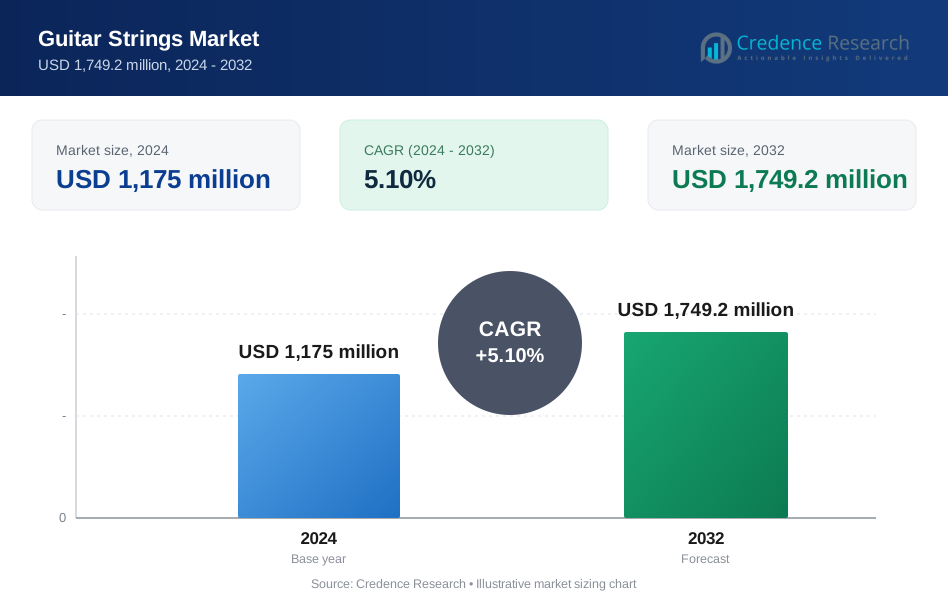
The global Guitar Strings Market is projected to expand from USD 1,175 million in 2024 to USD 1,749.2 million by 2032, registering a compound annual growth rate (CAGR) of 5.1% over the forecast period.
The growth of the guitar strings market is driven by the rising popularity of music education, the increasing influence of Western music culture, and the growing number of live music performances and independent artists worldwide. The expanding base of amateur and professional musicians, fueled by social media and digital platforms like YouTube and TikTok, has led to higher demand for string instruments and accessories. Additionally, the rise of e-commerce has made guitar strings more accessible, boosting sales across urban and semi-urban areas. Technological advancements, such as coated and corrosion-resistant strings that offer longer durability and better tonal quality, are gaining traction among musicians. Brands are also increasingly focusing on customization and sustainable materials to meet consumer preferences. Moreover, the integration of smart guitar accessories and the growth of online tutorials and virtual learning platforms are encouraging more individuals to pursue music as a hobby or profession, further supporting market expansion across diverse demographic segments.
The Guitar Strings Market demonstrates varied growth across key regions, with North America leading at 35% market share, followed by Europe at 27%, Asia Pacific at 22%, and the Rest of the World at 16%. North America’s dominance stems from high consumer spending and a strong base of professional musicians. Europe benefits from music education and eco-conscious consumers. Asia Pacific shows rapid expansion driven by rising disposable incomes and increased access to music training. The Rest of the World, including Latin America and the Middle East, presents emerging opportunities. Prominent players shaping the competitive landscape include D'Addario & Company, Inc., Ernie Ball Inc., Fender Musical Instruments Corporation, Gibson Brands, Inc., Martin & Co., Elixir Strings, DR Strings, GHS Strings, Rotosound Music Strings, Thomastik-Infeld Vienna, Cleartone Strings, and Dean Markley Strings, each leveraging innovation, branding, and distribution to strengthen their global presence.
Market Insights
- The global Guitar Strings Market is projected to grow from USD 1,175 million in 2024 to USD 1,749.2 million by 2032, registering a CAGR of 5.1% during the forecast period.
- Rising popularity of music education, DIY culture, and social media influence has led to increased guitar playing, creating sustained demand for replacement strings.
- Growth in live performances, independent music production, and acoustic sessions fuels frequent string replacements, especially among professionals and hobbyists.
- Technological advancements, such as corrosion-resistant coatings and smart accessories, are enhancing user experience and boosting brand loyalty.
- Expansion of online and offline retail networks has improved accessibility, with e-commerce playing a vital role in reaching younger, tech-savvy consumers.
- Challenges such as raw material price volatility and supply chain disruptions are impacting manufacturing and pricing consistency across the market.
- Regionally, North America leads with 35% market share, followed by Europe (27%), Asia Pacific (22%), and Rest of the World (16%), reflecting varied demand dynamics and emerging growth opportunities.
Market Drivers
Growing Popularity of Music Education and DIY Culture
The Guitar Strings Market is witnessing strong momentum due to the growing emphasis on music education in schools and institutions. Parents are encouraging children to take up musical instruments to foster creativity and discipline. Online learning platforms and YouTube tutorials have simplified guitar learning, attracting a broader user base. People are increasingly pursuing music as a hobby, leading to higher purchases of string instruments. It supports recurring demand for replacement strings. Rising participation in talent shows and local music competitions also fuels interest in playing the guitar.
For instance, D'Addario, a leading string manufacturer, has seen increased demand for its coated and hybrid strings, which are favored by both beginners and professionals for their enhanced durability and tonal quality-features that cater to the needs of students and hobbyists learning through online platforms.
Surge in Live Performances and Independent Artists
The Guitar Strings Market benefits from the global surge in live music events, concerts, and festivals. Independent artists, driven by digital platforms, are performing more frequently, creating constant demand for durable and high-quality strings. Professional musicians replace strings regularly to maintain sound clarity and performance. It leads to sustained market consumption. Growth in music streaming and online fan engagement contributes to increased interest in guitar playing. The rise in solo acts and acoustic performances further strengthens product demand.
For instance, Elixir Strings has expanded its range of coated strings, which are favored by solo acoustic performers for their durability and consistent tone during extended gigs, reflecting the broader trend of rising solo acts and acoustic performances driving product demand.
Product Innovations and Technological Advancements
Innovation in string materials and coatings is pushing the Guitar Strings Market forward. Manufacturers are introducing corrosion-resistant and long-lasting strings that improve tonal quality and user satisfaction. Brands focus on producing strings tailored to various music styles, including jazz, blues, and rock. It enhances appeal among specific musician groups. Smart accessories, such as automatic tuners and connected apps, improve the playing experience. These enhancements promote brand loyalty and repeat purchases from both beginners and professionals.
Expansion of E-commerce and Retail Networks
The Guitar Strings Market continues to grow due to the expansion of online and offline distribution networks. E-commerce platforms allow easy access to a wide variety of strings, offering global reach and competitive pricing. Online reviews and tutorials influence purchase decisions, especially among younger customers. Retail stores also offer bundled products and personalized recommendations. It improves customer experience and boosts repeat sales. Urbanization and higher disposable incomes support increased spending on musical products.
Market Trends
Rising Demand for Specialty and Coated Strings
The Guitar Strings Market is experiencing a notable shift toward specialty and coated strings. Musicians are increasingly choosing coated options that offer extended durability and consistent tonal performance. These innovations reduce the frequency of replacement and enhance overall value. It addresses the preferences of both touring professionals and frequent home users. Coated strings are also preferred in humid climates where corrosion is a concern. Their growing availability across retail platforms continues to boost market penetration and brand differentiation.
For instance, SIT’s CS1150 CRT Coated Electric Guitar Strings use Corrosion Resistant Technology (CRT) coating on nickel-plated steel, offering exceptional durability and maintaining a natural, uncoated feel-making them ideal for guitarists who play in humid conditions or require extended string life for rigorous use.
Sustainability and Eco-Friendly Product Preferences
Sustainability is becoming a defining trend in the Guitar Strings Market. Consumers are showing interest in products made from recyclable or biodegradable materials. Brands are responding by offering eco-conscious packaging and environmentally responsible production methods. It reflects the growing awareness of ethical consumption among younger musicians. Musicians are aligning their purchasing behavior with their values, prioritizing sustainable brands. Green manufacturing practices are now a competitive differentiator in this increasingly conscious marketplace.
For instance, Ortega Guitars’ Atmosphere Green Series features treble strings made from 100% plant-based nylon, reducing carbon emissions by more than 50% during production compared to conventional oil-based strings.
Integration of Technology in String Design and Playability
Technological innovation is shaping the evolution of the Guitar Strings Market. Companies are integrating advanced materials to improve tuning stability and tonal clarity. Some are incorporating nano-coating and smart materials that adapt to playing style or environmental conditions. It enhances the playing experience across skill levels. The trend toward digital integration, such as app-guided tuning and performance tracking, is also gaining momentum. These features appeal to tech-savvy musicians and support market growth across global demographics.
Personalization and Genre-Specific Offerings Gaining Ground
The Guitar Strings Market is evolving to meet the demand for personalized and genre-specific strings. Musicians now seek strings tailored for rock, jazz, blues, or fingerstyle playing, driving product segmentation. Brands are responding by offering diverse gauges, materials, and tension levels. It enables players to fine-tune their instrument for optimal performance. This trend supports customer satisfaction and encourages experimentation. Musicians increasingly value precision and uniqueness in their gear, making customization a key competitive edge.
Market Challenges Analysis
Volatility in Raw Material Prices and Supply Chain Disruptions
The Guitar Strings Market faces challenges due to fluctuations in the prices of key raw materials such as steel, nickel, and bronze. These materials are essential for string production, and any cost variation directly affects manufacturing expenses and retail pricing. It puts pressure on profit margins and affects pricing consistency for consumers. Global supply chain disruptions further compound the issue by delaying shipments and causing inventory shortages. Smaller manufacturers struggle more with cost absorption, limiting their ability to compete. The market remains sensitive to geopolitical tensions and logistical constraints that disrupt material flow.
Limited Awareness in Emerging Markets and High Competition
Low awareness of branded or high-performance guitar strings in developing regions slows market expansion. Many consumers in these areas prioritize affordability over quality, limiting demand for premium offerings. The Guitar Strings Market also encounters intense competition from local and international brands, creating pricing pressures. It makes brand differentiation critical yet difficult to achieve. High-quality imitation products and counterfeit strings are entering online platforms, creating trust issues among buyers. Educating consumers about product value and performance benefits remains a persistent challenge for established players.
For instance, Elixir Strings, recognized for its coated strings that offer extended lifespan, faces imitation and counterfeit products on online platforms in several developing countries, leading to trust issues and forcing the company to invest in consumer education and anti-counterfeiting measures.
Market Opportunities
Expansion into Emerging Markets with Growing Music Cultures
Emerging markets in Asia, Latin America, and Africa present untapped opportunities for the Guitar Strings Market. Rising middle-class incomes and increasing access to music education are creating a favorable environment for string instrument adoption. It allows global brands to introduce affordable yet high-quality products tailored to local preferences. Music festivals, cultural events, and growing interest in Western music genres further support demand. Retail expansion through local distributors and e-commerce platforms helps reach these audiences more effectively. Establishing strong local partnerships can accelerate market entry and brand visibility.
Product Differentiation Through Innovation and Customization
Innovative product features such as anti-rust coatings, enhanced durability, and genre-specific designs offer new growth avenues in the Guitar Strings Market. Players across all skill levels seek strings that match their playing styles and preferences. It opens space for brands to launch personalized product lines or limited editions. Collaborations with artists and influencers can amplify product appeal and engagement. Offering customization options through online portals or retail stores adds value and encourages brand loyalty. Manufacturers that invest in R&D and consumer insights will better position themselves in a competitive landscape.
Market Segmentation Analysis:
By Type
The Guitar Strings Market is segmented into electric, acoustic, classical, bass, and other guitar strings. Electric guitar strings account for a significant share, driven by high demand among modern musicians and rock artists. Acoustic strings also hold a substantial portion, supported by widespread use in both professional and amateur segments. Classical and bass strings cater to niche but consistent audiences. It allows manufacturers to tailor products for diverse performance needs. The “Others” category includes specialty strings for hybrid or travel guitars.
By Material
The market segments by material into nickel, stainless steel, bronze, nylon, and others. Nickel strings dominate the electric guitar segment due to their bright tone and magnetic properties. Stainless steel offers added durability and corrosion resistance, appealing to professional users. Bronze strings are favored for acoustic guitars due to their warm tone. Nylon dominates the classical segment with its soft feel and traditional sound. It gives musicians multiple choices to suit their playing style and musical genre.
By Gauge
Gauge-wise, the Guitar Strings Market includes light, medium, and heavy strings. Light gauge strings are popular among beginners and solo performers due to easier playability. Medium gauges strike a balance between tone and tension, making them a versatile choice. Heavy gauge strings offer deeper tone and sustain, preferred by metal and rhythm guitarists. It supports varying player preferences and genre-specific requirements, enabling manufacturers to offer comprehensive product lines.
Segments:
Based on Type
- Electric Guitar Strings
- Acoustic Guitar Strings
- Classical Guitar Strings
- Bass Guitar Strings
- Others
Based on Material
- Nickel
- Stainless Steel
- Bronze
- Nylon
- Others
Based on Gauge
- Light
- Medium
- Heavy
Based on Distribution Channel
- Online Stores
- Music Stores
- Supermarkets/Hypermarkets
- Others
Based on the Geography:
- North America
- U.S.
- Canada
- Mexico
- Europe
- Germany
- France
- U.K.
- Italy
- Spain
- Rest of Europe
- Asia Pacific
- China
- Japan
- India
- South Korea
- South-east Asia
- Rest of Asia Pacific
- Latin America
- Brazil
- Argentina
- Rest of Latin America
- Middle East & Africa
- GCC Countries
- South Africa
- Rest of the Middle East and Africa
Regional Analysis
North America
North America holds the largest share in the Guitar Strings Market, accounting for 35% of the global revenue. Strong demand from professional musicians, music institutions, and hobbyists continues to drive sales. The United States remains the key contributor, supported by widespread music culture, live performances, and a robust retail network. It benefits from high consumer spending on quality musical accessories. Major brands headquartered in this region also support innovation and product development. Online platforms and music education programs further boost market growth in North America.
Europe
Europe represents 27% of the Guitar Strings Market, with strong demand from countries such as Germany, the UK, and France. The region has a well-established base of amateur and professional guitar players. It benefits from widespread music festivals, cultural events, and government support for music education. Sustainable and eco-friendly product preferences are more prominent in this region, pushing manufacturers to adapt. European consumers show a high preference for premium strings and specialized offerings. The retail infrastructure and rising e-commerce adoption support strong distribution channels.
Asia Pacific
Asia Pacific holds 22% of the Guitar Strings Market and stands out as the fastest-growing regional segment. Rising disposable income, expanding middle-class population, and increasing access to music education are key factors fueling growth. Countries such as China, India, and Japan lead demand in both urban and semi-urban markets. It presents strong potential for affordable and entry-level guitar strings. Local and international brands are expanding their presence to tap into this growing base. E-learning platforms and mobile apps also support music adoption among younger demographics.
Rest of the World
The Rest of the World accounts for 16% of the Guitar Strings Market. Latin America and the Middle East show increasing interest in guitar-based music, supported by cultural trends and music education. It provides growth opportunities for mid-range and budget-friendly string offerings. Brands are strengthening local partnerships to expand their footprint in these regions.
Key Player Analysis
- Thomastik-Infeld Vienna
- Cleartone Strings
- GHS Strings
- DR Strings
- Elixir Strings
- Fender Musical Instruments Corporation
- Martin & Co.
- D'Addario & Company, Inc.
- Dean Markley Strings
- Rotosound Music Strings
- Ernie Ball Inc.
- Gibson Brands, Inc.
Competitive Analysis
The Guitar Strings Market features a competitive landscape dominated by both established global brands and niche players. Key companies such as D'Addario & Company, Inc., Ernie Ball Inc., Fender Musical Instruments Corporation, and Gibson Brands, Inc. maintain strong brand equity and extensive distribution networks. It enables them to consistently introduce product innovations and maintain customer loyalty. Companies like Elixir Strings, DR Strings, and Thomastik-Infeld Vienna focus on premium offerings, targeting professionals with high-performance products. Players such as Rotosound Music Strings and GHS Strings compete by offering value-driven options for amateurs and students. The market sees growing emphasis on coated strings, eco-friendly materials, and artist endorsements to enhance product appeal. Strategic collaborations, continuous R&D, and expansion into emerging markets remain critical to gaining a competitive edge. New entrants face high brand recognition barriers and pricing pressure from established players, making innovation and specialization essential for market entry and sustainability.
Recent Developments
- In March 2025, Elixir Strings emphasized advancements in their proprietary featherweight coating technology, which extends tone life and resists corrosion, sweat, and humidity.
- In January 2023, Rotosound announced a new partnership with GEWA music, making GEWA the exclusive distributor of Rotosound strings in Germany, Austria, Switzerland, and France.
- On May 28, 2025, SunCoke Energy, Inc. entered into a definitive agreement to acquire Phoenix Global for $325 million. This move is expected to strengthen SunCoke’s portfolio and expand its operational footprint.
Market Concentration & Characteristics
The Guitar Strings Market displays a moderately concentrated structure, with a few dominant players accounting for a significant share of global sales. Leading brands such as D'Addario, Ernie Ball, Fender, and Gibson leverage strong brand recognition, wide distribution networks, and consistent product innovation to maintain competitive advantage. It features a blend of premium and value-based offerings that cater to varying customer segments, from beginners to professional musicians. The market is characterized by frequent product upgrades, artist endorsements, and rising demand for customized and genre-specific strings. It supports continuous consumer engagement and brand loyalty. Entry barriers remain moderate due to brand dominance and pricing pressure, but niche players continue to find opportunities through innovation and regional focus. The Guitar Strings Market also benefits from steady demand cycles driven by string wear, ensuring recurring purchases and long-term customer retention. E-commerce penetration and consumer preference for quality and convenience are further shaping its competitive dynamics.
Report Coverage
The research report offers an in-depth analysis based on Type, Material, Gauga, Distribution Channel and Geography. It details leading market players, providing an overview of their business, product offerings, investments, revenue streams, and key applications. Additionally, the report includes insights into the competitive environment, SWOT analysis, current market trends, as well as the primary drivers and constraints. Furthermore, it discusses various factors that have driven market expansion in recent years. The report also explores market dynamics, regulatory scenarios, and technological advancements that are shaping the industry. It assesses the impact of external factors and global economic changes on market growth. Lastly, it provides strategic recommendations for new entrants and established companies to navigate the complexities of the market.
Future Outlook
- Demand for guitar strings will continue to grow due to increasing interest in music education and personal hobbies.
- Brands will focus more on sustainability by introducing eco-friendly materials and recyclable packaging.
- Technological innovation in coated and corrosion-resistant strings will enhance product lifespan and performance.
- Customization and genre-specific string options will become a key differentiator among leading brands.
- Online platforms will play a larger role in influencing buying decisions and expanding market reach.
- Emerging markets in Asia, Latin America, and the Middle East will offer strong growth potential for entry-level strings.
- Artist endorsements and influencer collaborations will shape consumer preferences and brand visibility.
- Manufacturers will invest in R&D to develop smart accessories that enhance the playing experience.
- E-commerce will dominate the distribution landscape, supported by convenience and product variety.
- The market will witness increasing competition, prompting companies to prioritize quality, innovation, and user engagement.
Request a Free Sample
Fill in your details and we'll send you a free sample report.
- Sample data tables & charts
- Research methodology
Need a Custom Version of This Report?
Tailor the scope, geography, or segments to your exact requirements.
- Custom geography or segment scope
- Direct access to our analyst team
Frequently Asked Questions
What is the current size of the Guitar Strings Market?
What factors are driving the growth of the Guitar Strings Market?
What are the key segments within the Guitar Strings Market?
What are some challenges faced by the Guitar Strings Market?
Who are the major players in the Guitar Strings Market?
Table of Content
Chapter 1 Market Segmentation
- 1.1 Segmentation Framework
- 1.1.1 Product and Service Classification
- 1.1.2 Application and End-Use Classification
- 1.1.3 Technology and Solution Classification
- 1.1.4 Customer and Distribution Channel Classification
- 1.1.5 Geographic Segmentation
- 1.1.6 Market Segment Definitions and Boundaries
Chapter 2 Introduction
- 2.1 Report Objectives and Scope
- 2.2 Product Definition and Industry Terminology
- 2.3 Market Inclusions and Exclusions
- 2.4 Research Process
- 2.4.1 Primary Research and Expert Interviews
- 2.4.2 Secondary Research and Source Review
- 2.4.3 Top-Down and Bottom-Up Estimation
- 2.4.4 Data Triangulation and Verification
- 2.5 Market Size Measurement Basis
- 2.5.1 2024: USD 1,175 million → 2032: USD 1,749.2 million
- 2.6 Historical and Forecast Reference Periods
- 2.6.1 Base Year: 2024
- 2.6.2 Forecast Period: 2024-2032
- 2.7 Research Assumptions and Limitations
Chapter 3 Executive Summary
- 3.1 Market Snapshot and Key Findings
- 3.2 Base-Year Market Size, 2024
- 3.3 Forecast Market Size, 2032
- 3.4 Revenue and Volume Growth Outlook
- 3.5 Key Demand and Supply Indicators
- 3.6 Leading Market Segments
- 3.7 Fastest-Growing Market Opportunities
- 3.8 Regional Performance Highlights
- 3.9 Technology and Industry Transformation
- 3.10 Competitive Landscape Summary
- 3.11 Analyst View and Strategic Implications
Chapter 4 Global Guitar Strings Market Trends and Developments
- 4.1 Historical Industry Development
- 4.2 Recent Market Trends and Developments
- 4.3 Demand and Customer Behavior Trends
- 4.4 Technology and Product Innovation
- 4.5 Artificial Intelligence, Automation and Digitalization
- 4.6 Local Manufacturing and Supply Chain Realignment
- 4.7 Industry Partnerships, Mergers and Acquisitions
- 4.8 Sustainability and Circular Economy Developments
- 4.9 Government and Private Sector Investment Trends
- 4.10 Emerging Business Models and Commercialization
- 4.11 Industry Developments and Announcements
Chapter 5 Global Guitar Strings Market Production, Supply and Demand Analysis
- 5.1 Demand Trend and Consumption Analysis
- 5.2 Demand Forecast, 2024-2032
- 5.3 Production and Output Trend
- 5.4 Production and Output Forecast, 2024-2032
- 5.5 Installed Capacity and Capacity Utilization
- 5.6 Company-Wise Production Plants and Statistics
- 5.6.1 Installed Production Capacity
- 5.6.2 Actual Production
- 5.6.3 Planned Capacity and Expansion Targets
- 5.7 Supply Chain Structure and Procurement Trends
- 5.8 Supply-Demand Gap and Bottlenecks
- 5.9 Import Dependence and Sourcing Structure
- 5.10 Contract Manufacturing and Outsourcing
- 5.11 Regional Supply and Demand Concentration
Chapter 6 Global Guitar Strings Market Pricing Analysis
- 6.1 Pricing Structure and Measurement
- 6.2 Historical Pricing Trends
- 6.3 Pricing Outlook, 2024-2032
- 6.4 Average Selling Price and Unit Economics
- 6.5 Pricing by Product and Market Segment
- 6.6 Geographic Pricing Differences
- 6.7 Key Input, Energy, Labor and Logistics Costs
- 6.8 Contract Pricing and Purchasing Models
- 6.9 Pricing Sensitivity and Competitive Positioning
- 6.10 Price, Margin and Profitability Implications
Chapter 7 Global Guitar Strings Market Dynamics
- 7.1 Market Growth Drivers
- 7.1.1 Demand-Side Drivers
- 7.1.2 Technology and Innovation Drivers
- 7.1.3 Infrastructure and Investment Drivers
- 7.1.4 Regulatory and Policy Drivers
- 7.2 Market Restraints
- 7.2.1 Cost and Affordability Constraints
- 7.2.2 Technology and Adoption Barriers
- 7.2.3 Supply Chain and Operational Constraints
- 7.3 Market Challenges
- 7.3.1 Competitive Pressure and Margin Erosion
- 7.3.2 Skills, Infrastructure and Implementation Gaps
- 7.4 Emerging Market Opportunities
- 7.5 Market Dynamics Impact and Time-Horizon Assessment
Chapter 8 Global Guitar Strings Value Chain Analysis
- 8.1 Industry Value Chain Overview
- 8.2 Upstream Suppliers and Critical Inputs
- 8.3 Technology and Component Providers
- 8.4 Manufacturing or Service Delivery
- 8.5 Distribution, Channel Partners and Integrators
- 8.6 Downstream Applications and End Users
- 8.7 Value Addition and Profit Pools
- 8.8 Vertical Integration and Outsourcing
- 8.9 Supplier Concentration and Risk
- 8.10 Supply Chain Localization and Resilience
Chapter 9 Global Guitar Strings Market Regulations and Policies
- 9.1 Relevant Laws, Standards and Compliance Frameworks
- 9.2 Product, Service, Safety and Quality Requirements
- 9.3 Government Policies, Incentives and Subsidies
- 9.4 Imports, Exports and Trade Barriers
- 9.5 Public Procurement and Local Content Requirements
- 9.6 Environmental and Sustainability Compliance
- 9.7 Upcoming Policy Changes and Market Implications
Chapter 10 Global Guitar Strings Market Hotspots and Opportunities
- 10.1 Market Opportunity Mapping and Growth Hotspots
- 10.2 High-Growth Applications and Customer Groups
- 10.3 Underserved Markets and White-Space Opportunities
- 10.4 Emerging Technology and Product Opportunities
- 10.5 New Capacity and Investment Hotspots
- 10.6 Market Entry and Expansion Opportunities
- 10.7 Distribution and Partnership Opportunities
- 10.8 Near-Term and Long-Term Commercial Potential
- 10.9 Opportunity Attractiveness and Execution Risks
Chapter 11 Global Guitar Strings Market Outlook, 2024-2032
- 11.1 Market Size and Analysis
- 11.1.1 Revenue (Market Measurement: 2024: USD 1,175 million → 2032: USD 1,749.2 million)
- 11.1.2 Market Volume and Quantity Sold
- 11.1.3 Historical Market Size
- 11.1.4 Base-Year Market Size, 2024
- 11.2 Market Forecast, 2024-2032
- 11.2.1 Revenue Forecast to 2032
- 11.2.2 Volume Forecast to 2032
- 11.2.3 CAGR and Year-on-Year Growth
- 11.2.4 Incremental Revenue Opportunity
- 11.3 Forecast Assumptions and Scenario Analysis
- 11.3.1 Base-Case Forecast
- 11.3.2 Optimistic and Conservative Scenarios
- 11.3.3 Technology, Pricing and Policy Sensitivities
- 11.4 Market Attractiveness and Growth Outlook
Chapter 12 Global Guitar Strings Market Segmentation and Outlook
- 12.1 Segmentation Summary and Market Shares, 2024
- 12.2 Largest and Fastest-Growing Segments
- 12.3 Segment Growth Comparison
- 12.4 Segment Attractiveness and Priority Matrix
Chapter 13 Global Guitar Strings Geographic Market Outlook, 2024-2032
- 13.1 Regional Market Size and Share, 2024
- 13.2 Regional Market Forecast, 2024-2032
- 13.3 Regional Pricing, Production and Demand Differences
- 13.4 North America
- 13.4.1 United States
- 13.4.2 Canada
- 13.4.3 Mexico
- 13.5 Europe
- 13.5.1 Germany
- 13.5.2 France
- 13.5.3 Italy
- 13.5.4 United Kingdom
- 13.5.5 Spain
- 13.5.6 Poland
- 13.5.7 Russia
- 13.5.8 Netherlands
- 13.5.9 Belgium
- 13.5.10 Sweden
- 13.5.11 Denmark
- 13.5.12 Norway
- 13.5.13 Rest of Europe
- 13.6 Asia Pacific
- 13.6.1 China
- 13.6.2 India
- 13.6.3 Japan
- 13.6.4 South Korea
- 13.6.5 Thailand
- 13.6.6 Indonesia
- 13.6.7 Vietnam
- 13.6.8 Malaysia
- 13.6.9 Australia
- 13.6.10 Rest of Asia Pacific
- 13.7 Latin America
- 13.7.1 Brazil
- 13.7.2 Argentina
- 13.7.3 Colombia
- 13.7.4 Chile
- 13.7.5 Rest of Latin America
- 13.8 Middle East
- 13.8.1 Saudi Arabia
- 13.8.2 United Arab Emirates
- 13.8.3 Turkey
- 13.8.4 Israel
- 13.8.5 Iran
- 13.8.6 Rest of the Middle East
- 13.9 Africa
- 13.9.1 South Africa
- 13.9.2 Egypt
- 13.9.3 Nigeria
- 13.9.4 Morocco
- 13.9.5 Rest of Africa
- 13.10 Regional Investment, Policy and Supply Chain Differences
- 13.11 Regional Competitive Landscape
- 13.12 Geographic Growth Hotspots
Chapter 14 Global Guitar Strings Technology, Innovation and Sustainability Outlook
- 14.1 Technology Landscape and Maturity
- 14.2 Product, Process and Service Innovation
- 14.3 AI, Automation and Digital Tools in the Industry
- 14.4 Technology Adoption and Performance Benchmarking
- 14.5 Innovation Pipeline and R&D Investment
- 14.6 Patent and Intellectual Property Trends
- 14.7 Energy Efficiency and Resource Management
- 14.8 Sustainability, Recycling and Circularity
- 14.9 Technology Roadmap, 2024-2032
- 14.10 Risks of Obsolescence and Technology Substitution
Chapter 15 Global Guitar Strings Market Key Strategic Imperatives
- 15.1 Growth and Market Entry Priorities
- 15.2 High-Return Products and Segments
- 15.3 Pricing, Profitability and Cost Optimization
- 15.4 Technology Investment and Product Differentiation
- 15.5 Supply Chain Localization and Resilience
- 15.6 Distribution and Customer Acquisition
- 15.7 Partnership, Acquisition and Capacity Strategy
- 15.8 Regional Expansion Priorities
- 15.9 Short-, Medium- and Long-Term Actions
Chapter 16 Competition Outlook
- 16.1 Industry Competition Characteristics
- 16.2 Market Structure and Concentration
- 16.3 Market Share and Competitive Positioning, 2024
- 16.4 Company-Wise Revenue and Product Benchmarking
- 16.5 Production and Service Capacity Benchmarking
- 16.6 Technology, Pricing and Differentiation
- 16.7 Regional Footprint and Distribution Strength
- 16.8 Mergers, Acquisitions and Strategic Alliances
- 16.9 New Entrants and Competitive Threats
- 16.10 Porter's Five Forces and Industry Attractiveness
- 16.11 Competitive Outlook, 2024-2032
Chapter 17 Company Profiles
- 17.1 Company Coverage and Selection Criteria
- 17.2 Leading Market Participants – Standard Profile Structure
- 17.2.1 Business Description
- 17.2.2 Company Ownership and Geographic Presence
- 17.2.3 Product and Service Portfolio
- 17.2.4 Manufacturing and Operating Footprint
- 17.2.5 Production Capacity and Expansion Plans
- 17.2.6 Financial Performance and Investment
- 17.2.7 Market Share and Competitive Position
- 17.2.8 Technology and Innovation Capabilities
- 17.2.9 Strategic Alliances or Partnerships
- 17.2.10 Recent Developments
- 17.2.11 Growth Strategy and Outlook
- 17.3 Other Relevant Market Participants
Note: Every listed company is profiled on the structure shown under the first company. The company list is preliminary and may change based on research findings, market developments, data availability and client requirements.
Chapter 18 Disclaimer
- 18.1 Research and Forecast Disclaimer
- 18.2 Data Source and Estimation Limitations
Note: The depth of individual sections depends on data availability for this market. Volume, capacity, trade and other unit-based metrics are included where applicable.
