
| REPORT ATTRIBUTE | DETAILS |
|---|---|
| Historical Period | 2019-2022 |
| Base Year | 2023 |
| Forecast Period | 2024-2032 |
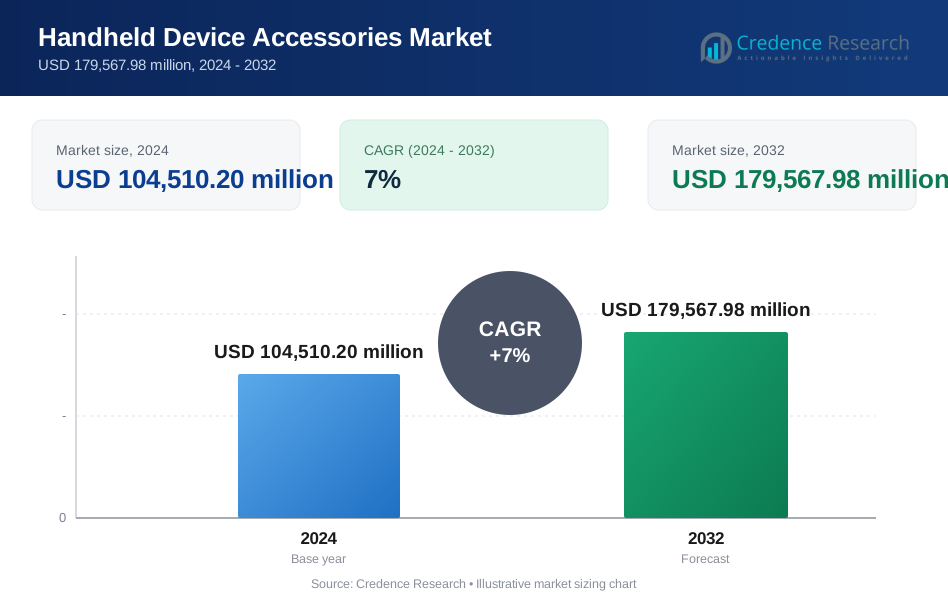
| Handheld Device Accessories Market Size 2024 | USD 104,510.20 million |
| Handheld Device Accessories Market, CAGR | 7% |
| Handheld Device Accessories Market Size 2032 | USD 179,567.98 million |
Market Overview
The Handheld Device Accessories Market is projected to grow from USD 104,510.20 million in 2024 to USD 179,567.98 million by 2032, reflecting a robust compound annual growth rate (CAGR) of 7%.
The handheld device accessories market is driven by the increasing adoption of smartphones, tablets, and wearable devices, leading to heightened demand for accessories that enhance functionality and user experience. Rapid technological advancements, such as wireless charging, Bluetooth connectivity, and augmented reality integration, further fuel the market’s growth. The rise of remote work, e-commerce, and digital entertainment also contributes to the demand for a variety of accessories, including protective cases, chargers, and screen protectors. Consumer preference for personalization and style is another key trend, with customizable designs and materials gaining popularity. Additionally, the growing focus on sustainability and eco-friendly products is influencing manufacturers to develop environmentally conscious accessories. As consumers seek seamless, multifunctional devices, the market is expected to expand, with innovations in smart and IoT-enabled accessories driving the future trajectory. The growing importance of device longevity and protection further enhances the market outlook, offering significant growth opportunities.
The handheld device accessories market is geographically diverse, with significant contributions from regions such as North America, Asia Pacific. North America holds a prominent share, driven by high consumer spending, technological innovation, and a strong demand for premium products. Asia Pacific, particularly China and India, is experiencing rapid growth, fueled by increasing smartphone penetration and a large, young consumer base. Key players in the market include major brands like Apple Inc., Samsung Electronics Co., Ltd., Sony Corporation, Bose Corporation, and Xiaomi Corporation. These companies dominate the market through product innovation, strong brand recognition, and strategic partnerships. Additionally, smaller, regional brands continue to gain traction by offering affordable, customizable solutions that cater to local preferences. This competitive landscape fosters continuous product advancements and diverse consumer options.
Market Drivers
Increasing Adoption of Handheld Devices
The primary driver of growth in the handheld device accessories market is the widespread adoption of smartphones, tablets, and wearables. With the global shift towards a more connected and digital lifestyle, there is a significant increase in the number of handheld devices in use across various industries and consumer segments. For instance, the International Data Corporation (IDC) reported that global smartphone shipments reached 1.5 billion units in 2024, leading to a surge in demand for related accessories. This surge in device ownership fuels demand for complementary accessories that enhance functionality, usability, and protection. Consumers are increasingly seeking accessories such as protective cases, screen protectors, chargers, and headphones to maximize their device experience.
Technological Advancements
Technological innovation plays a pivotal role in shaping the handheld device accessories market. Advancements such as wireless charging, Bluetooth connectivity, and smart accessories equipped with Internet of Things (IoT) capabilities are propelling market demand. Wireless charging pads, in particular, are gaining popularity as they eliminate the need for traditional cables, offering convenience and efficiency. For instance, Samsung has introduced a line of wireless charging pads that have become widely popular for their convenience and efficiency. Additionally, the growing integration of augmented reality (AR) and virtual reality (VR) into handheld devices has led to the development of specialized accessories designed to optimize these technologies, further contributing to market expansion.
Consumer Preferences for Personalization
Personalization has become a significant trend in the consumer electronics market, and the handheld device accessories market is no exception. As consumers seek to differentiate their devices, the demand for customizable and aesthetically appealing accessories has risen. Manufacturers are now offering a wide range of colors, materials, and design options for items such as phone cases, skins, and straps. For instance, Casetify offers customizable phone cases that allow users to create unique designs, catering to the demand for personalization. This trend is particularly strong among younger demographics, who view their handheld devices as an extension of their personal identity.
Focus on Device Protection and Durability
The growing awareness of the importance of device protection has further driven the demand for accessories. As handheld devices become more advanced and expensive, consumers are investing in durable protective accessories such as cases, screen protectors, and covers. For instance, OtterBox, known for its durable protective cases, has seen increased sales as consumers seek to protect their valuable devices. These accessories not only protect against accidental drops and scratches but also enhance the longevity of devices, making them essential for users who want to maximize the value and lifespan of their electronic investments. This emphasis on durability is expected to remain a key driver in the market.
Market Trends
Rise of Wireless and Smart Accessories
One of the most notable trends in the handheld device accessories market is the increasing demand for wireless and smart accessories. With advancements in Bluetooth technology, consumers are gravitating towards wireless headphones, speakers, and charging solutions. The convenience of eliminating cables is a significant factor driving this trend, as users seek streamlined and efficient experiences. For instance, Apple's AirPods have seen a significant surge in popularity due to their seamless Bluetooth connectivity and smart features like Siri integration. Additionally, the integration of smart technologies, such as IoT-enabled accessories and wearable tech, is gaining momentum, allowing users to control devices more intuitively and enhance the functionality of their handheld electronics.
Focus on Sustainability
As environmental concerns continue to rise, sustainability has become an important trend in the handheld device accessories market. Consumers are becoming more conscious of the environmental impact of their purchasing decisions, leading to a higher demand for eco-friendly products. For instance, Pela Case offers biodegradable phone cases made from plant-based materials, catering to the eco-conscious consumer. Manufacturers are responding by developing accessories made from recycled or biodegradable materials, such as sustainable phone cases and charging cables. This trend is not only a response to consumer preferences but also to regulatory pressures and the growing awareness of reducing electronic waste.
Customization and Personalization
Customization and personalization are increasingly important to consumers in the handheld device accessories market. Users are looking for products that reflect their unique style and preferences. As a result, manufacturers are offering a wide range of customizable options, from personalized phone cases to interchangeable straps and skins for wearable devices. For instance, dbrand allows users to create custom skins for their devices, providing a personalized touch. This trend is particularly evident in the younger demographic, where self-expression through technology accessories has become a form of individual identity. The ability to customize products is a significant factor driving growth in the market.
Integration of Augmented Reality (AR) and Virtual Reality (VR)
The integration of AR and VR technologies into handheld devices has spurred the development of specialized accessories. With the rise of gaming, entertainment, and education using AR and VR, there is an increased demand for accessories like VR headsets and AR-compatible devices. For instance, Oculus Quest 2 has become a popular VR headset, providing an immersive experience for gaming and other applications. These accessories are designed to enhance user immersion, making them essential for users looking to experience the next level of technology. As AR and VR applications continue to expand, the demand for related accessories is expected to grow.
Market Challenges Analysis
Intense Market Competition
The handheld device accessories market faces significant challenges due to intense competition among numerous players. As the market is highly fragmented, both large multinational companies and small-scale manufacturers vie for market share. The constant pressure to innovate and differentiate products has led to pricing wars, reducing profit margins for many companies. This heightened competition is further exacerbated by the rapid pace of technological change, which forces companies to continuously invest in research and development (R&D) to stay relevant. Additionally, consumers are increasingly expecting high-quality, low-cost products, making it difficult for manufacturers to maintain competitive pricing without sacrificing product quality or innovation. Smaller players, in particular, struggle with limited resources to compete with the more established brands that have significant marketing and distribution capabilities. These factors contribute to a challenging environment for businesses in the handheld device accessories market.
Supply Chain and Manufacturing Constraints
Another key challenge in the handheld device accessories market lies in supply chain and manufacturing constraints. The global nature of the market means that manufacturers often rely on international suppliers for raw materials, components, and finished products. Disruptions in supply chains—due to factors such as geopolitical instability, natural disasters, or the COVID-19 pandemic—can cause delays and increase costs. Furthermore, fluctuations in the price of raw materials can significantly impact production costs, creating financial uncertainty for accessory manufacturers. Additionally, ensuring consistent quality while managing the complexity of global supply chains presents a challenge for companies looking to maintain high standards of product reliability. These supply chain and manufacturing hurdles can result in delays in product availability, ultimately affecting a company’s ability to meet customer demand and negatively impacting its market position. The complexity of managing these issues requires strategic planning, effective risk management, and a flexible approach to supply chain management.
Market Segmentation Analysis:
By Type
The handheld device accessories market is segmented by type into protective cases, chargers, screen protectors, Bluetooth headsets, and other accessories like power banks and styluses. Protective cases and screen protectors dominate the market, driven by the growing need for device protection against drops, scratches, and environmental hazards. With increasing device prices, consumers are more focused on safeguarding their investments. Wireless chargers are also gaining traction as consumers seek cable-free convenience, and Bluetooth headsets continue to grow in demand, driven by the adoption of wireless audio technology.
By Application
The handheld device accessories market is further segmented by application, including smartphones, tablets, wearable devices, and other consumer electronics. The smartphone segment holds the largest market share, fueled by the global increase in smartphone adoption. As consumers personalize their smartphones, the demand for cases, screen protectors, and chargers remains strong. Tablets and wearables are also contributing to market growth, with accessories such as protective covers and straps for smartwatches and fitness trackers in high demand. This expansion in application areas continues to drive innovation and the development of specialized accessories.
Segments:
Based on Type:
- Headphones/Earphones
- Portable Speakers
- Protective Cases
- Power Bank
- Others
Based on Application
- Online Sales
- Offline Sales
Based on the Geography:
- North America
- U.S.
- Canada
- Mexico
- Europe
- Germany
- France
- U.K.
- Italy
- Spain
- Rest of Europe
- Asia Pacific
- China
- Japan
- India
- South Korea
- South-east Asia
- Rest of Asia Pacific
- Latin America
- Brazil
- Argentina
- Rest of Latin America
- Middle East & Africa
- GCC Countries
- South Africa
- Rest of the Middle East and Africa
Regional Analysis
North America
The North American handheld device accessories market holds a significant share, driven by the high penetration of smartphones, tablets, and wearables in the region. With advanced technological infrastructure, high disposable income, and a preference for premium products, North American consumers are early adopters of new devices and accessories, contributing to the rapid growth of this market. The demand for device protection, wireless charging solutions, and personalized accessories is particularly strong, with consumers prioritizing both functionality and aesthetics. The United States dominates the regional market, accounting for a substantial portion of the overall revenue due to its large consumer base and preference for high-quality, innovative products. Furthermore, the growing trend of remote work, increased mobile gaming, and e-commerce activity in North America further fuels the demand for accessories that enhance device functionality and user experience. North American manufacturers are continuously innovating to meet consumer demand for both practicality and style. The region holds 35% of the global market share, and this share is projected to grow as new technologies such as AR/VR, 5G, and IoT integration continue to drive demand for specialized accessories. Additionally, North American consumers are showing increased interest in sustainable and eco-friendly products, which is expected to shape market trends moving forward.
Asia Pacific
Asia Pacific (APAC) is the fastest-growing region in the handheld device accessories market, with countries like China, India, Japan, and South Korea contributing significantly to this growth. The APAC region benefits from a large and diverse consumer base, rapid urbanization, and increasing disposable incomes, which drive the adoption of handheld devices and accessories. In particular, China and India are emerging as key markets, with rising smartphone penetration and the growing popularity of wearable devices, such as smartwatches and fitness trackers. Manufacturers in the region are focusing on affordability and availability, making accessories more accessible to a wider audience, while local brands are capitalizing on cost advantages. Additionally, with many global manufacturers having production facilities in Asia, the region benefits from economies of scale, further accelerating market growth. Technological advancements in mobile gaming and e-commerce platforms, along with increasing online shopping trends, are boosting the demand for accessories across the region. The APAC region is expected to capture 30% of the global market share, and as mobile technology continues to evolve, this share is likely to expand, driven by increased consumer demand for wireless and smart accessories. With the increasing adoption of 5G technology and the continued rise of digital services, demand for more sophisticated accessories is expected to surge, especially in emerging markets.
Key Player Analysis
- Xiaomi Corporation
- Sony Corporation
- Belkin International
- Bose Corporation
- Samsung Electronics Co., Ltd.
- Sennheiser Electronic GmbH & Co. KG
- JBL (a division of Harman International Industries)
- Apple Inc.
- Logitech International S.A.
- Otter Products, LLC (OtterBox)
Competitive Analysis
The handheld device accessories market is highly competitive, with leading players constantly innovating to meet growing consumer demand. Companies like Apple Inc., Samsung Electronics Co., Ltd., Sony Corporation, Bose Corporation, Xiaomi Corporation, Belkin International, Sennheiser Electronic GmbH & Co. KG, JBL (a division of Harman International Industries), Logitech International S.A., and Otter Products, LLC (OtterBox) maintain a strong market presence through product diversification, superior quality, and strategic partnerships. To stay ahead, these companies focus on offering high-performance, user-centric accessories such as wireless chargers, premium audio products, and protective cases. Additionally, the integration of advanced technologies like Bluetooth, wireless charging, and IoT is becoming a key differentiator. For instance, Xiaomi Corporation has captured market share by offering high-quality, affordable accessories that appeal to budget-conscious consumers. Intense pricing competition, combined with an increasing preference for sustainable and eco-friendly products, drives constant innovation and market expansion. New entrants are also focusing on niche markets and cost-effective solutions to compete with established brands.
Recent Developments
- In September 2023, TORRAS, showcased new inventions at IFA 2023 with a collection of kickstand phone covers.
- In March 2023, NOPE launched a diverse product line aimed at youthful and dynamic audiophiles. This comprises neckbands, TWS earphones (Echo, Neo, Buddy, and Shots), and Bluetooth speakers ('Boom' and 'Buzz'). These models have Type C fast charging, Google Assistant and Siri compatibility, touch control, and 13 mm drivers.
- In December 2024, U&i, a leading provider of mobile phone accessories based in India announced the launch of its new products to enhance productivity and entertainment experience for its users. Earbuds, Bluetooth speakers, and car chargers were part of this new lineup launch.
- In August 2024, Realme, a renowned Chinese consumer electronics company unveiled its new fast charging technology. The company claims that its new 320W fast charger is capable of charging a phone to its full capacity in 4 minutes.
- In July 2024, Nothing, a leading consumer electronics company based in London announced the launch of its new mobile phone accessories and a new phone through its subsidiary called CMF. Earbuds and a watch along with a new phone marked the debut of CMF in the smartphone and accessories industry.
Market Concentration & Characteristics
The handheld device accessories market is characterized by moderate to high concentration, with a few key players holding a significant share, while numerous smaller manufacturers cater to niche segments. Major companies like Apple Inc., Samsung Electronics, and Belkin dominate the market due to their established brand presence, innovation capabilities, and extensive distribution networks. However, the market is also highly dynamic, with a constant influx of new entrants offering competitive pricing, customization options, and localized solutions to meet specific consumer preferences. This level of fragmentation fosters healthy competition and drives continuous innovation, particularly in the areas of wireless charging, audio accessories, and device protection. The market is further shaped by rapidly evolving technological trends, such as the integration of IoT and Bluetooth technology, which compel both large and small companies to adapt quickly. Consumer demand for high-quality, affordable, and eco-friendly products is influencing manufacturing strategies across the industry.
Report Coverage
The research report offers an in-depth analysis based on Type, Application and Geography. It details leading market players, providing an overview of their business, product offerings, investments, revenue streams, and key applications. Additionally, the report includes insights into the competitive environment, SWOT analysis, current market trends, as well as the primary drivers and constraints. Furthermore, it discusses various factors that have driven market expansion in recent years. The report also explores market dynamics, regulatory scenarios, and technological advancements that are shaping the industry. It assesses the impact of external factors and global economic changes on market growth. Lastly, it provides strategic recommendations for new entrants and established companies to navigate the complexities of the market.
Future Outlook
- The handheld device accessories market is expected to experience steady growth, driven by the increasing adoption of smartphones and wearable devices.
- Wireless charging solutions will continue to gain popularity, providing convenience and reducing reliance on cables.
- Consumer demand for eco-friendly and sustainable accessories will shape product development and manufacturing strategies.
- The integration of smart technologies, such as IoT and Bluetooth, will lead to the rise of advanced, multifunctional accessories.
- Increased focus on device protection and durability will continue to drive sales of protective cases, screen protectors, and covers.
- The growth of the gaming and digital entertainment sectors will expand demand for specialized accessories like gaming headsets and VR gear.
- Personalization and customization will remain key trends, with consumers seeking unique and tailored accessory options.
- The wearable device segment will continue to grow, spurring demand for accessories such as bands, chargers, and protective cases.
- Emerging markets, especially in Asia Pacific, will contribute significantly to global market growth due to rising disposable incomes and technology adoption.
- E-commerce platforms will remain a crucial distribution channel, offering a wide range of options to price-sensitive and tech-savvy consumers.
Request a Free Sample
Fill in your details and we'll send you a free sample report.
- Sample data tables & charts
- Research methodology
Need a Custom Version of This Report?
Tailor the scope, geography, or segments to your exact requirements.
- Custom geography or segment scope
- Direct access to our analyst team
Frequently Asked Questions
What is the current size of the handheld device accessories market?
What factors are driving the growth of the handheld device accessories market?
What are the key segments within the handheld device accessories market?
What are some challenges faced by the handheld device accessories market?
Who are the major players in the handheld device accessories market?
Table of Content
Chapter 1. Report Introduction
- 1.1 Report Description & Purpose
- 1.1.1 Report Title & Market Definition
- 1.1.2 Unique Selling Propositions (USP) & Key Differentiators
- 1.1.3 Value Proposition for Stakeholders
- 1.2 Research Objectives
- 1.2.1 Market Sizing Objectives (Volume & Revenue)
- 1.2.2 Segmentation Objectives
- 1.2.3 Competitive Intelligence Objectives
- 1.2.4 Forecast & Scenario Objectives
- 1.3 Report Scope
- 1.3.1 Handheld Device Accessories Scope – Types & Subtypes Covered
- 1.3.2 Geographic Scope – Regions & Countries Covered
- 1.3.3 Historical Period, Base Year & Forecast Period (2024; forecast to 2032)
- 1.3.4 Inclusions & Exclusions
- 1.4 HS Code & Classification Framework
- 1.5 Currency, Units & Pricing Basis
- 1.6 Target Stakeholders
- 1.7 Limitations & Assumptions
Chapter 2. Executive Summary
- 2.1 Global Handheld Device Accessories Market Snapshot
- 2.1.1 Market Size – Historical (2024) & Forecast (2024-2032) (2024: USD 104,510.20 million → 2032: USD 179,567.98 million)
- 2.1.2 Volume & Revenue – Global Totals
- 2.1.3 Key Market Highlights – Top Five Facts
- 2.2 Handheld Device Accessories Market Segmentation Snapshot
- 2.2.1 Market Split by Region – 2024 vs. 2032
- 2.3 Competitive Snapshot
- 2.3.1 Top 10 Players by Revenue Share – 2024
- 2.3.2 Top 10 Players by Volume Share – 2024
- 2.3.3 Recent Strategic Developments (18-Month Summary)
- 2.4 Key Investment Highlights & Strategic Conclusions
Chapter 3. Handheld Device Accessories Market Dynamics & Industry Analysis
- 3.1 Market Overview & Context
- 3.1.1 Handheld Device Accessories Market Position in the Broader Automotive Value Chain
- 3.1.2 OEM vs. Replacement Market Dynamics
- 3.1.3 Market Maturity & Development Stage by Region
- 3.2 Handheld Device Accessories Market Drivers
- 3.3 Handheld Device Accessories Market Restraints & Challenges
- 3.4 Handheld Device Accessories Market Opportunities
- 3.5 Porter's Five Forces Analysis
- 3.5.1 Threat of New Entrants
- 3.5.2 Bargaining Power of Suppliers
- 3.5.3 Bargaining Power of Buyers
- 3.5.4 Threat of Substitutes
- 3.5.5 Competitive Rivalry – Intensity Assessment
- 3.6 Handheld Device Accessories Value Chain Analysis
- 3.6.1 Upstream – Raw Material/Input Suppliers
- 3.6.1.1 Raw Material/Input 1
- 3.6.1.2 Raw Material/Input 2
- 3.6.1.3 Raw Material/Input 3
- 3.6.2 Midstream – Production/Manufacturing/Service Delivery
- 3.6.2.1 Production/Process Overview
- 3.6.2.2 Key Facility Locations & Capacity by Manufacturer
- 3.6.3 Downstream – Distribution & End Consumer
- 3.6.3.1 Primary Channel – B2B/OEM
- 3.6.3.2 Secondary Channels – Dealer, Retail, Online, Direct
- 3.6.4 Value Chain Profitability Analysis
- 3.6.1 Upstream – Raw Material/Input Suppliers
- 3.7 PESTEL Analysis
- 3.7.1 Political Factors
- 3.7.2 Economic Factors
- 3.7.3 Social Factors
- 3.7.4 Technological Factors
- 3.7.5 Environmental Factors
- 3.7.6 Legal Factors
- 3.8 Handheld Device Accessories Supply Chain Analysis
- 3.8.1 Raw Material/Input Supply Risk Assessment
- 3.8.2 Manufacturing Concentration Risk (Geographic Exposure)
- 3.8.3 Trade Disruption Impact Analysis
- 3.9 Regulatory & Policy Landscape
Note: The regulatory and policy landscape section covers regulations based on their applicability to the market, Handheld Device Accessories category, geography, and scope of the study. Only regulatory frameworks with a material impact on operations, compliance, trade, sustainability, or market access are analyzed in detail.
Chapter 4. Key Investment Pockets & Opportunity Analysis
- 4.1 Handheld Device Accessories Market Attractiveness Analysis
- 4.1.1 By Region – Investment Attractiveness Matrix (Volume × CAGR)
- 4.2 Absolute Revenue Growth Opportunity
- 4.2.1 By Region – Absolute USD Growth Through 2032
- 4.3 Incremental Volume Opportunity
- 4.3.1 By Region – Incremental Volume Through 2032
- 4.3.2 Segment – Incremental Volume
- 4.4 Emerging Submarket Opportunity Deep Dive (Subject to Applicability)
- 4.5 Emerging Market Opportunity Scorecards
- 4.5.1 United States
- 4.5.2 Europe
- 4.5.3 Asia
- 4.5.4 Middle East & Africa
Note: Emerging Market Opportunity Scorecards will be included based on relevance and strategic importance. Regions listed are indicative and may vary depending on data availability and market dynamics.
Chapter 5. Handheld Device Accessories Import-Export Analysis & Trade Flows
- 5.1 Global Trade Overview
- 5.1.1 Global Export Value by Country (2024)
- 5.1.2 Global Export Volume by Country (2024)
- 5.1.3 Global Import Value by Country (2024)
- 5.1.4 Global Import Volume by Country (2024)
- 5.1.5 Net Trade Balance by Country (2024)
- 5.2 Export Analysis – Segment
- 5.2.1 Type 1 (HS Code)
- 5.2.2 Type 2 (HS Code)
- 5.2.3 Type 3 (HS Code)
- 5.2.4 Type 4 (HS Code)
- 5.2.5 Type 5 (HS Code)
- 5.3 Import Analysis – Segment
- 5.3.1 Type 1 (HS Code)
- 5.3.2 Type 2 (HS Code)
- 5.3.3 Type 3 (HS Code)
- 5.3.4 Type 4 (HS Code)
- 5.3.5 Type 5 (HS Code)
- 5.4 Average Unit Trade Prices
- 5.4.1 Average Export Price – Segment & Country
- 5.4.2 Average Import Price – Segment & Source Country
- 5.4.3 Price Trends (2024)
- 5.5 Key Trade Route Analysis
- 5.5.1 Trade Route 1
- 5.5.2 Trade Route 2
- 5.5.3 Trade Route 3
- 5.5.4 Trade Route 4
- 5.5.5 Trade Route 5
- 5.6 Trade Policy Impact Assessment
- 5.6.1 US Anti-Dumping & Section 301 Tariffs
- 5.6.2 EU Customs Union Impact
- 5.6.3 Major Free Trade Agreements
- 5.6.4 USMCA Rules of Origin
Note: Trade policy analysis will be included only where relevant to the Handheld Device Accessories market.
Chapter 6. Competitive Landscape & Company Benchmarking
- 6.1 Handheld Device Accessories Market Concentration & Structure
- 6.1.1 Herfindahl-Hirschman Index (HHI) – vs. 2024
- 6.1.2 Tier 1, Tier 2 & Tier 3 Market Structure
- 6.1.3 Global, Regional & Local Player Dynamics
- 6.2 Handheld Device Accessories Market Share Analysis – 2024
- 6.2.1 Global Revenue Share by Company
- 6.2.2 Global Volume Share by Company
- 6.2.3 Regional Revenue Share
- 6.2.4 Market Share Evolution ( vs. 2024)
- 6.2.5 OEM Segment Share by Company
- 6.2.6 Replacement Segment Share by Company
- 6.3 Production/Delivery Capacity & Facility Analysis
- 6.3.1 Global Installed Capacity
- 6.3.2 Capacity Utilization Rates
- 6.3.3 Production/Output Volume
- 6.3.4 Facility Locations & Capacity Map
- 6.3.5 Planned Capacity Additions
- 6.4 Handheld Device Accessories Competitive Benchmarking Matrix
- 6.4.1 Revenue, Volume, CAGR & Profitability Comparison
- 6.4.2 Channel Revenue Mix
- 6.4.3 Geographic Revenue Exposure
- 6.4.4 R&D Intensity
- 6.4.5 Sustainability Maturity
- 6.5 Strategic Developments in Handheld Device Accessories (Last 24 Months)
- 6.5.1 Mergers, Acquisitions & Divestments
- 6.5.2 New Handheld Device Accessories Launches
- 6.5.3 Facility Expansions
- 6.5.4 Strategic Alliances, Joint Ventures & Partnerships
- 6.5.5 Distribution Expansion & Market Entry
- 6.5.6 Sustainability & ESG Initiatives
- 6.6 Competitive Strategy Mapping
- 6.6.1 Leader, Challenger, Follower & Niche Classification
- 6.6.2 Pricing Strategy Comparison
- 6.6.3 Channel Strategy Matrix
Note: Strategic developments are included based on their materiality and the availability of reliable information.
Chapter 7. Global Handheld Device Accessories Market – By Distribution Channel
- 7.1 Segment Overview
- 7.1.1 Volume & Revenue Split by Channel (2024 & 2032)
- 7.1.2 Channel Mix Evolution (2024-2032)
Chapter 8. Regional Market Analysis – Global Overview
- 8.1 Global Regional Overview
- 8.1.1 Regional Volume Share
- 8.1.2 Regional Revenue Share
- 8.1.3 Regional Volume by Region
- 8.1.4 Regional Revenue by Region
- 8.1.5 Regional Forecast Through 2032
- 8.2 Cross-Regional Segment Analysis
- 8.2.1 By Distribution Channel
- 8.2.2 By Brand/Price Tier
Chapter 9. North America Handheld Device Accessories Market
- 9.1 United States
- 9.2 Canada
- 9.3 Mexico
Chapter 10. Europe Handheld Device Accessories Market
- 10.1 Germany
- 10.2 France
- 10.3 Italy
- 10.4 United Kingdom
- 10.5 Spain
- 10.6 Poland
- 10.7 Russia
- 10.8 Netherlands
- 10.9 Belgium
- 10.10 Sweden
- 10.11 Denmark
- 10.12 Norway
- 10.13 Rest of Europe
Chapter 11. Asia Pacific Handheld Device Accessories Market
- 11.1 China
- 11.2 India
- 11.3 Japan
- 11.4 South Korea
- 11.5 Thailand
- 11.6 Indonesia
- 11.7 Vietnam
- 11.8 Malaysia
- 11.9 Australia
- 11.10 Rest of Asia Pacific
Chapter 12. Latin America Handheld Device Accessories Market
- 12.1 Brazil
- 12.2 Argentina
- 12.3 Colombia
- 12.4 Chile
- 12.5 Rest of Latin America
Chapter 13. Middle East Handheld Device Accessories Market
- 13.1 Saudi Arabia
- 13.2 United Arab Emirates
- 13.3 Turkey
- 13.4 Israel
- 13.5 Iran
- 13.6 Rest of the Middle East
Chapter 14. Africa Handheld Device Accessories Market
- 14.1 South Africa
- 14.2 Egypt
- 14.3 Nigeria
- 14.4 Morocco
- 14.5 Rest of Africa
Chapter 15. Handheld Device Accessories Company Profiles
- 15.1 [Company 01]
- 15.1.1 Company Overview
- 15.1.2 Key Management Personnel
- 15.1.3 Products & Services Portfolio
- 15.1.4 Financial Performance
- 15.1.5 Key Market Focus & Geographic Presence
- 15.1.6 Recent Developments & Strategic Initiatives
Note: The company profile list is preliminary and may change based on research findings, market developments, data availability, and client requirements.
Chapter 16. Appendices
- Appendix A – List of Abbreviations & Acronyms
- Appendix B – Industry Classification Code Reference – Full Series
- Appendix C – Production & Capacity Data Tables
- Appendix D – End-Use & Demand Base Tables
- Appendix E – Consumption & Replacement Rate Assumptions
- Appendix F – ASP Reference Tables
- Appendix G – Manufacturing & Facility Database
- Appendix H – Import-Export Data Tables
- Appendix I – Regulatory Summary Tables
- Appendix J – Primary Research Participant List (Anonymized)
- Appendix K – Primary Research Questionnaire Framework
- Appendix L – Data Sources & Bibliography
- Appendix M – Market Size Divergence & Source Comparison
Chapter 17. Research Methodology
- 17.1 Research Framework & Philosophy
- 17.2 Secondary Research – Sources, Hierarchy & Data Extraction
- 17.3 Data Modeling – Bottom-Up & Top-Down Market Sizing
- 17.4 Primary Research – Stakeholder Framework, LOI & Sample Sizes
- 17.5 Forecast Methodology – Regression, Scenario & Sensitivity Analysis
- 17.6 Quality Control – Four-Layer Validation Framework
- 17.7 Limitations & Standard Assumptions
- 17.8 Disclaimer
