
| REPORT ATTRIBUTE | DETAILS |
|---|---|
| Historical Period | 2020-2023 |
| Base Year | 2024 |
| Forecast Period | 2025-2032 |
| Health and Wellness Food Market Size 2024 | USD 938.6 Billion |
| Health and Wellness Food Market, CAGR | 9.80% |
| Health and Wellness Food Market Size 2032 | USD 2,177.10 Billion |
Market Overview
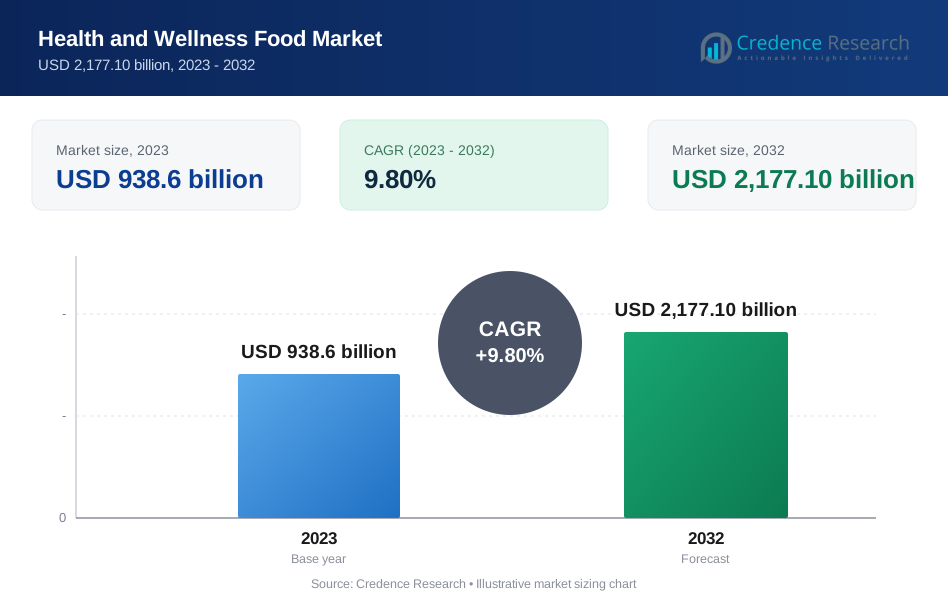
The global Health and Wellness Food Market is projected to grow from USD 938.6 billion in 2023 to an estimated USD 2,177.10 billion by 2032, with a compound annual growth rate (CAGR) of 9.80% from 2024 to 2032. This growth is driven by increasing consumer demand for nutritious, functional foods and beverages that offer health benefits beyond basic nutrition.
Market drivers include a growing awareness of the importance of healthy eating, rising disposable incomes, and the influence of social media on consumer behavior. In addition, trends such as plant-based diets, organic ingredients, and clean-label products are gaining traction. Consumers are becoming more conscious of food origins, quality, and sustainability, pushing food manufacturers to innovate and offer products that align with these preferences. Moreover, the demand for fortified foods with added nutrients like vitamins, minerals, and probiotics is also contributing to market growth.
Geographically, North America and Europe currently dominate the Health and Wellness Food Market, owing to high health consciousness among consumers and the presence of major food manufacturers. However, the Asia Pacific region is expected to witness the highest growth during the forecast period, driven by increasing urbanization, changing lifestyles, and growing health awareness. Key players in this market include Nestlé S.A., Danone S.A., General Mills Inc., and The Kraft Heinz Company, among others. These companies are focusing on product innovation and strategic partnerships to strengthen their market position.
Market Insights
- The global Health and Wellness Food Market is expected to grow from USD 938.6 billion in 2023 to USD 2,177.10 billion by 2032, with a CAGR of 9.80% from 2024 to 2032.
- Growing awareness of the link between diet and health has led to a surge in demand for nutritious, functional foods that provide health benefits beyond basic nutrition.
- The increasing prevalence of chronic diseases such as obesity and diabetes is driving consumers to seek healthier food alternatives, further boosting market demand.
- Consumers are becoming more conscious of food origins and sustainability, pushing food manufacturers to innovate with organic and clean-label products.
- The cost of producing health-focused foods with premium ingredients, such as organic and non-GMO components, remains a challenge for market expansion.
- These regions lead the market due to high health consciousness and a strong presence of major food manufacturers, with North America holding the largest market share.
- The Asia Pacific region is expected to witness the fastest growth during the forecast period, driven by urbanization, changing lifestyles, and increasing health awareness.
Market Drivers
Increasing Health Consciousness Among Consumers
The growing awareness of health and wellness is a primary driver for the health and wellness food market. Consumers are becoming more informed about the impact of their food choices on long-term health, with a particular focus on maintaining a balanced diet to prevent chronic diseases like diabetes, obesity, and cardiovascular conditions. This shift in consumer behavior has been fueled by an increase in health-related media, public health campaigns, and the widespread availability of health information through digital platforms.
As a result, individuals are increasingly opting for foods that not only provide basic nutrition but also contribute to better physical well-being. The rising preference for foods with functional benefits, such as probiotics, antioxidants, and high-fiber content, reflects this trend. For instance, foods rich in probiotics, antioxidants, and high-fiber content are gaining popularity as consumers seek products that contribute to better physical well-being. Consequently, there is a growing demand for products such as fortified foods, organic and clean-label options, and plant-based alternatives, which are perceived to offer superior health benefits compared to conventional products.
Rise in Chronic Diseases and Lifestyle-Related Health Issues
Another critical driver for the health and wellness food market is the rise in lifestyle-related health issues, including obesity, diabetes, and hypertension, which have become global concerns. The World Health Organization (WHO) has highlighted the growing prevalence of these conditions, with unhealthy dietary patterns and sedentary lifestyles being major contributors. As individuals seek ways to manage or prevent such health conditions, there is an increasing inclination toward consuming foods that promote weight management, support heart health, and enhance overall wellness.
Functional foods, which are formulated to provide specific health benefits beyond basic nutrition, are gaining popularity. For instance, foods fortified with omega-3 fatty acids, probiotics, and plant sterols are seen as key ingredients that help in the prevention of chronic diseases. Additionally, the demand for low-calorie, low-sugar, and high-protein products is rising as consumers become more health-conscious and seek ways to improve their dietary habits to manage and prevent health issues effectively.
Growing Demand for Natural and Clean-Label Products
Consumers are becoming increasingly skeptical of artificial additives and chemicals in food products, which has led to the demand for natural, organic, and clean-label options. Clean-label foods, which contain minimal ingredients and are free from preservatives, artificial flavors, and colors, have gained significant traction in the global market. Health-conscious consumers are now more interested in knowing the origins of their food and ensuring that what they consume is free from any harmful or synthetic substances.
This demand is especially pronounced in developed regions such as North America and Europe, where consumers are willing to pay a premium for natural and organic products. For instance, consumers in these regions are driving the demand for products free from preservatives and synthetic substances. In response to this shift, manufacturers are investing in product innovation and transparency, ensuring that food products meet the rising consumer expectations for quality, authenticity, and sustainability.
Technological Advancements in Food Production and Innovation
Technological advancements in food production and processing are playing a significant role in driving the growth of the global health and wellness food market. Innovations in food technology, such as advancements in nutritional profiling, food fortification, and the development of new food delivery systems, are enabling manufacturers to create products that better meet the nutritional needs of health-conscious consumers.
The use of cutting-edge technologies, including precision fermentation, plant-based alternatives, and biotechnology, has led to the creation of more nutritious and functional foods with enhanced health benefits. Additionally, the rise of personalized nutrition, where food products are tailored to meet individual health requirements, is another factor driving market growth.
For instance, innovations in precision fermentation and biotechnology have enabled the creation of personalized nutrition products that align with specific health goals. With the increasing ability to modify the nutrient composition of food products, consumers are now more empowered to make food choices that are aligned with their specific health goals. As technology continues to evolve, the development of healthier food alternatives and functional ingredients will remain a key factor in the expansion of the health and wellness food market, offering both innovation and a competitive edge to food manufacturers.
Market Trends
Rise of Plant-Based and Vegan Products
One of the most prominent trends in the global health and wellness food market is the increasing demand for plant-based and vegan products. As consumers become more concerned about the environmental impact of animal agriculture and the health benefits of plant-based diets, plant-based foods are rapidly gaining popularity. Plant-based alternatives to meat, dairy, and other animal-based products are now commonplace on supermarket shelves, with products such as plant-based burgers, non-dairy milk, vegan cheese, and plant-based snacks becoming mainstream.
This shift is being driven by growing awareness of the health risks associated with excessive consumption of animal products, including heart disease and high cholesterol, alongside the increasing focus on environmental sustainability. Manufacturers are responding to this trend by innovating and improving the taste, texture, and nutritional value of plant-based products to meet consumer expectations. Furthermore, this trend is not confined to any particular demographic; both flexitarians (those who consume fewer animal products) and vegetarians/vegans are fueling the demand for plant-based food options. This shift has significantly impacted the food and beverage industry, with an increasing number of restaurants, fast food chains, and foodservice providers adding plant-based dishes to their menus.
Increased Focus on Functional Foods and Beverages
Functional foods and beverages are another key trend driving the growth of the global health and wellness food market. These products offer specific health benefits beyond basic nutrition, with added ingredients such as probiotics, prebiotics, vitamins, minerals, antioxidants, and other bioactive compounds. Functional foods that promote digestive health, immune system support, and enhanced cognitive function are in high demand.
The popularity of probiotics, in particular, has surged due to their positive impact on gut health, with consumers increasingly seeking out yogurt, kefir, kombucha, and other probiotic-rich foods. Similarly, beverages fortified with nutrients such as vitamins, electrolytes, and antioxidants are becoming more common, especially among health-conscious consumers looking for drinks that do more than just hydrate. The growing trend towards functional foods is also fueled by the increasing number of health-conscious millennials who are more willing to invest in products that promise health benefits.
This market trend is further supported by the aging global population, which is driving demand for products that can help manage chronic conditions, improve longevity, and enhance overall well-being. As a result, the functional food and beverage market continues to expand, with innovation being a key factor in attracting consumers.
Health and Wellness Foods Targeting Specific Dietary Needs
Another notable trend is the increasing availability of health and wellness foods designed to cater to specific dietary needs, such as gluten-free, keto, paleo, low-carb, and low-sugar products. With consumers becoming more aware of food sensitivities and allergies, there has been a surge in demand for products that cater to specific dietary requirements. Gluten-free foods, for example, have gained significant traction due to the rising prevalence of celiac disease and gluten sensitivity.
Similarly, ketogenic (keto) and paleo diets have gained popularity among individuals seeking to lose weight, improve metabolic health, and regulate blood sugar levels. The demand for low-carb, high-protein, and low-sugar foods, such as sugar-free snacks and low-glycemic beverages, is growing in response to increasing concerns about obesity and diabetes. These trends are not only limited to snacks or packaged foods; they extend across a wide range of product categories, from baked goods and beverages to ready-to-eat meals and supplements.
Companies in the health and wellness food market are rapidly diversifying their product lines to offer options that meet these specific dietary preferences, often labeling their products with certifications such as "gluten-free," "keto-friendly," and "low-sugar" to appeal to niche consumer segments.
Sustainability and Ethical Sourcing
Sustainability and ethical sourcing are increasingly influencing consumer purchasing decisions in the global health and wellness food market. Consumers, particularly millennials and Gen Z, are becoming more aware of the environmental and social impacts of their food choices. As a result, there is growing demand for products that are sustainably sourced, ethically produced, and environmentally friendly.
This trend manifests in several ways, including the increased demand for organic foods, fair-trade certified products, and food packaging made from recyclable or biodegradable materials. Additionally, consumers are becoming more concerned with the carbon footprint of their food, leading to a preference for locally sourced ingredients and products with a lower environmental impact. This trend is also reflected in the rise of plant-based products, as these tend to have a lower environmental footprint compared to animal-based foods.
Companies are responding to this growing demand by adopting more sustainable practices in their supply chains and marketing their products as environmentally friendly. Some companies are even implementing circular economy models, where food waste is minimized, and excess ingredients are repurposed to create new products. As sustainability continues to be a key priority for consumers, it is expected that the health and wellness food market will place even greater emphasis on eco-friendly initiatives and ethical sourcing in the years ahead.
Market Challenges
High Production Costs and Pricing Pressure
One of the significant challenges facing the global health and wellness food market is the high production costs associated with creating health-focused products. Many of these products require premium ingredients, such as organic, non-GMO, or plant-based components, which are often more expensive than traditional ingredients. Additionally, the processing and fortification of foods with added nutrients such as probiotics, vitamins, and minerals can further increase production costs.
These elevated costs are often passed on to consumers, making health and wellness foods more expensive than conventional options. While consumers are increasingly willing to invest in healthier food alternatives, price sensitivity remains a critical factor, particularly in developing markets where disposable income is lower. Manufacturers are under pressure to strike a balance between maintaining product affordability and ensuring that the cost of production does not erode profitability.
In some cases, this has led to challenges in scaling production and achieving widespread market adoption, especially in price-sensitive regions. As a result, companies in the health and wellness food market must innovate in sourcing, manufacturing, and supply chain management to reduce costs without compromising on product quality or nutritional benefits.
Regulatory and Labeling Complexity
The global health and wellness food market faces significant challenges related to regulatory compliance and labeling standards. Health-focused food products are subject to stringent regulations and guidelines that vary across regions. For instance, the claims made by manufacturers regarding the health benefits of their products, such as "low-fat," "gluten-free," or "probiotic," must be substantiated and meet local regulatory standards.
In some countries, navigating the complex web of regulatory requirements can be time-consuming and costly, especially for international brands that must comply with multiple sets of rules. Additionally, food labeling is a critical issue, as consumers increasingly seek transparency in ingredients and sourcing. However, inconsistencies in labeling regulations across regions create challenges for companies aiming to ensure accurate and compliant packaging. Misleading or unclear labels can lead to consumer distrust and potential legal issues.
As the market for health and wellness foods continues to grow, it is crucial for manufacturers to stay abreast of evolving regulatory frameworks and ensure that their products meet all legal requirements while providing consumers with clear, truthful information.
Market Opportunities
Expanding Demand for Personalized Nutrition
One of the most significant opportunities in the global health and wellness food market lies in the growing demand for personalized nutrition. As consumers become more aware of the role that nutrition plays in individual health and wellness, there is an increasing interest in products tailored to meet specific health needs.
Personalized nutrition goes beyond general health benefits, offering customized solutions based on individual lifestyle, genetics, and health conditions. Companies can capitalize on this opportunity by developing products that cater to specific dietary needs, such as those targeting weight management, digestive health, or immunity support. With advancements in technology, including DNA testing and wearable health devices, consumers are increasingly able to access personalized nutrition recommendations.
As a result, manufacturers who can leverage these technologies to offer personalized food solutions are likely to see significant growth. This trend offers a chance to tap into a rapidly expanding market segment, especially as consumers seek more precise ways to manage their health and well-being through their diet.
Growth in Emerging Markets
Another key market opportunity for the global health and wellness food sector is the growth potential in emerging markets. Regions such as Asia Pacific, Latin America, and the Middle East are experiencing rapid urbanization, rising disposable incomes, and increasing awareness of health and wellness. As more consumers in these regions adopt healthier lifestyles, the demand for nutritious and functional foods is expected to rise. Additionally, changing dietary habits, influenced by Western trends, are opening new avenues for growth. Companies looking to expand their footprint in these high-growth markets can seize the opportunity by offering health-focused products that cater to the unique cultural and nutritional preferences of these regions, thereby driving further market penetration and growth.
Market Segmentation Analysis
By Type
The market is predominantly segmented by product type, with the most significant segments including functional foods, fortified and healthy bakery products, healthy snacks, better-for-you (BFY) foods, beverages, chocolates, and others. Functional foods, which offer health benefits beyond basic nutrition, are seeing rapid growth due to the increasing demand for foods that help with weight management, immune support, and digestive health. Fortified and healthy bakery products are also gaining popularity as consumers seek healthier alternatives to traditional bakery items. Healthy snacks are a fast-growing segment driven by the demand for convenient, nutritious, and portion-controlled snack options. BFY foods are another critical segment, catering to consumers looking for products that are lower in fat, sugar, or salt. Beverages, particularly those fortified with vitamins, minerals, and electrolytes, are in high demand, while the chocolate segment is expanding with the introduction of healthier, organic, and sugar-free alternatives.
By Calorie Content
In terms of calorie content, the market is segmented into no-calorie, low-calorie, and reduced-calorie foods. No-calorie and low-calorie products are gaining traction as consumers become more health-conscious and seek ways to manage their weight without compromising on taste. Reduced-calorie products also cater to this demand, offering healthier alternatives with fewer calories compared to conventional options.
Segments
Based on Type
- Functional Food
- Fortified and Healthy Bakery Products
- Healthy Snacks
- BFY Foods
- Beverages
- Chocolates
- Others
Based on Calorie Content
- No-Calorie
- Low Calories
- Reduced-Calorie
Based on Nature
- Non-GMO
- GMO
Based on Fat content
- No Fat
- Low Fat
- Reduced Fat
Based on Category
- Conventional
- Organic
Based on Distribution Channel
- Store-Based Retailers
- Non-Store Retailers
Based on free form
- Gluten-Free
- Dairy-Free
- Soy-Free
- Nut-Free
- Lactose-Free
- Artificial Flavour-Free
- Artificial Colour-Free
- Others
Based on Region
- North America
- U.S.
- Canada
- Mexico
- Europe
- Germany
- France
- U.K.
- Italy
- Spain
- Rest of Europe
- Asia Pacific
- China
- Japan
- India
- South Korea
- South-east Asia
- Rest of Asia Pacific
- Latin America
- Brazil
- Argentina
- Rest of Latin America
- Middle East & Africa
- GCC Countries
- South Africa
- Rest of the Middle East and Africa
Regional Analysis
North America (35%)
North America holds the largest share of the global health and wellness food market, accounting for approximately 35% of the market in 2023. The market in this region is primarily driven by high health consciousness among consumers, coupled with an established infrastructure for health-related products. The United States, in particular, is a dominant force due to the growing demand for organic, natural, and functional foods. The trend of clean-label products, along with increased consumer focus on preventive health and disease management, has led to significant growth. Additionally, the rise in dietary-specific needs, such as gluten-free, dairy-free, and keto products, is contributing to market expansion.
Europe (30%)
Europe holds the second-largest market share, accounting for 30% of the global health and wellness food market. The demand for health-conscious food choices is particularly high in Western European countries like Germany, the UK, and France. European consumers are increasingly concerned with food transparency, sustainability, and ethical sourcing, which is driving the growth of organic and clean-label foods. The region also sees significant demand for functional foods, especially those containing probiotics, prebiotics, and vitamins. Government initiatives and regulations promoting healthy eating and the prevention of lifestyle diseases also play a role in boosting market growth in this region.
Key players
- Danone (France)
- PepsiCo (U.S.)
- General Mills Inc. (U.S.)
- Kashi (U.S.)
- The Quaker Oats Company (U.S.)
- Mars, Incorporated (U.S.)
- Abbott (U.S.)
- Huel Inc. (U.K.)
- Green Valley Dairies (New Zealand)
- LIBERTÉ (Canada)
- Chobani, LLC. (U.S.)
- Stonyfield Farm, Inc. (U.S.)
- Forager Project (U.S.)
- Kite Hill (U.S.)
- LAVVA (Israel)
- Alter Eco Foods (U.S.)
- Lake Champlain Chocolates (U.S.)
- Simply Good Foods USA, Inc. (U.S.)
- Maspex (Poland)
- Mondelez International (U.S.)
- Kellogg Co. (U.S.)
- Nestlé (Switzerland)
- Yakult Honsha Co., Ltd. (Japan)
- GSK plc. (U.K.)
Competitive Analysis
The global health and wellness food market is highly competitive, with numerous established players striving to capture consumer attention through product innovation and differentiation. Leading companies like Danone, Nestlé, and PepsiCo leverage their extensive product portfolios and strong market presence to meet the increasing demand for functional, organic, and clean-label foods. Smaller players, such as Chobani and Huel, are carving out niches by offering specialized products like plant-based options and nutritionally balanced meals. While larger companies focus on expanding their product lines and entering new markets, smaller brands emphasize unique selling propositions such as sustainability, dietary-specific options, and premium ingredients. Intense competition drives innovation in the development of healthier, more functional food alternatives. Market leaders are also responding to rising consumer demand for transparency and sustainability through ethical sourcing practices and eco-friendly packaging. This competitive landscape fosters continuous improvement in both product quality and consumer engagement strategies.
Recent Developments
- In February 2025, Danone reported a return to volume/mix growth in fiscal-year 2024, driven by health and wellness trends, particularly in gut health and high-protein products.
- In February 2025, PepsiCo announced a strategic pivot towards healthier options, focusing on value and better-for-you products, including the relaunch of its Simply line and expansion of brands like Siete and Sabra.The company emphasized its commitment to reducing sodium and artificial ingredients in its products to cater to health-conscious consumers.
- In February 2025, Quaker Oats faced a recall of its pancake mix due to undeclared milk, which was elevated to the highest risk level by the FDA.
- In August 2025, Mars announced its intention to acquire Kellanova, enhancing its presence in the snacking category with healthier options.
- In January 2025, Abbott received an innovation award for Lingo, a consumer biowearable device that tracks glucose levels to support health and wellness.
Market Concentration and Characteristics
The global Health and Wellness Food Market exhibits moderate to high concentration, with a mix of large multinational corporations and smaller, specialized companies. Leading players such as Danone, Nestlé, PepsiCo, and General Mills dominate the market, benefiting from strong brand recognition, vast distribution networks, and extensive product portfolios that cater to diverse consumer preferences. However, the market also sees significant competition from emerging brands that focus on niche segments, such as plant-based foods, functional beverages, and clean-label products. This dynamic fosters innovation and drives growth, particularly as consumer demand for healthier, sustainable, and transparent food options increases. The market is characterized by frequent product innovation, strategic partnerships, and acquisitions, as companies seek to differentiate themselves and capture the growing health-conscious consumer base.
Report Coverage
The research report offers an in-depth analysis based on Type, Gender, Clothing age group,Pricing, Distribution Channel and Region. It details leading market players, providing an overview of their business, product offerings, investments, revenue streams, and key applications. Additionally, the report includes insights into the competitive environment, SWOT analysis, current market trends, as well as the primary drivers and constraints. Furthermore, it discusses various factors that have driven market expansion in recent years. The report also explores market dynamics, regulatory scenarios, and technological advancements that are shaping the industry. It assesses the impact of external factors and global economic changes on market growth. Lastly, it provides strategic recommendations for new entrants and established companies to navigate the complexities of the market.
Future Outlook
- The demand for health and wellness foods is expected to continue expanding as consumers increasingly prioritize healthier diets. This shift is driven by heightened awareness of the links between diet and long-term health outcomes.
- Personalized nutrition will gain traction, with consumers seeking products tailored to their specific health needs. Advances in technology will enable more precise dietary solutions based on individual health data and genetic factors.
- Plant-based food products will remain a key growth area, fueled by consumer preference for sustainable, ethical, and health-focused alternatives. The range of plant-based offerings is likely to expand, including dairy and meat substitutes.
- Functional foods, particularly those offering digestive, immunity, and cognitive benefits, will experience rapid growth. Consumers will continue to seek out foods that provide added health benefits beyond basic nutrition.
- The demand for clean-label products, free from artificial additives and preservatives, will increase as consumers prioritize transparency and quality in their food choices. This trend will push companies to adopt cleaner formulations.
- Advances in food technology, such as the development of lab-grown meat and plant-based innovations, will transform the market. These technologies will enable manufacturers to offer healthier, more sustainable food options at scale.
- Emerging markets, particularly in Asia Pacific and Latin America, will see significant growth as urbanization and disposable incomes rise. Health-conscious consumer behavior will drive the demand for wellness foods in these regions.
- The market will likely see more uniformity in global food labeling and health claims regulations. This will help consumers make more informed choices and encourage companies to align their products with standardized health benefits.
- Consumers will increasingly demand sustainably sourced ingredients and eco-friendly packaging. Companies will need to integrate sustainability into their business practices to appeal to the growing environmentally conscious consumer base.
- E-commerce will continue to be a major distribution channel for health and wellness foods. The convenience of online shopping, coupled with targeted marketing, will drive consumer purchases and expand market reach.
Request a Free Sample
Fill in your details and we'll send you a free sample report.
- Sample data tables & charts
- Research methodology
Need a Custom Version of This Report?
Tailor the scope, geography, or segments to your exact requirements.
- Custom geography or segment scope
- Direct access to our analyst team
Frequently Asked Questions
What is the market size of the global Health and Wellness Food Market in 2023 and 2032?
What are the key drivers for the growth of the Health and Wellness Food Market?
Which regions dominate the Health and Wellness Food Market?
What are some of the key trends in the Health and Wellness Food Market?
Who are the key players in the Health and Wellness Food Market?
Table of Content
Chapter 1. Report Introduction
- 1.1 Report Description & Purpose
- 1.1.1 Report Title & Market Definition
- 1.1.2 Unique Selling Propositions (USP) & Key Differentiators
- 1.1.3 Value Proposition for Stakeholders
- 1.2 Research Objectives
- 1.2.1 Market Sizing Objectives (Volume & Revenue)
- 1.2.2 Segmentation Objectives
- 1.2.3 Competitive Intelligence Objectives
- 1.2.4 Forecast & Scenario Objectives
- 1.3 Report Scope
- 1.3.1 Health and Wellness Food Scope – Types & Subtypes Covered
- 1.3.2 Geographic Scope – Regions & Countries Covered
- 1.3.3 Historical Period, Base Year & Forecast Period (2023; forecast to 2032)
- 1.3.4 Inclusions & Exclusions
- 1.4 HS Code & Classification Framework
- 1.5 Currency, Units & Pricing Basis
- 1.6 Target Stakeholders
- 1.7 Limitations & Assumptions
Chapter 2. Executive Summary
- 2.1 Global Health and Wellness Food Market Snapshot
- 2.1.1 Market Size – Historical (2023) & Forecast (2023-2032) (2023: USD 938.6 billion → 2032: USD 2,177.10 billion)
- 2.1.2 Volume & Revenue – Global Totals
- 2.1.3 Key Market Highlights – Top Five Facts
- 2.2 Health and Wellness Food Market Segmentation Snapshot
- 2.2.1 Market Split by Region – 2023 vs. 2032
- 2.3 Competitive Snapshot
- 2.3.1 Top 10 Players by Revenue Share – 2023
- 2.3.2 Top 10 Players by Volume Share – 2023
- 2.3.3 Recent Strategic Developments (18-Month Summary)
- 2.4 Key Investment Highlights & Strategic Conclusions
Chapter 3. Health and Wellness Food Market Dynamics & Industry Analysis
- 3.1 Market Overview & Context
- 3.1.1 Health and Wellness Food Market Position in the Broader Automotive Value Chain
- 3.1.2 OEM vs. Replacement Market Dynamics
- 3.1.3 Market Maturity & Development Stage by Region
- 3.2 Health and Wellness Food Market Drivers
- 3.3 Health and Wellness Food Market Restraints & Challenges
- 3.4 Health and Wellness Food Market Opportunities
- 3.5 Porter's Five Forces Analysis
- 3.5.1 Threat of New Entrants
- 3.5.2 Bargaining Power of Suppliers
- 3.5.3 Bargaining Power of Buyers
- 3.5.4 Threat of Substitutes
- 3.5.5 Competitive Rivalry – Intensity Assessment
- 3.6 Health and Wellness Food Value Chain Analysis
- 3.6.1 Upstream – Raw Material/Input Suppliers
- 3.6.1.1 Raw Material/Input 1
- 3.6.1.2 Raw Material/Input 2
- 3.6.1.3 Raw Material/Input 3
- 3.6.2 Midstream – Production/Manufacturing/Service Delivery
- 3.6.2.1 Production/Process Overview
- 3.6.2.2 Key Facility Locations & Capacity by Manufacturer
- 3.6.3 Downstream – Distribution & End Consumer
- 3.6.3.1 Primary Channel – B2B/OEM
- 3.6.3.2 Secondary Channels – Dealer, Retail, Online, Direct
- 3.6.4 Value Chain Profitability Analysis
- 3.6.1 Upstream – Raw Material/Input Suppliers
- 3.7 PESTEL Analysis
- 3.7.1 Political Factors
- 3.7.2 Economic Factors
- 3.7.3 Social Factors
- 3.7.4 Technological Factors
- 3.7.5 Environmental Factors
- 3.7.6 Legal Factors
- 3.8 Health and Wellness Food Supply Chain Analysis
- 3.8.1 Raw Material/Input Supply Risk Assessment
- 3.8.2 Manufacturing Concentration Risk (Geographic Exposure)
- 3.8.3 Trade Disruption Impact Analysis
- 3.9 Regulatory & Policy Landscape
Note: The regulatory and policy landscape section covers regulations based on their applicability to the market, Health and Wellness Food category, geography, and scope of the study. Only regulatory frameworks with a material impact on operations, compliance, trade, sustainability, or market access are analyzed in detail.
Chapter 4. Key Investment Pockets & Opportunity Analysis
- 4.1 Health and Wellness Food Market Attractiveness Analysis
- 4.1.1 By Region – Investment Attractiveness Matrix (Volume × CAGR)
- 4.2 Absolute Revenue Growth Opportunity
- 4.2.1 By Region – Absolute USD Growth Through 2032
- 4.3 Incremental Volume Opportunity
- 4.3.1 By Region – Incremental Volume Through 2032
- 4.3.2 Segment – Incremental Volume
- 4.4 Emerging Submarket Opportunity Deep Dive (Subject to Applicability)
- 4.5 Emerging Market Opportunity Scorecards
- 4.5.1 United States
- 4.5.2 Europe
- 4.5.3 Asia
- 4.5.4 Middle East & Africa
Note: Emerging Market Opportunity Scorecards will be included based on relevance and strategic importance. Regions listed are indicative and may vary depending on data availability and market dynamics.
Chapter 5. Health and Wellness Food Import-Export Analysis & Trade Flows
- 5.1 Global Trade Overview
- 5.1.1 Global Export Value by Country (2023)
- 5.1.2 Global Export Volume by Country (2023)
- 5.1.3 Global Import Value by Country (2023)
- 5.1.4 Global Import Volume by Country (2023)
- 5.1.5 Net Trade Balance by Country (2023)
- 5.2 Export Analysis – Segment
- 5.2.1 Type 1 (HS Code)
- 5.2.2 Type 2 (HS Code)
- 5.2.3 Type 3 (HS Code)
- 5.2.4 Type 4 (HS Code)
- 5.2.5 Type 5 (HS Code)
- 5.3 Import Analysis – Segment
- 5.3.1 Type 1 (HS Code)
- 5.3.2 Type 2 (HS Code)
- 5.3.3 Type 3 (HS Code)
- 5.3.4 Type 4 (HS Code)
- 5.3.5 Type 5 (HS Code)
- 5.4 Average Unit Trade Prices
- 5.4.1 Average Export Price – Segment & Country
- 5.4.2 Average Import Price – Segment & Source Country
- 5.4.3 Price Trends (2023)
- 5.5 Key Trade Route Analysis
- 5.5.1 Trade Route 1
- 5.5.2 Trade Route 2
- 5.5.3 Trade Route 3
- 5.5.4 Trade Route 4
- 5.5.5 Trade Route 5
- 5.6 Trade Policy Impact Assessment
- 5.6.1 US Anti-Dumping & Section 301 Tariffs
- 5.6.2 EU Customs Union Impact
- 5.6.3 Major Free Trade Agreements
- 5.6.4 USMCA Rules of Origin
Note: Trade policy analysis will be included only where relevant to the Health and Wellness Food market.
Chapter 6. Competitive Landscape & Company Benchmarking
- 6.1 Health and Wellness Food Market Concentration & Structure
- 6.1.1 Herfindahl-Hirschman Index (HHI) – vs. 2023
- 6.1.2 Tier 1, Tier 2 & Tier 3 Market Structure
- 6.1.3 Global, Regional & Local Player Dynamics
- 6.2 Health and Wellness Food Market Share Analysis – 2023
- 6.2.1 Global Revenue Share by Company
- 6.2.2 Global Volume Share by Company
- 6.2.3 Regional Revenue Share
- 6.2.4 Market Share Evolution ( vs. 2023)
- 6.2.5 OEM Segment Share by Company
- 6.2.6 Replacement Segment Share by Company
- 6.3 Production/Delivery Capacity & Facility Analysis
- 6.3.1 Global Installed Capacity
- 6.3.2 Capacity Utilization Rates
- 6.3.3 Production/Output Volume
- 6.3.4 Facility Locations & Capacity Map
- 6.3.5 Planned Capacity Additions
- 6.4 Health and Wellness Food Competitive Benchmarking Matrix
- 6.4.1 Revenue, Volume, CAGR & Profitability Comparison
- 6.4.2 Channel Revenue Mix
- 6.4.3 Geographic Revenue Exposure
- 6.4.4 R&D Intensity
- 6.4.5 Sustainability Maturity
- 6.5 Strategic Developments in Health and Wellness Food (Last 24 Months)
- 6.5.1 Mergers, Acquisitions & Divestments
- 6.5.2 New Health and Wellness Food Launches
- 6.5.3 Facility Expansions
- 6.5.4 Strategic Alliances, Joint Ventures & Partnerships
- 6.5.5 Distribution Expansion & Market Entry
- 6.5.6 Sustainability & ESG Initiatives
- 6.6 Competitive Strategy Mapping
- 6.6.1 Leader, Challenger, Follower & Niche Classification
- 6.6.2 Pricing Strategy Comparison
- 6.6.3 Channel Strategy Matrix
Note: Strategic developments are included based on their materiality and the availability of reliable information.
Chapter 7. Global Health and Wellness Food Market – By Distribution Channel
- 7.1 Segment Overview
- 7.1.1 Volume & Revenue Split by Channel (2023 & 2032)
- 7.1.2 Channel Mix Evolution (2023-2032)
Chapter 8. Regional Market Analysis – Global Overview
- 8.1 Global Regional Overview
- 8.1.1 Regional Volume Share
- 8.1.2 Regional Revenue Share
- 8.1.3 Regional Volume by Region
- 8.1.4 Regional Revenue by Region
- 8.1.5 Regional Forecast Through 2032
- 8.2 Cross-Regional Segment Analysis
- 8.2.1 By Distribution Channel
- 8.2.2 By Brand/Price Tier
Chapter 9. North America Health and Wellness Food Market
- 9.1 United States
- 9.2 Canada
- 9.3 Mexico
Chapter 10. Europe Health and Wellness Food Market
- 10.1 Germany
- 10.2 France
- 10.3 Italy
- 10.4 United Kingdom
- 10.5 Spain
- 10.6 Poland
- 10.7 Russia
- 10.8 Netherlands
- 10.9 Belgium
- 10.10 Sweden
- 10.11 Denmark
- 10.12 Norway
- 10.13 Rest of Europe
Chapter 11. Asia Pacific Health and Wellness Food Market
- 11.1 China
- 11.2 India
- 11.3 Japan
- 11.4 South Korea
- 11.5 Thailand
- 11.6 Indonesia
- 11.7 Vietnam
- 11.8 Malaysia
- 11.9 Australia
- 11.10 Rest of Asia Pacific
Chapter 12. Latin America Health and Wellness Food Market
- 12.1 Brazil
- 12.2 Argentina
- 12.3 Colombia
- 12.4 Chile
- 12.5 Rest of Latin America
Chapter 13. Middle East Health and Wellness Food Market
- 13.1 Saudi Arabia
- 13.2 United Arab Emirates
- 13.3 Turkey
- 13.4 Israel
- 13.5 Iran
- 13.6 Rest of the Middle East
Chapter 14. Africa Health and Wellness Food Market
- 14.1 South Africa
- 14.2 Egypt
- 14.3 Nigeria
- 14.4 Morocco
- 14.5 Rest of Africa
Chapter 15. Health and Wellness Food Company Profiles
- 15.1 [Company 01]
- 15.1.1 Company Overview
- 15.1.2 Key Management Personnel
- 15.1.3 Products & Services Portfolio
- 15.1.4 Financial Performance
- 15.1.5 Key Market Focus & Geographic Presence
- 15.1.6 Recent Developments & Strategic Initiatives
Note: The company profile list is preliminary and may change based on research findings, market developments, data availability, and client requirements.
Chapter 16. Appendices
- Appendix A – List of Abbreviations & Acronyms
- Appendix B – Industry Classification Code Reference – Full Series
- Appendix C – Production & Capacity Data Tables
- Appendix D – End-Use & Demand Base Tables
- Appendix E – Consumption & Replacement Rate Assumptions
- Appendix F – ASP Reference Tables
- Appendix G – Manufacturing & Facility Database
- Appendix H – Import-Export Data Tables
- Appendix I – Regulatory Summary Tables
- Appendix J – Primary Research Participant List (Anonymized)
- Appendix K – Primary Research Questionnaire Framework
- Appendix L – Data Sources & Bibliography
- Appendix M – Market Size Divergence & Source Comparison
Chapter 17. Research Methodology
- 17.1 Research Framework & Philosophy
- 17.2 Secondary Research – Sources, Hierarchy & Data Extraction
- 17.3 Data Modeling – Bottom-Up & Top-Down Market Sizing
- 17.4 Primary Research – Stakeholder Framework, LOI & Sample Sizes
- 17.5 Forecast Methodology – Regression, Scenario & Sensitivity Analysis
- 17.6 Quality Control – Four-Layer Validation Framework
- 17.7 Limitations & Standard Assumptions
- 17.8 Disclaimer
