
| REPORT ATTRIBUTE | DETAILS |
|---|---|
| Historical Period | 2019-2022 |
| Base Year | 2023 |
| Forecast Period | 2024-2032 |
| India Artificial Intelligence in Retail Market Size 2023 | USD 216.26 million |
| India Artificial Intelligence in Retail Market, CAGR | 33.75% |
| India Artificial Intelligence in Retail Market Size 2032 | USD 2,964.81 million |
Market Overview
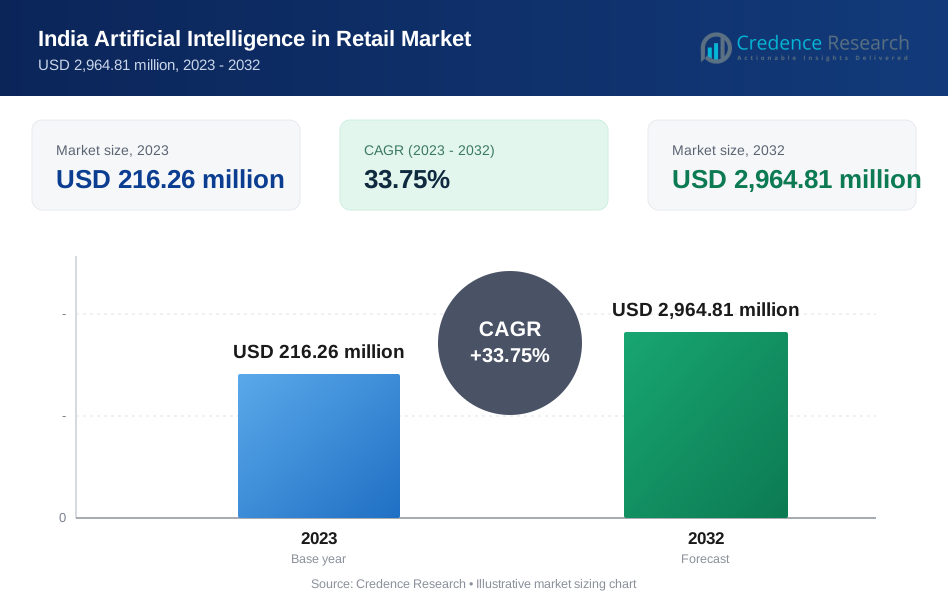
The India Artificial Intelligence in Retail market is expected to grow from USD 216.26 million in 2023 to USD 2,964.81 million by 2032, at a robust CAGR of 33.75%.
The India Artificial Intelligence (AI) in Retail market is driven by the increasing demand for personalized customer experiences and the need for operational efficiency. Retailers are leveraging AI technologies, such as machine learning and data analytics, to optimize inventory management, enhance supply chain processes, and offer tailored recommendations. The growing adoption of AI-powered chatbots and virtual assistants to improve customer service and boost sales is also fueling market growth. Additionally, AI’s ability to analyze consumer behavior patterns and predict trends is enabling retailers to make data-driven decisions, improving their competitive edge. The rising investments in AI solutions, along with the growing e-commerce sector, further accelerate market expansion. Retailers are also exploring AI for advanced fraud detection, customer sentiment analysis, and price optimization, driving innovation. With these factors, AI is increasingly becoming integral to the retail industry, ensuring efficiency, personalized offerings, and customer satisfaction.
The India Artificial Intelligence in Retail market is experiencing significant growth across various regions, with key players contributing to the market's expansion. Major urban centers like Delhi, Mumbai, Bengaluru, and Hyderabad are leading AI adoption due to their strong digital infrastructure and thriving retail sectors. These cities are home to both large retailers and innovative tech startups that are driving AI solutions in areas such as personalized customer experiences, inventory management, and predictive analytics. Key players in the Indian AI in retail market include global giants such as Infosys, TCS, Google, IBM, and Accenture, as well as AI-focused companies like NVIDIA, Salesforce, and Bloomreach, Inc. These companies are offering AI solutions tailored to the retail industry, helping businesses optimize operations and enhance customer engagement. As AI technologies become more integral to retail strategies, the influence of these players will continue to shape the market’s growth trajectory.
Market Insights
- The India Artificial Intelligence in Retail market is expected to grow from USD 216.26 million in 2023 to USD 2,964.81 million by 2032, with a CAGR of 33.75%.
- Increasing demand for personalized shopping experiences is a major driver, as retailers seek to improve customer engagement and sales.
- AI adoption is accelerating in the retail sector, with AI solutions enhancing inventory management, pricing strategies, and supply chain operations.
- The market is seeing a rise in AI-powered chatbots, virtual assistants, and data analytics tools to optimize customer service and support.
- Key players such as Infosys, TCS, Google, IBM, and Accenture are leading the market with innovative AI solutions.
- High initial investment costs and data privacy concerns are significant market restraints limiting broader adoption.
- The Northern and Western regions dominate the market, driven by urbanization, digital infrastructure, and increased AI investment in retail businesses.
Market Drivers
Increasing Demand for Personalization
The growing consumer demand for personalized shopping experiences is one of the key drivers of Artificial Intelligence (AI) adoption in the Indian retail sector. Retailers are utilizing AI-driven algorithms to offer personalized product recommendations based on browsing history, purchase behavior, and preferences. This not only enhances the customer experience but also drives higher sales and brand loyalty. AI enables businesses to better understand individual consumer needs, creating targeted marketing campaigns and product offerings that resonate with customers, fostering long-term relationships.
Operational Efficiency and Automation
AI technologies significantly improve operational efficiency across various retail processes. Inventory management is one area where AI excels, helping retailers predict demand, automate stock replenishment, and minimize waste. AI-driven solutions enhance supply chain management by predicting disruptions, optimizing routes for delivery, and reducing operational costs. Automation powered by AI is also transforming the way stores are managed, reducing human error, and improving overall productivity. As retailers face pressure to streamline operations, AI presents an essential solution for improving efficiency.
Advancements in Data Analytics
AI’s ability to process large volumes of data and derive actionable insights is a crucial driver in the retail sector. Retailers can leverage AI-powered data analytics to gain deeper insights into customer behavior, market trends, and competitor activities. For instance, a report by TCS indicated that nearly half of retail executives are using AI to develop more personalized marketing initiatives. This enables retailers to make informed decisions on product offerings, pricing strategies, and promotional tactics. With the growing availability of big data, AI provides the tools needed to analyze and interpret this information, giving businesses a competitive edge in a dynamic and fast-paced market.
Enhanced Customer Service and Engagement
AI is playing a pivotal role in transforming customer service in the Indian retail industry. AI-powered chatbots, virtual assistants, and customer support systems are increasingly being used to provide real-time assistance, resolve issues, and answer customer inquiries efficiently. These technologies ensure a seamless and consistent experience across multiple channels, from online shopping to in-store interactions. By automating customer service functions, retailers not only enhance customer satisfaction but also reduce operational costs, enabling businesses to allocate resources more effectively.
Market Trends
Rise of AI-Powered Chatbots and Virtual Assistants
A significant trend in India’s AI-driven retail market is the increasing adoption of AI-powered chatbots and virtual assistants. Retailers are using these technologies to provide 24/7 customer support, engage consumers in personalized conversations, and streamline the shopping experience. For instance, Amazon India uses AI chatbots to handle routine customer inquiries such as order tracking and product information. These AI tools enable customers to make inquiries, track orders, and receive product recommendations, all in real-time. As these technologies evolve, their ability to understand natural language and resolve complex queries is improving, resulting in enhanced customer satisfaction and retention.
Predictive Analytics for Inventory Management
Another growing trend in the Indian retail sector is the use of AI-driven predictive analytics for inventory management. Retailers are leveraging AI tools to predict demand fluctuations, optimize stock levels, and reduce the risks of overstocking or stockouts. For example, Bestseller India uses the platform Fabric.aI by the Indian SaaS company Stylumia to provide explainable sales forecasting models. By analyzing historical sales data, market trends, and customer behavior, AI helps businesses make more accurate forecasts, improving supply chain efficiency and reducing operational costs. This trend is transforming traditional inventory management methods and allowing retailers to better align their offerings with customer demand.
Integration of AI in In-Store Shopping
AI’s presence is expanding beyond online platforms and into physical retail stores, a trend gaining momentum in India. Retailers are implementing AI technologies such as facial recognition, smart mirrors, and automated checkout systems to enhance the in-store shopping experience. These innovations provide real-time insights into customer preferences, allowing retailers to offer personalized recommendations and promotions while improving store operations. The integration of AI into brick-and-mortar stores is improving convenience, reducing wait times, and increasing shopper engagement.
AI-Driven Price Optimization
AI is increasingly being used for dynamic pricing strategies in the Indian retail market. Retailers are employing AI algorithms to optimize pricing based on factors like demand, competitor pricing, and customer willingness to pay. By continuously analyzing market conditions and consumer behavior, AI helps businesses set the most competitive prices in real time, maximizing profit margins and attracting more customers. This trend is gaining popularity as retailers aim to stay competitive in an evolving market while offering value to consumers.
Market Challenges Analysis
High Initial Investment and Implementation Costs
One of the primary challenges facing the adoption of AI in India’s retail sector is the high initial investment and implementation costs. While AI can deliver significant long-term benefits, the initial setup for AI-driven systems, including hardware, software, and data infrastructure, can be expensive. For instance, a study by the Indian Institute of Management (IIM) found that many small and mid-sized retailers face significant financial barriers when integrating AI technologies. Additionally, the need for skilled professionals to manage and maintain AI technologies adds to the financial burden. This challenge can create barriers to entry for smaller businesses, limiting their ability to leverage AI to stay competitive.
Data Privacy and Security Concerns
As retailers increasingly rely on AI to analyze customer data, concerns surrounding data privacy and security are becoming more prominent. The collection and processing of vast amounts of personal and transactional data raise the risk of data breaches, which can severely damage a retailer’s reputation and customer trust. Indian retailers must navigate complex regulations related to data protection and comply with privacy laws while ensuring that customer data is securely stored and processed. The challenge of safeguarding sensitive information can be particularly daunting for businesses that lack the resources or expertise to implement robust security measures, hindering the widespread adoption of AI solutions.
Market Opportunities
Expanding E-Commerce Sector
One of the key opportunities for AI in India’s retail market lies in the rapidly growing e-commerce sector. With the increasing number of internet users and the rising trend of online shopping, retailers have the chance to leverage AI to enhance the digital shopping experience. AI technologies, such as personalized recommendations, dynamic pricing, and chatbots, can help e-commerce platforms better serve customers, improve user engagement, and increase sales. Additionally, AI-powered tools enable retailers to optimize their supply chains, manage inventory more effectively, and reduce operational costs, creating a significant opportunity for growth within this fast-evolving market.
Integration of AI with Omnichannel Retail Strategies
Another major opportunity for AI adoption is its integration with omnichannel retail strategies. As customers increasingly expect seamless shopping experiences across various touchpoints-be it online, in-store, or via mobile-retailers have the opportunity to implement AI systems that connect these different channels. AI can offer personalized experiences both online and in-store, allowing businesses to track customer behavior across multiple platforms and provide tailored recommendations. This integration enhances customer loyalty and satisfaction while also enabling retailers to better understand consumer preferences and buying patterns. By leveraging AI, Indian retailers can strengthen their competitive edge and meet the rising expectations of modern consumers, ultimately driving growth in the retail sector.
Market Segmentation Analysis:
By Component:
The India Artificial Intelligence in Retail market is segmented into two primary components: solutions and services. The solution segment includes AI-driven tools and software that retailers use for various functions, such as data analytics, customer relationship management (CRM), inventory optimization, and personalized marketing. These solutions help businesses streamline their operations, improve customer experiences, and increase efficiency. The services segment comprises AI consulting, implementation, and maintenance services that assist retailers in integrating AI technologies into their existing systems. As AI adoption in retail increases, the demand for both solutions and services is expected to grow significantly, as retailers seek to optimize their operations and gain a competitive edge in the market.
By Business Function:
Based on business function, the AI in retail market is segmented into marketing & sales, human resources, finance & accounting, operations, and cybersecurity. The marketing & sales segment is the largest, as retailers use AI to enhance customer targeting, segmenting, and personalized advertising efforts, driving sales growth. AI applications in human resources focus on recruitment, employee training, and performance management. The finance & accounting segment uses AI for automating processes such as invoicing, fraud detection, and budgeting. In operations, AI helps in streamlining supply chains, inventory management, and forecasting. The cybersecurity segment is growing as retailers adopt AI for threat detection, vulnerability management, and risk mitigation, ensuring secure and resilient operations. These diverse applications reflect the broad potential of AI across different facets of retail business operations.
Segments:
Based on Component:
- Solution
- Services
Based on Business Function:
- Marketing & Sales
- Human Resources
- Finance & Accounting
- Operations
- Cybersecurity
Based on Technology:
- Machine Learning
- Natural Language Processing
- Chatbots
- Image and Video Analytics
- Swarm Intelligence
Based on Sales Channel:
- Omnichannel
- Brick and Mortar
Based on the Geography:
- Northern
- Western
- Southern
- Eastern
Regional Analysis
Northern Region
The Northern region of India holds a significant share in the Artificial Intelligence (AI) in Retail market, contributing approximately 30% to the overall market. This region, which includes major states like Delhi, Haryana, Punjab, and Uttar Pradesh, is experiencing rapid growth in AI adoption across various retail segments. The expansion of e-commerce platforms and the increasing penetration of smartphones have driven demand for AI-powered solutions such as personalized recommendations, chatbots, and inventory management systems. Additionally, the presence of numerous tech hubs and startups in cities like Delhi and Chandigarh has fueled innovation in AI solutions tailored for the retail industry. As more retailers in the Northern region recognize the potential of AI to improve operational efficiency and customer experience, the market share of this region is expected to continue growing, with increasing investments in AI technologies.
Western Region
The Western region, encompassing states like Maharashtra, Gujarat, and Rajasthan, holds a market share of approximately 35% in the AI in Retail sector. Maharashtra, home to commercial hubs like Mumbai and Pune, leads the region with the highest adoption of AI in retail. Retailers in the Western region are increasingly relying on AI solutions for inventory optimization, dynamic pricing, and customer segmentation. The region also benefits from a well-developed digital infrastructure, which supports the integration of AI technologies into both traditional and online retail channels. Furthermore, the presence of several global retail giants and a growing e-commerce sector in the region has accelerated the demand for AI-driven customer service tools, predictive analytics, and automated supply chains, fostering further growth in AI adoption.
Southern Region
The Southern region of India, covering states such as Tamil Nadu, Karnataka, Andhra Pradesh, and Telangana, accounts for about 25% of the AI in Retail market. This region is witnessing substantial growth in AI adoption due to the strong presence of IT hubs like Bengaluru and Hyderabad, which are home to numerous technology startups and multinational corporations. Retailers in the South are leveraging AI for enhancing customer experiences through personalized recommendations and chatbot integrations. Additionally, AI is increasingly being used to optimize supply chains and inventory management systems across retail operations. The rise in the number of online shoppers in cities like Chennai and Hyderabad is driving the demand for AI-powered tools, and as digital transformation accelerates, the Southern region is expected to continue expanding its share in the AI in retail market.
Eastern Region
The Eastern region, including states like West Bengal, Odisha, Bihar, and Jharkhand, holds a smaller share of around 10% in the AI in Retail market. However, the region is witnessing gradual growth due to rising internet penetration, particularly in urban centers like Kolkata and Bhubaneswar. While the adoption of AI in retail is not as widespread as in other regions, the growing presence of e-commerce platforms and increasing awareness of AI’s benefits are driving its implementation. Retailers in this region are beginning to explore AI technologies for improving customer engagement and streamlining supply chains. As infrastructure improves and more retailers recognize the potential of AI, the market share of the Eastern region is likely to grow, though it remains relatively smaller compared to other regions.
Key Player Analysis
- Infosys
- TCS
- Google LLC
- IBM Corporation
- Accenture
- NVIDIA
- Salesforce
- Microsoft Corporation
- SAP SE
- Oracle Corporation
- Amazon
- ServiceNow
- Bloomreach, Inc.
- Company 14
- Company 15
- Others
Competitive Analysis
The competitive landscape of the India Artificial Intelligence in Retail market is driven by a few dominant players offering innovative AI solutions across various retail functions. Leading companies like Infosys, TCS, Google LLC, IBM Corporation, Accenture, NVIDIA, Salesforce, Microsoft Corporation, SAP SE, Oracle Corporation, Amazon, ServiceNow, Bloomreach, Inc., and others are shaping the market with their advanced AI capabilities. These companies leverage AI for customer engagement, supply chain optimization, inventory management, and personalized marketing strategies, helping retailers enhance operational efficiency and improve customer experiences. For instance, a survey by EY found that 71% of Indian retailers plan to adopt generative AI within the next 12 months to enhance customer experience and drive innovation. Retailers are leveraging AI to personalize shopping experiences, streamline processes, and increase operational efficiency, making it an essential component of their strategies. The market is also witnessing significant investments in AI technologies, with companies continuously upgrading their offerings to stay ahead of the competition. Key players are differentiating themselves by offering scalable, cloud-based AI platforms that can be seamlessly integrated into existing retail systems. Furthermore, AI-driven tools for predictive analytics, chatbots, virtual assistants, and dynamic pricing are becoming integral to retailers looking to enhance customer satisfaction and boost sales. As AI adoption grows, the competition is intensifying, and companies are focusing on expanding their market share by catering to the specific needs of the retail sector while staying at the forefront of technological advancements.
Recent Developments
- In January 2025, NVIDIA announced the NVIDIA AI Blueprint for retail shopping assistants, designed to transform shopping experiences both online and in stores. This blueprint helps developers create AI-powered digital assistants that can deliver personalized shopping experiences, drive higher conversion rates, and lower product return rates.
- In April 2024, Oracle introduced new AI capabilities within Oracle Fusion Cloud Customer Experience (CX) to help marketers, sellers, and service agents accelerate deal cycles. These capabilities automate time-consuming tasks and enable more precise targeting, engagement, and service of buyers.
- In January 2024, Microsoft unveiled new generative AI and data solutions at NRF 2024 to transform shopping experiences. These solutions span the retail shopper journey, from personalized shopping experiences to empowering store associates and unifying retail data.
- In January 2024, Salesforce announced new data and AI-powered tools at NRF 2024 to transform shopping experiences. These tools, powered by the Einstein 1 Platform, include AI content creation, digital storefronts, and shopper insights to enhance customer interactions, increase loyalty, and drive revenue.
- In January 2024, IBM reported at NRF 2024 that generative AI can bridge the consumer expectation gap by creating unified, integrated shopping experiences. The study showed dissatisfaction with current retail experiences and emphasized the role of AI in meeting consumer demands.
Market Concentration & Characteristics
The India Artificial Intelligence in Retail market exhibits moderate concentration, with a mix of global tech giants and specialized AI companies shaping its growth. Major players, including multinational corporations and emerging tech firms, dominate the market, offering a wide range of AI-driven solutions tailored for the retail industry. These companies provide advanced AI technologies for inventory management, personalized customer experiences, supply chain optimization, predictive analytics, and pricing strategies. While global leaders play a significant role in driving AI adoption, there is also a growing presence of local players who focus on region-specific solutions, addressing the unique needs of Indian retailers. The market characteristics reflect a strong emphasis on innovation, as companies strive to develop scalable, cost-effective, and flexible AI solutions to meet the diverse needs of retailers. The increasing penetration of e-commerce, rising consumer demand for personalized experiences, and advancements in cloud computing are key factors driving market growth. Additionally, the growing focus on data security and privacy regulations has prompted companies to enhance the robustness of their AI solutions. As AI continues to revolutionize the retail landscape, the market is likely to witness further consolidation, with leading players expanding their offerings through strategic partnerships, acquisitions, and technological advancements to maintain a competitive edge.
Report Coverage
The research report offers an in-depth analysis based on Component, Business Function, Technology, Sales Channel and Geography. It details leading market players, providing an overview of their business, product offerings, investments, revenue streams, and key applications. Additionally, the report includes insights into the competitive environment, SWOT analysis, current market trends, as well as the primary drivers and constraints. Furthermore, it discusses various factors that have driven market expansion in recent years. The report also explores market dynamics, regulatory scenarios, and technological advancements that are shaping the industry. It assesses the impact of external factors and global economic changes on market growth. Lastly, it provides strategic recommendations for new entrants and established companies to navigate the complexities of the market.
Future Outlook
- The India Artificial Intelligence in Retail market is expected to experience rapid growth due to increased adoption of AI technologies by retailers.
- AI-driven solutions will continue to play a pivotal role in enhancing customer engagement and personalizing shopping experiences.
- The demand for AI in supply chain optimization, inventory management, and demand forecasting will significantly rise.
- Retailers will increasingly adopt AI for predictive analytics to anticipate consumer behavior and make data-driven decisions.
- The integration of AI with IoT and cloud technologies will offer more seamless and scalable solutions for retailers.
- AI-powered chatbots and virtual assistants will become more prevalent, improving customer support and operational efficiency.
- The rise of AI in omnichannel retail strategies will help retailers provide a unified and personalized experience across multiple touchpoints.
- Companies will focus on addressing data privacy and security concerns to ensure AI solutions comply with evolving regulations.
- With the increasing penetration of smartphones and e-commerce, AI adoption will accelerate, especially in tier 2 and tier 3 cities.
- Retailers will prioritize AI-based tools to optimize pricing strategies and enhance competitive advantage in the rapidly evolving market.
Request a Free Sample
Fill in your details and we'll send you a free sample report.
- Sample data tables & charts
- Research methodology
Need a Custom Version of This Report?
Tailor the scope, geography, or segments to your exact requirements.
- Custom geography or segment scope
- Direct access to our analyst team
Frequently Asked Questions
What is the current size of the India Artificial Intelligence in Retail market?
What factors are driving the growth of the India Artificial Intelligence in Retail market?
What are the key segments within the India Artificial Intelligence in Retail market?
What are some challenges faced by the India Artificial Intelligence in Retail market?
Who are the major players in the India Artificial Intelligence in Retail market?
Table of Content
Chapter 1 Market Segmentation
- 1.1 Segmentation Framework
- 1.1.1 Product and Service Classification
- 1.1.2 Application and End-Use Classification
- 1.1.3 Technology and Solution Classification
- 1.1.4 Customer and Distribution Channel Classification
- 1.1.5 Geographic Segmentation
- 1.1.6 Market Segment Definitions and Boundaries
Chapter 2 Introduction
- 2.1 Report Objectives and Scope
- 2.2 Product Definition and Industry Terminology
- 2.3 Market Inclusions and Exclusions
- 2.4 Research Process
- 2.4.1 Primary Research and Expert Interviews
- 2.4.2 Secondary Research and Source Review
- 2.4.3 Top-Down and Bottom-Up Estimation
- 2.4.4 Data Triangulation and Verification
- 2.5 Market Size Measurement Basis
- 2.5.1 2023: USD 216.26 million → 2032: USD 2,964.81 million
- 2.6 Historical and Forecast Reference Periods
- 2.6.1 Base Year: 2023
- 2.6.2 Forecast Period: 2023-2032
- 2.7 Research Assumptions and Limitations
Chapter 3 Executive Summary
- 3.1 Market Snapshot and Key Findings
- 3.2 Base-Year Market Size, 2023
- 3.3 Forecast Market Size, 2032
- 3.4 Revenue and Volume Growth Outlook
- 3.5 Key Demand and Supply Indicators
- 3.6 Leading Market Segments
- 3.7 Fastest-Growing Market Opportunities
- 3.8 Regional Performance Highlights
- 3.9 Technology and Industry Transformation
- 3.10 Competitive Landscape Summary
- 3.11 Analyst View and Strategic Implications
Chapter 4 India Artificial Intelligence in Retail Market Trends and Developments
- 4.1 Historical Industry Development
- 4.2 Recent Market Trends and Developments
- 4.3 Demand and Customer Behavior Trends
- 4.4 Technology and Product Innovation
- 4.5 Artificial Intelligence, Automation and Digitalization
- 4.6 Local Manufacturing and Supply Chain Realignment
- 4.7 Industry Partnerships, Mergers and Acquisitions
- 4.8 Sustainability and Circular Economy Developments
- 4.9 Government and Private Sector Investment Trends
- 4.10 Emerging Business Models and Commercialization
- 4.11 Industry Developments and Announcements
Chapter 5 India Artificial Intelligence in Retail Market Production, Supply and Demand Analysis
- 5.1 Demand Trend and Consumption Analysis
- 5.2 Demand Forecast, 2023-2032
- 5.3 Production and Output Trend
- 5.4 Production and Output Forecast, 2023-2032
- 5.5 Installed Capacity and Capacity Utilization
- 5.6 Company-Wise Production Plants and Statistics
- 5.6.1 Installed Production Capacity
- 5.6.2 Actual Production
- 5.6.3 Planned Capacity and Expansion Targets
- 5.7 Supply Chain Structure and Procurement Trends
- 5.8 Supply-Demand Gap and Bottlenecks
- 5.9 Import Dependence and Sourcing Structure
- 5.10 Contract Manufacturing and Outsourcing
- 5.11 Regional Supply and Demand Concentration
Chapter 6 India Artificial Intelligence in Retail Market Pricing Analysis
- 6.1 Pricing Structure and Measurement
- 6.2 Historical Pricing Trends
- 6.3 Pricing Outlook, 2023-2032
- 6.4 Average Selling Price and Unit Economics
- 6.5 Pricing by Product and Market Segment
- 6.6 Geographic Pricing Differences
- 6.7 Key Input, Energy, Labor and Logistics Costs
- 6.8 Contract Pricing and Purchasing Models
- 6.9 Pricing Sensitivity and Competitive Positioning
- 6.10 Price, Margin and Profitability Implications
Chapter 7 India Artificial Intelligence in Retail Market Dynamics
- 7.1 Market Growth Drivers
- 7.1.1 Demand-Side Drivers
- 7.1.2 Technology and Innovation Drivers
- 7.1.3 Infrastructure and Investment Drivers
- 7.1.4 Regulatory and Policy Drivers
- 7.2 Market Restraints
- 7.2.1 Cost and Affordability Constraints
- 7.2.2 Technology and Adoption Barriers
- 7.2.3 Supply Chain and Operational Constraints
- 7.3 Market Challenges
- 7.3.1 Competitive Pressure and Margin Erosion
- 7.3.2 Skills, Infrastructure and Implementation Gaps
- 7.4 Emerging Market Opportunities
- 7.5 Market Dynamics Impact and Time-Horizon Assessment
Chapter 8 India Artificial Intelligence in Retail Value Chain Analysis
- 8.1 Industry Value Chain Overview
- 8.2 Upstream Suppliers and Critical Inputs
- 8.3 Technology and Component Providers
- 8.4 Manufacturing or Service Delivery
- 8.5 Distribution, Channel Partners and Integrators
- 8.6 Downstream Applications and End Users
- 8.7 Value Addition and Profit Pools
- 8.8 Vertical Integration and Outsourcing
- 8.9 Supplier Concentration and Risk
- 8.10 Supply Chain Localization and Resilience
Chapter 9 India Artificial Intelligence in Retail Market Regulations and Policies
- 9.1 Relevant Laws, Standards and Compliance Frameworks
- 9.2 Product, Service, Safety and Quality Requirements
- 9.3 Government Policies, Incentives and Subsidies
- 9.4 Imports, Exports and Trade Barriers
- 9.5 Public Procurement and Local Content Requirements
- 9.6 Environmental and Sustainability Compliance
- 9.7 Data Protection, AI and Cybersecurity Compliance
- 9.8 Upcoming Policy Changes and Market Implications
Chapter 10 India Artificial Intelligence in Retail Market Hotspots and Opportunities
- 10.1 Market Opportunity Mapping and Growth Hotspots
- 10.2 High-Growth Applications and Customer Groups
- 10.3 Underserved Markets and White-Space Opportunities
- 10.4 Emerging Technology and Product Opportunities
- 10.5 New Capacity and Investment Hotspots
- 10.6 Market Entry and Expansion Opportunities
- 10.7 Distribution and Partnership Opportunities
- 10.8 Near-Term and Long-Term Commercial Potential
- 10.9 Opportunity Attractiveness and Execution Risks
Chapter 11 India Artificial Intelligence in Retail Market Outlook, 2023-2032
- 11.1 Market Size and Analysis
- 11.1.1 Revenue (Market Measurement: 2023: USD 216.26 million → 2032: USD 2,964.81 million)
- 11.1.2 Market Volume and Quantity Sold
- 11.1.3 Historical Market Size
- 11.1.4 Base-Year Market Size, 2023
- 11.2 Market Forecast, 2023-2032
- 11.2.1 Revenue Forecast to 2032
- 11.2.2 Volume Forecast to 2032
- 11.2.3 CAGR and Year-on-Year Growth
- 11.2.4 Incremental Revenue Opportunity
- 11.3 Forecast Assumptions and Scenario Analysis
- 11.3.1 Base-Case Forecast
- 11.3.2 Optimistic and Conservative Scenarios
- 11.3.3 Technology, Pricing and Policy Sensitivities
- 11.4 Market Attractiveness and Growth Outlook
Chapter 12 India Artificial Intelligence in Retail Market Segmentation and Outlook
- 12.1 Segmentation Summary and Market Shares, 2023
- 12.2 Largest and Fastest-Growing Segments
- 12.3 Segment Growth Comparison
- 12.4 Segment Attractiveness and Priority Matrix
Chapter 13 India Artificial Intelligence in Retail Geographic Market Outlook, 2023-2032
- 13.1 Domestic Market Distribution and Demand Clusters
- 13.2 State- or Province-Wise Market Size and Forecast, 2023-2032
- 13.3 City and Metropolitan Market Outlook
- 13.4 Industrial, Manufacturing and Commercial Clusters
- 13.5 Geographic Concentration of Key End Users
- 13.6 Local Pricing and Purchasing Differences
- 13.7 Domestic Production Facilities and Capacity Map
- 13.8 Local Infrastructure and Project Pipeline
- 13.9 State-Level Policy and Incentive Differences
- 13.10 Subnational Investment Hotspots and Opportunities
- 13.11 Distribution and Logistics Networks
- 13.12 Domestic Competitive Footprint
Chapter 14 India Artificial Intelligence in Retail Technology, Innovation and Sustainability Outlook
- 14.1 Technology Landscape and Maturity
- 14.2 Product, Process and Service Innovation
- 14.3 AI, Automation and Digital Tools in the Industry
- 14.4 Technology Adoption and Performance Benchmarking
- 14.5 Innovation Pipeline and R&D Investment
- 14.6 Patent and Intellectual Property Trends
- 14.7 Energy Efficiency and Resource Management
- 14.8 Sustainability, Recycling and Circularity
- 14.9 Technology Roadmap, 2023-2032
- 14.10 Risks of Obsolescence and Technology Substitution
Chapter 15 India Artificial Intelligence in Retail Market Key Strategic Imperatives
- 15.1 Growth and Market Entry Priorities
- 15.2 High-Return Products and Segments
- 15.3 Pricing, Profitability and Cost Optimization
- 15.4 Technology Investment and Product Differentiation
- 15.5 Supply Chain Localization and Resilience
- 15.6 Distribution and Customer Acquisition
- 15.7 Partnership, Acquisition and Capacity Strategy
- 15.8 Regional Expansion Priorities
- 15.9 Short-, Medium- and Long-Term Actions
Chapter 16 Competition Outlook
- 16.1 Industry Competition Characteristics
- 16.2 Market Structure and Concentration
- 16.3 Market Share and Competitive Positioning, 2023
- 16.4 Company-Wise Revenue and Product Benchmarking
- 16.5 Production and Service Capacity Benchmarking
- 16.6 Technology, Pricing and Differentiation
- 16.7 Regional Footprint and Distribution Strength
- 16.8 Mergers, Acquisitions and Strategic Alliances
- 16.9 New Entrants and Competitive Threats
- 16.10 Porter's Five Forces and Industry Attractiveness
- 16.11 Competitive Outlook, 2023-2032
Chapter 17 Company Profiles
- 17.1 Company Coverage and Selection Criteria
- 17.2 Leading Market Participants – Standard Profile Structure
- 17.2.1 Business Description
- 17.2.2 Company Ownership and Geographic Presence
- 17.2.3 Product and Service Portfolio
- 17.2.4 Manufacturing and Operating Footprint
- 17.2.5 Production Capacity and Expansion Plans
- 17.2.6 Financial Performance and Investment
- 17.2.7 Market Share and Competitive Position
- 17.2.8 Technology and Innovation Capabilities
- 17.2.9 Strategic Alliances or Partnerships
- 17.2.10 Recent Developments
- 17.2.11 Growth Strategy and Outlook
- 17.3 Other Relevant Market Participants
Note: Every listed company is profiled on the structure shown under the first company. The company list is preliminary and may change based on research findings, market developments, data availability and client requirements.
Chapter 18 Disclaimer
- 18.1 Research and Forecast Disclaimer
- 18.2 Data Source and Estimation Limitations
Note: The depth of individual sections depends on data availability for this market. Volume, capacity, trade and other unit-based metrics are included where applicable.
