
| REPORT ATTRIBUTE | DETAILS |
|---|---|
| Historical Period | 2020-2023 |
| Base Year | 2024 |
| Forecast Period | 2025-2032 |
| India Gardening Tools Market Size 2024 | USD 273.47 million |
| India Gardening Tools Market, CAGR | 6.23% |
| India Gardening Tools Market Size 2032 | USD 471.36 million |
Market Overview
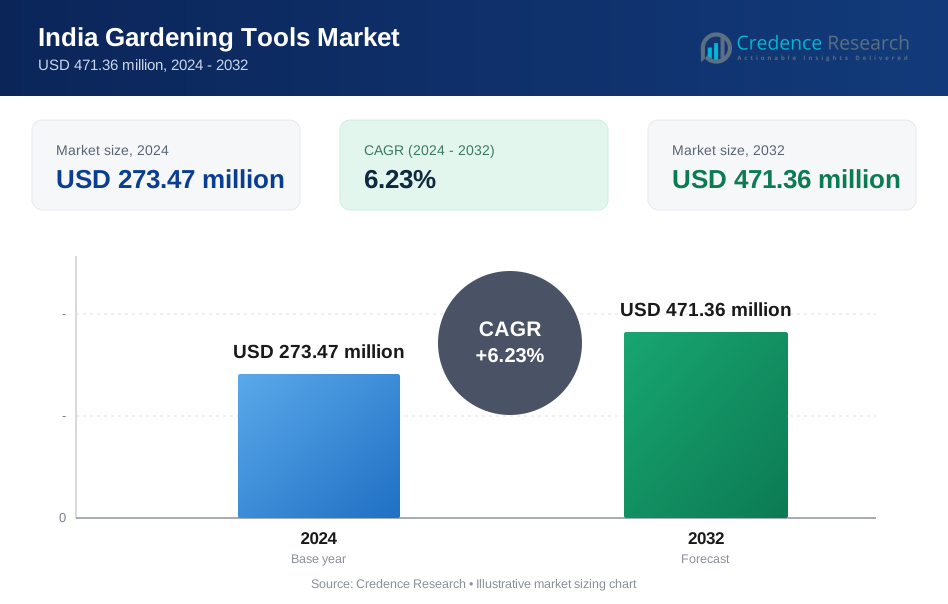
The India Gardening Tools Market is projected to grow from USD 273.47 million in 2024 to an estimated USD 471.36 million by 2032, with a compound annual growth rate (CAGR) of 6.23% from 2025 to 2032. The market's growth is attributed to the increasing popularity of gardening as a leisure activity, coupled with rising consumer spending on home and garden products.
Key drivers of this market include a growing urban population and increasing interest in home gardening, especially in the wake of rising awareness of environmental sustainability. The adoption of advanced gardening tools that offer convenience and ease of use is also a prominent trend. Additionally, technological innovations such as battery-powered and smart gardening tools are gaining traction, meeting the evolving needs of urban gardeners.
Geographically, the India Gardening Tools Market is expected to witness substantial growth across urban and semi-urban regions, driven by increased disposable income and a shift towards home-based hobbies. Key players in the market include Bosch, STIHL, Husqvarna, and GreenWorks, who are focusing on product innovation and expansion to meet the rising demand for high-quality gardening tools.
Market Insights
- The India Gardening Tools Market is projected to grow from USD 273.47 million in 2024 to USD 471.36 million by 2032, registering a CAGR of 6.23% from 2025 to 2032, driven by increasing gardening activities and urbanization.
- Rising awareness of environmental sustainability and organic farming is encouraging consumers to invest in gardening tools, especially in urban households.
- The adoption of battery-powered, smart, and automated gardening tools is revolutionizing the market, catering to tech-savvy gardeners seeking convenience.
- The expensive nature of advanced gardening tools, especially battery-powered and automated equipment, remains a challenge for mass adoption in price-sensitive markets.
- Western and Northern India lead the market due to rapid urbanization and commercial landscaping, while Southern and Eastern regions witness steady growth in home gardening activities.
- Online sales channels, including home centers and specialty stores, are driving market penetration, offering consumers greater accessibility and competitive pricing.
- Demand for eco-friendly and energy-efficient gardening tools made from sustainable materials is rising, aligning with the growing preference for green living practices.
Market Drivers
Technological Advancements in Gardening Tools
Technological innovation is another key driver propelling the growth of the India Gardening Tools Market. The development of smart, battery-powered, and automated gardening tools has transformed the way consumers approach gardening. Tools equipped with advanced features, such as ergonomic designs, enhanced power capabilities, and the ability to perform multiple tasks, have gained popularity. Battery-powered lawnmowers, cordless trimmers, and self-watering systems are some examples of the technological advancements revolutionizing gardening tools. These innovations not only make gardening more convenient but also improve efficiency and reduce the physical effort required for tasks such as mowing, trimming, and pruning. The shift towards electric and cordless tools is further driven by the growing emphasis on environmental sustainability, as these tools generate less pollution and are considered more eco-friendly compared to their traditional gasoline-powered counterparts. As technology continues to evolve, it is expected to drive further growth in the market by offering gardening solutions that cater to both amateur gardeners and professionals.
Government Support and Initiatives for Green Spaces
The Indian government has been actively promoting the development of green spaces and sustainable living environments across the country, which is driving the demand for gardening tools. Several government initiatives, such as promoting urban green spaces, creating rooftop gardens, and encouraging horticultural practices in schools and public spaces, are contributing to the increasing awareness and adoption of gardening. Government programs that support environmental conservation and encourage citizens to plant more trees and maintain greenery have increased the demand for tools necessary to carry out these tasks. Additionally, the government’s focus on sustainable agriculture and the promotion of organic farming has boosted the demand for specialized gardening tools used for cultivating home gardens. Policies aimed at reducing pollution and improving air quality through the creation of green spaces are expected to have a long-term impact on the India Gardening Tools Market by encouraging more individuals and communities to invest in gardening activities. This governmental support plays a crucial role in driving the market’s growth, as it fosters a conducive environment for gardening enthusiasts and professionals alike.
Rising Interest in Gardening and Horticulture
One of the primary drivers of the India Gardening Tools Market is the growing interest in gardening and horticulture across urban and rural populations. Gardening has evolved from being a leisure activity to an essential hobby for many individuals, driven by factors such as health consciousness, environmental awareness, and the increasing adoption of sustainable living practices. The urban population, particularly millennials and Gen Z, is increasingly investing time and resources in gardening activities to enhance their living spaces with green environments. This trend is contributing significantly to the demand for various gardening tools, including hand tools, power tools, and specialized tools for specific gardening needs. As more people recognize the mental and physical benefits of gardening, there is a continuous increase in the number of households adopting gardening as a hobby, further fueling the market's growth.For instance, the rising interest in gardening and horticulture is evident in initiatives like the Poshan Vatika Yojana, where kitchen gardens are being established in schools to promote sustainable agriculture and provide fresh produce, reflecting a broader shift towards green living and self-sufficiency. Additionally, urban gardening trends, such as balcony and container gardening, are becoming increasingly popular, driven by the need to optimize smaller living spaces and adopt sustainable lifestyles. This trend is supported by the development of innovative, space-efficient gardening tools and technologies that cater to the unique needs of urban gardeners.
Urbanization and Smaller Living Spaces
The rapid pace of urbanization in India, coupled with shrinking living spaces in major metropolitan areas, has led to a surge in demand for compact gardening tools. Urban gardening, which includes balcony gardening, terrace gardening, and container gardening, is becoming increasingly popular among city dwellers who wish to grow plants in smaller areas. This shift towards gardening in smaller spaces requires tools that are efficient, easy to use, and versatile. Gardening tools that cater to the needs of urban environments, such as compact and multi-functional tools, are gaining prominence. The demand for such tools is not only driven by the desire to cultivate plants for aesthetic purposes but also by the growing interest in home-grown vegetables and herbs as part of a sustainable lifestyle. This urban gardening trend is contributing significantly to the expansion of the India Gardening Tools Market.In urban settings, the emphasis on sustainability and self-sufficiency is driving the adoption of gardening practices that maximize space while minimizing environmental impact. For example, hydroponics and vertical gardening systems are being used to grow a variety of crops in limited spaces, further increasing the demand for specialized gardening tools designed for these innovative methods. As urban residents continue to seek ways to integrate nature into their living environments, the demand for gardening tools tailored to urban needs is expected to continue growing.
Market Trend
Emphasis on Eco-Friendly and Sustainable Products
Eco-conscious consumers are increasingly seeking gardening tools that align with their values of sustainability and environmental responsibility. As India moves towards a more sustainable future, gardening tool manufacturers are responding by introducing eco-friendly and energy-efficient products. These tools are made from sustainable materials such as recycled plastics, bamboo, and non-toxic substances, which appeal to environmentally aware consumers. Additionally, many brands are prioritizing energy-efficient designs, particularly in power tools, with the shift toward cordless and electric models. The trend toward sustainability is also reflected in the rising demand for organic gardening tools, which support practices like composting, organic fertilization, and pesticide-free gardening. This movement is part of a broader consumer shift towards adopting green practices across all aspects of daily life. Manufacturers are responding by not only improving the functionality and ergonomics of gardening tools but also by making sustainability a core part of their product offerings. As environmental concerns continue to grow, eco-friendly gardening tools will likely continue to gain traction in the Indian market.
Integration of Technology and Innovation in Gardening Tools
Technological advancements and innovations are significantly transforming the India Gardening Tools Market. Manufacturers are increasingly focusing on enhancing the functionality and ease of use of gardening tools through technological integration. The rise of robotic and automated gardening tools, such as robotic lawnmowers and automated irrigation systems, is one of the key trends shaping the market. These advanced tools leverage artificial intelligence (AI) and machine learning to optimize gardening tasks, reducing the effort and time required for maintenance. Additionally, tools with enhanced features such as GPS-enabled lawnmowers, soil sensors, and automated watering systems are gaining popularity due to their ability to reduce water consumption and improve the efficiency of gardening tasks. These innovations not only make gardening more convenient but also help consumers achieve better results with less effort. As technology continues to evolve, we are likely to see further advancements in gardening tools, such as drones for garden monitoring and even AI-powered plant care systems that can identify and solve common plant problems. The integration of technology into gardening tools enhances both the precision and efficiency of gardening activities, making it an attractive choice for tech-savvy consumers looking to simplify their gardening tasks.
Rising Popularity of Smart and Battery-Powered Tools
One of the most significant trends currently shaping the India Gardening Tools Market is the rising demand for smart and battery-powered gardening tools. As consumers become more environmentally conscious, there has been a marked shift from traditional gas-powered tools to battery-powered alternatives that offer higher energy efficiency and reduced environmental impact. These tools, which include battery-powered lawnmowers, trimmers, chainsaws, and hedge cutters, are gaining popularity due to their quiet operation, ease of use, and lower maintenance costs compared to gas-powered tools. In addition to being eco-friendly, these tools often come with features such as ergonomic handles, adjustable speeds, and long-lasting batteries, making them highly attractive to urban gardeners and those with limited physical strength.For instance, the shift towards battery-powered gardening tools is evident in the increasing adoption of cordless lawnmowers, which are powered by lightweight batteries and offer quiet operation and low maintenance. These tools are particularly appealing due to their environmental benefits, such as producing no emissions, and their ease of use, which includes features like adjustable cutting heights and mulching capabilities.Furthermore, smart gardening tools equipped with IoT (Internet of Things) technology are becoming increasingly common. These smart tools can be connected to mobile apps, allowing users to monitor and control their gardening tools remotely. As demand for convenience and sustainability grows, the shift towards smart and battery-powered gardening tools is expected to continue driving growth in the market. This trend reflects a broader societal shift towards more sustainable and technologically integrated living practices.
Growing Trend of Urban Gardening and Home Gardening
Urbanization in India is leading to the growing trend of urban gardening, which is contributing to the expansion of the gardening tools market. With more people living in apartments and smaller homes, gardening activities are increasingly being confined to balconies, terraces, and even indoor spaces. This shift toward compact gardening is prompting the development of specialized tools that cater to small-scale gardening needs. The demand for container gardening, vertical gardening, and hydroponics has surged as people seek ways to grow plants, vegetables, and herbs within confined spaces.For instance, urban residents in India are increasingly converting underutilized spaces like balconies into thriving gardens through rooftop farming and community-supported agriculture initiatives. This trend is driven by the desire for food security, mental well-being, and community building, leading to a surge in demand for specialized gardening tools designed for compact spaces, such as vertical gardening systems and hydroponic kits.As a result, gardening tools that are specifically designed for urban environments—such as smaller, lightweight, and multi-functional tools—are seeing high demand. Additionally, the growing awareness around organic food and sustainable living practices is driving individuals to grow their own food. This has fueled the rise in the use of gardening tools such as small hand tools, pruning shears, soil testers, and other equipment that are necessary for successful urban gardening. As more people embrace the idea of creating green spaces in their homes, the demand for gardening tools tailored to urban environments will continue to grow.
Market Challenges
Lack of Consumer Awareness and Education
Another challenge in the India Gardening Tools Market is the lack of consumer awareness and education regarding the various gardening tools available. While urban gardening is on the rise, many consumers remain unaware of the wide range of tools designed to enhance gardening efficiency and productivity. Many individuals, particularly new gardeners, are often unsure about which tools are best suited for their specific needs. This lack of knowledge limits the growth potential of the market, as consumers may not see the full value of investing in advanced or specialized gardening tools. Additionally, insufficient training or guidance on the proper use and maintenance of these tools further hampers their adoption. To overcome this challenge, manufacturers and distributors need to invest in consumer education through workshops, online tutorials, and product demonstrations to foster a deeper understanding of the benefits and functionalities of modern gardening tools. Raising awareness and providing better access to information will be key to accelerating market growth and increasing tool adoption among a broader consumer base.
High Cost of Advanced and Battery-Powered Tools
One of the key challenges faced by the India Gardening Tools Market is the high cost associated with advanced and battery-powered tools. While these tools offer convenience, efficiency, and environmental benefits, their initial purchase price is significantly higher than traditional, manual tools. The high upfront costs can be a barrier for a large segment of the population, particularly in price-sensitive markets like India. Many consumers, especially in rural and semi-urban areas, continue to rely on traditional tools due to their affordability and long-term reliability.For instance, the Makita 40Vmax XGT BL Brushless Cordless Hedge Trimmer, a high-end gardening tool, is priced at a level that highlights the significant financial investment required for advanced battery-powered tools in India. This high upfront cost, combined with ongoing expenses such as battery maintenance and replacement, makes these tools less accessible to many consumers. Although the demand for electric and battery-powered tools is growing in urban areas, their cost remains a challenge for mass adoption. Manufacturers must find ways to reduce production costs and make these advanced tools more affordable to broaden their market appeal.
Market Opportunities
Expansion of Urban Gardening and DIY Trends
One of the key opportunities in the India Gardening Tools Market is the expanding trend of urban gardening and Do-It-Yourself (DIY) gardening practices. With the increasing population in urban areas and limited space in apartments, consumers are adopting gardening techniques such as balcony, terrace, and vertical gardening to make the most of their available space. This growing interest in home gardening presents significant growth potential for the gardening tools market, as consumers seek efficient, compact, and easy-to-use tools to support their gardening efforts. Additionally, the rising preference for homegrown vegetables, herbs, and plants as part of sustainable living practices is further driving demand for gardening tools. Manufacturers have the opportunity to tap into this emerging market by offering specialized products tailored to urban gardening needs, such as compact, multi-functional tools, and smart gardening solutions.
Increasing Demand for Eco-Friendly and Sustainable Products
Another promising opportunity lies in the rising demand for eco-friendly and sustainable gardening tools. As environmental consciousness grows in India, more consumers are opting for products that align with sustainable living principles. This includes tools made from recycled or biodegradable materials, as well as battery-powered and electric tools that reduce carbon footprints. With a greater focus on green initiatives and reducing environmental impact, there is a significant opportunity for manufacturers to innovate and introduce environmentally friendly gardening tools to meet this demand. Additionally, government incentives and policies promoting sustainability could further fuel consumer interest in such products, presenting a lucrative market opportunity for eco-conscious gardening tool brands.
Market Segmentation Analysis
By Product
The market is categorized into hand tools, lawnmowers, trimmers and edgers, and water management equipment. Hand tools dominate the segment due to their affordability, ease of use, and widespread application in gardening activities. Tools such as pruners, shears, trowels, and rakes are essential for both residential and commercial gardening. Lawnmowers hold a significant share, driven by the growing adoption of lawn maintenance practices in urban areas. With increasing demand for aesthetic landscaping, advanced electric and battery-powered lawnmowers are gaining traction. Trimmers and edgers are essential for precision gardening, making them popular among commercial landscapers and home gardeners. Water management equipment, including sprinklers, hoses, and irrigation systems, is witnessing growing demand due to the increasing focus on water conservation and efficient garden maintenance.
By End User
The market is divided into residential and commercial end-users. The residential segment accounts for a major share, driven by the rising trend of home gardening, urban farming, and DIY landscaping. Homeowners are increasingly investing in gardening tools to maintain indoor and outdoor gardens. The commercial segment, comprising landscaping businesses, public gardens, and golf courses, is also expanding. The need for high-performance tools for large-scale maintenance and landscaping projects is driving demand in this segment.
Segments
Based on product
- Hand Tools
- Lawnmowers
- Trimmers and Edgers
- Water Management Equipment
Based on End User
- Residential
- Commercial
Based on Distribution Channel
- Home Centers
- Lawn and Garden Specialty Stores
- National Retailers
- Discount Stores
- Hardware Store
Based on Region
- Northern Region
- Western Region
- Southern Region
- Eastern Region
- Central and Northeastern Regions
Regional Analysis
Northern Region (25%)
The northern region, encompassing states like Delhi, Uttar Pradesh, Punjab, and Haryana, accounts for approximately 25% of the market share. This area's growth is driven by a combination of urban expansion and a strong tradition of home gardening. The rise of urban farming initiatives and community gardens in cities such as Delhi has further fueled the demand for gardening tools. Additionally, the presence of agricultural universities and research centers in this region promotes modern horticultural practices, leading to increased adoption of advanced gardening equipment.
Western Region (30%)
States like Maharashtra and Gujarat in the western region contribute to about 30% of the market share. The rapid urbanization in cities like Mumbai and Pune has led to a surge in residential complexes incorporating green spaces, thereby increasing the demand for gardening tools. Furthermore, the growing trend of terrace and balcony gardening among urban residents has boosted the sales of compact and efficient gardening tools suitable for limited spaces. The region's favorable climate also supports year-round gardening activities, sustaining consistent demand for gardening equipment
Key players
- Honda Motor Co., Ltd
- Ariens Company
- Briggs & Stratton
- Deere & Company
- Falcon Garden Tools
- Fiskars
- Husqvarna Group
- Robert Bosch GmbH
- Robomow Friendly House
- The Toro Company
- Genuine Fert & Pest Private Limited
- Cheaperzone Ecom LLP
Competitive Analysis
The India Gardening Tools Market is highly competitive, with established global brands and domestic players vying for market share. Honda Motor Co., Ltd., Husqvarna Group, and Deere & Company dominate the market with their technologically advanced, durable, and premium-quality gardening tools. These companies leverage their global expertise and strong brand presence to maintain a competitive edge. Robert Bosch GmbH, Fiskars, and The Toro Company focus on innovation, offering battery-powered and smart gardening tools to cater to the growing demand for automation and sustainability. Meanwhile, Ariens Company and Briggs & Stratton emphasize power equipment for large-scale landscaping and commercial gardening. Indian brands like Falcon Garden Tools and Genuine Fert & Pest Private Limited compete with affordable, high-quality tools tailored to the domestic market. Cheaperzone Ecom LLP and other emerging companies are leveraging e-commerce platforms to expand their reach. The market remains dynamic, with players investing in product innovation, strategic partnerships, and eco-friendly solutions to strengthen their foothold.
Recent Developments
- In March 2023, Falcon Garden Tools continues to expand its product line with innovative gardening tools, focusing on quality and customer satisfaction. They have a strong network of dealers across India and export to multiple countries.
- In January 2023, Genuine Fert & Pest continues to focus on providing a wide range of gardening-related products, including organic fertilizers and grow bags. They operate as a wholesaler and distributor, offering products for terrace gardening and landscaping.
Market Concentration and Characteristics
The India Gardening Tools Market exhibits a moderate to high market concentration, with a mix of global and domestic players competing for market share. Established international brands like Honda Motor Co., Ltd., Husqvarna Group, Deere & Company, and Robert Bosch GmbH dominate the premium and technologically advanced gardening tools segment, leveraging innovation, durability, and strong distribution networks. Domestic players such as Falcon Garden Tools and Genuine Fert & Pest Private Limited focus on cost-effective solutions catering to the price-sensitive consumer base. The market is characterized by a growing demand for smart, battery-powered, and eco-friendly tools, driven by increasing urbanization, home gardening trends, and sustainability initiatives. The fragmented retail landscape, comprising home centers, specialty stores, and e-commerce platforms, is reshaping purchasing patterns, offering consumers greater accessibility and variety. Additionally, ongoing government efforts to promote green spaces and sustainable horticulture practices are further driving market expansion, fostering opportunities for new entrants and product diversification.
Report Coverage
The research report offers an in-depth analysis based on Product, End User, Distribution Channel and Region. It details leading market players, providing an overview of their business, product offerings, investments, revenue streams, and key applications. Additionally, the report includes insights into the competitive environment, SWOT analysis, current market trends, as well as the primary drivers and constraints. Furthermore, it discusses various factors that have driven market expansion in recent years. The report also explores market dynamics, regulatory scenarios, and technological advancements that are shaping the industry. It assesses the impact of external factors and global economic changes on market growth. Lastly, it provides strategic recommendations for new entrants and established companies to navigate the complexities of the market.
Future Outlook
- The India Gardening Tools Market is expected to grow at a CAGR of 6.23% from 2025 to 2032, driven by rising urbanization and increasing interest in home gardening. Expanding green initiatives and sustainability trends will further fuel market expansion.
- Technological advancements will drive the adoption of smart gardening tools, including robotic lawnmowers, automated irrigation systems, and IoT-enabled garden monitoring solutions, catering to tech-savvy consumers.
- Consumers will increasingly prefer battery-operated and cordless gardening tools, such as electric trimmers and lawnmowers, due to their convenience, eco-friendliness, and reduced maintenance costs.
- The trend of urban gardening, terrace gardening, and hydroponics will continue to rise, especially in metropolitan areas, driving demand for compact, multi-functional gardening tools tailored for small spaces.
- The market will witness increased production of sustainable gardening tools, including those made from recycled materials, as consumers become more environmentally conscious and adopt green living practices.
- E-commerce platforms will play a crucial role in expanding market reach, offering consumers a wider selection of tools, competitive pricing, and doorstep delivery, further driving market penetration.
- Initiatives promoting urban greenery, afforestation, and sustainable agriculture will boost demand for high-quality gardening tools, particularly in public parks, residential societies, and institutional spaces.
- As gardening gains popularity as a recreational and stress-relieving activity, more households will invest in essential gardening tools, creating steady demand in the residential segment.
- Established global brands and emerging domestic players will compete through product innovation, pricing strategies, and expansion of distribution networks, making the market increasingly dynamic.
- Although urban areas currently dominate, semi-urban and rural regions will emerge as potential growth hubs, with increasing awareness about gardening and improved accessibility to affordable tools.
Request a Free Sample
Fill in your details and we'll send you a free sample report.
- Sample data tables & charts
- Research methodology
Need a Custom Version of This Report?
Tailor the scope, geography, or segments to your exact requirements.
- Custom geography or segment scope
- Direct access to our analyst team
Frequently Asked Questions
What is the market size and growth rate of the India Gardening Tools Market?
What are the key drivers of growth in the India Gardening Tools Market?
How is technology impacting the India Gardening Tools Market?
Which regions are leading the growth of the India Gardening Tools Market?
Table of Content
Chapter 1. Report Introduction
- 1.1 Report Description & Purpose
- 1.1.1 Report Title & Market Definition
- 1.1.2 Unique Selling Propositions (USP) & Key Differentiators
- 1.1.3 Value Proposition for Stakeholders
- 1.2 Research Objectives
- 1.2.1 Market Sizing Objectives (Volume & Revenue)
- 1.2.2 Segmentation Objectives
- 1.2.3 Competitive Intelligence Objectives
- 1.2.4 Forecast & Scenario Objectives
- 1.3 Report Scope
- 1.3.1 India Gardening Tools Scope – Types & Subtypes Covered
- 1.3.2 Geographic Scope – Regions & Countries Covered
- 1.3.3 Historical Period, Base Year & Forecast Period (2024; forecast to 2032)
- 1.3.4 Inclusions & Exclusions
- 1.4 HS Code & Classification Framework
- 1.5 Currency, Units & Pricing Basis
- 1.6 Target Stakeholders
- 1.7 Limitations & Assumptions
Chapter 2. Executive Summary
- 2.1 Global India Gardening Tools Market Snapshot
- 2.1.1 Market Size – Historical (2024) & Forecast (2024-2032) (2024: USD 273.47 million → 2032: USD 471.36 million)
- 2.1.2 Volume & Revenue – Global Totals
- 2.1.3 Key Market Highlights – Top Five Facts
- 2.2 India Gardening Tools Market Segmentation Snapshot
- 2.2.1 Market Split by Region – 2024 vs. 2032
- 2.3 Competitive Snapshot
- 2.3.1 Top 10 Players by Revenue Share – 2024
- 2.3.2 Top 10 Players by Volume Share – 2024
- 2.3.3 Recent Strategic Developments (18-Month Summary)
- 2.4 Key Investment Highlights & Strategic Conclusions
Chapter 3. India Gardening Tools Market Dynamics & Industry Analysis
- 3.1 Market Overview & Context
- 3.1.1 India Gardening Tools Market Position in the Broader Automotive Value Chain
- 3.1.2 OEM vs. Replacement Market Dynamics
- 3.1.3 Market Maturity & Development Stage by Region
- 3.2 India Gardening Tools Market Drivers
- 3.3 India Gardening Tools Market Restraints & Challenges
- 3.4 India Gardening Tools Market Opportunities
- 3.5 Porter's Five Forces Analysis
- 3.5.1 Threat of New Entrants
- 3.5.2 Bargaining Power of Suppliers
- 3.5.3 Bargaining Power of Buyers
- 3.5.4 Threat of Substitutes
- 3.5.5 Competitive Rivalry – Intensity Assessment
- 3.6 India Gardening Tools Value Chain Analysis
- 3.6.1 Upstream – Raw Material/Input Suppliers
- 3.6.1.1 Raw Material/Input 1
- 3.6.1.2 Raw Material/Input 2
- 3.6.1.3 Raw Material/Input 3
- 3.6.2 Midstream – Production/Manufacturing/Service Delivery
- 3.6.2.1 Production/Process Overview
- 3.6.2.2 Key Facility Locations & Capacity by Manufacturer
- 3.6.3 Downstream – Distribution & End Consumer
- 3.6.3.1 Primary Channel – B2B/OEM
- 3.6.3.2 Secondary Channels – Dealer, Retail, Online, Direct
- 3.6.4 Value Chain Profitability Analysis
- 3.6.1 Upstream – Raw Material/Input Suppliers
- 3.7 PESTEL Analysis
- 3.7.1 Political Factors
- 3.7.2 Economic Factors
- 3.7.3 Social Factors
- 3.7.4 Technological Factors
- 3.7.5 Environmental Factors
- 3.7.6 Legal Factors
- 3.8 India Gardening Tools Supply Chain Analysis
- 3.8.1 Raw Material/Input Supply Risk Assessment
- 3.8.2 Manufacturing Concentration Risk (Geographic Exposure)
- 3.8.3 Trade Disruption Impact Analysis
- 3.9 Regulatory & Policy Landscape
Note: The regulatory and policy landscape section covers regulations based on their applicability to the market, India Gardening Tools category, geography, and scope of the study. Only regulatory frameworks with a material impact on operations, compliance, trade, sustainability, or market access are analyzed in detail.
Chapter 4. Key Investment Pockets & Opportunity Analysis
- 4.1 India Gardening Tools Market Attractiveness Analysis
- 4.1.1 By Region – Investment Attractiveness Matrix (Volume × CAGR)
- 4.2 Absolute Revenue Growth Opportunity
- 4.2.1 By Region – Absolute USD Growth Through 2032
- 4.3 Incremental Volume Opportunity
- 4.3.1 By Region – Incremental Volume Through 2032
- 4.3.2 Segment – Incremental Volume
- 4.4 Emerging Submarket Opportunity Deep Dive (Subject to Applicability)
- 4.5 Emerging Market Opportunity Scorecards
- 4.5.1 United States
- 4.5.2 Europe
- 4.5.3 Asia
- 4.5.4 Middle East & Africa
Note: Emerging Market Opportunity Scorecards will be included based on relevance and strategic importance. Regions listed are indicative and may vary depending on data availability and market dynamics.
Chapter 5. India Gardening Tools Import-Export Analysis & Trade Flows
- 5.1 Global Trade Overview
- 5.1.1 Global Export Value by Country (2024)
- 5.1.2 Global Export Volume by Country (2024)
- 5.1.3 Global Import Value by Country (2024)
- 5.1.4 Global Import Volume by Country (2024)
- 5.1.5 Net Trade Balance by Country (2024)
- 5.2 Export Analysis – Segment
- 5.2.1 Type 1 (HS Code)
- 5.2.2 Type 2 (HS Code)
- 5.2.3 Type 3 (HS Code)
- 5.2.4 Type 4 (HS Code)
- 5.2.5 Type 5 (HS Code)
- 5.3 Import Analysis – Segment
- 5.3.1 Type 1 (HS Code)
- 5.3.2 Type 2 (HS Code)
- 5.3.3 Type 3 (HS Code)
- 5.3.4 Type 4 (HS Code)
- 5.3.5 Type 5 (HS Code)
- 5.4 Average Unit Trade Prices
- 5.4.1 Average Export Price – Segment & Country
- 5.4.2 Average Import Price – Segment & Source Country
- 5.4.3 Price Trends (2024)
- 5.5 Key Trade Route Analysis
- 5.5.1 Trade Route 1
- 5.5.2 Trade Route 2
- 5.5.3 Trade Route 3
- 5.5.4 Trade Route 4
- 5.5.5 Trade Route 5
- 5.6 Trade Policy Impact Assessment
- 5.6.1 US Anti-Dumping & Section 301 Tariffs
- 5.6.2 EU Customs Union Impact
- 5.6.3 Major Free Trade Agreements
- 5.6.4 USMCA Rules of Origin
Note: Trade policy analysis will be included only where relevant to the India Gardening Tools market.
Chapter 6. Competitive Landscape & Company Benchmarking
- 6.1 India Gardening Tools Market Concentration & Structure
- 6.1.1 Herfindahl-Hirschman Index (HHI) – vs. 2024
- 6.1.2 Tier 1, Tier 2 & Tier 3 Market Structure
- 6.1.3 Global, Regional & Local Player Dynamics
- 6.2 India Gardening Tools Market Share Analysis – 2024
- 6.2.1 Global Revenue Share by Company
- 6.2.2 Global Volume Share by Company
- 6.2.3 Regional Revenue Share
- 6.2.4 Market Share Evolution ( vs. 2024)
- 6.2.5 OEM Segment Share by Company
- 6.2.6 Replacement Segment Share by Company
- 6.3 Production/Delivery Capacity & Facility Analysis
- 6.3.1 Global Installed Capacity
- 6.3.2 Capacity Utilization Rates
- 6.3.3 Production/Output Volume
- 6.3.4 Facility Locations & Capacity Map
- 6.3.5 Planned Capacity Additions
- 6.4 India Gardening Tools Competitive Benchmarking Matrix
- 6.4.1 Revenue, Volume, CAGR & Profitability Comparison
- 6.4.2 Channel Revenue Mix
- 6.4.3 Geographic Revenue Exposure
- 6.4.4 R&D Intensity
- 6.4.5 Sustainability Maturity
- 6.5 Strategic Developments in India Gardening Tools (Last 24 Months)
- 6.5.1 Mergers, Acquisitions & Divestments
- 6.5.2 New India Gardening Tools Launches
- 6.5.3 Facility Expansions
- 6.5.4 Strategic Alliances, Joint Ventures & Partnerships
- 6.5.5 Distribution Expansion & Market Entry
- 6.5.6 Sustainability & ESG Initiatives
- 6.6 Competitive Strategy Mapping
- 6.6.1 Leader, Challenger, Follower & Niche Classification
- 6.6.2 Pricing Strategy Comparison
- 6.6.3 Channel Strategy Matrix
Note: Strategic developments are included based on their materiality and the availability of reliable information.
Chapter 7. Global India Gardening Tools Market – By Distribution Channel
- 7.1 Segment Overview
- 7.1.1 Volume & Revenue Split by Channel (2024 & 2032)
- 7.1.2 Channel Mix Evolution (2024-2032)
Chapter 8. Regional Market Analysis – Global Overview
- 8.1 Global Regional Overview
- 8.1.1 Regional Volume Share
- 8.1.2 Regional Revenue Share
- 8.1.3 Regional Volume by Region
- 8.1.4 Regional Revenue by Region
- 8.1.5 Regional Forecast Through 2032
- 8.2 Cross-Regional Segment Analysis
- 8.2.1 By Distribution Channel
- 8.2.2 By Brand/Price Tier
Chapter 9. North America India Gardening Tools Market
- 9.1 United States
- 9.2 Canada
- 9.3 Mexico
Chapter 10. Europe India Gardening Tools Market
- 10.1 Germany
- 10.2 France
- 10.3 Italy
- 10.4 United Kingdom
- 10.5 Spain
- 10.6 Poland
- 10.7 Russia
- 10.8 Netherlands
- 10.9 Belgium
- 10.10 Sweden
- 10.11 Denmark
- 10.12 Norway
- 10.13 Rest of Europe
Chapter 11. Asia Pacific India Gardening Tools Market
- 11.1 China
- 11.2 India
- 11.3 Japan
- 11.4 South Korea
- 11.5 Thailand
- 11.6 Indonesia
- 11.7 Vietnam
- 11.8 Malaysia
- 11.9 Australia
- 11.10 Rest of Asia Pacific
Chapter 12. Latin America India Gardening Tools Market
- 12.1 Brazil
- 12.2 Argentina
- 12.3 Colombia
- 12.4 Chile
- 12.5 Rest of Latin America
Chapter 13. Middle East India Gardening Tools Market
- 13.1 Saudi Arabia
- 13.2 United Arab Emirates
- 13.3 Turkey
- 13.4 Israel
- 13.5 Iran
- 13.6 Rest of the Middle East
Chapter 14. Africa India Gardening Tools Market
- 14.1 South Africa
- 14.2 Egypt
- 14.3 Nigeria
- 14.4 Morocco
- 14.5 Rest of Africa
Chapter 15. India Gardening Tools Company Profiles
- 15.1 [Company 01]
- 15.1.1 Company Overview
- 15.1.2 Key Management Personnel
- 15.1.3 Products & Services Portfolio
- 15.1.4 Financial Performance
- 15.1.5 Key Market Focus & Geographic Presence
- 15.1.6 Recent Developments & Strategic Initiatives
Note: The company profile list is preliminary and may change based on research findings, market developments, data availability, and client requirements.
Chapter 16. Appendices
- Appendix A – List of Abbreviations & Acronyms
- Appendix B – Industry Classification Code Reference – Full Series
- Appendix C – Production & Capacity Data Tables
- Appendix D – End-Use & Demand Base Tables
- Appendix E – Consumption & Replacement Rate Assumptions
- Appendix F – ASP Reference Tables
- Appendix G – Manufacturing & Facility Database
- Appendix H – Import-Export Data Tables
- Appendix I – Regulatory Summary Tables
- Appendix J – Primary Research Participant List (Anonymized)
- Appendix K – Primary Research Questionnaire Framework
- Appendix L – Data Sources & Bibliography
- Appendix M – Market Size Divergence & Source Comparison
Chapter 17. Research Methodology
- 17.1 Research Framework & Philosophy
- 17.2 Secondary Research – Sources, Hierarchy & Data Extraction
- 17.3 Data Modeling – Bottom-Up & Top-Down Market Sizing
- 17.4 Primary Research – Stakeholder Framework, LOI & Sample Sizes
- 17.5 Forecast Methodology – Regression, Scenario & Sensitivity Analysis
- 17.6 Quality Control – Four-Layer Validation Framework
- 17.7 Limitations & Standard Assumptions
- 17.8 Disclaimer
