
| REPORT ATTRIBUTE | DETAILS |
|---|---|
| Historical Period | 2019-2022 |
| Base Year | 2023 |
| Forecast Period | 2024-2032 |
| India Peritoneal Dialysis Market Size 2023 | USD 271.46 million |
| India Peritoneal Dialysis Market, CAGR | 7.95% |
| India Peritoneal Dialysis Market Size 2032 | USD 527.10 million |
Market Overview
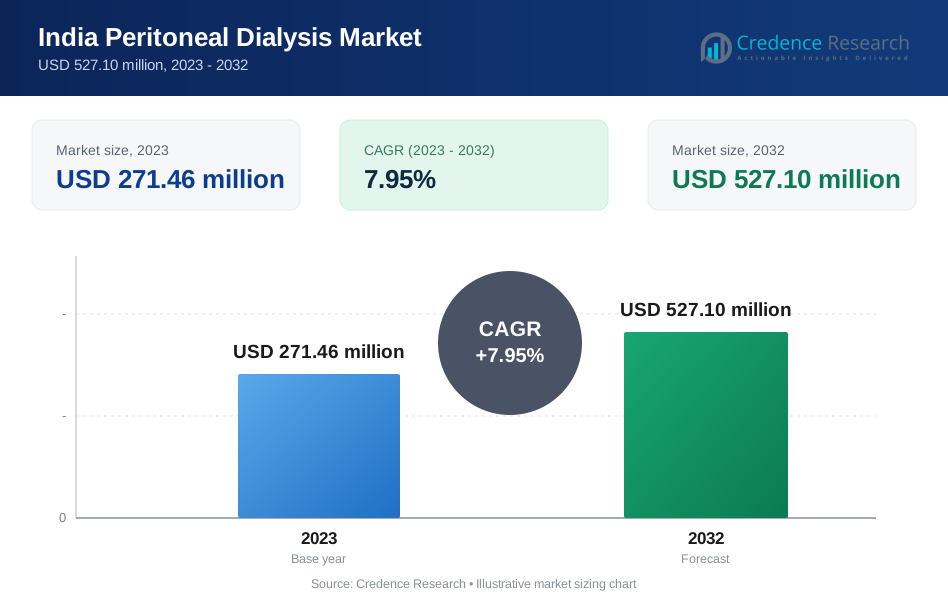
The India Peritoneal Dialysis market is expected to grow from USD 271.46 million in 2023 to USD 527.10 million by 2032, at a compound annual growth rate (CAGR) of 7.95%.
The India Peritoneal Dialysis market is driven by the increasing prevalence of chronic kidney diseases (CKD), particularly among the aging population, and a rising awareness of the benefits of home-based dialysis treatments. The demand for Peritoneal Dialysis is also supported by advancements in dialysis technology, which improve the safety, efficiency, and ease of the procedure. Additionally, favorable government initiatives aimed at improving healthcare access and affordability are contributing to market growth. Trends in the market include a shift towards personalized and at-home dialysis treatments, providing patients with more convenience and independence. The growing number of healthcare centers offering specialized renal care and the increasing adoption of cost-effective treatment options further fuel the market expansion. With these factors, the India Peritoneal Dialysis market is poised for significant growth over the coming years, reflecting an evolving landscape in renal care.
The geographical analysis of the India Peritoneal Dialysis market reveals regional variations in demand and infrastructure. The Northern and Southern regions lead the market due to better healthcare facilities, higher awareness, and increasing CKD prevalence. Key players in these regions include Nipro Corporation, Baxter International Inc., and Fresenius Medical Care, who offer advanced dialysis solutions and equipment. In the Western region, companies such as Terumo Corporation and Medtronic plc are expanding their presence, supported by the growing number of healthcare centers and the adoption of automated dialysis systems. The Eastern region, with a smaller market share, is witnessing gradual growth, driven by government initiatives and improving healthcare access. Key players like Asahi Kasei Medical Co., Ltd. and JMS Co., Ltd. are working to enhance their distribution networks in these underserved areas, fostering broader access to Peritoneal Dialysis treatments across the country.
Market Insights
- The India Peritoneal Dialysis market was valued at USD 271.46 million in 2023 and is projected to reach USD 527.10 million by 2032, growing at a CAGR of 7.95%.
- The increasing prevalence of chronic kidney diseases (CKD) and the rising number of patients requiring dialysis are major market drivers.
- Technological advancements in Peritoneal Dialysis systems, including automated machines and remote monitoring, are contributing to market growth.
- The shift towards home-based dialysis solutions is gaining momentum, driven by patient preferences for convenience and independence.
- Key players in the market include Nipro Corporation, Baxter International, Fresenius Medical Care, and Terumo Corporation, with a focus on product innovation and expanding distribution networks.
- Market restraints include the high cost of treatment and limited accessibility in rural areas, affecting adoption.
- The Northern and Southern regions dominate the market, with growing opportunities in the Eastern and Western regions due to improved healthcare infrastructure.
Market Drivers
Increasing Prevalence of Chronic Kidney Diseases (CKD)
The rising prevalence of chronic kidney diseases (CKD) in India is a significant driver for the growth of the Peritoneal Dialysis market. CKD has become a major health concern, primarily due to factors such as the increasing incidence of diabetes, hypertension, and other lifestyle diseases. For instance, the Indian CKD Registry reported that diabetic nephropathy is the leading cause of CKD, affecting 31% of patients. As the number of individuals diagnosed with kidney failure rises, the demand for dialysis treatment options, including Peritoneal Dialysis, continues to grow. This trend is expected to increase the need for accessible and effective renal therapies, driving market expansion.
Government Initiatives and Support
Government initiatives to improve access to healthcare, particularly for kidney disease management, are also fueling market growth. Programs aimed at subsidizing dialysis treatments, providing financial support for patients, and enhancing healthcare infrastructure contribute to the increased adoption of Peritoneal Dialysis. For instance, the Pradhan Mantri National Dialysis Programme (PMNDP) provides free dialysis services to poor patients, significantly improving access to treatment. The Indian government’s commitment to expanding renal care services in both urban and rural regions ensures greater availability and affordability of treatment options, thereby driving the market forward.
Awareness of Home-Based Dialysis Solutions
A growing awareness of the benefits of home-based dialysis treatments is further propelling the India Peritoneal Dialysis market. Patients and healthcare providers are increasingly opting for Peritoneal Dialysis as an alternative to hemodialysis due to its convenience, reduced hospital visits, and greater independence for patients. This awareness is driven by educational campaigns and the increasing number of patients who seek more flexible dialysis options, enhancing the overall appeal of Peritoneal Dialysis.
Technological Advancements and Innovation
Advancements in dialysis technology are a crucial driver for the Peritoneal Dialysis market. Innovative devices and solutions designed to make dialysis treatments more effective, safer, and easier for patients are increasing the adoption of Peritoneal Dialysis. Additionally, improvements in catheter design, automated peritoneal dialysis machines, and treatment protocols are enhancing the patient experience, contributing to the overall growth of the market. With these advancements, India’s Peritoneal Dialysis market is expected to witness continued growth in the coming years.
Market Trends
Shift Towards Home-Based Dialysis Treatments
One of the prominent trends in the India Peritoneal Dialysis market is the increasing shift towards home-based dialysis treatments. Patients are increasingly opting for Peritoneal Dialysis due to its flexibility, convenience, and reduced dependency on healthcare facilities. With advancements in technology, automated peritoneal dialysis systems are making it easier for patients to manage their treatments at home, leading to a higher adoption rate. For instance, the Home Dialysis Central initiative has been instrumental in raising awareness about the benefits of home-based dialysis in India. This trend aligns with the growing demand for personalized care and home healthcare solutions, empowering patients to have more control over their treatment while reducing the strain on healthcare systems.
Technological Innovations in Dialysis Equipment
Technological innovations are significantly shaping the Peritoneal Dialysis market in India. The development of more efficient, user-friendly, and automated devices is improving the quality of dialysis treatments. These innovations are making Peritoneal Dialysis more accessible to a wider range of patients, especially those in rural areas. The introduction of advanced machines, remote monitoring capabilities, and integrated platforms that allow healthcare providers to track patient progress in real time is driving the adoption of this treatment modality. These technological advancements are expected to enhance patient outcomes and fuel the growth of the market.
Growing Focus on Patient-Centric Care
Another key trend in the India Peritoneal Dialysis market is the growing emphasis on patient-centric care. Healthcare providers are increasingly focusing on delivering personalized dialysis treatments that cater to the unique needs of each patient. This trend is contributing to better patient experiences and outcomes. Moreover, with a rise in patient advocacy and healthcare awareness, patients are more informed about their treatment options and are actively seeking solutions that offer greater comfort and flexibility, further driving the adoption of Peritoneal Dialysis.
Expansion of Dialysis Centers and Infrastructure
The expansion of dialysis centers and improvements in healthcare infrastructure are contributing to the growth of the Peritoneal Dialysis market. The establishment of specialized renal care centers and the availability of trained healthcare professionals are making it easier for patients to access Peritoneal Dialysis treatments. Furthermore, the government’s efforts to enhance healthcare services, including kidney care, are ensuring that more patients in both urban and rural regions have access to Peritoneal Dialysis, helping drive market growth in the country.
Market Challenges Analysis
High Cost of Treatment and Limited Accessibility
One of the primary challenges facing the India Peritoneal Dialysis market is the high cost of treatment and limited accessibility, particularly in rural areas. While Peritoneal Dialysis offers several advantages over other treatment options, such as convenience and reduced hospital visits, the cost of dialysis supplies, including dialysis fluids, catheters, and automated machines, remains a significant burden for many patients. For instance, a study by the Clinical Kidney Journal highlighted that the average annual out-of-pocket expenditure for an end-stage kidney disease patient in India is around INR 364,488, with direct medical costs accounting for 90% of the total. The affordability of treatment continues to be a barrier, especially for individuals without adequate health insurance or those living in economically disadvantaged regions. Limited accessibility to quality healthcare facilities, trained medical staff, and renal care infrastructure in rural areas further exacerbates this challenge, hindering widespread adoption of Peritoneal Dialysis.
Lack of Awareness and Training for Healthcare Providers
Another challenge in the India Peritoneal Dialysis market is the lack of awareness and training for both patients and healthcare providers. While Peritoneal Dialysis is a viable option for many kidney patients, there remains a knowledge gap regarding the procedure's benefits and proper management, especially in underserved regions. Healthcare professionals, particularly in smaller cities and rural areas, may lack the necessary training and expertise to effectively manage Peritoneal Dialysis treatments, which impacts the quality of care and patient outcomes. Additionally, misconceptions and limited understanding among patients about the procedure's safety and effectiveness contribute to the slower adoption of this dialysis modality, posing a challenge to market growth.
Market Opportunities
The India Peritoneal Dialysis market presents significant opportunities driven by the increasing demand for alternative dialysis options and the growing prevalence of chronic kidney diseases (CKD). As the number of CKD patients continues to rise, particularly among the aging population and those with comorbid conditions such as diabetes and hypertension, there is a growing need for efficient and cost-effective renal care solutions. Peritoneal Dialysis offers an attractive alternative to hemodialysis, especially for patients seeking more flexibility and independence. With advancements in technology, such as automated dialysis systems and remote monitoring, the opportunity to expand Peritoneal Dialysis in both urban and rural areas is substantial. Companies can capitalize on this demand by developing affordable, user-friendly devices and treatment solutions, enhancing market penetration.
Furthermore, the Indian government’s focus on improving healthcare infrastructure and access to treatment for underserved populations opens new avenues for growth. With initiatives aimed at providing financial support for dialysis treatments and expanding renal care facilities, there is an opportunity for healthcare providers to increase the availability of Peritoneal Dialysis services across the country. The growing emphasis on patient-centric care also presents a unique opportunity for healthcare providers to develop personalized treatment plans, further enhancing patient outcomes. By addressing gaps in awareness and education, particularly in rural regions, and collaborating with government agencies to improve access, the Peritoneal Dialysis market can expand rapidly, making this a promising sector for investment and growth.
Market Segmentation Analysis:
By Type:
The India Peritoneal Dialysis market is primarily segmented into two types: Continuous Ambulatory Peritoneal Dialysis (CAPD) and Automated Peritoneal Dialysis (APD). CAPD holds a significant share of the market due to its simplicity and ability to be performed independently by patients at home without the need for a machine. It is a cost-effective and flexible treatment option, especially for patients in rural areas. On the other hand, APD is gaining popularity due to its convenience and efficiency. APD uses a machine to automate the dialysis process, offering patients a more controlled and less time-consuming treatment. With advancements in APD technology, such as remote monitoring features and user-friendly machines, the demand for APD is expected to increase, especially among patients who seek enhanced comfort and faster dialysis sessions. This segment's growth is attributed to the increasing demand for personalized and at-home dialysis solutions, alongside the growing patient preference for automated systems.
By Product: The India Peritoneal Dialysis market is further segmented based on products, including Peritoneal Dialysis Machines, Peritoneal Dialysis Solutions, Dialysis Catheters, and others. Peritoneal Dialysis Machines are critical for APD treatments, where their automation and precision significantly improve the patient experience. These machines are expected to witness robust growth due to advancements in technology, enhancing their efficiency and ease of use. Peritoneal Dialysis Solutions, which are essential for the dialysis process, represent a significant segment, with increasing demand driven by the rising patient base and growing awareness of the procedure’s benefits. Dialysis Catheters, used to facilitate the process of Peritoneal Dialysis, are also in high demand as a vital component for both CAPD and APD. Additionally, other products, including accessories and consumables, are essential to the treatment process. As the market expands, innovation in these product segments will continue to drive growth, addressing patient needs for more effective and convenient treatment options.
Segments:
Based on Type:
- Continuous Ambulatory Peritoneal Dialysis (CAPD)
- Automated Peritoneal Dialysis (APD)
Based on Product:
- Peritoneal Dialysis Machines
- Peritoneal Dialysis Solutions
- Dialysis Catheters
- Others
Based on End-user:
- Hospitals
- Dialysis Centers
- Home Care Settings
Based on the Geography:
- Northern
- Western
- Southern
- Eastern
Regional Analysis
Northern Region
The Northern region leads the India Peritoneal Dialysis market, driven by the high prevalence of chronic kidney diseases (CKD) and a strong healthcare infrastructure. Northern region holds the largest market share, accounting for approximately 35% of the total market. States like Delhi, Haryana, and Punjab have a well-established network of healthcare facilities that support the adoption of Peritoneal Dialysis, including specialized renal care centers. The region also benefits from higher healthcare awareness and greater accessibility to advanced dialysis technologies. The growing number of patients requiring renal care, combined with increased government initiatives to provide financial assistance for dialysis treatments, has further fueled market growth in Northern India. As a result, this region remains the largest contributor to the market, with a projected continued increase in demand.
Southern Region
The Southern region, encompassing states such as Tamil Nadu, Karnataka, Andhra Pradesh, and Telangana, accounts for 30% of the market share. This region’s growth is driven by a combination of factors, including an increasing number of healthcare centers offering specialized renal care, along with a growing patient base suffering from kidney diseases. The Southern states are home to some of India’s leading medical institutions and are well-equipped with modern dialysis facilities. Furthermore, awareness regarding home-based dialysis treatments is higher in this region, especially in urban areas, where patients are increasingly opting for Peritoneal Dialysis as a more convenient and less time-consuming option compared to hemodialysis.
Western Region
The Western region, which includes states like Maharashtra, Gujarat, and Rajasthan, accounts for 25% of the India Peritoneal Dialysis market. The region has a strong healthcare infrastructure, especially in metropolitan cities like Mumbai and Pune, where advanced dialysis technologies are readily available. The growing prevalence of diabetes and hypertension, which are major risk factors for kidney diseases, is driving the demand for Peritoneal Dialysis in Western India. Moreover, government schemes aimed at subsidizing the cost of dialysis treatments have contributed to the growing market in this region. The Western market is expected to expand further as healthcare awareness and accessibility continue to improve, particularly in smaller cities and rural areas.
Eastern Region
The Eastern region, comprising states like West Bengal, Odisha, and Bihar, holds the smallest market share at 10%. While the demand for Peritoneal Dialysis is growing in this region, it faces challenges such as limited access to advanced renal care facilities and lower awareness of the treatment. The healthcare infrastructure in many parts of Eastern India still requires significant development to support widespread adoption of Peritoneal Dialysis. However, with increasing government initiatives to improve healthcare services, such as expanding dialysis centers and offering financial assistance to patients, the Eastern region is poised for gradual growth in the coming years. Although currently the smallest contributor to the market, this region’s potential remains significant, particularly as healthcare accessibility improves.
Key Player Analysis
- Nipro Corporation
- Baxter International Inc.
- Fresenius Medical Care
- Terumo Corporation
- Asahi Kasei Medical Co., Ltd.
- Huaren Pharmaceutical Co., Ltd.
- JMS Co., Ltd.
- Kawasumi Laboratories Inc.
- Medtronic plc
- Pacific Hospital Supply Co., Ltd.
Competitive Analysis
The India Peritoneal Dialysis market is highly competitive, with several global and regional players driving innovation and expanding their presence. Leading companies include Nipro Corporation, Baxter International Inc., Fresenius Medical Care, Terumo Corporation, Asahi Kasei Medical Co., Ltd., Huaren Pharmaceutical Co., Ltd., JMS Co., Ltd., Kawasumi Laboratories Inc., Medtronic plc, and Pacific Hospital Supply Co., Ltd. Companies in this space focus on enhancing product offerings, such as automated machines, dialysis solutions, and catheters, to meet the growing demand for efficient and convenient dialysis treatments. Additionally, the market is characterized by a mix of established global players and regional companies, each targeting specific market needs, including affordability and accessibility, especially in rural areas. To stay competitive, players are emphasizing technological advancements, such as remote monitoring capabilities and improved machine automation, which appeal to patients seeking home-based dialysis options. For instance, the Indian Union Ministry of Health and Family Welfare has highlighted the importance of remote monitoring in improving patient outcomes and reducing hospital visits. Companies are also expanding their distribution networks and entering into partnerships with healthcare providers to ensure broader reach and enhanced product availability. Moreover, the market is witnessing a push toward making treatments more accessible through cost-effective solutions and government collaborations aimed at improving healthcare infrastructure. This growing competitive environment is driving continuous innovation, making the India Peritoneal Dialysis market an area of significant investment and expansion potential.
Recent Developments
- In August 2024, Baxter International Inc (US) and Carlyle (US) signed a definitive agreement under which Carlyle will acquire Baxter's Kidney Care segment. The segment will be named Vantive, with the aim of creating a standalone kidney care company.
- In April 2023, Medtronic plc (Ireland) and DaVita Inc (US) launched Mozarc Medical—an independent new company that aims to reshape kidney health and drive patient-centered technology solutions.
- In August 2022, Fresenius Medical Care AG (Germany) acquired InterWell Health (US), a physician organization that drives innovation in the kidney care space in the US, and Cricket Health. Inc (US), provider of value-based kidney care with patient engagement and data platform.
Market Concentration & Characteristics
The India Peritoneal Dialysis market exhibits moderate concentration, with a few dominant players holding a significant market share, while several regional and local companies contribute to overall competition. The market is characterized by a combination of established global brands and emerging regional players, which results in diverse offerings and competition based on product quality, affordability, and technological advancements. Leading companies focus on providing comprehensive solutions, including automated dialysis machines, dialysis solutions, and catheters, to cater to the growing demand for home-based dialysis treatments. However, regional players are focusing on cost-effective solutions, especially in rural areas where access to healthcare services is limited, enabling them to carve out a niche market. The market is also influenced by a growing focus on patient-centric care, with companies emphasizing the development of user-friendly and efficient products. Technological innovations, such as remote monitoring and automated systems, are helping companies differentiate themselves in the competitive landscape. Furthermore, the India Peritoneal Dialysis market is driven by government initiatives aimed at improving healthcare accessibility and affordability, which encourages both local and international players to enhance their product offerings and expand distribution networks. Overall, the market’s characteristics reflect a dynamic mix of innovation, affordability, and regional accessibility, contributing to its steady growth and development.
Report Coverage
The research report offers an in-depth analysis based on Type, Product, End-User and Geography. It details leading market players, providing an overview of their business, product offerings, investments, revenue streams, and key applications. Additionally, the report includes insights into the competitive environment, SWOT analysis, current market trends, as well as the primary drivers and constraints. Furthermore, it discusses various factors that have driven market expansion in recent years. The report also explores market dynamics, regulatory scenarios, and technological advancements that are shaping the industry. It assesses the impact of external factors and global economic changes on market growth. Lastly, it provides strategic recommendations for new entrants and established companies to navigate the complexities of the market.
Future Outlook
- The India Peritoneal Dialysis market is expected to grow significantly due to the increasing prevalence of chronic kidney diseases and the rising aging population.
- Technological advancements in automated dialysis systems and remote monitoring are likely to improve patient convenience and enhance treatment outcomes.
- There will be a shift towards home-based dialysis solutions, driven by patient preferences for flexibility and independence.
- Government initiatives aimed at providing financial assistance for dialysis treatments will make Peritoneal Dialysis more accessible to a larger population.
- The market will see an increase in affordable dialysis solutions catering to underserved rural areas.
- The development of more user-friendly and efficient products will drive further adoption among patients.
- A growing number of healthcare providers will adopt Peritoneal Dialysis solutions, expanding the market reach across India.
- The demand for personalized and patient-centric treatment plans will rise, further contributing to market growth.
- New product innovations, including more compact and cost-effective machines, will drive competition in the market.
- Regional healthcare infrastructure improvements, particularly in the Eastern and Western regions, will foster wider adoption of Peritoneal Dialysis across the country.
Request a Free Sample
Fill in your details and we'll send you a free sample report.
- Sample data tables & charts
- Research methodology
Need a Custom Version of This Report?
Tailor the scope, geography, or segments to your exact requirements.
- Custom geography or segment scope
- Direct access to our analyst team
Frequently Asked Questions
What is the current size of the India Peritoneal Dialysis market?
What factors are driving the growth of the India Peritoneal Dialysis market?
What are the key segments within the India Peritoneal Dialysis market?
What are some challenges faced by the India Peritoneal Dialysis market?
Who are the major players in the India Peritoneal Dialysis market?
Table of Content
Chapter 1. Report Introduction
- 1.1 Report Description & Purpose
- 1.1.1 Report Title & Market Definition
- 1.1.2 Unique Selling Propositions (USP) & Key Differentiators
- 1.1.3 Value Proposition for Stakeholders
- 1.2 Research Objectives
- 1.2.1 Market Sizing Objectives (Volume & Revenue)
- 1.2.2 Segmentation Objectives
- 1.2.3 Competitive Intelligence Objectives
- 1.2.4 Forecast & Scenario Objectives
- 1.3 Report Scope
- 1.3.1 India Peritoneal Dialysis Scope – Types & Subtypes Covered
- 1.3.2 Geographic Scope – Regions & Countries Covered
- 1.3.3 Historical Period, Base Year & Forecast Period (2023; forecast to 2032)
- 1.3.4 Inclusions & Exclusions
- 1.4 HS Code & Classification Framework
- 1.5 Currency, Units & Pricing Basis
- 1.6 Target Stakeholders
- 1.7 Limitations & Assumptions
Chapter 2. Executive Summary
- 2.1 Global India Peritoneal Dialysis Market Snapshot
- 2.1.1 Market Size – Historical (2023) & Forecast (2023-2032) (2023: USD 271.46 million → 2032: USD 527.10 million)
- 2.1.2 Volume & Revenue – Global Totals
- 2.1.3 Key Market Highlights – Top Five Facts
- 2.2 India Peritoneal Dialysis Market Segmentation Snapshot
- 2.2.1 Market Split by Region – 2023 vs. 2032
- 2.3 Competitive Snapshot
- 2.3.1 Top 10 Players by Revenue Share – 2023
- 2.3.2 Top 10 Players by Volume Share – 2023
- 2.3.3 Recent Strategic Developments (18-Month Summary)
- 2.4 Key Investment Highlights & Strategic Conclusions
Chapter 3. India Peritoneal Dialysis Market Dynamics & Industry Analysis
- 3.1 Market Overview & Context
- 3.1.1 India Peritoneal Dialysis Market Position in the Broader Automotive Value Chain
- 3.1.2 OEM vs. Replacement Market Dynamics
- 3.1.3 Market Maturity & Development Stage by Region
- 3.2 India Peritoneal Dialysis Market Drivers
- 3.3 India Peritoneal Dialysis Market Restraints & Challenges
- 3.4 India Peritoneal Dialysis Market Opportunities
- 3.5 Porter's Five Forces Analysis
- 3.5.1 Threat of New Entrants
- 3.5.2 Bargaining Power of Suppliers
- 3.5.3 Bargaining Power of Buyers
- 3.5.4 Threat of Substitutes
- 3.5.5 Competitive Rivalry – Intensity Assessment
- 3.6 India Peritoneal Dialysis Value Chain Analysis
- 3.6.1 Upstream – Raw Material/Input Suppliers
- 3.6.1.1 Raw Material/Input 1
- 3.6.1.2 Raw Material/Input 2
- 3.6.1.3 Raw Material/Input 3
- 3.6.2 Midstream – Production/Manufacturing/Service Delivery
- 3.6.2.1 Production/Process Overview
- 3.6.2.2 Key Facility Locations & Capacity by Manufacturer
- 3.6.3 Downstream – Distribution & End Consumer
- 3.6.3.1 Primary Channel – B2B/OEM
- 3.6.3.2 Secondary Channels – Dealer, Retail, Online, Direct
- 3.6.4 Value Chain Profitability Analysis
- 3.6.1 Upstream – Raw Material/Input Suppliers
- 3.7 PESTEL Analysis
- 3.7.1 Political Factors
- 3.7.2 Economic Factors
- 3.7.3 Social Factors
- 3.7.4 Technological Factors
- 3.7.5 Environmental Factors
- 3.7.6 Legal Factors
- 3.8 India Peritoneal Dialysis Supply Chain Analysis
- 3.8.1 Raw Material/Input Supply Risk Assessment
- 3.8.2 Manufacturing Concentration Risk (Geographic Exposure)
- 3.8.3 Trade Disruption Impact Analysis
- 3.9 Regulatory & Policy Landscape
Note: The regulatory and policy landscape section covers regulations based on their applicability to the market, India Peritoneal Dialysis category, geography, and scope of the study. Only regulatory frameworks with a material impact on operations, compliance, trade, sustainability, or market access are analyzed in detail.
Chapter 4. Key Investment Pockets & Opportunity Analysis
- 4.1 India Peritoneal Dialysis Market Attractiveness Analysis
- 4.1.1 By Region – Investment Attractiveness Matrix (Volume × CAGR)
- 4.2 Absolute Revenue Growth Opportunity
- 4.2.1 By Region – Absolute USD Growth Through 2032
- 4.3 Incremental Volume Opportunity
- 4.3.1 By Region – Incremental Volume Through 2032
- 4.3.2 Segment – Incremental Volume
- 4.4 Emerging Submarket Opportunity Deep Dive (Subject to Applicability)
- 4.5 Emerging Market Opportunity Scorecards
- 4.5.1 United States
- 4.5.2 Europe
- 4.5.3 Asia
- 4.5.4 Middle East & Africa
Note: Emerging Market Opportunity Scorecards will be included based on relevance and strategic importance. Regions listed are indicative and may vary depending on data availability and market dynamics.
Chapter 5. India Peritoneal Dialysis Import-Export Analysis & Trade Flows
- 5.1 Global Trade Overview
- 5.1.1 Global Export Value by Country (2023)
- 5.1.2 Global Export Volume by Country (2023)
- 5.1.3 Global Import Value by Country (2023)
- 5.1.4 Global Import Volume by Country (2023)
- 5.1.5 Net Trade Balance by Country (2023)
- 5.2 Export Analysis – Segment
- 5.2.1 Type 1 (HS Code)
- 5.2.2 Type 2 (HS Code)
- 5.2.3 Type 3 (HS Code)
- 5.2.4 Type 4 (HS Code)
- 5.2.5 Type 5 (HS Code)
- 5.3 Import Analysis – Segment
- 5.3.1 Type 1 (HS Code)
- 5.3.2 Type 2 (HS Code)
- 5.3.3 Type 3 (HS Code)
- 5.3.4 Type 4 (HS Code)
- 5.3.5 Type 5 (HS Code)
- 5.4 Average Unit Trade Prices
- 5.4.1 Average Export Price – Segment & Country
- 5.4.2 Average Import Price – Segment & Source Country
- 5.4.3 Price Trends (2023)
- 5.5 Key Trade Route Analysis
- 5.5.1 Trade Route 1
- 5.5.2 Trade Route 2
- 5.5.3 Trade Route 3
- 5.5.4 Trade Route 4
- 5.5.5 Trade Route 5
- 5.6 Trade Policy Impact Assessment
- 5.6.1 US Anti-Dumping & Section 301 Tariffs
- 5.6.2 EU Customs Union Impact
- 5.6.3 Major Free Trade Agreements
- 5.6.4 USMCA Rules of Origin
Note: Trade policy analysis will be included only where relevant to the India Peritoneal Dialysis market.
Chapter 6. Competitive Landscape & Company Benchmarking
- 6.1 India Peritoneal Dialysis Market Concentration & Structure
- 6.1.1 Herfindahl-Hirschman Index (HHI) – vs. 2023
- 6.1.2 Tier 1, Tier 2 & Tier 3 Market Structure
- 6.1.3 Global, Regional & Local Player Dynamics
- 6.2 India Peritoneal Dialysis Market Share Analysis – 2023
- 6.2.1 Global Revenue Share by Company
- 6.2.2 Global Volume Share by Company
- 6.2.3 Regional Revenue Share
- 6.2.4 Market Share Evolution ( vs. 2023)
- 6.2.5 OEM Segment Share by Company
- 6.2.6 Replacement Segment Share by Company
- 6.3 Production/Delivery Capacity & Facility Analysis
- 6.3.1 Global Installed Capacity
- 6.3.2 Capacity Utilization Rates
- 6.3.3 Production/Output Volume
- 6.3.4 Facility Locations & Capacity Map
- 6.3.5 Planned Capacity Additions
- 6.4 India Peritoneal Dialysis Competitive Benchmarking Matrix
- 6.4.1 Revenue, Volume, CAGR & Profitability Comparison
- 6.4.2 Channel Revenue Mix
- 6.4.3 Geographic Revenue Exposure
- 6.4.4 R&D Intensity
- 6.4.5 Sustainability Maturity
- 6.5 Strategic Developments in India Peritoneal Dialysis (Last 24 Months)
- 6.5.1 Mergers, Acquisitions & Divestments
- 6.5.2 New India Peritoneal Dialysis Launches
- 6.5.3 Facility Expansions
- 6.5.4 Strategic Alliances, Joint Ventures & Partnerships
- 6.5.5 Distribution Expansion & Market Entry
- 6.5.6 Sustainability & ESG Initiatives
- 6.6 Competitive Strategy Mapping
- 6.6.1 Leader, Challenger, Follower & Niche Classification
- 6.6.2 Pricing Strategy Comparison
- 6.6.3 Channel Strategy Matrix
Note: Strategic developments are included based on their materiality and the availability of reliable information.
Chapter 7. Global India Peritoneal Dialysis Market – By Distribution Channel
- 7.1 Segment Overview
- 7.1.1 Volume & Revenue Split by Channel (2023 & 2032)
- 7.1.2 Channel Mix Evolution (2023-2032)
Chapter 8. Regional Market Analysis – Global Overview
- 8.1 Global Regional Overview
- 8.1.1 Regional Volume Share
- 8.1.2 Regional Revenue Share
- 8.1.3 Regional Volume by Region
- 8.1.4 Regional Revenue by Region
- 8.1.5 Regional Forecast Through 2032
- 8.2 Cross-Regional Segment Analysis
- 8.2.1 By Distribution Channel
- 8.2.2 By Brand/Price Tier
Chapter 9. North America India Peritoneal Dialysis Market
- 9.1 United States
- 9.2 Canada
- 9.3 Mexico
Chapter 10. Europe India Peritoneal Dialysis Market
- 10.1 Germany
- 10.2 France
- 10.3 Italy
- 10.4 United Kingdom
- 10.5 Spain
- 10.6 Poland
- 10.7 Russia
- 10.8 Netherlands
- 10.9 Belgium
- 10.10 Sweden
- 10.11 Denmark
- 10.12 Norway
- 10.13 Rest of Europe
Chapter 11. Asia Pacific India Peritoneal Dialysis Market
- 11.1 China
- 11.2 India
- 11.3 Japan
- 11.4 South Korea
- 11.5 Thailand
- 11.6 Indonesia
- 11.7 Vietnam
- 11.8 Malaysia
- 11.9 Australia
- 11.10 Rest of Asia Pacific
Chapter 12. Latin America India Peritoneal Dialysis Market
- 12.1 Brazil
- 12.2 Argentina
- 12.3 Colombia
- 12.4 Chile
- 12.5 Rest of Latin America
Chapter 13. Middle East India Peritoneal Dialysis Market
- 13.1 Saudi Arabia
- 13.2 United Arab Emirates
- 13.3 Turkey
- 13.4 Israel
- 13.5 Iran
- 13.6 Rest of the Middle East
Chapter 14. Africa India Peritoneal Dialysis Market
- 14.1 South Africa
- 14.2 Egypt
- 14.3 Nigeria
- 14.4 Morocco
- 14.5 Rest of Africa
Chapter 15. India Peritoneal Dialysis Company Profiles
- 15.1 [Company 01]
- 15.1.1 Company Overview
- 15.1.2 Key Management Personnel
- 15.1.3 Products & Services Portfolio
- 15.1.4 Financial Performance
- 15.1.5 Key Market Focus & Geographic Presence
- 15.1.6 Recent Developments & Strategic Initiatives
Note: The company profile list is preliminary and may change based on research findings, market developments, data availability, and client requirements.
Chapter 16. Appendices
- Appendix A – List of Abbreviations & Acronyms
- Appendix B – Industry Classification Code Reference – Full Series
- Appendix C – Production & Capacity Data Tables
- Appendix D – End-Use & Demand Base Tables
- Appendix E – Consumption & Replacement Rate Assumptions
- Appendix F – ASP Reference Tables
- Appendix G – Manufacturing & Facility Database
- Appendix H – Import-Export Data Tables
- Appendix I – Regulatory Summary Tables
- Appendix J – Primary Research Participant List (Anonymized)
- Appendix K – Primary Research Questionnaire Framework
- Appendix L – Data Sources & Bibliography
- Appendix M – Market Size Divergence & Source Comparison
Chapter 17. Research Methodology
- 17.1 Research Framework & Philosophy
- 17.2 Secondary Research – Sources, Hierarchy & Data Extraction
- 17.3 Data Modeling – Bottom-Up & Top-Down Market Sizing
- 17.4 Primary Research – Stakeholder Framework, LOI & Sample Sizes
- 17.5 Forecast Methodology – Regression, Scenario & Sensitivity Analysis
- 17.6 Quality Control – Four-Layer Validation Framework
- 17.7 Limitations & Standard Assumptions
- 17.8 Disclaimer
