
| REPORT ATTRIBUTE | DETAILS |
|---|---|
| Historical Period | 2019-2022 |
| Base Year | 2023 |
| Forecast Period | 2024-2032 |
| Indonesia Commercial Amino Acids Market Size 2024 | USD 12.66 Million |
| Indonesia Commercial Amino Acids Market, CAGR | 5.72% |
| Indonesia Commercial Amino Acids Market Size 2032 | USD 19.76 Million |
Market Overview:
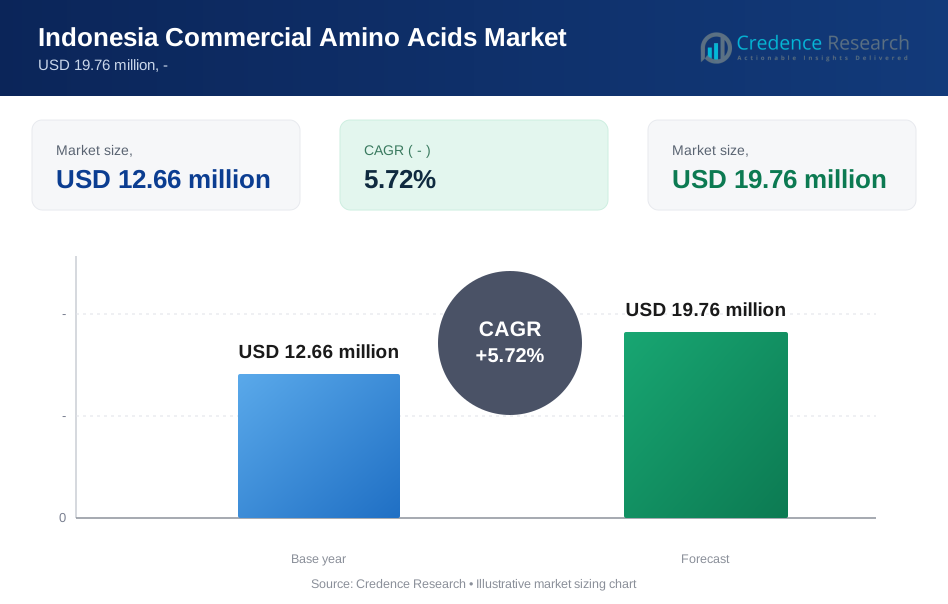
The Indonesia Commercial Amino Acids Market is projected to grow from USD 12.66 million in 2024 to an estimated USD 19.76 million by 2032, with a compound annual growth rate (CAGR) of 5.72% from 2024 to 2032.
Several factors contribute to the growth of the Indonesia Commercial Amino Acids Market. Rising health awareness among consumers has led to a surge in demand for protein-rich diets, dietary supplements, and functional foods. Amino acids such as lysine, methionine, and glutamine are pivotal in meeting these dietary trends due to their roles in muscle recovery, immunity enhancement, and overall wellness. The livestock and poultry industries in Indonesia also drive substantial demand for amino acids, as they are essential for improving feed efficiency and promoting animal growth. Furthermore, advancements in fermentation technologies and biotechnological innovations have enabled cost-efficient production, fueling market competitiveness and growth. The pharmaceutical sector leverages amino acids for therapeutic formulations, expanding their application scope.
Indonesia's vast geography and economic diversity shape the regional dynamics of the amino acids market. Major urban centers such as Jakarta, Surabaya, and Bandung lead in consumption, driven by higher health awareness and purchasing power. Meanwhile, rural areas, supported by extensive agricultural activities, create significant demand for amino acids in animal feed. The country’s strategic location in Southeast Asia also positions it as a key player in regional trade, enhancing its export potential for amino acid products. Prominent players such as Ajinomoto Co., Inc., PT Indo Acidatama Tbk, and Evonik Industries AG actively contribute to the market, leveraging advanced production techniques and robust distribution networks. Their focus on product innovation and sustainable practices ensures continued growth in this dynamic market.
Market Insights:
- The market is projected to grow from USD 12.66 million in 2024 to USD 19.76 million by 2032, with a steady CAGR of 5.72%.
- Rising health consciousness and increased disposable incomes are driving demand for amino acids in dietary supplements, functional foods, and protein-rich diets.
- The livestock and poultry industries represent a significant share of the market, fueled by the need for amino-acid-enriched feed to enhance productivity and sustainability.
- Advanced fermentation technologies and biotechnological innovations are reducing production costs while improving the quality and accessibility of amino acids.
- Growing pharmaceutical and personal care applications, including therapeutic drugs and anti-aging cosmetics, are expanding the market's scope.
- Urban centers such as Jakarta, Surabaya, and Bandung lead consumption due to higher health awareness, while rural areas drive demand in agriculture.
- Challenges such as raw material price volatility and limited rural infrastructure highlight the need for strategic investments to maintain market competitiveness.
Market Drivers:
Rising Consumer Health Consciousness and Dietary Trends
The growing awareness of health and nutrition among Indonesian consumers is a major driver of the commercial amino acids market. For instance, a survey revealed that 70% of Indonesians expressed a desire to eat healthy foods regularly, with many willing to spend more on health-conscious products. With a rising middle class and increasing disposable incomes, there is a notable shift toward healthier lifestyles, characterized by the consumption of functional foods and dietary supplements. Amino acids such as lysine, leucine, and glutamine are widely sought after for their role in muscle recovery, immunity enhancement, and overall well-being. This trend is further supported by the increasing popularity of protein-rich diets, particularly among fitness enthusiasts and individuals with specific dietary requirements.
Expanding Livestock and Poultry Industry
The livestock and poultry industries in Indonesia are significant contributors to the demand for amino acids. As the country seeks to meet the rising demand for high-quality animal protein, amino acids such as methionine, threonine, and tryptophan play a critical role in improving feed efficiency and promoting the health and growth of livestock. The adoption of amino-acid-enriched feed not only enhances productivity but also aligns with the government’s initiatives to support sustainable and efficient agricultural practices. For instance, Japfa Comfeed Indonesia Tbk, a leading agribusiness company, has integrated amino acids into their feed formulations to enhance livestock productivity. This, in turn, drives consistent demand for amino acids in the animal nutrition segment.
Advancements in Biotechnology and Manufacturing Processes
Innovations in biotechnology and fermentation processes have significantly impacted the production and affordability of amino acids in Indonesia. Advanced manufacturing techniques have enabled producers to achieve cost efficiency while maintaining high-quality standards, making amino acids more accessible to industries such as food and beverages, pharmaceuticals, and cosmetics. These technological advancements also facilitate the production of amino acids with enhanced purity and stability, further driving their adoption in various applications. The ability to scale up production with improved technologies ensures a steady supply to meet increasing market demands. For instance, Amino GmbH has been investing in research & development for the next generation of products and services, specifically looking for new products that match their technological competencies and complement their range of products in a meaningful and sustainable way.
Growing Applications in Pharmaceuticals and Personal Care
The pharmaceutical and personal care industries are emerging as vital contributors to the growth of the amino acids market in Indonesia. For instance, a report from Ajinomoto noted that their cosmetic ingredients utilizing amino acids have seen increased demand due to a consumer shift towards natural ingredients. Pharmaceutical applications of amino acids include their use in the formulation of drugs, intravenous solutions, and therapeutic products, addressing a range of health concerns. Additionally, amino acids are increasingly being incorporated into skincare and cosmetic products due to their hydrating and anti-aging properties. The diversification of applications across these sectors highlights the expanding scope of amino acids in the Indonesian market and underscores their role in driving sustained market growth.
Market Trends:
Growing Adoption of Amino Acids in Plant-Based Products
The shift toward plant-based diets has created new opportunities for the commercial amino acids market in Indonesia. As consumers increasingly seek plant-based protein alternatives, amino acids are being incorporated into products like plant-based meat and dairy substitutes to enhance their nutritional profile and mimic the texture and flavor of animal-based products. For instance, Earthful offers a product called "Honest Plant Protein - Indonesian Cocoa," which contains all essential amino acids and is made from a blend of pea and brown rice protein, catering to the demand for plant-based protein sources. This trend aligns with global dietary shifts and the increasing demand for sustainable food options, offering manufacturers a lucrative avenue for growth in Indonesia.
Emergence of Tailored Amino Acid Blends
The market is witnessing the rising popularity of customized amino acid blends tailored to specific consumer needs. In the fitness and wellness sector, these blends are increasingly used in supplements designed for muscle recovery, endurance, and energy boosts. For instance, Ronnie Coleman Signature Series provides a range of amino acid supplements, including BCAA-XS 2:1:1 Powder and Amino Tone + EAA Powder, which are formulated to meet the specific needs of athletes and fitness enthusiasts. Similarly, specialized formulations are being developed for targeted applications in animal feed, addressing species-specific nutritional requirements. This trend underscores the increasing demand for personalized products that cater to niche markets while ensuring higher value creation.
Integration of Sustainable Production Practices
Sustainability is becoming a key focus area for amino acid manufacturers in Indonesia. Companies are investing in eco-friendly production methods, such as fermentation-based processes that reduce environmental impact. For instance, Ajinomoto Indonesia Group has developed a new purpose focusing on sustainability, aiming to contribute to overcoming nutritional, health, and environmental challenges through "AminoScience," which involves research and application processes centered around amino acids. Additionally, there is a growing emphasis on sourcing renewable raw materials to align with global sustainability goals. These practices not only enhance brand reputation but also cater to environmentally conscious consumers, thereby reinforcing market competitiveness.
Expansion of Export Opportunities in Southeast Asia
Indonesia’s strategic location in Southeast Asia positions it as an emerging hub for amino acid exports. Neighboring countries, including Malaysia, Thailand, and Vietnam, are increasingly sourcing amino acids from Indonesia due to its cost-effective production capabilities and competitive pricing. For instance, CJ BIO, for example, has launched a new business of natural savory flavor at a new facility in Indonesia, which will produce thousands of tons of TasteNrichⓡ, a natural culinary solution platform, thereby strengthening its position as a leading savory solution provider in the region. This regional trade expansion is supported by the establishment of free trade agreements and improvements in transportation infrastructure, enabling Indonesian manufacturers to strengthen their presence in the global market and capitalize on growing regional demand.
Market Challenges Analysis:
Fluctuations in Raw Material Prices
The commercial amino acids market in Indonesia faces challenges due to the volatility of raw material prices. Essential inputs such as corn, soybeans, and other agricultural commodities used in amino acid production are subject to price fluctuations caused by global supply chain disruptions, extreme weather conditions, and geopolitical factors. These cost variations can significantly impact production expenses, ultimately affecting the affordability and competitiveness of amino acid products in both domestic and international markets.
Stringent Regulatory and Quality Standards
Adhering to rigorous regulatory and quality standards poses a substantial challenge for manufacturers in the market. The food, pharmaceutical, and animal feed industries demand high levels of safety, purity, and compliance with international benchmarks. Meeting these requirements often necessitates significant investment in advanced testing, certification, and production technologies. Non-compliance risks penalties and reputational damage, adding pressure on companies to maintain consistent quality while managing costs.
Competition from Alternative Solutions
The rising availability of alternative protein sources, such as synthetic peptides and bioengineered proteins, presents a growing challenge to the commercial amino acids market. These alternatives often claim similar functional benefits and appeal to sustainability-conscious consumers. As technology evolves, these substitutes may become more cost-effective, creating additional competitive pressure for traditional amino acid manufacturers in Indonesia.
Limited Infrastructure in Rural Areas
While rural regions contribute significantly to demand for amino acids in agriculture, the lack of robust infrastructure can hinder market growth. Challenges such as inadequate transportation networks and limited access to modern storage facilities make it difficult to ensure timely delivery and proper preservation of products. Addressing these infrastructural gaps requires significant investment, which may be challenging for smaller manufacturers or emerging players in the market.
Market Opportunities:
The Indonesia Commercial Amino Acids Market presents a substantial opportunity for growth, driven by the increasing demand for amino acids across diverse industries. As the country’s population grows and health awareness rises, there is a significant shift toward protein-enriched diets, dietary supplements, and functional foods. This trend creates a favorable environment for amino acid manufacturers to cater to the expanding consumer base. Additionally, the growing adoption of amino acids in the pharmaceutical sector for developing advanced therapeutic formulations highlights their potential in addressing Indonesia's evolving healthcare needs. The market also benefits from the rapid expansion of the livestock and poultry sectors, where amino acids are integral to improving feed efficiency and promoting sustainable agricultural practices.
Indonesia’s strategic location within Southeast Asia further amplifies its potential as a regional hub for amino acid production and export. The growing demand for amino acids in neighboring countries, coupled with the nation’s cost-competitive production capabilities, provides manufacturers with ample export opportunities. Investment in advanced manufacturing technologies and sustainable production methods can further enhance Indonesia’s competitive edge, enabling it to meet both domestic and international demand effectively. With supportive government policies aimed at fostering industrial growth and infrastructure development, the market is well-positioned to attract foreign investments and drive long-term growth, creating a promising outlook for stakeholders in the amino acids industry.
Market Segmentation Analysis:
The Indonesia Commercial Amino Acids Market is segmented by type, application, end-use, and form, reflecting its diverse applications across industries.
By Type, key amino acids such as L-Glutamine, L-Leucine, and L-Tryptophan dominate the market, with L-Glutamine being widely used in dietary supplements and therapeutic formulations for muscle recovery and immunity enhancement. L-Carnitine and L-Arginine are gaining traction due to their roles in energy metabolism and cardiovascular health, respectively.
By Application, the animal feed segment holds a substantial share, driven by the need to enhance livestock productivity and feed efficiency. The food and beverage sector is expanding, fueled by the demand for protein-enriched functional foods. Pharmaceuticals leverage amino acids for drug formulations, while the cosmetics and nutraceuticals segments benefit from their skin-enhancing and wellness properties.
By End-Use, the livestock and pet food segments dominate due to Indonesia's large agricultural base, while human nutrition exhibits strong growth owing to rising health consciousness. Personal care and healthcare are emerging as promising end-use categories, supported by increasing applications in skincare and therapeutic products.
By Form, powdered amino acids lead the market due to ease of handling and storage, followed by liquid forms used in pharmaceuticals and functional beverages. Granules are gaining popularity in animal feed applications for improved mixing and dispersion.
Segmentation:
By Type:
- L-Glutamine
- L-Leucine
- L-Tryptophan
- L-Carnitine
- L-Arginine
By Application
- Animal Feed
- FoodBeverage
- Pharmaceuticals
- Cosmetics
- Nutraceuticals
By End-use
- Livestock
- Pet Food
- Human Nutrition
- Personal Care
- Healthcare
By Form
- Powder
- Liquid
- Granules
Regional Analysis:
The Indonesia Commercial Amino Acids Market exhibits diverse regional dynamics, with urban and rural areas contributing significantly to its growth. Major urban centers such as Jakarta, Surabaya, and Bandung collectively account for approximately 55% of the market share. These regions are characterized by high population density, greater health awareness, and higher disposable incomes, leading to robust demand for dietary supplements, functional foods, and pharmaceutical applications. Jakarta, as the nation’s capital and economic hub, drives significant consumption due to its well-established retail and healthcare infrastructure. Surabaya and Bandung also play pivotal roles, supported by their expanding food and beverage sectors and the presence of manufacturing facilities.
Rural regions, while less economically developed, contribute an estimated 35% of the market share, largely driven by the agricultural and livestock sectors. These areas generate substantial demand for amino acids used in animal feed, particularly for poultry and aquaculture. The increasing adoption of amino-acid-enriched feed formulations to enhance livestock productivity and sustainability has bolstered market growth in these regions. However, challenges such as limited infrastructure and logistical hurdles can affect the consistent supply of amino acids to rural areas, necessitating investments in transportation and storage solutions.
The remaining 10% of the market share is attributed to other regions, including smaller islands and remote areas. These regions show potential for growth as initiatives to improve connectivity and economic development take shape. Government-backed programs aimed at strengthening rural economies and increasing agricultural productivity are expected to drive the adoption of amino acids in these less penetrated markets.
Indonesia’s strategic location within Southeast Asia also positions it as a key exporter of amino acids to neighboring countries such as Malaysia, Thailand, and Vietnam. Regional trade agreements and advancements in infrastructure, including ports and logistics networks, further enhance the market’s export capabilities. As the country continues to invest in industrial growth and agricultural development, regional disparities are likely to decrease, creating a more balanced market landscape and opening up new opportunities for both domestic and international stakeholders.
Key Player Analysis:
- Bluestar Adisseo Co., Ltd
- Phibro Animal Health Corporation
- Meihua Holdings Group Co., Ltd
- Kemin Industries, Inc
- Ajinomoto
- RSP amino acids
- Biaffin
- AnaSpec
- ChemPep Inc
- IRIS Biotech
- PepTech Corporation
- Synthetech
- Bluestar Adisseo Co
- CJ CheilJedang Corp
- ADM
- Sinopec
- Chunming Agricultural
- Zhejiang Medicine
- Kyowa Hakko Bio
- Nutraceutics
- Evonik Industries
Competitive Analysis:
The Indonesia Commercial Amino Acids Market is characterized by a competitive landscape with the presence of both international and domestic players. Leading global companies such as Ajinomoto Co., Inc., Evonik Industries AG, and CJ CheilJedang Corporation dominate the market, leveraging their advanced production technologies, strong distribution networks, and extensive product portfolios. These players focus on innovation, developing high-purity amino acids tailored to diverse applications in food, pharmaceuticals, and animal feed. For instance, Evonik Industries AG has been active in Indonesia for over twenty years, with production sites in Bekasi Timur and Cikarang. The company recently expanded its plant in Bekasi to increase the capacity for producing premium raw materials, additives, and ingredients for the cosmetic and household care industries. Domestic companies, including PT Indo Acidatama Tbk, actively contribute by offering cost-effective solutions and catering to local market demands. The competitive edge of these local firms lies in their understanding of regional needs and their ability to offer customized products. Increasing investments in sustainable production practices and partnerships with downstream industries are key strategies employed by competitors to maintain their market share. As demand grows, competition is expected to intensify, driving further innovation and efficiency.
Recent Developments:
- In June 2024, Kemin Industries acquired Archangel Inc., a company specializing in advanced bacterial control solutions for biofuel production. This acquisition is part of Kemin's strategy to expand its presence in the biofuels sector and enhance its product offerings related to antimicrobial solutions.
- On September 19, 2024, Ajinomoto Co., Inc. announced a global strategic partnership with Danone aimed at reducing greenhouse gas emissions from the dairy industry. This collaboration will leverage Ajinomoto's expertise in amino acids to enhance sustainability practices within dairy production.
- AnaSpec has recently upgraded its GMP compliance verification processes as of April 17, 2024, ensuring that it meets stringent standards for producing active pharmaceutical ingredients and other biotechnological products.
Market Concentration & Characteristics:
The Indonesia Commercial Amino Acids Market is moderately concentrated, with a mix of global leaders and domestic manufacturers contributing to its competitive dynamics. Key global players such as Ajinomoto Co., Inc., Evonik Industries AG, and CJ CheilJedang Corporation hold significant market shares due to their advanced production technologies, wide product portfolios, and strong distribution networks. Domestic companies, including PT Indo Acidatama Tbk, complement the landscape by catering to local demands with cost-effective solutions. The market is characterized by high product diversity, encompassing amino acids for applications in food, pharmaceuticals, animal feed, and cosmetics. Increasing investments in biotechnology and sustainable production practices are fostering innovation and efficiency. While global players dominate through technological advancements, domestic firms capitalize on their regional expertise and price competitiveness. This blend of global and local contributions ensures a dynamic market poised for steady growth and increased industrial collaboration.
Report Coverage:
The research report offers an in-depth analysis based on on By Type, By Application, By End-use and By Form It details leading market players, providing an overview of their business, product offerings, investments, revenue streams, and key applications. Additionally, the report includes insights into the competitive environment, SWOT analysis, current market trends, as well as the primary drivers and constraints. Furthermore, it discusses various factors that have driven market expansion in recent years. The report also explores market dynamics, regulatory scenarios, and technological advancements that are shaping the industry. It assesses the impact of external factors and global economic changes on market growth. Lastly, it provides strategic recommendations for new entrants and established companies to navigate the complexities of the market.
Future Outlook:
- Rising consumer awareness of health and wellness is expected to drive demand for amino acids in functional foods and dietary supplements.
- Expansion of the livestock and aquaculture industries will continue to boost the adoption of amino-acid-enriched animal feed.
- Increasing investments in advanced fermentation technologies are likely to enhance production efficiency and lower costs.
- Growth in pharmaceutical applications, including intravenous therapies and therapeutic formulations, will support market diversification.
- The adoption of plant-based diets is anticipated to create opportunities for amino acid use in alternative protein products.
- Export opportunities to neighboring Southeast Asian countries will strengthen Indonesia’s position as a regional production hub.
- Government initiatives promoting sustainable agriculture and food security will favor amino acid adoption in agriculture.
- Rising infrastructure development in rural areas will improve distribution networks, enabling broader market penetration.
- Collaborative efforts between global and local players will encourage technology transfer and product innovation.
- Environmental concerns will drive the adoption of sustainable production practices, aligning with global market trends.
Request a Free Sample
Fill in your details and we'll send you a free sample report.
- Sample data tables & charts
- Research methodology
Need a Custom Version of This Report?
Tailor the scope, geography, or segments to your exact requirements.
- Custom geography or segment scope
- Direct access to our analyst team
Frequently Asked Questions
What is the projected growth rate of the Indonesia Commercial Amino Acids Market?
What factors are driving the growth of the amino acids market in Indonesia?
What are the regional dynamics of the Indonesia amino acids market?
What are the challenges faced by the Indonesia Commercial Amino Acids Market?
Table of Content
Chapter 1. Report Introduction
- 1.1 Report Description & Purpose
- 1.1.1 Report Title & Market Definition
- 1.1.2 Unique Selling Propositions (USP) & Key Differentiators
- 1.1.3 Value Proposition for Stakeholders
- 1.2 Research Objectives
- 1.2.1 Market Sizing Objectives (Volume & Revenue)
- 1.2.2 Segmentation Objectives
- 1.2.3 Competitive Intelligence Objectives
- 1.2.4 Forecast & Scenario Objectives
- 1.3 Report Scope
- 1.3.1 Indonesia Commercial Amino Acids Scope – Types & Subtypes Covered
- 1.3.2 Geographic Scope – Regions & Countries Covered
- 1.3.3 Historical Period, Base Year & Forecast Period (the historical period; forecast to the forecast period)
- 1.3.4 Inclusions & Exclusions
- 1.4 HS Code & Classification Framework
- 1.5 Currency, Units & Pricing Basis
- 1.6 Target Stakeholders
- 1.7 Limitations & Assumptions
Chapter 2. Executive Summary
- 2.1 Global Indonesia Commercial Amino Acids Market Snapshot
- 2.1.1 Market Size – Historical (the historical period) & Forecast (the forecast period) (base year: USD 12.66 million → forecast year: USD 19.76 million)
- 2.1.2 Volume & Revenue – Global Totals
- 2.1.3 Key Market Highlights – Top Five Facts
- 2.2 Indonesia Commercial Amino Acids Market Segmentation Snapshot
- 2.2.1 Market Split by Region – vs.
- 2.3 Competitive Snapshot
- 2.3.1 Top 10 Players by Revenue Share –
- 2.3.2 Top 10 Players by Volume Share –
- 2.3.3 Recent Strategic Developments (18-Month Summary)
- 2.4 Key Investment Highlights & Strategic Conclusions
Chapter 3. Indonesia Commercial Amino Acids Market Dynamics & Industry Analysis
- 3.1 Market Overview & Context
- 3.1.1 Indonesia Commercial Amino Acids Market Position in the Broader Automotive Value Chain
- 3.1.2 OEM vs. Replacement Market Dynamics
- 3.1.3 Market Maturity & Development Stage by Region
- 3.2 Indonesia Commercial Amino Acids Market Drivers
- 3.3 Indonesia Commercial Amino Acids Market Restraints & Challenges
- 3.4 Indonesia Commercial Amino Acids Market Opportunities
- 3.5 Porter's Five Forces Analysis
- 3.5.1 Threat of New Entrants
- 3.5.2 Bargaining Power of Suppliers
- 3.5.3 Bargaining Power of Buyers
- 3.5.4 Threat of Substitutes
- 3.5.5 Competitive Rivalry – Intensity Assessment
- 3.6 Indonesia Commercial Amino Acids Value Chain Analysis
- 3.6.1 Upstream – Raw Material/Input Suppliers
- 3.6.1.1 Raw Material/Input 1
- 3.6.1.2 Raw Material/Input 2
- 3.6.1.3 Raw Material/Input 3
- 3.6.2 Midstream – Production/Manufacturing/Service Delivery
- 3.6.2.1 Production/Process Overview
- 3.6.2.2 Key Facility Locations & Capacity by Manufacturer
- 3.6.3 Downstream – Distribution & End Consumer
- 3.6.3.1 Primary Channel – B2B/OEM
- 3.6.3.2 Secondary Channels – Dealer, Retail, Online, Direct
- 3.6.4 Value Chain Profitability Analysis
- 3.6.1 Upstream – Raw Material/Input Suppliers
- 3.7 PESTEL Analysis
- 3.7.1 Political Factors
- 3.7.2 Economic Factors
- 3.7.3 Social Factors
- 3.7.4 Technological Factors
- 3.7.5 Environmental Factors
- 3.7.6 Legal Factors
- 3.8 Indonesia Commercial Amino Acids Supply Chain Analysis
- 3.8.1 Raw Material/Input Supply Risk Assessment
- 3.8.2 Manufacturing Concentration Risk (Geographic Exposure)
- 3.8.3 Trade Disruption Impact Analysis
- 3.9 Regulatory & Policy Landscape
Note: The regulatory and policy landscape section covers regulations based on their applicability to the market, Indonesia Commercial Amino Acids category, geography, and scope of the study. Only regulatory frameworks with a material impact on operations, compliance, trade, sustainability, or market access are analyzed in detail.
Chapter 4. Key Investment Pockets & Opportunity Analysis
- 4.1 Indonesia Commercial Amino Acids Market Attractiveness Analysis
- 4.1.1 By Region – Investment Attractiveness Matrix (Volume × CAGR)
- 4.2 Absolute Revenue Growth Opportunity
- 4.2.1 By Region – Absolute USD Growth Through the forecast period
- 4.3 Incremental Volume Opportunity
- 4.3.1 By Region – Incremental Volume Through the forecast period
- 4.3.2 Segment – Incremental Volume
- 4.4 Emerging Submarket Opportunity Deep Dive (Subject to Applicability)
- 4.5 Emerging Market Opportunity Scorecards
- 4.5.1 United States
- 4.5.2 Europe
- 4.5.3 Asia
- 4.5.4 Middle East & Africa
Note: Emerging Market Opportunity Scorecards will be included based on relevance and strategic importance. Regions listed are indicative and may vary depending on data availability and market dynamics.
Chapter 5. Indonesia Commercial Amino Acids Import-Export Analysis & Trade Flows
- 5.1 Global Trade Overview
- 5.1.1 Global Export Value by Country (the historical period)
- 5.1.2 Global Export Volume by Country (the historical period)
- 5.1.3 Global Import Value by Country (the historical period)
- 5.1.4 Global Import Volume by Country (the historical period)
- 5.1.5 Net Trade Balance by Country (the historical period)
- 5.2 Export Analysis – Segment
- 5.2.1 Type 1 (HS Code)
- 5.2.2 Type 2 (HS Code)
- 5.2.3 Type 3 (HS Code)
- 5.2.4 Type 4 (HS Code)
- 5.2.5 Type 5 (HS Code)
- 5.3 Import Analysis – Segment
- 5.3.1 Type 1 (HS Code)
- 5.3.2 Type 2 (HS Code)
- 5.3.3 Type 3 (HS Code)
- 5.3.4 Type 4 (HS Code)
- 5.3.5 Type 5 (HS Code)
- 5.4 Average Unit Trade Prices
- 5.4.1 Average Export Price – Segment & Country
- 5.4.2 Average Import Price – Segment & Source Country
- 5.4.3 Price Trends (the historical period)
- 5.5 Key Trade Route Analysis
- 5.5.1 Trade Route 1
- 5.5.2 Trade Route 2
- 5.5.3 Trade Route 3
- 5.5.4 Trade Route 4
- 5.5.5 Trade Route 5
- 5.6 Trade Policy Impact Assessment
- 5.6.1 US Anti-Dumping & Section 301 Tariffs
- 5.6.2 EU Customs Union Impact
- 5.6.3 Major Free Trade Agreements
- 5.6.4 USMCA Rules of Origin
Note: Trade policy analysis will be included only where relevant to the Indonesia Commercial Amino Acids market.
Chapter 6. Competitive Landscape & Company Benchmarking
- 6.1 Indonesia Commercial Amino Acids Market Concentration & Structure
- 6.1.1 Herfindahl-Hirschman Index (HHI) – vs.
- 6.1.2 Tier 1, Tier 2 & Tier 3 Market Structure
- 6.1.3 Global, Regional & Local Player Dynamics
- 6.2 Indonesia Commercial Amino Acids Market Share Analysis –
- 6.2.1 Global Revenue Share by Company
- 6.2.2 Global Volume Share by Company
- 6.2.3 Regional Revenue Share
- 6.2.4 Market Share Evolution ( vs. )
- 6.2.5 OEM Segment Share by Company
- 6.2.6 Replacement Segment Share by Company
- 6.3 Production/Delivery Capacity & Facility Analysis
- 6.3.1 Global Installed Capacity
- 6.3.2 Capacity Utilization Rates
- 6.3.3 Production/Output Volume
- 6.3.4 Facility Locations & Capacity Map
- 6.3.5 Planned Capacity Additions
- 6.4 Indonesia Commercial Amino Acids Competitive Benchmarking Matrix
- 6.4.1 Revenue, Volume, CAGR & Profitability Comparison
- 6.4.2 Channel Revenue Mix
- 6.4.3 Geographic Revenue Exposure
- 6.4.4 R&D Intensity
- 6.4.5 Sustainability Maturity
- 6.5 Strategic Developments in Indonesia Commercial Amino Acids (Last 24 Months)
- 6.5.1 Mergers, Acquisitions & Divestments
- 6.5.2 New Indonesia Commercial Amino Acids Launches
- 6.5.3 Facility Expansions
- 6.5.4 Strategic Alliances, Joint Ventures & Partnerships
- 6.5.5 Distribution Expansion & Market Entry
- 6.5.6 Sustainability & ESG Initiatives
- 6.6 Competitive Strategy Mapping
- 6.6.1 Leader, Challenger, Follower & Niche Classification
- 6.6.2 Pricing Strategy Comparison
- 6.6.3 Channel Strategy Matrix
Note: Strategic developments are included based on their materiality and the availability of reliable information.
Chapter 7. Global Indonesia Commercial Amino Acids Market – By Distribution Channel
- 7.1 Segment Overview
- 7.1.1 Volume & Revenue Split by Channel ( & )
- 7.1.2 Channel Mix Evolution (the forecast period)
Chapter 8. Regional Market Analysis – Global Overview
- 8.1 Global Regional Overview
- 8.1.1 Regional Volume Share
- 8.1.2 Regional Revenue Share
- 8.1.3 Regional Volume by Region
- 8.1.4 Regional Revenue by Region
- 8.1.5 Regional Forecast Through the forecast period
- 8.2 Cross-Regional Segment Analysis
- 8.2.1 By Distribution Channel
- 8.2.2 By Brand/Price Tier
Chapter 9. North America Indonesia Commercial Amino Acids Market
- 9.1 United States
- 9.2 Canada
- 9.3 Mexico
Chapter 10. Europe Indonesia Commercial Amino Acids Market
- 10.1 Germany
- 10.2 France
- 10.3 Italy
- 10.4 United Kingdom
- 10.5 Spain
- 10.6 Poland
- 10.7 Russia
- 10.8 Netherlands
- 10.9 Belgium
- 10.10 Sweden
- 10.11 Denmark
- 10.12 Norway
- 10.13 Rest of Europe
Chapter 11. Asia Pacific Indonesia Commercial Amino Acids Market
- 11.1 China
- 11.2 India
- 11.3 Japan
- 11.4 South Korea
- 11.5 Thailand
- 11.6 Indonesia
- 11.7 Vietnam
- 11.8 Malaysia
- 11.9 Australia
- 11.10 Rest of Asia Pacific
Chapter 12. Latin America Indonesia Commercial Amino Acids Market
- 12.1 Brazil
- 12.2 Argentina
- 12.3 Colombia
- 12.4 Chile
- 12.5 Rest of Latin America
Chapter 13. Middle East Indonesia Commercial Amino Acids Market
- 13.1 Saudi Arabia
- 13.2 United Arab Emirates
- 13.3 Turkey
- 13.4 Israel
- 13.5 Iran
- 13.6 Rest of the Middle East
Chapter 14. Africa Indonesia Commercial Amino Acids Market
- 14.1 South Africa
- 14.2 Egypt
- 14.3 Nigeria
- 14.4 Morocco
- 14.5 Rest of Africa
Chapter 15. Indonesia Commercial Amino Acids Company Profiles
- 15.1 [Company 01]
- 15.1.1 Company Overview
- 15.1.2 Key Management Personnel
- 15.1.3 Products & Services Portfolio
- 15.1.4 Financial Performance
- 15.1.5 Key Market Focus & Geographic Presence
- 15.1.6 Recent Developments & Strategic Initiatives
Note: The company profile list is preliminary and may change based on research findings, market developments, data availability, and client requirements.
Chapter 16. Appendices
- Appendix A – List of Abbreviations & Acronyms
- Appendix B – Industry Classification Code Reference – Full Series
- Appendix C – Production & Capacity Data Tables
- Appendix D – End-Use & Demand Base Tables
- Appendix E – Consumption & Replacement Rate Assumptions
- Appendix F – ASP Reference Tables
- Appendix G – Manufacturing & Facility Database
- Appendix H – Import-Export Data Tables
- Appendix I – Regulatory Summary Tables
- Appendix J – Primary Research Participant List (Anonymized)
- Appendix K – Primary Research Questionnaire Framework
- Appendix L – Data Sources & Bibliography
- Appendix M – Market Size Divergence & Source Comparison
Chapter 17. Research Methodology
- 17.1 Research Framework & Philosophy
- 17.2 Secondary Research – Sources, Hierarchy & Data Extraction
- 17.3 Data Modeling – Bottom-Up & Top-Down Market Sizing
- 17.4 Primary Research – Stakeholder Framework, LOI & Sample Sizes
- 17.5 Forecast Methodology – Regression, Scenario & Sensitivity Analysis
- 17.6 Quality Control – Four-Layer Validation Framework
- 17.7 Limitations & Standard Assumptions
- 17.8 Disclaimer
