
| REPORT ATTRIBUTE | DETAILS |
|---|---|
| Historical Period | 2020-2023 |
| Base Year | 2024 |
| Forecast Period | 2025-2032 |
| Indonesia Industrial Fasteners Market Size 2023 | USD 601.51 million |
| Indonesia Industrial Fasteners Market, CAGR | 5.53% |
| Indonesia Industrial Fasteners Market Size 2032 | USD 925.29 million |
Market Overview:
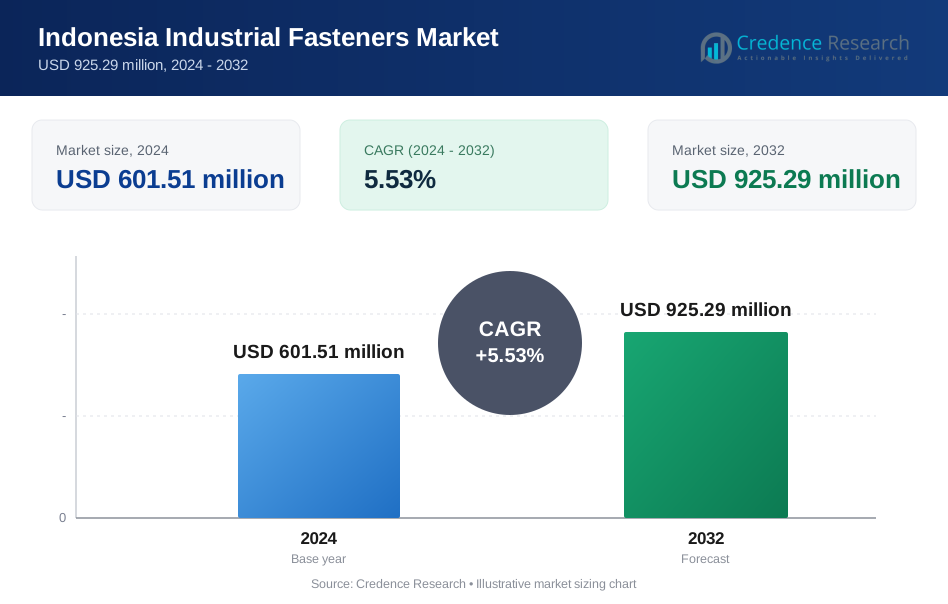
The Indonesia Industrial Fasteners Market is projected to grow from USD 601.51 million in 2024 to an estimated USD 925.29 million by 2032, with a compound annual growth rate (CAGR) of 5.53% from 2024 to 2032.
Market drivers for the Indonesia industrial fasteners market include a combination of macroeconomic initiatives and sector-specific advancements. The government's ongoing infrastructure development programs, such as new highways, airports, and mass rapid transit systems, are significantly increasing the demand for construction-grade fasteners. Moreover, Indonesia's automotive industry, one of the largest in Southeast Asia, is boosting the consumption of specialized fasteners designed for vehicle assembly and component manufacturing. The expanding manufacturing base, driven by investments in machinery, equipment, and electronics, also contributes heavily to market growth. Technological advancements in fastening solutions, such as corrosion-resistant and high-strength materials, are further shaping the industry, offering improved durability and performance. Additionally, Indonesia's active participation in regional trade agreements enhances its export capabilities, positioning the country as a key supplier of industrial fasteners within ASEAN and neighboring regions.
Regionally, the market growth is concentrated across several industrialized zones. Java, the country’s most populous and economically developed island, leads demand due to its dominance in manufacturing and construction projects. Major cities such as Jakarta, Surabaya, and Bandung are hubs for industrial and commercial developments, spurring consistent fastener requirements. Sumatra follows with significant demand generated by infrastructure projects, oil and gas activities, and plantation industries that rely on heavy machinery. Meanwhile, Kalimantan contributes to the market with its strong mining sector, where durable and heavy-duty fasteners are essential for operational efficiency. The distribution of demand across these regions, combined with strategic investments by manufacturers to expand their local production facilities, strengthens Indonesia’s position as a key market for industrial fasteners in the region.
Market Insights:
- The Indonesia Industrial Fasteners Market is projected to grow from USD 601.51 million in 2024 to USD 925.29 million by 2032, registering a CAGR of 5.53% during the forecast period.
- The Global Industrial Fasteners Market is projected to grow from USD 98,826 million in 2024 to USD 158,987.23 million by 2032, registering a robust CAGR of 6.12%.
- Government-led infrastructure initiatives, including highways, airports, and transit systems, are significantly driving demand for construction-grade fasteners across the country.
- Rapid expansion of the automotive manufacturing sector, supported by EV adoption and industrial incentives, is creating robust opportunities for specialized and high-strength fasteners.
- Growth in the broader manufacturing industry, particularly in machinery, electronics, and heavy equipment sectors, is increasing the need for durable and precision-engineered fastening solutions.
- Technological innovations in corrosion resistance, lightweight materials, and export-oriented production strategies are reshaping the competitive landscape for Indonesian fastener manufacturers.
- Market growth faces challenges from fluctuating raw material prices, heightened competition from low-cost imports, and skill gaps in high-precision fastener production.
- Regionally, Java dominates the market, driven by its industrial concentration, while Sumatra and Kalimantan contribute significantly through infrastructure, mining, and oil and gas activities.
Report scope
This report segments the Indonesia Industrial Fasteners Market as follow: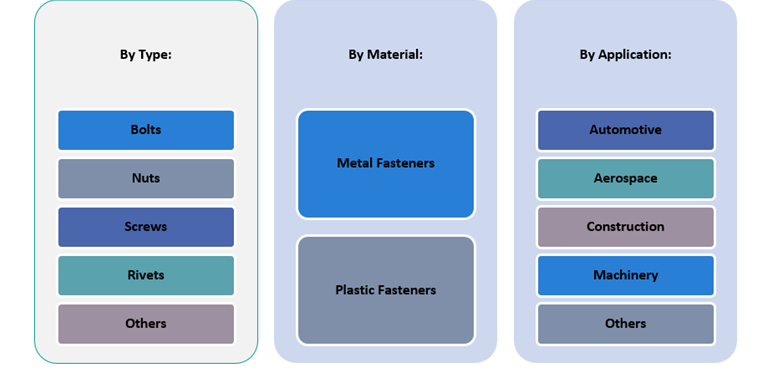
Market Drivers:
Infrastructure Development Initiatives
The Indonesian government's aggressive push toward infrastructure development is one of the primary drivers of the industrial fasteners market. Major projects, including the expansion of roadways, airports, seaports, and public facilities under initiatives such as the National Strategic Projects (PSN), have substantially increased the demand for construction-grade fasteners. Industrial fasteners play a crucial role in ensuring the structural integrity of large-scale infrastructure. For example, the expansion of toll roads-including Section Harbor Road II in North Jakarta and projects in Bandung City-has significantly increased demand for construction-grade fasteners, which are essential for bridges, guardrails, and signage. As Indonesia continues to focus on improving its national connectivity and urban infrastructure, the construction sector's need for reliable fastening solutions is projected to rise consistently. Fastener manufacturers are leveraging this momentum by offering products designed for diverse environmental and operational conditions encountered across the archipelago.
Growth of the Automotive Manufacturing Sector
Indonesia’s automotive manufacturing sector is expanding rapidly, positioning the country as one of Southeast Asia's largest vehicle producers. This growth has a direct impact on the industrial fasteners market, as vehicles require a wide range of specialized fasteners during assembly and maintenance. For instance, companies like PT. Automotive Fasteners Aoyama Indonesia, a subsidiary of Japan’s Aoyama Seisakusho Co., Ltd., have established manufacturing operations in Karawang, West Java, focusing on high-quality bolts for the automotive industry since 2013. The government's initiatives to attract global automotive players through incentives and the establishment of industrial zones are further fueling market demand. Moreover, the increasing adoption of electric vehicles (EVs) and hybrid models is creating new opportunities for fastener manufacturers to develop lightweight, corrosion-resistant, and high-strength fastening solutions tailored to modern automotive needs. The ongoing transformation in automotive technologies will likely continue boosting fastener consumption in the years ahead.
Expansion of the Manufacturing Industry
Indonesia’s manufacturing industry is evolving into a vital pillar of the country's economic growth, significantly influencing the industrial fasteners market. Sectors such as machinery, electronics, consumer goods, and heavy equipment manufacturing are increasing their production capacities, leading to higher demand for precision-engineered fasteners. The shift towards advanced manufacturing techniques, coupled with Indonesia’s growing integration into global supply chains, is encouraging the use of high-quality, durable fastening solutions. Government efforts to strengthen industrial competitiveness, through initiatives like "Making Indonesia 4.0," are also promoting the adoption of technologically advanced fasteners designed to enhance product efficiency, safety, and longevity across various manufacturing applications.
Technological Advancements and Export Potential
Technological innovation is reshaping the Indonesia industrial fasteners market by introducing materials and designs that enhance performance, reduce weight, and improve corrosion resistance. Manufacturers are increasingly investing in research and development to cater to the evolving needs of end-use industries, aligning with global trends toward sustainability and efficiency. Additionally, Indonesia’s strategic geographical location and participation in regional trade agreements such as the Regional Comprehensive Economic Partnership (RCEP) are opening new avenues for export growth. Local fastener producers are benefiting from these agreements by accessing larger markets in the Asia Pacific region, further stimulating domestic production and fostering international competitiveness.
Market Trends:
Rising Adoption of Lightweight Fasteners
The Indonesia industrial fasteners market is witnessing a rising trend toward the adoption of lightweight fasteners across key sectors such as automotive, aerospace, and electronics. Industries are increasingly seeking fastening solutions that help reduce overall weight, enhance energy efficiency, and improve product performance. For instance, companies are increasingly utilizing fasteners made from aluminum and titanium alloys, as well as advanced polymers, to achieve higher strength-to-weight ratios and meet stricter emission standards. In the automotive sector, in particular, the shift toward lighter vehicles to meet evolving environmental standards is significantly influencing demand. This trend is encouraging manufacturers to develop fasteners made from materials like aluminum, titanium, and advanced composites, positioning lightweight solutions as an important area of innovation within the market.
Growth of Prefabricated Construction
The growing adoption of prefabricated construction methods is creating new opportunities for the industrial fasteners market in Indonesia. Prefabrication allows for faster construction timelines, improved quality control, and reduced labor costs, leading to its increasing application in residential, commercial, and infrastructure projects. These construction methods require highly reliable and precision-engineered fasteners to ensure structural integrity during transportation and assembly. As more developers opt for modular and prefabricated structures to meet rising urbanization demands, the need for specialized fastening solutions is becoming more prominent across the Indonesian market.
Technological Integration in Manufacturing
Technological advancements are reshaping manufacturing practices in Indonesia’s industrial fasteners sector. Companies are increasingly adopting automation, robotics, and digital quality monitoring systems to enhance production efficiency and maintain high standards of product consistency. The implementation of smart manufacturing technologies is enabling producers to streamline operations, reduce error rates, and increase output capacity. This digital transformation is driving innovation in the design, testing, and production of fasteners, allowing local manufacturers to align with international standards and improve their competitiveness on a global scale.
Increased Focus on Green Manufacturing
Sustainability has emerged as a key trend influencing the industrial fasteners market in Indonesia. Manufacturers are placing greater emphasis on eco-friendly production methods, including the use of recycled materials, low-emission coatings, and energy-efficient manufacturing processes. For instance, Ochiai Industrial Fasteners, which operates manufacturing sites in Indonesia, has replaced all compressors with high-efficiency models and switched to LED lighting to reduce energy consumption. There is also a growing movement among companies to obtain environmental certifications and develop products that meet stringent sustainability requirements. With increasing pressure from regulatory bodies and heightened consumer awareness regarding environmental impact, the market is witnessing a steady shift toward green manufacturing practices, paving the way for a more responsible and resilient industrial fasteners industry.
Market Challenges Analysis:
Fluctuating Raw Material Prices
One of the major restraints affecting the growth of the Indonesia industrial fasteners market is the volatility in raw material prices. For instance, the Federal Reserve Bank of St. Louis Global Metal Price Index shows that metal prices more than doubled compared to 2021, driven by post-pandemic recovery and supply shocks, before declining between 2022 and 2023 but remaining volatile. Industrial fasteners largely depend on materials such as steel, aluminum, and various alloys, whose costs are highly sensitive to global supply chain dynamics, geopolitical tensions, and changing trade policies. When raw material prices surge, manufacturers face significant pressure on production costs, leading to reduced profit margins or higher product prices. This fluctuation not only impacts domestic producers but also affects the competitiveness of Indonesian fasteners in international markets. Managing these cost pressures while maintaining quality and affordability remains a persistent challenge for industry players.
Competition from Low-Cost Imports
The Indonesia industrial fasteners market is also challenged by the influx of low-cost imports from countries with more mature and cost-efficient manufacturing ecosystems. Imported fasteners, often priced lower than locally produced alternatives, create intense competitive pressure, especially in price-sensitive segments of the market. Small and medium-sized domestic manufacturers, in particular, struggle to compete on price without compromising on quality, leading to margin erosion and market share loss. The availability of cheaper imported products makes it difficult for local producers to scale their operations, invest in innovation, or expand into higher-value segments without substantial financial support or policy interventions.
Technical Skill Gaps in Manufacturing
Another significant challenge is the existing technical skill gap within Indonesia’s manufacturing workforce, particularly in advanced fastener production. High-performance and specialty fasteners require precision manufacturing techniques, quality control expertise, and material science knowledge that are not yet widespread across the local industry. Limited access to skilled labor and advanced manufacturing technologies can hinder domestic companies' ability to meet growing demand for specialized fasteners. This skill gap not only affects production efficiency but also restricts the ability of Indonesian manufacturers to move up the value chain and compete effectively in regional and global markets.
Market Opportunities:
The Indonesia industrial fasteners market presents significant growth opportunities driven by the country’s ongoing industrialization, urbanization, and infrastructure development programs. As the government continues to prioritize major infrastructure initiatives, including the construction of new transportation networks, industrial parks, and public facilities, demand for high-quality fastening solutions is expected to rise steadily. Additionally, the expansion of sectors such as automotive, aerospace, and renewable energy is creating a strong need for advanced, lightweight, and corrosion-resistant fasteners. The growing focus on building resilient and energy-efficient structures further strengthens the need for innovative fastening systems capable of supporting sustainable construction practices. These trends offer local manufacturers an opportunity to diversify their product portfolios and invest in technological advancements to meet the evolving requirements of both domestic and export markets.
Moreover, Indonesia’s strategic geographic location, coupled with its participation in regional trade agreements, positions it as an attractive manufacturing and export hub for industrial fasteners within Southeast Asia. Rising foreign direct investments in manufacturing and the development of special economic zones are creating a favorable business environment, encouraging both domestic and international players to establish production facilities. Additionally, increasing consumer awareness regarding product quality and the gradual shift toward high-performance fasteners open new avenues for premium product offerings. By focusing on automation, quality certifications, and sustainable manufacturing practices, fastener producers can capture emerging opportunities and strengthen their competitiveness in regional and global supply chains.
Market Segmentation Analysis:
The Indonesia industrial fasteners market is segmented by type, application, and material, each contributing uniquely to overall market dynamics.
By type, bolts hold a significant share due to their widespread usage across construction, automotive, and machinery applications where high strength and durability are essential. Nuts and screws also command considerable demand, especially in automotive assembly and general manufacturing. Rivets are gaining traction in industries requiring permanent fastening solutions, while the "others" category, which includes washers and pins, continues to support specialized industrial needs across diverse sectors.
By application, the automotive segment leads the market, fueled by Indonesia’s expanding vehicle production and rising export activities. Construction represents another key segment, driven by the government’s continued investment in infrastructure projects and urban development. The machinery segment also shows strong growth potential, supported by the increasing establishment of manufacturing and industrial units across the country. Aerospace, while smaller in comparison, is an emerging application area where high-precision and high-strength fasteners are gaining demand, particularly with the country’s efforts to develop its aerospace industry. The "others" segment, including electronics and home appliances, is also contributing steadily to overall market expansion.
By material, metal fasteners dominate the market due to their superior strength, durability, and ability to withstand harsh operational environments. Steel, stainless steel, and aluminum remain preferred materials for industrial-grade applications. However, plastic fasteners are emerging as an alternative in industries prioritizing lightweight, corrosion-resistant, and cost-effective solutions, particularly in electronics and light-duty applications.
Segmentation:
By Type Segment:
- Bolts
- Nuts
- Screws
- Rivets
- Others
By Application Segment:
- Automotive
- Aerospace
- Construction
- Machinery
- Others
By Material Segment:
- Metal Fasteners
- Plastic Fasteners
Regional Analysis:
The Indonesia industrial fasteners market exhibits significant regional disparities, reflecting the country's diverse economic activities and industrial development across its archipelago. Java stands as the dominant region, accounting for the majority of the market share. This prominence is attributed to Java's dense population, advanced infrastructure, and concentration of manufacturing industries, particularly in cities like Jakarta, Surabaya, and Bandung. The island's well-established industrial base and extensive transportation networks facilitate efficient distribution and logistics, bolstering its leadership in the fasteners market.
Sumatra follows as a key contributor to the market, driven by its robust oil and gas sector, palm oil plantations, and ongoing infrastructure projects. The demand for industrial fasteners in Sumatra is propelled by the need for durable components in heavy machinery and construction activities. Kalimantan, rich in natural resources, particularly coal and timber, also plays a significant role. The region's mining and logging industries require specialized fasteners capable of withstanding harsh operational conditions, thereby sustaining demand.
Sulawesi and Bali-Nusa Tenggara regions, while smaller in market share, are experiencing growth due to increasing investments in tourism infrastructure, agriculture, and emerging manufacturing sectors. The development of industrial zones and improvement in transportation facilities in these regions are expected to enhance their contributions to the fasteners market. Eastern Indonesia, encompassing Papua and Maluku, currently holds a minimal share but presents potential for future growth as infrastructure development initiatives are implemented to integrate these regions more effectively into the national economy.
Key Player Analysis:
- Nifco Inc.
- Shanghai Prime Machinery Co. Ltd.
- Meidoh Co. Ltd.
- Sundram Fasteners Limited
- Agrati Group
- HIL Ltd.
- Bhansali Fasteners
- Zhejiang Huantai Fastener Co., Ltd.
- Kyocera Corporation
- Nippon Industrial Fasteners Company (Nifco)
Competitive Analysis:
The Indonesia industrial fasteners market features a competitive landscape characterized by the presence of both domestic and international players striving to expand their market share. Leading companies focus on strengthening their product portfolios by offering high-quality, corrosion-resistant, and lightweight fasteners to meet the evolving demands of industries such as automotive, construction, and manufacturing. Local manufacturers emphasize cost competitiveness and faster delivery times, while global players leverage advanced technologies and extensive distribution networks to maintain their positions. Strategic partnerships, mergers, and capacity expansions are common approaches adopted to enhance market reach. Companies are also investing in innovation, targeting the growing preference for customized and eco-friendly fastening solutions. Additionally, participation in regional trade agreements provides manufacturers opportunities to tap into neighboring markets. The competitive environment remains dynamic, with continual efforts focused on quality enhancement, price optimization, and technological advancement to address the diverse and growing needs of Indonesian industries.
Recent Developments:
- In May 2024, H.B. Fuller Company completed the acquisition of ND Industries Inc., a leading manufacturer of specialty adhesives and fastener solutions. This acquisition strengthens H.B. Fuller’s portfolio in the industrial fasteners sector across the Asia Pacific region, including Indonesia, by expanding its product offerings and enhancing its market reach in specialty fastener solutions.
- In September 2023, MW Components announced the acquisition of Elgin Fastener Group, a manufacturer specializing in fasteners. This move aims to enhance MW Components’ capabilities and presence in the global industrial fasteners market, with potential positive implications for supply and technology availability in Indonesia’s growing industrial sector.
- In 2022, BECK Fastener Group launched its new product, the LIGNOLOC wooden nail, following the success of its collated wooden nails. This innovative product introduction highlights the company’s focus on sustainable fastener solutions and is expected to influence the industrial fasteners market in Asia Pacific, including Indonesia, by offering alternatives to traditional metal fasteners.
Market Concentration & Characteristics:
The Indonesia industrial fasteners market is moderately fragmented, with a balanced mix of large multinational corporations and a substantial number of local manufacturers competing across various segments. While international players dominate the high-performance and specialty fasteners segment, local companies maintain a strong presence in standard fasteners catering to construction and general manufacturing. The market is characterized by intense competition, driven by factors such as pricing strategies, product innovation, and quality certifications. Demand patterns favor manufacturers that can offer customized solutions, quick turnaround times, and strong after-sales support. Sustainability initiatives are also influencing purchasing decisions, encouraging the adoption of eco-friendly materials and processes. As infrastructure development, industrialization, and automotive production continue to grow, the market offers ample opportunities for companies willing to adapt to evolving technological and environmental standards. Overall, the market reflects a dynamic environment with evolving customer expectations and increasing emphasis on innovation and operational excellence.
Report Coverage:
The research report offers an in-depth analysis based on Type, Application and Material. It details leading market players, providing an overview of their business, product offerings, investments, revenue streams, and key applications. Additionally, the report includes insights into the competitive environment, SWOT analysis, current market trends, as well as the primary drivers and constraints. Furthermore, it discusses various factors that have driven market expansion in recent years. The report also explores market dynamics, regulatory scenarios, and technological advancements that are shaping the industry. It assesses the impact of external factors and global economic changes on market growth. Lastly, it provides strategic recommendations for new entrants and established companies to navigate the complexities of the market.
Future Outlook:
- Increasing infrastructure development projects will continue driving strong demand for high-strength construction fasteners.
- Automotive sector expansion, particularly in electric vehicles, will create opportunities for specialized lightweight fastening solutions.
- Growing investments in manufacturing will boost the need for precision-engineered fasteners across industrial machinery and equipment.
- Rising adoption of prefabricated construction methods will elevate demand for modular and heavy-duty fastening systems.
- Technological advancements, including smart manufacturing and automation, will enhance production efficiency and product innovation.
- Expansion of export opportunities through regional trade agreements will strengthen Indonesia’s position as a fastener supply hub.
- Greater emphasis on eco-friendly manufacturing practices will drive the development of sustainable fastening solutions.
- Increasing competition from low-cost imports will encourage local players to focus on quality and differentiation.
- Development of new industrial zones outside Java will diversify regional demand and create new market pockets.
- Continuous government support for industrialization and infrastructure modernization will sustain long-term market growth.
Request a Free Sample
Fill in your details and we'll send you a free sample report.
- Sample data tables & charts
- Research methodology
Need a Custom Version of This Report?
Tailor the scope, geography, or segments to your exact requirements.
- Custom geography or segment scope
- Direct access to our analyst team
Frequently Asked Questions
What is the current size of the Indonesia Industrial Fasteners Market?
What factors are driving the growth of the Indonesia Industrial Fasteners Market?
What are the key segments within the Indonesia Industrial Fasteners Market?
Who are the major players in the Indonesia Industrial Fasteners Market?
Table of Content
Chapter 1. Report Introduction
- 1.1 Report Description & Purpose
- 1.1.1 Report Title & Market Definition
- 1.1.2 Unique Selling Propositions (USP) & Key Differentiators
- 1.1.3 Value Proposition for Stakeholders
- 1.2 Research Objectives
- 1.2.1 Market Sizing Objectives (Volume & Revenue)
- 1.2.2 Segmentation Objectives
- 1.2.3 Competitive Intelligence Objectives
- 1.2.4 Forecast & Scenario Objectives
- 1.3 Report Scope
- 1.3.1 Indonesia Industrial Fasteners Scope – Types & Subtypes Covered
- 1.3.2 Geographic Scope – Regions & Countries Covered
- 1.3.3 Historical Period, Base Year & Forecast Period (2024; forecast to 2032)
- 1.3.4 Inclusions & Exclusions
- 1.4 HS Code & Classification Framework
- 1.5 Currency, Units & Pricing Basis
- 1.6 Target Stakeholders
- 1.7 Limitations & Assumptions
Chapter 2. Executive Summary
- 2.1 Global Indonesia Industrial Fasteners Market Snapshot
- 2.1.1 Market Size – Historical (2024) & Forecast (2024-2032) (2024: USD 601.51 million → 2032: USD 925.29 million)
- 2.1.2 Volume & Revenue – Global Totals
- 2.1.3 Key Market Highlights – Top Five Facts
- 2.2 Indonesia Industrial Fasteners Market Segmentation Snapshot
- 2.2.1 Market Split by Region – 2024 vs. 2032
- 2.3 Competitive Snapshot
- 2.3.1 Top 10 Players by Revenue Share – 2024
- 2.3.2 Top 10 Players by Volume Share – 2024
- 2.3.3 Recent Strategic Developments (18-Month Summary)
- 2.4 Key Investment Highlights & Strategic Conclusions
Chapter 3. Indonesia Industrial Fasteners Market Dynamics & Industry Analysis
- 3.1 Market Overview & Context
- 3.1.1 Indonesia Industrial Fasteners Market Position in the Broader Automotive Value Chain
- 3.1.2 OEM vs. Replacement Market Dynamics
- 3.1.3 Market Maturity & Development Stage by Region
- 3.2 Indonesia Industrial Fasteners Market Drivers
- 3.3 Indonesia Industrial Fasteners Market Restraints & Challenges
- 3.4 Indonesia Industrial Fasteners Market Opportunities
- 3.5 Porter's Five Forces Analysis
- 3.5.1 Threat of New Entrants
- 3.5.2 Bargaining Power of Suppliers
- 3.5.3 Bargaining Power of Buyers
- 3.5.4 Threat of Substitutes
- 3.5.5 Competitive Rivalry – Intensity Assessment
- 3.6 Indonesia Industrial Fasteners Value Chain Analysis
- 3.6.1 Upstream – Raw Material/Input Suppliers
- 3.6.1.1 Raw Material/Input 1
- 3.6.1.2 Raw Material/Input 2
- 3.6.1.3 Raw Material/Input 3
- 3.6.2 Midstream – Production/Manufacturing/Service Delivery
- 3.6.2.1 Production/Process Overview
- 3.6.2.2 Key Facility Locations & Capacity by Manufacturer
- 3.6.3 Downstream – Distribution & End Consumer
- 3.6.3.1 Primary Channel – B2B/OEM
- 3.6.3.2 Secondary Channels – Dealer, Retail, Online, Direct
- 3.6.4 Value Chain Profitability Analysis
- 3.6.1 Upstream – Raw Material/Input Suppliers
- 3.7 PESTEL Analysis
- 3.7.1 Political Factors
- 3.7.2 Economic Factors
- 3.7.3 Social Factors
- 3.7.4 Technological Factors
- 3.7.5 Environmental Factors
- 3.7.6 Legal Factors
- 3.8 Indonesia Industrial Fasteners Supply Chain Analysis
- 3.8.1 Raw Material/Input Supply Risk Assessment
- 3.8.2 Manufacturing Concentration Risk (Geographic Exposure)
- 3.8.3 Trade Disruption Impact Analysis
- 3.9 Regulatory & Policy Landscape
Note: The regulatory and policy landscape section covers regulations based on their applicability to the market, Indonesia Industrial Fasteners category, geography, and scope of the study. Only regulatory frameworks with a material impact on operations, compliance, trade, sustainability, or market access are analyzed in detail.
Chapter 4. Key Investment Pockets & Opportunity Analysis
- 4.1 Indonesia Industrial Fasteners Market Attractiveness Analysis
- 4.1.1 By Region – Investment Attractiveness Matrix (Volume × CAGR)
- 4.2 Absolute Revenue Growth Opportunity
- 4.2.1 By Region – Absolute USD Growth Through 2032
- 4.3 Incremental Volume Opportunity
- 4.3.1 By Region – Incremental Volume Through 2032
- 4.3.2 Segment – Incremental Volume
- 4.4 Emerging Submarket Opportunity Deep Dive (Subject to Applicability)
- 4.5 Emerging Market Opportunity Scorecards
- 4.5.1 United States
- 4.5.2 Europe
- 4.5.3 Asia
- 4.5.4 Middle East & Africa
Note: Emerging Market Opportunity Scorecards will be included based on relevance and strategic importance. Regions listed are indicative and may vary depending on data availability and market dynamics.
Chapter 5. Indonesia Industrial Fasteners Import-Export Analysis & Trade Flows
- 5.1 Global Trade Overview
- 5.1.1 Global Export Value by Country (2024)
- 5.1.2 Global Export Volume by Country (2024)
- 5.1.3 Global Import Value by Country (2024)
- 5.1.4 Global Import Volume by Country (2024)
- 5.1.5 Net Trade Balance by Country (2024)
- 5.2 Export Analysis – Segment
- 5.2.1 Type 1 (HS Code)
- 5.2.2 Type 2 (HS Code)
- 5.2.3 Type 3 (HS Code)
- 5.2.4 Type 4 (HS Code)
- 5.2.5 Type 5 (HS Code)
- 5.3 Import Analysis – Segment
- 5.3.1 Type 1 (HS Code)
- 5.3.2 Type 2 (HS Code)
- 5.3.3 Type 3 (HS Code)
- 5.3.4 Type 4 (HS Code)
- 5.3.5 Type 5 (HS Code)
- 5.4 Average Unit Trade Prices
- 5.4.1 Average Export Price – Segment & Country
- 5.4.2 Average Import Price – Segment & Source Country
- 5.4.3 Price Trends (2024)
- 5.5 Key Trade Route Analysis
- 5.5.1 Trade Route 1
- 5.5.2 Trade Route 2
- 5.5.3 Trade Route 3
- 5.5.4 Trade Route 4
- 5.5.5 Trade Route 5
- 5.6 Trade Policy Impact Assessment
- 5.6.1 US Anti-Dumping & Section 301 Tariffs
- 5.6.2 EU Customs Union Impact
- 5.6.3 Major Free Trade Agreements
- 5.6.4 USMCA Rules of Origin
Note: Trade policy analysis will be included only where relevant to the Indonesia Industrial Fasteners market.
Chapter 6. Competitive Landscape & Company Benchmarking
- 6.1 Indonesia Industrial Fasteners Market Concentration & Structure
- 6.1.1 Herfindahl-Hirschman Index (HHI) – vs. 2024
- 6.1.2 Tier 1, Tier 2 & Tier 3 Market Structure
- 6.1.3 Global, Regional & Local Player Dynamics
- 6.2 Indonesia Industrial Fasteners Market Share Analysis – 2024
- 6.2.1 Global Revenue Share by Company
- 6.2.2 Global Volume Share by Company
- 6.2.3 Regional Revenue Share
- 6.2.4 Market Share Evolution ( vs. 2024)
- 6.2.5 OEM Segment Share by Company
- 6.2.6 Replacement Segment Share by Company
- 6.3 Production/Delivery Capacity & Facility Analysis
- 6.3.1 Global Installed Capacity
- 6.3.2 Capacity Utilization Rates
- 6.3.3 Production/Output Volume
- 6.3.4 Facility Locations & Capacity Map
- 6.3.5 Planned Capacity Additions
- 6.4 Indonesia Industrial Fasteners Competitive Benchmarking Matrix
- 6.4.1 Revenue, Volume, CAGR & Profitability Comparison
- 6.4.2 Channel Revenue Mix
- 6.4.3 Geographic Revenue Exposure
- 6.4.4 R&D Intensity
- 6.4.5 Sustainability Maturity
- 6.5 Strategic Developments in Indonesia Industrial Fasteners (Last 24 Months)
- 6.5.1 Mergers, Acquisitions & Divestments
- 6.5.2 New Indonesia Industrial Fasteners Launches
- 6.5.3 Facility Expansions
- 6.5.4 Strategic Alliances, Joint Ventures & Partnerships
- 6.5.5 Distribution Expansion & Market Entry
- 6.5.6 Sustainability & ESG Initiatives
- 6.6 Competitive Strategy Mapping
- 6.6.1 Leader, Challenger, Follower & Niche Classification
- 6.6.2 Pricing Strategy Comparison
- 6.6.3 Channel Strategy Matrix
Note: Strategic developments are included based on their materiality and the availability of reliable information.
Chapter 7. Global Indonesia Industrial Fasteners Market – By Distribution Channel
- 7.1 Segment Overview
- 7.1.1 Volume & Revenue Split by Channel (2024 & 2032)
- 7.1.2 Channel Mix Evolution (2024-2032)
Chapter 8. Regional Market Analysis – Global Overview
- 8.1 Global Regional Overview
- 8.1.1 Regional Volume Share
- 8.1.2 Regional Revenue Share
- 8.1.3 Regional Volume by Region
- 8.1.4 Regional Revenue by Region
- 8.1.5 Regional Forecast Through 2032
- 8.2 Cross-Regional Segment Analysis
- 8.2.1 By Distribution Channel
- 8.2.2 By Brand/Price Tier
Chapter 9. North America Indonesia Industrial Fasteners Market
- 9.1 United States
- 9.2 Canada
- 9.3 Mexico
Chapter 10. Europe Indonesia Industrial Fasteners Market
- 10.1 Germany
- 10.2 France
- 10.3 Italy
- 10.4 United Kingdom
- 10.5 Spain
- 10.6 Poland
- 10.7 Russia
- 10.8 Netherlands
- 10.9 Belgium
- 10.10 Sweden
- 10.11 Denmark
- 10.12 Norway
- 10.13 Rest of Europe
Chapter 11. Asia Pacific Indonesia Industrial Fasteners Market
- 11.1 China
- 11.2 India
- 11.3 Japan
- 11.4 South Korea
- 11.5 Thailand
- 11.6 Indonesia
- 11.7 Vietnam
- 11.8 Malaysia
- 11.9 Australia
- 11.10 Rest of Asia Pacific
Chapter 12. Latin America Indonesia Industrial Fasteners Market
- 12.1 Brazil
- 12.2 Argentina
- 12.3 Colombia
- 12.4 Chile
- 12.5 Rest of Latin America
Chapter 13. Middle East Indonesia Industrial Fasteners Market
- 13.1 Saudi Arabia
- 13.2 United Arab Emirates
- 13.3 Turkey
- 13.4 Israel
- 13.5 Iran
- 13.6 Rest of the Middle East
Chapter 14. Africa Indonesia Industrial Fasteners Market
- 14.1 South Africa
- 14.2 Egypt
- 14.3 Nigeria
- 14.4 Morocco
- 14.5 Rest of Africa
Chapter 15. Indonesia Industrial Fasteners Company Profiles
- 15.1 [Company 01]
- 15.1.1 Company Overview
- 15.1.2 Key Management Personnel
- 15.1.3 Products & Services Portfolio
- 15.1.4 Financial Performance
- 15.1.5 Key Market Focus & Geographic Presence
- 15.1.6 Recent Developments & Strategic Initiatives
Note: The company profile list is preliminary and may change based on research findings, market developments, data availability, and client requirements.
Chapter 16. Appendices
- Appendix A – List of Abbreviations & Acronyms
- Appendix B – Industry Classification Code Reference – Full Series
- Appendix C – Production & Capacity Data Tables
- Appendix D – End-Use & Demand Base Tables
- Appendix E – Consumption & Replacement Rate Assumptions
- Appendix F – ASP Reference Tables
- Appendix G – Manufacturing & Facility Database
- Appendix H – Import-Export Data Tables
- Appendix I – Regulatory Summary Tables
- Appendix J – Primary Research Participant List (Anonymized)
- Appendix K – Primary Research Questionnaire Framework
- Appendix L – Data Sources & Bibliography
- Appendix M – Market Size Divergence & Source Comparison
Chapter 17. Research Methodology
- 17.1 Research Framework & Philosophy
- 17.2 Secondary Research – Sources, Hierarchy & Data Extraction
- 17.3 Data Modeling – Bottom-Up & Top-Down Market Sizing
- 17.4 Primary Research – Stakeholder Framework, LOI & Sample Sizes
- 17.5 Forecast Methodology – Regression, Scenario & Sensitivity Analysis
- 17.6 Quality Control – Four-Layer Validation Framework
- 17.7 Limitations & Standard Assumptions
- 17.8 Disclaimer
