
| REPORT ATTRIBUTE | DETAILS |
|---|---|
| Historical Period | 2019-2022 |
| Base Year | 2023 |
| Forecast Period | 2024-2032 |
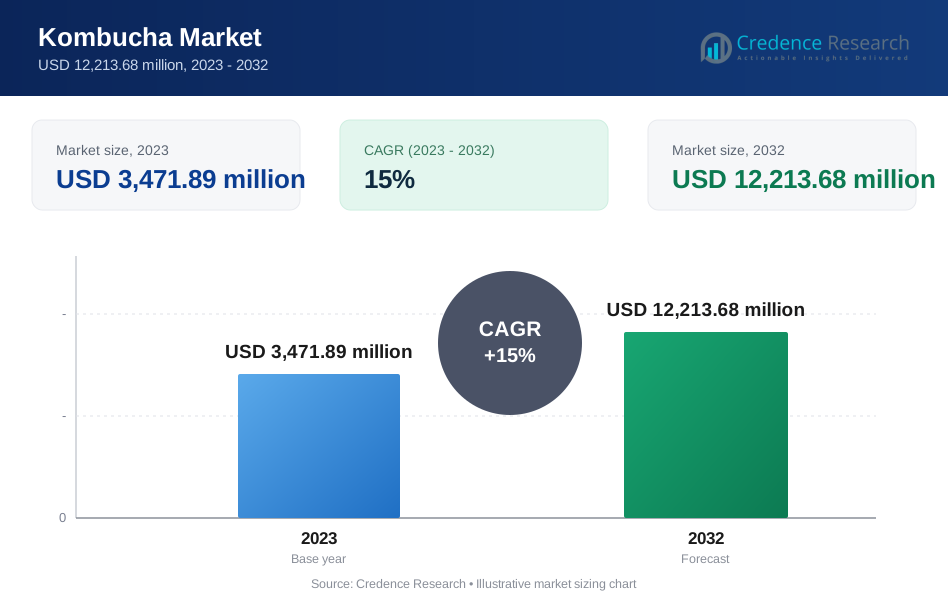
| Kombucha Market Size 2023 | USD 3,471.89 million |
| Kombucha Market, CAGR | 15% |
| Kombucha Market Size 2032 | USD 12,213.68 million |
Market Overview
The Global Kombucha Market is experiencing a rapid expansion, projected to grow from USD 3,471.89 million in 2023 to an estimated USD 12,213.68 million by 2032. This growth is anticipated at a compound annual growth rate (CAGR) of 15% from 2024 to 2032. The increasing consumer awareness about the health benefits associated with kombucha, such as improved digestion and immunity boosting properties, coupled with a growing inclination towards functional beverages, underpins this significant market expansion. As kombucha continues to gain popularity, its market size is set to quadruple, driven by both existing businesses scaling up operations and new entrants captivated by the promising growth prospects.
Market drivers for kombucha primarily include the shifting consumer preferences towards health and wellness products. The beverage’s probiotic-rich composition makes it a favorite among health-conscious consumers, fueling its adoption across various demographics. Additionally, the trend of natural and organic ingredients continues to drive consumer interest, with kombucha manufacturers leveraging this by introducing a variety of flavors and formulations. Innovations in packaging and extended shelf life of the product are also playing a crucial role in the market’s growth. Furthermore, as kombucha is perceived as a viable alternative to alcoholic and carbonated drinks, its popularity is expected to surge, supported by social media marketing and an expanding base of health-aware consumers.
Geographically, North America currently dominates the Global Kombucha Market, attributed to a well-established health and wellness culture, along with high consumer spending capability. The U.S. leads the region, owing to early market adoption and continuous innovations by local manufacturers. However, Asia-Pacific is anticipated to witness the fastest growth due to increasing health awareness and rising disposable incomes, especially in countries like China and India. Key players in the market include GT’s Living Foods, Health-Ade Kombifa, and The Humm Kombucha LLC. These companies are intensifying their global reach and production capacities, while focusing on product innovation to cater to a broader audience, thereby reinforcing their market positions worldwide.
Market Drivers
Health and Wellness Trend:
As global consumers become increasingly health-conscious, the demand for kombucha has surged due to its numerous health benefits. For instance, kombucha is rich in probiotics, which are known to enhance gut health, boost immunity, and improve digestion. The growing awareness of these health benefits is encouraging consumers to incorporate kombucha into their daily diets as a healthful alternative to sugary soft drinks and alcoholic beverages. This shift is particularly noticeable among millennials and Gen Z consumers, who prioritize wellness and natural products. As scientific research continues to back the health benefits of probiotics, the popularity of kombucha is expected to rise, reinforcing its market growth.
Rising Popularity of Functional Beverages:
The functional beverage sector is expanding rapidly, with kombucha emerging as a key player. Functional beverages offer health benefits beyond basic nutrition, and kombucha fits this niche perfectly due to its detoxifying properties and its role in metabolic processes. For example, in a recent consumer poll, 60% of respondents indicated they regularly consume functional beverages for their added health benefits. Its positioning as a functional beverage not only attracts health enthusiasts but also caters to the broader base of consumers looking for drinks that offer added health advantages. The versatility of kombala allows for its consumption as a non-alcoholic refreshment, a post-workout recovery drink, or even as a dietary supplement, making it a multi-faceted product in the functional beverage category.
Innovation in Flavors and Packaging:
Innovation is a critical driver in the kombucha market, with manufacturers constantly experimenting with new flavors and packaging to attract consumers. The introduction of a wide range of flavors—from classic fruits to exotic botanicals—caters to a diverse palate and enhances consumer interest and engagement with the product. For instance, in 2023, over 200 new kombucha flavors were introduced globally, catering to a diverse palate and enhancing consumer interest. Moreover, packaging innovations, such as sustainable and convenient options, are making kombucha more accessible and appealing. A recent study found that 55% of consumers are more likely to purchase a product with eco-friendly packaging, thereby boosting sales and market penetration.
Expansion of Distribution Channels:
The availability of kombucha has significantly increased due to the expansion of distribution channels. Initially confined to health food stores, kombucha is now widely available in supermarkets, convenience stores, cafes, and even through online platforms. This extensive distribution network makes it easy for consumers to purchase kombucha, enhancing its visibility and accessibility. The strategic placement of kombucha in prominent retail outlets, along with effective marketing campaigns, has played a crucial role in introducing the product to a broader audience. Additionally, the rise of e-commerce has further propelled the market growth, as consumers enjoy the convenience of direct-to-home delivery services.
Market Trends
Low-Sugar and Healthier Formulations:
In response to the increasing consumer demand for healthier beverage options, kombucha manufacturers are innovating by creating low-sugar and sugar-free versions of their products. These offerings cater to health-conscious consumers looking to reduce their sugar intake without compromising on taste or the health benefits associated with kombucha. For instance, a 2023 survey found that 63% of consumers were actively trying to reduce their sugar intake, driving demand for low-sugar beverages.
Premiumization of Kombucha:
There is a growing trend towards premiumization within the kombucha market. For example, a recent report found that 50% of consumers are willing to pay more for beverages that use high-quality, organic ingredients. This trend is also seeing kombucha being offered in more sophisticated packaging and being positioned as a premium alternative to alcoholic beverages like craft beer and wine.
Expansion into New Geographies:
Kombucha is gaining popularity beyond its traditional strongholds in North America and Western Europe. There is significant growth in Asia-Pacific, driven by increasing health awareness and rising middle-class incomes, particularly in countries such as China and India. Manufacturers are capitalizing on these emerging markets by tailoring flavors and marketing strategies to local tastes and preferences.
Collaborations and Cross-Category Innovations:
Collaboration between kombucha brands and companies from other sectors such as alcohol, coffee, and tea is a notable trend. For example, in 2023, there were over 20 new kombucha-infused products launched globally, including beers, coffees, and spirits, broadening the appeal of kombucha and tapping into new consumer segments.
Sustainability Initiatives:
Sustainability is a key focus area, with kombucha manufacturers investing in eco-friendly production practices and packaging solutions. This not only aligns with the environmental values of their consumer base but also reduces the ecological footprint of their operations.
Flavor Innovation:
Continuous innovation in flavor is a significant trend in the kombucha market. Companies are experimenting with a mix of traditional and exotic flavors to attract a broader audience. Seasonal and limited-edition flavors are particularly popular, creating buzz and driving consumer interest and engagement.
Focus on Home Brewing:
The DIY trend has impacted kombucha as well. There is an increasing number of consumers interested in brewing kombucha at home, which has led to the rise of home brewing kits in the market. This trend is supported by online communities and platforms that share brewing techniques and recipes, further popularizing home-brewed kombucha.
Market Restraints and Challenges
Regulatory Challenges:
One of the major hurdles for the kombucha industry is navigating the complex and often stringent regulatory landscape. The alcohol content in kombucha can sometimes fluctuate and exceed the allowable limits for non-alcoholic beverages, especially during prolonged fermentation. This variability can lead to legal challenges and the need for precise and consistent monitoring during production to ensure compliance with food safety regulations. Regulatory bodies in various countries may also have different standards for what constitutes a non-alcoholic product, complicating the distribution and sale of kombucha across international borders.
Production Consistency:
Maintaining consistency in taste and quality is a significant challenge in kombucha production. The fermentation process can be unpredictable, with variations in temperature, sugar content, and starter cultures affecting the final product. This can result in batch-to-batch variability, which may confuse or dissatisfy consumers expecting a consistent product experience. Manufacturers must invest in sophisticated quality control systems to standardize their products, which can be costly and technologically demanding.
Consumer Misconceptions:
Despite its growing popularity, kombucha still faces misconceptions regarding its health benefits and safety. Some consumers are wary of its probiotic nature and the presence of live cultures, which can be seen as unappealing or potentially harmful. There is also skepticism about the claimed health benefits of kombucha, which are not always supported by scientific evidence. Educating consumers through transparent communication and robust marketing strategies is essential to overcome these misconceptions.
High Product Cost:
The cost of producing kombucha is relatively high due to the need for specific, often organic, ingredients, and the slow fermentation process. This makes it more expensive than conventional non-alcoholic beverages, limiting its accessibility to a broader audience. The premium price point may deter new consumers, particularly in price-sensitive markets.
Competition from Other Functional Beverages:
Kombucha competes in the crowded functional beverage market, which includes a wide range of products such as herbal teas, nutrient-infused waters, and probiotic drinks. Differentiating kombucha from these alternatives is a constant challenge, requiring ongoing innovation and effective marketing strategies to capture and retain consumer interest.
Market Segmentation Analysis
By Product Type
The Global Kombucha Market is segmented into original/plain and flavored varieties, each catering to distinct consumer preferences. The original/plain segment appeals to purists who value the authentic taste and health benefits of kombucha without added flavorings. Despite the growing popularity of flavored kombucha, there remains a significant demand for these unadulterated offerings. On the other hand, flavored kombucha leads the market, driven by consumer enthusiasm for diverse and enhanced taste profiles. Popular flavors such as ginger, berry, citrus, and herbal infusions not only cater to a wide array of palates but also broaden the beverage's appeal, attracting a larger audience.
By Type
Most kombucha falls under the non-alcoholic category, maintaining an alcohol content below 0.5% to comply with regulatory standards for non-alcoholic beverages, making it a preferred choice for consumers seeking health benefits without the effects of alcohol. Meanwhile, the newer and rapidly growing segment of hard kombucha, with an alcohol content similar to beer, caters to those seeking healthier alcoholic beverage alternatives. This diversification in the kombucha market satisfies a broad range of consumer preferences, encompassing both those avoiding alcohol and those looking for a healthier alcoholic option.
By Nature
The market for kombucha is bifurcated into organic and non-organic segments. Organic kombucha, which is crafted from ingredients certified as free from pesticides and artificial chemicals, is experiencing growth driven by rising consumer demand for clean-label products. This preference is especially pronounced in Western markets, where health-conscious consumers prioritize organic options. Conversely, while non-organic kombucha presents a more cost-effective alternative, it tends to be less favored in these health-centric markets, highlighting a distinct preference for products perceived as healthier and more natural.
By Packaging
Glass bottles remain the preferred packaging choice for premium kombucha brands due to their ability to preserve flavor and prevent contamination, ensuring a high-quality product. However, cans and plastic bottles are rapidly gaining traction as viable alternatives, particularly favored for their convenience and sustainability. These options appeal especially to younger consumers and are increasingly popular in markets that prioritize on-the-go consumption, highlighting a shift towards more portable and environmentally friendly packaging solutions in the kombucha market.
By Distribution Channel
Supermarkets and hypermarkets serve as the primary distribution channels for kombucha, providing extensive visibility and accessibility to a diverse consumer base. Additionally, health stores play a crucial role, catering to more health-conscious consumers by offering a range of organic and specialty kombuchas. The online retail segment is also experiencing growth, driven by the convenience of direct-to-home delivery and the expanding influence of e-commerce in the food and beverage sector. Moreover, cafes and restaurants are becoming increasingly important as experiential venues where consumers, particularly in urban areas, can discover and try new kombucha products. This multi-channel distribution strategy enhances the overall reach and availability of kombucha, appealing to various consumer preferences and lifestyles.
Segments
Based on Product Type
- Original/Plain
Based on Type
- Non-Alcoholic
- Hard Kombucha
Based on Nature
- Organic
- Non-Organic
Based on Packaging
- Glass Bottles
- Cans and Plastic Bottles
Based on Distribution Channel
- Supermarkets/Hypermarkets
- Health Stores
- Online Retail
- Cafes and Restaurants
By Region:
- North America
- US
- Canada
- Europe
- Germany
- France
- UK
- Italy
- Spain
- Rest of Europe
- Asia-Pacific
- China
- Japan
- India
- Australia
- South Korea
- Australia
- Rest of Asia-Pacific
- Rest of the World
- Middle East
- Africa
- Latin America
Regional Analysis
North America (40%):
Dominating the global landscape, North America holds approximately 40% of the market share. The U.S. is the leading contributor, driven by a well-established wellness culture and a high level of consumer awareness about the health benefits of kombucha. The region benefits from advanced distribution networks and a strong presence of key players who are continuously innovating in terms of flavors and packaging. The increasing popularity of organic and natural beverages further fuels the market growth in this region.
Europe (30%):
Europe accounts for around 30% of the global market share, with Western European countries like Germany, the UK, and France leading the way. The market here is driven by increasing health consciousness among consumers and the rising trend of clean-label products. European consumers show a strong preference for organic kombucha, which complies with the region's stringent regulations on food and beverages. The market is also supported by the growing vegan and vegetarian populations who are keen on probiotic-rich diets.
Asia-Pacific (20%):
This region is the fastest growing, currently holding about 20% of the market share. The growth is particularly robust in countries such as China and India due to rising disposable incomes, increasing urbanization, and growing awareness of health and wellness. Kombucha is gaining popularity as a healthy alternative to traditional sugary beverages. Local players are exploring regional flavors and ingredients to cater to local tastes, which is aiding in market penetration and acceptance.
Key players
- Brew Dr.
- Systm Foods Inc.
- Health-Ade LLC
- Tropicana Brands Group
- MoMo Kombucha
- Go Kombucha
- Harris Freeman
- Kosmic Kombucha
- Equinox Kombucha
- Remedy Drinks
- Soulfresh Global Pty Ltd
- Cruz Group Sp. z o.o.
- Nesalla Kombucha
- FedUp Foods
- Aqua Vitea
- Drink Live
- København Kombucha
- Læsk
- Fix8
- BB Kombucha
- Brothers and Sisters
- Atmosphere Kombucha
- Kultur'd
- Borécha
Competitive Analysis
The Global Kombucha Market is highly competitive, with a mix of established brands and emerging players contributing to a dynamic market landscape. Key players like Brew Dr., Health-Ade LLC, and Tropicana Brands Group have solidified their market presence through extensive distribution networks, robust marketing strategies, and continuous product innovation. Smaller players such as MoMo Kombucha and Kosmic Kombucha differentiate themselves by focusing on niche markets, offering unique flavors, and emphasizing organic and local sourcing. The competitive edge largely hinges on branding and consumer loyalty, with companies investing in health-centric marketing and sustainability to attract and retain health-conscious consumers. As the market grows, collaboration and acquisition strategies are also emerging as significant trends, allowing companies to expand their reach and technological capabilities.
Recent Developments
In February 2023, Humm Kombucha entered into a strategic partnership with Whole Foods Market to widen its distribution footprint in select areas across the United States. This collaboration aims to enhance the availability of Humm Kombucha's products in regions where consumer demand for healthful beverages is growing. By leveraging Whole Foods Market's strong retail presence and commitment to natural and organic products, Humm Kombucha seeks to reach a broader audience and solidify its position in the competitive kombucha market.
In January 2023, Remedy Kombucha unveiled a new beverage line titled "Remedy Rx," crafted to cater to the growing consumer interest in functional ingredients. This new range includes beverages infused with ginseng and ashwagandha, renowned for their wellness-enhancing properties. Remedy Kombucha's latest offerings are designed to meet the increasing demand for products that support overall health and well-being, positioning the brand as a leader in the innovative functional beverage sector.
In August 2022, GT's Living Foods announced the introduction of a new collection of kombucha-based wellness shots. This innovative product line incorporates potent ingredients such as turmeric and ginger, known for their health benefits. The launch of these wellness shots reflects GT's Living Foods' commitment to expanding its product portfolio with offerings that support health and wellness. By incorporating these functional ingredients, the company aims to attract health-conscious consumers seeking convenient, nutrient-rich beverage options.
In June 2022, KeVita, a prominent player in the kombucha market, launched a new line of kombucha tonics enhanced with adaptogens and other natural ingredients aimed at improving energy and focus. These new offerings are part of KeVita's strategy to innovate within the functional beverage space, meeting consumer needs for drinks that not only taste good but also offer health benefits. The inclusion of adaptogens highlights KeVita's focus on leveraging natural ingredients to provide added value to their health-minded customer base.
In February 2022, Rowdy Mermaid Kombucha secured a $3.5 million investment from a consortium of investors, aimed at supporting the brand's growth and expansion objectives. This financial backing is intended to facilitate scale-up operations, broaden distribution channels, and enhance product development. Rowdy Mermaid Kombucha plans to use these funds to strengthen its market presence and continue innovating within the rapidly growing kombucha market, ultimately reaching more consumers and furthering its mission of providing healthful, accessible beverages.
Market Concentration and Characteristics
The Global Kombucha Market exhibits a moderate level of market concentration, with a mix of both large-scale producers and smaller artisanal brands contributing to the industry landscape. Key players like GT's Living Foods, Health-Ade, and Brew Dr. dominate the market due to their extensive distribution networks, wide range of product offerings, and strong brand recognition. These leading companies set industry standards and trends, often driving innovation through new flavors and packaging solutions. However, the market also features a significant number of small-scale craft producers who cater to niche markets, emphasizing local, organic ingredients and unique brewing techniques. This diversity enriches the market, offering consumers a wide array of choices, from mainstream, commercially-produced kombucha to specialized, boutique options. This blend of large and small players, coupled with ongoing innovation and expanding distribution channels, is shaping the dynamic and competitive nature of the global kombucha market.
Report Coverage
The research report offers an in-depth analysis based on Product Type, Type, Nature, Packaging and Distribution Channel. It details leading market players, providing an overview of their business, product offerings, investments, revenue streams, and key applications. Additionally, the report includes insights into the competitive environment, SWOT analysis, current market trends, as well as the primary drivers and constraints. Furthermore, it discusses various factors that have driven market expansion in recent years. The report also explores market dynamics, regulatory scenarios, and technological advancements that are shaping the industry. It assesses the impact of external factors and global economic changes on market growth. Lastly, it provides strategic recommendations for new entrants and established companies to navigate the complexities of the market.
Future Outlook
- The Global Kombucha Market is poised for robust growth, projected to continue its expansion as consumer demand for functional beverages increases globally.
- Continued innovation in flavor profiles, including the introduction of exotic and regional tastes, will cater to evolving consumer preferences and help sustain market interest.
- As health and wellness trends persist, kombucha's probiotic benefits will keep it at the forefront of consumer choices for healthy beverages.
- Stricter regulations regarding labeling and alcohol content could reshape production practices, ensuring greater transparency and consumer trust.
- Increased emphasis on sustainability will lead to more eco-friendly packaging solutions and organic ingredient sourcing, aligning with consumer values and environmental concerns.
- Technological advancements in production and fermentation processes will improve quality and consistency, crucial for maintaining consumer confidence and expanding market reach.
- New entrants and startups will continue to emerge, bringing innovative approaches to kombucha brewing and marketing, stimulating competition and diversity within the market.
- The trend towards premiumization will see more high-end kombucha products, focusing on artisanal and craft qualities that appeal to a luxury-seeking demographic.
- Increasing market penetration in untapped regions, especially in Asia and Latin America, will open new revenue streams and increase global market share.
- Strategic collaborations and partnerships between kombucha brands and established food and beverage companies will enhance distribution networks and broaden consumer access.
Request a Free Sample
Fill in your details and we'll send you a free sample report.
- Sample data tables & charts
- Research methodology
Need a Custom Version of This Report?
Tailor the scope, geography, or segments to your exact requirements.
- Custom geography or segment scope
- Direct access to our analyst team
Frequently Asked Questions
What is driving the rapid growth of the Global Kombucha Market?
Why are health and wellness trends impacting the kombucha market?
How are innovations in kombucha flavors and packaging influencing the market?
Which geographical regions are leading in the kombocha market, and why?
What role do key players play in the kombucha market?
Table of Content
Chapter 1. Report Introduction
- 1.1 Report Description & Purpose
- 1.1.1 Report Title & Market Definition
- 1.1.2 Unique Selling Propositions (USP) & Key Differentiators
- 1.1.3 Value Proposition for Stakeholders
- 1.2 Research Objectives
- 1.2.1 Market Sizing Objectives (Volume & Revenue)
- 1.2.2 Segmentation Objectives
- 1.2.3 Competitive Intelligence Objectives
- 1.2.4 Forecast & Scenario Objectives
- 1.3 Report Scope
- 1.3.1 Kombucha Scope – Types & Subtypes Covered
- 1.3.2 Geographic Scope – Regions & Countries Covered
- 1.3.3 Historical Period, Base Year & Forecast Period (2023; forecast to 2032)
- 1.3.4 Inclusions & Exclusions
- 1.4 HS Code & Classification Framework
- 1.5 Currency, Units & Pricing Basis
- 1.6 Target Stakeholders
- 1.7 Limitations & Assumptions
Chapter 2. Executive Summary
- 2.1 Global Kombucha Market Snapshot
- 2.1.1 Market Size – Historical (2023) & Forecast (2023-2032) (2023: USD 3,471.89 million → 2032: USD 12,213.68 million)
- 2.1.2 Volume & Revenue – Global Totals
- 2.1.3 Key Market Highlights – Top Five Facts
- 2.2 Kombucha Market Segmentation Snapshot
- 2.2.1 Market Split by Region – 2023 vs. 2032
- 2.3 Competitive Snapshot
- 2.3.1 Top 10 Players by Revenue Share – 2023
- 2.3.2 Top 10 Players by Volume Share – 2023
- 2.3.3 Recent Strategic Developments (18-Month Summary)
- 2.4 Key Investment Highlights & Strategic Conclusions
Chapter 3. Kombucha Market Dynamics & Industry Analysis
- 3.1 Market Overview & Context
- 3.1.1 Kombucha Market Position in the Broader Automotive Value Chain
- 3.1.2 OEM vs. Replacement Market Dynamics
- 3.1.3 Market Maturity & Development Stage by Region
- 3.2 Kombucha Market Drivers
- 3.3 Kombucha Market Restraints & Challenges
- 3.4 Kombucha Market Opportunities
- 3.5 Porter's Five Forces Analysis
- 3.5.1 Threat of New Entrants
- 3.5.2 Bargaining Power of Suppliers
- 3.5.3 Bargaining Power of Buyers
- 3.5.4 Threat of Substitutes
- 3.5.5 Competitive Rivalry – Intensity Assessment
- 3.6 Kombucha Value Chain Analysis
- 3.6.1 Upstream – Raw Material/Input Suppliers
- 3.6.1.1 Raw Material/Input 1
- 3.6.1.2 Raw Material/Input 2
- 3.6.1.3 Raw Material/Input 3
- 3.6.2 Midstream – Production/Manufacturing/Service Delivery
- 3.6.2.1 Production/Process Overview
- 3.6.2.2 Key Facility Locations & Capacity by Manufacturer
- 3.6.3 Downstream – Distribution & End Consumer
- 3.6.3.1 Primary Channel – B2B/OEM
- 3.6.3.2 Secondary Channels – Dealer, Retail, Online, Direct
- 3.6.4 Value Chain Profitability Analysis
- 3.6.1 Upstream – Raw Material/Input Suppliers
- 3.7 PESTEL Analysis
- 3.7.1 Political Factors
- 3.7.2 Economic Factors
- 3.7.3 Social Factors
- 3.7.4 Technological Factors
- 3.7.5 Environmental Factors
- 3.7.6 Legal Factors
- 3.8 Kombucha Supply Chain Analysis
- 3.8.1 Raw Material/Input Supply Risk Assessment
- 3.8.2 Manufacturing Concentration Risk (Geographic Exposure)
- 3.8.3 Trade Disruption Impact Analysis
- 3.9 Regulatory & Policy Landscape
Note: The regulatory and policy landscape section covers regulations based on their applicability to the market, Kombucha category, geography, and scope of the study. Only regulatory frameworks with a material impact on operations, compliance, trade, sustainability, or market access are analyzed in detail.
Chapter 4. Key Investment Pockets & Opportunity Analysis
- 4.1 Kombucha Market Attractiveness Analysis
- 4.1.1 By Region – Investment Attractiveness Matrix (Volume × CAGR)
- 4.2 Absolute Revenue Growth Opportunity
- 4.2.1 By Region – Absolute USD Growth Through 2032
- 4.3 Incremental Volume Opportunity
- 4.3.1 By Region – Incremental Volume Through 2032
- 4.3.2 Segment – Incremental Volume
- 4.4 Emerging Submarket Opportunity Deep Dive (Subject to Applicability)
- 4.5 Emerging Market Opportunity Scorecards
- 4.5.1 United States
- 4.5.2 Europe
- 4.5.3 Asia
- 4.5.4 Middle East & Africa
Note: Emerging Market Opportunity Scorecards will be included based on relevance and strategic importance. Regions listed are indicative and may vary depending on data availability and market dynamics.
Chapter 5. Kombucha Import-Export Analysis & Trade Flows
- 5.1 Global Trade Overview
- 5.1.1 Global Export Value by Country (2023)
- 5.1.2 Global Export Volume by Country (2023)
- 5.1.3 Global Import Value by Country (2023)
- 5.1.4 Global Import Volume by Country (2023)
- 5.1.5 Net Trade Balance by Country (2023)
- 5.2 Export Analysis – Segment
- 5.2.1 Type 1 (HS Code)
- 5.2.2 Type 2 (HS Code)
- 5.2.3 Type 3 (HS Code)
- 5.2.4 Type 4 (HS Code)
- 5.2.5 Type 5 (HS Code)
- 5.3 Import Analysis – Segment
- 5.3.1 Type 1 (HS Code)
- 5.3.2 Type 2 (HS Code)
- 5.3.3 Type 3 (HS Code)
- 5.3.4 Type 4 (HS Code)
- 5.3.5 Type 5 (HS Code)
- 5.4 Average Unit Trade Prices
- 5.4.1 Average Export Price – Segment & Country
- 5.4.2 Average Import Price – Segment & Source Country
- 5.4.3 Price Trends (2023)
- 5.5 Key Trade Route Analysis
- 5.5.1 Trade Route 1
- 5.5.2 Trade Route 2
- 5.5.3 Trade Route 3
- 5.5.4 Trade Route 4
- 5.5.5 Trade Route 5
- 5.6 Trade Policy Impact Assessment
- 5.6.1 US Anti-Dumping & Section 301 Tariffs
- 5.6.2 EU Customs Union Impact
- 5.6.3 Major Free Trade Agreements
- 5.6.4 USMCA Rules of Origin
Note: Trade policy analysis will be included only where relevant to the Kombucha market.
Chapter 6. Competitive Landscape & Company Benchmarking
- 6.1 Kombucha Market Concentration & Structure
- 6.1.1 Herfindahl-Hirschman Index (HHI) – vs. 2023
- 6.1.2 Tier 1, Tier 2 & Tier 3 Market Structure
- 6.1.3 Global, Regional & Local Player Dynamics
- 6.2 Kombucha Market Share Analysis – 2023
- 6.2.1 Global Revenue Share by Company
- 6.2.2 Global Volume Share by Company
- 6.2.3 Regional Revenue Share
- 6.2.4 Market Share Evolution ( vs. 2023)
- 6.2.5 OEM Segment Share by Company
- 6.2.6 Replacement Segment Share by Company
- 6.3 Production/Delivery Capacity & Facility Analysis
- 6.3.1 Global Installed Capacity
- 6.3.2 Capacity Utilization Rates
- 6.3.3 Production/Output Volume
- 6.3.4 Facility Locations & Capacity Map
- 6.3.5 Planned Capacity Additions
- 6.4 Kombucha Competitive Benchmarking Matrix
- 6.4.1 Revenue, Volume, CAGR & Profitability Comparison
- 6.4.2 Channel Revenue Mix
- 6.4.3 Geographic Revenue Exposure
- 6.4.4 R&D Intensity
- 6.4.5 Sustainability Maturity
- 6.5 Strategic Developments in Kombucha (Last 24 Months)
- 6.5.1 Mergers, Acquisitions & Divestments
- 6.5.2 New Kombucha Launches
- 6.5.3 Facility Expansions
- 6.5.4 Strategic Alliances, Joint Ventures & Partnerships
- 6.5.5 Distribution Expansion & Market Entry
- 6.5.6 Sustainability & ESG Initiatives
- 6.6 Competitive Strategy Mapping
- 6.6.1 Leader, Challenger, Follower & Niche Classification
- 6.6.2 Pricing Strategy Comparison
- 6.6.3 Channel Strategy Matrix
Note: Strategic developments are included based on their materiality and the availability of reliable information.
Chapter 7. Global Kombucha Market – By Distribution Channel
- 7.1 Segment Overview
- 7.1.1 Volume & Revenue Split by Channel (2023 & 2032)
- 7.1.2 Channel Mix Evolution (2023-2032)
Chapter 8. Regional Market Analysis – Global Overview
- 8.1 Global Regional Overview
- 8.1.1 Regional Volume Share
- 8.1.2 Regional Revenue Share
- 8.1.3 Regional Volume by Region
- 8.1.4 Regional Revenue by Region
- 8.1.5 Regional Forecast Through 2032
- 8.2 Cross-Regional Segment Analysis
- 8.2.1 By Distribution Channel
- 8.2.2 By Brand/Price Tier
Chapter 9. North America Kombucha Market
- 9.1 United States
- 9.2 Canada
- 9.3 Mexico
Chapter 10. Europe Kombucha Market
- 10.1 Germany
- 10.2 France
- 10.3 Italy
- 10.4 United Kingdom
- 10.5 Spain
- 10.6 Poland
- 10.7 Russia
- 10.8 Netherlands
- 10.9 Belgium
- 10.10 Sweden
- 10.11 Denmark
- 10.12 Norway
- 10.13 Rest of Europe
Chapter 11. Asia Pacific Kombucha Market
- 11.1 China
- 11.2 India
- 11.3 Japan
- 11.4 South Korea
- 11.5 Thailand
- 11.6 Indonesia
- 11.7 Vietnam
- 11.8 Malaysia
- 11.9 Australia
- 11.10 Rest of Asia Pacific
Chapter 12. Latin America Kombucha Market
- 12.1 Brazil
- 12.2 Argentina
- 12.3 Colombia
- 12.4 Chile
- 12.5 Rest of Latin America
Chapter 13. Middle East Kombucha Market
- 13.1 Saudi Arabia
- 13.2 United Arab Emirates
- 13.3 Turkey
- 13.4 Israel
- 13.5 Iran
- 13.6 Rest of the Middle East
Chapter 14. Africa Kombucha Market
- 14.1 South Africa
- 14.2 Egypt
- 14.3 Nigeria
- 14.4 Morocco
- 14.5 Rest of Africa
Chapter 15. Kombucha Company Profiles
- 15.1 [Company 01]
- 15.1.1 Company Overview
- 15.1.2 Key Management Personnel
- 15.1.3 Products & Services Portfolio
- 15.1.4 Financial Performance
- 15.1.5 Key Market Focus & Geographic Presence
- 15.1.6 Recent Developments & Strategic Initiatives
Note: The company profile list is preliminary and may change based on research findings, market developments, data availability, and client requirements.
Chapter 16. Appendices
- Appendix A – List of Abbreviations & Acronyms
- Appendix B – Industry Classification Code Reference – Full Series
- Appendix C – Production & Capacity Data Tables
- Appendix D – End-Use & Demand Base Tables
- Appendix E – Consumption & Replacement Rate Assumptions
- Appendix F – ASP Reference Tables
- Appendix G – Manufacturing & Facility Database
- Appendix H – Import-Export Data Tables
- Appendix I – Regulatory Summary Tables
- Appendix J – Primary Research Participant List (Anonymized)
- Appendix K – Primary Research Questionnaire Framework
- Appendix L – Data Sources & Bibliography
- Appendix M – Market Size Divergence & Source Comparison
Chapter 17. Research Methodology
- 17.1 Research Framework & Philosophy
- 17.2 Secondary Research – Sources, Hierarchy & Data Extraction
- 17.3 Data Modeling – Bottom-Up & Top-Down Market Sizing
- 17.4 Primary Research – Stakeholder Framework, LOI & Sample Sizes
- 17.5 Forecast Methodology – Regression, Scenario & Sensitivity Analysis
- 17.6 Quality Control – Four-Layer Validation Framework
- 17.7 Limitations & Standard Assumptions
- 17.8 Disclaimer
