
| REPORT ATTRIBUTE | DETAILS |
|---|---|
| Historical Period | 2019-2022 |
| Base Year | 2023 |
| Forecast Period | 2024-2032 |
| Mexico Industry Vertical Modernization Services Market Size 2023 | USD 46.69 million |
| Mexico Industry Vertical Modernization Services Market, CAGR | 13.11% |
| Mexico Industry Vertical Modernization Services Market Size 2032 | USD 125.10 million |
Market Overview
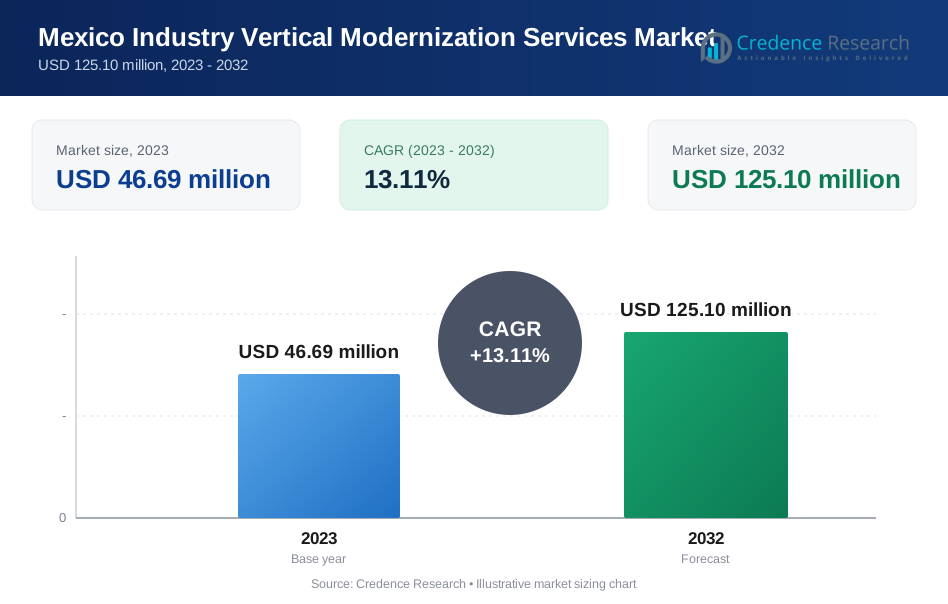
The Mexico Industry Vertical Modernization Services Market is projected to grow from USD 46.69 million in 2023 to USD 125.10 million by 2032, reflecting a compound annual growth rate (CAGR) of 13.11%.
The Mexico Industry Vertical Modernization Services market is driven by the growing need for digital transformation across industries, as businesses seek to enhance operational efficiency and productivity. The rapid adoption of Industry 4.0 technologies, such as IoT, AI, and automation, is fueling this demand for modernization services. Additionally, the Mexican government's support for digital initiatives and infrastructure development is further accelerating the market's growth. Trends in the market include a shift towards cloud-based solutions and the increasing integration of AI-driven analytics to optimize manufacturing processes. Companies are also focusing on adopting sustainable practices, leveraging modernization services to reduce energy consumption and improve environmental outcomes.
The Mexico Industry Vertical Modernization Services market is driven by key players offering advanced solutions across various regions, including Mexico City, Monterrey, and Guadalajara. These regions are home to a diverse range of industries, from manufacturing to healthcare and IT, all of which require modernization services to enhance efficiency and competitiveness. Prominent companies like Accenture, IBM Corporation, Cognizant, and Microsoft Corporation are leading the market by providing comprehensive services such as cloud migration, platform retooling, and automation. These players leverage their expertise to address industry-specific challenges and drive digital transformation in sectors like retail, finance, and telecom. As the demand for modernization services grows, companies like AWS, HCL Technologies, TCS, and Deloitte are expanding their presence in Mexico, contributing to the country’s technological advancements and supporting the continued growth of industries undergoing digital transformation.
Market Insights
- The Mexico Industry Vertical Modernization Services market was valued at USD 46.69 million in 2023 and is expected to reach USD 125.10 million by 2032, growing at a CAGR of 13.11%.
- The increasing demand for digital transformation across industries is a major market driver, as businesses look to improve efficiency and stay competitive.
- The adoption of Industry 4.0 technologies like IoT, AI, and automation is a key market trend driving modernization efforts in various sectors.
- Competition in the market is intense, with key players like Accenture, IBM, Microsoft, and AWS offering a wide range of modernization services.
- High implementation costs and the complexity of integrating new technologies are key market restraints.
- Mexico City and Monterrey are the leading regions for modernization services, driven by their strong industrial base and technological infrastructure.
- Growing interest in sustainability and energy-efficient solutions is pushing businesses in all sectors to adopt modernization services.
Market Drivers
Digital Transformation Demand
The growing emphasis on digital transformation across industries in Mexico is a key driver of the Industry Vertical Modernization Services market. For instance, a survey by Nielsen IBOPE found that 48% of companies in Mexico prioritize digital transformation to maximize business results. Organizations are increasingly adopting advanced technologies such as artificial intelligence (AI), the Internet of Things (IoT), and machine learning to enhance their operational processes. This shift toward automation and smart manufacturing solutions has significantly increased the demand for modernization services to upgrade legacy systems and integrate new technologies, driving market growth.
Industry 4.0 Adoption
As the world moves toward Industry 4.0, Mexico's manufacturing sector is at the forefront of embracing automation and smart factory technologies. For instance, the Mexican government's INDUSTRY4WRD policy promotes the integration of IoT, AI, and robotics in manufacturing processes. This transformation involves integrating cyber-physical systems, IoT devices, and AI to enhance production processes, data exchange, and operational efficiency. The need to update legacy systems to meet Industry 4.0 requirements is driving the demand for industry vertical modernization services. Mexican companies are increasingly investing in modernization to leverage these technologies for optimizing productivity, reducing costs, and improving overall efficiency.
Government Initiatives and Support
The Mexican government plays a crucial role in promoting digitalization and infrastructure modernization within industries. With various initiatives aimed at boosting technology adoption and innovation, such as the National Digital Strategy, Mexico is fostering an environment conducive to industry vertical modernization. Public policies encouraging investment in automation, IoT, and digital services are pushing companies to modernize their systems to remain competitive and compliant with emerging standards. These government efforts further contribute to the growing demand for modernization services.
Sustainability and Energy Efficiency
Sustainability concerns and the drive to reduce energy consumption are also accelerating the demand for industry vertical modernization services in Mexico. As industries face pressure to adopt eco-friendly practices, modernization services enable companies to implement energy-efficient solutions, optimize resources, and minimize waste. By upgrading their systems, industries can integrate renewable energy sources, improve energy management, and comply with environmental regulations. This trend aligns with the global push for sustainability and strengthens the need for continuous modernization within various sectors in Mexico.
Market Trends
Focus on Cybersecurity
With the growing reliance on digital technologies and the rise in cyber threats, cybersecurity has become a central focus for industries undergoing modernization in Mexico. For instance, the Cybersecurity market in Mexico is projected to reach significant revenue, highlighting the increasing demand for robust cybersecurity solutions. Companies are recognizing the importance of securing their digital infrastructure to protect sensitive data, maintain compliance with regulations, and safeguard against potential cyberattacks. Modernization services that include robust cybersecurity frameworks, threat monitoring, and secure network solutions are becoming integral to industry vertical modernization, ensuring businesses can protect their systems while embracing technological advancements.
Adoption of Cloud-Based Solutions
One of the prominent trends in the Mexico Industry Vertical Modernization Services market is the increasing shift toward cloud-based solutions. Cloud technology enables businesses to enhance scalability, flexibility, and cost-effectiveness by providing easy access to resources and data storage without the need for extensive physical infrastructure. As industries modernize their operations, more companies are opting for cloud computing to streamline data management, improve collaboration, and facilitate seamless integration with emerging technologies such as AI and IoT, driving the demand for modernization services.
Integration of AI and Automation
The integration of artificial intelligence (AI) and automation technologies is reshaping the modernization landscape in Mexico. Companies are increasingly adopting AI-powered systems to automate routine tasks, enhance decision-making processes, and improve operational efficiency. Automation technologies, including robotics and machine learning, are helping industries to optimize production, reduce human error, and accelerate time-to-market. As businesses seek to enhance their competitiveness, the adoption of AI and automation is a critical trend fueling the demand for modernization services across various sectors, particularly manufacturing and logistics.
Customization and Industry-Specific Solutions
As industries in Mexico seek to modernize, there is a notable trend toward customized solutions tailored to specific industry needs. Companies are looking for modernization services that address their unique challenges, whether in manufacturing, automotive, energy, or other sectors. Service providers are increasingly offering specialized solutions that integrate sector-specific technologies and best practices to ensure businesses can maximize their operational efficiency and productivity. This trend toward personalized modernization strategies is driving growth in the market, as companies look for services that align with their specific goals and requirements.
Market Challenges Analysis
High Implementation Costs
One of the primary challenges faced by businesses in Mexico when adopting Industry Vertical Modernization Services is the high cost of implementation. For instance, a report by the Federal Telecommunications Institute (IFT) highlights that many SMEs face significant financial constraints when integrating new technologies. Modernizing legacy systems often requires significant capital investment in advanced technologies, software, and infrastructure. Many companies, particularly small and medium-sized enterprises (SMEs), may struggle to secure the necessary funds for such large-scale transformations. The costs associated with training employees, integrating new systems, and maintaining these technologies can further strain financial resources. These challenges may delay or prevent companies from fully embracing industry vertical modernization, despite the long-term benefits of increased efficiency and competitiveness.
Resistance to Change and Skill Gaps
Another challenge in the Mexico Industry Vertical Modernization Services market is the resistance to change from employees and management. Many organizations face internal reluctance when implementing new technologies or altering established processes. Employees may fear job displacement or feel overwhelmed by the need to learn new systems, which can hinder the adoption of modernization initiatives. Additionally, there is often a shortage of skilled professionals with the expertise to implement and manage cutting-edge technologies like AI, IoT, and cloud solutions. The lack of a skilled workforce to support these advanced solutions further complicates the modernization process, making it challenging for companies to achieve seamless integration and optimal results.
Market Opportunities
Expanding Manufacturing and Industrial Sectors
The growing focus on Industry 4.0 technologies presents a significant opportunity for Mexico’s Industry Vertical Modernization Services market. As the country continues to strengthen its manufacturing and industrial sectors, modernization services are essential to integrate advanced technologies such as automation, IoT, and AI into production processes. These innovations promise to enhance operational efficiency, reduce costs, and improve overall productivity. The Mexican government’s support for digital transformation and infrastructure development further encourages businesses in sectors like automotive, manufacturing, and energy to modernize their operations. Companies that leverage these technologies can gain a competitive edge in both the domestic and global markets, driving substantial demand for industry-specific modernization services.
Growing Focus on Sustainability and Digitalization
Another key opportunity lies in the increasing emphasis on sustainability and digitalization across Mexican industries. As businesses seek to reduce their carbon footprint and comply with evolving environmental regulations, modernization services that offer energy-efficient solutions and resource optimization are in high demand. Furthermore, the shift toward digitalization is encouraging companies to adopt cloud-based platforms, advanced analytics, and AI to optimize operations, improve decision-making, and reduce resource consumption. Service providers that offer tailored solutions to meet the sustainability and digitalization needs of industries such as manufacturing, energy, and logistics are poised to capitalize on this growing trend. As companies continue to prioritize green initiatives and digital transformation, the demand for modernization services is expected to rise, presenting ample growth opportunities for industry players.
Market Segmentation Analysis:
By Type:
The Mexico Industry Vertical Modernization Services market is segmented by service type, offering a variety of solutions to meet the specific needs of businesses. Industry Vertical Portfolio Assessment helps organizations evaluate their existing systems and identify areas for improvement. Cloud Industry Vertical Migration focuses on transitioning legacy systems to cloud platforms, providing enhanced scalability and flexibility. Industry Vertical Replatforming involves updating applications to modern platforms to improve performance and efficiency. Industry Vertical Integration services enable seamless connectivity between disparate systems, promoting data sharing and collaboration across functions. Finally, Industry Vertical Retirements offers solutions to phase out outdated technologies while ensuring minimal disruption to operations. These services are critical in driving digital transformation across industries, ensuring that businesses remain competitive and efficient.
By Industry Vertical:
The Mexico Industry Vertical Modernization Services market is also segmented by industry vertical, each with unique demands and opportunities for modernization. BFSI (Banking, Financial Services, and Insurance) requires modernized IT infrastructures to enhance security, improve customer experiences, and comply with regulatory changes. IT and Telecom sectors benefit from modernization services to optimize network operations, enhance service delivery, and reduce costs. The Retail and E-commerce industries leverage modernization to improve customer engagement, streamline supply chains, and enhance e-commerce platforms. Healthcare modernization focuses on enhancing data management, patient care systems, and regulatory compliance. Other sectors, such as manufacturing, energy, and logistics, also contribute to the demand for industry-specific modernization services, addressing sector-specific challenges like automation, energy efficiency, and operational efficiency. As businesses in these sectors continue to adopt digital solutions, the demand for industry vertical modernization services is expected to grow substantially.
Segments:
Based on Type:
- Industry Vertical Portfolio Assessment
- Cloud Industry Vertical Migration
- Industry Vertical Replatforming
- Industry Vertical Integration
- Industry Vertical Retirements
Based on Industry Vertical:
- BFSI
- IT and Telecom
- Retail and E-commerce
- Healthcare
- Others
Based on Deployment Mode:
- On-Premises
- Cloud
Based on Enterprise Size:
- Small and Medium Enterprises (SMEs)
- Large Enterprises
Based on the Geography:
- Mexico City
- Monterrey
- Guadalajara
Regional Analysis
Mexico City
Mexico City holds the largest market share in the Mexico Industry Vertical Modernization Services market, accounting for approximately 35% of the total market. As the country’s economic and technological hub, the capital city drives the demand for modernization services, particularly in sectors such as IT, banking, retail, and healthcare. The city is home to a wide range of industries and multinational corporations that are keen on adopting Industry 4.0 technologies to enhance productivity and remain competitive. With its high concentration of businesses and government initiatives to promote digital transformation, Mexico City is a major contributor to the growth of the industry. Additionally, the region's robust infrastructure and access to skilled professionals further support the widespread adoption of modernization services across various sectors.
Monterrey
Monterrey, located in northern Mexico, is the second-largest region in terms of market share, contributing around 28% to the Mexico Industry Vertical Modernization Services market. Known as an industrial and manufacturing hub, Monterrey is particularly significant for sectors such as automotive, manufacturing, and energy. As industries in the region strive to enhance operational efficiency, there is increasing demand for modernization services like cloud migration, replatforming, and integration to streamline processes and improve system performance. Monterrey's proximity to the U.S. border also facilitates the adoption of advanced technologies and services, positioning the region as a key player in the modernization services market.
Guadalajara
Guadalajara, a rapidly growing technological hub in western Mexico, holds a market share of approximately 20% in the Industry Vertical Modernization Services market. The region has become a hotspot for IT and telecom companies, as well as a center for digital startups and innovation. The increasing need for modernization services in sectors such as IT, telecom, retail, and e-commerce is driven by Guadalajara’s role as a technology-driven economy. With a growing number of companies investing in automation and digital solutions, Guadalajara presents significant opportunities for service providers specializing in cloud industry vertical migration, platform retooling, and data analytics services. The region’s strong talent pool in the technology sector and its emphasis on innovation further foster the demand for modernization services.
Other Regions
Other regions in Mexico, including cities like Puebla, Tijuana, and León, collectively account for around 17% of the Industry Vertical Modernization Services market. These areas, though not as large as Mexico City or Monterrey, still contribute significantly due to their specialized industries. Puebla, for instance, is known for its automotive sector, while Tijuana has a strong presence in manufacturing. These regions are gradually adopting modernization services to optimize their operations, reduce costs, and improve overall productivity. With increasing focus on sustainability and digital transformation, these regions are expected to experience substantial growth in the adoption of modernization services, though they currently represent a smaller share of the market.
Key Player Analysis
- Accenture
- IBM Corporation
- Cognizant
- Microsoft Corporation
- Amazon Web Services (AWS)
- HCL Technologies
- TCS (Tata Consultancy Services)
- Capgemini
- Deloitte
- Infosys
Competitive Analysis
The competitive landscape of Mexico’s Industry Vertical Modernization Services market is dominated by several key players offering a range of advanced solutions to facilitate digital transformation. Leading companies such as Accenture, IBM Corporation, Cognizant, Microsoft Corporation, Amazon Web Services (AWS), HCL Technologies, TCS (Tata Consultancy Services), Capgemini, Deloitte, and Infosys are all at the forefront of driving industry modernization. These companies provide services such as cloud migration, automation, data analytics, and replatforming, helping organizations streamline operations and improve efficiency across various sectors, including manufacturing, finance, healthcare, and retail. The competition is intense, with service providers leveraging their technological expertise and deep industry knowledge to meet the diverse needs of businesses undergoing modernization. A key competitive factor is the ability to deliver customized solutions tailored to the unique challenges faced by different industries. For instance, a survey by the Mexican Association of Information Technology Industry (AMITI) found that companies differentiate themselves through the adoption of advanced technologies like AI, IoT, and machine learning, which are increasingly in demand as businesses strive for greater efficiency and innovation. Additionally, cost-effectiveness, integration capabilities, and the ability to ensure minimal disruption during implementation are crucial elements driving competition. As the market continues to grow, companies are also focusing on expanding their service offerings to include sustainability and energy-efficient solutions, which are becoming important considerations for businesses. This focus on innovation and sector-specific solutions is expected to drive further competition and enhance the overall value provided to businesses in Mexico’s modernization services market.
Recent Developments
- In August 2024, Capgemini signed an agreement to acquire Syniti, one of the leading companies in the enterprise data management software and services including platform and migration services. This acquisition will strengthen Capgemini’s data-driven solutions, especially for large-scale SAP transformations like the shift to SAP S/4HANA.
- In June 2024, Cognizant expanded its partnership with Cengage Group. This move highlights the trend of modernizing educational platforms by integrating advanced technologies to enhance digital learning experiences, reflecting the broader push towards modernizing application infrastructures across sectors.
- In January 2024, IBM Corporation acquired application modernization capabilities from Advanced, increasing IBM Consulting's offerings in mainframe application and data modernization services. The acquisition is intended to enhance IBM's ability to provide a comprehensive range of options for modernizing mainframe applications, aligning with the abilities of IBM Watsonx Code Assistant for Z, a generative AI-assisted tool designed to expedite mainframe application modernization.
- In January 2024, Accenture acquired Work & Co, enhancing its capabilities in creating innovative digital products. This acquisition reflects the increasing importance of blending design and technology to modernize applications, helping clients improve user experiences and stay competitive in the digital age.
Market Concentration & Characteristics
The Mexico Industry Vertical Modernization Services market is moderately concentrated, with a few dominant players controlling a significant share of the market. These companies offer comprehensive solutions across various industries, including IT, finance, healthcare, and manufacturing, providing services such as cloud migration, automation, and platform replatforming. The market is characterized by intense competition, as players strive to differentiate themselves through innovation, service quality, and industry-specific expertise. Larger players often leverage their global reach, extensive resources, and technological capabilities to capture the majority of the market share, while smaller, specialized firms cater to niche segments with customized offerings. The market is also marked by a growing trend toward consolidation, with leading firms acquiring smaller companies to expand their service portfolio and enhance their competitive positioning. This trend allows businesses to offer more comprehensive solutions, addressing the increasing demand for integrated and scalable modernization services. Additionally, companies are focusing on building long-term relationships with clients by providing ongoing support and ensuring seamless integration of modern technologies. As digital transformation accelerates, market participants are emphasizing the adoption of cutting-edge technologies such as AI, IoT, and machine learning to maintain their competitive edge. This focus on innovation and service diversification drives the dynamic and evolving nature of the market.
Report Coverage
The research report offers an in-depth analysis based on Type, Industry Vertical, Deployment Mode, Enterprise Size and Geography. It details leading market players, providing an overview of their business, product offerings, investments, revenue streams, and key applications. Additionally, the report includes insights into the competitive environment, SWOT analysis, current market trends, as well as the primary drivers and constraints. Furthermore, it discusses various factors that have driven market expansion in recent years. The report also explores market dynamics, regulatory scenarios, and technological advancements that are shaping the industry. It assesses the impact of external factors and global economic changes on market growth. Lastly, it provides strategic recommendations for new entrants and established companies to navigate the complexities of the market.
Future Outlook
- The Mexico Industry Vertical Modernization Services market is expected to grow significantly, driven by the increasing demand for digital transformation across industries.
- Advancements in AI, IoT, and machine learning will play a pivotal role in shaping future modernization efforts.
- Cloud migration services will continue to see high demand as companies transition to more scalable and flexible cloud-based solutions.
- Automation and AI-driven solutions will be key drivers, helping businesses streamline operations and reduce costs.
- Industries such as manufacturing, finance, and healthcare will lead the adoption of modernization services, seeking efficiency and competitiveness.
- The focus on sustainability and energy-efficient solutions will drive the demand for modernization services that optimize resource usage.
- Smaller and niche players will find opportunities by offering specialized solutions tailored to specific industry needs.
- With an emphasis on data-driven decision-making, demand for advanced analytics services will continue to rise.
- The growing need for cybersecurity and compliance solutions will contribute to the expansion of modernization services in regulated sectors.
- As digital transformation accelerates, the market will see an increase in strategic partnerships and acquisitions among service providers to enhance capabilities and market presence.
Request a Free Sample
Fill in your details and we'll send you a free sample report.
- Sample data tables & charts
- Research methodology
Need a Custom Version of This Report?
Tailor the scope, geography, or segments to your exact requirements.
- Custom geography or segment scope
- Direct access to our analyst team
Frequently Asked Questions
What is the current size of the Mexico Industry Vertical Modernization Services market?
What factors are driving the growth of the Mexico Industry Vertical Modernization Services market?
What are the key segments within the Mexico Industry Vertical Modernization Services market?
What are some challenges faced by the Mexico Industry Vertical Modernization Services market?
Table of Content
Chapter 1. Report Introduction
- 1.1 Report Description & Purpose
- 1.1.1 Report Title & Market Definition
- 1.1.2 Unique Selling Propositions (USP) & Key Differentiators
- 1.1.3 Value Proposition for Stakeholders
- 1.2 Research Objectives
- 1.2.1 Market Sizing Objectives (Volume & Revenue)
- 1.2.2 Segmentation Objectives
- 1.2.3 Competitive Intelligence Objectives
- 1.2.4 Forecast & Scenario Objectives
- 1.3 Report Scope
- 1.3.1 Mexico Industry Vertical Modernization Services Scope – Types & Subtypes Covered
- 1.3.2 Geographic Scope – Regions & Countries Covered
- 1.3.3 Historical Period, Base Year & Forecast Period (2023; forecast to 2032)
- 1.3.4 Inclusions & Exclusions
- 1.4 HS Code & Classification Framework
- 1.5 Currency, Units & Pricing Basis
- 1.6 Target Stakeholders
- 1.7 Limitations & Assumptions
Chapter 2. Executive Summary
- 2.1 Global Mexico Industry Vertical Modernization Services Market Snapshot
- 2.1.1 Market Size – Historical (2023) & Forecast (2023-2032) (2023: USD 46.69 million → 2032: USD 125.10 million)
- 2.1.2 Volume & Revenue – Global Totals
- 2.1.3 Key Market Highlights – Top Five Facts
- 2.2 Mexico Industry Vertical Modernization Services Market Segmentation Snapshot
- 2.2.1 Market Split by Region – 2023 vs. 2032
- 2.3 Competitive Snapshot
- 2.3.1 Top 10 Players by Revenue Share – 2023
- 2.3.2 Top 10 Players by Volume Share – 2023
- 2.3.3 Recent Strategic Developments (18-Month Summary)
- 2.4 Key Investment Highlights & Strategic Conclusions
Chapter 3. Mexico Industry Vertical Modernization Services Market Dynamics & Industry Analysis
- 3.1 Market Overview & Context
- 3.1.1 Mexico Industry Vertical Modernization Services Market Position in the Broader Automotive Value Chain
- 3.1.2 OEM vs. Replacement Market Dynamics
- 3.1.3 Market Maturity & Development Stage by Region
- 3.2 Mexico Industry Vertical Modernization Services Market Drivers
- 3.3 Mexico Industry Vertical Modernization Services Market Restraints & Challenges
- 3.4 Mexico Industry Vertical Modernization Services Market Opportunities
- 3.5 Porter's Five Forces Analysis
- 3.5.1 Threat of New Entrants
- 3.5.2 Bargaining Power of Suppliers
- 3.5.3 Bargaining Power of Buyers
- 3.5.4 Threat of Substitutes
- 3.5.5 Competitive Rivalry – Intensity Assessment
- 3.6 Mexico Industry Vertical Modernization Services Value Chain Analysis
- 3.6.1 Upstream – Raw Material/Input Suppliers
- 3.6.1.1 Raw Material/Input 1
- 3.6.1.2 Raw Material/Input 2
- 3.6.1.3 Raw Material/Input 3
- 3.6.2 Midstream – Production/Manufacturing/Service Delivery
- 3.6.2.1 Production/Process Overview
- 3.6.2.2 Key Facility Locations & Capacity by Manufacturer
- 3.6.3 Downstream – Distribution & End Consumer
- 3.6.3.1 Primary Channel – B2B/OEM
- 3.6.3.2 Secondary Channels – Dealer, Retail, Online, Direct
- 3.6.4 Value Chain Profitability Analysis
- 3.6.1 Upstream – Raw Material/Input Suppliers
- 3.7 PESTEL Analysis
- 3.7.1 Political Factors
- 3.7.2 Economic Factors
- 3.7.3 Social Factors
- 3.7.4 Technological Factors
- 3.7.5 Environmental Factors
- 3.7.6 Legal Factors
- 3.8 Mexico Industry Vertical Modernization Services Supply Chain Analysis
- 3.8.1 Raw Material/Input Supply Risk Assessment
- 3.8.2 Manufacturing Concentration Risk (Geographic Exposure)
- 3.8.3 Trade Disruption Impact Analysis
- 3.9 Regulatory & Policy Landscape
Note: The regulatory and policy landscape section covers regulations based on their applicability to the market, Mexico Industry Vertical Modernization Services category, geography, and scope of the study. Only regulatory frameworks with a material impact on operations, compliance, trade, sustainability, or market access are analyzed in detail.
Chapter 4. Key Investment Pockets & Opportunity Analysis
- 4.1 Mexico Industry Vertical Modernization Services Market Attractiveness Analysis
- 4.1.1 By Region – Investment Attractiveness Matrix (Volume × CAGR)
- 4.2 Absolute Revenue Growth Opportunity
- 4.2.1 By Region – Absolute USD Growth Through 2032
- 4.3 Incremental Volume Opportunity
- 4.3.1 By Region – Incremental Volume Through 2032
- 4.3.2 Segment – Incremental Volume
- 4.4 Emerging Submarket Opportunity Deep Dive (Subject to Applicability)
- 4.5 Emerging Market Opportunity Scorecards
- 4.5.1 United States
- 4.5.2 Europe
- 4.5.3 Asia
- 4.5.4 Middle East & Africa
Note: Emerging Market Opportunity Scorecards will be included based on relevance and strategic importance. Regions listed are indicative and may vary depending on data availability and market dynamics.
Chapter 5. Mexico Industry Vertical Modernization Services Import-Export Analysis & Trade Flows
- 5.1 Global Trade Overview
- 5.1.1 Global Export Value by Country (2023)
- 5.1.2 Global Export Volume by Country (2023)
- 5.1.3 Global Import Value by Country (2023)
- 5.1.4 Global Import Volume by Country (2023)
- 5.1.5 Net Trade Balance by Country (2023)
- 5.2 Export Analysis – Segment
- 5.2.1 Type 1 (HS Code)
- 5.2.2 Type 2 (HS Code)
- 5.2.3 Type 3 (HS Code)
- 5.2.4 Type 4 (HS Code)
- 5.2.5 Type 5 (HS Code)
- 5.3 Import Analysis – Segment
- 5.3.1 Type 1 (HS Code)
- 5.3.2 Type 2 (HS Code)
- 5.3.3 Type 3 (HS Code)
- 5.3.4 Type 4 (HS Code)
- 5.3.5 Type 5 (HS Code)
- 5.4 Average Unit Trade Prices
- 5.4.1 Average Export Price – Segment & Country
- 5.4.2 Average Import Price – Segment & Source Country
- 5.4.3 Price Trends (2023)
- 5.5 Key Trade Route Analysis
- 5.5.1 Trade Route 1
- 5.5.2 Trade Route 2
- 5.5.3 Trade Route 3
- 5.5.4 Trade Route 4
- 5.5.5 Trade Route 5
- 5.6 Trade Policy Impact Assessment
- 5.6.1 US Anti-Dumping & Section 301 Tariffs
- 5.6.2 EU Customs Union Impact
- 5.6.3 Major Free Trade Agreements
- 5.6.4 USMCA Rules of Origin
Note: Trade policy analysis will be included only where relevant to the Mexico Industry Vertical Modernization Services market.
Chapter 6. Competitive Landscape & Company Benchmarking
- 6.1 Mexico Industry Vertical Modernization Services Market Concentration & Structure
- 6.1.1 Herfindahl-Hirschman Index (HHI) – vs. 2023
- 6.1.2 Tier 1, Tier 2 & Tier 3 Market Structure
- 6.1.3 Global, Regional & Local Player Dynamics
- 6.2 Mexico Industry Vertical Modernization Services Market Share Analysis – 2023
- 6.2.1 Global Revenue Share by Company
- 6.2.2 Global Volume Share by Company
- 6.2.3 Regional Revenue Share
- 6.2.4 Market Share Evolution ( vs. 2023)
- 6.2.5 OEM Segment Share by Company
- 6.2.6 Replacement Segment Share by Company
- 6.3 Production/Delivery Capacity & Facility Analysis
- 6.3.1 Global Installed Capacity
- 6.3.2 Capacity Utilization Rates
- 6.3.3 Production/Output Volume
- 6.3.4 Facility Locations & Capacity Map
- 6.3.5 Planned Capacity Additions
- 6.4 Mexico Industry Vertical Modernization Services Competitive Benchmarking Matrix
- 6.4.1 Revenue, Volume, CAGR & Profitability Comparison
- 6.4.2 Channel Revenue Mix
- 6.4.3 Geographic Revenue Exposure
- 6.4.4 R&D Intensity
- 6.4.5 Sustainability Maturity
- 6.5 Strategic Developments in Mexico Industry Vertical Modernization Services (Last 24 Months)
- 6.5.1 Mergers, Acquisitions & Divestments
- 6.5.2 New Mexico Industry Vertical Modernization Services Launches
- 6.5.3 Facility Expansions
- 6.5.4 Strategic Alliances, Joint Ventures & Partnerships
- 6.5.5 Distribution Expansion & Market Entry
- 6.5.6 Sustainability & ESG Initiatives
- 6.6 Competitive Strategy Mapping
- 6.6.1 Leader, Challenger, Follower & Niche Classification
- 6.6.2 Pricing Strategy Comparison
- 6.6.3 Channel Strategy Matrix
Note: Strategic developments are included based on their materiality and the availability of reliable information.
Chapter 7. Global Mexico Industry Vertical Modernization Services Market – By Distribution Channel
- 7.1 Segment Overview
- 7.1.1 Volume & Revenue Split by Channel (2023 & 2032)
- 7.1.2 Channel Mix Evolution (2023-2032)
Chapter 8. Regional Market Analysis – Global Overview
- 8.1 Global Regional Overview
- 8.1.1 Regional Volume Share
- 8.1.2 Regional Revenue Share
- 8.1.3 Regional Volume by Region
- 8.1.4 Regional Revenue by Region
- 8.1.5 Regional Forecast Through 2032
- 8.2 Cross-Regional Segment Analysis
- 8.2.1 By Distribution Channel
- 8.2.2 By Brand/Price Tier
Chapter 9. North America Mexico Industry Vertical Modernization Services Market
- 9.1 United States
- 9.2 Canada
- 9.3 Mexico
Chapter 10. Europe Mexico Industry Vertical Modernization Services Market
- 10.1 Germany
- 10.2 France
- 10.3 Italy
- 10.4 United Kingdom
- 10.5 Spain
- 10.6 Poland
- 10.7 Russia
- 10.8 Netherlands
- 10.9 Belgium
- 10.10 Sweden
- 10.11 Denmark
- 10.12 Norway
- 10.13 Rest of Europe
Chapter 11. Asia Pacific Mexico Industry Vertical Modernization Services Market
- 11.1 China
- 11.2 India
- 11.3 Japan
- 11.4 South Korea
- 11.5 Thailand
- 11.6 Indonesia
- 11.7 Vietnam
- 11.8 Malaysia
- 11.9 Australia
- 11.10 Rest of Asia Pacific
Chapter 12. Latin America Mexico Industry Vertical Modernization Services Market
- 12.1 Brazil
- 12.2 Argentina
- 12.3 Colombia
- 12.4 Chile
- 12.5 Rest of Latin America
Chapter 13. Middle East Mexico Industry Vertical Modernization Services Market
- 13.1 Saudi Arabia
- 13.2 United Arab Emirates
- 13.3 Turkey
- 13.4 Israel
- 13.5 Iran
- 13.6 Rest of the Middle East
Chapter 14. Africa Mexico Industry Vertical Modernization Services Market
- 14.1 South Africa
- 14.2 Egypt
- 14.3 Nigeria
- 14.4 Morocco
- 14.5 Rest of Africa
Chapter 15. Mexico Industry Vertical Modernization Services Company Profiles
- 15.1 [Company 01]
- 15.1.1 Company Overview
- 15.1.2 Key Management Personnel
- 15.1.3 Products & Services Portfolio
- 15.1.4 Financial Performance
- 15.1.5 Key Market Focus & Geographic Presence
- 15.1.6 Recent Developments & Strategic Initiatives
Note: The company profile list is preliminary and may change based on research findings, market developments, data availability, and client requirements.
Chapter 16. Appendices
- Appendix A – List of Abbreviations & Acronyms
- Appendix B – Industry Classification Code Reference – Full Series
- Appendix C – Production & Capacity Data Tables
- Appendix D – End-Use & Demand Base Tables
- Appendix E – Consumption & Replacement Rate Assumptions
- Appendix F – ASP Reference Tables
- Appendix G – Manufacturing & Facility Database
- Appendix H – Import-Export Data Tables
- Appendix I – Regulatory Summary Tables
- Appendix J – Primary Research Participant List (Anonymized)
- Appendix K – Primary Research Questionnaire Framework
- Appendix L – Data Sources & Bibliography
- Appendix M – Market Size Divergence & Source Comparison
Chapter 17. Research Methodology
- 17.1 Research Framework & Philosophy
- 17.2 Secondary Research – Sources, Hierarchy & Data Extraction
- 17.3 Data Modeling – Bottom-Up & Top-Down Market Sizing
- 17.4 Primary Research – Stakeholder Framework, LOI & Sample Sizes
- 17.5 Forecast Methodology – Regression, Scenario & Sensitivity Analysis
- 17.6 Quality Control – Four-Layer Validation Framework
- 17.7 Limitations & Standard Assumptions
- 17.8 Disclaimer
