
| REPORT ATTRIBUTE | DETAILS |
|---|---|
| Historical Period | 2020-2023 |
| Base Year | 2024 |
| Forecast Period | 2025-2032 |
| Mexico Vendor Neutral Archives (VNA) and Picture Archiving and Communication Systems (PACS) Market Size 2024 | USD 111.24 million |
| Mexico Vendor Neutral Archives (VNA) and Picture Archiving and Communication Systems (PACS) Market, CAGR | 6.36% |
| Mexico Vendor Neutral Archives (VNA) and Picture Archiving and Communication Systems (PACS) Market Size 2032 | USD 182.22 million |
Market Overview
Mexico Vendor Neutral Archives (VNA) and Picture Archiving and Communication Systems (PACS) market size was valued at USD 111.24 million in 2024 and is anticipated to reach USD 182.22 million by 2032, at a CAGR of 6.36% during the forecast period (2024-2032).
The growth of the Mexico Vendor Neutral Archives (VNA) and Picture Archiving and Communication Systems (PACS) market is driven by the increasing demand for efficient data management in healthcare, rising adoption of digital imaging technologies, and growing investments in healthcare IT infrastructure. Hospitals and diagnostic centers are transitioning from traditional storage systems to advanced, interoperable platforms to enhance clinical workflow and reduce operational costs. Government initiatives promoting digitization in healthcare further support market expansion. Additionally, the rising prevalence of chronic diseases and the need for timely diagnostics are fueling the deployment of PACS and VNA solutions across the country. Key trends include the integration of artificial intelligence for image analysis, cloud-based storage solutions, and improved data sharing across healthcare networks. These advancements not only streamline clinical decision-making but also ensure better patient outcomes. As the healthcare landscape in Mexico continues to modernize, the adoption of VNA and PACS systems is expected to accelerate.
The geographical landscape of the Mexico Vendor Neutral Archives (VNA) and Picture Archiving and Communication Systems (PACS) market is primarily shaped by the healthcare development levels in key urban centers such as Mexico City, Monterrey, Guadalajara, and Tijuana. These regions are witnessing rapid digital transformation in healthcare, supported by investments in IT infrastructure and increasing demand for efficient diagnostic imaging solutions. Urban hospitals and private healthcare institutions in these cities are at the forefront of adopting VNA and PACS technologies to enhance clinical workflows and data management. The market is characterized by the presence of both global and regional players offering competitive and scalable solutions. Key companies operating in the space include GE Healthcare, IBM Watson Health, Merge Healthcare, Carestream Health, Change Healthcare, McKesson Corporation, Intelerad Medical Systems, Sectra AB, Agfa HealthCare, and Ambra Health. These firms play a vital role in introducing advanced features like AI integration, cloud deployment, and interoperability to meet evolving healthcare needs.
Market Insights
- The Mexico VNA and PACS market was valued at USD 111.24 million in 2024 and is expected to reach USD 182.22 million by 2032, growing at a CAGR of 6.36% during the forecast period (2024-2032).
- The Global VNA and PACS market was valued at USD 4,411.05 million in 2024 and is expected to reach USD 8,046.15 million by 2032, growing at a CAGR of 7.80% from 2024 to 2032.
- Key drivers include the increasing demand for efficient data management and the transition to digital imaging systems in healthcare.
- Technological advancements, such as the integration of AI for image analysis and cloud-based storage, are major trends fueling market growth.
- Competition in the market is intensifying with players like GE Healthcare, IBM Watson Health, McKesson, and Carestream Health offering innovative solutions.
- Market restraints include the high initial investment costs and challenges in data security and regulatory compliance.
- Mexico City, Monterrey, Guadalajara, and Tijuana are key regions driving the market, with Mexico City leading in adoption.
- The growing shift towards cloud and hybrid deployment models is reshaping the market landscape in Mexico.
Report Scope
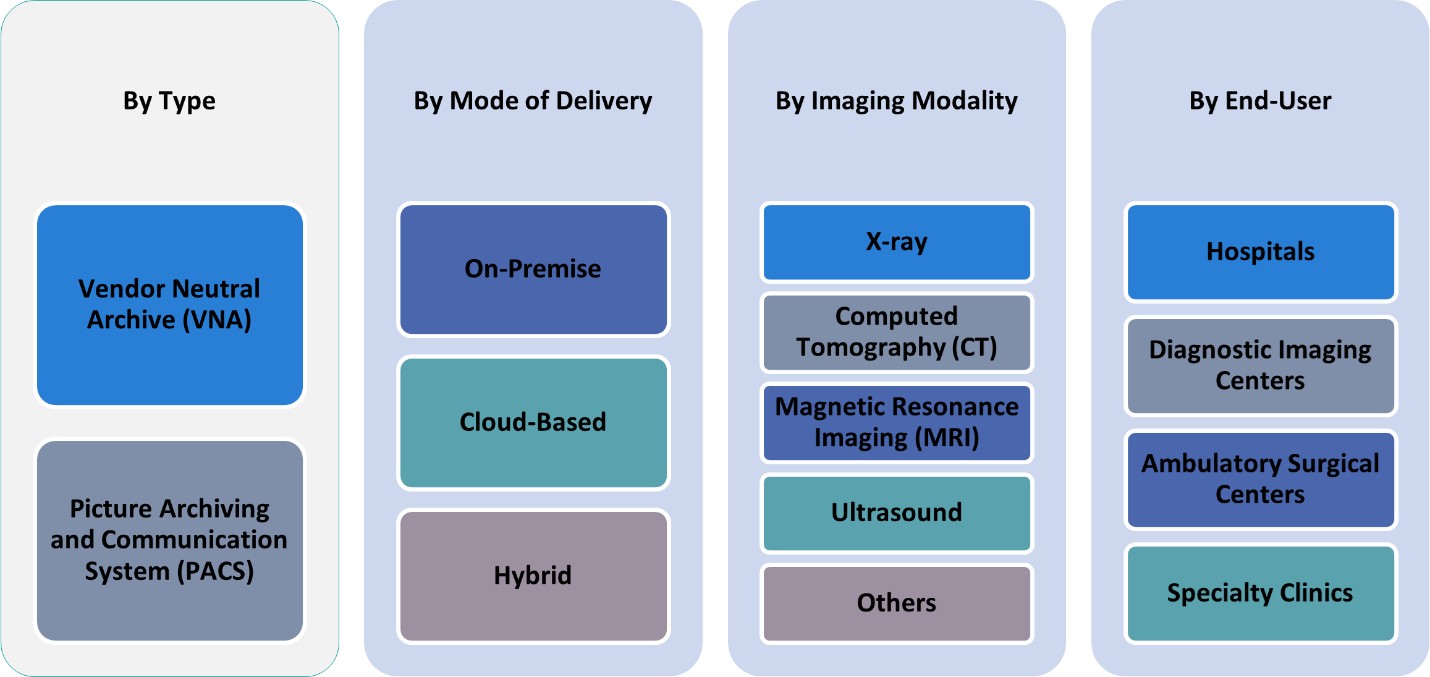
This report segments the Mexico Vendor Neutral Archives (VNA) and Picture Archiving and Communication Systems (PACS) Market as follows:
Market Drivers
Expansion of Healthcare Infrastructure and IT Investments
Mexico is witnessing consistent investments in healthcare infrastructure and information technology to improve service delivery, especially in public health institutions. The government, in partnership with private sector stakeholders, is increasingly focusing on digital transformation initiatives aimed at modernizing hospital systems and improving clinical workflows. For instance, Mexico’s Ministry of Health has significantly increased funding for digital health projects, leading to a rise in public-sector EHR implementations. These reforms create a favorable environment for the adoption of advanced imaging and archiving solutions. PACS and VNA platforms support the modernization of radiology departments and enable healthcare providers to shift from traditional film-based systems to digital formats, thereby increasing operational efficiency and reducing storage costs.
Rising Chronic Disease Burden and Diagnostic Imaging Needs
The rising incidence of chronic diseases such as cardiovascular conditions, diabetes, and cancer in Mexico has led to an increased reliance on diagnostic imaging for early detection and ongoing disease management. For instance, the Journal of Global Radiology reports that Mexico lacks an adequate number of medical imaging units and radiologists, contributing to delays in diagnosis and treatment. This trend is contributing to a higher volume of medical imaging procedures, thereby boosting the demand for scalable, secure, and reliable image storage and retrieval systems. PACS and VNA systems facilitate quicker access to historical imaging records and enable clinicians to make informed decisions promptly. The growing emphasis on improving patient care and outcomes further strengthens the case for deploying these technologies across various levels of the healthcare system.
Growing Demand for Efficient Data Management and Interoperability
The increasing complexity and volume of medical imaging data across healthcare institutions in Mexico are driving the demand for more efficient data management systems. VNA and PACS solutions offer centralized storage, streamlined access, and improved interoperability between different imaging modalities and healthcare information systems. As hospitals and diagnostic centers manage data generated from multiple departments and devices, the need for a unified platform that ensures compatibility and seamless data exchange becomes essential. VNA, in particular, addresses vendor lock-in challenges, allowing institutions to manage and access imaging data irrespective of the proprietary formats used by different system providers.
Technological Advancements and Cloud Adoption
Technological innovation plays a crucial role in driving the adoption of VNA and PACS solutions in Mexico. The integration of artificial intelligence (AI) for automated image analysis, cloud-based storage for scalable and remote access, and mobile-friendly viewing platforms are transforming the way medical images are stored, accessed, and utilized. Cloud-based VNA and PACS offer cost-effective and flexible deployment options for healthcare providers with limited IT resources. Additionally, the push towards enterprise imaging strategies that consolidate imaging across all departments-beyond radiology-creates new growth opportunities in the market. These innovations are not only enhancing clinical efficiency but also aligning with the broader goals of data-driven, patient-centric healthcare.
Market Trends
Accelerated Adoption of Cloud-Based Solutions
Healthcare providers in Mexico are increasingly transitioning from traditional on-premises systems to cloud-based VNA and PACS platforms. This shift is driven by the need for scalable, cost-effective, and secure data storage solutions that can accommodate the growing volume of medical imaging data. For instance, Mexico’s digital transformation initiatives emphasize cloud adoption to improve healthcare efficiency and accessibility. Cloud-based systems offer enhanced accessibility, allowing healthcare professionals to retrieve and share imaging data seamlessly across different locations, thereby improving collaboration and patient care. Additionally, cloud solutions facilitate easier integration with other healthcare IT systems, supporting the broader digital transformation initiatives within the Mexican healthcare sector.
Integration of Artificial Intelligence for Enhanced Imaging
The incorporation of artificial intelligence (AI) into VNA and PACS systems is revolutionizing medical imaging in Mexico. AI algorithms assist in automating image analysis, detecting anomalies, and prioritizing cases based on urgency, thereby streamlining radiologists' workflows and reducing diagnostic times. For instance, Mexico’s AI governance efforts have evolved, with initiatives such as ANIA shaping AI integration in healthcare. This technological advancement not only enhances diagnostic accuracy but also addresses the challenges posed by the increasing demand for imaging services and the shortage of specialized personnel. The integration of AI is becoming a critical component in modernizing imaging departments and improving overall healthcare delivery.
Emphasis on Interoperability and Data Standardization
There is a growing emphasis on achieving interoperability and data standardization within Mexico's healthcare system. VNA and PACS solutions are being designed to comply with international standards such as DICOM and HL7, facilitating seamless data exchange between different healthcare providers and systems. This interoperability is crucial for creating comprehensive patient records, enabling coordinated care, and supporting population health management initiatives. Efforts to standardize data formats and communication protocols are essential in overcoming the fragmentation of healthcare information systems and enhancing the efficiency of medical services.
Expansion of Telemedicine and Remote Diagnostics
The expansion of telemedicine services in Mexico has been significantly bolstered by advancements in VNA and PACS technologies. These systems enable remote access to medical images, allowing specialists to provide consultations and diagnoses without the need for physical presence. This capability is particularly beneficial in extending healthcare services to rural and underserved areas, where access to specialized medical care is limited. The integration of VNA and PACS with telemedicine platforms is enhancing the reach and efficiency of healthcare delivery across the country
Market Challenges Analysis
Limited IT Infrastructure and Budget Constraints
Despite growing interest in digital health transformation, many healthcare institutions in Mexico, particularly in rural or underfunded areas, struggle with outdated IT infrastructure and limited financial resources. Implementing VNA and PACS solutions requires significant upfront investments in hardware, software, and skilled personnel. Smaller hospitals and clinics often lack the necessary bandwidth, data security protocols, and trained IT staff to manage these complex systems effectively. This financial and technical barrier restricts widespread adoption, especially in public healthcare settings that face competing budgetary priorities. Moreover, the ongoing cost of maintaining and upgrading systems poses additional pressure on institutions with constrained resources, potentially slowing down long-term digital integration.
Data Privacy Concerns and Regulatory Uncertainty
As medical imaging becomes more digitized and cloud-based storage solutions gain traction, concerns around data privacy, cybersecurity, and regulatory compliance are increasing. While Mexico has made strides in developing data protection frameworks such as the Federal Law on the Protection of Personal Data Held by Private Parties (LFPDPPP), gaps remain in enforcement and standardization across healthcare institutions. For instance, Mexico enacted a new data protection regime in 2025, aligning transparency and data security laws, but the dissolution of the National Institute for Transparency, Access to Information, and Personal Data Protection (INAI) has raised concerns about enforcement. The sensitive nature of medical imaging data makes it a target for potential breaches, and the lack of uniform cybersecurity protocols adds to the risk. Additionally, navigating compliance with both local and international data protection standards can be complex for healthcare providers and vendors alike. These regulatory uncertainties may deter institutions from fully embracing advanced VNA and PACS solutions, slowing down the market’s growth trajectory.
Market Opportunities
The Mexico Vendor Neutral Archives (VNA) and Picture Archiving and Communication Systems (PACS) market presents significant opportunities driven by the country’s evolving healthcare landscape and increasing emphasis on digital transformation. As healthcare institutions seek to modernize their operations and improve service delivery, there is growing interest in scalable, interoperable solutions that can support long-term data storage and seamless image access. The continued shift from analog to digital imaging technologies, coupled with the need for efficient data management across multi-site facilities, positions VNA and PACS as critical tools for operational efficiency and clinical decision-making. Furthermore, rising patient expectations for timely diagnostics and the demand for integrated care models are creating opportunities for vendors to provide solutions that enhance workflow automation, enable faster image retrieval, and support remote access for healthcare professionals.
Another key opportunity lies in the expansion of private healthcare facilities and public-private partnerships, which are actively investing in IT infrastructure upgrades to meet rising demand for quality medical services. This growth opens doors for VNA and PACS vendors to deliver tailored, cloud-based, or hybrid solutions that accommodate institutions of varying sizes and technical maturity. Additionally, as the adoption of artificial intelligence and machine learning continues to accelerate within diagnostic imaging, vendors can integrate advanced analytics capabilities into their platforms to offer value-added services. The push for nationwide health information exchange and improved interoperability standards also supports broader adoption of VNA systems that can function across different providers and specialties. These factors, combined with favorable government initiatives promoting digital health, create a robust environment for innovation and expansion in the Mexican VNA and PACS market.
Market Segmentation Analysis:
By Type:
The market is segmented into Vendor Neutral Archives (VNA) and Picture Archiving and Communication Systems (PACS), each offering unique value propositions to healthcare providers in Mexico. PACS holds a larger market share due to its widespread use in radiology departments for storing, retrieving, and sharing medical images. Its integration into daily hospital operations makes it essential for clinical workflows and diagnostics. However, the VNA segment is witnessing faster growth as healthcare institutions recognize the importance of vendor-independent data management for long-term interoperability. VNA enables centralized data storage accessible across various departments and systems, reducing dependency on specific imaging vendors. With the increasing demand for enterprise-wide imaging and integrated care delivery, VNA adoption is accelerating, especially among larger hospitals and healthcare networks seeking scalable and flexible solutions. As institutions move toward cross-platform compatibility and data consolidation, the complementary deployment of both PACS and VNA systems is expected to become a standard approach across Mexico’s modernizing healthcare infrastructure.
By Mode of Delivery:
In terms of mode of delivery, the Mexico VNA and PACS market is divided into on-premise, cloud-based, and hybrid deployment models. On-premise solutions currently dominate due to longstanding infrastructure and data control preferences within established hospitals. However, cloud-based deployment is gaining momentum, driven by lower upfront costs, scalability, and improved remote access capabilities. Cloud models appeal especially to mid-sized and smaller healthcare providers that seek cost-effective, easily manageable IT systems. Hybrid solutions, combining the strengths of both on-premise control and cloud flexibility, are also emerging as a preferred option for institutions navigating digital transformation with legacy infrastructure. The growing need for secure and efficient data exchange between facilities and the expansion of telemedicine services further strengthen the case for cloud-based and hybrid deployments. As more healthcare institutions prioritize data accessibility, disaster recovery, and regulatory compliance, cloud and hybrid models are poised to experience significant growth, reshaping how imaging data is stored and managed across the country.
Segments:
Based on Type:
- Vendor Neutral Archive (VNA)
- Picture Archiving and Communication System (PACS)
Based on Mode of Delivery:
- On-Premise
- Cloud-Based
- Hybrid
Based on End- User:
- Hospitals
- Diagnostic Imaging Centers
- Ambulatory Surgical Centers
- Specialty Clinics
Based on Imaging Modality:
- X-ray
- Computed Tomography (CT)
- Magnetic Resonance Imaging (MRI)
- Ultrasound
- Others
Based on the Geography:
- Mexico City
- Monterrey
- Guadalajara
- Tijuana
Regional Analysis
Mexico City
Mexico City leads the VNA and PACS market in the country, commanding approximately 38% of the total market share. As the nation’s capital and largest metropolitan area, it hosts a dense network of public and private hospitals, research institutions, and specialty diagnostic centers. The concentration of advanced healthcare infrastructure and early adoption of digital health technologies contributes significantly to this region’s dominance. Government-backed initiatives to digitize healthcare services, combined with higher investment capabilities of institutions in the city, have driven the deployment of both PACS and VNA systems. Furthermore, Mexico City’s role as a medical tourism hub and a central healthcare policymaker enables quicker implementation of advanced IT solutions, making it the most mature market for vendor-neutral archiving and image communication technologies in the country.
Monterrey
Monterrey, holding around 24% of the market share, is another key region with strong healthcare infrastructure and high private sector participation. The city is known for its technologically progressive hospitals and a growing number of private healthcare networks that emphasize efficiency and innovation. Monterrey’s healthcare providers are increasingly adopting PACS and VNA systems to streamline operations, reduce storage costs, and facilitate multi-site collaboration. The presence of major corporate hospitals and medical schools further supports ongoing demand for imaging solutions that can integrate with electronic health records and telehealth platforms. Monterrey’s openness to cloud-based solutions and its strategic investment in health IT position it as a leading regional hub for medical imaging advancements.
Guadalajara
Guadalajara accounts for approximately 21% of the Mexico VNA and PACS market, driven by its growing healthcare sector and reputation as a technology innovation center. The city is home to several tertiary care hospitals and specialized diagnostic facilities that increasingly rely on digital imaging technologies. Guadalajara’s tech-savvy environment encourages the adoption of hybrid and cloud-based PACS/VNA solutions, particularly among institutions focusing on research and clinical innovation. Efforts to improve regional healthcare access and efficiency have encouraged the deployment of interoperable systems that can share imaging data across networks. While the region is still developing its full healthcare IT potential, its growth trajectory suggests increasing adoption of advanced imaging platforms.
Tijuana
Tijuana holds about 17% of the national market, with steady growth fueled by cross-border healthcare demand and the region’s expanding medical tourism industry. The city's proximity to the United States drives higher expectations for quality care and digital capabilities among both local and international patients. Clinics and hospitals in Tijuana are adopting PACS and VNA systems to maintain competitive service standards and comply with international data management practices. Although infrastructure investment is more modest compared to larger cities, the emphasis on attracting medical tourists is pushing providers toward modern, integrated imaging solutions that support efficient diagnostics and secure information exchange.
Key Player Analysis
- GE Healthcare
- IBM Watson Health
- Merge Healthcare (an IBM Company)
- Carestream Health
- Change Healthcare
- McKesson Corporation
- Intelerad Medical Systems
- Sectra AB
- Agfa HealthCare
- Ambra Health
Competitive Analysis
The Mexico VNA and PACS market is highly competitive, with several prominent players driving innovation and market growth. Key players include GE Healthcare, IBM Watson Health, Merge Healthcare (an IBM Company), Carestream Health, Change Healthcare, McKesson Corporation, Intelerad Medical Systems, Sectra AB, Agfa HealthCare, and Ambra Health. These companies dominate by offering diverse and scalable solutions that cater to the needs of healthcare institutions across Mexico, with varying levels of technological sophistication. Companies are focusing on innovation, with a particular emphasis on artificial intelligence, cloud integration, and interoperability to enhance diagnostic accuracy and improve clinical workflows.
Key strategies for market competition include the development of scalable cloud-based systems that allow for flexible data storage and easy access across multiple locations. Vendors are also working to integrate their systems with electronic health records (EHR) and hospital information systems (HIS) to streamline healthcare delivery and ensure seamless data sharing across departments. As the market evolves, companies are increasingly differentiating themselves by focusing on regulatory compliance, especially concerning data privacy and security. Price competition remains a challenge, with vendors striving to offer affordable yet high-performance solutions to hospitals and diagnostic centers of varying sizes. Furthermore, the adoption of hybrid models combining both on-premise and cloud-based solutions-is gaining traction, allowing for greater flexibility in deployment. The growing focus on patient-centric care, efficient data management, and improved diagnostic processes ensures a competitive environment, pushing players to continuously enhance their offerings.
Recent Developments
- In March 2024, at the European Congress of Radiology in Vienna, Philips unveiled new hardware innovations, focusing on integrating artificial intelligence into their imaging solutions to enhance diagnostic accuracy and workflow efficiency.
- In February 2024, FUJIFILM Healthcare Americas Corporation announced that it’s Synapse VNA and Synapse Radiology PACS solutions (in Asia/Oceania) were ranked #1 in the 2024 Best in KLAS Awards: Software and Services. The recognition, based on insights from KLAS Research, highlights companies excelling in improving patient care through their software and services.
- In January 2024, RamSoft (Canada) launched imaging EMR solution, named OmegaAI. The solution is a cloud-native, serverless imaging EMR software platform that consolidates VNA, Enterprise Imaging, PACS, RIS, simplified image exchange/sharing, routing & storage, a zero-footprint (ZFP) viewer, unified worklist, radiology reporting, document management, peer, patient portal, and a real-time business intelligence and analytics solution.
- In November 2023, InsiteOne (US) announced to acquire BRIT Systems cloud native RIS/PACS/VNA solution to advance imaging workflows. This acquisition will continue to focus on developing cost-effective solutions that improve operational productivity while enhancing patient care.
- In July 2023, Fujifilm Sonosite joined the newly formed Medical Imaging Division under the Advanced Medical Technology Association (AdvaMed), collaborating with industry leaders to advance medical imaging technologies.
Market Concentration & Characteristics
The Mexico VNA and PACS market is moderately concentrated, with a few key players holding significant market share, though there is still room for smaller, specialized vendors to contribute. The market is characterized by a mix of global and regional companies, each offering a variety of solutions that cater to diverse healthcare needs. Larger players tend to dominate the high-end segment with comprehensive, scalable solutions, while smaller companies often target niche markets with more affordable, flexible options. A key characteristic of the market is its strong focus on technological innovation, particularly in areas like cloud integration, artificial intelligence, and interoperability. This trend is driving the development of solutions that are not only cost-effective but also adaptable to the evolving needs of healthcare providers. As healthcare organizations prioritize data accessibility, security, and efficiency, competition remains fierce, with vendors striving to offer differentiated products and services that can integrate seamlessly into the broader healthcare ecosystem.
Report Coverage
The research report offers an in-depth analysis based on Type, Mode of Delivery, End-User, Imaging Modality and Geography. It details leading market players, providing an overview of their business, product offerings, investments, revenue streams, and key applications. Additionally, the report includes insights into the competitive environment, SWOT analysis, current market trends, as well as the primary drivers and constraints. Furthermore, it discusses various factors that have driven market expansion in recent years. The report also explores market dynamics, regulatory scenarios, and technological advancements that are shaping the industry. It assesses the impact of external factors and global economic changes on market growth. Lastly, it provides strategic recommendations for new entrants and established companies to navigate the complexities of the market.
Future Outlook
- The integration of artificial intelligence (AI) and machine learning (ML) into VNA and PACS systems is expected to enhance diagnostic accuracy and automate image analysis.
- Cloud-based deployment models are anticipated to grow due to their scalability, cost-effectiveness, and ability to support remote access to medical imaging data.
- The adoption of hybrid deployment models, combining on-premise and cloud solutions, is likely to increase, offering flexibility and data security.
- Interoperability between VNA/PACS systems and electronic health records (EHRs) is projected to improve, facilitating seamless data exchange across healthcare providers.
- The rise in chronic diseases and aging populations is expected to drive demand for advanced imaging solutions, increasing the need for efficient data management.
- Regulatory compliance with data protection laws such as HIPAA and GDPR will continue to influence the development and adoption of VNA and PACS solutions.
- Healthcare providers are anticipated to prioritize solutions that offer disaster recovery and business continuity features to ensure data availability during emergencies.
- The market is likely to see increased collaboration between healthcare providers and technology vendors to co-develop tailored imaging solutions.
- Investments in research and development are expected to focus on enhancing the capabilities of VNA and PACS systems to support personalized medicine and population health management.
- The emphasis on patient-centric care is projected to drive the demand for integrated imaging solutions that improve diagnostic workflows and patient outcomes.

Request a Free Sample
Fill in your details and we'll send you a free sample report.
- Sample data tables & charts
- Research methodology
Market Dynamics
Expansion of Healthcare Infrastructure and IT Investments
Mexico's government and private sector are investing in healthcare IT and infrastructure, modernizing hospital systems and enabling the adoption of advanced imaging and archiving solutions like VNA and PACS. These investments support the shift from traditional film-based systems to digital platforms, increasing operational efficiency and reducing costs.
Rising Chronic Disease Burden and Diagnostic Imaging Needs
The increasing prevalence of chronic diseases such as cardiovascular conditions, diabetes, and cancer is driving demand for diagnostic imaging. This results in a higher volume of imaging procedures, boosting the need for scalable and reliable image storage and retrieval systems like PACS and VNA.
Growing Demand for Efficient Data Management and Interoperability
Healthcare institutions in Mexico are managing increasingly complex and voluminous imaging data, necessitating centralized, interoperable solutions. VNA and PACS platforms enable seamless data exchange and compatibility across different systems, supporting integrated care and reducing vendor lock-in.
Technological Advancements and Cloud Adoption
The integration of artificial intelligence for image analysis and the adoption of cloud-based storage are transforming the market. Cloud-based VNA and PACS offer scalable, cost-effective deployment options, while AI enhances diagnostic accuracy and workflow efficiency, making these technologies attractive to healthcare providers.
Government Initiatives Promoting Healthcare Digitization
Government policies and funding aimed at digitizing healthcare services are accelerating the adoption of VNA and PACS systems. These initiatives facilitate the transition to digital imaging, improve clinical workflows, and support nationwide health information exchange.
Need a Custom Version of This Report?
Tailor the scope, geography, or segments to your exact requirements.
- Custom geography or segment scope
- Direct access to our analyst team
Frequently Asked Questions
What is the current size of the Mexico Vendor Neutral Archives (VNA) and Picture Archiving and Communication Systems (PACS)?
What factors are driving the growth of the Mexico Vendor Neutral Archives (VNA) and Picture Archiving and Communication Systems (PACS)?
What are some challenges faced by the Mexico Vendor Neutral Archives (VNA) and Picture Archiving and Communication Systems (PACS)?
Who are the major players in the Mexico Vendor Neutral Archives (VNA) and Picture Archiving and Communication Systems (PACS)?
Table of Content
Chapter 1 Market Segmentation
- 1.1 Segmentation Framework
- 1.1.1 Product and Service Classification
- 1.1.2 Application and End-Use Classification
- 1.1.3 Technology and Solution Classification
- 1.1.4 Customer and Distribution Channel Classification
- 1.1.5 Geographic Segmentation
- 1.1.6 Market Segment Definitions and Boundaries
- 1.2 By Type
- 1.2.1 Vendor Neutral Archive (VNA)
- 1.2.2 Picture Archiving and Communication System (PACS)
- 1.3 By End-User
- 1.3.1 Hospitals
- 1.3.2 Diagnostic Imaging Centers
- 1.3.3 Ambulatory Surgical Centers
- 1.3.4 Specialty Clinics
- 1.4 By Imaging Modality
- 1.4.1 X-ray
- 1.4.2 Computed Tomography (CT)
- 1.4.3 Magnetic Resonance Imaging (MRI)
- 1.4.4 Ultrasound
- 1.4.5 Others
- 1.5 By Mode of Delivery
- 1.5.1 On-Premise
- 1.5.2 Cloud-Based
- 1.5.3 Hybrid
Chapter 2 Introduction
- 2.1 Report Objectives and Scope
- 2.2 Product Definition and Industry Terminology
- 2.3 Market Inclusions and Exclusions
- 2.4 Research Process
- 2.4.1 Primary Research and Expert Interviews
- 2.4.2 Secondary Research and Source Review
- 2.4.3 Top-Down and Bottom-Up Estimation
- 2.4.4 Data Triangulation and Verification
- 2.5 Market Size Measurement Basis
- 2.5.1 2024: USD 111.24 million → 2032: USD 182.22 million
- 2.6 Historical and Forecast Reference Periods
- 2.6.1 Base Year: 2024
- 2.6.2 Forecast Period: 2024-2032
- 2.7 Research Assumptions and Limitations
Chapter 3 Executive Summary
- 3.1 Market Snapshot and Key Findings
- 3.2 Base-Year Market Size, 2024
- 3.3 Forecast Market Size, 2032
- 3.4 Revenue and Volume Growth Outlook
- 3.5 Key Demand and Supply Indicators
- 3.6 Leading Market Segments
- 3.7 Fastest-Growing Market Opportunities
- 3.8 Regional Performance Highlights
- 3.9 Technology and Industry Transformation
- 3.10 Competitive Landscape Summary
- 3.11 Analyst View and Strategic Implications
Chapter 4 Mexico Vendor Neutral Archives (VNA) and PACS Market Trends and Developments
- 4.1 Historical Industry Development
- 4.2 Recent Market Trends and Developments
- 4.3 Demand and Customer Behavior Trends
- 4.4 Technology and Product Innovation
- 4.5 Artificial Intelligence, Automation and Digitalization
- 4.6 Local Manufacturing and Supply Chain Realignment
- 4.7 Industry Partnerships, Mergers and Acquisitions
- 4.8 Sustainability and Circular Economy Developments
- 4.9 Government and Private Sector Investment Trends
- 4.10 Emerging Business Models and Commercialization
- 4.11 Industry Developments and Announcements
Chapter 5 Mexico Vendor Neutral Archives (VNA) and PACS Market Production, Supply and Demand Analysis
- 5.1 Demand Trend and Consumption Analysis
- 5.2 Demand Forecast, 2024-2032
- 5.3 Production and Output Trend
- 5.4 Production and Output Forecast, 2024-2032
- 5.5 Installed Capacity and Capacity Utilization
- 5.6 Company-Wise Production Plants and Statistics
- 5.6.1 Installed Production Capacity
- 5.6.2 Actual Production
- 5.6.3 Planned Capacity and Expansion Targets
- 5.7 Supply Chain Structure and Procurement Trends
- 5.8 Supply-Demand Gap and Bottlenecks
- 5.9 Import Dependence and Sourcing Structure
- 5.10 Contract Manufacturing and Outsourcing
- 5.11 Regional Supply and Demand Concentration
Chapter 6 Mexico Vendor Neutral Archives (VNA) and PACS Market Pricing Analysis
- 6.1 Pricing Structure and Measurement
- 6.2 Historical Pricing Trends
- 6.3 Pricing Outlook, 2024-2032
- 6.4 Average Selling Price and Unit Economics
- 6.5 Pricing by Product and Market Segment
- 6.6 Geographic Pricing Differences
- 6.7 Key Input, Energy, Labor and Logistics Costs
- 6.8 Contract Pricing and Purchasing Models
- 6.9 Pricing Sensitivity and Competitive Positioning
- 6.10 Price, Margin and Profitability Implications
Chapter 7 Mexico Vendor Neutral Archives (VNA) and PACS Market Dynamics
- 7.1 Market Growth Drivers
- 7.1.1 Demand-Side Drivers
- 7.1.2 Technology and Innovation Drivers
- 7.1.3 Infrastructure and Investment Drivers
- 7.1.4 Regulatory and Policy Drivers
- 7.2 Market Restraints
- 7.2.1 Cost and Affordability Constraints
- 7.2.2 Technology and Adoption Barriers
- 7.2.3 Supply Chain and Operational Constraints
- 7.3 Market Challenges
- 7.3.1 Competitive Pressure and Margin Erosion
- 7.3.2 Skills, Infrastructure and Implementation Gaps
- 7.4 Emerging Market Opportunities
- 7.5 Market Dynamics Impact and Time-Horizon Assessment
Chapter 8 Mexico Vendor Neutral Archives (VNA) and PACS Value Chain Analysis
- 8.1 Industry Value Chain Overview
- 8.2 Upstream Suppliers and Critical Inputs
- 8.3 Technology and Component Providers
- 8.4 Manufacturing or Service Delivery
- 8.5 Distribution, Channel Partners and Integrators
- 8.6 Downstream Applications and End Users
- 8.7 Value Addition and Profit Pools
- 8.8 Vertical Integration and Outsourcing
- 8.9 Supplier Concentration and Risk
- 8.10 Supply Chain Localization and Resilience
Chapter 9 Mexico Vendor Neutral Archives (VNA) and PACS Market Regulations and Policies
- 9.1 Relevant Laws, Standards and Compliance Frameworks
- 9.2 Product, Service, Safety and Quality Requirements
- 9.3 Government Policies, Incentives and Subsidies
- 9.4 Imports, Exports and Trade Barriers
- 9.5 Public Procurement and Local Content Requirements
- 9.6 Environmental and Sustainability Compliance
- 9.7 Upcoming Policy Changes and Market Implications
Chapter 10 Mexico Vendor Neutral Archives (VNA) and PACS Market Hotspots and Opportunities
- 10.1 Market Opportunity Mapping and Growth Hotspots
- 10.2 High-Growth Applications and Customer Groups
- 10.3 Underserved Markets and White-Space Opportunities
- 10.4 Emerging Technology and Product Opportunities
- 10.5 New Capacity and Investment Hotspots
- 10.6 Market Entry and Expansion Opportunities
- 10.7 Distribution and Partnership Opportunities
- 10.8 Near-Term and Long-Term Commercial Potential
- 10.9 Opportunity Attractiveness and Execution Risks
Chapter 11 Mexico Vendor Neutral Archives (VNA) and PACS Market Outlook, 2024-2032
- 11.1 Market Size and Analysis
- 11.1.1 Revenue (Market Measurement: 2024: USD 111.24 million → 2032: USD 182.22 million)
- 11.1.2 Market Volume and Quantity Sold
- 11.1.3 Historical Market Size
- 11.1.4 Base-Year Market Size, 2024
- 11.2 Market Forecast, 2024-2032
- 11.2.1 Revenue Forecast to 2032
- 11.2.2 Volume Forecast to 2032
- 11.2.3 CAGR and Year-on-Year Growth
- 11.2.4 Incremental Revenue Opportunity
- 11.3 Forecast Assumptions and Scenario Analysis
- 11.3.1 Base-Case Forecast
- 11.3.2 Optimistic and Conservative Scenarios
- 11.3.3 Technology, Pricing and Policy Sensitivities
- 11.4 Market Attractiveness and Growth Outlook
Chapter 12 Mexico Vendor Neutral Archives (VNA) and PACS Market Segmentation and Outlook
- 12.1 Segmentation Summary and Market Shares, 2024
- 12.2 Largest and Fastest-Growing Segments
- 12.3 By Type - Market Size and Forecast, 2024-2032
- 12.3.1 Segment Definition and Scope
- 12.3.2 Historical Market Size
- 12.3.3 Revenue Forecast, 2024-2032
- 12.3.4 Volume Forecast, 2024-2032
- 12.3.5 Base-Year Market Share, 2024
- 12.3.6 Segment CAGR and Growth Drivers
- 12.3.7 Subsegment Market Size and Forecast
- 12.3.7.1 Vendor Neutral Archive (VNA)
- 12.3.7.2 Picture Archiving and Communication System (PACS)
- 12.3.8 Subsegment Pricing and Adoption Trends
- 12.3.9 Leading Suppliers and Competition
- 12.3.10 Regional Demand and Opportunities
- 12.4 By End-User - Market Size and Forecast, 2024-2032
- 12.4.1 Segment Definition and Scope
- 12.4.2 Historical Market Size
- 12.4.3 Revenue Forecast, 2024-2032
- 12.4.4 Volume Forecast, 2024-2032
- 12.4.5 Base-Year Market Share, 2024
- 12.4.6 Segment CAGR and Growth Drivers
- 12.4.7 Subsegment Market Size and Forecast
- 12.4.7.1 Hospitals
- 12.4.7.2 Diagnostic Imaging Centers
- 12.4.7.3 Ambulatory Surgical Centers
- 12.4.7.4 Specialty Clinics
- 12.4.8 Subsegment Pricing and Adoption Trends
- 12.4.9 Leading Suppliers and Competition
- 12.4.10 Regional Demand and Opportunities
- 12.5 By Imaging Modality - Market Size and Forecast, 2024-2032
- 12.5.1 Segment Definition and Scope
- 12.5.2 Historical Market Size
- 12.5.3 Revenue Forecast, 2024-2032
- 12.5.4 Volume Forecast, 2024-2032
- 12.5.5 Base-Year Market Share, 2024
- 12.5.6 Segment CAGR and Growth Drivers
- 12.5.7 Subsegment Market Size and Forecast
- 12.5.7.1 X-ray
- 12.5.7.2 Computed Tomography (CT)
- 12.5.7.3 Magnetic Resonance Imaging (MRI)
- 12.5.7.4 Ultrasound
- 12.5.7.5 Others
- 12.5.8 Subsegment Pricing and Adoption Trends
- 12.5.9 Leading Suppliers and Competition
- 12.5.10 Regional Demand and Opportunities
- 12.6 By Mode of Delivery - Market Size and Forecast, 2024-2032
- 12.6.1 Segment Definition and Scope
- 12.6.2 Historical Market Size
- 12.6.3 Revenue Forecast, 2024-2032
- 12.6.4 Volume Forecast, 2024-2032
- 12.6.5 Base-Year Market Share, 2024
- 12.6.6 Segment CAGR and Growth Drivers
- 12.6.7 Subsegment Market Size and Forecast
- 12.6.7.1 On-Premise
- 12.6.7.2 Cloud-Based
- 12.6.7.3 Hybrid
- 12.6.8 Subsegment Pricing and Adoption Trends
- 12.6.9 Leading Suppliers and Competition
- 12.6.10 Regional Demand and Opportunities
- 12.7 Segment Growth Comparison
- 12.8 Segment Attractiveness and Priority Matrix
Chapter 13 Mexico Vendor Neutral Archives (VNA) and PACS End-Use and Application Market Outlook
- 13.1 End-Use Industry and Customer Demand Structure
- 13.2 Leading Applications and Customer Groups
- 13.3 End-Use Market Size, Share and Forecast
- 13.4 Major End-Use Industry Deep Dives
- 13.4.1 Customer Requirements and Use Cases
- 13.4.2 Demand and Replacement Cycles
- 13.4.3 Technical and Regulatory Considerations
- 13.4.4 Purchasing and Procurement Models
- 13.4.5 Leading Vendors and Distribution Channels
- 13.4.6 Forecast and Commercial Opportunities
- 13.5 Emerging Applications and Cross-Segment Demand
- 13.6 End-Use Industry Investment Priorities
Chapter 14 Mexico Vendor Neutral Archives (VNA) and PACS Geographic Market Outlook, 2024-2032
- 14.1 Domestic Market Distribution and Demand Clusters
- 14.2 State- or Province-Wise Market Size and Forecast, 2024-2032
- 14.3 City and Metropolitan Market Outlook
- 14.4 Industrial, Manufacturing and Commercial Clusters
- 14.5 Geographic Concentration of Key End Users
- 14.6 Local Pricing and Purchasing Differences
- 14.7 Domestic Production Facilities and Capacity Map
- 14.8 Local Infrastructure and Project Pipeline
- 14.9 State-Level Policy and Incentive Differences
- 14.10 Subnational Investment Hotspots and Opportunities
- 14.11 Distribution and Logistics Networks
- 14.12 Domestic Competitive Footprint
Chapter 15 Mexico Vendor Neutral Archives (VNA) and PACS Technology, Innovation and Sustainability Outlook
- 15.1 Technology Landscape and Maturity
- 15.2 Product, Process and Service Innovation
- 15.3 AI, Automation and Digital Tools in the Industry
- 15.4 Technology Adoption and Performance Benchmarking
- 15.5 Innovation Pipeline and R&D Investment
- 15.6 Patent and Intellectual Property Trends
- 15.7 Energy Efficiency and Resource Management
- 15.8 Sustainability, Recycling and Circularity
- 15.9 Technology Roadmap, 2024-2032
- 15.10 Risks of Obsolescence and Technology Substitution
Chapter 16 Mexico Vendor Neutral Archives (VNA) and PACS Market Key Strategic Imperatives
- 16.1 Growth and Market Entry Priorities
- 16.2 High-Return Products and Segments
- 16.3 Pricing, Profitability and Cost Optimization
- 16.4 Technology Investment and Product Differentiation
- 16.5 Supply Chain Localization and Resilience
- 16.6 Distribution and Customer Acquisition
- 16.7 Partnership, Acquisition and Capacity Strategy
- 16.8 Regional Expansion Priorities
- 16.9 Short-, Medium- and Long-Term Actions
Chapter 17 Competition Outlook
- 17.1 Industry Competition Characteristics
- 17.2 Market Structure and Concentration
- 17.3 Market Share and Competitive Positioning, 2024
- 17.4 Company-Wise Revenue and Product Benchmarking
- 17.5 Production and Service Capacity Benchmarking
- 17.6 Technology, Pricing and Differentiation
- 17.7 Regional Footprint and Distribution Strength
- 17.8 Mergers, Acquisitions and Strategic Alliances
- 17.9 New Entrants and Competitive Threats
- 17.10 Porter's Five Forces and Industry Attractiveness
- 17.11 Competitive Outlook, 2024-2032
Chapter 18 Company Profiles
- 18.1 Company Coverage and Selection Criteria
- 18.2 GE Healthcare
- 18.2.1 Business Description
- 18.2.2 Company Ownership and Geographic Presence
- 18.2.3 Product and Service Portfolio
- 18.2.4 Manufacturing and Operating Footprint
- 18.2.5 Production Capacity and Expansion Plans
- 18.2.6 Financial Performance and Investment
- 18.2.7 Market Share and Competitive Position
- 18.2.8 Technology and Innovation Capabilities
- 18.2.9 Strategic Alliances or Partnerships
- 18.2.10 Recent Developments
- 18.2.11 Growth Strategy and Outlook
- 18.3 IBM Watson Health
- 18.4 Merge Healthcare
- 18.5 Carestream Health
- 18.6 Change Healthcare
- 18.7 McKesson Corporation
- 18.8 Intelerad Medical Systems
- 18.9 Sectra AB
- 18.10 Agfa HealthCare
- 18.11 Ambra Health
- 18.12 Other Relevant Market Participants
Note: Every listed company is profiled on the structure shown under the first company. The company list is preliminary and may change based on research findings, market developments, data availability and client requirements.
Chapter 19 Disclaimer
- 19.1 Research and Forecast Disclaimer
- 19.2 Data Source and Estimation Limitations
Note: The depth of individual sections depends on data availability for this market. Volume, capacity, trade and other unit-based metrics are included where applicable.

