
| REPORT ATTRIBUTE | DETAILS |
|---|---|
| Historical Period | 2020-2023 |
| Base Year | 2024 |
| Forecast Period | 2025-2032 |
| North America Personalized Gift Card Market Size 2023 | USD 9,259.94 million |
| North America Personalized Gift Card Market, CAGR | 9.3% |
| North America Personalized Gift Card Market Size 2032 | USD 20,652.43 million |
Market Overview
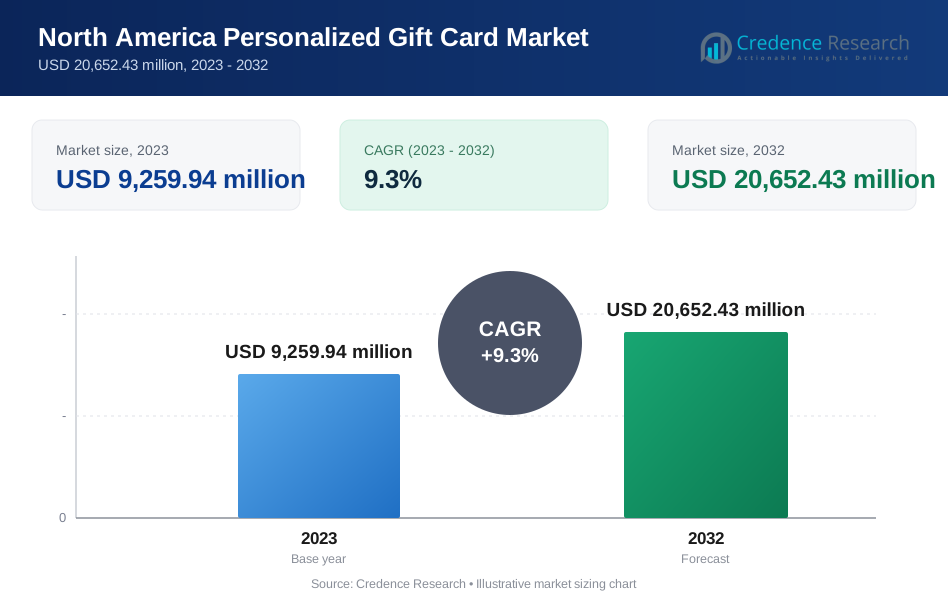
North America Personalized Gift Card market size was valued at USD 9,259.94 million in 2023 and is anticipated to reach USD 20,652.43 million by 2032, at a CAGR of 9.3% during the forecast period (2023-2032).
The North America Personalized Gift Card Market is experiencing significant growth, driven by the increasing preference for customized gifting solutions and the rising adoption of digital and e-gift cards. Consumers are seeking unique and personalized experiences, boosting demand across retail and corporate sectors. The expansion of e-commerce and mobile payment platforms has further accelerated market growth, making it easier to design and distribute personalized gift cards. Additionally, businesses are leveraging these cards for customer engagement, loyalty programs, and employee incentives, enhancing their market appeal. Key trends include the integration of AI-driven customization, blockchain-enabled secure transactions, and sustainable, digital-first gifting solutions. The growing influence of social media and influencer marketing has also contributed to the popularity of personalized gift cards. Moreover, the shift toward cashless transactions and instant gifting options continues to fuel market expansion, positioning personalized gift cards as a preferred choice for modern consumers and businesses alike.
The North America Personalized Gift Card Market is driven by strong demand across the United States, Canada, and Mexico, with varying levels of adoption influenced by digital payment infrastructure and consumer preferences. The United States leads in innovation, integrating AI-driven personalization, blockchain security, and mobile wallet compatibility. Canada follows with increasing corporate adoption and loyalty-based gift card programs, while Mexico is witnessing growth due to expanding e-commerce and retail sectors. Key players shaping the market include Walmart Inc., Amazon.com Inc., PayPal, Inc., Fiserv Inc., Givex Corporation, and Blackhawk Network, among others. These companies focus on enhancing security, customization options, and omnichannel distribution to strengthen their market position. Additionally, fintech firms and retailers are forming strategic partnerships to offer tailored solutions, expanding digital and physical gift card offerings. As consumer demand for seamless and personalized gifting continues to grow, market players are expected to innovate further, driving sustained industry expansion.
Market Insights
- The North America Personalized Gift Card Market was valued at USD 9,259.94 million in 2023 and is projected to reach USD 20,652.43 million by 2032, growing at a CAGR of 9.3% during the forecast period.
- Increasing consumer preference for customized and digital gift cards is driving market expansion, particularly in e-commerce and corporate gifting.
- The rise of mobile wallets, blockchain security, and AI-driven personalization is transforming the market, enhancing user experience and transaction security.
- Leading players like Walmart, Amazon, PayPal, and Blackhawk Network are strengthening their market presence through product innovation and strategic partnerships.
- Challenges such as fraud risks, cybersecurity concerns, and regulatory restrictions impact market growth and adoption.
- The United States dominates the market, followed by Canada and Mexico, with rising demand for personalized and multi-brand gift cards.
- Retailers and fintech companies are focusing on expanding omnichannel distribution and integrating sustainable, eco-friendly gift card solutions to attract modern consumers.
Market Drivers
Rising Demand for Customized and Personalized Gifting Solutions
The increasing consumer preference for unique and meaningful gifting options is a key driver of the North America Personalized Gift Card Market. Consumers are moving away from traditional gift cards in favor of personalized alternatives that reflect individual tastes and sentiments. This trend is particularly prominent in personal gifting for birthdays, weddings, and festive occasions, where recipients appreciate a more customized experience. Businesses are also responding to this demand by offering personalized designs, messages, and multimedia elements in gift cards. The ability to customize these cards with names, images, and tailored messages has made them an attractive gifting choice, further fueling market growth.
Expanding E-Commerce and Digital Payment Ecosystem
The rapid expansion of e-commerce and mobile payment solutions has significantly contributed to the growth of the personalized gift card market in North America. For instance, a study by a major financial institution revealed that digital gift cards have become more accessible through online retail platforms, mobile apps, and social media channels, allowing consumers to purchase and send them instantly. The seamless integration of personalized gift cards into mobile wallets, contactless payment systems, and subscription-based services has further enhanced their usability. Additionally, businesses are leveraging omnichannel strategies to distribute customized gift cards across multiple platforms, increasing consumer convenience and adoption. The growing reliance on digital payments and e-commerce has positioned personalized gift cards as a convenient and flexible gifting solution.
Growing Adoption in Corporate and Loyalty Programs
Corporations are increasingly incorporating personalized gift cards into their employee recognition programs, customer loyalty initiatives, and promotional campaigns. Companies are using these cards as incentives for employees, rewards for loyal customers, and promotional tools to drive brand engagement. Personalized corporate gift cards not only offer a more customized gifting experience but also strengthen brand-customer relationships by creating memorable interactions. The rising popularity of prepaid and reloadable gift cards in corporate settings has further boosted demand, with businesses leveraging them to enhance employee motivation and customer retention strategies. As a result, the corporate sector continues to be a significant contributor to the expansion of the personalized gift card market.
Advancements in Technology and Sustainable Gifting Trends
Technological advancements, including AI-driven personalization, blockchain-enabled security, and augmented reality (AR) features, have transformed the personalized gift card market. AI-powered platforms allow businesses to offer real-time customization, while blockchain technology enhances transaction security, reducing fraud risks. Additionally, the growing focus on sustainability has led to an increased adoption of digital gift cards, minimizing plastic waste and promoting eco-friendly gifting solutions. Brands are also exploring biodegradable and recyclable materials for physical gift cards to align with environmentally conscious consumer preferences. These advancements have not only enhanced user experience but also reinforced the demand for personalized gift cards in North America, driving continuous market growth.
Market Trends
Shift Toward Digital and Contactless Gift Cards
The North America Personalized Gift Card market is witnessing a strong shift toward digital and contactless solutions, driven by the growing adoption of mobile payments and e-commerce platforms. Consumers prefer digital gift cards for their convenience, instant delivery, and enhanced security features. Retailers and businesses are integrating these cards into mobile wallets, allowing seamless transactions both online and in-store. Additionally, the demand for QR code-based and NFC-enabled gift cards is rising, enabling effortless redemption and tracking. This trend aligns with the increasing preference for cashless transactions and digital-first experiences, making personalized digital gift cards a dominant force in the market.
Integration of AI and Data-Driven Personalization
AI and data analytics are transforming the personalized gift card market by enabling businesses to offer hyper-personalized gifting experiences. Advanced algorithms analyze customer preferences, purchase history, and behavioral patterns to generate customized gift card recommendations. AI-powered platforms allow users to design gift cards with personalized messages, themes, and multimedia elements, enhancing emotional engagement. Retailers are also leveraging AI for targeted marketing campaigns, suggesting personalized gift cards based on real-time customer insights. This growing emphasis on AI-driven customization is making personalized gift cards more appealing to both individual consumers and corporate clients.
Rising Popularity of Subscription-Based and Reloadable Gift Cards
Subscription-based and reloadable gift cards are gaining traction as businesses look for ways to enhance customer retention and engagement. Streaming services, meal delivery platforms, and online retail stores are increasingly offering subscription-based gift cards, allowing recipients to access premium content or services for a fixed period. Additionally, reloadable gift cards are becoming popular among consumers who prefer flexible spending options. Many businesses are integrating loyalty rewards and cashback incentives into these cards, encouraging repeat usage. This trend reflects the growing demand for gift cards that provide ongoing value rather than a one-time gifting experience.
Sustainability and Eco-Friendly Gifting Solutions
Sustainability is emerging as a key trend in the personalized gift card market, with businesses prioritizing eco-friendly alternatives to traditional plastic gift cards. For instance, a study by an environmental research organization found that digital gift cards are becoming the preferred choice as they eliminate plastic waste and reduce the carbon footprint associated with physical card production. Companies are also investing in biodegradable and recyclable materials for physical gift cards to align with environmentally conscious consumer preferences. Additionally, brands are promoting sustainable gifting practices by offering incentives for choosing digital gift cards over traditional options. This shift toward sustainability is reshaping the market and reinforcing the appeal of personalized gift cards among eco-conscious consumers.
Market Challenges Analysis
Security Concerns and Fraud Risks
The North America Personalized Gift Card Market faces significant challenges related to security vulnerabilities and fraud risks. For instance, a study by a leading cybersecurity firm found that cybercriminals increasingly target digital gift cards through hacking, phishing scams, and unauthorized access, leading to financial losses for consumers and businesses. Fraudulent activities such as card cloning, balance theft, and fake promotional offers have raised concerns about the reliability of personalized gift cards. Additionally, weak authentication measures and unregulated resale platforms contribute to misuse, impacting customer trust. Businesses must invest in advanced security technologies, such as blockchain and multi-factor authentication, to enhance fraud prevention and ensure secure transactions. Without robust security frameworks, fraudulent activities may hinder market growth and reduce consumer confidence in personalized gift cards.
Limited Consumer Awareness and Adoption Barriers
Despite the growing popularity of personalized gift cards, consumer awareness and adoption remain key challenges in certain market segments. Many consumers are unaware of the full customization options available, limiting the demand for highly personalized gift cards. Additionally, older demographics may hesitate to adopt digital gift cards due to unfamiliarity with mobile wallets and online transactions. Small businesses also face challenges in integrating personalized gift cards into their sales strategies due to high implementation costs and technical complexities. Moreover, the lack of standardization across retailers and platforms leads to compatibility issues, restricting widespread adoption. To overcome these barriers, businesses must focus on targeted educational campaigns, seamless digital integrations, and user-friendly platforms that encourage greater acceptance of personalized gift cards.
Market Opportunities
The North America Personalized Gift Card Market presents significant opportunities for expansion due to the increasing demand for digital gifting solutions. The widespread adoption of mobile wallets, e-commerce platforms, and contactless payment systems has created a favorable environment for the growth of personalized gift cards. Businesses can capitalize on this trend by enhancing digital customization features, offering seamless integrations with mobile payment apps, and expanding omnichannel distribution strategies. Additionally, the corporate sector offers untapped potential, as companies increasingly seek personalized gift cards for employee incentives, client appreciation, and customer loyalty programs. By providing tailored corporate gifting solutions with branding options and reward-based incentives, businesses can drive higher engagement and long-term value.
Technological advancements, such as AI-driven personalization, blockchain-based security, and augmented reality (AR) features, present new avenues for innovation in the personalized gift card market. AI-powered platforms can offer predictive personalization based on consumer preferences, enhancing the appeal of customized gifting. Meanwhile, blockchain technology can improve transaction security, reducing fraud risks and increasing consumer trust. The rising focus on sustainability also offers an opportunity for businesses to develop eco-friendly digital and biodegradable physical gift cards, catering to environmentally conscious consumers. Furthermore, expanding partnerships with retailers, fintech companies, and subscription-based services can drive market penetration and increase the adoption of personalized gift cards across diverse consumer segments. By leveraging these opportunities, businesses can strengthen their market presence and cater to the evolving preferences of modern consumers.
Market Segmentation Analysis:
By Type:
The North America Personalized Gift Card Market is segmented into closed-loop and open-loop gift cards, each catering to different consumer preferences and purchasing behaviors. Closed-loop gift cards are restricted to specific brands or retailers, making them popular among businesses for loyalty programs and promotional campaigns. These cards provide brands with enhanced customer engagement and encourage repeat purchases. Many retailers and e-commerce platforms are integrating personalized closed-loop gift cards to strengthen brand loyalty and enhance customer retention. On the other hand, open-loop gift cards, which can be used across multiple merchants and financial institutions, offer greater flexibility and convenience to consumers. These cards are often preferred for corporate incentives, as they provide recipients with more spending options. The demand for open-loop personalized gift cards is rising with the increasing adoption of digital wallets and contactless payment systems, enabling seamless transactions across various locations. Both segments continue to expand, driven by technological advancements, security enhancements, and evolving consumer preferences in digital gifting solutions.
By Distribution Channel:
The distribution of personalized gift cards in North America is categorized into online and offline channels, both playing a crucial role in market expansion. The online segment has witnessed rapid growth due to the increasing penetration of e-commerce platforms and mobile payment solutions. Consumers prefer digital gift cards for their convenience, instant delivery, and customization options. Retailers are leveraging AI-driven personalization and blockchain security to enhance digital gift card offerings, ensuring seamless transactions and fraud prevention. Additionally, social media and email marketing have contributed to the rising popularity of online distribution channels. In contrast, the offline segment, which includes physical stores, supermarkets, and specialty gift shops, remains relevant, particularly for customers who prefer tangible gifting options. Many businesses integrate in-store kiosks and interactive displays to allow customers to personalize gift cards instantly. While digital channels continue to dominate, the offline segment retains demand, particularly among traditional shoppers and businesses incorporating personalized gift cards into their retail strategies.
Segments:
Based on Type:
- Closed-loop gift cards
- Open-loop gift cards
Based on Distribution Channel:
- Online
- Offline
Based on Form:
- Virtual
- Physical
Based on End User:
- Retail consumers
- Corporate institutions
Based on the Geography:
- S.
- Canada
- Mexico
Regional Analysis
United States
The United States holds the largest share of the North America Personalized Gift Card Market, accounting for approximately 65% of the regional revenue. The market's dominance is fueled by a well-established digital payment infrastructure, widespread adoption of mobile wallets, and a strong e-commerce ecosystem. Consumers in the U.S. increasingly prefer digital and e-gift cards due to their convenience, instant delivery, and enhanced security features. Retailers and corporate businesses actively leverage personalized gift cards for customer engagement, loyalty programs, and employee incentives, further driving market expansion. Additionally, the presence of leading technology firms and financial service providers has accelerated innovations such as blockchain-enabled gift cards, AI-driven personalization, and QR code-based transactions. With continuous advancements in fintech and the rising trend of cashless payments, the U.S. is expected to maintain its market leadership, further expanding its share in the coming years.
Canada
Canada represents a significant portion of the North America Personalized Gift Card Market, holding approximately 18% of the total market share. The country's market growth is driven by the increasing adoption of corporate gift cards, digital payment solutions, and subscription-based services. Businesses in Canada are integrating personalized gift cards into employee reward programs and customer retention strategies, fueling demand across multiple industries. The rise of e-commerce and mobile shopping has further propelled the adoption of personalized digital gift cards, offering consumers more flexibility and customization options. Additionally, financial institutions and retailers are expanding partnerships to introduce reloadable and multi-brand gift cards, enhancing consumer appeal. Government initiatives promoting digital transactions and data security regulations have also contributed to market expansion. As more businesses shift toward personalized and digital gifting solutions, Canada's market share is projected to grow steadily over the forecast period.
Mexico
Mexico holds a 9% share of the North America Personalized Gift Card Market, with rapid expansion driven by increasing urbanization, rising disposable income, and the growth of organized retail. The demand for personalized gift cards is gaining traction, particularly in the retail and hospitality sectors, as businesses focus on enhancing customer engagement and brand loyalty. The shift toward digital payment systems and mobile commerce has further boosted the adoption of e-gift cards, making them more accessible to consumers. Additionally, retailers and e-commerce platforms in Mexico are introducing customizable prepaid cards to attract tech-savvy consumers and corporate clients. However, challenges such as limited digital infrastructure in rural areas and concerns regarding fraud risks remain barriers to widespread adoption. Despite these challenges, the market presents significant opportunities for growth, with increasing investments in fintech and digital payment solutions driving further expansion.
Key Player Analysis
- Walmart Inc.
- com Inc.
- PayPal, Inc.
- Qwikcilver Solutions Pvt Ltd
- Fiserv Inc.
- Givex Corporation
- Paytronix Systems, Inc.
- CafePress Inc.
- Blackhawk Network
- InComm Payments LLC
- American Express Company
- Mars Incorporated
- Shutterfly
- American Greetings Corporation
- Etsy Inc.
- Others
Competitive Analysis
The North America Personalized Gift Card Market is highly competitive, with key players focusing on product innovation, digital transformation, and strategic partnerships to strengthen their market presence. Leading companies such as Walmart Inc., Amazon.com Inc., PayPal, Inc., Fiserv Inc., Givex Corporation, Blackhawk Network, and InComm Payments LLC are driving competition by enhancing their offerings and expanding their distribution networks. These players leverage AI-driven personalization, blockchain security, and omnichannel strategies to cater to evolving consumer preferences. Market leaders are enhancing their offerings through AI-powered personalization, blockchain security, and omnichannel distribution to meet evolving consumer demands. The rise of digital wallets, contactless payments, and e-commerce platforms has intensified competition, with firms investing in seamless user experiences and expanded customization features. Retail and fintech companies are leveraging reloadable, multi-brand, and corporate-focused gift card solutions to capture a diverse customer base. The increasing adoption of subscription-based gifting models and loyalty-driven programs has further fueled market rivalry. For instance, industry reports indicate that companies investing in blockchain technology for gift card security have seen a notable reduction in fraud incidents, enhancing consumer trust. Additionally, businesses are expanding their presence through mergers, acquisitions, and technological advancements, ensuring a competitive edge in a fast-growing industry. As consumer preferences shift toward instant and personalized gifting solutions, companies are focusing on security enhancements and sustainable alternatives to maintain long-term market relevance.
Recent Developments
- In January 2025, Walmart Inc. introduced an updated brand look and feel, including changes to its gift card designs and digital gifting options as part of a comprehensive brand refresh.
- In January 2025, com Inc. expanded Amazon Pay gift card options, allowing customization with over 1,000 designs in 7 regional languages. Added the ability to personalize gift cards with custom messages and share via email or messaging apps.
- In December 2023, Blackhawk Network entered into a strategic partnership with Affirm to enable Affirm users to buy gift cards directly from the Affirm app.
- In October 2023, Givex Corporation launched new customizable and animated e-gift card features for its Givex Ecommerce platform, allowing customers to personalize digital gift cards with images, video messages, and animations.
- In March 2023, Qwikcilver Solutions Pvt Ltd partnered with Woolworths Group's payments entity Wpay to extend gift card processing solutions and services in Australia and New Zealand.
Market Concentration & Characteristics
The North America Personalized Gift Card Market exhibits a moderate to high market concentration, with a few dominant players holding significant shares due to their established distribution networks and technological advancements. Leading companies leverage strong brand presence, digital transformation, and strategic partnerships to maintain a competitive edge. The market is characterized by high customization, increasing digital adoption, and omnichannel distribution, ensuring seamless consumer accessibility. Innovation in AI-driven personalization, blockchain security, and mobile wallet integration is reshaping the industry, catering to evolving consumer preferences. Additionally, the market is experiencing a shift toward eco-friendly and digital gift cards, driven by sustainability concerns and regulatory influences. Despite intense competition, entry barriers remain moderate, as new players focus on niche segments and innovative solutions to gain market traction. As demand for personalized gifting solutions grows, businesses are expected to invest in advanced security features and seamless user experiences to strengthen market positioning.
Report Coverage
The research report offers an in-depth analysis based on Type, Distribution Channel, Form, End User and Geography. It details leading market players, providing an overview of their business, product offerings, investments, revenue streams, and key applications. Additionally, the report includes insights into the competitive environment, SWOT analysis, current market trends, as well as the primary drivers and constraints. Furthermore, it discusses various factors that have driven market expansion in recent years. The report also explores market dynamics, regulatory scenarios, and technological advancements that are shaping the industry. It assesses the impact of external factors and global economic changes on market growth. Lastly, it provides strategic recommendations for new entrants and established companies to navigate the complexities of the market.
Future Outlook
- The North America Personalized Gift Card Market will continue expanding with increasing consumer preference for digital and customized gifting solutions.
- The integration of AI-driven personalization and blockchain technology will enhance security and user experience.
- Retailers and fintech companies will invest in omnichannel distribution strategies, improving accessibility across online and offline platforms.
- Corporate adoption of personalized gift cards will rise as businesses integrate them into loyalty programs and employee incentives.
- The demand for eco-friendly and sustainable gift card solutions will grow, encouraging innovation in biodegradable and digital formats.
- Strategic partnerships between retailers, financial institutions, and e-commerce platforms will drive new product development.
- The expansion of mobile wallets and contactless payment solutions will further boost digital gift card adoption.
- Cross-border e-commerce growth will encourage companies to offer multi-currency and internationally accepted gift cards.
- Increasing cybersecurity measures will be crucial to addressing fraud risks and data privacy concerns.
- The market will witness strong competition, with companies continuously innovating to differentiate themselves and capture a larger consumer base.
Request a Free Sample
Fill in your details and we'll send you a free sample report.
- Sample data tables & charts
- Research methodology
Need a Custom Version of This Report?
Tailor the scope, geography, or segments to your exact requirements.
- Custom geography or segment scope
- Direct access to our analyst team
Frequently Asked Questions
What is the current size of the North America Personalized Gift Card Market?
What factors are driving the growth of the North America Personalized Gift Card Market?
What are some challenges faced by the North America Personalized Gift Card Market?
Who are the major players in the North America Personalized Gift Card Market?
Table of Content
Chapter 1. Report Introduction
- 1.1 Report Description & Purpose
- 1.1.1 Report Title & Market Definition
- 1.1.2 Unique Selling Propositions (USP) & Key Differentiators
- 1.1.3 Value Proposition for Stakeholders
- 1.2 Research Objectives
- 1.2.1 Market Sizing Objectives (Volume & Revenue)
- 1.2.2 Segmentation Objectives
- 1.2.3 Competitive Intelligence Objectives
- 1.2.4 Forecast & Scenario Objectives
- 1.3 Report Scope
- 1.3.1 North America Personalized Gift Card Scope – Types & Subtypes Covered
- 1.3.2 Geographic Scope – Regions & Countries Covered
- 1.3.3 Historical Period, Base Year & Forecast Period (2023; forecast to 2032)
- 1.3.4 Inclusions & Exclusions
- 1.4 HS Code & Classification Framework
- 1.5 Currency, Units & Pricing Basis
- 1.6 Target Stakeholders
- 1.7 Limitations & Assumptions
Chapter 2. Executive Summary
- 2.1 Global North America Personalized Gift Card Market Snapshot
- 2.1.1 Market Size – Historical (2023) & Forecast (2023-2032) (2023: USD 9,259.94 million → 2032: USD 20,652.43 million)
- 2.1.2 Volume & Revenue – Global Totals
- 2.1.3 Key Market Highlights – Top Five Facts
- 2.2 North America Personalized Gift Card Market Segmentation Snapshot
- 2.2.1 Market Split by Region – 2023 vs. 2032
- 2.3 Competitive Snapshot
- 2.3.1 Top 10 Players by Revenue Share – 2023
- 2.3.2 Top 10 Players by Volume Share – 2023
- 2.3.3 Recent Strategic Developments (18-Month Summary)
- 2.4 Key Investment Highlights & Strategic Conclusions
Chapter 3. North America Personalized Gift Card Market Dynamics & Industry Analysis
- 3.1 Market Overview & Context
- 3.1.1 North America Personalized Gift Card Market Position in the Broader Automotive Value Chain
- 3.1.2 OEM vs. Replacement Market Dynamics
- 3.1.3 Market Maturity & Development Stage by Region
- 3.2 North America Personalized Gift Card Market Drivers
- 3.3 North America Personalized Gift Card Market Restraints & Challenges
- 3.4 North America Personalized Gift Card Market Opportunities
- 3.5 Porter's Five Forces Analysis
- 3.5.1 Threat of New Entrants
- 3.5.2 Bargaining Power of Suppliers
- 3.5.3 Bargaining Power of Buyers
- 3.5.4 Threat of Substitutes
- 3.5.5 Competitive Rivalry – Intensity Assessment
- 3.6 North America Personalized Gift Card Value Chain Analysis
- 3.6.1 Upstream – Raw Material/Input Suppliers
- 3.6.1.1 Raw Material/Input 1
- 3.6.1.2 Raw Material/Input 2
- 3.6.1.3 Raw Material/Input 3
- 3.6.2 Midstream – Production/Manufacturing/Service Delivery
- 3.6.2.1 Production/Process Overview
- 3.6.2.2 Key Facility Locations & Capacity by Manufacturer
- 3.6.3 Downstream – Distribution & End Consumer
- 3.6.3.1 Primary Channel – B2B/OEM
- 3.6.3.2 Secondary Channels – Dealer, Retail, Online, Direct
- 3.6.4 Value Chain Profitability Analysis
- 3.6.1 Upstream – Raw Material/Input Suppliers
- 3.7 PESTEL Analysis
- 3.7.1 Political Factors
- 3.7.2 Economic Factors
- 3.7.3 Social Factors
- 3.7.4 Technological Factors
- 3.7.5 Environmental Factors
- 3.7.6 Legal Factors
- 3.8 North America Personalized Gift Card Supply Chain Analysis
- 3.8.1 Raw Material/Input Supply Risk Assessment
- 3.8.2 Manufacturing Concentration Risk (Geographic Exposure)
- 3.8.3 Trade Disruption Impact Analysis
- 3.9 Regulatory & Policy Landscape
Note: The regulatory and policy landscape section covers regulations based on their applicability to the market, North America Personalized Gift Card category, geography, and scope of the study. Only regulatory frameworks with a material impact on operations, compliance, trade, sustainability, or market access are analyzed in detail.
Chapter 4. Key Investment Pockets & Opportunity Analysis
- 4.1 North America Personalized Gift Card Market Attractiveness Analysis
- 4.1.1 By Region – Investment Attractiveness Matrix (Volume × CAGR)
- 4.2 Absolute Revenue Growth Opportunity
- 4.2.1 By Region – Absolute USD Growth Through 2032
- 4.3 Incremental Volume Opportunity
- 4.3.1 By Region – Incremental Volume Through 2032
- 4.3.2 Segment – Incremental Volume
- 4.4 Emerging Submarket Opportunity Deep Dive (Subject to Applicability)
- 4.5 Emerging Market Opportunity Scorecards
- 4.5.1 United States
- 4.5.2 Europe
- 4.5.3 Asia
- 4.5.4 Middle East & Africa
Note: Emerging Market Opportunity Scorecards will be included based on relevance and strategic importance. Regions listed are indicative and may vary depending on data availability and market dynamics.
Chapter 5. North America Personalized Gift Card Import-Export Analysis & Trade Flows
- 5.1 Global Trade Overview
- 5.1.1 Global Export Value by Country (2023)
- 5.1.2 Global Export Volume by Country (2023)
- 5.1.3 Global Import Value by Country (2023)
- 5.1.4 Global Import Volume by Country (2023)
- 5.1.5 Net Trade Balance by Country (2023)
- 5.2 Export Analysis – Segment
- 5.2.1 Type 1 (HS Code)
- 5.2.2 Type 2 (HS Code)
- 5.2.3 Type 3 (HS Code)
- 5.2.4 Type 4 (HS Code)
- 5.2.5 Type 5 (HS Code)
- 5.3 Import Analysis – Segment
- 5.3.1 Type 1 (HS Code)
- 5.3.2 Type 2 (HS Code)
- 5.3.3 Type 3 (HS Code)
- 5.3.4 Type 4 (HS Code)
- 5.3.5 Type 5 (HS Code)
- 5.4 Average Unit Trade Prices
- 5.4.1 Average Export Price – Segment & Country
- 5.4.2 Average Import Price – Segment & Source Country
- 5.4.3 Price Trends (2023)
- 5.5 Key Trade Route Analysis
- 5.5.1 Trade Route 1
- 5.5.2 Trade Route 2
- 5.5.3 Trade Route 3
- 5.5.4 Trade Route 4
- 5.5.5 Trade Route 5
- 5.6 Trade Policy Impact Assessment
- 5.6.1 US Anti-Dumping & Section 301 Tariffs
- 5.6.2 EU Customs Union Impact
- 5.6.3 Major Free Trade Agreements
- 5.6.4 USMCA Rules of Origin
Note: Trade policy analysis will be included only where relevant to the North America Personalized Gift Card market.
Chapter 6. Competitive Landscape & Company Benchmarking
- 6.1 North America Personalized Gift Card Market Concentration & Structure
- 6.1.1 Herfindahl-Hirschman Index (HHI) – vs. 2023
- 6.1.2 Tier 1, Tier 2 & Tier 3 Market Structure
- 6.1.3 Global, Regional & Local Player Dynamics
- 6.2 North America Personalized Gift Card Market Share Analysis – 2023
- 6.2.1 Global Revenue Share by Company
- 6.2.2 Global Volume Share by Company
- 6.2.3 Regional Revenue Share
- 6.2.4 Market Share Evolution ( vs. 2023)
- 6.2.5 OEM Segment Share by Company
- 6.2.6 Replacement Segment Share by Company
- 6.3 Production/Delivery Capacity & Facility Analysis
- 6.3.1 Global Installed Capacity
- 6.3.2 Capacity Utilization Rates
- 6.3.3 Production/Output Volume
- 6.3.4 Facility Locations & Capacity Map
- 6.3.5 Planned Capacity Additions
- 6.4 North America Personalized Gift Card Competitive Benchmarking Matrix
- 6.4.1 Revenue, Volume, CAGR & Profitability Comparison
- 6.4.2 Channel Revenue Mix
- 6.4.3 Geographic Revenue Exposure
- 6.4.4 R&D Intensity
- 6.4.5 Sustainability Maturity
- 6.5 Strategic Developments in North America Personalized Gift Card (Last 24 Months)
- 6.5.1 Mergers, Acquisitions & Divestments
- 6.5.2 New North America Personalized Gift Card Launches
- 6.5.3 Facility Expansions
- 6.5.4 Strategic Alliances, Joint Ventures & Partnerships
- 6.5.5 Distribution Expansion & Market Entry
- 6.5.6 Sustainability & ESG Initiatives
- 6.6 Competitive Strategy Mapping
- 6.6.1 Leader, Challenger, Follower & Niche Classification
- 6.6.2 Pricing Strategy Comparison
- 6.6.3 Channel Strategy Matrix
Note: Strategic developments are included based on their materiality and the availability of reliable information.
Chapter 7. Global North America Personalized Gift Card Market – By Distribution Channel
- 7.1 Segment Overview
- 7.1.1 Volume & Revenue Split by Channel (2023 & 2032)
- 7.1.2 Channel Mix Evolution (2023-2032)
Chapter 8. Regional Market Analysis – Global Overview
- 8.1 Global Regional Overview
- 8.1.1 Regional Volume Share
- 8.1.2 Regional Revenue Share
- 8.1.3 Regional Volume by Region
- 8.1.4 Regional Revenue by Region
- 8.1.5 Regional Forecast Through 2032
- 8.2 Cross-Regional Segment Analysis
- 8.2.1 By Distribution Channel
- 8.2.2 By Brand/Price Tier
Chapter 9. North America North America Personalized Gift Card Market
- 9.1 United States
- 9.2 Canada
- 9.3 Mexico
Chapter 10. Europe North America Personalized Gift Card Market
- 10.1 Germany
- 10.2 France
- 10.3 Italy
- 10.4 United Kingdom
- 10.5 Spain
- 10.6 Poland
- 10.7 Russia
- 10.8 Netherlands
- 10.9 Belgium
- 10.10 Sweden
- 10.11 Denmark
- 10.12 Norway
- 10.13 Rest of Europe
Chapter 11. Asia Pacific North America Personalized Gift Card Market
- 11.1 China
- 11.2 India
- 11.3 Japan
- 11.4 South Korea
- 11.5 Thailand
- 11.6 Indonesia
- 11.7 Vietnam
- 11.8 Malaysia
- 11.9 Australia
- 11.10 Rest of Asia Pacific
Chapter 12. Latin America North America Personalized Gift Card Market
- 12.1 Brazil
- 12.2 Argentina
- 12.3 Colombia
- 12.4 Chile
- 12.5 Rest of Latin America
Chapter 13. Middle East North America Personalized Gift Card Market
- 13.1 Saudi Arabia
- 13.2 United Arab Emirates
- 13.3 Turkey
- 13.4 Israel
- 13.5 Iran
- 13.6 Rest of the Middle East
Chapter 14. Africa North America Personalized Gift Card Market
- 14.1 South Africa
- 14.2 Egypt
- 14.3 Nigeria
- 14.4 Morocco
- 14.5 Rest of Africa
Chapter 15. North America Personalized Gift Card Company Profiles
- 15.1 [Company 01]
- 15.1.1 Company Overview
- 15.1.2 Key Management Personnel
- 15.1.3 Products & Services Portfolio
- 15.1.4 Financial Performance
- 15.1.5 Key Market Focus & Geographic Presence
- 15.1.6 Recent Developments & Strategic Initiatives
Note: The company profile list is preliminary and may change based on research findings, market developments, data availability, and client requirements.
Chapter 16. Appendices
- Appendix A – List of Abbreviations & Acronyms
- Appendix B – Industry Classification Code Reference – Full Series
- Appendix C – Production & Capacity Data Tables
- Appendix D – End-Use & Demand Base Tables
- Appendix E – Consumption & Replacement Rate Assumptions
- Appendix F – ASP Reference Tables
- Appendix G – Manufacturing & Facility Database
- Appendix H – Import-Export Data Tables
- Appendix I – Regulatory Summary Tables
- Appendix J – Primary Research Participant List (Anonymized)
- Appendix K – Primary Research Questionnaire Framework
- Appendix L – Data Sources & Bibliography
- Appendix M – Market Size Divergence & Source Comparison
Chapter 17. Research Methodology
- 17.1 Research Framework & Philosophy
- 17.2 Secondary Research – Sources, Hierarchy & Data Extraction
- 17.3 Data Modeling – Bottom-Up & Top-Down Market Sizing
- 17.4 Primary Research – Stakeholder Framework, LOI & Sample Sizes
- 17.5 Forecast Methodology – Regression, Scenario & Sensitivity Analysis
- 17.6 Quality Control – Four-Layer Validation Framework
- 17.7 Limitations & Standard Assumptions
- 17.8 Disclaimer
