
| REPORT ATTRIBUTE | DETAILS |
|---|---|
| Historical Period | 2020-2023 |
| Base Year | 2024 |
| Forecast Period | 2025-2032 |
| Pocket Knives Market Size 2024 | USD 651.2 million |
| Pocket Knives Market, CAGR | 5.4% |
| Pocket Knives Market Size 2032 | USD 991.8 million |
Market Overview:
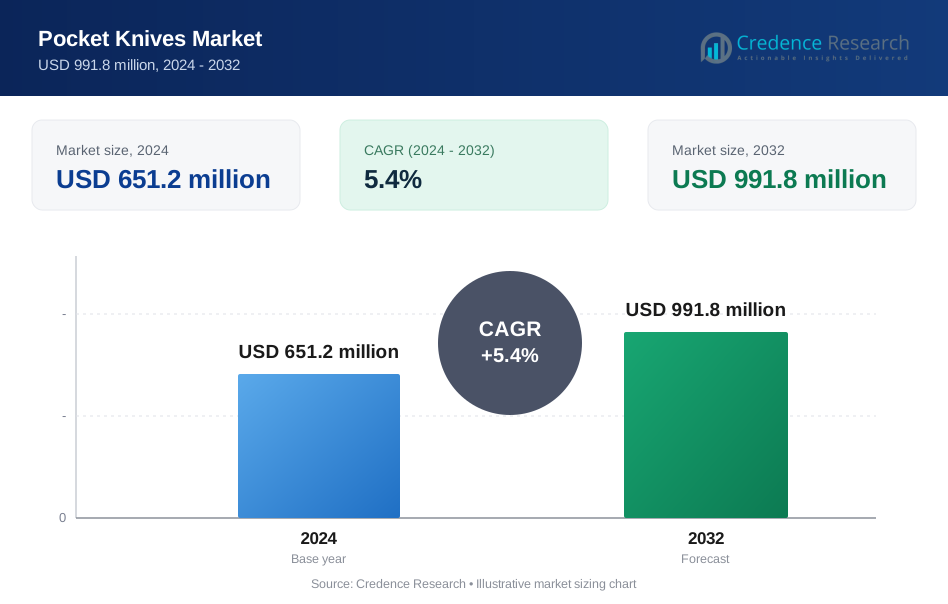
The Pocket Knives Market is projected to grow from USD 651.2 million in 2024 to an estimated USD 991.8 million by 2032, with a compound annual growth rate (CAGR) of 5.4% from 2024 to 2032.
Several factors contribute to the expansion of the pocket knives market. The rising popularity of outdoor recreational activities, such as camping, hiking, and fishing, has led to increased demand for reliable and multifunctional tools. Additionally, the growing DIY culture and emphasis on personal safety have further propelled market growth. Technological advancements in materials, such as the use of high-carbon stainless steel and titanium, have enhanced the durability and functionality of pocket knives, attracting a broader consumer base. Moreover, the integration of innovative features, including ergonomic designs and assisted opening mechanisms, has improved user experience and safety, thereby boosting product appeal. Increasing social media influence and online content on bushcraft and survivalism have made pocket knives more popular among young consumers. Rising e-commerce penetration is also facilitating easier access to a wide range of products, increasing market visibility and sales.
Regionally, North America holds the largest share of the pocket knives market, driven by a strong outdoor culture and high consumer demand for recreational and tactical tools. The United States, in particular, exhibits significant growth due to increasing participation in outdoor activities and a focus on personal safety. Europe follows closely, with countries like Germany, France, and the UK showing robust demand, influenced by a blend of traditional craftsmanship and modern design preferences. The Asia-Pacific region is also witnessing notable growth, attributed to rising urbanization, increasing disposable incomes, and a growing interest in outdoor pursuits. South America's market, while smaller, reflects a practical approach to knife design, focusing on utility and affordability to cater to a diverse consumer base. The Middle East and Africa are emerging as niche markets, supported by increased tourism, tactical demand, and greater awareness of international brands. Government regulations and import laws also influence market trends differently across regions, shaping local consumer behavior and product availability.
Market Insights:
- The Pocket Knives Market is projected to grow from USD 651.2 million in 2024 to USD 991.8 million by 2032, registering a CAGR of 5.4% during the forecast period.
- Rising interest in outdoor activities such as hiking, camping, and fishing is driving demand for compact, multi-functional knives that enhance user safety and preparedness.
- Advancements in materials like titanium, carbon fiber, and high-grade stainless steel are improving knife durability, corrosion resistance, and ergonomic performance, boosting product appeal.
- The growing Everyday Carry (EDC) culture, particularly among urban millennials and Gen Z, is making pocket knives a fashionable utility item, encouraging lifestyle integration and repeat purchases.
- E-commerce growth is accelerating market penetration by making a wide range of knives accessible globally, while specialty retail outlets provide hands-on buying experiences that support premium sales.
- Regulatory complexity across regions poses challenges, with legal restrictions on blade length, locking systems, and public carry varying widely, complicating product compliance and distribution.
- North America leads the global market, supported by strong outdoor traditions and consumer demand, followed by Europe and Asia-Pacific, where rising disposable incomes and outdoor lifestyles are fueling rapid growth.
Market Drivers:
Rising Participation in Outdoor Recreational Activities Is Driving Demand for Multi-Functional Tools:
The growing popularity of outdoor pursuits such as camping, hiking, fishing, and hunting continues to significantly influence the demand for pocket knives. Consumers seek reliable, portable, and multi-functional tools that enhance their outdoor experience and safety. Pocket knives are widely used in cutting tasks, food preparation, and emergency scenarios in such environments. This lifestyle shift, particularly among millennials and Gen Z, is pushing manufacturers to innovate with lightweight yet durable materials. The [Pocket Knives Market] is benefiting from this trend, as consumers increasingly integrate pocket knives into their regular gear for recreational purposes. Seasonal outdoor events and survivalist communities further contribute to sustained demand. It reflects a broader societal shift toward self-reliance and nature engagement.
- For instance, according to the U.S. Fish & Wildlife Service’s 2022 National Survey, over 148 million Americans participated in wildlife-related outdoor activities such as fishing, hunting, and wildlife observation, with camping and hiking also seeing record participation rates according to the Outdoor Industry Association.
Technological Advancements in Materials and Knife Mechanisms Enhance Product Appeal:
Ongoing innovation in knife design and construction is elevating product value and expanding the customer base. High-performance materials such as carbon fiber, titanium, and advanced stainless steels are now standard in premium pocket knives. These materials improve resistance to corrosion, reduce overall weight, and enhance blade edge retention. Assisted opening mechanisms, locking systems, and ergonomic designs also improve user convenience and safety. It gives manufacturers the ability to cater to both novice users and professionals alike. The integration of smart technology, including digital tracking or safety alerts, though niche, is emerging in select segments. These innovations elevate pocket knives from simple tools to precision-engineered instruments.
- For instance, Buck Knives’ 2025 product releases feature S35VN steel and titanium handles, providing enhanced corrosion resistance and edge retention, as highlighted in their official product documentation. Spyderco’s 2025 lineup includes models crafted with CPM 15V steel, which is recognized for its superior wear resistance.
Cultural Embrace of Everyday Carry (EDC) Tools Strengthens Market Penetration:
The Everyday Carry (EDC) movement has introduced a cultural trend where consumers carry essential tools daily, including pocket knives. This trend prioritizes preparedness, minimalism, and utility, making pocket knives a staple item. It has gained traction through social media platforms and influencer-led content, which showcase knife collections and practical uses. The market is responding with sleek, compact, and versatile designs that align with urban consumer preferences. Brands are leveraging this trend to expand their presence in lifestyle and fashion categories. The Pocket Knives Market is seeing increased adoption not only for outdoor use but also for daily convenience and aesthetic value. This shift is contributing to repeat purchases and brand loyalty.
Expansion of E-Commerce and Specialty Retail Improves Product Accessibility and Consumer Reach:
Online platforms and specialty retail outlets are playing a key role in broadening consumer access to a wide range of pocket knives. E-commerce websites offer detailed product specifications, reviews, and comparisons that simplify the decision-making process for buyers. It allows small and mid-sized manufacturers to compete effectively with established brands. Global shipping and customizable product features further enhance customer satisfaction and market penetration. Retailers are also benefiting from increased interest in gifting, collectibles, and exclusive limited-edition knives. Offline specialty stores provide hands-on experience and expert consultation, adding value to premium segments. This omnichannel approach supports consistent growth across multiple consumer demographics.
Market Trends:
Increasing Consumer Preference for Compact, Lightweight, and Functional Designs:
Modern consumers are prioritizing ease of use, portability, and versatility when selecting pocket knives. Manufacturers are responding by developing slimmer, lighter models that do not compromise on strength or functionality. Many new product lines feature tools such as screwdrivers, bottle openers, and scissors integrated into minimalist designs. These knives appeal to users who carry them daily for convenience rather than specialized outdoor needs. The [Pocket Knives Market] is shifting toward practical models that blend utility with portability, reflecting changing lifestyles. It also supports the demand for products suited for urban environments and everyday carry needs. This trend is expected to remain a core focus for manufacturers targeting younger, mobile consumers.
- For instance, Leatherman’s FREE T4 pocket knife, launched in 2025, integrates multiple tools into a compact, lightweight design, making it suitable for everyday carry. Victorinox’s Alox Limited Edition 2025 collection features slim, anodized aluminum handles, combining portability with robust construction.
Customization and Personalization of Pocket Knives Gains Market Attention:
Consumers are showing increasing interest in custom-made and personalized knives that reflect their identity or values. This includes engraved handles, customized blades, and unique finishes tailored to individual preferences. Brands are offering limited-edition releases and bespoke services to tap into this rising demand. It strengthens customer engagement and creates premium revenue streams for companies. The trend also supports the gifting segment, where personalization adds emotional and functional value. The Pocket Knives Market is capitalizing on this shift by offering tools that balance personal style with rugged performance. Personalized knives are no longer niche but are moving toward mainstream acceptance.
- For instance, Buck Knives offers custom engraving and handle material options through its online custom shop, with personalized knife orders increasing year-over-year since 2023. Spyderco’s Sprint Run series features limited-edition models with unique blade steels and handle colors, often selling out within days of release.
Sustainability in Materials and Ethical Sourcing Is Becoming a Consumer Priority:
Environmentally conscious buyers are placing greater emphasis on sustainable materials and responsible manufacturing practices. Knife manufacturers are beginning to use recycled steel, biodegradable handle materials, and low-impact packaging. These practices are helping brands differentiate themselves in a competitive landscape where transparency is valued. It aligns with broader environmental awareness trends seen across consumer goods industries. Sustainability certifications and clear product origin details are becoming important decision-making factors. The Pocket Knives Market is adapting to meet expectations from a more informed, ethically minded customer base. This shift encourages long-term brand trust and supports regulatory compliance across regions.
Social Media Influence and Community-Based Content Drives Product Visibility:
Platforms like YouTube, Instagram, and Reddit have become major channels for showcasing pocket knife reviews, tutorials, and collections. Influencers and content creators demonstrate real-world use, offering practical insights and encouraging community discussion. It has created an ecosystem where enthusiasts and new users alike discover products through trusted peer recommendations. Viral product launches and unboxing experiences generate substantial traffic and customer interest. The market is benefiting from this content-driven awareness, especially for new brands and product innovations. The Pocket Knives Market gains ongoing exposure through this digital word-of-mouth, fostering both product education and aspirational appeal.
Market Challenges Analysis:
Strict Government Regulations and Legal Restrictions Limit Market Accessibility:
Varying laws and regulatory restrictions surrounding the ownership, sale, and public carry of pocket knives remain a major challenge for the industry. Many regions classify certain blade lengths or locking mechanisms as prohibited, complicating product distribution and limiting consumer access. These laws often differ significantly across states and countries, creating uncertainty for manufacturers and retailers. It forces companies to navigate complex compliance requirements, which increases operational costs and slows market expansion. The [Pocket Knives Market] must continuously adapt its product lines and marketing strategies to align with local legal frameworks. Customs seizures, regulatory penalties, and negative public perception linked to safety concerns can hinder brand reputation. This fragmented regulatory environment restricts product standardization and scale efficiency.
Counterfeit Products and Low-Cost Imitations Undermine Brand Value and Trust:
The availability of counterfeit knives and low-quality replicas on global e-commerce platforms undermines consumer confidence and poses a persistent challenge to legitimate manufacturers. These imitation products often use substandard materials, compromise safety, and fail to meet warranty or performance expectations. It creates negative user experiences that damage the credibility of established brands. Legitimate manufacturers must invest in anti-counterfeiting measures, brand protection technologies, and legal enforcement to preserve their market share. The Pocket Knives Market faces price pressure when counterfeit products undercut original pricing while misleading customers. This also impacts retailers, who risk reputational damage by unknowingly distributing unauthorized goods. The presence of fake products erodes long-term customer loyalty and slows premium segment growth.
Market Opportunities:
Expansion into Tactical, Military, and Emergency Response Applications Creates New Growth Avenues:
Pocket knives are finding increased utility in tactical and professional environments such as law enforcement, military, and emergency response. These sectors demand high-performance tools that offer reliability, precision, and quick deployment. Manufacturers can design specialized knives with advanced locking systems, non-reflective coatings, and multi-tool integration to meet these needs. The [Pocket Knives Market] can benefit by forming partnerships with defense contractors and public safety agencies to supply gear tailored to operational standards. Custom solutions for field operations, rescue scenarios, and survival kits offer strong potential for volume sales. This segment also supports long-term procurement contracts and government tenders.
Emerging Markets and Outdoor Lifestyle Trends Fuel Retail Expansion:
Rising disposable incomes and increased interest in outdoor lifestyles across Asia-Pacific, Latin America, and the Middle East present strong growth opportunities. Consumers in these regions are adopting pocket knives for camping, utility, and personal preparedness. It enables global brands to enter untapped markets through localized product ranges and regional distribution channels. The Pocket Knives Market can capitalize on this momentum by introducing affordable, durable options that appeal to first-time users. Retail expansion through e-commerce and direct-to-consumer platforms also helps reach younger, digitally active buyers. These emerging markets offer fertile ground for brand establishment and long-term loyalty.
Market Segmentation Analysis:
By Type
The Pocket Knives Market features four key product segments. Single-blade pocket knives dominate due to their simplicity and practicality for everyday use. Multi-blade variants offer diverse cutting options, appealing to users needing flexibility. Swiss Army pocket knives hold strong brand loyalty and multifunctional value, making them popular across demographics. Multi-tools are gaining traction in tactical and outdoor settings where utility is a priority.
- For instance, Victorinox’s Classic SD single-blade pocket knife remains one of the company’s best-selling models worldwide, while the Swiss Army multi-blade series continues to hold strong brand loyalty across age groups.
By Material
Stainless steel leads the material segment owing to its corrosion resistance and cost-effectiveness. Carbon steel attracts buyers seeking edge retention and performance, particularly in outdoor and professional use. Alloy materials offer strength-to-weight benefits for premium products. Others include titanium and specialty metals used in high-end or custom designs.
- For instance, Spyderco’s use of CPM 15V and S30V steels, and Microtech’s adoption of Bohler M390MK® steel, illustrate the appeal of advanced alloys in premium models.
By Application
Personal use remains the largest application segment, driven by the everyday carry trend. Outdoor activities such as camping and fishing continue to grow, expanding the utility of pocket knives. Commercial use includes tradespeople and technicians, while emergency services require specialized, durable models. Indoor activities and other uses contribute niche but stable demand.
By Distribution Channel
Online (e-commerce) has become the fastest-growing channel, supporting global access and product variety. Offline distribution through specialty stores plays a critical role in premium sales. Hypermarkets, supermarkets, and convenience stores support value-based purchases but have limited product diversity.
Segmentation:
By Type
- Single-Blade Pocket Knives
- Multi-Blade Pocket Knives
- Swiss Army Pocket Knives
- Multi-Tools
By Material
- Stainless Steel
- Carbon Steel
- Alloy
- Others
By Application
- Personal Use
- Commercial Use
- Outdoor Activities (e.g., camping, fishing, hunting)
- Emergency Services
- Indoor Activities
- Others
By Distribution Channel
- Online (E-commerce)
- Offline
- Hypermarkets/Supermarkets
- Convenience Stores
- Specialty Stores
- Others
By Region
- North America
- U.S.
- Canada
- Mexico
- Europe
- UK
- France
- Germany
- Italy
- Spain
- Russia
- Rest of Europe
- Asia Pacific
- China
- Japan
- South Korea
- India
- Australia
- Southeast Asia
- Rest of Asia Pacific
- Latin America
- Brazil
- Argentina
- Rest of Latin America
- Middle East
- GCC Countries
- Israel
- Turkey
- Rest of Middle East
- Africa
- South Africa
- Egypt
- Rest of Africa
Regional Analysis:
North America Holds the Dominant Share Due to Outdoor Culture and Tactical Demand
North America accounts for the largest share of the Pocket Knives Market, representing approximately 35% to 38% of global revenue. The region benefits from a strong outdoor lifestyle, with high participation in camping, hiking, hunting, and fishing activities. Consumers in the United States and Canada frequently adopt pocket knives as part of their everyday carry (EDC), driving consistent demand across both functional and lifestyle segments. The market also sees strong traction in tactical and survival gear categories, often supported by law enforcement, military, and emergency response use. E-commerce platforms and specialty retail outlets are well-established, offering wide product visibility and availability. Strong brand presence and consumer willingness to invest in premium models further strengthen market leadership in this region.
Europe Follows with Emphasis on Craftsmanship and Utility
Europe holds the second-largest share of the market, contributing approximately 25% to 28% of global revenue. Countries such as Germany, Switzerland, France, and the UK have a long-standing tradition of knife craftsmanship, particularly in the multi-blade and Swiss Army knife categories. Consumers place high value on build quality, heritage, and design, making Europe a key market for premium and collectible knives. Urban users are increasingly integrating pocket knives into daily life through the EDC movement, while rural regions show steady demand for agricultural and utility purposes. Regulatory frameworks vary across countries, requiring manufacturers to adapt product specifications accordingly. Physical retail stores remain influential, especially in the mid to high-end product segments.
Asia Pacific Emerges as the Fastest-Growing Market with Rising Consumer Base
Asia Pacific holds an estimated 20% to 22% market share and is the fastest-growing region in the Pocket Knives Market. Increasing disposable incomes, expanding urban populations, and growing interest in outdoor lifestyles are driving regional demand. Countries like China, India, Japan, and South Korea show rising adoption across both recreational and practical use cases. Consumers are turning to online platforms for access to international brands and product variety. The market is becoming more competitive with the entry of regional manufacturers offering affordable yet quality alternatives. Government regulations on knife ownership and import policies influence product availability, but the market continues to expand due to digital engagement and youth-driven interest in survival gear and EDC trends.
Key Player Analysis:
- Spyderco
- Microtech Knives
- Kershaw
- Gerber
- Buck Knives
- Columbia River Knife & Tool (CRKT)
- Victorinox
- Leatherman Tool Group
Competitive Analysis:
The Pocket Knives Market is highly competitive, with both legacy manufacturers and new entrants vying for market share through product innovation, material advancements, and brand positioning. Established brands like Victorinox, Buck Knives, and Leatherman Tool Group maintain strong consumer trust through heritage, reliability, and lifetime warranties. Companies such as Spyderco, Microtech, and CRKT differentiate with tactical precision, premium materials, and unique opening mechanisms. Kershaw and Gerber serve a broad audience by offering affordable models with durable features and functional designs. It remains dynamic, with brands competing across pricing tiers and distribution channels. E-commerce expansion has intensified rivalry by lowering entry barriers and widening global reach. Strategic collaborations with custom designers and exclusive product drops are key tactics used to attract niche consumers and collectors. Competitive advantage often depends on a company’s ability to balance craftsmanship, usability, and compliance with evolving regional regulations.
Recent Developments:
- In March 2025, Spyderco unveiled its 2025 knife lineup featuring seven new models crafted with CPM 15V steel, renowned for its exceptional wear resistance and edge retention; the lineup also reflects design inspiration from iconic sports cars and includes notable price reductions on several popular models such as the Manix 2 Salt and Bodacious.
- In March 2025, Spyderco launched their new premium knife lineup featuring CPM 15V steel inspired by sports cars.In April 2025, Leatherman Tool Group updated its pocket knife range, highlighting models like the FREE T4, which features a 420HC stainless steel blade, multiple integrated tools, and a robust locking mechanism. Leatherman continues to focus on versatile, everyday carry pocket knives with both straight and combo blade options, emphasizing reliability and multipurpose functionality.
Market Concentration & Characteristics:
The Pocket Knives Market is moderately concentrated, with a mix of globally recognized brands and specialized regional manufacturers competing across multiple price segments. It features a strong presence of legacy players like Victorinox, Buck Knives, and Leatherman, who hold a sizable share due to brand loyalty and established distribution networks. The market also includes niche and tactical-focused brands such as Microtech and Spyderco, which cater to professional and enthusiast users. It is characterized by product differentiation, innovation in blade technology, and varying regulatory landscapes across regions. Consumer preferences for durability, multifunctionality, and aesthetic design influence product development. E-commerce platforms and social media-driven content shape purchasing behavior and support brand exposure. The market supports both mass production and custom craftsmanship, appealing to diverse buyer profiles from first-time users to collectors.
Report Coverage:
The research report offers an in-depth analysis based on By Type, By Material, By Application, By Distribution Channel and By Region. It details leading market players, providing an overview of their business, product offerings, investments, revenue streams, and key applications. Additionally, the report includes insights into the competitive environment, SWOT analysis, current market trends, as well as the primary drivers and constraints. Furthermore, it discusses various factors that have driven market expansion in recent years. The report also explores market dynamics, regulatory scenarios, and technological advancements that are shaping the industry. It assesses the impact of external factors and global economic changes on market growth. Lastly, it provides strategic recommendations for new entrants and established companies to navigate the complexities of the market.
Future Outlook:
- Rising participation in outdoor and survivalist activities will continue to drive demand for multi-functional pocket knives.
- Advancements in lightweight, corrosion-resistant materials will lead to more durable and user-friendly products.
- The Everyday Carry (EDC) trend will expand further, influencing product design toward minimalism and versatility.
- E-commerce growth will increase global accessibility, especially in emerging markets with rising disposable incomes.
- Strategic collaborations with designers and influencers will create limited-edition models and boost brand differentiation.
- Regulatory clarity in key markets will shape innovation and product compliance strategies for manufacturers.
- Integration of smart features in high-end models may attract tech-savvy consumers seeking multifunctionality.
- The gifting and collectibles segment will gain momentum, supported by custom engraving and personalization options.
- Rising environmental awareness will push brands to adopt sustainable materials and ethical sourcing practices.
- Regional manufacturers in Asia and South America will increase competitiveness through affordable, functional offerings.
Request a Free Sample
Fill in your details and we'll send you a free sample report.
- Sample data tables & charts
- Research methodology
Need a Custom Version of This Report?
Tailor the scope, geography, or segments to your exact requirements.
- Custom geography or segment scope
- Direct access to our analyst team
Frequently Asked Questions
What is the current size of the Pocket Knives Market?
What factors are driving the growth of the Pocket Knives Market?
What are some challenges faced by the Pocket Knives Market?
Who are the major players in the Pocket Knives Market?
Table of Content
Chapter 1. Report Introduction
- 1.1 Report Description & Purpose
- 1.1.1 Report Title & Market Definition
- 1.1.2 Unique Selling Propositions (USP) & Key Differentiators
- 1.1.3 Value Proposition for Stakeholders
- 1.2 Research Objectives
- 1.2.1 Market Sizing Objectives (Volume & Revenue) (Volume Where Applicable)
- 1.2.2 Segmentation Objectives
- 1.2.3 Competitive Intelligence Objectives
- 1.2.4 Forecast & Scenario Objectives
- 1.3 Report Scope
- 1.3.1 Pocket Knives Scope – Segments & Subsegments Covered
- 1.3.2 Geographic Scope – Regions & Countries Covered
- 1.3.3 Historical Period, Base Year & Forecast Period (2024; forecast to 2032)
- 1.3.4 Inclusions & Exclusions
- 1.4 Industry Classification & Applicable Codes
- 1.5 Currency, Measurement Units & Valuation Basis
- 1.6 Target Stakeholders
- 1.7 Limitations & Assumptions
Chapter 2. Executive Summary
- 2.1 Global Pocket Knives Market Snapshot
- 2.1.1 Market Size – Historical (2024) & Forecast (2024-2032) (2024: USD 651.2 million → 2032: USD 991.8 million)
- 2.1.2 Volume & Revenue – Global Totals (Volume Where Applicable)
- 2.1.3 Key Market Highlights – Top Five Facts
- 2.2 Pocket Knives Market Segmentation Snapshot
- 2.2.1 Market Split by Region – 2024 vs. 2032
- 2.3 Competitive Snapshot
- 2.3.1 Top 10 Players by Revenue Share – 2024
- 2.3.2 Top 10 Players by Volume Share – 2024 (Volume Where Applicable)
- 2.3.3 Recent Strategic Developments (18-Month Summary)
- 2.4 Key Investment Highlights & Strategic Conclusions
Chapter 3. Pocket Knives Market Dynamics & Industry Analysis
- 3.1 Market Overview & Context
- 3.1.1 Pocket Knives Market Position in the Broader Industry Value Chain
- 3.1.2 Demand Structure & Purchasing Dynamics
- 3.1.3 Market Maturity & Development Stage by Region
- 3.2 Pocket Knives Market Drivers
- 3.3 Pocket Knives Market Restraints & Challenges
- 3.4 Pocket Knives Market Opportunities
- 3.5 Porter's Five Forces Analysis
- 3.5.1 Threat of New Entrants
- 3.5.2 Bargaining Power of Suppliers
- 3.5.3 Bargaining Power of Buyers
- 3.5.4 Threat of Substitutes
- 3.5.5 Competitive Rivalry – Intensity Assessment
- 3.6 Pocket Knives Value Chain Analysis
- 3.6.1 Upstream – Key Inputs, Resources & Suppliers
- 3.6.1.1 Key Input/Resource 1
- 3.6.1.2 Key Input/Resource 2
- 3.6.1.3 Key Input/Resource 3
- 3.6.2 Midstream – Core Operations & Value Creation
- 3.6.2.1 Operating Model & Process Overview
- 3.6.2.2 Key Operating Locations & Capabilities by Company
- 3.6.3 Downstream – Market Channels & End Users
- 3.6.3.1 Direct Sales & Customer Engagement Channels
- 3.6.3.2 Indirect Sales, Intermediaries & Partner Channels
- 3.6.4 Value Chain Profitability Analysis
- 3.6.1 Upstream – Key Inputs, Resources & Suppliers
- 3.7 PESTEL Analysis
- 3.7.1 Political Factors
- 3.7.2 Economic Factors
- 3.7.3 Social Factors
- 3.7.4 Technological Factors
- 3.7.5 Environmental Factors
- 3.7.6 Legal Factors
- 3.8 Pocket Knives Supply Chain Analysis
- 3.8.1 Critical Input & Resource Availability Risk Assessment
- 3.8.2 Supplier & Operational Concentration Risk (Geographic Exposure)
- 3.8.3 Supply & Service Disruption Impact Analysis
- 3.9 Regulatory & Policy Landscape
Note: The regulatory and policy landscape section covers regulations based on their applicability to the market, Pocket Knives category, geography, and scope of the study. Only regulatory frameworks with a material impact on operations, compliance, trade, sustainability, or market access are analyzed in detail.
Chapter 4. Key Investment Pockets & Opportunity Analysis
- 4.1 Pocket Knives Market Attractiveness Analysis
- 4.1.1 By Region – Investment Attractiveness Matrix (Market Size × CAGR)
- 4.2 Absolute Revenue Growth Opportunity
- 4.2.1 By Region – Absolute Revenue Growth Through 2032
- 4.3 Incremental Demand Opportunity
- 4.3.1 By Region – Incremental Demand Through 2032
- 4.3.2 Segment – Incremental Demand
- 4.4 Emerging Submarket Opportunity Deep Dive (Subject to Applicability)
- 4.5 Priority Market Opportunity Scorecards
- 4.5.1 United States
- 4.5.2 Europe
- 4.5.3 Asia
- 4.5.4 Middle East & Africa
Note: Priority market opportunity scorecards reflect the geographic scope and strategic relevance of the study. Listed markets are indicative and may be adapted to the industry.
Chapter 5. Pocket Knives Cross-Border Trade & Market Access Analysis
- 5.1 International Trade & Cross-Border Activity Overview
- 5.1.1 Global Export Value by Country (2024)
- 5.1.2 Global Export Volume by Country (2024) (Volume Where Applicable)
- 5.1.3 Global Import Value by Country (2024)
- 5.1.4 Global Import Volume by Country (2024) (Volume Where Applicable)
- 5.1.5 Net Trade Balance by Country (2024)
- 5.2 Export Analysis – Segment
- 5.2.1 Category 1 (Applicable Classification Code)
- 5.2.2 Category 2 (Applicable Classification Code)
- 5.2.3 Category 3 (Applicable Classification Code)
- 5.2.4 Category 4 (Applicable Classification Code)
- 5.2.5 Category 5 (Applicable Classification Code)
- 5.3 Import Analysis – Segment
- 5.3.1 Category 1 (Applicable Classification Code)
- 5.3.2 Category 2 (Applicable Classification Code)
- 5.3.3 Category 3 (Applicable Classification Code)
- 5.3.4 Category 4 (Applicable Classification Code)
- 5.3.5 Category 5 (Applicable Classification Code)
- 5.4 Cross-Border Pricing & Transaction Benchmarks
- 5.4.1 Export Pricing – Segment & Country
- 5.4.2 Import Pricing – Segment & Source Country
- 5.4.3 Price Trends (2024)
- 5.5 Key Cross-Border Trade & Delivery Routes
- 5.5.1 Cross-Border Trade/Delivery Route 1
- 5.5.2 Cross-Border Trade/Delivery Route 2
- 5.5.3 Cross-Border Trade/Delivery Route 3
- 5.5.4 Cross-Border Trade/Delivery Route 4
- 5.5.5 Cross-Border Trade/Delivery Route 5
- 5.6 Trade Policy & Market Access Impact Assessment
- 5.6.1 Tariff & Non-Tariff Barriers
- 5.6.2 Regional Trade & Economic Integration Frameworks
- 5.6.3 Bilateral & Multilateral Trade Agreements
- 5.6.4 Cross-Border Operating, Licensing & Localization Requirements
Note: This chapter applies where cross-border trade or delivery is relevant to Pocket Knives. Goods, services, and digital offerings are assessed using applicable classifications and transaction measures. Import-export volumes, trade balances, and route analyses are included only where meaningful to the market.
Chapter 6. Competitive Landscape & Company Benchmarking
- 6.1 Pocket Knives Market Concentration & Structure
- 6.1.1 Herfindahl-Hirschman Index (HHI) – the historical period vs. 2024
- 6.1.2 Leading, Mid-Sized & Emerging Player Structure
- 6.1.3 Global, Regional & Local Player Dynamics
- 6.2 Pocket Knives Market Share Analysis – 2024
- 6.2.1 Global Revenue Share by Company
- 6.2.2 Global Volume Share by Company (Volume Where Applicable)
- 6.2.3 Regional Revenue Share
- 6.2.4 Market Share Evolution (the historical period vs. 2024)
- 6.2.5 Company Market Share by Key Segment
- 6.2.6 Company Market Share by Customer Group
- 6.3 Operating Scale, Capacity & Infrastructure Analysis
- 6.3.1 Global Operating Scale & Supply Capacity
- 6.3.2 Resource Utilization & Operating Efficiency
- 6.3.3 Output, Service Delivery & Activity Metrics
- 6.3.4 Operating Footprint & Infrastructure Map
- 6.3.5 Planned Operational & Capacity Expansion
- 6.4 Pocket Knives Competitive Benchmarking Matrix
- 6.4.1 Revenue, Growth, Profitability & Operating Metric Comparison
- 6.4.2 Channel Revenue Mix
- 6.4.3 Geographic Revenue Exposure
- 6.4.4 R&D Intensity
- 6.4.5 Sustainability Maturity
- 6.5 Strategic Developments in Pocket Knives (Last 24 Months)
- 6.5.1 Mergers, Acquisitions & Divestments
- 6.5.2 New Products, Services & Solutions in Pocket Knives
- 6.5.3 Operational & Infrastructure Expansions
- 6.5.4 Strategic Alliances, Joint Ventures & Partnerships
- 6.5.5 Distribution Expansion & Market Entry
- 6.5.6 Sustainability & ESG Initiatives
- 6.6 Competitive Strategy Mapping
- 6.6.1 Leader, Challenger, Follower & Niche Classification
- 6.6.2 Pricing Strategy Comparison
- 6.6.3 Channel Strategy Matrix
Note: Strategic developments are included based on their materiality and the availability of reliable information.
Chapter 7. Global Pocket Knives Market – By Sales & Delivery Channel
- 7.1 Segment Overview
- 7.1.1 Volume & Revenue Split by Channel (2024 & 2032) (Volume Where Applicable)
- 7.1.2 Channel Mix Evolution (2024-2032)
Chapter 8. Regional Market Analysis – Global Overview
- 8.1 Global Regional Overview
- 8.1.1 Regional Volume Share (Volume Where Applicable)
- 8.1.2 Regional Revenue Share
- 8.1.3 Regional Volume by Region (Volume Where Applicable)
- 8.1.4 Regional Revenue by Region
- 8.1.5 Regional Forecast Through 2032
- 8.2 Cross-Regional Segment Analysis
- 8.2.1 By Sales & Delivery Channel
- 8.2.2 By Competitive Positioning & Price Tier
Chapter 9. North America Pocket Knives Market
- 9.1 United States
- 9.2 Canada
- 9.3 Mexico
Chapter 10. Europe Pocket Knives Market
- 10.1 Germany
- 10.2 France
- 10.3 Italy
- 10.4 United Kingdom
- 10.5 Spain
- 10.6 Poland
- 10.7 Russia
- 10.8 Netherlands
- 10.9 Belgium
- 10.10 Sweden
- 10.11 Denmark
- 10.12 Norway
- 10.13 Rest of Europe
Chapter 11. Asia Pacific Pocket Knives Market
- 11.1 China
- 11.2 India
- 11.3 Japan
- 11.4 South Korea
- 11.5 Thailand
- 11.6 Indonesia
- 11.7 Vietnam
- 11.8 Malaysia
- 11.9 Australia
- 11.10 Rest of Asia Pacific
Chapter 12. Latin America Pocket Knives Market
- 12.1 Brazil
- 12.2 Argentina
- 12.3 Colombia
- 12.4 Chile
- 12.5 Rest of Latin America
Chapter 13. Middle East Pocket Knives Market
- 13.1 Saudi Arabia
- 13.2 United Arab Emirates
- 13.3 Turkey
- 13.4 Israel
- 13.5 Iran
- 13.6 Rest of the Middle East
Chapter 14. Africa Pocket Knives Market
- 14.1 South Africa
- 14.2 Egypt
- 14.3 Nigeria
- 14.4 Morocco
- 14.5 Rest of Africa
Chapter 15. Pocket Knives Company Profiles
- 15.1 [Company 01]
- 15.1.1 Company Overview
- 15.1.2 Key Management Personnel
- 15.1.3 Products & Services Portfolio
- 15.1.4 Financial Performance
- 15.1.5 Key Market Focus & Geographic Presence
- 15.1.6 Recent Developments & Strategic Initiatives
Note: The company profile list is preliminary and may change based on research findings, market developments, data availability, and client requirements.
Chapter 16. Appendices
- Appendix A – List of Abbreviations & Acronyms
- Appendix B – Industry Classification Code Reference – Full Series
- Appendix C – Supply, Output & Operating Capacity Data Tables
- Appendix D – End-Use & Demand Base Tables
- Appendix E – Demand, Adoption & Usage Assumptions
- Appendix F – Pricing & Revenue Metric Reference Tables
- Appendix G – Company Operations & Infrastructure Database
- Appendix H – Cross-Border Trade & Activity Data Tables (Where Applicable)
- Appendix I – Regulatory Summary Tables
- Appendix J – Primary Research Participant List (Anonymized)
- Appendix K – Primary Research Questionnaire Framework
- Appendix L – Data Sources & Bibliography
- Appendix M – Market Size Divergence & Source Comparison
Chapter 17. Research Methodology
- 17.1 Research Framework & Philosophy
- 17.2 Secondary Research – Sources, Hierarchy & Data Extraction
- 17.3 Data Modeling – Bottom-Up & Top-Down Market Sizing
- 17.4 Primary Research – Stakeholder Framework, LOI & Sample Sizes
- 17.5 Forecast Methodology – Regression, Scenario & Sensitivity Analysis
- 17.6 Quality Control – Four-Layer Validation Framework
- 17.7 Limitations & Standard Assumptions
- 17.8 Disclaimer
