
Market Overview:
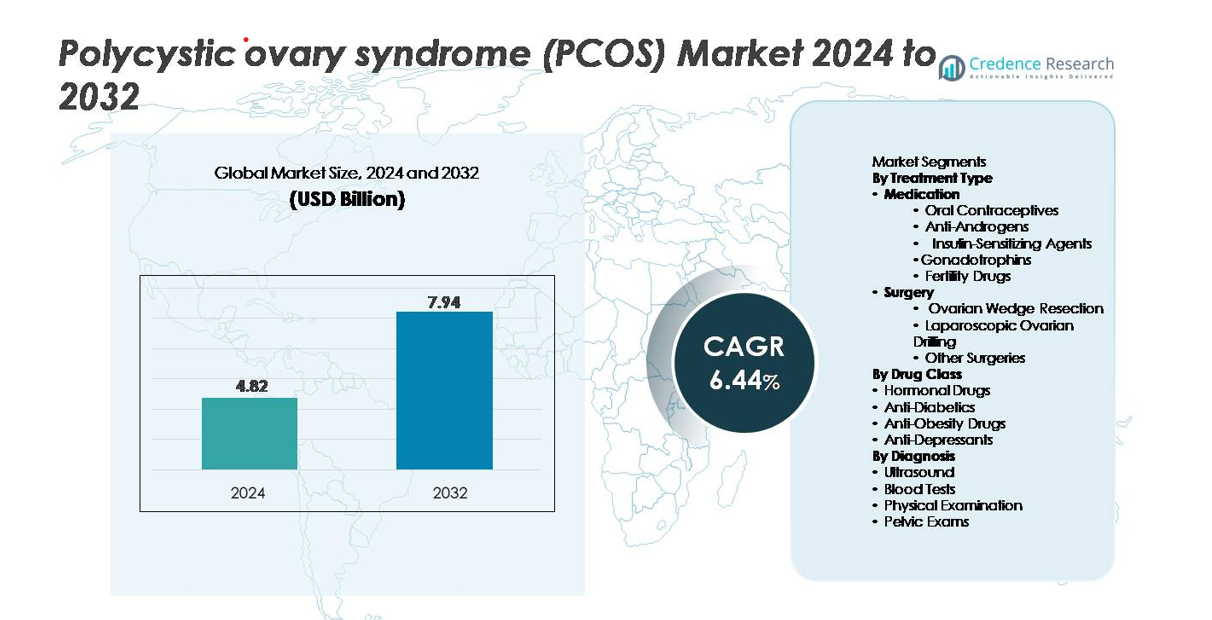
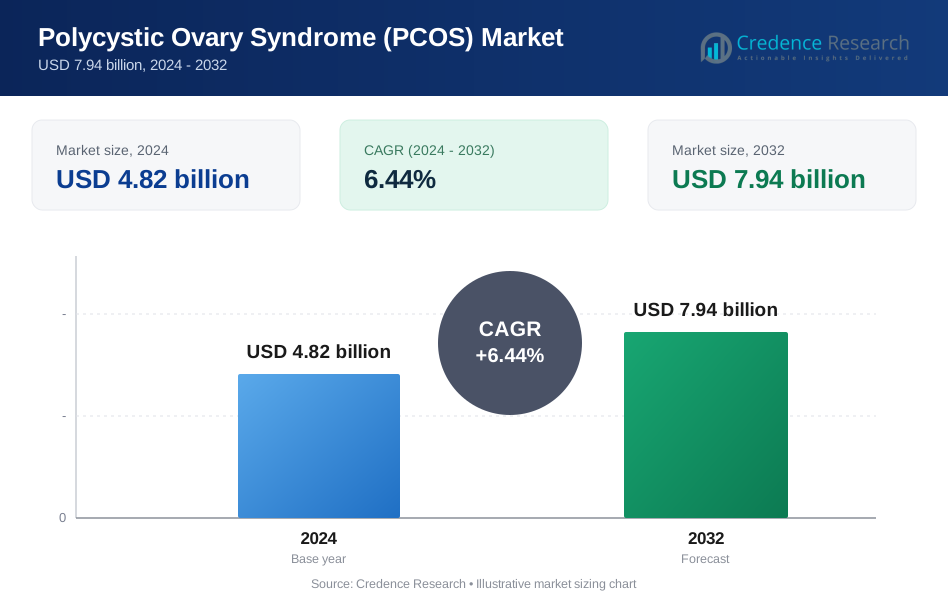
The global Polycystic Ovary Syndrome (PCOS) market was valued at USD 4.82 billion in 2024 and is projected to reach USD 7.94 billion by 2032, expanding at a CAGR of 6.44% during the forecast period (2025–2032).
| REPORT ATTRIBUTE | DETAILS |
|---|---|
| Historical Period | 2020-2023 |
| Base Year | 2024 |
| Forecast Period | 2025-2032 |
| Polycystic Ovary Syndrome (PCOS) Market Size 2024 | USD 4.82 billion |
| Polycystic Ovary Syndrome (PCOS) Market, CAGR | 6.44% |
| Polycystic Ovary Syndrome (PCOS) Market Size 2032 | USD 7.94 billion |
The Polycystic Ovary Syndrome (PCOS) market is shaped by a competitive mix of global pharmaceutical and healthcare leaders, including AstraZeneca, Novartis AG, GlaxoSmithKline plc (GSK), Bayer AG, Merck & Co., Inc., Sanofi S.A., Bristol-Myers Squibb, Abbott Laboratories, Teva Pharmaceuticals Industries Ltd., and Ferring Pharmaceuticals. These companies focus on advancing hormonal therapies, insulin-sensitizing agents, and diagnostic capabilities to improve PCOS management and patient outcomes. North America leads the market with approximately 38% share, supported by strong diagnostic infrastructure and high treatment adoption. Europe follows with around 28% share, driven by comprehensive reproductive health services and rising utilization of hormonal and metabolic therapies.
Market Insights
- The global Polycystic Ovary Syndrome (PCOS) market was valued at USD 4.82 billion in 2024 and is projected to reach USD 7.94 billion by 2032, expanding at a CAGR of 6.44% during the forecast period.
- Rising PCOS prevalence driven by obesity, insulin resistance, and lifestyle changes accelerates demand for hormonal therapies, insulin-sensitizing agents, and fertility treatments, strengthening overall market growth.
- Advancements in diagnostic imaging, automated hormonal assays, digital health tools, and personalized treatment protocols shape key market trends, enhancing early detection and long-term management efficiency.
- The competitive landscape features major players such as AstraZeneca, Novartis, GSK, Bayer, Sanofi, Merck & Co., and Abbott, who continue investing in improved drug formulations, diagnostic platforms, and integrated care solutions despite challenges related to diagnostic variability and treatment adherence.
- Regionally, North America holds 38% market share, followed by Europe at 28% and Asia-Pacific at 23%, while the medication segment accounts for the dominant share due to strong adoption of oral contraceptives and metabolic regulators.
Market Segmentation Analysis:
By Treatment Type
The medication segment dominates the PCOS treatment market, accounting for the largest share due to its widespread use as first-line therapy and strong clinical efficacy in regulating hormonal imbalance and metabolic dysfunction. Within medications, oral contraceptives hold the leading sub-segment share, driven by their ability to normalize menstrual cycles, reduce hyperandrogenism, and manage acne and hirsutism. Insulin-sensitizing agents such as metformin continue to expand usage as metabolic symptoms rise globally. Surgical interventions primarily laparoscopic ovarian drilling remain reserved for drug-resistant infertility cases, while wedge resection and other procedures demonstrate declining adoption due to invasiveness and postoperative risks.
- "For instance, combined oral contraceptives (COC), including Bayer's ethinylestradiol-drospirenone formulation, have demonstrated a significant reduction in mean total testosterone levels by approximately 49 nmol/L(nanomoles per liter) across various studies.
By Drug Class
The hormonal drugs segment leads the PCOS market with the highest share, supported by extensive prescription volume for estrogen-progestin combinations and anti-androgenic formulations that target core endocrine abnormalities. These therapies remain the clinical standard for menstrual regulation, ovulation management, and symptom suppression. Anti-diabetic drugs, particularly metformin, form the second-largest sub-segment as insulin resistance becomes increasingly prevalent among PCOS patients. Meanwhile, anti-obesity drugs gain traction in overweight populations, and antidepressants address comorbid anxiety and depression, though both remain supplementary compared to hormonal interventions.
- For instance, Bayer’s ethinylestradiol–cyproterone acetate formulation (Diane-35) has demonstrated a highly significant decrease in serum total testosterone after six treatment cycles, often reducing baseline levels by over 50% and bringing them into the normal physiological range for women, confirming substantial anti-androgenic efficacy.
By Diagnosis
Ultrasound represents the dominant diagnostic sub-segment, capturing the largest market share due to its non-invasive nature, accessibility, and high reliability in assessing ovarian morphology and follicle count. Its widespread use in both primary and specialized care settings sustains strong demand. Blood tests including LH/FSH ratio, testosterone levels, and metabolic panels serve as essential complements and form the second-largest sub-segment. Physical examinations and pelvic exams continue contributing to early screening, although they hold smaller shares as clinicians increasingly rely on imaging and biochemical markers for definitive PCOS evaluation.
Key Growth Drivers:
Rising Global Prevalence of Metabolic and Hormonal Disorders
The growing prevalence of obesity, insulin resistance, and lifestyle-related hormonal disorders significantly boosts PCOS case volumes, driving sustained market expansion. Urban lifestyles, sedentary work patterns, and dietary shifts contribute to rising metabolic dysfunction among reproductive-age women, accelerating the demand for both diagnostic screening and long-term therapeutic management. Increased awareness of reproductive health and timely diagnosis through fertility clinics and gynecology centers further supports growth. As more women seek medical intervention for irregular cycles, acne, hirsutism, and infertility, healthcare providers increasingly recommend hormonal therapies, insulin-sensitizing agents, and metabolic management programs. This surge in patient pools stimulates continuous product development, broader therapeutic availability, and deeper penetration of PCOS management solutions across emerging and developed markets.
- For instance, Abbott’s ARCHITECT i2000SR immunoassay analyzer can process up to 200 tests per hour, enabling high-throughput measurement of LH, FSH, estradiol, insulin, and androgen markers essential for PCOS evaluation.
Advancements in Diagnostic Imaging and Biomarker Testing
Rapid technological advancements in ultrasound imaging, automated hormonal assays, and biomarker testing strengthen diagnostic accuracy and expand the PCOS care pathway. High-resolution transvaginal ultrasound systems enable clearer visualization of ovarian follicles, accelerating early detection. Concurrently, innovations in blood chemistry analyzers and hormone quantification platforms enhance the identification of androgen excess, insulin abnormalities, and metabolic imbalances. Clinical laboratories increasingly adopt automated analyzers with improved sensitivity and lower detection thresholds, supporting more standardized diagnostic protocols. The integration of digital imaging archives and AI-enabled report generation also enhances workflow efficiency. As diagnostic methods become more reliable and accessible, patient identification improves, boosting demand for pharmacological therapies, physician consultations, and long-term disease management programs.
- For instance, GE HealthCare’s Voluson™ E10 ultrasound system uses its Radiance System Architecture to deliver four times the ultrasound processing power of earlier Voluson models, enabling high-resolution visualization of ovarian follicles as small as 2–3 mm, which is essential for PCOS follicular assessment.
Expanding Therapeutic Landscape and Focus on Personalized Treatment
The PCOS market benefits from a robust pipeline of advanced hormonal therapies, metabolic regulators, and adjunctive treatment approaches that support individualized patient management. Clinicians increasingly tailor therapy based on phenotypes, such as hyperandrogenic, ovulatory dysfunction, or metabolic-dominant PCOS, improving outcomes and patient satisfaction. Continuous innovation in insulin-sensitizing agents, ovulation-inducing drugs, and anti-androgenic compounds broadens treatment options. Furthermore, the growing emphasis on lifestyle modification programs, weight management solutions, and mental-health-aligned therapies strengthens holistic care delivery. Fertility-focused products gain momentum as more women delay pregnancy and rely on medically assisted reproductive technologies. These trends collectively drive steady adoption of both established and emerging PCOS therapeutics.
Key Trends and Opportunities:
Integration of Digital Health, Telemedicine, and Remote Monitoring
Digital health platforms are reshaping PCOS management by enabling remote consultations, continuous symptom tracking, and data-driven treatment adjustments. Mobile apps designed for menstrual cycle monitoring, hormonal tracking, and personalized lifestyle recommendations are gaining strong adoption among tech-enabled patients. Telemedicine enhances access to endocrinologists and gynecologists, particularly in underserved regions where specialist availability is limited. Wearables and digital biomarkers further support monitoring of metabolic parameters such as glucose levels, sleep quality, and physical activity, strengthening proactive care. These digital ecosystems open new commercial opportunities for integrated PCOS management solutions, subscription-based wellness programs, and AI-powered diagnostic support tools.
- For instance, Abbott’s FreeStyle Libre 2 continuous glucose monitoring system records interstitial glucose every 60 seconds and stores up to 8 hours of data, enabling precise monitoring of insulin resistance common in PCOS.
Growing Focus on Fertility Treatment and Reproductive Health Services
Expanding fertility awareness and rising demand for assisted reproductive technologies (ART) create substantial opportunities for PCOS-related fertility interventions. PCOS remains one of the leading causes of anovulatory infertility, prompting higher utilization of ovulation-inducing drugs, gonadotropins, and fertility-enhancing protocols. Advanced procedures such as IVF increasingly incorporate optimized ovarian stimulation strategies tailored for PCOS patients to mitigate hyperstimulation risks. Fertility clinics are investing in improved imaging, hormonal monitoring tools, and patient-specific treatment pathways that enhance safety and live-birth outcomes. As more women delay childbirth due to career priorities and lifestyle choices, fertility-focused PCOS management continues to expand as a lucrative market segment.
- For instance, Ferring Pharmaceuticals’ Rekovelle® (follitropin delta) demonstrated a 4% cumulative ongoing pregnancy rate in its multinational real-world study involving 944 women, while maintaining a low 3.9% incidence of OHSS, making it particularly valuable for PCOS patients who are hyper-response–prone.
Rising Development of Combination Therapies and Holistic Treatment Pathways
Combination therapies that integrate hormonal regulation, metabolic correction, and lifestyle intervention are emerging as a key trend in PCOS care. Manufacturers and healthcare providers are increasingly adopting multi-target approaches to address the syndrome’s complex endocrine and metabolic dimensions. This includes the co-administration of insulin-sensitizing agents with oral contraceptives, anti-androgens, or behavioral health therapies. Growing acceptance of nutrition-led interventions, gut health modulation, and weight management programs also supports comprehensive treatment pathways. As evidence for multidisciplinary care strengthens, opportunities arise for combination product development, cross-sector collaborations, and integrated patient management frameworks.
Key Challenges:
High Variability in Symptoms and Lack of Standardized Diagnostic Criteria
PCOS presents significant diagnostic challenges due to its heterogeneous symptoms and variations across ethnic, metabolic, and hormonal profiles. Different diagnostic frameworks such as NIH, Rotterdam, and AE-PCOS criteria create inconsistencies in clinical evaluation and contribute to underdiagnosis or misdiagnosis. Patients may exhibit only a subset of symptoms, complicating screening and treatment alignment. This variability also impedes the development of universal therapeutic protocols, affecting both clinical outcomes and market penetration of standardized solutions. Moreover, limited provider training on differential diagnosis and overlapping symptoms with thyroid disorders or metabolic syndrome further challenge accurate, timely PCOS management.
Limited Long-Term Treatment Compliance and Side-Effect Profiles
Many PCOS medications require prolonged use, yet adherence remains a major challenge due to side effects associated with hormonal drugs, insulin sensitizers, and fertility medications. Weight gain, gastrointestinal discomfort, mood disturbances, and metabolic fluctuations often reduce patient compliance and disrupt treatment continuity. Long-term therapies such as oral contraceptives face hesitancy in certain populations due to concerns around cardiovascular or hormonal risks. Lifestyle modification programs also suffer from low adherence despite being clinically effective. These limitations hinder sustained therapeutic outcomes and diminish the effectiveness of holistic care frameworks, restricting broader market progression.
Regional Analysis:
North America
North America holds the largest share of around 38%, driven by high disease awareness, advanced diagnostic infrastructure, and strong adoption of hormonal and metabolic therapies. The region benefits from widespread availability of transvaginal ultrasound, biomarker testing, and fertility treatment services, leading to early diagnosis and effective long-term management. Rising cases linked to obesity and sedentary lifestyles further expand the patient pool. Robust healthcare spending, supportive insurance coverage for reproductive health, and active research initiatives from academic institutions strengthen market leadership. Increasing integration of digital health tools continues to accelerate patient engagement and treatment adherence.
Europe
Europe captures approximately 28% of the global market, supported by well-established gynecology networks, strong public health awareness programs, and growing utilization of ovulation-inducing therapies. Countries such as Germany, the U.K., and France lead in diagnostic adoption due to improved access to hormonal assays and imaging modalities. A rising focus on fertility preservation and reproductive wellness drives greater testing volumes across clinical settings. Government-backed metabolic screening initiatives and structured care pathways enhance early detection. Increasing preference for evidence-based hormonal therapies and structured lifestyle management programs reinforces Europe’s stable and growing position in the PCOS market.
Asia-Pacific
Asia-Pacific accounts for roughly 23% of the market, driven by a rapidly expanding population of reproductive-age women and increasing incidence of metabolic syndromes. Countries such as India, China, and Japan witness rising diagnostic rates as healthcare access improves and women’s health awareness expands. Urbanization, dietary transitions, and rising obesity fuel the surge in PCOS prevalence. Fertility treatment demand, particularly IVF and ovulation support therapies, grows sharply due to delayed parenthood trends. Investments in digital health platforms and affordable diagnostic services strengthen regional uptake, positioning Asia-Pacific as the fastest-growing PCOS market globally.
Latin America
Latin America holds an estimated 7% market share, supported by increased recognition of women’s reproductive health disorders and broader availability of diagnostic services in urban centers. Countries such as Brazil, Mexico, and Argentina experience rising PCOS prevalence linked to lifestyle changes and metabolic risk factors. Improved access to ultrasound imaging, hormonal profiling, and fertility services strengthens early evaluation. However, regional disparities in healthcare access limit consistent treatment adoption. Growing private healthcare expansion and rising demand for hormonal therapies, metformin-based treatments, and fertility medications support steady market improvement across the region.
Middle East & Africa
The Middle East & Africa region represents approximately 4% of the global market, shaped by growing awareness of metabolic and reproductive health problems, especially in Gulf countries where obesity and insulin resistance are widespread. Investment in women’s health clinics, fertility centers, and advanced diagnostic imaging expands access to PCOS evaluation. However, limited specialist availability and lower diagnostic penetration across parts of Africa restrain broader uptake. Rising demand for hormonal regulation therapies and ovulation support treatments, along with government initiatives promoting metabolic health, supports moderate but steadily improving market growth.
Market Segmentations:
By Treatment Type
- Medication
- Oral Contraceptives
- Anti-Androgens
- Insulin-Sensitizing Agents
- Gonadotrophins
- Fertility Drugs
- Surgery
- Ovarian Wedge Resection
- Laparoscopic Ovarian Drilling
- Other Surgeries
By Drug Class
- Hormonal Drugs
- Anti-Diabetics
- Anti-Obesity Drugs
- Anti-Depressants
By Diagnosis
- Ultrasound
- Blood Tests
- Physical Examination
- Pelvic Exams
By Geography
- North America
- U.S.
- Canada
- Mexico
- Europe
- Germany
- France
- U.K.
- Italy
- Spain
- Rest of Europe
- Asia Pacific
- China
- Japan
- India
- South Korea
- South-east Asia
- Rest of Asia Pacific
- Latin America
- Brazil
- Argentina
- Rest of Latin America
- Middle East & Africa
- GCC Countries
- South Africa
- Rest of the Middle East and Africa
Competitive Landscape:
The competitive landscape of the Polycystic Ovary Syndrome (PCOS) market is characterized by a diverse mix of pharmaceutical companies, diagnostic solution providers, and fertility treatment specialists competing to enhance therapeutic effectiveness and patient outcomes. Leading players focus on developing advanced hormonal therapies, insulin-sensitizing agents, and metabolic regulators to address the multifactorial nature of PCOS. Companies increasingly invest in improved oral contraceptive formulations, combination therapies, and targeted anti-androgenic drugs to strengthen product differentiation. Diagnostic firms expand capabilities in high-resolution ultrasound, automated hormonal assays, and biomarker testing platforms that support early detection and personalized treatment pathways. Fertility treatment providers integrate optimized ovarian stimulation protocols and safer ovulation-inducing medications tailored for PCOS patients. Strategic partnerships between pharmaceutical manufacturers, digital health platforms, and reproductive health clinics are accelerating innovation in remote monitoring, lifestyle management, and patient engagement. As market competition intensifies, companies emphasize clinical research, safety optimization, and region-specific expansion to capture unmet needs across global patient populations.
Key Player Analysis:
- AstraZeneca
- Bristol-Myers Squibb
- Novartis AG
- Ferring Pharmaceuticals
- GlaxoSmithKline plc (GSK)
- Merck & Co., Inc.
- Bayer AG
- Teva Pharmaceuticals Industries Ltd.
- Abbott Laboratories
- Sanofi S.A.
Recent Developments:
- In March 2023, Ferring Pharmaceuticals started a new clinical trial of its new fertility treatment, Rekovelle®, designed only for women with PCOS. The clinical trial will provide a safer alternative for women undergoing ovulation induction with more exact dosing and improved results in ART.
- In December 2023, Abbott published a public health-awareness piece addressing PCOS and related metabolic disorders. This indicates Abbott’s interest in PCOS awareness and possibly preventative care, but does not constitute a clinical-trial announcement or new therapy launch.
- In April 2022, Bayer AG expanded its women’s-health R&D scope by forging a new strategic alliance with Evotec SE to develop multiple drug candidates for PCOS a multi-target, preclinical drug discovery program.
Report Coverage:
The research report offers an in-depth analysis based on Treatment type, Drug class, Diagnosis and Geography. It details leading market players, providing an overview of their business, product offerings, investments, revenue streams, and key applications. Additionally, the report includes insights into the competitive environment, SWOT analysis, current market trends, as well as the primary drivers and constraints. Furthermore, it discusses various factors that have driven market expansion in recent years. The report also explores market dynamics, regulatory scenarios, and technological advancements that are shaping the industry. It assesses the impact of external factors and global economic changes on market growth. Lastly, it provides strategic recommendations for new entrants and established companies to navigate the complexities of the market.
Future Outlook:
- The PCOS market will continue expanding as diagnosis rates rise and awareness of metabolic and reproductive health improves globally.
- Advancements in hormonal therapies and targeted metabolic treatments will enhance personalized care pathways.
- Digital health platforms, including cycle-tracking apps and teleconsultations, will increasingly support remote monitoring and disease management.
- AI-driven diagnostic tools and biomarker-based screening will improve early detection and reduce diagnostic variability.
- Fertility-focused interventions and assisted reproductive technologies will see stronger adoption among PCOS-related infertility cases.
- Combination therapies integrating hormonal, metabolic, and lifestyle treatments will gain wider acceptance.
- Growth in preventive healthcare will drive higher engagement in weight management, nutrition, and behavioral programs for PCOS patients.
- Pharmaceutical companies will intensify research on safer anti-androgen therapies and novel insulin-sensitizing agents.
- Emerging markets will experience faster penetration of diagnostic services and affordable treatment options.
- Collaborative care models involving endocrinologists, gynecologists, nutritionists, and digital health providers will shape the next stage of PCOS management.
Request a Free Sample
Fill in your details and we'll send you a free sample report.
- Sample data tables & charts
- Research methodology
Need a Custom Version of This Report?
Tailor the scope, geography, or segments to your exact requirements.
- Custom geography or segment scope
- Direct access to our analyst team
Frequently Asked Questions
What is the current market size for the Polycystic Ovary Syndrome (PCOS) market, and what is its projected size in 2032?
At what Compound Annual Growth Rate is the Polycystic Ovary Syndrome (PCOS) market projected to grow between 2025 and 2032?
Which Polycystic Ovary Syndrome (PCOS) market segment held the largest share in 2024?
What are the primary factors fueling the growth of the Polycystic Ovary Syndrome (PCOS) market?
Who are the leading companies in the Polycystic Ovary Syndrome (PCOS) market?
Which region commanded the largest share of the Polycystic Ovary Syndrome (PCOS) market in 2024?
Table of Content
Chapter 1. Report Introduction
- 1.1 Report Description & Purpose
- 1.1.1 Report Title & Market Definition
- 1.1.2 Unique Selling Propositions (USP) & Key Differentiators
- 1.1.3 Value Proposition for Stakeholders
- 1.2 Research Objectives
- 1.2.1 Market Sizing Objectives (Volume & Revenue)
- 1.2.2 Segmentation Objectives
- 1.2.3 Competitive Intelligence Objectives
- 1.2.4 Forecast & Scenario Objectives
- 1.3 Report Scope
- 1.3.1 Polycystic Ovary Syndrome (PCOS) Scope – Types & Subtypes Covered
- 1.3.2 Geographic Scope – Regions & Countries Covered
- 1.3.3 Historical Period, Base Year & Forecast Period (2024; forecast to 2032)
- 1.3.4 Inclusions & Exclusions
- 1.4 HS Code & Classification Framework
- 1.5 Currency, Units & Pricing Basis
- 1.6 Target Stakeholders
- 1.7 Limitations & Assumptions
Chapter 2. Executive Summary
- 2.1 Global Polycystic Ovary Syndrome (PCOS) Market Snapshot
- 2.1.1 Market Size – Historical (2024) & Forecast (2024-2032) (2024: USD 4.82 billion → 2032: USD 7.94 billion)
- 2.1.2 Volume & Revenue – Global Totals
- 2.1.3 Key Market Highlights – Top Five Facts
- 2.2 Polycystic Ovary Syndrome (PCOS) Market Segmentation Snapshot
- 2.2.1 Market Split by Region – 2024 vs. 2032
- 2.3 Competitive Snapshot
- 2.3.1 Top 10 Players by Revenue Share – 2024
- 2.3.2 Top 10 Players by Volume Share – 2024
- 2.3.3 Recent Strategic Developments (18-Month Summary)
- 2.4 Key Investment Highlights & Strategic Conclusions
Chapter 3. Polycystic Ovary Syndrome (PCOS) Market Dynamics & Industry Analysis
- 3.1 Market Overview & Context
- 3.1.1 Polycystic Ovary Syndrome (PCOS) Market Position in the Broader Automotive Value Chain
- 3.1.2 OEM vs. Replacement Market Dynamics
- 3.1.3 Market Maturity & Development Stage by Region
- 3.2 Polycystic Ovary Syndrome (PCOS) Market Drivers
- 3.3 Polycystic Ovary Syndrome (PCOS) Market Restraints & Challenges
- 3.4 Polycystic Ovary Syndrome (PCOS) Market Opportunities
- 3.5 Porter's Five Forces Analysis
- 3.5.1 Threat of New Entrants
- 3.5.2 Bargaining Power of Suppliers
- 3.5.3 Bargaining Power of Buyers
- 3.5.4 Threat of Substitutes
- 3.5.5 Competitive Rivalry – Intensity Assessment
- 3.6 Polycystic Ovary Syndrome (PCOS) Value Chain Analysis
- 3.6.1 Upstream – Raw Material/Input Suppliers
- 3.6.1.1 Raw Material/Input 1
- 3.6.1.2 Raw Material/Input 2
- 3.6.1.3 Raw Material/Input 3
- 3.6.2 Midstream – Production/Manufacturing/Service Delivery
- 3.6.2.1 Production/Process Overview
- 3.6.2.2 Key Facility Locations & Capacity by Manufacturer
- 3.6.3 Downstream – Distribution & End Consumer
- 3.6.3.1 Primary Channel – B2B/OEM
- 3.6.3.2 Secondary Channels – Dealer, Retail, Online, Direct
- 3.6.4 Value Chain Profitability Analysis
- 3.6.1 Upstream – Raw Material/Input Suppliers
- 3.7 PESTEL Analysis
- 3.7.1 Political Factors
- 3.7.2 Economic Factors
- 3.7.3 Social Factors
- 3.7.4 Technological Factors
- 3.7.5 Environmental Factors
- 3.7.6 Legal Factors
- 3.8 Polycystic Ovary Syndrome (PCOS) Supply Chain Analysis
- 3.8.1 Raw Material/Input Supply Risk Assessment
- 3.8.2 Manufacturing Concentration Risk (Geographic Exposure)
- 3.8.3 Trade Disruption Impact Analysis
- 3.9 Regulatory & Policy Landscape
Note: The regulatory and policy landscape section covers regulations based on their applicability to the market, Polycystic Ovary Syndrome (PCOS) category, geography, and scope of the study. Only regulatory frameworks with a material impact on operations, compliance, trade, sustainability, or market access are analyzed in detail.
Chapter 4. Key Investment Pockets & Opportunity Analysis
- 4.1 Polycystic Ovary Syndrome (PCOS) Market Attractiveness Analysis
- 4.1.1 By Region – Investment Attractiveness Matrix (Volume × CAGR)
- 4.2 Absolute Revenue Growth Opportunity
- 4.2.1 By Region – Absolute USD Growth Through 2032
- 4.3 Incremental Volume Opportunity
- 4.3.1 By Region – Incremental Volume Through 2032
- 4.3.2 Segment – Incremental Volume
- 4.4 Emerging Submarket Opportunity Deep Dive (Subject to Applicability)
- 4.5 Emerging Market Opportunity Scorecards
- 4.5.1 United States
- 4.5.2 Europe
- 4.5.3 Asia
- 4.5.4 Middle East & Africa
Note: Emerging Market Opportunity Scorecards will be included based on relevance and strategic importance. Regions listed are indicative and may vary depending on data availability and market dynamics.
Chapter 5. Polycystic Ovary Syndrome (PCOS) Import-Export Analysis & Trade Flows
- 5.1 Global Trade Overview
- 5.1.1 Global Export Value by Country (2024)
- 5.1.2 Global Export Volume by Country (2024)
- 5.1.3 Global Import Value by Country (2024)
- 5.1.4 Global Import Volume by Country (2024)
- 5.1.5 Net Trade Balance by Country (2024)
- 5.2 Export Analysis – Segment
- 5.2.1 Type 1 (HS Code)
- 5.2.2 Type 2 (HS Code)
- 5.2.3 Type 3 (HS Code)
- 5.2.4 Type 4 (HS Code)
- 5.2.5 Type 5 (HS Code)
- 5.3 Import Analysis – Segment
- 5.3.1 Type 1 (HS Code)
- 5.3.2 Type 2 (HS Code)
- 5.3.3 Type 3 (HS Code)
- 5.3.4 Type 4 (HS Code)
- 5.3.5 Type 5 (HS Code)
- 5.4 Average Unit Trade Prices
- 5.4.1 Average Export Price – Segment & Country
- 5.4.2 Average Import Price – Segment & Source Country
- 5.4.3 Price Trends (2024)
- 5.5 Key Trade Route Analysis
- 5.5.1 Trade Route 1
- 5.5.2 Trade Route 2
- 5.5.3 Trade Route 3
- 5.5.4 Trade Route 4
- 5.5.5 Trade Route 5
- 5.6 Trade Policy Impact Assessment
- 5.6.1 US Anti-Dumping & Section 301 Tariffs
- 5.6.2 EU Customs Union Impact
- 5.6.3 Major Free Trade Agreements
- 5.6.4 USMCA Rules of Origin
Note: Trade policy analysis will be included only where relevant to the Polycystic Ovary Syndrome (PCOS) market.
Chapter 6. Competitive Landscape & Company Benchmarking
- 6.1 Polycystic Ovary Syndrome (PCOS) Market Concentration & Structure
- 6.1.1 Herfindahl-Hirschman Index (HHI) – vs. 2024
- 6.1.2 Tier 1, Tier 2 & Tier 3 Market Structure
- 6.1.3 Global, Regional & Local Player Dynamics
- 6.2 Polycystic Ovary Syndrome (PCOS) Market Share Analysis – 2024
- 6.2.1 Global Revenue Share by Company
- 6.2.2 Global Volume Share by Company
- 6.2.3 Regional Revenue Share
- 6.2.4 Market Share Evolution ( vs. 2024)
- 6.2.5 OEM Segment Share by Company
- 6.2.6 Replacement Segment Share by Company
- 6.3 Production/Delivery Capacity & Facility Analysis
- 6.3.1 Global Installed Capacity
- 6.3.2 Capacity Utilization Rates
- 6.3.3 Production/Output Volume
- 6.3.4 Facility Locations & Capacity Map
- 6.3.5 Planned Capacity Additions
- 6.4 Polycystic Ovary Syndrome (PCOS) Competitive Benchmarking Matrix
- 6.4.1 Revenue, Volume, CAGR & Profitability Comparison
- 6.4.2 Channel Revenue Mix
- 6.4.3 Geographic Revenue Exposure
- 6.4.4 R&D Intensity
- 6.4.5 Sustainability Maturity
- 6.5 Strategic Developments in Polycystic Ovary Syndrome (PCOS) (Last 24 Months)
- 6.5.1 Mergers, Acquisitions & Divestments
- 6.5.2 New Polycystic Ovary Syndrome (PCOS) Launches
- 6.5.3 Facility Expansions
- 6.5.4 Strategic Alliances, Joint Ventures & Partnerships
- 6.5.5 Distribution Expansion & Market Entry
- 6.5.6 Sustainability & ESG Initiatives
- 6.6 Competitive Strategy Mapping
- 6.6.1 Leader, Challenger, Follower & Niche Classification
- 6.6.2 Pricing Strategy Comparison
- 6.6.3 Channel Strategy Matrix
Note: Strategic developments are included based on their materiality and the availability of reliable information.
Chapter 7. Global Polycystic Ovary Syndrome (PCOS) Market – By Distribution Channel
- 7.1 Segment Overview
- 7.1.1 Volume & Revenue Split by Channel (2024 & 2032)
- 7.1.2 Channel Mix Evolution (2024-2032)
Chapter 8. Regional Market Analysis – Global Overview
- 8.1 Global Regional Overview
- 8.1.1 Regional Volume Share
- 8.1.2 Regional Revenue Share
- 8.1.3 Regional Volume by Region
- 8.1.4 Regional Revenue by Region
- 8.1.5 Regional Forecast Through 2032
- 8.2 Cross-Regional Segment Analysis
- 8.2.1 By Distribution Channel
- 8.2.2 By Brand/Price Tier
Chapter 9. North America Polycystic Ovary Syndrome (PCOS) Market
- 9.1 United States
- 9.2 Canada
- 9.3 Mexico
Chapter 10. Europe Polycystic Ovary Syndrome (PCOS) Market
- 10.1 Germany
- 10.2 France
- 10.3 Italy
- 10.4 United Kingdom
- 10.5 Spain
- 10.6 Poland
- 10.7 Russia
- 10.8 Netherlands
- 10.9 Belgium
- 10.10 Sweden
- 10.11 Denmark
- 10.12 Norway
- 10.13 Rest of Europe
Chapter 11. Asia Pacific Polycystic Ovary Syndrome (PCOS) Market
- 11.1 China
- 11.2 India
- 11.3 Japan
- 11.4 South Korea
- 11.5 Thailand
- 11.6 Indonesia
- 11.7 Vietnam
- 11.8 Malaysia
- 11.9 Australia
- 11.10 Rest of Asia Pacific
Chapter 12. Latin America Polycystic Ovary Syndrome (PCOS) Market
- 12.1 Brazil
- 12.2 Argentina
- 12.3 Colombia
- 12.4 Chile
- 12.5 Rest of Latin America
Chapter 13. Middle East Polycystic Ovary Syndrome (PCOS) Market
- 13.1 Saudi Arabia
- 13.2 United Arab Emirates
- 13.3 Turkey
- 13.4 Israel
- 13.5 Iran
- 13.6 Rest of the Middle East
Chapter 14. Africa Polycystic Ovary Syndrome (PCOS) Market
- 14.1 South Africa
- 14.2 Egypt
- 14.3 Nigeria
- 14.4 Morocco
- 14.5 Rest of Africa
Chapter 15. Polycystic Ovary Syndrome (PCOS) Company Profiles
- 15.1 [Company 01]
- 15.1.1 Company Overview
- 15.1.2 Key Management Personnel
- 15.1.3 Products & Services Portfolio
- 15.1.4 Financial Performance
- 15.1.5 Key Market Focus & Geographic Presence
- 15.1.6 Recent Developments & Strategic Initiatives
Note: The company profile list is preliminary and may change based on research findings, market developments, data availability, and client requirements.
Chapter 16. Appendices
- Appendix A – List of Abbreviations & Acronyms
- Appendix B – Industry Classification Code Reference – Full Series
- Appendix C – Production & Capacity Data Tables
- Appendix D – End-Use & Demand Base Tables
- Appendix E – Consumption & Replacement Rate Assumptions
- Appendix F – ASP Reference Tables
- Appendix G – Manufacturing & Facility Database
- Appendix H – Import-Export Data Tables
- Appendix I – Regulatory Summary Tables
- Appendix J – Primary Research Participant List (Anonymized)
- Appendix K – Primary Research Questionnaire Framework
- Appendix L – Data Sources & Bibliography
- Appendix M – Market Size Divergence & Source Comparison
Chapter 17. Research Methodology
- 17.1 Research Framework & Philosophy
- 17.2 Secondary Research – Sources, Hierarchy & Data Extraction
- 17.3 Data Modeling – Bottom-Up & Top-Down Market Sizing
- 17.4 Primary Research – Stakeholder Framework, LOI & Sample Sizes
- 17.5 Forecast Methodology – Regression, Scenario & Sensitivity Analysis
- 17.6 Quality Control – Four-Layer Validation Framework
- 17.7 Limitations & Standard Assumptions
- 17.8 Disclaimer
