
| REPORT ATTRIBUTE | DETAILS |
|---|---|
| Historical Period | 2020-2023 |
| Base Year | 2024 |
| Forecast Period | 2025-2032 |
| Premium Audio Market Size 2024 | USD 8,896.00 million |
| Premium Audio Market, CAGR | 9.7% |
| Premium Audio Market Size 2032 | USD 18,657.30 million |
Market Overview
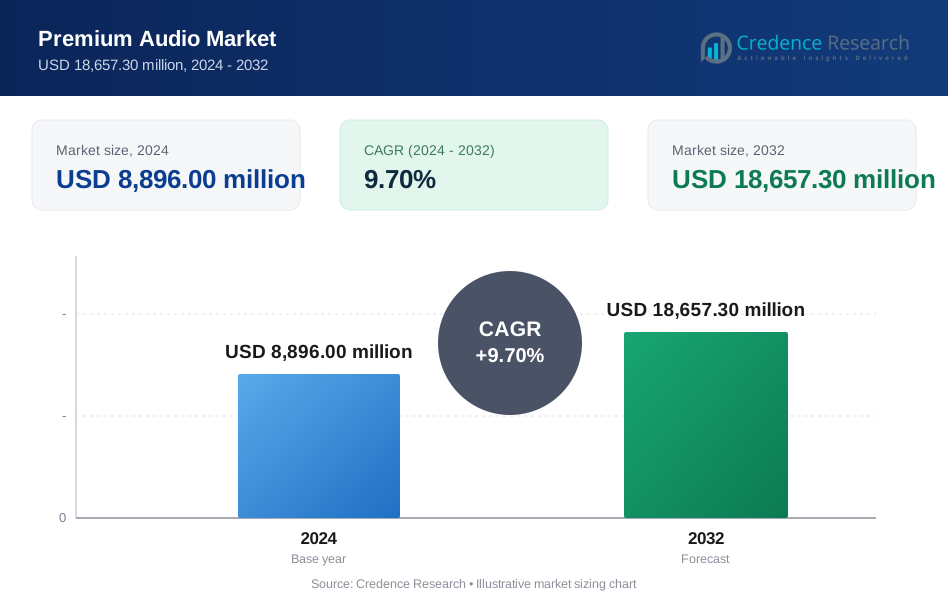
The Premium Audio Market size was valued at USD 8,896.00 million in 2024 and is anticipated to reach USD 18,657.30 million by 2032, at a CAGR of 9.7% during the forecast period.
Rising consumer demand for high-fidelity sound quality and immersive audio experiences continues to drive the Premium Audio Market, supported by increased adoption of smart home devices, wireless connectivity, and home entertainment systems. The market benefits from growing disposable incomes, urbanization, and a strong preference for technologically advanced products such as wireless speakers, soundbars, and premium headphones. Manufacturers focus on product innovation, integrating voice assistants, noise-cancellation features, and seamless multi-device compatibility to enhance user experience. The market also witnesses strong demand from automotive and commercial sectors, where premium audio solutions are integrated into vehicles and professional venues to deliver superior sound quality. Sustainability initiatives and the use of eco-friendly materials influence product development, reflecting a shift toward responsible consumption. E-commerce platforms facilitate wider access to premium audio products, further accelerating market growth and expanding the global customer base.
The Premium Audio Market shows strong growth across North America, Europe, Asia Pacific, and emerging regions, with each area reflecting unique consumer preferences and technology adoption rates. North America leads with a robust demand for smart home audio systems and high-end wireless headphones, supported by a tech-savvy and affluent customer base. Europe’s market thrives on a rich tradition of hi-fi audio, luxury design, and sustainability trends, while Asia Pacific experiences rapid expansion driven by urbanization, digital adoption, and a young population eager for innovative portable audio solutions. Latin America and the Middle East & Africa show rising interest in premium audio products as internet access and e-commerce expand. Key players such as Bose, Sony, Bang & Olufsen, and Harman International Industries shape the market landscape by continuously investing in advanced technologies, superior sound quality, and stylish design to meet the evolving demands of both consumers and professionals worldwide.
Market Insights
- The Premium Audio Market was valued at USD 8,896.00 million in 2024 and is projected to reach USD 18,657.30 million by 2032, registering a CAGR of 9.7% during the forecast period.
- Increasing consumer preference for high-fidelity sound, immersive listening experiences, and smart audio integration fuels robust market growth.
- Trends include the rapid adoption of wireless headphones, portable Bluetooth speakers, and AI-enabled audio devices, with brands focusing on seamless connectivity and personalized user experiences.
- Major players such as Bose, Sony, Harman International Industries, and Bang & Olufsen drive competitive intensity by prioritizing product innovation, advanced features, and stylish design.
- Market restraints include high price sensitivity among consumers, rising competition from low-cost alternatives, and the proliferation of counterfeit products that impact brand trust.
- North America and Europe lead in demand for premium audio, driven by high disposable incomes and a strong culture of home entertainment, while Asia Pacific emerges as a fast-growing market with expanding digital adoption.
- Online retail and e-commerce channels accelerate market penetration, allowing brands to reach wider audiences and adapt to shifting consumer purchasing behaviors worldwide.
Market Drivers
Strong Consumer Demand for Superior Sound Quality Fuels Market Expansion
The pursuit of enhanced audio experiences drives steady growth in the Premium Audio Market. Consumers expect high-resolution sound and immersive listening environments, prompting a shift from standard to premium products. High-fidelity speakers, headphones, and home theater systems gain popularity among both audiophiles and mainstream users. The trend toward home entertainment upgrades further increases sales of advanced audio equipment. The desire for crisp, distortion-free audio elevates consumer willingness to invest in premium brands and technologies. Product differentiation based on audio performance and design encourages brand loyalty. The market continues to benefit from consumers’ growing appreciation of superior sound quality.
- For instance, Sony’s 360 Reality Audio technology delivers an immersive experience by utilizing object-based spatial audio, now featured on over 4,000 music tracks and supported on a wide range of the company’s premium headphones and speakers.
Technological Advancements and Wireless Integration Propel Market Growth
Rapid innovations in audio technology remain central to the expansion of the Premium Audio Market. The integration of wireless connectivity, Bluetooth, and Wi-Fi features simplifies user experience and supports seamless device pairing. Voice assistants, touch controls, and app-based management enhance usability and appeal to tech-savvy buyers. Brands invest in research and development to introduce cutting-edge solutions such as noise cancellation, spatial audio, and customizable sound profiles. Smart home compatibility allows users to control premium audio devices effortlessly. The evolution of audio codecs and improved battery life in wireless products increases adoption rates. These technological improvements set new industry benchmarks and raise consumer expectations.
- For instance, Bose’s QuietComfort Ultra headphones offer adaptive microphone technology and up to 24 hours of battery life on a single charge, integrating seamlessly with smart assistants for hands-free control.
Growth of Smart Home and Automotive Sectors Expands Market Reach
Widespread adoption of smart home ecosystems amplifies demand for premium audio solutions. Consumers incorporate high-end speakers, soundbars, and multi-room systems into connected living spaces. Automotive manufacturers integrate advanced audio technologies to enhance in-vehicle entertainment, making premium sound systems a key selling point. Professional venues and commercial establishments install high-performance audio equipment for enhanced audience engagement. The Premium Audio Market leverages growth in both residential and automotive applications to capture a broader customer base. Partnerships between audio brands and smart device makers further accelerate market expansion. Strategic collaborations enable innovation in form and function across various sectors.
Sustainability Initiatives and E-commerce Platforms Shape Market Dynamics
Environmental awareness and demand for eco-friendly products influence development strategies in the Premium Audio Market. Brands adopt sustainable materials, energy-efficient designs, and responsible manufacturing processes to meet evolving consumer values. Eco-labels and transparent sourcing strengthen brand reputation among environmentally conscious buyers. The rise of e-commerce platforms supports wider product accessibility, allowing global consumers to explore and purchase premium audio solutions. Online reviews and influencer endorsements impact purchasing decisions, amplifying the market’s reach. Logistics advancements ensure prompt delivery and service, further enhancing customer satisfaction. The combination of sustainability and digital transformation defines the next phase of market evolution.
Market Trends
Integration of Smart Features and AI Enhances User Experience
Leading brands focus on embedding smart features and artificial intelligence into premium audio products, reshaping the user experience. Voice assistants, adaptive sound controls, and app-based customization make devices more intuitive and responsive to individual preferences. The Premium Audio Market benefits from this trend, offering products that synchronize seamlessly with smart home systems and mobile devices. AI-powered noise cancellation and environmental sound adaptation are standard in new models, setting high expectations for performance. The ability to personalize audio profiles appeals to a tech-savvy audience seeking convenience and control. Interoperability with other smart devices extends the value proposition, positioning premium audio equipment at the center of connected living.
- For instance, Harman Kardon’s Citation series employs Google Assistant and proprietary room calibration algorithms to automatically optimize sound for the user’s environment, supporting control of over 5,000 smart devices.
Rise of Wireless and Portable Audio Drives Product Innovation
Consumer preferences shift toward wireless and portable premium audio solutions, transforming the competitive landscape. Compact wireless speakers, earbuds, and soundbars see rapid adoption due to their versatility and ease of use. The market observes a move away from traditional wired systems toward advanced wireless protocols, supporting lossless audio and multi-device connectivity. Battery life and quick charging capabilities become major differentiators, with brands competing to deliver longer playback times. The emphasis on portability supports on-the-go lifestyles and outdoor entertainment trends. It leverages this shift by expanding product lines tailored to mobile consumers without compromising sound quality.
- For instance, JBL’s Flip 6 speaker offers up to 12 hours of continuous playback and boasts an IP67 waterproof and dustproof rating, catering to consumers seeking durability and portability.
Premiumization and Customization Influence Buying Behavior
A clear trend toward premiumization shapes consumer expectations, driving demand for bespoke audio solutions and exclusive product lines. Limited-edition releases, luxury collaborations, and personalized design options help brands attract discerning buyers. The Premium Audio Market caters to consumers seeking products that reflect their lifestyle and aesthetic preferences, going beyond pure functionality. Customizable sound signatures and modular components enable users to tailor experiences to specific needs. High-end finishes, premium materials, and attention to craftsmanship reinforce the luxury appeal. This focus on exclusivity and individualization elevates both perceived value and brand loyalty.
Sustainability and Ethical Sourcing Gain Momentum
Sustainable practices and ethical sourcing emerge as significant trends, guiding product development and brand messaging. Companies introduce recyclable materials, eco-friendly packaging, and energy-efficient manufacturing processes to address environmental concerns. Transparent supply chains and responsible sourcing of rare components support ethical positioning within the Premium Audio Market. Certifications and environmental claims influence purchasing decisions, especially among younger and environmentally conscious consumers. It sees growing demand for products that align with sustainable values, prompting brands to integrate green initiatives into their long-term strategies. This trend not only shapes product innovation but also enhances corporate reputation and market differentiation.
Market Challenges Analysis
High Price Sensitivity and Intense Competition Limit Market Penetration
The Premium Audio Market faces significant challenges from high price sensitivity among consumers and stiff competition from both established and emerging brands. Premium audio products command a substantial investment, which restricts accessibility for a broad segment of potential buyers. Price-conscious consumers often opt for mid-range or budget alternatives that offer satisfactory performance, limiting the market’s reach. New entrants intensify competition by introducing innovative features at competitive price points, compelling established brands to continuously invest in research and development. Counterfeit and imitation products also dilute brand value and erode consumer trust. The market must address affordability concerns without compromising on quality to maintain growth momentum.
Complex Supply Chain and Rapid Technology Shifts Present Operational Hurdles
The Premium Audio Market experiences operational challenges linked to complex global supply chains and rapid advancements in audio technology. Sourcing high-quality components, including rare materials for drivers and advanced chipsets, introduces risks of delays and cost fluctuations. Supply chain disruptions can impact production schedules and limit product availability, affecting market responsiveness. Technology evolves quickly, pressuring companies to update product lines frequently to remain competitive. Short product life cycles and the need for ongoing innovation increase development costs and operational complexity. It must balance innovation speed with supply chain resilience to ensure sustained growth and customer satisfaction.
Market Opportunities
Expansion in Emerging Markets and Growing Middle-Class Demographics
Emerging markets present strong growth opportunities for the Premium Audio Market, fueled by rising disposable incomes and a rapidly expanding middle class. Urbanization and digital adoption encourage consumers to seek enhanced home entertainment experiences, leading to increased demand for high-end audio systems. Retail and e-commerce expansion in these regions enable brands to reach untapped customer segments more efficiently. The market can capitalize on growing aspirations for luxury and branded goods by offering tailored marketing and product strategies. Localization of content and design further improves acceptance among diverse audiences. These dynamics position emerging markets as pivotal to the market’s future trajectory.
Product Innovation and Integration with Smart Technologies Drive Growth
Ongoing advancements in smart home technology and IoT ecosystems create fresh opportunities for the Premium Audio Market. The integration of premium audio products with voice assistants, home automation platforms, and connected devices enhances consumer value and convenience. Demand for multi-room audio solutions and wireless streaming drives innovation in product design and features. The market can leverage collaborations with technology providers to offer differentiated experiences and capture a broader audience. Customization and modular product lines appeal to tech-savvy users looking for personalized solutions. Continuous investment in research and development ensures sustained relevance in a fast-evolving technology landscape.
Market Segmentation Analysis:
By Product Type:
Headphones represent a dominant segment, with over-ear, on-ear, in-ear monitors (IEMs), and wireless headphones catering to diverse preferences. Wireless headphones gain strong traction due to advancements in connectivity and battery performance, while over-ear and IEMs remain popular among audiophiles and professionals for superior sound isolation and fidelity. Speakers constitute another major segment, with portable Bluetooth speakers attracting mobile users and home audio systems, hi-fi speakers, and soundbars driving demand for immersive home entertainment experiences. The speakers segment benefits from innovations in sound quality, smart integrations, and multi-room capabilities. Audio accessories, including DACs (digital to analog converters), amplifiers, cables, connectors, and microphones, support both product categories, enabling users to customize and enhance their audio setups for professional and high-performance environments.
- For instance, Bowers & Wilkins’ PX8 wireless headphones feature custom 40mm carbon cone drivers for improved clarity, while Sonos’ multi-room speaker systems allow users to connect up to 32 speakers in a single network.
By End-User:
End user segmentation highlights the varied applications within the Premium Audio Market. Consumers form the largest group, segmented into music enthusiasts, password users, fitness and sports enthusiasts, and casual listeners. Music enthusiasts and audiophiles demand premium headphones and hi-fi speakers, seeking rich and accurate sound reproduction. Fitness and sports users prefer lightweight, durable, and wireless options suited for active lifestyles, while casual listeners gravitate toward versatile, easy-to-use devices. Professional users, such as musicians, sound engineers, content creators, podcasters, film and video production teams, and broadcasting corporations, require specialized audio equipment that delivers precision, reliability, and compatibility with industry-standard tools. Their needs drive demand for high-end monitors, studio microphones, DACs, and amplifiers that support advanced workflows.
- For instance, Shure’s SM7B microphone is widely used by professional podcasters and recording studios, while Sennheiser’s HD 800 S headphones are a reference standard among sound engineers for their wide frequency response and low distortion.
By Distribution Channel:
Distribution channels further define the market landscape, with online retail playing an increasingly pivotal role. Brand websites, major e-commerce platforms, and third-party marketplaces offer convenience, competitive pricing, and access to a global product range. Online channels benefit from detailed product information, customer reviews, and direct-to-consumer promotions. Offline retail, comprising electronics stores, specialty audio outlets, and department stores, remains vital for consumers who prioritize in-person demonstrations and expert advice. The Premium Audio Market leverages a balanced mix of online and offline channels to maximize reach and customer engagement, supporting the unique requirements of both individual and professional buyers.
Segments:
Based on Product Type:
- Headphones
- Over-ear Headphones
- On-ear Headphones
- In-ear Monitors (IEMs)
- Wireless Headphones
- Speakers
- Portable Bluetooth Speakers
- Home Audio Systems
- Hi-Fi Speakers
- Soundbars
- Audio Accessories
- DACs (Digital to Analog Converters)
- Amplifiers
- Cables and Connectors
- Microphones
Based on End User:
- Consumers
- Music Enthusiasts
- Password Users
- Fitness and Sports Enthusiasts
- Casual Listeners
- Professional Users
- Musicians and Sound Engineers
- Content Creators and Podcasters
- Film and Video Production Teams
- Broadcasting Corporations
Based on Distribution Channel:
- Online Retail
- Brand Websites
- E-commerce Platforms
- Third-party Marketplaces
- Offline Retail
- Electronics Stores
- Specialty Audio Stores
- Department Stores
Based on Price Range:
- Budget-Friendly
- Entry-Level Audio Devices
- Affordable Headphones and Speakers
- Mid-Range
- Quality Headphones and Speakers
- Integrated Audio Systems
- High-End
- Luxury Headphones and Speakers
- Custom Audio Solutions
Based on Technology:
- Wired Technology
- Analog Connections
- Digital Connections
- Wireless Technology
- Bluetooth Enabled Devices
- Wi-Fi Streaming Devices
- Smart Home Integration
- High-Resolution Audio
- Lossless Streaming Services
- High-Fidelity Playback Systems
Based on the Geography:
- North America
- U.S.
- Canada
- Mexico
- Europe
- UK
- France
- Germany
- Italy
- Spain
- Russia
- Belgium
- Netherlands
- Austria
- Sweden
- Poland
- Denmark
- Switzerland
- Rest of Europe
- Asia Pacific
- China
- Japan
- South Korea
- India
- Australia
- Thailand
- Indonesia
- Vietnam
- Malaysia
- Philippines
- Taiwan
- Rest of Asia Pacific
- Latin America
- Brazil
- Argentina
- Peru
- Chile
- Colombia
- Rest of Latin America
- Middle East
- UAE
- KSA
- Israel
- Turkey
- Iran
- Rest of Middle East
- Africa
- Egypt
- Nigeria
- Algeria
- Morocco
- Rest of Africa
Regional Analysis
North America
North America holds the largest market share in the global Premium Audio Market, accounting for approximately 35% of total revenue. Strong consumer demand for advanced audio solutions, driven by high disposable incomes and a robust culture of home entertainment, anchors North America’s leading position. The region demonstrates high adoption of wireless headphones, soundbars, and premium home audio systems, supported by continuous innovation from leading technology brands and established audio manufacturers. The proliferation of smart homes, the integration of voice assistants, and the rapid uptake of streaming services fuel sustained market growth. Retailers in the United States and Canada leverage a balanced mix of online and offline channels, while major cities remain hotspots for the launch of new products and luxury audio experiences. North America’s market continues to benefit from investments in R&D, partnerships with automotive and smart technology sectors, and an active base of professional content creators and audio engineers.
Europe
Europe commands the second-largest share of the Premium Audio Market, capturing roughly 28% of global sales. The region’s strong heritage of hi-fi audio and a well-established audiophile community underpin demand for high-quality speakers, headphones, and supporting accessories. Germany, the UK, and France lead the region, with a preference for luxury, craftsmanship, and technologically advanced products. The prevalence of home theaters and a growing focus on in-car audio systems in luxury vehicles further elevate Europe’s market position. Retailers and specialty audio stores maintain a loyal customer base by offering personalized service, expert consultations, and exclusive product lines. European consumers increasingly seek sustainable and eco-friendly audio options, prompting brands to incorporate green materials and responsible manufacturing practices. Online retail continues to grow, yet brick-and-mortar stores play an important role in showcasing new technologies and providing hands-on demonstrations.
Asia Pacific
Asia Pacific represents a dynamic and fast-growing region, now accounting for approximately 25% of the Premium Audio Market. Rapid urbanization, rising disposable incomes, and widespread adoption of smartphones and digital platforms drive demand across China, Japan, South Korea, and India. The region’s young, tech-savvy population embraces wireless and portable audio solutions, particularly in urban centers where on-the-go lifestyles predominate. The proliferation of e-commerce platforms accelerates access to premium brands, while local manufacturers compete effectively with innovative features at competitive price points. Asia Pacific stands out for its appetite for new technologies and integration of premium audio with smart home ecosystems. Strategic collaborations with streaming services and mobile device makers strengthen the market’s reach. Regional players invest heavily in R&D, focusing on sound innovation, miniaturization, and customizable features to attract discerning consumers.
Latin America
Latin America, while smaller in absolute terms, maintains a market share of about 7% in the Premium Audio Market. Demand in the region grows steadily, bolstered by expanding middle-class populations, greater internet penetration, and increasing interest in personal and home audio upgrades. Brazil, Mexico, and Argentina act as primary hubs, with urban consumers seeking access to international brands and advanced audio solutions. The market faces challenges related to price sensitivity and limited retail infrastructure, but growth in online channels and digital payment options improves access to premium products. Latin American consumers show growing interest in wireless headphones and portable speakers, driven by music streaming trends and a vibrant entertainment culture.
The Middle East & Africa
The Middle East & Africa region accounts for the remaining 5% of the Premium Audio Market, with growth driven by urban development, luxury spending, and expanding retail landscapes in major cities such as Dubai, Riyadh, and Johannesburg. Premium audio products gain traction among affluent consumers and commercial sectors, including hotels, entertainment venues, and high-end retail outlets. The increasing influence of Western lifestyles, coupled with the rise of e-commerce, helps international brands strengthen their market presence. Market players focus on providing exclusive products and high-touch customer service to capture this niche, yet lucrative, segment. It remains sensitive to economic fluctuations and regional disparities in disposable income, but long-term prospects remain positive with continued investment in infrastructure and technology adoption.
Key Player Analysis
- Alpine Electronics
- Bang & Olufsen
- Bowers & Wilkins
- Bose
- Clarion
- Dynaudio
- Focal-JMLab
- Harman International Industries
- JVC Kenwood
- McIntosh Laboratory
- Meridian Audio
- Panasonic
- Pioneer
- Rockford
- Sony
- Sound United
Competitive Analysis
The Premium Audio Market features intense competition among leading players such as Bose, Sony, Harman International Industries, Bang & Olufsen, Bowers & Wilkins, Pioneer, and Panasonic. These companies set industry standards by continuously investing in advanced research and development to introduce innovative features and high-fidelity sound performance. Companies compete by developing high-fidelity products that feature advanced sound quality, seamless wireless connectivity, and integration with smart home systems. Product innovation centers on wireless headphones, portable speakers, and soundbars equipped with features such as active noise cancellation, voice assistant compatibility, and personalized audio profiles. Luxury design, premium materials, and attention to craftsmanship help brands capture the interest of audiophiles and style-conscious consumers. Market participants invest in multi-channel distribution strategies, expanding their reach through online retail platforms and specialized audio outlets. Partnerships with automotive and technology sectors support the integration of premium audio systems into vehicles and smart environments. The market’s competitive intensity drives continual improvements in user experience, product aesthetics, and sustainability, ensuring that industry leaders remain agile and responsive to evolving consumer demands.
Recent Developments
- In February 2024, JVCKENWOOD Corporation commenced the supply of KENWOOD brand Display Audio system to Daimler Truck North America LLC (DTNA) and delivery commenced on the same month for use in Freightliner and Western Star trucks. Furthermore, the company plans to develop new strategies by building off their existing OEM business in Japan and Southeast Asia.
- In February 2024, Alps Alpine North America announced a feature for Tesla vehicles: the all-in-one sound system upgrade. Designed for Tesla users, this system offers simple plug-and-play capabilities. It has 1200W RMS and is installed without any additional custom alteration. It substitutes factory speakers in certain Tesla models, allowing sound enhancement while conserving the vehicle's interior decorum and Original Equipment Manufacturer (OEM) functions.
- In January 2024, JBL unveiled its new offering, the JBL Legend 700 car stereo. This device enhances in-car entertainment with its sleek touchscreen display, offering a modern and intuitive interface. Featuring wireless Apple CarPlay and Android Auto, the JBL Legend 700 ensures seamless and safe smartphone connectivity on the road.
- In January 2023, Panasonic Automotive Systems Company of America designed a modular audio system for electric vehicles. This design enables owners of EVs to enjoy high quality audio while minimizing energy consumption and weight, and is therefore more efficient and environmentally friendly.
Market Concentration & Characteristics
The Premium Audio Market exhibits a moderate to high level of market concentration, with a select group of global brands holding significant influence over product innovation, technology standards, and consumer preferences. It is defined by a combination of established industry leaders and emerging niche players that emphasize quality, performance, and design excellence. The market features rapid product development cycles, frequent launches of new models, and strong brand loyalty among discerning consumers. Key characteristics include a focus on high-fidelity sound, advanced wireless connectivity, integration with smart technologies, and sustainability in materials and manufacturing processes. It appeals to both mass-market consumers seeking accessible luxury and audiophiles demanding precision and craftsmanship. Distribution channels encompass both online platforms and specialty retail outlets, ensuring wide accessibility and personalized service. The Premium Audio Market remains dynamic, driven by continuous technological advancements and the need to meet diverse user requirements in home, automotive, and professional environments.
Report Coverage
The research report offers an in-depth analysis based on Product Type, End User, Distribution Channel, Price Range, Technology and Geography. It details leading market players, providing an overview of their business, product offerings, investments, revenue streams, and key applications. Additionally, the report includes insights into the competitive environment, SWOT analysis, current market trends, as well as the primary drivers and constraints. Furthermore, it discusses various factors that have driven market expansion in recent years. The report also explores market dynamics, regulatory scenarios, and technological advancements that are shaping the industry. It assesses the impact of external factors and global economic changes on market growth. Lastly, it provides strategic recommendations for new entrants and established companies to navigate the complexities of the market.
Future Outlook
- Wireless and portable premium audio devices will gain greater market share due to consumer demand for convenience and mobility.
- Integration of AI-driven sound personalization will become standard in high-end audio products to enhance user experience.
- Multi-room audio systems will see increased adoption as smart home ecosystems continue to expand.
- Sustainable materials and eco-conscious manufacturing will influence product offerings and consumer choices.
- Collaboration with streaming platforms and smart device manufacturers will drive new product ecosystems.
- Battery life and fast-charging improvements will elevate the appeal of wireless headphones and speakers.
- Growth in emerging markets will open new revenue streams and diversify regional sales.
- Augmented and spatial audio technologies will establish new benchmarks for immersive listening.
- Direct-to-consumer and online sales channels will further stimulate market penetration and brand accessibility.
- Customizable, modular product designs will attract consumers seeking personalized audio solutions.
Request a Free Sample
Fill in your details and we'll send you a free sample report.
- Sample data tables & charts
- Research methodology
Need a Custom Version of This Report?
Tailor the scope, geography, or segments to your exact requirements.
- Custom geography or segment scope
- Direct access to our analyst team
Frequently Asked Questions
What is the current size of the Premium Audio Market?
What factors are driving the growth of the Premium Audio Market?
What are some challenges faced by the Premium Audio Market?
Who are the major players in the Premium Audio Market?
Table of Content
Chapter 1. Report Introduction
- 1.1 Report Description & Purpose
- 1.1.1 Report Title & Market Definition
- 1.1.2 Unique Selling Propositions (USP) & Key Differentiators
- 1.1.3 Value Proposition for Stakeholders
- 1.2 Research Objectives
- 1.2.1 Market Sizing Objectives (Volume & Revenue) (Volume Where Applicable)
- 1.2.2 Segmentation Objectives
- 1.2.3 Competitive Intelligence Objectives
- 1.2.4 Forecast & Scenario Objectives
- 1.3 Report Scope
- 1.3.1 Premium Audio Scope – Segments & Subsegments Covered
- 1.3.2 Geographic Scope – Regions & Countries Covered
- 1.3.3 Historical Period, Base Year & Forecast Period (2024; forecast to 2032)
- 1.3.4 Inclusions & Exclusions
- 1.4 Industry Classification & Applicable Codes
- 1.5 Currency, Measurement Units & Valuation Basis
- 1.6 Target Stakeholders
- 1.7 Limitations & Assumptions
Chapter 2. Executive Summary
- 2.1 Global Premium Audio Market Snapshot
- 2.1.1 Market Size – Historical (2024) & Forecast (2024-2032) (2024: USD 8,896.00 million → 2032: USD 18,657.30 million)
- 2.1.2 Volume & Revenue – Global Totals (Volume Where Applicable)
- 2.1.3 Key Market Highlights – Top Five Facts
- 2.2 Premium Audio Market Segmentation Snapshot
- 2.2.1 Market Split by Region – 2024 vs. 2032
- 2.3 Competitive Snapshot
- 2.3.1 Top 10 Players by Revenue Share – 2024
- 2.3.2 Top 10 Players by Volume Share – 2024 (Volume Where Applicable)
- 2.3.3 Recent Strategic Developments (18-Month Summary)
- 2.4 Key Investment Highlights & Strategic Conclusions
Chapter 3. Premium Audio Market Dynamics & Industry Analysis
- 3.1 Market Overview & Context
- 3.1.1 Premium Audio Market Position in the Broader Industry Value Chain
- 3.1.2 Demand Structure & Purchasing Dynamics
- 3.1.3 Market Maturity & Development Stage by Region
- 3.2 Premium Audio Market Drivers
- 3.3 Premium Audio Market Restraints & Challenges
- 3.4 Premium Audio Market Opportunities
- 3.5 Porter's Five Forces Analysis
- 3.5.1 Threat of New Entrants
- 3.5.2 Bargaining Power of Suppliers
- 3.5.3 Bargaining Power of Buyers
- 3.5.4 Threat of Substitutes
- 3.5.5 Competitive Rivalry – Intensity Assessment
- 3.6 Premium Audio Value Chain Analysis
- 3.6.1 Upstream – Key Inputs, Resources & Suppliers
- 3.6.1.1 Key Input/Resource 1
- 3.6.1.2 Key Input/Resource 2
- 3.6.1.3 Key Input/Resource 3
- 3.6.2 Midstream – Core Operations & Value Creation
- 3.6.2.1 Operating Model & Process Overview
- 3.6.2.2 Key Operating Locations & Capabilities by Company
- 3.6.3 Downstream – Market Channels & End Users
- 3.6.3.1 Direct Sales & Customer Engagement Channels
- 3.6.3.2 Indirect Sales, Intermediaries & Partner Channels
- 3.6.4 Value Chain Profitability Analysis
- 3.6.1 Upstream – Key Inputs, Resources & Suppliers
- 3.7 PESTEL Analysis
- 3.7.1 Political Factors
- 3.7.2 Economic Factors
- 3.7.3 Social Factors
- 3.7.4 Technological Factors
- 3.7.5 Environmental Factors
- 3.7.6 Legal Factors
- 3.8 Premium Audio Supply Chain Analysis
- 3.8.1 Critical Input & Resource Availability Risk Assessment
- 3.8.2 Supplier & Operational Concentration Risk (Geographic Exposure)
- 3.8.3 Supply & Service Disruption Impact Analysis
- 3.9 Regulatory & Policy Landscape
Note: The regulatory and policy landscape section covers regulations based on their applicability to the market, Premium Audio category, geography, and scope of the study. Only regulatory frameworks with a material impact on operations, compliance, trade, sustainability, or market access are analyzed in detail.
Chapter 4. Key Investment Pockets & Opportunity Analysis
- 4.1 Premium Audio Market Attractiveness Analysis
- 4.1.1 By Region – Investment Attractiveness Matrix (Market Size × CAGR)
- 4.2 Absolute Revenue Growth Opportunity
- 4.2.1 By Region – Absolute Revenue Growth Through 2032
- 4.3 Incremental Demand Opportunity
- 4.3.1 By Region – Incremental Demand Through 2032
- 4.3.2 Segment – Incremental Demand
- 4.4 Emerging Submarket Opportunity Deep Dive (Subject to Applicability)
- 4.5 Priority Market Opportunity Scorecards
- 4.5.1 United States
- 4.5.2 Europe
- 4.5.3 Asia
- 4.5.4 Middle East & Africa
Note: Priority market opportunity scorecards reflect the geographic scope and strategic relevance of the study. Listed markets are indicative and may be adapted to the industry.
Chapter 5. Premium Audio Cross-Border Trade & Market Access Analysis
- 5.1 International Trade & Cross-Border Activity Overview
- 5.1.1 Global Export Value by Country (2024)
- 5.1.2 Global Export Volume by Country (2024) (Volume Where Applicable)
- 5.1.3 Global Import Value by Country (2024)
- 5.1.4 Global Import Volume by Country (2024) (Volume Where Applicable)
- 5.1.5 Net Trade Balance by Country (2024)
- 5.2 Export Analysis – Segment
- 5.2.1 Category 1 (Applicable Classification Code)
- 5.2.2 Category 2 (Applicable Classification Code)
- 5.2.3 Category 3 (Applicable Classification Code)
- 5.2.4 Category 4 (Applicable Classification Code)
- 5.2.5 Category 5 (Applicable Classification Code)
- 5.3 Import Analysis – Segment
- 5.3.1 Category 1 (Applicable Classification Code)
- 5.3.2 Category 2 (Applicable Classification Code)
- 5.3.3 Category 3 (Applicable Classification Code)
- 5.3.4 Category 4 (Applicable Classification Code)
- 5.3.5 Category 5 (Applicable Classification Code)
- 5.4 Cross-Border Pricing & Transaction Benchmarks
- 5.4.1 Export Pricing – Segment & Country
- 5.4.2 Import Pricing – Segment & Source Country
- 5.4.3 Price Trends (2024)
- 5.5 Key Cross-Border Trade & Delivery Routes
- 5.5.1 Cross-Border Trade/Delivery Route 1
- 5.5.2 Cross-Border Trade/Delivery Route 2
- 5.5.3 Cross-Border Trade/Delivery Route 3
- 5.5.4 Cross-Border Trade/Delivery Route 4
- 5.5.5 Cross-Border Trade/Delivery Route 5
- 5.6 Trade Policy & Market Access Impact Assessment
- 5.6.1 Tariff & Non-Tariff Barriers
- 5.6.2 Regional Trade & Economic Integration Frameworks
- 5.6.3 Bilateral & Multilateral Trade Agreements
- 5.6.4 Cross-Border Operating, Licensing & Localization Requirements
Note: This chapter applies where cross-border trade or delivery is relevant to Premium Audio. Goods, services, and digital offerings are assessed using applicable classifications and transaction measures. Import-export volumes, trade balances, and route analyses are included only where meaningful to the market.
Chapter 6. Competitive Landscape & Company Benchmarking
- 6.1 Premium Audio Market Concentration & Structure
- 6.1.1 Herfindahl-Hirschman Index (HHI) – vs. 2024
- 6.1.2 Leading, Mid-Sized & Emerging Player Structure
- 6.1.3 Global, Regional & Local Player Dynamics
- 6.2 Premium Audio Market Share Analysis – 2024
- 6.2.1 Global Revenue Share by Company
- 6.2.2 Global Volume Share by Company (Volume Where Applicable)
- 6.2.3 Regional Revenue Share
- 6.2.4 Market Share Evolution ( vs. 2024)
- 6.2.5 Company Market Share by Key Segment
- 6.2.6 Company Market Share by Customer Group
- 6.3 Operating Scale, Capacity & Infrastructure Analysis
- 6.3.1 Global Operating Scale & Supply Capacity
- 6.3.2 Resource Utilization & Operating Efficiency
- 6.3.3 Output, Service Delivery & Activity Metrics
- 6.3.4 Operating Footprint & Infrastructure Map
- 6.3.5 Planned Operational & Capacity Expansion
- 6.4 Premium Audio Competitive Benchmarking Matrix
- 6.4.1 Revenue, Growth, Profitability & Operating Metric Comparison
- 6.4.2 Channel Revenue Mix
- 6.4.3 Geographic Revenue Exposure
- 6.4.4 R&D Intensity
- 6.4.5 Sustainability Maturity
- 6.5 Strategic Developments in Premium Audio (Last 24 Months)
- 6.5.1 Mergers, Acquisitions & Divestments
- 6.5.2 New Products, Services & Solutions in Premium Audio
- 6.5.3 Operational & Infrastructure Expansions
- 6.5.4 Strategic Alliances, Joint Ventures & Partnerships
- 6.5.5 Distribution Expansion & Market Entry
- 6.5.6 Sustainability & ESG Initiatives
- 6.6 Competitive Strategy Mapping
- 6.6.1 Leader, Challenger, Follower & Niche Classification
- 6.6.2 Pricing Strategy Comparison
- 6.6.3 Channel Strategy Matrix
Note: Strategic developments are included based on their materiality and the availability of reliable information.
Chapter 7. Global Premium Audio Market – By Sales & Delivery Channel
- 7.1 Segment Overview
- 7.1.1 Volume & Revenue Split by Channel (2024 & 2032) (Volume Where Applicable)
- 7.1.2 Channel Mix Evolution (2024-2032)
Chapter 8. Regional Market Analysis – Global Overview
- 8.1 Global Regional Overview
- 8.1.1 Regional Volume Share (Volume Where Applicable)
- 8.1.2 Regional Revenue Share
- 8.1.3 Regional Volume by Region (Volume Where Applicable)
- 8.1.4 Regional Revenue by Region
- 8.1.5 Regional Forecast Through 2032
- 8.2 Cross-Regional Segment Analysis
- 8.2.1 By Sales & Delivery Channel
- 8.2.2 By Competitive Positioning & Price Tier
Chapter 9. North America Premium Audio Market
- 9.1 United States
- 9.2 Canada
- 9.3 Mexico
Chapter 10. Europe Premium Audio Market
- 10.1 Germany
- 10.2 France
- 10.3 Italy
- 10.4 United Kingdom
- 10.5 Spain
- 10.6 Poland
- 10.7 Russia
- 10.8 Netherlands
- 10.9 Belgium
- 10.10 Sweden
- 10.11 Denmark
- 10.12 Norway
- 10.13 Rest of Europe
Chapter 11. Asia Pacific Premium Audio Market
- 11.1 China
- 11.2 India
- 11.3 Japan
- 11.4 South Korea
- 11.5 Thailand
- 11.6 Indonesia
- 11.7 Vietnam
- 11.8 Malaysia
- 11.9 Australia
- 11.10 Rest of Asia Pacific
Chapter 12. Latin America Premium Audio Market
- 12.1 Brazil
- 12.2 Argentina
- 12.3 Colombia
- 12.4 Chile
- 12.5 Rest of Latin America
Chapter 13. Middle East Premium Audio Market
- 13.1 Saudi Arabia
- 13.2 United Arab Emirates
- 13.3 Turkey
- 13.4 Israel
- 13.5 Iran
- 13.6 Rest of the Middle East
Chapter 14. Africa Premium Audio Market
- 14.1 South Africa
- 14.2 Egypt
- 14.3 Nigeria
- 14.4 Morocco
- 14.5 Rest of Africa
Chapter 15. Premium Audio Company Profiles
- 15.1 [Company 01]
- 15.1.1 Company Overview
- 15.1.2 Key Management Personnel
- 15.1.3 Products & Services Portfolio
- 15.1.4 Financial Performance
- 15.1.5 Key Market Focus & Geographic Presence
- 15.1.6 Recent Developments & Strategic Initiatives
Note: The company profile list is preliminary and may change based on research findings, market developments, data availability, and client requirements.
Chapter 16. Appendices
- Appendix A – List of Abbreviations & Acronyms
- Appendix B – Industry Classification Code Reference – Full Series
- Appendix C – Supply, Output & Operating Capacity Data Tables
- Appendix D – End-Use & Demand Base Tables
- Appendix E – Demand, Adoption & Usage Assumptions
- Appendix F – Pricing & Revenue Metric Reference Tables
- Appendix G – Company Operations & Infrastructure Database
- Appendix H – Cross-Border Trade & Activity Data Tables (Where Applicable)
- Appendix I – Regulatory Summary Tables
- Appendix J – Primary Research Participant List (Anonymized)
- Appendix K – Primary Research Questionnaire Framework
- Appendix L – Data Sources & Bibliography
- Appendix M – Market Size Divergence & Source Comparison
Chapter 17. Research Methodology
- 17.1 Research Framework & Philosophy
- 17.2 Secondary Research – Sources, Hierarchy & Data Extraction
- 17.3 Data Modeling – Bottom-Up & Top-Down Market Sizing
- 17.4 Primary Research – Stakeholder Framework, LOI & Sample Sizes
- 17.5 Forecast Methodology – Regression, Scenario & Sensitivity Analysis
- 17.6 Quality Control – Four-Layer Validation Framework
- 17.7 Limitations & Standard Assumptions
- 17.8 Disclaimer
