Market Overview
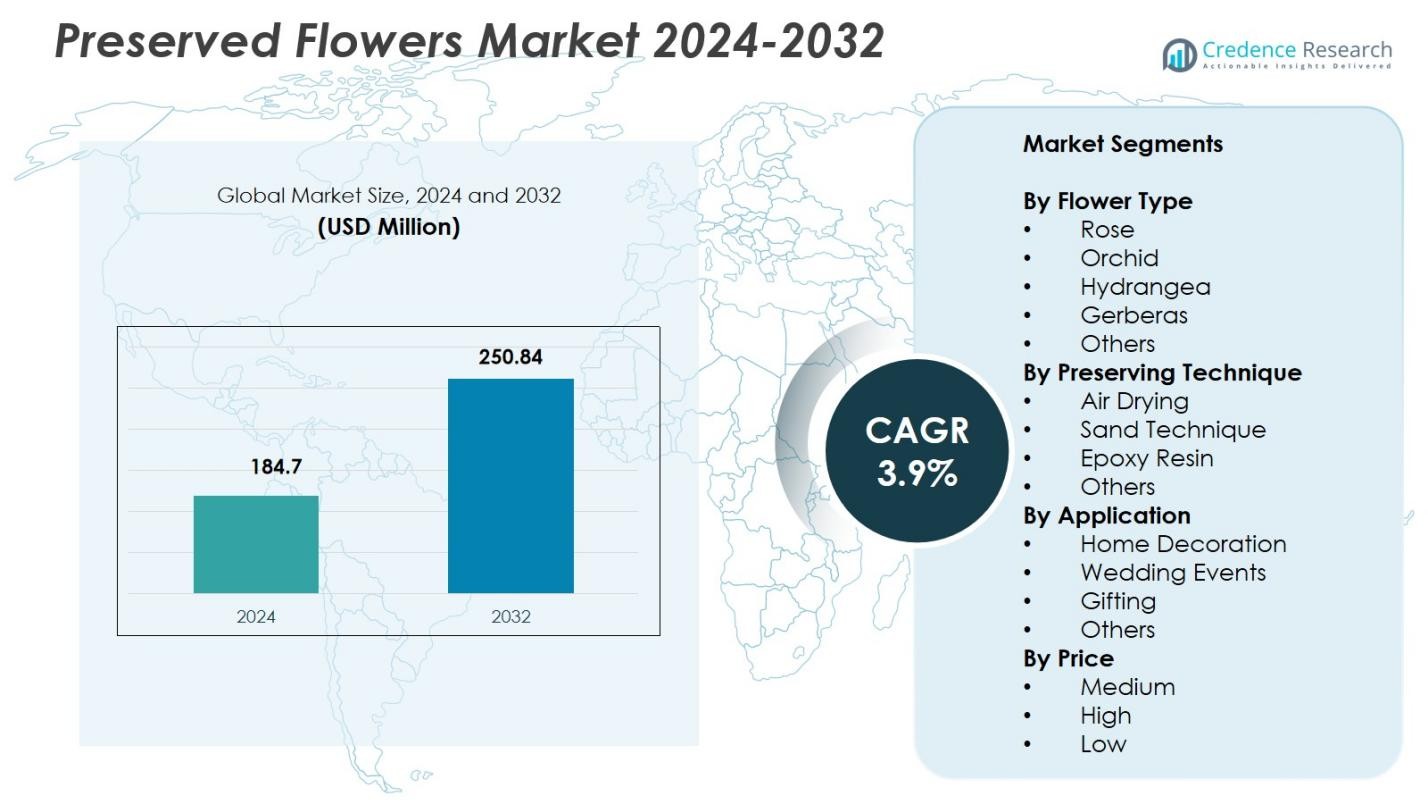
Preserved Flowers Market size was valued at USD 184.7 Million in 2024 and is anticipated to reach USD 250.84 Million by 2032, at a CAGR of 3.9% during the forecast period.
| REPORT ATTRIBUTE |
DETAILS |
| Historical Period |
2020-2023 |
| Base Year |
2024 |
| Forecast Period |
2025-2032 |
| Preserved Flowers Market Size 2024 |
USD 184.7 Million |
| Preserved Flowers Market, CAGR |
3.9% |
| Preserved Flowers Market Size 2032 |
USD 250.84 Million |
Preserved Flowers Market continues to expand as leading players such as Nord Blooms, Immortal Fleur, Fleurs Depargne, The Million Roses, Rose Amor, Ohchi Nursery Ltd., EXCELLENT FLOWERS INC, Beijing Sweetie-Gifts Co., Ltd., Flor Keeps, and Native Apothecary strengthen their presence through premium preserved floral ranges and customized gifting offerings. These companies focus on high-quality preservation techniques, sustainable materials, and luxury packaging to meet rising demand across décor and gifting applications. Regionally, Europe dominated the market with 31.2% share in 2024, driven by strong cultural affinity for floral décor, sustainability-focused consumers, and widespread use of preserved flowers in weddings, home styling, and boutique gifting.
Access crucial information at unmatched prices!
Request your sample report today & start making informed decisions powered by Credence Research Inc.!
Download Sample
Market Insights
- Preserved Flowers Market reached USD 184.7 Million in 2024 and will grow at a CAGR of 3.9% through 2032, supported by rising décor and gifting demand.
- Growing preference for long-lasting, maintenance-free floral décor and personalized premium gifting solutions continues to drive strong adoption across residential, commercial, and event applications.
- Rising popularity of eco-friendly preserved arrangements, expansion of online floral platforms, and technological enhancements in preservation methods are shaping key market trends.
- Leading players focus on product innovation, luxury packaging, and customized floral collections, while the home decoration segment led with 46.2% share in 2024.
- Europe dominated the market with 31.2% share in 2024, followed by Asia Pacific at 29.6% and North America at 27.4%, reflecting strong regional demand for sustainable and premium preserved floral products.
 Market Segmentation Analysis:
By Flower Type
The Preserved Flowers Market is primarily driven by the strong preference for roses, which dominated the flower type segment with 41.6% share in 2024. Their long-lasting appeal, symbolism, and wide use in premium décor and gifting significantly support this leadership. Orchids held a notable share due to rising demand for exotic aesthetics, while hydrangeas and gerberas gained traction in event styling. Other specialty flowers also expanded their presence as consumers increasingly seek unique, customized arrangements. Product diversification, enhanced preservation quality, and growing online retail channels continue to fuel segment-wide growth.
- For instance, RoseAmor specializes exclusively in preserved roses, grown at Emihana farms where 95% of production uses roses dedicated to preservation through dehydration and glycerin replacement for uniform, durable blooms in deep colors.
By Preserving Technique
Air drying led the preserving technique segment with 38.4% share in 2024, supported by its cost efficiency, natural appearance retention, and strong suitability for mass-market decorative products. The sand technique accounted for a steady share as it provides better structural preservation for delicate florals. Epoxy resin gained momentum with rising consumer interest in resin-based decorative crafts and personalized keepsakes. Other emerging methods also contributed to niche applications. The segment benefits from advances in preservation technology, enabling improved durability, vibrant color retention, and expansion into premium decorative categories.
- For instance, MBEPOXY supplies UV-stable clear epoxy for encapsulating dried flowers in molds, creating durable jewelry and display pieces with vibrant, magnified colors.
By Application
The home decoration segment dominated the Preserved Flowers Market with 46.2% share in 2024, driven by rising demand for long-lasting, maintenance-free décor solutions. Consumers increasingly prefer preserved arrangements for interior styling, corporate spaces, and lifestyle décor due to their aesthetic consistency and sustainability benefits. Wedding events represented a significant share owing to the shift toward durable, customizable floral themes. Gifting also grew as preserved flowers gained popularity in luxury and personalized gift categories. Other uses, including hospitality and retail décor, continued to strengthen as brands adopt preserved florals for visual merchandising and ambiance enhancement.
Key Growth Drivers
Rising Demand for Long-Lasting Decorative Solutions
The Preserved Flowers Market grows significantly due to rising consumer preference for long-lasting, maintenance-free décor. Homes, hotels, and commercial spaces increasingly adopt preserved floral arrangements for their durability and consistent aesthetic appeal. Their ability to retain natural beauty for months without water or sunlight makes them a superior alternative to fresh flowers. Additionally, growing urban lifestyles, premium home décor trends, and increasing inclination toward sustainable interior styling further accelerate adoption, strengthening market expansion across both residential and commercial applications.
- For instance, Florever Co., Ltd. offers preserved roses, carnations, gardenias, and hydrangeas that retain their color and texture for up to three years, making them ideal for home and office décor without the need for watering or sunlight.
Expansion of Premium Gifting and Personalized Floral Products
Premium gifting culture strongly drives the market as consumers increasingly seek unique, luxurious, and emotionally resonant products. Preserved flowers, especially roses and orchids, meet this demand by offering long-lasting symbolism and elevated presentation. Brands expand personalization options such as engraved boxes, custom arrangements, and themed collections, attracting gifting consumers across occasions like anniversaries, weddings, and corporate events. E-commerce platforms enhance accessibility, enabling global reach and improved customer experience. These factors collectively support consistent revenue growth in the premium gifting segment.
- For instance, The Million Roses provides preserved roses in luxury boxes that last over three years, with options to customize using a personalized message for occasions like birthdays or anniversaries.
Advancements in Preservation Techniques Enhancing Product Quality
Innovations in preservation techniques continue to boost market demand by improving color retention, texture integrity, and product lifespan. Advances such as high-grade glycerin treatments, eco-friendly dyes, and resin-based methods allow manufacturers to produce more vibrant and durable arrangements suitable for high-end décor and event applications. Enhanced technology also expands the variety of flowers that can be preserved effectively, supporting product diversification. As quality improves, preserved flowers increasingly replace artificial alternatives and gain broader acceptance in luxury décor, personalized gifting, and event styling.
Key Trends & Opportunities
Increasing Penetration of Online Floral Marketplaces
A major trend shaping the Preserved Flowers Market is the rapid growth of online floral platforms offering global access, customization, and premium packaging options. Consumers prefer digital channels for their convenience, variety, and real-time personalization features. Subscription box models, curated preserved flower collections, and same-day delivery in major cities further elevate demand. This trend opens strong opportunities for emerging brands to scale internationally without extensive offline infrastructure, fostering market expansion and accelerating innovation in packaging, branding, and customer engagement.
- For instance, BloomsyBox sells preserved bouquets processed with alcohol and wax to retain natural shape and flexibility, ideal for long-lasting displays away from direct sunlight.
Growing Adoption in Event Styling and Sustainable Décor
Rising interest in sustainable event décor presents a significant opportunity for preserved flower providers. Wedding planners, corporate event organizers, and luxury venues increasingly adopt preserved florals to reduce waste, maintain aesthetic uniformity, and achieve long-lasting installations. Their reusability, low carbon footprint, and resistance to weather variations make them ideal for indoor and outdoor events. This trend encourages manufacturers to develop specialized event-focused arrangements and eco-friendly product lines, strengthening the market’s footprint in the global event management sector.
- For instance, Sweetie-Gifts supplies preserved floral centerpieces to hotels and banquets, transforming lobbies, reception desks, and dining settings with low-maintenance arrangements that stay vibrant without watering.
Key Challenges
High Cost of Production and Limited Price Accessibility
One of the key challenges limiting broader market adoption is the relatively high cost associated with preservation processes, premium dyes, and skilled craftsmanship. These factors make preserved flowers more expensive than fresh or artificial alternatives, restricting accessibility for price-sensitive consumers. High-end packaging and shipping requirements further increase the overall cost. As a result, the market faces barriers to mass adoption, particularly in emerging economies, where consumers prioritize affordability over longevity and premium presentation.
Environmental Concerns Related to Chemical Preservation Methods
Despite growing interest in sustainability, the market faces challenges due to the environmental impact of certain chemical-based preservation processes. Some preservatives and dyes used to maintain color and texture raise concerns regarding their biodegradability and ecological footprint. Increasing regulatory scrutiny and consumer awareness push manufacturers to adopt greener alternatives, which may require higher investment and reformulation costs. These constraints can hinder operational efficiency and slow product innovation for companies transitioning to eco-conscious preservation systems.
Regional Analysis
North America
North America held a 27.4% share of the Preserved Flowers Market in 2024, driven by strong consumer demand for premium home décor and personalized gifting products. The region benefits from high purchasing power, widespread adoption of luxury arrangements, and the rapid expansion of online floral boutiques. Corporate gifting trends and event décor applications further elevate demand. Key brands actively introduce high-end preserved rose boxes and customized floral collections tailored for festive and seasonal occasions. Growing preference for long-lasting, maintenance-free décor in residential and commercial settings continues to support regional market growth.
Europe
Europe accounted for 31.2% share in 2024, emerging as the leading regional market due to strong cultural affinity for floral décor, sustainability-focused consumer behavior, and widespread adoption of preserved flowers in weddings and interior styling. Countries such as France, Germany, and the UK drive substantial demand for premium arrangements with enhanced aesthetics. The region’s emphasis on eco-friendly preservation methods and artisanal floral craftsmanship strengthens product quality perception. Luxury gifting trends, boutique floral studios, and increasing tourism-related demand for decorative installations contribute to steady market expansion across Europe.
Asia Pacific
Asia Pacific captured a 29.6% share in 2024, supported by rising disposable incomes, expanding urban lifestyle trends, and growing popularity of preserved flowers for gifting and home decoration. Japan, China, and South Korea remain dominant contributors with strong consumer appreciation for long-lasting florals and decorative minimalism. E-commerce platforms play a pivotal role in accelerating access to premium preserved flower brands. The region also experiences heightened demand from wedding events and luxury retail décor. Increasing production capabilities and cost-efficient manufacturing practices further enhance Asia Pacific’s position in the global market.
Latin America
Latin America held a 6.8% share in 2024, driven by growing interest in durable floral décor and rising adoption of preserved flowers in event and wedding segments. Brazil and Mexico lead regional demand as consumers gravitate toward long-lasting, visually appealing arrangements for interior styling. Local artisans and boutique floral brands increasingly integrate preserved flowers into premium gifting and festive celebrations. While consumer awareness is still developing, expanding online retail channels and cultural affinity for vibrant floral aesthetics support steady regional market uptake.
Middle East & Africa
The Middle East & Africa region accounted for 5.0% share in 2024, supported by rising demand for luxury décor and premium gifting solutions. Countries such as the UAE and Saudi Arabia drive growth, fueled by high-end retail environments, strong hospitality sectors, and preference for opulent floral displays that retain freshness over extended periods. Wedding events and corporate gifting further strengthen demand. Although adoption in Africa remains limited, gradual urbanization and increasing presence of specialty floral boutiques contribute to emerging opportunities across the region.
Market Segmentations:
By Flower Type
- Rose
- Orchid
- Hydrangea
- Gerberas
- Others
By Preserving Technique
- Air Drying
- Sand Technique
- Epoxy Resin
- Others
By Application
- Home Decoration
- Wedding Events
- Gifting
- Others
By Price
By Geography
- North America
- Europe
- Germany
- France
- U.K.
- Italy
- Spain
- Rest of Europe
- Asia Pacific
- China
- Japan
- India
- South Korea
- South-east Asia
- Rest of Asia Pacific
- Latin America
- Brazil
- Argentina
- Rest of Latin America
- Middle East & Africa
- GCC Countries
- South Africa
- Rest of the Middle East and Africa
Competitive Landscape
Competitive landscape in the Preserved Flowers Market features leading players such as Nord Blooms, Immortal Fleur, Fleurs Depargne, The Million Roses, Rose Amor, Ohchi Nursery Ltd., EXCELLENT FLOWERS INC, Beijing Sweetie-Gifts Co., Ltd., Flor Keeps, and Native Apothecary, each strengthening their presence through product innovation and premium design offerings. The market remains driven by continuous advancements in preservation techniques that enhance color vibrancy, texture integrity, and extended shelf life, enabling brands to target luxury décor and gifting segments. Companies increasingly focus on custom arrangements, sustainable preservation methods, and personalized packaging to differentiate their portfolios. Strategic expansion through online channels, subscription-based floral boxes, and curated festival or wedding collections further boosts visibility and customer engagement. Collaborations with interior designers, hospitality chains, and event planners help brands tap into high-value décor applications. As consumer interest in durable, maintenance-free florals grows, key players invest in global distribution, artisanal craftsmanship, and premium branding to secure long-term competitiveness.
Key Player Analysis
- Nord Blooms
- Immortal Fleur
- Native Apothecary
- The Million Roses
- Beijing Sweetie-Gifts Co., Ltd.
- EXCELLENT FLOWERS INC
- Rose Amor
- Ohchi Nursery Ltd.
- Flor Keeps
- Fleurs Depargne
Recent Developments
- In November 2025, Nord Blooms partnered with Cuzine to launch preserved-floral and biophilic installations tailored for sustainable luxury hotel décor.
- In January 2024, Florever Co., Ltd. introduced its new “Annabelle” preserved-flower product featuring delicate soft petals designed as fillers for varied floral arrangements.
- In September 2025, Wild Coast Flower Preservation was named among 150 global finalists in the 2025 Etsy Design Awards, underlining its rising prominence in preserved-flower innovation and design.
- In July 2025, Florever added a new color to its preserved foliage line “French Vanilla” expanding its palette for décor applications.
Shape Your Report to Specific Countries or Regions & Enjoy 30% Off!
Report Coverage
The research report offers an in-depth analysis based on Flower Type, Preserving Technique, Application, Price and Geography. It details leading market players, providing an overview of their business, product offerings, investments, revenue streams, and key applications. Additionally, the report includes insights into the competitive environment, SWOT analysis, current market trends, as well as the primary drivers and constraints. Furthermore, it discusses various factors that have driven market expansion in recent years. The report also explores market dynamics, regulatory scenarios, and technological advancements that are shaping the industry. It assesses the impact of external factors and global economic changes on market growth. Lastly, it provides strategic recommendations for new entrants and established companies to navigate the complexities of the market.
Future Outlook
- The market will grow steadily as consumers increasingly prefer long-lasting décor solutions.
- Premium gifting demand will continue to expand the adoption of preserved floral products.
- Advancements in preservation technology will improve product quality and color durability.
- Online floral platforms will play a major role in widening global accessibility for brands.
- Event planners will integrate preserved flowers more widely for sustainable wedding and corporate décor.
- Manufacturers will shift toward eco-friendly preservation methods to meet rising sustainability expectations.
- Customization and personalized floral designs will become major differentiators for top brands.
- Retailers will expand luxury floral collections to cater to interior décor and lifestyle markets.
- Increased production capabilities in Asia will strengthen supply chain efficiency and affordability.
- Strategic collaborations with designers and hospitality chains will create new high-value application opportunities.



