| REPORT ATTRIBUTE | DETAILS |
|---|---|
| Historical Period | 2020-2023 |
| Base Year | 2024 |
| Forecast Period | 2025-2032 |
| Radiopharmaceutical Market Size 2024 | USD 6,780.3 Million |
| Radiopharmaceutical Market, CAGR | 10.90 % |
| Radiopharmaceutical Market Size 2032 | USD 15,493.7 Million |
Market Overview
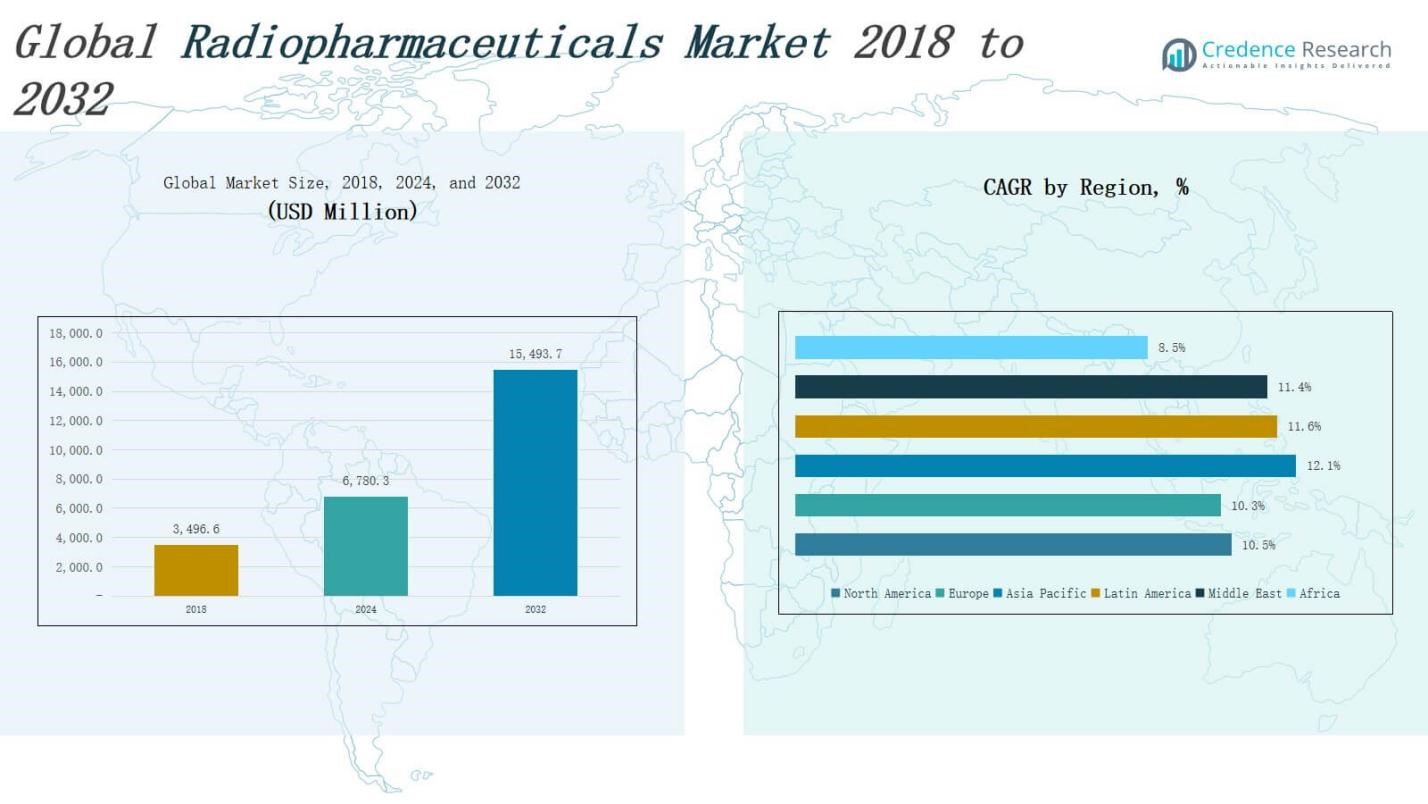
The Radiopharmaceutical Market size was valued at USD 3,496.6 million in 2018 to USD 6,780.3 million in 2024 and is anticipated to reach USD 15,493.7 million by 2032, at a CAGR of 10.90 % during the forecast period.
The Radiopharmaceutical Market is primarily driven by the rising prevalence of cancer and cardiovascular diseases, increasing demand for targeted and minimally invasive diagnostic and therapeutic procedures, and growing adoption of personalized medicine. The expanding use of SPECT and PET imaging technologies in oncology, neurology, and cardiology is fueling the need for radiotracers and radioisotopes. Government support for nuclear medicine development and increasing investments in radiopharmaceutical production facilities further support market growth. Key trends shaping the market include the shift toward theranostics-integrating diagnostics and therapy using radiolabeled compounds-and the emergence of alpha-emitters for precision oncology. Advancements in cyclotron and reactor technologies are enhancing the availability and efficiency of isotope production. Collaborations between pharmaceutical companies and nuclear research institutions are accelerating new product development. In addition, the rising use of fluorine-18, gallium-68, and lutetium-177-based agents, along with regulatory approvals for novel radiotherapeutics, are transforming the treatment landscape and broadening clinical applications across healthcare systems globally.
The Radiopharmaceutical Market spans key regions including North America, Europe, Asia Pacific, Latin America, the Middle East, and Africa. North America holds the largest share due to advanced healthcare infrastructure and strong R&D investments, while Europe follows closely with high adoption of diagnostic imaging. Asia Pacific is the fastest-growing region, driven by expanding healthcare access and rising cancer incidence. Latin America, the Middle East, and Africa show steady growth supported by improving nuclear medicine infrastructure and regional health initiatives. Leading companies operating in the market include GE Healthcare, Bayer AG, Cardinal Health, Inc., Bracco Imaging S.p.A, Mallinckrodt plc., Lantheus Medical Imaging Inc., Nordion, Inc., IBA Molecular Imaging, and Advanced Accelerator Applications S.A. These players compete through innovation, partnerships, and regional expansion strategies to strengthen their presence across the global radiopharmaceutical landscape.
Market Insights
- The Radiopharmaceutical Market was valued at USD 6,780.3 million in 2024 and is projected to reach USD 15,493.7 million by 2032, growing at a CAGR of 10.90%.
- Increasing prevalence of cancer and cardiovascular diseases, along with demand for targeted diagnostics and therapy, continues to drive significant market expansion.
- SPECT and PET technologies are widely used across oncology, neurology, and cardiology, creating sustained demand for radiotracers and isotopes.
- Advancements in cyclotron, generator, and isotope production technologies are improving supply chain efficiency and decentralizing manufacturing.
- North America holds the largest share due to high R&D investments and strong infrastructure, followed by Europe and the rapidly expanding Asia Pacific market.
- Key players such as GE Healthcare, Bayer AG, Cardinal Health, and Lantheus Medical Imaging compete through innovation, strategic partnerships, and regional expansion.
- High production costs, regulatory hurdles, and limited reimbursement remain major challenges, but rising investment in infrastructure and precision oncology offers strong future potential.
Market Drivers
Rising Prevalence of Cancer and Chronic Diseases The Radiopharmaceutical Market is witnessing strong growth due to the increasing incidence of cancer, cardiovascular disorders, and neurological conditions worldwide. These diseases demand precise diagnostic and therapeutic solutions, which radiopharmaceuticals deliver through targeted imaging and therapy. Nuclear medicine procedures are proving vital for early detection and personalized treatment. The market benefits from growing patient awareness and physician adoption. It continues to expand with rising healthcare investments. Governments are prioritizing cancer care infrastructure, boosting demand for radiotracers.
- For instance, AstraZeneca, following its acquisition of Fusion Pharmaceuticals, is advancing FPI-2265 through phase 2/3 clinical trials for metastatic prostate cancer. This targeted radiopharmaceutical is designed to destroy cancer cells by delivering actinium-225 directly to tumor sites.
Growing Demand for Targeted Diagnostics and Therapy Healthcare providers are shifting toward precision diagnostics and treatments to improve clinical outcomes and reduce adverse effects. The Radiopharmaceutical Market supports this shift by offering compounds that target specific tissues and enable accurate imaging or localized treatment. SPECT and PET technologies are widely used in oncology, cardiology, and neurology. Hospitals and imaging centers are expanding their nuclear medicine capabilities. It provides reliable tools for non-invasive diagnostics. This growing need drives steady radiopharmaceutical adoption.
- For instance, Siemens Healthineers’ Biograph Vision PET/CT scanner has been shown to detect lesions as small as 2 mm, aiding in earlier and more accurate oncology diagnoses.
Advancements in Radiopharmaceutical Production and Supply Technological progress in isotope production, especially cyclotron and generator technologies, is enhancing the availability and quality of radiopharmaceuticals. The Radiopharmaceutical Market benefits from improved logistics, extended shelf life of isotopes, and automated synthesis systems. These improvements reduce dependency on nuclear reactors and enable decentralized production. It allows faster distribution to medical facilities. Pharmaceutical firms are investing in production scalability. The market is evolving with more efficient, sustainable, and responsive supply chains.
Regulatory Support and Industry Collaborations Favorable regulatory frameworks and streamlined approval processes are encouraging innovation in the Radiopharmaceutical Market. Agencies are fast-tracking radiotherapeutic approvals to address unmet medical needs. Industry players are collaborating with research institutes to develop novel compounds and expand clinical applications. It accelerates R&D and shortens time-to-market. Governments are funding nuclear medicine initiatives to improve public health infrastructure. These factors jointly drive commercialization of advanced radiopharmaceuticals across global healthcare systems.
Market Trends
Expansion of Theranostics and Precision Oncology Applications The Radiopharmaceutical Market is undergoing transformation through the integration of theranostics, combining diagnostics and therapy into a unified approach. Radiolabeled compounds like Lutetium-177 and Actinium-225 are offering dual benefits in detecting and treating specific tumors. This approach supports precision oncology by enabling personalized treatment decisions. It helps oncologists track therapy effectiveness in real time. The demand for such targeted radiopharmaceuticals is increasing across major cancer treatment centers. Drug developers are investing heavily in pipeline molecules with theranostic potential.
- For instance, Bayer’s Radium-223 (Xofigo) has been clinically implemented to treat bone metastases in advanced prostate cancer, delivering targeted alpha therapy to bone lesions with documented reductions in symptomatic skeletal events.
Rising Adoption of PET and SPECT Imaging Technologies PET and SPECT continue to gain traction as leading diagnostic modalities due to their ability to detect diseases at a molecular level. The Radiopharmaceutical Market is supported by increasing deployment of these imaging systems in hospitals and diagnostic labs. PET imaging with Fluorine-18 and Gallium-68 radiotracers delivers high-resolution images for accurate tumor localization. SPECT remains dominant in cardiology and neurology applications. It is enabling clinicians to make quicker and more accurate diagnoses. Demand for advanced hybrid imaging systems is also rising.
- For instance, the Mayo Clinic uses Siemens Healthineers’ Symbia Intevo SPECT/CT system for cardiac and neurological imaging, enhancing early disease detection and patient management.
Shift Toward Alpha-Emitters and Novel Isotopes The market is experiencing growing interest in alpha-emitters like Actinium-225 and Bismuth-213 due to their high cytotoxicity and shorter penetration range. The Radiopharmaceutical Market is benefiting from clinical trials exploring these isotopes for hematologic and solid tumors. These agents are gaining attention for their ability to minimize damage to healthy tissues. It encourages development of next-generation radiotherapeutics. Production facilities are expanding capabilities to meet rising demand. Researchers are optimizing radiolabeling techniques for wider adoption of these novel isotopes.
Increased Investment in Radiopharmaceutical R&D and Manufacturing Investments in R&D and commercial-scale production are rising to support the innovation and delivery of next-generation radiopharmaceuticals. The Radiopharmaceutical Market is attracting attention from pharmaceutical and biotech firms, leading to strategic acquisitions and partnerships. Companies are building GMP-compliant manufacturing units near hospitals and imaging centers. It reduces time-to-patient and enhances distribution efficiency. Governments and private investors are also funding isotope production infrastructure. These efforts are helping scale access to advanced nuclear medicine globally.
Market Challenges Analysis
High Cost and Complex Manufacturing Processes The Radiopharmaceutical Market faces significant challenges due to the high cost and complexity of production. Radiopharmaceuticals require specialized facilities, strict regulatory compliance, and sophisticated handling of radioactive materials. It increases manufacturing expenses and limits entry for smaller players. Short half-lives of isotopes demand real-time coordination between production and delivery, adding logistical burdens. Limited availability of cyclotrons and reactors in certain regions further restricts supply. These factors make scalability and profitability difficult for many developers.
Stringent Regulatory Landscape and Limited Reimbursement Navigating the regulatory framework for radiopharmaceuticals remains a major challenge. The Radiopharmaceutical Market must comply with dual oversight from nuclear and pharmaceutical authorities, often prolonging approval timelines. Variability in global regulations complicates international distribution strategies. It also affects pricing and commercialization pathways. Reimbursement gaps for nuclear medicine procedures hinder wider adoption in cost-sensitive healthcare systems. Delays in reimbursement decisions often deter hospitals from adopting new radiopharmaceutical solutions despite clinical benefits.
Market Opportunities
Rising Demand for Personalized and Targeted Therapies The Radiopharmaceutical Market holds strong potential with the global shift toward personalized medicine. Healthcare systems are increasingly prioritizing treatments that target specific molecular markers, reducing collateral damage to healthy tissues. It supports the development of radiotherapeutics tailored for individual patient profiles. Advances in genomic and proteomic research further expand opportunities for precision radiopharmaceuticals. The market can capitalize on unmet needs in oncology, especially for hard-to-treat and metastatic cancers. Regulatory support for orphan drugs adds momentum to this trend.
Expansion in Emerging Markets and Infrastructure Development Emerging economies are investing in nuclear medicine infrastructure, creating new opportunities for the Radiopharmaceutical Market. Governments in Asia-Pacific, Latin America, and the Middle East are modernizing diagnostic capabilities and funding isotope production centers. It opens avenues for regional manufacturing and distribution partnerships. Increased availability of PET and SPECT imaging systems enhances accessibility to radiopharmaceuticals. Local production helps reduce costs and address supply chain delays. These developments present a scalable growth path for industry players.
Market Segmentation Analysis:
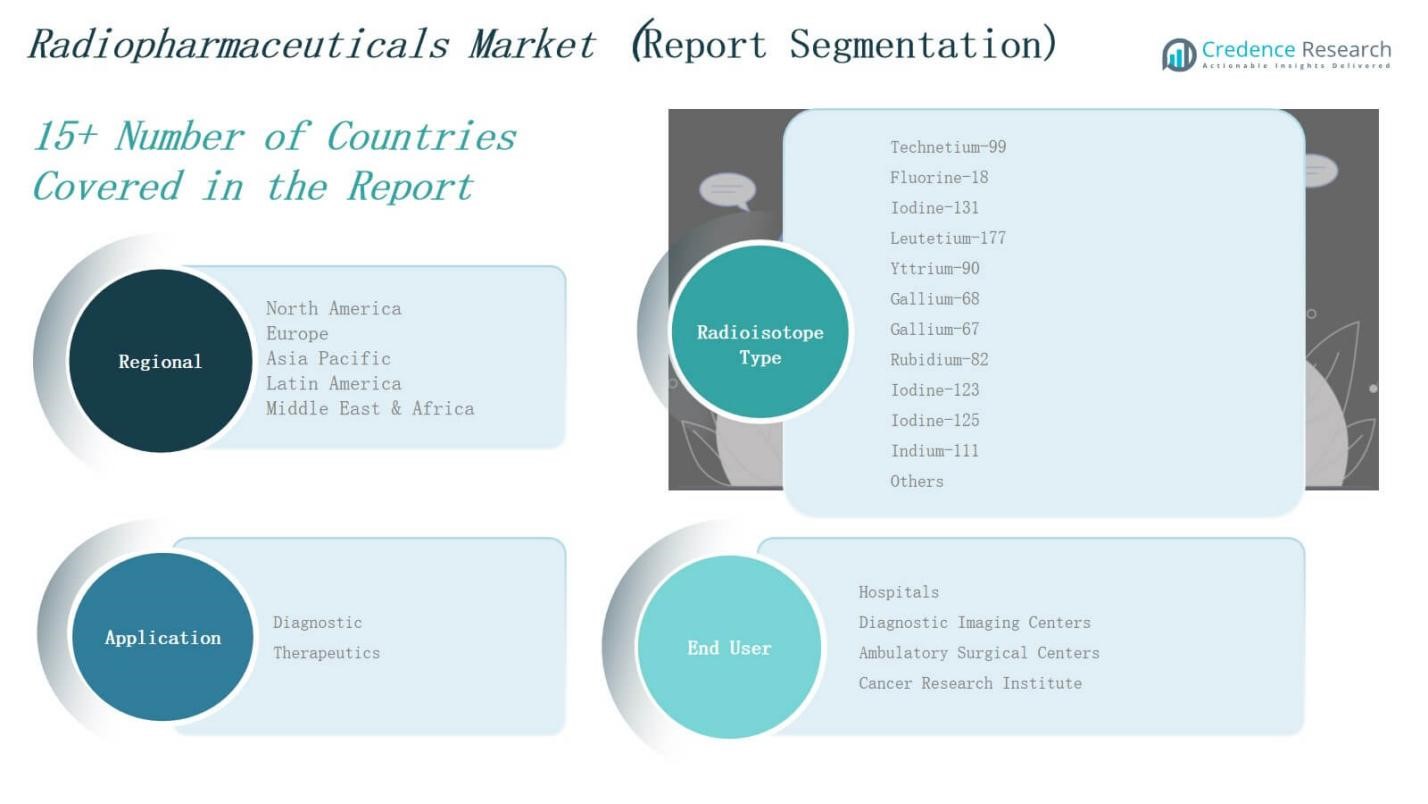
By Radioisotope Type The Radiopharmaceutical Market is segmented by radioisotope type into Technetium-99, Fluorine-18, Iodine-131, Lutetium-177, Yttrium-90, Gallium-68, Gallium-67, Rubidium-82, Iodine-123, Iodine-125, Indium-111, and others. Technetium-99 and Fluorine-18 dominate due to widespread use in SPECT and PET imaging, respectively. Lutetium-177 and Yttrium-90 are gaining traction in therapeutic applications, especially in oncology. It continues to grow with increasing clinical trials and wider radiopharmaceutical adoption for both diagnostics and therapy. Gallium-68 is also emerging in precision imaging.
- For instance, Novartis’ Lutathera® (lutetium-177 dotatate) has shown a 79% reduction in disease progression risk for midgut neuroendocrine tumors in Phase III trials, while Sirtex’s SIR-Spheres® Y-90 resin microspheres are FDA-approved for treating liver metastases.
By Application The Radiopharmaceutical Market is classified into diagnostic and therapeutic applications. Diagnostic radiopharmaceuticals hold the larger share due to high demand for non-invasive imaging in cardiology, oncology, and neurology. PET and SPECT procedures drive consistent consumption of tracers. Therapeutic applications, led by isotopes like Lutetium-177 and Iodine-131, are growing rapidly due to rising interest in targeted radionuclide therapy. It supports effective treatment of metastatic cancers and thyroid disorders. The segment continues expanding with new theranostic developments.
- For instance, Siemens Healthineers’ Biograph Vision PET/CT scanner uses diagnostic radiotracers to enable high-resolution tumor imaging for oncology patients. In therapeutic applications, isotopes such as Lutetium-177 and Iodine-131 are gaining traction due to targeted treatment opportunities.
By End Use End users in the Radiopharmaceutical Market include hospitals, diagnostic imaging centers, ambulatory surgical centers, cancer research institutes, and others. Hospitals account for the largest share due to integrated nuclear medicine departments and treatment facilities. Diagnostic imaging centers are expanding nuclear medicine offerings to meet rising demand. It enables broader patient access to advanced diagnostics. Cancer research institutes play a critical role in driving innovation through clinical studies and pilot programs. The segment reflects strong institutional adoption.
Segments:
Based on Radioisotope Type
- Technetium-99
- Fluorine-18
- Iodine-131
- Lutetium-177
- Yttrium-90
- Gallium-68
- Gallium-67
- Rubidium-82
- Iodine-123
- Iodine-125
- Indium-111
- Others
Based on Application
- Diagnostic
- Therapeutics
Based on End Use
- Hospitals
- Diagnostic Imaging Centers
- Ambulatory Surgical Centers
- Cancer Research Institutes
- Others
Based on Region
North America
- S.
- Canada
- Mexico
Europe
- UK
- France
- Germany
- Italy
- Spain
- Russia
- Rest of Europe
Asia Pacific
- China
- Japan
- South Korea
- India
- Australia
- Southeast Asia
- Rest of Asia Pacific
Latin America
- Brazil
- Argentina
- Rest of Latin America
Middle East
- GCC Countries
- Israel
- Turkey
- Rest of Middle East
Africa
- South Africa
- Egypt
- Rest of Africa
Regional Analysis
North America The North America Radiopharmaceutical Market size was valued at USD 1,283.96 million in 2018 to USD 2,439.74 million in 2024 and is anticipated to reach USD 5,422.79 million by 2032, at a CAGR of 10.5% during the forecast period. North America holds the largest share of the global market, driven by advanced healthcare infrastructure and a high concentration of nuclear medicine facilities. The United States leads regional growth due to strong R&D investment and rapid adoption of PET and SPECT technologies. It benefits from favorable reimbursement policies and regulatory pathways that accelerate product approvals. Major players, including GE Healthcare and Cardinal Health, maintain robust distribution networks across the region. Demand for personalized radiotherapeutics and increasing cancer prevalence further strengthen market momentum.
Europe The Europe Radiopharmaceutical Market size was valued at USD 912.97 million in 2018 to USD 1,712.22 million in 2024 and is anticipated to reach USD 3,735.53 million by 2032, at a CAGR of 10.3% during the forecast period. Europe represents the second-largest market share, supported by strong academic research institutions and growing public health investments. Countries like Germany, France, and the UK are leading contributors. It benefits from collaborative regulatory frameworks that encourage clinical trials and novel compound development. Demand for diagnostic imaging in neurology and oncology continues to rise. Increased government funding and aging demographics sustain long-term growth.
Asia Pacific The Asia Pacific Radiopharmaceutical Market size was valued at USD 652.82 million in 2018 to USD 1,356.25 million in 2024 and is anticipated to reach USD 3,374.53 million by 2032, at a CAGR of 12.1% during the forecast period. Asia Pacific is the fastest-growing regional market, fueled by rising cancer incidence, expanding healthcare access, and growing investment in nuclear medicine infrastructure. Countries such as China, India, Japan, and South Korea are advancing radiopharmaceutical production and adoption. It benefits from regional manufacturing initiatives and increased awareness of early disease detection. Partnerships between international players and local producers are also accelerating market expansion. Demand for PET tracers and targeted therapies continues to rise.
Latin America The Latin America Radiopharmaceutical Market size was valued at USD 393.37 million in 2018 to USD 794.46 million in 2024 and is anticipated to reach USD 1,911.92 million by 2032, at a CAGR of 11.6% during the forecast period. Latin America is emerging as a promising market with improving healthcare infrastructure and rising cancer diagnostics demand. Brazil and Mexico are the key markets driving regional growth. It faces challenges in isotope logistics but benefits from regional partnerships and government support. Efforts to localize production and enhance radiology networks support long-term potential. Investment in cancer screening programs is expanding clinical application of radiopharmaceuticals.
Middle East The Middle East Radiopharmaceutical Market size was valued at USD 147.91 million in 2018 to USD 294.65 million in 2024 and is anticipated to reach USD 697.22 million by 2032, at a CAGR of 11.4% during the forecast period. The Middle East market is gaining momentum due to increased investment in nuclear medicine departments and cancer treatment facilities. Countries like Saudi Arabia and the UAE are actively upgrading diagnostic infrastructure. It benefits from growing demand for minimally invasive oncology therapies. Training programs for nuclear medicine professionals are expanding across the region. Public-private partnerships are helping bridge gaps in technology access and isotope supply.
Africa The Africa Radiopharmaceutical Market size was valued at USD 105.60 million in 2018 to USD 182.97 million in 2024 and is anticipated to reach USD 351.71 million by 2032, at a CAGR of 8.5% during the forecast period. Africa holds the smallest market share but presents long-term opportunities through healthcare modernization and cancer care initiatives. South Africa leads regional adoption with established nuclear medicine capabilities. It faces significant infrastructure and supply chain constraints. International organizations are supporting radiopharmaceutical access and facility development. Increased focus on early disease detection is driving gradual market growth across select nations.
Key Player Analysis
- GE Healthcare
- Mallinckrodt plc.
- Nordion, Inc.
- Bayer AG
- Bracco Imaging S.p.A
- IBA Molecular Imaging
- Lantheus Medical Imaging Inc.
- Cardinal Health, Inc.
- Advanced Accelerator Applications S.A.
- Other Key Players
Competitive Analysis
The Radiopharmaceutical Market is highly competitive, with key players focusing on innovation, regulatory approvals, and strategic collaborations to strengthen their market position. Companies such as GE Healthcare, Bayer AG, and Cardinal Health, Inc. maintain strong global footprints through extensive product portfolios and robust distribution networks. It sees active investment in R&D for next-generation radiotracers and theranostic agents. Firms like Advanced Accelerator Applications S.A. and Lantheus Medical Imaging Inc. are expanding clinical applications through targeted therapies. Market leaders are also forming alliances with research institutions and hospitals to accelerate clinical trials and improve commercialization. Competition intensifies as new entrants and regional manufacturers invest in localized production and cost-effective solutions. The market remains dynamic with continued emphasis on supply chain efficiency, product differentiation, and geographic expansion.
Recent Developments
- In July 2025, Actithera raised USD 75 million in Series A funding to advance its oncology pipeline targeting fibroblast activation proteins through radiopharmaceutical therapies.
- In July 2025, CereMark Pharma began a Phase III clinical trial for its F‑18 flornaptitril PET tracer, developed to detect tau and beta-amyloid plaques in neurodegenerative diseases.
- In June 2025, Radiopharm Theranostics received FDA fast-track designation for its F‑18 RAD 101 brain PET tracer targeting fatty acid synthase in brain metastases.
- In 2025, GE HealthCare launched its flurpiridaz F‑18 cardiac PET tracer, Flyrcado, and began delivering initial patient doses following FDA approval.
Market Concentration & Characteristics
The Radiopharmaceutical Market is moderately concentrated, with a mix of global pharmaceutical giants and specialized nuclear medicine firms driving innovation and supply. It is characterized by high entry barriers due to regulatory complexities, specialized infrastructure needs, and strict safety standards for handling radioactive materials. Leading players such as GE Healthcare, Bayer AG, and Cardinal Health dominate through established production capabilities, robust distribution networks, and diverse radiotracer portfolios. The market shows a strong focus on research and development, particularly in theranostics and targeted alpha therapies. It depends on reliable isotope production, which creates a competitive advantage for companies with integrated cyclotron or reactor access. Strategic collaborations between industry players and research institutions are common, accelerating clinical trials and expanding applications. The market exhibits long product development cycles and is influenced by regulatory approval timelines, reimbursement structures, and healthcare infrastructure investments. These characteristics create a competitive but highly specialized operating environment with significant growth potential.
Report Coverage
The research report offers an in-depth analysis based on Radioisotope Type, Application, End-Use and Geography. It details leading market players, providing an overview of their business, product offerings, investments, revenue streams, and key applications. Additionally, the report includes insights into the competitive environment, SWOT analysis, current market trends, as well as the primary drivers and constraints. Furthermore, it discusses various factors that have driven market expansion in recent years. The report also explores market dynamics, regulatory scenarios, and technological advancements that are shaping the industry. It assesses the impact of external factors and global economic changes on market growth. Lastly, it provides strategic recommendations for new entrants and established companies to navigate the complexities of the market.
Future Outlook
- Demand for targeted radiotherapeutics will increase with the growing focus on personalized cancer treatment.
- Adoption of theranostic approaches will expand across oncology, neurology, and cardiology applications.
- Advancements in isotope production technology will improve supply chain reliability and geographic access.
- Regulatory agencies will streamline approval processes to accelerate clinical use of novel radiopharmaceuticals.
- Investment in nuclear medicine infrastructure will rise, particularly in emerging markets
- Regional production facilities will expand to reduce costs and improve delivery timelines.
- Partnerships between pharmaceutical firms and academic institutions will drive innovation in new radiotracers.
- PET and SPECT imaging procedures will see wider use in early disease detection and monitoring.
- Use of alpha-emitters and next-generation isotopes will increase in precision oncology.
- Market competition will intensify as new entrants focus on cost-effective and regionally adapted radiopharmaceutical solutions.

Request a Free Sample
Fill in your details and we'll send you a free sample report.
- Sample data tables & charts
- Research methodology
Market Dynamics
Rising Prevalence of Cancer and Chronic Diseases
The increasing incidence of cancer, cardiovascular, and neurological diseases globally is driving demand for precise diagnostic and therapeutic solutions, with radiopharmaceuticals enabling targeted imaging and treatment for early detection and personalized care.
Expansion of SPECT and PET Imaging Technologies
Widespread adoption of SPECT and PET imaging in oncology, neurology, and cardiology is fueling the need for radiotracers and radioisotopes, supporting market growth as healthcare providers seek advanced, minimally invasive diagnostic tools.
Advancements in Isotope Production and Supply Chain
Technological improvements in cyclotron and generator technologies are enhancing isotope availability, reducing reliance on nuclear reactors, and enabling decentralized, efficient production and distribution of radiopharmaceuticals.
Regulatory Support and Industry Collaborations
Favorable regulatory frameworks and increased collaboration between pharmaceutical companies and nuclear research institutions are accelerating the development and approval of novel radiopharmaceuticals, broadening clinical applications and market reach.
Shift Toward Theranostics and Precision Oncology
The integration of theranostics - combining diagnostics and therapy using radiolabeled compounds - is enabling personalized cancer treatment, increasing demand for next-generation radiopharmaceuticals that offer both targeted imaging and therapeutic benefits.
Need a Custom Version of This Report?
Tailor the scope, geography, or segments to your exact requirements.
- Custom geography or segment scope
- Direct access to our analyst team
Frequently Asked Questions
What is the current size of the Radiopharmaceutical Market?
What factors are driving the growth of the Radiopharmaceutical Market?
What are the key segments within the Radiopharmaceutical Market?
What are some challenges faced by the Radiopharmaceutical Market?
Who are the major players in the Radiopharmaceutical Market?
Table of Content
Chapter 1 Market Segmentation
- 1.1 Segmentation Framework
- 1.1.1 Product and Service Classification
- 1.1.2 Application and End-Use Classification
- 1.1.3 Technology and Solution Classification
- 1.1.4 Customer and Distribution Channel Classification
- 1.1.5 Geographic Segmentation
- 1.1.6 Market Segment Definitions and Boundaries
- 1.2 By End Use
- 1.2.1 Hospitals
- 1.2.2 Diagnostic Imaging Centers
- 1.2.3 Ambulatory Surgical Centers
- 1.2.4 Cancer Research Institutes
- 1.2.5 Others
- 1.3 By Application
- 1.3.1 Diagnostic
- 1.3.2 Therapeutic
- 1.4 By Radioisotope Type
- 1.4.1 Technetium-99
- 1.4.2 Fluorine-18
- 1.4.3 Iodine-131
- 1.4.4 Lutetium-177
- 1.4.5 Yttrium-90
- 1.4.6 Gallium-68
- 1.4.7 Others
Chapter 2 Introduction
- 2.1 Report Objectives and Scope
- 2.2 Product Definition and Industry Terminology
- 2.3 Market Inclusions and Exclusions
- 2.4 Research Process
- 2.4.1 Primary Research and Expert Interviews
- 2.4.2 Secondary Research and Source Review
- 2.4.3 Top-Down and Bottom-Up Estimation
- 2.4.4 Data Triangulation and Verification
- 2.5 Market Size Measurement Basis
- 2.5.1 2024: USD 6,780.3 million → 2032: USD 15,493.7 million
- 2.6 Historical and Forecast Reference Periods
- 2.6.1 Base Year: 2024
- 2.6.2 Forecast Period: 2024-2032
- 2.7 Research Assumptions and Limitations
Chapter 3 Executive Summary
- 3.1 Market Snapshot and Key Findings
- 3.2 Base-Year Market Size, 2024
- 3.3 Forecast Market Size, 2032
- 3.4 Revenue and Volume Growth Outlook
- 3.5 Key Demand and Supply Indicators
- 3.6 Leading Market Segments
- 3.7 Fastest-Growing Market Opportunities
- 3.8 Regional Performance Highlights
- 3.9 Technology and Industry Transformation
- 3.10 Competitive Landscape Summary
- 3.11 Analyst View and Strategic Implications
Chapter 4 Global Radiopharmaceuticals Market Trends and Developments
- 4.1 Historical Industry Development
- 4.2 Recent Market Trends and Developments
- 4.3 Demand and Customer Behavior Trends
- 4.4 Technology and Product Innovation
- 4.5 Artificial Intelligence, Automation and Digitalization
- 4.6 Local Manufacturing and Supply Chain Realignment
- 4.7 Industry Partnerships, Mergers and Acquisitions
- 4.8 Sustainability and Circular Economy Developments
- 4.9 Government and Private Sector Investment Trends
- 4.10 Emerging Business Models and Commercialization
- 4.11 Industry Developments and Announcements
Chapter 5 Global Radiopharmaceuticals Market Production, Supply and Demand Analysis
- 5.1 Demand Trend and Consumption Analysis
- 5.2 Demand Forecast, 2024-2032
- 5.3 Production and Output Trend
- 5.4 Production and Output Forecast, 2024-2032
- 5.5 Installed Capacity and Capacity Utilization
- 5.6 Company-Wise Production Plants and Statistics
- 5.6.1 Installed Production Capacity
- 5.6.2 Actual Production
- 5.6.3 Planned Capacity and Expansion Targets
- 5.7 Supply Chain Structure and Procurement Trends
- 5.8 Supply-Demand Gap and Bottlenecks
- 5.9 Import Dependence and Sourcing Structure
- 5.10 Contract Manufacturing and Outsourcing
- 5.11 Regional Supply and Demand Concentration
Chapter 6 Global Radiopharmaceuticals Market Pricing Analysis
- 6.1 Pricing Structure and Measurement
- 6.2 Historical Pricing Trends
- 6.3 Pricing Outlook, 2024-2032
- 6.4 Average Selling Price and Unit Economics
- 6.5 Pricing by Product and Market Segment
- 6.6 Geographic Pricing Differences
- 6.7 Key Input, Energy, Labor and Logistics Costs
- 6.8 Contract Pricing and Purchasing Models
- 6.9 Pricing Sensitivity and Competitive Positioning
- 6.10 Price, Margin and Profitability Implications
Chapter 7 Global Radiopharmaceuticals Market Dynamics
- 7.1 Market Growth Drivers
- 7.1.1 Demand-Side Drivers
- 7.1.2 Technology and Innovation Drivers
- 7.1.3 Infrastructure and Investment Drivers
- 7.1.4 Regulatory and Policy Drivers
- 7.2 Market Restraints
- 7.2.1 Cost and Affordability Constraints
- 7.2.2 Technology and Adoption Barriers
- 7.2.3 Supply Chain and Operational Constraints
- 7.3 Market Challenges
- 7.3.1 Competitive Pressure and Margin Erosion
- 7.3.2 Skills, Infrastructure and Implementation Gaps
- 7.4 Emerging Market Opportunities
- 7.5 Market Dynamics Impact and Time-Horizon Assessment
Chapter 8 Global Radiopharmaceuticals Value Chain Analysis
- 8.1 Industry Value Chain Overview
- 8.2 Upstream Suppliers and Critical Inputs
- 8.3 Technology and Component Providers
- 8.4 Manufacturing or Service Delivery
- 8.5 Distribution, Channel Partners and Integrators
- 8.6 Downstream Applications and End Users
- 8.7 Value Addition and Profit Pools
- 8.8 Vertical Integration and Outsourcing
- 8.9 Supplier Concentration and Risk
- 8.10 Supply Chain Localization and Resilience
Chapter 9 Global Radiopharmaceuticals Market Regulations and Policies
- 9.1 Relevant Laws, Standards and Compliance Frameworks
- 9.2 Product, Service, Safety and Quality Requirements
- 9.3 Government Policies, Incentives and Subsidies
- 9.4 Imports, Exports and Trade Barriers
- 9.5 Public Procurement and Local Content Requirements
- 9.6 Environmental and Sustainability Compliance
- 9.7 Upcoming Policy Changes and Market Implications
Chapter 10 Global Radiopharmaceuticals Market Hotspots and Opportunities
- 10.1 Market Opportunity Mapping and Growth Hotspots
- 10.2 High-Growth Applications and Customer Groups
- 10.3 Underserved Markets and White-Space Opportunities
- 10.4 Emerging Technology and Product Opportunities
- 10.5 New Capacity and Investment Hotspots
- 10.6 Market Entry and Expansion Opportunities
- 10.7 Distribution and Partnership Opportunities
- 10.8 Near-Term and Long-Term Commercial Potential
- 10.9 Opportunity Attractiveness and Execution Risks
Chapter 11 Global Radiopharmaceuticals Market Outlook, 2024-2032
- 11.1 Market Size and Analysis
- 11.1.1 Revenue (Market Measurement: 2024: USD 6,780.3 million → 2032: USD 15,493.7 million)
- 11.1.2 Market Volume and Quantity Sold
- 11.1.3 Historical Market Size
- 11.1.4 Base-Year Market Size, 2024
- 11.2 Market Forecast, 2024-2032
- 11.2.1 Revenue Forecast to 2032
- 11.2.2 Volume Forecast to 2032
- 11.2.3 CAGR and Year-on-Year Growth
- 11.2.4 Incremental Revenue Opportunity
- 11.3 Forecast Assumptions and Scenario Analysis
- 11.3.1 Base-Case Forecast
- 11.3.2 Optimistic and Conservative Scenarios
- 11.3.3 Technology, Pricing and Policy Sensitivities
- 11.4 Market Attractiveness and Growth Outlook
Chapter 12 Global Radiopharmaceuticals Market Segmentation and Outlook
- 12.1 Segmentation Summary and Market Shares, 2024
- 12.2 Largest and Fastest-Growing Segments
- 12.3 By End Use - Market Size and Forecast, 2024-2032
- 12.3.1 Segment Definition and Scope
- 12.3.2 Historical Market Size
- 12.3.3 Revenue Forecast, 2024-2032
- 12.3.4 Volume Forecast, 2024-2032
- 12.3.5 Base-Year Market Share, 2024
- 12.3.6 Segment CAGR and Growth Drivers
- 12.3.7 Subsegment Market Size and Forecast
- 12.3.7.1 Hospitals
- 12.3.7.2 Diagnostic Imaging Centers
- 12.3.7.3 Ambulatory Surgical Centers
- 12.3.7.4 Cancer Research Institutes
- 12.3.7.5 Others
- 12.3.8 Subsegment Pricing and Adoption Trends
- 12.3.9 Leading Suppliers and Competition
- 12.3.10 Regional Demand and Opportunities
- 12.4 By Application - Market Size and Forecast, 2024-2032
- 12.4.1 Segment Definition and Scope
- 12.4.2 Historical Market Size
- 12.4.3 Revenue Forecast, 2024-2032
- 12.4.4 Volume Forecast, 2024-2032
- 12.4.5 Base-Year Market Share, 2024
- 12.4.6 Segment CAGR and Growth Drivers
- 12.4.7 Subsegment Market Size and Forecast
- 12.4.7.1 Diagnostic
- 12.4.7.2 Therapeutic
- 12.4.8 Subsegment Pricing and Adoption Trends
- 12.4.9 Leading Suppliers and Competition
- 12.4.10 Regional Demand and Opportunities
- 12.5 By Radioisotope Type - Market Size and Forecast, 2024-2032
- 12.5.1 Segment Definition and Scope
- 12.5.2 Historical Market Size
- 12.5.3 Revenue Forecast, 2024-2032
- 12.5.4 Volume Forecast, 2024-2032
- 12.5.5 Base-Year Market Share, 2024
- 12.5.6 Segment CAGR and Growth Drivers
- 12.5.7 Subsegment Market Size and Forecast
- 12.5.7.1 Technetium-99
- 12.5.7.2 Fluorine-18
- 12.5.7.3 Iodine-131
- 12.5.7.4 Lutetium-177
- 12.5.7.5 Yttrium-90
- 12.5.7.6 Gallium-68
- 12.5.7.7 Others
- 12.5.8 Subsegment Pricing and Adoption Trends
- 12.5.9 Leading Suppliers and Competition
- 12.5.10 Regional Demand and Opportunities
- 12.6 Segment Growth Comparison
- 12.7 Segment Attractiveness and Priority Matrix
Chapter 13 Global Radiopharmaceuticals End-Use and Application Market Outlook
- 13.1 End-Use Industry and Customer Demand Structure
- 13.2 Leading Applications and Customer Groups
- 13.3 End-Use Market Size, Share and Forecast
- 13.4 Major End-Use Industry Deep Dives
- 13.4.1 Customer Requirements and Use Cases
- 13.4.2 Demand and Replacement Cycles
- 13.4.3 Technical and Regulatory Considerations
- 13.4.4 Purchasing and Procurement Models
- 13.4.5 Leading Vendors and Distribution Channels
- 13.4.6 Forecast and Commercial Opportunities
- 13.5 Emerging Applications and Cross-Segment Demand
- 13.6 End-Use Industry Investment Priorities
Chapter 14 Global Radiopharmaceuticals Geographic Market Outlook, 2024-2032
- 14.1 Regional Market Size and Share, 2024
- 14.2 Regional Market Forecast, 2024-2032
- 14.3 Regional Pricing, Production and Demand Differences
- 14.4 North America
- 14.4.1 United States
- 14.4.2 Canada
- 14.4.3 Mexico
- 14.5 Europe
- 14.5.1 Germany
- 14.5.2 France
- 14.5.3 Italy
- 14.5.4 United Kingdom
- 14.5.5 Spain
- 14.5.6 Poland
- 14.5.7 Russia
- 14.5.8 Netherlands
- 14.5.9 Belgium
- 14.5.10 Sweden
- 14.5.11 Denmark
- 14.5.12 Norway
- 14.5.13 Rest of Europe
- 14.6 Asia Pacific
- 14.6.1 China
- 14.6.2 India
- 14.6.3 Japan
- 14.6.4 South Korea
- 14.6.5 Thailand
- 14.6.6 Indonesia
- 14.6.7 Vietnam
- 14.6.8 Malaysia
- 14.6.9 Australia
- 14.6.10 Rest of Asia Pacific
- 14.7 Latin America
- 14.7.1 Brazil
- 14.7.2 Argentina
- 14.7.3 Colombia
- 14.7.4 Chile
- 14.7.5 Rest of Latin America
- 14.8 Middle East
- 14.8.1 Saudi Arabia
- 14.8.2 United Arab Emirates
- 14.8.3 Turkey
- 14.8.4 Israel
- 14.8.5 Iran
- 14.8.6 Rest of the Middle East
- 14.9 Africa
- 14.9.1 South Africa
- 14.9.2 Egypt
- 14.9.3 Nigeria
- 14.9.4 Morocco
- 14.9.5 Rest of Africa
- 14.10 Regional Investment, Policy and Supply Chain Differences
- 14.11 Regional Competitive Landscape
- 14.12 Geographic Growth Hotspots
Chapter 15 Global Radiopharmaceuticals Technology, Innovation and Sustainability Outlook
- 15.1 Technology Landscape and Maturity
- 15.2 Product, Process and Service Innovation
- 15.3 AI, Automation and Digital Tools in the Industry
- 15.4 Technology Adoption and Performance Benchmarking
- 15.5 Innovation Pipeline and R&D Investment
- 15.6 Patent and Intellectual Property Trends
- 15.7 Energy Efficiency and Resource Management
- 15.8 Sustainability, Recycling and Circularity
- 15.9 Technology Roadmap, 2024-2032
- 15.10 Risks of Obsolescence and Technology Substitution
Chapter 16 Global Radiopharmaceuticals Market Key Strategic Imperatives
- 16.1 Growth and Market Entry Priorities
- 16.2 High-Return Products and Segments
- 16.3 Pricing, Profitability and Cost Optimization
- 16.4 Technology Investment and Product Differentiation
- 16.5 Supply Chain Localization and Resilience
- 16.6 Distribution and Customer Acquisition
- 16.7 Partnership, Acquisition and Capacity Strategy
- 16.8 Regional Expansion Priorities
- 16.9 Short-, Medium- and Long-Term Actions
Chapter 17 Competition Outlook
- 17.1 Industry Competition Characteristics
- 17.2 Market Structure and Concentration
- 17.3 Market Share and Competitive Positioning, 2024
- 17.4 Company-Wise Revenue and Product Benchmarking
- 17.5 Production and Service Capacity Benchmarking
- 17.6 Technology, Pricing and Differentiation
- 17.7 Regional Footprint and Distribution Strength
- 17.8 Mergers, Acquisitions and Strategic Alliances
- 17.9 New Entrants and Competitive Threats
- 17.10 Porter's Five Forces and Industry Attractiveness
- 17.11 Competitive Outlook, 2024-2032
Chapter 18 Company Profiles
- 18.1 Company Coverage and Selection Criteria
- 18.2 GE Healthcare
- 18.2.1 Business Description
- 18.2.2 Company Ownership and Geographic Presence
- 18.2.3 Product and Service Portfolio
- 18.2.4 Manufacturing and Operating Footprint
- 18.2.5 Production Capacity and Expansion Plans
- 18.2.6 Financial Performance and Investment
- 18.2.7 Market Share and Competitive Position
- 18.2.8 Technology and Innovation Capabilities
- 18.2.9 Strategic Alliances or Partnerships
- 18.2.10 Recent Developments
- 18.2.11 Growth Strategy and Outlook
- 18.3 Bayer AG
- 18.4 Cardinal Health, Inc.
- 18.5 Bracco Imaging S.p.A
- 18.6 Mallinckrodt plc.
- 18.7 Lantheus Medical Imaging Inc.
- 18.8 Nordion, Inc.
- 18.9 IBA Molecular Imaging
- 18.10 Advanced Accelerator Applications S.A.
- 18.11 Other Relevant Market Participants
Note: Every listed company is profiled on the structure shown under the first company. The company list is preliminary and may change based on research findings, market developments, data availability and client requirements.
Chapter 19 Disclaimer
- 19.1 Research and Forecast Disclaimer
- 19.2 Data Source and Estimation Limitations
Note: The depth of individual sections depends on data availability for this market. Volume, capacity, trade and other unit-based metrics are included where applicable.